A South African RFID/GPS cross-border logistics and customs solution

Inefficiency of road freight transport is one of the primary factors that hamper the economy of sub-Saharan Africa. Long delays experienced at border posts are the single biggest contributor towards the slow average movement of freight. Cross-border operations are complicated by the conflicting security objectives of customs and border authorities versus efficiency objectives of transport operators. It furthermore suffers from illegal practices involving truck drivers and border officials. In theory the efficiency of cross-border operations can be improved based on the availability of more accurate and complete information – the latter will be possible if different stakeholders can exchange data between currently isolated systems.

Cross-border trade basically comprises 3 distinct but interlinked layers –

An information layer – in which various trade documentation (purchase order, invoice), cargo and conveyance information (packing list, manifest), customs and government regulatory data (declaration, permits) are exchanged between various supply chain entities and the customs authority. These primarily attest to the legal ownership, contract of carriage, reporting and compliance with customs and other regulatory authority formalities (export and import), and delivery at destination.

A logistics layer – for the collection, consolidation, sealing and conveyance of physical cargo from point of despatch via at least two customs control points (export and import), to deconsolidation and delivery at point of destination.

A financial layer – which refers to the monetary exchange flow from buyer (importer) to seller (exporter) according to the terms and conditions of the sale (INCOTERMS). Hmm… no, this does not include ‘bribe’ money.

All three layers are inter-linked and prone to risk at any point of a given transaction. There is also no silver bullet solution to secure supply chains. Moreover, it is a fallacy that Customs and Border Agencies will ever conquer cross-border crime – simply because there are too many angles to monitor. Furthermore, in order to set up cross—border information exchange and joint enforcement operations it is both legally and politically time-consuming. Criminal elements are not hampered by these ‘institutions’, they simply spot the gaps and forge ahead.

One of the areas requiring customs attention is that of chain of custody. In short this implies the formal adoption of the World Customs Organisation’s SAFE Framework principles. Each party with data that needs to be filed with the government for Customs and security screening purposes has responsibilities. Those responsibilities include –

  • Protecting the physical goods from tampering, theft, and damage.
  • Providing appropriate information to government authorities in a timely and accurate manner for security screening purposes.
  • Protecting the information related to the goods from tampering and unauthorized access. This responsibility applies equally to times before, during and after having custody of the goods.

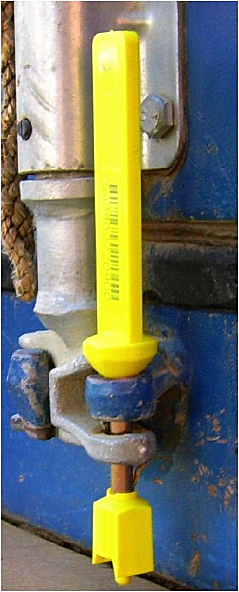
Tenacent RFID Tag

Tenacent RFID Tag

Security seals are an integral part of the chain of custody. The proper grade and application of the security seal is addressed below. Security seals should be inspected by the receiving party at each change of custody for a cargo-laden container. Inspecting a seal requires visual check for signs of tampering, comparison of the seal’s identification number with the cargo documentation, and noting the inspection in the appropriate documentation. More recently the emergence of certain e-seals and container security devices (CSDs) contribute even further to minimizing the amount of ‘physical’ verification required, as they are able to electronically notify the owner of the goods or government authority in the event of an incidence of tampering.
White Paper - GPS-RFID systems for cross-border management of freight consignments

White Paper – GPS-RFID systems for cross-border management of freight consignments

A group of South African specialist engineers have been working closely with transport authorities, logistics specialists, defense experts and customs authorities across the globe. Their e-seal is patented in no less than 16 high volume countries. It is produced in Singapore, China and Indonesia depending on politics, free-trade agreements and demand. May move some to Brazil and US in time. Proof of concept (POC) initiatives are currently underway in Brazil for rail cargo, US Marine Corps for their p-RFID program and other Department of Defense divisions in the USA, and will shortly be included in one of the GSA agreements making it available to any government department in the US. Further adrift, the e-seal is also currently enjoying interest in Guatemala, Mexico, Canada, Panama, Jordan, Italy, Spain, and Malaysia. Here, in South Africa, a POC was conducted at the 1st autogate at Durban Container Terminal, funded by the North West University, and overseen with successfully achieved objectives by Transnet Port Terminals. For technical details of the RFID seal, click here!

With much anticipated success abroad, how much support will this product attain in the local and sub-Saharan African scene? Government authorities, as well as logistics and supply chain operators are therefore encouraged to study the enclosed ‘white paper’ – Click Here!. It firstly quantifies the size of the problem and estimates the potential economic benefits that will be created by improved cross-border operations. It then proposes a combined GPS/RFID system that can provide the required level of visibility to support improved operational management, resulting in a simultaneous increase in the security and efficiency of cross-border freight operations. A brief cost-benefits analysis is performed to show that the expected benefits from such a system will by far exceed the costs of implementation. Source: Tenacent & iPico

Freight Forwarding Event – South Africa

The fifth annual congress of the South African Association of Freight Forwarders (SAAFF) takes place on 8-9 October 2013 at the Hilton, Sandton.

David Logan - SAAFF

David Logan – SAAFF

David Logan, CEO of SAAFF says, “The freight forwarding market has been a major beneficiary of an increasingly globalised world economy. The significant year-on-year growth in international trade volumes has driven the evolution of the freight forwarder, inherently linked to the success of global trade and the development of new markets.  Against this backdrop, it hardly seems surprising that the congress continues to grow and attract robust debate from key players in the market.  This year’s event also receives the endorsement and support of the South African Express Parcel Association (SAEPA), which represents the multi-billion Rand South African courier industry, another major role player in facilitating global business.”

“Having long-abandoned the image of transport intermediaries, today’s freight management logistics providers manage an array of complex functions and issues, being responsible for an entire array of services within the supply chain. The two-day congress will highlight and debate many of the pressing issues from customs modernization, security, piracy, supply chain efficiencies, trade credit, risk management, political risk, legislation, FAIS, economic trading factors, transformation, training and in-demand skills and more.”

“Our industry is also in a unique position to tap into the incredible growth currently shaping the African continent where some of the fastest growing economies reside.  Added to this the rapid reconstruction and development projects taking place throughout the continent will rely heavily on the services of freight forwarders.  Africa’s abundance of commodities is estimated to generate about a third of Africa’s growth.  All this requires trusted partners in the movement of goods to facilitate global trade, and the forwarders best positioned to capitalise on this are those that have robust infrastructures, global capability, solid expertise and a deep understanding of trade in African countries, which is not without its fair share of risk,” adds David.

“Global pressures on world markets are impacting on our members and the congress is an ideal platform to really get to grips with the realities and challenges of our current trading environment.  It’s an ideal platform for sponsors and suppliers to engage directly with the senior decision makers of freight forwarding companies, government, suppliers and policy makers,” he concludes.

Running alongside the congress will be a two-day industry supplier exhibition as well as a one day training and education workshop on Tues 8 October covering important issues regarding skills development, industry qualifications, talent management, training, BBBEEand more – all critical issues for HR managers and directors in the freight forwarding industry. For more information about the congress or to book your seats contact the congress organisers, Teresa Settas Communications on (011) 894 2767 or e-mail nadine@tscommunications.co.za. Source: transportworldafrica.co.za

Single Electronic Window for New Zealand importers and exporters

Customs' JBMS will ultimately provide the Trade Single Window, through which importers and exporters can deal directly with government agencies, and Customs  and MPI can more ­effectively manage risks for goods crossing the border (credit: FTD Supply Chain Magazine)

Customs’ JBMS will ultimately provide the Trade Single Window, through which importers and exporters can deal directly with government agencies, and Customs
and MPI can more ­effectively manage risks for goods crossing the border (credit: FTD Supply Chain Magazine)

The Joint Border Management System (JBMS) programme is a replacement information system that will meet New Zealand’s future border management needs. Comprising a set of integrated information technology products, owned and hosted by Customs and jointly operated with the MPI, it will give Customs, MPI and industry better information and risk-assessment tools to protect New Zealand’s society, trade and biosecurity.

“An agile, effective and efficient border management system is essential for protecting New Zealand from economic, social and environmental harm, for maintaining and improving our international competitiveness, and for collecting over $9 billion a year of government revenue,” says Customs deputy comptroller Robert Lake. “We need a system that keeps us secure, can handle increasing numbers of people, goods and craft, and meets trading partners’ expectations of integrated systems.”

The JBMS will ultimately provide a single electronic point of contact – the Trade Single Window (TSW) – through which the import and export industry can deal directly with government agencies for customs and biosecurity requirements, and Customs and MPI can more effectively manage risks for goods crossing the border.

Companies will be able to submit a single application to both Customs and MPI to lodge import declarations. It’s faster and more efficient. And they can do so directly, not through a third party like they do now.”

The key functions of the Single Window were to have been progressively available to industry from April 2013, however, Customs said it would take three months longer than it originally anticipated for importers and exporters to experience any benefits from the initial $75 million investment in a new Joint Border Management computer system, JBMS.  IBM had been due to deliver the first tranche of JBMS, which is a joint initiative between Customs and the Primary Industries Ministry, last month. Customs deputy comptroller Robert Lake said the agencies had decided to push back the launch and deliver the project in stages. Click here for more details.

Risk management

Customs has taken a phased approach to designing and building the JBMS programme to ensure secure information management and to enable Customs to manage the risks of turning on a major new IT system. “Each stage – or tranche – will be thoroughly tested with industry until it is performing as expected. Industry will be able to migrate over to the new system over time. Our current systems will remain in place until the new system is fully proven,” Mr Lake adds.

Tranche 1 has been funded by the government and has been underway since July 2011. Costs of the JBMS are shared with industry, and cost recovery charges will start from 1 July.

“From April, the system will support border agencies to use shared information to work collaboratively in analysing travellers and goods. This will allow border agencies to target risk more accurately and will therefore provide greater consistency and certainty in the end-to-end border clearance process for all goods,” Mr Lake says.

In the second tranche, Customs plans to fully replace all background systems, and add further enhancements and the remaining business functions to the TSW. The second tranche is subject to further government approval and funding.

Trade Single Window

The TSW is one of the major components of the JBMS and will enable parties involved in international trade and transport to submit the craft and cargo clearance data that is required by New Zealand’s border agencies electronically, once, through one entry point. They will also be able to register themselves as users of the TSW, and maintain their own details.

As part of the first tranche, the TSW will include registration (of customers and users), most lodgements (craft and cargo clearances, such as import and export entries, and cargo reports), status enquiries and response functions. In the second tranche, Customs and MPI will investigate options for providing further functions, including remaining lodgements, a reference library, information updates, transaction history and other payments. Customs and MPI are also working on a plan to join up MPI’s animal products and plant export certification systems to the TSW.

“The TSW is expected to deliver significant benefits to importers, exporters and others in the international trade supply chain,” Mr Lake says. “These will include improved coordination of processes and earlier certainty of border agency requirements when advance data is provided. Compliant traders will be able to get their goods through the border with greater speed, consistency and certainty. However, the potential benefits for industry will depend on how individual participants use the information from the TSW to make their supply chains more effective and efficient.” The JBMS is expected to deliver significant benefits to the import and export industry over the next 10–15 years. Source: www.ftdmag.co.nz

For further information also visit New Zealand Customs website – Joint Border Management System (JBMS)


Warehouse Operators – Easy prey for HMRC

warehousingThere is growing evidence that HM Revenue & Customs (HMRC) has begun a campaign to target warehouse keepers and hauliers who may unknowingly be handling excise goods on which the duty has yet to be paid.

And the United Kingdom Warehousing Association (UKWA) is warning that any company found guilty of storing goods on which duty is outstanding could face ‘financial ruin’ – even if the storage company was unaware that duty had not been paid.

“While HMRC has had the authority to assess anyone for duty on goods illegally diverted from bonded movements who was ‘aware or should reasonably have been aware’ of the diversion at any point in the supply chain since 2010, action has been spasmodic,” says Alan Powell of Alan Powell Associates, UKWA’s honorary adviser on Customs & Excise Matters.

“However,” he continues, “HMRC is deploying more officers to investigate excise goods supply chains. As a result, we are now increasingly seeing third party service providers, including hauliers, warehouse keepers and lessors of property, such as barns and outbuildings, being penalised by HMRC as a result of their involvement with businesses that have evaded duty on alcohol and have absconded – so called ‘missing traders’.”

Anyone found to have held or dealt in duty-unpaid excise goods, can be fined up to 100% of the duty evaded, as Alan Powell explains: “HMRC had been slow to apply what are called ‘excise wrong-doing penalties’ but are now vigorously applying them.  As a result, many small and medium companies are facing unexpected bills and penalties from HMRC of hundreds of thousands of pounds.”

Allan Powell continues: “In simple terms, if an organisation has been involved at any stage in the supply of goods that have been illicitly diverted from a bonded supply chain, that  organisation could be liable for duty – even if that organisation is not directly responsible for the diversion.

“Essentially, anyone handling duty-unpaid product is classed as being ‘contaminated’ within the supply chain and assessed for the duty.”

In one particular instance, a storage company is facing a duty bill alone for nearly £100,000 after HMRC inspectors found duty-unpaid alcohol stored at the company’s site.

“The storage company was simply unaware about the risks involved in handling loads of duty un-paid alcohol and the director of the company to whom they leased the space has disappeared,” says UKWA’s chief executive officer, Roger Williams.

The message from Alan Powell and UKWA is that if you offer third party logistical services of any kind, you must check what is being handled or stored – do not take storage requirements on face value.

Alan Powell says: “Always be wary and query the business need, checking out with HMRC if possible.  If in any doubt, do NOT become involved – it could end very badly.” Source: www.ukwa.org.uk.

Read a followup article by – UKWA :Don’t be fazed by HMRC move (Lloyds List)

Supply Chain Foresight – a Perspective on BRICS and the South African Supply Chain

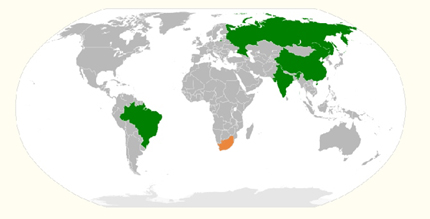
To reap the benefits of its recent membership of BRICS, South African businesses are looking at gaining a competitive edge through achieving global-standard supply chain performance, according to Supply Chain Junction, Manhattan Associates' Geo Partner in South Africa.

To reap the benefits of its recent membership of BRICS, South African businesses are looking at gaining a competitive edge through achieving global-standard supply chain performance, according to Supply Chain Junction, Manhattan Associates‘ Geo Partner in South Africa.

To reap the benefits of its recent membership of BRICS, South African businesses are looking at gaining a competitive edge through achieving global-standard supply chain performance, reports Supply Chain Junction, Manhattan Associates’ Geo Partner in South Africa. Unlike many other countries, South Africa was cushioned from the full impact of the world financial crisis thanks to the strict pre-existing credit controls it had in place. There were some knock on affects from close trading economies but over the last 15 months South Africa has enjoyed a growth economy. The International Monetary Fund (IMF) say this group will account for 61 per cent of global growth in three years time.

While South Africa’s economy (£506.91bn GDP) is dwarfed by those of the original BRIC constituents, the country is seen as the gateway to the continent of Africa, which as a whole has an equivalent sized economy ($2,763bn GDP), a population of one billion and rich resources. This has all made it a valued investment region for China in particular.

However, there are many cultural, logistical and geographical challenges the further one travels North from South Africa towards the Sahara. As an example, while there is 24,487 km of rail track in South Africa, there is just 259 km in Uganda; there are 92 mobile phones per 100 people in South Africa but just two per 100 in Eritrea. However, there is a great deal of raw potential, especially in countries such as Angola and Nigeria.

Participation in BRICS will drive a new competitiveness for South Africa and a key factor will be developing world-class supply chain management. Unlike in Europe, the US and Australia, few supply chain directors in South Africa sit on the board, which makes it harder for them to demonstrate how effective management of the supply chain can deliver competitive advantage. But this is likely to change as companies realise that they must align their supply chain and business strategies. If the recession failed to drive home the need for this, then the presence of Chinese companies in Africa will create significant pressure to do so.

This was an observation of the 2011 Supply Chain Foresight survey, conducted by Frost & Sullivan, which annually samples the opinions of South African supply chain executives. It found that while over three quarters of the respondents feel that the supply chain and business strategies of their companies are aligned, less than a third felt that the supply chain and logistics operations are fully optimised. Businesses are looking at how to optimise their distribution networks through building new facilities, streamlining existing processes or collaboration between trading partners. This has seen a lot of current activity surrounding warehouse management systems, forecasting, planning, replenishment and collaboration technologies, in particular.

Two thirds of respondents are considering investment in technology to enable collaboration with service providers. With the recession claiming many key suppliers the environment is changing from one where major companies squeeze suppliers on cost to one where they adopt a more collaborative approach. Cost reduction was the focus of the past recession, but now the objective is to satisfy customer expectations and to deliver value. Just over half of respondents to the Supply Chain Foresight survey cited customer service as the top supply chain objective. Reducing waste and improving efficiency in the supply chain are the perennial shorter term challenges with companies looking for better forecasting and planning tools to bring down inventory and shorten lean times. One interesting aspect of South African supply chain technology is the large number of in-house designed legacy systems, which is a consequence of the country’s isolation during the times of Apartheid. A propensity towards in-house designed systems remains today.

In terms of industry sectors, retail dominates but it remains firmly entrenched in the traditional channels. While some retailers have online retail websites, online and multi-channel is by no means a significant part of the current retail picture. Internet use is still quite low compared to other countries there are 4.42 million internet users in a population of 49 million and this figure is expected to remain low for some time yet. A further obstacle to the expansion of online sales is a high crime rate which leads to security issues in delivering goods to customers.

Wholesale distribution is quite small in size and complexity so the supply chain challenges tend not to be too complicated. There remain companies that feel they have been reasonably successful – being self-sufficient – and want to maintain that approach, along with a general tendency to look within, when it comes to benchmarking supply chains. However, a growing number of companies in South Africa recognise that there are other organizations across the globe doing similar things, but perhaps, a lot more efficiently.

Supply chain managers within these businesses are evolving a mindset focused on global best practice and the means of achieving it. These South African companies want to be best in their class. By building knowledge, benchmarking and improving against those benchmarks the win for this retailer is a supply chain that gives competitive advantage. As in other countries, companies looking to benefit from external expertise and a reduction in their capital costs will often outsource their logistics to third party logistics (3PL) operators. South Africa has numerous small local players and a handful of large lead logistics providers who tend to drive innovation. It is a small but highly competitive market. Logistics infrastructure and skills shortage in the supply chain continue to be huge issues in South Africa. The Supply Chain Foresight survey found that to deal with the skills shortage, in almost all areas companies either expose employees to new jobs through rotation, or development programs, or mentoring. These are generally in-house driven schemes. South Africa is an emerging market that is growing fast and offers a tremendous wealth of opportunities. In fact, the country has a great many successful businesses, and while many talk about becoming world class, many have already achieved it. Source: Supply Chain Junction

UCR and GS1 data to meet?

Kunio Mikuriya, WCO Secretary General, and Maria Palazzolo, Chief Executive Officer of GS1 Australia and GS1 Board Member, at the GS1 Global Forum 2013

Kunio Mikuriya, WCO Secretary General, and Maria Palazzolo, Chief Executive Officer of GS1 Australia and GS1 Board Member, at the GS1 Global Forum 2013

GS1 is a non-profit organization dedicated to the development and implementation of global specifications to manage the supply chain, including product identification codes, barcodes and business-to-business standards for the exchange of accurate data. After longstanding cooperation at the technical level, the WCO concluded a Memorandum of Understanding (MoU) with GS1 in 2007 to formalize cooperative ties.

At the invitation of GS1, the Secretary General of the WCO, Kunio Mikuriya, spoke at the GS1 Global Forum 2013 in Brussels on 18 February 2013 where he highlighted the increasing cooperation between the two organizations. Recalling the evolution of Customs with a heightened focus on data management for assessing risks in the supply chain, the Secretary General underlined the importance for Customs to explore the possibility of making use of supply chain specifications that are available in the trade, such as codes and specifications developed by GS1.

He specifically referred to the new WCO Economic Competitiveness Package to explain how Customs contributes to enhancing national competitiveness by facilitating trade using a risk management approach. As this requires the application of information technology, data and message standards, and consignment identifiers, it is important to employ existing technologies and tools in the trade supply chain, through a partnership with business.

Sharing a common interest in supply chain management, including track and trace systems, both organizations have been cooperating in many areas in a complementary manner, as the WCO facilitates Customs-to-Customs and Customs-to- business data exchange while GS1 also facilitates business-to-business data exchange.

Areas of cooperation between the two organizations include the work at the United Nations Centre for Trade Facilitation and Electronic Business (UN/CEFACT) and the International Standards Organization (ISO) on standardization and specifications for supply chain management, the work on the Unique Consignment Reference Number (UCR) and the use of GS1 data for Customs risk assessment purposes.

The most recent collaboration includes the addition of a barcode function to the Interface Public Members (IPM) – the WCO’s information tool to fight violations of intellectual property rights at borders. Secretary General Mikuriya urged GS1 members to leverage the collaboration with the WCO at the global level by getting in touch with their respective local Customs administrations. GS1 members appreciated his speech and pledged to explore and enhance cooperation with Customs administrations. Source: WCO

For more of the latest news and happenings at the WCO, please follow the news feed alongside (right).

Building Resilience in Supply Chains

WEF - Building Resilience in Supply ChainsOn 24 January 2013, the Secretary General of the WCO, Kunio Mikuriya, participated in a press conference dedicated to the launch of the World Economic Forum’s (WEF) Building Resilience in Supply Chains 2013 report. Sander van ‘t Noordende, Accenture’s Group Chief Executive for Management Consulting, introduced the report and its major findings, such as the top supply chain risks that include extreme weather, natural disasters, physical and cyber security threats, along with economic and political volatility. He highlighted that the report argued the need for a coherent and consistent framework to deal with supply chain resilience, partnerships between government, Customs and businesses, and the sharing information flows for risk assessment purposes.

Secretary General Mikuriya pointed out that supply chain resilience is very important for Customs, whose functions include ensuring that legitimate trade continues even in cases of disruption, an issue which has been addressed by a set of standards and instruments developed by the WCO, in particular, the 2011 WCO Resolution on the Role of Customs in Natural Disaster Relief.  He also stressed the importance of public-private partnerships in order to share security responsibility with trusted traders through the implementation of the WCO SAFE Framework of Standards to Secure and Facilitate Global Trade and its integral Authorized Economic Operator (AEO) programme.

Cooperation at intergovernmental level with longstanding partners of the WCO, such as the International Maritime Organization (IMO), the International Civil Aviation Organization (ICAO), the Universal Postal Union (UPU), the International Air Transport Association (IATA), the International Road Transport Union (IRU) and the World Shipping Council (WSC), was also emphasized by the Secretary General as being key to harmonizing standards and creating synergies among different stakeholders. In addition, he pointed out that transparency and trust among stakeholders in supply chains was of the utmost importance, as this led to a global cohesive approach and even stronger partnerships.

The Secretary General of the IMO, Koji Sekimizu, addressed the concerns of the maritime sector, in particular, the sustainability of international transportation within the context of supply chain resilience. He mentioned that along with the WCO, the IMO has built its approach on risk assessment and risk management, resulting in the adoption of the International Ship and Port Facility Security Code (ISPS Code), a comprehensive set of measures to enhance the security of ships and port facilities. He also touched on the issues of port infrastructure, piracy and port security, and underlined the importance of cooperation with other stakeholders, such as the WCO and ICAO. Source: WCO

Role of the Chief Supply Chain Officer – an interesting podcast

Globalization of the Supply Chain: Here’s one for the warehousing, logistics, and distribution folks. Aberdeen Group’s survey of 191 companies explores how new investments in internal and external collaborations across the global supply chain are now the highest priority for the Chief Supply Chain Officer (CSCO’s). This podcast looks closely at these initiatives as well as:

  • Specific trends and highlights of the research.
  • Strategies and best practices utilized by CSCO’s.
  • Increased globalization/complexity balanced by the need to drive down supply chain costs.

 Click the HEREto visit Aberdeen Group’s website and download the podcast now.

X-Ray Security Screening – Technologies & Global Market Outlook

Over the next five years, Homeland Security Research Corporation analysts forecast a growth at a CAGR of 10% of the global X-ray screening market, led by a dramatic expansion of the Chinese civil aviation (two out of three new airport projects are in mainland China) and internal security funding. Other key markets are terror-troubled India and the replacement market of the US and Europe.

Despite years of cutting edge weapon and explosives screening technologies RDT&E, there is no competitive modality on the horizon which challenges the cost-performance of 2D X-ray screening technologies. The global X-ray security screening market (including systems sales, service, and upgrades) is forecast to grow from $1.2 billion in 2011 to $1.9 billion by 2016.

The new report is the most comprehensive review of the multibillion dollar global X-ray security screening market available today. It analyses and forecasts the market by application, by geography and by business transaction. The report, segmented into 50 submarkets, offers for each submarket 2010-2011 data and 2012-2016 forecasts and analysis. In more than 300 pages, 90 tables and 150 figures, the report analyses and projects the 2012-2016 market and technologies from several perspectives, including:

  • Market forecast by application: Air cargo, Airport-cabin baggage, Secured facilities, Postal items, Supply chain cargo and People screening AIT
  • National and regional markets
  • X-Ray Technologies: conventional, backscatter, multi-view, coherent and dual energy x-ray
  • Systems sales, post warranty service and upgrade markets
  • Competitive environment: 16 leading vendors and their products
  • Market analysis: e.g., market drivers & inhibitors, SWOT analysis
  • Business environment: e.g., competitive analysis
  • Current and pipeline technologies

Source: Homeland Security Research Corporation

Namibia buys into ‘Single Window’ concept

From April 12-13, Southern African Trade Hub (aka USAID) presented Single Window as a cutting-edge tool for trade facilitation to the Ministry of Industry and Trade, Ministry of Finance, Customs and other private sector organizations, explaining how a NSW for Namibia could improve the Trading Across Borders index ranking, which currently stands at 142 out of 183 countries. Single Window is a crucial instrument that will eliminate inefficiency and ineffectiveness in business and government procedures and document requirements along the international supply chain, reduce trade transaction costs, as well as improve border control, compliance, and security.

Benefits for Government: A Single Window will lead to a better combination of existing governmental systems and processes, while at the same time promoting a more open and facilitative approach to the way in which governments operate and communicate with business. Traders will submit all the required information and documents through a single entity, more effective systems will be established for a quicker and more accurate validation and distribution of this information to all relevant government agencies. This will also result in better coordination and cooperation between the Government and regulatory authorities involved in trade-related activities.

Benefits for trade: The main benefit for the trading community is that a Single Window will provide the trader with a single point for the one-time submission of all required information and documentation to all governmental agencies involved in export, import or transit procedures. As the Single Window enables governments to process submitted information, documents and fees both faster and more accurately, traders would benefit from faster clearance and release times, enabling them to speed up the supply chain. In addition, the improved transparency and increased predictability would further reduce the potential for corrupt behaviour from both the public and private sector.

If the Single Window functions as a focal point for the access to updated information on current trade rules, regulations and compliance requirements, it will lower the administrative costs of trade transactions and encourage greater trader compliance. The Permanent Secretary for the Ministry of Industry and Trade underscored the need for Namibia to proceed with the Single Window concept, and advised participants that his Ministry, together with the Ministry of Finance, would jointly package the Single Window concept and submit it to Cabinet for Government approval.

In Southern Africa, Mauritius already has an effective Single Window, which is reflected in its “Trading Across Borders” ranking of 21. Mozambique recently launched its pilot Single Window. SATH will support and facilitate the processes for the establishment of a Botswana National Single Window system to streamline cross border trade. The current SATH Trans Kalahari Corridor (TKC) Cloud Computing Connectivity program, which is being piloted between Botswana and Namibia, provides an ideal technology platform for linking Botswana and Namibia Single Windows, leveraging the investment by BURS, Namibia Customs and SATH to date in the development of this system. SATH is currently in the process of gauging support for National Single Window in South Africa.

Excuse my cynicism, but the SA Trade HUB  has yet to demonstrate the viability of its Cloud Computing solution between Namibia and Botswana Customs. What is reported above is the usual sweet and fluffy adjectives which accompany most international customs and trade ICT offerings, ignoring prerequisite building blocks upon which concepts such as Cloud and Single Window may prove beneficial and effective. Past project failures in Africa are usually blamed on the target country in not bedding down or embracing the new process/solution – never the vendor. Given the frequency of technology offerings being presented by donor agencies on unwitting national states, there seems little foreign interest in ‘bedding down’ or ‘knowledge transfer’ than the ‘delivery of expensive technology’.

Related articles and references

‘State of Logistics’ survey – SA’s progress revealed

The 8th Annual State of Logistics Survey, a joint project by Imperial Logistics, the University and Stellenbosch and the CSIR reveals good news for South Africa. Logistics costs – as a percentage of GDP – have dropped to the lowest level ever at 12.7%. The in-depth report, which is available online at http://www.csir.co.za/sol/, provides some fascinating insights from some of the industry’s logistics thought leaders.

Transport costs are singled out as the most significant factor impacting the country’s logistics costs, comprising 53.2% of the logistics bill. “The marked impact of the 11% fuel price increase between 2009 and 2010 is no surprise considering the fuel price is the primary transport cost driver,” says Zane Simpson of the University of Stellenbosch. “Had the fuel price remained as it was in 2009, total transport costs in 2010 would have been R5.8billion less, consequently putting logistics costs as a percentage of GDP at an even more favourable 12.5%.” Transport costs as a percentage of total logistics costs would then have been 52% instead of 53%.

Globally, transport costs as a percentage of logistics costs are less than 40% which makes South Africa’s percentage relatively high. “For logistics to become a competitive weapon for South Africa, change is required,” said Cobus Rossouw, chief integration officer of Imperial Logistics. “South Africa is a leader in complex, dynamic logistics and has achieved success despite geographical impediments, severe skills shortages and lack of economies of scale “South Africans need to recognise that we are and can be counted among the best in logistics. And while we will always have much to learn from others, we need to recognise that we also have a lot to offer.” Source: CargoInfo.co.za

USCBP and EU sign C-TPAT Mutual Recognition

U.S. Customs and Border Protection (CBP) and the European Union (EU) signed today a Mutual Recognition Decision between CBP’s Customs-Trade Partnership Against Terrorism (C-TPAT) program and the EU’s Authorized Economic Operator (AEO) program.

U.S. Customs and Border Protection Acting Commissioner David V. Aguilar and European Union Taxation and Customs Union Directorate Director-General Heinz Zourek sign the Mutual Recognition Decision between CBP’s Customs-Trade Partnership Against Terrorism program and the EU’s Authorized Economic Operator Program.

CBP Acting Commissioner David V. Aguilar and Director-General Heinz Zourek, European Union Taxation and Customs Union Directorate (TAXUD) signed the decision, which recognizes compatibility between the EU and the U.S. cargo security programs.

“Today’s decision on the mutual recognition of the EU and U.S. trade partnership programmes is a win-win achievement: It will save time and money for trusted operators on both sides of the Atlantic while it will allow customs authorities to concentrate their resources on risky consignments and better facilitate legitimate trade,” said Director-General Zourek.

C-TPAT is a voluntary government-business initiative to build cooperative relationships that strengthen and improve overall international supply chain and U.S. border security. C-TPAT recognized that U.S. Customs and Border Protection can provide the highest level of cargo security only through close cooperation with the ultimate owners of the international supply chain such as importers, carriers, consolidators, licensed customs brokers, and manufacturers. Source: US CBP

Related article

Moving goods efficiently to inland cities – a case for inland container depots

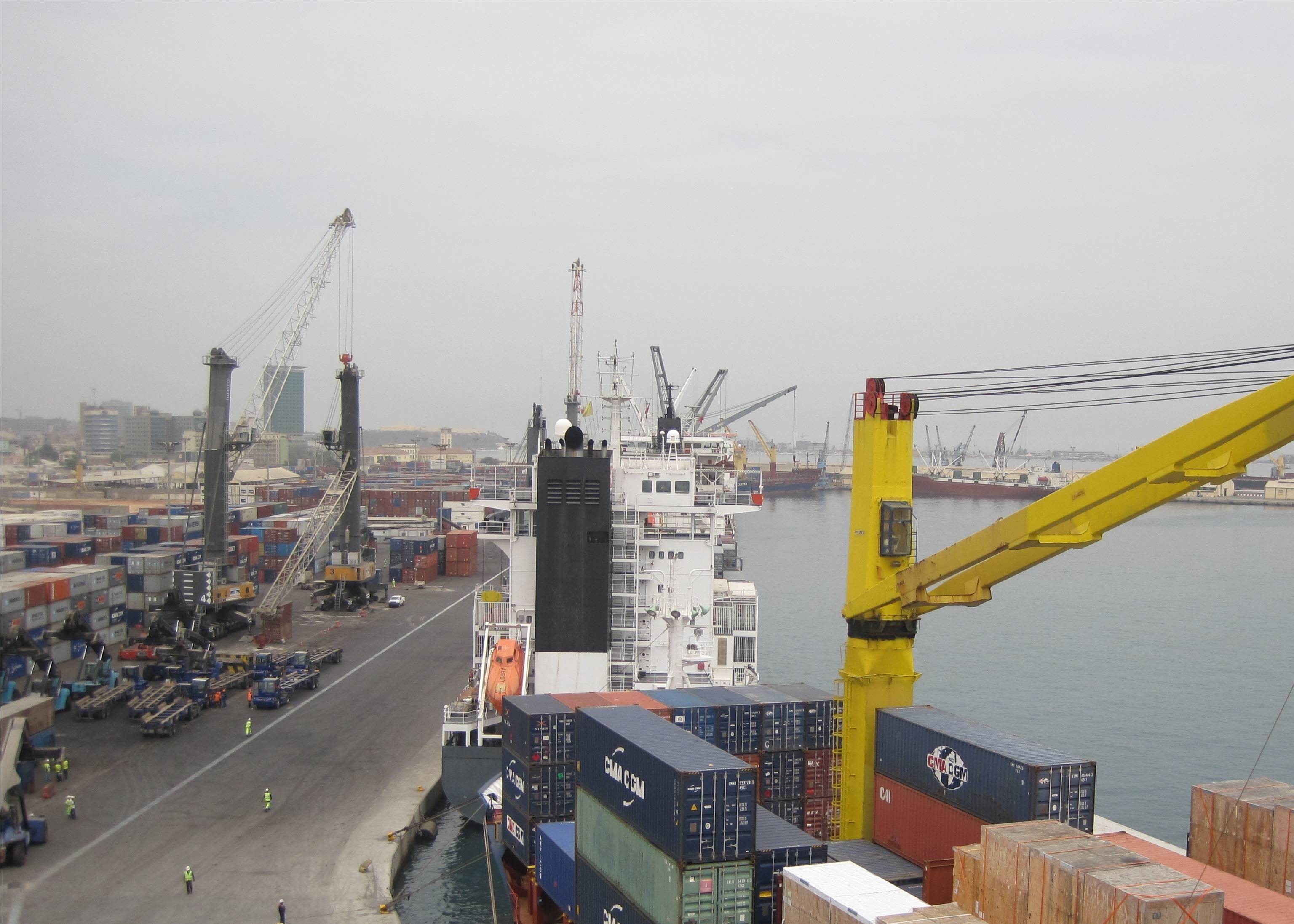
Port of Agapa, NigeriaNearly one in three African countries is landlocked, accounting for 26% of the continent’s landmass, and 25% of the population, or more than 200 million people, indicating that current population growth trends, including the development of population megacities distant from coastal locations will become powerful drivers of inland markets.

At the 3rd Annual Africa Ports, Logistics & Supply Chain Conference, APM Terminals’ Director of Business Development and Infrastructure Investments for the Africa-Middle East Region, Reik Mueller stated that “Ports will compete to become preferred gateways to move goods efficiently to inland cities and landlocked countries” Mr. Meuller added that “The future prosperity of these nations depends on access to the global economy and new markets; high-growth markets need inland infrastructure and logistics capabilities along development corridors. The ports that can provide the best and most efficient connectivity to those Inland markets will be the winners”.

Citing the recent success in reducing port congestion through Inland Container Depots (ICDs) now in operation outside of the APM Terminals operated port of Luanda, Angola, the Meridian Port Services joint venture in Tema, Ghana, and the ICD which was opened four km from APM Terminals Apapa, the busiest container terminal in Nigeria and all of West Africa, Mr. Mueller made the case for integrated transportation solutions, “Importers are not going to wait for improved infrastructure; the cargo will simply move to other ports” said Mr. Mueller.

Mueller described a new model for transportation planning and development in West Africa in which port and terminal operations shift focus from “container lifts” toward “integrated container transport solutions. Dry ports and inland markets are the untapped, overlooked opportunity markets of the future in Africa”. Now ain’t this a contrast to views on the southern tip of the continent – the continent’s biggest port without efficient inland corridors and networks must jeopardize investor confidence not to mention export profitability.   Sources: DredgingToday.com, PortStrategy.com and Greenport.com.

Advancing the argument for sealing cargo and tracking conveyances

South African Customs law provides for a seal integrity regime. This consists in provisions for the sealing of containerised sea cargo as well as sealable vehicles and trailers. These requirements have, however, not been formally introduced into operation due to the non-availability (until recently) of internal systems and cross-functional procedures that would link seal integrity to known entities. To explain this in more layman’s terms, it is little use implementing an onerous cargo sealing program without systems to perform risk assessment, validation of trader profiles and information exchange. It’s  like implementing non-intrusive inspection (X-ray scanning) equipment without backward integration into the Customs Risk Management  and Inspection environment and systems. It has often been stated that a customs or border security programme is a layered approach based on risk mitigation. None of the individual elements will necessarily address risk, and automation alone will likewise not accomplish the objective for safe and secure supply chains. Moreover, neither will measures adopted by Customs or the Border Agency succeed without due and necessary compliance on the part of entities operating the supply chain. It therefore requires a holistic strategy of people, policy, process and technology.

In the African context, it is surmised that the business rationale will be best accomplished with a dual approach on IT connectivity and information exchange. Under the political speak there are active attempts within SACU, SADC, COMESA and the EAC to establish electronic networks to facilitate and safeguard transit goods. Several African states are landlocked and are not readily accessible, some requiring multiple transit trips through countries from international discharge in the continent to place of final destination. National laws of each individual country in most instances provide obstacles to carriers achieving cost effective means in delivering cargoes. Over and above the laws, there exists (regrettably) the need to ‘grease palms’ without which safe passage in some instances  will not be granted. Notwithstanding the existence of customs unions and free trade areas, internal borders remain the biggest obstacle to facilitation.

Several African logistics operators already implement track and trace technology in the vehicle and long-haul fleets. This has the dual purpose of safeguarding their assets as well as the cargoes of their clients which they convey. Since 9/11, a few customs administrations have formally adopted ISO PAS 17712 within their legislation to regulate the use of high security seals amongst cargo handlers and carriers. In most cases this mandates the use of high security ‘mechanical’ bolt seals. However, evidence suggests there is a growing trend to adopt electronic seals. Taiwan Customs for one has gone a significant way in this regard. Through technological advances and increased commercial adoption of Radio Frequency Identification (RFID) technology the costs are reducing significantly to warrant serious consideration as both a viable and cost-effective customs ‘control’ measure.

Supply chain custody using RFID as an identifier and physical security audit component – as provided for in ISO 17712 – is characterized by the following:

  • it uniquely identifies seals and associates them with the trader.
  • the seal’s unique identity and memory space can be used to write a digital signature, unique to a trader on the seal, and associating that seal with a customs declaration.
  • using customs trader registration/licensing information, together with infrastructure to read seal information at specified intervals along a route to create a ‘bread-crumb’ audit trail of the integrity of the cargo and conveyance.
  • using existing fleet management units installed in trucks to monitor seal integrity along the high risk legs of a cargo’s transit.
  • record the seal’s destruction at point of destination.

Looking forward to the future, it is not implausible for customs and border authorities to consider the use of RFID:

  • as a common token between autonomous customs systems.
  • to verify and audit that non-intrusion inspections have taken place en-route, and write that occurrence to the seal’s memory with the use of an updated digital signature issued to the customs inspection facility.
  • to create a date and time stamp of the cargo’s transit for compliance and profile classification – to confirm that transit goods have actually left the country as well as confirm arrival at destination (to prevent round tripping).
  • Lastly to archive a history of carrier’s activities for forensic and/or trend analysis.
This is a topic which certainly deserves more exposure in line with current regional developments on IT-connectivity and information exchange. A special word of thanks to Andy Brown for his contribution and insight to this post.
Related articles

Where Does the Chain of Custody Begin?

Here follows an article, published by Dr. James Giermanski, an internationally renowned expert in container and supply chain security, international transportation and trade issues. It deals with a crucial but mostly forgotten/unknown aspect of international supply chains – who packed the cargo?

Tracking, tracing, and custody are all generally accepted concepts involving the control of movement. All these concepts have in their fundamental cognitive structure the idea of path, corridor, multiple parts, flow, and coordination.

However, what is often omitted or overlooked is the fundamental sine qua non core principle of “beginning”. What is the beginning of a chain of custody? This article focuses on this core concept and the role it plays as the beginning of the connective custody and control process. Specifically, it addresses the significance of cargo stuffing, the concept of authorized or trusted agent, the means of connectivity, the legal role of the authorized agent, and the consequences of a connected and visible supply chain.

Cargo stuffing

Establishing and maintaining cargo integrity begins with stuffing the container at origin. A chain of custody – chronological documentation or paper trail – involves “the movement and location of physical evidence from the time it is obtained until the time it is presented in court.” As in a criminal case comparison, a supply chain “chain of custody” needs three types of essential assertions:

  1. That the cargo is what it purports to be and in the quantity stated;
  2. That the cargo was in the continuous possession or control by the carrier who took charge of the cargo from the time it was loaded in the container at origin until the time it is delivered at final destination; and
  3. That there is evidence of the identify of each person or entity who had access to it during its movement, and that the cargo remained in the same condition from the moment it was sealed in the container for transfer to the carrier that controlled possession until the moment it released the cargo into the receipted custody of another.
Trusted partner

It is imperative that the initial point of a connectivity process begins at the beginning! Loading cannot take place without a human agent. The agent could be the company’s forklift driver, the dispatcher, the loading dock supervisor, or even an authorizing manager who has a specific duty to verify the cargo and its quantity. It could even be a third party hired by the shipper, for instance, companies that currently provide inspection services around the world.

Various Customs programs discuss, in one way or the other, the concept that supply chain security begins at “stuffing”: the Secure Export Scheme Program (New Zealand); the Partners in Protection Program (Canada); the Golden List Program (Jordan); the Authorized Economic Operator Program (Japan); the Authorized Economic Operator Program (Korea); the Secure Trade Partnership Plus Program (Singapore); and the Authorized Economic Operator.

Establishing ‘connectivity’

Maintaining connectivity depends on the security program, software and hardware utilized. While no system is 100% effective, and one cannot depend on technology alone, there are ‘off-the-shelf’ container security devices (CSDs) that provide connectivity through a sophisticated, comprehensive chain of custody system that begins with loading the container at origin, monitoring it, and reporting on its integrity at the end of the global supply chain path, i.e. at final destination.

CSDs can include the identity of the trusted agent verifying the cargo at loading and the agent’s counterpart at destination. Both parties are electronically connected by a unique identifier to the smart container system along with bill of lading or booking information, or data needed by Customs authorities. Therefore, when the CSD is activated, the accountable party becomes the initiating element in the smart container security system.

Consequences of chain of custody – standards, laws and litigation

If a smart container is opened at destination by an equally accountable person and cargo is missing, and there were no breaches detected, recorded or reported, the accountable person at origin can face either disciplinary, or worse, criminal action by appropriate authorities.

This ESI becomes a source of evidence, should legal action follow. The concept of custody and control from origin to destination also supports Incoterms 2010, a publication of the International Chamber of Commerce (ICC) which provides the playbook of international rules involving international sales of goods. These new terms now contain security requirements for the shipper, making a chain of custody system essential for compliance. There are also changes coming for shippers, consignees, and vessel carriers with respect to carriage of goods by sea: the new Rotterdam Rules.

According to the UN General Assembly, the Rotterdam Rules are a “…uniform and modern global legal regime governing the rights and obligations of stakeholders in the maritime transport industry under a single contract for door-to-door carriage” (cf. American Shipper). The new door-to-door liability places the vessel carrier directly in a chain of custody. Instead of the vessel carrier filing what the shipper said is in the container, the vessel carrier will be automatically and really responsible for knowing what is in the container.

What are the benefits?

The shipper, the consignee, the carrier, and control and regulatory authorities all benefit from a chain of custody system that begins with the loading of the container at origin. CSDs incorporating the identity of the trusted agent at stuffing would assist law enforcement officials to comply with international security and trade standards, solve transhipment problems, impair illegal access to the cargo conveyance, improve supply chain efficiencies, aid in securing hazardous materials and other dangerous cargo movement, reduce counterfeiting, eliminate the in-bond problem of unauthorized container access, and improve bottom line revenue generation for the firms using them. Source: Supply Chain Digest.