Inside track to the local Tobacco ‘Cabal’

Peter Tell-AllWith much international focus on tobacco and tobacco products its great to read something outside of the mainstream media. Evidently this guy has some real insight in the tobacco industry and he sure is passionate about his views. This is a fine example of ‘Social Media’ providing what your average Google search-and-hit will never reveal. Conspiracy theory or not, this is a site dedicated to one thing – exposing the ‘Anglo-American tobacco cabal’. Aptly titled “All Disclosed by Peter Tell(all)” he invites you………

…………… to browse, interact and explore my website dedicated to the exposure of facts, truths and the responsible sharing of the information contained within these pages, about South Africa’s Tobacco Industry! The compilation of articles and also unpublished fact sheets about how this very lucrative and secretive industry operates has up until now been a very dark and well-kept secret! Why would all this information be kept from us? Why would they not want us to know how much money is being made? Why does the Government play both sides of the fence? Who pulls the strings of the authorities? THESE ARE THE QUESTIONS WE SHOULD BE ASKING!!

AU considers continental Customs Connectivity

500px-Emblem_of_the_African_Union_svgThe African Union (AU) Technical Working Group on Interconnectivity has developed a ‘draft’ Strategy and Roadmap for Customs-2-Customs IT Connectivity on the continent. This strategy will effectively guide the process of the continental Interconnectivity of Computerized Customs Clearance and Information Systems in Africa. The ‘draft’ Roadmap envisages that the process of interconnectivity will take a period of 11 years with a total of four stages.

Stage 1 – by 2014, National states should have engaged one another (within their respective regions) on the matter of Customs connectivity.

Stage 2 – between 2013 and 2017, the AU has an extremely ambitious expectation that national Customs Administrations would have (at least commenced) if not completed Customs ‘connectivity’ within the various Regional Economic Communities (RECs) in Africa.

Stage 3 – between 2017 and 2020, the suggestion that Customs interconnectivity will be occurring between RECs across the African continent – North Africa: AMU; West Africa: ECOWAS and UEMOA; Central Africa: ECCAS and CEMAC; East Africa: COMESA, EAC, IGAD; and South Africa: SADC and SACU.

Stage 4 – between 2020 and 2025, consolidation of Customs IT-Connectivity across the RECs.

The ‘draft’ Strategy spells out the strategic objectives and activities at the national, regional and continental level that will need to be taken for this to be realized. The strategy also indicates the roles of all the major stake holders in the process.  This comes in the wake of several regional and bi-lateral initiatives to bridge the ‘cross-border divide’ through electronic exchange of structured customs information.

All in all an ambitious plan structured to meet the equally ambitious deadlines of the coming into being of an African Union. The real challenge in all of this lies with the Member States in being able to set aside and commit to regional and continental ambitions, over and above the already pressing and complex national agenda’s of their respective sovereign countries. In context of the African Union, the multiplicity of RECs in themselves add a layer of duplication…..is an “integrated Customs Union” in Africa going to continue to permit the existence of the respective RECs or will they be absorbed into the African Union? Member states need to begin speaking up on this issue otherwise accept being swamped by onerous commitments. No doubt the ‘international donor agencies’ wait eagerly in the wings to capitalise on Africa’s deficiencies.

Beit Bridge afloat!

I received the following pictures purportedly of traffic under siege at the Beit Bridge border post 6 days ago. Normally its the sweltering heat which man and truck have to contend with. The pictures suggest severe flooding creating anxious moments for transporter and pedestrian alike. According to the Zimbabwe Herald, authorities closed the border to traffic after the Limpopo River flooded leaving the new Limpopo Bridge inaccessible.

Beitbridge handles half a million travellers over festive season

The queues at Beit Bridge

The queues at Beit Bridge

Beitbridge Border Post recorded a sharp increase in the number of travellers who passed through during the festive season with statistics indicating that 524 511 people passed through the port of entry between 14 December last year and 7 January this year compared to 392 660 during the same period the previous year. The assistant regional immigration manager in charge of Beitbridge Border Post, Mr Charles Gwede, said they handled  229 023 travellers on the exit side, an 11 percent increase compared to the last festive season when 202 348 people left the country.

On the arrivals side, 295 488 travellers entered the country, a 35 percent surge compared to the last festive season when immigration officials handled 190 312 travellers. The highest number of travellers on the entry side was recorded on 23 December when 42 435 people entered the country through the country’s busiest port of entry. On the departure side, the highest number was recorded on 3 January when 22 625 people left the country.

“This festive season between 14 December and 7 January, we handled 524 511 travellers, marking a 25 percent increase in the number of people who passed through Beitbridge during the festive season compared to the previous year when we handled 392 660 travellers,” said Gwede. Most of the travellers that they handled were Zimbabweans working in South Africa commonly known as injiva, who had visited home for the Christmas holidays. He attributed the increase in the number of travellers to the South African documentation exercise, which saw many Zimbabweans working in that country acquiring permits.

Many of Zimbabweans staying and working in South Africa are now documented after they acquired authentic permits during the regularisation exercise in that country hence they could now travel freely. The documents also enabled them to drive foreign registered vehicles, which is another factor that resulted in an increase in the volume of vehicular traffic during this festive period compared to the previous years. The South African government embarked on the process of documenting Zimbabweans illegally staying in that country between 5 May 2009 and 31 July 2010 during which over 275 000 applications from Zimbabweans were processed while several others were turned down and some are still pending. Source: The Chronical, Zimbabwe

NRA/BURS – Customs Connectivity Passes Test

TKCThe first live demonstration of an end-to-end customs connectivity solution was successfully completed in Windhoek, Namibia on December 12, 2012. Customs Connectivity enables customs administrations from different countries to share information seamlessly and instantly across borders: reducing processing time and improving access to reliable, real-time trade statistics.

The demonstration was witnessed by the Commissioners of Botswana (BURS) and Namibia Customs (NRA), senior managers and operational teams. The demonstration involved moving information from an ASYCUDA++ entry in Botswana via the Cloud-based User Portal to an ASYCUDA++ entry in Namibia, and vice-versa from Namibia to Botswana. It demonstrated how clearing agents/traders would manage the flow of their information via the secure online User Portal.

The demonstration marked a “watershed moment” in turning Customs Connectivity into reality. The next steps for the pilot project include full system testing and documentation before end-user training commences. Full implementation is scheduled to take place during the first half of 2013.

Customs Connectivity offers countries in the region a historic opportunity to engage cutting-edge technology and modern tools to facilitate trade throughout Southern Africa, enhancing economic growth and promoting food security. The pilot project is being implemented by Botswana and Namibia, supported by the USAID Southern Africa Trade Hub. Source: SATH

Request – Perhaps some of the TKC clearing agents, NRA and BURS customs staff would like to comment on their experience thus far? 

Comesa adopts IT system to boost trade in the region

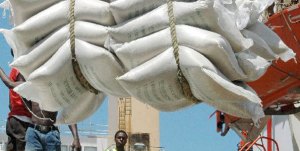
Workers offload imported sugar at the port of Mombasa. Comesa has already gazetted transit goods routes, which have been geo-fenced and trucks following these routes will be monitored. Photo/File  Nation Media Group

Workers offload imported sugar at the port of Mombasa. Comesa has already gazetted transit goods routes, which have been geo-fenced and trucks following these routes will be monitored. Photo/File Nation Media Group

A new online system being implemented by the Common Market for Eastern and Southern Africa (Comesa) trading bloc is expected to cut down non-tariff barriers, reduce the cost of doing business and improve intra-regional trade.

The $1 million (Sh84 million) system – which is being developed by Comesa and funded by the European Union – could for instance cut transport costs by up to 40 per cent, Comesa secretary-general Sindiso Ngwenya said.

With three main modules – Transit Bonds, Risk Management and Cargo Tracking — the Comesa Virtual Trade Facilitation System (CVTFS) aims at integrating systems used by regional revenue authorities, transporters, shippers, clearing agents, ports and customs to provide real-time information and facilitate uninterrupted movement of goods across borders.

Besides tracking cargo from origin to destination, the system will facilitate management of transit bonds and capture electronic data contained in the customs seal and assign this information to customs offices at various transit points.

Comesa has already gazetted transit goods routes which have been geo-fenced and trucks following these routes will be monitored. In case seals are tampered with, owners will automatically be notified via Short Message Services (SMSs) or email. Owners who register their trucks with the system will display a ‘Comesa Transit’ plate on their vehicles.

Delays along the major transport corridors arising from lengthy procedures at weight control points and police road blocks within the region have been identified as major non-tariff barriers hindering trade.

Mr Charles Muita, a member of the team that worked on the system and who made the presentation, said they expected most of the countries where industry players do not have their own systems to quickly adopt CVTFS. “The system does not intend to replace the ones used by member countries but would integrate them to achieve a seamless flow of information and documentation,” Mr Ngwenya said during the sensitisation at the Mombasa Beach Hotel.

Truckers buy the fleet management system at Sh24,000 and pay an average of Sh2,000 management fee per month.“We are not interested in making money with the system and the initial cost of the gadget will be less than Sh12,000 and a monthly management fee of about $3 (Sh255),” explained Mr Ngwenya.

The sensitisation in Comesa member states aims at getting volunteers for a free pilot project that will run for three months starting next month. Source: Business Daily Africa.com

Beit Bridge – ZIMRA and Immigration gear up for congestion

beitbridge

Beitbridge – crossing the Limpopo river

The Department of Immigration in Beitbridge has put in place mechanisms aimed at dealing with congestion at the country’s busiest border post in anticipation of an increase in the volume of traffic during the festive period. Assistant regional immigration manager in charge of Beitbridge Border Post, Mr Charles Gwede, said they have since held a series of meetings with key stakeholders and their South African counterparts to address congestion at the border.

“We have started preparing for the festive period in anticipation of a huge influx of travellers and all necessary strategies are now in place to help speed up the clearance of people during the festive period,” he said. “We are suspending leave and off-days for staff between 15 December and 16 January next year.

“As part of our decongestion drive we will scramble our shifts to maximise on manpower during the normal and extra peak days. In fact, starting from 15 December we expect a huge influx of travellers hence between 14 and 17 December, 21 and 24 December and 4 to 7 January, we will dissolve our shifts to ensure that we have more officers per shift who would effectively manage the queues and speed up the clearance process,” he said.

Mr Gwede said they were expecting 20 officers from other stations to beef up the local staff and ensure that all check points and counters were adequately manned. Beitbridge Border Post has a staff complement of 47 officers and support staff.

“As border stakeholders, we held several inter-border meetings with our South African counterparts to discuss and explore ways and strategies aimed at dealing with congestion during extra peak periods.

As part of their decongestion strategy, Mr Gwede said they would categorise travellers and create more counters to reduce queues. According to statistics, immigration officials at the border handled 73 825 travellers between Monday and Wednesday on both arrival and departure sides.

The Zimbabwe Revenue Authority (Zimra) spokesperson, Mr Canisio Mudzimu, said they would deploy relief officers to Beitbridge Border Post to beef up the local staff and help speed up the customs clearance process. “We are geared up in terms of facilitating the smooth movement of both human and vehicular traffic passing through Beitbridge Border Post during the festive season. We will deploy extra officers from less busy stations to Beitbridge Border Post during the festive period and to assist in border operations,” he said.

Beitbridge Border Post requires at least 247 customs officers to man it. The border post, which is the country’s busiest inland port of entry, has an establishment 141 officers. Mr Mudzimu said they would create separate traffic lanes to cater for tourists, returning residents, private motorists, commercial, buses and pedestrians to speed up the flow of traffic and reduce congestion.

Touts and bogus clearing agents continue to find their way into the customs yard where they would swindle unsuspecting travellers of their money under the guise of offering assistance. Beitbridge is the busiest inland port of entry in sub-Saharan Africa, which handles a huge volume of both human and vehicular traffic passing though daily. Commercial trucks destined for East and Central African countries such as Tanzania, the Democratic Republic of Congo and Zambia also pass through the border post.

On a normal day, the border handles between 6 000 and 8 000 travellers daily with the figures rising to 20 000 during the peak period. Source: Bulawayo24.com

Zambia – government to crack whip on crossborder smuggling

New Kasumbalesa border post facility - time to jack up cross-border security

New Kasumbalesa border post facility – time to jack up cross-border security

Copperbelt Permanent Secretary Stanfold Msichili says Government will enhance security measures to curb rampant illegal activities at Kasumbalesa Border Post which threaten public security. Mr Msichili has also directed Chililabombwe acting District Commissioner, Frank Siatwinda, to establish how Congolese managed to set up a booming trading place on the Zambian soil where assorted wares were being sold.

He said the Government would find a lasting solution to combat rampant illegal activities which threatens public security and that there were plans to engage concerned parties from the Democratic Republic of Congo (DRC). The Open Market has been built on our land because of its proximity to the trading area. It will not be easy to control the situation but Government is committed to finding a long-term solution.

Mr Msichili was saddened that scrap metal from DRC, which was banned for export in that country, was being smuggled into Zambia and reloaded for onward transportation to South Africa. He’s adamant that these issues should be addressed by the police, customs and immigration because we are allowing scrap metal to pass through the country. Earlier, Zambia Revenue Authority (ZRA) Kasumbalesa Border station manager Levy Simatimbe told Mr Msichili’s delegation that illegal activities were rampant at the border with some Congolese traders at the controversial Open Market on the Zambian side selling the banned alcohol, ‘Tujilijili’.

During the tour, Kasumbalesa police assistant superintendant Anthony Mphanza said the existence of the Bilanga Township, a few metres from the Zambian side where the population of foreigners was swelling posed a security threat. The Bilanga Township may encroach the Zambian side because its population of foreigners was concentrating along the areas where there was potential for trading in essential basic commodities, like maize meal, cooking oil, sugar, timber, household items, among other items. Illegal trade in cement was becoming a huge public concern at the border. It is estimated that about five tonnes of cement was illegally sold to DRC everyday. Congolese freely come to Comesa Market at Kasumbalesa Border to sell and buy different items. They carry about 10 bags of 25 kilogrammes on a bicycle. Source: The Times (Zambia)

WTO – Merchandise Trade and Commercial Services

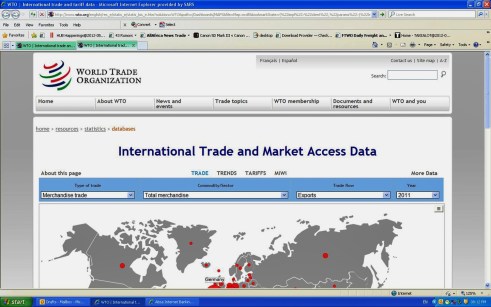
Researchers and students of international trade patterns and economics will find a useful resource in the following link. Information is made available across databases, annual publications as well as interactive statistics and maps. Please take note of the copyright.

WTO Statistics

Bribery along the corridor

Notwithstanding efforts to minimize collusion, bribery and corruption through increased use of technology, the underlying fact remains that human intervention cannot be completely removed from nodes within the supply chain.Identifying the causes and parties involved in such activity is only the start (yet minuscule) aspect of a problem entrenched in the distrust of government officials and border authorities in particular. Integrity is based on trust. If trust is the placement of hordes of incompetence in public jobs to secure votes, then you will not need to look very far to understand that “the bribe” epitomizes the ultimate enterprise of individuals either bent on extortion, or to avail their services (like prostitutes  to the crooked trader. The following article “Bribery as a non-tariff barrier to trade” (click hyperlink to download) takes account of a wide-spread of role players as to their views and attitudes on the matter. In my view it is a template for what actually occurs at every border across the continent. 

Transparency International (Kenya) and Trade Mark (East Africa) have collaborated in the publication of a review on the subject of bribery in the EAC region. The executive summary elucidates the context – 

The East African Common Market Protocol that came into force in 2010 provides for the free flow of goods, labour, services and capital across the EAC bloc. To achieve this, members undertook to remove all tariff and non-tariff barriers to trade. While progress has been made on the removal of the former, doing away with the Non-tariff barriers along the main transport corridors of the region has remained a challenge.

Taking cognizance of this, Transparency International-Kenya, Uganda, Rwanda and Burundi in conjunction with the Transparency Forum in Tanzania conducted a survey along EAC‘s main corridors — the Northern and Central corridors- that form a vital trade link in the region between August and November 2011. The survey objectives were to measure the impact of bribery practices and create public awareness on the vice.

In determining the size of bribe payable, negotiations came top. The value of consignment and the urgency were some of the other factors sighted by the respondents. According to the survey, truck drivers have devised various means of accounting for bribery expenses to their employers. The most common is road trip expense’. These are anticipated regular amounts given prior to the start of a journey and ad hoc miscellaneous expenses. In the transporters’ books of accounts, the bribes are normally disguised either as anticipated regular amounts or as ad hoc miscellaneous expenses. Source: Transparency International and Trade Mark

Zim Police make yet another cigarette bust

Beit Bridge Borderpost, Zimbabwe

Police in Beitbridge have recovered yet another consignment of cigarettes worth US$20 000 in Tshapfuche as they intensify their anti smuggling operation. The stash destined for export was recovered last Friday morning following the discovery of other contraband shipment worth almost US$500 000 in the same area the previous day.

Countries of the South African Customs Union (South Africa, Namibia, Botswana, Lesotho and Swaziland) charge high duties on cigarettes, meaning that even those bought retail in Zimbabwe can be sold for good profit in South Africa.

The police officer commanding Beitbridge district Chief Superintendent Lawrence Chinhengo said the second stash was recovered at the homestead of a security guard they had earlier on arrested.

The security guard was part of the three suspects who were arrested while looking after the “merchandise” at Edzisani Muleya’s homestead. Chief Supt Chinhengo said the suspect had hid 33 boxes at his sister’s homestead while he kept another 72 boxes at his house.

Three hundred and eleven boxes of Remmington Gold, 442 Cevils, 221 Dullas and 107 Newbury cigarettes worth US$500 000 were last week recovered from Muleya’s homestead. Police say the house had become an illegal transit warehouse.

Muleya has since gone into hiding and police have launched a manhunt. Chief Supt Chinhengo said the Ferret squad, made up of the ZRP, Zimbabwe Revenue Authority and other security agents raided the homestead on Thursday afternoon during an operation code-named Sukani Emanzini (Get out of the Limpopo River). Source: The Herald (Zimbabwe)

Beitbridge to be Zim’s first economic zone?

The Chronicle (Zimbabwe) reports that the Ministry of Economic Planning and Investment Promotion and South Africa’s Department of Trade and Industry are creating economic zones in their respective countries to boost investment. Economic zones are areas where local and foreign investors or companies who invest there are given preferential benefits like low tax and low rentals.

Speaking during the 4th Investment and Trade Initiative between visiting South African business delegates and Bulawayo business people, the Deputy Minister of Economic Planning and Investment Promotion Dr Samuel Undenge said the Bilateral Investment Promotion and Protection Agreement signed in 2010 by the Zimbabwean and South African Governments would help in the creation of the economic zones.

South Africa’s Deputy Director General responsible for Enterprise and Development Mr Sipho Zikode said they were busy crafting a special document to guide the 12 identified economic zones in South Africa. “Messina is one of the chosen economic zones in South Africa and we also want to create linkages with Beitbridge as they are close to each other,” said Mr Zikode. Dr Undenge said there was need for countries to work together to boost economies on the continent. The business seminar was held to achieve mutual economic growth and development through outward investment facilitation, infrastructure development and trade liberalisation between Zimbabwe and South Africa.

Major trade route now reaches Katanga

Port of Walvis Bay – Namibian transport corridor

A new regional trade route reaching from the Katanga Province in the Congo all the way to Walvis Bay as point of entry, is on the radar of the Walvis Bay Corridor Group following an agreement between Namibia and the DRC. Development of this major link started its first tentative steps recently when the Corridor Group opened an office in Lubumbashi, on the border of the DRC and Zambia.The Corridor Group said earlier this week it had launched an office in Lubumbashi, DRC, to create a strong business presence in the mineral-rich Katanga Province.

The Walvis Bay Corridor Group Lubumbashi office was officially opened by the Governor of the Katanga Province, Hon. Moïse Katumbi Chapwe, supported by the Namibian Ambassador, Mr Ringo Abed, Corridor Chairman Mr Bisey Uirab, and Corridor Group CEO, Mr Johny Smith.

The need for landlocked countries to gain access through an alternative trade route to and from sea was recognised, where neigbouring countries and beyond could benefit from access to the Port of Walvis Bay that offers importers and exporters reduced time and cost savings, high reliability, and cargo security. The Katanga Province offers a market of more than 2 million consumers and with the fast expanding mineral rich DRC there is also a need from the DRC Government for the Walvis Bay-Ndola-Lubumbashi Corridor to extend further towards other Provinces in the DRC. Walvis Bay is surely growing as an alternative trade route for Southern DRC in that various commodities are being moved via the Port of Walvis Bay such as copper, frozen products, machinery & equipment and consumables.

The office in Lubumbashi, DRC is now the third branch office of the WBCG beyond Namibia, with the other branch offices in Lusaka, Zambia since 2005 and Johannesburg, South Africa in operation since 2008. The Walvis Bay Corridor Group is currently hosting the Walvis Bay-Ndola-Lubumbashi Development Corridor Technical Committee, which is a Public Private Partnership between the government departments responsible for transport of the DRC, Namibia and Zambia to address the bottlenecks that impede the flow of traffic along this trade route using the Port of Walvis Bay. Source: Economist (Namibia)

Building hard and soft infrastructure to minimise regional costs

I post this article given it ties together many of the initiatives which I have described in previous articles. The appears to be an urgency to implement these initiatives, but the real question concerns the sub-continent’s ability to entrench the principles and maintain continuity. At regional fora its too easy for foreign ministers, trade practitioners and the various global and financial lobbies to wax lyrical on these subjects. True there is an enormous amount of interest and ‘money’ waiting to be ploughed into such programs, yet sovereign states battle with dwindling skills levels and expertise. Its going to take a lot more than talk and money to bring this about.

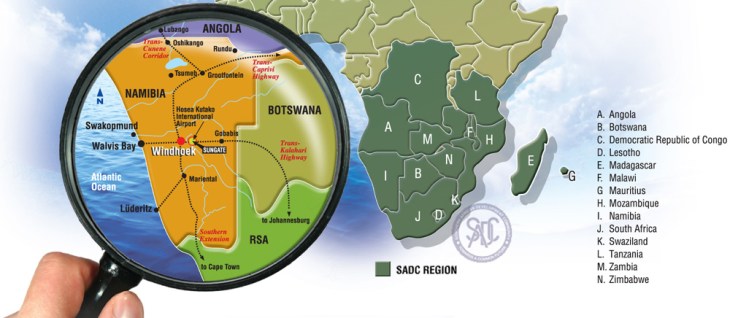
South Africa is championing an ambitious integration and development agenda in Southern Africa in an attempt to advance what Trade and Industry Minister Rob Davies describes as trade and customs cooperation within the Southern African Customs Union (SACU), the Southern African Development Community (SADC) and other regional trade organisations.

Central to pursuing this intra-regional trade aspiration are a series of mechanisms to combine market integration and liberalisation efforts with physical cross-border infrastructure and spatial-development initiatives. Also envisaged is greater policy coordination to advance regional industrial value chains. “Trade facilitation can be broadly construed as interventions that include the provision of hard and soft infrastructure to facilitate the movement of goods, services and people across borders, with SACU remaining the anchor for wider integration in the region,” Davies explains.

This approach is also receiving support from the US Agency for International Development (USAid), which recently hosted the Southern African Trade Facilitation Conference, held in Johannesburg.

Trade programme manager Rick Gurley says that virtually every study on trade in sub- Saharan Africa identifies time and cost factors of exporting and importing as the most significant constraints to regional trade potential. Limited progress has been made by SADC member States and SACU partners to tackle the factors undermining trade-based growth, limiting product diversification and increasing the price of consumer goods, including of foodstuffs. However, far more would need to be done to realise the full potential of intra-regional trade.

Regional Alliance
One high-profile effort currently under way is the Tripartite Free Trade Area (T-FTA), which seeks to facilitate greater trade and investment harmonisation across the three existing regional economic communities of the SADC, the Common Market of Eastern and Southern Africa and the East African Community.

The existing SADC FTA should be fully implemented by the end of the year, with almost all tariff lines traded duty-free and, if established, the T-FTA will intergrate the markets of 26 countries with a combined population of nearly 600-million people and a collective gross domestic product (GDP) of $1-trillion. At that size and scale, the market would be more attractive to investors and could launch the continent on a development trajectory, Davies avers. It could also form the basis for a later Africa-wide FTA and a market of some $2.6-trillion.

However, as things stand today, intra- regional trade remains constrained not merely by trade restrictions but by a lack of cross-border infrastructure, as well as poor coordination and information sharing among border management agencies such as immigration, customs, police and agriculture.Cross-national connectivity between the customs management systems is also rare, often requiring the identical re-entry of customs declarations data at both sides of the border, causing costly and frustrating delays.

USAid’s regional economic growth project, the Southern African Trade Hub, is a strong proponent of the introduction of several modern trade-facilitation tools throughout the SADC – a number of which have already been successfully pioneered. These tools, endorsed by the World Customs Organisation (WCO) Framework of Standards, which offers international best-practice guidelines, are aimed at tackling the high costs of exporting and importing goods to, from, and within Southern Africa, which has become a feature of regional trade and discouraged international investment.

Bringing up the Rear
A country’s competitiveness and the effec- tiveness of its trade facilitation regime are measured by its ranking on World Bank indices and, with the exception of Mozambique, Southern African States perform poorly – with most in the region settling into the lowest global quartile of between 136 and 164, out of a total of 183. “Our transaction costs in Africa across its borders are unacceptably high and inhibit trade by our partners in the private sector,” says WCO capacity building director Erich Kieck. “We need our States to develop good ideas and policies, but the true test lies in their ability to implement them,” he notes.

He adds that not only does trade facilitation require efficient customs-to-customs connectivity, but also demands effective customs-to-business engagement, adding that, while customs units are responsible for international trade administration, they are not responsible for international trade. “The private sector is the driver of economic activity and international trade, and government’s responsibility is to understand the challenges faced by the business community and develop symbiotic solutions,” Kieck notes.

Despite the establishment of regional trade agreements and regional economic communities in Southern Africa, many partner- ships have failed to deliver on their full potential to increase domestic competitiveness.

In a report, African Development Bank (AfDB) senior planning economist Habiba Ben Barka observes that, despite the continent’s positive GDP growth record – averaging 5.4% a year between 2005 and 2010 – it has failed to improve its trading position or integration into world markets. In 2009, Africa’s contribution to global trade stood at just under 3%, compared with nearly 6% for Latin America and a significant 28% for Asia.

“Since 2000, a new pattern of trade for the continent has begun to take centre stage, as Africa has witnessed an upsurge in its trade with the emerging Brazil, Russia, India and China economies. Overall, Africa is trading more today than in the past, but that trade is more with the outside world than internally,” says Ben Barka. She adds that while many African regional economic communities have made some progress in the area of trade facilitation, much greater effort is required to harmonise and integrate sub-regional markets.

To address enduring trade barriers, consensus among business, government and trade regulators appears to lean towards the adoption of one or a combination of five facilitation tools. These include the National Single Window (NSW), the One-Stop Border Post (OSBP), cloud-based Customs Connectivity, Coordinated Border Management (CBM) and Customs Modernisation Tools.

A National Single Window
NSWs connect trade-related stakeholders within a country through a single electronic-data information-exchange platform, related to cross-border trade, where parties involved in trade and transport lodge standardised trade-related information or documents to be submitted once at a single entry point to fulfil all import, export and transit-related regulatory requirements.Mauritius was the first SADC country to implement the NSW and consequently improved its ranking on the ‘Trading Across Borders Index’ to 21 – the highest in Africa. It was closely followed by Ghana and Mozambique, which have also reported strong improvements.

Developed in Singapore, the benefits of government adoption include the reduction of delays, the accelerated clearance and release of goods, predictable application, improved application of resources and improved transparency, with several countries reporting marked improvement in trade facilitation indicators following the NSW implementation.

In South Africa, the work on trade facili-tation is led by the South African Revenue Service (SARS), which focuses on building information technology (IT) connectivity among the SACU member States, and strengthen- ing risk-management and enforcement measures. However, SARS’ approach to the NSW concept remains cautious, Davies explains. “SARS has considered the viability of this option as a possible technological support for measures to facilitate regional trade, but considers that this would fall outside the scope of its current approach and priorities in the region,” he said.

One-Stop Border Posts
As reported by Engineering News in December last year, effective OSBPs integrate the data, processes and workflows of all relevant border agencies of one country with those of another, which culminates in a standardised operating model that is predictable, trans- parent and convenient. An OSBD success story in Southern Africa is the Chirundu border post, where a collaboration between the Zambia and Zimbabwe governments has culminated in a single structure, allowing officers from both States to operate at the same location, while conducting exit and entry procedures for both countries.

Launched in 2009, this OSBP model is a hybrid of total separation, joint border operations and shared facilities in a common control zone. Implementation of the model has reduced clearance times to less than 24 hours, significantly reduced fraudulent and illegal cross-border activity, enabled increased information sharing between border agencies and reduced the overall cost of export and import activities in the area.

Earlier this year, former South African Transport Minister Sibusisu Ndebele indicated that Cabinet was looking into establishing a mechanism that would bring all border entities under a single command and control structure to address the fragmentation in the country’s border operations, particularly at the high-traffic Beitbridge post between South Africa and Zimbabwe. “The ultimate vision is to create one-stop border operations to facilitate legitimate trade and travel across the borders,” he said.

Customs Connectivity and Data Exchange
Improved connectivity between customs limbs in sub-Saharan Africa has perhaps made the most indelible strides in the region, with improved IT connectivity between States identified as a priority by Sacu.

This includes customs-to-customs inter- connectivity, customs-to-business inter- connectivity and interconnectivity between customs and other government agencies. SACU members have agreed to pursue the automation and interconnectivity of their customs IT systems to enable the timely electronic exchange of data between administrations in respect of cross-border movement of goods. “As a consequence of this acquiescence, we have identified two existing bilateral connectivity programmes as pilot projects to assess SACU’s preferred connectivity approach, cloud computing between Botswana and Namibia and IT connectivity between South Africa and Swaziland,” says SACU deputy director for trade facilitation Yusuf Daya. He adds that a regional workshop was recently convened to explore business processes, functions, data clusters and the application of infrastructure at national level to improve and develop intra-regional links.

Coordinated Border Management
The SADC has been a strong proponent of CBM efforts in the region, which promotes coordination and cooperation among relevant authorities and agencies involved in, specifically, the protection of interests of the State at borders. “The union has drafted CBM guidelines for its members on implementation, based on international best practice, and has received indications of interest from several member States,” explains SADC Customs Unit senior programme officer Willie Shumba.He adds that CBM is a key objective of regional integration, enabling the transition from an FTA to a customs union and, eventually, to a common market, through effective controls of the internal borders.

Customs Modernisation
South Africa’s customs modernisation initiative is well advanced and came about following Sars’ accession to the WCO’s revised Kyoto Convention in 2004, which required customs agencies to make significant changes to it business and processing models. These changes included the introduction of simplified procedures, which would have fundamental effects on and benefits for trade and would require a modern IT solution.

Since its inception, the SARS Customs Modernisation Programme has gained tremendous momentum, with amendments to the Passenger Processing System and the replacement of SARS’s Manifest Acquittal System in the Automated Cargo Management system. Further adjustments were made to enable greater ease of movement of goods, faster turnaround times and cost savings, as well as increased efficiency for SARS. This phase included the introduction of an electronic case-management system, electronic submission of supporting documents, the centralisation of back-end processing in four hubs and an electronic release system and measures to enhance the flow of trucks through borders – in particular at the Lebombo and Beitbridge borders.

Proper Planning
AfDB’s Ben Barka warns that, prior to the implementation of any border improvement efforts by countries in Southern Africa, a thorough analysis and mapping of each agency’s existing procedures, mandate and operations should be undertaken.“Based on these findings, a new set of joint operational procedures need to be agreed upon by all involved agencies and must comply with the highest international standards,” she says.

Development coordination between States is essential, as the largest disparity among regional groupings, in terms of intra-regional trade, is clearly attributable to their differentiated levels of progress in various areas, including the removal of tariffs and non-tariff barriers, the freedom of movement of persons across borders and the development of efficient infrastructure. Source: Engineering News.

Border Madness!

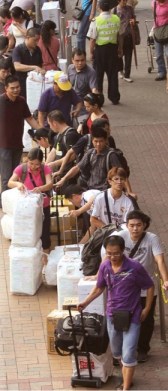
Mainland Chinese visitors line up and wait for check in outside Hong Kong’s Sheung Shui train station with packages of diapers to be parallel imported into Shenzhen for resale.

While communist China bears the brunt of criticism for its exportation of low cost and in many cases inferior products to the rest of the world, the following article suggests one should spare a thought for the Chinese citizens themselves given what they have to put up with from the authorities between Hong Kong and Shenzhen.

The recent hard crackdown on smugglers and couriers across the boundary between Hong Kong and Shenzhen has cut deeply into the business of parallel trading on both sides of the border, and thus far, appears to have reduced the nuisance problem caused to residents of the northern New Territory. However, with the crackdown on-going and the Mass Transit Railway Corporation (MTR) adding further pressure by restricting the dimensions and weight of passenger luggage going across the border, complaints have started buzzing, that the move may have frightened away the passenger couriers, but not the syndicates coordinating them behind the scenes.

Effective 9 October 2012, the Mass Transit Railway Corporation (MTR) imposed a maximum weight limitation of 32 kilograms or 130 centimetres in length for passenger luggage on the East Rail Line, under a three-month trial scheme. Could you just imagine this at an African border crossing? Passengers are allowed only one piece of baggage. All their small parcels and suitcases are required to be bundled up into a single “package,” all part of the bid to curb the passenger-couriers whose clamouring and crowding had become a serious issue for neighbours of MTR in New Territories.

The restrictions were seen as MTR’s contribution to the collaborative effort that involved governments on both sides of the border, to cut down on so-called parallel traders and smugglers. MTR’s new rule has, in general, earned praise from residents of northern New Territory because the nuisance problem caused by the traders/smugglers has been alleviated. However, for residents of Shenzhen, who travel back and forth every day, or residents of `other parts of the mainland who come to Hong Kong for shopping, the size and weight limitations seem be “unnecessary” and “troublesome”.

“I was often asked to buy things in Hong Kong on my way home: cooking oil, rice, baby formula, tissues, etc. I really don’t have time to care about how heavy they are or how long they are,” said Go, a resident of Shenzhen. He Hua, also a Shenzhen resident living in Luohu district who comes to Hong Kong to go shopping two to three times a month, also doesn’t like the new limitation. “I came to Hong Kong regularly to buy things for myself and my family. I paid my money and followed regulations of the Customs, why should I worry about my weight and length? If the goods are all legal, why can’t I take them on the train at one time?” said Hua, who had carried six cans of baby formula with her, which she claimed were for her elder sister’s baby.

Recently, there has been a strengthened effort to combat parallel trade, with a collaborative effort between the Customs and Excise Department of the SAR and the Shenzhen Anti-Smuggling Bureau. The action uncovered 120 cases of parallel trading and made 123 arrests, with the unpaid taxation of the confiscated goods amounting to one million yuan. On the other side of the border, business associated with cross boundary goods was also affected. In North Huaqiang district in Shenzhen, which had been long recognized as the “centre of parallel trading” of “grey goods” from Hong Kong, business has shrunken since the crackdown.

A shop owner in North Huangqian area told China Daily that he had expected to make a huge profit by selling iPhone 5, the latest release by Apple Corporation. It never happened, because his Hong Kong supplier informed him that it was too difficult and that it was risky to get the iPhone 5 across the border. And the seller couldn’t get the supply he had counted on.

“The whole business chain of parallel trading depends on the ‘suppliers’ to smuggle goods from Hong Kong to Shenzhen, especially electronic goods. Now the suppliers have trouble getting through the border, (so) we have trouble getting the goods,” said the anonymous shop owner. Because of serious supply shortage, the price of “grey goods” has soared significantly on the mainland side of the border. The best example was iPhone, which sold originally at HK$5,688 (US$733.8) at the Apple Store in Hong Kong, but was priced at 8,000 yuan (US$1276.5) at the anonymous shop owner’s store. Insiders of the courier industry also told China Daily that the price for smuggling goods across the border with “ant house-moving” tactics had increased from 22 yuan per kilogram to a record high of 50 yuan per kilogram.

The business of stores that sell Hong Kong goods in Shenzhen has picked up since the crackdown, as people who live along the border in Shenzhen choose to buy daily-use goods in local stores – like cooking oil, rice and baby formula, instead of going to Hong Kong by themselves. “We have adequate Hong Kong goods, don’t worry; they are all fresh and delivered to us fresh every day,” said the owner of a store selling Hong Kong goods in Shatoujiao, or Sha Tau Kok in Cantonese, in eastern Shenzhen. The store owner refused to answer how he managed to get “adequate supply” from Hong Kong every day.

The crackdown on smugglers, especially the MTR weight limitation, had stopped individual couriers; however, it didn’t shut down the syndicates coordinating behind the scenes. What’s more, there are some 157 online stores that sold Hong Kong goods on Taobao, the biggest online shopping market in the mainland. The record on the website showed that one of the big shops had sold out 1,357 pieces of Hong Kong goods in the past week, 90 percent of which are daily use goods and food. Source: The China Daily