East African Single Customs Territory Will Cut Delays

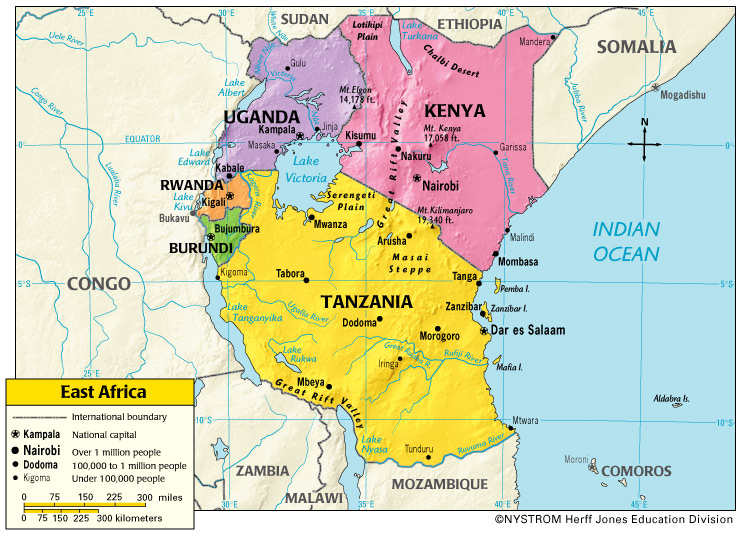
East%20Africa%20mapIn the spirit of stronger East African integration, the revenue authorities of Kenya, Uganda and Rwanda have started preparations for the implementation of a Single Customs Territory. The Commissioners’ General of the three East African countries deliberated on the mechanisms to operationalize the decisions of the heads of state who have continuously called for its fast tracking.

On June 25, 2013 at the Entebbe State House in Uganda, a Tripartite Summit involving the three heads of state issued a joint communiqué directing among other things the collection of customs duties by Uganda and Rwanda before goods are released from Mombasa. The leaders also agreed that traders with goods destined for warehousing should continue executing the general bond security.

During the meeting, the Commissioners’ General of the three countries put in place joint technical committees on ICT, Business Process, enforcement, change management, legal and human resource to discuss the implementation road map.

In a statement signed by the three Commissioners’ General, they said that the development of a Single Customs Territory will positively impact on the trading activities of the three countries as it will ensure that assessment and collection of taxes is done at the country of destination before cargo moves out of the port.

“As a result, the East African Community Customs Union will join the ranks of other Customs Union such as South African Customs Union and the European Union among others. Under this arrangement, restrictive regulations are eliminated as the corridor is now considered for customs purposes. For clarity, circulation of goods will happen with no or minimal border controls,” reads the statement in part.

Kenya said it would cut red tape holding up millions of dollars of imports into its landlocked neighbours Rwanda and Uganda, by letting the countries collect customs on goods as they arrive in its port at Mombasa. Goods can currently face long delays as agents process the paperwork to release cargoes from warehouses at east Africa’s biggest port, and later make separate arrangements to pay import duties at Kenya’s borders with Uganda and Rwanda.

Officials said the new system, due to be introduced in August, would clear inefficiencies and blockages seen as a major barrier to trade in the region. But clearing agents in Kenya said it could also cost thousands of jobs in warehouses, freight firms and almost 700 clearing and forwarding companies operating in the country.

Kenya, Uganda and Rwanda, together with Burundi and Tanzania, are members of the regional East African Community trade bloc, with a joint gross domestic product of $85 billion.

Kenyan tax officials said the new system would allow a “seamless flow of goods” and make it easier to stop goods getting through the system without customs payments. “Once cleared at the port, there will be no stoppages at borders and checkpoints along the corridor,” the Kenya Revenue Authority’s commissioner of customs, Beatrice Memo, told a news conference.

Under the system, Rwandan and Ugandan clearing agents and customs officials would be able to set up their own offices to clear cargo and collect taxes directly at the port. The Kenya International Freight and Warehousing Association said that meant up to half a million jobs could be lost to Uganda and Rwanda. “The Government has not consulted us … and we totally reject it,” said  Association chairman Boaz Makomere. Sources: East African Business Week (Kenya) & The New Vision (Uganda).

Rwanda-Burundi Establish Second One-Stop Border Post

Rwanad-Burundi OSBPA one stop border post has been established at Ruhwa in Rusizi District order to reduce the amount of time spent by traders clearing goods at the Rwanda-Burundi border. The one-stop border post is also expected to bolster trade between the two countries and see an infrastructure overhaul at the border area, according to the Minister of State for Transport, Dr Alexis Nzahabwanimana.

Under the one border post, travellers will access services at one spot unlike in the past when documents were processed at two locations – one in Rwanda and the other across the Burundi border. The process will now take about five minutes as opposed to 30.

With the new system, immigration, emigration and customs officials from the two countries share offices to ease the clearance procedures for travellers entering or departing either country.

Dr Nzahabwanimana observed that the post is an indication of existing good relations between the two countries and that it will “strengthen brotherhood between our peoples and boost trade between our two countries.”

“The post will ease the movement of people and goods,” Nzahabwanimana on Wednesday. “It will also reduce delays that people incurred while clearing at the border in the past.”

He urged employees to seize the opportunity and improve on the quality of services they provide. He also advised them to exploit modern technologies if they want to make a difference in what they do.

Burundi’s Minister of Transport and Public Works, Deogratias Rurimunzu described the move as “another step forward in the cooperation and friendship” between Rwanda and Burundi. He observed that the border will promote bilateral trade and cooperation abetween both countries.

“Work diligently, use your skills, pto provide better services and put these infrastructures to good use for them to benefit our population,” Rurimunzu told employees at the border post.

About the project

The idea to establish the one-stop border post was first floated in 2009. It is part of a larger project which comprises border infrastructures including administrative blocks, staff quarters, a warehouse, a weighbridge, social facilities, street lighting and water sources, among others.

The project also comprised the renovation of a 50.6 kilometre road between Nyamitanga and Ruhwa on the Burundian side as well as the construction of Ntendezi-Mwityazo Road on the Rwandan side.

The project was sponsored by the African Development Bank (AfDB), at a cost of about Rwf32billion on either side of the border. Ruhwa one stop border post is the second shared between Rwanda and Burundi following the establishment of the Gasenyi-Nemba border post in Bugesera district in 2011. Source: The New Times, Rwanda

A South African RFID/GPS cross-border logistics and customs solution

Inefficiency of road freight transport is one of the primary factors that hamper the economy of sub-Saharan Africa. Long delays experienced at border posts are the single biggest contributor towards the slow average movement of freight. Cross-border operations are complicated by the conflicting security objectives of customs and border authorities versus efficiency objectives of transport operators. It furthermore suffers from illegal practices involving truck drivers and border officials. In theory the efficiency of cross-border operations can be improved based on the availability of more accurate and complete information – the latter will be possible if different stakeholders can exchange data between currently isolated systems.

Cross-border trade basically comprises 3 distinct but interlinked layers –

An information layer – in which various trade documentation (purchase order, invoice), cargo and conveyance information (packing list, manifest), customs and government regulatory data (declaration, permits) are exchanged between various supply chain entities and the customs authority. These primarily attest to the legal ownership, contract of carriage, reporting and compliance with customs and other regulatory authority formalities (export and import), and delivery at destination.

A logistics layer – for the collection, consolidation, sealing and conveyance of physical cargo from point of despatch via at least two customs control points (export and import), to deconsolidation and delivery at point of destination.

A financial layer – which refers to the monetary exchange flow from buyer (importer) to seller (exporter) according to the terms and conditions of the sale (INCOTERMS). Hmm… no, this does not include ‘bribe’ money.

All three layers are inter-linked and prone to risk at any point of a given transaction. There is also no silver bullet solution to secure supply chains. Moreover, it is a fallacy that Customs and Border Agencies will ever conquer cross-border crime – simply because there are too many angles to monitor. Furthermore, in order to set up cross—border information exchange and joint enforcement operations it is both legally and politically time-consuming. Criminal elements are not hampered by these ‘institutions’, they simply spot the gaps and forge ahead.

One of the areas requiring customs attention is that of chain of custody. In short this implies the formal adoption of the World Customs Organisation’s SAFE Framework principles. Each party with data that needs to be filed with the government for Customs and security screening purposes has responsibilities. Those responsibilities include –

  • Protecting the physical goods from tampering, theft, and damage.
  • Providing appropriate information to government authorities in a timely and accurate manner for security screening purposes.
  • Protecting the information related to the goods from tampering and unauthorized access. This responsibility applies equally to times before, during and after having custody of the goods.

Tenacent RFID Tag

Tenacent RFID Tag

Security seals are an integral part of the chain of custody. The proper grade and application of the security seal is addressed below. Security seals should be inspected by the receiving party at each change of custody for a cargo-laden container. Inspecting a seal requires visual check for signs of tampering, comparison of the seal’s identification number with the cargo documentation, and noting the inspection in the appropriate documentation. More recently the emergence of certain e-seals and container security devices (CSDs) contribute even further to minimizing the amount of ‘physical’ verification required, as they are able to electronically notify the owner of the goods or government authority in the event of an incidence of tampering.

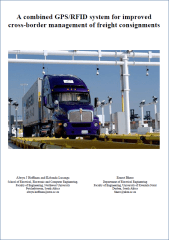
White Paper - GPS-RFID systems for cross-border management of freight consignments

White Paper – GPS-RFID systems for cross-border management of freight consignments

A group of South African specialist engineers have been working closely with transport authorities, logistics specialists, defense experts and customs authorities across the globe. Their e-seal is patented in no less than 16 high volume countries. It is produced in Singapore, China and Indonesia depending on politics, free-trade agreements and demand. May move some to Brazil and US in time. Proof of concept (POC) initiatives are currently underway in Brazil for rail cargo, US Marine Corps for their p-RFID program and other Department of Defense divisions in the USA, and will shortly be included in one of the GSA agreements making it available to any government department in the US. Further adrift, the e-seal is also currently enjoying interest in Guatemala, Mexico, Canada, Panama, Jordan, Italy, Spain, and Malaysia. Here, in South Africa, a POC was conducted at the 1st autogate at Durban Container Terminal, funded by the North West University, and overseen with successfully achieved objectives by Transnet Port Terminals. For technical details of the RFID seal, click here!

With much anticipated success abroad, how much support will this product attain in the local and sub-Saharan African scene? Government authorities, as well as logistics and supply chain operators are therefore encouraged to study the enclosed ‘white paper’ – Click Here!. It firstly quantifies the size of the problem and estimates the potential economic benefits that will be created by improved cross-border operations. It then proposes a combined GPS/RFID system that can provide the required level of visibility to support improved operational management, resulting in a simultaneous increase in the security and efficiency of cross-border freight operations. A brief cost-benefits analysis is performed to show that the expected benefits from such a system will by far exceed the costs of implementation. Source: Tenacent & iPico

Uganda says it’s time to talk in Africa

Africa-mombasa-mct-aerial

Port of Mombasa (Credit – Port Strategy)

Not for the first time a landlocked country in Africa is attempting to have a say in a remote port operation which functions as a major gateway for its import and export trade. This time it is Uganda proposing that it has a say in the management of Kenya’s major port, the port of Mombasa. In the recent past it was Ethiopia attempting to secure a dedicated terminal in Djibouti.

The Ugandan initiative surfaced at a recent ‘Validation Workshop on Uganda’s Position on the Single Customs Territory for the East African Community. The Permanent Secretary Ministry of EAC Affairs, Edith Mwanje said that Uganda should have a say in the management of gateway ports because of “the many delays that negatively impacted trade”. Ugandan cargo accounts for the largest body of traffic handled by the port of Mombasa for the landlocked countries surrounding Kenya.

It is unlikely, of course, that any country will give up even partial control of a national asset to another country. It is akin to relinquishing sovereignty in the minds of countries owning port assets and being asked to participate in some form of power sharing. Djibouti fought hard to prevent Ethiopian Shipping Lines gaining control of dedicated terminal assets in the old port of Djibouti and won this battle. It is very unlikely that Kenya will even consider the idea of a foreign power participating in the management of its number one port.

It may, however, be a wise course of action for countries such as Djibouti and Kenya to consider establishing some sort of regular stakeholder dialogue. This is the path to a long and sustainable relationship as opposed to a short opportunistic one.

It is known, for example, that in the past Ethiopia has been frustrated by the high price of gateway container and general cargo operations in Djibouti and this has led to tensions. Since these days, however, Djibouti has put considerable effort into having a sensible dialogue with Ethiopia and this has matured into new projects such as the signing of an agreement with Ethiopia and Djibouti to build an oil pipeline that will reduce South Sudan’s dependence on crude shipments via neighbouring Sudan, and plans for a $2.6bn liquefied natural gas terminal in Djibouti, including a liquefaction plant and a pipeline, that will enable the export of 10m cubic meters of gas from Ethiopia to China annually from 2016.

Source and Picture credit: Portstrategy.com

Study into the cooperation of border management agencies in Zimbabwe

tralacZimbabwe is a landlocked developing country with a population of 14 million, sharing common borders with Botswana, Mozambique, South Africa and Zambia. Zimbabwe has 14 border posts, varying in size in accordance with the volume of traffic passing through them. Beitbridge, the only border post with South Africa, is the largest and busiest, owing to the fact that it is the gateway to the sea for most countries along the North-South Corridor. Zimbabwe thus provides a critical trade link between several countries in the southern African regions. The need for the country, especially its border posts, to play a trade facilitative role can therefore not be over-emphasised.

Trade facilitation has become an important issue on the multilateral, regional and Zimbabwean trade agendas, and with it, border management efficiency. Border management concerns the administration of borders. Border agencies are responsible for the processing of people and goods at points of entry and exit, as well as for the detection and regulation of people and goods attempting to cross borders illegally. Efficient border management requires the cooperation of all border management agencies and such cooperation can only be achieved if proper coordination mechanisms, legal framework and institutions are established.

This study explores how border agencies in Zimbabwe operate and cooperate in border management. The objectives of the study were to:

  • Identify agencies involved in border management in Zimbabwe;
  • Analyse the scope of their role/involvement in border management; and
  • Review domestic policy and legislation (statutes of these agencies) specifically to identify the legal provisions that facilitate cooperation among them.

Visit the Tralac Trade Law website to download the study.

Source: TRALAC

New Ressano Garcia Cargo Terminal Operational By December

Mozambique flagA new cargo terminal will be opened at the Ressano Garcia – Lebombo border crossing before the end of the year to speed up the processing of customs clearance for goods moving between Mozambique and South Africa.

To further the project an agreement has been reached between the Mozambique Tax Authority (ATM) and a consortium composed of the Matola Cargo Terminal (Frigo), Matrix and the “Zambian Border Crossing Company”.

The 15 year concession contract was signed on 14 June in Ressano Garcia by the chairperson of ATM, Rosario Fernandes, and by the managing director of Frigo, Filipe Franco.

Filipe Franco told AIM that a new truck terminal is being built where facilities will be available for all the necessary services including customs, migration, and officials dealing with health and agriculture.

He pointed out that “our objective is to ensure that the terminal will be completed and operational by December”, adding that the consortium is composed of companies with a great deal of experience in managing cargo terminals.

Rosario Fernandes said that the cargo terminal project will facilitate trade by speeding up customs clearance at the border post through a one stop system and the single electronic window system which is being implemented throughout Mozambique. Source: AIM (Mozambique News Agency)

Call to Develop Zim-RSA Transport and Trade Links

zim-rsaZimbabwe needs to further develop transport and trade infrastructure links with South Africa to maintain Africa’s biggest economy as its single most important trading partner, recent research findings have shown.

This came from preliminary findings of a research study carried out by Dr Medicine Masiiwa who was commissioned by the Ministry of Regional Integration and International Co-operation to undertake the study on trade and transport. The World Bank funded the study to assess the need to facilitate transport and trade in Zimbabwe. The findings form part of preliminary desk research ahead of a more detailed second phase.

Dr Masiiwa presented the initial findings from the desk research to stakeholders at a workshop in Harare. Preliminary findings of the study show that since economic and political stability, key for trade competitiveness of Zimbabwe is now in place, the country’s trade was bound for significant growth, making a trade and transport facilitation measure critical to support this growth.

“A major implication of having South Africa as Zimbabwe’s single most significant trading partner is that the transport and trade infrastructure between the two countries should be further developed,” he said.

Development options include expanding the current border post to accommodate more traffic or to construct a new border post altogether. Sound transport and trade infrastructure between Zimbabwe and South Africa is critical as more than 34 percent of local imports go to South Africa while Zimbabwe imports more than 60 percent of basic commodities from that country.

But the state of the main trunk road, on the Zimbabwe side, has remained in poor state despite also being the main link between the north and south. Increased trade with China implies that Zimbabwe, in collaboration with its regional partners, needs to further develop the Beira and Limpopo transport corridors, which link Zimbabwe with the ports on the east coast.

“It is also interesting to note that trade with the EU and other Western countries is on the rebound; meaning transport corridors linking western gateways also need to be further developed,” said Dr Masiiwa.

The major problem facing Zimbabwe is that the quality of infrastructure is deteriorating and therefore acting as an impediment to trade. A study by the World Bank showed that in the 1990s, the proportion of primary roads in “good” condition was about 90 percent, but this dropped to 85 percent in 2009. Roads with the worst conditions are secondary roads, where about 45 per cent of paved and 50 percent of the unpaved secondary roads are in poor condition. Source: Zimbabwe Herald

Zimbabwe Car Imports Up 23 Percent

Secondhand Cars ZimbabweVehicle imports through the Beitbridge Border Post increased by 23 percent between January and May this year compared to the same period last year, the Zimbabwe Revenue Authority has said. The increase is attributed to the price freeze of vehicles in South Africa and also the exorbitant prices of vehicles on the local market. Prices of second hand vehicles in South Africa have remained stable for the past 12 months. It costs on average US$7 000 to buy a second hand modest car from South Africa and at least US$20 000 and above to buy a similar car on the local market.

Figures from Zimra show that a total of 14 114 vehicles have been imported through Beitbridge between January 1 and May 31, 2013 compared to 10 851 vehicles during the same period last year.

Investigations by Herald Business show that on average Zimra clears a total of 1 500 cars per month at Manica bonded warehouse, and the figure has increased to between 2 000 and 3 500.

A total of between 15 and 25 car carriers offload vehicles at Manica daily. Zimra’s legal and corporate affairs director Ms Florence Jambwa said that most of the cars were coming from Japan via Durban, South Africa.

“There has been a marked increase of motor vehicle imports at Beitbridge Border Post this year as compared to the year 2012.

“The month of January had the lowest number of imports (1 194) while the month of May had the highest number (3 706), in fact there has been an increase every month.

“You will note that imports of motor vehicles through Beitbridge are increasing as such the work load increases.

“However, the Zimbabwe Revenue Authority employs several strategies to curb challenges at the border post mainly through embracing modern technological innovations such as the use of scanners and the ASYCUDA World system which is Internet-based,” said Ms Jambwa.

She said they had already addressed the challenges that were affecting the processing of vehicle imports at Beitbridge border post. Early this year there had been an outcry over the slow processing of vehicle imports at Manica where importers were spending around two days to complete the processes with Zimra. On average it should take less than one and half hours per vehicle if correct documentation was made available. She said they had no backlogs in terms of printing the customs clearance certificates for all newly imported vehicles.

Herald Business is reliably informed that plans are underway to have a cash office at the bonded warehouse and the authority has been encouraging its clients to make their payments through the bank and avoid carrying cash. Source: Zimbabwe Herald

Home Affairs announces plans for Border Management Agency

safrica1Minister for Home Affairs, Naledi Pandor, in her recent budget debate  (click hyperlink to view full speech) to parliment, made brief allusion to the establishment of a Border Management Agency (BMA) in South Africa. The Agency will ensure coordination of and co-operation among the departments operating at South African points of entry and along our borders. The BMA will be led by the Department of Home Affairs and will involve SARS, SANDF, SAPS, Health and Agriculture. At present, focused attention is being paid to improving the management, capacity, and infrastructure at ports of entry. Last year over R110 million was allocated to ports of entry infrastructure via the Public Works budget. This year over R130 million is being made available in the DHA budget. A number of our ports of entry have been equipped with the enhanced movement control system (EMCS) while introducing the advanced passenger processing system (APP) for airlines. Source: Info.gov.za

Non-Tariff Barriers – SADC Secretariat requested to intervene in Mozambique

0b8a0ce6140c04b4f629a97cb5e8d8f34e69d4a1The SADC, COMESA and EAC Tripartite alliance has been urged by various Zimbabwean, Zambian and Malawian exporters to salvage a potential crippling situation occurring at Mozambique borders. This follows the recent implementation of a new transit bond guarantee system which in conjunction with the Single Window system is allegedly causing significant delays, including loss of business and spiralling demurrage for transit goods emanating from these landlocked countries, en route for export from various Mozambique ports, Beira in particular.

Complaint no. NTB-000-578 in terms of ‘Lengthy and costly customs clearance procedures’ was lodged and can be viewed in full on the Tripartite’s NTB portal. Amongst the various problems sited, the complainants request the following of Mozambique –

  • Mozambique Ministry of Finance is requested to get customs to consider a parallel system to run with the electronic single window programme to clear the backlog in Beira port now and also consider providing release against Report orders to reduce further downtime in port . This will be a stop-gap measure until the customs staff are well versed , fully trained and that the new system can work well.
  • Mozambique authorities to facilitate arrangements with Cornelder to consider waiving storage for this special situation or at least offer 75% credit on the bills due which I must say are now astronomical based on the days the cargo has stayed in port both imports and exports.
  • Mozambique authorities to facilitate arrangements with shipping lines to consider waiving completely the demurrage due on the empty containers or at least give say 15-21 more days grace period before demurrage starts accruing.
  • Mozambique authorities to facilitate arrangements that Mozambique customs get technical assistance to assist roll this new programme out without causing huge catastrophes like this.

Mozambique has acknowledged the complaint and expressed regret over the developments. Mozambique reported that the issue was receiving urgent attention and they would provide feed back shortly.

Mozambique – Huge Heroin Seizure with South African Connection

00013ee0-314The Mozambican police claims that it has seized almost 600 kilos of heroin, at Namoto, in the northern province of Cabo Delgado, on the border with Tanzania.

The drugs were found on Sunday in the possession of two citizens of Guinea-Conakry, who are now under detention in the Cabo Delgado, provincial capital, Pemba. The drugs are being stored in the warehouses of the provincial attorney’s office.

According to Malva Brito, the spokesperson of the provincial police command, cited in Wednesday’s issue of the Maputo daily “Noticias”, the final destination of the heroin was South Africa.

Brito said the drug was concealed in an otherwise empty seven tonne pick-up truck. The Guineans had improvised a type of hold within the truck’s bodywork. But alerted by a strange smell and the odd size of the stowage area, the police searched the truck, and found the heroin in 118 plastic bags of about five kilos each (which is a total of 590 kilos).

When the heroin was found, the Guineans first claimed that it was fertilizer that they were taking to South Africa. When that didn’t work, they tried to bribe the frontier guards, offering them 60,000 US dollars. The bribe was not accepted.

The Guineans had started their journey in the Kenyan capital, Nairobi, last Friday, and crossed Tanzania before entering Mozambique. The Toyota pick-up bore a number plate from the Democratic Republic of Congo, and supposedly belongs to a Congolese named Sidiki Sano, who is resident in Mozambique. The owner of the heroin is believed to live in Johannesburg.

If the police figures are accurate, this is an enormous drugs bust. According to the United Nations, heroin was selling in South Africa in 2012 for 35 dollars a gram. So 590 kilos would sell in Johannesburg for 20.65 million dollars. Source: Mozambique News Agency (Agência de Informação de Moçambique).

Mastermind Steps Up War Against Counterfeit Goods

cigaretteNow isnt this a surprise? – Mastermind Tobacco has stepped up the fight against counterfeit cigarettes in the Kenyan market, it announced yesterday (February 27, 2013). It said it has set up security teams in Nairobi, North Lake Zone, South Lake Zone, Meru, Central and Rift Valley. Focus will also be on borders such as Malaba, Chepkube and Lokichogio, the airports and ports.

“The investment in supply chain preventive security measures from the point of manufacture to the point of distribution has seen an improvement in preventing legitimate trade from being infiltrated by counterfeits,” said Mastermind in a statement. Quite rich for a company which was persona non-grata in South Africa for instance. Security teams for what? To assist delinquent Customs officials on what they do when the Mastermind truck arrives at the border?

Just a month earlier (January 2013) Mastermind featured a job advert on jobskenya24.com  (click hyperlink to read the job criteria) wherein one of the key criteria under qualifications and experience reads as follows –

“At least 10 years experience in Kenya Police Service, five (5) of which should have been as Assistant Commissioner of Police (ACP) especially in the Criminal Investigations Department or Anti-Bank Fraud Unit.”

So there you have it, somebody on the inside of government ear-marked for the job of overseeing investigations and no doubt border operations. See links below  on Mastermind’s historical exploits –


SARS Customs launches its Water Wing

SARS Customs Waterwing

SARS plans to operate jet skis (such as pictured above) along its vast river borders. [Picture – SARS]

Last week four Customs officers received their qualifications from the South African Maritime Safety Authority (SAMSA) after having successfully completed their written and practical examinations. The officers who hail from the Northern Cape region will commence active patrol and enforcement operations along the northern border between South Africa and Namibia.

The SARS Water Wing skippers received their SAMSA category R certificates after completing a four-day training course at the Van Rhyn Dam in Benoni.

The officers will from next week begin patrolling the Orange River, the border between South Africa and Namibia, where there are suspected illegal trans-border transactions taking place, especially in abalone, diamonds, narcotics and rhino horn.

“These officials are now qualified skippers with category R licences which will enable them to patrol inland waters such as rivers, dams and harbours. The success of this pilot programme now enables us to actively assist in enforcing the Customs and Excise Act without being totally dependent on other departments,” said Hugo Taljaard, Senior Manager: Detector Dog Unit (Oversight).

He said that although the two jet skis will mostly be used in the Nakop area, they will also be utilised as far as Cape Town harbour in the small craft side of the harbour. There are plans to expand the unit. Customs’ first water wing boat is currently being constructed and more details about its deployment will be communicated in due course.  The jet skippers all agreed that it was quite exciting to be part of this pilot programme. “I never in my wildest dreams thought that one day I would be doing something like this,” remarked one candidate.  “Having jet skis will increase our visibility and this will serve as a deterrent to illegal trans-border traders,” added another.

Over the last 6 years SARS has steadily been increasing its visible policing and enforcement capability across the country’s vast land and sea borders. The hugely successful Detector Dog programme has attracted much national and regional attention. SARS also has plans to increase its existing non-intrusive inspection (NII) capability. Currently Durban, South Africa’s sole CSI port, is the only port with a dedicated X-ray scanning facility. Source: SARS Communications Division and self.

Beit Bridge afloat!

I received the following pictures purportedly of traffic under siege at the Beit Bridge border post 6 days ago. Normally its the sweltering heat which man and truck have to contend with. The pictures suggest severe flooding creating anxious moments for transporter and pedestrian alike. According to the Zimbabwe Herald, authorities closed the border to traffic after the Limpopo River flooded leaving the new Limpopo Bridge inaccessible.

NRA/BURS – Customs Connectivity Passes Test

TKCThe first live demonstration of an end-to-end customs connectivity solution was successfully completed in Windhoek, Namibia on December 12, 2012. Customs Connectivity enables customs administrations from different countries to share information seamlessly and instantly across borders: reducing processing time and improving access to reliable, real-time trade statistics.

The demonstration was witnessed by the Commissioners of Botswana (BURS) and Namibia Customs (NRA), senior managers and operational teams. The demonstration involved moving information from an ASYCUDA++ entry in Botswana via the Cloud-based User Portal to an ASYCUDA++ entry in Namibia, and vice-versa from Namibia to Botswana. It demonstrated how clearing agents/traders would manage the flow of their information via the secure online User Portal.

The demonstration marked a “watershed moment” in turning Customs Connectivity into reality. The next steps for the pilot project include full system testing and documentation before end-user training commences. Full implementation is scheduled to take place during the first half of 2013.

Customs Connectivity offers countries in the region a historic opportunity to engage cutting-edge technology and modern tools to facilitate trade throughout Southern Africa, enhancing economic growth and promoting food security. The pilot project is being implemented by Botswana and Namibia, supported by the USAID Southern Africa Trade Hub. Source: SATH

Request – Perhaps some of the TKC clearing agents, NRA and BURS customs staff would like to comment on their experience thus far?