Draft Customs Bills in Parliment

Customs BillsParliament’s Standing Committee on Finance (SCoF) has issued an invitation (17 October 2013) to stakeholders and interested parties to submit written submissions and any indication to make oral presentation for the public hearings in regard to the Customs Control and Customs Duty Bills. The public hearings are set to take place on 30 October 2013. The draft Bills set out a new legal and regulatory framework for Customs controls over the movement of people goods and conveyance in the Republic of South Africa. The proposed new laws will in effect replace the existing Customs and Excise Act, no.91 of 1964 once in force. Copies of the bills can be located on the following website – www.parliament.gov.za – or via the following links:

Will Africa’s Leaders Finally ‘WALK’ the Talk?

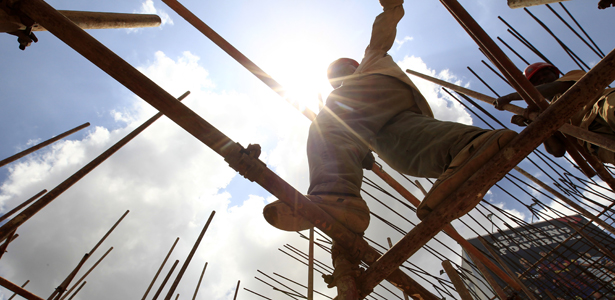
Kenya's capital Nairobi, September 23, 2011. The road, which is being built by China Wuyi, Sinohydro and Shengeli Engineering Construction group, is funded by the Kenyan and Chinese government and the African Development Bank (AFDB). The project will cost 28 billion Kenyan shillings ($330million), according to the Chinese company. AfDB has cut the expected economic growth rate for Kenya in 2011 to 3.5-4.5 percent from an earlier forecast of 4.5-5 percent due to high inflation and a volatile exchange rate, the bank's country economist for Kenya said on Friday. REUTERS/Thomas Mukoya

Kenya’s capital Nairobi, September 23, 2011. The road, which is being built by China Wuyi, Sinohydro and Shengeli Engineering Construction group, is funded by the Kenyan and Chinese government and the African Development Bank (AFDB). REUTERS/Thomas Mukoya

The citizens of the African continent have been introduced to one grand vision of development after the other – from OAU to AU. However, there is a tendency by some of the member countries to retreat from fulfilling regional treaty commitments, which, in some cases, would entail losing a degree of sovereignty.

What is the biggest stumbling block to achieving the African Integration Vision?

But after more than 50 years of solemn regional integration declarations these rhetorical and symbolic efforts still haven’t made the regional integration schemes any more inclusive. For example, when analysing the ‘inclusiveness’ trends as measured by Poverty and Income Distribution Indicators, most Sub-Saharan African countries won’t achieve the MDG target of reducing extreme poverty rates by half ahead of the 2015 deadline. This is despite the increasing total merchandise export as well as within most of the regional economic communities (RECs).

Some have tried to absolve policy-makers of the lack of progress with regards to achieving the milestones of the “linear” integration model based on the European experience and advocated by the Abuja Treaty. They propose an alternative non-trade oriented approach; the so-called functional regional cooperation. This perspective focuses on setting standards for transport such as the SADC recognized driving license; construction of a new regional corridors; an African identity etc. This less ambitious but perhaps more realistic perspective could lead to failure in removal of trade barriers, while at the same time presenting a much more positive outlook of regional integration than what international economic data would otherwise show.

The AfDB is attempting to get to the bottom of this regional integration – inclusive growth conundrum in its 2013 African Development Report, currently under preparation. But we might already get some good answers to this question through an ongoing research project entitled ‘PERISA‘. Led by the ECDPM & SAIIA, it intends to look deeper into what regional integration/cooperation really entails and what the underlying drivers/factors and specific bottlenecks are. In July, we got a hint on what to expect from the research project from a very enriching Dialogue on the Drivers and Politics of Regional Integration in Southern Africa.

National versus Regional

South Africa has developed a ‘2030 vision’ and national strategic plan. It includes some proposals to reposition South Africa hegemon in the region. However, very few of the National Development Plans (NDP) in Southern Africa even mention regional integration. Mauritius being an exception as it benefits from the support of the Regional Integration Support Mechanism (RISM), which is disbursed directly into the budget of the government as untargeted financial assistance. Notwithstanding this support and the disbursement to the nine other Member States of the Common Market for Eastern and Southern Africa (COMESA) and additional donor-supported initiatives in other RECs, there is still a flagrant absence of alignment between commitments taken at the regional level and the actual planning process at the national level.

This discrepancy between the regional and national level is a matter of concern because if these Regional Trade Agreement (RTA) commitments do not feature amongst the country’s national priorities then there is an even greater risk that they will not be implemented in practice. This latent risk perhaps goes a long way in explaining the relative poor record when it comes to the level of domestication of regional integration legal instruments, implementation of trade and regionalintegration-related budgets, implementation of Council of Ministers’ trade-related decisions, which the AfDB will seek to capture through its forthcoming system to measure regional integration in Africa.

During the meeting a call for a community of practice among national planning agencies was made which could assist and drive the integration process through the convening of regular meetings between regional and strategic national planners. It is positive to observe that Southern African countries seem to have warmed up to this idea of an informal community of practice outside the formal institutional structure.

What can Development Finance Institutions do about this inertia?

In addition to the supply-driven collection of regional integration statistics, Multilateral Development Banks (MDBs) could also lend technical and financial support to the formation of Regional Planning entities’ process. Amongst others this could include providing support to the above-mentioned community of practice of national development planners interacting with regional planners. This could eventually ensure that regional integration gets fully mainstreamed within the national planning policy instruments as illustrated in Mauritius’ latest 2013 budget, whose overarching theme rests on six main objectives, including fast-tracking regional integration.

There seems to be a consensus that the RECs must have technical capacity to facilitate the RTA negotiation process and decision-making process. Both the UK Department for International Development (DFID) through its TMSA programme and the AfDB through its forthcoming 2014-2016 Tripartite Capacity Building Programme are attempting to address this deficiency in a coordinated manner in line with fundamental principles of the Paris Declaration on Aid Effectiveness. Source: ECDPM
website (An analysis by Christian Kingombe, Chief Regional Integration & Infrastructure Officer at the AfDB).


SA Trade Policy Goes Against Integration Tide

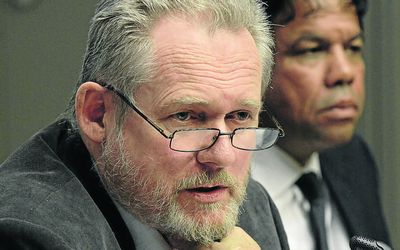
South African Trade & Industry Minister Rob Davies

South African Trade & Industry Minister Rob Davies

South Africa has adopted a new trade policy approach aimed at looking at its own interest first, despite a drive for more regional integration to sustain Africa’s trade growth with the rest of the world. Importers of several products have been experiencing dramatic increases in tariffs from South Africa, as well as an increase in anti dumping and safeguard measures aimed at protecting South African industries.

Trade and Industry Minister Rob Davies this week approved the increase of tariffs on frozen poultry following an application by the local poultry industry. George Geringer, a senior manager at PwC, said regional trade relations had been put on the back burner in favour of measures to protect South African manufacturing industries against cheaper imports.

“Government realised that manufacturing as a percentage of gross domestic product has declined from about 40% to about 12% in the past 20 years,” Mr Geringer said at the 16th Africa Tax and Business Symposium hosted by PwC in Mauritius.

Trade between Africa and the rest of the world has increased by more than 200% in the past 13 years, with optimism from the World Bank that Africa could be on the brink of an economic takeoff, similar to that of China and India two decades ago.

A key element for Africa to sustain the trade growth is regional integration to build economies of scale and size, in order to compete with other emerging markets – but limited resources, internal conflict and the lack of a mechanism to monitor the integration process is blocking it, says trade analyst from PwC.

South Africa has been regarded as the “champion” of the Southern African Development Community (Sadc). Sadc member countries eliminate tariffs, quotas and preferences on most goods and services traded between them. The member countries include Mauritius, Mozambique, Namibia, Swaziland, Botswana and the Democratic Republic of Congo.

The assistant manager at PwC’s international trade division, Marijke Smit, said less than 10% of African nations’ trade was with each other, compared with 70% between member states of the European Union. Benefits of regional integration include increased trade flows, reduced transaction costs, and a regulatory environment for cross-border networks to flourish. Ms Smit said an unsupportive business environment and cumbersome regulatory framework, weak productive capacity, inadequate regional infrastructure, poor institutional and human capacity, and countries’ prioritising their own interests stood in the way of integration.

Mr Geringer referred to the new action plan endorsed by leaders from the African Union in January last year. The plan will see the creation of a continental free-trade area by 2017. The enlarged free-trade area will include Sadc, the East Africa Community and the Common Market for South and East Africa (Comesa). The trade bloc will include 26 nations in three sub-regions. Source: BDLive.com

Pravin Gordhan named Finance Minister of the Year

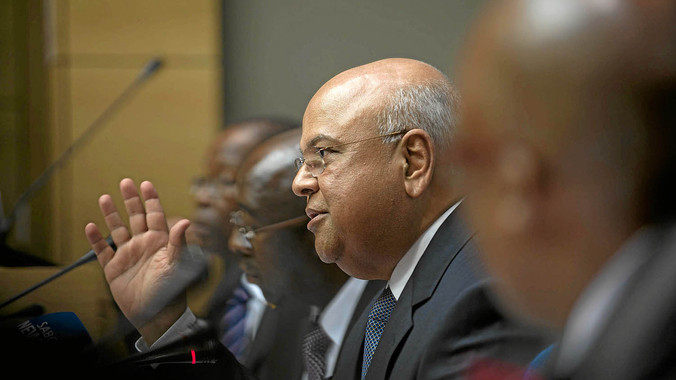
Pravin Gordhan - Finance Minister of the Year 2013 (Mail & Guardian)

Pravin Gordhan – Finance Minister of the Year 2013 (Mail & Guardian)

Finance Minister Pravin Gordhan (former chairperson of the World Customs Organisation) has been named the Finance Minister of the Year for 2013 in sub-Saharan Africa by the Emerging Markets website, the finance ministry said on Sunday.

The website’s citation stated that Gordhan, appointed in 2009 at the height of the economic crisis, had been praised by analysts, the ministry said in a statement.

This was because South Africa especially was more exposed than other emerging markets to dangers stemming from the eventual pullback of quantitative easing by the US’s Federal Reserve.

Emerging Markets provides news, analysis and commentary on economic policy, international economics and global financial markets, with a special focus on emerging markets.

In his acceptance speech in Washington DC, where he has been attending the annual meetings of the World Bank and the International Monetary Fund, Gordhan thanked Emerging Markets for its recognition of South Africa and its economic team.

‘We are terrible managers’
“Minister Gordhan was critical of the sudden change in the narrative about emerging markets, which up until the second quarter of this year were praised for managing their economies very well,” the ministry said.

“[Emerging markets contributed] more than 50% to global economic growth and for lifting large numbers of people above the poverty line.”

Gordhan said: “Three months later, we are apparently fragile and we are terrible managers of our economies. We the emerging markets are here to stay.

“We live in an interconnected world, and more importantly, we live in an interdependent world. There is no decoupling from you, the advanced economies, and there is no decoupling from us, the emerging markets.” Source: Mail & Guardian/Sapa

Namibia – South Africa Remains Major Trading Partner

Namibia flagSouth Africa remained Namibia’s leading trading partner, particularly on the imports front during the second quarter of 2013.

South Africa accounted for 70,1% of Namibia’s imports, followed by the Euro zone, Switzerland, Botswana and China; accounting for 3,6%, 3,5%, 2,9% and 2,8% respectively.

The remaining 17,1% was sourced from other countries such as the United Kingdom, Tanzania, United States of America, Zambia and other countries around the world, according to the September issue of the Bank of Namibia Quarterly Bulletin.

With regard to exports, Botswana, emerged the leading destination for Namibia’s exports during the second quarter. Botswana absorbed 19,6% of Namibian exports, overly dominated by rough diamonds. In the past, this position was exchanged between South Africa and the UK.

This followed a 10 year sales agreement between Botswana and De Beers that was signed in September 2011. South Africa, the Euro Area, UK, Switzerland, Angola and the US also remained prominent destinations for Namibia’s exports during the second quarter.

Namibia exported 14,4% of products to South Africa, 13, 2% to the Euro Area, 8,4% to Switzerland, 7,7% to Angola and 5,6% to the US. Countries such as China, Singapore, United Kingdom, Zambia and others also absorbed a noticeable portion of the Namibian exported commodities during the quarter under review.

Net services receipts recorded a net outflow on a quarterly and yearly basis during the second quarter of 2013, largely on account of net payments in other private services. The net services registered a deficit of N$88 million, year on year, during the quarter under review from a surplus of N$39 million.

The quarterly deficit balance was mainly reflected in the higher net outflows of other private services sub-category, which surged by four percent, quarter on quarter, to N$515 million and by 22,8% year on year. The outward movements of net services was however offset by the increased net inflows of travel services category that rose slightly by 1,1% and 11,6% quarter on quarter and year on year, respectively to N$761 million. Source: New Era (Namibia)

Cape Town – Container Ship Crew Battles Blaze

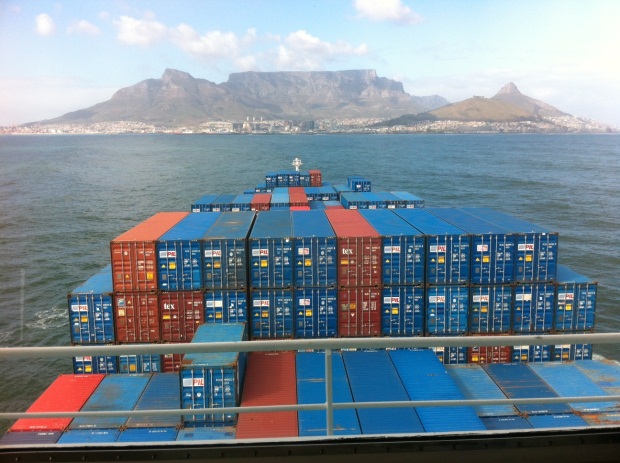
Container vessel outside the Port of Cape Town

Container vessel outside the Port of Table Bay, Cape Town, South Africa. (Picture and article – Maritime-Executive)

A Port Control ships Pilot was set to be airlifted by helicopter to the ship and the ship will be moved to the Container Docks in the Port of Table Bay where they will be met by Cape Town Fire and Rescue Services who will board the ship to fight the blaze.

A (National Sea Rescue Institute) NSRI rescuer, Gavin Kode, was transferred onto the ship to make an evaluation and confirmed that no crew are injured and that they are The 222 meter fully laden container ship LILAC reported a fire in one of their holds, 1 nautical mile off the Port of Table Bay in South Africa on 28 September, with a total of 21 onboard.

The ship’s captain reported that his crew was fighting to contain the fire, and that at this stage he was not declaring an emergency. A ship’s officer reported that they were fighting the blaze with Co2 fire equipment.

The National Sea Rescue Institute (NSRI) deployed 4 rescue vessels, and remained close to the ship as a precautionary measure. On their arrival, light white smoke could be observed coming from the ship.

LILAC confirmed to the JOC (Joint Operations Control at the Transnet National Ports Authority) to allow an NSRI rescuer and a Cape Town Fire and Rescue Services engineer onboard the ship to make an assessment. Transnet National Ports Authority is requesting that the type of blaze be identified, any chemical fall out risk to be identified and then to assess the feasibility of having the ship brought to a mooring at Port where Fire and Rescue teams can board the ship to take over fighting the blaze and to contain the situation. Source: Maritime-Executive


SARS to address Stakeholders on Customs Control proposals

SARS chief officer of legal and policy Kosie Louw (Picture: Robert Botha/Business Day Live)

SARS chief officer of legal and policy Kosie Louw (Picture: Robert Botha/Business Day Live)

The South African Revenue Service (SARS) has committed itself to further engagements with importers of all sizes in a bid to improve its proposals to transform the customs control regime.

Consultations have already taken place with organised business on the proposed Customs Duty Bill and the Customs Control Bill, and the process would now be taken to the level of traders to find out whether the proposals presented them with any problems. Amendments have also been proposed to the Customs and Excise Act to provide for the transition to the new system.

“We want to understand the situation at a micro level. We will sit around the table until we find a solution which will guarantee to us that we get the information we require but which will also facilitate trade.

“We do not want to clog up the ports,” SARS chief officer of legal and policy Kosie Louw said in an informal briefing on the proposals to Parliament’s standing committee on finance on Wednesday.

The customs bills are mainly concerned with improving the information about imported and exported goods so that customs officials can exercise greater control.

Business has expressed concern that the requirement of the Customs Control Bill that they submit a national in-transit declaration of goods at the first port of entry before they are sent to internal terminals, or depots such as City Deep, would cause delays.

The new declaration — of the nature, value, origin and duty payable on the goods — would replace the limited manifest used to declare goods and would include information on the tariff, value and origin of goods.

Business has argued that the manifest allowed goods to move seamlessly from the exporting country to the inland port or depot, and would change the contractual relationships between exporter and importer in terms of when duty is paid.

However, Mr Louw did not believe the provision would cause delays and had obtained legal advice that the contractual relationships and method of payment of duties would not change. The problem with manifests, he said, was that they provided very limited information and did not allow SARS to prevent the inflow of unwanted goods. Nevertheless, he said that SARS would discuss the matter with traders.

Mr Louw said the proposed system would “improve SARS’s ability to perform risk assessment and intervene in respect of potentially high risk, prohibited and restricted consignments at the ports”.

The bills have been in the pipeline for about four years and have been extensively canvassed with the Southern African Customs Union and business. They were needed, Mr Louw said, so that South Africa kept pace with global trends in trade, international conventions and advances in technology.

Anti-avoidance provisions have also been introduced into the bill which sets out the offences and associated penalties for noncompliance and attempts to avoid paying customs duties.

SARS group executive for legislative research and development Franz Tomasek said the Customs Control Bill would introduce a new advance cargo loading notice for containerised cargo to prevent the loading of prohibited or restricted goods on board vessels bound for South Africa. However, to reduce the administrative burden on carriers, information submitted in advance will no longer be required on arrival or prior to departure. Source: Business Day Live


e-Book: BRICS – South Africa’s Way Ahead?

Another Tralac sponsored publication which should be of great interest to trade practitioners, economists and investors, and agricultural specialists. Herewith the foreword to the ebook which is available for download from Tralac’s website – Click here!

The accession of South Africa into the BRICS formation has attracted a lot of attention internationally. Some welcomed the step while others questioned it. A closer look at BRICS reveals that these countries share some fundamental features while they differ in others. On that note, this book does not attempt to define BRICS.

BRICS-front-cover-webBRIC, the acronym, was coined by Jim O’Neill of Goldman Sachs in 2001. The founding members of this political formation are Brazil, Russia, India and China, aligning well with the word formulation. The formation of the BRIC was motivated by global economic developments and change in the geopolitical configurations. South Africa joined the group in 2011, thus opening the possibility of putting Africa on the BRICS’ agenda. South Africa’s admission to the group was motivated by China and supported by Russia. Its accession to the BRICS generated much discussion about the country’s suitability to be part of the formation. One of the real issues raised is that South Africa does not measure up to the other BRIC economies in terms of population, trade levels and performance, and growth rates. A formation such as the BRICS is of value to South Africa only if the country’s strategic development interests (relating, for example, to agriculture) are to be on the agenda. South Africa faces particular challenges related to market access into the BRIC countries.

Agricultural issues are discussed under the Standing Expert Working Group on Agriculture and Agrarian Development. The issues that are prioritised include:

  • The development of a general strategy for access to food (this is where market access needs to be tabled), which is tasked to Brazil
  • Impact of climate change of food security, which is allocated to South Africa
  • The enhancement of agricultural technology, cooperation and innovation that is allocated to India
  • Creation of an information base of BRICS countries that is allocated to China

In 2012, at the annual conference of the Agricultural Economics Association of South Africa, the National Agricultural Marketing Council (NAMC) co-hosted a workshop aimed at establishing a dialogue on how agriculture can benefit from South Africa’s membership of the BRICS. It came out clearly from the workshop that agriculture needs to be better positioned to benefit from the BRICS formation. One important issue that was noted was that market access for South African agricultural produce into the BRICS countries could be improved. In this regard, an honest question was raised whether, as the country’s agriculture stakeholders, we fold our arms and do nothing since this this is a political formation (while market access is an economic issue), or whether we use this political formation to address our socioeconomic issues as they relate to these countries. Market access is one of the issues of interest to South Africa’s agriculture industry within the BRICS formation, together with issues such as the diffusion of technologies and collaborations.

The research that is presented in this book addresses a range of important issues related to the trade and investment relations among these countries. The performance of their agricultural sectors as well as trade amongst these countries is also examined. There is also focus on the relationship between BRICS and Africa, and what this means for South Africa’s trade relations with other African countries. Source: Tralac

African Countries of the Future 2013/14

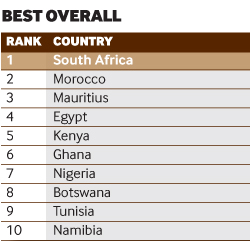
fDI 2013-14 Rankings for Africa

fDI 2013-14 Rankings for Africa

South Africa has been crowned as the African Country of the Future for 2013/14 by fDi Magazine, One of the economic powerhouses of the African continent, South Africa has been named fDi Magazine’s African Country of the Future 2013/14, with Morocco in second position and Mauritius in third. New entries into the top 10 include Nigeria and Botswana. Click here to access the full report!

South Africa has consistently outperformed its African neighbours in FDI attraction since fDi Markets records began in 2003. Figures for 2012 build upon South Africa’s historical prominence as an FDI destination with the country attracting about one-fifth of all investments into the continent – more than double its closest African rival, Morocco. In 2012, FDI into South Africa amounted to $4.6bn-worth of capital investment and the creation of almost 14,000 jobs.

South Africa claimed the title of fDi’s African Country of the Future 2013/14 by performing well across most categories, obtaining a top three position for Economic Potential, Infrastructure and Business Friendliness. Its attractiveness to investors is evident in its recent FDI performance, where the country defied the global trend with 2011 and 2012 figures surpassing its pre-crisis 2008 statistics. Despite a slight decline of 3.9% in 2012, South Africa increased its market share of global FDI, which further increased in the first five months of 2013 as the country attracted 1.37% of global greenfield investment projects. According to fDi Markets, South Africa now ranks as the 16th top FDI destination country in the world.

South Africa’s largest city, Johannesburg, was the top destination for FDI into Africa and is one of only five African cities that attracted more investments in the first five months of 2013 compared to the same period of 2012. South Africa ranked third behind the US and the UK as a top source market for the African continent in 2012, accounting for 9.2% of FDI projects.

In 2010, South Africa became the ‘S’ of the BRICS – five major emerging national economies made up by Brazil, Russia, India and China. While FDI into South Africa fell 3.9% in 2012, this was the lowest recorded decline of the BRICS grouping which, on average, experienced a 20.7% decline in FDI. In its submission for fDi’s African Countries of the Future 2013/14, Trade and Investment South Africa (TISA) stresses the importance of the country’s attachments to its BRICS partners. Source: fDI Magazine

IBSA Beware – Currency Sell-off

India’s currency plumbed record lows this week as investors withdrew money from emerging markets (Photo: Financial Times)

India’s currency plumbed record lows this week as investors withdrew money from emerging markets (Photo: Financial Times)

A not-so-sobering look into the immediate future of emerging market darlings who have lost their lustre as investors ponder life without US quantitative easing. Even more worrying considering the possible impact for IBSA countries.

India, 1991. Thailand and east Asia, 1997. Russia, 1998. Lehman Brothers, 2008. The eurozone from 2009. And now, perhaps, India and the emerging markets all over again.

Each financial crisis manifests itself in new places and different forms. Back in 2010, José Sócrates, who was struggling as Portugal’s prime minister to avert a humiliating international bailout, ruefully explained how he had just learned to use his mobile telephone for instant updates on European sovereign bond yields. It did him no good. Six months later he was gone and Portugal was asking for help from the International Monetary Fund.

This year it is the turn of Indian ministers and central bankers to stare glumly at the screens of their BlackBerrys and iPhones, although their preoccupation is the rate of the rupee against the dollar.

India’s currency plumbed successive record lows this week as investors decided en masse to withdraw money from emerging markets, especially those such as India with high current account deficits that are dependent on those same investors for funds. Black humour pervaded Twitter in India as the rupee passed the milestone of Rs65 to the dollar: “The rupee at 65 – time to retire”.

The trigger for market mayhem in Mumbai, Bangkok and Jakarta was the realisation that the Federal Reserve might – really, truly – soon begin to “taper” its generous, post-Lehman quantitative easing programme of bond-buying. That implies a stronger US economy, rising US interest rates and a preference among investors for US assets over high-risk emerging markets in Asia or Latin America.

The fuse igniting each financial explosion is inevitably different from the one before. Yet the underlying problems over the years are strikingly similar.

So are the three principal phases – including the hubris and the nemesis – of the economic tragedies they endure. No one who has examined the history of the nations that fell victim to previous financial crises should be shocked by the way the markets are treating India or Brazil today.

First comes complacency, usually generated by years of high economic growth and the feeling that the country’s success must be the result of the values, foresight and deft policy making of those in power and the increasing sophistication of those they govern. Sceptics who warn of impending doom are dismissed as “Cassandras” by those who forget not only their own fragilities but also the whole point about the Trojan prophetess: it was not that she was wrong about the future, it was that she was fated never to be believed.

So high was confidence only a few months ago in India – as in Thailand in the early 1990s – that economists predicted that the local currency would rise, not fall, against the dollar.

Indian gross domestic product growth had topped 10 per cent a year in 2010, and the overcrowded nation of 1.3bn was deemed to be profiting from a “demographic dividend” of tens of millions of young men and women entering the workforce. The Indian elephant was destined to overtake the Chinese dragon in terms of GDP growth as well as population size.

Deeply ingrained in the Indian system, says Pratap Bhanu Mehta, head of the Centre for Policy Research in New Delhi, was an “intellectual belief that there was some kind of force of nature propelling us to 9 per cent growth … almost of a sense of entitlement that led us to misread history”.

In the same way, the heady success of the southeast Asian tigers in the early 1990s had been attributed to “Asian values”, a delusional and now discredited school of thought that exempted its believers from the normal rules of economics and history because of their superior work ethic and collective spirit of endeavour.

The truth is more banal: the real cause of the expansion that precedes the typical financial crisis is usually a flood of cheap (or relatively cheap) credit, often from abroad.

Thai companies in the 1990s borrowed dollars short-term at low rates of interest and made long-term investments in property, industry and infrastructure at home, where they expected high returns in Thai baht, a currency that had long been held steady against the dollar.

The same happened in Spain and Portugal in the 2000s, although the low-interest loans that fuelled the unsustainable property boom were mostly north-to-south transfers within the eurozone and therefore in the same currency as the expected returns. Indeed, the euro was labelled “a deadly painkiller” because the use of a common currency hid the dangerous financial imbalances emerging in southern Europe and Ireland.

Phase Two of a financial crisis is the downfall itself. It is the moment when everyone realises the emperor is naked; to put it another way, the tide of easy money recedes for some reason, and suddenly the current account deficits, the poverty of investment returns and the fragility of indebted corporations and the banks that lent to them are exposed to view.

That is what has started happening over the past two weeks as investors take stock of the Fed’s likely “tapering”. And the fate of India – the rupee is one of the “Fragile Five”, according to Morgan Stanley, with the others being the currencies of Brazil, Indonesia, South Africa and Turkey – is particularly instructive. (Emphasis mine).

It is not that all of India’s economic fundamentals are bad. As Palaniappan Chidambaram, finance minister, said on Thursday, the public debt burden has actually fallen in the past six years to less than 70 per cent of GDP – but then the same was true of Spain as it entered its own grave economic crisis in 2009.

Like Spain, India has tolerated slack lending practices by quasi-official banks to finance the huge property and infrastructure projects of tycoons who may struggle to repay their loans.

Ominously, bad and restructured loans have more than doubled at Indian state banks in the past four years, reaching an alarming 11.7 per cent of total assets. According to Credit Suisse, combined gross debts at 10 of India’s biggest industrial conglomerates have risen 15 per cent in the past year to reach $102bn.

For those who take the long view, a more serious failing is that India has manifestly missed the kind of economic opportunity that comes along only once in an age.

Instead of welcoming investment with open arms and replacing China as the principal source of the world’s manufactured goods, India under Sonia Gandhi and the Congress party, long suspicious of business, has opted to enlarge the world’s biggest welfare state, subsidising everything from rice, fertiliser and cooking gas to housing and rural employment.

Former fans of her prime minister, Manmohan Singh – who as finance minister liberalised the economy, ended the corrupt “licence Raj” and extracted India from a severe balance of payments crisis with the help of an IMF loan – could only shake their heads when he boasted last week that no fewer than 810m Indians would be entitled to subsidised food under a new Food Security Bill.

The bill is a transparent attempt by Congress to improve its popularity ahead of the next general election, but the government’s critics are horrified at the idea of offering Indians more handouts rather than creating the conditions that would give them jobs and allow them to buy their own. The resulting strain on the budget may also worsen the risk of “stagflation”, a toxic mixture of economic stagnation and high inflation.

India’s annual growth rate has already halved in three years to about 5 per cent and could fall further towards the 3 per cent “Hindu rate of growth” for which the country was mocked in the 1980s.

If currency declines and balance-of-payments difficulties develop into a full-blown financial crisis in the coming months, India will be propelled unwillingly into the third and final phase of the trauma.

Phase Three is when ministers and central bank governors survey the wreckage of a once-vibrant economy and try to work out how to rebuild it.

It is traditional for those governments that survive, and for the ones replacing those that do not, to announce several false dawns and to see “green shoots” that turn out to be illusory.

It is hard when times are bad to impose financial discipline that would have been easier to apply before. Indian policy makers are already torn between the need to lower interest rates to boost growth and the necessity of raising them to protect the rupee and tackle inflation – the same kind of tension between austerity and easy money that has afflicted developed economies since 2008.

India’s underlying economy is nevertheless sound and its banks are safe, say Mr Chidambaram and other senior officials. There is therefore no need to contemplate asking for help from the IMF or anyone else.

Mr Sócrates said much the same in Lisbon three years ago. “Portugal doesn’t need any help,” he said, almost leaping from his chair. “We only need the understanding of the markets.” The markets did not understand, and Portugal did need the help.

Source – Victor Mallet of the Financial Times August 23, 2013
WEF – Global Competitiveness Report 2013-14

WEF - Global Competitiveness Report 2013-14South Africa is ranked 53rd this year, overtaking Brazil to place second among the BRICS. South Africa does well on measures of the quality of its institutions (41st), including intellectual property protection (18th), property rights (20th), and in the efficiency of the legal framework in challenging and settling disputes (13th and 12th, respectively). The high accountability of its private institutions (2nd) further supports the institutional framework.

Furthermore, South Africa’s financial market development remains impressive at 3rd place. The country also has an efficient market for goods and services (28th), and it does reasonably well in more complex areas such as business sophistication (35th) and innovation (39th). But the country’s strong ties to advanced economies, notably the euro area, make it more vulnerable to their economic slowdown and likely have contributed to the deterioration of fiscal indicators: its performance in the macroeconomic environment has dropped sharply (from 69th to 95th).

Mauritius moves up by nine places this year to 45th place, becoming the highest ranked country in the sub-saharan region.

Low scores for the diversion of public funds (99th), the perceived wastefulness of government spending (79th), and a more general lack of public trust in politicians (98th) remain worrisome, and security continues to be a major area of concern for doing business (at 109th).

Building a skilled labor force and creating sufficient employment also present considerable challenges. The health of the workforce is ranked 133rd out of 148 economies-the result of high rates of communicable diseases and poor health indicators more generally.

The quality of the educational system is very poor (146th), with low primary and tertiary enrollment rates. Labor market efficiency is poor (116th), hiring and firing practices are extremely rigid (147th), companies cannot set wages flexibly (144th), and significant tensions in labor-employer relations exist (148th). Raising educational standards and making the labor market more efficient will thus be critical in view of the country’s high unemployment rate of over 20 percent, with the rate of youth unemployment estimated at close to 50 percent. For the full report, click here!

The Material Footprint of Nations and ‘True’ Material Cost of Development

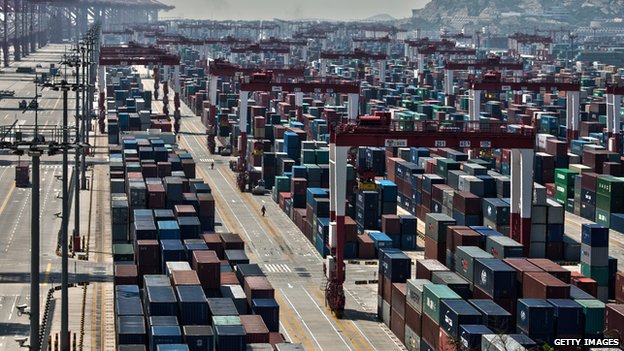
High Density Container Terminal  (Picture credit - Getty Images)

High Density Container Terminal (Picture credit – BBC News/Getty Images)

Thanks to the kind reader who passed me this story. BBC News Environment correspondent, Matt McGrath, reports that current methods of measuring the full material cost of imported goods are highly inaccurate. In a new study, researchers have found that three times as many raw materials are used to process and export traded goods than are used in their manufacture.

Richer countries who believe they have succeeded in developing sustainably are mistaken say the authors. The research has been published  (click hyperlink to access the report) in the Proceedings of the National Academy of Sciences.

Many developed nations believe they are on a path to sustainable development, as their economic growth has risen over the past 20 years but the level of raw materials they are consuming has declined.

According to  Dr Tommy Wiedmann University of New South Wales “We are saying there is something missing, if we only look at the one indicator we get the wrong information”. This new study indicates that these countries are not including the use of raw materials that never leave their country of origin.

The researchers used a new model that looked at metal ores, biomass, fossil fuels and construction materials to produce what they say is a more comprehensive picture of the “material footprint” of 186 countries over a 20 year period.

“The trade figure just looks at the physical amounts of material traded, but it doesn’t take into account the materials that are used to produce these goods that are traded – so for something like fertiliser, you need to mine phosphate rocks, you need machinery, so you need extra materials.”

In this analysis, the Chinese economy had the largest material footprint, twice as large as the US and four times that of Japan and India. The majority comes from construction minerals, reflecting the rapid industrialisation and urbanisation in China over the past 20 years.

The US is by far the largest importer of these primary resources when they are included in trade. Per capita, the picture is different, with the largest exporters of embodied raw materials being Australia and Chile.

According to the model, South Africa was the only country which had increased growth and decreased consumption of materials.

The researchers believe their analysis shows that the pressure on raw materials doesn’t necessarily decline as affluence grows. They argue that humanity is using natural materials at a level never seen before, with far-reaching environmental consequences.

They hope the new material footprint model will inform the sustainable management of resources such as water. The authors believe it could lead to fairer and more effective climate agreements.

“Countries could think about agreements where they help reduce the emissions at that point of material use,” said Dr Wiedmann. “That’s where it is cheapest to do, where it is most efficient, where it makes more sense.” Source: BBC News

South Africa’s New Integrated Customs Border Management Solution

Amidst diverse expectations and feelings of excitement, anxiety and anticipation, the South African Revenue Service (SARS) migrated to its new integrated Customs and Border Management solution over the weekend of 17 August 2013. A new modern electronic solution Interfront can now rightfully claim some success even if it is an unseen component within a multi-layered, multi-technology solution of which South African Customs is now the proud owner. After 9 months of rigorous parallel testing between old and new, and a period of dedicated external testing with Service Providers of the customs business community, the decision to implement was formally agreed with trade a fortnight ago.

Interfront Customs and Border Solution (iCBS) replaces several key legacy systems, one of which has served South Africa for more than 30 years. The vast business and technical competence and skills which faithfully maintained and supported the old systems are to some extent in the wilderness now, but will hopefully find place within the new technology environment. While technology nowadays is particularly agile, and human physical placement at the coal face is under threat, organisations like SARS will always require customs technical business and policy competence to maintain the cutting edge.

There still remains an enormous amount of work to do regarding the alignment of the new clearance system with the specific guidelines, standards and principles of the WCO. With regional integration becoming more prominent on the sub-Saharan African agenda, the matter of ‘facilitation’ and ‘non-tariff barriers’ will inevitably become more prominent discussion points. Other salient features of the SAFE Framework of Standards such as Authorised Economic Operators and IT connectivity have already emerged as key developmental goals of a number of regional customs and border authorities. The timely introduction of Interfront places SARS in a pivotal position to influence and enable the required electronic linkages, crucial for the establishment of bi-lateral and multilateral trade agreements, transport corridors, and, support for ‘seamless’ multi-modal movement of cargo from port of discharged to its place of manifestation with limited intervention, based on the principles of risk management. Enjoy the Interfront video feature.


South African Human Trafficking Bill Signed Into Law

PREVENTION AND COMBATING OF TRAFFICKING IN PERSONS BILLThe Prevention and Combating of Trafficking in Persons Bill has now been signed into law, giving South Africa, for the first time, a single statute that tackles human trafficking holistically and comprehensively. The legislative framework dealing with this issue had until now been fragmented.

The legislation dealing with sexual offences addresses the trafficking of persons for purposes of sexual exploitation only, while the Children’s Act addresses the trafficking of children specifically.

Besides creating the main offence of trafficking in persons, the new legislation also creates offences such as debt bondage, possessing, destroying or tampering with travel documents, and using the services of victims of trafficking, all of which contribute to innocent persons becoming victims of this modern-day form of slavery.

Penalties for these offences were appropriately severe, as a deterrent to would-be perpetrators. The main offence of trafficking in persons, for instance, attracts a maximum penalty of R100-million or life imprisonment or both in the case of a conviction. Compensation is furthermore payable by the perpetrators to their victims.

In addition to creating very specific offences that have a bearing on trafficking in persons, the legislation also focuses on the plight of the victims, providing them with protection and assistance to overcome their traumatic experiences. The new legislation gives effect to South Africa’s international obligations in terms of a United Nations Protocol.

While the legislation has been signed into law, its operationalization is dependent on regulations that are required to be made by a number of role-playing departments such as Home Affairs. Source: SAnews.gov.za

514 rhinos poached in South Africa so far in 2013

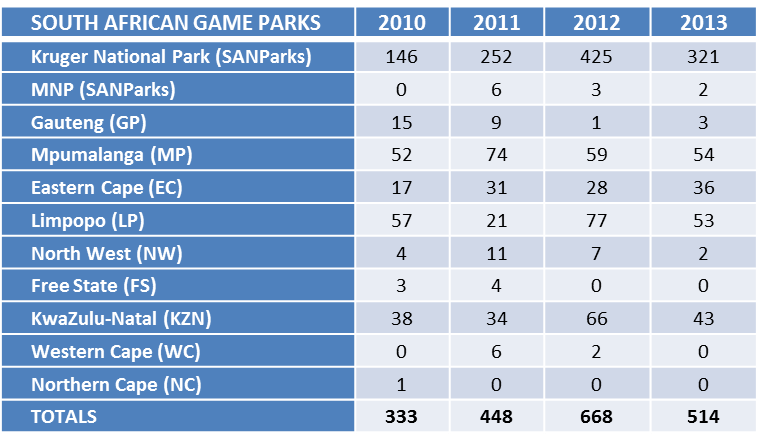
Rhino poaching statistics (Department of Environmental Affairs)

Rhino poaching statistics (Department of Environmental Affairs)

The Department of Environmental Affairs today, 24 July 2013 released the Rhino Issue Management (RIM) Report which emanated from the national consultation process to facilitate a common understanding of the key issues related to the protection and conservation of South Africa’s rhino population. The release of the RIM report comes as the number of rhino poached in South Africa increased to 514. To access the report, Click Here!

The Kruger National Park continues to bear the brunt of poaching with 321 rhino poached since 1 January 2013, while 54 have been killed for their horns in Limpopo, 53 in North West and 43 in KwaZulu-Natal. A total of 143 alleged poachers have been arrested this year.

The final report submitted to the Minister and Department of Environmental Affairs in January 2013 has greatly assisted the department in reviewing and updating its rhino response strategy outlined in the National Strategy for the Safety and Security of the Rhinoceros Population of South Africa (NSSSRPSA).

The RIM report incorporates current thinking on sustainable rhino conservation by acknowledged rhino specialists, ecologists and a range of other experts. It encapsulates viewpoints from Non-Government Organisations (NGO’s) both specialised and community based, civil society, and from traders, professional hunters, resource economists and ordinary citizens with a deep concern for the ethical and humane treatment of animals.

The consultation process resulted in clear agreement that the country’s rhinos should be conserved for the good of all humanity, and that every effort should be made to protect the threatened species from the sustained poaching onslaught by international syndicates earning huge profits from the sale of rhino horn.

The RIM report does, however, state that there is support to include commercial international trade in rhino horn as an integral part of South Africa’s comprehensive response strategy to address the continued illegal killing of rhinos. Source: Department of Environmental Affairs (South Africa)