Tobacco Wars Heating Up

Australian courts this week threw out the bid by tobacco conglomerates to block government from introducing plain packaging for cigarettes. Tobacco product distributors operating in Namibia have been banking on a victory in the Australian courts to strengthen their arguments against similar plans by the Namibian government. Namibia Gazetted the Tobacco Products Control Act of 2010 that introduced plain packaging and ban the use of words such ‘mild’ or ‘light’ on cigarette boxes or any other tobacco products sold in Namibia.

The world’s biggest and the Namibian market leader in tobacco products, British American Tobacco (BAT) has been fighting the Act with serious threats to take the government to court if it dared to implement the Act. BAT has been citing the Australian court case as an example of how far it is prepared to go to fight the Namibian government over what it says is tantamount to expropriation of its trademarks properties. BAT also says plain packaging takes away its trade rights to freely communicate to consumers the nature of their lawful products on offer.

The Australian government’s victory now exposes BAT, along with Japan’s Tobacco International (JTI) and Imperial Tobacco to similar laws across the world. Britain, Canada, New Zealand, China, France, India, South Africa, Norway and Uruguay are already considering implementing the plain packaging measures. Southern Africa Customs Union (SACU) member states intend to adopt the generic Tobacco Products Control Act of South Africa that is in line with the World Health Organisation (WHO)’s pressure on the use of tobacco products, through the Framework Convention on Tobacco Control. BAT has been saying the proposed branding would exacerbate the illegal tobacco trade in Namibia where about 225 000 cigarettes are illegally sold every day.

BAT has a market share of about 85 percent of the Namibian tobacco market, selling just over 330 million cigarettes every year in the country. Namibians are said to smoke 75 000 packs of 20 cigarettes each per day or an equivalent of 1.5 million cigarettes each day. The court ruling in Australia makes Australia the first country in the world where cigarettes are sold in drab, olive coloured packets with graphic health warnings and no logos.

The Tobacco Products Control Act of 2010 also mandates the establishment of a fund from levies on sales of tobacco and other sources.The fund would partly use the money to pay for treatment of tobacco-related illnesses. The new proposed packaging features graphic pictures depicting the ill health associated with smoking. These range from stained teeth, throat cancer to damaged lungs and breast cancer with appropriate warnings underneath the picture. If the new legislation is implemented fully there would be a total blackout on advertising, promotion and any public relations activities around tobacco products or companies whose names are directly associated with tobacco products. Source: New Era, Namibia.

Thick Borders – Thin Trade

It’s quite amazing the number of reports featured in various african media across the continent pushing the ‘free trade’ agenda. The incumbent governments on the other hand are naturally concerned with dwindling tax collections, while at the same time increasing incidents of graft, collusion, and corruption run rampant at the border. While the following article states the obvious, unfortunately, nowhere will you find or read a practical approach which deals with increased ‘automation’ at borders and the consequential re-distribution of ‘bodies’ to other forms of gainful employment. Its jobs that will be on the line. Few governments wish to taunt their electorates – non-essential jobs are a fact of life and are destined to stay if that is what will earn votes and a further term in power. Moreover, there is no question of removing internal borders with the emphasis on costly ‘One-Stop Border’ facilities. To some extent the international donor community won’t mind this as there’s at least some profit and influence in it for them.

Poverty in Sub- Saharan Africa is a man-made phenomenon driven by internal warped policies and international trade systems. The continent cannot purport to seek to grow while it blocks the movement of goods and services through tariff regimes at the same time Tariff and non-tariff barriers contribute to inefficient delivery systems, epileptic cross-border trading and thriving of illicit/contraband goods.

This ultimately harms the local and regional economy. Delays at ports of delivery, different working hours and systems of control across the continent, unnecessary police roadblocks and poor infrastructure condemn countries to prisons of inter-regional and intra-regional trade poverty.

According to the United Nations Economic Commission for Africa, removal of internal trade barriers would lead to US$25 billion per year of intra-regional exports in Africa, an increase by 15,4 percent by 2022. Making African border points crossings more trade efficient would increase intra-regional trade by 22 percent come 2020. Trade barriers in East Africa Community alone increase the cost of doing business by 20 percent to 40 percent.

Such barriers include the number of roadblocks within each country, cross- border charges for trucks and weighing of transit vehicles on several points on highways. Kenya is grappling to reduce the number of its roadblocks from 36 to five and Tanzania from 30 to 15. Sub-Saharan Africa records an average port delay of 12 days compared to seven days in Latin America and less than four days in Europe. Africa is lagging behind!

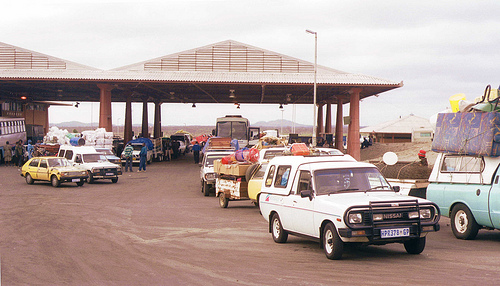
In West Africa, Ghanaian exports to Nigeria are faced with informal payments and delays as the goods transit across the country borders whether there is proper documentation. In the Great Lakes Region, an exporter is faced with 17 agencies at the border between Rwanda and Democratic Republic of Congo each with a separate monetary charge sheet.

A South African retail chain Shoprite reportedly pays up to US$20 000 a week on permits to sell products in Zambia. Each Shoprite truck is accompanied with 1 600 documents in order to get its export loads across a Southern African Development Community border. Tariff and non-tariff barriers simply thicken the wall that traps Africans in economic poverty.

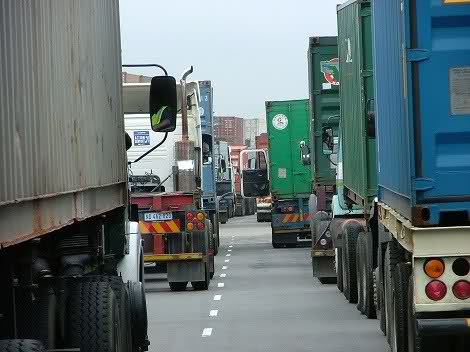
The new African Union chair should push for urgent steps to lower barriers to trade within Africa. Border control agencies need retraining and border country governments need to integrate their processes; long truck queues waiting to cross border points should not be used as an indicator of efficiency.

If it takes a loaded truck one hour to cover 100 kilometres; a four-hour wait at the border increases the distance to destination to another 400 kilometres. Increased distance impacts on the prices of goods at the retail end hence limiting access to products to majority of Africans. Limited access translates to less freedom of choice — similar to a locked up criminal prisoner.

With modern technology, goods should be declared at point of origin and point of receipt. Border points should simply have scanners to verify the content of containers. Protectionism, tariffs and non-tariff barriers within the continent sustains African market orientation towards former colonisers.

African entrepreneurs are subjected to longer travel schedules due to constant police checks and slow border processes. To fight poverty on the continent, African people would benefit from an African Union Summit that resolves to facilitate efficiency in movement of goods and services. Efficient delivery systems on the continent will tackle challenges of food insecurity, poor health care, conflicts and further promote diversified economies arising from competitive healthy trading amongst and between African nations.

Elimination of tariff and non-tariff barriers to trade will provide an opportunity for African entrepreneurs to adequately take their rightful places as relevant players in the global trade system. It is imperative that African countries re-orient their strategies to promote productivity by reviewing tariffs that hold back entrepreneurs from accessing the continent’s market. This calls for both a competitive spirit and a sense of integrated tariff and process compromise if the continent is to haul its population from poverty. Source: The Herald (Zimbabwe)

Customs Modernisation – some benefits in the offing


Its been a while since I penned some comment on the customs modernisation programme in South Africa. Amongst the anxiety and confusion there are a few genuine ‘nuggets’ which I would hope will not go unnoticed by the business community. With stakes high in the area of business opportunity and competitiveness, such ‘nuggets’ must be adopted and utilised to their fullest extent. Lets consider two such facilities.

The widespread implementation and adoption of electronic customs clearance has allowed brokers to file declarations for any customs port from the comfort of their desks. Brokers can now consider centralised operations especially for customs clearance purposes. Likewise the withdrawal of the annoying goodwill bond should also come as a welcome decision. Hopefully this may translate into cost-savings over time.

As of 11 August 2012, the business community will also be glad to learn that imported goods which do not fully meet all national regulatory requirements can be entered into bond on a warehouse for export (WE) basis. While this may not sound like anything new, the provisions which come into effect, will accord the identical treatment of such goods as if they were being entered for warehousing. In short the new provisions will allow more flexibility with the ability to re-warehouse WE goods; the ability to change ownership on WE goods; and the ability to declare WE goods for another customs procedure.These provisions can be considered a relaxing of the original approach which mandated compulsory exportation. All government regulatory requirements (i.e. permits, certificates, etc.) will however be strictly enforced upon clearance of WE goods for home use or another customs procedure. The apparent relaxation forms part of ongoing alignment of customs procedures with the Customs Control Bills, which are in the process of finalisation.

For those who have enquired about the followup to the national transit procedure, I have not forgotten about it. The ‘touchy’ nature of the subject requires a mature and fair response. Please bear with me.


Mozambique – New customs transit regulation

FTWOnline has published a letter it received from the CEO of Maputo Corridor Logistics Initiative (MCLI), the interim-CEO of Maputo Port Development Company (MPDC). Seems like an important ‘heads-up’ for all logistics operators. It reads as follows –

“The hardly-negotiated Mozambique customs transit regulation is concluded and the document sent to the minister of finance for approval. Approval and official gazetting is expected for the first week of August.

“Key features are:

  • All the unknown costs are replaced by a transit fee of 500.00-mts (+\- 18 US$) for general cargo and 10 cents of mts (0.036 US$) per for bulk cargo.Art. 13.
  • It is clarified that transit cargo is duty-free and subject to a guarantee that can be isolated (for a single transaction) or global (for transactions etween 3-month and 1-year). The bond covers only the duties and taxes at risk and is capped at 35% of duties and taxes. As an example, if the value of the good is US$1 000, the bond will be equal to 35% of 22% (7% of duties and 17% of vat), totaling around US$75. The bond is calculated on the basis of the value of transactions undertaken in the preceding year. Art. 14 to 19.
  • Transhipment is free-of-bond and the acquittal takes place only in the last port in the national territory. Art.23.
  • Acquittal period for areas where the single window is not yet in place is of 5 business days.”

South Africa – Stalling Regional Integration

Yes, you’ll be forgiven if you thought this was some belated April-fools joke. South Africa has been accused of frustrating plans to create a regional customs union and instead preferring to bolster the South African Customs Union (Sacu), where it holds sway. 

A customs union is a trade agreement by which a group of countries charge a common set of tariffs to the rest of the world, while granting free trade among members. Regional Integration minister, Priscilla Misihairabwi-Mushonga, said there was a feeling that South Africa wanted to use Sacu as its basis to form a regional customs union, instead of working towards creating a new one.

“What we see is that South Africa wants to use Sacu as the basis for forming a regional customs union and sometimes, this is viewed as having a big brother mentality,” she said. Misihairabwi-Mushonga said, for this reason, negotiations towards a holistic Southern African Customs Union (Sadc) had not gone very far. Botswana, Lesotho, Namibia, Swaziland and South Africa make up Sacu, with the four countries having benefited by aligning themselves to South Africa, Africa’s largest economy. A Sadc customs union would involve the 15 countries of the region, instead of Sacu, which is considered narrow.

But Catherine Grant, the head of economic diplomacy at the South African Institute of International Affairs, reckons the smaller nations in Sacu, like Lesotho, may be opposed to Sacu morphing into a regional customs union. “This will be opposed by other Sacu members, not necessarily just South Africa, as this (Sacu) is not just a trade agreement, but involves a broader range of economic issues,” she said.

“Up to 60% of the Lesotho budget is Sacu revenue, so the vested issues, whether Sacu is the basis of a customs union, are not just South African.” Grant felt that it was impossible to expand Sacu in its current form, as it would cost South Africa too much and would dilute the resources that were meant for other projects.

The head of the trade and policy think-tank said instead, South Africa preferred to see the implementation of a free trade area (FTA) as a first step, since customs union negotiations were usually lengthy and time-consuming. “The preference is to first channel scarce resources to existing commitments and trying to make them as beneficial as possible,” she explained.

Grant said while South Africa was the dominant player in the region, hence engendering a feeling that it was imposing itself as the big brother, the country was actually holding back from taking a leading role and this cost the region.

“Sometimes South Africa holds back because they are conscious of not being a big brother and that could be detrimental to the region,” she explained. However, Grant said energies should be directed towards the conclusion of negotiations to set up the Tripartite Free Trade Area (TFTA), which includes the Common Market for East and Southern Africa, the East African Community and Sadc.

“The TFTA will resolve some of the overlapping issues that can be difficult to solve when it comes to a customs union,” she said. Since Zimbabwe adopted multicurrencies in 2009, there has been a call that the nation either join Sacu or push for the formation of a regional customs union. Zimbabwe remains wary of joining Sacu, as it fears for its economic independence, yet negotiations for a regional customs union are moving at a snail’s pace.

Sacu was established in 1910, making it the world’s oldest customs union. It consists of Botswana, Lesotho, Namibia, South Africa and Swaziland. Source: AllAfrica.com

Saving the Rhino – a real story

Besides media reports and the many ramblings of law enforcement and environmental officials in the cause of protecting our fauna and flora, I received the following free e-book titled “Poached!” from a colleague. It details a story told by a veterinarian of a white rhino, callously mutilated by poachers and left alive with his horns and part of his face hacked off with pangas, and the good doctor’s quest to save the victim. Graphic pictures and an embedded video bring home to all the complete brutality of mankind. The book is published by Nikela – Helping People ~ Saving Wildlife and recommends widespread reading and distribution.

Mozambique – Single Window and other Customs developments

The Single Electronic Window (JUE) is a modern system of clearance of goods. After the revision of the whole legislation to allow the implementation of the JUE, the pilot project began in September 2011 in the port of Maputo. Here follows an interview with Kekobad Patel, the President of the Working Group On Tax Policy, Customs and International Trade of the CTA.

What was the adherence of international traders?

“We hoped more adherence of all concerned traders, unfortunately, very few participated in the pilot phase. During this period, both systems (manual and electronic) coexisted. There is always some resistance to change.”

When did the use of the JUE become mandatory?

“The use of JUE became mandatory on April 9, 2012 in the port of Maputo,on April 23 in the port of Beira, early May in the port of Nacala. The city of Tete is now also covered by the system because of the current requirements due to the establishment of large enterprises in the region.”

How many organizations have used the JUE?

“Since its entry into force until 15th of June 2012, over 7,000 import entries were submitted. We still do not deal with export declarations, transit, or special arrangements. These processes are handled manually.”

What are the next areas to be covered by the JUE?

“The second phase will begin in July 2012 and will focus on automotive, multi-modal and road terminals in Maputo, as well as the land borders of Goba, Namaacha (Swaziland) and Ressano Garcia (South Africa) that have received the equipment to begin operations. At the end of the year, the port of Pemba and the land borders of the province of Manica and Tete will be also covered. It will also be possible to treat the other procedures for export and transit. This is crucial, given the geographical location of Mozambique and its relations with the countries of the hinterland. Meanwhile, three Ministries will be electronically linked to award the import licenses: the ministries of Health, Industry and Commerce, and Agriculture. We should not forget that banks are also involved in the JUE. The BCI bank has supported the JUE since the pilot phase. Other banks have joined in recent months: Millenium BIM, Mozabanco and Standard Bank. We expect the membership of other banks.”

What is the biggest challenge of the JUE?

“The implementation of the JUE has led to a change of mentality: “paperless” in the country: less buffer, less paper. The government itself is also involved in the process of e-taxation that ensures that taxpayers should pay their taxes electronically. We still have problems to solve. For example, when a ministry inspects companies, papers are asked for… We need to think about alternatives. The castle must be built stone by stone to ensure it is strong and other sectors such as the public one and banking, are also involved.We believe that the entry into force of the JUE shows how to modernize the country.”

Is the JUE to eliminate the clearing agents?

“The law allows companies to make their own clearance process, but many of them are not prepared. In other countries such as Singapore, the most advanced country in terms of customs, clearing agents continue to exercise thanks to their perfect knowledge of the system.” Source: allAfrica.com

Other news – Mozambique accedes to the WCO’s Revised Kyoto Convention

On 11 July 2012, the Embassy of the Republic of Mozambique to Belgium deposited Mozambique’s instrument of accession to the International Convention on the Simplification and Harmonization of Customs Procedures (Revised Kyoto Convention) with the World Customs Organization. The Convention is regarded as a blueprint for effective and modern Customs procedures, and will enter into force in Mozambique on 11 October 2012. Mozambique becomes the 82nd signatory to the Convention. Some of the Convention’s key elements include the application of simplified Customs procedures in a predictable and transparent environment, the maximum use of information technology, the utilization of risk management, a strong partnership with the trade and other stakeholders, and a readily accessible system of appeals. Will be interesting to see how Mozambique Customs treats the national transit procedure?

The African transhipment race

Have you noticed the debate in the on-line Global Ports Forum about who will become the main container terminals in East and West Africa? Portstrategy.com has taken it upon themselves to score some of the suggestions.

Nigeria is strongly identified as a hub for the west coast of Africa – we score that 7 out of 10. It has the potential but will new port development be delivered in time? Will the off-take infrastructure development be implemented in concert with port development at places like Lekki? Will Lekki’s hub function be undermined by other deepwater facilities being delivered first on the African coast?

Generally, they agree with the view expressed by one wise head in the Forum that the race for hub status on the West African coast is now a fierce one. However, we don’t agree with the contention that Angola will have a serious say in becoming a major hub for West Africa. It will struggle for some time yet to meet its own port capacity needs let alone fulfil a regional function. We score this suggestion 2 out of 10; go to the bottom of the class!

South Africa as a hub for East and West Africa? Well to a limited extent it does already fulfil this role but when South Africa booms its priority has to be gateway cargo and it is limited in terms of its economic and geographical reach. It is also not ideal because of position; we won’t score the suggestion down but conversely we also won’t score it up because it is a fair point. We do, however, see as a negative the continuing emphasis on the public operation of this country’s ports – it spells very high cost comparatively speaking and coupled with this, ironically, not the best service.

Doraleh Container Terminal, Djibouti? Yes we would agree that this has a role to play in container transhipment for East Africa and particularly with its phase two expansion now underway. The price is right for transhipment here but the cost of cargo movement to the main transit destination of Ethiopia is coming in for increasing criticism. It also has a limited reach along the East Coast. Another score of 7.

Mombasa? Yes huge potential for the East Coast of Africa but as history shows no political will to deliver new port capacity in line with demand. Nine in theory but five in practice.

The new port of Lamu? Designed to act as an export gateway for South Sudan, construction has begun on the $23bn (£14.5bn) port project and oil refinery in south-east Kenya’s coastal Lamu region near war-torn Somalia’s border. With a planned multi-purpose port function, because it is a ‘clean slate’ it could take on the hub function. Another 7.

So what is Port Strategy’s view?

In West Africa, we note that new purpose-built, deep draft container port capacity has either recently been installed or is about to be installed in West Africa in six or seven locations. In Lome in Togo and Pointe Noire in the Congo, for example, new facilities are set to come on-stream by end 2014 at the latest which will be able to handle vessels of up to 7,000 teu. We therefore suggest that there will be a split of hubbing activity between all these locations but with the first two or three terminals on-line grabbing the main part of transhipment activity. We also see a continuing role in the short-term at least for hubs such as Algeciras that ‘face’ Africa.

In East Africa we cannot escape the logic of Mombasa and Dar es Salaam but will they pick up the pace quick enough to seize the opportunity? Sadly, not so far. Lamu, therefore, may have a big role to play. Source: Portstrategy.com

Revisiting the national transit procedure – Part 2

You will recall a recent challenge by trade to SARS’ proposed implementation of mandatory clearance of national transit goods inland from port of initial discharge – refer to Revisiting the national transit procedure – Part 1.

First, some background

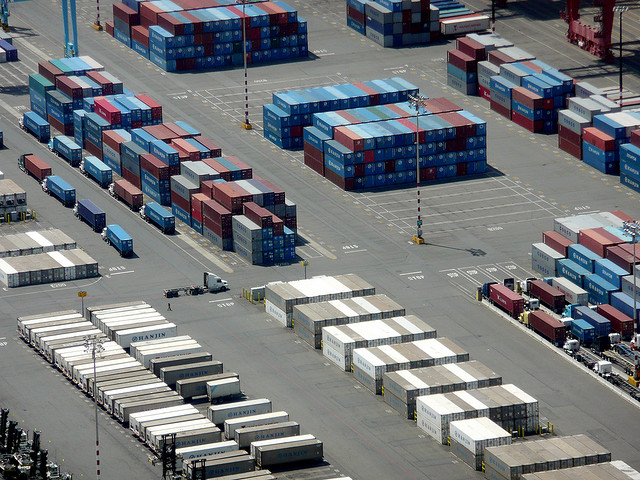
Now lets take a step back to look at the situation since the inception of containerisation in South Africa – some 30 years ago. Customs stance has always been that containerised goods manifested for onward delivery to a designated inland container terminal by rail would not require clearance upon discharge at initial port of entry. Containers were allowed to move ‘against the manifest’ (a ‘Through Bill’) to its named place of destination. This arrangement was designed to expedite the movement of containers from the port of discharge onto block trains operated by Transnet Freight Rail, formerly the South African Railways and Harbours (SAR&H) to the inland container terminal at City Deep. Since SAR&H operated both the national railway and the coastal and inland ports, the possibility of diversion was considered of little import to warrant any form of security over the movement of containers by rail. Moreover, container terminals were designed to allow the staging of trains with custom gantry cranes to load inland manifested containers within a ‘secure’ port precinct.

Over the years, rail freight lost market share to the emergence of cross-country road hauliers due to inefficiencies. The opening up of more inland terminals and supporting container unpack facilities, required Customs to review the matter. It was decided that road-hauled containers moved ‘in bond’ by road would lodge a customs clearance (backed with suitable surety) for purposes of national transit. Upon arrival of the bonded freight at destination, a formal home use declaration would be lodged with Customs. Notwithstanding the surety lodged to safeguard revenue, this has the effect of deferring payment of duties and taxes.

Diversification of container brokering, stuffing and multi-modal transport added to the complexity, with many customs administrations failing to maintain both control and understanding of the changing business model. Equally mystifying was the emergence of a new breed of ‘players’ in the shipping game. Initially there were so-called ‘approved container operators’ these being ocean carriers who at the same time leased containers. Then there were so-called non-approved container operators who brokered containers on behalf of the ocean carrier. These are more commonly known as non-vessel operating common carriers or NVOCCs. In the early days of containerisation there were basically two types of container stuffing – full container load (FCL) and less container load (LCL). The NVOCCs began ‘chartering’ space of their containers to other NVOCCs and shippers – this also helped in knocking down freight costs. This practice became known as ‘groupage’ and because such containers were filled to capacity the term FCL Groupage became a phenomenon. It is not uncommon nowadays for a single FCL Groupage container to have multiple co-loaders.

All of the above radically maximised the efficiency and distribution of cost of the cellular container, but at the same time complicated Customs ‘control’ in that it was not able to readily assess the ‘content’ and ownership of the goods conveyed in a multi-level groupage box. It also became a phenomenon for ‘customs brokers/clearing agents’ to enter this niche of the market. Customs traditionally licensed brokers for the tendering of goods declarations only. Nowadays, most brokers are also NVOCCs.  The law on the other hand provided for the hand-off of liability for container movements between the ocean carrier, container terminal operator and container depot operator. Nowhere was an NVOCC/Freight Forwarder held liable in any of this. A further phenomenon known as ‘carrier’ or ‘merchant’ haulage likewise added to the complexity and cause for concern over the uncontrolled inland movements of bonded cargoes. No doubt a disconnect in terms of Customs’ liability and the terms and conditions of international conveyance for the goods also helped create much of the confusion. Lets not even go down the INCOTERM route.

Internationally, customs administrations – under the global voice of the WCO – have conceded that the worlds administrations need to keep pace and work ‘smarter’ to address new innovations and dynamics in the international supply chain. One would need to look no further than the text of the Revised Kyoto Convention (RKC) to observe the governing body’s view on harmonisation and simplification. However, lets now consider SARS’ response in this matter.

SARS response to the Chamber of Business

Right of reply was subsequently afforded by FTW Online to SARS.

Concerns over Customs’ determination to have all goods cleared at the coast – expressed by Pat Corbin, past president of the Johannesburg Chamber of Commerce and Industry in last week’s FTW – have been addressed by SA Revenue Service.  “One of the main objectives of the Control Bill is the control of the movement of goods across South Africa’s borders to protect our citizens against health and safety risks and to protect the fiscus. “In order to effectively determine risk, SARS has to know the tariff classification, the value and the origin of imported goods. This information is not reflected on a manifest, which is why there is a requirement that all goods must be cleared at the first port of entry into the Republic.“It appears that Mr Corbin is under the impression that the requirement of clearance at the first port of entry has the effect that all goods have to be consigned to that first port of entry or as he puts it “to terminate vessel manifests at the coastal ports in all cases”. This is incorrect. “The statutory requirement to clear goods at the first port of entry and the contract of carriage have nothing to do with one another. Goods may still be consigned to, for example, City Deep or Zambia (being a landlocked country), but they will not be released to move in transit to City Deep or Zambia unless a declaration to clear the goods, containing the relevant information, is submitted and release is granted by Customs for the goods to move. The release of the goods to move will be based on the risk the consignment poses to the country.“It is definitely not the intention to clog up the ports but rather to facilitate the seamless movement of legitimate trade. If the required information is provided and the goods do not pose any risk, they will be released.”

So, where to from here?

The issue at hand concerns the issue of the ‘means’ of customs treatment of goods under national transit. In Part 3 we’ll consider a rational outcome. Complex logistics have and always will challenge ‘customs control’ and procedures. Despite the best of intentions for law not to ‘clog up the port’, one needs to consider precisely what controls the movement of physical cargo – a goods declaration or a cargo report? How influential are the guidelines, standards and recommendations of the WCO, or are they mere studies in intellectual theories?

New Tax law to give SARS upper hand

Taxes

News24.com reports that legislation allowing the SA Revenue Service (Sars) to search business premises without a warrant is expected to come into operation within the next three months. The Tax Administration Bill was promulgated into law on Wednesday in the Government Gazette, Sars said in a statement on Thursday.

The act will come into operation on a date to be determined by the President  by proclamation in the gazette.

“Sars’s preparations for the implementation of the act are at an advanced stage and it is anticipated that it will come into operation within the next three months,” it said.

The act was intended to simplify and provide greater coherence in South African tax administration law. It eliminated duplication, removed redundant requirements, and aligned existing disparate requirements in different tax acts ranging in age from four to 63 years old. It created a single, modern framework for the common administrative provisions of the tax acts.

“Most taxpayers are compliant, and the act should ensure better service and a lower compliance cost for them,” Sars said. “Sars is, however, duty-bound to actively pursue tax evaders in order to maintain compliant taxpayers’ confidence in the integrity of the tax system.”

Key features of the act include:

  • A move to a single registration process and number across taxes to reduce red-tape and streamline the system, and self-assessment of taxes so taxpayers need not wait for a Sars assessment;
  • Greater access to third-party data to underpin Sars initiatives, such as the pre-population of individual tax returns;
  • Clearer rules on Sars access to information, so tax liabilities can be determined more quickly and accurately;
  • The ability to search business premises without a warrant in narrowly-defined situations, where the general requirement for a warrant will defeat the object of the search, so Sars can act when tax is at serious risk and time is of the essence;
  • Clear requirements and timelines for issuing tax clearance certificates to provide greater certainty and responsiveness to business;
  • Feedback on audit progress and findings to engage more fully with taxpayers and ensure they understand the reasons for any adjustments;
  • Specific timeframes for decisions of the Tax Board (a “small claims court” for tax) and wider reporting of Tax Court decisions to improve access to justice; and
  • The appointment of a Tax Ombud, informed by international experience, to provide taxpayers with a low-cost mechanism to address administrative issues that cannot be resolved through Sars’s normal channels.

Although the act provided for a year from its commencement for the appointment of the Tax Ombud, Finance Minister Pravin Gordhan announced in his 2012 Budget speech that the ombud would be appointed this year. Source: News24.com

“Sars is, however, duty-bound to actively pursue tax evaders in order to maintain compliant taxpayers’ confidence in the integrity of the tax system.” 

Who is going to pursue corruption and wasteful expenditure in order to maintain the citizens confidence in paying tax in the first place?

Public Office – a way to pillage the state?

The following article featured in the Business Day highlights the endemic problems of a moral-less society with an unbridled desire to attain wealth at all costs. True this is not just a South African problem, one just has to look at the corrupt activities of ‘politicians’ and ‘big western bankers’ to realise the despair that has  been wrought for so many unwitting citizens, many of whom face a future of utter misery. With so much talk of anti-corruption measures and witch-hunts against whistleblowers, the article provides a down-to-earth explanation as to what it means to hold public office.

The abuse of public power and the plundering of state resources have become so pervasive in SA that events such as these can no longer be regarded as isolated episodes of delinquent public officials, each acting individually. Instead they should rather be ascribed to a political culture born of a profound misconception of the very notion of public office, held by sizeable numbers of public office-bearers ranging from the highest echelons of the executive to junior police officers and public servants. This misconception causes office-bearers to act in a way that is diametrically opposed to what public office requires.

Public office bestows power and authority on the public office-bearer. It demands that citizens recognise and yield to the authority that accompanies it, be it the meagre authority of the junior public servant, the often intrusive authority of the policeman, or the far-reaching authority of the president or ministers. Public office commands respect by virtue of the power vesting in the public office-bearer and from the fact that public office-bearers do not act in their own interest but in pursuit of the public good. But the rewards that accompany the highest positions of public office extend much further. They are publicly applauded and venerated or placed in a position to receive these honours.

However, there is a stark flip side to the public office, which is as essential to public office-bearing as the power and rewards that come with it. This is that the authority and honour of public office are rooted in a profound sacrifice, requiring the office-bearer to sacrifice his private self for the sake of the public good. The higher the public office, the more drastic the sacrifice of the private self must be.

These two aspects are equally vital to public office: the power and the honour as well as the sacrifice of the office-bearer’s private self. The state is rooted in this two-pronged premise and its survival depends on it. Hence, public office does not turn the office-bearer into some magnified private person, entitling him to private gain that is beyond the reach of the ordinary private person. Public office-bearers must sacrifice the private self for the sake of, and in exchange for, public authority.

The occupant of public office discharges his responsibilities strictly in accordance with the prescribed script of the public office concerned; he must act lawfully in accordance with the precepts of the office in question. This is not to say that he must act mechanically, because the way in which public office is discharged may vary from mediocre to exceptionally virtuous, yet always within the confines of the script of the office concerned. Hence, the office-bearer may never act outside the powers inherent in the relevant public office as laid down in law, leaving no space for private detours beyond the ambit of the script.

But there is mounting evidence of a deviant culture that is causing public office in this country [South Africa] to be widely and profoundly misunderstood by many incumbents, identifying it with only its first aspect — its power and honours — yet ignoring and rejecting the second and equally essential aspect — the service to the public good and the sacrifice of the private self.

In fact, precisely the reverse seems to be identified with public office, namely that public office somehow entitles public office-bearers to exploit the power and authority of public office to achieve maximum private gain for the office-bearer — and to receive public accolades for these “successes”. When this occurs, the public office-bearer becomes the exact opposite of what he should be, namely a freebooter, a privateer, harming the public good and robbing the state. And when privateering increases as the evidence of a culture of abuse of public office for private gain is mounting, the gloomy prospects of a faltering state loom large. The larger the number of these privateers, the more the state descends into an assemblage of competing marauders rendering patronage to their own retinue with no regard for the rest, who have to fend for themselves while witnessing the unfortunate spectacle of the receding state. Article by: Koos Malan, professor of public law at the University of Pretoria – Business Day news paper July 2012.

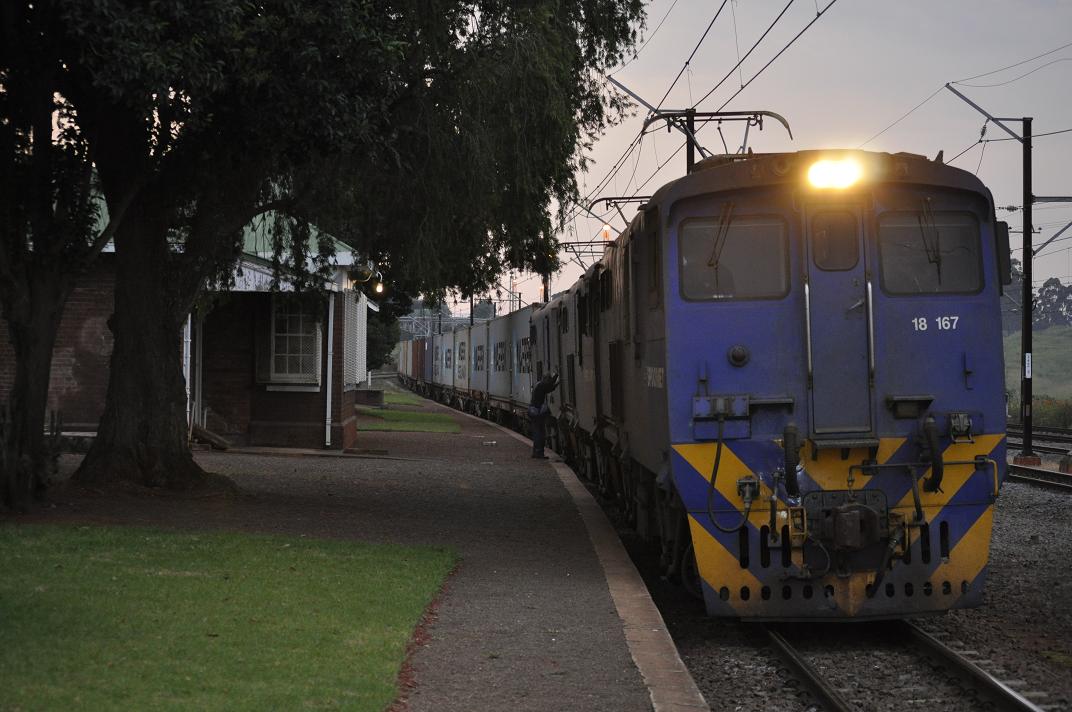
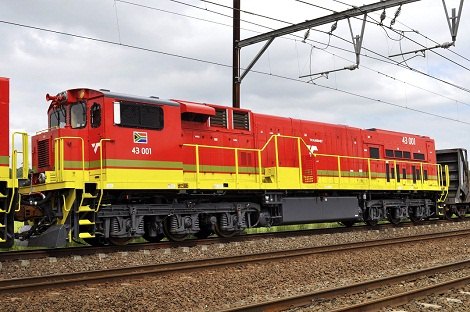
Transnet’s loco acquisition programme gaining traction

Ports.co.za reports that the US-based General Electric (GE) Transportation has announced that another locomotive, which forms part of a deal sealed with state-owned Transnet, was delivered with local content that exceeds the commitment from GE’s initial Transnet order of 100 locomotives.

The locomotive is the 42nd and is the most advanced diesel-electric locomotive ever built-in South Africa. Its official unveiling took place at an event held at Transnet Rail Engineering’s facilities in Koedoespoort, Pretoria, on Wednesday.

With this order, GE overshot its self-imposed target of 30% local content. The locomotives assembled in South Africa now have 37% local content.Transnet concluded an agreement with GE for a further 33 diesel-electric locomotives, over and above the 100 already being purchased under a deal concluded in 2009. In terms of the contract, 10 of the locomotives were manufactured in Erie and Grove City, Pennsylvania, USA and 133 are being assembled locally at Transnet Rail Engineering’s site in South Africa.

A total of 53 will be deployed in the Phalaborwa-Richards Bay corridor, 30 on the Sishen-Saldanha iron-ore corridor, 32 on the Witbank-Nelspruit-Komatipoort line and the remaining 28 will be used to transport coal to Eskom power stations. Source: ports.co.za

Revisiting the national transit procedure – Part 1

FTW Online last week ran an interesting article in response to a proposed change in Customs’ policy concerning the national transit movement of containers from coastal ports to inland container terminals and depots. In February 2011, I ran an article Customs Bill – Poser for Cargo Carriers, Handlers and Reporters alluding to some of the challenges posed by this approach. The following article goes a step further, providing a trade reaction which prompts a valid question concerning the practicality and viability of the proposed change given logistical concerns. I believe that there is sufficient merit in the issues being raised which must prompt closer collaboration between the South African Revenue Service and trade entities. For now it is sufficient to present the context of the argument – for which purpose the full text of the FTW article is presented below. In Part 2, I will follow-up with SARS’ response (published in this week’s edition of the FTW) and elaborate on both view points; as well as consider the matter  on ‘raw’ analysis of the ‘cargo’ and ‘goods declaration’ elements which influence this matter. Furthermore, one needs to consider in more detail what the Revised Kyoto Convention has to say on the matter, as well as how other global agencies are dealing and treating the matter of ‘security versus facilitation’.

Customs’ determination to have all goods cleared at the coast does not bode well for the South African trade environment, Pat Corbin, past president of the Johannesburg Chamber of Commerce and Industry (JCCI), said. Speaking at the Transport forum in Johannesburg Corbin said the Customs Bills have been on the cards for several years now and while consensus had been reached on most issues in the Nedlac process, the determination of Customs to not allow for any clearing to take place at inland ports will only add more pressure to the already overburdened ports in the country. “Customs maintains that despite the changes they propose it will be business as usual. We disagree. We have severe reservations about their intention to terminate vessel manifests at the coastal ports in all cases and have called for further research to be undertaken in this regard,” said Corbin. “By terminating the manifest at the coast it has severe ramifications for moving goods from road to rail. International experience has shown when you have an inland port and you have an adequate rail service where the vessel manifest only terminates at the inland port, up to 80% of the boxes for inland regions are put on rail while only 12% land on rail if the manifest terminates at the coastal port.” Corbin said the congestion at both the port and on the road would continue and have an adverse impact on quick trade flows. “It also raises issues around the levels of custom security and control at inland ports and then the general implications on the modernisation project.” According to Corbin, government’s continued response has been that no provision exists for inland ports and that goods must be cleared at the first port of entry. “They maintain that it is about controlling goods moving across our borders and thus the requirement that all goods must be cleared at the first port of entry. The security of the supply chain plays an important role to avoid diversion or smuggling of goods,” said Corbin. “Government says that the policy change will not clog up the ports or prohibit the seamless movement of trade. Labour organizations and unions seem to agree with them.” But, Corbin said, the Johannesburg Chamber of Commerce differs and is worried about the ramifications of this dramatic change to the 35-year-old option of clearing goods at an inland port or terminal. “With this policy change all containers will have to be reconsigned after not only Customs clearance on copy documents but also critically, completion of shipping lines’ requirements ie, payment of freight, original bill of lading presentation and receiving delivery instructions prior to their issuing a delivery order.” Corbin said the issue had been addressed directly with Transnet CEO Brian Molefe on two occasions, but that he had said he accepted Customs’ assurance that nothing would change and the boxes would still be able to move seamlessly once cleared. “It is not understood that the manifest will terminate at the coast where all boxes will dwell until they can be reconsigned,” said Corbin. Source: FTW Online – “New Customs Bill ruling will put pressure on port efficiency.”

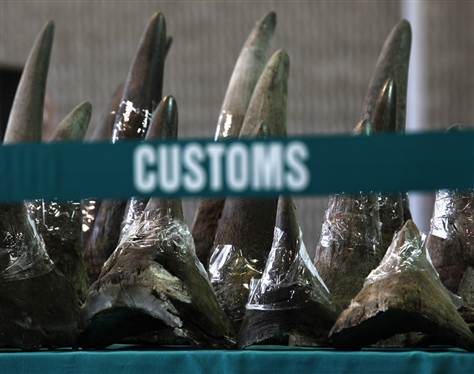
South Africa – Rhino death toll hits 251

According to the latest data from South Africa’s department of environmental affairs (20 June 2012), the total number of rhinos poached  since the beginning of this year now stands at 251 with the number of arrests at 170.

The North-West, KwaZulu-Natal and Limpopo provinces continue to be targeted by poachers, collectively accounting for 86 of the total rhinos poached this year. The Kruger National Park, alone, has lost a total of 149 rhinos since the beginning of this year.  At this rate the carnage will almost certainly exceed the 448 slain last year.

Thus far, a total of 170 arrests have been made of which 147 of the arrested were poachers, 10 receivers or couriers, six couriers or buyers and seven exporters.

Elephant and rhino poaching is surging, conservationists say, an illegal part of Asia’s scramble for African resources, driven by the growing purchasing power of newly affluent Asians.

A film made by UNTV and the Convention on International Trade in Endangered Species (CITES) can be seen on YouTube on this link: http://www.youtube.com/watch?v=t3m7FOXOLbY. Rhino horn has long been used in traditional medicines in China and Vietnam and the film quotes a doctor at Hanoi’s biggest hospital who sings its praises. According to the film, rhino horns have also been stolen from museums and private collections in more than 15 countries. Source: DoEA

Durban awaiting arrival of 11, 660 TEU container ship

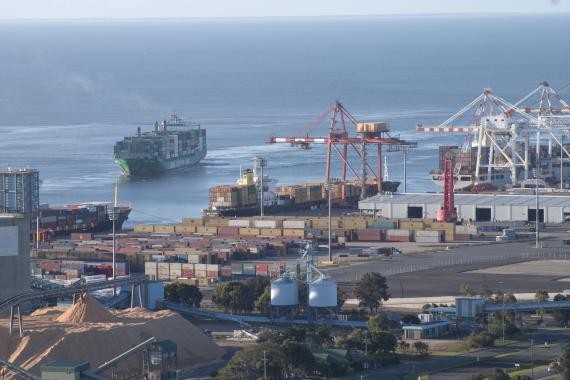
Ports.co.za reports that  the largest ever container ship to enter a South African port on 1 July 2012 to work cargo will arrive in the Port of Durban, vindicating the recent widening and deepening of the harbour entrance.

The ship is the MSC SOLA (131,771-gt, built 2008) which is arriving from Port Louis and the Far East. Although she will not be fully laden the arrival of the 364 metre long ship becomes another justification for the recent harbour entrance channel project, which saw it widened by an additional 100m to a minimum width of 222m and deepened to a working draught of -16.5m. Once work on deepening at least one of the container terminal berths on Pier 2 has been completed ships of this size will be able to arrive or sail fully laden.