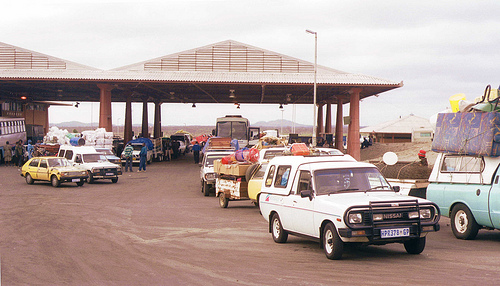
South Africa – Stalling Regional Integration

Yes, you’ll be forgiven if you thought this was some belated April-fools joke. South Africa has been accused of frustrating plans to create a regional customs union and instead preferring to bolster the South African Customs Union (Sacu), where it holds sway. 

A customs union is a trade agreement by which a group of countries charge a common set of tariffs to the rest of the world, while granting free trade among members. Regional Integration minister, Priscilla Misihairabwi-Mushonga, said there was a feeling that South Africa wanted to use Sacu as its basis to form a regional customs union, instead of working towards creating a new one.

“What we see is that South Africa wants to use Sacu as the basis for forming a regional customs union and sometimes, this is viewed as having a big brother mentality,” she said. Misihairabwi-Mushonga said, for this reason, negotiations towards a holistic Southern African Customs Union (Sadc) had not gone very far. Botswana, Lesotho, Namibia, Swaziland and South Africa make up Sacu, with the four countries having benefited by aligning themselves to South Africa, Africa’s largest economy. A Sadc customs union would involve the 15 countries of the region, instead of Sacu, which is considered narrow.

But Catherine Grant, the head of economic diplomacy at the South African Institute of International Affairs, reckons the smaller nations in Sacu, like Lesotho, may be opposed to Sacu morphing into a regional customs union. “This will be opposed by other Sacu members, not necessarily just South Africa, as this (Sacu) is not just a trade agreement, but involves a broader range of economic issues,” she said.

“Up to 60% of the Lesotho budget is Sacu revenue, so the vested issues, whether Sacu is the basis of a customs union, are not just South African.” Grant felt that it was impossible to expand Sacu in its current form, as it would cost South Africa too much and would dilute the resources that were meant for other projects.

The head of the trade and policy think-tank said instead, South Africa preferred to see the implementation of a free trade area (FTA) as a first step, since customs union negotiations were usually lengthy and time-consuming. “The preference is to first channel scarce resources to existing commitments and trying to make them as beneficial as possible,” she explained.

Grant said while South Africa was the dominant player in the region, hence engendering a feeling that it was imposing itself as the big brother, the country was actually holding back from taking a leading role and this cost the region.

“Sometimes South Africa holds back because they are conscious of not being a big brother and that could be detrimental to the region,” she explained. However, Grant said energies should be directed towards the conclusion of negotiations to set up the Tripartite Free Trade Area (TFTA), which includes the Common Market for East and Southern Africa, the East African Community and Sadc.

“The TFTA will resolve some of the overlapping issues that can be difficult to solve when it comes to a customs union,” she said. Since Zimbabwe adopted multicurrencies in 2009, there has been a call that the nation either join Sacu or push for the formation of a regional customs union. Zimbabwe remains wary of joining Sacu, as it fears for its economic independence, yet negotiations for a regional customs union are moving at a snail’s pace.

Sacu was established in 1910, making it the world’s oldest customs union. It consists of Botswana, Lesotho, Namibia, South Africa and Swaziland. Source: AllAfrica.com

Saving the Rhino – a real story

Besides media reports and the many ramblings of law enforcement and environmental officials in the cause of protecting our fauna and flora, I received the following free e-book titled “Poached!” from a colleague. It details a story told by a veterinarian of a white rhino, callously mutilated by poachers and left alive with his horns and part of his face hacked off with pangas, and the good doctor’s quest to save the victim. Graphic pictures and an embedded video bring home to all the complete brutality of mankind. The book is published by Nikela – Helping People ~ Saving Wildlife and recommends widespread reading and distribution.

Mozambique – Single Window and other Customs developments

The Single Electronic Window (JUE) is a modern system of clearance of goods. After the revision of the whole legislation to allow the implementation of the JUE, the pilot project began in September 2011 in the port of Maputo. Here follows an interview with Kekobad Patel, the President of the Working Group On Tax Policy, Customs and International Trade of the CTA.

What was the adherence of international traders?

“We hoped more adherence of all concerned traders, unfortunately, very few participated in the pilot phase. During this period, both systems (manual and electronic) coexisted. There is always some resistance to change.”

When did the use of the JUE become mandatory?

“The use of JUE became mandatory on April 9, 2012 in the port of Maputo,on April 23 in the port of Beira, early May in the port of Nacala. The city of Tete is now also covered by the system because of the current requirements due to the establishment of large enterprises in the region.”

How many organizations have used the JUE?

“Since its entry into force until 15th of June 2012, over 7,000 import entries were submitted. We still do not deal with export declarations, transit, or special arrangements. These processes are handled manually.”

What are the next areas to be covered by the JUE?

“The second phase will begin in July 2012 and will focus on automotive, multi-modal and road terminals in Maputo, as well as the land borders of Goba, Namaacha (Swaziland) and Ressano Garcia (South Africa) that have received the equipment to begin operations. At the end of the year, the port of Pemba and the land borders of the province of Manica and Tete will be also covered. It will also be possible to treat the other procedures for export and transit. This is crucial, given the geographical location of Mozambique and its relations with the countries of the hinterland. Meanwhile, three Ministries will be electronically linked to award the import licenses: the ministries of Health, Industry and Commerce, and Agriculture. We should not forget that banks are also involved in the JUE. The BCI bank has supported the JUE since the pilot phase. Other banks have joined in recent months: Millenium BIM, Mozabanco and Standard Bank. We expect the membership of other banks.”

What is the biggest challenge of the JUE?

“The implementation of the JUE has led to a change of mentality: “paperless” in the country: less buffer, less paper. The government itself is also involved in the process of e-taxation that ensures that taxpayers should pay their taxes electronically. We still have problems to solve. For example, when a ministry inspects companies, papers are asked for… We need to think about alternatives. The castle must be built stone by stone to ensure it is strong and other sectors such as the public one and banking, are also involved.We believe that the entry into force of the JUE shows how to modernize the country.”

Is the JUE to eliminate the clearing agents?

“The law allows companies to make their own clearance process, but many of them are not prepared. In other countries such as Singapore, the most advanced country in terms of customs, clearing agents continue to exercise thanks to their perfect knowledge of the system.” Source: allAfrica.com

Other news – Mozambique accedes to the WCO’s Revised Kyoto Convention

On 11 July 2012, the Embassy of the Republic of Mozambique to Belgium deposited Mozambique’s instrument of accession to the International Convention on the Simplification and Harmonization of Customs Procedures (Revised Kyoto Convention) with the World Customs Organization. The Convention is regarded as a blueprint for effective and modern Customs procedures, and will enter into force in Mozambique on 11 October 2012. Mozambique becomes the 82nd signatory to the Convention. Some of the Convention’s key elements include the application of simplified Customs procedures in a predictable and transparent environment, the maximum use of information technology, the utilization of risk management, a strong partnership with the trade and other stakeholders, and a readily accessible system of appeals. Will be interesting to see how Mozambique Customs treats the national transit procedure?

The African transhipment race

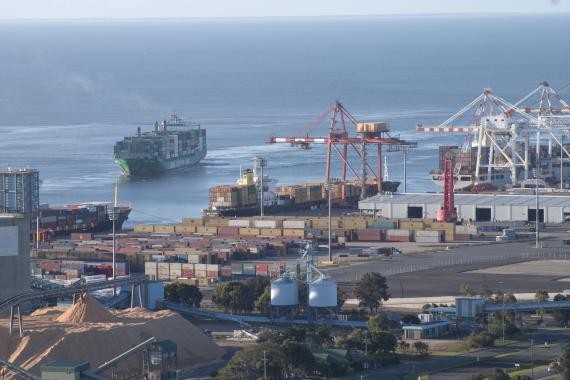
Have you noticed the debate in the on-line Global Ports Forum about who will become the main container terminals in East and West Africa? Portstrategy.com has taken it upon themselves to score some of the suggestions.

Nigeria is strongly identified as a hub for the west coast of Africa – we score that 7 out of 10. It has the potential but will new port development be delivered in time? Will the off-take infrastructure development be implemented in concert with port development at places like Lekki? Will Lekki’s hub function be undermined by other deepwater facilities being delivered first on the African coast?

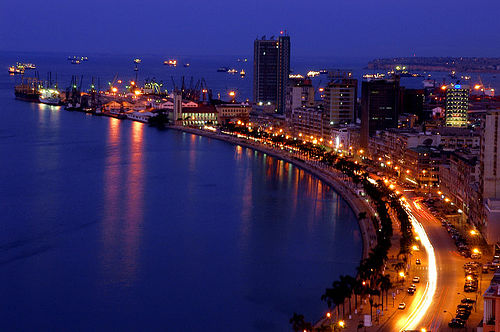
Generally, they agree with the view expressed by one wise head in the Forum that the race for hub status on the West African coast is now a fierce one. However, we don’t agree with the contention that Angola will have a serious say in becoming a major hub for West Africa. It will struggle for some time yet to meet its own port capacity needs let alone fulfil a regional function. We score this suggestion 2 out of 10; go to the bottom of the class!

South Africa as a hub for East and West Africa? Well to a limited extent it does already fulfil this role but when South Africa booms its priority has to be gateway cargo and it is limited in terms of its economic and geographical reach. It is also not ideal because of position; we won’t score the suggestion down but conversely we also won’t score it up because it is a fair point. We do, however, see as a negative the continuing emphasis on the public operation of this country’s ports – it spells very high cost comparatively speaking and coupled with this, ironically, not the best service.

Doraleh Container Terminal, Djibouti? Yes we would agree that this has a role to play in container transhipment for East Africa and particularly with its phase two expansion now underway. The price is right for transhipment here but the cost of cargo movement to the main transit destination of Ethiopia is coming in for increasing criticism. It also has a limited reach along the East Coast. Another score of 7.

Mombasa? Yes huge potential for the East Coast of Africa but as history shows no political will to deliver new port capacity in line with demand. Nine in theory but five in practice.

The new port of Lamu? Designed to act as an export gateway for South Sudan, construction has begun on the $23bn (£14.5bn) port project and oil refinery in south-east Kenya’s coastal Lamu region near war-torn Somalia’s border. With a planned multi-purpose port function, because it is a ‘clean slate’ it could take on the hub function. Another 7.

So what is Port Strategy’s view?

In West Africa, we note that new purpose-built, deep draft container port capacity has either recently been installed or is about to be installed in West Africa in six or seven locations. In Lome in Togo and Pointe Noire in the Congo, for example, new facilities are set to come on-stream by end 2014 at the latest which will be able to handle vessels of up to 7,000 teu. We therefore suggest that there will be a split of hubbing activity between all these locations but with the first two or three terminals on-line grabbing the main part of transhipment activity. We also see a continuing role in the short-term at least for hubs such as Algeciras that ‘face’ Africa.

In East Africa we cannot escape the logic of Mombasa and Dar es Salaam but will they pick up the pace quick enough to seize the opportunity? Sadly, not so far. Lamu, therefore, may have a big role to play. Source: Portstrategy.com

Tanzania slams US/ EU non-tariff barriers replacing tariffs

Tariff barriers against African exports have fallen, but European and American non-tariff barriers, exacting high standards of compliance, have replaced them, blocking products and produce, Tanzanian deputy trade minister Gregory Teu told the National Assembly.

“American markets are open, but the standards that our products have to meet are too high for our producers to meet,” Teu said in his response to a question from parliamentarian Rita Mlaki who asked what was being done to exploit the two markets under the African Growth and Opportunity Act (AGOA) and Everything but Arms (EBA) arrangements.

He said the government, through the Exports Processing Zones Authority (EPZA), was pursuing strategies to promote exports by local and foreign investors, but said the markets are practically inaccessible due to the stringent standards set. Tanzanian exports are chiefly coffee, cotton, sisal, tea, tobacco, cashew nuts and pyrethrum. Seems it should be called “Pain for Trade” not “Aid for Trade” Source: AllAfrica.com

South Africa – Rhino death toll hits 251

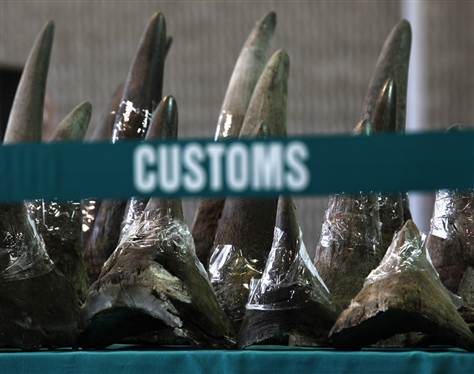
According to the latest data from South Africa’s department of environmental affairs (20 June 2012), the total number of rhinos poached  since the beginning of this year now stands at 251 with the number of arrests at 170.

The North-West, KwaZulu-Natal and Limpopo provinces continue to be targeted by poachers, collectively accounting for 86 of the total rhinos poached this year. The Kruger National Park, alone, has lost a total of 149 rhinos since the beginning of this year.  At this rate the carnage will almost certainly exceed the 448 slain last year.

Thus far, a total of 170 arrests have been made of which 147 of the arrested were poachers, 10 receivers or couriers, six couriers or buyers and seven exporters.

Elephant and rhino poaching is surging, conservationists say, an illegal part of Asia’s scramble for African resources, driven by the growing purchasing power of newly affluent Asians.

A film made by UNTV and the Convention on International Trade in Endangered Species (CITES) can be seen on YouTube on this link: http://www.youtube.com/watch?v=t3m7FOXOLbY. Rhino horn has long been used in traditional medicines in China and Vietnam and the film quotes a doctor at Hanoi’s biggest hospital who sings its praises. According to the film, rhino horns have also been stolen from museums and private collections in more than 15 countries. Source: DoEA

News from Angola

SEZ for Cunene Province

The government of Cunene province in southern Angola, has chosen the border town of Calueque, in Ombadja municipality, to set up the province’s Special Economic Zone (ZEE), the province’s governor, António Didalelwa said in Ondjiva speaking to Angolan news agency Angop. At the end of a meeting of the provincial government, the governor said that Calueque had been chosen due to its potential to drive agri-livestock activities based on the Cunene River’s hyrodgraphic basin and the Calueque hydroelectric facility. Its proximity to Namibia, its conditions in terms of available electricity and water, as well as access roads make it possible to set up economic and administrative facilities in order to drive production and job creation. The entities that attended the provincial government meeting concluded that the existing conditions at the new ZEE would attract investments and drive production by installing factories, retail and services areas. This follows last year’s fomalisation of the Luanda-Bengo Special Economic Zone (SEZ) between the towns of Viana and Cacuaco in Luanda province and the towns of Icolo-e-Bengo, Dande, Ambriz and Namboangongo in Bengo province. Watch a short video on the Luanda-Bengo ZEE here! Source: Macauhub.com.

Customs Modernisation

The Programme to Expand and Modernise Customs Services (PEMA) in Angola, which began in 2002 and officially ended Monday 21 May, cost US$315.5 million, Angolan weekly newspaper Expansão reported. The newspaper added that in a 10-year period the PEMA had led to US$17.7 billion going to the State’s coffers and thus the cost of the programme was just 1.8 percent of the revenues that it had made possible.

During the ceremony to mark the end of a partnership with Crown Agents, a UK company that specialises in modernising public services, the assistant director general of the National Customs Service, Maria da Conceição Matos, said that whilst the programme was being implemented customs revenues had increased steadily and significantly. Matos said that the Programme for Expansion and Modernisation of Customs Services had reformed the institution structurally across the whole of Angola, based on international best practices for the customs sector.Source: Macauhub.com.

Awarding the SKA

So what does the awarding of the Square Kilometre Array (SKA) and Customs have in common? Sweet blow all as far as I was concerned until a colleague of mine, Roux Raath, pointed out one of the criteria on which the award was made. Reading the actual report one realises this has more to do with the fact that six African countries will be involved and the cross border movements are foreseen to be complex in contrast to movements between Australia and NZ. Therefore, this has less to do with the South African Customs administration than the Southern African geographical environment. The report also refers to duty and tax structures and these issues should perhaps find a home with the DTI as customs does not dictate these. Nonetheless, the fact remains that certain issues have been raised and these should be considered when strategies are devised to support the SKA project.

The SKA Site Advisory Committee (SSAC) reviewed the various customs systems and duty rates, the excise tax regimes and tax rates, and related issues such as import and export processes that will impact the SKA over its lifetime. A wide range of issues was considered since the SKA involves a large multinational investment of funds, materials, and services, including the provision of scientific and technical equipment, and personnel in various remote locations.

The SSAC reviewed the issues presented by the two candidates, including details related to the six diverse South African member countries; cross-border coordination and logistical issues presented by the South African proposal; and the diverse customs, excise, and regulatory structures in the two candidate sites. The SSAC also considered the long-standing Australia–New Zealand Closer Economic Relationship Trade Agreement (ANZCERTA) free-trade and economic cooperation agreement (allowing for the free flow of goods, services, and people between the two countries) and the absence of overall free-trade agreements among the six members of the South African consortium. The SSAC also reviewed the customs, free-trade, economic, and business environments in Australia and New Zealand and considered the written confirmation from the Australian government that there will be no Goods and Services Tax (GST) payable by the SKA in Australia. On the factor of Customs & Excise, the SSAC awarded the following points for each of the contending consortia – 13.3 for ANZ and 6.7 for South Africa.

To read the full report, download here!

 Related articles

Why Tanzanians are afraid of the Regional Federation

The following article by Tony Zakaria is a candid look at the socio-economic environment of the Tanzanian people. Enjoy.

Why is Tanzania so afraid of the EAC political federation? We seem to shy away from signing any significant document that commits Tanzania to a marriage with Kenya, Uganda, Rwanda and Burundi. Have we been using land and security issues as a way to hide other fears unmentionable?

Some Tanzanians fear Kenyan women for being too aggressive and well educated. Those madams drive flashy Mercedes Benz cars and have no shortage of vijisenti or spare change. Upon federation country borders will be wide open and then anything can happen. These macho gals may move over to grab available single or bonded men from the land of the Kilimanjaro to play football in Kenya like all those African football stars in Europe for Man U and C, Chelsea FC, Marseille and Real Madrid clubs. Tanzanian men are among the most handsome in Africa.

If you don’t believe me, take a fresh look at Tanzanian men today. From top bosses in government to ordinary farmers in villages they ooze with quiet charm. A little smile from Bongo men can charm an eagle chick off a tree branch in Limuru. Nairobi and Kampala ladies will not be able to resist.

So why are men in the nation of Serengeti and Zanzibar resistant to political and economic union when they could conquer the whole territory? Tanzanian gals may be among the prettiest on planet Earth alongside the Abyssinians in the former kingdom of Jah Haille Selasie but would be no match for slender necked, doe-eyed Banyarwanda mademoiselles.Bongoland women worry their men might start an African exodus to Kigali if we become the United States of East Africa.

Surviving the 1994 genocide elevated Rwandese women to be among the strongest-willed in Africa. Tanzanian madams have enjoyed easier lives and eternal peace from womb to tomb. Can they compete effectively with Hutu and Tutsi damsels? Tanzanian madams will their wealth too; given away to those more willing to use their talents profitably.

 When borders cease to exist, Muheza and Bombo farmers will not only be losing fruits from their shambas to more enterprising Kenyan traders, they will be losing Eves, Aminas and Marias from their Garden of Eden.Nairobi will be a local bus trip away and Ketepa tea will be universally available at village markets in Bagamoyo and Kilombero at a fraction if its current cost, not a gourmet item in selected supermarkets.

Who knows what else may transpire? Investors from the current Kenya would set up factories to extract and package affordable branded juice from fruit grown in Tanga, Dodoma and Iringa. Mwanza and Dar-es-Salaam residents will enjoy Bongo flavour orange and apple juice passionately, knowing it is made in East Africa instead of Africa south of the Zambezi River.

I can’t see local traders dancing with joyful abandon to celebrate the entry of other bulls in the business kraal. Traders make profits regardless of the origin of traded goods. Manufacturers want to enjoy monopoly in a market protected by import, sales and other taxes and tariffs.Take for example juice made in Kenya using fruits sourced from Tanzania. From Tanzania the fruits are VAT and export taxed. The packed juice is taxed in Kenya for sale and importation. Those taxes only hurt the final consumer, making it unaffordable for ordinary folks.

Why do male-female relationships work fine during the courtship period and marriages fall into boring routines? The possibility of losing a mate to a competitor is such a strong incentive to keep being at a person’s best behaviour, appearance and treatment of a mate. That is when relationships are conducted with business-like efficiency.

Tanzanian businesses fear competition from a supposedly more powerful Kenyan business fraternity. Enterprising Kenyan operators buy tomatoes and onions from Arusha during the day. By evening they are delivered in Kenya factories. At night the veggies are sorted, graded, cleaned, packed and labelled.

By the following morning, the veggies are awaiting airlift to destinations in the Middle East. With added value, Kenyan entrepreneurs make huge profits. Vegetables, fruits and fresh flowers could be processed in Arusha and airlifted straight from Kilimanjaro airport instead of Nairobi.

After federation Arusha, Kilimanjaro and Tanga natives would freely move agricultural produce to what is now Kenya and Uganda while making good money from goods sales and transportation. Wachagga, Waarusha and Meru men and women are pretty aggressive businesswise. They can beat Kenyans at their own game.

Having made mega profits, some Tanzanian traders can entice nice looking Gikuyu and Akamba chicks to settle permanently on the slopes of Mount Meru or the Kilimanjaro Mountain of greatness. Tourists can visit the snow-capped mountain near the Equator in East Africa without crossing the border twice. Some amorous traders can fully practice family planning by spacing their children between Moshi, Arusha, Nairobi and Entebbe. They will just strategically place mothers in each city.

Tanzanians fear their Any Time Cancelled wings of the Kilimanjaro with one borrowed plane will be swallowed whole by the bigger Kenya airways. The pride of Africa has already spread its wings from Lagos to Beijing. This is genuine fear arising from fake premises. If we are one block, the stronger airline will belong to all of us.

The federal states will pool pilots, cabin and ground crew, airports, buildings, planes and vehicles to create the strongest airline in Africa like the old East African Airways that was a real pride for Africa.We have to overcome our genuine and misplaced fears and take the needed steps to make EAC a reality. Uniting our many resources is the only way our grandchildren can survive in the competitive global village. Source: Daily News (Tanzania)

Interfront – Customs know-how and software

Forgive my exuberance and national pride, for one minute. After some years of intense re-organisation and strategization a new dynamic organization is set to spearhead ICT development in the Customs and Border Management industry. Many will know it by its previous name TATIS or TATIScms. The Cape Town based IT outfit is responsible for the intuitive customs software solution which currently operates in Luxembourg Customs. Let it be known that this is one tough space to operate and succeed in.

Africa, in particular, has  suffered the stigma of UN and World Bank ‘freebies’ by way of customs automated solutions – designed and developed by the west, on western philosophy with little concern for the longer term sustainability and development on the African continent. Before the emergence of commercial Windows-based software, African states (and most developing countries for that matter) had little option but to adopt ASYCUDA. The French colonies in the main sought franco-developed SOFIX. Bull Computers were particularly strong in this space and received great support from the French government in their ventures.

Just as the ‘power’ of the west is waning under financial and political turmoil, so developmental states and economies are looking to their own resources and expertise to fulfil their needs and destinies. A similar phenomenon occurred in the border and port control security space during the first decade of the 21st century, where the Chinese have virtually stolen international market share in NII (Cargo scanning) equipment.  Therefore the emergence of InterFront on the Customs ICT scene is both unique and timely. For more details on the new company and its partners, solutions and expertise please visit their website: http://www.interfront.co.za. Also read their corporate and product profile brochure – click here!

This week, Interfront are show-casing their solution and expertise at the WCO‘s 2012 ICT Conference in Tallinn, Estonia. With the international customs and border management relatively young and seeking stability, Interfront have a great opportunity to develop a regional and international footprint. SARS, in particular, looks forward to its new integrated customs solution; setting a new bench mark in global customs processing.

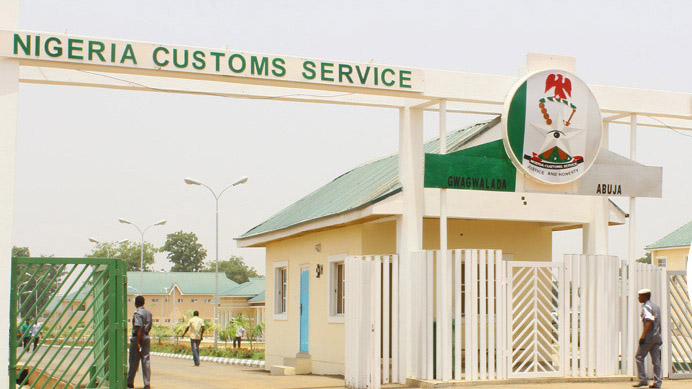
Nigerian Customs – a paramilitary display

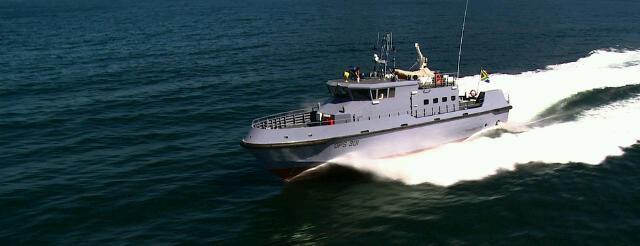
Ports.co.za reports that Nigerian Customs Service has signed an agreement for the delivery of two 24 metre P249 patrol craft, which will use them to combat smuggling and piracy.The supplier is a Cape Town based outfit called Kobus Naval Design (KND). In the context of intra-Africa trade this deal should be considered a real scoop. Kobus Potgieter, CEO of Kobus Naval Design (KND), confirmed that his company had received the order and would deliver the vessels in ten months’ time. The aluminium vessels will be built in Cape Town. This will be the sixth KND designed vessel in the Nigerian waters delivered over the last couple of years. The company is also busy with a dive boat contract for the oil and gas industry in Nigeria.

Nigeria’s Federal Executive Council (FEC) also recently approved N1.7 billion (US$11 million) for the purchase of a Cessna Citation CJ4 aircraft for the Customs Service. The aircraft would be used for surveillance missions along Nigeria’s borders and would help combat economic sabotage and cross-border crimes. Alhaji Mohammed Dikko, the Comptroller-General of the Nigerian Customs Service, said that his agency had already acquired the helicopters for surveillance of Nigeria’s borders and added that President Goodluck Jonathan had approved the purchase of 400 Toyota Hilux vehicles for border patrol.

Border control is an increasingly important issue in Nigeria. Militant groups in the oil-producing Niger Delta have been illegally supplying weapons for years and Boko Haram is also believed to have received illegal arms, raising questions about border surveillance, especially after reports that weapons looted from Libya have turned up in Nigeria. Source: Ports.co.za and Defenceweb.co.za

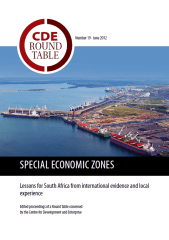
SEZ – Lessons for South Africa from international evidence and local experience

A bold paradigm shift in South Africa’s economic policy is required to ensure the success of the country’s new special economic zones (SEZs) programme, according to Centre for Development and Enterprise (CDE) executive director Ann Bernstein.At the launch of the new CDE report on SEZs, she explained that South Africa’s current economy favoured skill and capital-intensive industry, which was not making the cut in terms of job creation.

“South Africa needs to create the right kind of environment for the emergence of businesses that can employ large numbers of unskilled people. That is what we should use the SEZs to do.“This will require bold leadership and engagement with the difficult choices on labour costs and flexibility that must be made. The alternative is to waste resources and energy yet again on a policy that fails,” Bernstein urged.

The report, titled ‘Special Economic Zones: Lessons for South Africa from international evidence and local experience’ suggested that South Africa should establish at least two large SEZs that were focused on low-skill, labour-intensive industries such as the clothing and textile sectors and enable them to compete globally. “Without reform, the only way South African companies can compete with Chinese, Vietnamese and Indian companies is by mechanisation, which results in fewer people being employed, and a greater reliance on skills,” Bernstein pointed out. “International evidence shows that the most successful SEZs were public–private partnerships,” Bernstein noted. Further, the report showed, as recognised by government, that South Africa’s industrial development zones (IDZs) that include Coega, East London and Richards Bay, had largely failed to boost economic growth, create jobs, promote industrialisation or accelerate exports.

Bernstein attributed this to the lack of a clear definition for what these zones should entail, as well as a strategy for attracting investors. “The IDZs are basically just industrial parks – it’s no wonder they have not been successful in attracting new investors and creating jobs.” Although the Department of Trade and Industry (DTI) had spent R5.3-billion on developing these zones, the vast majority of the 33 000 jobs created were short-term construction jobs, with only 5 000 permanent jobs created.

Bernstein said countries such as China, Costa Rica, Mauritius and Latin America countries could be viewed as benchmarks for South Africa in terms of IDZs. Rising costs in Asia, especially China, where labour-intensive firms were looking for new regional locations, were creating opportunities for IDZs in South Africa. The CDE argued that South Africa should seize the opportunity to compete for a sizable portion of the jobs that could sprout from this.

“A bold new SEZ strategy could become a platform for new companies and new investors that use unskilled labour rather than machines,” Bernstein indicated. “South Africa’s new SEZ programme needs to be a presidential priority. The DTI needs to be fully supported by all other departments of government. Unless the whole of government gets behind the effort, we’re not going to see the kind of investor uptake that would actually make a difference,” CDE research and programme director Antony Altbeker said. Trade and Industry Minister Rob Davies is set to table the draft SEZ Bill in Parliament later this year, while Finance Minister Pravin Gordhan announced that R2.3-billion would be allocated to the establishment of SEZs were in the 2012/13 Budget.

However, the CDE’s report warned that the Bill provided no clarity about what would differentiate SEZs from industrial parks, its envisaged governance arrangements for SEZs was confusing and said the role of the private sector was unclear. Source: Engineering News

ZIMRA, Business to form Customs Forum

The Zimbabwe Revenue Authority (ZIMRA) is working in partnership with organised businesses associations in crafting a Memorandum of Understanding, creating the Zimbabwe Customs to Business Forum, an official has said. ZIMRA’s commissioner for customs and excise Mr Happias Kuzvinzwa said last week that the forum was a platform for his organisation and business to collaborate on issues of compliance, policy, capacity building, integrity and technical engagements. He was addressing delegates at the Shipping and Forwarding Agents’ Association of Zimbabwe 8th annual conference held in Beitbridge last week. Mr Kuzvinzwa said the interim steering committee was finalising the draft MoU and terms of reference.

“The forum is a prelude to the implementation of the authorised economic operator scheme. Membership of this forum is open to the businesses affiliated to recognised associations and shall be governed through a steering committee which is a higher committee, and standing committees which are lower committees chaired and constituted by both ZIMRA and business.

“The standing committees are organised in clusters for easy management of programmes. We expect all the concerned parties to sign the MoU soon upon its finalisation” he said.

Mr Kuzvinzwa added that in line with the SAFE framework of standards, ZIMRA would soon be plotting the authorised economic operators. He said the scheme sought to reward all compliant operators in the supply chain who meet the set criteria. He added that groundwork had been done and teams will be conducting stakeholder consultations and awareness workshops next month. “I would also want to urge the freight industry to embrace as a culture and operation ethos integrity, voluntary compliance, relevant competencies, and information technology.

“Missing these industry risks is being packed into the dustbin of history as you become irrelevant and classified as non-tariff barriers.” he said. Mr Kuzvinzwa added that ZIMRA was also in the process of putting in place a border agency single window through ASYCUDAworld. He said all border agencies would be connected to the workflow process through ASYCUDAworld to ensure that respective mandates are coordinated and streamlined.

“Discussions are at an advanced stage with other border agencies on the implementation of the single window and Beitbridge has been selected to pilot the programme with ZIMRA providing computer workstations at their respective offices,” he said.

Source: The Herald (Zimbabwe)

Nigeria – Single Window initiative back on track

After much controversy centering on allegations of corruption and impropriety, the Federal Government terminated the contract awarded to Single Window Systems and Technology Limited. The contract which allowed for a sole submission point for importers and exporters to lodge their documentation was unilaterally awarded by the Federal Ministry of Finance, under the Umaru Yar Adua administration, on behalf of the Nigeria Customs Service to the company registered in June 2010 with N 1m share capital.

The contract was reported to be worth N 4.5 trillion. The decision to discontinue the contract was based on an investigation by the Ministry of Finance which looked into the processes and the terms of the contract. The investigation which was approved by the President revealed that the contract breached the provisions of both the Procurement Act and the ICRC Act. Nigerian Customs received a letter of notification from the supervisory of the ministry of finance that a concession agreement had been entered between the Federal government and the Single Window System Technologies Limited, so where did the customs come into play before the contract was signed?”

Nigeria Customs Service had earlier said on the controversy, “How can a company enter such an agreement without the knowledge of the Nigeria Customs Service?” The Customs was not involved in the execution of the agreement entered by the Federal Ministry of Finance through the Former Honourable Minister of Finance; Olusegun Aganga. Therefore Nigerian Customs was not carried along by the company called Single Window System Technologies Limited. The tender was scuppered.

Recently, the Nigerian Customs Service convened a Single Window National Stakeholder Conference under the slogan – “Collaboration -Towards a Facilitated Trade Environment”. The conference and workshop took place between 23 and 26 April 2012, and was attended by several local and international delegates representing UNECE, UN/CEFACT, and donor companies German Development Company (GIZ), USAID and Crown Agents. Details concerning the launch of this event can be accessed via the following links – Conference Website and Conference Summary Report.

Comment: So what started on shaky ground has finally materialised into a fully-fledged Customs-led programme – the way it should be, and hopefully remain. Moreover, trade representatives and intermediaries will need to be an integral part of this development for it to attain success.

Source: Business News Nigeria and Valentina Mintah (Trade Facilitation Consultant).

Related articles

Africa – ready for rich pickings?

While on the theme of African economic and trade emancipation, it is interesting to consider the detailed analysis and evaluation occurring in regard to African continental readiness for information and communication technologies. One such study is the Transformation Ready or eTransform Africa programme, a joint programme of the African Development Bank and the World Bank, in partnership with the African Union. Bear in mind that the WCO and African Development Bank recently signed a cooperation agreement to enhance the capacity of Customs administrations in Africa. 

The study (Click Here!) is a series of  case studies of certain countries. The aim of the programme as a whole, as set out in the terms of reference, is to:

  • Take stock of emerging uses of ICT across sectors and of good practices in Africa and in other continents, including how ICTs are changing business models in strategic sectors.
  • Identify key ICT applications that have had significant impact in Africa or elsewhere and that have the potential of being scaled up, both from the public and private sectors.
  • Identify binding constraints that impact ICT adoption and scaling-up of effective models, such as the need to develop a regional culture of cyber security, and measures to address these constraints, including in relation to the role of different actors and stakeholders (private, public, development community, civil society, etc).
  • Commission a series of country case studies, to formulate a guide for rolling out and scaling up key applications in Africa, in each of the focus sectors, and thereby to identify opportunities for public/private partnership, as well as identifying areas where intervention can be reduced or eliminated.
  • Develop a common framework for providing support in ICT for development to countries that brings together the operations of the two Bank Groups and their respective departments.

The terms of reference for individual sectors were as follows:

  • Within each sector, identify specific opportunities and challenges in Africa that can possibly be addressed with an increased or better use of ICT. Constraints that are hindering ICT uptake and scale-up will be examined within the context of each sector/industry, including human capacity in IT skills and sustainable business models such as for public private partnerships (PPP). Further, the appropriate role of governments in the provision of priority ICT applications and services will be examined in order to maximize private sector development;
  • Undertake a quick scan of ICT applications in the different sectors and identify a few applications that have had significant impact in Africa or elsewhere and that have the potential of being scaled up. The scan should refer to a matrix of selection criteria on which to select case study countries that are considered ripe for the creation of public/private partnerships. On this basis, specific country case studies will be chosen – two to three per sector — on a representative basis, for deep dive analysis. The selection of case studies should be made in consultation with the partners and the other consultants. A workshop should be organized by the coordinator firm at an early stage in the project to finalise this selection.
  • Analyze and understand the barriers to the greater adoption and mainstreaming of ICTs. Barriers may include, for instance, low purchasing power, illiteracy, infrastructure constraints, lack of regulation, poorly functioning mobile ecosystem, power shortages, political instability etc. Identify cases/examples on how these have been dealt with;
  • Analyze and understand the enabling factors of success, including political economy, policy, institutional, human, financial and operational factors;
  • Consider the option of developing multi-country programs or special facilities that would allow fast-tracking specific programs across countries;
  • Provide guidelines on designing appropriate and sustainable ICT components for sector projects (including building effective public and private partnerships) and on evaluating the impact of these interventions; and
  • Propose a course of action on how to include ICT in policy dialogue and planning with country counterparts on sectoral development goals and priorities. Experiences and best practices from other regions will be drawn upon to define the role of the public sector, bearing in mind that government is increasingly positioned as a lead user of ICTs as well as a regulator of the sector.
Related articles

The following article provides a disturbing – some would call it conspiracy theory – on what lies in store for the continent of Africa. Perhaps the colonial days will be viewed as mild should some of the suggested schemes materialise.