Will Africa’s Leaders Finally ‘WALK’ the Talk?

Kenya's capital Nairobi, September 23, 2011. The road, which is being built by China Wuyi, Sinohydro and Shengeli Engineering Construction group, is funded by the Kenyan and Chinese government and the African Development Bank (AFDB). The project will cost 28 billion Kenyan shillings ($330million), according to the Chinese company. AfDB has cut the expected economic growth rate for Kenya in 2011 to 3.5-4.5 percent from an earlier forecast of 4.5-5 percent due to high inflation and a volatile exchange rate, the bank's country economist for Kenya said on Friday. REUTERS/Thomas Mukoya

Kenya’s capital Nairobi, September 23, 2011. The road, which is being built by China Wuyi, Sinohydro and Shengeli Engineering Construction group, is funded by the Kenyan and Chinese government and the African Development Bank (AFDB). REUTERS/Thomas Mukoya

The citizens of the African continent have been introduced to one grand vision of development after the other – from OAU to AU. However, there is a tendency by some of the member countries to retreat from fulfilling regional treaty commitments, which, in some cases, would entail losing a degree of sovereignty.

What is the biggest stumbling block to achieving the African Integration Vision?

But after more than 50 years of solemn regional integration declarations these rhetorical and symbolic efforts still haven’t made the regional integration schemes any more inclusive. For example, when analysing the ‘inclusiveness’ trends as measured by Poverty and Income Distribution Indicators, most Sub-Saharan African countries won’t achieve the MDG target of reducing extreme poverty rates by half ahead of the 2015 deadline. This is despite the increasing total merchandise export as well as within most of the regional economic communities (RECs).

Some have tried to absolve policy-makers of the lack of progress with regards to achieving the milestones of the “linear” integration model based on the European experience and advocated by the Abuja Treaty. They propose an alternative non-trade oriented approach; the so-called functional regional cooperation. This perspective focuses on setting standards for transport such as the SADC recognized driving license; construction of a new regional corridors; an African identity etc. This less ambitious but perhaps more realistic perspective could lead to failure in removal of trade barriers, while at the same time presenting a much more positive outlook of regional integration than what international economic data would otherwise show.

The AfDB is attempting to get to the bottom of this regional integration – inclusive growth conundrum in its 2013 African Development Report, currently under preparation. But we might already get some good answers to this question through an ongoing research project entitled ‘PERISA‘. Led by the ECDPM & SAIIA, it intends to look deeper into what regional integration/cooperation really entails and what the underlying drivers/factors and specific bottlenecks are. In July, we got a hint on what to expect from the research project from a very enriching Dialogue on the Drivers and Politics of Regional Integration in Southern Africa.

National versus Regional

South Africa has developed a ‘2030 vision’ and national strategic plan. It includes some proposals to reposition South Africa hegemon in the region. However, very few of the National Development Plans (NDP) in Southern Africa even mention regional integration. Mauritius being an exception as it benefits from the support of the Regional Integration Support Mechanism (RISM), which is disbursed directly into the budget of the government as untargeted financial assistance. Notwithstanding this support and the disbursement to the nine other Member States of the Common Market for Eastern and Southern Africa (COMESA) and additional donor-supported initiatives in other RECs, there is still a flagrant absence of alignment between commitments taken at the regional level and the actual planning process at the national level.

This discrepancy between the regional and national level is a matter of concern because if these Regional Trade Agreement (RTA) commitments do not feature amongst the country’s national priorities then there is an even greater risk that they will not be implemented in practice. This latent risk perhaps goes a long way in explaining the relative poor record when it comes to the level of domestication of regional integration legal instruments, implementation of trade and regionalintegration-related budgets, implementation of Council of Ministers’ trade-related decisions, which the AfDB will seek to capture through its forthcoming system to measure regional integration in Africa.

During the meeting a call for a community of practice among national planning agencies was made which could assist and drive the integration process through the convening of regular meetings between regional and strategic national planners. It is positive to observe that Southern African countries seem to have warmed up to this idea of an informal community of practice outside the formal institutional structure.

What can Development Finance Institutions do about this inertia?

In addition to the supply-driven collection of regional integration statistics, Multilateral Development Banks (MDBs) could also lend technical and financial support to the formation of Regional Planning entities’ process. Amongst others this could include providing support to the above-mentioned community of practice of national development planners interacting with regional planners. This could eventually ensure that regional integration gets fully mainstreamed within the national planning policy instruments as illustrated in Mauritius’ latest 2013 budget, whose overarching theme rests on six main objectives, including fast-tracking regional integration.

There seems to be a consensus that the RECs must have technical capacity to facilitate the RTA negotiation process and decision-making process. Both the UK Department for International Development (DFID) through its TMSA programme and the AfDB through its forthcoming 2014-2016 Tripartite Capacity Building Programme are attempting to address this deficiency in a coordinated manner in line with fundamental principles of the Paris Declaration on Aid Effectiveness. Source: ECDPM
website (An analysis by Christian Kingombe, Chief Regional Integration & Infrastructure Officer at the AfDB).


China hopes to dominate Africa by boosting trade via Indian Ocean

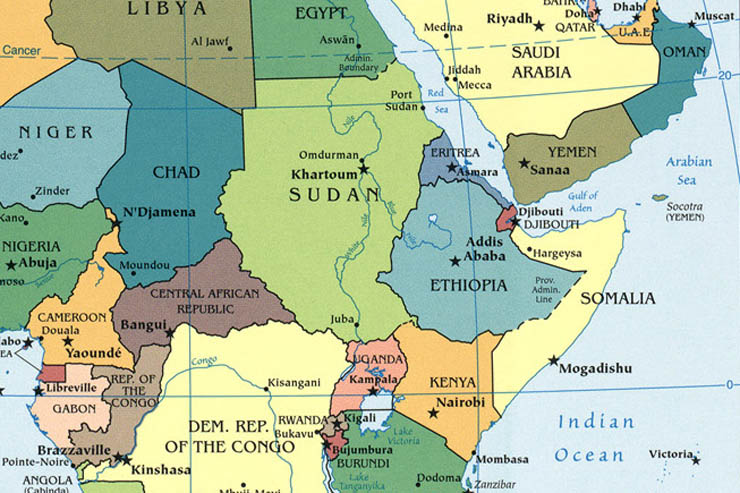
EastAfricaMapPeople’s Republic of China (PRC) officials are becoming increasingly apprehensive about the rise in the use of the westward corridor to export oil, diamonds, and rare minerals out of South Sudan and the Central African Republic via Cameroon. In other words, this creates a flow to Atlantic sea and air transportation routes, rather than routes eastward to Indian Ocean trade routes. Beijing is also concerned over the growing tension between Sudan and its neighbors – particularly South Sudan – because of the impact this might have on the PRC’s long-term designs to dominate Africa’s resources trade.

A key component of the Chinese long-term strategy has long been to converge all the flow of oil, gas, and minerals to a single export point on the shores of the Indian Ocean; that is, in the direction of China. This vision is getting closer to realization given the progress made toward beginning construction of the maritime complex in Lamu on the northern Kenyan shores of the Indian Ocean. The Lamu mega-port and adjacent industrial and transportation complexes are a major element of the Kenyan Government’s Vision 2030 initiative. Lamu is the key to the long-needed modernization of Kenya’s deteriorating infrastructure and boosting of economic output.

Although Nairobi keeps insisting that there will be international tenders for each and every phase of the Lamu project, the overall design in fact follows Beijing’s proposal, and Nairobi acknowledges that no international consortium has so far been able to remotely compete with the financial guarantees offered by official Beijing in support for proposals presented by Chinese entrants. This is because Beijing considers the Lamu mega-port and transportation complex to be the key to the PRC’s long term domination over African trade and resources.

The initial costs of the first phase of the Lamu project are estimated at $25.5-billion. The name of this first phase – the Lamu Port and New Transport Corridor Development to Southern Sudan and Ethiopia (LAPSSET) – points to the initial objectives. Significantly, the term used is “Southern Sudan” and not the state of South Sudan. When completed, the first phase of the Lamu complex will include a 32-berth port, three international airports, and a 1,500km railway line. As well, the Chinese plan oil pipelines from Juba in South Sudan, and from Addis Ababa via Moyale, Kenya, to converge into Kenya’s Eastern Province and end in a new huge oil refinery in Bargoni, near Lamu. The entire construction and pipelines will be supported by a 1,730km road network. In the longer term, the trans-African pipelines the Chinese plan on building from both Nigeria in the west and south-western Africa (most likely Angola) will also feed into the Lamu complex, thus giving the PRC effective control over the main hydrocarbon exports of Africa.

The strategic cooperation between Beijing and Khartoum constitutes the key to the Chinese confidence that their Sudanese allies be able to contain their Somali jihadist proxies so that the risk of terrorist attacks is minimal. Simply put, Beijing is ready to do anything just to ensure the flow of oil eastwards rather than westwards.

Ultimately, the significance of the Chinese long-term grand design for Africa can be best comprehended in the context of historic transformation in the grand strategy and polity of the PRC. Beijing has been arguing since the fall of the Soviet Union that the decline of the United States was also inevitable and that China was destined to rise as the global hegemon. Presently, Beijing is convinced that the time is ripe for delivering the coup de grace.

On October 13, 2013, the official Xinhua news agency published an official commentary stating that “it is perhaps a good time for the befuddled world to start considering building a de-Americanized world”. The commentary surveyed the “abuse” the entire world had suffered under US hegemony since World War II. The situation had only aggravated since the end of the Cold War, Xinhua argued. “Instead of honoring its duties as a responsible leading power, a self-serving Washington has abused its superpower status and introduced even more chaos into the world by shifting financial risks overseas.” To further its own unbridled ambitions, the US stoked “regional tensions amid territorial disputes, and fighting unwarranted wars under the cover of outright lies”, Xinhua explained.

The Xinhua commentary warned that with US society and economy collapsing, Washington was now tempted to intensify the abuse of the rest of the world in order to save the US. “Such alarming days when the destinies of others are in the hands of a hypocritical nation have to be terminated. A new world order should be put in place, according to which all nations, big or small, poor or rich, can have their key interests respected and protected on an equal footing.” Xinhua concluded by suggesting that the PRC, being inherently a developing country, is the rising power best suited to lead this global transformation and de-Americanization.

Beijing has long recognized that any confrontation with the US would inevitably lead to major economic crises, a series of conflicts world-wide and possibly a global war against the US. To sustain this global conflict, the PRC would need huge quantities of hydrocarbons, rare metals, other natural resources and even agricultural products; and these could only be secured for it as a result of a China-dominated Africa. Source: http://www.tralac.org 

SA Trade Policy Goes Against Integration Tide

South African Trade & Industry Minister Rob Davies

South African Trade & Industry Minister Rob Davies

South Africa has adopted a new trade policy approach aimed at looking at its own interest first, despite a drive for more regional integration to sustain Africa’s trade growth with the rest of the world. Importers of several products have been experiencing dramatic increases in tariffs from South Africa, as well as an increase in anti dumping and safeguard measures aimed at protecting South African industries.

Trade and Industry Minister Rob Davies this week approved the increase of tariffs on frozen poultry following an application by the local poultry industry. George Geringer, a senior manager at PwC, said regional trade relations had been put on the back burner in favour of measures to protect South African manufacturing industries against cheaper imports.

“Government realised that manufacturing as a percentage of gross domestic product has declined from about 40% to about 12% in the past 20 years,” Mr Geringer said at the 16th Africa Tax and Business Symposium hosted by PwC in Mauritius.

Trade between Africa and the rest of the world has increased by more than 200% in the past 13 years, with optimism from the World Bank that Africa could be on the brink of an economic takeoff, similar to that of China and India two decades ago.

A key element for Africa to sustain the trade growth is regional integration to build economies of scale and size, in order to compete with other emerging markets – but limited resources, internal conflict and the lack of a mechanism to monitor the integration process is blocking it, says trade analyst from PwC.

South Africa has been regarded as the “champion” of the Southern African Development Community (Sadc). Sadc member countries eliminate tariffs, quotas and preferences on most goods and services traded between them. The member countries include Mauritius, Mozambique, Namibia, Swaziland, Botswana and the Democratic Republic of Congo.

The assistant manager at PwC’s international trade division, Marijke Smit, said less than 10% of African nations’ trade was with each other, compared with 70% between member states of the European Union. Benefits of regional integration include increased trade flows, reduced transaction costs, and a regulatory environment for cross-border networks to flourish. Ms Smit said an unsupportive business environment and cumbersome regulatory framework, weak productive capacity, inadequate regional infrastructure, poor institutional and human capacity, and countries’ prioritising their own interests stood in the way of integration.

Mr Geringer referred to the new action plan endorsed by leaders from the African Union in January last year. The plan will see the creation of a continental free-trade area by 2017. The enlarged free-trade area will include Sadc, the East Africa Community and the Common Market for South and East Africa (Comesa). The trade bloc will include 26 nations in three sub-regions. Source: BDLive.com

Visiting the WCO’s Strategic Plan

Reality Check

The ongoing global financial and economic crisis affects governments,  organisations and citizens in different ways. It would seem that no individual or any organisation has the proverbial ‘silver bullet’ to normalise the situation either. Today, probably most Customs and Border agencies are undergoing ‘modernisation’ or some form of restructuring. Modernisation in itself implies automation or digitization of information changing the lives of the average customs (border) official as well as the expectations and predictability of service to traders and trade intermediaries around the world. 9/11 forever changed the role of Customs and for most of governments, border regulatory authorities as well. Changes in Customs have since been focussed on alignment to policy, standards and guidelines as advocated by the WCO.

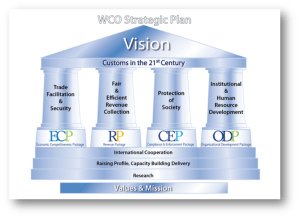
WCO Startegic PlanNational adoption of these remains the foremost critical step in establishing a country’s ability to ‘connect’ with the world. A national administration should seek inclusivity of its trading community lest its modernisation be regarded as self-serving. Simultaneously, regional economic communities also seek radical change, albeit on a regionalisation level. Pressures on national (sovereign) nations develop given high-level political commitment to regionalisation, often without taking into account their respective countries’ state of readiness. This creates a false sense of commitment which results in regional failures. Behind such regional initiatives are normally a host of sponsors, purportedly with the right experts and solutions to rectify the ‘barriers’ which prevent a national state from integrating with its neighbours and global partners. Sound familiar? If so, it wouldn’t do national representatives any harm to refresh themselves with the under mentioned WCO tools and validate this in relation to the direction which their organisation is headed. These form part of the WCO’s Customs’ in the 21st Century Agenda. It is also recommended reading for the various regional economic communities (RECs) – here I refer to the African continent – who are not always au fait or fully appraised on the ‘readiness’ landscape of the member states they represent.

The Economic Competitiveness Package (ECP) (Click the hyperlink for more information) is currently a matter of high priority at the World Customs Organization (WCO). Economic competitiveness starts with trade facilitation and Customs administrations undeniably play an important role in this respect. Indeed, facilitating trade is one of the WCO’s key objectives and the Organization has contributed, through its tools and instruments as well as through technical assistance, to increasing the economic competitiveness and growth of Members.

The Revenue Package (RP) (Click the hyperlink for more information) was developed by the World Customs Organization (WCO) in response to WCO Members’ concerns in regard to falling revenue returns in the light of the global financial crisis and declining duty rates.

Significant progress has been made since the adoption of the WCO Capacity Building Strategy in 2003. However, new and emerging key strategic drivers impact on international trade and the roles and responsibilities of Customs administrations. This requires that all our capacity building efforts remain responsive and needs-driven to ensure beneficiary Customs administrations can obtain the support they need to pursue their reform and modernization. This Organisational Development Package (ODP) (Click the hyperlink for more information) outlines the basic approach of the WCO towards organizational development. It provides a simple and accessible overview of the texts, tools and instruments that relate to this topic. It refers and offers access to these resources but does not purport to capture all knowledge and practices within this extensive area.

The Compliance and Enforcement Package (CEP) (Click the hyperlink for more information) has been developed in order to assist Members to address the high-risk areas for Customs enforcement. The Customs in the 21st Century Strategy calls on Customs administrations to implement modern working methods and techniques. In this context, Customs should be equipped with the necessary tools that allow it to effectively manage supply chain risks and enforce laws and regulations in cases of non-compliance. In discharging this mandate, the WCO, in close co-operation with Members, has created an extensive library of instruments, tools, guidance materials and operational co-ordination activities to support Customs compliance and enforcement actions. These tools new form part of the CEP.


Border Management in Southern Africa: Lessons with respect to Policy and Institutional Reforms

The folk at Tralac have provided some welcomed insight to the challenges and the pains in regard to ‘regionalisation’. No doubt readers in Member States will be familiar with these issues but powerless within themselves to do anything due to conflict with national imperatives or agendas. Much of this is obvious, especially the ‘buzzwords’ – globally networked customs, one stop border post, single window, cloud computing, and the plethora of WCO standards, guidelines and principles – yet, the devil always lies in the details. While the academics have walked-the-talk, it remains to be seen if the continent’s governments have the commitment to talk-the-walk!

Regional integration is a key element of the African strategy to deal with problems of underdevelopment, small markets, a fragmented continent and the absence of economies of scale. The agreements concluded to anchor such inter-state arrangements cover mainly trade in goods; meaning that trade administration focuses primarily on the physical movement of merchandise across borders. The services aspects of cross-border trade are neglected. And there are specific local needs such as the wide-spread extent of informal trading across borders.

Defragmenting Africa WBThis state of affairs calls for specific governance and policy reforms. Effective border procedures and the identification of non-tariff barriers will bring major cost benefits and unlock huge opportunities for cross-border trade in Africa. The costs of trading remain high, which prevents potential exporters from competing in global and regional markets. The cross-border production networks which are a salient feature of development in especially East Asia have yet to materialise in Africa.

Policy makers have started paying more attention to trade-discouraging non-tariff barriers, but why does the overall picture still show little progress? The 2012 World Bank publication De-Fragmenting Africa – Deepening Regional Trade Integration in Goods and Services shows that one aspect needs to be singled out in particular:  that trade facilitation measures have become a key instrument to create a better trading environment.

The main messages of this WB study are:

  • Effective regional integration is more than simply removing tariffs – it is about addressing on-the-ground constraints that paralyze the daily operations of ordinary producers and traders.
  • This calls for regulatory reform and, equally important, for capacity building among the institutions that are charged with enforcing the regulations.
  • The integration agenda must cover services as well as goods……services are critical, job-creating inputs into the competitive edge of almost all other activities.
  • Simultaneous action is required at both the supra-national and national levels. Regional communities can provide the framework for reform, for example, by bringing together regulators to define harmonised standards or to agree on mutual      recognition of the qualification of professionals……. but responsibility for implementation lies with each member country.

African governments are still reluctant to implement the reforms needed to address these issues. They are sensitive about loss of ‘sovereign policy space’ and are not keen to establish supra-national institutions. They are also opposed to relaxing immigration controls. The result is that border control functions have been exercised along traditional lines and not with sufficient emphasis on trade facilitation benefits. This is changing but specific technical and governance issues remain unresolved, despite the fact that the improved border management entails various technical aspects which are not politically sensitive.

The required reforms involve domestic as well as regional dimensions. Regional integration is a continental priority but implementation is compounded by legal and institutional uncertainties and burdens caused by overlapping membership of Regional Economic Communities (RECs). The monitoring of compliance remains a specific challenge. Continue reading →

African Countries of the Future 2013/14

fDI 2013-14 Rankings for Africa

fDI 2013-14 Rankings for Africa

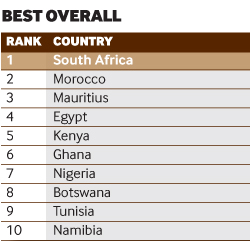
South Africa has been crowned as the African Country of the Future for 2013/14 by fDi Magazine, One of the economic powerhouses of the African continent, South Africa has been named fDi Magazine’s African Country of the Future 2013/14, with Morocco in second position and Mauritius in third. New entries into the top 10 include Nigeria and Botswana. Click here to access the full report!

South Africa has consistently outperformed its African neighbours in FDI attraction since fDi Markets records began in 2003. Figures for 2012 build upon South Africa’s historical prominence as an FDI destination with the country attracting about one-fifth of all investments into the continent – more than double its closest African rival, Morocco. In 2012, FDI into South Africa amounted to $4.6bn-worth of capital investment and the creation of almost 14,000 jobs.

South Africa claimed the title of fDi’s African Country of the Future 2013/14 by performing well across most categories, obtaining a top three position for Economic Potential, Infrastructure and Business Friendliness. Its attractiveness to investors is evident in its recent FDI performance, where the country defied the global trend with 2011 and 2012 figures surpassing its pre-crisis 2008 statistics. Despite a slight decline of 3.9% in 2012, South Africa increased its market share of global FDI, which further increased in the first five months of 2013 as the country attracted 1.37% of global greenfield investment projects. According to fDi Markets, South Africa now ranks as the 16th top FDI destination country in the world.

South Africa’s largest city, Johannesburg, was the top destination for FDI into Africa and is one of only five African cities that attracted more investments in the first five months of 2013 compared to the same period of 2012. South Africa ranked third behind the US and the UK as a top source market for the African continent in 2012, accounting for 9.2% of FDI projects.

In 2010, South Africa became the ‘S’ of the BRICS – five major emerging national economies made up by Brazil, Russia, India and China. While FDI into South Africa fell 3.9% in 2012, this was the lowest recorded decline of the BRICS grouping which, on average, experienced a 20.7% decline in FDI. In its submission for fDi’s African Countries of the Future 2013/14, Trade and Investment South Africa (TISA) stresses the importance of the country’s attachments to its BRICS partners. Source: fDI Magazine

Hurdles before trans-border trade facilitation

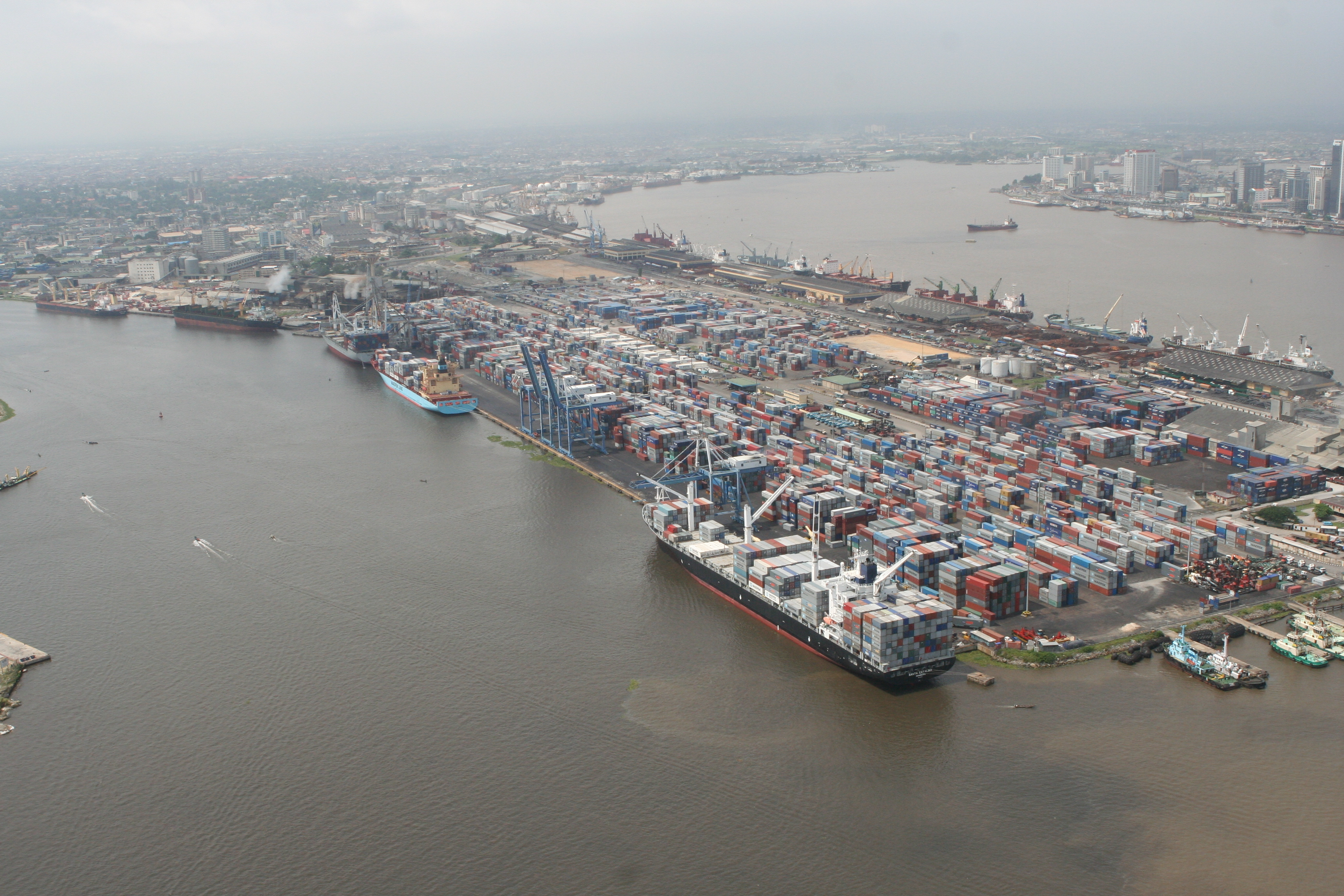
Port of Lagos, Nigeria

Port of Lagos, Nigeria

The following article, allbeit long, provides a good overview of trade facilitation developments in Nigeria. I doubt that there is a single country on the African continent that cannot draw some parallel experience contained in this article.

Trade across borders is not a new phenomenon. But the World Trade Organization is now championing the concept of trade facilitation among nations, which has been defined as simplication , harmonization, standardization and modernization of trade procedures.

Trade facilitation seeks to reduce trade transaction between businesses and government. This concept is receiving unprecedented attention globally and it is at the heart of numerous initiatives within the customs world.

The United Nations Centre for Trade facilitation and Electronic business (UN/CEFACT) in its recommendation No 4 of 1974, said trade facilitation programme ought to be guided by simplication, harmonization and standardization (of trade procedures) so that transaction becomes easier, quicker and more economical than before.

According to the body, there was need to eliminate duplication in formalities, process and procedures; align all national formalities, procedures operation and documentation with international conventions, standard and practices to develop international agreed format for practices, procedures, documentation and information in international trade.

Proponent of trade facilitation believed that if transaction cost in international trade is reduced, there could be creation of wealth, especially in developing countries where red-tapism and other procedural barriers to trade tend to be pronounced.

The organization for Economic Cooperation and Development (OECD) estimated recently that even one per cent reduction in such “hidden cost” would boost the global economy by $40 billion with most of these benefits going to the developing world. Trade facilitation therefore encourages, or perhaps requires countries to adopt means such as publishing their imports and export procedures, reducing the number of forms that importers and exporters are required to complete, allowing forms to be submitted on-line, and checking corruption at border post.

Nigeria, though a signatory to Kyoto 1974 and other convention on trade facilitation, is far from embracing the ideals of the global concept.

The president of the council of Managing Directors of Customs licensed Agents, Mr. Lucky Amiwero, said that although Nigeria was yet to comply with all the provisions of trade facilitation, it has the tools to facilitate international trade, such as the scanning machines and the e-platform.

“In Nigeria, the real cost of doing business is an impediment to trade facilitation. We have no good procedure for goods on transit to Niger and Chad. That has been taken over now by our neighboring countries. One of the key component of trade facilitation is charges which must be tied to services. We have shortcoming in that area. We are still working at cross purposes when other countries are busy harmonizing their import and export procedures”, he said.

In Nigeria, there is no one stop shop process for goods clearance as we have over 10 agencies superintending goods clearing procedure at the nation’s gateways.

“This is very bad and constitute hindrance to trade. The regulatory process is supposed to have been harmonized with other agencies to have a one stop procedures. Procedures are not published and not in line with WTO article which has to do with publication, regulation and administration of procedures. Our trading regime are expensive, our procedures are cumbersome. When others are simplifying and synchronizing their process of import and exports, our import and export procedures are lengthy. We have not been able to harmonise process and procedures and that is where we have a problem. If you still have to go through 100 per cent examination when we have the scanners, that is an impediment to trade,” Amiwero said; adding that the time spent to conclude business in Nigerian ports and border post is much higher than anywhere in the West African sub-region.

The level of corruption at the port border post is high and making them the most expensive business environment in Africa; as un-receipted charges far outweigh the official charges in the process of good clearing. Importers are still submitting hard documents instead of making use of e-devices, and going through the cumbersome process of clearing and receiving of consignments. Continue reading →

Czech Customs Seize Rhino Horns

Rhino horns seized from smugglers by the Czech Customs Authority

Rhino horns seized from smugglers by the Czech Customs Authority

Czech customs agents seized 24 rhinoceros horns Tuesday and charged 16 people with bringing the prized material illegally from South Africa to sell it in Asia.

“Our investigation showed that the transport is organized by an international ring of smugglers who have used fake export permissions seemingly complying with (the Convention on International Trade in Endangered Species of Wild Fauna and Flora) to import the rhinoceros horns from the Republic of South Africa to the European Union,” said Jiri Bartak, spokesman for the Czech customs department.

The arrests follow an investigation by Czech and EU customs authorities begun in 2011. The gang was alleged to have planned re-exporting the horns as trophies, according to their fake documentation. Rhino horns are popular in parts of Asia where many believe they can cure various illnesses or work as an aphrodisiac.

South Africa is home to the world’s largest rhino population, estimated at about 20 000, though the large upsurge in poaching is threatening their existence. Rhino poaching is expected to reach record levels this year, according to South African officials.

Czech authorities estimate the value of the seized rhino horns at up to 100 million koruna ($5 million), Mr. Bartak said. The authorities said the ring employed people impersonating hunters to gain permission to ship horns acquired from African poachers to Europe and elsewhere. Czech customs didn’t release details of where the charged individuals came from or give their names. If convicted they face up to eight years in prison. Source: leos.rousek@wsj.com

Rwanda-Burundi Establish Second One-Stop Border Post

Rwanad-Burundi OSBPA one stop border post has been established at Ruhwa in Rusizi District order to reduce the amount of time spent by traders clearing goods at the Rwanda-Burundi border. The one-stop border post is also expected to bolster trade between the two countries and see an infrastructure overhaul at the border area, according to the Minister of State for Transport, Dr Alexis Nzahabwanimana.

Under the one border post, travellers will access services at one spot unlike in the past when documents were processed at two locations – one in Rwanda and the other across the Burundi border. The process will now take about five minutes as opposed to 30.

With the new system, immigration, emigration and customs officials from the two countries share offices to ease the clearance procedures for travellers entering or departing either country.

Dr Nzahabwanimana observed that the post is an indication of existing good relations between the two countries and that it will “strengthen brotherhood between our peoples and boost trade between our two countries.”

“The post will ease the movement of people and goods,” Nzahabwanimana on Wednesday. “It will also reduce delays that people incurred while clearing at the border in the past.”

He urged employees to seize the opportunity and improve on the quality of services they provide. He also advised them to exploit modern technologies if they want to make a difference in what they do.

Burundi’s Minister of Transport and Public Works, Deogratias Rurimunzu described the move as “another step forward in the cooperation and friendship” between Rwanda and Burundi. He observed that the border will promote bilateral trade and cooperation abetween both countries.

“Work diligently, use your skills, pto provide better services and put these infrastructures to good use for them to benefit our population,” Rurimunzu told employees at the border post.

About the project

The idea to establish the one-stop border post was first floated in 2009. It is part of a larger project which comprises border infrastructures including administrative blocks, staff quarters, a warehouse, a weighbridge, social facilities, street lighting and water sources, among others.

The project also comprised the renovation of a 50.6 kilometre road between Nyamitanga and Ruhwa on the Burundian side as well as the construction of Ntendezi-Mwityazo Road on the Rwandan side.

The project was sponsored by the African Development Bank (AfDB), at a cost of about Rwf32billion on either side of the border. Ruhwa one stop border post is the second shared between Rwanda and Burundi following the establishment of the Gasenyi-Nemba border post in Bugesera district in 2011. Source: The New Times, Rwanda

Port-to-Hinterland…gearing up for growth?

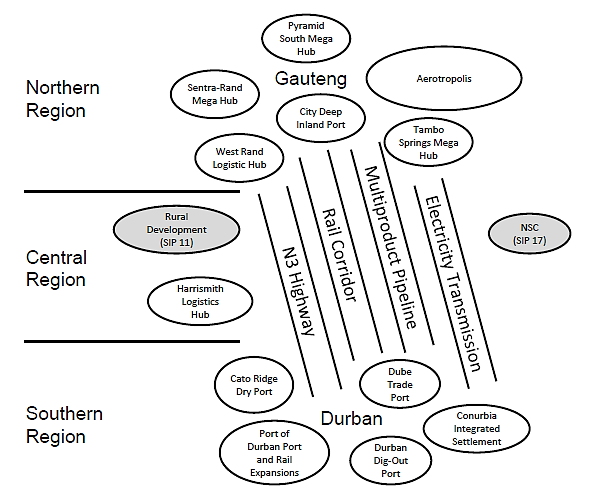
Proposed Durban-Free State-Gauteng Logistics and Industrial Corridor Plan (SIP2)

Proposed Durban-Free State-Gauteng Logistics and Industrial Corridor Plan (SIP2)

Notwithstanding on-going discontent amongst industry operators in regard to proposed legislative measures mandating customs clearance at first port of entry, the South African government (GCIS) reports that work has already commenced on a massive logistics corridor stretching between Durban and the central provinces of the Free State and Gauteng. Most of the projects that form part of the second Strategic Infrastructure Project (SIP 2), also known as the Durban-Free State-Johannesburg Logistics and Industrial Corridor, are still in the concept or pre-feasibility stage, but construction has already started on several projects.

These include:

  • the building of a R2,3 billion container terminal at City Deep
  • a R3,9 billion project to upgrade Pier 2 at the Port of Durban
  • R14,9 billion procurement of rolling stock for the rail line which will service the corridor.

Work has also started on the R250 million Harrismith logistics hub development to set up a fuel distribution depot, as well as on phase one of the new multi-product pipeline which will run between Johannesburg and Durban and transport petrol, diesel, jet fuel and gas.

The aim of these projects and others which form part of SIP 2, is to strengthen the logistics and transport corridor between South Africa’s main industrial hubs and to improve access to Durban’s export and import facilities. It is estimated that 135 000 jobs will be created in the construction of projects in the corridor. Once the projects are completed a further 85 000 jobs are expected to be created by those businesses that use the new facilities. Source: SA Government Information Service

Interested in more details regarding South Africa’s infrastructure development plan? Click here!

UNCTAD – Africa ‘ignores its trade deals’

Cars and trucks at the South African border at Musina, Limpopo, queue to cross into Zimbabwe. The Unctad report says there are traditional transport routes in Africa - Photo: Motshwari Mofokeng.

Cars and trucks at the South African border at Musina, Limpopo, queue to cross into Zimbabwe. The Unctad report says there are traditional transport routes in Africa – Photo: Motshwari Mofokeng.

An official in the UN Conference on Trade and Development (Unctad), complains that Africa’s leaders repeatedly sign trade agreements and fail to implement them. Launching the organisation’s 2013 Africa development report in Johannesburg, Patrick Osakwe said leaders should set more realistic targets and “do more serious research” on the viability of the agreements.

Intra-African trade represents only about 11 percent of Africa’s total trade with the world, despite official commitments to improve the flows. Osakwe cited the case of the regional industrial policy adopted by the Economic Community of West African States in June 2010, which “has yet to be fully implemented”.

In June 2011 President Jacob Zuma announced talks on a 26-nation free trade agreement between three existing trading blocs, including the Southern African Development Community, of which South Africa is a member. Experts greeted the proposal with scepticism, noting a long history of leaders signing commitments to free trade or regional integration, but failing to follow through.

The Unctad report, which was launched simultaneously in Geneva and in centres in Africa, said development should be seen in a regional context: co-operation among countries in a broader range of areas than just trade and trade facilitation. It should include investment, research and development, and regional infrastructure development.

The report cited the Maputo Development Corridor linking Gauteng to the port of Maputo as “a successful, true transport corridor that has unlocked landlocked provinces in one of the most highly industrialised and productive regions of southern Africa”.

It said: “There are currently more than 20 corridors in operation in Africa but most tend to be traditional transport corridors. There is a need to move beyond that and to create industrial development corridors as well.

The report focused on intra-African trade and urged governments to unlock the private sector’s potential so that they could successfully diversify their economies. Most African countries are heavily dependent on commodities to grow their economies.

Africa accounts for only 1 percent of global manufacturing, and manufacturing represents only about 10 percent of African gross domestic product, compared with 35 percent for east Asia and the Pacific, and 16 percent for Latin America and the Caribbean.

The share of manufacturing in intra-African trade fell from about 54 percent between 1996 and 2000 to 43 percent between 2007 and 2011, as the value of commodity exports soared.

The report identified a major challenge to expanding the manufacturing sector. The average manufacturing company in sub-Saharan Africa has 47 employees, compared with 171 in Malaysia, 195 in Vietnam and 393 in Thailand. The small size of the operations prevents businesses from achieving economies of scale.

Other barriers were weak linkages between small and large firms, a high share of informal firms, low levels of export competitiveness and a lack of innovation capability. Transport costs were also prohibitive. “In central Africa, transporting 1 ton of goods from Douala in Cameroon to N’Djamena in Chad costs $0.11 (R1.10) per kilometre, more than twice the cost in western Europe and more than five times the cost in Pakistan.” Source: www.iol.co.za

Clearing Agents Cautious About EAC Single Customs Territory

The following article featured in The New Times (Rwanda) provides a snap shot of developments towards a future “Customs Union” in East Africa. While valid concerns are being expressed by traders, how close are the respective Customs administrations in terms of common standards (tariff, regimes, etc), and the application of common external border procedures? The rest of Africa should follow this process closely. Unlike the EU, where it is incumbent of prospective Customs Union members to first attain and implement minimum customs standards prior to accession, here you have a pot-pourri of member states who apply national measures aspiring to an ultimate regional standard. Who determines this standard? Who is going to maintain ‘watch’ over the common implementation of such standards? Forgive the long article – this is a very significant development for the African continent.

0c8d8_logo_of_east_african_community_eac_-63ae9With the East Africa Community integration process gaining pace rapidly, clearing and forwarding agents have been advised to set up shop at entry ports under the proposed single customs territory.

Angelo Musinguzi, the KPMG tax manager, who is representing traders on the team of experts negotiating the establishment of the single customs territory, challenged the agents to look at the opportunities that the policy brings instead of focusing on how it will harm their businesses. “You need to look at this as an opportunity for business expansion because this policy will remove trade tariff barriers, duplication of time-consuming and costly processes and corruption. This will improve efficiency and reduce the cost of doing business,” he said.

The advice follows a deal reached by Uganda, Kenya and Rwanda where top customs officials from landlocked Rwanda and Uganda will be stationed at Mombasa port to ensure quick clearing of goods and curb dumping of cheap products in the region. Under the deal, Kenya will create space for its partners to set up customs clearing units.

Rwanda was given the task of establishing the single customs territory at the recently-concluded meeting between Presidents Paul Kagame of Rwanda, Uhuru Kenyatta of Kenya and Uganda’s Yoweri Museveni held in Entebbe, Uganda. However, local clearing and forwarding agents as well as traders are skeptical about the deal and want the process delayed until Rwandan businesses are supported to become more competitive.

“There are issues we still have to examine critically before the policy is implemented. For example, who will collect revenue and how will it be collected? How will Rwanda share the revenue? Will we have a common legal framework? Will we share Kenya’s or Tanzania’s infrastructure?

Fred Seka, the Association of Freight Forwarders and Clearing Agents of Rwanda president, noted that the move could affect them negatively if it is not studied carefully. “We have already raised the matter with the Minister of Trade. Besides hurting small firms, the country will lose jobs when companies relocate to Mombasa or Dar es Salaam. That is a big concern for us,” Seka said.

He noted that some of the partner states have many trade laws that might affect their operations. “It would be better if a locally-licensed company is not subjected to any other conditions once it relocates to Mombasa,” Seka noted.

Mark Priestley, the TradeMark East Africa country director, said the research firm and other players were currently conducting studies on how the single customs territory can operate without harming any player. “The intention is not only to ensure that we get rid of barriers which have been hampering trade, but also reduce the cost of doing business within the region,” he said. He added, however, that it was too early for traders to be scared of the consequences of operating under the single customs territory.

Last year the Permanent Secretary in the EAC Ministry, stated that the model which will involve shifting customs operations from Rwanda to the ports of Mombasa, and Dar es Salaam, will lead to unemployment, revenue loss and adverse multiplier effects. According to the model, certificates of origin of goods would be scrapped, which, according to Kayonga, would lead to the suffocation of local industries as well as making the region a dumping ground for unnecessary products.

Scovia Mutabingwa, the Aim Logistics East Africa managing director, said there was need for more consultations on the operation of the single customs territory “to understand how it will work”. “We need to know where our bargaining power is in the region?” Mutabingwa said. She noted that there was a need to first harmonise other trade policies if the single customs territory is to benefit all businesses in the region. She pointed out that she had applied for a clearing and forwarding licence in Tanzania over one and half years ago, but she was yet to get it. “How shall we work in such countries?” she wondered.

Another clearing firm, urged those negotiating the deal to ensure uniformity in tax policies across the region. “In Rwanda, there is 100 per cent tax compliancy, but we know this is not the same in other countries. How will we compete favourably if such issues are not addressed?” she wondered.

While one needs at least $300,000 to open a business in Kenya or they have to give a stake in their company to a resident, non-Kenyan companies also pay higher taxes at 35 per cent corporate tax compared to 30 per cent for locals.

Tanzania still has over 63 trade laws, and to operate a clearing firm there you need to be a Tanzanian, according to Musinguzi.

The East African Community (EAC) Customs Union Protocol came into effect in July 2009 after it was ratified by Kenya, Tanzania and Uganda in 2004 and later by Rwanda and Burundi in 2008. The creation of the EAC customs union was the first stage of the four step EAC regional integration process.

When fully implemented, the customs union will consolidate the East Africa Community into a single trading bloc with uniform policies, resulting in a larger economy. By working together to actualise the customs union, partner states will deepen EAC co-operation, allowing their citizens to reap the benefits of accelerated economic growth and social development.

However, the customs union is not yet fully implemented because there is a significant level of exclusions to the common external tariff and tariff-free movement of goods and services.

Uganda says it’s time to talk in Africa

Africa-mombasa-mct-aerial

Port of Mombasa (Credit – Port Strategy)

Not for the first time a landlocked country in Africa is attempting to have a say in a remote port operation which functions as a major gateway for its import and export trade. This time it is Uganda proposing that it has a say in the management of Kenya’s major port, the port of Mombasa. In the recent past it was Ethiopia attempting to secure a dedicated terminal in Djibouti.

The Ugandan initiative surfaced at a recent ‘Validation Workshop on Uganda’s Position on the Single Customs Territory for the East African Community. The Permanent Secretary Ministry of EAC Affairs, Edith Mwanje said that Uganda should have a say in the management of gateway ports because of “the many delays that negatively impacted trade”. Ugandan cargo accounts for the largest body of traffic handled by the port of Mombasa for the landlocked countries surrounding Kenya.

It is unlikely, of course, that any country will give up even partial control of a national asset to another country. It is akin to relinquishing sovereignty in the minds of countries owning port assets and being asked to participate in some form of power sharing. Djibouti fought hard to prevent Ethiopian Shipping Lines gaining control of dedicated terminal assets in the old port of Djibouti and won this battle. It is very unlikely that Kenya will even consider the idea of a foreign power participating in the management of its number one port.

It may, however, be a wise course of action for countries such as Djibouti and Kenya to consider establishing some sort of regular stakeholder dialogue. This is the path to a long and sustainable relationship as opposed to a short opportunistic one.

It is known, for example, that in the past Ethiopia has been frustrated by the high price of gateway container and general cargo operations in Djibouti and this has led to tensions. Since these days, however, Djibouti has put considerable effort into having a sensible dialogue with Ethiopia and this has matured into new projects such as the signing of an agreement with Ethiopia and Djibouti to build an oil pipeline that will reduce South Sudan’s dependence on crude shipments via neighbouring Sudan, and plans for a $2.6bn liquefied natural gas terminal in Djibouti, including a liquefaction plant and a pipeline, that will enable the export of 10m cubic meters of gas from Ethiopia to China annually from 2016.

Source and Picture credit: Portstrategy.com

FDI – Nigeria First in Africa for a Second Year

TCredit - Photobuckethe United Nations Conference on Trade and Development (UNTAD) yesterday ranked Nigeria Africa’s number one destination for Foreign Direct Investment (FDI) in Africa for the second time in two years. The latest UNCTAD report, entitled, “Global Value Chains: Investment and Trade for Development”, put Nigeria’s FDI inflows at $7.03billion while South Africa recorded $4.572bn; Ghana, $3.295bn; Egypt, $2.798bn and Angola, 6.898bn; among others.

According to the report, FDI inflows to African countries went up by five per cent to $50bn in 2012, though global FDI declined by 18 per cent. The report noted that most of the FDIs into Africa mainly driven by the extractive industry, but said there was an increase in investments in consumer-oriented manufacturing and services.

Global FDI fell by 18 per cent to $1.35 trillion in 2012. This sharp decline was in stark contrast to other key economic indicators such as GDP, international trade and employment, which all registered positive growth at the global level,” which was attributed to economic fragility and policy uncertainty in a number of major economies, giving rise to caution among investors.

It added that developing countries take the lead in 2012 for the first time ever, accounting for 52 per cent of global FDI flows. This is partly because the biggest fall in FDI inflows occurred in developed countries, which now account for only 42 per cent of global flows. In 2011, Nigeria was ranked Africa’s biggest destination for FDI, with total inflows of $8.92bn, South Africa followed with $5.81bn, while Ghana received $3.22bn. Source: AllAfrica.com


Study into the cooperation of border management agencies in Zimbabwe

tralacZimbabwe is a landlocked developing country with a population of 14 million, sharing common borders with Botswana, Mozambique, South Africa and Zambia. Zimbabwe has 14 border posts, varying in size in accordance with the volume of traffic passing through them. Beitbridge, the only border post with South Africa, is the largest and busiest, owing to the fact that it is the gateway to the sea for most countries along the North-South Corridor. Zimbabwe thus provides a critical trade link between several countries in the southern African regions. The need for the country, especially its border posts, to play a trade facilitative role can therefore not be over-emphasised.

Trade facilitation has become an important issue on the multilateral, regional and Zimbabwean trade agendas, and with it, border management efficiency. Border management concerns the administration of borders. Border agencies are responsible for the processing of people and goods at points of entry and exit, as well as for the detection and regulation of people and goods attempting to cross borders illegally. Efficient border management requires the cooperation of all border management agencies and such cooperation can only be achieved if proper coordination mechanisms, legal framework and institutions are established.

This study explores how border agencies in Zimbabwe operate and cooperate in border management. The objectives of the study were to:

  • Identify agencies involved in border management in Zimbabwe;
  • Analyse the scope of their role/involvement in border management; and
  • Review domestic policy and legislation (statutes of these agencies) specifically to identify the legal provisions that facilitate cooperation among them.

Visit the Tralac Trade Law website to download the study.

Source: TRALAC