Malawi – expresses interest in Single Window

The Southern African Trade Hub (SATH) presented the National Single Window (NSW) concept as one of the most effective tools in trade facilitation to the Ministry of Trade, Malawi Revenue Authority and other public and private sector organizations in Lilongwe and Blantyre respectively during May 2012. The presentation highlighted the great benefits accruing to countries that have implemented the NSW. A case study of Thailand was discussed, indicating how Thailand was ranking position 108 in the Trading Across Border Index by the World Bank in 2007 and remarkably improved to position 10 in 2009 after implementing their NSW. Malawi is currently ranked at 164 out of the 183 countries assessed.

A single window is a facility that allows parties involved in trade and transport to lodge standardized information and documents through a single entry point to fulfill import, export and transit regulatory requirements. The benefits accruing to the NSW include substantial decrease in clearance time, substantial increase in government revenues, clear identification of roles and responsibilities in the clearance process and accurate, consistent and real time statistics. The presentation also highlighted that while there are different models of implementing the single window, the public-private partnership (PPP) model achieved results in a short period of time and was implemented efficiently due to the technical expertise and efficient processes brought in by the private sector. It was also emphasized that it was critical to have all stakeholders’ buy-in for the successful implementation of the NSW.

The Ministry of Industry and Trade and other stakeholders agreed in principle to establish a NSW using the PPP but a cabinet memo to secure formal approval of NSW will only be prepared after SATH has facilitated a more technical and practical presentation by one of the countries already using this tool. Source: SA Trade Hub

Related items

US Customs – $100 million customs fraud uncovered


The article below has been doing the rounds over various social media the last few days. The ‘standout’ issue for me is the fact that such an alleged crime occurred in the USA. With the focus of the customs world nowadays so much on the anti-terror campaign, could it be that one of the single biggest enforcement agencies in the world is not as sharp on traditional customs fraud activities? With the boundless focus on ‘safety and security’ it often seems as though the traditional customs crimes have given way to ‘globally networked syndicates’ using every means of technology to by-pass sovereign authorities. Yet, when you read the brief below, it all boils down to the human factor. To what extent the outcome of this case will attest to the Customs and Border Protection Agency’s risk management capability and moreover the extent to which such campaigns as CT-PAT really give the agency the edge in better ‘knowing’ its customers remains to be seen. A successful border agency must still do the basic things right, as dated as they may seem in the modern world. This case therefore proves how important it is for any national customs and border management agencies to invest in customs-skills training with lesser emphasis on the technology side of things. It is so unfortunate that most countries see Customs Capacity Building as an investment in technology. At this rate with no investment in customs technique, who is going to be able to properly interpret risk indicators if all the agency employs are statisticians and university post-graduates?

SAN DIEGO, CA – A complaint charging eight individuals and three corporations with operating a ring that illegally imported hundreds of millions of dollars in foreign goods into the United States though the Long Beach Port-of-Entry and evaded millions of dollars in import taxes was unsealed today, announced United States Attorney for the Southern District of California Laura E. Duffy.

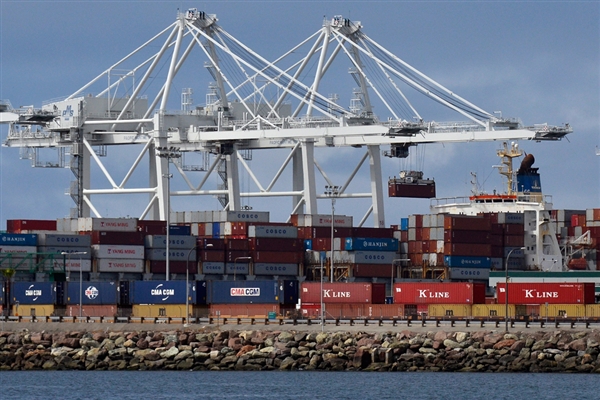
According to the complaint, the defendants’ scheme focused on purchasing large, commercial quantities of foreign-made goods and importing them without paying import taxes or A Customs duties. As alleged in the charging documents, wholesalers in the United States would procure commercial shipments of, among other things, Chinese-made apparel and Indian-made cigarettes, and arrange for them to be shipped by ocean container to the Port of Long Beach, California. Before the goods entered   States, the defendants generated paperwork and database entries indicating that the goods were not intended to enter the commerce of the United States, but instead would be transshipped “in-bond” to another country, such as Mexico.

As noted in the complaint, this in-bond process is a routine feature of international trade. Goods that travel in-bond through the territory of the United States do not formally enter the commerce of the United States, and so are not subject to Customs duties.By claiming that the goods would be transshipped in-bond to another country, the defendants falsely represented that no Customs duties applied.

According to the complaint, instead of completing the in-bond transshipment, the defendants would hire truck drivers to haul the shipments to warehouses throughout Southern California. After generating the false paperwork and database entries, the goods would then be diverted back to Los Angeles and other destinations for shipment throughout the United States. As the conspirators had now effectively imported the goods tax-free, they could in turn sell more merchandise at cheaper prices and reap greater profits than their law-abiding competitors, including domestic American manufacturers of the same goods.

The complaint alleges that in addition to harming lawful domestic businesses, the defendants deprived the United States of the Customs duties that it was owed on these diverted shipments. To date, the government has already identified more than 90 commercial shipments of Chinese-made apparel, foreign-made cigarettes and other goods that were illegally imported in this manner. Altogether, these shipments were worth at least $100 million and resulted in more than $10 million in lost Customs duties, taxes and other revenue.

According to United States Attorney Duffy, “The charges announced today underscores our commitment to ensure that no one exploits the import process for personal gain. Not only does such illegal conduct present a significant danger to the American people, but it deprives law-abiding companies of a level playing field resulting in the potential loss ofbillions of dollars in revenue.”

“This investigation pulled back the curtain on a potentially costly fraud scheme operating in one of the world’sbusiest commercial centers,” said ICE Director John Morton. “Instead, HSI, aided by our law enforcement partners, exposed and dismantled this criminal ring and now those responsible will be held accountable.”
“Every day, U.S. Customs and Border Protection officials work to protect the U.S. and interdict fraudulent goods from entering the country. I commend the work of our officers for their instinct and diligence, and recognize the seamless coordination across government agencies,” said David V. Aguilar, Acting Commissioner, U.S. Customs and Border Protection. “Joint efforts such as this are crucial to maintaining our nation’seconomic security and competitiveness.”

“The FDA-Office of Criminal Investigations is fully committed to investigating and supporting the prosecution of those who may endanger the public’s health and safety by importing unsafe and potentially life-threatening products. We commend the U.S.Attorney’s Office in the Southern District of California for their diligence,”said Lisa Malinowski, Acting Special Agent in Charge, U.S. Food and Drug Administration’s Office of Criminal Investigations, Los Angeles Field Office. As alleged in the complaint,defendant Gerardo Chavez is President of the San Diego Customs Brokers Association and a licensed Customs broker. Using his Customs license, Chavez, his employees and his companies—including defendants Tecate Logistics, LLC and International Trade Consultants, LLC—generated the fraudulent Customs paperwork that was integral to the scheme. Similarly, Chavez and his companies would make false entries into Customs databases, in order to create the false appearance that in-bond shipments of foreign-made goods had been lawfully transshipped to Mexico. As part of this effort, Chavez, Joel Varela and others would also forge official Customs markings to make it appear as if a United States Customs official had certified various shipments as having been transshipped to Mexico.

Charging documents also allege that Chavez had several dedicated customers who were part of the conspiracy. For example, defendant Sunil Mirwani, a citizen of the United Kingdom, received dozens of shipments of illegally imported Chinese-made apparel at warehouses throughout the Los Angeles area. Mirwani marketed and sold the apparel using hiscompany, defendant M Trade Inc. Similarly, defendant Rene Trahin and other co-conspirators distributed various shipments of illegally imported “gray market” cigarettes ranging from Indian-made to German-made brands to warehouses, self-storage areas and a residence in San Diego, Los Angeles and parts between.

The complaint alleges that the defendants also imported produce infected by Salmonella Agona. Often called simply “Salmonella,” this pathogen is a potentially life-threatening infectious bacteria. On one occasion, after a shipment of nopal cactus (also known as prickly pear) tested positive for Salmonella,co-conspirator changed the description of the nopal cactus’ grower for subsequent shipments, for the purpose of evading future Food and Drug Administration (“FDA”) inspections. Similarly, defendant Elizabeth Sandoval and Varela conspired to import Mexican snack foods that were mislabeled and adulterated with a prohibited dye. The remaining defendants named in the complaint are employees and agents of Customs brokers, wholesalers and transport companies who are alleged to have knowingly aided the conspiracy.

This case is being prosecuted in federal court in San Diego by Assistant United States Attorney Timothy C. Perry and is being investigated by the Department of Homeland Security, Immigration and Customs Enforcement Homeland Security Investigations, and United States Customs and Border Protection, the Internal Revenue Service, the Food and Drug Administration, and the Alcohol and Tobacco Tax and Trade Bureau. A complaint is a formal charging document and defendants are presumed innocent until the Government meets its burden in court of proving guilt beyond a reasonable doubt. Source: US Department of Justice

 

Mozambique – New customs transit regulation

FTWOnline has published a letter it received from the CEO of Maputo Corridor Logistics Initiative (MCLI), the interim-CEO of Maputo Port Development Company (MPDC). Seems like an important ‘heads-up’ for all logistics operators. It reads as follows –

“The hardly-negotiated Mozambique customs transit regulation is concluded and the document sent to the minister of finance for approval. Approval and official gazetting is expected for the first week of August.

“Key features are:

  • All the unknown costs are replaced by a transit fee of 500.00-mts (+\- 18 US$) for general cargo and 10 cents of mts (0.036 US$) per for bulk cargo.Art. 13.
  • It is clarified that transit cargo is duty-free and subject to a guarantee that can be isolated (for a single transaction) or global (for transactions etween 3-month and 1-year). The bond covers only the duties and taxes at risk and is capped at 35% of duties and taxes. As an example, if the value of the good is US$1 000, the bond will be equal to 35% of 22% (7% of duties and 17% of vat), totaling around US$75. The bond is calculated on the basis of the value of transactions undertaken in the preceding year. Art. 14 to 19.
  • Transhipment is free-of-bond and the acquittal takes place only in the last port in the national territory. Art.23.
  • Acquittal period for areas where the single window is not yet in place is of 5 business days.”

South Africa – Stalling Regional Integration

Yes, you’ll be forgiven if you thought this was some belated April-fools joke. South Africa has been accused of frustrating plans to create a regional customs union and instead preferring to bolster the South African Customs Union (Sacu), where it holds sway. 

A customs union is a trade agreement by which a group of countries charge a common set of tariffs to the rest of the world, while granting free trade among members. Regional Integration minister, Priscilla Misihairabwi-Mushonga, said there was a feeling that South Africa wanted to use Sacu as its basis to form a regional customs union, instead of working towards creating a new one.

“What we see is that South Africa wants to use Sacu as the basis for forming a regional customs union and sometimes, this is viewed as having a big brother mentality,” she said. Misihairabwi-Mushonga said, for this reason, negotiations towards a holistic Southern African Customs Union (Sadc) had not gone very far. Botswana, Lesotho, Namibia, Swaziland and South Africa make up Sacu, with the four countries having benefited by aligning themselves to South Africa, Africa’s largest economy. A Sadc customs union would involve the 15 countries of the region, instead of Sacu, which is considered narrow.

But Catherine Grant, the head of economic diplomacy at the South African Institute of International Affairs, reckons the smaller nations in Sacu, like Lesotho, may be opposed to Sacu morphing into a regional customs union. “This will be opposed by other Sacu members, not necessarily just South Africa, as this (Sacu) is not just a trade agreement, but involves a broader range of economic issues,” she said.

“Up to 60% of the Lesotho budget is Sacu revenue, so the vested issues, whether Sacu is the basis of a customs union, are not just South African.” Grant felt that it was impossible to expand Sacu in its current form, as it would cost South Africa too much and would dilute the resources that were meant for other projects.

The head of the trade and policy think-tank said instead, South Africa preferred to see the implementation of a free trade area (FTA) as a first step, since customs union negotiations were usually lengthy and time-consuming. “The preference is to first channel scarce resources to existing commitments and trying to make them as beneficial as possible,” she explained.

Grant said while South Africa was the dominant player in the region, hence engendering a feeling that it was imposing itself as the big brother, the country was actually holding back from taking a leading role and this cost the region.

“Sometimes South Africa holds back because they are conscious of not being a big brother and that could be detrimental to the region,” she explained. However, Grant said energies should be directed towards the conclusion of negotiations to set up the Tripartite Free Trade Area (TFTA), which includes the Common Market for East and Southern Africa, the East African Community and Sadc.

“The TFTA will resolve some of the overlapping issues that can be difficult to solve when it comes to a customs union,” she said. Since Zimbabwe adopted multicurrencies in 2009, there has been a call that the nation either join Sacu or push for the formation of a regional customs union. Zimbabwe remains wary of joining Sacu, as it fears for its economic independence, yet negotiations for a regional customs union are moving at a snail’s pace.

Sacu was established in 1910, making it the world’s oldest customs union. It consists of Botswana, Lesotho, Namibia, South Africa and Swaziland. Source: AllAfrica.com

Saving the Rhino – a real story

Besides media reports and the many ramblings of law enforcement and environmental officials in the cause of protecting our fauna and flora, I received the following free e-book titled “Poached!” from a colleague. It details a story told by a veterinarian of a white rhino, callously mutilated by poachers and left alive with his horns and part of his face hacked off with pangas, and the good doctor’s quest to save the victim. Graphic pictures and an embedded video bring home to all the complete brutality of mankind. The book is published by Nikela – Helping People ~ Saving Wildlife and recommends widespread reading and distribution.

Mozambique – Single Window and other Customs developments

The Single Electronic Window (JUE) is a modern system of clearance of goods. After the revision of the whole legislation to allow the implementation of the JUE, the pilot project began in September 2011 in the port of Maputo. Here follows an interview with Kekobad Patel, the President of the Working Group On Tax Policy, Customs and International Trade of the CTA.

What was the adherence of international traders?

“We hoped more adherence of all concerned traders, unfortunately, very few participated in the pilot phase. During this period, both systems (manual and electronic) coexisted. There is always some resistance to change.”

When did the use of the JUE become mandatory?

“The use of JUE became mandatory on April 9, 2012 in the port of Maputo,on April 23 in the port of Beira, early May in the port of Nacala. The city of Tete is now also covered by the system because of the current requirements due to the establishment of large enterprises in the region.”

How many organizations have used the JUE?

“Since its entry into force until 15th of June 2012, over 7,000 import entries were submitted. We still do not deal with export declarations, transit, or special arrangements. These processes are handled manually.”

What are the next areas to be covered by the JUE?

“The second phase will begin in July 2012 and will focus on automotive, multi-modal and road terminals in Maputo, as well as the land borders of Goba, Namaacha (Swaziland) and Ressano Garcia (South Africa) that have received the equipment to begin operations. At the end of the year, the port of Pemba and the land borders of the province of Manica and Tete will be also covered. It will also be possible to treat the other procedures for export and transit. This is crucial, given the geographical location of Mozambique and its relations with the countries of the hinterland. Meanwhile, three Ministries will be electronically linked to award the import licenses: the ministries of Health, Industry and Commerce, and Agriculture. We should not forget that banks are also involved in the JUE. The BCI bank has supported the JUE since the pilot phase. Other banks have joined in recent months: Millenium BIM, Mozabanco and Standard Bank. We expect the membership of other banks.”

What is the biggest challenge of the JUE?

“The implementation of the JUE has led to a change of mentality: “paperless” in the country: less buffer, less paper. The government itself is also involved in the process of e-taxation that ensures that taxpayers should pay their taxes electronically. We still have problems to solve. For example, when a ministry inspects companies, papers are asked for… We need to think about alternatives. The castle must be built stone by stone to ensure it is strong and other sectors such as the public one and banking, are also involved.We believe that the entry into force of the JUE shows how to modernize the country.”

Is the JUE to eliminate the clearing agents?

“The law allows companies to make their own clearance process, but many of them are not prepared. In other countries such as Singapore, the most advanced country in terms of customs, clearing agents continue to exercise thanks to their perfect knowledge of the system.” Source: allAfrica.com

Other news – Mozambique accedes to the WCO’s Revised Kyoto Convention

On 11 July 2012, the Embassy of the Republic of Mozambique to Belgium deposited Mozambique’s instrument of accession to the International Convention on the Simplification and Harmonization of Customs Procedures (Revised Kyoto Convention) with the World Customs Organization. The Convention is regarded as a blueprint for effective and modern Customs procedures, and will enter into force in Mozambique on 11 October 2012. Mozambique becomes the 82nd signatory to the Convention. Some of the Convention’s key elements include the application of simplified Customs procedures in a predictable and transparent environment, the maximum use of information technology, the utilization of risk management, a strong partnership with the trade and other stakeholders, and a readily accessible system of appeals. Will be interesting to see how Mozambique Customs treats the national transit procedure?

The African transhipment race

Have you noticed the debate in the on-line Global Ports Forum about who will become the main container terminals in East and West Africa? Portstrategy.com has taken it upon themselves to score some of the suggestions.

Nigeria is strongly identified as a hub for the west coast of Africa – we score that 7 out of 10. It has the potential but will new port development be delivered in time? Will the off-take infrastructure development be implemented in concert with port development at places like Lekki? Will Lekki’s hub function be undermined by other deepwater facilities being delivered first on the African coast?

Generally, they agree with the view expressed by one wise head in the Forum that the race for hub status on the West African coast is now a fierce one. However, we don’t agree with the contention that Angola will have a serious say in becoming a major hub for West Africa. It will struggle for some time yet to meet its own port capacity needs let alone fulfil a regional function. We score this suggestion 2 out of 10; go to the bottom of the class!

South Africa as a hub for East and West Africa? Well to a limited extent it does already fulfil this role but when South Africa booms its priority has to be gateway cargo and it is limited in terms of its economic and geographical reach. It is also not ideal because of position; we won’t score the suggestion down but conversely we also won’t score it up because it is a fair point. We do, however, see as a negative the continuing emphasis on the public operation of this country’s ports – it spells very high cost comparatively speaking and coupled with this, ironically, not the best service.

Doraleh Container Terminal, Djibouti? Yes we would agree that this has a role to play in container transhipment for East Africa and particularly with its phase two expansion now underway. The price is right for transhipment here but the cost of cargo movement to the main transit destination of Ethiopia is coming in for increasing criticism. It also has a limited reach along the East Coast. Another score of 7.

Mombasa? Yes huge potential for the East Coast of Africa but as history shows no political will to deliver new port capacity in line with demand. Nine in theory but five in practice.

The new port of Lamu? Designed to act as an export gateway for South Sudan, construction has begun on the $23bn (£14.5bn) port project and oil refinery in south-east Kenya’s coastal Lamu region near war-torn Somalia’s border. With a planned multi-purpose port function, because it is a ‘clean slate’ it could take on the hub function. Another 7.

So what is Port Strategy’s view?

In West Africa, we note that new purpose-built, deep draft container port capacity has either recently been installed or is about to be installed in West Africa in six or seven locations. In Lome in Togo and Pointe Noire in the Congo, for example, new facilities are set to come on-stream by end 2014 at the latest which will be able to handle vessels of up to 7,000 teu. We therefore suggest that there will be a split of hubbing activity between all these locations but with the first two or three terminals on-line grabbing the main part of transhipment activity. We also see a continuing role in the short-term at least for hubs such as Algeciras that ‘face’ Africa.

In East Africa we cannot escape the logic of Mombasa and Dar es Salaam but will they pick up the pace quick enough to seize the opportunity? Sadly, not so far. Lamu, therefore, may have a big role to play. Source: Portstrategy.com

Cloud Computing update

Cliffe Dekker Hofmeyr offers an appraisal on the Working Paper on Cloud Computing – Privacy and Data Issues, recently published by International Working Group on Data Protection in Telecommunications. Although the guidelines detailed in the Working Paper are not mandatory, it appears that the intended approach to data protection in the cloud is one of uniformity, with a view to ultimately developing best practice based processing of personal information. It would be interesting to understand to what extent S ATrade Hub  and Microsoft, in conjunction with the Customs of Namibia and Botswana, considered any such guideline in regard to their cloud computing initiative on the Trans-Kalahari Corridor?

The recommendations under the Working Paper highlight some of the risks and complexities associated with cloud computing. The overreaching nature of the Working Paper will serve to ensure that there is no lowering of general data protection standards for processing personal data in the cloud. The Working Paper specifically advocates the following general recommendations:

  • Carrying out privacy impact and risk assessments prior to embarking on cloud computing projects.
  • Development of practices by cloud service providers to ensure greater transparency, security and accountability regarding information on potential data breaches; and also more balanced contractual clauses to promote data portability and data control by cloud users.
  • Research, third-party certification, standardisation, privacy by design technologies and other related schemes in order to achieve a desired level of trust in cloud computing.
  • Legislative reassessment of the adequacy of existing legal frameworks allowing cross border transfer of personal information and consideration of additional privacy safeguards.
  • Accounting for independent audit trails with regards to the location of the personal information. Continuity in the provision of information by data controllers to privacy and data protection authorities. These recommendations are aligned to the general principles set out in the European Union and Safe Harbor data privacy frameworks.

The Working Paper also provides more specific recommendations, on ‘best practice’, ‘controllers’, ‘cloud service providers’ and ‘auditing’. These specific recommendations contemplate the implementation of technical measures that can be used to determine the exact physical location where personal information is held and stored, with an audit trail specifying any copying and/or deletion of personal information. In addition, the Working Paper includes a suggestion for encryption of all personal information (both at rest and in transit) and also recommends the conclusion of agreements between data controllers and cloud service providers to expressly designate and limit the physical locations where personal information will be processed. The Working Paper specifically provides that the cloud service provider should not be entitled to use personal information in the cloud for its own purposes.

It is likely that significant steps will need to be taken by cloud service providers in order to comply with the recommendations under the Working Paper and/or applicable data protection laws, which may potentially require substantial financial resources, including for procuring and implementing the appropriate technology required to give effect to the recommendations and/or laws.

In the South African context, the principles under the current draft of the Protection of Personal Information Bill(PPI) (in particular, the provisions which relate to the conditions for lawful processing of personal information and transborder information flows) can be aligned to the recommendations under the Working Paper. The real test for cloud service providers and their customers will however be in the practical implementation of the principles under PPI. Many of the recommendations under the Working Paper will serve to provide guidance in this respect, particularly in the measures which need to be implemented to maintain a level of transparency in the supply chain of personal information in the cloud. Source: www.cliffedekkerhofmeyr.com

RELATED ARTICLES

WCO 2012 Photo Competition winner

This year’s entries provide a wealth of historic and ‘yesteryear’ character in testimony to the traditional role of customs officers. I for one feel this portrayal is the more lasting impression that real customs officers will remember. While the modern border officer certainly has a lot more gizmo’s and sophisticated gadgetry at his/her disposal, it somehow offers little more than superficial value. Even the digital photographs of today require manipulation to introduce period artefacts or correction to create the desired result.

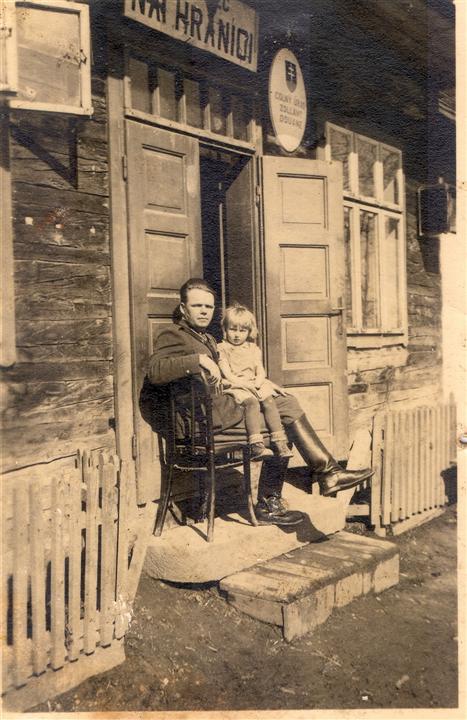
This years winning entry was submitted by Slovakia Customs. It depicts a fulltime customs officer of the Financial Guard on duty at the Klokočov road crossing point on the border between Slovakia and the Protectorate of Bohemia and Moravia, sitting with his young daughter on his lap.

The modern world’s seeming disdain of family values is in stark contrast to the natural warmth of a father and child in this picture. This would be unheard of in many jurisdictions of paranoia we call the customs and border control environment today. We grow evermore suspicious and untrusting of our fellow citizens to the danger that the essential purpose and physical portrayal of public service is an after-thought.

The WCO has put together a wonderful compendium of all this year’s entries. This is a competition not so much about a winner, but a celebration of the wealth and depth of customs tradition accross the globe. Click here to view all the entries!

Revisiting the national transit procedure – Part 2

You will recall a recent challenge by trade to SARS’ proposed implementation of mandatory clearance of national transit goods inland from port of initial discharge – refer to Revisiting the national transit procedure – Part 1.

First, some background

Now lets take a step back to look at the situation since the inception of containerisation in South Africa – some 30 years ago. Customs stance has always been that containerised goods manifested for onward delivery to a designated inland container terminal by rail would not require clearance upon discharge at initial port of entry. Containers were allowed to move ‘against the manifest’ (a ‘Through Bill’) to its named place of destination. This arrangement was designed to expedite the movement of containers from the port of discharge onto block trains operated by Transnet Freight Rail, formerly the South African Railways and Harbours (SAR&H) to the inland container terminal at City Deep. Since SAR&H operated both the national railway and the coastal and inland ports, the possibility of diversion was considered of little import to warrant any form of security over the movement of containers by rail. Moreover, container terminals were designed to allow the staging of trains with custom gantry cranes to load inland manifested containers within a ‘secure’ port precinct.

Over the years, rail freight lost market share to the emergence of cross-country road hauliers due to inefficiencies. The opening up of more inland terminals and supporting container unpack facilities, required Customs to review the matter. It was decided that road-hauled containers moved ‘in bond’ by road would lodge a customs clearance (backed with suitable surety) for purposes of national transit. Upon arrival of the bonded freight at destination, a formal home use declaration would be lodged with Customs. Notwithstanding the surety lodged to safeguard revenue, this has the effect of deferring payment of duties and taxes.

Diversification of container brokering, stuffing and multi-modal transport added to the complexity, with many customs administrations failing to maintain both control and understanding of the changing business model. Equally mystifying was the emergence of a new breed of ‘players’ in the shipping game. Initially there were so-called ‘approved container operators’ these being ocean carriers who at the same time leased containers. Then there were so-called non-approved container operators who brokered containers on behalf of the ocean carrier. These are more commonly known as non-vessel operating common carriers or NVOCCs. In the early days of containerisation there were basically two types of container stuffing – full container load (FCL) and less container load (LCL). The NVOCCs began ‘chartering’ space of their containers to other NVOCCs and shippers – this also helped in knocking down freight costs. This practice became known as ‘groupage’ and because such containers were filled to capacity the term FCL Groupage became a phenomenon. It is not uncommon nowadays for a single FCL Groupage container to have multiple co-loaders.

All of the above radically maximised the efficiency and distribution of cost of the cellular container, but at the same time complicated Customs ‘control’ in that it was not able to readily assess the ‘content’ and ownership of the goods conveyed in a multi-level groupage box. It also became a phenomenon for ‘customs brokers/clearing agents’ to enter this niche of the market. Customs traditionally licensed brokers for the tendering of goods declarations only. Nowadays, most brokers are also NVOCCs.  The law on the other hand provided for the hand-off of liability for container movements between the ocean carrier, container terminal operator and container depot operator. Nowhere was an NVOCC/Freight Forwarder held liable in any of this. A further phenomenon known as ‘carrier’ or ‘merchant’ haulage likewise added to the complexity and cause for concern over the uncontrolled inland movements of bonded cargoes. No doubt a disconnect in terms of Customs’ liability and the terms and conditions of international conveyance for the goods also helped create much of the confusion. Lets not even go down the INCOTERM route.

Internationally, customs administrations – under the global voice of the WCO – have conceded that the worlds administrations need to keep pace and work ‘smarter’ to address new innovations and dynamics in the international supply chain. One would need to look no further than the text of the Revised Kyoto Convention (RKC) to observe the governing body’s view on harmonisation and simplification. However, lets now consider SARS’ response in this matter.

SARS response to the Chamber of Business

Right of reply was subsequently afforded by FTW Online to SARS.

Concerns over Customs’ determination to have all goods cleared at the coast – expressed by Pat Corbin, past president of the Johannesburg Chamber of Commerce and Industry in last week’s FTW – have been addressed by SA Revenue Service.  “One of the main objectives of the Control Bill is the control of the movement of goods across South Africa’s borders to protect our citizens against health and safety risks and to protect the fiscus. “In order to effectively determine risk, SARS has to know the tariff classification, the value and the origin of imported goods. This information is not reflected on a manifest, which is why there is a requirement that all goods must be cleared at the first port of entry into the Republic.“It appears that Mr Corbin is under the impression that the requirement of clearance at the first port of entry has the effect that all goods have to be consigned to that first port of entry or as he puts it “to terminate vessel manifests at the coastal ports in all cases”. This is incorrect. “The statutory requirement to clear goods at the first port of entry and the contract of carriage have nothing to do with one another. Goods may still be consigned to, for example, City Deep or Zambia (being a landlocked country), but they will not be released to move in transit to City Deep or Zambia unless a declaration to clear the goods, containing the relevant information, is submitted and release is granted by Customs for the goods to move. The release of the goods to move will be based on the risk the consignment poses to the country.“It is definitely not the intention to clog up the ports but rather to facilitate the seamless movement of legitimate trade. If the required information is provided and the goods do not pose any risk, they will be released.”

So, where to from here?

The issue at hand concerns the issue of the ‘means’ of customs treatment of goods under national transit. In Part 3 we’ll consider a rational outcome. Complex logistics have and always will challenge ‘customs control’ and procedures. Despite the best of intentions for law not to ‘clog up the port’, one needs to consider precisely what controls the movement of physical cargo – a goods declaration or a cargo report? How influential are the guidelines, standards and recommendations of the WCO, or are they mere studies in intellectual theories?

New Tax law to give SARS upper hand

Taxes

News24.com reports that legislation allowing the SA Revenue Service (Sars) to search business premises without a warrant is expected to come into operation within the next three months. The Tax Administration Bill was promulgated into law on Wednesday in the Government Gazette, Sars said in a statement on Thursday.

The act will come into operation on a date to be determined by the President  by proclamation in the gazette.

“Sars’s preparations for the implementation of the act are at an advanced stage and it is anticipated that it will come into operation within the next three months,” it said.

The act was intended to simplify and provide greater coherence in South African tax administration law. It eliminated duplication, removed redundant requirements, and aligned existing disparate requirements in different tax acts ranging in age from four to 63 years old. It created a single, modern framework for the common administrative provisions of the tax acts.

“Most taxpayers are compliant, and the act should ensure better service and a lower compliance cost for them,” Sars said. “Sars is, however, duty-bound to actively pursue tax evaders in order to maintain compliant taxpayers’ confidence in the integrity of the tax system.”

Key features of the act include:

  • A move to a single registration process and number across taxes to reduce red-tape and streamline the system, and self-assessment of taxes so taxpayers need not wait for a Sars assessment;
  • Greater access to third-party data to underpin Sars initiatives, such as the pre-population of individual tax returns;
  • Clearer rules on Sars access to information, so tax liabilities can be determined more quickly and accurately;
  • The ability to search business premises without a warrant in narrowly-defined situations, where the general requirement for a warrant will defeat the object of the search, so Sars can act when tax is at serious risk and time is of the essence;
  • Clear requirements and timelines for issuing tax clearance certificates to provide greater certainty and responsiveness to business;
  • Feedback on audit progress and findings to engage more fully with taxpayers and ensure they understand the reasons for any adjustments;
  • Specific timeframes for decisions of the Tax Board (a “small claims court” for tax) and wider reporting of Tax Court decisions to improve access to justice; and
  • The appointment of a Tax Ombud, informed by international experience, to provide taxpayers with a low-cost mechanism to address administrative issues that cannot be resolved through Sars’s normal channels.

Although the act provided for a year from its commencement for the appointment of the Tax Ombud, Finance Minister Pravin Gordhan announced in his 2012 Budget speech that the ombud would be appointed this year. Source: News24.com

“Sars is, however, duty-bound to actively pursue tax evaders in order to maintain compliant taxpayers’ confidence in the integrity of the tax system.” 

Who is going to pursue corruption and wasteful expenditure in order to maintain the citizens confidence in paying tax in the first place?

Public Office – a way to pillage the state?

The following article featured in the Business Day highlights the endemic problems of a moral-less society with an unbridled desire to attain wealth at all costs. True this is not just a South African problem, one just has to look at the corrupt activities of ‘politicians’ and ‘big western bankers’ to realise the despair that has  been wrought for so many unwitting citizens, many of whom face a future of utter misery. With so much talk of anti-corruption measures and witch-hunts against whistleblowers, the article provides a down-to-earth explanation as to what it means to hold public office.

The abuse of public power and the plundering of state resources have become so pervasive in SA that events such as these can no longer be regarded as isolated episodes of delinquent public officials, each acting individually. Instead they should rather be ascribed to a political culture born of a profound misconception of the very notion of public office, held by sizeable numbers of public office-bearers ranging from the highest echelons of the executive to junior police officers and public servants. This misconception causes office-bearers to act in a way that is diametrically opposed to what public office requires.

Public office bestows power and authority on the public office-bearer. It demands that citizens recognise and yield to the authority that accompanies it, be it the meagre authority of the junior public servant, the often intrusive authority of the policeman, or the far-reaching authority of the president or ministers. Public office commands respect by virtue of the power vesting in the public office-bearer and from the fact that public office-bearers do not act in their own interest but in pursuit of the public good. But the rewards that accompany the highest positions of public office extend much further. They are publicly applauded and venerated or placed in a position to receive these honours.

However, there is a stark flip side to the public office, which is as essential to public office-bearing as the power and rewards that come with it. This is that the authority and honour of public office are rooted in a profound sacrifice, requiring the office-bearer to sacrifice his private self for the sake of the public good. The higher the public office, the more drastic the sacrifice of the private self must be.

These two aspects are equally vital to public office: the power and the honour as well as the sacrifice of the office-bearer’s private self. The state is rooted in this two-pronged premise and its survival depends on it. Hence, public office does not turn the office-bearer into some magnified private person, entitling him to private gain that is beyond the reach of the ordinary private person. Public office-bearers must sacrifice the private self for the sake of, and in exchange for, public authority.

The occupant of public office discharges his responsibilities strictly in accordance with the prescribed script of the public office concerned; he must act lawfully in accordance with the precepts of the office in question. This is not to say that he must act mechanically, because the way in which public office is discharged may vary from mediocre to exceptionally virtuous, yet always within the confines of the script of the office concerned. Hence, the office-bearer may never act outside the powers inherent in the relevant public office as laid down in law, leaving no space for private detours beyond the ambit of the script.

But there is mounting evidence of a deviant culture that is causing public office in this country [South Africa] to be widely and profoundly misunderstood by many incumbents, identifying it with only its first aspect — its power and honours — yet ignoring and rejecting the second and equally essential aspect — the service to the public good and the sacrifice of the private self.

In fact, precisely the reverse seems to be identified with public office, namely that public office somehow entitles public office-bearers to exploit the power and authority of public office to achieve maximum private gain for the office-bearer — and to receive public accolades for these “successes”. When this occurs, the public office-bearer becomes the exact opposite of what he should be, namely a freebooter, a privateer, harming the public good and robbing the state. And when privateering increases as the evidence of a culture of abuse of public office for private gain is mounting, the gloomy prospects of a faltering state loom large. The larger the number of these privateers, the more the state descends into an assemblage of competing marauders rendering patronage to their own retinue with no regard for the rest, who have to fend for themselves while witnessing the unfortunate spectacle of the receding state. Article by: Koos Malan, professor of public law at the University of Pretoria – Business Day news paper July 2012.

TPT to operationalise new Post Panamax cranes at Ngqura

Transnet Port Terminals has successfully completed testing of two Liebherr Super Post Panamax cranes at Ngqura Container Terminal, just north of Port Elizabeth. The Ship-to-Shore cranes (STS), which were delivered in January bringing the terminal’s fleet of STS cranes to eight, represent an investment of R150 million by the port operator.

The cranes will improve productivity by increasing Ship Working Hour (SWH) – the number of containers moved by the number of cranes working a vessel in one hour. A total of 78 additional operators have been trained and are ready to operate the equipment. Transnet’s newly formulated Market Demand Strategy will see Transnet SOC Limited invest R300 billion on freight infrastructure over the next seven years. Of this, TPT will invest R33 billion to boost port operations.

The portion allocated for the 600,000 m2 Ngqura Container Terminal includes just under R1.1 billion for its Phase 2 A expansion, which will increase container handling capacity from the current 800,000 TEU to 1.5 million TEU by 2013/14. A further R 808 million will be spent between 2015 and 2019 on the terminal’s Phase 2 B expansion to increase the terminal’s capacity to two million TEU. Source: Porttechnology.org

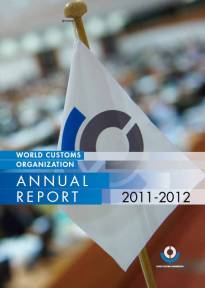
WCO Annual Report

To celebrate the 60th anniversary of the World Customs Organization (WCO), the Organization published a new Annual Report that takes stock of where the WCO has been, where it is now, and where it is going, in addition to serving as a window on the many successes of the WCO, its Members and Customs’ external partners.

The Annual Report contains two major sections: the first includes a summary of the WCO’s mission, history, strategies, current activities and organizational arrangements; and the second comprises profiles of current Members, such as information on the Customs administration, the Director General and contact details, as well as data related to the administration’s operations.

Of particular note is the fact that the WCO’s 177 Member Customs administrations collectively employ approximately 800,000 staff and contribute an average of 33% of their Governments’ total tax revenue, while processing over 98% of all international trade.

The WCO’s role as the steward of global Customs standards is reflected in the Annual Report, which also presents information on how the WCO continues to assist Customs authorities to achieve their objectives, especially the effective application of controls while efficiently facilitating legitimate trade. Source: wcoomd.org

Tanzania slams US/ EU non-tariff barriers replacing tariffs

Tariff barriers against African exports have fallen, but European and American non-tariff barriers, exacting high standards of compliance, have replaced them, blocking products and produce, Tanzanian deputy trade minister Gregory Teu told the National Assembly.

“American markets are open, but the standards that our products have to meet are too high for our producers to meet,” Teu said in his response to a question from parliamentarian Rita Mlaki who asked what was being done to exploit the two markets under the African Growth and Opportunity Act (AGOA) and Everything but Arms (EBA) arrangements.

He said the government, through the Exports Processing Zones Authority (EPZA), was pursuing strategies to promote exports by local and foreign investors, but said the markets are practically inaccessible due to the stringent standards set. Tanzanian exports are chiefly coffee, cotton, sisal, tea, tobacco, cashew nuts and pyrethrum. Seems it should be called “Pain for Trade” not “Aid for Trade” Source: AllAfrica.com