Car importers slam KRA transit vehicles rule

Is the time for a regional transit bond nigh? Given prevailing draconian measures to ensure security and surety, the message is clear that customs brokers, freight forwarders or clearing agents need to demonstrate financial security over and beyond what they are accustomed to. Question – is the transit business lucrative for agents? Why not refuse the business – its just not worth the risk.

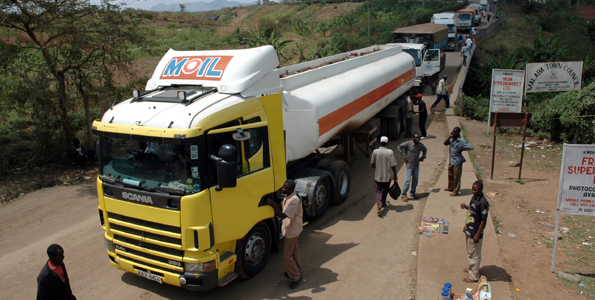
A requirement by the Kenya Revenue Authority demanding that all imported transit vehicles above 2000cc be cleared against cash bonds or bank guarantees has been opposed by clearing agents in Mombasa. The agents, under their umbrella Kenya International Freight and Warehousing Association, have threatened not to pay taxes if the regulations are not withdrawn by the tax collector. The agents said that the stringent measures by KRA may stifle trade in the region and may also see the port of Mombasa losing some foreign importers to the port of Dar es Salaam in Tanzania. “We as clearing agents cannot pay the bonds for the importers”.

On August 31, KRA directed all clearing agents that with effect from September 1, all transit vehicles exceeding 2000cc would be cleared against a cash bond or bank guarantees paid by the agents. The forwarders also said that Uganda, Rwanda and DR Congo business class was considering ditching Kenya as an import avenue for Dar es Salaam port. Source: The Star (Nairobi)

Ressano Garcia – Border Operations Assessment

As part of its Coordinated Border Management (CBM) program, the Southern African Trade Hub (SATH) undertook a Border Operations Assessment (BOA) at Ressano Garcia along the Mozambique/South Africa border. The objective of the assessment was to establish processes used by the different agencies to clear goods, identify challenges and recommend mechanisms to addresses obstacles. The assessment also entailed establishing the time it took for trucks to cross the border by physically recording arrival and departure times at points where the clearance of goods was undertaken.

SATH held discussions with both public and private agencies operating at the border: Customs, Immigration, Health, Agriculture, Police, Traders Association, Clearing and Forwarding Agents and Insurance Companies. The agencies explained their roles and mandates, how they carry out their day to day operations at the border, their working relations with other agencies at the border and the challenges they face in carrying out their duties.

SATH also had discussions with the One Stop Border Post (OSBP) project team to assess progress on the initiative. The OSBP is at an advanced stage and only awaits the adoption of the legal framework by South Africa, which is anticipated by the end of 2012.

Findings of the BOA and recommendations will be disseminated through a national and border workshops to which senior officials of agencies operating at the border and border officials will be invited. At these workshops Joint Border Committees will be established to take the recommendations forward to streamline border management.Source: SA Trade Hub

Optimising a layered port security system

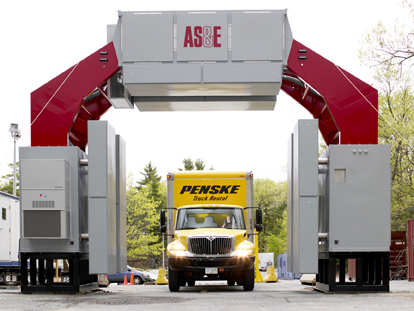
Today, there are many different security inspection technologies available. These technologies may be combined in an attempt to achieve a better result. How the systems are combined strongly affects the results achieved, and different applications may require different combinations. This paper will examine several examples.There are three major applications for screening technology today: Revenue enhancement, contraband detection, and nuclear weapons of mass destruction detection (WMD). Several technologies that can be used are: Portal monitors, gamma ray imagers, high-energy X-ray imagers, and neutron systems. Matching the application and the technology correctly is critical. Port Technology International has published a paper on port security optimization, which addresses the various technologies and approaches towards optimisation of threats, namely revenue, weapons of mass destruction, and contraband highlighting the need for layered technology inspection systems to reduce false positives and enhance enforcement detection capabilities. Read the paper here! Source: Porttechnology.org

Corruption at Durban Harbour – the plot thickens

With reference to an earlier post “Trade costs and corruption in Ports of Durban and Maputo” (March 2012) the following article ‘Hawks probe Khulubuse Zuma’s pal’ published by the Daily News (Durban) suggests more sinister individuals involved in the scam which saw a policeman being gunned down at his home and no less than 10 SARS officials placed on suspension. A web of intrigue indeed.

A wealthy South Africa-based Taiwanese businessman and former business associate of Khulubuse Zuma, a nephew of President Zuma, is being probed for alleged links to a multibillion-rand racket at Durban Harbour. In June the Hawks in KwaZulu-Natal secured a warrant of arrest for Jen Chih “Robert” Huang, CEO of Johannesburg-based company, Mpisi 74, when investigators from the elite unit also raided Huang’s business in Bedfordview, and his home.

Huang, a convicted murderer, was in Hong Kong on business when the warrant was issued, and it has not been executed after he side-stepped the Hawks by directly approaching the National Prosecuting Authority (NPA) to make representations as to why he should not be arrested. The businessman, part of a delegation that accompanied President Zuma on a state visit to China in 2010, is wanted on multiple counts of alleged corruption.

According to Daily News, Huang denied having any links to alleged illegal activity at the harbour, and referred all queries to his attorney. “I have been out of the country. “Speak to my attorney in Durban. He is handling all matters related to my company.” His attorney, Quintus van der Merwe, confirmed representations had been made to the State, but declined to comment further.

The warrant for Huang’s arrest came weeks after a former South African Revenue Service (Sars) anti-corruption task team member, Etienne Kellerman, was arrested on 80 counts of alleged corruption. Kellerman, 42, is suspected of receiving substantial benefits for allegedly allowing contraband through the harbour. The Daily News broke the story when Kellerman was arrested in April this year after a three-year covert investigation. An international syndicate that was allegedly bribing customs and police officials to allow in container-loads of contraband, was also exposed by the Hawks.

Sars spokesman, Adrian Lackay, told the Daily News that following the joint investigation with police over several months into the existence of a criminal syndicate operating at Durban Harbour, 10 Sars employees had been suspended. “Their suspensions follow the arrests of other suspects outside of Sars. These employees were suspended over a three-week period following the arrest of Kellerman on charges related to fraud, theft and misconduct,” he said.

“The 10 employees remain suspended pending the outcome of an internal investigation into alleged involvement with clearing agents.” Over the past two years, during this investigation, police seized more than R1 billion worth of counterfeit goods and contraband. The alleged corrupt Sars and police officials are believed to be working in teams between KZN and Gauteng. They are allegedly paid bribes of up to R30 000 for each container allowed to pass through customs undetected. Big name international companies, mainly from China, are also being investigated. Kellerman has pleaded not guilty and is on R100 000 bail.

According to its website – before it was removedMpisi 74 is a massive concern, offering a range of services, including import, export, forwarding, warehousing, cellphone telecommunication and machinery, as well as vehicle manufacturing. Just days after Huang was contacted by the Daily News, the website was taken down.It had even boasted pictures of the president’s nephew, Khulubuse Zuma, with the Taiwanese businessman at the company’s headquarters in Bedfordview, on December 9, 2009. The Mail and Guardian, in January, described Huang as the influential middleman in deals between Chinese companies and Khulubuse Zuma. It said Huang was also instrumental in introducing Chinese vehicle manufacturer, Dong Feng Motor Corp, to Khulubuse Zuma, who at one point was the “chairman” of Mpisi.The report said that in 2010, Dong Feng announced a joint venture with Khulubuse Zuma and Huang to distribute its products in South Africa and the rest of the continent.In 1998, Huang was convicted of the murder of a Taiwanese businessman, Ching-Ho Kao, who was found shot dead in March 1996, in the Free State. His body was set alight. The trial began in the Bloemfontein High Court in November 1997. The indictment claimed the motive for the murder was that Kao’s family owed Huang money. Huang was sentenced to an effective 12 years in prison. But, through remission of sentence, he was released in 2003 and set up Mpisi 74.

Source: Daily News (Durban)

Related Articles

Regional IT inter-connectivity takes another step

Delegates from at least 20 African Customs Administrations met in Pretoria, South Africa between 13 and 15 August to advance developments towards a common framework and approach to IT inter-connectivity and information exchange in the region. Convened by the SADC secretariat in consultation with COMESA and Trademark Southern Africa (TMSA), the three day work session focussed on uniform acceptance of the WCO‘s Globally Networked Customs (GNC) methodology, regional awareness of customs developments in the Southern and East African region, as well as joint agreement on customs data to be exchanged between the member states.

Mauritius Revenue Authority (MRA) shared its experience with delegates on the launch of its Customs Enforcement Network (CEN). Kenya Revenue Authority will soon be sharing enforcement information with its MRA counterpart. At least 22 African countries are expected to link up with the CEN network over a period of time. Customs enforcement information is the second pillar of the WCO’s GNC information exchange methodology; the first pillar being Customs information exchange. The latter provides for a holistic approach to the dissemination of common customs data derived from supply chain exchanges, for example declaration information, cargo information, and AEO information to name but a few. This information is vital for trading countries to administer advance procedures and better validate the information being provided by the trade.

Rwanda Revenue Authority introduced it’s RADDex programme which is a web-based IT solution for the exchange of cargo manifest information between participating states in the East African Community (EAC) – see related article below.

SADC and COMESA are rallying their members to participate in the initiative. At the current juncture, various member states have expressed keen interest to participate. While the regional intention is the linking of all customs administration’s electronically, initial developments envisage bi-lateral exchanges between Customs administrations which are ready to engage. The importance of the adoption of the GNC methodology is to ensure that customs connectivity and information exchange is harmonised and consistent across the Southern and East African region irrespective of whether countries are ‘early adopters’ or not.

South Sudan: The roles of Commerce and Customs

The newly formed state of South Sudan, demonstrates a painful understanding of trade and customs. Evidently this is the product of political thinking, or poor journalism, or zero understanding of economics and administration. I wonder what Customs role really is?

The Director General of Trade in the Ministry of Commerce, Industry and Investment Stephen Matatia said that his office is not for collecting tax revenue but only for imposing penalties on those who break the law and order. He said it is the Customs Service staff who have the responsibility of collection revenues. The ministry of Commerce staff are only there to collect the penalties from those traders who break the laws and orders of the land related to trade and commerce. He said their other function is the imposition of laws on prohibited goods.

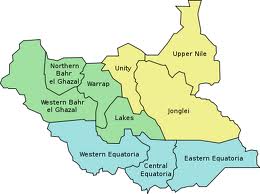
Staff of ministry of Commerce stationed in Nimule border checkpoint report to headquarters in Juba every 15 days to present comprehensive report on their duties. He said the Ministry is preparing to open more offices in other parts of Greater equatorial and in Greater Upper Nile in the border with Ethiopia.In Western Equatoria, Greater Bahr Ghazal, Unity State, bordering with Sudan, Central Africa Republic, Congo, will need offices,” he declared. Matatia observed that in some countries of Africa a lot of ministries of commerce are being classified together with industry thus they have ministries for industry, commerce, supply and cooperatives. Source: AllAfrica.com

WCO lauds NZ Customs for its capacity building assistance

The Secretary General of the World Customs Organization (WCO) commended New Zealand’s strong reputation for border management. During a recent visit by the WCO’s Secretary General, the NZ Customs Comptroller said that New Zealand takes its WCO responsibilities very seriously and works closely with the WCO to develop global standards for trade.This helps to ensure a stable trade environment for New Zealand businesses to operate in around the world.

The Secretary General, Kunio Mikuriya noted that the WCO is impressed with the capacity building assistance NZ Customs has given its Pacific neighbours, and enjoyed discussing New Zealand’s valuable contribution to the WCO, with Customs and the Minister of Customs, the Hon Maurice Williamson. The Pacific is an important region for New Zealand and NZ Customs has recently worked with the Cook Islands to introduce new technology and systems to improve border security to help facilitate legitimate trade and travel.

“New Zealand has been an influential member of the WCO, and has world leading expertise, particularly with its involvement in the development of a standardised data model for trade,” said Mr Mikuriya. In recent years NZ Customs has included the development of a standardised customs data model that will be used in the Joint Border Management System (JBMS). This data model is unique as it incorporates biosecurity and food related information, and means for the first time, one data message can contain all information that border agencies require. This will streamline border processes for clients who will use the Trade Single Window when it is introduced next year. Source: NZ Customs.

EAC authorities share cargo data online

East African tax authorities have launched an online system to share customs cargo information in the region. The system, RADDEx 2.0 (Revenue Authorities Digital Data Exchange), will enable the tax authorities to instantly know what is in transit in the region. Uganda Revenue Authority says RADDEx 2.0 is web-based, has more “functionality and better performance” and will be used by clearing agents. If cargo destined to Uganda poses any risk, notifications  will be sent via e-mail so that authorities can plan action prior to arrival of the cargo. All data on cargo will be sent to a central server at the East African Community headquarters in Arusha, Tanzania. Any East Africa partner state that needs data about expected cargo will interrogate the system, which will automatically provide feedback. The system was developed by IT and customs expert staff from Uganda, Kenya, Tanzania, Rwanda and Burundi and sponsored by USAID/COMPETE (Competitiveness and Trade Expansion Programme). Source: The New Vision, Uganda

Tobacco Wars Heating Up

Australian courts this week threw out the bid by tobacco conglomerates to block government from introducing plain packaging for cigarettes. Tobacco product distributors operating in Namibia have been banking on a victory in the Australian courts to strengthen their arguments against similar plans by the Namibian government. Namibia Gazetted the Tobacco Products Control Act of 2010 that introduced plain packaging and ban the use of words such ‘mild’ or ‘light’ on cigarette boxes or any other tobacco products sold in Namibia.

The world’s biggest and the Namibian market leader in tobacco products, British American Tobacco (BAT) has been fighting the Act with serious threats to take the government to court if it dared to implement the Act. BAT has been citing the Australian court case as an example of how far it is prepared to go to fight the Namibian government over what it says is tantamount to expropriation of its trademarks properties. BAT also says plain packaging takes away its trade rights to freely communicate to consumers the nature of their lawful products on offer.

The Australian government’s victory now exposes BAT, along with Japan’s Tobacco International (JTI) and Imperial Tobacco to similar laws across the world. Britain, Canada, New Zealand, China, France, India, South Africa, Norway and Uruguay are already considering implementing the plain packaging measures. Southern Africa Customs Union (SACU) member states intend to adopt the generic Tobacco Products Control Act of South Africa that is in line with the World Health Organisation (WHO)’s pressure on the use of tobacco products, through the Framework Convention on Tobacco Control. BAT has been saying the proposed branding would exacerbate the illegal tobacco trade in Namibia where about 225 000 cigarettes are illegally sold every day.

BAT has a market share of about 85 percent of the Namibian tobacco market, selling just over 330 million cigarettes every year in the country. Namibians are said to smoke 75 000 packs of 20 cigarettes each per day or an equivalent of 1.5 million cigarettes each day. The court ruling in Australia makes Australia the first country in the world where cigarettes are sold in drab, olive coloured packets with graphic health warnings and no logos.

The Tobacco Products Control Act of 2010 also mandates the establishment of a fund from levies on sales of tobacco and other sources.The fund would partly use the money to pay for treatment of tobacco-related illnesses. The new proposed packaging features graphic pictures depicting the ill health associated with smoking. These range from stained teeth, throat cancer to damaged lungs and breast cancer with appropriate warnings underneath the picture. If the new legislation is implemented fully there would be a total blackout on advertising, promotion and any public relations activities around tobacco products or companies whose names are directly associated with tobacco products. Source: New Era, Namibia.

Port of Maputo – charting a course to successful development

To understand where to the Port of Maputo is heading in the future, one has to know its past. In 1972, the Port of Maputo was a busy hub, handling near 17 million tonnes per year. Durban’s port, a little further south, was handling only 3 million tonnes more rhan that and Richard’s Bay Port didn’t even exist.

Then the long civil war came. In 1988, the Port of Maputo barely reached 1 million tonnes; infrastructure deteriorated, shipping companies moved their business elsewhere and ports like Richard’s Bay were born and prospered. It was only in 2003, when the Port of Maputo was transformed into a Private Public Partnership and concessioned to Maputo Port Development Company (MPDC), that things started changing. In only nine years, the Mozambique’s capital port grew from 4.5 million tonnes to 14 million tonnes (this expected year’s throughput).

This growth is the result of a massive investment – $291 million by the port’s concessionaires – in the rehabilitation of roads, rail, quays, general infrastructure and acquisition of equipment. However, the most beneficial change was the channel dredging to -11 meters, with a sailing draft above 11 meters. This allowed the port to receive bigger ships and, after the dredging, the Port of Maputo had an impressive growth of 35 percent.

Port of Maputo Masterplan

The dredging of the access channel to the port was the first of the many actions included in the Port of Maputo’s Masterplan; an ambitious and dynamic tool, which charts the port’s successful development. According to the updated Masterplan, the Port of Maputo foresees that, by 2020, it will be handling almost 50 million tonnes, with an investment of US $1.7 billion in the coal, container and bulk terminals. The port will also receive channel dredging to -14 meters, berths rehabilitation and also rail, road and warehousing improvements. The coal terminal, for example, is planned to grow from the current 6 million tonnes capacity to 30 million tonnes (20 million of coal and 10 million of Magnetite), and the container terminal will increase from the present 150,000 containers to 400,000 containers (phase one).

Much of the grand design to secure a vibrant future is presently visible only as images, which reflect the foresight of those who have launched this mammoth 20 year project. But to turn all this into reality, the Port is now working in what the eye can’t see.

Building foundations, facing challenges

In order to make a sustainable investment, the Port of Maputo has been taking time to build its foundations. 2011 and 2012 have seen an unprecedented alignment between all stakeholders, including the Mozambican Ports and Rails Company, Caminhos-de-Ferro de Moçambique (CFM), the National Customs Authority and the National Institute of Hydrography and Navigation (INAHINA). These stakeholders, amongst many other tasks, control all navigational aids in the access channel to the Port of Maputo, and all play a fundamental role in the achievement of the Masterplan’s
strategic objectives.

The Port of Maputo has a geostrategic location, relative to key markets – the main mining regions of South Africa, Swaziland and part of Zimbabwe. This gives the port a strategic, competitive advantage in comparison to neighboring ports, who are struggling with congestion. Most of the mineral cargos are transported to the port by road, even though they are more rail oriented. This poses numerous issues, such as road congestion, road maintenance and environmental problems. Today, there are about 1,200 trucks moving in and out the port every day. Very soon, with raising demand, this number will double, if cargo is not moved by rail. Read the full PDF article here! Source: Porttechnology.org.

Role of the Chief Supply Chain Officer – an interesting podcast

Globalization of the Supply Chain: Here’s one for the warehousing, logistics, and distribution folks. Aberdeen Group’s survey of 191 companies explores how new investments in internal and external collaborations across the global supply chain are now the highest priority for the Chief Supply Chain Officer (CSCO’s). This podcast looks closely at these initiatives as well as:

  • Specific trends and highlights of the research.
  • Strategies and best practices utilized by CSCO’s.
  • Increased globalization/complexity balanced by the need to drive down supply chain costs.

 Click the HEREto visit Aberdeen Group’s website and download the podcast now.

Two-thirds of UK logistics firms fail to meet needs of Bribery Act

UK companies are not doing enough to comply with the Bribery Act 2010 (Act) and may also be failing to meet reporting obligations required under the European Union Emissions Trading System (EU ETS) according to a survey of UK logistics professionals released today. The research, carried out by industry law specialists at Thomas Eggar LLP, shows that three-quarters of respondents are either aware of the EU ETS but find it difficult to understand or not aware of it at all. What this means is that very few logistics companies are properly engaging in the EU ETS or have the proper compliance measures in place. Also, despite two years passing since the introduction of the Bribery Act in 2010, nearly two-thirds of those surveyed admit their organisation could either do more to comply or does not have a bribery policy at all.

Described by some as ‘the toughest anti-corruption legislation in the world’, the Act covers the crimes of bribery; being bribed; the bribery of foreign public officials; and the failure of a commercial organisation to prevent bribery on its behalf.  The Act is relevant because many companies operate supply chains or form part of a supply chain in countries where there is a high risk of bribery. Also, their activities may include those with a high risk of corruption, such as interacting with public officials or using local agents or partners. Because the Act has wide extra-territorial jurisdiction, this means any act of bribery by a UK organisation, UK national or UK resident, anywhere in the world, breaks the law in the UK. Read the fill article here! Source: Thomas Eggar

Thick Borders – Thin Trade

It’s quite amazing the number of reports featured in various african media across the continent pushing the ‘free trade’ agenda. The incumbent governments on the other hand are naturally concerned with dwindling tax collections, while at the same time increasing incidents of graft, collusion, and corruption run rampant at the border. While the following article states the obvious, unfortunately, nowhere will you find or read a practical approach which deals with increased ‘automation’ at borders and the consequential re-distribution of ‘bodies’ to other forms of gainful employment. Its jobs that will be on the line. Few governments wish to taunt their electorates – non-essential jobs are a fact of life and are destined to stay if that is what will earn votes and a further term in power. Moreover, there is no question of removing internal borders with the emphasis on costly ‘One-Stop Border’ facilities. To some extent the international donor community won’t mind this as there’s at least some profit and influence in it for them.

Poverty in Sub- Saharan Africa is a man-made phenomenon driven by internal warped policies and international trade systems. The continent cannot purport to seek to grow while it blocks the movement of goods and services through tariff regimes at the same time Tariff and non-tariff barriers contribute to inefficient delivery systems, epileptic cross-border trading and thriving of illicit/contraband goods.

This ultimately harms the local and regional economy. Delays at ports of delivery, different working hours and systems of control across the continent, unnecessary police roadblocks and poor infrastructure condemn countries to prisons of inter-regional and intra-regional trade poverty.

According to the United Nations Economic Commission for Africa, removal of internal trade barriers would lead to US$25 billion per year of intra-regional exports in Africa, an increase by 15,4 percent by 2022. Making African border points crossings more trade efficient would increase intra-regional trade by 22 percent come 2020. Trade barriers in East Africa Community alone increase the cost of doing business by 20 percent to 40 percent.

Such barriers include the number of roadblocks within each country, cross- border charges for trucks and weighing of transit vehicles on several points on highways. Kenya is grappling to reduce the number of its roadblocks from 36 to five and Tanzania from 30 to 15. Sub-Saharan Africa records an average port delay of 12 days compared to seven days in Latin America and less than four days in Europe. Africa is lagging behind!

In West Africa, Ghanaian exports to Nigeria are faced with informal payments and delays as the goods transit across the country borders whether there is proper documentation. In the Great Lakes Region, an exporter is faced with 17 agencies at the border between Rwanda and Democratic Republic of Congo each with a separate monetary charge sheet.

A South African retail chain Shoprite reportedly pays up to US$20 000 a week on permits to sell products in Zambia. Each Shoprite truck is accompanied with 1 600 documents in order to get its export loads across a Southern African Development Community border. Tariff and non-tariff barriers simply thicken the wall that traps Africans in economic poverty.

The new African Union chair should push for urgent steps to lower barriers to trade within Africa. Border control agencies need retraining and border country governments need to integrate their processes; long truck queues waiting to cross border points should not be used as an indicator of efficiency.

If it takes a loaded truck one hour to cover 100 kilometres; a four-hour wait at the border increases the distance to destination to another 400 kilometres. Increased distance impacts on the prices of goods at the retail end hence limiting access to products to majority of Africans. Limited access translates to less freedom of choice — similar to a locked up criminal prisoner.

With modern technology, goods should be declared at point of origin and point of receipt. Border points should simply have scanners to verify the content of containers. Protectionism, tariffs and non-tariff barriers within the continent sustains African market orientation towards former colonisers.

African entrepreneurs are subjected to longer travel schedules due to constant police checks and slow border processes. To fight poverty on the continent, African people would benefit from an African Union Summit that resolves to facilitate efficiency in movement of goods and services. Efficient delivery systems on the continent will tackle challenges of food insecurity, poor health care, conflicts and further promote diversified economies arising from competitive healthy trading amongst and between African nations.

Elimination of tariff and non-tariff barriers to trade will provide an opportunity for African entrepreneurs to adequately take their rightful places as relevant players in the global trade system. It is imperative that African countries re-orient their strategies to promote productivity by reviewing tariffs that hold back entrepreneurs from accessing the continent’s market. This calls for both a competitive spirit and a sense of integrated tariff and process compromise if the continent is to haul its population from poverty. Source: The Herald (Zimbabwe)

Namibian Ministry of Finance angers clearing agents

Below is a situation which might have been avoided if trader registration/licensing was properly addressed by the Namibian Authorities. With the likes of SADC and COMESA encouraging the implementation of regional transit guarantees, trade operators need to clearly address their obligations and liabilities. Moreover, any suggestion of authorised economic operator (AEO) programme in the Southern African region needs to fully align its requirements with the standards being applied by other countries across the globe. It is therefore clear that no preferred trader scheme can be implemented across the Trans-Kalahari Corridor or across SACU if such disparities of knowledge and practice exist. While one might have compassion for possible job redundancies and the pleas expressed by certain clearing agents, they evidently do not understand the game they are playing in and will drastically need to redress their understanding of the role they play in the supply chain. International clearing and forwarding is not a game for sissies, or people who want to try their hand at a quick buck. A bold stance by the Ministry of Finance.

The Namibian Ministry of Finance’s decision to ban clearing agents from using guarantees and bonds from third parties as security to move goods has caused an uproar among clearing agents. The Deputy Minister of Finance, Calle Schlettwein, explained that the decision that became effective on July 26 was taken to protect the taxpayer. Clearing agents aren’t closed down, and neither are they stopped from using their own security to move these goods, he said. As from July 26, the agents are simply not allowed to use a bond or guarantee issued to another clearing agent as security for their goods in transit, the ministry said.

Before the clampdown, clearing agent A used to ‘borrow’ guarantees or bonds, backed by financial or other institutions from clearing agent B to clear any goods coming through Namport and destined for landlocked countries such as Botswana, Zambia and Zimbabwe. However, should a problem develop with agent A’s consignment, the guarantee or bond would be worthless to Government, as the financial institution agreed to back only agent B’s guarantee or bond. “We don’t know how or when the practice started, but it is illegal,” a ministry spokesperson said.,

Schlettwein said Government stood to lose out on duties and customs through the practice, and the taxpayers would have ended up having to pick up the tab. The ministry’s announcement was met with considerable protest from the smaller clearing agencies, claiming that they didn’t have the money or financial backing to secure the necessary bonds or guarantees. Nampa reported that 76 small and medium enterprises (SMEs) operating as clearing agencies at the coast have been affected. At the Oshikango border post and at Helao Nafidi in the North, 30 agencies with more than 100 employees are affected.

Regina Amupolo of Pride Clearing and Forwarding Agent has called on the ministry to urgently look into this matter, because many trucks with goods and containers are stuck at the Oshikango border post, Walvis Bay harbour or at other border posts. Their customers have already complained that they are losing business because of this, Amupolo said. Amupolo said most SMEs don’t have the money to obtain bonds or guarantees. She said ministry officials said anyone who wants a bond must have collateral of N$1,6 million. “We are small business people, trying to employ ourselves and some of our fellow men and women in our societies, but now the Government, the Ministry of Finance, is making things difficult for us. How are we going to make a living if the ministry is cutting off our jobs in this way?” she asked.

In a letter written to all clearing agents at Oshikango, the controller customs and excise officer, Festus Shidute, said the practice of using third-party bonds or guarantees posed a serious challenge to customs administration and control of guarantees in the event of liabilities by third parties. Amupolo and Rejoice Nangolo from Flora Clearing Agent said they have already paid N$20 000 to obtain a clearing licence, while they have to pay Namport another N$20 000. She said they are losing thousands of dollars as a result of this unexpected prohibition by the ministry and are demanding an extension to allow them to take the matter up with the ministry.

Nangolo said her business has branches at other border posts like Omahenene, Katwitwi, Ngoma, Wenela, Trans-Kalahari, Ariamsvlei, Noordoewer, Walvis Bay, Hosea Kutako International Airport and Oshikango. Her Angolan customers have threatened to stop moving their goods through Namibia and only to use their own ports, she said. At Oshikango there are only two big companies, Piramund and CRN, that can guarantee bonds and assist them as SMEs clearing their work effectively. According to Amupolo and Nangolo, they started with their clearing business in Oshikango in 2000 and were doing well until the ministry imposed the ban.

Speaking to Nampa, Lunomukumo Taanyanda of Oluvanda Clearing and Forwarding Close Corporation (OCFCC) said his company has been operational for two years and deals mostly with car consignments from countries such as the United Kingdom (UK) and Dubai.Before clearing the consignments, OCFCC has to declare the consignment at the Namport customs desk. However, before they can fill in a customs declaration form to clear the transit goods, the goods need to be secured and this is where the company (OCFCC) requires the assistance of third parties such as Wesbank Transport, Transworld Cargo and Woker Freight Services.

These smaller companies acquire assistance from bigger companies (the third parties) as they experience problems when trying to obtain their own bonds and guarantees. According to Taanyanda, it is a very costly and time-consuming process. “We agents do not have enough collateral for bonds, which start at N$350 000, and now the ministry has stopped us from borrowing bonds from third parties,” he said. Source: The Namibian

Related Articles

http://www.namibian.com.na/news/marketplace/full-story/archive/2012/august/article/clearing-agents-want-answers-today/
Customs Modernisation – some benefits in the offing


Its been a while since I penned some comment on the customs modernisation programme in South Africa. Amongst the anxiety and confusion there are a few genuine ‘nuggets’ which I would hope will not go unnoticed by the business community. With stakes high in the area of business opportunity and competitiveness, such ‘nuggets’ must be adopted and utilised to their fullest extent. Lets consider two such facilities.

The widespread implementation and adoption of electronic customs clearance has allowed brokers to file declarations for any customs port from the comfort of their desks. Brokers can now consider centralised operations especially for customs clearance purposes. Likewise the withdrawal of the annoying goodwill bond should also come as a welcome decision. Hopefully this may translate into cost-savings over time.

As of 11 August 2012, the business community will also be glad to learn that imported goods which do not fully meet all national regulatory requirements can be entered into bond on a warehouse for export (WE) basis. While this may not sound like anything new, the provisions which come into effect, will accord the identical treatment of such goods as if they were being entered for warehousing. In short the new provisions will allow more flexibility with the ability to re-warehouse WE goods; the ability to change ownership on WE goods; and the ability to declare WE goods for another customs procedure.These provisions can be considered a relaxing of the original approach which mandated compulsory exportation. All government regulatory requirements (i.e. permits, certificates, etc.) will however be strictly enforced upon clearance of WE goods for home use or another customs procedure. The apparent relaxation forms part of ongoing alignment of customs procedures with the Customs Control Bills, which are in the process of finalisation.

For those who have enquired about the followup to the national transit procedure, I have not forgotten about it. The ‘touchy’ nature of the subject requires a mature and fair response. Please bear with me.