X-Ray Scanners – WTO panel rules on EU-China dumping row

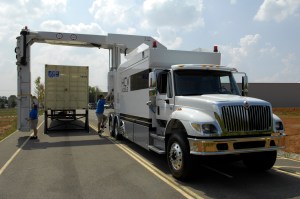
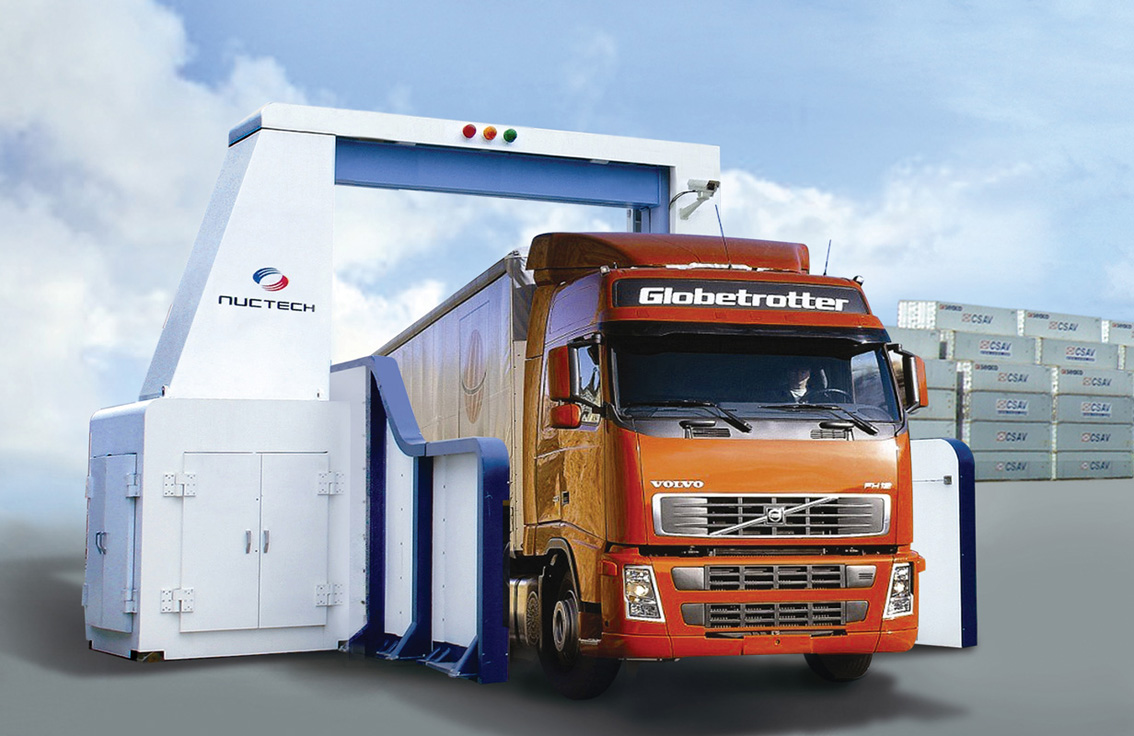
Nuctech Fast Scan Vehicle and Container inspection system

Nuctech Fast Scan Vehicle and Container inspection system

Part of the problem here is that the Chinese have a significant market share in this type of equipment. In a short period of 10 years they have outstripped some of the more fancied American and European players in this business. While the dispute in question raises ‘ethical’ questions of the Chinese, it does seem to be a matter of sour grapes.

China’s anti-dumping duties on imports of x-ray security scanners from the EU violated global trade rules, according to a WTO panel ruling that was issued yesterday. [WTO Dispute Settlement, DS425]

Brussels brought the dispute in July 2011 after Beijing imposed duties ranging from 33.5 to 71.8 percent on the x-ray scanners. (See Bridges Weekly, 25 January 2012) The EU exports approximately €70 million of these scanners to China annually.

China imposed the duties after the EU had applied anti-dumping duties on Chinese cargo scanners one year earlier, which some viewed at the time as a “tit-for-tat” move.

The panel report primarily focused on procedural issues in Beijing’s investigation, specifically regarding how China calculated the anti-dumping margin, loosely defined as the difference between the price – or cost – in the foreign market and the price in the importing domestic market.

Beijing included more expensive “high-energy” scanners – which do not “look remotely like” the cheaper scanners, according to the panel report – in calculating the average domestic price, even though only cheaper “low-energy” scanners were exported. The panel found that this price comparison was “not consistent with an objective examination of positive evidence” required under WTO rules.

The panel also found that Beijing did not comply with certain due process and transparency requirements before imposing the duties.

The panel did not rule with the EU on all points, however, noting that Brussels had not established that Beijing had acted inconsistently in certain other procedural matters.

“I expect China to remove the measures immediately,” EU Trade Commissioner Karel De Gucht said on Tuesday in response to the panel ruling. “I will not accept tit-for-tat retaliation against European companies through the misuse of trade defence instruments.”

Under WTO rules, both sides have 60 days to appeal the ruling. In a statement, China’s Ministry of Commerce indicated that they would make a serious assessment of the case and reserved the right to appeal.

Radiation Scare Disrupts Port Elizabeth

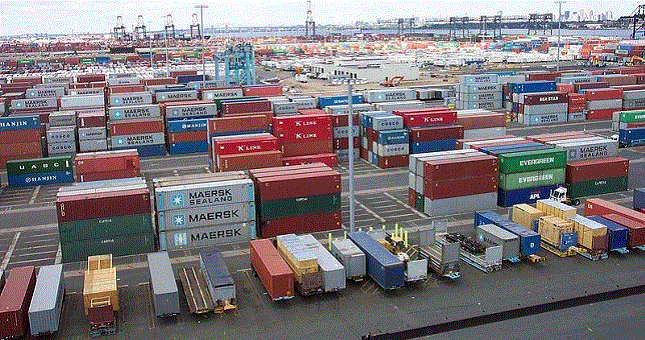
The Maher Terminal at Port Elizabeth has been cleared for danger after a radiation scare prompted a security response.

The Maher Terminal at Port Elizabeth has been cleared for danger after a radiation scare prompted a security response.

Misleading? No its Port Elizabeth – USA! Customs officials had suspicion about a shipping container that they were examining. An abnormally high radiation reading was detected, but CBP, FBI, the Port Authority of NY/NJ and other law enforcement officials initiated protocols to isolate and verify the source of the alarm.

According to New Jersey’s Star-Ledger, a Port Authority official said the container was filled with recycled paper, and a metal wire that bound the paper was the source of a positive reading for Caesium-137, a radioactive isotope formed during nuclear fission.

After review and confirmation from CBP’s Laboratories & Scientific Services, the container was deemed safe. The situation was resolved in less than two hours. Customs officials took control of the container and were moving it to a secure location.  Lengthy lines of trucks were at a standstill waiting to exit the port facility as the investigation was underway. At least 15 emergency response vehicles were on scene, along with various officers. Source: Maritime-Executive.com

Chinese investment allows Mozambique to become a car manufacturer

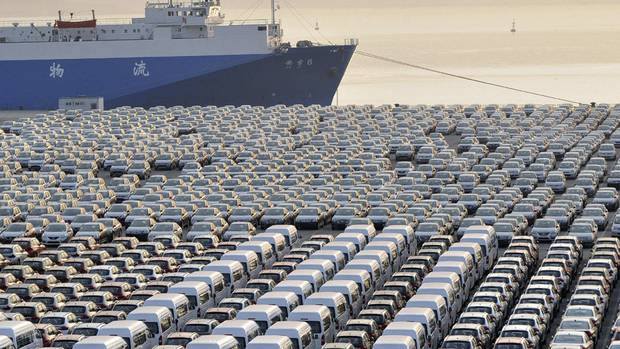
Chinese cars wait to be exported at a port in Dalian, Liaoning province. (China Daily/Reuters)

Chinese cars wait to be exported at a port in Dalian, Liaoning province. (China Daily/Reuters)

With the new APDP programme ably supporting the local South African vehicle manufacturing industry, the possibility of Chinese investment in Mozambique should have little impact on the local vehicle cartel. However, the possibility of competition for the local industry is just what is needed to create competitiveness in the region.

Mozambique is expected to become a car manufacturing and exporting country this year following an investment by China Tong Jian Investment, which is also attracting other companies in the sector to Mozambique. Danilo Nalá, the director general of the Office for Economic Areas with Accelerated Development (Gazeda), told Mozambican newspaper Correio da Manhã that investors from Saudi Arabia and Bahrain were interested in investing in tyre manufacturing in the city of Matola, on the outskirts of Maputo.

The tyre factory, which will be part of the project for the car assembly plant in Matola funded by Chinese investors, as of April 2013, may either involve acquisition of the technically bankrupt company Mabor or setting up a new unit from scratch. According to the newspaper, “there is a lot of interest from Asia in re-launching the tyre industry,” in Mozambique. (Comment: This could be an area of contention for the local market though).

Construction of the China Tong Jian Investment factory, costing an estimated US$200 million, is the result of an agreement the Mozambican government signed with the company in 2010. The agreement outlines that, at an initial stage, the facility should produce around 10,000 vehicles per year, 30 percent of which for the Mozambican market and the remainder for export.

Production is then outlined to be increased to 30,000 units per year and, later, to 100,000 units.

The factory, which is located in the Machava area of Matola, in the former workshops of Mozambican state port and rail manager Portos e Caminhos de Ferro de Moçambique, will produce buses and light passenger vehicles of the Matchedje brand. Matchedje is the name of the village in the Sanga district of Niassa province, which hosted the 2nd Congress of the Mozambique Liberation Front (Frelimo), which is the political party currently in power in the country.

China Tong Jian Investment is based in Shanghai and its largest shareholder is New Zealand’s Morgan Foundation and its business focuses on promoting China-Africa relations. Source: Shippingnews.co.zw

Snooping Customs Officials Secretly Search Your Luggage

Overzealous Customs officials of the UK Border and Immigration Service are in the pooh for breaking the rules! While customs officials now require to redress their conduct, what of the thousands of airport ground handling staff who pilfer passenger’s luggage without much investigation or reprisal?

If you’ve ever come back from holiday and been sure your carefully packed luggage wasn’t quite how you’d left it, you may not have been imagining things. ‘Snooping’ customs officials are secretly searching the bags of thousands of air passengers. Little-known powers allow covert searches to check if passengers are bringing too much alcohol or too many cigarettes into the country. If nothing is found, passengers are never told their suitcases have been opened and interfered with.

Covert luggage searches are carried out on inbound flights after items are taken off planes, but before they are placed on the carousel for passengers to collect

Covert luggage searches are carried out on inbound flights after items are taken off planes, but before they are placed on the carousel for passengers to collect

But customs officials are not keeping records of fruitless searches – making it impossible to know the true scale of the snooping. And their own inspectors said the lack of records mean searches may have been disproportionate and unlawful. They also warned that officials were ignoring guidance suggesting they needed written authorisation for such searches, and that the advice they were issued with was ‘contradictory’. Privacy campaigners said the powers should be reined in, and proper records kept. The details emerged in a report published today by the Chief Inspector of Borders and Immigration, John Vine. To read the Report Click Here!

Covert searches are not allowed under current guidance for border officials. The Border Force Enforcement Handbook says such searches are ‘banned’ unless they take place as part of a specific operation. Even then, when the passenger is ‘not in attendance’, officials are told to obtain written authorisation from a senior manager in advance, apart from in exceptional circumstances.

But today’s report makes clear that this guidance was ignored – and is contradicted by other rules. Officials were also using draft guidance from 2008, which permits covert searches without written authorisation when used ‘proportionately’. But it was only valid until September of that year. The Home Office was unable to provide any figures for the number of searches at other airports. Mr Vine’s inspectors found that 1,147 pieces of luggage were seized at Birmingham Airport following secret searches in the year to September 2012.

He said: ‘I found there was no central record to show occasions where covert baggage searches were carried out, but no seizures were made. The absence of these records meant that no assurance could be provided to demonstrate that this power was being used in a lawful, proportionate and controlled manner.’

Covert luggage searches are carried out on inbound flights after items are taken off planes, but before they are placed on the carousel for passengers to collect.

Nick Pickles, director of Big Brother Watch, said: ‘The fact the figures are not being properly collected begs the question if staff think they can get away with snooping in people’s luggage in search of a quick laugh or cheap thrill.’

A Border Force spokesman said: ‘Searching baggage, including when the owner is not present, is a legal and proportionate response to this issue. Any such searches must be authorised by a senior officer. Source: Mail Online

South Africa Now the Major Export Market for Zim Tobacco

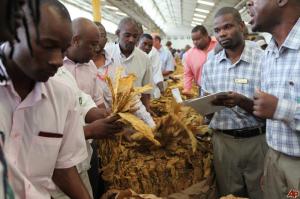
Zimbabwean auctioneers selling tobacco

Zimbabwean auctioneers selling tobacco

This should bring happiness to the local Ministry of Health.

South Africa has displaced China as the dominant export market for Zimbabwean tobacco, reports the Tobacco Industry and Marketing Board. Information from the TIMB indicates that as at February 27, South Africa maintained the top position having bought 7,5 million kilogrammes of the golden leaf valued at US$22,8 million.

The tobacco was sold at an average price of US$3,02 per kilogramme. South Africa has been dominating the regional market. The country has since overtaken China, which has dropped to third position. The United Arab Emirates occupies second spot having maintained its place among the top buyers of the golden leaf.

The top five tobacco export markets for Zimbabwe’s tobacco are South Africa, UAE, China, Hong Kong and Sudan. Last year, China, Belgium, Indonesia, South Africa and Russia were among the top five during the same period. Zimbabwe has so far earned US$82 million from tobacco exports to different destinations. The country produces tobacco and exports semi-processed leaf.

Japan is offering the highest price for tobacco at US$10, 03 per kilogramme, followed by China offering US$9,20 per kilogramme and India offering US$8,86 per kilogramme. In 2012, agriculture grew by 4,6 percent with tobacco being the main component behind this growth. The crop accounted for 10,7 percent of the GDP in 2012 and constituted 21,8 percent of all total exports, compared to 9,2 percent for other agriculture commodities. This compares favourably with the 61,1 percent contribution by all minerals combined.

The economic benefits of tobacco are expected to increase in view of more and more growers increasing their production or, diversifying or switching to the crop. Source: AllAfrica.com

Will Nigeria Overtake South Africa as Africa’s Powerhouse?

Is Nigerian's President Goodluck Jonathan on the road to success?  - Photograph by IITA Image Library

Is Nigerian’s President Goodluck Jonathan on the road to success? – Photograph by IITA Image Library

Posted with special permission and credit to Think Africa Press. Projections that Nigeria’s economy will be more important than South Africa’s by 2020 underplay serious instabilities in Nigeria’s economy, political systems and surrounding region.

Following Nigeria’s announcement that calculations of its Gross Domestic Product (GDP) may have been underestimated over the last two decades, the country’s economy has been portrayed much more optimistically by mainstream media. The Financial Times headline ‘Nigeria: No 1 in Africa by 2014?’ in its special edition on emerging markets, Beyond Brics, is a case in point. Similarly, headlines such as ‘Nigerians optimistic about economic prospects’ or ‘Nigeria wins ratings upgrade for tight fiscal policy’ from The Guardian and Reuters, respectively, capture the media‘s changing attitude towards Africa’s most populous nation.

And Nigeria’s economic performance has not only caught the attention of the media. The traditionally cautious business community, major global players such as the International Monetary Fund (IMF), World Bank, and influential private institutions such as Goldman Sachs, have warmly embraced this favourable analysis, setting the scene for more positive depictions of Nigeria’s economy. It appears academia, too, has joined the chorus in praising Nigeria’s apparatchiks for supposedly bringing in reforms that have resulted in “unprecedented” growth.

Several commentators are now asserting that Nigeria’s economy will be more important to Africa than South Africa’s by 2020. These analyses in particular require a closer look.

South Africa vs. Nigeria

There is little doubt that the Nigerian economy, simply in terms of size, will reach the top rung by 2020, if not earlier. By some measures, it could already be seen as the biggest economy in Africa. Its massive population has seen its economy grow at speeds unimaginable not long ago. But does that mean Nigeria will automatically become a more dynamic and important regional economy than that of South Africa?

Measured analysis is less convincing, and show that such predictions focus heavily on Nigeria’s current high growth rates at the expense of serious weaknesses and instabilities in its economy, political systems and region. In comparison to South Africa, Nigeria is still confronted by numerous challenges.

First, Nigeria’s high growth rates have been driven by consistently high crude oil prices. Indeed, the story about Nigeria’s growth is predominantly about oil. The primary engine for such high oil prices on the world market has been demand from BRICS countries: Brazil, Russia, India, China and South Africa. However, since the 2008 global financial crisis, BRICS countries have been showing signs of struggling, with growth forecasts for this year cut by almost half. If oil demand continues to weaken due to their sluggish economic performance, Nigeria’s economy could prematurely plateau in a manner analogous to Japan. On the other hand, South Africa’s economy is more diversified, and as a result, its growth rate, though more measured, is likely to be steady.

Second, Nigeria has, in comparative terms, a smaller entrepreneurial community than South Africa. Dependency on oil appears to have profoundly discouraged would-be innovators and entrepreneurs from other sectors, such as the ‘smart’ industries of finance or telecommunications. With the exception of well–established conglomerates such as the Dangote Group, Nigeria also struggles with internationalising its companies. Indeed, there is a sense that Nigerian entrepreneurs have more interest in accumulation than in global expansion. The Nigerian economy needs to reach out to international markets if it wants to sustain the momentum initiated by high GDP growth rates.

South Africa, on the other hand, has shown that it has the ability to take advantage of regional and international markets, with its companies such as Nandos Restaurants, MTN Multinational and Stanbic Bank, amongst many, showing the potential to become global brands. In a manner akin to the US, South Africa has also successfully ‘exported’ its currency, with the rand being used as official currency in Zimbabwe, Botswana, Namibia, Lesotho and Swaziland, a move that has boosted trade with its neighbours.

Third, Nigeria struggles to retain skills and continues to see an outflow of its best minds to London, New York and Johannesburg. For the past 30 years, it has been a country exporting future engineers, economists and doctors. With its workforce, Nigeria will be hard pressed to keep up with the mature knowledge of South Africa, a country whose dynamic economy continues to see it attract some of the best people in Africa. South Africa’s top industries and universities are manned by highly qualified and some of the most sought after professionals in the region, including Nigerians. For the foreseeable future, human capital will remain South Africa’s comparative advantage.

Fourth, intractable corruption in Nigeria is a formidable barrier to sustained growth. Corruption is pervasive and the problem is compounded by the fact that Nigeria lacks the political will and effective institutions to address it. To be a dynamic economy, Nigeria needs to demonstrate interest in countering corruption by building the trust of its own people and investors. In contrast, South Africa has comparatively stronger institutions for tackling corruption, including an effective judiciary system, the very elements that are missing in Nigeria today.

Fifth, Nigeria lags behind South Africa in terms of infrastructure. Its infrastructural systems are not fully competitive, nor do they resemble 21st century standards, with its rail and road networks requiring serious attention. Nigeria needs to invest in infrastructure that will better connect its regions to each other and the country to the rest of the world. More of everything, from ports and bridges to airports and industrial clusters, is required for trade with its neighbours, along with extensive broadband internet connections. The same is not true of South Africa, which has the region’s most extensive infrastructural development.

Sixth, for an economy to grow sustainably, its immediate periphery must be stable and prosperous enough for trade. In West Africa, Nigeria is in the middle of a rough neighbourhood, with social unrest in the Ivory Coast and the unpredictable politics of Mali and Chad, amongst others, posing a threat to regional stability. South Africa benefits from its relatively peaceful immediate region, with the ‘Post–Apartheid Regional System’ having seen increased stability in Southern Africa over the past 15 years.

Last but not least, Nigeria is confronted by religious violence that poses an ‘existential’ threat to its state, and relentless socio-ethnic tensions. In the predominantly Muslim North, for example, the activities of groups such as militant Islamists Boko Haram threaten security and political order – public goods upon which dynamic economic activity is dependent. The former head of state, General Abdulsalami Abubakar recently expressed concern at the deteriorating security situation, admitting that insecurity was constraining Nigeria’s potential.

South Africa has its problems too

So far South Africa has been looked at as a stable entity. However, it’s important to continue this analysis from the opposite direction: the sustainability of South Africa’s stability. Indeed, the real threat to South Africa’s leadership of the Africa region is not Nigeria, but its increasingly tense social atmosphere, undermining its fragile stability. Despite the promise that its economy shows, incidents such as the Marikana massacre give a strong sense that South Africa’s post–apartheid society still faces serious problems. Concise definition of these problems, though, has appeared difficult, with even some of the most incisive voices struggling to provide convincing explanations of what is haunting the Rainbow Nation.

South Africa’s state elites and the civil and business communities need to urgently explore the causes of such a tense social atmosphere, and confront them head on. The 2000 crisis across the Limpopo River in Zimbabwe is a stern reminder that an insecure social atmosphere bodes ill. It may only be, though, when South Africa faces a crisis of ‘Zimbabwean’ proportions, which may not be impossible, that Nigeria gains that precious title of being the regional powerhouse. Otherwise, the continental economic order is likely to look the same come 2020.

For original article Click Here!
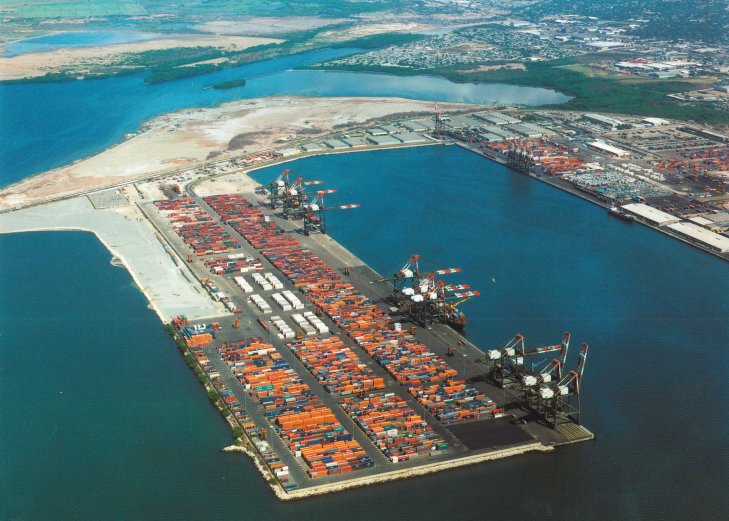
Port Natal – Durban Harbour 40s, 50s and 60s

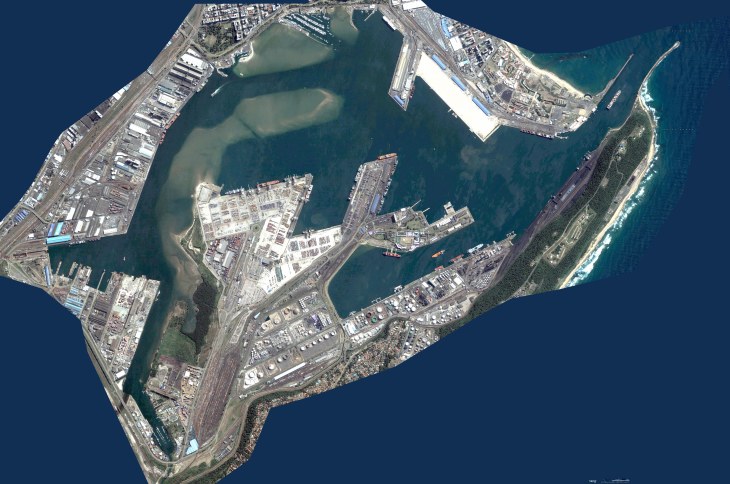
Durban_Harbour_Photo Hi-ResA tad of nostalgia? No, this is relevant and historic. Look what Africa’s busiest seaport looked like 60 (or more) years ago. I am very grateful to Lois Crawley and Cecil Gaze (fellow customs colleagues in Durban) for sharing these historic gems. For purposes of contrast see the modern-day harbour (above). Real estate in the harbour area is in short-supply and significant operational expansion over the last 10 years has placed huge strain on the road and rail networks and the surrounding industrial areas. In recent times the expansion of containerised handling facilities has radically affected the traffic flows, even in nearby residential areas such as the Bluff. With increasing demand for premium containerised port handling facilities, the old Durban airport has been sited for development of a new port, perhaps the biggest and most ambitious construction project yet in South Africa. While one can marvel at the development over what is a relatively short period of time (a generation), spare a moment and view the seemingly archaic slideshow of Durban harbour purportedly between 1940 and 1960 – which some amongst us can even remember. Enjoy!

This slideshow requires JavaScript.

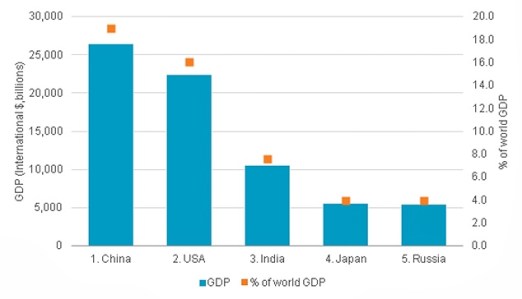
The Top 5 Largest Economies in 2020

Source: Euromonitor International from national statistics/Eurostat/OECD/UN/International Monetary Fund (IMF), International Financial Statistics (IFS)Note: Purchasing Power Parity has been used as this is a method of measuring the relative purchasing power of different countries' currencies over the same types of goods and services, thus allowing a more accurate comparison of living standards.

Source: Euromonitor International from national statistics/Eurostat/OECD/UN/International Monetary Fund (IMF), International Financial Statistics (IFS)Note: Purchasing Power Parity has been used as this is a method of measuring the relative purchasing power of different countries’ currencies over the same types of goods and services, thus allowing a more accurate comparison of living standards.

By 2020, three of the world’s five largest economies will be emerging countries, accounting for 30.4% of global GDP in PPP terms. Advanced economies are being displaced by emerging market superpowers, notably the BRIC countries, which has been accelerated by the seismic effects of the global economic downturn of 2008-2009. Euromonitor International predicts that China will become the world’s largest economy in PPP terms in 2017.

Additionally, Russia will overtake Germany as the fifth largest economy in 2016. These shifts will influence global politics, business environments and investment flows while consumer markets in developing countries will rise in importance as the middle class expands.

1. China: Set to become world’s largest economy in 2017

A large manufacturing base, cheap labour costs, the world’s largest population and economies of scale have resulted in unprecedented economic growth in China. Although growth is slowing, the delayed recovery in advanced economies from the global economic downturn means China will overtake the USA as the world’s biggest economy in 2017, and account for 19.0% of global GDP in PPP terms by 2020. Challenges loom large, however, including rising labour costs, pollution, a potential real estate bubble and rapid ageing arising from the government’s one child policy. Euromonitor predicts that China’s working age population (aged 15-64) will decline from 2014.

2. USA: End of the American dream?

The USA will lose its position as the world’s number one economy in 2017. In 1990, the USA accounted for a quarter of global GDP in PPP terms but we forecast this to plummet to 16.0% by 2020. The country was where the global financial crisis began in 2008 and it has failed to recover to its potential while also slipping in global competitiveness rankings. Although the government avoided the “fiscal cliff” in 2012, one of the biggest challenges remains a budget deficit reduction strategy, without the ensuing political gridlock. Nevertheless, the USA retains advantages, namely as the world’s largest consumer market and a leader of technological innovation.

3. India: Demographic dividend to benefit country beyond 2020

India overtook Japan as the world’s third largest economy in PPP terms in 2011 and its demographic advantage means the country could become the world’s biggest economy in the coming decades. India has a young population where it is benefitting from its demographic dividend (when there are more people of working age and the proportion of the child population declines). Euromonitor forecasts that India will become the world’s largest population by 2025 and that its working-age population will increase by 11.6% in 2013-2020 compared to -3.1% in China. However, India lags in major indicators including educational attainment and infrastructure development.

4. Japan: Paying the price for decades of economic stagnation

Structural problems beset Japan, with decades of weak economic growth and deflation while it has totalled the highest proportion of public debt in the world at 235% of GDP in 2012. Although the country has not yet suffered a eurozone-style sovereign debt crisis, as the majority of its debt is domestically-owned, an increase of foreign debt could trigger a Japanese debt crisis. It has the oldest population globally (mean age of 44.7 in 2012) and a shrinking labour force which will add considerable strain on government finances, while a strong currency makes its exports uncompetitive. Yet Japan’s location within Asia means it can take advantage of cheaper production costs in the region and growing demand for its high-tech products from a burgeoning Asian middle class. Like the USA, it is a global technological leader, giving it a competitive edge over its emerging neighbours.

5. Russia: Overtakes Germany as fifth largest economy in 2016

Russia will become the world’s fifth largest economy in 2016 in PPP terms, driven by its energy sector, as one of the top oil and natural gas producers worldwide. It also offers potential in its rapidly expanding consumer market, which Euromonitor forecasts will be the ninth largest globally in real terms in 2020. Its accession to the World Trade Organisation in August 2012 further cements its integration into the global economy. The lack of economic diversification and modernisation remain key long-term challenges with government policy aiming to tackle this, for example, by investing in the Skolkovo Innovation Centre Project, Russia’s equivalent to Silicon Valley. Corruption, state control and bureaucracy also hamper the business environment in Russia. Like elsewhere in Eastern Europe, the Russian working-age population is in decline (-4.5% in 2013-2020) despite a short-term baby boom, which will pose a demographic challenge to sustaining non-oil economic growth. Source: Euromonitor.com

TRALAC – What has happened since customs duties on 124 clothing tariff lines were increased in 2009?

I really enjoy TRALAC’s Newsletter – their analysis is always concise and down-to-earth. This Hot Seat Comment is no exception. One often wonders about the impact and nett result of tariff changes and trade remedies. Here we get some insight.

The clothing and textile industry has a long history in South Africa and is still a very important source of employment, especially for women and in poorer communities. The industry is geographically bound to specific provinces, including the Western Cape, KwaZulu-Natal, the Free State and Gauteng. In many rural areas the clothing and textile sector is often the only source of formal employment. Since about 2002 the Rand appreciated substantially and South African exports became less competitive in the global market. Coupled with the trade liberalisation, in terms of South Africa’s WTO offer, the clothing and textile industry has experienced sustained import competition due mostly from Asian imports. In order to try and remedy large-scale factory closures and employment losses in the industry the Southern Africa Clothing and Textile Workers Union (SACTWU) applied for an increase in the import tariffs of 124 clothing tariff lines to the WTO bound rates of 45 percent in 2009. These clothing tariff lines are classified under Chapter 61 and 62 of the South African Tariff Book and include various clothing items, including men’s woven and knitted shirts, jackets and trousers; babies’ garments; and women’s woven and knitted jackets, skirts, dresses and trousers. Although the retailers objected to an increase in import duties the International Trade Administration Commission (ITAC) granted the application and general customs duties on 121 clothing tariff lines were increased from 40 percent to 45 percent, while the general customs duties on three tariff lines (hosiery) was increased from 20 percent to 45 percent.

imagesIn its application SACTWU stated three reasons for the application: there has been a significant increase in imports under these 124 tariff lines flowing into South Africa; market disruptions in the SACU industry which have resulted in factory closures and retrenchments warranted increased protection for the domestic industry; and increased tariffs will provide both relief and show increased confidence in the industry. The retail industry objected to the application on the following grounds: the loss of business in the manufacturing industry can not only be attributed to price competition, but also inefficiency in the local industry; increased duties will have an inflationary effect impacting the ability of consumers to buy clothing at competitive prices; and increased duties will have a punitive effect on the rail sector and the end consumers. In its decision the Commission found the declining rate of investment and employment in the clothing sector coupled with increased imports a disturbing trend. The Commission decided that an increase in customs duties will enable manufacturers to protect existing jobs, increase market penetration and price competition and growth the domestic manufacturing sector in the export market. However, the question of whether the increase in these customs duties have been successful in reaching its goal of decreased imports and increased domestic production, sales and exports still remain.

Import and export data sourced from the World Trade Atlas (2013) and production and sales data sourced from Statistics South Africa (2013) show the following patterns in the clothing industry between 2009 and 2012:

  • Over the time period imports of the 124 clothing tariff lines increased by 15 percent, from approximately US$ 834 million in 2009 to approximately US$ 1.2 billion in 2012.
  • The top five importing countries were China, Mauritius, India, Madagascar and Bangladesh, accounting for 89 percent of the total imports of these clothing articles into South Africa over the time period.
  • China mainly exported men’s, boy’s, women’s and girl’s cotton trousers; knitted sweaters and pullovers; cotton and knitted t-shirts; and knitted babies’ garments to South Africa between 2009 and 2012.
  • South Africa’s exports of these clothing tariff lines increased by 6 percent, from approximately US$ 71 million in 2009 to approximately US$ 84 million in 2012.
  • These clothing articles were mainly exported to African countries, including Zambia, Mozambique and Zimbabwe.
  • The production index of the physical volume of production (base year is 2005) show there has been a significant decrease in the volume of production of knitted and crocheted articles and wearing apparel in South Africa. The index decreased from an average of 108.11 in 2009 to an average of 79.82 in 2012.
  • The sales of knitted and crocheted articles and wearing apparel also declined over the time period. Actual value of sales declined by 3 percent, from approximately US$ 18 billion in 2009 to approximately US$ 16 billion in 2012.

Although there has not been a significant lapse of time since the increase of import tariffs the data gives the short term response of imports, exports, and production to the change in import duties in November 2009. Immediately after the increase in tariffs there was an initial decrease in exports, production and sales.  However, exports recovered by the end of 2012, while production and sales are still significant lower than pre-2009 levels. SACTWU has also recently indicated that employment in the clothing, textiles and leather sector seems to be more stable over the last two years. However, one of the main objectives of the increase in import duties, to deter lower priced imports mainly from Asia, has not been accomplished. Source and content credit – Willemien Viljoen, TRALAC Researcher.

UCR and GS1 data to meet?

Kunio Mikuriya, WCO Secretary General, and Maria Palazzolo, Chief Executive Officer of GS1 Australia and GS1 Board Member, at the GS1 Global Forum 2013

Kunio Mikuriya, WCO Secretary General, and Maria Palazzolo, Chief Executive Officer of GS1 Australia and GS1 Board Member, at the GS1 Global Forum 2013

GS1 is a non-profit organization dedicated to the development and implementation of global specifications to manage the supply chain, including product identification codes, barcodes and business-to-business standards for the exchange of accurate data. After longstanding cooperation at the technical level, the WCO concluded a Memorandum of Understanding (MoU) with GS1 in 2007 to formalize cooperative ties.

At the invitation of GS1, the Secretary General of the WCO, Kunio Mikuriya, spoke at the GS1 Global Forum 2013 in Brussels on 18 February 2013 where he highlighted the increasing cooperation between the two organizations. Recalling the evolution of Customs with a heightened focus on data management for assessing risks in the supply chain, the Secretary General underlined the importance for Customs to explore the possibility of making use of supply chain specifications that are available in the trade, such as codes and specifications developed by GS1.

He specifically referred to the new WCO Economic Competitiveness Package to explain how Customs contributes to enhancing national competitiveness by facilitating trade using a risk management approach. As this requires the application of information technology, data and message standards, and consignment identifiers, it is important to employ existing technologies and tools in the trade supply chain, through a partnership with business.

Sharing a common interest in supply chain management, including track and trace systems, both organizations have been cooperating in many areas in a complementary manner, as the WCO facilitates Customs-to-Customs and Customs-to- business data exchange while GS1 also facilitates business-to-business data exchange.

Areas of cooperation between the two organizations include the work at the United Nations Centre for Trade Facilitation and Electronic Business (UN/CEFACT) and the International Standards Organization (ISO) on standardization and specifications for supply chain management, the work on the Unique Consignment Reference Number (UCR) and the use of GS1 data for Customs risk assessment purposes.

The most recent collaboration includes the addition of a barcode function to the Interface Public Members (IPM) – the WCO’s information tool to fight violations of intellectual property rights at borders. Secretary General Mikuriya urged GS1 members to leverage the collaboration with the WCO at the global level by getting in touch with their respective local Customs administrations. GS1 members appreciated his speech and pledged to explore and enhance cooperation with Customs administrations. Source: WCO

For more of the latest news and happenings at the WCO, please follow the news feed alongside (right).

Jamaica plans global logistics hub

The Port of Kingston – ripe for development

The Port of Kingston – ripe for development

The Government of Jamaica has revealed ambitious plans to turn the Caribbean island in to a global logistics hub – and high level talks have already begun with the aim of increasing volumes of sea cargo.

Projects under discussion include developing the Port of Kingston ahead of the expansion of the Panama Canal and the development of a new commodity port to be built in eastern Jamaica which will specifically handle petroleum products, coal, minerals and grain.

At the same time, there is talk of constructing an air cargo airport to help with increased volume of boxes and the construction of large scale ship repair docks to service the increasing volume of post-panamax vessels.

Dr Eric Deans, chairman of the Logistics Task Force, said a market of 800 million people, including the USA and Brazil, can be accessed readily from Jamaica. He said trade opportunities are due to “burst wide open with the expansion of the Panama Canal scheduled to be completed in 2015; the multi-billion stimulus package by Brazil for World Cup 2014 and Olympics 2016; and the growing middle class in Latin America.”

He added that a critical aspect of the global logistics hub initiative is the broadening of bilateral collaborations with Jamaica’s global partners, and encouraging private sector investment and financing through private-public partnerships (PPPs).

Talks regarding the set-up of special economic zones are already underway with local and foreign investors.

The Jamaica Ministry of Industry, Investment and Commerce, which is spearheading the initiative, says that it will help give the country a global logistics supply chain that is able to compete with the likes of Singapore, Dubai and Rotterdam.

Perhaps this initiative could spur on our local authorities to actually move on ‘logistics hubs’ here in South Africa. While the huge expansion plans for our existing harbours, railroads are pursued, it is high time that the likes of Tamboekiesfontein, for instance, and other privately initiated transit hubs are taken seriously, and in an integrated manner to benefit commerce and trade in the Southern African region.

 Related articles

Finding the best solution for 100% container weight verification

Bromma load verification sensing technology (www.bromma.com)

Bromma load verification sensing technology (www.bromma.com)

The International Association of Ports and Harbours (IAPH) has helped the container handling industry to put focused attention on the issue of container weight verification. The IAPH and the International Shipping Organization have called for near 100 per cent container weight verification as a standard industry ‘best practice’. IAPH has recognised the value of container weight verification for both safety and operational reasons. Accurate container weights can help guide critical plans regarding stowage, and verifiable load data also serves to ensure worker safety. Lifting containers within an acceptable weight range also prevents accelerated stress on the spreader, thus extending equipment life.

The issue that organisations such as IAPH and the World Shipping Council have raised is not merely an academic one, studies of container weight indicate that there is often significant variation between listed and actual container weight. The problem is a familiar one: not everyone tells the truth about their weight, as the consequences of inaccurate weight can include equipment damage in ports, injury to workers and collapsed container stacks, among others.

The question is ‘how’, not ‘should’?

The general consensus has grown that universal container weight verification is a worthy standard, the key question has quickly begun to shift from whether we should we have a universal requirement to how we can best implement this commitment. Along these lines three general approaches might be possible.

The container crane option

The first possible approach is to utilise container cranes to meet the weighing requirement. The advantage of weight verification by cranes is that weighing occurs during the normal course of handling operations. The disadvantage of a crane-based approach is that weighing accuracy is only approximately 90-95 per cent, and cranes cannot distinguish between the weights of two containers when lifting in twin-mode. Since many terminals load and unload container ships using twin-lift/twin-20 foot spreaders, the actual weight of each of these individual containers will remain in doubt if there is a reliance on container cranes to yield this data. Also, with the emergence of the mega-ship era, more and more terminals will be looking for productivity solutions that enable more containers to be handled in each lift cycle, and so twin-handling of 40 and 20 foot containers is likely to expand in the future, thus adding to the number of containers with an uncertain weight.

The weigh bridge option

A second option for terminals would be to meet the container weight requirement through the use of weigh bridges. Unfortunately, there are multiple weaknesses in this approach.Containers can be weighed from the weigh bridge, but driving every container onto a weigh bridge will obviously add another operational step, and slow productivity. It also requires, especially at larger and busier transhipment terminals, that considerable land and transit lanes be set aside for weighing activities. In addition, there are two weight variables on the weigh bridge – the variable weight of up to 300 litres of truck fuel and the weight of the driver. Further, as with a container crane, a weigh bridge cannot distinguish between the weights of two containers, and so the weight of each individual container will always be inexact. The only way to gain a precise weight is to weigh one container at a time, and to adjust for fuel weight and driver weight variables.

The spreader twist lock option

The third option is to ascertain container weight from the spreader twist locks. For container terminals, a spreader-based weighing approach has several key advantages. Firstly, weighing from the spreader twist locks yields much more accurate information, as container weight precision is greater than 99 per cent. Secondly, unlike weigh bridges or crane-based container weighing, spreaders weigh each container separately when operating in twin-lift mode. When a Bromma spreader lifts two 20 foot containers or two 40 foot containers at a time, the spreader can provide highly accurate data on the weight of each separate container, and without any of the variables (fuel, driver) associated with the weigh bridge approach.

In addition, with a spreader-based approach you weigh containers from the spreader twist locks without adding any extra operational steps or requiring any extra space or transit lanes. Terminals simply log container weights in the normal course of lifting operations – with a warning system alerting the terminal to overloaded and eccentric containers. Container weight verification during the normal course of terminal operations is a way to accomplish the weighing mission without impairing terminal productivity, and especially at busy transhipment terminals. To read the full report, Click Here!

Source: www.porttechnology.org

Future X-Ray Insepction Equipment to be based on Industry Standards

Smiths Detection HCV Scanner setup routine (Picture credit - Mercator Media)

Smiths Detection HCV Scanner setup routine (Picture credit – Mercator Media)

Innovative technology for the non-intrusive inspection of cargo and vehicles has rapidly emerged over the last decade to become a significant factor in port and border protection and homeland security. Several hundred high-energy mobile and fixed-site X-ray inspection stations are deployed throughout the world to examine passenger cars, trucks, trains, and shipping containers that transport goods bound for international destinations. Behind the scenes, cargo screening technology continues to be a story of innovation and change, driven by keen competition and a common mission to improve global security.

Early cargo screening systems were relatively slow and expensive to operate. They produced a limited resolution single-energy X-ray image, often using an isotope source such as Cobalt-60. The imaging software was rudimentary, and limited to simple controls such as pan and zoom, while computer processing speeds significantly limited inspection throughput. By contrast, most systems today are accelerator-based, which allows for higher energies, faster operation, and more precise controls. These systems incorporate software that takes advantage of improved computing platforms and features increasingly sophisticated analytics – this power has paved the way for the use of dual-energy accelerator sources and advanced detectors to facilitate material discrimination, enabling inspectors to identify threat objects more quickly, based on their composition.

Future developments in cargo screening are likely to follow a common innovation trajectory that is fostered by market needs and new technology, while being strengthened by existing intellectual property and evolving industry standards. Innovation is often perceived as a circular path beginning with customer needs that are identified by a technology developer. The developer then creates application technology in the form of products to meet those needs. With numerous competitors in the market, suppliers are motivated to continually improve their products. However, a more nuanced understanding incorporates the role of component technologies and the core capabilities of the technology developer. Each of these constituents influence and are influenced by their respective technology and regulatory standards, which then ultimately impact the products available to the customer. For the full report with diagrams, Click Here!

Component technologies and their standards are often driven by the needs of other markets and may only be tangentially connected with the market of interest. Consequently, developers often have minimal influence on these technology standards but will benefit by leveraging the investments already made by other organizations. ‘Components’ may be subassemblies (such as a computer graphics card) or entirely separate systems (such as a cloud computing service) that can be incorporated into a screening system to provide a complete customer solution. System providers benefit from these parallel technologies and component standards because they provide innovative insights and functional capabilities, such as interoperability, interchangeability, and known performance characteristics. In the case of cargo screening, there are many component technologies that are potential sources of future innovation. A few notable examples are described later in the report.

Because cargo screening is a youthful market with changing customer requirements and technology that is evolving to meet those requirements, existing industry standards are still in flux. This is beneficial for the cargo screening industry in that it provides ample room for innovation and development. As cargo screening technology continues to evolve and mature, the community will develop consensus in more areas and create additional standards. However, the standards process is slow and seldom speaks to the most current technology issues in an industry. For example, material discrimination is an important new feature offered by many cargo screening systems, yet there is little guidance from current industry standards to assess the performance of this technology. Source: www.porttechnology.org

Box Innovation – More Volume and Higher Payloads

A revolutionary new container design is set to change the economics of shipping palletised cargo, allowing cargo owners and consolidators to increase significantly the volume of cargo shipped at any one time.

A revolutionary new container design is set to change the economics of shipping palletised cargo, allowing cargo owners and consolidators to increase significantly the volume of cargo shipped at any one time.

Maritime-Executive.com recently featured the following article. UK-based container design company Container Group Technology (CGT) Ltd has announce the availability of the 20-20 SeaCell Container. From the outside the patented ‘20-20’ looks little different from a conventional ISO 20ft shipping container. However, subtle innovations on the outside and inside of the container enable the unit to provide for 36% greater pallet space.

In practical terms, this means that for each tier, 15 Euro-pallets (1200mm x 800mm) can be loaded into the container instead just 11 Euro-pallets in a standard ISO 20ft dry container. With standard ISO pallets (1200mm x 1000mm), the 20-20 can load 12 units, two more than in a conventional 20ft container (see graphic).

And by using 100% of the floor area, pallets fit snugly together inside the container making the 20-20 ideal for using lightweight slip-sheets or paper pallets, thereby reducing costs and increasing useable volume and payload at the same time.

The 20-20 SeaCell Container achieves this feat by being exactly 20ft (6096mm) in length and 2426mm wide internally. Standard 20ft containers are, in fact, 19ft 10½ ins (6058mm) long x 7ft 7¾ ins (2330mm) wide internally. Thus the internal length of the 20-20 allows it to accommodate the additional four Euro-pallets or two ISO pallets per tier. The door opening width is 2408mm which allows fork-lift trucks to load pallets two or three at a time.

However, the innovation does not stop there. Two 20-20 containers can be easily locked together from the outside with no special tools to make a 40ft container, but again with significantly greater internal volume than standard. Two 20-20 containers will carry six more pallets than one standard 40ft container. It is also possible to mix Euro & Standard pallets in the same 20-20 and still have 100% pallet utilisation.

The 20-20 is fitted with larger corner castings of the type typically used in flat rack containers, enabling them to be lifted by standard 20ft or 40ft spreaders, loaded singly or as a pair into a container ship’s 40ft cells or onto any current road chassis and rail wagon.

An integral locking mechanism in the corner casting is activated from the outside of the container. In just a few minutes, the two 20-20 containers can be securely locked together and lifted as a single ‘40ft’ unit. In the standard configuration, two 20-20s are joined at the front ends, i.e., with the doors accessible at each end of the combined containers. However, if requested CGT can also position the locking mechanism at the door-end corner castings so that the two 20-20 units are effectively sealed until reaching their final destination. This is an important feature for high value or sensitive cargoes.

Lifting two 20ft containers together has been made possible in the past decade by innovations in container lifting technology, and it has become increasingly popular with shipping lines and container port terminals as a way of loading and discharging ships faster and more efficiently.

However, it is only now, with the introduction of the 20-20 SeaCell Container, that the ability to lock and lift two 20ft containers and handle them as a single 34 ton maximum gross weight (MGW) unit has been made possible. The benefits of this innovation are numerous, including:

  • It can significantly reduce ship loading times and the time needed to lash containers on deck.
  • Estimates suggest it could reduce handling and transportation costs by 25% to 35%.
  • The fact that 20-20 containers can be linked or unlinked at any stage of the logistics’ chain should also reduce the need for empty repositioning, thereby optimising each container’s usage.

Prototypes of the 20-20 container have been built and fully tested in China, and the new design is being made available for sale or lease.

$50M of diamonds stolen in minutes at Brussels airport

Diamond planeEight masked gunmen forced their way through the security fence at Brussels‘ international airport, drove onto the tarmac and snatched some $50 million worth of diamonds from the hold of a Swiss-bound plane without firing a shot. The gang responsible for one of the biggest diamond heists in recent years used two black vehicles with a flashing blue police lights in their daring raid late Monday.

They tried to pass themselves off as police officers. The robbers, who wore outfits resembling dark police clothing, got away with 120 parcels, mostly containing diamonds but some also holding precious metals. Police said they found a burnt-out minivan believed to be involved in the robbery near the airport later Monday night.

The heist was estimated at some $50 million in diamonds. The robbers forced their way through a perimeter fence, at a place where two work sites obstructed a clear view. There were no details about how the hole was opened but airport authorities said it must have taken more than simply blasting through it with a vehicle.

The robbers drove up to the Swiss passenger plane some 20 minutes before departure time, brandishing their machine guns. Then they methodically broke into the hold, which was accessed from outside, to choose their loot. Passengers were unable to see the drama beneath them. The robbers finished their clinical operation with a high-speed departure through the same hole in the fence, completing the spectacular theft within barely five minutes. Source: Yahoo.com

Visit http://news.yahoo.com/video/robbers-fake-uniforms-pull-off-190916134.html for a video report of the incident.