Institute of Logistics and Supply Chain Management enters Training Arena

logisticsThe Institute of Logistics and Supply Chain Management (ILSCM), the latest player in the training arena, has been launched. The institute aims to partner with industry and improve the general calibre of those pursuing careers in logistics and supply chain related disciplines.

ILSCM is set to provide job-specific academic programmes as well as face-to-face short learning programmes. Qualifications will range from a National Qualifications Framework (NQF) Level 2 to an NQF Level 7. The Uniprep programme offers students the opportunity to bridge the gap between the further education level and the higher education level.

The training organisation states that very few institutions offer qualifications in the logistics and supply chain field – especially through distance learning education, which is becoming all the more popular as it provides flexibility for those who are employed on a full-time basis. Visit their website: www.ilscm.co.za

Joint Statement on Trade Facilitation Assistance

imfI can’t quite make up my mind on the following multilateral institution statement.  Is this a ‘call to action’ or a ‘call of desparation’? Clearly no amount of money and consultants will make this happen. Me thinks its more to do with the ‘National’ versus ‘Regional’ dilemma, and, the political will of sovereign governments to engage or trust the globalisation agenda. And…… time is running out!

These multilateral institutions issued the following joint statement today at the Annual meetings of the World Bank and IMF: African Development Bank, Asian Development Bank, European Bank for Reconstruction and Development, European Investment Bank, Inter, American Development Bank, International Monetary Fund, and World Bank Group

“The Ninth WTO Ministerial Conference in Bali, Indonesia on 3-6 December 2013 offers an opportunity to conclude a WTO Trade Facilitation Agreement that will deliver tangible economic benefits for developing and least-developed countries. We urge WTO Members to seize this opportunity.

“At our meetings here in Washington we had the opportunity to discuss preparations for the Bali Ministerial meeting. We are encouraged by the renewed engagement by WTO members on trade facilitation and other issues of interest to developing countries, including least-developed countries.

“We would like to reiterate our strong collective commitment to support trade facilitation. A growing body of research points to the positive development impact of trade facilitation. Tackling inefficiency in clearing goods and shortening delays can reduce the cost of getting goods to market with positive effects on competitiveness and consumer welfare.

“Our institutions are engaged in a broad range of trade-related infrastructure projects. Since 2008, we have disbursed USD 22 billion in concessional support for economic infrastructure and building productive capacity in developing countries. With strong evidence that trade facilitation reforms help maximize the economic impact of our trade-related infrastructure assistance, our support to trade facilitation programs has more than doubled since 2008.

“A WTO Trade Facilitation Agreement would add significant momentum to efforts to increase developing country competitiveness, and provide a multilateral framework to shape and guide trade facilitation efforts taking place at the regional and national level. In July 2013, together with more than 20 other organizations and governments, we stated our strong commitment to support developing countries, and in particular least-developed countries, in the full and effective implementation of a WTO Trade Facilitation Agreement.

“We recognize that concerns persist in the negotiations about access to and coherence of assistance. We will work with the WTO and its members to help ensure that the new commitments that a trade facilitation agreement would bring are supported. We will also work to ensure that our support for the implementation of commitments is coordinated with our support for complementary infrastructure development.

“To implement a WTO Trade Facilitation Agreement, we recognize we will need to discuss further how to ensure a coordinated and effective response to requests for support from developing countries, and in particular least-developed countries.” Source: International Monetary Fund

Pravin Gordhan named Finance Minister of the Year

Pravin Gordhan - Finance Minister of the Year 2013 (Mail & Guardian)

Pravin Gordhan – Finance Minister of the Year 2013 (Mail & Guardian)

Finance Minister Pravin Gordhan (former chairperson of the World Customs Organisation) has been named the Finance Minister of the Year for 2013 in sub-Saharan Africa by the Emerging Markets website, the finance ministry said on Sunday.

The website’s citation stated that Gordhan, appointed in 2009 at the height of the economic crisis, had been praised by analysts, the ministry said in a statement.

This was because South Africa especially was more exposed than other emerging markets to dangers stemming from the eventual pullback of quantitative easing by the US’s Federal Reserve.

Emerging Markets provides news, analysis and commentary on economic policy, international economics and global financial markets, with a special focus on emerging markets.

In his acceptance speech in Washington DC, where he has been attending the annual meetings of the World Bank and the International Monetary Fund, Gordhan thanked Emerging Markets for its recognition of South Africa and its economic team.

‘We are terrible managers’
“Minister Gordhan was critical of the sudden change in the narrative about emerging markets, which up until the second quarter of this year were praised for managing their economies very well,” the ministry said.

“[Emerging markets contributed] more than 50% to global economic growth and for lifting large numbers of people above the poverty line.”

Gordhan said: “Three months later, we are apparently fragile and we are terrible managers of our economies. We the emerging markets are here to stay.

“We live in an interconnected world, and more importantly, we live in an interdependent world. There is no decoupling from you, the advanced economies, and there is no decoupling from us, the emerging markets.” Source: Mail & Guardian/Sapa

India to Become World’s Largest Infrastructure Goods Importer by 2030

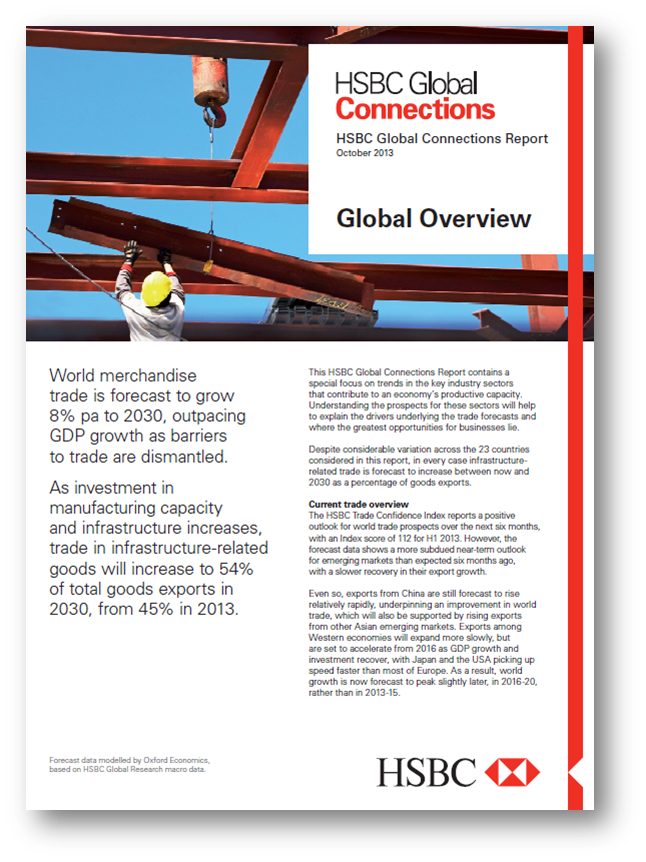
HSBCAccording to the recently released HSBC Trade Forecast Report, by 2020 India is expected to surge past the United States as the world’s biggest importer of infrastructure goods – a position it is expected to hold until at least 2030. This is a result of the country’s increased demand for materials for infrastructure projects (i.e., metals, minerals, buildings and transport equipment) as it invests more in the building of its civil infrastructure.

The report, which focuses primarily on infrastructure, notes that as Asian economies grow they will take an increasing share of infrastructure-related imports over the next two decades. Currently, the U.S. tops the list of countries importing infrastructure goods, followed by India, Hong Kong, China and Germany. By 2030, India will sit up the top of this list, followed by the U.S., China, Hong Kong and Korea.

Sandeep Uppal, HSBC India Managing Director and Head of Commercial Banking, noted that the “rising middle classes across Asia’s rapidly emerging markets, especially in India and China, will drive significant infrastructure demand in the region.”

“Aspirations of the new middle class and rapid urbanization will force India to upgrade its civil infrastructure, thus pushing up demand for overseas infrastructure related goods,” she added.

To continue with the rising trends, the report further states that Asia as a whole is predicted to see the most rapid growth in merchandise trade between 2020-2030 – led by India, China and Vietnam – at estimated annual export growth rates of more than 10 percent.

For comparison, the export rates of European countries, such as the UK, France and Germany, are forecasted to grow at about 4-5 percent annually on average over this 10-year period. Meanwhile, average export growth in the U.S. is estimated to top off at around 6 percent annually during the same period.

What this means is that by 2030 infrastructure-related goods will be the most commonly traded type of goods, increasing in market share from the current rate of 45 percent of total goods exported to upwards of 54 percent. Source: India Briefing

Nigeria Customs Service – Organically Developing The National Single Window

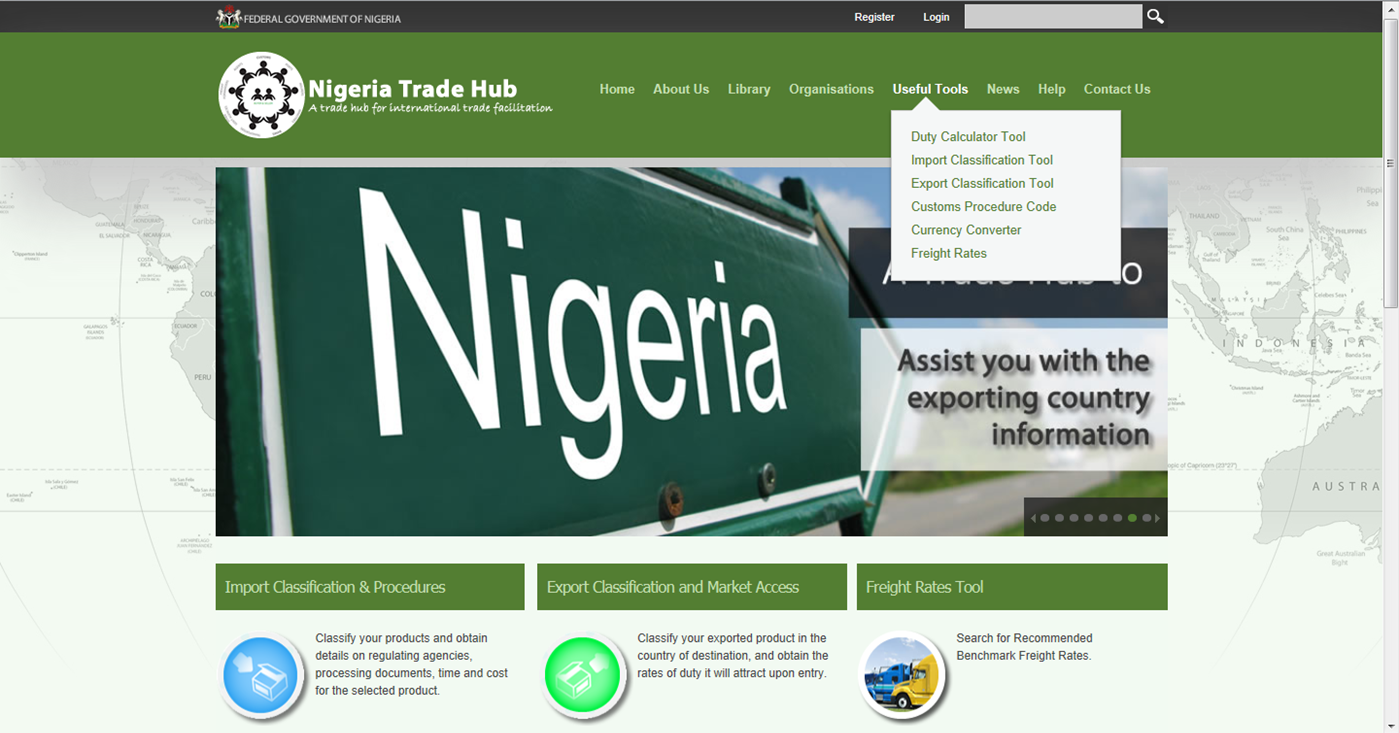
Nigeria Trade Hub 2The WCO Single Window Experts Accreditation Workshop took place on 23rd – 27th September, 2013 at Customs Border Control Training Centre (CBCTC), Seoul, Korea. The objectives of the workshop included:

  • Promoting the work of Single Window
  • Developing expertise meant for executive management
  • Developing different expertise in other technical areas of Single Window.

Developing this expertise brought about the WCO Data Model and SW accreditation Workshop as there are several areas where experts can emerge, including areas of Business processes, Legal, Data Model etc. The past efforts in capacity building served as a guide to developing the program for the workshop. The expectation included shaping assistance and building capacity in the areas of Single Window.

The participants included representatives from Nigeria, Mauritius, Chile, Singapore, Tanzania, Mexico, United Arab Emirates, Russia Federation, Saudi Arabia and Korea. Three out of the ten participants (Nigeria, Singapore, Mauritius) were accredited Co-Facilitator Status for the World Customs Organization at the end of the workshop. This demonstrates that Nigeria is certainly moving in the right direction and aligning to International Standards. Source: Nigeria Trade Hub

Capacity Building in SADC

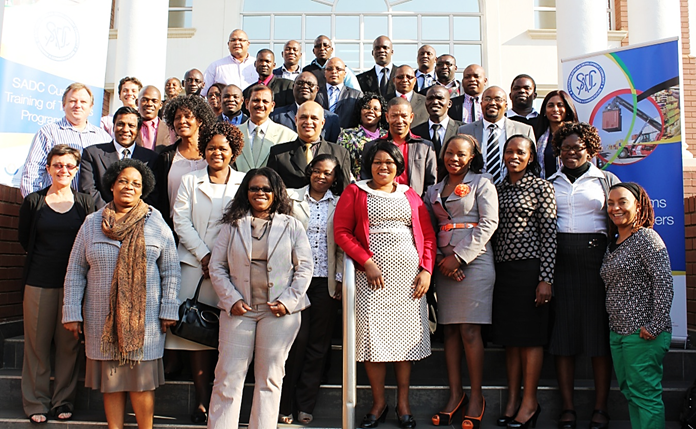
Participants in the Customs Training of Trainers Programme at SARS Academy, Pretoria, South Africa

Participants in the Customs Training of Trainers Programme at SARS Academy, Pretoria, South Africa (Picture: SADC)

The SADC Customs Training of Trainers Programme 2013-2015 was initiated recently from 26-30 August 2013 on ‘Communication and Facilitation Skills’ at the South African Revenue Service (SARS) Academy, Pretoria, South Africa. The objective of the training was to give the trainers the necessary skills and expertise to teach Customs officials and stakeholders in an effective and professional way.  The training was attended by forty (40) participants from 14 SADC Member States.

The SADC Customs Training of Trainers Programme 2013-2015 was approved by the Sub Committee on Customs Cooperation (SCCC) in May 2013. The main objective of the programme is to provide technical and professional support to the implementation of the SADC Protocol on Trade, particularly in view of the contribution of Customs Administrations to the successful implementation and consolidation of the SADC FTA. It is therefore meant to support implementation of agreed instruments and programmes under the SADC Protocol on Trade.

The programme is being in collaboration with the World Customs Organization (WCO), the Regional Office for Capacity Building (ROCB),the Regional Training Centres and GIZ. The first Customs technical training under this programme will be on the SADC Rules of Origin in November 2013 with the objective to establish a poll of trainers on the subject in the region. Source: SADC Secretariat

CBP Agrees to Update Risk Assessments at Foreign Ports

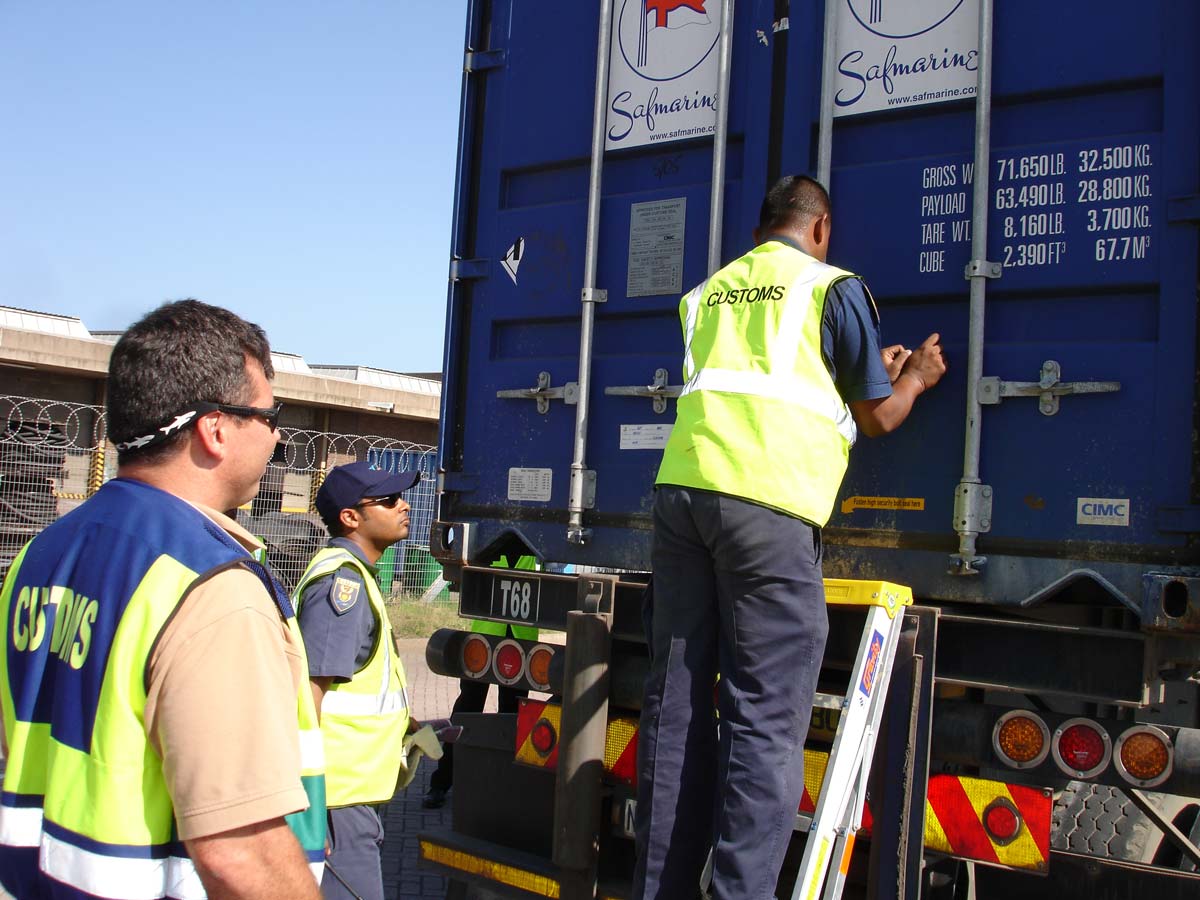
US Customs CSI Inspection in the Port of Durban, South Africa

US Customs CSI Inspection in the Port of Durban, South Africa

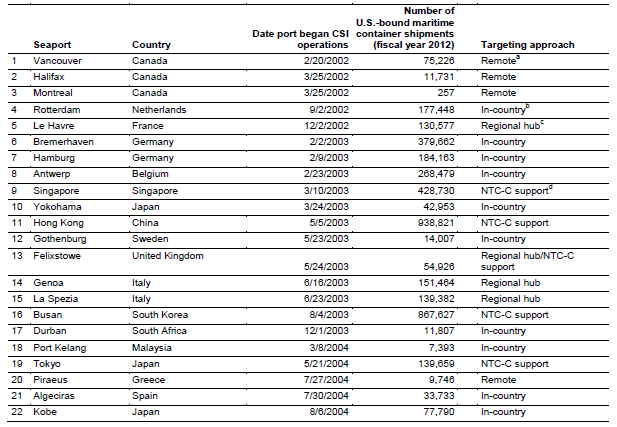
Customs and Border Protection (CBP) has not assessed risks at select foreign ports with U.S.-bound shipments since 2005, part of a string of failures that has left key ports without a CBP presence, the Government Accountability Office says. (Hmm, never mind the impact caused to Customs administration in the host countries……)

In examining CBP’s Container Security Initiative program, GAO found that the agency developed a model for ranking additional seaports according to risk in 2009, but never implemented it because of budget cuts, according to the report.

GAO applied that risk model to 2012 cargo shipment data and found that the CSI program had no presence at about half the ports CSP found high risk. Meanwhile, 20 percent of existing CSI program ports were at lower-risk locations, according to the findings (.pdf).

Although GAO acknowledged host countries are not always willing to accommodate a CSI presence, and that removal of a CSI presence can negatively affect diplomatic relations, auditors said periodic assessments of cargo shipped from foreign ports could help CBP better guard against terror-related shipments.

Although there have been no known incidents of cargo containers being used to transport WMD, the maritime supply chain remains vulnerable to attacks. We recognize that it may not be possible to include all of the higher-risk ports in CSI because CSI requires the cooperation of sovereign foreign governments.

To better ensure the effectiveness of the CSI program, GAO recommends that the Secretary of Homeland Security direct the Commissioner of U.S. Customs and Border Protection to periodically assess the supply chain security risks from all foreign ports that ship cargo to the United States and use the results of these risk assessments to (1) inform any future expansion of CSI to additional locations and (2) determine whether changes need to be made to existing CSI ports and make adjustments as appropriate and feasible.

Such assessments “would help ensure that CBP is allocating its resources to provide the greatest possible coverage of high-risk cargo to best mitigate the risk of importing weapons of mass destruction or other terrorist contraband into the United States through the maritime supply chain,” GAO said.

The Department of Homeland Security (DHS) concurred with the recommendation and said CBP would complete its first assessment by Aug. 12, 2014. To access or download the GAO Report on CSI, Click Here! Source: US Government Accounting Office

Foreign Ports That CBP Coordinates with Regarding Maritime Container Shipment Examinations, as of July 2013

Foreign Ports That CBP Coordinates with Regarding Maritime Container Shipment Examinations, as of July 2013 (Table: GAO)


Port of Savannah – USGov ‘Shutdown’ not causing a slowdown here

Port of Savannah (Picture: Customsnow.cm)

Port of Savannah (Picture: Customsnow.cm)

While US shippers dependent on some federal agencies to clear cargo are seeing delays at U.S. ports of entry, Savannah’s port has so far dodged that bullet.

Shipments requiring paperwork from the Environmental Protection Agency, the Food and Drug Administration and the Department of Agriculture — all of which face severe staff reductions because of the shutdown — have been delayed up to several hours, according to Marianne Rowden, president and CEO of the American Association of Exporters and Importers.

But U.S. Customs and Border Protection, the primary organization working the Port of Savannah, is among the federal agencies whose mission is considered “essential” and will largely remain intact.

CBP says the shutdown will only furlough about 6,000 out of the 58,000 agency employees. Many offices and port operations will continue functioning as usual.

But the shutdown has resulted in far fewer resources at the EPA, FDA and USDA to process certifications and other documents needed to clear some cargo, Rowden said, adding that shippers of food, pharmaceuticals, medical devices, radiological products and environmentally sensitive items should be ready for slower Customs clearance.

The partial shutdown affects the information technology-intensive shipping industry more than just on the Customs clearance side. Filings and data releases from agencies, including the Federal Maritime Commission and the International Trade Commission, have stopped.

The FMC, for example, isn’t accepting a variety of filings, nor is it accepting or acting on complaints and requests for dispute resolution. Source: Savannahnow.com

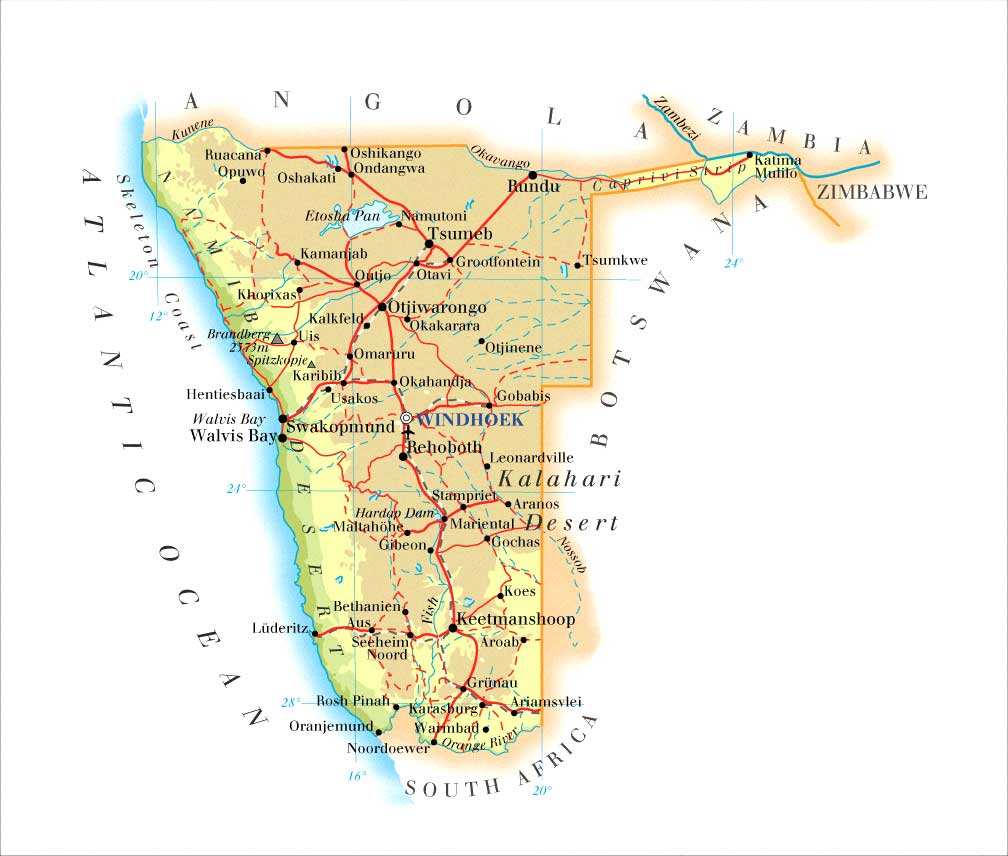
Namibia – Dry Port for Keetmashoop

Namibia Map (www.fao.org)

Namibia Map (www.fao.org)

Namibia – Plans by Governor of the Karas Region, Bernardus Swartbooi, to establish a dry port facility at Keetmanshoop have been hailed as a “brilliant idea” by experts who are in unison that the idea is overdue. (Maybe it is just plain common sense! Will be interesting to see how the Namibian Revenue Authority facilitate the inland movement of transit containers from Walvis Bay.)

Swartbooi presented his proposal to change the face of Keetmanshoop by making it the pivot of trade between Namibia, South Africa and possibly the rest of Africa at the Annual Logistic and Transport Workshop last week.

According to him the new venture, estimated at roughly N$10million, will see Keetmanshoop linked directly by sea, rail and road with Namibia’s capital Windhoek, Africa’s largest economy, South Africa, and the rest of the Southern African Development Community in the form of a central north-south transport corridor.

Keetmanshoop is the only town in Namibia with eight border posts and has a working relationship with the North Cape Province in South Africa.

Swartbooi said the second phase of this development will stream into the creation of a free trade zone on the eastern side of Keetmanshoop that will not only attract foreign investors but create a wealth of jobs that will significantly reduce the country’s unemployment statistics.

He also mentioned that with a free trade zone the region can eventually venture into light manufacturing that will bring about positive spin-offs for the region and the entire Namibia as a whole.

“We fight against a trend that the south was left out.. If you close down the Walvis Bay port today we will feel it later, but if Lüderitz port is to be closed today the effect will be felt within hours. There is no argument about our strategic location. No-one can compete against our land availability,” he enthused.

Twenty hectares of serviced land have so far been secured for the project that will include two weighbridges, offload facilities and accommodation facilities for truck drivers and recreation.

“We are looking at enhancing road safety and to cut down on driver fatigue,” he explained adding that key stakeholders have not yet been identified and anchor participants are being sought.. “We are looking at a private public equity where we can give someone a lease of ninety years,” he stated.

According to the Director for the Namibia German Centre for Logistics, Neville Mbai, Keetmanshoop as a regional hub is a brilliant idea and will not only serve as a buffer during labour strikes in South Afica, but will surely ease the burden on Walvis Bay port and corridors.

“It is absolutely brilliant. Kharas is adjacent to the great Gauteng region, the breadbasket of Southern Africa if not the whole of Africa. What we want to see is a shorter road from Johannesburg to Namibia. Look at the road infrastructure of Walvis Bay, if we are to add more that road will be in trouble,” he said adding that with Keetmanshoop providing a hub Namibia will no longer be severely impacted by labour strikes in South Africa, as goods can be stored to cater for the Namibian market.

“The idea must be to have a concentration of logistics hubs scattered across the country and with the port of Lüderitz and the quantity of fish production the region certainly is deserving of a hub,” he noted.

At least 1 600 trucks pass through Keetmanshoop on a monthly basis with 80 percent of Namibia’s goods being are transported through this route.

Operations Manager for Logistics Support Services Quintin Simon argues that this is indeed a positive idea and with Keetmanshoop located in the centre, distribution will become easier and faster. Source: www.newera.com

Namibia – South Africa Remains Major Trading Partner

Namibia flagSouth Africa remained Namibia’s leading trading partner, particularly on the imports front during the second quarter of 2013.

South Africa accounted for 70,1% of Namibia’s imports, followed by the Euro zone, Switzerland, Botswana and China; accounting for 3,6%, 3,5%, 2,9% and 2,8% respectively.

The remaining 17,1% was sourced from other countries such as the United Kingdom, Tanzania, United States of America, Zambia and other countries around the world, according to the September issue of the Bank of Namibia Quarterly Bulletin.

With regard to exports, Botswana, emerged the leading destination for Namibia’s exports during the second quarter. Botswana absorbed 19,6% of Namibian exports, overly dominated by rough diamonds. In the past, this position was exchanged between South Africa and the UK.

This followed a 10 year sales agreement between Botswana and De Beers that was signed in September 2011. South Africa, the Euro Area, UK, Switzerland, Angola and the US also remained prominent destinations for Namibia’s exports during the second quarter.

Namibia exported 14,4% of products to South Africa, 13, 2% to the Euro Area, 8,4% to Switzerland, 7,7% to Angola and 5,6% to the US. Countries such as China, Singapore, United Kingdom, Zambia and others also absorbed a noticeable portion of the Namibian exported commodities during the quarter under review.

Net services receipts recorded a net outflow on a quarterly and yearly basis during the second quarter of 2013, largely on account of net payments in other private services. The net services registered a deficit of N$88 million, year on year, during the quarter under review from a surplus of N$39 million.

The quarterly deficit balance was mainly reflected in the higher net outflows of other private services sub-category, which surged by four percent, quarter on quarter, to N$515 million and by 22,8% year on year. The outward movements of net services was however offset by the increased net inflows of travel services category that rose slightly by 1,1% and 11,6% quarter on quarter and year on year, respectively to N$761 million. Source: New Era (Namibia)

Major Multimodal Logistics Hub in Belgium

Liege Trilogiport is scheduled to open for business in the final half of 2015 (Picture: Liege Ports Authority)

Liege Trilogiport is scheduled to open for business in the final half of 2015 (Picture: Liege Ports Authority)

Work is underway on a major multimodal logistics hub project in Belgium. Piloted by the inland port of Liège, it is designed to serve as an “extended gateway” to the seaports of Rotterdam, Antwerp and Zeebrugge.

The project will attract around €45 million of public funding from the Belgian authorities and the European Union to finance infrastructure requirements, while initial investment from the private sector is estimated at approximately €115 million.

Located on a 120 hectare site on the banks of the Canal Albert, the Trilogiport project is scheduled to be operational in the second half of 2015. It is expected to create more than 2,000 direct or indirect jobs.

Described as “a tri-modal (river, rail and road) logistics village,” it will comprise a 15ha container terminal, with 1,850 metres of quayside, operated by Luxembourg-based Euroports and its partner, DP World.

Provision is made too to build a rail freight terminal with 700 metres of track to connect Trilogiport with the national rail network. Construction of a road bridge is also planned to provide access to the motorway system around Liège.

Trilogiport will also incorporate 200,000 sq metres of warehousing and distribution space at full build-out. Source: Porttechnology.com


Commercial seal equivalent to official seal in unperformed cargo safety checks

Cargo seal inspection - (Picture: www.recolor.com)

Cargo seal inspection – (Picture: http://www.recolor.com)

Finland – Recent criminal proceedings in which a driver was accused of neglecting to control the cargo security of a trailer which he had picked up from the port of Vuosaari, have been set aside by the Helsinki Appeal Court. When Customs conducted a safety inspection of the cargo, it was found that the cargo had not been secured properly. It was undisputed that the insufficient securing of the cargo could not be seen from outside, and that the driver had checked the trailer, but the trailer had been sealed with the transport company’s seal.

The court first considered whether the transport company’s commercial seal overruled the duty to carry out a cargo safety check. The expert witness testified before the Helsinki District Court that according to the Road Traffic Act, a ‘seal’ is only an official Customs seal (subject to the TIR Convention), and that the term does not include the commercial seals used by transport companies. However, the district court found that a ‘seal’ is not defined in the Road Traffic Act or its preparatory work, and the term thus includes commercial seals. It went on to determine whether checking the cargo could have caused unreasonable harm or delay. The driver stated that pursuant to the employer’s instructions, a cargo unit must never be opened alone; two people must always be present. The district court found that it was not proved that opening the trailer would not have caused unreasonable harm or delay to the transport assignment, and hence the driver had done his best. The criminal charges against the driver were rejected.

The proceedings before the Helsinki Appeal Court were limited to the first question – the definition of the seal. The appeal court found no reason to change the district court’s judgment. The appeal court judgment is final. It is quite common that a driver is assigned to pick up a transport unit which is already loaded, secured and, on many occasions, also sealed. Under these circumstances the driver has no means to carry out cargo safety checks from anywhere other than outside of the transport unit. Source: International Law Office & Hammarström Puhakka Partners, Attorneys (Finland)


Cape Town – Container Ship Crew Battles Blaze

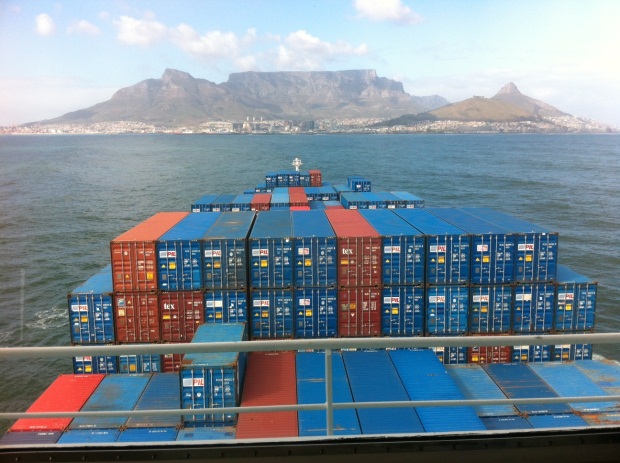
Container vessel outside the Port of Cape Town

Container vessel outside the Port of Table Bay, Cape Town, South Africa. (Picture and article – Maritime-Executive)

A Port Control ships Pilot was set to be airlifted by helicopter to the ship and the ship will be moved to the Container Docks in the Port of Table Bay where they will be met by Cape Town Fire and Rescue Services who will board the ship to fight the blaze.

A (National Sea Rescue Institute) NSRI rescuer, Gavin Kode, was transferred onto the ship to make an evaluation and confirmed that no crew are injured and that they are The 222 meter fully laden container ship LILAC reported a fire in one of their holds, 1 nautical mile off the Port of Table Bay in South Africa on 28 September, with a total of 21 onboard.

The ship’s captain reported that his crew was fighting to contain the fire, and that at this stage he was not declaring an emergency. A ship’s officer reported that they were fighting the blaze with Co2 fire equipment.

The National Sea Rescue Institute (NSRI) deployed 4 rescue vessels, and remained close to the ship as a precautionary measure. On their arrival, light white smoke could be observed coming from the ship.

LILAC confirmed to the JOC (Joint Operations Control at the Transnet National Ports Authority) to allow an NSRI rescuer and a Cape Town Fire and Rescue Services engineer onboard the ship to make an assessment. Transnet National Ports Authority is requesting that the type of blaze be identified, any chemical fall out risk to be identified and then to assess the feasibility of having the ship brought to a mooring at Port where Fire and Rescue teams can board the ship to take over fighting the blaze and to contain the situation. Source: Maritime-Executive


Container Mobility and the Logic of Integration

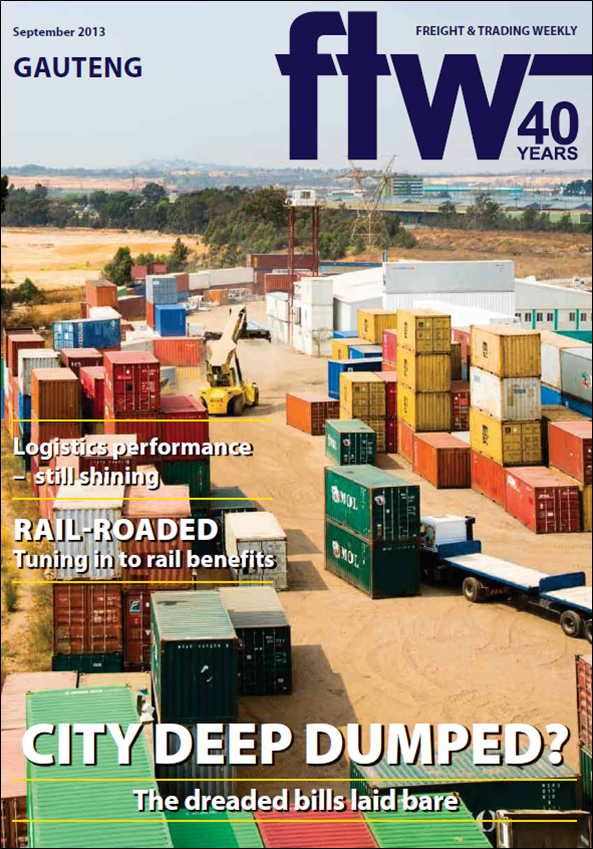
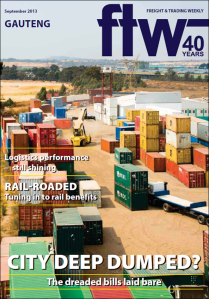
FTW - Gauteng Edition Sept 2013The latest Freight & Trade Weekly (FTW) [Gauteng special edition] publication reminds me of a very interesting article I read a few months back – refer to my post “What are surfaces?” of 23 June 2013. The article dealt with the question of surfaces (i.e. land and sea) in relation to the multimodal movement of containers and envisioned by the logistics and supply-chain management practices.

I bewailed the fact that the actual dissertation would set me back a US$1000 but remained intrigued by the content which such dissertation would contain given the very interesting abstract I had just read. Given the high cost of such, obviously acknowledging the expertise, knowledge and resourcefulness which often goes into the preparation such papers therefore puts them beyond the reach of most.

To my amazement, a few days later I received an email from a fellow blogger – an expert in supply chain logistics – who was happy to share with me his copy of the paper.  The paper is titled “Shipping container mobilities, seamless compatibility, and the global surface of logistical integration”, published by Environment and Planning (EPA) volume 45 (2013). The author, a Dr. Craig Martin has delivered a masterpiece (my view) which considers the subject matter way beyond what I, as a Customs and Trade specialist, would consider or envision. I thoroughly enjoyed his bringing together of historical and current concepts and principles (attributed to many experts and peers) in the matter of intermodal containerisation.

Understanding the supply chain is a critical pre-requisite in the international Customs and Trade arena, at least since 9/11. In addition to the various WCO guides and standards, one needs to locate and digest papers such as this – and here I refer also to the many other websites, reference portals and publications of international experts in the global logistics and supply chain field.

Some of the more salient statements contained in the  Dr. Martin’s paper confirms that the ‘ideology of containerisation emanates out of a wider body of reasoning based on the notion of integration.’

The Need and Logic of Integration

Integration focuses on interactions between various aspects of a supply chain and is defined as “a systems approach to viewing the supply chain as a whole, and to managing the total flow of goods inventory from the supplier to the ultimate customer”.

From the late 1950s, management theory began to emphasize the importance of “how industrial company success depends on the interaction between the flows of information, materials, money, manpower, and capital equipment”.

By the 1980s, the emphasis of the logistics sector’s control of company functions, including materials management, transport, storage, and information management, highlighted the importance and process of integration.

During the mid-1990s, the notion of integration extended even further with the move towards supply chain management (SCM), where aspects of supply, materials management, distribution, and retail functions were placed under the control of a single company. The overarching ideology of logistics and SCM are systemic completeness and the management of flow.

The movement of containerised cargo is a critical component of SCM, as it accentuates surface control through the integration of land and sea transport. As far back as the 1960’s, experts opined that “most types of liquids and solids may someday be moved in sealed containers interchangeable among road, rail, air, and marine transport. Advantages would include reduction in damage and loss in the time and cost of loading and unloading. Containers may prove to be the catalyst that integrates the various components of the transport sector which are now being independently planned, financed, and operated” – and this is exactly what is happening today.

Standardisation towards Intermodal Integration

In 1953 Malcolm McLean developed the idea of transporting truck trailers on ships rather than on the congested highways of the US East Coast. His rationale was to overcome congestion by consolidating the transport system: at this time the truck and ship industries were entirely separate. He is ultimately credited for the invention of the modern cellular container we have today.

Vital to structural integration was the standardized nature of infrastructure itself – enabling the coupling of a container with a variety of nodes. These include the design of container-cell vessels, the redesign of road haulage vehicles and railway rolling stock, the design of container handling vehicles in ports, the construction of large-scale dockside gantry cranes, the design of spreader bars, and not to forget the design of the container corner fittings – these are standardized across all of the equipment related above.

It can therefore correctly be asserted that “the container links land and sea transport in an almost seamless and profoundly international continuum” (Broeze 2002)

So I guess what I’m trying to emphasize is that close on 70 years of continuous harmonization and integration in the supply chain logistics industry, specifically in regard to multimodal (door-to-door) containerized transport, as well as the substantive facilitation support accorded thereto by both the WTO and WCO, the basis of containerisation must surely be a consideration when applying regulatory control measures whether it be in the export leg or import leg of an international supply chain movement.

The key enabler in a modern Customs environment is undoubtedly automated processing and no less automated risk assessment. Facilitation on the other hand is a tool whereby, in combination with risk assessment, Customs focuses on entities and patterns rather than transnational intervention. Unreasonable (and mandatory) termination of a multimodal movement destroys the benefits of containerization and will add costs and loss of competitiveness for traders. Our beautiful country can ill-afford this given burgeoning competition from our neighbours up north. Finally, The matter of regional integration is another aspect which needs in-depth consideration. As we enthuse and wallow in our new found technological state, physical borders remain the biggest inhibitors to trade. More on this another time.

Recommended Link
SARS to address Stakeholders on Customs Control proposals

SARS chief officer of legal and policy Kosie Louw (Picture: Robert Botha/Business Day Live)

SARS chief officer of legal and policy Kosie Louw (Picture: Robert Botha/Business Day Live)

The South African Revenue Service (SARS) has committed itself to further engagements with importers of all sizes in a bid to improve its proposals to transform the customs control regime.

Consultations have already taken place with organised business on the proposed Customs Duty Bill and the Customs Control Bill, and the process would now be taken to the level of traders to find out whether the proposals presented them with any problems. Amendments have also been proposed to the Customs and Excise Act to provide for the transition to the new system.

“We want to understand the situation at a micro level. We will sit around the table until we find a solution which will guarantee to us that we get the information we require but which will also facilitate trade.

“We do not want to clog up the ports,” SARS chief officer of legal and policy Kosie Louw said in an informal briefing on the proposals to Parliament’s standing committee on finance on Wednesday.

The customs bills are mainly concerned with improving the information about imported and exported goods so that customs officials can exercise greater control.

Business has expressed concern that the requirement of the Customs Control Bill that they submit a national in-transit declaration of goods at the first port of entry before they are sent to internal terminals, or depots such as City Deep, would cause delays.

The new declaration — of the nature, value, origin and duty payable on the goods — would replace the limited manifest used to declare goods and would include information on the tariff, value and origin of goods.

Business has argued that the manifest allowed goods to move seamlessly from the exporting country to the inland port or depot, and would change the contractual relationships between exporter and importer in terms of when duty is paid.

However, Mr Louw did not believe the provision would cause delays and had obtained legal advice that the contractual relationships and method of payment of duties would not change. The problem with manifests, he said, was that they provided very limited information and did not allow SARS to prevent the inflow of unwanted goods. Nevertheless, he said that SARS would discuss the matter with traders.

Mr Louw said the proposed system would “improve SARS’s ability to perform risk assessment and intervene in respect of potentially high risk, prohibited and restricted consignments at the ports”.

The bills have been in the pipeline for about four years and have been extensively canvassed with the Southern African Customs Union and business. They were needed, Mr Louw said, so that South Africa kept pace with global trends in trade, international conventions and advances in technology.

Anti-avoidance provisions have also been introduced into the bill which sets out the offences and associated penalties for noncompliance and attempts to avoid paying customs duties.

SARS group executive for legislative research and development Franz Tomasek said the Customs Control Bill would introduce a new advance cargo loading notice for containerised cargo to prevent the loading of prohibited or restricted goods on board vessels bound for South Africa. However, to reduce the administrative burden on carriers, information submitted in advance will no longer be required on arrival or prior to departure. Source: Business Day Live