Air-to-sea cost differential narrows

Multimodal Freight

Just to keep them on their toes – the following will undoubtedly play a factor in many customs administration’s risk management and intel systems.

Air freight rates slipped in December as the trade returned to business-as-usual following the volume boost of earlier hi-tech product launches, according to Drewry’s new monthly report, Sea & Air Shipper Insight. Drewry’s recently launched East-West Air Freight Price Index, a weighted average of air freight rates across 21 east-west trades, fell by 1.4 points from November to reach 110.8 in December, bringing to an end four consecutive months of gains in the index. “The waning effect of new hi-tech product launches on traffic demand was the primary contributor to declining rates from Asia into North America and Europe,” said Simon Heaney, research manager at Drewry. “Drewry expects pricing on routes out of Asia to decline further, though the impact will be softened by an uptick in demand levels in advance of Chinese New Year.”

Evidence of a tentative recovery in air freight demand comes in the form of a 2% year-on-year rise (the first such increase in 16 months) in November of worldwide semiconductor sales, a traditional bellwether for air cargo. Air cargo demand could also see a temporary boost at the expense of the ocean market. With ocean currently facing capacity issues such as the looming threat of strike action at US ports and carriers cancelling voyages, some shippers, particularly those wanting to move higher-value goods, might well be tempted to shift some cargo to the air. Demand growth for air cargo has lagged behind ocean, which Drewry believes is due to a combination of shippers having access to better IT systems, leaner inventory strategies and greater faith in liner service reliability, which has been improving steadily in the last year or so.

Recent issues in the ocean sector are testing that faith, although of course shippers that do switch to air freight will have to pay a considerable premium. East-west air freight rates and comparable ocean rates have almost mirrored their ups and downs since May 2012, with air prices showing a steeper upswing since October. However, the fall in air freight pricing and a corresponding rise in container shipping rates in December sent Drewry’s east-west air freight price multiplier down 1.3 points to 11.8. The multiplier measures the relationship between the cost of shipping by air relative to sea. “Air cargo is not a viable Plan B for all shippers,” said Heaney, “but for those moving expensive goods it remains a justifiable alternative, particularly at a time when the reliability of the ocean supply chain is threatened.”  Source: Lloyds List
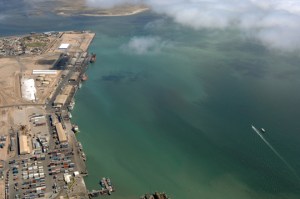
Major trade route now reaches Katanga

Port of Walvis Bay – Namibian transport corridor

A new regional trade route reaching from the Katanga Province in the Congo all the way to Walvis Bay as point of entry, is on the radar of the Walvis Bay Corridor Group following an agreement between Namibia and the DRC. Development of this major link started its first tentative steps recently when the Corridor Group opened an office in Lubumbashi, on the border of the DRC and Zambia.The Corridor Group said earlier this week it had launched an office in Lubumbashi, DRC, to create a strong business presence in the mineral-rich Katanga Province.

The Walvis Bay Corridor Group Lubumbashi office was officially opened by the Governor of the Katanga Province, Hon. Moïse Katumbi Chapwe, supported by the Namibian Ambassador, Mr Ringo Abed, Corridor Chairman Mr Bisey Uirab, and Corridor Group CEO, Mr Johny Smith.

The need for landlocked countries to gain access through an alternative trade route to and from sea was recognised, where neigbouring countries and beyond could benefit from access to the Port of Walvis Bay that offers importers and exporters reduced time and cost savings, high reliability, and cargo security. The Katanga Province offers a market of more than 2 million consumers and with the fast expanding mineral rich DRC there is also a need from the DRC Government for the Walvis Bay-Ndola-Lubumbashi Corridor to extend further towards other Provinces in the DRC. Walvis Bay is surely growing as an alternative trade route for Southern DRC in that various commodities are being moved via the Port of Walvis Bay such as copper, frozen products, machinery & equipment and consumables.

The office in Lubumbashi, DRC is now the third branch office of the WBCG beyond Namibia, with the other branch offices in Lusaka, Zambia since 2005 and Johannesburg, South Africa in operation since 2008. The Walvis Bay Corridor Group is currently hosting the Walvis Bay-Ndola-Lubumbashi Development Corridor Technical Committee, which is a Public Private Partnership between the government departments responsible for transport of the DRC, Namibia and Zambia to address the bottlenecks that impede the flow of traffic along this trade route using the Port of Walvis Bay. Source: Economist (Namibia)

Singapore – megaport to double its TEU capacity

Singapore is relocating its transshipment port operations to Tuas in 10 years, a move that will add 65 million TEU in annual capacity, nearly doubling today’s capacity at local PSA terminals, announced Transport Minister Lui Tuck Yew. Consolidating transshipment operations at Tuas will bolster efficiency, economies of scale, eliminate inter-terminal transfers and result in cost savings and increased productivity.

Located close to the island’s industrial centre, Tuas is a new port development that can handle up to 65 million TEU annually, nearly double Singapore’s present capacity at PSA terminals. The first phase of Tuas is scheduled to open in 10 years, ahead of the 2027 expiration of the leases of Singapore city terminals at Tanjong Pagar, Keppel, and Pulau Brani, noted Dredging Today.

The recently completed Terminals 1 and 2 of Pasir Panjang will be merged in Tuas as well. But PSA Singapore will proceed with Phases 3 and 4, which will cover 250 hectares and add 15 new berths with a six kilometre quay.

The Pasir Panjang expansion, which is estimated to cost about US$3.5 billion, will increase PSA Singapore’s maximum draft from 16 to 18 metres to accommodate fully laden 18,000 TEUers now on order. By 2020, both phases will add an annual capacity of 15 million TEU, bringing the port total to 50 million TEU, but is still less than the additional Tuas planned capacity, which alone is estimated to handle 15 million TEU on completion. Source: www.seanews.com

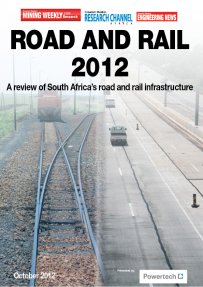
A review of South Africa’s road and rail infrastructure

Creamer Media have published 2012 Road and Rail – a comprehensive review and insight into South Africa’s road and rail transport infrastructure and network. This should be a must read for any serious investor and comes at a price just shy of R 2000,00. 

For the much of the six-and-a-half decades from 1910, South Africa’s rail sector was carefully nurtured and handsomely resourced by successive administrations. Growing competition from road was kept at bay by tough regulatory practices that ensured rail freight of a virtual monopoly.

From the mid-1970s, however, rail’s pre-eminent position in South Africa began to come under scrutiny. A series of National Transport Policy Studies reviewed worldwide trends in transport deregulation. The findings reinforced a growing belief that an overprotected rail industry and an over-regulated road-freight sector were detrimental to the overall South African economy. This was undoubtedly true – but as often happens in these matters, in the following decades, and indeed, right up to the recent present, the stick was then bent excessively in the opposite direction.

The net result is that, on the freight side, rail has massively lost market share to road over the past 20 to 25 years. Road transport has been allowed to grow, but without the implementation of an effective road transport quality system. This imbalance in the modal split has been a key contributing factor to high direct logistics costs in the economy. The disproportionate shift of freight to road has had many other perverse and costly impacts – the road freight industry (unlike Transnet Freight Rail) does not directly carry the cost of building and maintaining the public infrastructure it uses and this has resulted in an increase in road construction and maintenance costs, deteriorating road conditions, congestion problems and road collisions.

This report investigates South Africa’s road and rail infrastructure, including the country’s road and rail networks, maintenance and the challenges facing the sector, among others. For details as to the content of the report please click here! Source: Creamer Media

Grindrod – coastwise feeder expansion to extend services between Durban and Angola

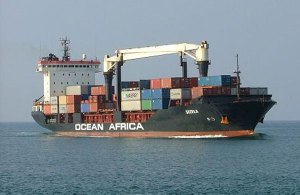
South African logistics and shipping firm Grindrod has continued its expansion programme, with the purchase of Safmarine’s 51% stake in Ocean Africa Container Lines. Grinrdod gave no details of the price paid for Safmarine’s stake in Ocean Africa Container Lines (OACL), but Grindrod now fully owns the company, which operates a feeder service with four vessels between Durban and Angola, calling at several ports in between, including in Namibia and Angola.

OACL’s former COO, Mahmood Simjee, has now been appointed CEO. Grindrod hopes that OACL can continue to benefit from close ties with Safmarine and the latter’s parent company, Maersk. OACL could take advantage of Ngqura’s growing role as a transhipment port, particularly with Angolan ports. The shipping line previously operated between Durban and Mozambican ports and could again resume this role.

Röhlig-Grindrod, a joint venture between Grindrod Limited and Röhlig International, has also acquired Sturrock Group’s clearing and freight forwarding division in exchange for a 15% stake in Röhlig-Grindrod, leaving the founding partners with 42.5% equity each in the venture. The inclusion of black empowerment partners in Sturrock Group helps Röhlig-Grindrod to fulfil its empowerment requirements.

Hylton Gray, the CEO of Grindrod Logistics, said: “We are very pleased with the merger of the businesses and the introduction of the empowerment partners. Calulo, a partner in the Sturrock Group, already has a stake in Grindrod’s South African operations and has contributed significantly by way of existing relationships and experience in niche markets.” Source: worldcargonews.com

Foreign truckers will pay to use roads

Dare say the following will not go unnoticed by South African authorities. The bottom line in all of this is the question of effective enforcement.

News that the government intends to go ahead with plans to introduce a charging system for foreign truckers using UK roads has got the thumbs-up from the Road Haulage Association (RHA). “This is a happy day for road hauliers”, said RHA Chief Executive Geoff Dunning. “We have been campaigning for years to see a system introduced which will lessen the financial advantage currently enjoyed by our European neighbours.”

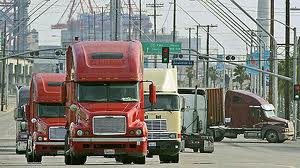
Foreign truck drivers will have to pay £10 a day to use British roads by 2015, under the new legislation. British truckers are used to paying special road charges of up to £13 a day on the continent, but their European counterparts pay nothing when they drive in the UK.

Announcing the plan, New Transport Secretary Patrick McLoughlin said: “These proposals will deliver a vital shot in the arm to the UK haulage industry. “It is simply not right that foreign lorries do not pay to use our roads, when our trucks invariably have to fork out when travelling to the continent.” It is estimated that 1.5m visits are made by foreign hauliers to the UK every year.

The new charge is expected to cost most drivers £1,000 a year. Dunning added: “This is not enough to give us a level playing field as regards the rest of Europe. But it is a good start and will help no end in beginning to prepare the ground.

“We are pleased that Mr McLoughlin has seen fit to bring forward this legislation so early in his tenure as Transport Minister; he is obviously very aware as to the important role played by UK hauliers in rebuilding the economy, increasing UK competitiveness and boosting growth.”

UK drivers will also have to pay the daily charge because of European laws, but it will be offset by a corresponding road tax cut. A bill setting out the plan will be published next month, with ministers expecting the new system to be introduced within the next two years. Source: Lloyds List

Port of Maputo – charting a course to successful development

To understand where to the Port of Maputo is heading in the future, one has to know its past. In 1972, the Port of Maputo was a busy hub, handling near 17 million tonnes per year. Durban’s port, a little further south, was handling only 3 million tonnes more rhan that and Richard’s Bay Port didn’t even exist.

Then the long civil war came. In 1988, the Port of Maputo barely reached 1 million tonnes; infrastructure deteriorated, shipping companies moved their business elsewhere and ports like Richard’s Bay were born and prospered. It was only in 2003, when the Port of Maputo was transformed into a Private Public Partnership and concessioned to Maputo Port Development Company (MPDC), that things started changing. In only nine years, the Mozambique’s capital port grew from 4.5 million tonnes to 14 million tonnes (this expected year’s throughput).

This growth is the result of a massive investment – $291 million by the port’s concessionaires – in the rehabilitation of roads, rail, quays, general infrastructure and acquisition of equipment. However, the most beneficial change was the channel dredging to -11 meters, with a sailing draft above 11 meters. This allowed the port to receive bigger ships and, after the dredging, the Port of Maputo had an impressive growth of 35 percent.

Port of Maputo Masterplan

The dredging of the access channel to the port was the first of the many actions included in the Port of Maputo’s Masterplan; an ambitious and dynamic tool, which charts the port’s successful development. According to the updated Masterplan, the Port of Maputo foresees that, by 2020, it will be handling almost 50 million tonnes, with an investment of US $1.7 billion in the coal, container and bulk terminals. The port will also receive channel dredging to -14 meters, berths rehabilitation and also rail, road and warehousing improvements. The coal terminal, for example, is planned to grow from the current 6 million tonnes capacity to 30 million tonnes (20 million of coal and 10 million of Magnetite), and the container terminal will increase from the present 150,000 containers to 400,000 containers (phase one).

Much of the grand design to secure a vibrant future is presently visible only as images, which reflect the foresight of those who have launched this mammoth 20 year project. But to turn all this into reality, the Port is now working in what the eye can’t see.

Building foundations, facing challenges

In order to make a sustainable investment, the Port of Maputo has been taking time to build its foundations. 2011 and 2012 have seen an unprecedented alignment between all stakeholders, including the Mozambican Ports and Rails Company, Caminhos-de-Ferro de Moçambique (CFM), the National Customs Authority and the National Institute of Hydrography and Navigation (INAHINA). These stakeholders, amongst many other tasks, control all navigational aids in the access channel to the Port of Maputo, and all play a fundamental role in the achievement of the Masterplan’s
strategic objectives.

The Port of Maputo has a geostrategic location, relative to key markets – the main mining regions of South Africa, Swaziland and part of Zimbabwe. This gives the port a strategic, competitive advantage in comparison to neighboring ports, who are struggling with congestion. Most of the mineral cargos are transported to the port by road, even though they are more rail oriented. This poses numerous issues, such as road congestion, road maintenance and environmental problems. Today, there are about 1,200 trucks moving in and out the port every day. Very soon, with raising demand, this number will double, if cargo is not moved by rail. Read the full PDF article here! Source: Porttechnology.org.

Revisiting the national transit procedure – Part 2

You will recall a recent challenge by trade to SARS’ proposed implementation of mandatory clearance of national transit goods inland from port of initial discharge – refer to Revisiting the national transit procedure – Part 1.

First, some background

Now lets take a step back to look at the situation since the inception of containerisation in South Africa – some 30 years ago. Customs stance has always been that containerised goods manifested for onward delivery to a designated inland container terminal by rail would not require clearance upon discharge at initial port of entry. Containers were allowed to move ‘against the manifest’ (a ‘Through Bill’) to its named place of destination. This arrangement was designed to expedite the movement of containers from the port of discharge onto block trains operated by Transnet Freight Rail, formerly the South African Railways and Harbours (SAR&H) to the inland container terminal at City Deep. Since SAR&H operated both the national railway and the coastal and inland ports, the possibility of diversion was considered of little import to warrant any form of security over the movement of containers by rail. Moreover, container terminals were designed to allow the staging of trains with custom gantry cranes to load inland manifested containers within a ‘secure’ port precinct.

Over the years, rail freight lost market share to the emergence of cross-country road hauliers due to inefficiencies. The opening up of more inland terminals and supporting container unpack facilities, required Customs to review the matter. It was decided that road-hauled containers moved ‘in bond’ by road would lodge a customs clearance (backed with suitable surety) for purposes of national transit. Upon arrival of the bonded freight at destination, a formal home use declaration would be lodged with Customs. Notwithstanding the surety lodged to safeguard revenue, this has the effect of deferring payment of duties and taxes.

Diversification of container brokering, stuffing and multi-modal transport added to the complexity, with many customs administrations failing to maintain both control and understanding of the changing business model. Equally mystifying was the emergence of a new breed of ‘players’ in the shipping game. Initially there were so-called ‘approved container operators’ these being ocean carriers who at the same time leased containers. Then there were so-called non-approved container operators who brokered containers on behalf of the ocean carrier. These are more commonly known as non-vessel operating common carriers or NVOCCs. In the early days of containerisation there were basically two types of container stuffing – full container load (FCL) and less container load (LCL). The NVOCCs began ‘chartering’ space of their containers to other NVOCCs and shippers – this also helped in knocking down freight costs. This practice became known as ‘groupage’ and because such containers were filled to capacity the term FCL Groupage became a phenomenon. It is not uncommon nowadays for a single FCL Groupage container to have multiple co-loaders.

All of the above radically maximised the efficiency and distribution of cost of the cellular container, but at the same time complicated Customs ‘control’ in that it was not able to readily assess the ‘content’ and ownership of the goods conveyed in a multi-level groupage box. It also became a phenomenon for ‘customs brokers/clearing agents’ to enter this niche of the market. Customs traditionally licensed brokers for the tendering of goods declarations only. Nowadays, most brokers are also NVOCCs.  The law on the other hand provided for the hand-off of liability for container movements between the ocean carrier, container terminal operator and container depot operator. Nowhere was an NVOCC/Freight Forwarder held liable in any of this. A further phenomenon known as ‘carrier’ or ‘merchant’ haulage likewise added to the complexity and cause for concern over the uncontrolled inland movements of bonded cargoes. No doubt a disconnect in terms of Customs’ liability and the terms and conditions of international conveyance for the goods also helped create much of the confusion. Lets not even go down the INCOTERM route.

Internationally, customs administrations – under the global voice of the WCO – have conceded that the worlds administrations need to keep pace and work ‘smarter’ to address new innovations and dynamics in the international supply chain. One would need to look no further than the text of the Revised Kyoto Convention (RKC) to observe the governing body’s view on harmonisation and simplification. However, lets now consider SARS’ response in this matter.

SARS response to the Chamber of Business

Right of reply was subsequently afforded by FTW Online to SARS.

Concerns over Customs’ determination to have all goods cleared at the coast – expressed by Pat Corbin, past president of the Johannesburg Chamber of Commerce and Industry in last week’s FTW – have been addressed by SA Revenue Service.  “One of the main objectives of the Control Bill is the control of the movement of goods across South Africa’s borders to protect our citizens against health and safety risks and to protect the fiscus. “In order to effectively determine risk, SARS has to know the tariff classification, the value and the origin of imported goods. This information is not reflected on a manifest, which is why there is a requirement that all goods must be cleared at the first port of entry into the Republic.“It appears that Mr Corbin is under the impression that the requirement of clearance at the first port of entry has the effect that all goods have to be consigned to that first port of entry or as he puts it “to terminate vessel manifests at the coastal ports in all cases”. This is incorrect. “The statutory requirement to clear goods at the first port of entry and the contract of carriage have nothing to do with one another. Goods may still be consigned to, for example, City Deep or Zambia (being a landlocked country), but they will not be released to move in transit to City Deep or Zambia unless a declaration to clear the goods, containing the relevant information, is submitted and release is granted by Customs for the goods to move. The release of the goods to move will be based on the risk the consignment poses to the country.“It is definitely not the intention to clog up the ports but rather to facilitate the seamless movement of legitimate trade. If the required information is provided and the goods do not pose any risk, they will be released.”

So, where to from here?

The issue at hand concerns the issue of the ‘means’ of customs treatment of goods under national transit. In Part 3 we’ll consider a rational outcome. Complex logistics have and always will challenge ‘customs control’ and procedures. Despite the best of intentions for law not to ‘clog up the port’, one needs to consider precisely what controls the movement of physical cargo – a goods declaration or a cargo report? How influential are the guidelines, standards and recommendations of the WCO, or are they mere studies in intellectual theories?

TPT to operationalise new Post Panamax cranes at Ngqura

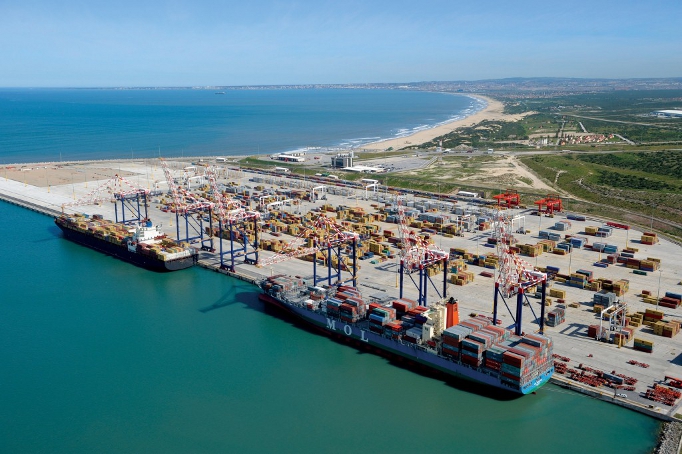
Transnet Port Terminals has successfully completed testing of two Liebherr Super Post Panamax cranes at Ngqura Container Terminal, just north of Port Elizabeth. The Ship-to-Shore cranes (STS), which were delivered in January bringing the terminal’s fleet of STS cranes to eight, represent an investment of R150 million by the port operator.

The cranes will improve productivity by increasing Ship Working Hour (SWH) – the number of containers moved by the number of cranes working a vessel in one hour. A total of 78 additional operators have been trained and are ready to operate the equipment. Transnet’s newly formulated Market Demand Strategy will see Transnet SOC Limited invest R300 billion on freight infrastructure over the next seven years. Of this, TPT will invest R33 billion to boost port operations.

The portion allocated for the 600,000 m2 Ngqura Container Terminal includes just under R1.1 billion for its Phase 2 A expansion, which will increase container handling capacity from the current 800,000 TEU to 1.5 million TEU by 2013/14. A further R 808 million will be spent between 2015 and 2019 on the terminal’s Phase 2 B expansion to increase the terminal’s capacity to two million TEU. Source: Porttechnology.org

Transnet’s loco acquisition programme gaining traction

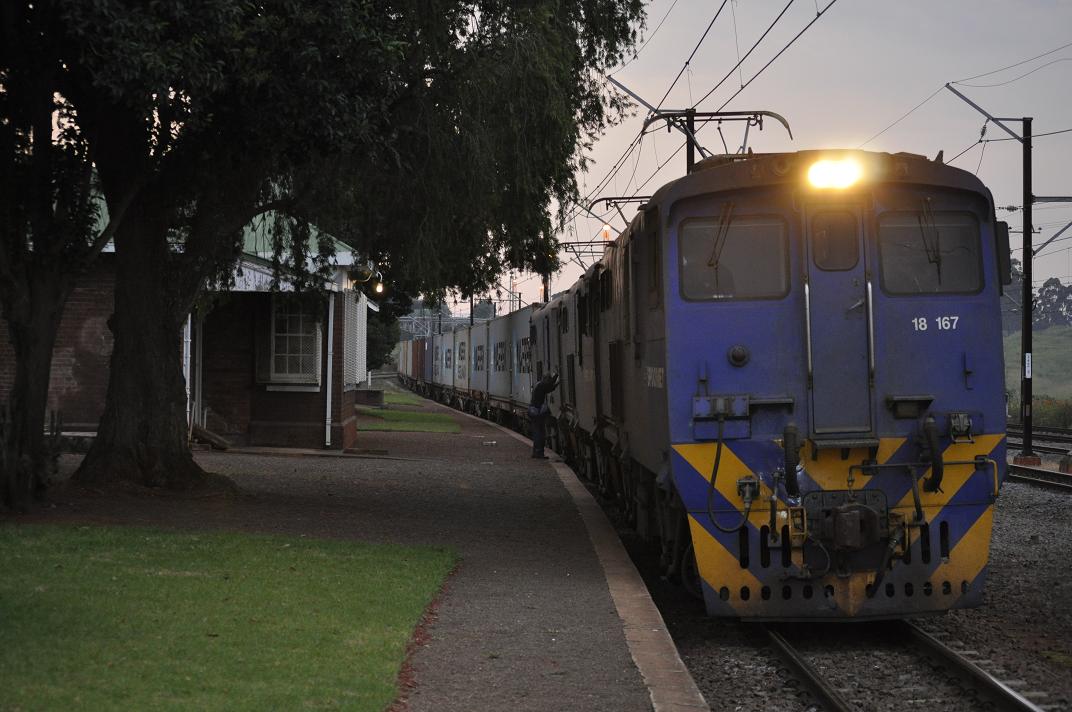
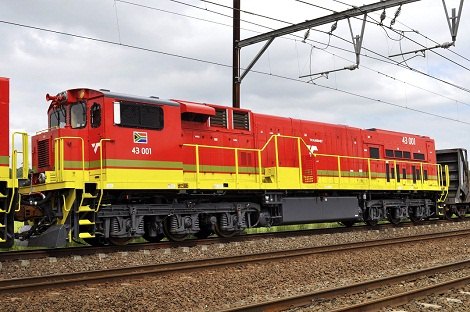
Ports.co.za reports that the US-based General Electric (GE) Transportation has announced that another locomotive, which forms part of a deal sealed with state-owned Transnet, was delivered with local content that exceeds the commitment from GE’s initial Transnet order of 100 locomotives.

The locomotive is the 42nd and is the most advanced diesel-electric locomotive ever built-in South Africa. Its official unveiling took place at an event held at Transnet Rail Engineering’s facilities in Koedoespoort, Pretoria, on Wednesday.

With this order, GE overshot its self-imposed target of 30% local content. The locomotives assembled in South Africa now have 37% local content.Transnet concluded an agreement with GE for a further 33 diesel-electric locomotives, over and above the 100 already being purchased under a deal concluded in 2009. In terms of the contract, 10 of the locomotives were manufactured in Erie and Grove City, Pennsylvania, USA and 133 are being assembled locally at Transnet Rail Engineering’s site in South Africa.

A total of 53 will be deployed in the Phalaborwa-Richards Bay corridor, 30 on the Sishen-Saldanha iron-ore corridor, 32 on the Witbank-Nelspruit-Komatipoort line and the remaining 28 will be used to transport coal to Eskom power stations. Source: ports.co.za

‘State of Logistics’ survey – SA’s progress revealed

The 8th Annual State of Logistics Survey, a joint project by Imperial Logistics, the University and Stellenbosch and the CSIR reveals good news for South Africa. Logistics costs – as a percentage of GDP – have dropped to the lowest level ever at 12.7%. The in-depth report, which is available online at http://www.csir.co.za/sol/, provides some fascinating insights from some of the industry’s logistics thought leaders.

Transport costs are singled out as the most significant factor impacting the country’s logistics costs, comprising 53.2% of the logistics bill. “The marked impact of the 11% fuel price increase between 2009 and 2010 is no surprise considering the fuel price is the primary transport cost driver,” says Zane Simpson of the University of Stellenbosch. “Had the fuel price remained as it was in 2009, total transport costs in 2010 would have been R5.8billion less, consequently putting logistics costs as a percentage of GDP at an even more favourable 12.5%.” Transport costs as a percentage of total logistics costs would then have been 52% instead of 53%.

Globally, transport costs as a percentage of logistics costs are less than 40% which makes South Africa’s percentage relatively high. “For logistics to become a competitive weapon for South Africa, change is required,” said Cobus Rossouw, chief integration officer of Imperial Logistics. “South Africa is a leader in complex, dynamic logistics and has achieved success despite geographical impediments, severe skills shortages and lack of economies of scale “South Africans need to recognise that we are and can be counted among the best in logistics. And while we will always have much to learn from others, we need to recognise that we also have a lot to offer.” Source: CargoInfo.co.za

Zimbabwe: Dependence on SA Imports ‘Risky’

ZIMBABWE’S export trade promotion body, ZimTrade, has warned against over-reliance on South African imports, stressing that Harare could plunge into a serious economic crisis should its southern neighbour experience unexpected production and supply challenges. South African producers of basic commodities, automobile services, chemicals, agricultural inputs and farm produce have taken advantage of a significant weakness in Zimbabwean firms’ capacity to service the domestic market, which has triggered widespread shortages of locally manufactured goods.

South Africa and Zimbabwe have intensified trade relations, but the balance of trade has always been in favour of South Africa, Africa’s largest economy. In March, South Africa’s Deputy Minister of the Trade and Industry, Elizabeth Thabethe, flew into Zimbabwe with a delegation of 45 businesspeople to intensify the hunt for new markets for her country’s companies north of the Limpopo. The business delegation comprised companies in the infrastructure (rail, telecommunication and energy), manufacturing, agriculture and agro-processing, mining and mining capital equipment, as well as information and communication technology.

Zimbabwe labour unions are reportedly facing tremendous pressure from workers to campaign against an overflow of South African products into Zimbabwe to allow for the resuscitation of local industries to create jobs, have said Harare had “turned into a supermarket” for South African products. (Huh? strange since so many of the eligible working Zimbabweans have gainful employment in South Africa. Sounds more like labour union politicking)

If South Africa, for example, is to experience a supply hitch, this will be transmitted directly into Zimbabwe’s production and consumption patterns. The appreciation of the rand in the second quarter of 2011, for instance, resulted in price increases on the domestic market.In other words, heavy dependency on imports will leave an economy susceptible to world economic shocks, according to ZimTrade.

Statistics provided by the Department of Trade and Industry (dti) of South Africa in March, indicated that exports to Zimbabwe increased to R15,5 billion in 2011, from R15,1 billion in 2010, while Zimbabwe’s exports to that country increased to R2,9 billion in 2011, from R1,3 billion in 2010. The statistics indicate that South Africa imported US$1 billion worth of goods and services from the Southern African Development Community trade bloc, with 37 percent of the imports coming from Zimbabwe. The dti said imports from South Africa represented 45 percent of Zimbabwe’s total imports. Therefore, according to ZimTrade, “A growing trade deficit could increase the country’s risk of imported inflation and a direct transmission of shocks into the economy.

South Africa has also been Zimbabwe’s major source market for industrial inputs. The United States, Kuwait, China, Botswana and Zambia were Zimbabwe’s other major trading partners in 2011.However, the dti statistics indicated that Harare had narrowed its trade deficit with Africa’s largest economy in 2011 to R12,6 billion, from R13,7 billion in 2010. This translates to about US$12 million and US$13 million respectively

The dti deputy minister, Thabethe acknowledges that “South Africa and Zimbabwe are not only geographical neighbours. The two countries share historical and cultural linkages. Furthermore, South Africa’s economy is inextricably linked to Zimbabwe’s economy due to its geographical proximity to Zimbabwe whose political and economic welfare has a direct impact on South Africa”. Source: The Herald (Zimbabwe)

Moving goods efficiently to inland cities – a case for inland container depots

Port of Agapa, NigeriaNearly one in three African countries is landlocked, accounting for 26% of the continent’s landmass, and 25% of the population, or more than 200 million people, indicating that current population growth trends, including the development of population megacities distant from coastal locations will become powerful drivers of inland markets.

At the 3rd Annual Africa Ports, Logistics & Supply Chain Conference, APM Terminals’ Director of Business Development and Infrastructure Investments for the Africa-Middle East Region, Reik Mueller stated that “Ports will compete to become preferred gateways to move goods efficiently to inland cities and landlocked countries” Mr. Meuller added that “The future prosperity of these nations depends on access to the global economy and new markets; high-growth markets need inland infrastructure and logistics capabilities along development corridors. The ports that can provide the best and most efficient connectivity to those Inland markets will be the winners”.

Citing the recent success in reducing port congestion through Inland Container Depots (ICDs) now in operation outside of the APM Terminals operated port of Luanda, Angola, the Meridian Port Services joint venture in Tema, Ghana, and the ICD which was opened four km from APM Terminals Apapa, the busiest container terminal in Nigeria and all of West Africa, Mr. Mueller made the case for integrated transportation solutions, “Importers are not going to wait for improved infrastructure; the cargo will simply move to other ports” said Mr. Mueller.

Mueller described a new model for transportation planning and development in West Africa in which port and terminal operations shift focus from “container lifts” toward “integrated container transport solutions. Dry ports and inland markets are the untapped, overlooked opportunity markets of the future in Africa”. Now ain’t this a contrast to views on the southern tip of the continent – the continent’s biggest port without efficient inland corridors and networks must jeopardize investor confidence not to mention export profitability.   Sources: DredgingToday.com, PortStrategy.com and Greenport.com.

Advancing the argument for sealing cargo and tracking conveyances

South African Customs law provides for a seal integrity regime. This consists in provisions for the sealing of containerised sea cargo as well as sealable vehicles and trailers. These requirements have, however, not been formally introduced into operation due to the non-availability (until recently) of internal systems and cross-functional procedures that would link seal integrity to known entities. To explain this in more layman’s terms, it is little use implementing an onerous cargo sealing program without systems to perform risk assessment, validation of trader profiles and information exchange. It’s  like implementing non-intrusive inspection (X-ray scanning) equipment without backward integration into the Customs Risk Management  and Inspection environment and systems. It has often been stated that a customs or border security programme is a layered approach based on risk mitigation. None of the individual elements will necessarily address risk, and automation alone will likewise not accomplish the objective for safe and secure supply chains. Moreover, neither will measures adopted by Customs or the Border Agency succeed without due and necessary compliance on the part of entities operating the supply chain. It therefore requires a holistic strategy of people, policy, process and technology.

In the African context, it is surmised that the business rationale will be best accomplished with a dual approach on IT connectivity and information exchange. Under the political speak there are active attempts within SACU, SADC, COMESA and the EAC to establish electronic networks to facilitate and safeguard transit goods. Several African states are landlocked and are not readily accessible, some requiring multiple transit trips through countries from international discharge in the continent to place of final destination. National laws of each individual country in most instances provide obstacles to carriers achieving cost effective means in delivering cargoes. Over and above the laws, there exists (regrettably) the need to ‘grease palms’ without which safe passage in some instances  will not be granted. Notwithstanding the existence of customs unions and free trade areas, internal borders remain the biggest obstacle to facilitation.

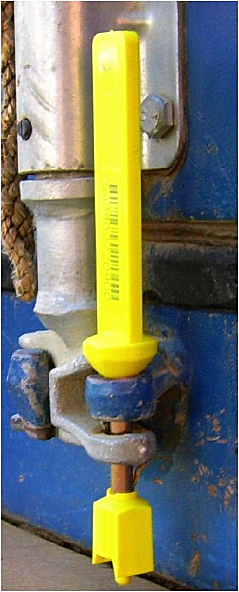
Several African logistics operators already implement track and trace technology in the vehicle and long-haul fleets. This has the dual purpose of safeguarding their assets as well as the cargoes of their clients which they convey. Since 9/11, a few customs administrations have formally adopted ISO PAS 17712 within their legislation to regulate the use of high security seals amongst cargo handlers and carriers. In most cases this mandates the use of high security ‘mechanical’ bolt seals. However, evidence suggests there is a growing trend to adopt electronic seals. Taiwan Customs for one has gone a significant way in this regard. Through technological advances and increased commercial adoption of Radio Frequency Identification (RFID) technology the costs are reducing significantly to warrant serious consideration as both a viable and cost-effective customs ‘control’ measure.

Supply chain custody using RFID as an identifier and physical security audit component – as provided for in ISO 17712 – is characterized by the following:

  • it uniquely identifies seals and associates them with the trader.
  • the seal’s unique identity and memory space can be used to write a digital signature, unique to a trader on the seal, and associating that seal with a customs declaration.
  • using customs trader registration/licensing information, together with infrastructure to read seal information at specified intervals along a route to create a ‘bread-crumb’ audit trail of the integrity of the cargo and conveyance.
  • using existing fleet management units installed in trucks to monitor seal integrity along the high risk legs of a cargo’s transit.
  • record the seal’s destruction at point of destination.

Looking forward to the future, it is not implausible for customs and border authorities to consider the use of RFID:

  • as a common token between autonomous customs systems.
  • to verify and audit that non-intrusion inspections have taken place en-route, and write that occurrence to the seal’s memory with the use of an updated digital signature issued to the customs inspection facility.
  • to create a date and time stamp of the cargo’s transit for compliance and profile classification – to confirm that transit goods have actually left the country as well as confirm arrival at destination (to prevent round tripping).
  • Lastly to archive a history of carrier’s activities for forensic and/or trend analysis.
This is a topic which certainly deserves more exposure in line with current regional developments on IT-connectivity and information exchange. A special word of thanks to Andy Brown for his contribution and insight to this post.
Related articles

SA truckers – fines for cross-border permit infractions

Assuming that the RSA government favours the drive for increased inter-Africa trade and free movement of goods and conveyances, perhaps its time for transport officials to look beyond the letter of the law and automate their process.

South African truckers have been warned not to travel without their cross-border permits as they could face hefty fines. According to the Cross Border Road Transport Agency (CBRTA), trucks dispatched to the border ahead of a permit being issued could be fined as the permit has to be in the truck at all times. “According to the legislation anyone with the intent of crossing the border must be in the possession of these permits,” said CBRTA CEO Sipho Khumalo. “That means operators cannot dispatch their trucks to the border and then send the permit with a car once it has been issued later to catch up with the truck. That is against the law.” Source: FTW