India to Become World’s Largest Infrastructure Goods Importer by 2030

HSBCAccording to the recently released HSBC Trade Forecast Report, by 2020 India is expected to surge past the United States as the world’s biggest importer of infrastructure goods – a position it is expected to hold until at least 2030. This is a result of the country’s increased demand for materials for infrastructure projects (i.e., metals, minerals, buildings and transport equipment) as it invests more in the building of its civil infrastructure.

The report, which focuses primarily on infrastructure, notes that as Asian economies grow they will take an increasing share of infrastructure-related imports over the next two decades. Currently, the U.S. tops the list of countries importing infrastructure goods, followed by India, Hong Kong, China and Germany. By 2030, India will sit up the top of this list, followed by the U.S., China, Hong Kong and Korea.

Sandeep Uppal, HSBC India Managing Director and Head of Commercial Banking, noted that the “rising middle classes across Asia’s rapidly emerging markets, especially in India and China, will drive significant infrastructure demand in the region.”

“Aspirations of the new middle class and rapid urbanization will force India to upgrade its civil infrastructure, thus pushing up demand for overseas infrastructure related goods,” she added.

To continue with the rising trends, the report further states that Asia as a whole is predicted to see the most rapid growth in merchandise trade between 2020-2030 – led by India, China and Vietnam – at estimated annual export growth rates of more than 10 percent.

For comparison, the export rates of European countries, such as the UK, France and Germany, are forecasted to grow at about 4-5 percent annually on average over this 10-year period. Meanwhile, average export growth in the U.S. is estimated to top off at around 6 percent annually during the same period.

What this means is that by 2030 infrastructure-related goods will be the most commonly traded type of goods, increasing in market share from the current rate of 45 percent of total goods exported to upwards of 54 percent. Source: India Briefing

Border Management in Southern Africa: Lessons with respect to Policy and Institutional Reforms

The folk at Tralac have provided some welcomed insight to the challenges and the pains in regard to ‘regionalisation’. No doubt readers in Member States will be familiar with these issues but powerless within themselves to do anything due to conflict with national imperatives or agendas. Much of this is obvious, especially the ‘buzzwords’ – globally networked customs, one stop border post, single window, cloud computing, and the plethora of WCO standards, guidelines and principles – yet, the devil always lies in the details. While the academics have walked-the-talk, it remains to be seen if the continent’s governments have the commitment to talk-the-walk!

Regional integration is a key element of the African strategy to deal with problems of underdevelopment, small markets, a fragmented continent and the absence of economies of scale. The agreements concluded to anchor such inter-state arrangements cover mainly trade in goods; meaning that trade administration focuses primarily on the physical movement of merchandise across borders. The services aspects of cross-border trade are neglected. And there are specific local needs such as the wide-spread extent of informal trading across borders.

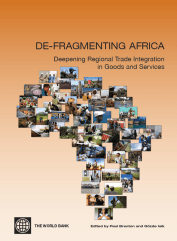
Defragmenting Africa WBThis state of affairs calls for specific governance and policy reforms. Effective border procedures and the identification of non-tariff barriers will bring major cost benefits and unlock huge opportunities for cross-border trade in Africa. The costs of trading remain high, which prevents potential exporters from competing in global and regional markets. The cross-border production networks which are a salient feature of development in especially East Asia have yet to materialise in Africa.

Policy makers have started paying more attention to trade-discouraging non-tariff barriers, but why does the overall picture still show little progress? The 2012 World Bank publication De-Fragmenting Africa – Deepening Regional Trade Integration in Goods and Services shows that one aspect needs to be singled out in particular:  that trade facilitation measures have become a key instrument to create a better trading environment.

The main messages of this WB study are:

  • Effective regional integration is more than simply removing tariffs – it is about addressing on-the-ground constraints that paralyze the daily operations of ordinary producers and traders.
  • This calls for regulatory reform and, equally important, for capacity building among the institutions that are charged with enforcing the regulations.
  • The integration agenda must cover services as well as goods……services are critical, job-creating inputs into the competitive edge of almost all other activities.
  • Simultaneous action is required at both the supra-national and national levels. Regional communities can provide the framework for reform, for example, by bringing together regulators to define harmonised standards or to agree on mutual      recognition of the qualification of professionals……. but responsibility for implementation lies with each member country.

African governments are still reluctant to implement the reforms needed to address these issues. They are sensitive about loss of ‘sovereign policy space’ and are not keen to establish supra-national institutions. They are also opposed to relaxing immigration controls. The result is that border control functions have been exercised along traditional lines and not with sufficient emphasis on trade facilitation benefits. This is changing but specific technical and governance issues remain unresolved, despite the fact that the improved border management entails various technical aspects which are not politically sensitive.

The required reforms involve domestic as well as regional dimensions. Regional integration is a continental priority but implementation is compounded by legal and institutional uncertainties and burdens caused by overlapping membership of Regional Economic Communities (RECs). The monitoring of compliance remains a specific challenge. Continue reading →

African Countries of the Future 2013/14

fDI 2013-14 Rankings for Africa

fDI 2013-14 Rankings for Africa

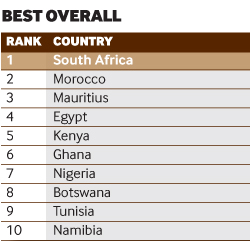
South Africa has been crowned as the African Country of the Future for 2013/14 by fDi Magazine, One of the economic powerhouses of the African continent, South Africa has been named fDi Magazine’s African Country of the Future 2013/14, with Morocco in second position and Mauritius in third. New entries into the top 10 include Nigeria and Botswana. Click here to access the full report!

South Africa has consistently outperformed its African neighbours in FDI attraction since fDi Markets records began in 2003. Figures for 2012 build upon South Africa’s historical prominence as an FDI destination with the country attracting about one-fifth of all investments into the continent – more than double its closest African rival, Morocco. In 2012, FDI into South Africa amounted to $4.6bn-worth of capital investment and the creation of almost 14,000 jobs.

South Africa claimed the title of fDi’s African Country of the Future 2013/14 by performing well across most categories, obtaining a top three position for Economic Potential, Infrastructure and Business Friendliness. Its attractiveness to investors is evident in its recent FDI performance, where the country defied the global trend with 2011 and 2012 figures surpassing its pre-crisis 2008 statistics. Despite a slight decline of 3.9% in 2012, South Africa increased its market share of global FDI, which further increased in the first five months of 2013 as the country attracted 1.37% of global greenfield investment projects. According to fDi Markets, South Africa now ranks as the 16th top FDI destination country in the world.

South Africa’s largest city, Johannesburg, was the top destination for FDI into Africa and is one of only five African cities that attracted more investments in the first five months of 2013 compared to the same period of 2012. South Africa ranked third behind the US and the UK as a top source market for the African continent in 2012, accounting for 9.2% of FDI projects.

In 2010, South Africa became the ‘S’ of the BRICS – five major emerging national economies made up by Brazil, Russia, India and China. While FDI into South Africa fell 3.9% in 2012, this was the lowest recorded decline of the BRICS grouping which, on average, experienced a 20.7% decline in FDI. In its submission for fDi’s African Countries of the Future 2013/14, Trade and Investment South Africa (TISA) stresses the importance of the country’s attachments to its BRICS partners. Source: fDI Magazine

IBSA Beware – Currency Sell-off

India’s currency plumbed record lows this week as investors withdrew money from emerging markets (Photo: Financial Times)

India’s currency plumbed record lows this week as investors withdrew money from emerging markets (Photo: Financial Times)

A not-so-sobering look into the immediate future of emerging market darlings who have lost their lustre as investors ponder life without US quantitative easing. Even more worrying considering the possible impact for IBSA countries.

India, 1991. Thailand and east Asia, 1997. Russia, 1998. Lehman Brothers, 2008. The eurozone from 2009. And now, perhaps, India and the emerging markets all over again.

Each financial crisis manifests itself in new places and different forms. Back in 2010, José Sócrates, who was struggling as Portugal’s prime minister to avert a humiliating international bailout, ruefully explained how he had just learned to use his mobile telephone for instant updates on European sovereign bond yields. It did him no good. Six months later he was gone and Portugal was asking for help from the International Monetary Fund.

This year it is the turn of Indian ministers and central bankers to stare glumly at the screens of their BlackBerrys and iPhones, although their preoccupation is the rate of the rupee against the dollar.

India’s currency plumbed successive record lows this week as investors decided en masse to withdraw money from emerging markets, especially those such as India with high current account deficits that are dependent on those same investors for funds. Black humour pervaded Twitter in India as the rupee passed the milestone of Rs65 to the dollar: “The rupee at 65 – time to retire”.

The trigger for market mayhem in Mumbai, Bangkok and Jakarta was the realisation that the Federal Reserve might – really, truly – soon begin to “taper” its generous, post-Lehman quantitative easing programme of bond-buying. That implies a stronger US economy, rising US interest rates and a preference among investors for US assets over high-risk emerging markets in Asia or Latin America.

The fuse igniting each financial explosion is inevitably different from the one before. Yet the underlying problems over the years are strikingly similar.

So are the three principal phases – including the hubris and the nemesis – of the economic tragedies they endure. No one who has examined the history of the nations that fell victim to previous financial crises should be shocked by the way the markets are treating India or Brazil today.

First comes complacency, usually generated by years of high economic growth and the feeling that the country’s success must be the result of the values, foresight and deft policy making of those in power and the increasing sophistication of those they govern. Sceptics who warn of impending doom are dismissed as “Cassandras” by those who forget not only their own fragilities but also the whole point about the Trojan prophetess: it was not that she was wrong about the future, it was that she was fated never to be believed.

So high was confidence only a few months ago in India – as in Thailand in the early 1990s – that economists predicted that the local currency would rise, not fall, against the dollar.

Indian gross domestic product growth had topped 10 per cent a year in 2010, and the overcrowded nation of 1.3bn was deemed to be profiting from a “demographic dividend” of tens of millions of young men and women entering the workforce. The Indian elephant was destined to overtake the Chinese dragon in terms of GDP growth as well as population size.

Deeply ingrained in the Indian system, says Pratap Bhanu Mehta, head of the Centre for Policy Research in New Delhi, was an “intellectual belief that there was some kind of force of nature propelling us to 9 per cent growth … almost of a sense of entitlement that led us to misread history”.

In the same way, the heady success of the southeast Asian tigers in the early 1990s had been attributed to “Asian values”, a delusional and now discredited school of thought that exempted its believers from the normal rules of economics and history because of their superior work ethic and collective spirit of endeavour.

The truth is more banal: the real cause of the expansion that precedes the typical financial crisis is usually a flood of cheap (or relatively cheap) credit, often from abroad.

Thai companies in the 1990s borrowed dollars short-term at low rates of interest and made long-term investments in property, industry and infrastructure at home, where they expected high returns in Thai baht, a currency that had long been held steady against the dollar.

The same happened in Spain and Portugal in the 2000s, although the low-interest loans that fuelled the unsustainable property boom were mostly north-to-south transfers within the eurozone and therefore in the same currency as the expected returns. Indeed, the euro was labelled “a deadly painkiller” because the use of a common currency hid the dangerous financial imbalances emerging in southern Europe and Ireland.

Phase Two of a financial crisis is the downfall itself. It is the moment when everyone realises the emperor is naked; to put it another way, the tide of easy money recedes for some reason, and suddenly the current account deficits, the poverty of investment returns and the fragility of indebted corporations and the banks that lent to them are exposed to view.

That is what has started happening over the past two weeks as investors take stock of the Fed’s likely “tapering”. And the fate of India – the rupee is one of the “Fragile Five”, according to Morgan Stanley, with the others being the currencies of Brazil, Indonesia, South Africa and Turkey – is particularly instructive. (Emphasis mine).

It is not that all of India’s economic fundamentals are bad. As Palaniappan Chidambaram, finance minister, said on Thursday, the public debt burden has actually fallen in the past six years to less than 70 per cent of GDP – but then the same was true of Spain as it entered its own grave economic crisis in 2009.

Like Spain, India has tolerated slack lending practices by quasi-official banks to finance the huge property and infrastructure projects of tycoons who may struggle to repay their loans.

Ominously, bad and restructured loans have more than doubled at Indian state banks in the past four years, reaching an alarming 11.7 per cent of total assets. According to Credit Suisse, combined gross debts at 10 of India’s biggest industrial conglomerates have risen 15 per cent in the past year to reach $102bn.

For those who take the long view, a more serious failing is that India has manifestly missed the kind of economic opportunity that comes along only once in an age.

Instead of welcoming investment with open arms and replacing China as the principal source of the world’s manufactured goods, India under Sonia Gandhi and the Congress party, long suspicious of business, has opted to enlarge the world’s biggest welfare state, subsidising everything from rice, fertiliser and cooking gas to housing and rural employment.

Former fans of her prime minister, Manmohan Singh – who as finance minister liberalised the economy, ended the corrupt “licence Raj” and extracted India from a severe balance of payments crisis with the help of an IMF loan – could only shake their heads when he boasted last week that no fewer than 810m Indians would be entitled to subsidised food under a new Food Security Bill.

The bill is a transparent attempt by Congress to improve its popularity ahead of the next general election, but the government’s critics are horrified at the idea of offering Indians more handouts rather than creating the conditions that would give them jobs and allow them to buy their own. The resulting strain on the budget may also worsen the risk of “stagflation”, a toxic mixture of economic stagnation and high inflation.

India’s annual growth rate has already halved in three years to about 5 per cent and could fall further towards the 3 per cent “Hindu rate of growth” for which the country was mocked in the 1980s.

If currency declines and balance-of-payments difficulties develop into a full-blown financial crisis in the coming months, India will be propelled unwillingly into the third and final phase of the trauma.

Phase Three is when ministers and central bank governors survey the wreckage of a once-vibrant economy and try to work out how to rebuild it.

It is traditional for those governments that survive, and for the ones replacing those that do not, to announce several false dawns and to see “green shoots” that turn out to be illusory.

It is hard when times are bad to impose financial discipline that would have been easier to apply before. Indian policy makers are already torn between the need to lower interest rates to boost growth and the necessity of raising them to protect the rupee and tackle inflation – the same kind of tension between austerity and easy money that has afflicted developed economies since 2008.

India’s underlying economy is nevertheless sound and its banks are safe, say Mr Chidambaram and other senior officials. There is therefore no need to contemplate asking for help from the IMF or anyone else.

Mr Sócrates said much the same in Lisbon three years ago. “Portugal doesn’t need any help,” he said, almost leaping from his chair. “We only need the understanding of the markets.” The markets did not understand, and Portugal did need the help.

Source – Victor Mallet of the Financial Times August 23, 2013
WEF – Global Competitiveness Report 2013-14

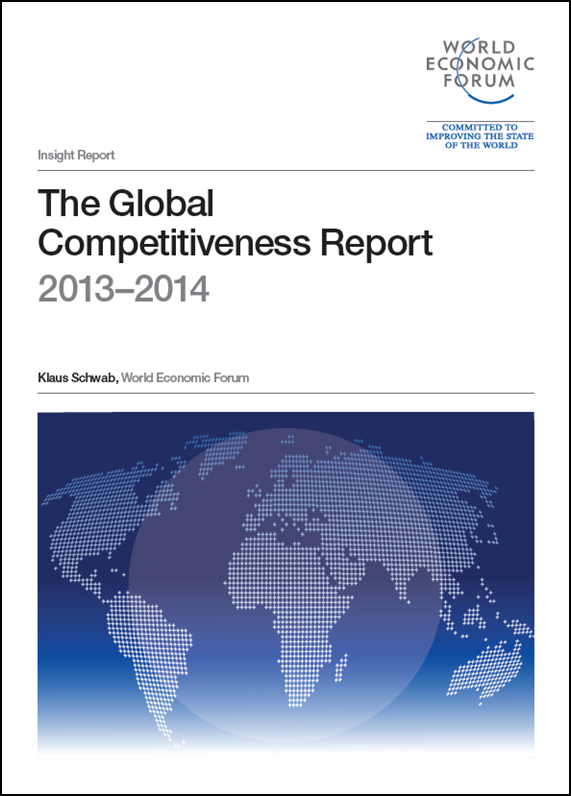
WEF - Global Competitiveness Report 2013-14South Africa is ranked 53rd this year, overtaking Brazil to place second among the BRICS. South Africa does well on measures of the quality of its institutions (41st), including intellectual property protection (18th), property rights (20th), and in the efficiency of the legal framework in challenging and settling disputes (13th and 12th, respectively). The high accountability of its private institutions (2nd) further supports the institutional framework.

Furthermore, South Africa’s financial market development remains impressive at 3rd place. The country also has an efficient market for goods and services (28th), and it does reasonably well in more complex areas such as business sophistication (35th) and innovation (39th). But the country’s strong ties to advanced economies, notably the euro area, make it more vulnerable to their economic slowdown and likely have contributed to the deterioration of fiscal indicators: its performance in the macroeconomic environment has dropped sharply (from 69th to 95th).

Mauritius moves up by nine places this year to 45th place, becoming the highest ranked country in the sub-saharan region.

Low scores for the diversion of public funds (99th), the perceived wastefulness of government spending (79th), and a more general lack of public trust in politicians (98th) remain worrisome, and security continues to be a major area of concern for doing business (at 109th).

Building a skilled labor force and creating sufficient employment also present considerable challenges. The health of the workforce is ranked 133rd out of 148 economies-the result of high rates of communicable diseases and poor health indicators more generally.

The quality of the educational system is very poor (146th), with low primary and tertiary enrollment rates. Labor market efficiency is poor (116th), hiring and firing practices are extremely rigid (147th), companies cannot set wages flexibly (144th), and significant tensions in labor-employer relations exist (148th). Raising educational standards and making the labor market more efficient will thus be critical in view of the country’s high unemployment rate of over 20 percent, with the rate of youth unemployment estimated at close to 50 percent. For the full report, click here!

SACU’s Choice – ‘Common policy or irrelevance’

imagesCA31PQJGThe Minister of Trade and Industry, Dr Rob Davies briefed the Parliamentary Portfolio Committee on Trade and Industry regarding the progress on the implementation of the five-point plan in Cape Town. This is a work programme which was approved by the 2nd Southern Africa Customs Union (SACU) Summit convened by President Zuma in 2011 premised on the following pillars;

  1. Work programme on cross-border industrial development;
  2. Trade facilitation;
  3. Development of SACU institutions;
  4. Unified engagement in trade negotiations and
  5. The review of the revenue sharing arrangement.

The five-point plan emerged from realization by SACU Member States of a need to move SACU beyond an arrangement held together only by the common external tariffs and the revenue sharing arrangement to an integration project that promotes real economy development in the region.

Minister Davies noted that progress on the implementation of pillars of the five- point plan is uneven. SACU has registered good progress on trade facilitation and there is greater unity of purpose in negotiations with third parties (Economic Partnership Agreement (EPA), SACU-India and Tripartite Free Trade Area).

However, there is limited progress on the review of the revenue sharing arrangement and hence lack of adequate financial support for the implementation of cross-border industrial and infrastructure development projects. The SACU revenue pool is raised by South Africa from customs and excise duties. Mr Davies told MPs that in 2013-14 the total disbursement from the revenue pool would be about R70bn of which the BLNS countries would receive about R48bn. There is also lack of progress on the development of SACU institutions as a result of divergences in policy perspectives and priorities of Member States.

Enabling provisions provide for the establishment of National Bodies and a SACU Tariff Board. The SACU Tariff Board will make recommendations to Council on tariffs and trade remedies. Davies added that, until these institutions are established, functions are delegated to the International Trade Administration Commission (ITAC) in SA.

The minister warned that the lack of agreed policies would hinder effective decision-making on regional integration and industrialisation, which had made little progress since the 2011 summit convened by President Jacob Zuma. South Africa believes SACU needs to move “firmly towards a deeper development and integration”.

Minister Davies said SACU risked becoming “increasingly irrelevant” as an institution if it did not develop beyond operating a common external tariff, and a “highly redistributive” revenue-sharing arrangement. The lack of progress in developing new SACU institutions was primarily due to policy and priority differences among members. “Against this background South Africa needs to reassess how best to advance development and integration in SACU.”

Among the disagreements on tariff setting between South Africa and its neighbours highlighted by Mr Davies, was that South Africa saw tariffs as a tool of industrial policy while they regarded them as a means of raising revenue. For example, the other Sacu members wanted to include the revenue “lost” on import tariff rebates offered by South Africa into the revenue pool.

The pool provides these countries with a major source of their national budget. Rebates were seen as revenue foregone for which additional compensation should be sought. South Africa, on the other hand, argues that the rebates (for example on automotive imports) are part of its total tariff package and serve to attract investment and boost imports and therefore, contribute to expanding the revenue pool, not diminishing it.

He emphasised the development of a common approach on trade and industrial policy as the prerequisite for establishing effective SACU institutions in future.

He highlighted that a discussion on appropriate decision-making procedures on sensitive trade and industry matters that takes into account SACU-wide impacts is required. Source: The Department of Trade & Industry, and BD Live.

Port-to-Hinterland…gearing up for growth?

Proposed Durban-Free State-Gauteng Logistics and Industrial Corridor Plan (SIP2)

Proposed Durban-Free State-Gauteng Logistics and Industrial Corridor Plan (SIP2)

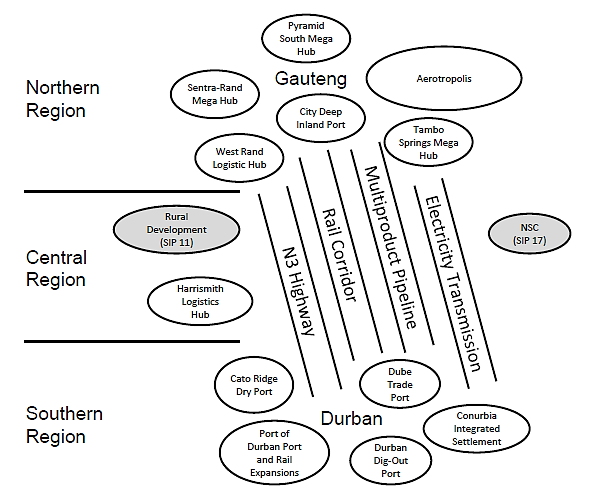
Notwithstanding on-going discontent amongst industry operators in regard to proposed legislative measures mandating customs clearance at first port of entry, the South African government (GCIS) reports that work has already commenced on a massive logistics corridor stretching between Durban and the central provinces of the Free State and Gauteng. Most of the projects that form part of the second Strategic Infrastructure Project (SIP 2), also known as the Durban-Free State-Johannesburg Logistics and Industrial Corridor, are still in the concept or pre-feasibility stage, but construction has already started on several projects.

These include:

  • the building of a R2,3 billion container terminal at City Deep
  • a R3,9 billion project to upgrade Pier 2 at the Port of Durban
  • R14,9 billion procurement of rolling stock for the rail line which will service the corridor.

Work has also started on the R250 million Harrismith logistics hub development to set up a fuel distribution depot, as well as on phase one of the new multi-product pipeline which will run between Johannesburg and Durban and transport petrol, diesel, jet fuel and gas.

The aim of these projects and others which form part of SIP 2, is to strengthen the logistics and transport corridor between South Africa’s main industrial hubs and to improve access to Durban’s export and import facilities. It is estimated that 135 000 jobs will be created in the construction of projects in the corridor. Once the projects are completed a further 85 000 jobs are expected to be created by those businesses that use the new facilities. Source: SA Government Information Service

Interested in more details regarding South Africa’s infrastructure development plan? Click here!

Why Do We Import Cure-Dent From China?

The following article is a lesson for all aspiring enterpeneurs on the African continent.

I got curious about the small, mostly unnoticed item in Kigali, what we like to call ‘cure-dent’, the tooth pick. This is how I stumbled onto the fact that we import toothpicks. Yes we import toothpicks from China. Toothpicks here are a symbol for all the things we could make ourselves but import.

toothpicksIt got me wondering – just how complicated is it to make a toothpick? Firstly, toothpicks are made from bamboo and we have plenty of that in Musanze. In any case bamboo can be cultivated. It grows fast and there are new genetically modified reach heights of over 15 metres. A little time on Google showed me that it does not take very much to make them. Indeed the whole process can be done in a woodwork workshop. The process from splitting the bamboo to sharpening the toothpicks takes less than half an hour. That is about 100 packets of toothpicks.

The reason we give for imported stuff is supposedly because we do not have the technology required to make it. This is clearly not true in this case, and, I bet, in the case of a lot of other imports.

Toothpicks are very cheap. They go for between Rwf100 and Rwf500 for each small packet. This is after all the manufacture, freight, taxes and, of course, the shopkeeper’s profits have been considered. Maybe this is why we consider it not to be a profitable venture. Would making toothpicks be profitable? The answer is yes. Let us consider two reasons.

One – the Chinese are not known for time wasting. If they would engage in this enterprise to this extent, they must be something in it. Two – consider being able to make 100 packs of toothpicks in half an hour.

That makes 200 per hour and 1600 per eight hour day (you are by no means tied to this. If you sell them at Rwf50 per pack, you will be grossing Rwf80,000 per day. Now that is profit!

Where is the market? Are we not in the East African Community? We have to start exporting beyond the agricultural produce. Why is urwagwa and akabanga not on the shelves of Kenyan, Ugandan, Tanzanian and Burundian shops?

Why are we always importing? If we are importing toothpicks what do we not import? Unfair Balance of Trade and its accompanying Balance of Payments in addition to aid dependency are the main propagators of poverty in our country. They give us aid… .we use it to buy their products, down to toothpicks!

If we are to make it to self-sufficiency we have to manufacture and export. The journey to self-sufficiency must precede self-reliance. As Bob Marley would say, “We gotta be conscious”.

Article by Sam Kebongo writing for the Rwanda New Times.

Uganda says it’s time to talk in Africa

Africa-mombasa-mct-aerial

Port of Mombasa (Credit – Port Strategy)

Not for the first time a landlocked country in Africa is attempting to have a say in a remote port operation which functions as a major gateway for its import and export trade. This time it is Uganda proposing that it has a say in the management of Kenya’s major port, the port of Mombasa. In the recent past it was Ethiopia attempting to secure a dedicated terminal in Djibouti.

The Ugandan initiative surfaced at a recent ‘Validation Workshop on Uganda’s Position on the Single Customs Territory for the East African Community. The Permanent Secretary Ministry of EAC Affairs, Edith Mwanje said that Uganda should have a say in the management of gateway ports because of “the many delays that negatively impacted trade”. Ugandan cargo accounts for the largest body of traffic handled by the port of Mombasa for the landlocked countries surrounding Kenya.

It is unlikely, of course, that any country will give up even partial control of a national asset to another country. It is akin to relinquishing sovereignty in the minds of countries owning port assets and being asked to participate in some form of power sharing. Djibouti fought hard to prevent Ethiopian Shipping Lines gaining control of dedicated terminal assets in the old port of Djibouti and won this battle. It is very unlikely that Kenya will even consider the idea of a foreign power participating in the management of its number one port.

It may, however, be a wise course of action for countries such as Djibouti and Kenya to consider establishing some sort of regular stakeholder dialogue. This is the path to a long and sustainable relationship as opposed to a short opportunistic one.

It is known, for example, that in the past Ethiopia has been frustrated by the high price of gateway container and general cargo operations in Djibouti and this has led to tensions. Since these days, however, Djibouti has put considerable effort into having a sensible dialogue with Ethiopia and this has matured into new projects such as the signing of an agreement with Ethiopia and Djibouti to build an oil pipeline that will reduce South Sudan’s dependence on crude shipments via neighbouring Sudan, and plans for a $2.6bn liquefied natural gas terminal in Djibouti, including a liquefaction plant and a pipeline, that will enable the export of 10m cubic meters of gas from Ethiopia to China annually from 2016.

Source and Picture credit: Portstrategy.com

FDI – Nigeria First in Africa for a Second Year

TCredit - Photobuckethe United Nations Conference on Trade and Development (UNTAD) yesterday ranked Nigeria Africa’s number one destination for Foreign Direct Investment (FDI) in Africa for the second time in two years. The latest UNCTAD report, entitled, “Global Value Chains: Investment and Trade for Development”, put Nigeria’s FDI inflows at $7.03billion while South Africa recorded $4.572bn; Ghana, $3.295bn; Egypt, $2.798bn and Angola, 6.898bn; among others.

According to the report, FDI inflows to African countries went up by five per cent to $50bn in 2012, though global FDI declined by 18 per cent. The report noted that most of the FDIs into Africa mainly driven by the extractive industry, but said there was an increase in investments in consumer-oriented manufacturing and services.

Global FDI fell by 18 per cent to $1.35 trillion in 2012. This sharp decline was in stark contrast to other key economic indicators such as GDP, international trade and employment, which all registered positive growth at the global level,” which was attributed to economic fragility and policy uncertainty in a number of major economies, giving rise to caution among investors.

It added that developing countries take the lead in 2012 for the first time ever, accounting for 52 per cent of global FDI flows. This is partly because the biggest fall in FDI inflows occurred in developed countries, which now account for only 42 per cent of global flows. In 2011, Nigeria was ranked Africa’s biggest destination for FDI, with total inflows of $8.92bn, South Africa followed with $5.81bn, while Ghana received $3.22bn. Source: AllAfrica.com


Chinese President has sealed Tanzania’s Bagamoyo ‘mega-port’ project

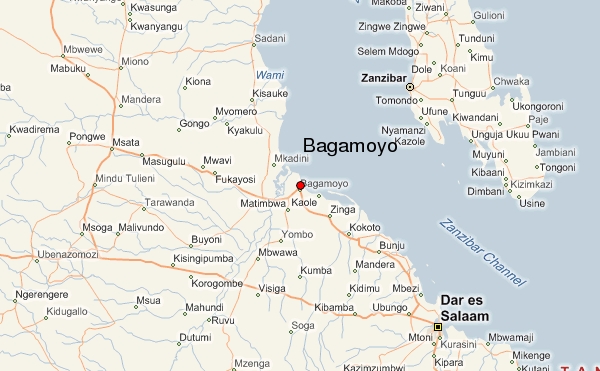
bagamoyo-mapThe Chinese President has sealed Tanzania’s Bagamoyo project. Tanzania has laid down its claim for a future large slice of regional trade through a deal with China to build the new port of Bagamoyo in its Mbegani area, north west of Dar es Salaam, at a total cost of $10bn.

The deal was announced by the President of China, Xi Jinping, while recently visiting Dar es Salaam and forms part of a major investment by the China in the infrastructure of the Mbegani area and East African seaboard – a project to be completed by 2028 with the expectation that Bagamoyo port will supersede Dar es Salaam port as the country’s main port and container handling centre.

The new port will be built with a draft sufficient to accommodate higher capacity container vessels up to 10,000 teu and beyond, as well as possess specialised roll-on roll-off berths and other cargo berths.

The overall scale of the planned development is such that it will provide a highly competitive solution to Kenya’s port expansion plans in Mombasa and Lamu which, as well as catering for national trade, are focused on meeting the needs of surrounding landlocked countries such as Uganda, Rwanda and Burundi.

Kenya has ground out plans for a new deep water container terminal in Mombasa – now under construction – and has embarked upon major new port development at Lamu, but the Bagamoyo port plan has a stronger profile and coherence to it. The money is down and in the background are new offshore gas discoveries for Tanzania which promise to play their part in promoting a strong and enduring relationship with China.

The first-phase development of Bagamoyo port is expected to be in operation by 2017 with construction undertaken by China Merchant Holdings of Hong Kong.

There has been no discussion to-date of whether the new port will feature cargo handling terminals operated by the private or public sector. As in Kenya, this subject remains something of a ‘hot potato’ with some Tanzania Port Authority executives suggesting it was a mistake to introduce the private sector as the operator of the Dar es Salaam Container Terminal. As in Mombasa, there is a belief that the public sector could have done as well as private interests in seeking to achieve efficient container terminal operation.

This belief persists in certain circles despite the TPA taking steps to raise the calibre of executives in its organisation through the introduction of executives from the private sector and a greater overall focus on human resources.

Dar es Salaam currently handles over 9m tons of cargo per year which is equivalent to about 95% of all Tanzania’s import and export volumes. In container trade alone, growth has been over 12% per annum since 2000. Despite this, the cost of shipping to Tanzania is about 25% higher than rates to the larger competing ports in southern Africa. This is mostly attributable to port inefficiencies brought about by inadequate investment in port infrastructure.

These costs are compounded when the effects of congestion and delay are added to the total freight bill, which can account for between 20%-70% of the total delivered price, inflating the price of imports and undermining global and regional export competitiveness.

The rationale for the introduction of major new port capacity in Tanzania is self-evident – demand is outstripping available capacity. It is to be hoped, however, that new capacity will be introduced supported by a modern port management model and institutional arrangements to facilitate optimum use of this capacity at the lowest cost. Source: PortTechnology.com

Global market research and business opportunities with Passport

Passport is a global market research database providing statistics, analysis, reports, surveys and breaking news on industries, countries and consumers worldwide. Passport connects market research to your company goals and annual planning, analyzing market context, competitor insight and future trends impacting businesses worldwide. And with 90% of our clients renewing every year, companies around the world rely on Passport to develop and expand business opportunities, answer critical tactical questions and influence strategic decision making.
Passport offers and examines:

  • Detailed analysis of consumer and industrial markets around the world across 781 cities, 210 countries, and 27 industries with historic data from 1997 and forecasts through 2020. Passport data is completely cross-country comparable.
  • Industry analysis across fast moving consumer goods and services, including market performance, market size, company and brand shares and profiles of leading companies and brands
  • Industrial makeup of the world’s largest economies, examining business to business economic influences and the forces behind strategy development, production and supply chains, economic modeling and forecasting, econometrics, data mining, scenario planning, urban economics and wealth distribution.
  • Data and analysis on consumer lifestyles, population trends, and socioeconomic analysis for every country, lifestyle and consumer type down to the city level
  • Timely commentary on factors influencing the global, regional and local business environment.
  • Surveys exploring consumer opinions, attitudes and behaviours.

Source: Euromonitor.com

EAC Way Ahead in African Trade Integration

English: Pascal Lamy.THE outgoing World Trade Organisation director general Pascal Lamy has rated the East African Community trading block as the most important in the African continent ahead of similar blocks in West and South Africa. He said EAC is three times more integrated than the West and South Africa.

“This region is a clear case that I think deserves a lot of attention…I have no doubt that this (EAC) will be the future,” Lamy said adding that the political goodwill from EAC leaders is the key distinguishing factor between EAC and other African trading blocks.

Lamy also described the African continent as the next growth frontier but added that some key bottlenecks such as not tarriff barriers, poor infrastructure and energy and corruption need to be addressed. The WTO boss cast doubt on the conclusion of crucial trade talks that can open international markets for African goods.

Ethiopia Becomes World’s Fourth Largest Flower Exporter

Revenues from flower exports have grown from $27.9 million dollars in 2002-03 to $178.3 million dollars in 2010-11. Photo Chellelek Files

Revenues from flower exports have grown from $27.9 million dollars in 2002-03 to $178.3 million dollars in 2010-11. Photo Chellelek Files

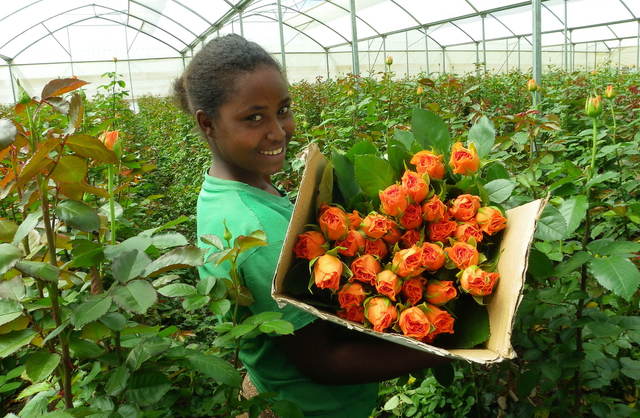
Indian-owned firms in Ethiopia are making flowers the country’s third-largest export earner after coffee and khat, a kind of chewable cannabis. In the last five years, the Ethiopian floriculture industry has become the second largest flower exporter in Africa (after Kenya) and fourth largest flower exporter in the world. According to one estimate, the export value earned by the country is expected to rise up to $550 million by 2016.

Ethiopia has a comparative advantage in the production of roses, especially with favourable climate conditions and availability of labour. The Ethiopian Government also offered incentives to investors. Ethiopia has the ideal climate, appropriate conditions and stable, year-round temperature that can ensure better production and quality flowers. The region is acknowledged as one of the best flower growing areas. Source: india.nydailynews.com

Nigeria to Change from FOB to CIF

Trade policy - a balancing actThe Federal Government of Nigeria is set to change its trade policy from the present Free on Board (FOB) to Cost, Insurance and Freight (CIF) which most countries across the world use because of its economic benefits, before the end of the year. FOB makes it mandatory for the buyer to determine who ships and insures the goods to his port of destination while the CIF ensures that the seller determines who ships and who insures the goods brought from him. Presently, goods bought from Nigeria are on FOB basis while Nigerian trade with other nations is on a CIF basis.

Disclosing the position of the federal government to Vanguard in Houston, Texas at the ongoing Offshore Technology Conference (OTC), Leke Oyewole, Special Adviser to President Goodluck Jonathan, said work has been completed on the document for a change in policy so as to help indigenous operators. (?)

The Economic Management Team (EMT) is to take a final look at the policy before returning it to the President for it to be signed into law.

Asked whether the policy would be reversed before the end of the year, the Special Adviser to the President said, ” I am hopeful, am very hopeful, but you also know that if today the President signs the policy into law, Nigerians would not begin by tomorrow. We need to give time sufficient enough for Nigerians to acquire vessels to begin to carry.”

He noted that the country presently “operates on FOB, in which case, as soon as we put cargo onboard the ship, foreign funds are released to Nigeria. When we go on CIF, it will mean waiting until delivery of cargo, before the money will come into Nigeria. There will be a gap, that gap most not be too wide otherwise it will hamper the national funding because we get most of our revenue from these products (petroleum products). Source: Vanguard, Lagos.