Zimbabwe – Sharp Decline in Vehicle Imports

carsBeitbridge border post is experiencing a significant decline in volumes of imported used cars following a 20 percent increase in excise duty which took effect on November 1. “We are processing documents for less than 40 vehicles per day compared to the previous month when we would deal with over 150 cars,” said a ZIMRA official.

Investigations by The Herald indicate that before the new duty regime, ZIMRA was making over $100 000 on car imports at Manica transit shed a day, but the figure has declined to around $30 000. A modest vehicle costs between $3 000 and $4 000 at dealerships on the South African side of the border and attracts import duty of the same amount.

Before the introduction of the new regulations, zimra officials were clearing around 170 vehicle imports a day as dealers rushed to beat the November 1 deadline.

Finance and Economic Development Minister Patrick Chinamasa recently announced an increase in customs duty on single cab vehicles with a payload of more than 800kg from 20 percent to 40 percent. Buses with a 26-passenger carrying capacity and above will pay 40 percent from zero duty, while duty for double cab trucks was reviewed from 40 to 60 percent. Vehicles with an engine capacity below 1 500cc had their duty increased from 25 to 40 percent.

Customs duty for vehicles with engine capacity above 1500cc remains at 86 percent, inclusive of VAT and surtax. The new development has seen the Zimbabwe Revenue Authority processing fewer vehicles at Manica transit shed in Beitbridge. Vehicle dealers at the South African border said they were struggling to sell five cars a day. Major car dealers include Quest Royal, Wright Cars, Car Cade, Murree Motors, Noble Motors and KDG. Cars with small engines such as the Nissan March, Honda Fit, Toyota Vitz, Toyota Corolla, Toyota Raum and FunCargo were on high demand before the new duty regime. Source: The Herald

Surge in Car Imports at ZIM/RSA Border as Dealers Panic

The Herald - Surge in new car imports between ZIM-RSAThere is a drastic increase in motor vehicle imports through Beitbridge border post as dealers are rushing to buy cars before the proposed 20 percent customs duty increase on imported motor vehicles comes into effect on November 1.

Finance and Economic Development Minister Patrick Chinamasa announced recently the Government intendeds to increase duty of motor vehicles which he said contributed 10 percent of the import bill in the first half of this year.

He proposed an increase in customs duty on single cab of a payload more than 800kgs from 20% to 40%, buses of carrying capacity of 26 passengers and above from 0% to 40%, double cab trucks from 40% to 60%, and passenger motor vehicles of engine capacity below 1500cc from 25% to 40%.

Customs duty for vehicles with engines above 1500cc has not been changed from 86 percent inclusive of VAT and Surtax. The development has raised anxiety among most Zimbabweans who are now rushing to buy second hand cars from Japan some of which come through South Africa.

Zimbabwe Revenue Authority (Zimra) is processing an average of 170 car imports at the border post per day since the beginning of October. Prior to the announcement Zimra used to process between 60 and 70 car imports per day. ZIMRA officers at the border said in separate interview yesterday that they were battling to clear the vehicles at Manica Transit Shed where 300 new cars arrive per day.

“We used to get 100 to 150 cars per day , but now the number has doubled and is ever increasing,” said one of the officers.

A sales manager at Wright Cars on the South African border, Mr Clemence Mabidi said the demand of cars with small engines such as Nissan March, Honda Fit, Toyota Vitz, Toyota Corolla, Toyota Raum and Fun Cargo had increased.

“We used to sell around 20 cars per day but now the number has increased to 40 and we have a backlog in deliveries to Zimbabwe.

“We are now hiring other car carriers to take the vehicles across the border,” he said.

Mr Mabidi said even the small car dealers who used to sell between 5 and 10 cars per day were now selling up to 20 vehicles. Some dealers have also reduced prices while others are increasing the prices because of the demand. A modest vehicle costs between $2500 and $3000 at these dealerships. Source: The Herald

Africa Under ‘Unprecedented’ Pressure from Rich Countries over Trade Facilitation Agreement

flags2African countries are coming under strong pressure from the United States and the European Union to reverse the decision adopted by their trade ministers to implement the World Trade Organization’s trade facilitation agreement on a “provisional” basis.

At last week’s summit of African Union leaders in Malabo, Equatorial Guinea, “there was unprecedented [U.S. and European Union] pressure and bulldozing to change the decision reached by the African trade ministers on April 27 in Addis Ababa, Ethiopia, to implement the trade facilitation (TF) agreement on a provisional basis under paragraph 47 of the Doha Declaration,” Ambassador Nelson Ndirangu, director for economics and external trade in the Kenyan Foreign Ministry, told IPS.

“This pressure comes only when the issues and interests of rich countries are involved but not when the concerns of the poorest countries are to be addressed,” Ambassador Ndirangu said.

“Clearly, there are double-standards,” the senior Kenyan trade official added, lamenting the pressure and arm-twisting that was applied on African countries for definitive implementation of the agreement.

The TF agreement was concluded at the WTO’s ninth ministerial conference in Bali, Indonesia, last year. It was taken out of the Doha Development Agenda as a low-hanging fruit ready for consummation. More importantly, the agreement was a payment to the United States and the European Union to return to the Doha negotiating table.

The ambitious TF agreement is aimed at harmonising customs rules and regulations as followed in the industrialised countries. It ensures unimpeded market access for companies such as Apple, General Electric, Caterpillar, Pfizer, Samsung, Sony, Ericsson, Nokia, Hyundai, Toyota and Lenovo in developing and poor countries.

Former WTO Director-General Pascal Lamy has suggested that the TF agreement would reduce tariffs by 10 percent in the poorest countries.

In return for the agreement, developing and least-developed countries were promised several best endeavour outcomes in the Bali package on agriculture and development.

They include general services (such as land rehabilitation, soil conservation and resource management, drought management and flood control), public stockholding for food security, an understanding on tariff rate quota administration, export subsidies, and phasing out of trade-distorting cotton subsidies (provided largely by the United States) in agriculture.

The non-binding developmental outcomes include preferential rules of origin for the export of industrial goods by the poorest countries, a special waiver to help services suppliers in the poorest countries, duty-free and quota-free market access for least developed countries (LDCs), and a monitoring mechanism for special and differential treatment flexibilities.

African countries were unhappy with the Bali package because they said it lacked balance and was tilted heavily in favour of the TF agreement forced by the industrialised countries on the poor nations.

The Bali outcomes, said African Union Trade Commissioner Fatima Acyl, “were not the most optimal decisions in terms of African interests … We have to reflect and learn from the lessons of Bali on how we can ensure that our interests and priorities are adequately addressed in the post-Bali negotiations.”

The African ministers in Malabo directed their negotiators to propose language on the Protocol of Amendment – the legal instrument that will bring the TF agreement into force at the WTO – that the TF agreement will be provisionally implemented and in completion of the entire Doha Round of negotiation.

African countries justify their proposal on the basis of paragraph 47 of the Doha Declaration which enables WTO members to implement agreement either on a provisional or definitive basis.

The African position on the TF agreement was not acceptable to the rich countries. In a furious response, the industrialised countries adopted a belligerent approach involving threats to terminate preferential access.

The United States, for example, threatened African countries that it would terminate the preferential access provided under the Africa Growth Opportunities Act (AGOA) programme if they did not reverse their decision on the TF, said a senior African trade official from Southern Africa.

The WTO has also joined the wave of protests launched by the industrialised countries against the African decision for deciding to implement the TF on a provisional basis. “I am aware that there are concerns about actions on the part of some delegations [African countries] which could compromise what was negotiated in Bali last December,” WTO Director-General Roberto Azevedo said, at a meeting of the informal trade negotiations committee on June 25.

The African decision, according to Azevedo, “would not only compromise the Trade Facilitation Agreement – including the technical assistance element. All of the Bali decisions – every single one of them – would be compromised,” he said.

The United States agreed with Azevedo’s assessment of the potential danger of unravelling the TF agreement, and the European Union’s trade envoy to the WTO, Ambassador Angelos Pangratis, said that “the credibility of the negotiating function of this organisation is once again at stake” because of the African decision.

The United States and the European Union stepped up their pressure by sending security officials to Malabo to oversee the debate, said another African official. He called it an “unprecedented power game rarely witnessed at an African heads of nations meeting.”

In the face of the strong-arm tactics, several African countries such as Nigeria and Mauritius refused to join the ministerial consensus to implement the TF agreement on a provisional basis. Several other African countries subsequently retracted their support for the declaration agreed to in April.

In a nutshell, African Union leaders were forced to change their course by adopting a new decision which “reaffirms commitment to the Doha Development Agenda and to its rapid completion in accordance with its development objectives.”

The African Union “also reaffirms its commitment to all the decisions the Ministers took in Bali which are an important stepping stone towards the conclusion of the Doha Round … To this end, leaders acknowledge that the Trade Facilitation Agreement is an integral part of the process.”

Regarding capacity-building assistance to developing countries to help them implement the binding TF commitments, African Union countries still want to see up-front delivery of assistance. The new decision states that African Union leaders “reiterate in this regard that assistance and support for capacity-building should be provided as envisaged in the Trade Facilitation Agreement in a predictable manner so as to enable African economies to acquire the necessary capacity for the implementation of the agreement.”

The decision taken by the African leaders is clearly aimed at implementing the TF decision, but there is no clarity yet on how to implement the decision, said Ndirangu. “We never said we will not implement the TF agreement but we don’t know how to implement this agreement,” he added.

In an attempt to ensure that the rich countries do not walk away with their prized jewel in the Doha crown by not addressing the remaining developmental issues, several countries – South Africa, India, Uganda, Tanzania, Solomon Islands and Zimbabwe – demanded Wednesday that there has to be a clear linkage between the implementation of the TF agreement and the rest of the Doha Development Agenda on the basis of the Single Undertaking, which stipulates that nothing is agreed until everything is agreed!

More than 180 days after the Bali meeting, there is no measurable progress on the issues raised by the poor countries. But the TF agreement is on course for final implementation by the end of 2015. Source: Inter Press Service

Zimbabwe to introduce new import and export licences

Zimbabwe-emblem11To curb rampant corruption and smuggling through Zimbabwe’s borders the government is introducing new import and export licences with special security features.

Mike Bimha, Zimbabwean Industry and Commerce Minister says the local industry was being negatively affected by cheap imports into the country, some of which were being smuggled through the country’s borders.

“There are a number of fake import and export permits in the country, which is affecting our industry.As a consequence, my ministry has given a directive that all import and export licenses have to be renewed so that new ones can be issued that have special security features.”

“We are also working on a number of interventions to protect local industry.”

“We are looking at removing duty on raw materials as well as reviewing tariffs and duties with a view to restricting some imports coming into the country.”

“The reviewing of duties is not a once-off exercise but will continue in consultation with local industry.”

“We meet with industry on a regular basis where we discuss tariffs and we make the policy recommendations based on these meetings.

Zimbabwe’s trade deficit is expected to widen this year with statistics showing that the import bill so far this year is now $8,3 billion against exports of $5 billion while imports for last year were $7,6 billion against exports of $4,43 billion. Source: TransportWorldAfrica

No cash! No problem!

banner4Transport Forex, created by Inter Africa Bureau de Change, a registered bureau de change with the South African Reserve Bank has created an unique online banking system for the transport industry.

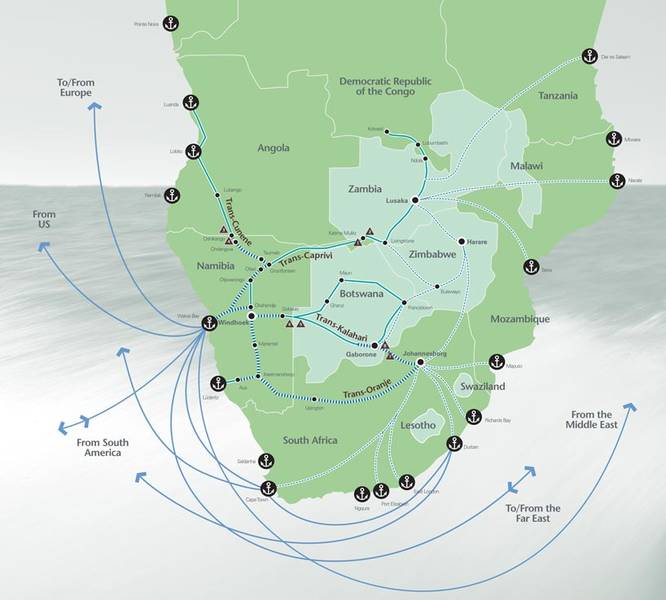
With branches at all of South African border posts, the company has expanded operations into Namibia, Botswana, Zimbabwe, Mozambique, Zambia, the DRC and Tanzania with offices on all the major border posts between these countries.

Transport Forex is an online ordering system where the transport manager can deposit money in South Africa into the relevant account therefore ensuring when drivers arrive at the relevant border posts there is enough money for them to pay the relevant duties. At the same time, this ensures enough cash is in the account for drivers to purchase fuel at key petrol stations or even pay for a service on-route in one of the partner countries.

Once the monies have been deposited into the account, an order number is sent via SMS to the driver who then presents it at the relevant Transport Forex office to draw the necessary funds required.

In the same way you can book and pay for diesel for your truck on any of the major transport routes in Namibia, Botswana, Zimbabwe, Mozambique, Zambia, the DRC and Tanzania. Transport Forex has negotiated with partner fuel suppliers for better prices and passes this discount directly to the transport company.

A new Payment Service was introduced in 2013 for clients. Should additional unforeseen funds be required for an emergency while the driver is on the road then monies can be made available for drivers almost immediately. This prevents valuable time from being lost.

Transport Forex is also in negotiations with several government institutions so relevant duties and taxes for operators’trucks can also be paid through the system in advance.

To join Transport Forex simply log onto www.transportforex.co.za, and click on “Create Account”. Registration is free, and there are no monthly charges.

Zimbabwe to use the Chinese currency as legal tender

yuanZimbabwe’s central bank on Wednesday said it would allow the Chinese yuan, Indian rupee, Japanese yen, and Australian dollar to be added into the basket of multiple currencies to be circulated inside the country.

The decision was unveiled by the monetary statement issued by acting governor of the Reserved Bank of Zimbabwe Charity Dhliwayo.

“We wish to advise exporters and the general transacting public that individuals and corporates can also open accounts denominated in the Australian Dollar (AUD), Chinese Yuan (CYN), Indian Rupee (INR) and Japanese Yen (JPY),” Dhliwayo said.

She said the decision to include the three foreign currencies is made upon the consideration that trade and investment ties between Zimbabwe, China, India, Japan and Australia have grown appreciably in recent years.

Zimbabwe has adopted a multiple currency system since the collapse of its local currency, the Zimbabwean dollar in 2009. The most used currency in the southern African country since then has been the US dollar and South African rand. The Botswana pula and British pound are also among the foreign currencies allowed to circulate.

Zimbabwe’s Finance Minister Patrick Chinamasa said last December during his annual budget statement that the multiple currency system is to stay for foreseeable future.

China is Zimbabwe’s major trading partner. Bilateral trade exceeded 1 billion US dollars for two consecutive years since 2012. While Zimbabwean officials have expressed the intention to add Chinese yuan into the currency basket, no formal agreement has been signed between the central banks of the two countries yet. Source: zimdev.wordpress.com

Mugabe family linked to illicit SA cigarette trade

Pacific Blue_SnapseedRelatives of President Robert Mugabe are being linked to illegal tobacco smuggling networks suspected of bringing more than $48 million in contraband through South Africa’s borders, reports NewZimbabwe.com.

Harare-based Savanna Tobacco is owned by a prominent Zimbabwean businessman, Adam Molai, who is married to Sandra Mugabe, one of Mugabe’s nieces. Molai has previously worked with Sandra as co-director of the Zimbabwe Tobacco Growing Company. Savanna has allegedly moved tons of illegal tobacco into South Africa.

The company’s main brand, Pacific cigarettes, has been found in concealed consignments by police in South Africa and abroad, according to two private investigators who track tobacco busts and work for the industry to counter the trade in illicit tobacco. The products have been linked to a huge tobacco smuggling operation whose base in South Africa was shut down in 2010 by the South African Revenue Service (SARS), which is engaged in a crackdown on the country’s illegal tobacco markets.

Images taken at the scene of two busts in South Africa and one in Zimbabwe show the extent of the smuggling operation. SARS has refused to confirm or deny whether it is investigating Savanna, citing the confidentiality requirements of the Tax Administration Act.

The frequency of the busts, the methods used and the quantities of illegal Pacific cigarettes found have led sources close to the investigations to claim that Savanna has been centrally involved for at least four years. It also increases suspicions that Zimbabwe is using smuggling to keep its economy afloat. Mugabe has openly supported Savanna. A year ago, he accused rival British American Tobacco (BAT) of spying on Savanna and hijacking its trucks. “If this is what you are doing in order to kill competition and you do it in a bad way, somebody will answer for it,” Mugabe warned.

Boxes of cigarettes that can be made for as little as R1.50 are easy to slip into the local market to avoid the R13 tax a box. Whereas popular brands of cigarettes can retail at R35 a pack, illegal cigarettes sell for between R4 and R12 a pack. With margins approaching 1000%, the illicit trade has become one of the largest elements in organised crime in South Africa.

According to research commissioned by the Tobacco Institute of South Africa, which is predominantly funded by BAT, 9.5billion illegal cigarettes with a street value of about R4-billion were smoked locally last year.

Savanna has captured almost 10% of this market, according to the institute, with about 700 million of its illegal cigarettes smoked last year. Pacific’s illegal cigarettes are sold mostly on the streets of Cape Town.

In one of the biggest busts in October, 1.6million Pacific cigarettes were found hidden on a train in Plumtree. Pacific cigarettes have also been seized at the Beitbridge border post near Musina and in Boksburg, on the East Rand, during busts in November. Trucks were found carrying Pacific cigarettes in concealed compartments.

This month, a consignment of Pacific cigarettes was found hidden behind electronic goods on a truck in the Western Cape. Similar busts have been made in Mozambique and at a border post between Zambia and Namibia, according to private investigators.

Evidence from the Plumtree train bust showed that the smuggling route had its origin as Savanna’s factory in Zimbabwe and South Africa’s black market as its destination. In the Plumtree bust on October 12, Zimbabwean police confiscated 40 tons of illicit Pacific cigarettes that had come from Bulawayo. The train was said to be carrying gum poles.

Records reveal that between September 2012 and August 2013 at least 23 shipments with 44 wagons of “gum poles” had followed the same route. A number of these consignments appear to have arrived at the South African business PFC Integration. According to an investigator who has studied the operation, PFC is “not into the gum pole business at all”.


Comesa chips in with $1,4m for ZIM dry port in Nambia

Walvis Bay - making headway (www.transportworldafrica.co.za)

Walvis Bay – making headway (www.transportworldafrica.co.za)

The Common Markets for Eastern and Southern Africa has agreed to avail US$1,4 million for phase one of the construction of the country’s Walvis Bay dry port. The government of Namibia in September 2009 granted Zimbabwe 19 000 square metres of land to construct its own dry port that is expected to boost the country’s trade. The project is being spearheaded by the Road Motor Services, a subsidiary of the National Railways of Zimbabwe.

In an interview, RMS managing director Mr Cosmos Mutakaya said the Ministry of Industry and Commerce last month held a consultative meeting with Comesa to strategise on how to fund the project.

“Comesa is looking at funding projects with a regional integration element that countries within the Southern African Development Community would benefit from. In the last meeting we held, Comesa indicated their willingness to finance the first phase of the facility which will cost US$1,4 million,” he said.

He said all the relevant documentation had been submitted and they are now waiting for a response from Comesa.

Mr Mutakaya said construction of the dry port would be done in two phases. The first phase involves the civil works which includes construction of the drive-in weighbridge, storage shades, palisade fencing as well as installation of electric catwalks. Phase two involves the putting up of administration blocks. He said once phase one is completed, then the dry port operations will start.

“We are now waiting for the unlocking of funds from Treasury and Comesa for us to start construction. The Namibian contractor, Namport, will also start working on the port once the funds are made available. According to the contractor, phase one of the project is going to take five working months to complete,” Mr Mutakaya said.

He said the project, which was supposed to have been completed by May this year, had been stalled by the lack of funding.

An official at the Namibian desk office in the Foreign Affairs Ministry confirmed that operations at the port had stopped for a while due to a lack of funding. “Government has been facing challenges in making payments to the Walvis Bay Corridors Group, responsible for the construction at the port and operations had to be stopped for some time pending clearance of some outstanding fees by Government,” he said.

Trade for Zimbabwe via Walvis Bay has increased for the past few years and a large percentage of commodities are transported along this corridor. Zimbabwe’s trade volumes through the Port of Walvis Bay have grown significantly to more than 2 500 tonnes per month.

In a related development, the Namibian Ports Authority is also working on expanding Walvis Bay port and recently secured a US$338 million loan from the African Development Bank to finance the construction of a new container terminal at Port of Walvis Bay. The Namibian government also received US$1,5 million for logistics and capacity building complementing the port project loan. Source: The Herald (Zimbabwe)

Beira – Zimbabwe road to be rebuilt by China

A truck leaves the border post at Machipanda to drive down the Beira Corridor, which links the port of Beira to Zimbabwe. This has always been a strategically crucial route for trade in Southern Africa. (The Guardian)

The Mozambican government intends to invest $400 million in the full rehabilitation of the road from the port of Beira to Machipanda, on the border with Zimbabwe.

Minister of Public Works, Cadmiel Muthemba, announced the rehabilitation of the road, which is about 300 kilometres long, will begin in February 2014. The finance is a loan from the Chinese export-import bank (Exim Bank).

Muthemba said that the road will be substantially widened. Along its entire length the road will be at least a four-lane highway, and in places, such as the approaches to Beira, it will have six lanes.

“The road will have roundabouts at particularly busy areas, such as the Inchope crossroads (where the road meets Mozambique’s main north-south highway), Chimoio city, and the towns of Gondola and Manica”, said the Minister.

Along some stretches the road will be elevated, notably along the Pungue flats. This is where the current road runs alongside the Pungue River. When the Pungue bursts its banks, which happens frequently during Mozambican rainy seasons, the road is swamped, and sometimes the flooding is serious enough to interrupt traffic to and from Zimbabwe.

Raising the road above the level of the river will be expensive, but will ensure that traffic flows in all weathers.

The Beira-Zimbabwe road will be farmed out for maintenance to a private company, which will charge motorists through toll gates.

So far, the only major road in the country with toll gates is the Maputo-South Africa motorway, operated by the South African company Trans-Africa Concessions (TRAC).

At the moment, the Beira-Zimbabwe road is in a poor and dangerous condition. In order to avoid gaping potholes, motorists frequently cross into the opposite lane, risking collisions with vehicles gong in the other direction. Emergency repairs between Beira and Inchope, which should have been finished in mid-April, are months behind schedule, and the Sofala provincial government is considering cancelling the contracts with the companies concerned.

The road is of key importance to the trade, not only of Zimbabwe, but of other landlocked southern African countries, including Zambia, Malawi and even parts of the Democratic Republic of Congo.

The road that branches off the Beira-Zimbabwe highway at Tica and leads to the district of Buzi, will be tarred, Muthemba announced. This is budgeted at $150 million, and the money will come from the Indian Eximbank. Work on the Tica-Buzi road will begin this year.

But Muthemba lamented that there was no money available to rehabilitate the road from Inchope to Caia, on the south bank of the Zambezi. This is a key part of the north-south highway, and it needs thorough rehabilitation.

“We aren’t sitting back with arms crossed”, said Muthemba. “With the few financial resources we have, we are working on the most critical sections, until we find the money for a complete rehabilitation”.

However, a complete rehabilitation of this road was carried out less than a decade ago. Indeed, in May 2007, the then Minister of Industry and Trade, Antonio Fernando, boasted in the Mozambican parliament, the Assembly of the Republic, that the Inchope-Caia road, “used to be a nightmare”, but had been rebuilt to such a high standard that it resembled a racing track. Source: Mozambique News Agency


Study into the cooperation of border management agencies in Zimbabwe

tralacZimbabwe is a landlocked developing country with a population of 14 million, sharing common borders with Botswana, Mozambique, South Africa and Zambia. Zimbabwe has 14 border posts, varying in size in accordance with the volume of traffic passing through them. Beitbridge, the only border post with South Africa, is the largest and busiest, owing to the fact that it is the gateway to the sea for most countries along the North-South Corridor. Zimbabwe thus provides a critical trade link between several countries in the southern African regions. The need for the country, especially its border posts, to play a trade facilitative role can therefore not be over-emphasised.

Trade facilitation has become an important issue on the multilateral, regional and Zimbabwean trade agendas, and with it, border management efficiency. Border management concerns the administration of borders. Border agencies are responsible for the processing of people and goods at points of entry and exit, as well as for the detection and regulation of people and goods attempting to cross borders illegally. Efficient border management requires the cooperation of all border management agencies and such cooperation can only be achieved if proper coordination mechanisms, legal framework and institutions are established.

This study explores how border agencies in Zimbabwe operate and cooperate in border management. The objectives of the study were to:

  • Identify agencies involved in border management in Zimbabwe;
  • Analyse the scope of their role/involvement in border management; and
  • Review domestic policy and legislation (statutes of these agencies) specifically to identify the legal provisions that facilitate cooperation among them.

Visit the Tralac Trade Law website to download the study.

Source: TRALAC

Call to Develop Zim-RSA Transport and Trade Links

zim-rsaZimbabwe needs to further develop transport and trade infrastructure links with South Africa to maintain Africa’s biggest economy as its single most important trading partner, recent research findings have shown.

This came from preliminary findings of a research study carried out by Dr Medicine Masiiwa who was commissioned by the Ministry of Regional Integration and International Co-operation to undertake the study on trade and transport. The World Bank funded the study to assess the need to facilitate transport and trade in Zimbabwe. The findings form part of preliminary desk research ahead of a more detailed second phase.

Dr Masiiwa presented the initial findings from the desk research to stakeholders at a workshop in Harare. Preliminary findings of the study show that since economic and political stability, key for trade competitiveness of Zimbabwe is now in place, the country’s trade was bound for significant growth, making a trade and transport facilitation measure critical to support this growth.

“A major implication of having South Africa as Zimbabwe’s single most significant trading partner is that the transport and trade infrastructure between the two countries should be further developed,” he said.

Development options include expanding the current border post to accommodate more traffic or to construct a new border post altogether. Sound transport and trade infrastructure between Zimbabwe and South Africa is critical as more than 34 percent of local imports go to South Africa while Zimbabwe imports more than 60 percent of basic commodities from that country.

But the state of the main trunk road, on the Zimbabwe side, has remained in poor state despite also being the main link between the north and south. Increased trade with China implies that Zimbabwe, in collaboration with its regional partners, needs to further develop the Beira and Limpopo transport corridors, which link Zimbabwe with the ports on the east coast.

“It is also interesting to note that trade with the EU and other Western countries is on the rebound; meaning transport corridors linking western gateways also need to be further developed,” said Dr Masiiwa.

The major problem facing Zimbabwe is that the quality of infrastructure is deteriorating and therefore acting as an impediment to trade. A study by the World Bank showed that in the 1990s, the proportion of primary roads in “good” condition was about 90 percent, but this dropped to 85 percent in 2009. Roads with the worst conditions are secondary roads, where about 45 per cent of paved and 50 percent of the unpaved secondary roads are in poor condition. Source: Zimbabwe Herald

Zimbabwe Car Imports Up 23 Percent

Secondhand Cars ZimbabweVehicle imports through the Beitbridge Border Post increased by 23 percent between January and May this year compared to the same period last year, the Zimbabwe Revenue Authority has said. The increase is attributed to the price freeze of vehicles in South Africa and also the exorbitant prices of vehicles on the local market. Prices of second hand vehicles in South Africa have remained stable for the past 12 months. It costs on average US$7 000 to buy a second hand modest car from South Africa and at least US$20 000 and above to buy a similar car on the local market.

Figures from Zimra show that a total of 14 114 vehicles have been imported through Beitbridge between January 1 and May 31, 2013 compared to 10 851 vehicles during the same period last year.

Investigations by Herald Business show that on average Zimra clears a total of 1 500 cars per month at Manica bonded warehouse, and the figure has increased to between 2 000 and 3 500.

A total of between 15 and 25 car carriers offload vehicles at Manica daily. Zimra’s legal and corporate affairs director Ms Florence Jambwa said that most of the cars were coming from Japan via Durban, South Africa.

“There has been a marked increase of motor vehicle imports at Beitbridge Border Post this year as compared to the year 2012.

“The month of January had the lowest number of imports (1 194) while the month of May had the highest number (3 706), in fact there has been an increase every month.

“You will note that imports of motor vehicles through Beitbridge are increasing as such the work load increases.

“However, the Zimbabwe Revenue Authority employs several strategies to curb challenges at the border post mainly through embracing modern technological innovations such as the use of scanners and the ASYCUDA World system which is Internet-based,” said Ms Jambwa.

She said they had already addressed the challenges that were affecting the processing of vehicle imports at Beitbridge border post. Early this year there had been an outcry over the slow processing of vehicle imports at Manica where importers were spending around two days to complete the processes with Zimra. On average it should take less than one and half hours per vehicle if correct documentation was made available. She said they had no backlogs in terms of printing the customs clearance certificates for all newly imported vehicles.

Herald Business is reliably informed that plans are underway to have a cash office at the bonded warehouse and the authority has been encouraging its clients to make their payments through the bank and avoid carrying cash. Source: Zimbabwe Herald

Non-Tariff Barriers – SADC Secretariat requested to intervene in Mozambique

0b8a0ce6140c04b4f629a97cb5e8d8f34e69d4a1The SADC, COMESA and EAC Tripartite alliance has been urged by various Zimbabwean, Zambian and Malawian exporters to salvage a potential crippling situation occurring at Mozambique borders. This follows the recent implementation of a new transit bond guarantee system which in conjunction with the Single Window system is allegedly causing significant delays, including loss of business and spiralling demurrage for transit goods emanating from these landlocked countries, en route for export from various Mozambique ports, Beira in particular.

Complaint no. NTB-000-578 in terms of ‘Lengthy and costly customs clearance procedures’ was lodged and can be viewed in full on the Tripartite’s NTB portal. Amongst the various problems sited, the complainants request the following of Mozambique –

  • Mozambique Ministry of Finance is requested to get customs to consider a parallel system to run with the electronic single window programme to clear the backlog in Beira port now and also consider providing release against Report orders to reduce further downtime in port . This will be a stop-gap measure until the customs staff are well versed , fully trained and that the new system can work well.
  • Mozambique authorities to facilitate arrangements with Cornelder to consider waiving storage for this special situation or at least offer 75% credit on the bills due which I must say are now astronomical based on the days the cargo has stayed in port both imports and exports.
  • Mozambique authorities to facilitate arrangements with shipping lines to consider waiving completely the demurrage due on the empty containers or at least give say 15-21 more days grace period before demurrage starts accruing.
  • Mozambique authorities to facilitate arrangements that Mozambique customs get technical assistance to assist roll this new programme out without causing huge catastrophes like this.

Mozambique has acknowledged the complaint and expressed regret over the developments. Mozambique reported that the issue was receiving urgent attention and they would provide feed back shortly.

ASYCUDA – more technical glitches

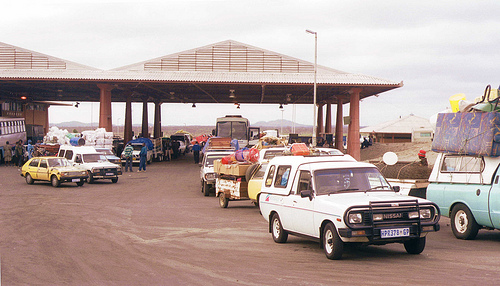
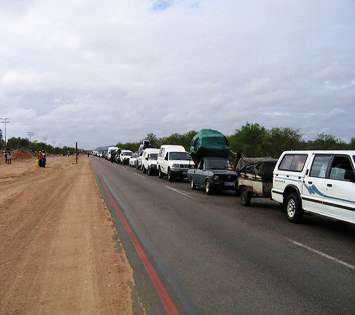
In the waiting... vehicle queue at Beitbridge

In the waiting… vehicle queue at Beitbridge

Scores of car importers were left stranded at Beitbridge Border Post on Wednesday after the Zimbabwe Revenue Authority‘s (Zimra) vehicle clearance system went offline for eight hours.

Zimra introduced the ASYCUDA plus system for processing vehicle imports in March this year in a bid to ensure efficiency and reduce regular interface between the customs officers and its clients. Asycuda is (Automated System for Customs Data) is a more efficient and advanced system for customs data processing since it is internet based. Upon its introduction the system left little room for wheeling and dealing between Zimra employees and criminals.

However, connectivity has remained a major challenge at the Manica Bonded warehouse where vehicle imports are processed. When The Herald visited the bonded warehouse yesterday restless car importers were seen moving around the yard while others were making numerous inquiries from the Zimra help desk.

In separate interviews motorists advised the revenue authorities to consider having a back-up plan in case of the Asycuda system breakdown. He said it was worrying that the revenue authority had introduced the Asycuda system yet they had little capacity to sustain it.

It was the second time in a week that the Asycuda system went offline after operations came to a standstill on Friday last week. Prior to the introduction of Asycuda system, Zimra had been using a station based system which operated with very few technical glitches.

Figures from Zimra show that between 60 and 100 vehicle imports are processed at Manica per day and rise to 120 during peak times. Asycuda system is connected to the parastatal’s national grid which is accessible at any of its stations countrywide. Efforts to get a comment form Zimra spokesperson were fruitless. Source: The Herald (Zimbabwe)

Zim-EU Agreement to Suffocate Trade

ZimbabweThe Interim Economic Partnership Agreement (IEPA) Zimbabwe signed with the European Union (EU) is set to suffocate the country’s trade and industrial development policies due to the removal of taxes, a regional non-governmental organisation has warned. Zimbabwe alongside Mauritius, Seychelles and Madagascar concluded the IEPA with the EU that would result in the removal of taxes between the African countries and the EU.

But in an analysis of the trade pact, the Southern and Eastern Africa Trade, Information and Negotiations Institute (Seatini) said the elimination of the export taxes is a blow to both the National Trade Policy (NTP) and Industrial Development Policy (IDP) meant to promote the trade and industrial revival respectively.

Last year, the Zimbabwean government launched the Industrial Development Policy 2012-2016 that advocates value-addition or beneficiation and the NTP to guide the country’s trade with the rest of the world.

“There is no doubt that for Zimbabwe to successfully implement the NTP and IDP it will need to use tools such as export taxes. However, Article 15 of the interim EPA agreement that Zimbabwe signed and ratified provides for elimination of export taxes, thereby suffocating the policy space Zimbabwe is referring to in its National Trade policy on the need for value-adding natural resources,” Seatini said in a discussion paper, Zimbabwe’s control over its natural resources in the WTO context.

Article 15 of the IEPA provides that for the duration of the agreement, the parties shall not institute any new duties or taxes on, or in connection with, the exportation of goods to any other party in excess of those imposed on products destined for sale. The organisation recommended that Zimbabwe “must exercise its right to develop its economy and protect the environment through the use of export taxes, until such a time when the economy can competitively trade with the rest of the world enabling it to then gradually eliminate the taxes on a product by-product basis”.

It also recommended that government should consult widely all relevant ministries and the private sector on its existing and proposed laws relating to any prohibitions and restrictions on the export of natural resources especially metals and minerals. Seatini warned that the use of export restrictions would be in violation of World Trade Organisation (WTO) rules.

Article XI:2(a) of the General Agreement on Tariffs and Trade does not allow WTO members to impose prohibitions and restrictions on the importation of any product, unless they (restrictions and prohibitions) are temporary, addresses critical shortages, relates to foodstuffs or other products and are essential to the exporting WTO member. It said it would be difficult for Zimbabwe to prove the critical shortage requirement. Source: The Standard – Zimbabwe