WCO addresses a “Ministerial Lekgotla” as an introduction to the CITES Conference in Johannesburg

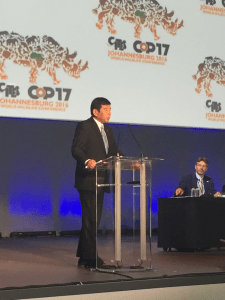
kunio-addressing-cop17At the invitation of the South African Minister of Environmental Affairs, Secretary General Kunio Mikuriya addressed a “Ministerial Lekgotla” held in Johannesburg, South Africa, on 23 September 2016 as an introduction to the CITES CoP 17 World Wildlife Conference.

During the high-level panel session, Secretary General Mikuriya focused on the role of Customs in facilitating legal trade and intercepting illegal trade in wildlife and on its link to CITES and Sustainable Development Goals.

He highlighted the WCO Declaration on the Illegal Wildlife Trade, which had been adopted in 2014 and aimed at drawing the attention of policy makers to environmental crime and at raising the priority of Customs operations in this area.

He also referred to the INAMA project (started in 2014) for technical and capacity building assistance for Customs on risk management, collaboration with other law enforcement agencies and institution building to enhance integrity.  Cooperation with the transport industry was also part of the WCO efforts to improve compliance, as exemplified in the Royal Foundation Task Force Declaration on Transport, adopted earlier this year.

The presence in Johannesburg of high-level delegations also provided an opportunity for the Executive Heads of the International Consortium on Combating Wildlife Crime (ICCWC) to meet in order to further enhance the collaborative work with the CITES Secretariat, INTERPOL, the UNODC, the World Bank and the WCO.

Fianlly, Secretary General Mikuriya also had a series of bilateral meetings with key partners, including with Executive Director Erik Solheim of the United Nations Environment Programme. Source: WCO

Track and Trace your container with Transnet’s Spotlight App

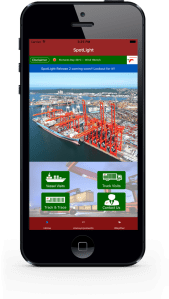
TNPA SpotlightTransnet’s new Spotlight App enables its customers to Track and Trace their containers, adding a valuable service to assist with their day to day planning, to increase operational efficiency.

Available on Android and Apple devices, current features include “Track and Trace”, which is not only focused on containers, but also extended to trucks and vessels. Track and Trace extends across all Transnet Terminals and TFR Navis Facilities.

Soon to be released features will enable our customers to be notified of any operational changes in the various Transnet Terminals, from weather conditions to any congestion issues.  In addition, the “Register Me” feature will enable Transnet to send customers personalised information regarding their specific consignments.

The Transnet Spotlight App is in line with Transnet’s MDS pillars, being Admired, Digital, Agile and Value, Transnet Spotlight is the only app in the industry that provides status of consignments across all Shipping Lines.  Future releases will extend to other industries. Source: Transnet.co.za

Davis Tax Committee pronounces on BMA

DTCRecent speculation concerning the Border Management Agency Bill have brought about reaction from both within government and industry. While there appears widespread support for a unified agency to administer South Africa’s borders, the challenge lies in the perceived administration of such agency given the specific mandates of the various border entities.

The Davis Tax Committee (DTC) was requested to provide a view on the affect of the proposed bill insofar as it impacts upon revenue (taxes and customs and excise) collection for the fiscus of South Africa.

The purpose of the Bill is to provide for the establishment, organisation, regulation and control of the Border Management Agency (BMA); to provide for the transfer, assignment, and designation of law enforcement border related functions to the BMA; and to provide for matters connected thereto. The functions of the BMA are (a) to perform border law enforcement functions within the borderline and at ports of entry; (b) to coordinate the implementation of its border law enforcement functions with the principal organs of state and may enter into protocols with those organs of state to do so; and (c) to provide an enabling environment to facilitate legitimate trade.

In short the DTC recommends that the functions and powers of SARS and the BMA be kept separate and that the Agency should not be assigned any of the current functions and powers of SARS with regard to revenue (taxes and customs and excise) collection and the control of goods that is associated with such collection functions. Of particular concern is the extraordinarily poor timing of the Bill. According to the 2014 Tax Statistics issued by SARS, the total of customs duties, import VAT, and ad valorem import duties collected amounted to R176.9 billion for the 2013-14 fiscal year. This was approximately 19% of the total revenue collected.

The DTC is of the view that to put so significant a contribution to the fiscus in a position of uncertainty, if the Bill were to be  implemented, is fiscally imprudent at this critical juncture for the South African economy. Follow this link to access the full report on the DTC website. Source: www.taxcom.org.za

Red Flags hang over BMA

Mesina-Beitbridge border crossing - Google MapsAccording to Eye Witness News, a draft law aimed at creating a new, overarching border control entity has run into problems.

Parliament’s Home Affairs Portfolio Committee has been briefed on the Border Management Authority Bill by the department, the South African Police Service (Saps) and National Treasury.

Cabinet approved the Bill in September 2015 to deal with weaknesses in the state’s ability to secure the country’s ports of entry.

The Bill proposes harnessing the responsibilities of Home Affairs, the police and the South African Revenue Service (Sars) among others in one agency under a commissioner.

The authority will take over the customs control functions currently undertaken by the South African Revenue Service. There are fears within the industry that it could compromise SARS’s achievements in modernising its customs administration that has facilitated the movement of goods across the border.

Red flags have been raised by both the SA Police Service and National Treasury over the Border Management Authority Bill.

Treasury’s Ismail Momoniat says while they support a single border control body, SARS must remain in charge of customs and excise and revenue collection.

“We’re talking of significant revenue collection, and that is a speciality… The Bill is a framework, it’s important it doesn’t generate uncertainty for an important institution like SARS.

The authority will be governed by a commissioner and overseen by an interministerial consultative committee, a border technical committee and advisory committees.

The SAPS’ Major General David Chilembe says the Constitution says South Africa must have a single police force. He says it may have to be amended if the new border authority takes over policing duties.

Chilembe also says the police, and not Home Affairs, should lead the new entity. Source: EWN.

South Africa severely affected by commodity trade misinvoicing

Raw-gold-619x413Global Trade Review reports that trade mis-invoicing is costing some developing countries two-thirds of the value of certain commodity exports.

New data gleaned from two decades of export figures emphasises the tens of billions of dollars being lost from the global economy to the under-invoicing of commodities from Africa and South America.

Between 2000 and 2014, 67% of the value of total gold exports were lost from South Africa through under-invoicing – when an invoice states a price as a lower value than is actually being paid.

Also read Maya Forestater’s blog post Misinvoicing or misunderstanding? for an alternative explanation regarding the UN’s claims in its recent report Trade Misinvoicing in Primary Commodities in Developing Countries.

This is often done to avoid paying taxes and is one of the most common methods of trade-based money laundering. The total loss in this particular commodity export amounts to US$78.2bn. More than half of this is lost on the trade of gold between South Africa and India.

From 1996 to 2014, the mis-invoicing of oil exports from Nigeria to the US was worth US$69.8bn. This is the equivalent value of one-quarter of all oil exports to the US.

The data from the UN Conference on Trade and Development (UNCTAD) shows that in the 20 years from 1995, more than half of Zambia’s total copper exports fell victim to misinvoicing, with US$28.9bn-worth not showing up on the books of Switzerland, the primary market.

From 1990 to 2014, Chile lost US$16bn in potential taxable revenue in the copper trade to the Netherlands, while the Netherlands did not record US$5bn in cocoa exports from Côte d’Ivoire between 1995 and 2015.

This is the first large-scale analyses of under-invoicing for specific commodities and countries,  despite the fact that the practice has been so rife for decades.

More awareness has been raised to the practice in recent years – in no small part due to the work done by not-for-profit organisations such as Global Financial Integrity (GFI) – but the lack of resources allocated to its eradication in much of the world, coupled with the culpability of many officials around the world, means that little progress has been made.

There is still no global standard against trade-based money laundering as there is against, for instance, sanctions breaching. The fact that it pre-dates most formal financial systems also means that any measures taken to stop it are difficult to enforce.

“When we talk about illicit financial flows we’re always talking about curtailing it, because there’s not going to be any situation in which any set of policies is going to entirely limit criminal behaviour. We have many, many laws on the books and folks break them all the time. But if you can make it as difficult as possible for folks to engage in this kind of thing, you’re doing what you’re supposed to do it,” Liz Confalone, policy counsel at GFI tells GTR.

The report also brings to attention the practice of over-invoicing – whereby the price of a good is fraudulently increased, allowing the exit of illegal money from an economy. Often, this money is connected to the narcotics trade, or to other criminal activity.

The UNCTAD report reads: “Puzzling results also emerge at the trading partner level. Trade with the Netherlands presents a peculiar case, with systematic and substantial export over-invoicing. It appears that primary commodities exported to the Netherlands never dock in the Netherlands.

“The question is whether this is the outcome of smuggling or incorrect reporting of the residence of the buyers. Answering this question may require an investigation at the company level.”

The authors call on a three-pronged attack on trade mis-invoicing, encompassing greater government scrutiny of particular commodity sales, an improvement in trade statistics and greater transparency in certain jurisdictions.

They write: “The results from this study highlight the need for an investigation into the role of transnational corporations involved in the exploitation, export and import of commodities, as well as the role of secrecy jurisdictions in facilitating trade mis-invoicing.

“Such an investigation may shed light on the mechanisms of export over-invoicing and import smuggling. Enhanced transparency in global trade is indispensable, especially through co-ordinated enforcement of the rules on country-by-country reporting by TNCs at the global level.”

Speaking to GTR recently, Jolyon Ellwood-Russell, a Hong Kong-based trade finance partner at law firm Simmons & Simmons, called for more joined-up thinking on an intergovernmental level if the problem is to be tackled.

Praising moves by the Hong Kong Monetary Authority and the Monetary Authority of Singapore to clamp down on trade-based money laundering, he said: “The issue is that the techniques and methods are very complex and don’t necessarily fit into those existing countermeasure programmes. Both banks and regulators could probably benefit from a better understanding of trade finance structures and how they are used in trade-based money laundering.” Source: Global Trade Review

BMA – to be first order of business when Parliment re-opens

Lebombo+border+postA “Unified border guard and authority” will be one of the first orders of business when Parliament opens for the third quarter of the year.

On the agenda for the portfolio committee on home affairs is “processing the Border Management Authority Bill — which‚ a statement noted‚ is a modified name as “the authority was called the agency in the former draft of the bill”‚ it said at the weekend.

It was necessitated by “inefficiencies resulting from having many government departments co-ordinating, and often duplicating, the securing of SA’s land‚ sea and air borders,” which “have contributed to the porous 5,244km border”.

“The bill and related authority aim to centralise the border-related responsibilities of‚ amongst others‚ the Department of Home Affairs‚ the South African National Defence Force and Police Service‚ Customs of the South African Revenue Service as well as aspects of the Departments of Agriculture‚ Environment and Health‚” the committee said in the statement.

After briefings‚ public hearings and written submissions‚ it is “likely to be finalised in the last quarter of 2016 or early in 2017”.

Also on the committee’s plate is “reliable higher bandwidth network services” needed by the Department of Home Affairs “to facilitate the expanded roll-out of technology-driven service delivery improvements”.

“These include paperless applications for more secure smart identification cards and passports as well as online visa and permits processes. The Department of Home Affairs has experienced challenges with the network services provided by the State Information Technology Agency and is in the process of seeking alternatives.” Source: Buisness Day Live

SACU – All’s not fair in proposed Customs Union reforms

SACU mapThe Southern African Customs Union (SACU) is an almost invisible organisation. Yet it has arguably had a profound impact on South Africa’s economic and even political relations with its much smaller neighbours – and on those four small countries themselves. But there are also deep differences among its five members – the others are Botswana, Lesotho, Namibia and Swaziland (BLNS) – about what the essential nature of SACU should be.

This weekend, SACU ministers will be meeting in South Africa for a retreat to try once again to set a new strategic direction, a roadmap into the future, for this critical body.

The leaders of the member countries will meet in a summit, also in South Africa, sometime before 15 July – when South Africa’s term as SACU chairs ends – to adopt or reject this roadmap. The aim of the changes in the SACU treaty would be to turn it ‘from an arrangement of convenience held together by a redistributive revenue formula to a development integration instrument,’ South African Trade and Industry Minister Rob Davies said during a press briefing in Kasane, Botswana, last Friday.

Davies said there were still ‘lots of differences’ among SACU members, which they had been unable to resolve despite years of negotiations.

SACU was founded in 1910 – the year South Africa was also created. Since then, the common external tariff it created has functioned as an instrument for the much larger South Africa to support the much smaller BLNS economically, by re-distributing to them a disproportionate share the customs tariffs collected at the external borders. Or, depending on your point of view, to relegate them to being passive markets for South African products.

The new African National Congress government, which came to power in 1994, ‘democratised’ relations with the BLNS by creating a Council of Ministers to make decisions by consensus in a new post-apartheid SACU treaty, which came into force in 2004. But the basic deal remained the same, as Davies implicitly acknowledged in last Friday’s briefing when he said: ‘we have historically just set the tariffs on behalf of SACU … and … in return for that, provided compensation … in the revenue-sharing formula.’

Also read – SACU Retreat announced by President Zuma

The re-distributive revenue-sharing formula has been hugely important for the government revenues of the BLNS. In South Africa’s 2015-2016 budget year, for example, the total revenue pool was expected to be about R84 billion, of which the BLNS would receive R46 billion – according to Xolelwa Mlumbi-Peter, Acting Deputy Director-General in South Africa’s Department of Trade and Industry, in a briefing to the parliamentary portfolio committee on trade and industry last year. She added that South Africa contributes about 98% of the total pool, while BLNS receive about 55% of the proceeds.

That meant South Africa was losing – or re-distributing – about R44.3 billion in that budget year, as de facto ‘direct budgetary support’ to the BLNS, to use the language of Western development aid.

‘This is seen as “compensation” for BLNS’s lack of policy discretion to determine tariffs, and for the price-raising effects of being subjected to tariffs that primarily protect SA industry,’ Mlumbi-Peter said.

A glaring example of that dynamic is South Africa’s maintenance of import tariffs on foreign automobiles to protect its own automobile industry. That, of course, makes automobiles more expensive in the BLNS countries.

And should South Africa choose instead to grant rebates on some tariffs – for example to encourage imports of inputs into South African industrial production – this would also impact negatively on the BLNS by reducing their tariff revenues, Mlumbi-Peter suggested.

In 2011, South African President Jacob Zuma chaired a SACU summit to review these inherent disparities. It agreed on a five-point plan to change SACU’s fundamentals, including a review of the revenue-sharing formula; prioritising work on regional cross-border industrial development, including creating value chains and regional infrastructure; promoting trade facilitation measures at borders; developing SACU institutions; and strengthening cooperation in external trade negotiations.

Nonetheless, as Davies said in Kasane, ‘we haven’t really been able to reach an understanding of what does development integration in SACU mean.’ And so Zuma had just completed a tour of visits to his counterparts in the BLNS countries to discuss these plans, and the upcoming retreat and summit. Davies said Zuma had found the BLNS leaders ‘flexible’ – though regional officials suggest otherwise.

Does South Africa, as the only really industrialised nation in SACU, not have inherent and irreconcilable differences with the rest of the body? Davies acknowledges that South Africa – with about 85% of the combined population, and about 90% of the combined GDP – also has most of the industries that demand tariff protection.

Nevertheless, he added, ‘We are all committed on paper to seeing tariffs as tools of industrial development… But there is also an obvious temptation for a number of other countries to see the revenue implications as more important.’ And, he did not add, there is also a growing feeling in South Africa that it could do with that R44 billion a year or thereabouts, which it gives to the BLNS every year.

The coincidence of the signing, on 10 June, of the Economic Partnership Agreement (EPA) between the European Union (EU) and the Southern African Development Community (SADC), and the attempt to revive SACU, underscored an ironic analogy of South Africa’s and the EU’s predicaments.

Also read – Historic Economic Partnership Agreement between EU and SADC 

With the EPA, the EU hopes to shift its relations with the SADC nations away from the traditional donor-recipient type of arrangement, to one of more equal and normal trade and industrial partners. That, essentially, is what South Africa is also hoping to achieve with its proposed reforms of SACU.

But it’s hard to see how South Africa is going to convince the BLNS to give up R44 billion a year of hard cash in hand, in exchange for the rather dubious future benefits of being absorbed into South Africa’s industrial development chains.

Source: Peter Fabricius – ISS Consultant.
NRCS to Fast-Track Letters of Authority for Compliant Importers

nrcsThe National Regulator of Compulsory Specifications (NRCS), in its battle to protect the country from non-compliant goods whilst facilitating trade, advises that it intends rolling out a pilot programme aimed at cutting delays in the issuance of Letters of Authority (LOA).

The intention is to categorise risk, thereby ensuring that applications from compliant importers will be fast tracked i.e.: the letters of authority will be processed in 21 days or less. Companies in the ‘low risk’ category will, however, be subjected to heavy penalties should they not meet the requirements.

The proposal the NRCS intends presenting to the Department of Trade and Industry (DTI) will reflect three categories of risk: low, medium and high. It is expected that NRCS will rollout its pilot study in the last 6 months of the year, before officially launching the programme early next year. Companies earmarked to participate in the pilot study will be identified by mid-June. Source: Shepstone & Wylie Attorneys – Taryn Hunkin

SA Wine exports increase by more than 20 perent over four years

SA WineWhile commodity prices tanked and unemployment rose during South Africa’s worst ever drought over the last few months, wine making increased.

What’s more, South African wine exports were up a further five percent in 2015 and the industry is expecting even more growth in 2016 as South African wine continues to find new markets around the world.

While almost every farming industry is struggling in South Africa, the wine industry is going through “one of its most exciting phases in history” according to Roland Peens, director of wine retailer Winecellar.co.za.


The country is the seventh largest producer of wine in the world and for the 12 months preceding June 2015, wine production was at 959 million liters, with 423 million liters sold for export and 395 million liters sold domestically.

Not only is South Africa producing some fantastic wines, but the struggling rand is actually helping wineries as it offers a lucrative export market. The UK is by far the biggest receiver of South African wines with 109 million liters exported here. Germany is second with 79 million while Sweden, France, Netherlands and Denmark all take between 20 to 25 million litres of South African wine.

Canada (18 million litres), USA (11 million liters), Belgium and China (9 million litres each) and Japan and Switzerland (6 million litres each) make up the other big export markets.
Source: www.thesouthafrican.com

Transnet Seeks Private Sector Participation for new Inland Terminal

Tambo SpringsSouth Africa’s freight and logistics company Transnet this week launched its massive drive to bring private sector operators into the country’s freight system.

The company has issued a request for proposals inviting suitably qualified global logistics service providers to design, build, operate, maintain and eventually hand over its proposed inland container terminal in Tambo Springs, East of Johannesburg – a 630ha site located on land originally known as Tamboekiesfontein farm.

The concession will be over a 20-year period and will be Transnet’s biggest private sector participation project to date.

The proposed terminal is in line with Transnet’s drive to migrate rail friendly cargo off the country’s road network.

The terminal is expected to be in operation by 2019 and will have an initial capacity of 144 000 TEUs per annum, with an option to ramp it up to 560 000 TEUs, depending on demand.

The project entails the following:

  • Arrival and departure yard for handling cargo trains
  • Terminal infrastructure;
  • Terminal equipment;
  • Stacking area;
  • Warehousing space
  • Distribution centre
  • Inland Reefer facilities

Transnet Freight Rail will be responsible for the operation of the arrival and departure yard required to service the terminal.

The operator will be responsible for loading and offloading of containers and marketing of the facility. The winning bidder is expected to introduce new entrants – particularly black players – must have demonstrated technical expertise, a minimum of level 4 BBBEE status with a commitment to reach level 2 by the third year of operation.

Transnet currently operates 5 inland terminals in Gauteng, including the City Deep Container Terminal in Johannesburg, Africa’s largest inland port.

The proposed terminal is an integral part of the Presidential Infrastructure Co-ordinating Committee’s SIP 2, aimed at unlocking the country’s industrial development while boosting export capability. It is designed to complement Transnet’s container-handling capacity in the province.

This is the culmination of years of hard work and a demonstration of cooperative governance between Transnet, representing the national competence, and both the Gauteng Provincial Government and the Ekurhuleni Municipality.

The Tambo Springs terminal is one of three mega terminals that Transnet is planning to build in Gauteng over the next 20 years. It will be located in Ekurhuleni along the N3, just off the Natal Corridor.

The project is expected to create 50 000 jobs, and has stringent requirements for supplier development and skills transfer. Source: Transnet

Transnet Freight Rail to provide VGM Service for customers

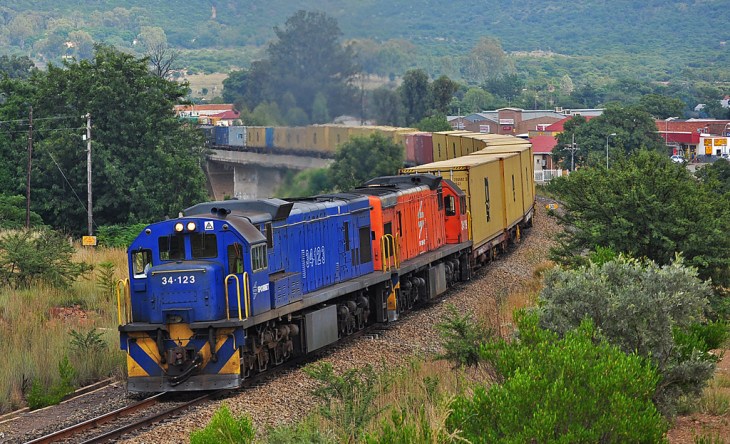
Transnet Freight RailAs from 1 July 2016, Transnet Freight Rail (TFR), as a transporter, must obtain proof of sea export container weights for rail to a Transnet Port Terminals (TPT) port facility. TPT has already engaged with all its shipping line customers and all respective bodies. Customers working on average mass will not be allowed to do so as from 1 July 2016 and must provide verified proof of the mass loaded into a container.
After reviewing the requirements of SOLAS, TFR has come to the conclusion that it is able to offer the service to provide the Verified Gross Mass (VGM) for Method 1 to customers who make use of Transnet rail services for export containers railed from TFR terminals equipped with weighbridges – click here to read TFR’s requirements for VGM.

The following links provide examples of the documentation and declaration which must be made available to TFR either as part of the documentation or as a separate attachment –

Source: Transnet Freight Rail

Futuristic plan for Sea Ports – a Hyperloop System

Forbes.com hyperloop diagram

Picture courtesy Forbes.com

Hyperloop One, a Los Angeles company working to develop the futuristic transportation technology, has announced the closing of $80 million in financing and said it plans to conduct a full system test before the end of the year.

A Hyperloop would whisk passengers and cargo in pods through a low pressure tube at speeds of up to 750 miles per hour (1,207 km per hour). It has been likened to a mix between the Concorde plane, a rail gun and an air-hockey table.

Early applications could center around ports – possibly replacing the trucks and trains that carry cargo from ships to factories and stores. Some anticipate that it could start operation in Los Angeles, close to some of the biggest port in the U.S.

Hyperloop One builds off a design by Tesla and SpaceX CEO Elon Musk, who has suggested it would be cheaper, faster and more efficient than high speed rail projects, including the one currently being built in California.

A test of the Hyperloop One system was conducted on Wednesday when a car-sized sled powered by electromagnets rocketed to more than 100 miles (160 kph) an hour through the Nevada desert.The sled began on a train track and then was rocketed to 105 miles per hour by electromagnets as electricity was shot into copper coils. After a short ride, the sled ran into a sand trap, sending out silicon sprays. If all goes according to plan, sleds will levitate and carry pods in a test later this year. Gigantic tubes already are scattered around the Las Vegas area test site.

Maglev technology would levitate the pods to reduce friction in the system, which would be fully autonomous and electric powered. Magnetic fields in the tunnel will lift the pod before a “thrust force” is applied, which will then accelerate it to speeds of up to 1230km/h. When the same force is applied for breaking the pod, the system’s battery is recharged through regenerative braking.

Using such a passive levitation system would eliminate the need for power stations along the Hyperloop track, and if any type of power failure occurs, Hyperloop pods would continue to levitate and only after reaching minimal speeds touch the ground, says the company.

The open source technology would, according to the initial “Alpha” design released in 2013, enable travel from the Los Angeles region to the San Francisco Bay Area in 35 minutes, meaning that passengers would traverse the proposed 569 kilometer (354 mile) route at an average speed of just under 962 km/h (598 mph) and a top speed of 1,223 km/h (760 mph).

Hyperloop One CEO Rob Lloyd likened hyperloop technology to the emergence of the U.S. railroad system and the era of prosperity it ushered in.

Lloyd also announced a competition to determine where the first Hyperloop One system should be built, with an announcement expected next year.

Hyperloop One has competition including Hyperloop Transportation Technologies, a crowdsourced company that last month signed an agreement with the Slovakian government to build a hyperloop connecting Slovenia with Austria and Hungary.

Skeptics say real-world challenges ranging from construction permits to making the new technology work mean the costs are likely to be far greater. Source: Martime Executive.

A Super Transhipment Port for South Africa?

Saldanha Bay South AfricaRecently while reading of Transnet’s terminal capex expansion plans, I came across this interesting if not highly improbable plan featured in an article by Harry Valentine on Maritime Executive. I say improbable given the current economic and labour situation prevailing in South Africa at this time, not to mention the fact that the Transnet controlled Port of Ngqura is considered South Africa’s transhipment hub. Nonetheless, I think its admirable that such ideas are conceived and with a bit of thought and application are presented for consideration. From a Customs’ perspective such plans – in particular the notion of a floating terminal – could pose some interesting challenges (err opportunities) for SARS particularly given impending new compliance, licensing and reporting requirements contained in the new Customs Control Act. 

The Port of Los Angeles has welcomed its first 18,000-TEU ultra-large container ship, and Brazil, with a population almost as large as the U.S. and with future prospects of increased trade with Asia, could see such ships arriving via South Africa.

The projected future volume of container traffic that will pass through Brazilian ports would warrant future operation of ultra-large container ships between Brazil and major Asian transshipment terminals. However, it would take much investment and likely many years before a Brazilian port and terminal would be able to berth and service these vessels. One option would be to develop a transshipment port in South Africa that could serve as a terminal for ultra-large container ships that sail from such ports as Busan, Inchon, Shanghai and Hong Kong carrying containers destined for South America.

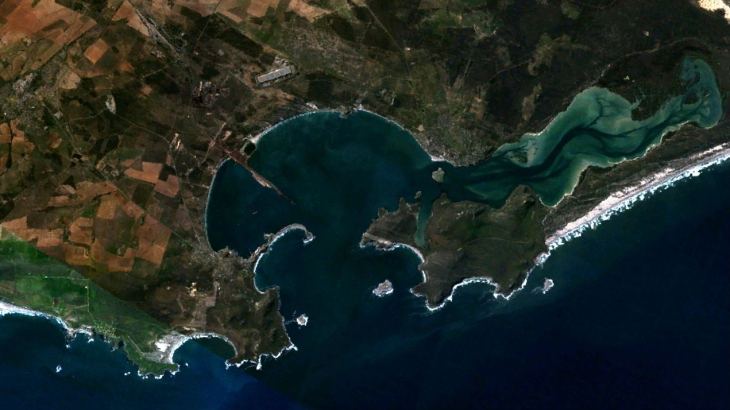
South Africa offers two bays capable of accepting ultra-large container ships. Richards Bay in the Northeast offers a draft clearance of 19 meters, while Saldanha Bay just north of Cape Town offers a draft of 21 meters. Bulk and ore freight terminals operate at both locations. Saldanha Bay is larger than Richard’s Bay, located near the large City of Cape Town and is closer to the shipping lane between South America and the Far East. It is also close to St. Helena Bay where waiting vessels may drop anchor.

When Richards Bay is at capacity, alternative areas where waiting vessels may drop anchor with a measure of protection from stormy seas are located at much greater distances. The Port of Durban is still Africa’s busiest container port and regularly operates at near-capacity. However, Durban and companion ports at Maputo, Port Elizabeth, Coega, East London and Cape Town have insufficient depth to accommodate ultra-large container ships. Saldanha Bay is a natural inlet that offers the necessary depth and has available space to develop a transshipment terminal to the south of the ore terminal.

There are tentative plans to borrow a precedent from Egypt and anchor a floating LNG storage tanker in Saldanha Bay, perhaps near the southern end of the inlet, to serve a variety of customer requirements. Tanker vessels could regularly carry LNG from Mozambique, Tanzania and Angola to the floating storage terminal. Operational precedents established at the Port of Durban could ensure smooth operation of maritime vessels entering and leaving Saldanha Bay, especially with excess vessels being able to drop anchor in St. Helena Bay as well as nearby Table Bay at Cape Town some 60 nautical miles away.

Future ultra-large container ships of 22,000 TEUs would offer savings in terms of average cost per container on the segment between Saldanha Bay and distant East Asian ports at or near the South China Sea. Automated terminal operations that include transfer of containers among vessels could contribute to competitive transportation costs to a variety of destinations along South America’s Atlantic coast as well as several South African ports, perhaps extending as far north as Nigeria on the Atlantic Coast (Asia – Africa trade), Tanzania on the East Coast (Africa – South America trade), as well as domestic Africa -Africa trade.

While South Africa’s economy may presently be under-performing, South African authorities have the option of inviting foreign investors and developers to explore the option of developing a transshipment super port at Saldanha Bay. Future trade through Saldanha Bay would include containers sailing to and from East Asian transshipment terminals such as Port of Colombo and Port of Singapore to connect into the combination of West Coast Africa – Asia and Atlantic Coast South America -Asia trade. Such combined trade enhances prospects for potentially viable transshipment port and terminal operations at a South African bay.

A transshipment super port at the southern end of the African continent would mostly transfer containers that originate from and be destined for foreign ports. Only a minority of the containers would originate from or be destined for domestic South African ports. South African exporters and importers would benefit from lower transportation costs per container compared to the transportation costs per container aboard smaller vessels.

It’s an idea worth considering.

Floating Islands

Cape Town is at the crossroads of ships that carry the trade between Asian nations and nations along the Atlantic Coast of South America and sub-Sahara West Africa. There may be future scope for an offshore, floating transshipment terminal built at Saldanha Bay and assembled either at Cape Town or St Helena Bay to reduce per-container transportation costs along this trade route. Such a terminal would attract interest from overseas. A floating hotel partially surrounded by breakwaters and permanently anchored offshore near a coastal city could be connected to the mainland using floating bridges and water taxi service.

There may be scope to expand upon the technology to develop multiple floating structures in a calm water area, with bridges connecting between them at strategic locations to maintain navigable canals between them. While water taxis could shuttle visitors between mainland and an offshore floating island, semi-floating bridges could also connect between mainland and such islands that may include business districts and even residential areas.

Coupled floating structures may also serve as an airport with a runway for commuter size of aircraft and perhaps even comparable size of wing-in-ground effect vehicles that provide service between coastal cities.

Source: article by Harry Valentine.

WCO Regional Workshop on Coordinated Border Management, Single Window and the Data Model

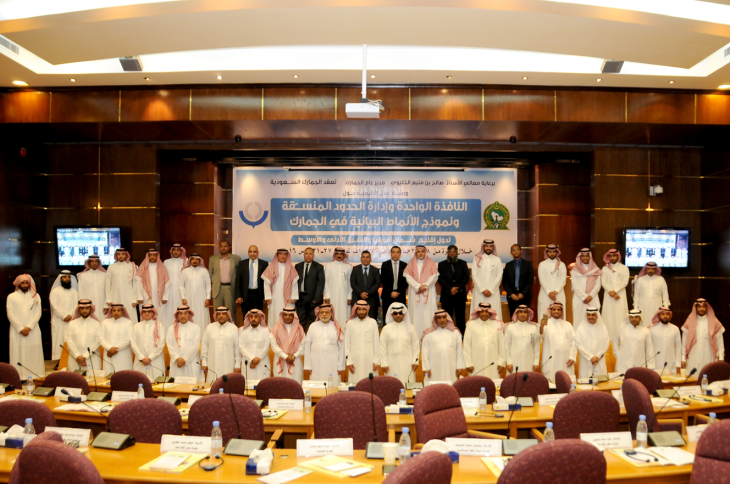
Wco CBM & Single Window WorkshopThe World Customs Organization (WCO), with the financial support of the Customs Administration of Saudi Arabia, successfully held a Regional Workshop on Coordinated Border Management (CBM), Single Window and the WCO Data Model in Riyadh, Saudi Arabia from 27 to 31 March 2016. Thirty seven middle management officials of the Customs Administrations from the MENA Region, namely Saudi Arabia, Egypt, Lebanon, Jordan, Morocco, Tunisia, Sudan, Bahrain and the United Arab Emirates participated in the Workshop. In addition, twelve officials of Customs’ Partner Agencies and two representatives from the private sector attended the event.

Mr. Abdulah AlMogehem, the Deputy Director General of the Customs Administration of Saudi Arabia in his opening remarks highlighted the importance of Single Window development by governments to simplify cross-border trade regulatory procedures which will reduce inefficiency and redundancy of border management processes.

The event highlighted the importance of CBM principles as the basis for the development of a Single Window Environment to enable coordination and cooperation between all relevant government agencies involved in border management. The Workshop also focused on the importance of strategic planning and formal governance structures in establishing a Single Window Environment. SA Revenue Service’s Intikhab Shaik incidentally facilitated the session and discussion on Single Window.

Other important topics included Business Process Re-engineering as well as Data Harmonization, using the WCO Data Model as the inter-operability framework to lay the foundation for CBM and Single Window. Source: WCO

WCO accredited Customs Modernization Advisors and Mercator Programme Advisors

The WCO, in its effort to assist Members with Strategic Planning activities and WTO TFA implementation held two back to back accreditation workshops in Pretoria, South Africa. These events were held during the week of 1-5 February 2016 and 8-12 February 2016, were funded by the United Kingdom within the framework of the WCO-DFID ESA project and HMRC-WCO-UNCTAD project and organizationally supported by the South African Revenue Service.

24Customs officers from the WCO ESA and WCA regions participated in the workshops and were assessed against the Customs Modernization Advisors (CMAs) and Mercator Programme Advisors (MPAs) required profile through a series of testing exercises, presentations, role-plays, group activities and plenary discussions.

Participants were also required to demonstrate their knowledge and strategic application of core WCO tools and instruments and the WTO Trade Facilitation Agreement along with their potential to facilitate discussions with senior Customs and other officials in a strategic context.

At these two events 15 participants successfully completed step 1 of the accreditation process as they demonstrated their potential to become CMA’s/MPA’s during the range of workshop activities.

From the five WCO CMA/MPA accreditation events held to date a total of 41 participants have been assessed as being suitable to become CMAs and MPAs under step 1 of the accreditation process and will be invited to participate in TFA implementation support missions under the Mercator Programme in order to complete the accreditation process. It is expected that the successful candidates are made available by their Customs administrations for further support missions in the future. Source: WCO