ZRA Border Scanners will increase revenue – Commissioner

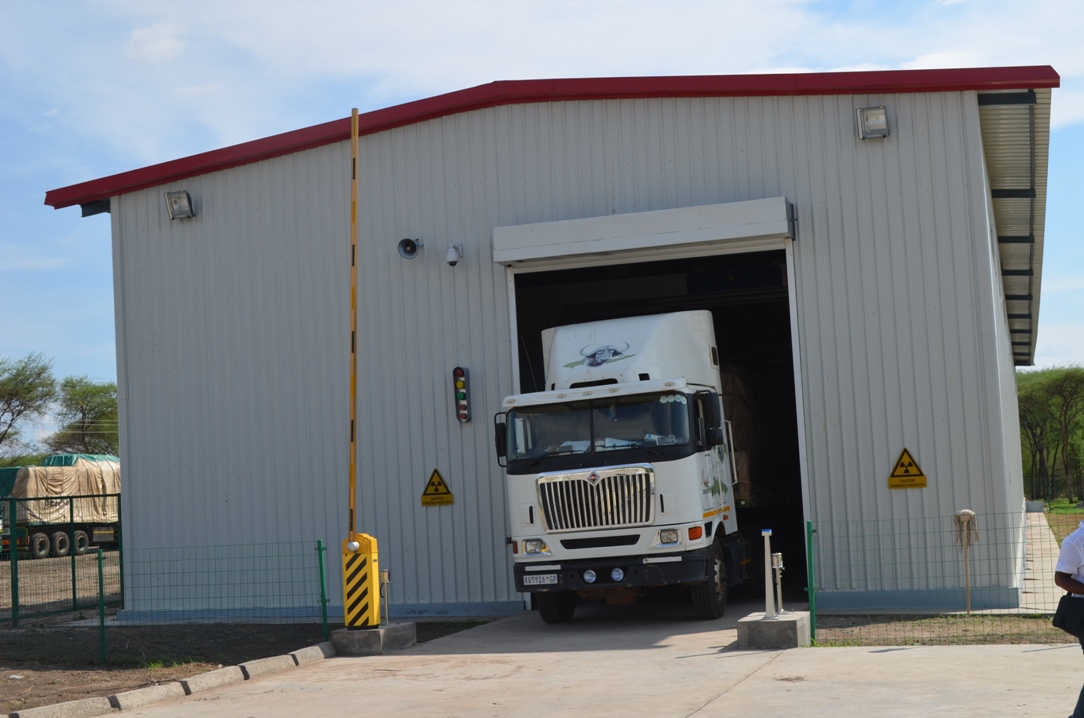
ZRA scanner commissioned at Kazungula border post (Picture: mwebantu.com)

ZRA scanner commissioned at Kazungula border post (Picture: mwebantu.com)

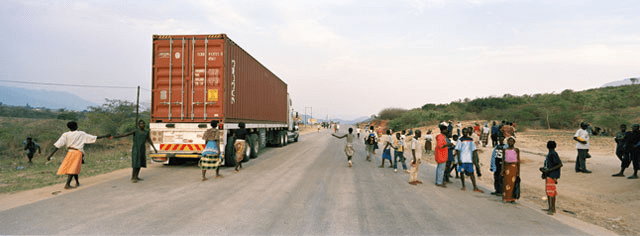
Zambia Revenue Authority (ZRA) Commissioner General, Berlin Msiska, says the investment of scanners in borders will help yield additional revenue for government. And ZRA Commissioner for Customs, Dingani Banda, says the introduction of the scanner will enable the authority to take five minutes only to inspect a truck, not five hours as was the case in the past. Commissioning a non-intrusive inspection equipment or scanner at Chanida border on Tuesday, Msiska said the equipment would help in facilitating trade.

He said instead of carrying out several physical inspections as was the case previously, ZRA would now be using a scanner.

“Through the use the scanner, we might get possible concealment in the trucks, but what we now intend to do, which we have always done as ZRA is that where we find that goods are being smuggled into the country, we are going to take stern action against those in borders. This will include an aspect of prosecution. Now, we have also intensified operations inland in that we have established a mobile compliance unit to deal with the inland enforcement of certain smuggled commodities,” Msiska said.

He said the scanner would also enable ZRA to carryout risk-based scanning services. He said the equipment would help expedite the process of clearing at the border. Msiska said the equipment whose total investment was US$5.2 million was set up by Nuctech, a Chinese firm.

And Banda said the implementation of the scanner at Chanida border would help ZRA in a number of ways. He said previously, if they suspected that a truck could be carrying goods that might require physical inspection, they would take an average of five hours to do the inspection.

“Now, with the scanning technology, it takes less five minutes for us to do a physical inspection of a truck and for a station like Chanida where we have an average of 40 to 50 trucks coming in and going out of the country on a daily basis, this will help us in terms of the turnaround in the inspection and it will enhance our inefficiencies,” Banda said.

He said ZRA already had similar infrastructure at Chirundu, Katimamulilo and Kazungula borders. Banda said ZRA was also expecting rail scanners at both Kapiri-Mposhi and Kasumbalesa. Comment – Seems like another ‘juicy’ deal for the Chinese – Nuctech?

He also said other scanners were under construction at Mwami and Nakonde borders. Chanida border post is the main gateway to neighbouring Mozambique. Source: The Post Online (Zambia)


Beira – Zimbabwe road to be rebuilt by China

A truck leaves the border post at Machipanda to drive down the Beira Corridor, which links the port of Beira to Zimbabwe. This has always been a strategically crucial route for trade in Southern Africa. (The Guardian)

The Mozambican government intends to invest $400 million in the full rehabilitation of the road from the port of Beira to Machipanda, on the border with Zimbabwe.

Minister of Public Works, Cadmiel Muthemba, announced the rehabilitation of the road, which is about 300 kilometres long, will begin in February 2014. The finance is a loan from the Chinese export-import bank (Exim Bank).

Muthemba said that the road will be substantially widened. Along its entire length the road will be at least a four-lane highway, and in places, such as the approaches to Beira, it will have six lanes.

“The road will have roundabouts at particularly busy areas, such as the Inchope crossroads (where the road meets Mozambique’s main north-south highway), Chimoio city, and the towns of Gondola and Manica”, said the Minister.

Along some stretches the road will be elevated, notably along the Pungue flats. This is where the current road runs alongside the Pungue River. When the Pungue bursts its banks, which happens frequently during Mozambican rainy seasons, the road is swamped, and sometimes the flooding is serious enough to interrupt traffic to and from Zimbabwe.

Raising the road above the level of the river will be expensive, but will ensure that traffic flows in all weathers.

The Beira-Zimbabwe road will be farmed out for maintenance to a private company, which will charge motorists through toll gates.

So far, the only major road in the country with toll gates is the Maputo-South Africa motorway, operated by the South African company Trans-Africa Concessions (TRAC).

At the moment, the Beira-Zimbabwe road is in a poor and dangerous condition. In order to avoid gaping potholes, motorists frequently cross into the opposite lane, risking collisions with vehicles gong in the other direction. Emergency repairs between Beira and Inchope, which should have been finished in mid-April, are months behind schedule, and the Sofala provincial government is considering cancelling the contracts with the companies concerned.

The road is of key importance to the trade, not only of Zimbabwe, but of other landlocked southern African countries, including Zambia, Malawi and even parts of the Democratic Republic of Congo.

The road that branches off the Beira-Zimbabwe highway at Tica and leads to the district of Buzi, will be tarred, Muthemba announced. This is budgeted at $150 million, and the money will come from the Indian Eximbank. Work on the Tica-Buzi road will begin this year.

But Muthemba lamented that there was no money available to rehabilitate the road from Inchope to Caia, on the south bank of the Zambezi. This is a key part of the north-south highway, and it needs thorough rehabilitation.

“We aren’t sitting back with arms crossed”, said Muthemba. “With the few financial resources we have, we are working on the most critical sections, until we find the money for a complete rehabilitation”.

However, a complete rehabilitation of this road was carried out less than a decade ago. Indeed, in May 2007, the then Minister of Industry and Trade, Antonio Fernando, boasted in the Mozambican parliament, the Assembly of the Republic, that the Inchope-Caia road, “used to be a nightmare”, but had been rebuilt to such a high standard that it resembled a racing track. Source: Mozambique News Agency


SA-Mozambique One Stop Border, one step closer

ressano-garcia_snapseedParliment’s standing committee on finance (SCoF) on Wednesday finally adopted a bilateral agreement between South Africa and Mozambique that brings the creation of a one-stop border post between the two countries a step closer.

The move has been six years in the making. The facility is expected to expedite the movement of goods and people, reduce congestion and delays, and lower the cost of cross-border trade.

Members of Parliment heard on Wednesday that the World Bank estimated that a one-day reduction in inland travel time in sub-Saharan Africa could result in a 7% increase in exports. Further, reducing export costs 10% through greater efficiency could increase exports 4.7%.

Parliament is in the process of ratifying the bilateral legal framework for the one-stop border post between South Africa and Mozambique at Lebombo-Ressano Garcia. It is the first bilateral framework of its kind for South Africa and is likely to be replicated in other parts of the Southern African Development Community (SADC).

The facility is expected to expedite the movement of goods and people, reduce congestion and delays, and lower the cost of cross-border trade

SADC has made a commitment to implementing such bilateral agreements throughout the region.

South Africa is in discussion with Zimbabwe about having a one-stop border post at Beitbridge, which is notorious for its congestion and long delays. The committee heard from Department of Home Affairs officials that a single visa for the region was also planned once systems have been integrated and secured.

The one-stop border post facility and access roads to Lebombo-Ressano Garcia have already been built and were just awaiting the go-ahead from the South African and Mozambican governments to begin operating. Each country would have a designated area in the combined facility for customs control but housing them in one unit would mean that goods would only have to be offloaded and loaded back onto trucks once for inspection.

South African Revenue Service senior executive Kosie Louw said the benefits of one-stop border posts were reduced border crossing times and reduced logistics costs. Further, they simplified and harmonised border control and administration, and integrated risk and information management.

A reduction in corruption and illegal imports was another benefit, Mr Louw said. Frequent travellers will be processed speedily through the use of fingerprints. A key element of the agreement is to provide for extraterritorial jurisdiction at the commonly held border posts and to deal with arrest, detention and seizure of goods. Both parties will be entitled to apply their own domestic customs laws within the common control zone.

The formal agreement for the project was signed between the two countries in September 2007 and the Cabinet gave its approval in August 2011 for the bilateral legal framework to be finalised and presented to Parliament. Source: BDlive.co.za

Study into the cooperation of border management agencies in Zimbabwe

tralacZimbabwe is a landlocked developing country with a population of 14 million, sharing common borders with Botswana, Mozambique, South Africa and Zambia. Zimbabwe has 14 border posts, varying in size in accordance with the volume of traffic passing through them. Beitbridge, the only border post with South Africa, is the largest and busiest, owing to the fact that it is the gateway to the sea for most countries along the North-South Corridor. Zimbabwe thus provides a critical trade link between several countries in the southern African regions. The need for the country, especially its border posts, to play a trade facilitative role can therefore not be over-emphasised.

Trade facilitation has become an important issue on the multilateral, regional and Zimbabwean trade agendas, and with it, border management efficiency. Border management concerns the administration of borders. Border agencies are responsible for the processing of people and goods at points of entry and exit, as well as for the detection and regulation of people and goods attempting to cross borders illegally. Efficient border management requires the cooperation of all border management agencies and such cooperation can only be achieved if proper coordination mechanisms, legal framework and institutions are established.

This study explores how border agencies in Zimbabwe operate and cooperate in border management. The objectives of the study were to:

  • Identify agencies involved in border management in Zimbabwe;
  • Analyse the scope of their role/involvement in border management; and
  • Review domestic policy and legislation (statutes of these agencies) specifically to identify the legal provisions that facilitate cooperation among them.

Visit the Tralac Trade Law website to download the study.

Source: TRALAC

New Ressano Garcia Cargo Terminal Operational By December

Mozambique flagA new cargo terminal will be opened at the Ressano Garcia – Lebombo border crossing before the end of the year to speed up the processing of customs clearance for goods moving between Mozambique and South Africa.

To further the project an agreement has been reached between the Mozambique Tax Authority (ATM) and a consortium composed of the Matola Cargo Terminal (Frigo), Matrix and the “Zambian Border Crossing Company”.

The 15 year concession contract was signed on 14 June in Ressano Garcia by the chairperson of ATM, Rosario Fernandes, and by the managing director of Frigo, Filipe Franco.

Filipe Franco told AIM that a new truck terminal is being built where facilities will be available for all the necessary services including customs, migration, and officials dealing with health and agriculture.

He pointed out that “our objective is to ensure that the terminal will be completed and operational by December”, adding that the consortium is composed of companies with a great deal of experience in managing cargo terminals.

Rosario Fernandes said that the cargo terminal project will facilitate trade by speeding up customs clearance at the border post through a one stop system and the single electronic window system which is being implemented throughout Mozambique. Source: AIM (Mozambique News Agency)

Mozambique Customs gets a new DG

Guilherma Mambo presenting the Mozambique Single Electronic Window at the SADC ICT Conference, in Mauritius, 2012.

Guilherma Mambo presenting the Mozambique Single Electronic Window at the SADC ICT Conference, in Mauritius, 2012.

Guilherme Mambo has just been appointed Director General Mozambique Customs on the 10th May 2013. Until then he was Board Director of MCNet – Mozambique Community Network the PPP responsibly for implementation of Electronic Single Window for customs clearance in Mozambique where he were responsible for implementation and operations. In recent months he has lead Mozambique’s bi-lateral engagement on IT-Connectivity and Data Exchange with his counterparts at the South African Revenue Service (SARS).

For the past 10 years Mambo served as director IT Mozambique Customs and then for Mozambique Revenue Authority. On this role he participated in various modernization projects aimed at improving the business environment in Mozambique through improvement of public services particularly the complete organizational transformation of customs and internal tax areas.

Prior to working with customs and MRA, he worked in aviation industry and a UN lead project in Chechnya, Liberia, Angola were he was exposed multifaceted international experience.

As Director General – Mozambique Customs his responsibility is to manage the General Directorate of Customs (DGA) a paramilitary organization with around 2000 staff, one of the two major collectors of government revenue derived from external trade largely from customs duty, excise duty and the Value Added Tax (IVA).  DGA is also a law enforcement agency that undertakes the control of imports and exports for the protection of revenue to prevent evasion of duties and taxes and assists in the promotion of the community’s well-being to prevent the smuggling of controlled, prohibited and restricted goods (such as illicit narcotic drugs and firearms). The Director General heads the DGA and his assisted by three Deputy Director General each of one have a specific area of responsibility.

Non-Tariff Barriers – SADC Secretariat requested to intervene in Mozambique

0b8a0ce6140c04b4f629a97cb5e8d8f34e69d4a1The SADC, COMESA and EAC Tripartite alliance has been urged by various Zimbabwean, Zambian and Malawian exporters to salvage a potential crippling situation occurring at Mozambique borders. This follows the recent implementation of a new transit bond guarantee system which in conjunction with the Single Window system is allegedly causing significant delays, including loss of business and spiralling demurrage for transit goods emanating from these landlocked countries, en route for export from various Mozambique ports, Beira in particular.

Complaint no. NTB-000-578 in terms of ‘Lengthy and costly customs clearance procedures’ was lodged and can be viewed in full on the Tripartite’s NTB portal. Amongst the various problems sited, the complainants request the following of Mozambique –

  • Mozambique Ministry of Finance is requested to get customs to consider a parallel system to run with the electronic single window programme to clear the backlog in Beira port now and also consider providing release against Report orders to reduce further downtime in port . This will be a stop-gap measure until the customs staff are well versed , fully trained and that the new system can work well.
  • Mozambique authorities to facilitate arrangements with Cornelder to consider waiving storage for this special situation or at least offer 75% credit on the bills due which I must say are now astronomical based on the days the cargo has stayed in port both imports and exports.
  • Mozambique authorities to facilitate arrangements with shipping lines to consider waiving completely the demurrage due on the empty containers or at least give say 15-21 more days grace period before demurrage starts accruing.
  • Mozambique authorities to facilitate arrangements that Mozambique customs get technical assistance to assist roll this new programme out without causing huge catastrophes like this.

Mozambique has acknowledged the complaint and expressed regret over the developments. Mozambique reported that the issue was receiving urgent attention and they would provide feed back shortly.

Mozambique Could Drive the Need for 35 More LNG Carriers

Image credit: Nakilat

Image credit: Nakilat

With soaring energy costs, Japan appears to have a pretty uniform goal, to invest as much as possible in other sources of energy and energy supply chains around the world. Many others like Qatar and Saudi Arabia are following suit and hedging themselves for what is turning out to be a reversal of their business model. Even the Louisiana Offshore Oil Port, which connects the world’s largest oil tankers with over half of the United States’ refining capacity is readjusting its business model for the changing flow of energy. With the eventual opening of the Liquefied Natural Gas (LNG) flood gates from the US however, coupled with Free Trade Agreements to places such as Japan, American energy firms and tax payers stand to cash in on the huge price gap that exists between the price of gas in the U.S. versus that which exists overseas.

At the moment, there’s a fairly good balance between supply and demand when it comes to the supply of ships and the demand for LNG product to be carried. Qatar, for example, uses 54 LNG carriers to transport their 77 million metric tons per year of LNG. Qatar also has a 70% stake in the Golden Pass LNG terminal in Texas. Additional exports from the US Gulf Coast will directly equal increased demand for more LNG carriers.

While regulators in the US trudge through the LNG export approval process, energy firms like Anadarko charge ahead with an ambitious LNG agenda offshore Mozambique in a field which was recently found to have at least 65 trillion cubic feet of recoverable reserves. Places like Mozambique, and offshore Israel, have the potential to really change the LNG marketplace given the sheer size of their fields and their proximity to the Asian and European markets respectively.

In Mozambique, two 5 million metric tons per annum (mtpa) LNG trains are currently under construction to support the huge conventional gas finds located 25 miles offshore. Their partners on the project include Mozambiquan state oil company, Empresa Nacional de Hidrocarbonetos, E.P., India’s state-owned Bharat PetroResources Ltd, Indian private equity firm Videocon Hydrocarbon Holdings, Ltd, Thailand’s PTT Exploration & Production, and Mitsui & Co. Considering the partners involved, their target market will predominantly be India and Japan. First LNG production is planned for 2018 and their plans are to eventually ramp up production to 50 million mtpa, or 2/3rds of the current production of Qatar.

What does that mean for LNG shipping? A lot more ships. To handle 50 million mtpa, upwards of 35 LNG carriers may be needed for transportation if you compare the ratio between Qatar’s fleet size and their total LNG exports. Source: gcaptain.com

Southern African Narcotic Trafficking Landscape

Drugroutemap

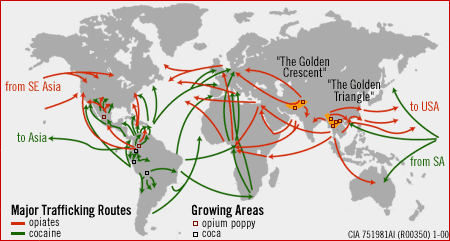
See what the CIA’s Factbook has to say about Southern African countries and their role in the international narcotics supply chain –

Zimbabwe A transit point for cannabis and South Asian heroin, mandrax, and methamphetamines en route to South Africa
Zambia A transshipment point for moderate amounts of methaqualone, small amounts of heroin, and cocaine bound for southern Africa and possibly Europe; a poorly developed financial infrastructure coupled with a government commitment to combating money laundering make it an unattractive venue for money launderers; major consumer of cannabis
South Africa A Transshipment center for heroin, hashish, and cocaine, as well as a major cultivator of marijuana in its own right; cocaine and heroin consumption on the rise; world’s largest market for illicit methaqualone, usually imported illegally from India through various east African countries, but increasingly producing its own synthetic drugs for domestic consumption; attractive venue for money launderers given the increasing level of organized criminal and narcotics activity in the region and the size of the South African economy
Mozambique Southern African transit point for South Asian hashish and heroin, and South American cocaine probably destined for the European and South African markets; producer of cannabis (for local consumption) and methaqualone (for export to South Africa); corruption and poor regulatory capability make the banking system vulnerable to money laundering, but the lack of a well-developed financial infrastructure limits the country’s utility as a money-laundering center
Angola Used as a transshipment point for cocaine destined for Western Europe and other African states, particularly South Africa

Should the Rhino horn trade be legalized?

black-rhino-2Rampant poaching in Africa is a cause of major concern to wildlife organizations. Many rhinos are killed every year mainly for Asian markets. In Vietnam, rhino horn is believed to be miraculous, able to heal cancer.

A total of 158 rhino have been poached since the beginning of the year, according to the South African Department of Environmental Affairs. Over 630 rhino were killed by poachers in South Africa during 2012.

If the killing of rhinos continues to increase, African wild rhinos could disappear within a few years. The best protected rhinos live in Kenya. Four of them, known as northern white rhinos, are the last of their kind. Each one of them has four bodyguards to guarantee its survival. But most of the other 25,000 rhinos in Africa do not enjoy such protection. The trade in rhino horn is illegal. However it is flourishing, most of the horn coming from South Africa, where most rhinos live. Hunters are willing to pay up to 20,000 euros ($26,000) to shoot a rhino and take the trophy home.

Rhino poaching on the rise

Rhino poaching has increased tenfold in the last five years, according to the nature and animal protection organization World Wide Fund for Nature (WWF). The conference singled out Vietnam as the main importing country and Mozambique as a major transit country for rhino trafficking. This is the first time that countries were named at CITES.

Vietnamese believe that rhino horn powder can cure cancer

The two countries now have a few months’ time to address the problem constructively. Mozambique is poor but CITES’ regulations are also valid there. To learn how to fight against poachers effectively, the country may seek advice from environmental and conservation organizations. In the case of Vietnam, lack of political will seems to be the major problem. Even Vietnamese embassy staff were involved in the illegal horn trade. Vietnam is now under pressure. By January 2014, Vietnam as well as Mozambique have to prove that they are able to fight against horn trafficking from southern Africa, or else sanctions will be imposed.

Superstition hikes the price

In addition to stricter controls, the WWF and other animal welfare organizations are implementing awareness campaigns. In Vietnam there is a belief that the powder from the horn of the rhinoceros can help against fever, prevent a hangover or even cure cancer. These claims however, are dismissed by scientists. The horn consists of the same material as fingernails and hair. Nevertheless, Vietnamese are willing to pay more than 40,000 euros per kilogram, more than the price of gold.

Thousands of wild rhinos have been killed and their horns trafficked to Asia

South African biologist Duan Biggs says awareness campaigns and banning illegal trade control will not help to solve the problem. Shortly before the CITES conference, Biggs, together with three other scientists, wrote in the journal “Science”, calling for the legalization of the horn trade. “We have a buffer of a very healthy population of rhinos to work with,” Biggs said. He is convinced legalization is the right course to take. If that doesn’t work, it can always be stopped again. “If we wait longer and the current situation continues, we will lose the opportunity to try an alternative strategy.”

Legal breeding instead of illegal slaughter

Since horn grows like fingernails, rhinos should be bred specifically for the horn trade. The horn could be cut off when the animal is under anaesthetic. That way the animal doesn’t suffer pain. This is done to a quarter of the animals living in South African private game reserves, where dead animals’ horns are not allowed to be sold. If these horns are legally harvested and put on the market, prices and poaching would decrease, argues Biggs.

The WWF and many other organizations vehemently opposed the legalization theory. A boom in demand and even worse poaching could result if horns are on the market in large quantities and at cheaper prices. “A change from the elite-trend to mass-trend will be like lighting a fire that will be difficult to extinguish”, said a WWF spokesperson.

The dynamics of illegal rhino poaching paint a vivid reality. Is this really any different of narcotics and money-laundering, human-trafficking and counterfeiting? I think not. In many instances its the same ‘operators’ at play preying on weak human instinct and a complete lack of morals!  On the other hand I suppose, based on the reasoning of scientist Biggs, one could say legalising narcotics and prostitution would be the ‘right thing to do’ since we have a “buffer of healthy unemployed woman and youth” ???

Mozambique – Huge Heroin Seizure with South African Connection

00013ee0-314The Mozambican police claims that it has seized almost 600 kilos of heroin, at Namoto, in the northern province of Cabo Delgado, on the border with Tanzania.

The drugs were found on Sunday in the possession of two citizens of Guinea-Conakry, who are now under detention in the Cabo Delgado, provincial capital, Pemba. The drugs are being stored in the warehouses of the provincial attorney’s office.

According to Malva Brito, the spokesperson of the provincial police command, cited in Wednesday’s issue of the Maputo daily “Noticias”, the final destination of the heroin was South Africa.

Brito said the drug was concealed in an otherwise empty seven tonne pick-up truck. The Guineans had improvised a type of hold within the truck’s bodywork. But alerted by a strange smell and the odd size of the stowage area, the police searched the truck, and found the heroin in 118 plastic bags of about five kilos each (which is a total of 590 kilos).

When the heroin was found, the Guineans first claimed that it was fertilizer that they were taking to South Africa. When that didn’t work, they tried to bribe the frontier guards, offering them 60,000 US dollars. The bribe was not accepted.

The Guineans had started their journey in the Kenyan capital, Nairobi, last Friday, and crossed Tanzania before entering Mozambique. The Toyota pick-up bore a number plate from the Democratic Republic of Congo, and supposedly belongs to a Congolese named Sidiki Sano, who is resident in Mozambique. The owner of the heroin is believed to live in Johannesburg.

If the police figures are accurate, this is an enormous drugs bust. According to the United Nations, heroin was selling in South Africa in 2012 for 35 dollars a gram. So 590 kilos would sell in Johannesburg for 20.65 million dollars. Source: Mozambique News Agency (Agência de Informação de Moçambique).

Government heeds the call – Tax Holidays for SEZs

Minister Pravin Gordhan and his 'budget team' on their way to parliment [Picture credit-SARS]

Minister Pravin Gordhan and his ‘budget team’ on their way to parliament [Picture credit – SARS]

After more than a decade of fruitless marketing and billions spent on capital investment, Budget 2013 brings some hope of a turn-around and better fortunes for economic development zones in South Africa.

Minister of Finance, Pravin Gordhan announced, what is an unprecedented move. to bolster support for government’s Special Economic Zone (SEZ)programme. Investors in such zones are expected to qualify for a 15% corporate tax rate, and in addition, a further tax deduction for companies employing workers earning less than R60,000 per year.

This is a significant development in that the previous dispensation under the Industrial Development Zone (IDZ) programme only afforded prospective investors a duty rebate and VAT exemption on imported goods for use in the Customs Controlled Area (CCA) of an IDZ. The reality is that these benefits were simply not enough to woo foreign company’s to set up shop in our back yard, let alone existing big business in South Africa to relocate to these zones. Mozambique, next door, has had much success as are other African countries through the offering of company tax holidays with the introduction of export-focussed special manufacturing facilities.

The SEZ (so it would seem) differs little from the IDZ approach save the fact that the former does not require the location of the economic zone at an international airport, seaport or border crossing. As such, an existing IDZ may ‘house’ a special economic zone, thus maximizing return on investment.

Recent developments in SA Customs realise a provision permitting foreign entities to register as importers or exporters under the ‘foreign principal’ clause in the Customs and Excise Act. Approval of such is dependant on the foreign principal establishing a business relationship with a South African ‘Agent’. This ‘agent’ is required to be registered with the SA Revenue Service as the party representing a ‘foreign principal’ in customs affairs. At this point, the provision is being applied to business entities in BLNS countries who import or move bonded goods into or from South Africa.

Future global application of this provision could boost the possibilities of a broader range of investor to favourably consider SEZ opportunities in South Africa. This option will, no doubt, not go unnoticed by the big audit firms seeking to broker ‘cross-border’ customs facilities for their multi-national clients. I perceive that more introspection is still required concerning ‘non-resident’ banking facilities and transfer pricing issues to enable the global application of the foreign principal concept. But after all this seems a good case for trade liberalisation. Add to this the forthcoming launch of Customs new integrated declaration processing system that will (in time) offer simplified electronic clearance and expedited release facilities for future SEZ clients.

Chinese investment allows Mozambique to become a car manufacturer

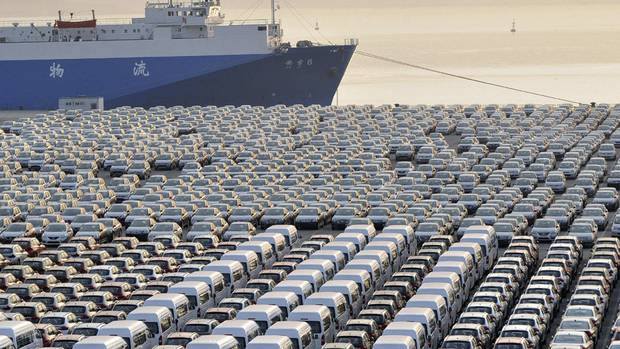
Chinese cars wait to be exported at a port in Dalian, Liaoning province. (China Daily/Reuters)

Chinese cars wait to be exported at a port in Dalian, Liaoning province. (China Daily/Reuters)

With the new APDP programme ably supporting the local South African vehicle manufacturing industry, the possibility of Chinese investment in Mozambique should have little impact on the local vehicle cartel. However, the possibility of competition for the local industry is just what is needed to create competitiveness in the region.

Mozambique is expected to become a car manufacturing and exporting country this year following an investment by China Tong Jian Investment, which is also attracting other companies in the sector to Mozambique. Danilo Nalá, the director general of the Office for Economic Areas with Accelerated Development (Gazeda), told Mozambican newspaper Correio da Manhã that investors from Saudi Arabia and Bahrain were interested in investing in tyre manufacturing in the city of Matola, on the outskirts of Maputo.

The tyre factory, which will be part of the project for the car assembly plant in Matola funded by Chinese investors, as of April 2013, may either involve acquisition of the technically bankrupt company Mabor or setting up a new unit from scratch. According to the newspaper, “there is a lot of interest from Asia in re-launching the tyre industry,” in Mozambique. (Comment: This could be an area of contention for the local market though).

Construction of the China Tong Jian Investment factory, costing an estimated US$200 million, is the result of an agreement the Mozambican government signed with the company in 2010. The agreement outlines that, at an initial stage, the facility should produce around 10,000 vehicles per year, 30 percent of which for the Mozambican market and the remainder for export.

Production is then outlined to be increased to 30,000 units per year and, later, to 100,000 units.

The factory, which is located in the Machava area of Matola, in the former workshops of Mozambican state port and rail manager Portos e Caminhos de Ferro de Moçambique, will produce buses and light passenger vehicles of the Matchedje brand. Matchedje is the name of the village in the Sanga district of Niassa province, which hosted the 2nd Congress of the Mozambique Liberation Front (Frelimo), which is the political party currently in power in the country.

China Tong Jian Investment is based in Shanghai and its largest shareholder is New Zealand’s Morgan Foundation and its business focuses on promoting China-Africa relations. Source: Shippingnews.co.zw

SARS – Modernisation milestone materialising

Interfront logo2

Its been some time since I’ve penned an article on the South African Customs Modernisation Programme. Aside from it being the SA Revenue Service’s prerogative to communicate and publish notice of its internal developments and plans, some caution always needs to be exercised observing bureaucratic protocol, ensuring that the official message is forthcoming from SARS. Given the widespread interest in the programme as well as the development of the Interfront [formerly Tatis] integrated customs border management solution (iCBMs) as a wholly owned development of South Africa, I think it not out of place to inform the public interest on this matter. Readership of this blog has an extensive global following and a specific interest in Interfront developments.

Unlike ASYCUDA, Sofix, e-Biscus, and a host of other integrated Customs-tailored business solution offerings, Interfront’s solution for SARS will not include a client user frontend. In other words, the Interfront system (iCBMs) will essentially drive declaration backend processing. This comprises a fully integrated declaration validation and processing engine, supported by a sophisticated tariff engine and duty calculator; the latter offering future web-based services for customs users. In order to compliment the SARS corporate and standardised user interface approach, the iCBMs interfaces with SARS’s revenue accounting, trader registration, risk management, and case management workflow systems. Not only does this leverage cost savings and efficiencies, but ensures a unified ‘workspace’ for all of SARS employees.

Much of the Interfront technology is therefore hidden to the customs user, with traders experiencing an identical interface with SARS Customs, as it does today. From the outset of the Customs Modernisation Programme (July 2010), the approach has followed pragmatic migration of customs electronic clearance processing – across its 30 odd legacy systems – towards an integrated clearance process that could mimic the functionality featured on the new iCBMs. The modern technology and scalability of Interfront offers the ability and agility to enhance service levels and efficiencies to another level. At the same time, operational policies and procedures have been modernised with the aim and intent of meeting the requirements contained in Customs new Control and Duty Bills.

Much of the ‘change’ experienced by both customs officers and the trade over the last 2 years has prepared the country for the eventual migration to the new system. These have been significant, and at times painful changes, not without anxiety and apprehension. Over the last 6 months an even more painstaking and taxing effort has been expended by the Customs Modernisation Team, Interfront and other service providers in addressing a seamless harmonisation and switchover of customs business from disparate legacy systems to a new customs technology platform. The “Parallel Run” has witnessed the daily comparison of customs clearance data between the old and new systems, identification and logging of disparities (bugs), modification of the two environments to ensure the same result is achieved. This has not been an easy and simple process, as any country having undergone a system switchover can attest to.

This month, February 2013, service providers to the customs industry are readying their resources to commence user testing. This implies that service providers (computer bureaus) will engage their clients to prepare test cases for submission to customs to test the new Interfront process. Given that Customs legacy systems and Interfront have been synchronised to a high level of compatibility, the process for traders should not reveal much difference to what they have experienced over the period of modernisation over the last 2 years. One area of note will be the structure and content of Customs Response messages. Traders will have to familiarise themselves and test their interpretation of these messages to ensure they perform or respond appropriately to the instructions.

Satya Prasad Sahu - Technical Officer at the WCO provided members of SACU, SADC and the EAC comprehensive guidelines for the development of the GNC Utility Block concept in Africa (February 2012)

Satya Prasad Sahu – Senior Technical Officer at the WCO provided members of SACU, SADC and the EAC comprehensive guidelines for the development of the GNC Utility Block concept in Africa (February 2012)

In terms of compliance and compatibility with international developments, the new iCBMs is engineered on the WCO Data Model. All relevant simplification processes as exemplified in the Revise Kyoto Convention are likewise factored into its design, although not all of these will be immediately available with the initial rollout. Introduction of the new Customs Control and Duty Acts will require these principles to be fully functional and operational, however.

The WCO Data Model is the pivotal design component around which most of the new system’s business and validation rules are centred. This in itself is a major achievement as it bodes well for all future ‘cross border’, customs-2-customs connectivity initiatives. In this regard SARS is well advanced in bilateral and multilateral projects with key trading partners, for example IBSA (cross-global trilateral initiative), and in Africa, we are working with SACU, SADC, COMESA and the EAC to bring about regional customs connectivity. On a bilateral basis, initiatives with Swaziland, Mozambique and Zimbabwe are developing nicely. A significant contributor to cross border/cross global customs connectivity is undoubtedly the excellent work brought about by the dedicated members of the WCO’s Globally Networked Customs adhoc workgroup. In June last year, the WCOs policy Commission unanimously endorsed the GNC architecture and Utility Block approach. African customs connectivity efforts have likewise adopted this model which ensures harmonisation and uniformity in approach, legal dispensation, data exchange, risk management and procedure. The WCO moreover plays a overseeing role in many of these GNC and capacity building initiatives across the globe – this assists greatly in sharing and learning of experiences.

I would think that the above should be sufficient to wet the appetites of customs practitioners, traders, ICT technocrats, and perhaps even legislators and bureaucrats on developments in South Africa. Subsequent to the launch of Interfront SARS will make its ideas and strategy relating to forthcoming initiatives known to trade and the business community. A Year of Innovation? Yes, and hopefully a happy tale that will bode well for the South African trade and supply chain logistics community, and some good fortune for Interfront in its business development in the region and beyond!

China fancies Mozambique exotic timbers

China is the biggest recipient of Mozambique timber

China is the biggest recipient of Mozambique timber

Mozambique news agency AIM reported last week that the Mozambican customs service has seized 30 containers full of logs that were about to be exported illegally to China through the port of Maputo.

The report said that the seizures began on 16 January in the town of Marracuene about 30 kilometres north of Maputo, where Customs located ten containers, each measuring 15 cubic metres, in a yard belonging to the Chinese firm Heng Yi.

As the investigations continued, the authorities discovered a further 20 containers already in the port waiting to be loaded onto a ship heading for China.

The containers in the Heng Yi yard contained mondzo, a species classified as a first grade hardwood, which cannot be exported without processing. Yet the mondzo logs had been packed into the containers without any inspection by the relevant authorities.

China is the biggest consumer of timber from Mozambique accounting for 85 percent of the 430,000 cubic metres of logs to leave the African country between 2000 and 2010, according to a study from the Mozambican Environmental Research Agency.

The study, cited by Mozambican daily newspaper Notícias also said that the value of wood exports to China in the period had risen from US$8 million to US$100 million between 2001 and 2010.

Mozambican wood is exported to China, South Africa, Germany, Japan, France, Mauritius, Malaysia, Thailand, Tanzania, Portugal, Israel, Vietnam, Singapore, Turkey, Zimbabwe, Botswana, Croatia, Namibia, Dubai, India, Pakistan, the United States, Reunion Islands, and Italy.

Last week the containers in the port were still being unpacked to check exactly what types of wood they contain. Staff of the Mozambican Tax Authority (AT) said that the origin of the logs is still unclear, but their nature and diameter indicate that they came from the forests of Nampula and Zambezia provinces, or possibly from the northern part of Gaza.

China is the largest consumer of Mozambican timber, and the Chinese market accounted for 85 percent of the 430,000 cubic metres of logs that left Mozambique, much of it illegally, between 2000 and 2010, according to a report from the Environmental Investigation Agency, a London-based NGO that works to fight environmental crimes. Source – AIM