SARS Customs launches its Water Wing

SARS Customs Waterwing

SARS plans to operate jet skis (such as pictured above) along its vast river borders. [Picture – SARS]

Last week four Customs officers received their qualifications from the South African Maritime Safety Authority (SAMSA) after having successfully completed their written and practical examinations. The officers who hail from the Northern Cape region will commence active patrol and enforcement operations along the northern border between South Africa and Namibia.

The SARS Water Wing skippers received their SAMSA category R certificates after completing a four-day training course at the Van Rhyn Dam in Benoni.

The officers will from next week begin patrolling the Orange River, the border between South Africa and Namibia, where there are suspected illegal trans-border transactions taking place, especially in abalone, diamonds, narcotics and rhino horn.

“These officials are now qualified skippers with category R licences which will enable them to patrol inland waters such as rivers, dams and harbours. The success of this pilot programme now enables us to actively assist in enforcing the Customs and Excise Act without being totally dependent on other departments,” said Hugo Taljaard, Senior Manager: Detector Dog Unit (Oversight).

He said that although the two jet skis will mostly be used in the Nakop area, they will also be utilised as far as Cape Town harbour in the small craft side of the harbour. There are plans to expand the unit. Customs’ first water wing boat is currently being constructed and more details about its deployment will be communicated in due course.  The jet skippers all agreed that it was quite exciting to be part of this pilot programme. “I never in my wildest dreams thought that one day I would be doing something like this,” remarked one candidate.  “Having jet skis will increase our visibility and this will serve as a deterrent to illegal trans-border traders,” added another.

Over the last 6 years SARS has steadily been increasing its visible policing and enforcement capability across the country’s vast land and sea borders. The hugely successful Detector Dog programme has attracted much national and regional attention. SARS also has plans to increase its existing non-intrusive inspection (NII) capability. Currently Durban, South Africa’s sole CSI port, is the only port with a dedicated X-ray scanning facility. Source: SARS Communications Division and self.

Inside track to the local Tobacco ‘Cabal’

Peter Tell-AllWith much international focus on tobacco and tobacco products its great to read something outside of the mainstream media. Evidently this guy has some real insight in the tobacco industry and he sure is passionate about his views. This is a fine example of ‘Social Media’ providing what your average Google search-and-hit will never reveal. Conspiracy theory or not, this is a site dedicated to one thing – exposing the ‘Anglo-American tobacco cabal’. Aptly titled “All Disclosed by Peter Tell(all)” he invites you………

…………… to browse, interact and explore my website dedicated to the exposure of facts, truths and the responsible sharing of the information contained within these pages, about South Africa’s Tobacco Industry! The compilation of articles and also unpublished fact sheets about how this very lucrative and secretive industry operates has up until now been a very dark and well-kept secret! Why would all this information be kept from us? Why would they not want us to know how much money is being made? Why does the Government play both sides of the fence? Who pulls the strings of the authorities? THESE ARE THE QUESTIONS WE SHOULD BE ASKING!!

How much bigger can container ships get?

Check out this superb article – click here – featured on BBC News Magazine‘s website –

What is blue, a quarter of a mile long, and taller than London’s Olympic stadium? The answer – this year’s new class of container ship, the Triple E. When it goes into service this June, it will be the largest vessel ploughing the sea. Each will contain as much steel as eight Eiffel Towers and have a capacity equivalent to 18,000 20-foot containers (TEU). If those containers were placed in Times Square in New York, they would rise above billboards, streetlights and some buildings. Or, to put it another way, they would fill more than 30 trains, each a mile long and stacked two containers high. Inside those containers, you could fit 36,000 cars or 863 million tins of baked beans.

The Triple E will not be the largest ship ever built. That accolade goes to an “ultra-large crude carrier” (ULCC) built in the 1970s, but all supertankers more than 400m (440 yards) long were scrapped years ago, some after less than a decade of service. Only a couple of shorter ULCCs are still in use. But giant container ships are still being built in large numbers – and they are still growing.

It’s 25 years since the biggest became too wide for the Panama Canal. These first “post-Panamax” ships, carrying 4,300 TEU, had roughly quarter of the capacity of the current record holder – the 16,020 TEU Marco Polo, launched in November by CMA CGM.

In the shipping industry there is already talk of a class of ship that would run aground in the Suez canal, but would just pass through another bottleneck of international trade – the Strait of Malacca, between Malaysia and Indonesia. The “Malaccamax” would carry 30,000 containers.

There are currently 163 ships on the world’s seas with a capacity over 10,000 TEU – but 120 more are on order, including Maersk’s fleet of 20 Triple Es. Source: BBC News Magazine

AU considers continental Customs Connectivity

500px-Emblem_of_the_African_Union_svgThe African Union (AU) Technical Working Group on Interconnectivity has developed a ‘draft’ Strategy and Roadmap for Customs-2-Customs IT Connectivity on the continent. This strategy will effectively guide the process of the continental Interconnectivity of Computerized Customs Clearance and Information Systems in Africa. The ‘draft’ Roadmap envisages that the process of interconnectivity will take a period of 11 years with a total of four stages.

Stage 1 – by 2014, National states should have engaged one another (within their respective regions) on the matter of Customs connectivity.

Stage 2 – between 2013 and 2017, the AU has an extremely ambitious expectation that national Customs Administrations would have (at least commenced) if not completed Customs ‘connectivity’ within the various Regional Economic Communities (RECs) in Africa.

Stage 3 – between 2017 and 2020, the suggestion that Customs interconnectivity will be occurring between RECs across the African continent – North Africa: AMU; West Africa: ECOWAS and UEMOA; Central Africa: ECCAS and CEMAC; East Africa: COMESA, EAC, IGAD; and South Africa: SADC and SACU.

Stage 4 – between 2020 and 2025, consolidation of Customs IT-Connectivity across the RECs.

The ‘draft’ Strategy spells out the strategic objectives and activities at the national, regional and continental level that will need to be taken for this to be realized. The strategy also indicates the roles of all the major stake holders in the process.  This comes in the wake of several regional and bi-lateral initiatives to bridge the ‘cross-border divide’ through electronic exchange of structured customs information.

All in all an ambitious plan structured to meet the equally ambitious deadlines of the coming into being of an African Union. The real challenge in all of this lies with the Member States in being able to set aside and commit to regional and continental ambitions, over and above the already pressing and complex national agenda’s of their respective sovereign countries. In context of the African Union, the multiplicity of RECs in themselves add a layer of duplication…..is an “integrated Customs Union” in Africa going to continue to permit the existence of the respective RECs or will they be absorbed into the African Union? Member states need to begin speaking up on this issue otherwise accept being swamped by onerous commitments. No doubt the ‘international donor agencies’ wait eagerly in the wings to capitalise on Africa’s deficiencies.

Tobacco in South Africa

smoke-cigaretteCigarette volume sales increase in 2011 – Retail volume sales grew by 1% in 2011, following declines throughout the review period. Retail value sales grew significantly due to a general price increase to cater for taxation increases, as well as rising production costs for manufacturers.

Porous borders continue to influence the growth of illicit cigarette sales – Volume sales of illicit cigarettes continued to grow during 2011, despite efforts by the police and tobacco industry stakeholders to combat illicit trade. Porous borders have been identified as the key factor behind the rise in the amount of illegal cigarettes being smuggled into the country. The Beitbridge border post between South Africa and Zimbabwe was identified as the main point of entry for illicit cigarettes from Zimbabwe.

High import duties restrict the growth of the cigars category – The performance of the cigars category remains suppressed due to high import duties on all cigars. The unit price on most cigars increased significantly in 2011 to accommodate import duty increases. Local distributors were reluctant to import new cigar brands due to a low turnover for existing brands. Consumption of cigars declined in 2011 due to higher unit prices for leading brands, with only festive seasons seeing some respite.

Consumers continue to favour buying tobacco products from supermarkets – The supermarkets channel remains the major point of access for most tobacco products in South Africa. Supermarkets tend to sell tobacco products at relatively low profit margins when contrasted with other channels, such as tobacco specialists. With the rising cost of living, smokers still prefer to use supermarkets to buy tobacco products due to the lower prices.

Retail volume sales expected to decline over the forecast period – Slower but relatively stable growth is expected for retail plus illicit volume sales over the forecast period, however retail sales alone are expected to decline. Category performance is expected to be restricted by legislative restrictions, such as a ban on the advertising of tobacco products in any way other than at points of sale. The Government of South Africa is also considering a total ban on the display of tobacco products at points of sale. Thus, retail volumes are expected to decline, while illicit sales will continue to rise during the forecast period.

For a meagre sum of US$1,900 why not purchase the full report Discover the latest market trends and uncover sources of future market growth for the Tobacco industry in South Africa with research from Euromonitor‘s team of in-country analysts. Find hidden opportunities in the most current research data available, understand competitive threats with detailed market analysis, and plan your corporate strategy with expert qualitative analysis and growth projections. If you’re in the Tobacco industry in South Africa, this research will save time and money, empowering informed, profitable decisions – so the blah says.

Source: Euromonitor.com

Traders can’t interpret Terms

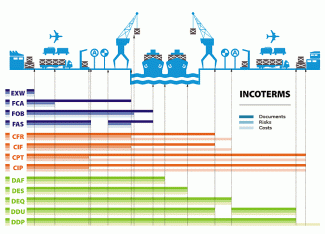
incoterms2The lack of knowledge to interpret international terms of trade (INCOTERMS) is to blame for the high cost of doing businesses among importers and exporters, the secretary general of the Uganda Shippers Council. Many importers do not understand international terms of trade such as Cost and Freight, Free on Board and Cost Insurance and Freight (CIF), yet in Uganda, taxation is done based on CIF.

“This means that a Ugandan trader who is importing or exporting goods has to pay freight costs in the East African region, whose headquarters are based at Mombasa, in addition to cost of goods, insurance and freight charges for the goods,” explained Kankunda, Secretary General of the local shipper’s council..

“If a Ugandan trader is able to understand these terms, then they will be in position to secure a local shipping line and pay a slightly lower cost compared to paying from the country where the goods are coming from.”

Kankunda was speaking at a three-day workshop on INCOTERMS for importers and exporters from the East Africa region. The training was aimed educating international traders best practices in handling INCOTERMs and other international freight transactions. It is expected to contribute to reducing the cost of cargo handling and shipment along East African corridors by enabling importers and exporters to efficiently apply proper commercial terms and practices.

Kankunda said the application of inappropriate commercial terms, insurance policies and inefficient processing of various trade transactions when importing or exporting goods are some of the causes of the high cost of doing business in the region. It is estimated that transport costs make up 30% to 40% of CIF value of imported goods in East Africa, compared to about 5% to 10% in other regions. Source: AllAfrica.com

Did you know?

…in the last three years, Her Majesty’s Revenue & Customs (HMRC) have had to call on Deferment Account guarantees 365 times to cover duty/VAT debts to the tune of £15.6 million.

Best SA Exporters

best_sa_logoBest SA Exporters is an online based business, created in order to promote export-ready Southern African goods and services to the international marketplace. In essence, Best SA Exporters role is to assist in growing your international trade, resulting in foreign direct investment and national job creation. Clients are advertised and promoted through a highly visible Best SA Exporters website, as well as through popular social networking presence on Facebook, Twitter and LinkedIn. Adding on to these services, Best SA Exporters now offers an international trade related company the opportunity to promote its goods / services to the Best SA Exporters database of approximately 8000 online subscribers. Trade leads received for each campaign will then be collated and supplied exclusively to you as an advertiser. Something worthwhile for exporters to look into?

Nigerian Trade Procedures – Customs, Freight Forwarders on a warpath

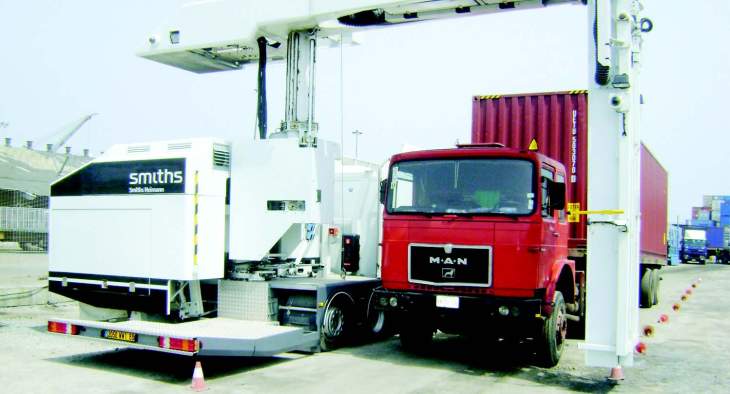
Mobile-scanner installed at Apapa Port as part of DI contract

Mobile-scanner installed at Apapa Port as part of DI contract

Destination Inspection takeover – it seems that all is not well. A stand-off between officers of the Nigeria Customs Service (NCS) and members of the freight forwarding community is festering over trade facilitation issues. The  long association between officials of the Nigeria Customs Service (NCS) and big time freight forwarders, including association leaders may have gone sour. THISDAY checks at the ports revealed that most leaders of freight forwarding associations are on the warpath with the Customs. The agents are aggrieved over what they described as high handedness on the implementation of trade policies by the Customs. They alleged that the Customs has in a bid to meet revenue targets embarked on measures that will force most traders who are mainly their clients out of business.

It is lead to believe that made some leaders of customs agents associations work against the Customs Service concerning the take-over of Destination Inspection from agencies handling the project. The Federal Government had extended the contracts of the Destination Inspection Agents (DIAs) by six months at a time that the Customs had prepared to take over the scheme. Customs had trained about 2000 officers for the scheme. The Service, it was gathered had also planned to inherit the scanning machines from the DIAs before the contract was extended. Indications are that the contracts may be further extended by more than one year at the expiration of six months. Since the extension was announced, many leaders of customs agents have not come out openly to condemn it.

Bone of Contention – When the NCS failed to introduce duty benchmark at the ports last year, the relationship between the it and freight forwarders has changed.Customs issues Debit Note (DN) to recover what is lost due in terms of under-valuation, this has often been abused as importers and their customs agents negotiate what to pay with some of the valuation officers responsible for this. So, the management of the Customs believed that the only way to address this problem was a duty benchmark which saves the importer. The idea of the benchmark was to check revenue losses as a result of under-valuation of goods coming into the country. However, the benchmark arrangement was dropped on the order of the Presidency. Since then, the Service has adopted other means to ensure that no revenue is lost, a development that has angered the clearing agents.

Duty Targets – With a revenue target of N1trillion last year, the Customs had worked hard to ensure that it meets its revenue target. The Service realised about N800bn. Freight forwarders are bitter that so many containers have been abandoned by their owners at the ports due to high-handedness by the Customs in terms of outrageous DNs on the goods. A member of National Association of Government Approved Freight Forwarders (NAGAFF) told THISDAY that the amount being issued as DN is such that many importers have been unable to pay. A top official of NAGAFF who did not want to be quoted said that it appears there is a grand plan by some officials of customs to frustrate some importers out of business by issuing outrageous DNs. “In some cases, the DN is such that the importer will be at total loss after clearing the goods. We have appealed to the management of the customs about this thing, but their officers have failed to come down on the value placed on these goods. Source: This Day (Nigeria)

Keeping manifest information confidential

confidentialAn interesting and pertinent issue has been raised in the social media area on the ‘confidentiality’ of carrier information submitted to Customs. In this particular regard it relates to the practice of the US Customs and Border Protection Agency. One blogger commented “It’s kind of ironic in the U.S. for example that importers/consignees are required to submit a request to customs to opt-in to keep manifest information confidential.”

CustomsNow, a direct filing solution for US traders relates “As a common practice, importers and consignees may submit a request to US Customs, pursuant to 19 CFR 103.31, to keep manifest information confidential.  Our previous blog post on this topic  includes several tips to ensure these requests result in the broadest degree of confidentiality.”

Recently, importers and consignees who have submitted confidentiality requests have complained to CBP that confidential shipping data — party/shipper/consignee name and address — for ocean freight have nevertheless been disclosed to the public.  After reviewing the matter, Customs has determined that “improper data entry” was the cause.  To avoid this, CBP advises in a recent CSMS publication, when filing e-Manifests in ACE, “the commercial party name fields must ONLY contain commercial party name data.”  Otherwise, “…the name of the party stored in the ACE database is corrupted because it includes address data. This inaccurate party name data fails the confidentiality edits resulting in confidential business information being shared publicly. This inadvertent disclosure is tied directly to the way in which data is transmitted by users.” Additional information can be found in CBP’s CSMS #13-000064.

In South Africa, and I’m sure a great many other countries too, one just has to accept that the Customs authorities will secure such information, because they say its safe. Read the link below – cause for concern.

World Bank – Developing Countries Bear More Trade Costs

fair-trade-virtues-of-free-trade-image2A  new database developed jointly by the United Nations Economic and Social Commission for Asia and the Pacific (ESCAP) and the World Bank has revealed that trade costs fall disproportionately on developing countries. This is despite the fact that the international economy has integrated considerably in recent decades.

Disclosing this in a statement issued yesterday, the World Bank  said the study noted that “although developing countries were becoming more integrated into the world trading system in an absolute sense, they are starting from a higher baseline and their relative position is deteriorating because the rest of the world is moving more quickly.”

The bank explained that the new Trade Costs database uses an innovative method to estimate trade costs in agriculture and manufactured goods, opening new analytical possibilities for policymakers and researchers interested in trade integration.

“According to the research, trade costs are influenced to varying degrees by distance and transport costs, tariff and non-tariff measures, and logistics. The new data, which cover the time period 1995-2010, stress the importance of supply chains and connectivity constraints in explaining the higher costs and lower levels of trade integration observed in developing countries.

“One of the key findings triggered by the database is that two areas amenable to policy interventions—maritime transport connectivity and logistics performance—are very important determinants of bilateral trade costs, with an effect comparable to that of geographical distance.”

Ravi Ratnayake, Director of ESCAP’s Trade and Investment Division, which partnered with the World Bank on the project, said, “Technological factors are responsible for a significant share of the differences in trade costs around the world. From a policy perspective, reforms in areas such as infrastructure, core trade-related services sectors, and private sector development can thus have significant benefits for countries in terms of lowering trade costs.”

The global database shows the pattern of trade costs across countries and through time by offering a comparison of pairs of countries, and an identification of those trade costs that are high. As such, the data set can be used to examine the policy factors and “natural” factors that contribute to the levels of trade costs observed around the world. One telling trend: for upper middle income countries, it is easier to trade with high income countries than among themselves. Source: Leadership (Nigeria)

Building Resilience in Supply Chains

WEF - Building Resilience in Supply ChainsOn 24 January 2013, the Secretary General of the WCO, Kunio Mikuriya, participated in a press conference dedicated to the launch of the World Economic Forum’s (WEF) Building Resilience in Supply Chains 2013 report. Sander van ‘t Noordende, Accenture’s Group Chief Executive for Management Consulting, introduced the report and its major findings, such as the top supply chain risks that include extreme weather, natural disasters, physical and cyber security threats, along with economic and political volatility. He highlighted that the report argued the need for a coherent and consistent framework to deal with supply chain resilience, partnerships between government, Customs and businesses, and the sharing information flows for risk assessment purposes.

Secretary General Mikuriya pointed out that supply chain resilience is very important for Customs, whose functions include ensuring that legitimate trade continues even in cases of disruption, an issue which has been addressed by a set of standards and instruments developed by the WCO, in particular, the 2011 WCO Resolution on the Role of Customs in Natural Disaster Relief.  He also stressed the importance of public-private partnerships in order to share security responsibility with trusted traders through the implementation of the WCO SAFE Framework of Standards to Secure and Facilitate Global Trade and its integral Authorized Economic Operator (AEO) programme.

Cooperation at intergovernmental level with longstanding partners of the WCO, such as the International Maritime Organization (IMO), the International Civil Aviation Organization (ICAO), the Universal Postal Union (UPU), the International Air Transport Association (IATA), the International Road Transport Union (IRU) and the World Shipping Council (WSC), was also emphasized by the Secretary General as being key to harmonizing standards and creating synergies among different stakeholders. In addition, he pointed out that transparency and trust among stakeholders in supply chains was of the utmost importance, as this led to a global cohesive approach and even stronger partnerships.

The Secretary General of the IMO, Koji Sekimizu, addressed the concerns of the maritime sector, in particular, the sustainability of international transportation within the context of supply chain resilience. He mentioned that along with the WCO, the IMO has built its approach on risk assessment and risk management, resulting in the adoption of the International Ship and Port Facility Security Code (ISPS Code), a comprehensive set of measures to enhance the security of ships and port facilities. He also touched on the issues of port infrastructure, piracy and port security, and underlined the importance of cooperation with other stakeholders, such as the WCO and ICAO. Source: WCO

CUSTOMS Info – New Regulatory Screening Data

cigdm_newlogoCUSTOMS Info (Ci) now offers import regulations by HTS code for 220 countries. This data will help Trade Professionals to screen items shipped across borders for importation restrictions and requirements from each country.

This data can be used for automating red flags by HS code. Once a flag is obtained, users may research the regulations under the GistNet tab in CUSTOMS Info’s subscription site or on their own. “We are excited about this new data set because it is new and bound to get more detailed,” Ron Lackey, President of CUSTOMS Info.

For a sample file of this data that includes Chapters 28 & 38 of the Harmonized Schedule, visit: http://www.customsinfo.com/download-a-free-sample-of-new-regulatory-content/. (You will find South African customs regulatory reference detail here as well)

Ci provides the world’s most comprehensive trade data repository delivered via web-based subscription, API web services or as data to populate any GTM or Landed Cost application. Ci is the largest provider of duty and tax content for international e-commerce with hundreds of e-commerce sites utilizing our data to provide accurate landed cost information.

New screening system to stop Customs queues at Mumbai airport

India customs_SnapseedIn a bid to make security checks less frazzling for international fliers after their arrival in the city, the Mumbai airport Customs have adopted an advanced in-line screening system to avoid inconveniencing commuters in the green channel. Installed two weeks ago, the system will also help improve screening procedure.

Earlier, every single item of luggage was screened at the Customs exit points, which led to long queues where passengers had to wait for hours before they could exit. With the new advanced screening system installed at the starting point of conveyor belts, the luggage will be screened before it is put on the belt from where the passenger picks it up and walks through the green channel.

“Earlier, there used to be a huge queue at the Customs checkpoints as each and every bag was screened there, and if anything was found to be suspicious, the screening for the following bags was stalled, putting other passengers on hold. With the new system, a foolproof screening would be done before the baggage makes it to the conveyor belt,” said a Mumbai airport Customs official, on the condition of anonymity.

“During screening, if any suspicious or undeclared items are found, the baggage would be marked and put on the conveyor belt. The Customs officer inspecting the luggage would pick it up to ensure that duty fine is imposed or appropriate action is taken,” the official said.

Apart from this, the new system would also be able to screen items concealed in packing, which were not detected by the earlier system and needed a manual check.

Officials further revealed that the Customs department is expecting ISO certification, one of the reasons why the new system was adopted. Apart from this, the Customs have also appointed a nodal agency to take feedback from passengers about the new system. Additional Commissioner Mahendra Pal (Air Intelligence Unit), Mumbai airport Customs, said, “We have adopted a new system which would reduce passenger inconvenience and help make screening better.” Source: www.ndtv.com

Nigeria – Customs Ready (or not) for Destination Inspection Role

Nigeran flagTrade House of Representative Committee on Customs, has expressed satisfaction with the Nigeria Customs Service (NCS) preparedness to take charge of the destination inspection scheme at the expiration of the six months extension granted the Service Providers by the government. Chairman of the committee, Hon. Sabo Nakudu, who disclosed this during the tour to access the performance of service providers, commended the scanners provided by the service providers as part of the contract with the federal government.

Nakudu, however frowned at the Risk Assessment Report (RAR), issued by the service providers which he said is plagued with so much controversies. He noted that the basic reason for the tour, was to confirm the preparedness of the Customs to take over and to ensure that what the service provider delivered, are as expected. According to him, “In most cases, there are instances whereby this risk assessment report are duplicated or un-utilized and instances where a particular consignment being issued with different amount.

“Agencies found (to be involved) in this regard by the committee will be probed to ensure that refund is made to the federal government on the percentages gotten from the RAR duplication.” He warned.

Nakudu maintained that the service is ready and capable of taking over the scheme from the service providers at the expiration of the extension at the end of the six months period. In his words, ” I am convinced that the Customs are trained and as you can see, the scanners are in order, but our major problem is the area of the risk assessment report, because that is where the revenue comes in from.

He also, frowned at the services of connectivity to Web Fontaine, which powers the Automated System of Customs Data (ASYCUDA), over deficiencies in its service delivery, saying that, government pays the firm $6 million monthly, without any commensurate investment and efficiency to show for it.

The committee however toured the scanning operations site in the Lagos Ports Complex, Apapa and the Tin Can Island Port Complex, and also inspected Cotecna Destination Inspection Limited (CDIL) and Global Scan Systems facilities respectively. Source: Allafrica.com

I think Nigeria has made a bold (and correct) decision to adopt responsibility for control over its mandate. Many service providers will disagree as do many of the global audit firms who believe that the field of Customs Audit (including AEO) is best outsourced to their domain. It just shows that when business opportunity in the commercial (private sector) domain is not as easy to come by how the focus turns on what public domain opportunity lies in wake for them. The more service providers/consultants in government, the more consultants are needed to oversee what the original ones are doing! This is the sad situation in South Africa at the moment.