Clearing Agents Cautious About EAC Single Customs Territory

The following article featured in The New Times (Rwanda) provides a snap shot of developments towards a future “Customs Union” in East Africa. While valid concerns are being expressed by traders, how close are the respective Customs administrations in terms of common standards (tariff, regimes, etc), and the application of common external border procedures? The rest of Africa should follow this process closely. Unlike the EU, where it is incumbent of prospective Customs Union members to first attain and implement minimum customs standards prior to accession, here you have a pot-pourri of member states who apply national measures aspiring to an ultimate regional standard. Who determines this standard? Who is going to maintain ‘watch’ over the common implementation of such standards? Forgive the long article – this is a very significant development for the African continent.

0c8d8_logo_of_east_african_community_eac_-63ae9With the East Africa Community integration process gaining pace rapidly, clearing and forwarding agents have been advised to set up shop at entry ports under the proposed single customs territory.

Angelo Musinguzi, the KPMG tax manager, who is representing traders on the team of experts negotiating the establishment of the single customs territory, challenged the agents to look at the opportunities that the policy brings instead of focusing on how it will harm their businesses. “You need to look at this as an opportunity for business expansion because this policy will remove trade tariff barriers, duplication of time-consuming and costly processes and corruption. This will improve efficiency and reduce the cost of doing business,” he said.

The advice follows a deal reached by Uganda, Kenya and Rwanda where top customs officials from landlocked Rwanda and Uganda will be stationed at Mombasa port to ensure quick clearing of goods and curb dumping of cheap products in the region. Under the deal, Kenya will create space for its partners to set up customs clearing units.

Rwanda was given the task of establishing the single customs territory at the recently-concluded meeting between Presidents Paul Kagame of Rwanda, Uhuru Kenyatta of Kenya and Uganda’s Yoweri Museveni held in Entebbe, Uganda. However, local clearing and forwarding agents as well as traders are skeptical about the deal and want the process delayed until Rwandan businesses are supported to become more competitive.

“There are issues we still have to examine critically before the policy is implemented. For example, who will collect revenue and how will it be collected? How will Rwanda share the revenue? Will we have a common legal framework? Will we share Kenya’s or Tanzania’s infrastructure?

Fred Seka, the Association of Freight Forwarders and Clearing Agents of Rwanda president, noted that the move could affect them negatively if it is not studied carefully. “We have already raised the matter with the Minister of Trade. Besides hurting small firms, the country will lose jobs when companies relocate to Mombasa or Dar es Salaam. That is a big concern for us,” Seka said.

He noted that some of the partner states have many trade laws that might affect their operations. “It would be better if a locally-licensed company is not subjected to any other conditions once it relocates to Mombasa,” Seka noted.

Mark Priestley, the TradeMark East Africa country director, said the research firm and other players were currently conducting studies on how the single customs territory can operate without harming any player. “The intention is not only to ensure that we get rid of barriers which have been hampering trade, but also reduce the cost of doing business within the region,” he said. He added, however, that it was too early for traders to be scared of the consequences of operating under the single customs territory.

Last year the Permanent Secretary in the EAC Ministry, stated that the model which will involve shifting customs operations from Rwanda to the ports of Mombasa, and Dar es Salaam, will lead to unemployment, revenue loss and adverse multiplier effects. According to the model, certificates of origin of goods would be scrapped, which, according to Kayonga, would lead to the suffocation of local industries as well as making the region a dumping ground for unnecessary products.

Scovia Mutabingwa, the Aim Logistics East Africa managing director, said there was need for more consultations on the operation of the single customs territory “to understand how it will work”. “We need to know where our bargaining power is in the region?” Mutabingwa said. She noted that there was a need to first harmonise other trade policies if the single customs territory is to benefit all businesses in the region. She pointed out that she had applied for a clearing and forwarding licence in Tanzania over one and half years ago, but she was yet to get it. “How shall we work in such countries?” she wondered.

Another clearing firm, urged those negotiating the deal to ensure uniformity in tax policies across the region. “In Rwanda, there is 100 per cent tax compliancy, but we know this is not the same in other countries. How will we compete favourably if such issues are not addressed?” she wondered.

While one needs at least $300,000 to open a business in Kenya or they have to give a stake in their company to a resident, non-Kenyan companies also pay higher taxes at 35 per cent corporate tax compared to 30 per cent for locals.

Tanzania still has over 63 trade laws, and to operate a clearing firm there you need to be a Tanzanian, according to Musinguzi.

The East African Community (EAC) Customs Union Protocol came into effect in July 2009 after it was ratified by Kenya, Tanzania and Uganda in 2004 and later by Rwanda and Burundi in 2008. The creation of the EAC customs union was the first stage of the four step EAC regional integration process.

When fully implemented, the customs union will consolidate the East Africa Community into a single trading bloc with uniform policies, resulting in a larger economy. By working together to actualise the customs union, partner states will deepen EAC co-operation, allowing their citizens to reap the benefits of accelerated economic growth and social development.

However, the customs union is not yet fully implemented because there is a significant level of exclusions to the common external tariff and tariff-free movement of goods and services.

Latest SA Cabinet decisions affecting Customs

Coat_of_arms_of_South_Africa_svgGovernment Communication and Information (GCIS) has published a statement on Cabinet’s recent meeting (26 June 2013) revealing at least three key aspects affecting SARS as well as external stakeholders involved in or impacted by Customs business. An excerpt of the statement follows below.

Cabinet approved the submission of the Southern African Development Community (SADC) Protocol on Trade in Services to Parliament for ratification, in accordance with section 231 of the Constitution. The objectives of the Protocol are to liberalise intra-regional trade in services on the basis of equity, balance and mutual benefit. This Protocol also sets out a framework for the liberalisation of trade in services between SADC member states and serves as a basis for negotiations.

Cabinet approved the implementation steps proposed for the establishment of a Border Management Agency (BMA).  The BMA would manage migration, customs and land border line control services and efficiently coordinate the service of all departments in ports of entry. The Department of Home Affairs will be the lead Department in establishing the BMA.

Finally, and for some a contentious issue, Cabinet also approved the Customs Control Bill (CCB), the Customs Duty Bill, 2013 (CDB) and the Customs and Excise Amendment Act, 2013 (CEAA) for submission to Parliment.  The Bills provide a foundation for the facilitation of international trade and protection of the economy and society, thereby creating a balance between customs control and trade facilitation. Source: GCIS

WCO Photo Competion 2013

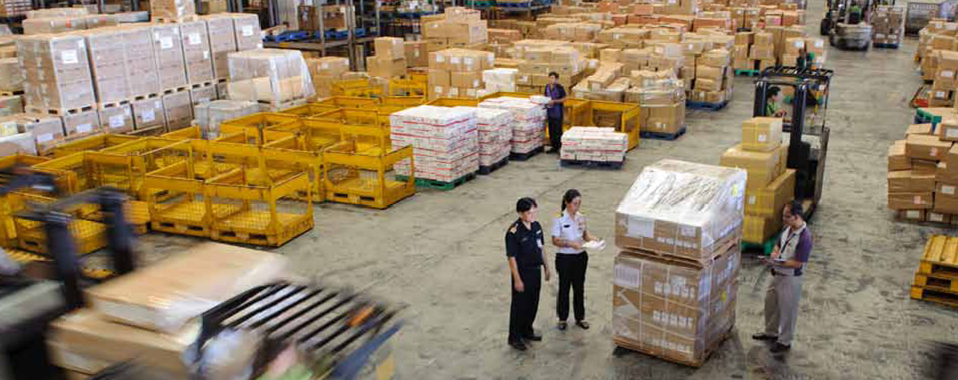
Thailand Customs Administration WCO Photo Competition 2013The WCO’s annual photographic competition has been running successfully since 2009. Each year the entries, in general, represent an increase in both photographic and situational awareness. It is clear that entrants are continually seeking to portray a unique, if not ultimate shot of the work of their customs and border management staff in action. This years collection is based on the theme “Customs officers in action”. At least 36 member countries submitted their ‘best’ pictures and the adjudicators awarded first prize to the Thai Customs Administration for its picture illustrating ‘the challenge the Customs community faces to keep up with a fast-moving trade environment’. It depicts two Customs officers inspecting goods in a cargo warehouse, find themselves in the middle of fast paced logistics activities. To view all the excellent entries please visit the WCO Website or click here!

Uganda says it’s time to talk in Africa

Africa-mombasa-mct-aerial

Port of Mombasa (Credit – Port Strategy)

Not for the first time a landlocked country in Africa is attempting to have a say in a remote port operation which functions as a major gateway for its import and export trade. This time it is Uganda proposing that it has a say in the management of Kenya’s major port, the port of Mombasa. In the recent past it was Ethiopia attempting to secure a dedicated terminal in Djibouti.

The Ugandan initiative surfaced at a recent ‘Validation Workshop on Uganda’s Position on the Single Customs Territory for the East African Community. The Permanent Secretary Ministry of EAC Affairs, Edith Mwanje said that Uganda should have a say in the management of gateway ports because of “the many delays that negatively impacted trade”. Ugandan cargo accounts for the largest body of traffic handled by the port of Mombasa for the landlocked countries surrounding Kenya.

It is unlikely, of course, that any country will give up even partial control of a national asset to another country. It is akin to relinquishing sovereignty in the minds of countries owning port assets and being asked to participate in some form of power sharing. Djibouti fought hard to prevent Ethiopian Shipping Lines gaining control of dedicated terminal assets in the old port of Djibouti and won this battle. It is very unlikely that Kenya will even consider the idea of a foreign power participating in the management of its number one port.

It may, however, be a wise course of action for countries such as Djibouti and Kenya to consider establishing some sort of regular stakeholder dialogue. This is the path to a long and sustainable relationship as opposed to a short opportunistic one.

It is known, for example, that in the past Ethiopia has been frustrated by the high price of gateway container and general cargo operations in Djibouti and this has led to tensions. Since these days, however, Djibouti has put considerable effort into having a sensible dialogue with Ethiopia and this has matured into new projects such as the signing of an agreement with Ethiopia and Djibouti to build an oil pipeline that will reduce South Sudan’s dependence on crude shipments via neighbouring Sudan, and plans for a $2.6bn liquefied natural gas terminal in Djibouti, including a liquefaction plant and a pipeline, that will enable the export of 10m cubic meters of gas from Ethiopia to China annually from 2016.

Source and Picture credit: Portstrategy.com

FDI – Nigeria First in Africa for a Second Year

TCredit - Photobuckethe United Nations Conference on Trade and Development (UNTAD) yesterday ranked Nigeria Africa’s number one destination for Foreign Direct Investment (FDI) in Africa for the second time in two years. The latest UNCTAD report, entitled, “Global Value Chains: Investment and Trade for Development”, put Nigeria’s FDI inflows at $7.03billion while South Africa recorded $4.572bn; Ghana, $3.295bn; Egypt, $2.798bn and Angola, 6.898bn; among others.

According to the report, FDI inflows to African countries went up by five per cent to $50bn in 2012, though global FDI declined by 18 per cent. The report noted that most of the FDIs into Africa mainly driven by the extractive industry, but said there was an increase in investments in consumer-oriented manufacturing and services.

Global FDI fell by 18 per cent to $1.35 trillion in 2012. This sharp decline was in stark contrast to other key economic indicators such as GDP, international trade and employment, which all registered positive growth at the global level,” which was attributed to economic fragility and policy uncertainty in a number of major economies, giving rise to caution among investors.

It added that developing countries take the lead in 2012 for the first time ever, accounting for 52 per cent of global FDI flows. This is partly because the biggest fall in FDI inflows occurred in developed countries, which now account for only 42 per cent of global flows. In 2011, Nigeria was ranked Africa’s biggest destination for FDI, with total inflows of $8.92bn, South Africa followed with $5.81bn, while Ghana received $3.22bn. Source: AllAfrica.com


Ready for Another 24-Hour Rule?

logoLast month (May 2013), the Nippon Automated Cargo and Port Consolidated System (NACCS) released an updated version of guidelines for filing under the Japan 24-hour rule. As the main system for the online processing and procedures related to the new 24-hour rule, NACCS has been updating the guidelines and holding informational sessions across Europe, North America and China since early 2013.

Scheduled to go into force March 2014, Japan Customs and NACCS is encouraging shippers to begin looking at requirements and working towards compliance now. Penalties include Do Not Loads (DNLs) and fines up to 500 thousand JPY.

The NACCS has provided several good resources for the trade to use in familiarizing themselves with the Japan 24-hour Rule:

Therefore, South African shippers, exporters, and carriers of goods to Japan have a few more months to get their systems and processes in order to meet Japanese advance reporting requirements. For those already meeting US, Canadian and EU advance manifest reporting requirements this should not pose too much of a problem.

Source: Integrationpoint.com

Uganda joins COMESA

COMESAUganda has become the 15th member of the Free Trade Area (“FTA”) established by COMESA. Under the membership, the tariff on Ugandan goods will be reduced to 0 percent when exported to other signees, compared to the two percent levy on goods to and from non-member states.

The COMESA FTA began in 2000, and its other member states are Burundi, Comoros, Djibouti, Egypt, Kenya, Libya, Madagascar, Malawi, Mauritius, Rwanda, Sudan, Swaziland, Zambia and Zimbabwe. Uganda was a founding member of COMESA in 1994 but until now was excluded from the FTA. As the Democratic Republic of Congo and South Sudan are Uganda’s biggest trading partners, there is speculation that they will be the next two states to be granted membership.

Sub-Saharan Africa, which includes many of the FTA’s member states, has one of the strongest growth rates in the world, and its regional growth is expected to exceed five percent this year. The opportunity for infrastructural development will continue to grow in line with this, creating a wealth of investment opportunities for banks and lenders. Analysts have identified a particular need for infrastructure in energy and oil and gas-related sectors, as well as transport. Source: Lexology.com

Study into the cooperation of border management agencies in Zimbabwe

tralacZimbabwe is a landlocked developing country with a population of 14 million, sharing common borders with Botswana, Mozambique, South Africa and Zambia. Zimbabwe has 14 border posts, varying in size in accordance with the volume of traffic passing through them. Beitbridge, the only border post with South Africa, is the largest and busiest, owing to the fact that it is the gateway to the sea for most countries along the North-South Corridor. Zimbabwe thus provides a critical trade link between several countries in the southern African regions. The need for the country, especially its border posts, to play a trade facilitative role can therefore not be over-emphasised.

Trade facilitation has become an important issue on the multilateral, regional and Zimbabwean trade agendas, and with it, border management efficiency. Border management concerns the administration of borders. Border agencies are responsible for the processing of people and goods at points of entry and exit, as well as for the detection and regulation of people and goods attempting to cross borders illegally. Efficient border management requires the cooperation of all border management agencies and such cooperation can only be achieved if proper coordination mechanisms, legal framework and institutions are established.

This study explores how border agencies in Zimbabwe operate and cooperate in border management. The objectives of the study were to:

  • Identify agencies involved in border management in Zimbabwe;
  • Analyse the scope of their role/involvement in border management; and
  • Review domestic policy and legislation (statutes of these agencies) specifically to identify the legal provisions that facilitate cooperation among them.

Visit the Tralac Trade Law website to download the study.

Source: TRALAC

A critical view in support of East African Land Locked Countries – Lessons for the South?

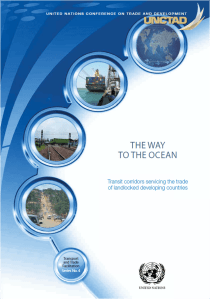
UNCTAD - The Way to the OceanThis paper looks at selected East African transit corridors which provide access to seaports as gateways to link landlocked developing countries (LLDCs) with overseas trading partners. The report suggests three complementary courses of action to improve transit transport efficiency and sustainability:

  • Building institutional capacity through corridor management arrangements, including formal agreements, where and as appropriate; 
  • Improving the reliability and predictability of transit operations by trust-building measures between public regulators and private operators, such as risk-management customs systems, which allow for fewer en route checks, shorter delays and smaller convoys; 
  • Developing and operating transport nodes, or freight hubs, with a particular focus on the consolidation of small flows, to create critical masses required to achieve economies of scale, higher return on investment on both infrastructure and transport services, and lead to the development of effective intermodal transit operations. 

These actions are to be viewed as precursors to an economically viable and environmentally sustainable operation of the transit corridor. They will bring on a “change of culture” that encourages the confidence of shippers and carriers, operating in a setting that rewards compliant behaviour, builds trust and attracts investment, promotes larger-scale trade operations, improves transport service quality and reliability, and enables strong cooperation among stakeholders along transit corridors, including ports, serving transit trade to and from landlocked countries.

This report may be, in this context, considered as an early contribution to the analysis of the recent progress in the field of transit transport for the trade of LLDCs, in the context of the preparation for the Almaty Programme of Action review process taking place in 2013. Source: UNCTAD

Southern African states need also take heed of this study. While its goods to seek organic change within the region, it helps if individual states have a notion of what regional integration, and transit movement entails.

MOL Comfort’s Stern Sinks

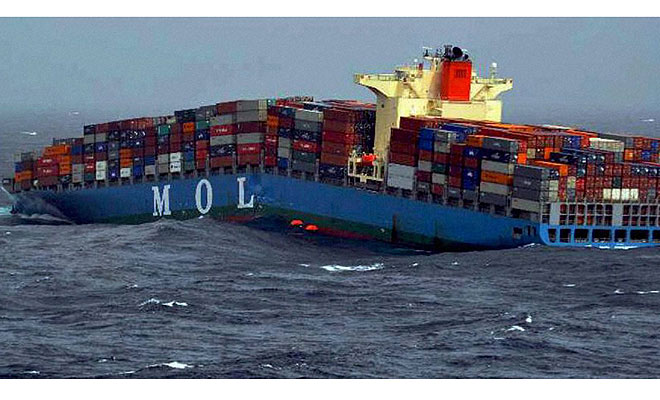
Mitsui O.S.K. Lines (MOL) has just reported that the aft section of the MOL Comfort has sunk near 14’26”N 66’26”E at 16:48 JST (11:48 Dubai time) on June 27. With a water depth of 4,000 meters, no further salvage of the ship will be possible due to the extreme ocean depth. About 1,700 containers and 1,500 metric tons of fuel oil sank with this section of the vessel. Some containers are confirmed floating near the site. gCaptain has been told that the stern began sinking at 1000 hrs (local time) when hatch 7 was breached. The vessel made a quick list and trim forward and to her starboard. Bright pink/ yellow and black clouds were observed coming from hold number 7 and, as a precaution, both vessels – including MV Karar- moved upwind away from the vessel. For more striking photos visit http://gcaptain.com/comfort-images/. Source and Photo Credits: gCaptain.com

Customs and Nigeria’s Trade Hub Portal

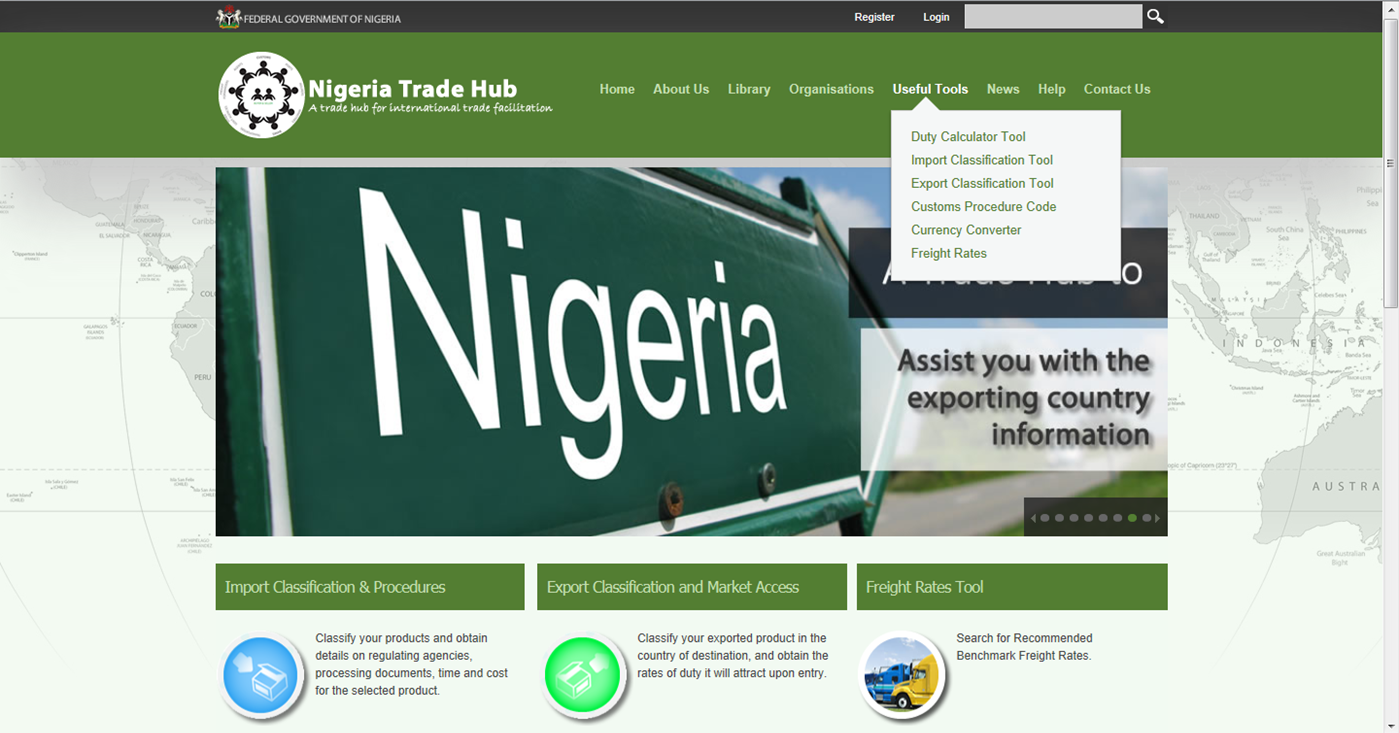
Nigeria Trade Hub 2Anyone familiar with the import and export business in Nigeria will recall how tedious the process used to be. It could take days or even weeks to complete due to ceaseless documentation that importers, exporters and their agents had to endure with the various regulatory agencies. Now, the Nigeria Customs Service (NCS) has developed a web-based application known as the Nigeria Trade Hub Portal, simplifying the entire process and providing information and guidance for international trade business processors in the areas of import, export and transit trade.

The www.nigeriatradehub.gov.ng portal, a non-restrictive and is an intuitive and interactive platform for classifying goods. Through it, trade processors are enabled to find exact Harmonised System Codes (HS Codes) required for related tariffs and duties.

This latest technology is expected to enhance compliance by traders and avail them the required information on tariff in areas like the prohibited items and taxes/levies due for payment upon importation. The application is also designed to touch on the aspect of trade facilitation such that trade processors can access information from all related government agencies. Guidelines and procedures for obtaining permits, licences and certificates of specified commodity and country of origin that a trade will require for business processing are also available on the portal.

The Nigeria Trade Hub portal allows traders to convert currencies to exchange rates set by the Central Bank of Nigeria (CBN) on a monthly basis, make payments, simulate tax and access the CPC Code. The application goes further to provide the tax and duties payable on any particular item, whilst presenting the user with the documents, i.e., the named permits or certificates required for the product, the issuing agency, the processing cost as well as the duration (no of days) for processing. This empowers the trader and provides them with sound information to assist them in competing on the international market.

A mobile Android App is also available on the Google Play store, and other platforms are to be rolled out soon. Source: Nigeria Trade Hub, Suleiman Uba Gaya and Valentina Minta (West Blue Consulting).

New Ressano Garcia Cargo Terminal Operational By December

Mozambique flagA new cargo terminal will be opened at the Ressano Garcia – Lebombo border crossing before the end of the year to speed up the processing of customs clearance for goods moving between Mozambique and South Africa.

To further the project an agreement has been reached between the Mozambique Tax Authority (ATM) and a consortium composed of the Matola Cargo Terminal (Frigo), Matrix and the “Zambian Border Crossing Company”.

The 15 year concession contract was signed on 14 June in Ressano Garcia by the chairperson of ATM, Rosario Fernandes, and by the managing director of Frigo, Filipe Franco.

Filipe Franco told AIM that a new truck terminal is being built where facilities will be available for all the necessary services including customs, migration, and officials dealing with health and agriculture.

He pointed out that “our objective is to ensure that the terminal will be completed and operational by December”, adding that the consortium is composed of companies with a great deal of experience in managing cargo terminals.

Rosario Fernandes said that the cargo terminal project will facilitate trade by speeding up customs clearance at the border post through a one stop system and the single electronic window system which is being implemented throughout Mozambique. Source: AIM (Mozambique News Agency)

CBP initiation date for liquidated damages for 10+2 non-compliance

isfU.S. Customs and Border Protection (CBP) has announced that on July 9, 2013, it will begin full enforcement of Importer Security Filing (ISF or 10+2), and will start issuing liquidated damages against ISF importers and carriers for ISF non-compliance.

According to the CBP release, “in order to achieve the most compliance with the least disruption to the trade and to domestic port operations, it has been applying a “measured and commonsense approach” to Importer Security Filing (ISF or 10+2) enforcement.

The Importer Security Filing (ISF) system—also referred to as the “10+2” data elements—requires both importers and carriers to transmit certain information to CBP regarding inbound ocean cargo 24 hours prior to lading that cargo at foreign ports. These rules are intended to satisfy certain requirements under the Security Accountability for Every (SAFE) Port Act of 2006 and the Trade Act of 2002, as amended by the Maritime Transportation Security Act of 2002.

Under the ISF, the following 10 data elements are required from the importer:

  1. Manufacturer (or supplier) name and address
  2. Seller (or owner) name and address
  3. Buyer (or owner) name and address
  4. Ship-to name and address
  5. Container stuffing location
  6. Consolidator (stuffer) name and address
  7. Importer of record number/foreign trade zone applicant identification number
  8. Consignee number(s)
  9. Country of origin
  10. Commodity Harmonized Tariff Schedule number

From the carrier, 2 data elements are required:

  1. Vessel stow plan
  2. Container status messages

Source: CBP.gov

Weighing Cargo at the source

IMG_39671-210x140Worldcargo news.com reports that a recent truck weighing deal in the UK provides food for thought in the run-up to IMO DSC/18 in September 2013.

Central Weighing, part of Avery Weigh-Tronix, has supplied a cost-effective weighing solution to help Balfour Beatty avoid overloading on its fleet of 3000 light commercial vehicles and 1000 heavy commercial vehicles, which are located at numerous and very often temporary sites across the UK.

Balfour Beatty operates a large and diverse fleet of commercial vehicles in the UK ranging from small vans to 44t artics. The plant, tools, equipment and materials carried vary widely depending on the project or contract being serviced.

“With such a wide variety of loads being transported, it is essential that the vehicles can be weighed accurately and efficiently, to ensure safety and comply with road transport legislation,” stated Central Weighing. “Installing a weighbridge at each location was not financially feasible, so Central Weighing’s solution was implemented to supply 10 portable dynamic weighbridges.”

As discussed on numerous occasions in WorldCargo News, where the shipping line requires container weights to be verified by physical weighing of the container, the ideal location from an overall supply chain perspective is the shipper’s or export packer’s container stuffing point. This provides:

  • the earliest possible notice of discrepancy with the declared weight, and hence the most time for the ship planner to adjust the loading plan.
  • confirmation of legality for road shipment in terms of gross truck mass and axle loads. Inland transportation is outwith IMO’s remit, but this point is clearly very important in terms of road safety. It is not acceptable for shipping lines employing hauliers in a carrier haulage move to ignore it and focus exclusively on the integrity of their loading plans.

Of course, most shippers do not have container lifting equipment, but container chassis could easily be fitted with load cells measuring the weight and distribution as the container is stuffed at the loading dock, or the whole rig could be driven onto portable weighbridges/mats shortly after the container is loaded. If Balfour Beatty can do it, why can’t shipping lines or their contracted road hauliers?

If the truck is shown to be overloaded in terms of gross mass and/or individual axle loads, the container will have to be stripped and restuffed, leading to dispatch delays. Since gate “slot” times and reception “cut off” times are so tight, something has got to give. Don’t expect a truck with a three-hour window between departure from, say, Daventry and arrival in Felixstowe to make it in one hour!

Both container weighing and packing are being discussed in special workshops at next week’s TOC CSC Europe conference in Rotterdam, and these points need to be aired.

Sounds like the kind of discussion and development to be followed by Transport (including Port) and Customs authorities alike. Perhaps the MOL COMFORT tragedy will lend some importance (interest) to this debate.

Source: World Cargo News

Cold COMFORT – Industry expert suggests ‘Container Weight’ is an issue

w20130617_581636_51bf7444348dFollowing up on the unvelievable events which saw the MOL COMFORT split in two, see previous post “Container Ship Breaks in Half and Sinks“,  Michael Grey (former Editor of Lloyd’s List and Fairplay, currently the London Correspondent of BIMCO and holder of a British FG Master’s Certificate) writes “How on earth does a 5 year old 90,000 ton containership, built by one of Japan’s finest shipyards and operated by a tip-top liner company, come to be floating in two bits 19 miles apart? Was it the Weather, Welding,  or perhaps one of those 100 year waves the Met. Offices are warning us about are rather more frequent?”

He goes on to maintain that the smart money must surely be on the stresses induced by under-declared container weights, which shippers routinely refuse to take with any seriousness whatsoever.

Always supposing that there is a good run through the IMO, it has been suggested that it could be another three or four years before SOLAS Regulation VI/2, which provides for the “verification” of container weights, comes into effect. As the distinguished delegates undertake their deliberations on this matter, a huge picture of the after part of the MOL Comfort sitting forlornly in the Arabian Gulf might usefully be displayed on the Council Chamber screens to help focus their minds.

It is now more than six years since the emergency in the English Channel when the MSC Napoli nearly sank through an ingress of water.

It is worth underlining the views of the UK Marine Accident Investigation Branch, which painstakingly required all the boxes retrieved from the wreck to be weighed, and note its suggestion that overweight boxes contributed to the loss of that ship.

Wheels often grind slowly in marine safety mills, but there have surely been enough warnings about excessive container weights to wake everyone up. Feeders have been regularly rolling over, fortunately in shallow water or against the quay. This clearly expensive incident which has put 25 lives and more than 4000 containers at risk ought to clarify the issues.

But we shouldn’t bet on it.

Shippers’ organisations, which have been defending their flawed position on container weights for forty years or more will still be arguing about the responsibilities for verification until the bitter end. If the salvors manage to save this ship, let us hope that every one of those boxes retrieved is weighed, and compared with the manifested declaration.

Sources: article posted in gCaptain.com with original credit to the Clay Maitland blog