EC proposes measures to get more freight onto Europe’s waterways

waterwaysforward-wordpress-com_SnapseedThe European Commission (EC) has announced new measures to get more freight onto Europe’s rivers and canals.

It underlines that barges are amongst the most climate-friendly and energy efficient forms of transport but currently they only carry about 6% of European cargo each year.

The new proposals intend to realise the “unused potential” of Europe’s 37,000 km of inland waterways, enabling freight to move more easily and lead to further greening of the sector, as well as encouraging innovation and improving job opportunities.

“We already send 500 million tonnes of freight along our rivers and canals each year. That’s the equivalent of 25 million trucks. But it’s not enough. We need to help the waterway transport industry develop over the longer term into a high quality sector. We need to remove the bottlenecks holding it back, and to invest in the skills of its workforce,” said the EC’s Vice President, Transport, Siim Kallas.

The Commission is proposing to remove significant bottlenecks in the form of inadequately dimensioned locks, bridges or fairways and missing links such as the connection between the Seine and the Scheldt river systems which are hampering the sector’s full development potential.

In August last year, Lloyd’s Loading List reported that a multi-billion euro project, the Seine-Nord Europe (SNE) Canal, to build a 106km, 54-metre wide canal to link the Seine and Scheldt rivers by the end of the decade, had suffered a serious setback, with doubts cast over private investment in the project.

The French government continues to support the SNE Canal despite the conclusions of an audit into its financial feasibility which recommended that it be postponed indefinitely.

It commissioned the over-hauling project which could be presented to the European Commission in its new form in the first quarter of 2014, the aim being to secure greater EU funding than that granted under the initial plans.

The Commission is also proposing action to encourage investment in low emission technologies and to support research and innovation. Source: Lloyds.com

Special Economic Zones and Regional Integration in Africa

SEZ and Regional Integration in AfricaOne of the most prominent features of the global trading landscape in recent years has been the worldwide proliferation of bilateral and regional trade agreements. Africa is no exception to this pattern. Another prominent development in Africa over the last couple of decades has been the increasing use by many countries in the region of various types of special economic zones (SEZ). These zones are more and more being viewed in the region as important mechanisms for attracting foreign investment, creating jobs, boosting manufacturing production and manufactured exports and contributing to much-needed industrial and economic development.

This paper – Click here for access – does not seek to provide an evaluation of the performance of the various special economic zone programmes established in Africa in recent years, but instead seeks to explore the various issues, challenges and opportunities that arise when countries – and especially developing countries – use special economic zones while simultaneously pursuing regional integration initiatives. This is a particularly important subject in the context of the COMESA-EAC-SADC T-FTA as a large number of the countries involved are actively using special economic zones or are currently in the process of establishing zone programmes. Source: Tralac

e-Book: BRICS – South Africa’s Way Ahead?

Another Tralac sponsored publication which should be of great interest to trade practitioners, economists and investors, and agricultural specialists. Herewith the foreword to the ebook which is available for download from Tralac’s website – Click here!

The accession of South Africa into the BRICS formation has attracted a lot of attention internationally. Some welcomed the step while others questioned it. A closer look at BRICS reveals that these countries share some fundamental features while they differ in others. On that note, this book does not attempt to define BRICS.

BRICS-front-cover-webBRIC, the acronym, was coined by Jim O’Neill of Goldman Sachs in 2001. The founding members of this political formation are Brazil, Russia, India and China, aligning well with the word formulation. The formation of the BRIC was motivated by global economic developments and change in the geopolitical configurations. South Africa joined the group in 2011, thus opening the possibility of putting Africa on the BRICS’ agenda. South Africa’s admission to the group was motivated by China and supported by Russia. Its accession to the BRICS generated much discussion about the country’s suitability to be part of the formation. One of the real issues raised is that South Africa does not measure up to the other BRIC economies in terms of population, trade levels and performance, and growth rates. A formation such as the BRICS is of value to South Africa only if the country’s strategic development interests (relating, for example, to agriculture) are to be on the agenda. South Africa faces particular challenges related to market access into the BRIC countries.

Agricultural issues are discussed under the Standing Expert Working Group on Agriculture and Agrarian Development. The issues that are prioritised include:

  • The development of a general strategy for access to food (this is where market access needs to be tabled), which is tasked to Brazil
  • Impact of climate change of food security, which is allocated to South Africa
  • The enhancement of agricultural technology, cooperation and innovation that is allocated to India
  • Creation of an information base of BRICS countries that is allocated to China

In 2012, at the annual conference of the Agricultural Economics Association of South Africa, the National Agricultural Marketing Council (NAMC) co-hosted a workshop aimed at establishing a dialogue on how agriculture can benefit from South Africa’s membership of the BRICS. It came out clearly from the workshop that agriculture needs to be better positioned to benefit from the BRICS formation. One important issue that was noted was that market access for South African agricultural produce into the BRICS countries could be improved. In this regard, an honest question was raised whether, as the country’s agriculture stakeholders, we fold our arms and do nothing since this this is a political formation (while market access is an economic issue), or whether we use this political formation to address our socioeconomic issues as they relate to these countries. Market access is one of the issues of interest to South Africa’s agriculture industry within the BRICS formation, together with issues such as the diffusion of technologies and collaborations.

The research that is presented in this book addresses a range of important issues related to the trade and investment relations among these countries. The performance of their agricultural sectors as well as trade amongst these countries is also examined. There is also focus on the relationship between BRICS and Africa, and what this means for South Africa’s trade relations with other African countries. Source: Tralac

Border Management in Southern Africa: Lessons with respect to Policy and Institutional Reforms

The folk at Tralac have provided some welcomed insight to the challenges and the pains in regard to ‘regionalisation’. No doubt readers in Member States will be familiar with these issues but powerless within themselves to do anything due to conflict with national imperatives or agendas. Much of this is obvious, especially the ‘buzzwords’ – globally networked customs, one stop border post, single window, cloud computing, and the plethora of WCO standards, guidelines and principles – yet, the devil always lies in the details. While the academics have walked-the-talk, it remains to be seen if the continent’s governments have the commitment to talk-the-walk!

Regional integration is a key element of the African strategy to deal with problems of underdevelopment, small markets, a fragmented continent and the absence of economies of scale. The agreements concluded to anchor such inter-state arrangements cover mainly trade in goods; meaning that trade administration focuses primarily on the physical movement of merchandise across borders. The services aspects of cross-border trade are neglected. And there are specific local needs such as the wide-spread extent of informal trading across borders.

Defragmenting Africa WBThis state of affairs calls for specific governance and policy reforms. Effective border procedures and the identification of non-tariff barriers will bring major cost benefits and unlock huge opportunities for cross-border trade in Africa. The costs of trading remain high, which prevents potential exporters from competing in global and regional markets. The cross-border production networks which are a salient feature of development in especially East Asia have yet to materialise in Africa.

Policy makers have started paying more attention to trade-discouraging non-tariff barriers, but why does the overall picture still show little progress? The 2012 World Bank publication De-Fragmenting Africa – Deepening Regional Trade Integration in Goods and Services shows that one aspect needs to be singled out in particular:  that trade facilitation measures have become a key instrument to create a better trading environment.

The main messages of this WB study are:

  • Effective regional integration is more than simply removing tariffs – it is about addressing on-the-ground constraints that paralyze the daily operations of ordinary producers and traders.
  • This calls for regulatory reform and, equally important, for capacity building among the institutions that are charged with enforcing the regulations.
  • The integration agenda must cover services as well as goods……services are critical, job-creating inputs into the competitive edge of almost all other activities.
  • Simultaneous action is required at both the supra-national and national levels. Regional communities can provide the framework for reform, for example, by bringing together regulators to define harmonised standards or to agree on mutual      recognition of the qualification of professionals……. but responsibility for implementation lies with each member country.

African governments are still reluctant to implement the reforms needed to address these issues. They are sensitive about loss of ‘sovereign policy space’ and are not keen to establish supra-national institutions. They are also opposed to relaxing immigration controls. The result is that border control functions have been exercised along traditional lines and not with sufficient emphasis on trade facilitation benefits. This is changing but specific technical and governance issues remain unresolved, despite the fact that the improved border management entails various technical aspects which are not politically sensitive.

The required reforms involve domestic as well as regional dimensions. Regional integration is a continental priority but implementation is compounded by legal and institutional uncertainties and burdens caused by overlapping membership of Regional Economic Communities (RECs). The monitoring of compliance remains a specific challenge. Continue reading →

African Countries of the Future 2013/14

fDI 2013-14 Rankings for Africa

fDI 2013-14 Rankings for Africa

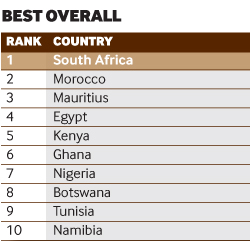
South Africa has been crowned as the African Country of the Future for 2013/14 by fDi Magazine, One of the economic powerhouses of the African continent, South Africa has been named fDi Magazine’s African Country of the Future 2013/14, with Morocco in second position and Mauritius in third. New entries into the top 10 include Nigeria and Botswana. Click here to access the full report!

South Africa has consistently outperformed its African neighbours in FDI attraction since fDi Markets records began in 2003. Figures for 2012 build upon South Africa’s historical prominence as an FDI destination with the country attracting about one-fifth of all investments into the continent – more than double its closest African rival, Morocco. In 2012, FDI into South Africa amounted to $4.6bn-worth of capital investment and the creation of almost 14,000 jobs.

South Africa claimed the title of fDi’s African Country of the Future 2013/14 by performing well across most categories, obtaining a top three position for Economic Potential, Infrastructure and Business Friendliness. Its attractiveness to investors is evident in its recent FDI performance, where the country defied the global trend with 2011 and 2012 figures surpassing its pre-crisis 2008 statistics. Despite a slight decline of 3.9% in 2012, South Africa increased its market share of global FDI, which further increased in the first five months of 2013 as the country attracted 1.37% of global greenfield investment projects. According to fDi Markets, South Africa now ranks as the 16th top FDI destination country in the world.

South Africa’s largest city, Johannesburg, was the top destination for FDI into Africa and is one of only five African cities that attracted more investments in the first five months of 2013 compared to the same period of 2012. South Africa ranked third behind the US and the UK as a top source market for the African continent in 2012, accounting for 9.2% of FDI projects.

In 2010, South Africa became the ‘S’ of the BRICS – five major emerging national economies made up by Brazil, Russia, India and China. While FDI into South Africa fell 3.9% in 2012, this was the lowest recorded decline of the BRICS grouping which, on average, experienced a 20.7% decline in FDI. In its submission for fDi’s African Countries of the Future 2013/14, Trade and Investment South Africa (TISA) stresses the importance of the country’s attachments to its BRICS partners. Source: fDI Magazine

Commemorating 9/11

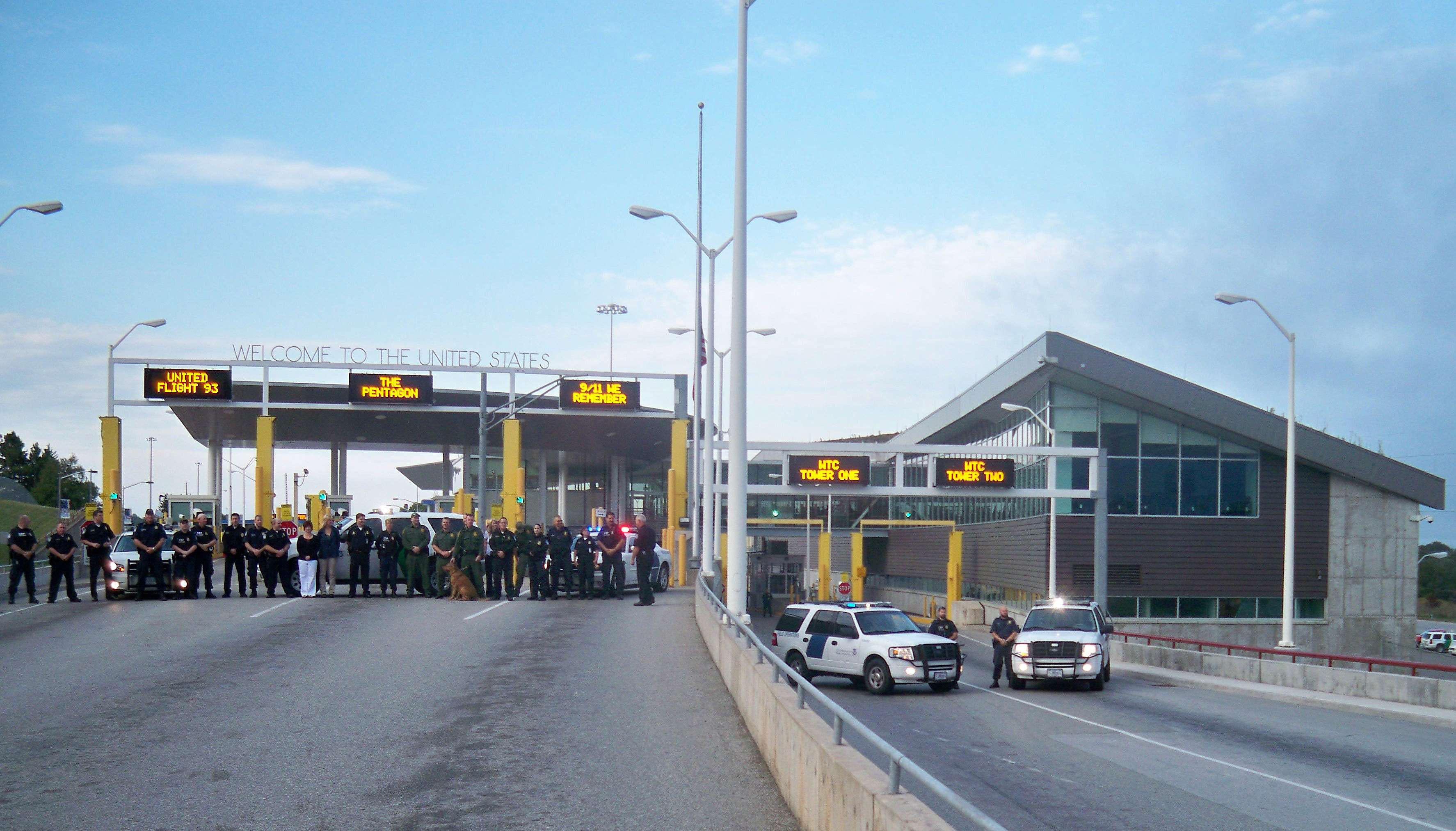
CBP personnel in Sault Ste Marie take a moment to recognize the fallen on 9/11 at the International Bridge. (Picture: US Customs & Border Protection)

CBP personnel in Sault Ste Marie take a moment to recognize the fallen on 9/11 at the International Bridge. (Picture: US Customs & Border Protection)


Also see –

9/11 – The Significance for Customs

9/11 Vivid Memories


CINS reveals cargo mis-declaration and packing issues

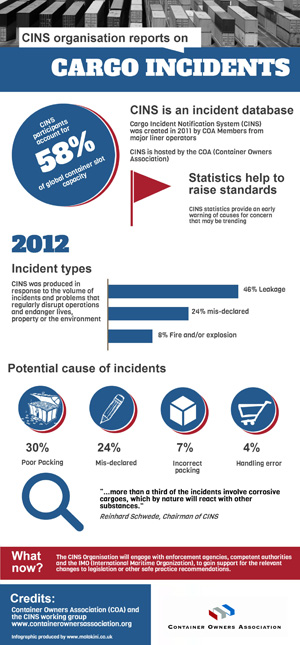
CINS Cargo Incident Visual GraphicPoor or incorrect packing accounts for 37 per cent of cargo incidents in the supply chain, according to data released by the Cargo Incident Notification System (CINS).

And 24 per cent of incidents cases are due to mis-declaration of the cargo, it found. The organisation is managed by the Container Owners Association (COA), and was set up by members from five of the COA’s top 20 liner operators; CMA CGM, Evergreen Line, Hapag-Lloyd, Maersk Line and the Mediterranean Shipping Company.

It was created to capture key data, after an increase in incidents that regularly disrupt operations and endanger lives, property or the environment.

CINS’ analysis revealed that 80 per cent of substances involved in cargo incidents are dangerous goods, with half relating to leakage and a further quarter announced mis-declared.

It also showed that incidents relating to mis-declared cargo have increased significantly within the first four months of 2013, compared to the previous 18 months, which the company says has led it to aspire to identify ways to make the supply chain safer.

“We have identified that 24 per cent of all incidents involve mis-declaration and this is probably the first time that this ‘iceberg’ risk has been quantified, said Reinhard Schwede, chairman of CINS.

“Poor or incorrect packaging are persistent causes, accounting for almost 40 per cent of incidents over nearly two years. This is all the more concerning when we recognise that more than a third of the incidents involve corrosive cargoes, which by nature will react with other substances.

“With these findings, the CINS Organisation will engage with enforcement agencies, competent authorities and the IMO to gain support for the relevant changes to legislation or other safe practice recommendations.” Source: Container Owner Association

IBSA Beware – Currency Sell-off

India’s currency plumbed record lows this week as investors withdrew money from emerging markets (Photo: Financial Times)

India’s currency plumbed record lows this week as investors withdrew money from emerging markets (Photo: Financial Times)

A not-so-sobering look into the immediate future of emerging market darlings who have lost their lustre as investors ponder life without US quantitative easing. Even more worrying considering the possible impact for IBSA countries.

India, 1991. Thailand and east Asia, 1997. Russia, 1998. Lehman Brothers, 2008. The eurozone from 2009. And now, perhaps, India and the emerging markets all over again.

Each financial crisis manifests itself in new places and different forms. Back in 2010, José Sócrates, who was struggling as Portugal’s prime minister to avert a humiliating international bailout, ruefully explained how he had just learned to use his mobile telephone for instant updates on European sovereign bond yields. It did him no good. Six months later he was gone and Portugal was asking for help from the International Monetary Fund.

This year it is the turn of Indian ministers and central bankers to stare glumly at the screens of their BlackBerrys and iPhones, although their preoccupation is the rate of the rupee against the dollar.

India’s currency plumbed successive record lows this week as investors decided en masse to withdraw money from emerging markets, especially those such as India with high current account deficits that are dependent on those same investors for funds. Black humour pervaded Twitter in India as the rupee passed the milestone of Rs65 to the dollar: “The rupee at 65 – time to retire”.

The trigger for market mayhem in Mumbai, Bangkok and Jakarta was the realisation that the Federal Reserve might – really, truly – soon begin to “taper” its generous, post-Lehman quantitative easing programme of bond-buying. That implies a stronger US economy, rising US interest rates and a preference among investors for US assets over high-risk emerging markets in Asia or Latin America.

The fuse igniting each financial explosion is inevitably different from the one before. Yet the underlying problems over the years are strikingly similar.

So are the three principal phases – including the hubris and the nemesis – of the economic tragedies they endure. No one who has examined the history of the nations that fell victim to previous financial crises should be shocked by the way the markets are treating India or Brazil today.

First comes complacency, usually generated by years of high economic growth and the feeling that the country’s success must be the result of the values, foresight and deft policy making of those in power and the increasing sophistication of those they govern. Sceptics who warn of impending doom are dismissed as “Cassandras” by those who forget not only their own fragilities but also the whole point about the Trojan prophetess: it was not that she was wrong about the future, it was that she was fated never to be believed.

So high was confidence only a few months ago in India – as in Thailand in the early 1990s – that economists predicted that the local currency would rise, not fall, against the dollar.

Indian gross domestic product growth had topped 10 per cent a year in 2010, and the overcrowded nation of 1.3bn was deemed to be profiting from a “demographic dividend” of tens of millions of young men and women entering the workforce. The Indian elephant was destined to overtake the Chinese dragon in terms of GDP growth as well as population size.

Deeply ingrained in the Indian system, says Pratap Bhanu Mehta, head of the Centre for Policy Research in New Delhi, was an “intellectual belief that there was some kind of force of nature propelling us to 9 per cent growth … almost of a sense of entitlement that led us to misread history”.

In the same way, the heady success of the southeast Asian tigers in the early 1990s had been attributed to “Asian values”, a delusional and now discredited school of thought that exempted its believers from the normal rules of economics and history because of their superior work ethic and collective spirit of endeavour.

The truth is more banal: the real cause of the expansion that precedes the typical financial crisis is usually a flood of cheap (or relatively cheap) credit, often from abroad.

Thai companies in the 1990s borrowed dollars short-term at low rates of interest and made long-term investments in property, industry and infrastructure at home, where they expected high returns in Thai baht, a currency that had long been held steady against the dollar.

The same happened in Spain and Portugal in the 2000s, although the low-interest loans that fuelled the unsustainable property boom were mostly north-to-south transfers within the eurozone and therefore in the same currency as the expected returns. Indeed, the euro was labelled “a deadly painkiller” because the use of a common currency hid the dangerous financial imbalances emerging in southern Europe and Ireland.

Phase Two of a financial crisis is the downfall itself. It is the moment when everyone realises the emperor is naked; to put it another way, the tide of easy money recedes for some reason, and suddenly the current account deficits, the poverty of investment returns and the fragility of indebted corporations and the banks that lent to them are exposed to view.

That is what has started happening over the past two weeks as investors take stock of the Fed’s likely “tapering”. And the fate of India – the rupee is one of the “Fragile Five”, according to Morgan Stanley, with the others being the currencies of Brazil, Indonesia, South Africa and Turkey – is particularly instructive. (Emphasis mine).

It is not that all of India’s economic fundamentals are bad. As Palaniappan Chidambaram, finance minister, said on Thursday, the public debt burden has actually fallen in the past six years to less than 70 per cent of GDP – but then the same was true of Spain as it entered its own grave economic crisis in 2009.

Like Spain, India has tolerated slack lending practices by quasi-official banks to finance the huge property and infrastructure projects of tycoons who may struggle to repay their loans.

Ominously, bad and restructured loans have more than doubled at Indian state banks in the past four years, reaching an alarming 11.7 per cent of total assets. According to Credit Suisse, combined gross debts at 10 of India’s biggest industrial conglomerates have risen 15 per cent in the past year to reach $102bn.

For those who take the long view, a more serious failing is that India has manifestly missed the kind of economic opportunity that comes along only once in an age.

Instead of welcoming investment with open arms and replacing China as the principal source of the world’s manufactured goods, India under Sonia Gandhi and the Congress party, long suspicious of business, has opted to enlarge the world’s biggest welfare state, subsidising everything from rice, fertiliser and cooking gas to housing and rural employment.

Former fans of her prime minister, Manmohan Singh – who as finance minister liberalised the economy, ended the corrupt “licence Raj” and extracted India from a severe balance of payments crisis with the help of an IMF loan – could only shake their heads when he boasted last week that no fewer than 810m Indians would be entitled to subsidised food under a new Food Security Bill.

The bill is a transparent attempt by Congress to improve its popularity ahead of the next general election, but the government’s critics are horrified at the idea of offering Indians more handouts rather than creating the conditions that would give them jobs and allow them to buy their own. The resulting strain on the budget may also worsen the risk of “stagflation”, a toxic mixture of economic stagnation and high inflation.

India’s annual growth rate has already halved in three years to about 5 per cent and could fall further towards the 3 per cent “Hindu rate of growth” for which the country was mocked in the 1980s.

If currency declines and balance-of-payments difficulties develop into a full-blown financial crisis in the coming months, India will be propelled unwillingly into the third and final phase of the trauma.

Phase Three is when ministers and central bank governors survey the wreckage of a once-vibrant economy and try to work out how to rebuild it.

It is traditional for those governments that survive, and for the ones replacing those that do not, to announce several false dawns and to see “green shoots” that turn out to be illusory.

It is hard when times are bad to impose financial discipline that would have been easier to apply before. Indian policy makers are already torn between the need to lower interest rates to boost growth and the necessity of raising them to protect the rupee and tackle inflation – the same kind of tension between austerity and easy money that has afflicted developed economies since 2008.

India’s underlying economy is nevertheless sound and its banks are safe, say Mr Chidambaram and other senior officials. There is therefore no need to contemplate asking for help from the IMF or anyone else.

Mr Sócrates said much the same in Lisbon three years ago. “Portugal doesn’t need any help,” he said, almost leaping from his chair. “We only need the understanding of the markets.” The markets did not understand, and Portugal did need the help.

Source – Victor Mallet of the Financial Times August 23, 2013

WEF – Global Competitiveness Report 2013-14

WEF - Global Competitiveness Report 2013-14South Africa is ranked 53rd this year, overtaking Brazil to place second among the BRICS. South Africa does well on measures of the quality of its institutions (41st), including intellectual property protection (18th), property rights (20th), and in the efficiency of the legal framework in challenging and settling disputes (13th and 12th, respectively). The high accountability of its private institutions (2nd) further supports the institutional framework.

Furthermore, South Africa’s financial market development remains impressive at 3rd place. The country also has an efficient market for goods and services (28th), and it does reasonably well in more complex areas such as business sophistication (35th) and innovation (39th). But the country’s strong ties to advanced economies, notably the euro area, make it more vulnerable to their economic slowdown and likely have contributed to the deterioration of fiscal indicators: its performance in the macroeconomic environment has dropped sharply (from 69th to 95th).

Mauritius moves up by nine places this year to 45th place, becoming the highest ranked country in the sub-saharan region.

Low scores for the diversion of public funds (99th), the perceived wastefulness of government spending (79th), and a more general lack of public trust in politicians (98th) remain worrisome, and security continues to be a major area of concern for doing business (at 109th).

Building a skilled labor force and creating sufficient employment also present considerable challenges. The health of the workforce is ranked 133rd out of 148 economies-the result of high rates of communicable diseases and poor health indicators more generally.

The quality of the educational system is very poor (146th), with low primary and tertiary enrollment rates. Labor market efficiency is poor (116th), hiring and firing practices are extremely rigid (147th), companies cannot set wages flexibly (144th), and significant tensions in labor-employer relations exist (148th). Raising educational standards and making the labor market more efficient will thus be critical in view of the country’s high unemployment rate of over 20 percent, with the rate of youth unemployment estimated at close to 50 percent. For the full report, click here!

The Material Footprint of Nations and ‘True’ Material Cost of Development

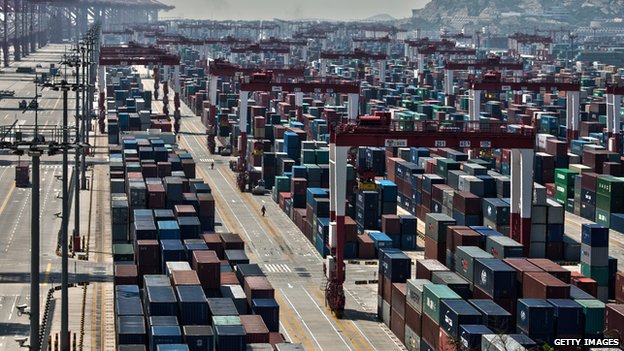
High Density Container Terminal  (Picture credit - Getty Images)

High Density Container Terminal (Picture credit – BBC News/Getty Images)

Thanks to the kind reader who passed me this story. BBC News Environment correspondent, Matt McGrath, reports that current methods of measuring the full material cost of imported goods are highly inaccurate. In a new study, researchers have found that three times as many raw materials are used to process and export traded goods than are used in their manufacture.

Richer countries who believe they have succeeded in developing sustainably are mistaken say the authors. The research has been published  (click hyperlink to access the report) in the Proceedings of the National Academy of Sciences.

Many developed nations believe they are on a path to sustainable development, as their economic growth has risen over the past 20 years but the level of raw materials they are consuming has declined.

According to  Dr Tommy Wiedmann University of New South Wales “We are saying there is something missing, if we only look at the one indicator we get the wrong information”. This new study indicates that these countries are not including the use of raw materials that never leave their country of origin.

The researchers used a new model that looked at metal ores, biomass, fossil fuels and construction materials to produce what they say is a more comprehensive picture of the “material footprint” of 186 countries over a 20 year period.

“The trade figure just looks at the physical amounts of material traded, but it doesn’t take into account the materials that are used to produce these goods that are traded – so for something like fertiliser, you need to mine phosphate rocks, you need machinery, so you need extra materials.”

In this analysis, the Chinese economy had the largest material footprint, twice as large as the US and four times that of Japan and India. The majority comes from construction minerals, reflecting the rapid industrialisation and urbanisation in China over the past 20 years.

The US is by far the largest importer of these primary resources when they are included in trade. Per capita, the picture is different, with the largest exporters of embodied raw materials being Australia and Chile.

According to the model, South Africa was the only country which had increased growth and decreased consumption of materials.

The researchers believe their analysis shows that the pressure on raw materials doesn’t necessarily decline as affluence grows. They argue that humanity is using natural materials at a level never seen before, with far-reaching environmental consequences.

They hope the new material footprint model will inform the sustainable management of resources such as water. The authors believe it could lead to fairer and more effective climate agreements.

“Countries could think about agreements where they help reduce the emissions at that point of material use,” said Dr Wiedmann. “That’s where it is cheapest to do, where it is most efficient, where it makes more sense.” Source: BBC News

Indonesia paves the way for ATA System implementation

ATA-Carnet_sourceAs part of Indonesia’s move towards globalization, Indonesian Customs, jointly with ICC Indonesia and the Indonesian Chamber of Commerce and Industry, is preparing the implementation of the ATA System in Indonesia.

They aim to announce Indonesia’s ratification of the Convention on the temporary admission of goods (the so-called Istanbul Convention) at the World Trade Organization Ministerial Conference, being held in Bali in December, as well as to implement the ATA Carnet System for the temporary duty and tax-free import and export of goods in Indonesia in early 2014.

Indonesia features among the 10 priority target countries where businessmen from countries already operating the system would like to be able to use their ATA Carnets. To meet these expectations, Indonesian governmental authorities and business organizations invited Ms Lee Ju Song, Director of ICC Asia, to conduct a two-day workshop and series of meetings in Jakarta on 1-5 July 2013 to understand the technical intricacies of the ATA System operation. They benefited from very practical and technical training, as well as from guidance on steps they should take to finalize their affiliation to the ATA Chain.

The ATA Carnet System – celebrating its 50th anniversary in 2013 – is jointly administered by the World Customs Organization, holding the international conventions on the temporary admission of goods, and the ICC World Chambers Federation (WCF), acting as the administrator of the ATA International Guarantee Chain. This chain comprises the chambers of commerce and other similar business organizations appointed in their respective countries to guarantee and issue Carnets.

ATA Carnets remove the need for exporters to provide Customs authorities with the otherwise necessary guarantees required for goods to cross borders. In the 73 countries where they are currently accepted, Carnets allow all kinds of goods to be temporarily transported. This usually pertains to professional equipment, commercial samples and material for trade fairs and exhibitions. Some examples of note include: a prototype solar car, World Cup yachts, Giorgio Armani apparel, McLaren Grand Prix cars, Munich Symphony Orchestra instruments, Australian Olympic horses, Harley Davidson motorcycles and equipment for the Bolshoi Ballet, Cirque du Soleil, BBC and CNN. More than 175,000 ATA Carnets are issued yearly for thousands of customs transactions worth over US$ 25 billion. Source: International Chamber of Commerce


China ‘VAT’ Syndrome – Uncertainty for International Forwarders

VAT-TAXGreg Knowler, of maritimeprofessional.com reports, “Whenever there is uncertainty in a particular trade, the container lines resolutely stick with the “shipper pays” principle. That’s understandable considering the state of the industry, but not exactly fair on their customers”.

For the last couple of decades shippers have been complaining that the host of extras they are charged – more than 100, according to the HK Shippers’ Council – should be built into the freight rates that are negotiated between them and the lines.

From this month [August 2013] there will be another charge levied – a six percent VAT charge on top of all charges payable in China, according to Lloyd’s List. Many of the major carriers have informed their customers, but the news has not been received with much enthusiasm.

China is changing its tax system from a turnover tax on companies’ gross revenue to a VAT, which is levied on the difference between a commodity’s pre-tax price and its cost of production.

Beijing rolled out a VAT pilot programme to test the market and iron out the bumps, starting in Shanghai in January last year. In September Beijing was included followed by a gradual nationwide rollout before the new system kicks in tomorrow.

But there is still major uncertainty in this new tax regime, and that is providing great consternation for shippers and the carriers. International shipping is not liable for VAT, so why should carriers impose a six percent VAT levy on customers, asks Sunny Ho of the HK Shippers’ Council.

The problem is that international container lines are not sure whether they are exempt from VAT or not. All the carriers have China offices and as that is where the billing of mainland shippers originates, so they fear Beijing may treat them as agents instead of international shipping services, which means their business will be eligible for the tax.

Maersk Line has decided to wait until mid-August before levying the six percent VAT on mainland charges to see how the situation unfolds. That is a welcome gesture and one that should be followed by all the international shipping lines.

With so much uncertainty surrounding the nationwide rollout of the new tax regime, how can carriers justify slapping customers with a VAT levy before the actual impact of that VAT can be measured?

It is a grasping approach that the lines instinctively default to when faced with the possibility of rising costs. It may serve to protect the bottom line, but it continues to reinforce the traditional unhealthy and antagonistic relationship between them and their customers.

The lines should wait until the costs of China’s VAT have been established and those costs should then be built into the freight rates. Surely that is the only reasonable approach. Source: www.maritimeprofessional.com

SACU in danger of collapse

Rob Davies Frustrated with lack of progress (Business Day)

Rob Davies Frustrated with lack of progress (Business Day)

Trade & industry minister Rob Davies did not mince his words when he briefed parliament late last month on the Southern African Customs Union (Sacu), the world’s oldest. The union was formed in 1910 and comprises SA, Botswana, Lesotho and Swaziland.

Exasperated, Davies complained to MPs that SA’s partners were hardly moving in the direction of harmonising trade and industrial policies. He said if this did not happen soon, the viability of Sacu itself might be called into question.

Sacu was initially formed as a colonial-era instrument to control the flow of goods into and out of the then British colonies, an arrangement that was retained with a new agreement in 1969. In essence, SA collects customs and excise revenue on behalf of all four countries and distributes 98% of all this money to the three other members as a form of aid, retaining only 2% that should accrue to itself. It is a formula that has both worked and been fraught with difficulties over the past century.

The agreement was modified with a more distributive formula in 2002 which came into effect into 2004. Under the new agreement the most vulnerable countries, Swaziland and Lesotho, would get a larger share of the excise portion.

The Sacu distributions are also the instrument through which Swaziland was to get R2,4bn in assistance from SA in 2011. Under that agreement SA would have advanced the landlocked kingdom the money from its future Sacu distributions, but it came with fiscal and technical conditions from SA.

In January 2013, Swazi finance minister Majozi Sithole said the loan arrangement was “not working out”. He complained about additional conditions set by SA before the first tranche of R800m could be paid to Swaziland.

The kingdom’s financial woes arose mainly from reduced customs and excise collections in 2010 which reflected reduced trade to and from the region. With up to 60% of Swaziland’s national budget dependent on Sacu funds, the reduction from a total pool of R27bn to just over R17bn left Swaziland cash strapped.

Though he didn’t explicitly say so in his briefing to parliament, Davies’ frustration with the Sacu arrangement was palpable. He took particular issue with the Sacu payments merely serving as a guaranteed source of revenue for the treasuries of Sacu member states. “There are no cross-border development initiatives out of the revenue collected when there are opportunities for the members to invest in joint projects,” he told parliament.

Sacu has other problems. While the 2002 agreement calls for harmonised trade and industrial policies, it also makes provision for the countries to have different fiscal and other regimes. As a consequence Sacu members’ corporate and personal income tax rates are different. This means some members realise lower internal tax revenues than they otherwise could, increasing dependency on the Sacu distributions.

A sense of entitlement has also crept into the arrangement. In a case that generally escaped media attention, in 2009 the other members asked for an international tribunal to seek arbitration on what they believed to be “short” payments from SA. The tribunal convened in the supreme court of Namibia in Windhoek.

The matters in dispute were resolved with the signing of the latest agreement in 2009, but the fundamental complaint demonstrated both the entitlement and the vulnerability of the most dependent members.

At the time SA was expected to make four quarterly distributions which were based on an estimate of revenues collected. As often happened, there was an overestimation which resulted in a payment surplus of just over R2bn, which SA deducted from future payments. This precipitated a dispute which, given the vulnerability of Swaziland and Lesotho, was almost inevitable as their entire fiscal planning for that year had been premised on the inaccurate Sacu estimates.

SA’s counsel in the hearing, Michael Kuper, argued that the arrangement was so inefficient that it forced SA to sometimes look for alternative sources of funding just to fulfil the Sacu revenue-sharing formula.

Officials of the department of trade & industry and national treasury have for some time been unhappy about the disruptive nature of the formula, given the volatility of customs revenue. Davies alluded to this in parliament, using the wild fluctuations in revenue before, during and after the global financial crisis.

Now Davies wants the union to shape up or make a decision on its future. He told parliament that Sacu had to live up to the outcomes of its second summit, held in 2011, where member states undertook to work on cross-border industrial development, development of Sacu institutions, unified engagement in trade negotiations and a review of the revenue-sharing arrangements.

As if to emphasise its historical and present inertia, Davies said that not much work had advanced in this regard – such as the formation of national tariff bodies, a Sacu tariff board, common antitrust regulations and co-operation in agriculture.

“Some members have proposed that the Sacu tariff board be formed even if the states’ national tariff boards have not been formalised yet,” he said, in an indication that some of the members do not have the technical wherewithal to install the necessary institutions.

Lesotho and Swaziland in particular are hampered by structural economic difficulties, including low prospects for meaningful economic growth and reliance on external aid. A recent IMF report on Lesotho complimented the new government on its fiscal discipline and recommended further aid. It also noted new measures to improve supervision over the financial and other sectors.

As Africa’s last remaining absolute monarchy, known for its profligate spending on the comforts of its king, Swaziland remains a political hot potato which has increased pressure on the SA government to attach conditions to any assistance given. Though written in diplomatic language, the 2011 IMF report on Swaziland also listed a number of areas that needed strengthening.

It recommended the cutting of public-sector wages to ease fiscal pressures, a decision that brought the kingdom to the brink of instability, precipitating the appeal to SA for help. MPs raised the Swaziland loan issue with Davies, demonstrating the internal and regional political difficulties of the arrangement.

While SA remains determined to assert its voice over its junior partners in Sacu, it still has to tread carefully lest it be seen as a bully. Providing some cover have been the conditions set by the IMF before Swaziland can receive further assistance. Some of these common conditions include the protection of the peg between the Swazi ilangeni and the rand, the implementation of a fiscal adjustment roadmap and a prioritisation of social spending over the reported excesses of King Mswati III.

Early this month Australian newspapers reported the arrival of several of King Mswati’s queens and their aides in Australia on an apparent shopping trip. It is such extravagance that has put both SA and the kingdom in a difficult position – the former in its internal political environment and the latter through the loss of credibility with international development finance institutions.

It now appears that SA is choosing the route of common economic development over the aid-like structure of the Sacu payments. It remains to be seen whether the partners will be in a position to make good on Davies’ intentions or keep talking as the member states have been doing for over a decade. Source: Financial Mail

Trade Information Portal to Improve Trade Facilitation in Namibia

Namibia flagThe World Trade Organization General Agreement on Tariff and Trade (GATT) 1994 Article X on Trade Facilitation calls for member country trade regulations to be clearly published. The WTO Self-Assessment Guide (2009) outlines the basic standard for internet Publication as: “A Member shall publish all trade related legislation, procedures and documents on a national official internet site or sites”. Usually called a “Trade Repository” or a “Trade Information Portal” the site facilitates awareness, via the internet, of requirements to enable compliance with customs and other agency requirements for the import or export of goods, using the HS classification of goods as the primary organizing principle for cataloguing and retrieving information

USAID Southern African Trade Hub reports that the government of Namibia expects to have its Trade Information Portal up and running by early 2014. The development of portal is supported by the USAID Southern Africa Trade Hub, under its Partnership for Trade Facilitation facility. The Trade Hub recently supported Namibia in a detailed legislative review of the country’s Customs and Excise Act to align it with global and regional legislation and to provide the legislative foundations for electronic trade facilitation measures, including the Trade Information Portal.

Currently trade-related information is made available across number of websites maintained by each government agency responsible for a particular aspect of trade regulation. The Trade Information Portal will provide a single platform where all trade related information for Namibia is collected in one system and readily available for searching and viewing, which will save time and expense for the trading community. The Trade Information Portal uses the latest technology to provide a comprehensive, accurate and up-to-date source for all regulatory information, which will result in tangible benefits for trade facilitation. No longer will it be necessary to seek advice in person from multiple agencies. Furthermore, conflicting advice and guidelines will be avoided by creating a single authoritative reference point. The savings in time and expense will lessen the overall cost of doing business and reduce the time to import or export goods, contributing to Namibia’s improved standing in doing business indexes and transparency.

A significant part of the coordination and development work in setting up the Trade Information Portal will facilitate and shorten the road map towards implementing an electronic National Single Window which is also under consideration by the Namibia government. Source: satradehub.org

20 Rescued After Coal Ship Runs Aground Off South Africa

More than 20 crew members were rescued by helicopter from a cargo ship carrying coal that ran aground in rough seas off of South Africa’s Richards Bay port, maritime authorities said on Monday.

Tugboats were trying to pull the 230 metre-long ship named SMART off a sandbank, National Sea Rescue said in a statement, adding that “the structural integrity of the ship was compromised”.

The single-hull, 151,279 tonne ship is registered to Alpha Marine Corp and flies a Panamanian flag. It was supposed to deliver its cargo to the Fangcheng port in China, according to Thomson Reuters data.

No injuries have been reported. The Richards Bay port is on the Indian Ocean.

This is the second cargo ship to run aground off South Africa this month. The other was the 165 metre-long Kiani Satu, which hit ground off the southern coast. Source: Reuters