EAC to punish Member States enforcing non-tariff barriers

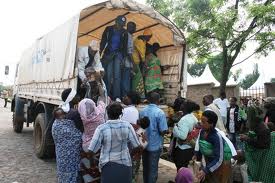
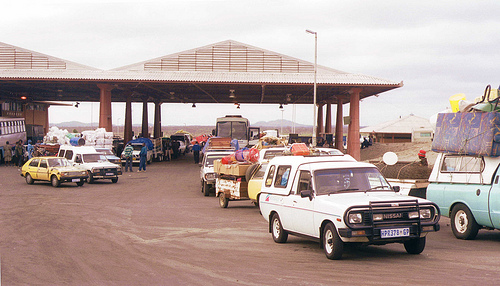
Uganda, Malaba border crossing

Uganda, Malaba border crossing

The New Vision (Uganda) reports on a draft law which will punish countries that fail to implement agreed upon mechanisms to eliminate trade barriers has been submitted at the regional Parliament.

Jose Maciel, the TradeMark East Africa director of trade facilitation, noted that while most of the non-tariff barriers (NTBs), including road blocks and corruption have slightly declined, the proposed law in the East African Legislative Assembly, if enacted, would create the possibility of sanctions against stubborn states that do not enforce the check points. “It is important to give teeth to the system. We need to make it possible to impose sanctions for countries that do not eliminate NTBs,” said Maciel.

He was speaking at a Kenya Ports Authority (KPA) organised meeting with EAC media in Mombasa. TradeMark is a trade facilitating agency operating in the five states of East Africa. Maciel said non-tariff barriers like road blocks, which are easy to eradicate, are some of the biggest impediments to East Africa’s competitiveness.

States are not the only defaulting party to agreed upon positions on eliminating NTBs. P.J. Shah, a Mombasa entrepreneur, for instance notes that while Mombasa began 24-hour operations about three years ago, other agencies like banks and shipping lines are not operating 24 hours. The poor infrastructure such as rail and water systems, whose potential is yet to be optimised, also increase trade costs. Other NTBs include weighbridges and corrupt state enforcement agencies.

Regional trade experts and facilitation agencies such as Trade Mark East Africa agree that NTBs are known, and numerous researches have been done about them and their impact on trade. Although some efforts have been made to eradicate or reduce the salient ones such as road blocks, overall NTBs remain a major trade impediment.

Two thirds of goods are shipped in containers. TradeMark estimates that 20% of annual shipments face NTBs. TradeMark is also targeting to work with regional governments to harmonise 20 standards in a year, amongst the other efforts at making EAC more competitive.

During the Mombasa meeting, it was agreed that because sometimes there seems to be no communication between the different government agencies such as the Kenya Revenue Authority (KRA) and KPA, hinterland states suffer.

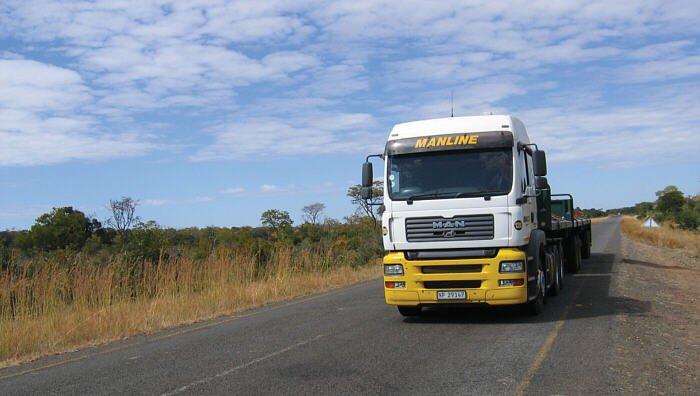
There should be a single authority that oversees them all and ensures enforcement. There are about 24 road blocks between Mombasa and Uganda’s border and another 21 in Uganda, four in Burundi and two in Rwanda. There are also 12 weighbridges in Kenya, five in Uganda and two in Rwanda.

“A well run efficient port can help shape economic growth and performance of the economy,” said Antony Hughes, a TradeMark official.

Mombasa handles about 20 million tonnes of cargo, 85% destined for Uganda and other hinterland states. Transit states always suffer the biggest brunt of NTBs and poor flow of information regarding imminent disruptions at the border. This was witnessed during the recent cash bond imposed by KRA that caught Uganda traders unaware, leading to massive clog ups of cargo and huge loss of value.

Comment: It appears that regional bodies such as the EAC are to get extraordinary powers to enforce rules over sovereign states. Would be interesting to learn whether these member states voted for such action, or if it is rather the ideal and persuasion of ‘foreign’ interests.

WTO – Merchandise Trade and Commercial Services

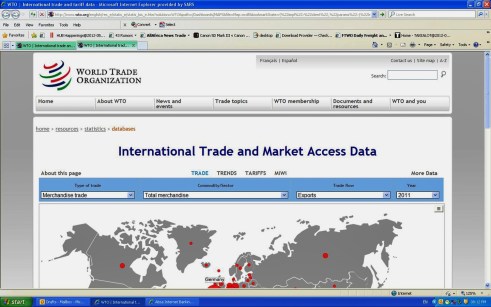
Researchers and students of international trade patterns and economics will find a useful resource in the following link. Information is made available across databases, annual publications as well as interactive statistics and maps. Please take note of the copyright.

WTO Statistics

EAC Common Market – from the pot into the fire?

EAC Heads of State sign historic Common Market Protocol

Kenyan Finance Minister Njeru Githae has said that the East African member states are going to meet the December 31 deadline for the signing of the monetary union protocol despite skepticism over the issue. He said that out of the 100 articles on the monetary union, 85 have been agreed upon therefore, he said, he is optimistic that the deal will be signed by the set date. “We are learning from mistakes of the eurozone and we have decided to come up with harmonisation of methodology for statistics such as inflation rate, interest rates and the penalties for the countries that do not comply,” explained Githae on Friday. “We have also agreed on the amount of budget deficit that is acceptable and countries that do not meet the set mark will also face penalties.” Comment: What on earth will penalties for not setting the mark achieve – those unfortunate countries will not have the money to foot the debt let alone penalties, plunging the rest of the common market into fiscal anxiety?

However, the minister cautioned that the signing of the protocol will not immediately result in change of currency to adopt one for all the member states but would rather give the road map to implementation of a single currency. The monetary union was slated as the next step to regional integration after the EAC Customs Union in 2005 and a Common Market in protocol signed in 2010. The monetary integration was to help member states co-operate in economic and fiscal matters aimed at reducing the costs and risks of doing business across the boundaries. When fully implemented and a single currency is later introduced as a result, the EAC partner states would achieve removal of the costs of having to transact in different currencies and the risk of adverse exchange rate movements for traders and travelers. Source: The Star (Kenya)

Bribery along the corridor

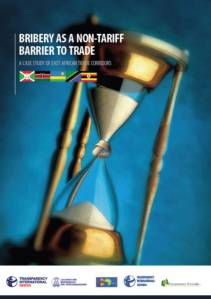
Notwithstanding efforts to minimize collusion, bribery and corruption through increased use of technology, the underlying fact remains that human intervention cannot be completely removed from nodes within the supply chain.Identifying the causes and parties involved in such activity is only the start (yet minuscule) aspect of a problem entrenched in the distrust of government officials and border authorities in particular. Integrity is based on trust. If trust is the placement of hordes of incompetence in public jobs to secure votes, then you will not need to look very far to understand that “the bribe” epitomizes the ultimate enterprise of individuals either bent on extortion, or to avail their services (like prostitutes  to the crooked trader. The following article “Bribery as a non-tariff barrier to trade” (click hyperlink to download) takes account of a wide-spread of role players as to their views and attitudes on the matter. In my view it is a template for what actually occurs at every border across the continent. 

Transparency International (Kenya) and Trade Mark (East Africa) have collaborated in the publication of a review on the subject of bribery in the EAC region. The executive summary elucidates the context – 

The East African Common Market Protocol that came into force in 2010 provides for the free flow of goods, labour, services and capital across the EAC bloc. To achieve this, members undertook to remove all tariff and non-tariff barriers to trade. While progress has been made on the removal of the former, doing away with the Non-tariff barriers along the main transport corridors of the region has remained a challenge.

Taking cognizance of this, Transparency International-Kenya, Uganda, Rwanda and Burundi in conjunction with the Transparency Forum in Tanzania conducted a survey along EAC‘s main corridors — the Northern and Central corridors- that form a vital trade link in the region between August and November 2011. The survey objectives were to measure the impact of bribery practices and create public awareness on the vice.

In determining the size of bribe payable, negotiations came top. The value of consignment and the urgency were some of the other factors sighted by the respondents. According to the survey, truck drivers have devised various means of accounting for bribery expenses to their employers. The most common is road trip expense’. These are anticipated regular amounts given prior to the start of a journey and ad hoc miscellaneous expenses. In the transporters’ books of accounts, the bribes are normally disguised either as anticipated regular amounts or as ad hoc miscellaneous expenses. Source: Transparency International and Trade Mark

Major trade route now reaches Katanga

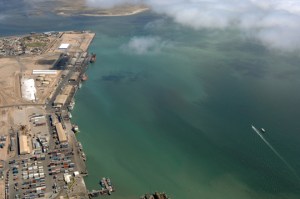
Port of Walvis Bay – Namibian transport corridor

A new regional trade route reaching from the Katanga Province in the Congo all the way to Walvis Bay as point of entry, is on the radar of the Walvis Bay Corridor Group following an agreement between Namibia and the DRC. Development of this major link started its first tentative steps recently when the Corridor Group opened an office in Lubumbashi, on the border of the DRC and Zambia.The Corridor Group said earlier this week it had launched an office in Lubumbashi, DRC, to create a strong business presence in the mineral-rich Katanga Province.

The Walvis Bay Corridor Group Lubumbashi office was officially opened by the Governor of the Katanga Province, Hon. Moïse Katumbi Chapwe, supported by the Namibian Ambassador, Mr Ringo Abed, Corridor Chairman Mr Bisey Uirab, and Corridor Group CEO, Mr Johny Smith.

The need for landlocked countries to gain access through an alternative trade route to and from sea was recognised, where neigbouring countries and beyond could benefit from access to the Port of Walvis Bay that offers importers and exporters reduced time and cost savings, high reliability, and cargo security. The Katanga Province offers a market of more than 2 million consumers and with the fast expanding mineral rich DRC there is also a need from the DRC Government for the Walvis Bay-Ndola-Lubumbashi Corridor to extend further towards other Provinces in the DRC. Walvis Bay is surely growing as an alternative trade route for Southern DRC in that various commodities are being moved via the Port of Walvis Bay such as copper, frozen products, machinery & equipment and consumables.

The office in Lubumbashi, DRC is now the third branch office of the WBCG beyond Namibia, with the other branch offices in Lusaka, Zambia since 2005 and Johannesburg, South Africa in operation since 2008. The Walvis Bay Corridor Group is currently hosting the Walvis Bay-Ndola-Lubumbashi Development Corridor Technical Committee, which is a Public Private Partnership between the government departments responsible for transport of the DRC, Namibia and Zambia to address the bottlenecks that impede the flow of traffic along this trade route using the Port of Walvis Bay. Source: Economist (Namibia)

Building hard and soft infrastructure to minimise regional costs

I post this article given it ties together many of the initiatives which I have described in previous articles. The appears to be an urgency to implement these initiatives, but the real question concerns the sub-continent’s ability to entrench the principles and maintain continuity. At regional fora its too easy for foreign ministers, trade practitioners and the various global and financial lobbies to wax lyrical on these subjects. True there is an enormous amount of interest and ‘money’ waiting to be ploughed into such programs, yet sovereign states battle with dwindling skills levels and expertise. Its going to take a lot more than talk and money to bring this about.

South Africa is championing an ambitious integration and development agenda in Southern Africa in an attempt to advance what Trade and Industry Minister Rob Davies describes as trade and customs cooperation within the Southern African Customs Union (SACU), the Southern African Development Community (SADC) and other regional trade organisations.

Central to pursuing this intra-regional trade aspiration are a series of mechanisms to combine market integration and liberalisation efforts with physical cross-border infrastructure and spatial-development initiatives. Also envisaged is greater policy coordination to advance regional industrial value chains. “Trade facilitation can be broadly construed as interventions that include the provision of hard and soft infrastructure to facilitate the movement of goods, services and people across borders, with SACU remaining the anchor for wider integration in the region,” Davies explains.

This approach is also receiving support from the US Agency for International Development (USAid), which recently hosted the Southern African Trade Facilitation Conference, held in Johannesburg.

Trade programme manager Rick Gurley says that virtually every study on trade in sub- Saharan Africa identifies time and cost factors of exporting and importing as the most significant constraints to regional trade potential. Limited progress has been made by SADC member States and SACU partners to tackle the factors undermining trade-based growth, limiting product diversification and increasing the price of consumer goods, including of foodstuffs. However, far more would need to be done to realise the full potential of intra-regional trade.

Regional Alliance
One high-profile effort currently under way is the Tripartite Free Trade Area (T-FTA), which seeks to facilitate greater trade and investment harmonisation across the three existing regional economic communities of the SADC, the Common Market of Eastern and Southern Africa and the East African Community.

The existing SADC FTA should be fully implemented by the end of the year, with almost all tariff lines traded duty-free and, if established, the T-FTA will intergrate the markets of 26 countries with a combined population of nearly 600-million people and a collective gross domestic product (GDP) of $1-trillion. At that size and scale, the market would be more attractive to investors and could launch the continent on a development trajectory, Davies avers. It could also form the basis for a later Africa-wide FTA and a market of some $2.6-trillion.

However, as things stand today, intra- regional trade remains constrained not merely by trade restrictions but by a lack of cross-border infrastructure, as well as poor coordination and information sharing among border management agencies such as immigration, customs, police and agriculture.Cross-national connectivity between the customs management systems is also rare, often requiring the identical re-entry of customs declarations data at both sides of the border, causing costly and frustrating delays.

USAid’s regional economic growth project, the Southern African Trade Hub, is a strong proponent of the introduction of several modern trade-facilitation tools throughout the SADC – a number of which have already been successfully pioneered. These tools, endorsed by the World Customs Organisation (WCO) Framework of Standards, which offers international best-practice guidelines, are aimed at tackling the high costs of exporting and importing goods to, from, and within Southern Africa, which has become a feature of regional trade and discouraged international investment.

Bringing up the Rear
A country’s competitiveness and the effec- tiveness of its trade facilitation regime are measured by its ranking on World Bank indices and, with the exception of Mozambique, Southern African States perform poorly – with most in the region settling into the lowest global quartile of between 136 and 164, out of a total of 183. “Our transaction costs in Africa across its borders are unacceptably high and inhibit trade by our partners in the private sector,” says WCO capacity building director Erich Kieck. “We need our States to develop good ideas and policies, but the true test lies in their ability to implement them,” he notes.

He adds that not only does trade facilitation require efficient customs-to-customs connectivity, but also demands effective customs-to-business engagement, adding that, while customs units are responsible for international trade administration, they are not responsible for international trade. “The private sector is the driver of economic activity and international trade, and government’s responsibility is to understand the challenges faced by the business community and develop symbiotic solutions,” Kieck notes.

Despite the establishment of regional trade agreements and regional economic communities in Southern Africa, many partner- ships have failed to deliver on their full potential to increase domestic competitiveness.

In a report, African Development Bank (AfDB) senior planning economist Habiba Ben Barka observes that, despite the continent’s positive GDP growth record – averaging 5.4% a year between 2005 and 2010 – it has failed to improve its trading position or integration into world markets. In 2009, Africa’s contribution to global trade stood at just under 3%, compared with nearly 6% for Latin America and a significant 28% for Asia.

“Since 2000, a new pattern of trade for the continent has begun to take centre stage, as Africa has witnessed an upsurge in its trade with the emerging Brazil, Russia, India and China economies. Overall, Africa is trading more today than in the past, but that trade is more with the outside world than internally,” says Ben Barka. She adds that while many African regional economic communities have made some progress in the area of trade facilitation, much greater effort is required to harmonise and integrate sub-regional markets.

To address enduring trade barriers, consensus among business, government and trade regulators appears to lean towards the adoption of one or a combination of five facilitation tools. These include the National Single Window (NSW), the One-Stop Border Post (OSBP), cloud-based Customs Connectivity, Coordinated Border Management (CBM) and Customs Modernisation Tools.

A National Single Window
NSWs connect trade-related stakeholders within a country through a single electronic-data information-exchange platform, related to cross-border trade, where parties involved in trade and transport lodge standardised trade-related information or documents to be submitted once at a single entry point to fulfil all import, export and transit-related regulatory requirements.Mauritius was the first SADC country to implement the NSW and consequently improved its ranking on the ‘Trading Across Borders Index’ to 21 – the highest in Africa. It was closely followed by Ghana and Mozambique, which have also reported strong improvements.

Developed in Singapore, the benefits of government adoption include the reduction of delays, the accelerated clearance and release of goods, predictable application, improved application of resources and improved transparency, with several countries reporting marked improvement in trade facilitation indicators following the NSW implementation.

In South Africa, the work on trade facili-tation is led by the South African Revenue Service (SARS), which focuses on building information technology (IT) connectivity among the SACU member States, and strengthen- ing risk-management and enforcement measures. However, SARS’ approach to the NSW concept remains cautious, Davies explains. “SARS has considered the viability of this option as a possible technological support for measures to facilitate regional trade, but considers that this would fall outside the scope of its current approach and priorities in the region,” he said.

One-Stop Border Posts
As reported by Engineering News in December last year, effective OSBPs integrate the data, processes and workflows of all relevant border agencies of one country with those of another, which culminates in a standardised operating model that is predictable, trans- parent and convenient. An OSBD success story in Southern Africa is the Chirundu border post, where a collaboration between the Zambia and Zimbabwe governments has culminated in a single structure, allowing officers from both States to operate at the same location, while conducting exit and entry procedures for both countries.

Launched in 2009, this OSBP model is a hybrid of total separation, joint border operations and shared facilities in a common control zone. Implementation of the model has reduced clearance times to less than 24 hours, significantly reduced fraudulent and illegal cross-border activity, enabled increased information sharing between border agencies and reduced the overall cost of export and import activities in the area.

Earlier this year, former South African Transport Minister Sibusisu Ndebele indicated that Cabinet was looking into establishing a mechanism that would bring all border entities under a single command and control structure to address the fragmentation in the country’s border operations, particularly at the high-traffic Beitbridge post between South Africa and Zimbabwe. “The ultimate vision is to create one-stop border operations to facilitate legitimate trade and travel across the borders,” he said.

Customs Connectivity and Data Exchange
Improved connectivity between customs limbs in sub-Saharan Africa has perhaps made the most indelible strides in the region, with improved IT connectivity between States identified as a priority by Sacu.

This includes customs-to-customs inter- connectivity, customs-to-business inter- connectivity and interconnectivity between customs and other government agencies. SACU members have agreed to pursue the automation and interconnectivity of their customs IT systems to enable the timely electronic exchange of data between administrations in respect of cross-border movement of goods. “As a consequence of this acquiescence, we have identified two existing bilateral connectivity programmes as pilot projects to assess SACU’s preferred connectivity approach, cloud computing between Botswana and Namibia and IT connectivity between South Africa and Swaziland,” says SACU deputy director for trade facilitation Yusuf Daya. He adds that a regional workshop was recently convened to explore business processes, functions, data clusters and the application of infrastructure at national level to improve and develop intra-regional links.

Coordinated Border Management
The SADC has been a strong proponent of CBM efforts in the region, which promotes coordination and cooperation among relevant authorities and agencies involved in, specifically, the protection of interests of the State at borders. “The union has drafted CBM guidelines for its members on implementation, based on international best practice, and has received indications of interest from several member States,” explains SADC Customs Unit senior programme officer Willie Shumba.He adds that CBM is a key objective of regional integration, enabling the transition from an FTA to a customs union and, eventually, to a common market, through effective controls of the internal borders.

Customs Modernisation
South Africa’s customs modernisation initiative is well advanced and came about following Sars’ accession to the WCO’s revised Kyoto Convention in 2004, which required customs agencies to make significant changes to it business and processing models. These changes included the introduction of simplified procedures, which would have fundamental effects on and benefits for trade and would require a modern IT solution.

Since its inception, the SARS Customs Modernisation Programme has gained tremendous momentum, with amendments to the Passenger Processing System and the replacement of SARS’s Manifest Acquittal System in the Automated Cargo Management system. Further adjustments were made to enable greater ease of movement of goods, faster turnaround times and cost savings, as well as increased efficiency for SARS. This phase included the introduction of an electronic case-management system, electronic submission of supporting documents, the centralisation of back-end processing in four hubs and an electronic release system and measures to enhance the flow of trucks through borders – in particular at the Lebombo and Beitbridge borders.

Proper Planning
AfDB’s Ben Barka warns that, prior to the implementation of any border improvement efforts by countries in Southern Africa, a thorough analysis and mapping of each agency’s existing procedures, mandate and operations should be undertaken.“Based on these findings, a new set of joint operational procedures need to be agreed upon by all involved agencies and must comply with the highest international standards,” she says.

Development coordination between States is essential, as the largest disparity among regional groupings, in terms of intra-regional trade, is clearly attributable to their differentiated levels of progress in various areas, including the removal of tariffs and non-tariff barriers, the freedom of movement of persons across borders and the development of efficient infrastructure. Source: Engineering News.
Regional Blocs seek to remove Trade Barriers

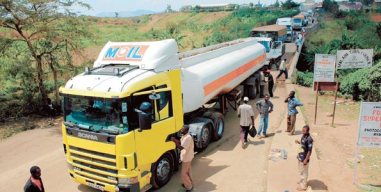
THREE regional economic communities (Recs) have taken the lead as Africa seeks to remove trade barriers by 2017. The establishment of a Continental Free Trade Area (CFTA) was endorsed by African Union leaders at a summit in January to boost intra-Africa trade. Sadc, Common Market for Eastern and Southern Africa (Comesa) and the East African Community (EAC) have combined forces to establish a tripartite FTA by 2014.

Willie Shumba, a senior programmes officer at Sadc, told participants attending the second Africa Trade Forum in Ethiopia last week that the tripartite FTA would address the issue of overlapping membership, which had made it a challenge to implement instruments such as a common currency. “…overlapping membership was becoming a challenge in the implementation of instruments, for example, common currency. The TFTA is meant to reduce the challenges,” he said.

Countries such as Zimbabwe, Tanzania and Kenya have memberships in two regional economic communities, a situation that analysts say would affect the integration agenda in terms of negotiations and policy co-ordination. The TFTA has 26 members made up of Sadc (15), Comesa (19) and EAC (5). The triumvirate contributes over 50% to the continent’s US$1 trillion Gross Domestic Product and more than half of Africa’s population. The TFTA focuses on the removal of tariffs and non-tariff barriers such as border delays, and seeks to liberalise trade in services and facilitation of trade and investment.

It would also facilitate movement of business people, as well as develop and implement joint infrastructure programmes. There are fears the continental FTAs would open up the economies of small countries and in the end, the removal of customs duty would negatively affect smaller economies’ revenue generating measures.

Zimbabwe is using a cash budgeting system and revenue from taxes, primarily to sustain the budget in the absence of budgetary support from co-operating partners. Finance minister Tendai Biti recently slashed the budget to US$3,6 billion from US$4 billion saying the revenue from diamonds had been underperforming, among other factors.

Experts said a fund should be set up to “compensate” economies that suffer from the FTA. Shumba said the Comesa-Sadc-EAC FTA would create a single market of over 500 million people, more than half of the continent’s estimated total population. He said new markets, suppliers and welfare gains would be created as a result of competition. Tariffs and barriers in the form of delays have been blamed for dragging down intra-African trade.

Stephen Karingi, director at UN Economic Commission for Africa, told a trade forum last week that trade facilitation, on top on the removal of barriers, would see intra-African trade doubling. “The costs of reducing remaining tariffs are not as high; such costs have been overstated. We should focus on trade facilitation,” he said.

“If you take 11% of formal trade as base and remove the remaining tariff, there will be improvement to 15%. If you do well in trade facilitation on top of removing barriers, intra-African trade will double,” Karingi said. He said improving on trade information would save 1,8% of transaction costs. If member states were to apply an advance ruling on trade classification, trade costs would be reduced by up to 3,7%.He said improvement of co-ordination among border agencies reduces trade costs by up to 2,4%.Karingi called for the establishment of one-stop border posts.

Participants at the trade forum resolved that the implementation of the FTA be an inclusive process involving all stakeholders.They were unanimous that a cost-benefit analysis should be undertaken on the CFTA to facilitate the buy-in of member states and stakeholders for the initiative. Source: allAfrica.com

Rwanda-DRC Border trade feels pinch from political stand-off

Spare a thought for the informal traders in this region. The terminology is also somewhat humorous, if not ‘offensive’ to an overly liberal mind – democratic South Africans in particular.

Trade along the Rwanda-DRC border is still going strong, although with some difficulty, despite the ongoing political tensions between the two neighbors.The Rwanda Focus visited Gisenyi, from where it has been reported that several Rwandan civilians who have attempted to cross into DRC for business have allegedly been arrested and tortured.

“You can’t go in there but if you insist, then be ready to die or to be tortured by the authorities in Congo,” said Safina Mukankusi, a cross-border trader. According to locals here, anyone with links to Rwanda in form of passport, looks or language is a target for the Congolese authorities. The irony is Gisenyi is full of Congolese civilians loaded with all sorts of merchandise bought from Rwandan markets which they then carry to the DRC.

It’s also here that massive petty smuggling takes place. “There are so many ‘fat’ women around here,” said a Rwandan customs official, explaining they are stuffed with several garments in which they then hide commodities such as alcohol and sell them on the Rwandan side at a profit. “Some make more than 20 trips per da,y often smuggling a single commodity per journey… but these are poor people who are looking for a meal from their petty deals,” the official revealed. From the proceeds from smuggled goods, the Congolese then buy food and all sorts of stuff which they take back home to sell.

With the current instability however, there’s a new development. “Many Congo-men are coming to sleep here at night and go back home during day for fear of attacks,” said Fidel, a resident of Gisenyi. He says most of them sleep on the streets while others have rented some cheap houses in which they spend the night, often in groups.

Looking at the people here, it’s quite hard to imagine that their country is home to some of the world’s most valuable minerals such as gold and diamonds. Bribes and other corrupt dealings are the quickest ways to get a service done according to Rwandan traders. “Once they know you have money, they will detain you until you part with some of it, it’s mostly those that don’t have anything who are tortured,” explained Laurent Makubu, who claims he has been detained but bribed the Congolese police with $15 to secure his freedom.

While the Congolese who cross to Rwanda report no harassment, it remains a mystery why their Rwandan counterparts are the target of mistreatment on the other side. As a result, most Rwandan traders say they have resorted to using Congolese middlemen to get goods from the DRC side but at a much higher cost as the middlemen charge for their service. Source: Rwanda Focus (Kigali)

Car importers slam KRA transit vehicles rule

Is the time for a regional transit bond nigh? Given prevailing draconian measures to ensure security and surety, the message is clear that customs brokers, freight forwarders or clearing agents need to demonstrate financial security over and beyond what they are accustomed to. Question – is the transit business lucrative for agents? Why not refuse the business – its just not worth the risk.

A requirement by the Kenya Revenue Authority demanding that all imported transit vehicles above 2000cc be cleared against cash bonds or bank guarantees has been opposed by clearing agents in Mombasa. The agents, under their umbrella Kenya International Freight and Warehousing Association, have threatened not to pay taxes if the regulations are not withdrawn by the tax collector. The agents said that the stringent measures by KRA may stifle trade in the region and may also see the port of Mombasa losing some foreign importers to the port of Dar es Salaam in Tanzania. “We as clearing agents cannot pay the bonds for the importers”.

On August 31, KRA directed all clearing agents that with effect from September 1, all transit vehicles exceeding 2000cc would be cleared against a cash bond or bank guarantees paid by the agents. The forwarders also said that Uganda, Rwanda and DR Congo business class was considering ditching Kenya as an import avenue for Dar es Salaam port. Source: The Star (Nairobi)

Ressano Garcia – Border Operations Assessment

As part of its Coordinated Border Management (CBM) program, the Southern African Trade Hub (SATH) undertook a Border Operations Assessment (BOA) at Ressano Garcia along the Mozambique/South Africa border. The objective of the assessment was to establish processes used by the different agencies to clear goods, identify challenges and recommend mechanisms to addresses obstacles. The assessment also entailed establishing the time it took for trucks to cross the border by physically recording arrival and departure times at points where the clearance of goods was undertaken.

SATH held discussions with both public and private agencies operating at the border: Customs, Immigration, Health, Agriculture, Police, Traders Association, Clearing and Forwarding Agents and Insurance Companies. The agencies explained their roles and mandates, how they carry out their day to day operations at the border, their working relations with other agencies at the border and the challenges they face in carrying out their duties.

SATH also had discussions with the One Stop Border Post (OSBP) project team to assess progress on the initiative. The OSBP is at an advanced stage and only awaits the adoption of the legal framework by South Africa, which is anticipated by the end of 2012.

Findings of the BOA and recommendations will be disseminated through a national and border workshops to which senior officials of agencies operating at the border and border officials will be invited. At these workshops Joint Border Committees will be established to take the recommendations forward to streamline border management.Source: SA Trade Hub

Regional IT inter-connectivity takes another step

Delegates from at least 20 African Customs Administrations met in Pretoria, South Africa between 13 and 15 August to advance developments towards a common framework and approach to IT inter-connectivity and information exchange in the region. Convened by the SADC secretariat in consultation with COMESA and Trademark Southern Africa (TMSA), the three day work session focussed on uniform acceptance of the WCO‘s Globally Networked Customs (GNC) methodology, regional awareness of customs developments in the Southern and East African region, as well as joint agreement on customs data to be exchanged between the member states.

Mauritius Revenue Authority (MRA) shared its experience with delegates on the launch of its Customs Enforcement Network (CEN). Kenya Revenue Authority will soon be sharing enforcement information with its MRA counterpart. At least 22 African countries are expected to link up with the CEN network over a period of time. Customs enforcement information is the second pillar of the WCO’s GNC information exchange methodology; the first pillar being Customs information exchange. The latter provides for a holistic approach to the dissemination of common customs data derived from supply chain exchanges, for example declaration information, cargo information, and AEO information to name but a few. This information is vital for trading countries to administer advance procedures and better validate the information being provided by the trade.

Rwanda Revenue Authority introduced it’s RADDex programme which is a web-based IT solution for the exchange of cargo manifest information between participating states in the East African Community (EAC) – see related article below.

SADC and COMESA are rallying their members to participate in the initiative. At the current juncture, various member states have expressed keen interest to participate. While the regional intention is the linking of all customs administration’s electronically, initial developments envisage bi-lateral exchanges between Customs administrations which are ready to engage. The importance of the adoption of the GNC methodology is to ensure that customs connectivity and information exchange is harmonised and consistent across the Southern and East African region irrespective of whether countries are ‘early adopters’ or not.

Thick Borders – Thin Trade

It’s quite amazing the number of reports featured in various african media across the continent pushing the ‘free trade’ agenda. The incumbent governments on the other hand are naturally concerned with dwindling tax collections, while at the same time increasing incidents of graft, collusion, and corruption run rampant at the border. While the following article states the obvious, unfortunately, nowhere will you find or read a practical approach which deals with increased ‘automation’ at borders and the consequential re-distribution of ‘bodies’ to other forms of gainful employment. Its jobs that will be on the line. Few governments wish to taunt their electorates – non-essential jobs are a fact of life and are destined to stay if that is what will earn votes and a further term in power. Moreover, there is no question of removing internal borders with the emphasis on costly ‘One-Stop Border’ facilities. To some extent the international donor community won’t mind this as there’s at least some profit and influence in it for them.

Poverty in Sub- Saharan Africa is a man-made phenomenon driven by internal warped policies and international trade systems. The continent cannot purport to seek to grow while it blocks the movement of goods and services through tariff regimes at the same time Tariff and non-tariff barriers contribute to inefficient delivery systems, epileptic cross-border trading and thriving of illicit/contraband goods.

This ultimately harms the local and regional economy. Delays at ports of delivery, different working hours and systems of control across the continent, unnecessary police roadblocks and poor infrastructure condemn countries to prisons of inter-regional and intra-regional trade poverty.

According to the United Nations Economic Commission for Africa, removal of internal trade barriers would lead to US$25 billion per year of intra-regional exports in Africa, an increase by 15,4 percent by 2022. Making African border points crossings more trade efficient would increase intra-regional trade by 22 percent come 2020. Trade barriers in East Africa Community alone increase the cost of doing business by 20 percent to 40 percent.

Such barriers include the number of roadblocks within each country, cross- border charges for trucks and weighing of transit vehicles on several points on highways. Kenya is grappling to reduce the number of its roadblocks from 36 to five and Tanzania from 30 to 15. Sub-Saharan Africa records an average port delay of 12 days compared to seven days in Latin America and less than four days in Europe. Africa is lagging behind!

In West Africa, Ghanaian exports to Nigeria are faced with informal payments and delays as the goods transit across the country borders whether there is proper documentation. In the Great Lakes Region, an exporter is faced with 17 agencies at the border between Rwanda and Democratic Republic of Congo each with a separate monetary charge sheet.

A South African retail chain Shoprite reportedly pays up to US$20 000 a week on permits to sell products in Zambia. Each Shoprite truck is accompanied with 1 600 documents in order to get its export loads across a Southern African Development Community border. Tariff and non-tariff barriers simply thicken the wall that traps Africans in economic poverty.

The new African Union chair should push for urgent steps to lower barriers to trade within Africa. Border control agencies need retraining and border country governments need to integrate their processes; long truck queues waiting to cross border points should not be used as an indicator of efficiency.

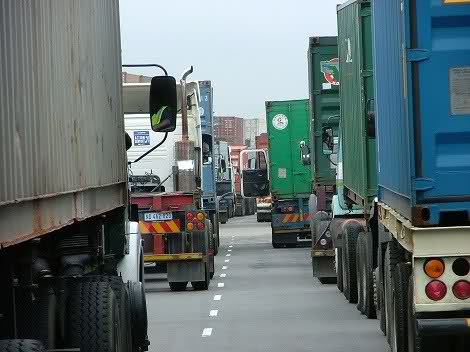
If it takes a loaded truck one hour to cover 100 kilometres; a four-hour wait at the border increases the distance to destination to another 400 kilometres. Increased distance impacts on the prices of goods at the retail end hence limiting access to products to majority of Africans. Limited access translates to less freedom of choice — similar to a locked up criminal prisoner.

With modern technology, goods should be declared at point of origin and point of receipt. Border points should simply have scanners to verify the content of containers. Protectionism, tariffs and non-tariff barriers within the continent sustains African market orientation towards former colonisers.

African entrepreneurs are subjected to longer travel schedules due to constant police checks and slow border processes. To fight poverty on the continent, African people would benefit from an African Union Summit that resolves to facilitate efficiency in movement of goods and services. Efficient delivery systems on the continent will tackle challenges of food insecurity, poor health care, conflicts and further promote diversified economies arising from competitive healthy trading amongst and between African nations.

Elimination of tariff and non-tariff barriers to trade will provide an opportunity for African entrepreneurs to adequately take their rightful places as relevant players in the global trade system. It is imperative that African countries re-orient their strategies to promote productivity by reviewing tariffs that hold back entrepreneurs from accessing the continent’s market. This calls for both a competitive spirit and a sense of integrated tariff and process compromise if the continent is to haul its population from poverty. Source: The Herald (Zimbabwe)

Mozambique – New customs transit regulation

FTWOnline has published a letter it received from the CEO of Maputo Corridor Logistics Initiative (MCLI), the interim-CEO of Maputo Port Development Company (MPDC). Seems like an important ‘heads-up’ for all logistics operators. It reads as follows –

“The hardly-negotiated Mozambique customs transit regulation is concluded and the document sent to the minister of finance for approval. Approval and official gazetting is expected for the first week of August.

“Key features are:

  • All the unknown costs are replaced by a transit fee of 500.00-mts (+\- 18 US$) for general cargo and 10 cents of mts (0.036 US$) per for bulk cargo.Art. 13.
  • It is clarified that transit cargo is duty-free and subject to a guarantee that can be isolated (for a single transaction) or global (for transactions etween 3-month and 1-year). The bond covers only the duties and taxes at risk and is capped at 35% of duties and taxes. As an example, if the value of the good is US$1 000, the bond will be equal to 35% of 22% (7% of duties and 17% of vat), totaling around US$75. The bond is calculated on the basis of the value of transactions undertaken in the preceding year. Art. 14 to 19.
  • Transhipment is free-of-bond and the acquittal takes place only in the last port in the national territory. Art.23.
  • Acquittal period for areas where the single window is not yet in place is of 5 business days.”

South Africa – Stalling Regional Integration

Yes, you’ll be forgiven if you thought this was some belated April-fools joke. South Africa has been accused of frustrating plans to create a regional customs union and instead preferring to bolster the South African Customs Union (Sacu), where it holds sway. 

A customs union is a trade agreement by which a group of countries charge a common set of tariffs to the rest of the world, while granting free trade among members. Regional Integration minister, Priscilla Misihairabwi-Mushonga, said there was a feeling that South Africa wanted to use Sacu as its basis to form a regional customs union, instead of working towards creating a new one.

“What we see is that South Africa wants to use Sacu as the basis for forming a regional customs union and sometimes, this is viewed as having a big brother mentality,” she said. Misihairabwi-Mushonga said, for this reason, negotiations towards a holistic Southern African Customs Union (Sadc) had not gone very far. Botswana, Lesotho, Namibia, Swaziland and South Africa make up Sacu, with the four countries having benefited by aligning themselves to South Africa, Africa’s largest economy. A Sadc customs union would involve the 15 countries of the region, instead of Sacu, which is considered narrow.

But Catherine Grant, the head of economic diplomacy at the South African Institute of International Affairs, reckons the smaller nations in Sacu, like Lesotho, may be opposed to Sacu morphing into a regional customs union. “This will be opposed by other Sacu members, not necessarily just South Africa, as this (Sacu) is not just a trade agreement, but involves a broader range of economic issues,” she said.

“Up to 60% of the Lesotho budget is Sacu revenue, so the vested issues, whether Sacu is the basis of a customs union, are not just South African.” Grant felt that it was impossible to expand Sacu in its current form, as it would cost South Africa too much and would dilute the resources that were meant for other projects.

The head of the trade and policy think-tank said instead, South Africa preferred to see the implementation of a free trade area (FTA) as a first step, since customs union negotiations were usually lengthy and time-consuming. “The preference is to first channel scarce resources to existing commitments and trying to make them as beneficial as possible,” she explained.

Grant said while South Africa was the dominant player in the region, hence engendering a feeling that it was imposing itself as the big brother, the country was actually holding back from taking a leading role and this cost the region.

“Sometimes South Africa holds back because they are conscious of not being a big brother and that could be detrimental to the region,” she explained. However, Grant said energies should be directed towards the conclusion of negotiations to set up the Tripartite Free Trade Area (TFTA), which includes the Common Market for East and Southern Africa, the East African Community and Sadc.

“The TFTA will resolve some of the overlapping issues that can be difficult to solve when it comes to a customs union,” she said. Since Zimbabwe adopted multicurrencies in 2009, there has been a call that the nation either join Sacu or push for the formation of a regional customs union. Zimbabwe remains wary of joining Sacu, as it fears for its economic independence, yet negotiations for a regional customs union are moving at a snail’s pace.

Sacu was established in 1910, making it the world’s oldest customs union. It consists of Botswana, Lesotho, Namibia, South Africa and Swaziland. Source: AllAfrica.com

Why Tanzanians are afraid of the Regional Federation

The following article by Tony Zakaria is a candid look at the socio-economic environment of the Tanzanian people. Enjoy.

Why is Tanzania so afraid of the EAC political federation? We seem to shy away from signing any significant document that commits Tanzania to a marriage with Kenya, Uganda, Rwanda and Burundi. Have we been using land and security issues as a way to hide other fears unmentionable?

Some Tanzanians fear Kenyan women for being too aggressive and well educated. Those madams drive flashy Mercedes Benz cars and have no shortage of vijisenti or spare change. Upon federation country borders will be wide open and then anything can happen. These macho gals may move over to grab available single or bonded men from the land of the Kilimanjaro to play football in Kenya like all those African football stars in Europe for Man U and C, Chelsea FC, Marseille and Real Madrid clubs. Tanzanian men are among the most handsome in Africa.

If you don’t believe me, take a fresh look at Tanzanian men today. From top bosses in government to ordinary farmers in villages they ooze with quiet charm. A little smile from Bongo men can charm an eagle chick off a tree branch in Limuru. Nairobi and Kampala ladies will not be able to resist.

So why are men in the nation of Serengeti and Zanzibar resistant to political and economic union when they could conquer the whole territory? Tanzanian gals may be among the prettiest on planet Earth alongside the Abyssinians in the former kingdom of Jah Haille Selasie but would be no match for slender necked, doe-eyed Banyarwanda mademoiselles.Bongoland women worry their men might start an African exodus to Kigali if we become the United States of East Africa.

Surviving the 1994 genocide elevated Rwandese women to be among the strongest-willed in Africa. Tanzanian madams have enjoyed easier lives and eternal peace from womb to tomb. Can they compete effectively with Hutu and Tutsi damsels? Tanzanian madams will their wealth too; given away to those more willing to use their talents profitably.

 When borders cease to exist, Muheza and Bombo farmers will not only be losing fruits from their shambas to more enterprising Kenyan traders, they will be losing Eves, Aminas and Marias from their Garden of Eden.Nairobi will be a local bus trip away and Ketepa tea will be universally available at village markets in Bagamoyo and Kilombero at a fraction if its current cost, not a gourmet item in selected supermarkets.

Who knows what else may transpire? Investors from the current Kenya would set up factories to extract and package affordable branded juice from fruit grown in Tanga, Dodoma and Iringa. Mwanza and Dar-es-Salaam residents will enjoy Bongo flavour orange and apple juice passionately, knowing it is made in East Africa instead of Africa south of the Zambezi River.

I can’t see local traders dancing with joyful abandon to celebrate the entry of other bulls in the business kraal. Traders make profits regardless of the origin of traded goods. Manufacturers want to enjoy monopoly in a market protected by import, sales and other taxes and tariffs.Take for example juice made in Kenya using fruits sourced from Tanzania. From Tanzania the fruits are VAT and export taxed. The packed juice is taxed in Kenya for sale and importation. Those taxes only hurt the final consumer, making it unaffordable for ordinary folks.

Why do male-female relationships work fine during the courtship period and marriages fall into boring routines? The possibility of losing a mate to a competitor is such a strong incentive to keep being at a person’s best behaviour, appearance and treatment of a mate. That is when relationships are conducted with business-like efficiency.

Tanzanian businesses fear competition from a supposedly more powerful Kenyan business fraternity. Enterprising Kenyan operators buy tomatoes and onions from Arusha during the day. By evening they are delivered in Kenya factories. At night the veggies are sorted, graded, cleaned, packed and labelled.

By the following morning, the veggies are awaiting airlift to destinations in the Middle East. With added value, Kenyan entrepreneurs make huge profits. Vegetables, fruits and fresh flowers could be processed in Arusha and airlifted straight from Kilimanjaro airport instead of Nairobi.

After federation Arusha, Kilimanjaro and Tanga natives would freely move agricultural produce to what is now Kenya and Uganda while making good money from goods sales and transportation. Wachagga, Waarusha and Meru men and women are pretty aggressive businesswise. They can beat Kenyans at their own game.

Having made mega profits, some Tanzanian traders can entice nice looking Gikuyu and Akamba chicks to settle permanently on the slopes of Mount Meru or the Kilimanjaro Mountain of greatness. Tourists can visit the snow-capped mountain near the Equator in East Africa without crossing the border twice. Some amorous traders can fully practice family planning by spacing their children between Moshi, Arusha, Nairobi and Entebbe. They will just strategically place mothers in each city.

Tanzanians fear their Any Time Cancelled wings of the Kilimanjaro with one borrowed plane will be swallowed whole by the bigger Kenya airways. The pride of Africa has already spread its wings from Lagos to Beijing. This is genuine fear arising from fake premises. If we are one block, the stronger airline will belong to all of us.

The federal states will pool pilots, cabin and ground crew, airports, buildings, planes and vehicles to create the strongest airline in Africa like the old East African Airways that was a real pride for Africa.We have to overcome our genuine and misplaced fears and take the needed steps to make EAC a reality. Uniting our many resources is the only way our grandchildren can survive in the competitive global village. Source: Daily News (Tanzania)