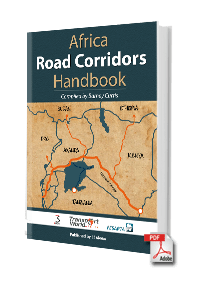
New Publication – Africa Corridors Handbook

Africa_Road_Corridors_HandbookAs countries across Africa gear themselves towards growing and stimulating inter-regional trade, the transport corridors being developed across the continent are important passageways for the movement of freight.

Though the growth and development of rail across Africa is in the pipeline over 80 percent of all freight being transported is on road.

Transporting goods on trucks is an expensive business. Africa can be challenging at the best of times due to non-tariff barriers even though governments across the continent are trying to make it easier for the flow of goods from one country to another.

The logistics of transporting freight can be a harrowing and expensive exercise.Especially if a transport manager is not armed with key and pertinent information – regarding the route, border posts, costs, relevant documentation required at borders, waiting times at the border posts, location of wellness centres,road conditions and where the tolls and weighbridges are situated.

3S Media in association with FESARTA have released the Africa Corridors Handbook which gives transport and logistics managers all the key information they need before drivers embark on a journey.

Having the correct information on hand is critical for every transport operator that is moving freight across Africa and now it is available in one concise handbook. Click the following hyperlink to purchase the book.

No cash! No problem!

banner4Transport Forex, created by Inter Africa Bureau de Change, a registered bureau de change with the South African Reserve Bank has created an unique online banking system for the transport industry.

With branches at all of South African border posts, the company has expanded operations into Namibia, Botswana, Zimbabwe, Mozambique, Zambia, the DRC and Tanzania with offices on all the major border posts between these countries.

Transport Forex is an online ordering system where the transport manager can deposit money in South Africa into the relevant account therefore ensuring when drivers arrive at the relevant border posts there is enough money for them to pay the relevant duties. At the same time, this ensures enough cash is in the account for drivers to purchase fuel at key petrol stations or even pay for a service on-route in one of the partner countries.

Once the monies have been deposited into the account, an order number is sent via SMS to the driver who then presents it at the relevant Transport Forex office to draw the necessary funds required.

In the same way you can book and pay for diesel for your truck on any of the major transport routes in Namibia, Botswana, Zimbabwe, Mozambique, Zambia, the DRC and Tanzania. Transport Forex has negotiated with partner fuel suppliers for better prices and passes this discount directly to the transport company.

A new Payment Service was introduced in 2013 for clients. Should additional unforeseen funds be required for an emergency while the driver is on the road then monies can be made available for drivers almost immediately. This prevents valuable time from being lost.

Transport Forex is also in negotiations with several government institutions so relevant duties and taxes for operators’trucks can also be paid through the system in advance.

To join Transport Forex simply log onto www.transportforex.co.za, and click on “Create Account”. Registration is free, and there are no monthly charges.

African States urged to begin prioritising economic transformation

2014 Africa Transformation ReportThe inaugural Africa Transformation Report ranks Mauritius as the most economically transformed country out of 21 sub-Saharan African countries measured in its African Transformation Index, which takes account of a country’s economic diversification, export competitiveness, productivity, state of technology upgrading and human wellbeing.

The continent’s largest economy, South Africa, ranks second and Côte d’Ivoire third, while Nigeria, Burundi and Burkina Faso prop up the index.

The ranking has been included within a larger 207-page study, which cautions that, while many African economies are growing strongly, most economies are not transforming sufficiently to support a sustainable reduction in poverty, inequality and unemployment.

Six of the world’s fastest growing economies are currently in Africa, including Angola, Nigeria, Ethiopia, Chad, Mozambique and Rwanda, while several others are expanding at growth rates of over 6% a year. However, much of this grow is still premised on the extraction and export of natural resources and is not being broadly spread, leaving more than 80% of the continent’s labour force employed in low-productivity farming, or informal urban business activities.

Compiled over a three-year period by Ghana’s African Centre for Economic Transformation (ACET) in partnership with South Africa’s Mapungubwe Institute for Strategic Reflection (Mistra), the study urges African governments to position economic transformation ahead of growth at the centre of their economic and development policies.

Speaking at a launch in Johannesburg, lead author and ACET chief economist Dr Yaw Ansu said growth was “good” and had arisen as a result of macroeconomic reforms, better business environments and higher commodity prices.

“But economic transformation requires much more,” Ansu stressed, arguing that countries needed to diversify their production and exports, become more competitive and productive, while upgrading the technologies they employed in production processes.

ACET president Dr KY Amoako said the transformation narrative had already been accepted by the African Union in its Vision 2063, as well as by the African Development Bank and the United Nations Economic Commission for Africa. He added that the African Transformation Index provided policymakers with a quantitative measure for assessing their transformation performance and for guiding future strategies.

Mistra executive director Joel Netshitenzhe argued that to turn growth into an “actual lived experience” for Africa’s citizens there was the urgent need to form national social compacts between government, business and civil society to support transformation.

Finance Minister Pravin Gordhan emphasised the same point in his recent Budget address, when he highlighted the work being done to secure a social compact to reduce poverty and inequality and raise employment and investment. Gordhan stressed this could not be a “pact amongst elites, a coalition amongst stakeholders with vested interests. Nor can it be built on populist slogans or unrealistic promises”.

“Our history tells us that progress has to be built on a vision and strategy shared by leaders and the people – a vision founded on realism and evidence,” the Minister stressed.

Netshitenzhe also highlighted the report’s emphasis on coupling growth with social development. “In fact, rather than merely being a consequence of economic growth, a reduction in poverty and general human development can be part of the drivers of economic growth.”

The report highlights key transformation drivers as being:

  • Fostering partnerships between governments and the private sector to facilitate entrepreneurship, investment and technology upgrading.
  • Promoting exports, particularly outside of the natural resources sector.
  • Building technical knowledge and skills.
  • And, pushing ahead with regional integration.

Four transformation pathways are also highlighted, including labour-intensive manufacturing; kick-starting agroprocessing value chains, improving the management of oil, gas and minerals; and boosting tourism.

“It’s good that we are growing – we are no longer the hopeless continent. We can transform this hope into reality, but to do that governments must put transformation at the top of their agendas,” Ansu asserted.

He also called on African citizens to begin to demand transformation. “Ask your government, how come we are not diversifying? How come our productivity remains stuck? How come our technological levels and our exports are not growing?” Source: Engineering News

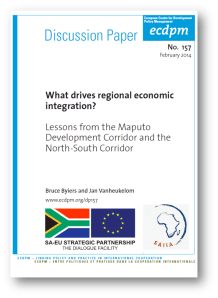
What drives regional economic integration? Lessons from Maputo Development Corridor and North-South Corridor

ECDPM - SAIIAThis study is part of the ECDPM-SAIIA project on the Political Economy of Regional Integration in Southern Africa (PERISA). The PERISA project aims to inform and facilitate dialogue on the political economy drivers of regional integration in Southern Africa. It focuses particularly on the role of South Africa in this process with a view to better informing relations between the European Union and South Africa. Regional economic integration is essential for Africa’s development. While integration is taking place across the continent, it is not happening at the pace and the scope that the institutional architects in the Regional Economic Communities and their member states have agreed upon. Southern Africa is no exception. In looking for answers as to what obstructs or what drives regional integration, this study focuses on one particular type of integration process: cross-border transport corridors.

All Regional Economic Communities in Southern Africa have embraced transport corridors (also referred to as Spatial Development Initiatives) as key development tools. Adopting a corridor approach means engaging with a wide range of actors with different interests and influence along key transport routes that link neighbouring countries and ports. This includes the full range of government agencies that control borders for security, revenue collection, and regulatory purposes as well as infrastructure, transport, trade and economic ministries as well as a range of private sector actors from small-scale informal traders and producers to transporters and major international investors as well as port, rail and road operators.

The analysis focuses on the North-South Corridor and the Maputo Development Corridor. The North-South Corridor links Dar es Salaam in Tanzania to Durban in South Africa through Zambia, Zimbabwe and Botswana. The Maputo Development Corridor links Gauteng Province in South Africa to Maputo in Mozambique. The analytical focus is on South Africa and Mozambique, while from the multi-country North-South Corridor the focus in this paper is on Zambia, a potential key beneficiary of the initiative. Source: ECDPM.org

SAPPI to export to Asia via port of Maputo

Ngodwana Mill, situated in the province of Mpumalanga (South Africa). It is a fully integrated kraft mill producing pulp for own consumption as well as newsprint and containerboard. (Sappi)

Ngodwana Mill, situated in the province of Mpumalanga (South Africa) is a fully integrated kraft mill producing pulp for own consumption as well as newsprint and containerboard. (Sappi)

The Sappi group, one of the world’s largest manufacturer of gloss paper, plans to use the port of Maputo, in Mozambique to export to Asian markets a group official told financial news agency Bloomberg. Alex Thiel, who is responsible for the group’s business in Southern Africa, said that in October an agreement was reached with Dubai-based port operator DP World, which together with South African logistics group Grindrod and state company Portos e Caminhos de Ferro de Moçambique, is a partner in Maputo port company Empresa de Desenvolvimento do Porto de Maputo.

The Sappi group, which is also one of the world’s largest producers of dissolving wood pulp, plans to ship 10,000 containers per year via the port of Maputo as it is just 250 kilometres from the group’s factory in the South African province of Mpumalanga.

“We have decided to export via the port of Maputo in order to save money as the second-closet port, in Durban, is 650 kilometres from the factory,” said Thiel.

The Mpumalanga factory, which starting producing dissolving wood pulp at the end of July, has already reached 75 percent of its installed capacity of 210,000 tons per year, and is expected to achieve maximum production in February 2014. The wood pulp will be exported via the port of Maputo to China, India and Indonesia, where it will be used to make thread for the textile industry. Source: http://www.macauhub.com

Dumping Ships From East-West to North-South Trade Lanes Nearing ‘Saturation’

Trade Lanes (The Jouranal of Commerce)

Trade Lanes (The Jouranal of Commerce)

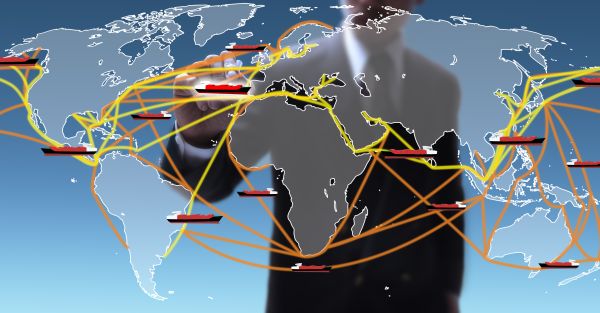
Ocean carriers’ tactic of shifting surplus capacity from east-west trades to north-south routes is nearing “saturation point,” according to Drewry Maritime Research.

The “endless” cascading of tonnage from the main haul trades to regional routes is now “seriously haemorrhaging” freight rates in north-south services, and the rate of decline in the second quarter suggests carriers are running out of options to soak up surplus capacity, the London-based consulting firm said.

All-in prices from Asia to Australia, West Africa, South Africa, India and both the east and west coasts of South America based on forwarder buy rates for spot cargo declined significantly during the second quarter. Rates from Asia to India and the west coast of South America rose in July, but Drewry said it “remains to be seen if the increases are sustainable, as there have been many false dawns in other trade lanes.”

The average all-in spot rate from Shanghai to Santos, Brazil, in July was down 51 percent from January, and was 19 percent and 32 percent lower on services to Durban, South Africa, and Melbourne, Australia, respectively.

“This adversarial situation helps to explain why ocean carriers appear to have returned to war with each other over market shares between Asia and Europe since August,” Drewry noted.

The “apparent” benefit of cascading is that average vessel utilization from Asia to the west coast of North America and Europe has usually remained above 85 percent since the second quarter, thus helping to support freight rates.

“It’s been a yo-yo ride nevertheless, but freight rates are still a lot higher than they were at the beginning of the year,” Drewry explained.

Fourteen new vessels averaging 12,713 20-foot-equivalent units were delivered into existing Asia-to-North Europe schedules in the second quarter, but the overall average capacity of all ships on the route increased by just 1.7 percent from the beginning of the year to 10,456 TEUs, as carriers cascaded surplus vessels to other routes.

Drewry said further restructuring on north-south routes via alliances and consortia appears inevitable, particularly as world fleet growth of just over 7 percent in 2014 is again expected to significantly exceed cargo growth. Source: The Journal of Commerce

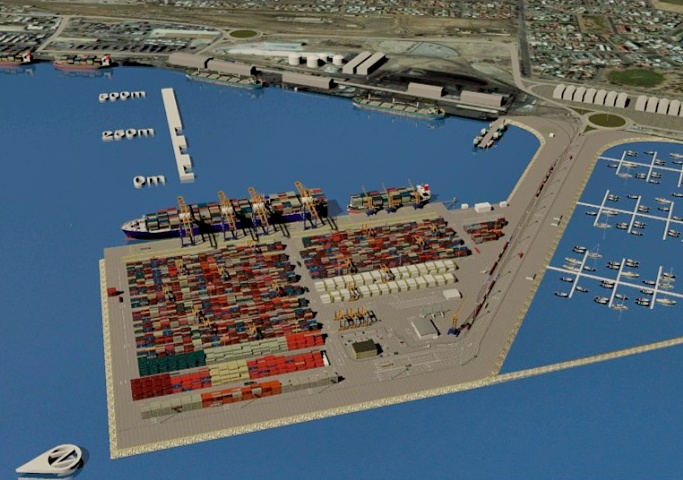
Walvis Bay Container Terminal – AfDB and Namibia sign loan agreement

NamPort ExpansionThe African Development Bank Group (AfDB) and Namibia on Friday, November 8, 2013 signed a ZAR 2.9 billion (US $338 million) sovereign guaranteed loan to the Nambian Ports Authority (Namport) to finance the construction of the new container terminal at Port of Walvis Bay and a UA 1.0 million grant (US $1.5 million) to the Government of Namibia for logistics and capacity building complementing the port project loan. The project was approved by the AfDB Group in July 2013.

The project is expected to enable Namport to triple the container-handling capacity at the Port of Walvis Bay from 350,000 TEUs to 1,050,000 TEUs per annum. It will also finance the purchase of up-to-date port equipment and the training of pilots and operators for the new terminal. The grant component will fund the preparation of the National Logistics Master Plan study, technical support and capacity-building for the Walvis Bay Corridor Group and training of freight forwarders.

According to the AfDB Director of Transport and ICT, Amadou Oumarou: “Through this project which potentially serves up to seven major economies in the SADC region, the Bank is assisting in the diversification and distribution of port facilities on the southwest coast of Africa, and provides the much-needed alternative for the region’s landlocked countries.”

The project will stimulate the development and upgrade of multimodal transport corridors linking the port to the hinterland while improving the country’s transport and logistics chains. It will also boost competition among the ports and transport corridors in the region with the ripple effect on reductions in transportation costs and increased economic growth.

The projected project outcomes include improvement in port efficiency and increase in cargo volumes by 70% in 2020 as a result of increased trade in the region. The benefits of the project will include among others, the stimulation of inter-regional trade and regional integration, private sector development, skills transfer and most importantly employment creation, leading to significant economic development and poverty reduction in Namibia, and the SADC region. Source: African Development Bank

Related articles

Experts Caution Against Rush into Trade Facilitation Agreement

Bali 2013A rather lengthy article published by Third World Network, but entirely relevant to trade practitioners and international supply chain operators who may desire a layman’s understanding of the issues and challenges presented by the WTO’s proposed agreement on ‘Trade Facilitation’. I have omitted a fair amount of the legal and technical references, so if you wish to read the full unabridged version please click here! If you are even more interested in the subject, take a look through the publications available via Google Scholar.

A group of eminent trade experts from developing countries has advised developing countries to be very cautious and not be rushed into an agreement on trade facilitation (TF) by the Bali WTO Ministerial Conference, given the current internal imbalance in the proposed agreement as well as the serious implementation challenges it poses.

“While it may be beneficial for a country to improve its trade facilitation, this should be done in a manner that suits each country, rather than through international rules which require binding obligations subject to the dispute settlement mechanism and possible sanctions when the financial and technical assistance as well as capacity-building requirements for implementing new obligations are not adequately addressed.”

This recommendation is in a report by the Geneva-based South Centre. The report, “WTO Negotiations on Trade Facilitation: Development Perspectives”, has been drawn up from discussions at two expert group meetings organised by the Centre.

Noting that an agreement on trade facilitation has been proposed as an outcome from the Bali WTO Ministerial Conference, the South Centre report said that the trade facilitation negotiations have been focused on measures and policies intended for the simplification, harmonization and standardization of border procedures.

“They do not address the priorities for increasing and facilitating trade, particularly exports by developing countries, which would include enhancing infrastructure, building productive and trade capacity, marketing networks, and enhancing inter-regional trade. Nor do they include commitments to strengthen or effectively implement the special and differential treatment (SDT) provisions in the WTO system”.

The negotiations process and content thus far indicate that such a trade facilitation agreement would lead mainly to facilitation of imports by the countries that upgrade their facilities under the proposed agreement. Expansion of exports from countries require a different type of facilitation, one involving improved supply capacity and access to developed countries’ markets.

Some developing countries, especially those with weaker export capability, have thus expressed concerns that the new obligations, especially if they are legally binding, would result in higher imports without corresponding higher exports, which could have an adverse effect on their trade balance, and which would therefore require other measures or decisions (to be taken in the Bali Ministerial) outside of the trade facilitation issue to improve export opportunities in order to be a counter-balance to this effect.

According to the report, another major concern voiced by the developing countries is that the proposed agreement is to be legally binding and subject to the WTO’s dispute settlement system. This makes it even more important that the special and differential treatment provisions for developing countries should be clear, strong and adequate enough. The negotiations have been on two components of the TF: Section I on the obligations and Section II on special and differentiated treatment (SDT), technical and financial assistance and capacity building for developing countries.

Most developing countries, and more so the poorer ones, have priorities in public spending, especially health care, education and poverty eradication. Improving trade facilitation has to compete with these other priorities and may not rank as high on the national agenda. If funds have to be diverted to meet the new trade facilitation obligations, it should not be at the expense of the other development priorities.

“Therefore, it is important that, if an agreement on trade facilitation were adopted, sufficient financing is provided to developing countries to meet their obligations, so as not to be at the expense of social development,” the report stressed.

The report goes on to highlight the main issues of concern for a large number of developing countries on the trade facilitation issue. It said that many developing countries have legitimate concerns that they would have increased net imports, adversely affecting their trade balance. While the trade facilitation agreement is presented as an initiative that reduces trade costs and boosts trade, benefits have been mainly calculated at the aggregate level.

Improvements in clearance of goods at the border will increase the inflow of goods. This increase in imports may benefit users of the imported goods, and increase the export opportunities of those countries that have the export capacity.

However, the report noted, poorer countries that do not have adequate production and export capability may not be able to take advantage of the opportunities afforded by trade facilitation (in their export markets).

“There is concern that countries that are net importers may experience an increase in their imports, without a corresponding increase in their exports, thus resulting in a worsening of their trade balance.”

Many of the articles under negotiations (such as the articles on ‘authorized operators’ and ‘expedited shipments’) are biased towards bigger traders that can present a financial guarantee or proof of control over the security of their supply chains. There is also the possibility that lower import costs could adversely affect those producing for the local markets.

“The draft rules being negotiated, mainly drawn up by major developed countries, do not allow for a balanced outcome of a potential trade facilitation agreement,” the report asserted.

New rules under Section I are mandatory with very limited flexibilities that could allow for Members’ discretion in implementation. The special and differential treatment under section II has been progressively diluted during the course of the negotiations. Furthermore, while the obligations in Section I are legally binding, including for developing countries, developed countries are not accepting binding rules on their obligation to provide technical and financial assistance and capacity building to developing countries.

The trade facilitation agreement would be a binding agreement and subject to WTO dispute settlement. The negotiating text is based on mandatory language in most provisions, which includes limited and uncertain flexibilities in some parts.

Therefore, if a Member fails to fully implement the agreement it might be subject to a dispute case under the WTO DSU (Dispute Settlement Understanding) and to trade sanctions for non-compliance.

“Many of the proposed rules under negotiations are over-prescriptive and could intrude on national policy and undermine the regulatory capacities and space of WTO Member States. The negotiating text in several areas contains undefined and vague legal terminology as well as ‘necessity tests’, beyond what the present GATT articles require.”

Continue reading →
What Shoprite and Woolworths can tell us about Non-tariff Barriers

SAIIA PaperGauging from the title of this SAIIA report, it is the first time I ever saw the use of private sector entities as the vehicle for delivery. A nice and welcomed approach. While the report tends towards technical analysis, it does provide some sound thoughts on the extent of non-tariff barriers (NTBs) outside of the traditional barriers such as antidumping duties, quantitative restrictions, import levies. In fact the report focusses on licensing rules, import permits, standards as well  and customs procedures.These NTBs are likely to be less transparent but more prevalent and representative of the constraints Southern African traders face in selling merchandise across borders on a day-to-day basis.

It is interesting to see that corruption features in at least 3 out of the 4 NTBs by category identified by the private sector. While the quest for more automation at borders is definitely feasible, the question of limitation of human intervention at the border will undoubtedly be a stumbling block in many countries. It requires some political will to actually do something about the “rot” at borders. To access the report please visit the SAIIA website

The paper provides an overview of the incidence and impact of non-tariff barriers (NTBs) in the Southern African Development Community (SADC) region. The analysis draws on the growing body of literature on NTBs pertaining to regional trade in Southern and Eastern Africa, but importantly it supplements this with the experience of the private sector in the region. It reviews the current processes and achievements in addressing NTBs within Southern Africa. Practical measures are proposed to facilitate the removal of NTBs within Southern Africa, informed by the lessons from other regions. Source: South African Institute of International Affairs.

Will Africa’s Leaders Finally ‘WALK’ the Talk?

Kenya's capital Nairobi, September 23, 2011. The road, which is being built by China Wuyi, Sinohydro and Shengeli Engineering Construction group, is funded by the Kenyan and Chinese government and the African Development Bank (AFDB). The project will cost 28 billion Kenyan shillings ($330million), according to the Chinese company. AfDB has cut the expected economic growth rate for Kenya in 2011 to 3.5-4.5 percent from an earlier forecast of 4.5-5 percent due to high inflation and a volatile exchange rate, the bank's country economist for Kenya said on Friday. REUTERS/Thomas Mukoya

Kenya’s capital Nairobi, September 23, 2011. The road, which is being built by China Wuyi, Sinohydro and Shengeli Engineering Construction group, is funded by the Kenyan and Chinese government and the African Development Bank (AFDB). REUTERS/Thomas Mukoya

The citizens of the African continent have been introduced to one grand vision of development after the other – from OAU to AU. However, there is a tendency by some of the member countries to retreat from fulfilling regional treaty commitments, which, in some cases, would entail losing a degree of sovereignty.

What is the biggest stumbling block to achieving the African Integration Vision?

But after more than 50 years of solemn regional integration declarations these rhetorical and symbolic efforts still haven’t made the regional integration schemes any more inclusive. For example, when analysing the ‘inclusiveness’ trends as measured by Poverty and Income Distribution Indicators, most Sub-Saharan African countries won’t achieve the MDG target of reducing extreme poverty rates by half ahead of the 2015 deadline. This is despite the increasing total merchandise export as well as within most of the regional economic communities (RECs).

Some have tried to absolve policy-makers of the lack of progress with regards to achieving the milestones of the “linear” integration model based on the European experience and advocated by the Abuja Treaty. They propose an alternative non-trade oriented approach; the so-called functional regional cooperation. This perspective focuses on setting standards for transport such as the SADC recognized driving license; construction of a new regional corridors; an African identity etc. This less ambitious but perhaps more realistic perspective could lead to failure in removal of trade barriers, while at the same time presenting a much more positive outlook of regional integration than what international economic data would otherwise show.

The AfDB is attempting to get to the bottom of this regional integration – inclusive growth conundrum in its 2013 African Development Report, currently under preparation. But we might already get some good answers to this question through an ongoing research project entitled ‘PERISA‘. Led by the ECDPM & SAIIA, it intends to look deeper into what regional integration/cooperation really entails and what the underlying drivers/factors and specific bottlenecks are. In July, we got a hint on what to expect from the research project from a very enriching Dialogue on the Drivers and Politics of Regional Integration in Southern Africa.

National versus Regional

South Africa has developed a ‘2030 vision’ and national strategic plan. It includes some proposals to reposition South Africa hegemon in the region. However, very few of the National Development Plans (NDP) in Southern Africa even mention regional integration. Mauritius being an exception as it benefits from the support of the Regional Integration Support Mechanism (RISM), which is disbursed directly into the budget of the government as untargeted financial assistance. Notwithstanding this support and the disbursement to the nine other Member States of the Common Market for Eastern and Southern Africa (COMESA) and additional donor-supported initiatives in other RECs, there is still a flagrant absence of alignment between commitments taken at the regional level and the actual planning process at the national level.

This discrepancy between the regional and national level is a matter of concern because if these Regional Trade Agreement (RTA) commitments do not feature amongst the country’s national priorities then there is an even greater risk that they will not be implemented in practice. This latent risk perhaps goes a long way in explaining the relative poor record when it comes to the level of domestication of regional integration legal instruments, implementation of trade and regionalintegration-related budgets, implementation of Council of Ministers’ trade-related decisions, which the AfDB will seek to capture through its forthcoming system to measure regional integration in Africa.

During the meeting a call for a community of practice among national planning agencies was made which could assist and drive the integration process through the convening of regular meetings between regional and strategic national planners. It is positive to observe that Southern African countries seem to have warmed up to this idea of an informal community of practice outside the formal institutional structure.

What can Development Finance Institutions do about this inertia?

In addition to the supply-driven collection of regional integration statistics, Multilateral Development Banks (MDBs) could also lend technical and financial support to the formation of Regional Planning entities’ process. Amongst others this could include providing support to the above-mentioned community of practice of national development planners interacting with regional planners. This could eventually ensure that regional integration gets fully mainstreamed within the national planning policy instruments as illustrated in Mauritius’ latest 2013 budget, whose overarching theme rests on six main objectives, including fast-tracking regional integration.

There seems to be a consensus that the RECs must have technical capacity to facilitate the RTA negotiation process and decision-making process. Both the UK Department for International Development (DFID) through its TMSA programme and the AfDB through its forthcoming 2014-2016 Tripartite Capacity Building Programme are attempting to address this deficiency in a coordinated manner in line with fundamental principles of the Paris Declaration on Aid Effectiveness. Source: ECDPM
website (An analysis by Christian Kingombe, Chief Regional Integration & Infrastructure Officer at the AfDB).


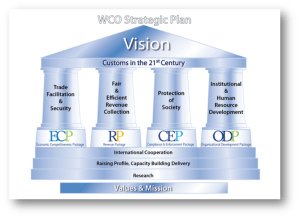
Visiting the WCO’s Strategic Plan

Reality Check

The ongoing global financial and economic crisis affects governments,  organisations and citizens in different ways. It would seem that no individual or any organisation has the proverbial ‘silver bullet’ to normalise the situation either. Today, probably most Customs and Border agencies are undergoing ‘modernisation’ or some form of restructuring. Modernisation in itself implies automation or digitization of information changing the lives of the average customs (border) official as well as the expectations and predictability of service to traders and trade intermediaries around the world. 9/11 forever changed the role of Customs and for most of governments, border regulatory authorities as well. Changes in Customs have since been focussed on alignment to policy, standards and guidelines as advocated by the WCO.

WCO Startegic PlanNational adoption of these remains the foremost critical step in establishing a country’s ability to ‘connect’ with the world. A national administration should seek inclusivity of its trading community lest its modernisation be regarded as self-serving. Simultaneously, regional economic communities also seek radical change, albeit on a regionalisation level. Pressures on national (sovereign) nations develop given high-level political commitment to regionalisation, often without taking into account their respective countries’ state of readiness. This creates a false sense of commitment which results in regional failures. Behind such regional initiatives are normally a host of sponsors, purportedly with the right experts and solutions to rectify the ‘barriers’ which prevent a national state from integrating with its neighbours and global partners. Sound familiar? If so, it wouldn’t do national representatives any harm to refresh themselves with the under mentioned WCO tools and validate this in relation to the direction which their organisation is headed. These form part of the WCO’s Customs’ in the 21st Century Agenda. It is also recommended reading for the various regional economic communities (RECs) – here I refer to the African continent – who are not always au fait or fully appraised on the ‘readiness’ landscape of the member states they represent.

The Economic Competitiveness Package (ECP) (Click the hyperlink for more information) is currently a matter of high priority at the World Customs Organization (WCO). Economic competitiveness starts with trade facilitation and Customs administrations undeniably play an important role in this respect. Indeed, facilitating trade is one of the WCO’s key objectives and the Organization has contributed, through its tools and instruments as well as through technical assistance, to increasing the economic competitiveness and growth of Members.

The Revenue Package (RP) (Click the hyperlink for more information) was developed by the World Customs Organization (WCO) in response to WCO Members’ concerns in regard to falling revenue returns in the light of the global financial crisis and declining duty rates.

Significant progress has been made since the adoption of the WCO Capacity Building Strategy in 2003. However, new and emerging key strategic drivers impact on international trade and the roles and responsibilities of Customs administrations. This requires that all our capacity building efforts remain responsive and needs-driven to ensure beneficiary Customs administrations can obtain the support they need to pursue their reform and modernization. This Organisational Development Package (ODP) (Click the hyperlink for more information) outlines the basic approach of the WCO towards organizational development. It provides a simple and accessible overview of the texts, tools and instruments that relate to this topic. It refers and offers access to these resources but does not purport to capture all knowledge and practices within this extensive area.

The Compliance and Enforcement Package (CEP) (Click the hyperlink for more information) has been developed in order to assist Members to address the high-risk areas for Customs enforcement. The Customs in the 21st Century Strategy calls on Customs administrations to implement modern working methods and techniques. In this context, Customs should be equipped with the necessary tools that allow it to effectively manage supply chain risks and enforce laws and regulations in cases of non-compliance. In discharging this mandate, the WCO, in close co-operation with Members, has created an extensive library of instruments, tools, guidance materials and operational co-ordination activities to support Customs compliance and enforcement actions. These tools new form part of the CEP.


EC proposes measures to get more freight onto Europe’s waterways

waterwaysforward-wordpress-com_SnapseedThe European Commission (EC) has announced new measures to get more freight onto Europe’s rivers and canals.

It underlines that barges are amongst the most climate-friendly and energy efficient forms of transport but currently they only carry about 6% of European cargo each year.

The new proposals intend to realise the “unused potential” of Europe’s 37,000 km of inland waterways, enabling freight to move more easily and lead to further greening of the sector, as well as encouraging innovation and improving job opportunities.

“We already send 500 million tonnes of freight along our rivers and canals each year. That’s the equivalent of 25 million trucks. But it’s not enough. We need to help the waterway transport industry develop over the longer term into a high quality sector. We need to remove the bottlenecks holding it back, and to invest in the skills of its workforce,” said the EC’s Vice President, Transport, Siim Kallas.

The Commission is proposing to remove significant bottlenecks in the form of inadequately dimensioned locks, bridges or fairways and missing links such as the connection between the Seine and the Scheldt river systems which are hampering the sector’s full development potential.

In August last year, Lloyd’s Loading List reported that a multi-billion euro project, the Seine-Nord Europe (SNE) Canal, to build a 106km, 54-metre wide canal to link the Seine and Scheldt rivers by the end of the decade, had suffered a serious setback, with doubts cast over private investment in the project.

The French government continues to support the SNE Canal despite the conclusions of an audit into its financial feasibility which recommended that it be postponed indefinitely.

It commissioned the over-hauling project which could be presented to the European Commission in its new form in the first quarter of 2014, the aim being to secure greater EU funding than that granted under the initial plans.

The Commission is also proposing action to encourage investment in low emission technologies and to support research and innovation. Source: Lloyds.com

Special Economic Zones and Regional Integration in Africa

SEZ and Regional Integration in AfricaOne of the most prominent features of the global trading landscape in recent years has been the worldwide proliferation of bilateral and regional trade agreements. Africa is no exception to this pattern. Another prominent development in Africa over the last couple of decades has been the increasing use by many countries in the region of various types of special economic zones (SEZ). These zones are more and more being viewed in the region as important mechanisms for attracting foreign investment, creating jobs, boosting manufacturing production and manufactured exports and contributing to much-needed industrial and economic development.

This paper – Click here for access – does not seek to provide an evaluation of the performance of the various special economic zone programmes established in Africa in recent years, but instead seeks to explore the various issues, challenges and opportunities that arise when countries – and especially developing countries – use special economic zones while simultaneously pursuing regional integration initiatives. This is a particularly important subject in the context of the COMESA-EAC-SADC T-FTA as a large number of the countries involved are actively using special economic zones or are currently in the process of establishing zone programmes. Source: Tralac

Border Management in Southern Africa: Lessons with respect to Policy and Institutional Reforms

The folk at Tralac have provided some welcomed insight to the challenges and the pains in regard to ‘regionalisation’. No doubt readers in Member States will be familiar with these issues but powerless within themselves to do anything due to conflict with national imperatives or agendas. Much of this is obvious, especially the ‘buzzwords’ – globally networked customs, one stop border post, single window, cloud computing, and the plethora of WCO standards, guidelines and principles – yet, the devil always lies in the details. While the academics have walked-the-talk, it remains to be seen if the continent’s governments have the commitment to talk-the-walk!

Regional integration is a key element of the African strategy to deal with problems of underdevelopment, small markets, a fragmented continent and the absence of economies of scale. The agreements concluded to anchor such inter-state arrangements cover mainly trade in goods; meaning that trade administration focuses primarily on the physical movement of merchandise across borders. The services aspects of cross-border trade are neglected. And there are specific local needs such as the wide-spread extent of informal trading across borders.

Defragmenting Africa WBThis state of affairs calls for specific governance and policy reforms. Effective border procedures and the identification of non-tariff barriers will bring major cost benefits and unlock huge opportunities for cross-border trade in Africa. The costs of trading remain high, which prevents potential exporters from competing in global and regional markets. The cross-border production networks which are a salient feature of development in especially East Asia have yet to materialise in Africa.

Policy makers have started paying more attention to trade-discouraging non-tariff barriers, but why does the overall picture still show little progress? The 2012 World Bank publication De-Fragmenting Africa – Deepening Regional Trade Integration in Goods and Services shows that one aspect needs to be singled out in particular:  that trade facilitation measures have become a key instrument to create a better trading environment.

The main messages of this WB study are:

  • Effective regional integration is more than simply removing tariffs – it is about addressing on-the-ground constraints that paralyze the daily operations of ordinary producers and traders.
  • This calls for regulatory reform and, equally important, for capacity building among the institutions that are charged with enforcing the regulations.
  • The integration agenda must cover services as well as goods……services are critical, job-creating inputs into the competitive edge of almost all other activities.
  • Simultaneous action is required at both the supra-national and national levels. Regional communities can provide the framework for reform, for example, by bringing together regulators to define harmonised standards or to agree on mutual      recognition of the qualification of professionals……. but responsibility for implementation lies with each member country.

African governments are still reluctant to implement the reforms needed to address these issues. They are sensitive about loss of ‘sovereign policy space’ and are not keen to establish supra-national institutions. They are also opposed to relaxing immigration controls. The result is that border control functions have been exercised along traditional lines and not with sufficient emphasis on trade facilitation benefits. This is changing but specific technical and governance issues remain unresolved, despite the fact that the improved border management entails various technical aspects which are not politically sensitive.

The required reforms involve domestic as well as regional dimensions. Regional integration is a continental priority but implementation is compounded by legal and institutional uncertainties and burdens caused by overlapping membership of Regional Economic Communities (RECs). The monitoring of compliance remains a specific challenge. Continue reading →

East African Single Customs Territory Will Cut Delays

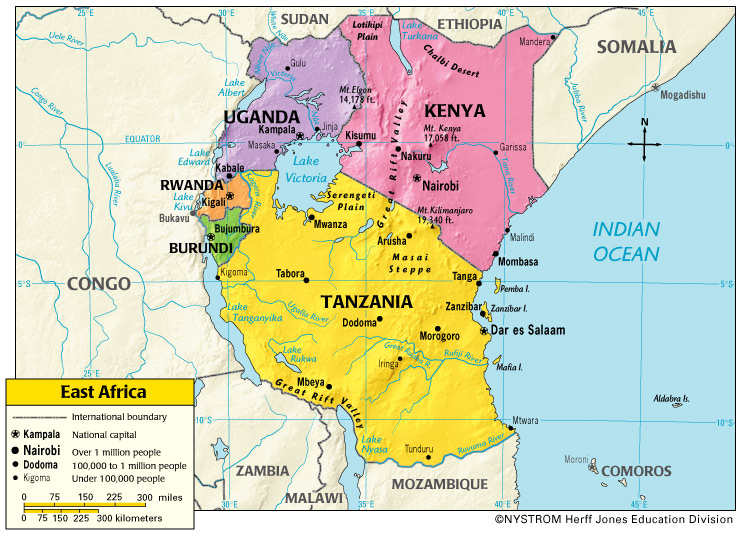
East%20Africa%20mapIn the spirit of stronger East African integration, the revenue authorities of Kenya, Uganda and Rwanda have started preparations for the implementation of a Single Customs Territory. The Commissioners’ General of the three East African countries deliberated on the mechanisms to operationalize the decisions of the heads of state who have continuously called for its fast tracking.

On June 25, 2013 at the Entebbe State House in Uganda, a Tripartite Summit involving the three heads of state issued a joint communiqué directing among other things the collection of customs duties by Uganda and Rwanda before goods are released from Mombasa. The leaders also agreed that traders with goods destined for warehousing should continue executing the general bond security.

During the meeting, the Commissioners’ General of the three countries put in place joint technical committees on ICT, Business Process, enforcement, change management, legal and human resource to discuss the implementation road map.

In a statement signed by the three Commissioners’ General, they said that the development of a Single Customs Territory will positively impact on the trading activities of the three countries as it will ensure that assessment and collection of taxes is done at the country of destination before cargo moves out of the port.

“As a result, the East African Community Customs Union will join the ranks of other Customs Union such as South African Customs Union and the European Union among others. Under this arrangement, restrictive regulations are eliminated as the corridor is now considered for customs purposes. For clarity, circulation of goods will happen with no or minimal border controls,” reads the statement in part.

Kenya said it would cut red tape holding up millions of dollars of imports into its landlocked neighbours Rwanda and Uganda, by letting the countries collect customs on goods as they arrive in its port at Mombasa. Goods can currently face long delays as agents process the paperwork to release cargoes from warehouses at east Africa’s biggest port, and later make separate arrangements to pay import duties at Kenya’s borders with Uganda and Rwanda.

Officials said the new system, due to be introduced in August, would clear inefficiencies and blockages seen as a major barrier to trade in the region. But clearing agents in Kenya said it could also cost thousands of jobs in warehouses, freight firms and almost 700 clearing and forwarding companies operating in the country.

Kenya, Uganda and Rwanda, together with Burundi and Tanzania, are members of the regional East African Community trade bloc, with a joint gross domestic product of $85 billion.

Kenyan tax officials said the new system would allow a “seamless flow of goods” and make it easier to stop goods getting through the system without customs payments. “Once cleared at the port, there will be no stoppages at borders and checkpoints along the corridor,” the Kenya Revenue Authority’s commissioner of customs, Beatrice Memo, told a news conference.

Under the system, Rwandan and Ugandan clearing agents and customs officials would be able to set up their own offices to clear cargo and collect taxes directly at the port. The Kenya International Freight and Warehousing Association said that meant up to half a million jobs could be lost to Uganda and Rwanda. “The Government has not consulted us … and we totally reject it,” said  Association chairman Boaz Makomere. Sources: East African Business Week (Kenya) & The New Vision (Uganda).