NRCS to Fast-Track Letters of Authority for Compliant Importers

nrcsThe National Regulator of Compulsory Specifications (NRCS), in its battle to protect the country from non-compliant goods whilst facilitating trade, advises that it intends rolling out a pilot programme aimed at cutting delays in the issuance of Letters of Authority (LOA).

The intention is to categorise risk, thereby ensuring that applications from compliant importers will be fast tracked i.e.: the letters of authority will be processed in 21 days or less. Companies in the ‘low risk’ category will, however, be subjected to heavy penalties should they not meet the requirements.

The proposal the NRCS intends presenting to the Department of Trade and Industry (DTI) will reflect three categories of risk: low, medium and high. It is expected that NRCS will rollout its pilot study in the last 6 months of the year, before officially launching the programme early next year. Companies earmarked to participate in the pilot study will be identified by mid-June. Source: Shepstone & Wylie Attorneys – Taryn Hunkin

SA – New Bills discouraging trade and investment

containeryardSouth Africa is moving away from a policy promoting trade and investment to one that contradicts this, a roundtable on SA-European Union (EU) trade relations heard on Tuesday.

This comes as global foreign direct investment (FDI) flows jumped 36% last year to their highest level since the global economic and financial crisis began in late 2008, but plummeted in emerging markets, especially SA.

The most recent United Nations (UN) Conference on Trade and Development global investment trends monitor shows FDI into SA fell 74% to $1.5bn last year, while FDI inflows to Africa fell 31% to about $38bn.

Central Africa and Southern Africa saw the largest declines in FDI. The end of the commodity “supercycle” and the plunge in oil prices affected new project developments drastically, the UN body said. This had also affected Brazil, Russia and China, but not India, whose economy had surged ahead of late.

Peter Draper, MD of Tutwa Consulting, which researches policy and regulatory matters in emerging markets, said the promulgation of legislation such as the private security bill and the expropriation bill, created an impression that SA was not an attractive investment destination.

“What lies behind all of that, I think, is an ideological agenda, which is not favourable to business,” he said. “Geopolitically there is no love between SA and the US and SA and the EU. (But) There is lots of love for the Brics (Brazil, Russia, India, China, SA).”

South African and international business have raised the alarm over the quiet signing into law of SA’s Promotion and Protection of Investment Bill late last year, after the government had acknowledged that it would do little to promote trade.

Meanwhile, the Department of Trade and Industry said last week that the African National Congress had directed its economic transformation subcommittee to review the trade agreements signed by SA since 1999.

It said SA’s goal in “negotiating” trade agreements was to support national development objectives, promote intra-African trade and the integration of SA into global markets. This is likely to be highly controversial after the government from 2013 unilaterally cancelled about 13 bilateral investment treaties with major EU countries, drawing warnings from the bloc that this could damage trade relations.

Investors fear the Protection of Investment Bill has diluted recourse to international arbitration over trade disputes, and enhances the possibility of expropriation. Critics also say it contradicts SA’s obligations under the Southern African Development Community’s finance and investment protocol, by undermining equitable treatment between foreign and domestic investors.

John Purchase, CE of agribusiness association Agbiz, which with Tutwa Consulting organised yesterday’s roundtable, said the bill had not answered “all those questions around the bilateral investment treaties”. Source: Business Day

First Special Economic Zones on the way

manufacturing-gear-wheelsThe roll-out of special economic zones is under way, with the first two in KwaZulu-Natal and the Free State to be proclaimed shortly, Trade and Industry Minister Rob Davies said on Wednesday.

The Dube trade port and the Tshiame industrial development zone in Harrismith would both be transformed into special economic zones as soon as the regulatory framework had been established, which the minister said would take place within the next 100 days.

The regulations and guidelines would be finalised. The special economics zones board would be established, as would a one-stop-shop for fast-tracked support to investors.

The Dube trade port industrial development zone will specialise in high-value, niche agricultural and horticultural products, as well as manufacturing and value-addition for the automotive, electronics and clothing industries.

The Tshiame industrial development zone at Maluti-a-Phofung near Harrismith in the Free State will focus on automotive, clothing and agro-processing activities.

The Department of Trade and Industry is evaluating the feasibility of special economic zones focusing on the beneficiation and value-addition of platinum in Limpopo and North West. These zones would be used to encourage investors in beneficiation to locate their plants close to the mineral deposits.

Opportunities to partner with international producers of fuel cells are available, and have the potential for South Africa to become an established hub for the production of fuel-cell components. The Dti opines that this would be a very significant development because fuel cells are new technology used for back-up power generation in telecommunication masts, base-load power generation in rural areas, and fuel-cell passenger vehicles. The technology is fast becoming the subject of intense international competition for investment and is also a technology well suited to South Africa’s comparative advantage in platinum mineral resources.

The department is also assessing the feasibility of a solar industrial development zone in Upington in the Northern Cape.

The Saldanha Bay industrial development zone was well positioned to become a hub for oil, gas and marine repair, engineering and logistics. An application to operate as a Customs Control Area to service the West and East African offshore oil and gas industry is being finalised. To date 18 companies, nine local and nine foreign, have signed nonbinding expressions of interest.

The Coega, Richards Bay and East London industrial development zones had together generated R3.4bn in investments and created more than 67,000 direct and indirect jobs. A number of new investments worth several billion rand were also under negotiation. Source: BDlive.co.za

WTO launches new Trade Facilitation ‘Facility’

Azevêdo launches new WTO Facility [Photo: WTO]

Azevêdo launches new WTO Facility [Photo: WTO]

A new initiative unveiled at the WTO on 22 July 2014 will help developing countries and least-developed countries reap the benefits of the WTO’s new Trade Facilitation Agreement, which was agreed at the Bali Ministerial Conference in December 2013.

The new Facility will complement existing efforts by regional and multilateral agencies, bilateral donors, and other stakeholders to provide Trade Facilitation-related technical assistance and capacity-building support. It will act as a focal point for implementation efforts. It will become operational when the protocol to insert the Trade Facilitation Agreement into the existing regulatory framework is adopted by WTO Members. The functions of the Facility will include:

  • supporting LDCs and developing countries to assess their specific needs and identify possible development partners to help them meet those needs
  • ensuring the best possible conditions for the flow of information between donors and recipients through the creation of an information sharing platform for demand and supply of Trade Facilitation-related technical assistance
  • disseminating best practice in implementation of Trade Facilitation measures
  • providing support to find sources of implementation assistance, including formally requesting the Director-General to act as a facilitator in securing funds for specific project implementation
  • providing grants for the preparation of projects in circumstances where a Member has identified a potential donor but has been unable to develop a project for that donor’s consideration, and is unable to find funding from other sources to support the preparation of a project proposal
  • providing project implementation grants related to the implementation of Trade Facilitation Agreement provisions in circumstances where attempts to attract funding from other sources have failed. These grants will be limited to “soft infrastructure” projects, such as modernization of customs laws through consulting services, in-country workshops, or training of officials.

South Africa, on the other hand has warned of the concerns of developing countries being sidelined under a global trade deal, adding to fears India and some African states may block the landmark Bali agreement. South African Minister for Trade and Industry further intimated that the country would have no difficulty in implementing the trade facilitation agreement but said it would “go along with” the decisions made by its allies within the WTO. Source: WTO

Related articles

Export Tax in the South African Context

made_in_south_africa___barcode_and_flag_by_netsrotj-d5cmbq9Export taxes are increasingly becoming a focus of attention in South African trade policy, and the objective of this paper is to review the trade and economic issues associated with these taxes. While they are similar to import tariffs in their effects, export taxes remain very much the ‘poor cousins’ of import tariffs in trade policy circles. While attention is paid to them in many bilateral and regional agreements, the multilateral World Trade Organisation (WTO) has little to say about them other than an awakening to their importance when it comes to negotiating a new member’s accession to the world body.

South Africa currently levies an export tax on unpolished diamonds in an attempt to develop local skills and promote the domestic industry, and it is considering a recent department of trade and industry report that recommends that consideration be given to an export tax on iron ore and steel. South Africa has some of the prerequisite market power in the global iron ore trade but not enough to ensure an outcome entirely beneficial to its export trade. The salutary example of South Africa’s competitor India is discussed, as India recently increased its export tax in this sector to 30% and has seen its global market shares plummet. The more interesting sector for South Africa is the ferrochrome and ferrochrome ore trade, as here South Africa does have significant market shares. South Africa has had about a 45% market share over the last three years in global exports, while China has imported around 70% to 85% of this global trade in recent years. Advocates argue that a tax on chromite ore exports will shift the relative economics back to empower South African producers of processed ferrochrome. This sets the stage for an interesting battle between South Africa and China, and one set against the background of South Africa’s recent admission to the BRICS club. If such an export tax is invoked, South Africa needs to be conscious that it at best provides a window of opportunity for the domestic sector to improve its technological efficiency and that it is not a long or even medium-term solution.

For an in-depth appraisal on export tax in South Africa, please read Ron Sandrey’s report “Export tax in the South African context

Source: Tralac & Author -Ron Sandrey

DTI Destroys ‘Unsafe’ Goods Worth R8 Million

NRCSMore than 300 000 of non-complying products valued at R8-million were destroyed at the third destruction of goods function conducted today in Born Accord, Pretoria. The goods were seized during the National Regulator for Compulsory Specifications (NCRS) raids and a significant percentage of the products were also intercepted at the ports of entry including sea ports and inland ports.

Addressing stakeholders at the event, the Minister of Trade and Industry, Dr Rob Davies said it was crucial to have technical regulations and compulsory specifications for goods in order to prevent sub-standard, unsafe, and harmful products into the South African market.

“The goods are not only destroyed to defend our consumers against sub-standard products, but also the South African producers against unfair competition from those who either produce the same products or more typically import from all sort of borders,’” he said.

Minister Davies mentioned the recent six weeks blitz conducted by NCRS in Cape Town, Durban and City Deep were 0.25% of all containers entering the country were inspected and close to R8-million worth of non-compliant products were detected.

Davies said to date, approximately R153-million worth of non-compliant and unsafe products were seized and removed from the market.

“As government, we are therefore committed to locking out non-compliant products especially since most of these products are being sold to poor people who often do not yet have access to the necessary information on safety standards and their rights in this regard,” added Davies.

Davies urged stakeholders to work together with the NCRS and the National Consumer Commission to ensure the safety of consumers and also to protect jobs.

The non-complying products which were destroyed range from steam irons, plugs, respirators, adaptors, paraffin stoves, swimming aids, chemicals, compact fluorescent lamps, incandescent lamps for vehicles, circuit breakers, adaptors, power supply, cell phone chargers, paraffin stoves, plastic carriers, digital photo frames, television sets, electric kettles, hair clippers, motor cycle helmets, child restraints, tryes, seals, microphones, DVD players, extension cords to massagers. Source: DTI and NRCS

South Africa falls in 2014 global logistics rankings

jll_year_of_the_distribution_center_wide_imageSouth Africa has been ranked number 34 out of 160 countries in the World Bank’s 2014 Logistics Performance Index (LPI), which is topped by Germany, with Somalia ranked lowest. Africa’s largest economy remained the continent’s highest placed LPI participant, but South Africa’s position was well off its 2012 ranking of 23 and its position of 28 in 2010.

In February, the World Bank argued in a separate report on South Africa that the country’s high logistics costs and price distortions were an impediment to export competitiveness. That report noted, for instance, that South Africa’s port tariffs on containers were 360% above the global average in 2012, while on bulk commodities they were 19% to 43% below the global average. Similar commodity biases existed in the area of rail freight.

But the new report, titled ‘Connecting to Compete 2014: Trade Logistics in the Global Economy’, still clustered South Africa as an “over-performing non-high-income” economy along with Malaysia (25), China (28), Thailand (35), Vietnam (48) and India (54).

The report draws on data arising from a survey of more than 1 000 logistics professionals and bases its LPI rankings on a number of trade dimensions, such as customs performance, infrastructure quality, and timeliness of shipments. Besides China, South Arica also performed above its ‘Brics’ counterparts of Brazil (65),Russia (90) and India.

Germany was followed in the top 10 by other developed economies, namely Netherlands, Belgium, the UK, Singapore,Sweden, Norway, Luxembourg, the US and Japan. Among low-income countries, Malawi, Kenya and Rwanda showed the highest performance.

The report warns that the gap between the countries that perform best and worst in trade logistics remains large, despite a slow convergence since 2007. The gap persists, the study asserts, because of the complexity of logistics-related reforms and investment in developing countries. This, despite strong recognition that poor supply-chain efficiency is the main barrier to trade integration.

However, senior transport economist and founder of the LPI project Jean-François Arvis stresses that a country cannot improve through developing infrastructure, while failing to address border management and other supply-chain issues.

Logistics performance is strongly associated with the reliability of supply chains and the predictability of service delivery for producers and exporters, the report notes, adding that supply chains are only as strong as their weakest links. They are also becoming more and more complex, often spanning many countries while remaining critical to national competitiveness.

“It’s difficult to get everything right. The projects are more complicated, with many stakeholders, and there is no more low-hanging fruit,” Arvis argues.

The report also finds that low-income, middle-income and high-income countries will also need to adopt different strategies to improve their standings in logistics performance. “Comprehensive reforms and long-term commitments from policymakers and private stakeholders will be essential. Here, the LPI provides a unique reference to better understand key trade logistics impediments worldwide.” Source: Engineering News

Related articles

African States urged to begin prioritising economic transformation

2014 Africa Transformation ReportThe inaugural Africa Transformation Report ranks Mauritius as the most economically transformed country out of 21 sub-Saharan African countries measured in its African Transformation Index, which takes account of a country’s economic diversification, export competitiveness, productivity, state of technology upgrading and human wellbeing.

The continent’s largest economy, South Africa, ranks second and Côte d’Ivoire third, while Nigeria, Burundi and Burkina Faso prop up the index.

The ranking has been included within a larger 207-page study, which cautions that, while many African economies are growing strongly, most economies are not transforming sufficiently to support a sustainable reduction in poverty, inequality and unemployment.

Six of the world’s fastest growing economies are currently in Africa, including Angola, Nigeria, Ethiopia, Chad, Mozambique and Rwanda, while several others are expanding at growth rates of over 6% a year. However, much of this grow is still premised on the extraction and export of natural resources and is not being broadly spread, leaving more than 80% of the continent’s labour force employed in low-productivity farming, or informal urban business activities.

Compiled over a three-year period by Ghana’s African Centre for Economic Transformation (ACET) in partnership with South Africa’s Mapungubwe Institute for Strategic Reflection (Mistra), the study urges African governments to position economic transformation ahead of growth at the centre of their economic and development policies.

Speaking at a launch in Johannesburg, lead author and ACET chief economist Dr Yaw Ansu said growth was “good” and had arisen as a result of macroeconomic reforms, better business environments and higher commodity prices.

“But economic transformation requires much more,” Ansu stressed, arguing that countries needed to diversify their production and exports, become more competitive and productive, while upgrading the technologies they employed in production processes.

ACET president Dr KY Amoako said the transformation narrative had already been accepted by the African Union in its Vision 2063, as well as by the African Development Bank and the United Nations Economic Commission for Africa. He added that the African Transformation Index provided policymakers with a quantitative measure for assessing their transformation performance and for guiding future strategies.

Mistra executive director Joel Netshitenzhe argued that to turn growth into an “actual lived experience” for Africa’s citizens there was the urgent need to form national social compacts between government, business and civil society to support transformation.

Finance Minister Pravin Gordhan emphasised the same point in his recent Budget address, when he highlighted the work being done to secure a social compact to reduce poverty and inequality and raise employment and investment. Gordhan stressed this could not be a “pact amongst elites, a coalition amongst stakeholders with vested interests. Nor can it be built on populist slogans or unrealistic promises”.

“Our history tells us that progress has to be built on a vision and strategy shared by leaders and the people – a vision founded on realism and evidence,” the Minister stressed.

Netshitenzhe also highlighted the report’s emphasis on coupling growth with social development. “In fact, rather than merely being a consequence of economic growth, a reduction in poverty and general human development can be part of the drivers of economic growth.”

The report highlights key transformation drivers as being:

  • Fostering partnerships between governments and the private sector to facilitate entrepreneurship, investment and technology upgrading.
  • Promoting exports, particularly outside of the natural resources sector.
  • Building technical knowledge and skills.
  • And, pushing ahead with regional integration.

Four transformation pathways are also highlighted, including labour-intensive manufacturing; kick-starting agroprocessing value chains, improving the management of oil, gas and minerals; and boosting tourism.

“It’s good that we are growing – we are no longer the hopeless continent. We can transform this hope into reality, but to do that governments must put transformation at the top of their agendas,” Ansu asserted.

He also called on African citizens to begin to demand transformation. “Ask your government, how come we are not diversifying? How come our productivity remains stuck? How come our technological levels and our exports are not growing?” Source: Engineering News

Government SEZ Bill will support economic growth and opportunities

sez.jpgThe Special Economic Zones (SEZ) Bill 2013, according to the government will support a broader-based industrialisation growth part and be a significant milestone in pursuit of the aspirations of the National Development Plan (NDP).

Rob Davies, Department of Trade and Industry Minister says, “The bill aims to support a balanced regional industrial growth path, along with the development of more competitive and productive regional economies.”

SEZs are defined as geographically designated areas of a country set aside for specifically targeted economic activities, supported through special arrangements and systems that are often different from those that apply to the rest of the country.

Says Davies, “The aim of the SEZ Bill seeks to boost private investment (domestic and foreign) to labour-intensive areas to increase job creation, competitiveness, skills and technology transfer along with exports of beneficiated products.”

The Bill introduces a variation of SEZ’s to cater for the various spheres of government at local, provincial and national level.

It also provides for the designation of the following types of SEZs:

  • Free Ports: duty-free areas adjacent to a port of entry where imported goods may be unloaded for value-adding activities, repackaging, storage and subsequent re-export, subject to special customs procedures.
  • Free Trade Zones: a duty-free area offering storage and distribution facilities for value adding activities within the SEZ.
  • Industrial Development Zone: a purpose-built industrial estate that leverages domestic and foreign fixed direct investment in value-added and export-oriented manufacturing industries and services. (To date there are five Industrial Development Zones (IDZs) – Coega, East London, Richards Bay, OR Tambo and Saldanha Bay).
  • Sector Development / Specialised Zones: a zone focused on the development of a specific sector or industry through the facilitation of general or specific industrial infrastructure, incentives, technical and business services primarily for the export market.

Source: Transport World Africa

Landmark East and Southern African Customs forum focuses on modernisation

WCO ESA_Snapseed

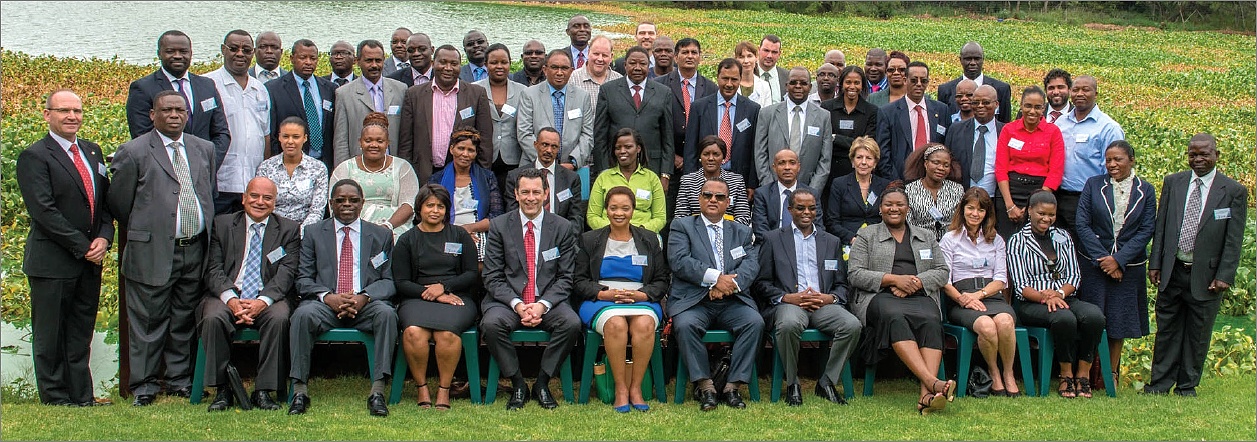
Participants from all 24 members of the WCO’s Eastern and South African region attended the forum. [SARS]

Customs officials from 24 eastern and southern African countries met in Pretoria this week to share knowledge and experience with regard to the successful modernisation of Customs administrations.

Opening the three-day forum, Erich Kieck, the World Customs Organisation’s Director for Capacity Building hailed it as a record breaking event.

“This is the first forum where all 24 members of the Eastern and Southern African region (ESA) of the WCO were all in attendance,” he noted. Also attending were officials from the WCO, SACU, the African Development Bank, Finland, the East African Community and the UK’s Department for International Development (DFID).

Michael Keen in the 2003 publication “Changing Customs: Challenges and Strategies for the Reform of Customs Administrations” said – “the point of modernisation is to reduce impediments to trade – manifested in the costs of both administration incurred by government and compliance incurred by business – to the minimum consistent with the policy objectives that the customs administration is called on to implement, ensuring that the rules of the trade game are enforced with minimum further disruption”

The three-day event witnessed several case studies on Customs modernisation in the region, interspersed with robust discussion amongst members. The conference also received a keynote addressed by Mr. Xavier Carim, SA Representative to World Trade Organisation (WTO), which provided first hand insight to delegates on recent events at Bali and more specifically the WTO’s Agreement on Trade Facilitation.

The WCO’s Capacity Building Directorate will be publishing a compendium of case studies on Customs Modernisation in the ESA region during the course of 2014.

WCO ESA members – Angola, Botswana, Burundi, Comoros, Djibouti, Eritrea, Ethiopia, Kenya, Lesotho, Madagascar, Malawi, Mauritius, Mozambique, Namibia, Rwanda, Seychelles, Somalia, South Sudan, Swaziland, South Africa, Tanzania, Uganda, Zambia and Zimbabwe.

This slideshow requires JavaScript.

Source: SARS

Experts Caution Against Rush into Trade Facilitation Agreement

Bali 2013A rather lengthy article published by Third World Network, but entirely relevant to trade practitioners and international supply chain operators who may desire a layman’s understanding of the issues and challenges presented by the WTO’s proposed agreement on ‘Trade Facilitation’. I have omitted a fair amount of the legal and technical references, so if you wish to read the full unabridged version please click here! If you are even more interested in the subject, take a look through the publications available via Google Scholar.

A group of eminent trade experts from developing countries has advised developing countries to be very cautious and not be rushed into an agreement on trade facilitation (TF) by the Bali WTO Ministerial Conference, given the current internal imbalance in the proposed agreement as well as the serious implementation challenges it poses.

“While it may be beneficial for a country to improve its trade facilitation, this should be done in a manner that suits each country, rather than through international rules which require binding obligations subject to the dispute settlement mechanism and possible sanctions when the financial and technical assistance as well as capacity-building requirements for implementing new obligations are not adequately addressed.”

This recommendation is in a report by the Geneva-based South Centre. The report, “WTO Negotiations on Trade Facilitation: Development Perspectives”, has been drawn up from discussions at two expert group meetings organised by the Centre.

Noting that an agreement on trade facilitation has been proposed as an outcome from the Bali WTO Ministerial Conference, the South Centre report said that the trade facilitation negotiations have been focused on measures and policies intended for the simplification, harmonization and standardization of border procedures.

“They do not address the priorities for increasing and facilitating trade, particularly exports by developing countries, which would include enhancing infrastructure, building productive and trade capacity, marketing networks, and enhancing inter-regional trade. Nor do they include commitments to strengthen or effectively implement the special and differential treatment (SDT) provisions in the WTO system”.

The negotiations process and content thus far indicate that such a trade facilitation agreement would lead mainly to facilitation of imports by the countries that upgrade their facilities under the proposed agreement. Expansion of exports from countries require a different type of facilitation, one involving improved supply capacity and access to developed countries’ markets.

Some developing countries, especially those with weaker export capability, have thus expressed concerns that the new obligations, especially if they are legally binding, would result in higher imports without corresponding higher exports, which could have an adverse effect on their trade balance, and which would therefore require other measures or decisions (to be taken in the Bali Ministerial) outside of the trade facilitation issue to improve export opportunities in order to be a counter-balance to this effect.

According to the report, another major concern voiced by the developing countries is that the proposed agreement is to be legally binding and subject to the WTO’s dispute settlement system. This makes it even more important that the special and differential treatment provisions for developing countries should be clear, strong and adequate enough. The negotiations have been on two components of the TF: Section I on the obligations and Section II on special and differentiated treatment (SDT), technical and financial assistance and capacity building for developing countries.

Most developing countries, and more so the poorer ones, have priorities in public spending, especially health care, education and poverty eradication. Improving trade facilitation has to compete with these other priorities and may not rank as high on the national agenda. If funds have to be diverted to meet the new trade facilitation obligations, it should not be at the expense of the other development priorities.

“Therefore, it is important that, if an agreement on trade facilitation were adopted, sufficient financing is provided to developing countries to meet their obligations, so as not to be at the expense of social development,” the report stressed.

The report goes on to highlight the main issues of concern for a large number of developing countries on the trade facilitation issue. It said that many developing countries have legitimate concerns that they would have increased net imports, adversely affecting their trade balance. While the trade facilitation agreement is presented as an initiative that reduces trade costs and boosts trade, benefits have been mainly calculated at the aggregate level.

Improvements in clearance of goods at the border will increase the inflow of goods. This increase in imports may benefit users of the imported goods, and increase the export opportunities of those countries that have the export capacity.

However, the report noted, poorer countries that do not have adequate production and export capability may not be able to take advantage of the opportunities afforded by trade facilitation (in their export markets).

“There is concern that countries that are net importers may experience an increase in their imports, without a corresponding increase in their exports, thus resulting in a worsening of their trade balance.”

Many of the articles under negotiations (such as the articles on ‘authorized operators’ and ‘expedited shipments’) are biased towards bigger traders that can present a financial guarantee or proof of control over the security of their supply chains. There is also the possibility that lower import costs could adversely affect those producing for the local markets.

“The draft rules being negotiated, mainly drawn up by major developed countries, do not allow for a balanced outcome of a potential trade facilitation agreement,” the report asserted.

New rules under Section I are mandatory with very limited flexibilities that could allow for Members’ discretion in implementation. The special and differential treatment under section II has been progressively diluted during the course of the negotiations. Furthermore, while the obligations in Section I are legally binding, including for developing countries, developed countries are not accepting binding rules on their obligation to provide technical and financial assistance and capacity building to developing countries.

The trade facilitation agreement would be a binding agreement and subject to WTO dispute settlement. The negotiating text is based on mandatory language in most provisions, which includes limited and uncertain flexibilities in some parts.

Therefore, if a Member fails to fully implement the agreement it might be subject to a dispute case under the WTO DSU (Dispute Settlement Understanding) and to trade sanctions for non-compliance.

“Many of the proposed rules under negotiations are over-prescriptive and could intrude on national policy and undermine the regulatory capacities and space of WTO Member States. The negotiating text in several areas contains undefined and vague legal terminology as well as ‘necessity tests’, beyond what the present GATT articles require.”

Continue reading →

Special Economic Zones and Regional Integration in Africa

SEZ and Regional Integration in AfricaOne of the most prominent features of the global trading landscape in recent years has been the worldwide proliferation of bilateral and regional trade agreements. Africa is no exception to this pattern. Another prominent development in Africa over the last couple of decades has been the increasing use by many countries in the region of various types of special economic zones (SEZ). These zones are more and more being viewed in the region as important mechanisms for attracting foreign investment, creating jobs, boosting manufacturing production and manufactured exports and contributing to much-needed industrial and economic development.

This paper – Click here for access – does not seek to provide an evaluation of the performance of the various special economic zone programmes established in Africa in recent years, but instead seeks to explore the various issues, challenges and opportunities that arise when countries – and especially developing countries – use special economic zones while simultaneously pursuing regional integration initiatives. This is a particularly important subject in the context of the COMESA-EAC-SADC T-FTA as a large number of the countries involved are actively using special economic zones or are currently in the process of establishing zone programmes. Source: Tralac

African Countries of the Future 2013/14

fDI 2013-14 Rankings for Africa

fDI 2013-14 Rankings for Africa

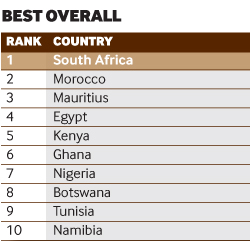
South Africa has been crowned as the African Country of the Future for 2013/14 by fDi Magazine, One of the economic powerhouses of the African continent, South Africa has been named fDi Magazine’s African Country of the Future 2013/14, with Morocco in second position and Mauritius in third. New entries into the top 10 include Nigeria and Botswana. Click here to access the full report!

South Africa has consistently outperformed its African neighbours in FDI attraction since fDi Markets records began in 2003. Figures for 2012 build upon South Africa’s historical prominence as an FDI destination with the country attracting about one-fifth of all investments into the continent – more than double its closest African rival, Morocco. In 2012, FDI into South Africa amounted to $4.6bn-worth of capital investment and the creation of almost 14,000 jobs.

South Africa claimed the title of fDi’s African Country of the Future 2013/14 by performing well across most categories, obtaining a top three position for Economic Potential, Infrastructure and Business Friendliness. Its attractiveness to investors is evident in its recent FDI performance, where the country defied the global trend with 2011 and 2012 figures surpassing its pre-crisis 2008 statistics. Despite a slight decline of 3.9% in 2012, South Africa increased its market share of global FDI, which further increased in the first five months of 2013 as the country attracted 1.37% of global greenfield investment projects. According to fDi Markets, South Africa now ranks as the 16th top FDI destination country in the world.

South Africa’s largest city, Johannesburg, was the top destination for FDI into Africa and is one of only five African cities that attracted more investments in the first five months of 2013 compared to the same period of 2012. South Africa ranked third behind the US and the UK as a top source market for the African continent in 2012, accounting for 9.2% of FDI projects.

In 2010, South Africa became the ‘S’ of the BRICS – five major emerging national economies made up by Brazil, Russia, India and China. While FDI into South Africa fell 3.9% in 2012, this was the lowest recorded decline of the BRICS grouping which, on average, experienced a 20.7% decline in FDI. In its submission for fDi’s African Countries of the Future 2013/14, Trade and Investment South Africa (TISA) stresses the importance of the country’s attachments to its BRICS partners. Source: fDI Magazine

Trade Information Portal to Improve Trade Facilitation in Namibia

Namibia flagThe World Trade Organization General Agreement on Tariff and Trade (GATT) 1994 Article X on Trade Facilitation calls for member country trade regulations to be clearly published. The WTO Self-Assessment Guide (2009) outlines the basic standard for internet Publication as: “A Member shall publish all trade related legislation, procedures and documents on a national official internet site or sites”. Usually called a “Trade Repository” or a “Trade Information Portal” the site facilitates awareness, via the internet, of requirements to enable compliance with customs and other agency requirements for the import or export of goods, using the HS classification of goods as the primary organizing principle for cataloguing and retrieving information

USAID Southern African Trade Hub reports that the government of Namibia expects to have its Trade Information Portal up and running by early 2014. The development of portal is supported by the USAID Southern Africa Trade Hub, under its Partnership for Trade Facilitation facility. The Trade Hub recently supported Namibia in a detailed legislative review of the country’s Customs and Excise Act to align it with global and regional legislation and to provide the legislative foundations for electronic trade facilitation measures, including the Trade Information Portal.

Currently trade-related information is made available across number of websites maintained by each government agency responsible for a particular aspect of trade regulation. The Trade Information Portal will provide a single platform where all trade related information for Namibia is collected in one system and readily available for searching and viewing, which will save time and expense for the trading community. The Trade Information Portal uses the latest technology to provide a comprehensive, accurate and up-to-date source for all regulatory information, which will result in tangible benefits for trade facilitation. No longer will it be necessary to seek advice in person from multiple agencies. Furthermore, conflicting advice and guidelines will be avoided by creating a single authoritative reference point. The savings in time and expense will lessen the overall cost of doing business and reduce the time to import or export goods, contributing to Namibia’s improved standing in doing business indexes and transparency.

A significant part of the coordination and development work in setting up the Trade Information Portal will facilitate and shorten the road map towards implementing an electronic National Single Window which is also under consideration by the Namibia government. Source: satradehub.org

SACU’s Choice – ‘Common policy or irrelevance’

imagesCA31PQJGThe Minister of Trade and Industry, Dr Rob Davies briefed the Parliamentary Portfolio Committee on Trade and Industry regarding the progress on the implementation of the five-point plan in Cape Town. This is a work programme which was approved by the 2nd Southern Africa Customs Union (SACU) Summit convened by President Zuma in 2011 premised on the following pillars;

  1. Work programme on cross-border industrial development;
  2. Trade facilitation;
  3. Development of SACU institutions;
  4. Unified engagement in trade negotiations and
  5. The review of the revenue sharing arrangement.

The five-point plan emerged from realization by SACU Member States of a need to move SACU beyond an arrangement held together only by the common external tariffs and the revenue sharing arrangement to an integration project that promotes real economy development in the region.

Minister Davies noted that progress on the implementation of pillars of the five- point plan is uneven. SACU has registered good progress on trade facilitation and there is greater unity of purpose in negotiations with third parties (Economic Partnership Agreement (EPA), SACU-India and Tripartite Free Trade Area).

However, there is limited progress on the review of the revenue sharing arrangement and hence lack of adequate financial support for the implementation of cross-border industrial and infrastructure development projects. The SACU revenue pool is raised by South Africa from customs and excise duties. Mr Davies told MPs that in 2013-14 the total disbursement from the revenue pool would be about R70bn of which the BLNS countries would receive about R48bn. There is also lack of progress on the development of SACU institutions as a result of divergences in policy perspectives and priorities of Member States.

Enabling provisions provide for the establishment of National Bodies and a SACU Tariff Board. The SACU Tariff Board will make recommendations to Council on tariffs and trade remedies. Davies added that, until these institutions are established, functions are delegated to the International Trade Administration Commission (ITAC) in SA.

The minister warned that the lack of agreed policies would hinder effective decision-making on regional integration and industrialisation, which had made little progress since the 2011 summit convened by President Jacob Zuma. South Africa believes SACU needs to move “firmly towards a deeper development and integration”.

Minister Davies said SACU risked becoming “increasingly irrelevant” as an institution if it did not develop beyond operating a common external tariff, and a “highly redistributive” revenue-sharing arrangement. The lack of progress in developing new SACU institutions was primarily due to policy and priority differences among members. “Against this background South Africa needs to reassess how best to advance development and integration in SACU.”

Among the disagreements on tariff setting between South Africa and its neighbours highlighted by Mr Davies, was that South Africa saw tariffs as a tool of industrial policy while they regarded them as a means of raising revenue. For example, the other Sacu members wanted to include the revenue “lost” on import tariff rebates offered by South Africa into the revenue pool.

The pool provides these countries with a major source of their national budget. Rebates were seen as revenue foregone for which additional compensation should be sought. South Africa, on the other hand, argues that the rebates (for example on automotive imports) are part of its total tariff package and serve to attract investment and boost imports and therefore, contribute to expanding the revenue pool, not diminishing it.

He emphasised the development of a common approach on trade and industrial policy as the prerequisite for establishing effective SACU institutions in future.

He highlighted that a discussion on appropriate decision-making procedures on sensitive trade and industry matters that takes into account SACU-wide impacts is required. Source: The Department of Trade & Industry, and BD Live.