EU fighting Customs Fraud – JRC research leads to new legislation

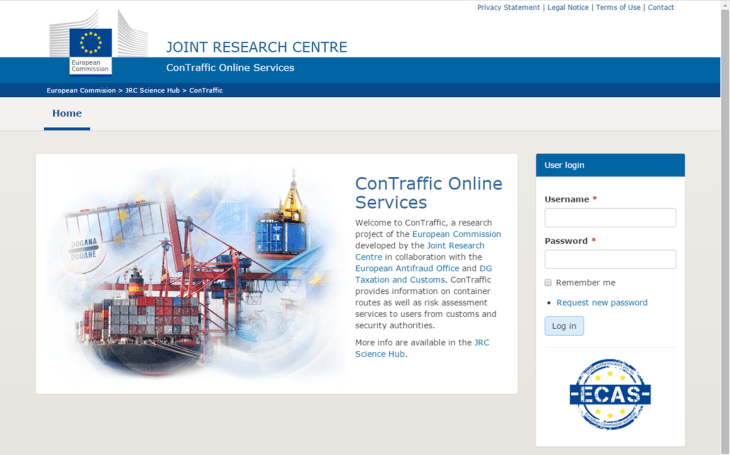
ConTraffic HomepageA new regulation adopted by the European Parliament and the Council will allow customs to access information to track the origins and routes of cargo containers arriving in the EU to support the fight against customs fraud both at EU and national level. The Joint Research Centre (JRC) has been instrumental in the conception and adoption of this legislation as it provided the scientific evidence on the importance of analysing the electronic records on cargo container traffic.
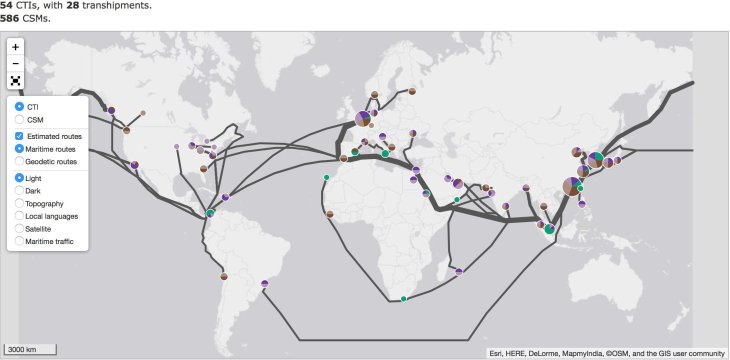
The EU customs authorities have been long aware that information on the logistics and actual routes of cargo containers arriving in Europe is valuable for the fight against customs fraud. However, they had very limited ways to obtain such information and no means to systematically analyse cargo container traffic both for fraud investigations as well as for risk analysis. On the other hand, the ocean carriers that transport the cargo containers, as well as their partners and clients, have easy on-line access to the so-called Container Status Messages (CSM): electronic records which describe the logistics and the routes followed by cargo containers.

jrc-cargo-container-routes-world-mapIn collaboration with the European Anti-Fraud Office (OLAF), the JRC has worked extensively on how to exploit CSM data for customs anti-fraud purposes. The JRC proposed techniques, developed the necessary technology, and ran long-term experiments involving hundreds of EU customs officers to validate the usefulness of using CSM data. The results of this research led the Commission to bring forward a legislative proposal that would enable Member States and OLAF to systematically use CSM data for these anti-fraud purposes. It also served to convince Member States of the value of the proposed provisions.
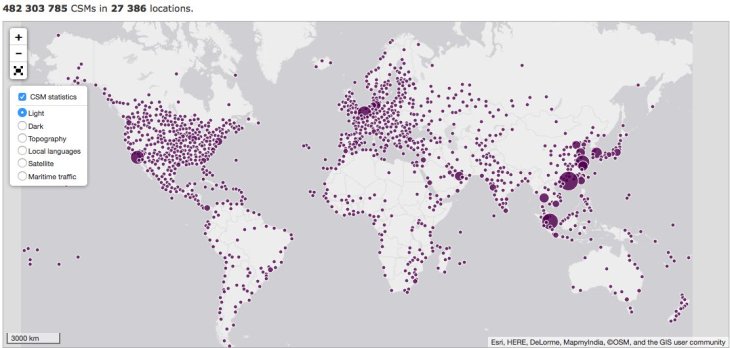
The financial gains from the avoidance of duties, taxes, rates and quantitative limits constitute an incentive to commit fraud and allow the capacity to properly investigate in cases, such as mis-declaration of the origin of imported goods. The information extracted from the CSM data can facilitate the investigation of some types of false origin-declarations. With the new legislation an importer will no longer be able to declare – without raising suspicions – country X as dispatch/origin of goods if these were transported in a cargo container that started in country Z (as indicated by the CSM data).

jrc-csm-dataset-world-map (1)The technologies, know-how and experience in handling CSM data, developed by the JRC through its experimental ConTraffic platform, will be used by OLAF to set up the system needed to implement this new legislation applicable as from 1 September 2016. The JRC will continue to analyse large datasets of CSM records (hundreds of millions per year) as these are expected to be made available through the new legislation and will continue to support not only this new regulation but to exploit the further uses of this data notably for security and safety and real-time operations. Its focus will be on data mining, new automated analysis techniques and domain-specific visual analytics methods. Source and Images: EU Commission

Devastation at Port of Tianjin

South African Air Cargo Security Systems receive International thumbs up!

Cargo Screening [www.aircargonews.net]

Cargo Screening [www.aircargonews.net]

Both the European Union (EU) as well as the United States’ Transport Security Administration (TSA) have approved South African air cargo security systems.

Poppy Khoza , The South African Civil Aviation Authority (SACAA) director, says, “The two affirmations place South Africa in a unique position, making the country the only one on the continent with such recognition and agreements in place.”

“This essentially means that, following audits by the European Union and the United States, South Africa is acknowledged as one of the countries where the level of aviation security is regarded as robust and reliable. This will benefit air carriers operating between South Africa and the two regions.”

In the case of the US, the TSA carries out yearly assessments of South Africa’s aviation security regime with the last audit conducted in June 2014.

The results of the audit indicate that South Africa did not attract any findings or observation and in some instances, the standards were found to be higher than in previous years.

“The TSA audit comes after almost a year since the SACAA and the TSA concluded a recognition agreement on air cargo security programmes, thus acknowledging that South African systems are on par with the stringent requirements of the USA.”

“This agreement also enhances air cargo security measures and initiatives between the two countries. Most significantly, the agreement enables quicker facilitation of goods between the two countries, and helps eradicate duplicative or redundant measures while still ensuring the highest levels of security that both the TSA and the SACAA require.”

The EU recognition means that South Africa has been included in the list of third countries where air carriers are exempted from the application of the ACC3 (Air cargo and mail carrier operation into the EU from a third country airport) regime of which the requirements are viewed as stringent to operators from countries outside the EU.

In terms of the ACC3 process, carriers wishing to carry cargo into the EU have to request an ACC3 status, and this process requires rigorous screening of air cargo or the existence of a properly functioning and secure air cargo system.

As from July this year, cargo operators flying to the EU destinations must therefore either hold a valid EU validation report, proving that they have adequate security measures in place, or in the absence of such assurance, cargo operators will have to use the services of EU validators to pronounce their cargo as secured.

“The services of EU validators are not free and come at a cost to air carriers, but it does acknowledge that security measures applied in South Africa and the EU are equivalent.”

“This recognition by the EU is a significant milestone for the country and South African carriers, as this means that they can now benefit from an exemption from the ACC3 regime, provided that the level of risk remains similarly low, commensurate with a robust oversight system being in place.”

Source: SAnews.gov.za

Thermal imaging technology for port security

Thermal imaging cameras produce high-quality video in challenging lighting conditions. [Picture: Pelco-Schneider Electric]

Thermal imaging cameras produce high-quality video in challenging lighting conditions. [Picture: Pelco-Schneider Electric]

Millions of tonnes of cargo and billions of Euros in goods value represent the activity of a small city with miles of perimeter fencing, uneven infrastructure, blind spots and ever-changing weather conditions. Port security is no small task yet increasingly, security operators are asked to assume more responsibilities with static, if not shrinking, budgets. As drivers of a global economy, the demands placed on port security continue to grow and with it, the challenges and complexity increase exponentially.

Unlike traditional retail, commercial, and many industrial applications, ports present unique security issues that must be anticipated and addressed. Typically, high security installations rely on a variety of solutions, including – and often heavily relying upon – video security and surveillance. The combination of legacy analogue and more modern IP-based video cameras, recording and video management systems, Physical Security Information Management (PSIM), analytics and more provide a digital extension of security personnel.

Once restricted to the military due to prohibitive cost, thermal imaging is an increasingly relied upon technology for an ever-growing array of security – as well as process and operations management applications. As price points have dropped, integration of thermal technology into today’s video security and surveillance camera systems has become more prevalent, providing a wealth of information and functionality previously unavailable.

Port security however is anything but typical. From miles of unguarded, unlit perimeters to ever-changing lighting and weather conditions, traditional video security has a difficult time providing the comprehensive intelligence demanded by such a high-security facility. For more details read the full article at Port Technology International, by clicking the hyperlink.

New CTU Code – IMO Approves Container Weight Verification Requirement

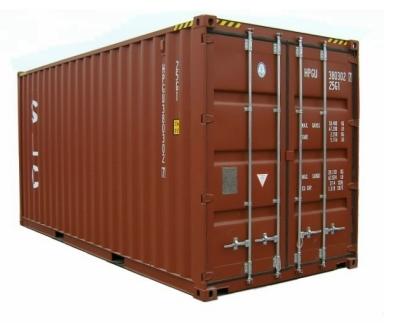
containerThe Maritime Safety Committee (MSC) of the IMO has approved changes to the Safety of Life at Sea (SOLAS) convention that will require verification of container weights as a condition for loading packed export containers aboard ships.

Misdeclared container weights have been a long-standing problem for the transportation industry and for governments as they present safety hazards for ships, their crews, and other cargo on board, workers in the port facilities handling containers, and on roads. Misdeclaration of container weights also gives rise to customs concerns. The approved changes to the convention will enter into force in July 2016 upon final adoption by the MSC in November 2014. In order to assist supply chain participants’ and SOLAS contracting governments’ implementation of the container weight verification requirement, MSC also issued a MSC Circular with implementation guidelines.

MSC also approved a new Code of Practice for the Packing of Cargo Transport Units (CTUs), including intermodal shipping containers. The new CTU Code, which will replace the current IMO/ILO/UNECE Guidelines for packing of CTU, has already been approved by the UNECE (United Nations Economic Commission for Europe) and will now go to the International Labour Organization (ILO) for approval. The CTU Code provides information and guidance to shippers, packers and other parties in the international supply chains for the safe packing, handling and transport of CTUs.

Of particular interest for regulatory authorities is Chapter 4 – “Chains of responsibility and information” which deals with the parties responsible for the provision of information and other security and regulatory requirements concerning containers as they are transported across the supply chain.

The World Shipping Council (WSC), whose members represent about 90 percent of global containership capacity, has been a leading advocate for the container weight verification requirements and has worked cooperatively with the IMO for over seven years to see them materialize. WSC has also participated in the group of experts that developed the new CTU Code.

“In taking these decisions, the IMO has demonstrated its continuing leadership in trying to ensure the safe transportation of cargo by the international shipping industry,” said WSC President & CEO, Chris Koch. “We congratulate the IMO Secretary General and the IMO member governments for developing and approving these measures that, when properly implemented and enforced, should provide for long-needed improvement to maritime safety. The SOLAS amendments and related implementation guidelines regarding container weight verification represent a collaborative effort that we were pleased to be a part of and we look forward to final adoption of the amendments in November 2014.”

The new CTU and supporting material can be accessed at the UNECE website here. Also See the World Shipping Councils webpage here for chronological information about the container weighing issue. Source: Maritime Executive

Protecting U.S.-Bound Container Cargoes

Securing US Cargo - Infographic by Journal of Commerce (Click to enlarge)

Securing US Cargo – Infographic by Journal of Commerce (Click to enlarge)

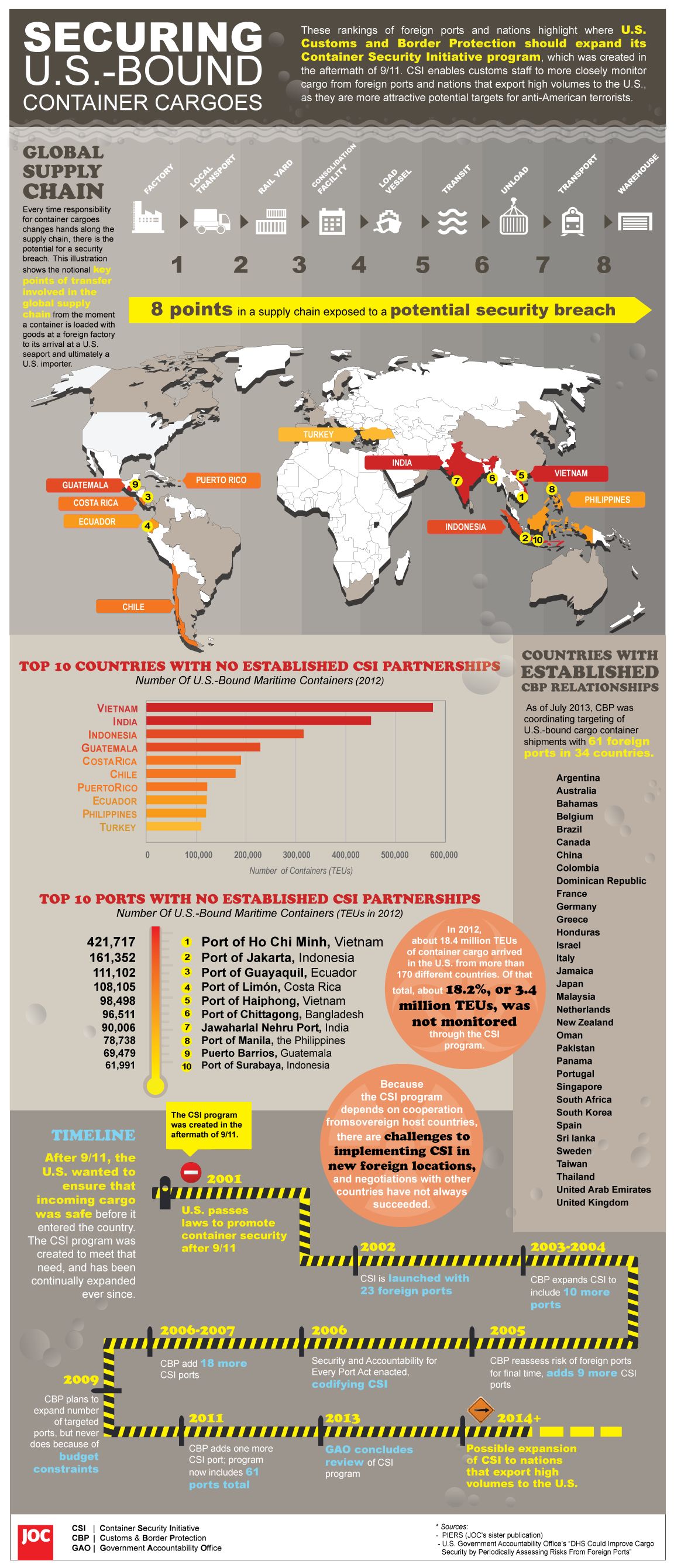
The Journal of Commerce provides a very useful infographic on the U.S. Customs and Border Protection’s efforts and initiatives in securing US – cargoes from foreign ports. While the Container Security Initiative (CSI) was one of the very first post 9/11 security initiatives it has since been supported by a number of other partnership programs involving other customs agencies and the US trade community. These have spawned many of the policies and guidelines being adopted by Customs agencies around the world where the WCO has ‘formulated’ and ‘standardised’ such requirements for broader international use, in conjunction with capacity building programs.

The U.S. Government Accountability Office has published a report, “DHS Could Improve Cargo Security by Periodically Assessing Risks From Foreign Ports,” recommending that U.S. Customs and Border Protection should continually update and expand its Container Security Initiative.

Since Sept. 11, 2001, CBP has taken steps to reduce vulnerabilities associated with U.S.-bound cargo container shipments by placing customs officials at foreign seaports to determine whether U.S.-bound shipments from those ports pose a risk of containing weapons of mass destruction or other terrorist contraband. While cargo from foreign ports and ships is critical to the U.S. economy, it can also be exploited by terrorists.

When CSI was launched in 2002, CBP initially selected 23 CSI ports largely on the basis of the volume of U.S.-bound container cargo, but it increased the number of risk factors in selected additional ports as it expanded the CSI program beginning in 2003. Through 2007, CBP added 35 ports to the CSI program based on additional criteria, such as strategic threat factors and diplomatic or political considerations. As of July 2013, CBP was coordinating targeting of U.S.-bound cargo container shipments with 61 foreign ports in 34 countries.

Cargo shipment data from PIERS, JOC’s sister publication, supports the GAO’s view that the U.S. needs to update and expand CSI in order to continue effectively monitoring incoming cargo. In particular, it appears the U.S. should form new CSI partnerships with Vietnam and India, which are the Top 2 exporters to the U.S. with no established CSI partnerships.

Although Vietnam is “relatively stable” in terms of its government, it is geographically close to Laos and Cambodia, and is therefore risky because of transshipment issues, according to Susan Kohn Ross, an attorney with Mitchell Silberberg & Knupp in Los Angeles. She also noted there has been a trend of manufacturers moving from China to Vietnam recently, as labor has become more expensive in China, resulting in more Vietnamese exports to the U.S.

Meanwhile, local uprisings in India recently have increased the country’s vulnerabilities to terrorist plans, despite the nation’s stable government, Ross said. India’s proximity to Pakistan also exposes it to terrorist groups, such as al-Qaida and the Taliban, and because Pakistan already has an established CSI partnership, terrorists might find it easier to smuggle cargo via India, she explained.

Conversely, if budgetary constraints ever force the CSI program to condense its monitoring, then CSI partnerships could perhaps be downgraded or eliminated entirely with the governments of Jamaica, Oman and Greece, which are the smallest exporters to the U.S. with established CSI connections, according to PIERS.

However, expanding and even contracting the CSI program present challenges. For example, CBP officials said in the GAO report that it is difficult to close CSI ports because removing the program from a country might negatively affect U.S. relations with the host government.

Furthermore, implementing a CSI partnership in a country exposes jurisdictional issues and regulatory differences, Ross said. For instance, the U.S. considers drugs to be a national security issue, but that’s not always the case in other countries, so prioritization of monitoring has to be worked out. Issues like which nation should pay for customs officers to be trained, or who should fix scanning equipment when it breaks, also must be resolved.

Ross further explained that it is “highly unlikely” that the federal government will ever expand CSI to cover 100 percent of all U.S. imports, an idea that CBP considered in 2009, but never implemented because of budget constraints. She said that scanning equipment is not advanced enough to expeditiously monitor all U.S.-bound cargo, and not all countries would even be willing to put CSI in place anyway.

Ultimately, nothing is foolproof, and if terrorists really wanted to wreak havoc on the U.S., they could probably more easily attack the U.S. through its borders, via Canada and Mexico, Ross said. However, CSI acts as an important deterrent, limiting the number of chances a terrorist has to harm to the U.S. Source: www.joc.com

CBP Agrees to Update Risk Assessments at Foreign Ports

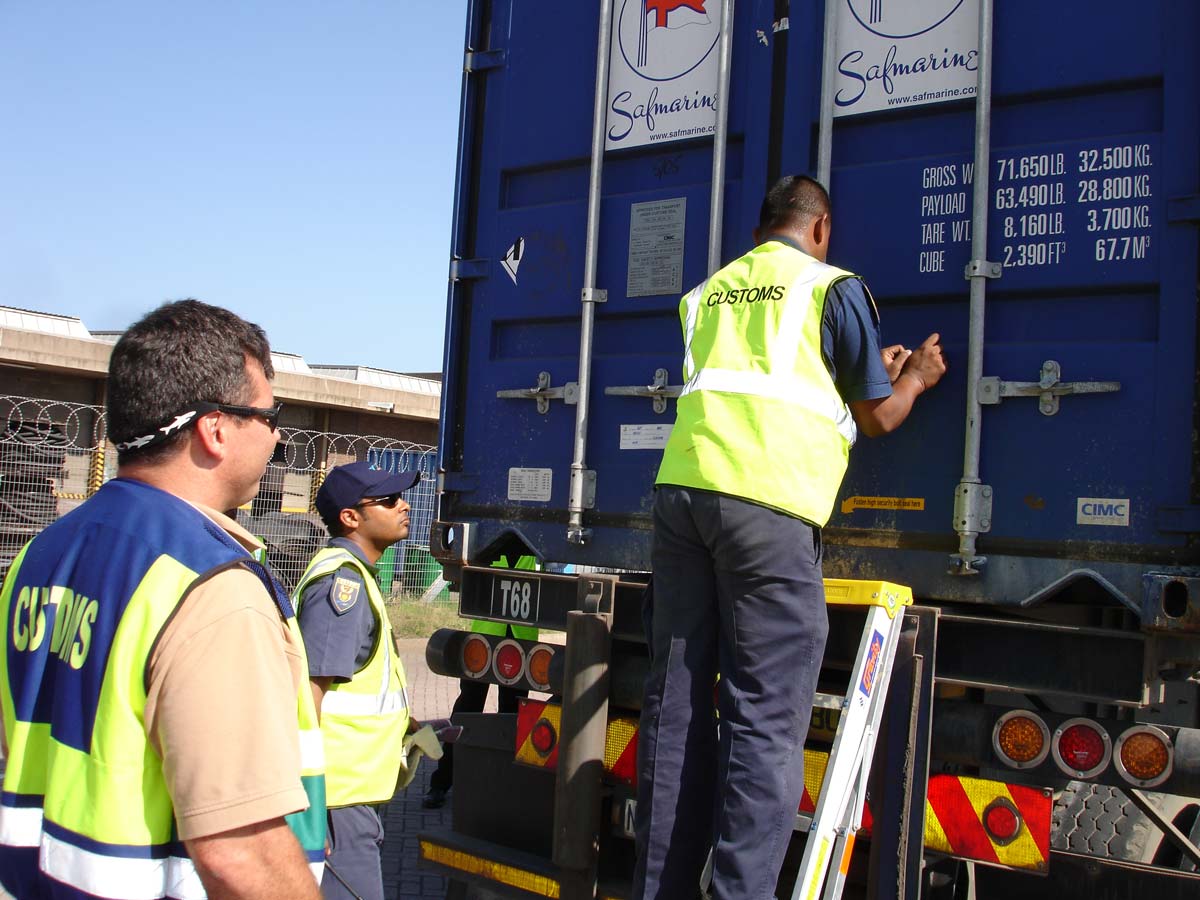
US Customs CSI Inspection in the Port of Durban, South Africa

US Customs CSI Inspection in the Port of Durban, South Africa

Customs and Border Protection (CBP) has not assessed risks at select foreign ports with U.S.-bound shipments since 2005, part of a string of failures that has left key ports without a CBP presence, the Government Accountability Office says. (Hmm, never mind the impact caused to Customs administration in the host countries……)

In examining CBP’s Container Security Initiative program, GAO found that the agency developed a model for ranking additional seaports according to risk in 2009, but never implemented it because of budget cuts, according to the report.

GAO applied that risk model to 2012 cargo shipment data and found that the CSI program had no presence at about half the ports CSP found high risk. Meanwhile, 20 percent of existing CSI program ports were at lower-risk locations, according to the findings (.pdf).

Although GAO acknowledged host countries are not always willing to accommodate a CSI presence, and that removal of a CSI presence can negatively affect diplomatic relations, auditors said periodic assessments of cargo shipped from foreign ports could help CBP better guard against terror-related shipments.

Although there have been no known incidents of cargo containers being used to transport WMD, the maritime supply chain remains vulnerable to attacks. We recognize that it may not be possible to include all of the higher-risk ports in CSI because CSI requires the cooperation of sovereign foreign governments.

To better ensure the effectiveness of the CSI program, GAO recommends that the Secretary of Homeland Security direct the Commissioner of U.S. Customs and Border Protection to periodically assess the supply chain security risks from all foreign ports that ship cargo to the United States and use the results of these risk assessments to (1) inform any future expansion of CSI to additional locations and (2) determine whether changes need to be made to existing CSI ports and make adjustments as appropriate and feasible.

Such assessments “would help ensure that CBP is allocating its resources to provide the greatest possible coverage of high-risk cargo to best mitigate the risk of importing weapons of mass destruction or other terrorist contraband into the United States through the maritime supply chain,” GAO said.

The Department of Homeland Security (DHS) concurred with the recommendation and said CBP would complete its first assessment by Aug. 12, 2014. To access or download the GAO Report on CSI, Click Here! Source: US Government Accounting Office

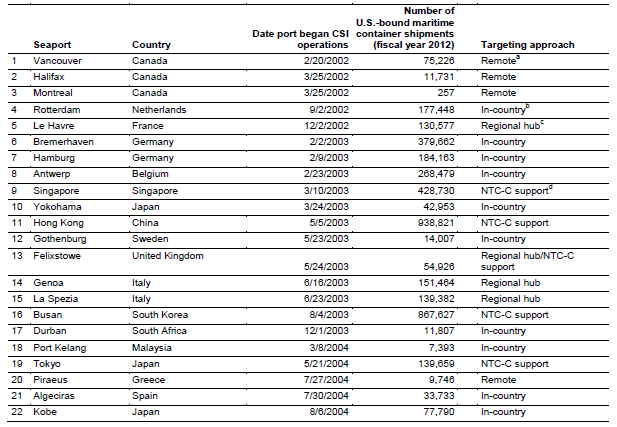
Foreign Ports That CBP Coordinates with Regarding Maritime Container Shipment Examinations, as of July 2013

Foreign Ports That CBP Coordinates with Regarding Maritime Container Shipment Examinations, as of July 2013 (Table: GAO)


A South African RFID/GPS cross-border logistics and customs solution

Inefficiency of road freight transport is one of the primary factors that hamper the economy of sub-Saharan Africa. Long delays experienced at border posts are the single biggest contributor towards the slow average movement of freight. Cross-border operations are complicated by the conflicting security objectives of customs and border authorities versus efficiency objectives of transport operators. It furthermore suffers from illegal practices involving truck drivers and border officials. In theory the efficiency of cross-border operations can be improved based on the availability of more accurate and complete information – the latter will be possible if different stakeholders can exchange data between currently isolated systems.

Cross-border trade basically comprises 3 distinct but interlinked layers –

An information layer – in which various trade documentation (purchase order, invoice), cargo and conveyance information (packing list, manifest), customs and government regulatory data (declaration, permits) are exchanged between various supply chain entities and the customs authority. These primarily attest to the legal ownership, contract of carriage, reporting and compliance with customs and other regulatory authority formalities (export and import), and delivery at destination.

A logistics layer – for the collection, consolidation, sealing and conveyance of physical cargo from point of despatch via at least two customs control points (export and import), to deconsolidation and delivery at point of destination.

A financial layer – which refers to the monetary exchange flow from buyer (importer) to seller (exporter) according to the terms and conditions of the sale (INCOTERMS). Hmm… no, this does not include ‘bribe’ money.

All three layers are inter-linked and prone to risk at any point of a given transaction. There is also no silver bullet solution to secure supply chains. Moreover, it is a fallacy that Customs and Border Agencies will ever conquer cross-border crime – simply because there are too many angles to monitor. Furthermore, in order to set up cross—border information exchange and joint enforcement operations it is both legally and politically time-consuming. Criminal elements are not hampered by these ‘institutions’, they simply spot the gaps and forge ahead.

One of the areas requiring customs attention is that of chain of custody. In short this implies the formal adoption of the World Customs Organisation’s SAFE Framework principles. Each party with data that needs to be filed with the government for Customs and security screening purposes has responsibilities. Those responsibilities include –

  • Protecting the physical goods from tampering, theft, and damage.
  • Providing appropriate information to government authorities in a timely and accurate manner for security screening purposes.
  • Protecting the information related to the goods from tampering and unauthorized access. This responsibility applies equally to times before, during and after having custody of the goods.

Tenacent RFID Tag

Tenacent RFID Tag

Security seals are an integral part of the chain of custody. The proper grade and application of the security seal is addressed below. Security seals should be inspected by the receiving party at each change of custody for a cargo-laden container. Inspecting a seal requires visual check for signs of tampering, comparison of the seal’s identification number with the cargo documentation, and noting the inspection in the appropriate documentation. More recently the emergence of certain e-seals and container security devices (CSDs) contribute even further to minimizing the amount of ‘physical’ verification required, as they are able to electronically notify the owner of the goods or government authority in the event of an incidence of tampering.

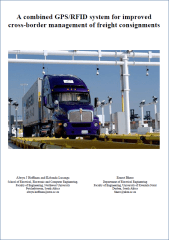
White Paper - GPS-RFID systems for cross-border management of freight consignments

White Paper – GPS-RFID systems for cross-border management of freight consignments

A group of South African specialist engineers have been working closely with transport authorities, logistics specialists, defense experts and customs authorities across the globe. Their e-seal is patented in no less than 16 high volume countries. It is produced in Singapore, China and Indonesia depending on politics, free-trade agreements and demand. May move some to Brazil and US in time. Proof of concept (POC) initiatives are currently underway in Brazil for rail cargo, US Marine Corps for their p-RFID program and other Department of Defense divisions in the USA, and will shortly be included in one of the GSA agreements making it available to any government department in the US. Further adrift, the e-seal is also currently enjoying interest in Guatemala, Mexico, Canada, Panama, Jordan, Italy, Spain, and Malaysia. Here, in South Africa, a POC was conducted at the 1st autogate at Durban Container Terminal, funded by the North West University, and overseen with successfully achieved objectives by Transnet Port Terminals. For technical details of the RFID seal, click here!

With much anticipated success abroad, how much support will this product attain in the local and sub-Saharan African scene? Government authorities, as well as logistics and supply chain operators are therefore encouraged to study the enclosed ‘white paper’ – Click Here!. It firstly quantifies the size of the problem and estimates the potential economic benefits that will be created by improved cross-border operations. It then proposes a combined GPS/RFID system that can provide the required level of visibility to support improved operational management, resulting in a simultaneous increase in the security and efficiency of cross-border freight operations. A brief cost-benefits analysis is performed to show that the expected benefits from such a system will by far exceed the costs of implementation. Source: Tenacent & iPico

CBP initiation date for liquidated damages for 10+2 non-compliance

isfU.S. Customs and Border Protection (CBP) has announced that on July 9, 2013, it will begin full enforcement of Importer Security Filing (ISF or 10+2), and will start issuing liquidated damages against ISF importers and carriers for ISF non-compliance.

According to the CBP release, “in order to achieve the most compliance with the least disruption to the trade and to domestic port operations, it has been applying a “measured and commonsense approach” to Importer Security Filing (ISF or 10+2) enforcement.

The Importer Security Filing (ISF) system—also referred to as the “10+2” data elements—requires both importers and carriers to transmit certain information to CBP regarding inbound ocean cargo 24 hours prior to lading that cargo at foreign ports. These rules are intended to satisfy certain requirements under the Security Accountability for Every (SAFE) Port Act of 2006 and the Trade Act of 2002, as amended by the Maritime Transportation Security Act of 2002.

Under the ISF, the following 10 data elements are required from the importer:

  1. Manufacturer (or supplier) name and address
  2. Seller (or owner) name and address
  3. Buyer (or owner) name and address
  4. Ship-to name and address
  5. Container stuffing location
  6. Consolidator (stuffer) name and address
  7. Importer of record number/foreign trade zone applicant identification number
  8. Consignee number(s)
  9. Country of origin
  10. Commodity Harmonized Tariff Schedule number

From the carrier, 2 data elements are required:

  1. Vessel stow plan
  2. Container status messages

Source: CBP.gov

What’s In Store for ACE?

ACE_image_csonLast week, the National Customs Brokers & Forwarders Association of America, Inc. (NCBFAA) hosted a conference in Baltimore, MD targeting software developers interested in obtaining more information about US Customs and Border Protection’s (CBP’s) Automated Commercial Environment (ACE) and upcoming technical changes related to the PGA Message Set, Entry Summary Edits, Automated Corrections/Cancellations and AES Re-Engineering/Manifest Baseline development. During the conference, CBP made two important announcements which were heard and noted first hand from an Integration Point representative. These two announcements included:

  • CBP announced that it plans to mandate the use of manifest and cargo release in ACE by December 31, 2015 and mandate the use of ACE by December 31, 2016. CBP also provided a tentative release schedule for seven deployments that will lead up to this mandate.  Each deployment will consist of one or two increments, and each increment will span over a period of twelve to thirteen weeks. On this road map, CBP announced some exciting functionalities to be released in the near future such as automated cancellation and/or correction of entries, integration of simplified entry with other modes of transport and certifying simplified entry through summary. In addition to the enhanced simplified entry process, CBP also gradually plans to include the validations that were not initially included in ACE entry summaries.
  • CBP is also working on the reengineering of AES and pilot programs of entry data collection for various Participating Government Agencies such as the US Environmental Protection Agency (EPA) and US Food Safety and Inspection Service (FSIS) and CBP plans to deploy this later on in 2013 and early in 2014.

Now there is relevance in all of this. It reinforces the growing importance of Customs’ focus on “cargo management”.  Far too much emphasis is placed on the goods declaration alone. This is not only short-sighted but demonstrates an ignorance of the global supply chain. Without the ‘cargo report’ (manifest) the goods declaration is little more than a testament of what is purported to have been imported and exported.

X-Ray Scanners – WTO panel rules on EU-China dumping row

Nuctech Fast Scan Vehicle and Container inspection system

Nuctech Fast Scan Vehicle and Container inspection system

Part of the problem here is that the Chinese have a significant market share in this type of equipment. In a short period of 10 years they have outstripped some of the more fancied American and European players in this business. While the dispute in question raises ‘ethical’ questions of the Chinese, it does seem to be a matter of sour grapes.

China’s anti-dumping duties on imports of x-ray security scanners from the EU violated global trade rules, according to a WTO panel ruling that was issued yesterday. [WTO Dispute Settlement, DS425]

Brussels brought the dispute in July 2011 after Beijing imposed duties ranging from 33.5 to 71.8 percent on the x-ray scanners. (See Bridges Weekly, 25 January 2012) The EU exports approximately €70 million of these scanners to China annually.

China imposed the duties after the EU had applied anti-dumping duties on Chinese cargo scanners one year earlier, which some viewed at the time as a “tit-for-tat” move.

The panel report primarily focused on procedural issues in Beijing’s investigation, specifically regarding how China calculated the anti-dumping margin, loosely defined as the difference between the price – or cost – in the foreign market and the price in the importing domestic market.

Beijing included more expensive “high-energy” scanners – which do not “look remotely like” the cheaper scanners, according to the panel report – in calculating the average domestic price, even though only cheaper “low-energy” scanners were exported. The panel found that this price comparison was “not consistent with an objective examination of positive evidence” required under WTO rules.

The panel also found that Beijing did not comply with certain due process and transparency requirements before imposing the duties.

The panel did not rule with the EU on all points, however, noting that Brussels had not established that Beijing had acted inconsistently in certain other procedural matters.

“I expect China to remove the measures immediately,” EU Trade Commissioner Karel De Gucht said on Tuesday in response to the panel ruling. “I will not accept tit-for-tat retaliation against European companies through the misuse of trade defence instruments.”

Under WTO rules, both sides have 60 days to appeal the ruling. In a statement, China’s Ministry of Commerce indicated that they would make a serious assessment of the case and reserved the right to appeal.

Building Resilience in Supply Chains

WEF - Building Resilience in Supply ChainsOn 24 January 2013, the Secretary General of the WCO, Kunio Mikuriya, participated in a press conference dedicated to the launch of the World Economic Forum’s (WEF) Building Resilience in Supply Chains 2013 report. Sander van ‘t Noordende, Accenture’s Group Chief Executive for Management Consulting, introduced the report and its major findings, such as the top supply chain risks that include extreme weather, natural disasters, physical and cyber security threats, along with economic and political volatility. He highlighted that the report argued the need for a coherent and consistent framework to deal with supply chain resilience, partnerships between government, Customs and businesses, and the sharing information flows for risk assessment purposes.

Secretary General Mikuriya pointed out that supply chain resilience is very important for Customs, whose functions include ensuring that legitimate trade continues even in cases of disruption, an issue which has been addressed by a set of standards and instruments developed by the WCO, in particular, the 2011 WCO Resolution on the Role of Customs in Natural Disaster Relief.  He also stressed the importance of public-private partnerships in order to share security responsibility with trusted traders through the implementation of the WCO SAFE Framework of Standards to Secure and Facilitate Global Trade and its integral Authorized Economic Operator (AEO) programme.

Cooperation at intergovernmental level with longstanding partners of the WCO, such as the International Maritime Organization (IMO), the International Civil Aviation Organization (ICAO), the Universal Postal Union (UPU), the International Air Transport Association (IATA), the International Road Transport Union (IRU) and the World Shipping Council (WSC), was also emphasized by the Secretary General as being key to harmonizing standards and creating synergies among different stakeholders. In addition, he pointed out that transparency and trust among stakeholders in supply chains was of the utmost importance, as this led to a global cohesive approach and even stronger partnerships.

The Secretary General of the IMO, Koji Sekimizu, addressed the concerns of the maritime sector, in particular, the sustainability of international transportation within the context of supply chain resilience. He mentioned that along with the WCO, the IMO has built its approach on risk assessment and risk management, resulting in the adoption of the International Ship and Port Facility Security Code (ISPS Code), a comprehensive set of measures to enhance the security of ships and port facilities. He also touched on the issues of port infrastructure, piracy and port security, and underlined the importance of cooperation with other stakeholders, such as the WCO and ICAO. Source: WCO

Bribery along the corridor

Notwithstanding efforts to minimize collusion, bribery and corruption through increased use of technology, the underlying fact remains that human intervention cannot be completely removed from nodes within the supply chain.Identifying the causes and parties involved in such activity is only the start (yet minuscule) aspect of a problem entrenched in the distrust of government officials and border authorities in particular. Integrity is based on trust. If trust is the placement of hordes of incompetence in public jobs to secure votes, then you will not need to look very far to understand that “the bribe” epitomizes the ultimate enterprise of individuals either bent on extortion, or to avail their services (like prostitutes  to the crooked trader. The following article “Bribery as a non-tariff barrier to trade” (click hyperlink to download) takes account of a wide-spread of role players as to their views and attitudes on the matter. In my view it is a template for what actually occurs at every border across the continent. 

Transparency International (Kenya) and Trade Mark (East Africa) have collaborated in the publication of a review on the subject of bribery in the EAC region. The executive summary elucidates the context – 

The East African Common Market Protocol that came into force in 2010 provides for the free flow of goods, labour, services and capital across the EAC bloc. To achieve this, members undertook to remove all tariff and non-tariff barriers to trade. While progress has been made on the removal of the former, doing away with the Non-tariff barriers along the main transport corridors of the region has remained a challenge.

Taking cognizance of this, Transparency International-Kenya, Uganda, Rwanda and Burundi in conjunction with the Transparency Forum in Tanzania conducted a survey along EAC‘s main corridors — the Northern and Central corridors- that form a vital trade link in the region between August and November 2011. The survey objectives were to measure the impact of bribery practices and create public awareness on the vice.

In determining the size of bribe payable, negotiations came top. The value of consignment and the urgency were some of the other factors sighted by the respondents. According to the survey, truck drivers have devised various means of accounting for bribery expenses to their employers. The most common is road trip expense’. These are anticipated regular amounts given prior to the start of a journey and ad hoc miscellaneous expenses. In the transporters’ books of accounts, the bribes are normally disguised either as anticipated regular amounts or as ad hoc miscellaneous expenses. Source: Transparency International and Trade Mark

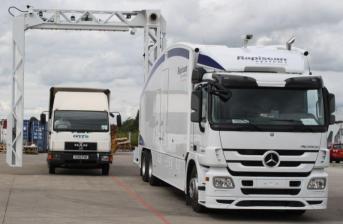
The Case for Screening-as-a-Service

In an interview with The Maritime Executive, Peter Kant, executive vice president for Rapiscan Systems informed that the primary business of a port is serving as a hub for water-borne commerce and all of the logistics that entails, with each port competing for the business of shippers and container operators. Every investment made by a port authority, from a crane to a dredge to a security checkpoint, must be based on how this activity will not only position the port to current customers, but how it will affect the attraction of future customers.

Increasingly, however, these investments are including more and more security needs, from container scanning equipment to operator training to security architectures. Security, and in particular security screening, is not the core business of a ports authority, but compliance with national and international guidelines demands that certain security standards be met, or losing customers will be the last of a port authority’s worries.

But even though security screening is an absolute necessity, many ports are looking to get out of the security game altogether. But will the departure from security make ports less secure…or could it actually enhance cargo scanning operations?

The Heavy Burden of Screening
As mentioned earlier, port authorities are not experts when it comes to security, especially a task as granular as cargo screening. It’s not just about a “mean guard and a magnet” when it comes to screening anymore, and this especially holds true to the world of maritime cargo. First, the right technology must be installed, a solution that can effectively analyze cargo for potential contraband or threats, both conventional and radioactive. Then, a port authority must determine the best location for the screening checkpoint, and oversee the construction of the location, both in terms of port impact and traffic optimization.

Next come the installation and calibration of the scanning technology, as well as the hiring and training of security operators. The authority must also establish a workflow for what happens when a container is flagged – what requires a manual inspection? Who approves such an operation? What remediation must take place after the fact?

The fact of the matter is, cargo scanning isn’t just about putting containers through an X-ray machine. It’s much, much more than that, and consumes enough time that establishing and running a checkpoint can adversely affect port business.

But there is an easier way to run cargo screening operations. Port authorities are experts in maritime commerce, so why shouldn’t they turn to experts in security screening to run cargo scanning operations?

Cargo Scanning-as-a-Service
Rather than trying to become cargo screening experts overnight, port authorities can take advantage of a major trend in the overall security world: security-screening-as-a-service. Essentially, port operators form a partnership with an experienced security screening solutions provider, tasking the provider, not the port, with the onus of establishing and running a cargo scanning checkpoint.

Other than the obvious benefit of freeing the port authority from the security logistics headache, why turn to cargo screening as a service? For one, 100 percent screening in the United States has not gone away…at least not yet. But even if the requirements on cargo entering the USA are loosened, port screening for contraband is not going to decrease – in this economic climate, governments want to ensure that everything that can be taxed is taxed. This is a nightmare scenario for port authorities to deal with, but one with which screening solutions provider are comfortable. With their experience in the field, these providers can find the right equipment and checkpoint set-up to be as thorough and detailed as needed when it comes to cargo scanning, ensuring that not only are potential threats detected, but any contraband can be swiftly dealt with by the appropriate authorities.

Going with an experienced screening partner can also add radiation detection capabilities, a growing problem in the world of maritime commerce. Radioactive materials, either improperly labeled or being shipped as contraband, can shut ports down for days and are impossible to detect via conventional cargo screening technologies. By utilizing screening-as-a-service, however, port authorities can place this additional burden on the solutions provider, which has the experience and the right capabilities to detect radiation alongside conventional contraband and threats.

Training of security operators is another headache that cargo scanning as a service eliminates for the port. The difference between a major international incident and millions of dollars in fines can hinge entirely on the competency of a security screening operator. Do port authorities really want to be responsible for the skills of these professionals, especially when it’s in a field far outside of their comfort zones?

With cargo scanning as a service, training falls into the lap of the solutions provider, a task with which they are well familiar. Because they have built, installed and maintained the security technologies selected, these organizations best understand how to train professionals on the ins-and-outs of analyzing scanned images and detecting potential threats and contraband.

The service also gives ports a major competitive advantage, as a well-designed, specially-staff cargo scanning checkpoint makes the entire security process far easier for customers to deal with. Throughput is often increased, meaning that cargo makes it to its end destination more quickly and with fewer roadblocks, a paramount concern for shippers everywhere. Even a few hours delay can be costly, especially when perishable goods like imported produce are involved.

The Real World
Perhaps most importantly, cargo-scanning-as-a-service is not a pipe dream or some theoretical solution for ports. It’s already in practice and being used by some of the largest customs and port operations in the world.

The Ports Authority of Puerto Rico, for example, utilizes cargo-screening-as-a-service from a customs perspective, ensuring that no contraband is entering the island through its major ports. By enlisting an outside, specialized security solutions provider, the Port has increased throughput without sacrificing the integrity of its customs or security operations.

The Mexican Customs Authority has also turned to a wide-ranging cargo-screening-as-a-service solution for their operations, both land-locked and maritime. The major project has just recently been undertaken, but ultimately the vast majority of Mexican ports will soon be turning to screening-as-a-service when it comes to cargo, freeing the ports to focus on the business, not contraband detection.

Detecting threats and contraband via maritime cargo is not going to get any easier. If anything, smugglers, criminals and terrorist organizations are becoming more and more clever when it comes to getting illicit goods, weapons and hazardous materials across national borders. Port authorities trying to stay one step ahead of these issues are in for a struggle, as other aspects of the port business suffer.

Keep the port operator’s attention where it belongs (on the port) and let specialized experts handle the cargo scanning burden. It’s proven, it works, and it’s the best way forward to maritime prosperity and safety. Source: The Maritime Executive