Business Guide for Developing Countries – WTO Trade Facilitation Agreement

Picture2The International Trade Centre has prepared a guide to help businesses take advantage of the WTO Trade Facilitation Agreement. The agreement simplifies customs procedures, allowing businesses to become more competitive. This jargon-free guide explains the provisions with a focus on what businesses need to know to take advantage of the agreement. It will also help policy makers identify their needs for technical assistance to implement and monitor it. To download the guide – click the following link: http://www.intracen.org/wto-trade-facilitation-agreement-business-guide-for-developing-countries/.

For instance, the guide explains how the article on ‘Advance rulings’ aims to address problems with inconsistent classification of goods by customs officials and the uncertainty it creates for traders. ‘Advance rulings are binding decisions by customs…on the classification and origin of the goods in preparation for importation or exportation. Advance rulings facilitate the declaration and consequently the release and clearance process, as the classification has already been determined in the advance ruling and is binding to all customs officers for a period of time,’ the guide explains. It goes on to list in jargon-free language the obligations and the procedure imposed on customs authorities related to advance rulings.

Reducing the on-the-spot decision making authority of individual customs agents thanks to advance rulings will also reduce bribery, the guide says. Corruption continues to be a key problem for developing-country exporters, who identified it as a major constraint on exports in a recent survey conducted by ITC.

The last chapter of the guide describes how the agreement will be implemented, including the special and differential treatment provisions that developing countries may invoke. Developing countries will be able to link the implementation of the commitments to technical assistance and support from donors. WTO member states will have to explicitly apply for delays for each commitment, which will need to be approved by the WTO and the implementation schedule published.

Source: International Trade Centre

What is the value of a slick customs service?

Cahir Castle Portcullis by Kevin King

Cahir Castle Portcullis by Kevin King

The traditional symbol of customs and borders services is the portcullis – the fortification through which a ship used to enter a port. But as developing countries are increasingly asked to recognise the benefits of liberalised trade to the detriment of their import duty revenue, how can they be helped to raise the portcullis? And is it really in their interests to do so?

With world trade growth expanding more than twice as rapidly as gross domestic product (GDP) over the past decade, says Steve Brady, director, Customs and Trade Facilitation for development consultancy Crown Agents, the potential rewards from participating in world trade are significant. “According to figures from WTO, in 2011 world merchandise exports and imports in real terms grew by over 5%. As a result, each reached over $1.8tn, the highest level in history.”

The major players working with developing country governments to help them benefit from this increase in trade include the World Bank, ICC, World Customs Organisation (WCO), IMF, UN Conference on Trade and Development (Unctad), development banks and specialist intermediaries such as Crown Agents.

A number of countries have improved their capacity as a result of international and domestic efforts, yet some are still hesitant to do so. The Centre for Customs and Excise Studies (CCES) at the University of Canberra finds that many developing country governments are heavily dependent on the revenue from import duties – in some cases this can be as high as 70% of a country’s total revenue base. The desire to protect this is understandably strong. Yet this same desire can be used to drive forward modernisation efforts, explains Professor David Widdowson, CEO of CCES. “Revenue leakage resulting from commercial fraud, poor customs and border procedures and corruption represents a major impediment to poverty reduction.”

Similarly time-consuming manual processing systems, over-regulation, or outright corruption, will discourage trade and investment and further undermine a country’s development. “In the worst cases up to 20 signatures are required to obtain customs clearance of goods, all of which require ‘informal payments’,” says Widdowson. “I have also seen examples of 15 different government agencies playing some role at the border, all acting independently.”

Guidelines or blueprints to modernise such customs and borders processes are available, for example, via the revised Kyoto convention (extolling the basic principles of automation, simplification, responsiveness to the regulation, consistency and co-ordination); the “Framework of standards to secure and facilitate global trade” developed by the WCO; and its “Columbus programme.”

Turkey is cited by Sandeep Raj Jain, economic affairs officer at the United Nations Economic and Social Commission for Asia and the Pacific (Escap), as a case study for the successful modernisation of customs systems, having consolidated 18 previously autonomous border gates and introduced a single IT clearance system, leading to an increase in tax revenues and a decrease in clearance time to the benefit of incoming and outgoing trade. Angola increased receipts sixteen-fold from $215.45m in 2000 (£148m) to $3,352m in 2011 through an improved National Customs Service and the introduction of an automated entry processing system and customs clearance Single Administrative Document.

The African Development Bank also supported post-conflict Liberia with the extension of an automated system for customs data, helping to reduce the time to clear goods at the port from 60 days to less than 10 days and increase revenue collection at three ports from about $4m a month to $10m-$12m. This, Ellen Johnson Sirleaf, president of Liberia has said, given the government additional scarce revenues to invest in the projects to improve the livelihoods of people.

Horror stories also abound of revenue loss, acting as a cautionary tale for leaving outdated customs processes untouched. A World Bank report, for example, finds that in Algeria smuggling caused a loss to the public exchequer rising from DA18bn in 2006 ($237m) to over DA61bn in 2011.

The message from the international community is that improved, automated and transparent customs services not only help eradicate theft and corruption, but also increase revenue through increased trade. Any fall in revenue from import tariffs due to signing up to bilateral free trade agreements can also be offset, says Bijal Tanna of Ernst & Young LLP: “One only has to look at the take-up of VAT by countries since the 1980s to understand that there is a consumer tax outlet to offset any loss of revenue from customs duty reductions. Back in the late 1980s, approximately 50 countries had VAT, now it is in place in over 150 countries.”

However, these arguments don’t always reach an appreciative audience. “In my experience”, says Widdowson, “economies may give lip service to the trade facilitation agenda, including entering into free trade agreements, but still expect their customs administration to collect traditional levels of duty. For example, with the introduction of free trade arrangements – hence falling duty rates – and a downturn in international trade, the Philippines continues to increase the ‘revenue targets’ of its bureau of customs, the derivation of which appears to be devoid of any analytical rigour.” (emphasis – mine)

Tanna also points to the collapse of the Doha round of the WTO negotiations heralding a breakdown in efforts to find a single global platform to drive a uniform approach to trade liberalisation. Perhaps it is the obligation of the international community to renew such efforts, alongside projects to improve customs systems in-country. Source: Original article by Tim Smedley of The Guardian
Parliament Postpones Customs Bills

Thaba Mufamadi, chairman of Parliament’s finance committee. Picture - Financial Mail

Thaba Mufamadi, chairman of Parliament’s finance committee. Picture – Financial Mail

Parliment’s standing committee on finance (SCoF) has decided to postpone its deliberations on two draft customs-related bills until next year to allow importers and the freight-forwarding industry more time to comment on the proposals which threaten the status of City Deep as an inland port. This followed an appeal by the South African Association of Freight Forwarders that it had had insufficient time to consider the substantially revised draft Customs Control Bill and Customs Duty Bill, which required that imported goods would have to be cleared at the first point of entry.

The association, supported by a range of other business organisations, including the Johannesburg Chamber of Commerce and Industry, warned that the bills could be challenged on constitutional grounds if the process of consultation was deficient. All political parties supported the proposal by finance committee chairman Thaba Mufamadi on Wednesday that the deliberations on the bills be postponed until next year. He instructed stakeholders to make their submissions to the South African Revenue Service (SARS) by December 15.

Mr Mufamadi also took cognisance of concerns raised by Business Unity South Africa that parliamentary processes did not allow sufficient time to comment, for example, on the medium-term budget policy statement. Industry has warned of port delays and trade disruption if the proposals were to be adopted. The Customs Control Bill proposes that goods be cleared at the first port of entry into South Africa. This will mean that inland ports such as City Deep in Johannesburg would no longer be designated places of entry or exit for customs purposes. In the past, containerised cargo could move directly to inland ports on arrival in the country under cover of a manifest. A new declaration — of the nature, value, origin and duty payable on the goods — would replace the manifests.

SARS said these did not provide sufficient information to undertake a risk assessment. Another bone of contention for industry was the “extremely severe” penalties proposed in the draft Customs Duty Bill. Following the uproar about the proposals SARS offered a compromise earlier this week as a way out of the impasse. Instead of a clearance at the port of entry, a mandatory advance customs clearance of the goods three days before their arrival at the first port of entry would be required. Goods consigned to inland terminals such as City Deep would be released conditionally. The system would be tested for the whole of next year to iron out any problems.

An alternative option would be for the goods to undergo a lesser form of clearance at the first point of entry. This would still entail providing customs authorities with the same level of information on the tariff, value and origin of goods, which would be submitted by electronic data interchange. The importer would be held accountable for the information that was provided. SARS official Kosie Louw said that because this document would not have the formal status of a clearance certificate, it would not disrupt existing legal contractual arrangements, as claimed. The goods would still move CIF (cost insurance and freight) from the port to City Deep. SARS has also proposed softening the penalty provisions so that errors not resulting in any prejudice to customs revenue will be subject to penalties only after three warnings. These penalties will be discretionary and applied leniently in the first 12 months of the bill coming into force to allow business time to properly prepare for the change. An appeal process has been included. Source: Business Day Live. 

City Deep Inland Terminal [port] to be hit hard by Customs Bill

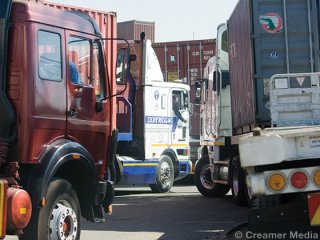
Trucks at Transnet Freight Rail's City Deep Terminal (Engineering News)

Trucks at Transnet Freight Rail’s City Deep Terminal (Engineering News)

Following up on last year’s meeting (click here!) of the minds, convened by the JCCI, a recent meeting in Johannesburg placed fresh emphasis on the dilemma which impending changes contemplated in Customs Draft Control Bill will have for the import and logistics industry in particular. The following report carried by Engineering News highlights trade’s concerns which are by no means light weight and should be addressed with some consideration before the Bills come into effect. Gauging from the content below, there is a clear disconnect between business and policy makers.

The closure of Johannesburg’s inland port seemed to be a “done deal” as Parliament deliberated the recently tabled Customs Control Bill that would leave the City Deep container depot invalid, Chamber of Commerce and Industry Johannesburg (JCCI) former president Patrick Corbin said on Friday.

The promulgation of the South African Revenue Services’ (Sars’) newly drafted Customs Control Bill, which, in conjunction with the Customs Duty Bill, would replace the current legislation governing customs operations, would have a far-reaching impact on the cost and efficiencies of doing business in South Africa and other fellow Southern African Customs Union (Sacu) countries, he added.

The Bill, which was the product of a three-year development process within the National Economic Development and Labour Council, declared that all imported goods be cleared and released at first port of entry. This was part of efforts by customs officials and government to root out any diversion and smuggling of goods, ensure greater control of goods moving across borders and eliminate risks to national security.

Speaking at the City Deep Forum, held at the JCCI’s offices in Johannesburg, Corbin noted, however, that City Deep had operated as an inland port for the past 35 years, easing the load on the country’s coastal ports, which were already strained to capacity. Despite customs officials assuring the chamber that the operations and facilities in City Deep/Kaserne would retain its licence as a container depot, he believed customs had failed to recognise the critical role City Deep had played in lowering the cost of business, easing the burden on South Africa’s ports and ensuring ease of movement of goods to neighbouring countries. As customs moved full responsibility of container clearances to the ports, port congestion, inefficiencies, shipping delays and costs would rise, and jobs would be lost and import rail volumes decreased, he noted.

Economist Mike Schussler added that the closure of the City Deep inland port operations would add costs, increase unreliability and induce “hassles”, as the Durban port did not have the capacity to handle the extra volumes and its productivity and efficiencies were “questionable” compared with other ports.

“The volume of containers going to overstay or being stopped for examination in City Deep [will] need to be handled by [the coastal] ports. If they can’t cope with the volume at the moment, how are they going to handle increased volumes,” Iprop director Dennis Trotter questioned. He noted that only the containers cleared 72 hours prior to arrival would be allocated to rail transport. Those not cleared three days before arrival would be pushed onto road transport to prevent blocking and delaying rail operations.

This, Schussler said, would also contribute – along with port tariffs and the cost of delays – to higher costs, as road transport was more expensive than rail.

He pointed out that South Africa was deemed third-highest globally in terms of transport pricing. It would also result in less rail capacity returning for export from Johannesburg, further leading to increased volumes moving by road from City Deep to Durban.

Sacu countries, such as Botswana, would also be burdened with higher costs as they relied on City Deep as an inland port. Trotter noted that the region would experience loss of revenue and resultant job losses. Over 50% of South Africa’s economy was located closer to Gauteng than the coastal ports. Johannesburg alone accounted for 34% of the economy, said Schussler, questioning the viability of removing the option of City Deep as a dry port.

However, unfazed by the impending regulations, Transnet continued to inject over R1-billion into expansion and development opportunities at City Deep/Kaserne. Corbin commented that Transnet had accepted the assurances from customs that “nothing would change and the boxes would still be able to move seamlessly once cleared.” The City of Johannesburg’s manager of transport planning Daisy Dwango said the State-owned freight group was ramping up to meet forecast demand of the City Deep/Kaserne depot.

The terminal’s capacity would be increased from the current 280 000 twenty-foot equivalent units (TEUs) a year, to 400 000 TEUs a year by 2016, increasing to 700 000 TEUs a year by 2019. Transnet aimed to eventually move to “overcapacity” of up to 1.2-million TEUs a year. Dwango said projections have indicated that by 2021, the City Deep/Kaserne terminals would handle between 900 000 and one-million TEUs a year. Source: Engineering News

AU considers continental Customs Connectivity

500px-Emblem_of_the_African_Union_svgThe African Union (AU) Technical Working Group on Interconnectivity has developed a ‘draft’ Strategy and Roadmap for Customs-2-Customs IT Connectivity on the continent. This strategy will effectively guide the process of the continental Interconnectivity of Computerized Customs Clearance and Information Systems in Africa. The ‘draft’ Roadmap envisages that the process of interconnectivity will take a period of 11 years with a total of four stages.

Stage 1 – by 2014, National states should have engaged one another (within their respective regions) on the matter of Customs connectivity.

Stage 2 – between 2013 and 2017, the AU has an extremely ambitious expectation that national Customs Administrations would have (at least commenced) if not completed Customs ‘connectivity’ within the various Regional Economic Communities (RECs) in Africa.

Stage 3 – between 2017 and 2020, the suggestion that Customs interconnectivity will be occurring between RECs across the African continent – North Africa: AMU; West Africa: ECOWAS and UEMOA; Central Africa: ECCAS and CEMAC; East Africa: COMESA, EAC, IGAD; and South Africa: SADC and SACU.

Stage 4 – between 2020 and 2025, consolidation of Customs IT-Connectivity across the RECs.

The ‘draft’ Strategy spells out the strategic objectives and activities at the national, regional and continental level that will need to be taken for this to be realized. The strategy also indicates the roles of all the major stake holders in the process.  This comes in the wake of several regional and bi-lateral initiatives to bridge the ‘cross-border divide’ through electronic exchange of structured customs information.

All in all an ambitious plan structured to meet the equally ambitious deadlines of the coming into being of an African Union. The real challenge in all of this lies with the Member States in being able to set aside and commit to regional and continental ambitions, over and above the already pressing and complex national agenda’s of their respective sovereign countries. In context of the African Union, the multiplicity of RECs in themselves add a layer of duplication…..is an “integrated Customs Union” in Africa going to continue to permit the existence of the respective RECs or will they be absorbed into the African Union? Member states need to begin speaking up on this issue otherwise accept being swamped by onerous commitments. No doubt the ‘international donor agencies’ wait eagerly in the wings to capitalise on Africa’s deficiencies.

2012 in review

The WordPress.com stats helper monkeys prepared a 2012 annual report for “What Happened to the Portcullis?“. A special thanks to everyone who has browsed regularly, commented or contributed to this blog. I am deeply grateful and appreciative! Mike

Here’s an excerpt:

4,329 films were submitted to the 2012 Cannes Film Festival. This blog had 52,000 views in 2012. If each view were a film, this blog would power 12 Film Festivals

Click here to see the complete report.

Swaziland accedes to the WCO RKC

Swaziland accedes to WCO RKC

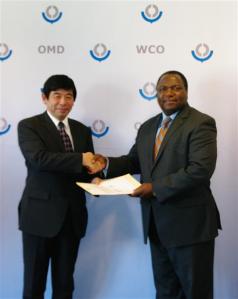
The Ambassador of the Kingdom of Swaziland, H.E. Joel Nhleko, deposited his country’s instrument of accession to the International Convention on the Simplification and Harmonization of Customs Procedures (Revised Kyoto Convention) with the World Customs Organization on 31 October 2012.

“The WCO is delighted that the number of Contracting Parties to the Revised Kyoto Convention continues to show an upward trend,” said WCO Secretary General, Kunio Mikuriya. “I would therefore strongly encourage other WCO Members to accede to this important Customs instrument as soon as possible,” he added.

Some of the Convention’s key elements include the application of simplified Customs procedures in a predictable and transparent environment, the maximum use of information technology, the utilization of risk management, a strong partnership with the trade and other stakeholders, and a readily accessible system of appeals.

Having entered into force on 3 February 2006, the Revised Kyoto Convention now has 84 Contracting Parties, and is regarded as a blueprint for effective and modern Customs procedures. Swaziland has been a Member of the WCO since 15 May 1981. Source: WCO

SADC Member States driving the Customs regional integration agenda

Delegates from the SADC member states gathered in Port Louis, Mauritius between 9 and 13 October to establish a SADC Customs ICT strategy for the region. The conference, sponsored by the United Nations Economic Commission for Africa, coincided with the 200th anniversary of Customs in Mauritius.

Following recent developments on IT connectivity and data exchange in the region, the conference addressed other areas of ICT in Customs which have a significant influence not only for internal Customs processing but its impact and effect on the broader stakeholder community. The conference was well attended with representatives from Angola, Mozambique, Lesotho, Swaziland, Namibia, Botswana, Tanzania, Zimbabwe, Seychelles, Mauritius, Democratic Republic of Congo, Malawi, and South Africa.

The event also drew international interest with representatives from the World Customs Organisation, Trans-Kalahari Corridor, SA Trade Hub, the East African Community, Southern African Customs Union, and the UN Economic Commission for Africa.

“Customs Connects, Borders Divide” conveyed the central theme for the event with the WCO IT and Capacity Building expert, Mats Wicktor, providing an enabling platform upon which the conference deliberations occurred. A detailed presentation clearly outlined the WCO’s the basis for standards, recommendations and guidelines, with specific reference to the Data Model, the Unique Consignment Reference and the most recent developments on Globally Networked Customs (GNC).

Other keynote addresses were made by Mozambique (DGA) on their experience in implementing the Single Window concept (for more details on this project visit URL: http://tfig.unece.org/case-stories.html).  Host nation Mauritius presented their Cargo Community System, and a number of other IT developments namely, e-Certificate of Origin, valuation database for 2nd hand motor vehicles, and the recently implemented Customs Enforcement Network (CEN) solution. SARS presented its Customs Modernisation journey highlighting some of the key ICT products and features and the respective efficiencies and trade facilitation benefits introduced for trade. Furthermore, it elaborated on its current bilateral data exchange initiatives with Swaziland, Zimbabwe, Mozambique as well as the IBSA countries.

The business end of the conference saw the finalisation, tabling and vetting of a draft SADC Customs ICT strategy. The strategy provides a broad framework, focussed around the concept of Customs-to-Customs data exchange. It seeks to create synergy between member states in regard to aspects such as transit management, common risk and enforcement principles, the entrenching of the One Stop Border Post concept, as well as automation of certificates of origin. From a SADC point of view, the strategy will support the realisation of its Strategic Plan – envisaged to include a Customs Union.

Mozambique – Single Window and other Customs developments

The Single Electronic Window (JUE) is a modern system of clearance of goods. After the revision of the whole legislation to allow the implementation of the JUE, the pilot project began in September 2011 in the port of Maputo. Here follows an interview with Kekobad Patel, the President of the Working Group On Tax Policy, Customs and International Trade of the CTA.

What was the adherence of international traders?

“We hoped more adherence of all concerned traders, unfortunately, very few participated in the pilot phase. During this period, both systems (manual and electronic) coexisted. There is always some resistance to change.”

When did the use of the JUE become mandatory?

“The use of JUE became mandatory on April 9, 2012 in the port of Maputo,on April 23 in the port of Beira, early May in the port of Nacala. The city of Tete is now also covered by the system because of the current requirements due to the establishment of large enterprises in the region.”

How many organizations have used the JUE?

“Since its entry into force until 15th of June 2012, over 7,000 import entries were submitted. We still do not deal with export declarations, transit, or special arrangements. These processes are handled manually.”

What are the next areas to be covered by the JUE?

“The second phase will begin in July 2012 and will focus on automotive, multi-modal and road terminals in Maputo, as well as the land borders of Goba, Namaacha (Swaziland) and Ressano Garcia (South Africa) that have received the equipment to begin operations. At the end of the year, the port of Pemba and the land borders of the province of Manica and Tete will be also covered. It will also be possible to treat the other procedures for export and transit. This is crucial, given the geographical location of Mozambique and its relations with the countries of the hinterland. Meanwhile, three Ministries will be electronically linked to award the import licenses: the ministries of Health, Industry and Commerce, and Agriculture. We should not forget that banks are also involved in the JUE. The BCI bank has supported the JUE since the pilot phase. Other banks have joined in recent months: Millenium BIM, Mozabanco and Standard Bank. We expect the membership of other banks.”

What is the biggest challenge of the JUE?

“The implementation of the JUE has led to a change of mentality: “paperless” in the country: less buffer, less paper. The government itself is also involved in the process of e-taxation that ensures that taxpayers should pay their taxes electronically. We still have problems to solve. For example, when a ministry inspects companies, papers are asked for… We need to think about alternatives. The castle must be built stone by stone to ensure it is strong and other sectors such as the public one and banking, are also involved.We believe that the entry into force of the JUE shows how to modernize the country.”

Is the JUE to eliminate the clearing agents?

“The law allows companies to make their own clearance process, but many of them are not prepared. In other countries such as Singapore, the most advanced country in terms of customs, clearing agents continue to exercise thanks to their perfect knowledge of the system.” Source: allAfrica.com

Other news – Mozambique accedes to the WCO’s Revised Kyoto Convention

On 11 July 2012, the Embassy of the Republic of Mozambique to Belgium deposited Mozambique’s instrument of accession to the International Convention on the Simplification and Harmonization of Customs Procedures (Revised Kyoto Convention) with the World Customs Organization. The Convention is regarded as a blueprint for effective and modern Customs procedures, and will enter into force in Mozambique on 11 October 2012. Mozambique becomes the 82nd signatory to the Convention. Some of the Convention’s key elements include the application of simplified Customs procedures in a predictable and transparent environment, the maximum use of information technology, the utilization of risk management, a strong partnership with the trade and other stakeholders, and a readily accessible system of appeals. Will be interesting to see how Mozambique Customs treats the national transit procedure?

Revisiting the national transit procedure – Part 2

You will recall a recent challenge by trade to SARS’ proposed implementation of mandatory clearance of national transit goods inland from port of initial discharge – refer to Revisiting the national transit procedure – Part 1.

First, some background

Now lets take a step back to look at the situation since the inception of containerisation in South Africa – some 30 years ago. Customs stance has always been that containerised goods manifested for onward delivery to a designated inland container terminal by rail would not require clearance upon discharge at initial port of entry. Containers were allowed to move ‘against the manifest’ (a ‘Through Bill’) to its named place of destination. This arrangement was designed to expedite the movement of containers from the port of discharge onto block trains operated by Transnet Freight Rail, formerly the South African Railways and Harbours (SAR&H) to the inland container terminal at City Deep. Since SAR&H operated both the national railway and the coastal and inland ports, the possibility of diversion was considered of little import to warrant any form of security over the movement of containers by rail. Moreover, container terminals were designed to allow the staging of trains with custom gantry cranes to load inland manifested containers within a ‘secure’ port precinct.

Over the years, rail freight lost market share to the emergence of cross-country road hauliers due to inefficiencies. The opening up of more inland terminals and supporting container unpack facilities, required Customs to review the matter. It was decided that road-hauled containers moved ‘in bond’ by road would lodge a customs clearance (backed with suitable surety) for purposes of national transit. Upon arrival of the bonded freight at destination, a formal home use declaration would be lodged with Customs. Notwithstanding the surety lodged to safeguard revenue, this has the effect of deferring payment of duties and taxes.

Diversification of container brokering, stuffing and multi-modal transport added to the complexity, with many customs administrations failing to maintain both control and understanding of the changing business model. Equally mystifying was the emergence of a new breed of ‘players’ in the shipping game. Initially there were so-called ‘approved container operators’ these being ocean carriers who at the same time leased containers. Then there were so-called non-approved container operators who brokered containers on behalf of the ocean carrier. These are more commonly known as non-vessel operating common carriers or NVOCCs. In the early days of containerisation there were basically two types of container stuffing – full container load (FCL) and less container load (LCL). The NVOCCs began ‘chartering’ space of their containers to other NVOCCs and shippers – this also helped in knocking down freight costs. This practice became known as ‘groupage’ and because such containers were filled to capacity the term FCL Groupage became a phenomenon. It is not uncommon nowadays for a single FCL Groupage container to have multiple co-loaders.

All of the above radically maximised the efficiency and distribution of cost of the cellular container, but at the same time complicated Customs ‘control’ in that it was not able to readily assess the ‘content’ and ownership of the goods conveyed in a multi-level groupage box. It also became a phenomenon for ‘customs brokers/clearing agents’ to enter this niche of the market. Customs traditionally licensed brokers for the tendering of goods declarations only. Nowadays, most brokers are also NVOCCs.  The law on the other hand provided for the hand-off of liability for container movements between the ocean carrier, container terminal operator and container depot operator. Nowhere was an NVOCC/Freight Forwarder held liable in any of this. A further phenomenon known as ‘carrier’ or ‘merchant’ haulage likewise added to the complexity and cause for concern over the uncontrolled inland movements of bonded cargoes. No doubt a disconnect in terms of Customs’ liability and the terms and conditions of international conveyance for the goods also helped create much of the confusion. Lets not even go down the INCOTERM route.

Internationally, customs administrations – under the global voice of the WCO – have conceded that the worlds administrations need to keep pace and work ‘smarter’ to address new innovations and dynamics in the international supply chain. One would need to look no further than the text of the Revised Kyoto Convention (RKC) to observe the governing body’s view on harmonisation and simplification. However, lets now consider SARS’ response in this matter.

SARS response to the Chamber of Business

Right of reply was subsequently afforded by FTW Online to SARS.

Concerns over Customs’ determination to have all goods cleared at the coast – expressed by Pat Corbin, past president of the Johannesburg Chamber of Commerce and Industry in last week’s FTW – have been addressed by SA Revenue Service.  “One of the main objectives of the Control Bill is the control of the movement of goods across South Africa’s borders to protect our citizens against health and safety risks and to protect the fiscus. “In order to effectively determine risk, SARS has to know the tariff classification, the value and the origin of imported goods. This information is not reflected on a manifest, which is why there is a requirement that all goods must be cleared at the first port of entry into the Republic.“It appears that Mr Corbin is under the impression that the requirement of clearance at the first port of entry has the effect that all goods have to be consigned to that first port of entry or as he puts it “to terminate vessel manifests at the coastal ports in all cases”. This is incorrect. “The statutory requirement to clear goods at the first port of entry and the contract of carriage have nothing to do with one another. Goods may still be consigned to, for example, City Deep or Zambia (being a landlocked country), but they will not be released to move in transit to City Deep or Zambia unless a declaration to clear the goods, containing the relevant information, is submitted and release is granted by Customs for the goods to move. The release of the goods to move will be based on the risk the consignment poses to the country.“It is definitely not the intention to clog up the ports but rather to facilitate the seamless movement of legitimate trade. If the required information is provided and the goods do not pose any risk, they will be released.”

So, where to from here?

The issue at hand concerns the issue of the ‘means’ of customs treatment of goods under national transit. In Part 3 we’ll consider a rational outcome. Complex logistics have and always will challenge ‘customs control’ and procedures. Despite the best of intentions for law not to ‘clog up the port’, one needs to consider precisely what controls the movement of physical cargo – a goods declaration or a cargo report? How influential are the guidelines, standards and recommendations of the WCO, or are they mere studies in intellectual theories?

Revisiting the national transit procedure – Part 1

FTW Online last week ran an interesting article in response to a proposed change in Customs’ policy concerning the national transit movement of containers from coastal ports to inland container terminals and depots. In February 2011, I ran an article Customs Bill – Poser for Cargo Carriers, Handlers and Reporters alluding to some of the challenges posed by this approach. The following article goes a step further, providing a trade reaction which prompts a valid question concerning the practicality and viability of the proposed change given logistical concerns. I believe that there is sufficient merit in the issues being raised which must prompt closer collaboration between the South African Revenue Service and trade entities. For now it is sufficient to present the context of the argument – for which purpose the full text of the FTW article is presented below. In Part 2, I will follow-up with SARS’ response (published in this week’s edition of the FTW) and elaborate on both view points; as well as consider the matter  on ‘raw’ analysis of the ‘cargo’ and ‘goods declaration’ elements which influence this matter. Furthermore, one needs to consider in more detail what the Revised Kyoto Convention has to say on the matter, as well as how other global agencies are dealing and treating the matter of ‘security versus facilitation’.

Customs’ determination to have all goods cleared at the coast does not bode well for the South African trade environment, Pat Corbin, past president of the Johannesburg Chamber of Commerce and Industry (JCCI), said. Speaking at the Transport forum in Johannesburg Corbin said the Customs Bills have been on the cards for several years now and while consensus had been reached on most issues in the Nedlac process, the determination of Customs to not allow for any clearing to take place at inland ports will only add more pressure to the already overburdened ports in the country. “Customs maintains that despite the changes they propose it will be business as usual. We disagree. We have severe reservations about their intention to terminate vessel manifests at the coastal ports in all cases and have called for further research to be undertaken in this regard,” said Corbin. “By terminating the manifest at the coast it has severe ramifications for moving goods from road to rail. International experience has shown when you have an inland port and you have an adequate rail service where the vessel manifest only terminates at the inland port, up to 80% of the boxes for inland regions are put on rail while only 12% land on rail if the manifest terminates at the coastal port.” Corbin said the congestion at both the port and on the road would continue and have an adverse impact on quick trade flows. “It also raises issues around the levels of custom security and control at inland ports and then the general implications on the modernisation project.” According to Corbin, government’s continued response has been that no provision exists for inland ports and that goods must be cleared at the first port of entry. “They maintain that it is about controlling goods moving across our borders and thus the requirement that all goods must be cleared at the first port of entry. The security of the supply chain plays an important role to avoid diversion or smuggling of goods,” said Corbin. “Government says that the policy change will not clog up the ports or prohibit the seamless movement of trade. Labour organizations and unions seem to agree with them.” But, Corbin said, the Johannesburg Chamber of Commerce differs and is worried about the ramifications of this dramatic change to the 35-year-old option of clearing goods at an inland port or terminal. “With this policy change all containers will have to be reconsigned after not only Customs clearance on copy documents but also critically, completion of shipping lines’ requirements ie, payment of freight, original bill of lading presentation and receiving delivery instructions prior to their issuing a delivery order.” Corbin said the issue had been addressed directly with Transnet CEO Brian Molefe on two occasions, but that he had said he accepted Customs’ assurance that nothing would change and the boxes would still be able to move seamlessly once cleared. “It is not understood that the manifest will terminate at the coast where all boxes will dwell until they can be reconsigned,” said Corbin. Source: FTW Online – “New Customs Bill ruling will put pressure on port efficiency.”

WCO/SACU – IT Connectivity and Data Exchange

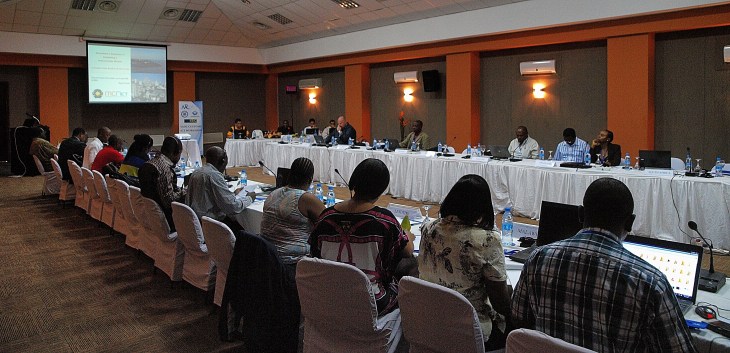
WCO-SACU IT Interconnectivity and Data Exchange Conference

On the occasion of International Customs Day, in January earlier this year, the World Customs Organisation dedicated 2012 as the year “Connectivity”, which encapsulates people connectivity, institutional connectivity and information connectivity among the members of the global Customs community.

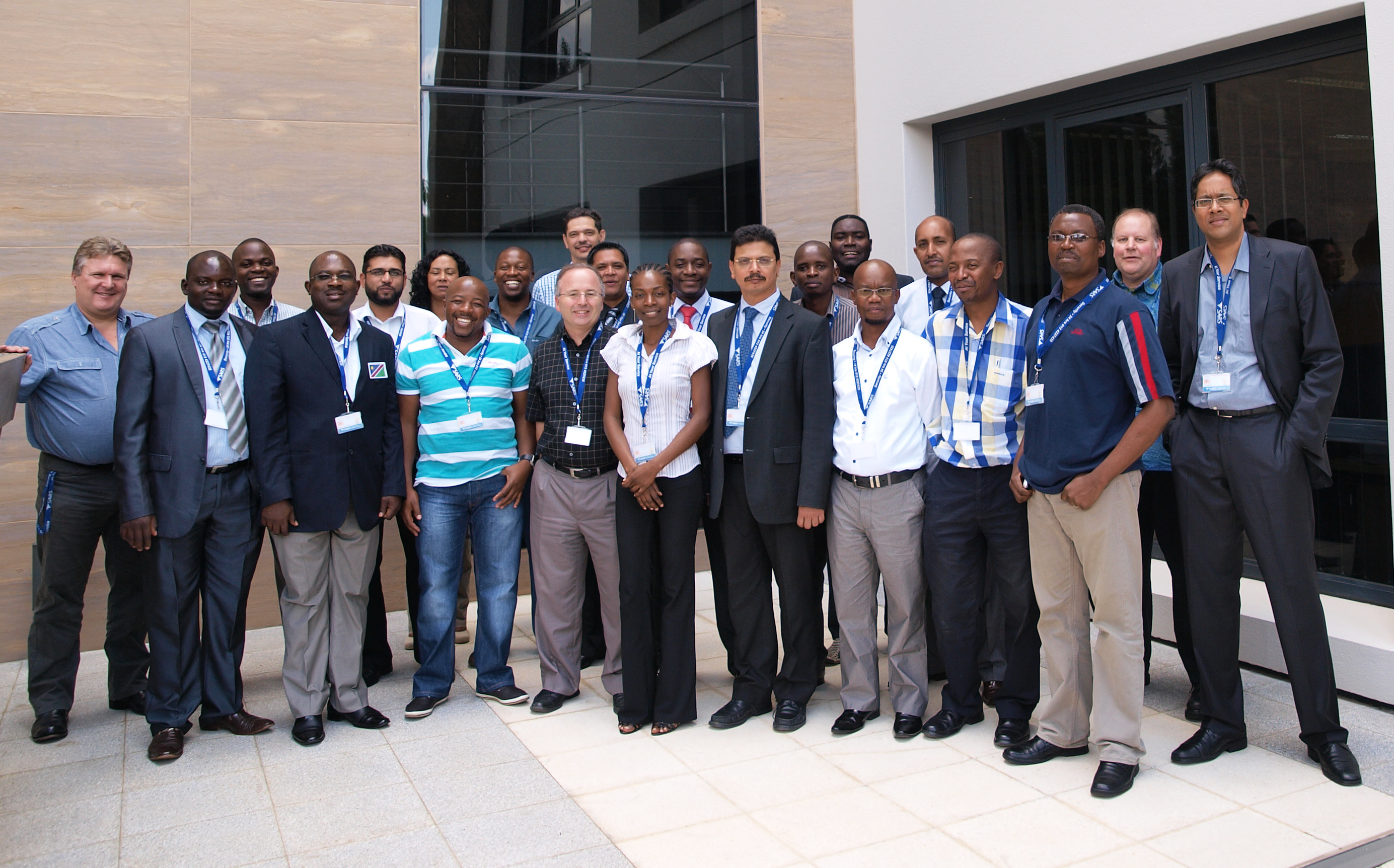
Over the last week and a half delegates from the WCO, SACU, UNCTAD, SADC and COMESA have been hosted at SARS, Pretoria to discuss and deliberate over an approach to implement ‘IT connectivity’ within the Southern African region. During the first week representatives from UNCTAD, SACU and SARS were briefed on important developments at the WCO on IT-Interconnectivity and Information Exchange. We were privileged to have Mr. Satya Prasad Sahu, Technical officer from the WCO – a leading expert in all matters of ICT in international customs matters – present the developments towards finalisation of a future international customs standard called “Globally Networked Customs” (GNC). It entails a structured approach that will enable customs authorities to formulate and document bilateral or regional ‘standards’ on a variety of Customs-to-Customs topics, for instance Authorised Economic Operators, Cross Border Information Exchange, Risk Management, etc. A representative from UNCTAD presented a synopsis of the proposed ‘cloud computing solution’ which the Trans Kalahari Corridor (TKC) plans to pilot between Namibia and Botswana along the TKC route in the next few months. During the course of this week, delegates , under the guidance of Satya, prepared a proposed approach for information exchange between members of the Southern African Customs Region. This document is based on the GNC Utility Block structure (defined by the ad Hoc Committee on Globally Networked Customs at the WCO) and served as the basis for discussion for Week 2.

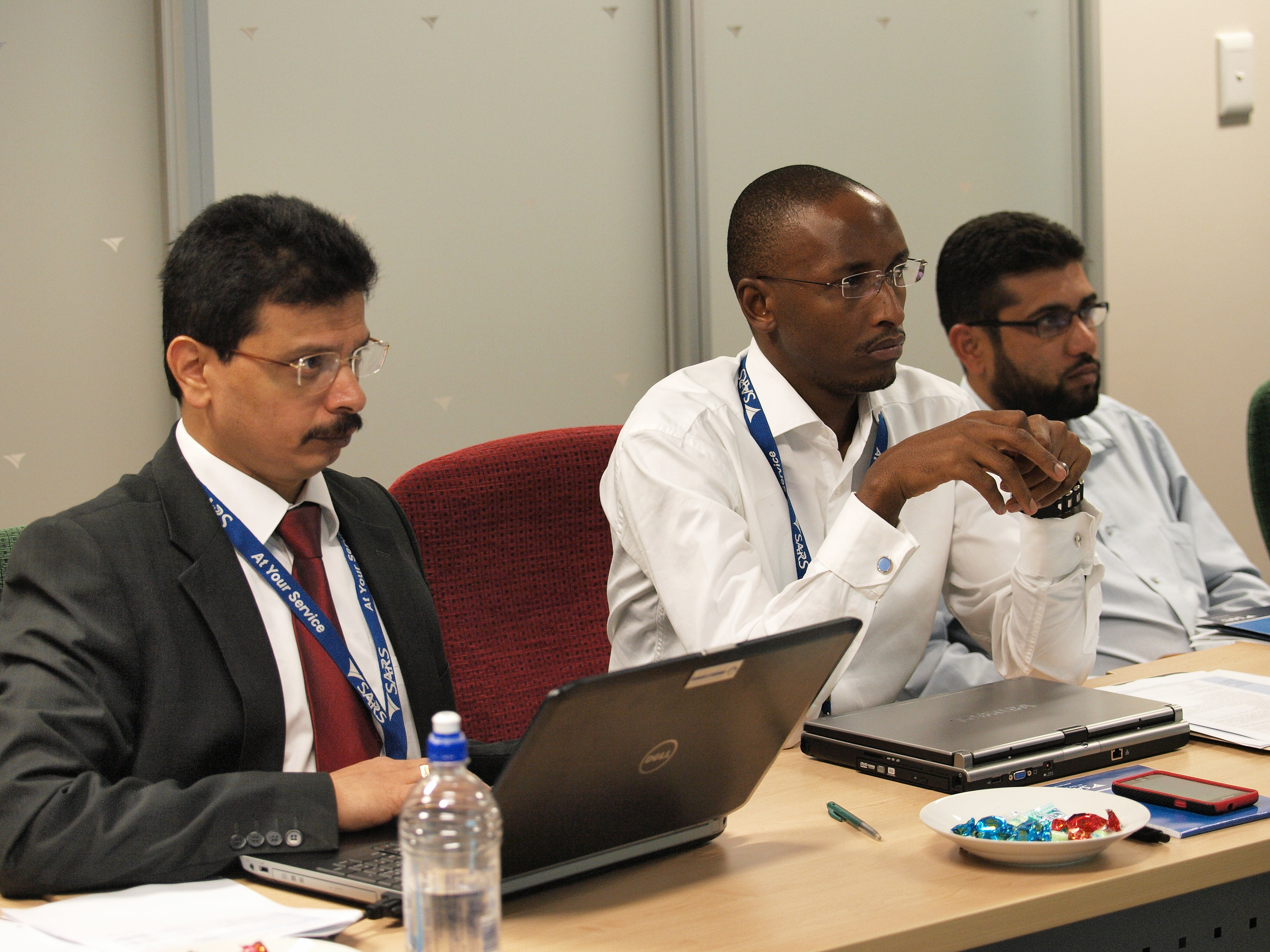
Mr. SP Sahu (WCO) and delegates from SACU SecretariatWeek 2 saw the arrival of customs and IT representatives from COMESA, SADC, UNCTAD, SACU as well as a delegation from Mozambique Customs. Mr. Sahu was invited to chair the session, given his vast experience on the subject matter as well as international experience in national and regional customs ICT programmes. Delegates were treated to various lectures on the GNC, a comprehensive overview of developments on ASYCUDA (Customs solution developed by UNCTAD), various updates from within the customs region – Botswana, Namibia, Lesotho, Swaziland, Mozambique and SARS. Beyers Theron informed delegates of ongoing developments of the SARS Customs Modernisation Programme as well as key implications for neighbouring countries. SARS presented a live demonstration of SARS’ Service Manager solution, navigating through all the functionality now available to SARS Customs officials. Of significant interest to all was the new iPod inspection tool. This technology is given prominent feature in the latest edition of WCO News.

A large portion of the week was, however, spent on deliberating the proposed scope and content of the draft Utility Block on Information Exchange in the Southern African Region. Significant progress was been made to attain first, a common understanding of the scope as well as the implications this has for participating countries. Delegates will return home with a product with which to create awareness and solicit support in their respective countries. Over the next few months SARS will engage both SACU and SADCOM (combined SADC and COMESA trading blocs) to establish firm commitments for information exchange with customs administrations in these regions. This conference is significant for SARS and South Africa as a whole as it provides a uniform, standardised and practical approach for engagement with other international trading partners. To view photographs of the conference please click here!

WCO News – February 2012 Edition

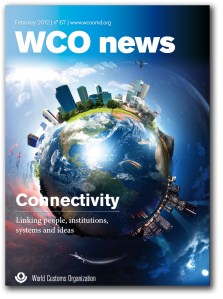
WCONews Edition February 2012Herewith a link to the latest edition of WCO News, providing a wealth of customs news and developments from across the globe. This edition focuses almost entirely on regional initiatives involving C-2-C information exchange. On pages 20 to 22 you’ll read about new developments emerging on customs inter-connectivity and information exchange in the Southern African Region. At this time, a conference lead by the WCO, involving representatives from UNCTAD, SACU, SADC and COMESA and SARS is taking place in Pretoria to establish a firm framework for introduction of customs information exchange. I will devote a dedicated article on these developments shortly, as this has implications for the business community as well. Also, don’t miss the feature on South Africa’s modernisation developments, pages 29 and 30. Besides the usual editorials this edition includes –

  • WCO Secretary General launches Year of Connectivity.
  • Evolving technology landscape and its impact on Customs.
  • Latest developments in Latin America, Southern Africa and Europe.
  • West Africa implements airport task forces to fight drug trafficking.
  • South Africa to roll out mobile Customs controls.
  • Operation “Short Circuit” successes and challenges.
  • WCO Tariff and Trade Affairs Directorate

CBP – An ode in modesty

There’s nothing like beating the breast and extolling the homeland’s unselfish generosity for the benefit of mankind, or am I being facetious? Today’s post on the US Customs and Border Protection‘s website titled “CBP Leads World Customs Organization on Natural Disaster Responsiveness” , is a case in point. The reader is left in no doubt as to who was responsible for recent developments that provide for a Customs role in natural disasters. I read with interest New Zealand Customs‘ role in the Christchurch earthquakes last year – very understated and with empathy for the survivors. The WCO consists over 177 affiliated customs administrations / border agencies each of whom make some form of contribution to it’s various committees and resulting accords or standards. So what if CBP made a major contribution, its a cheap shot to boast at the expense of others who might also have contributed, if not to the same extent. Read the article here!