Transnet receives 2 Chinese electric locomotives

THE FIRST two of 95 Class 20E dual-voltage electric locomotives being supplied to Transnet Freight Rail (TFR) by the CSR E-loco supply consortium was transferred from the port of Durban to the nearby depot at Umbilo on November 14 for commissioning.

The first 10 locomotives are being built by CSR Zhuzhou Electric Locomotive in China, while the remaining 85 units will be assembled in South Africa by Transnet Engineering. CSR is a 70% partner in CSR E-loco Supply, with local partner Matsetse Basadi holding the remaining 30%. The contract specifies a target of 60.5% for localised content.

The 3MW Class 20E is equipped for operation on 25kV ac and 3kV dc electrification systems and will be used by TFR’s general freight business.

Transnet says the two locomotives have been delivered a month earlier than expected, and it expects a second consignment of four units to arrive in South Africa next month. Source: www.railjournal.com (Pictures credits: FTW Online, and various)

Parliament Postpones Customs Bills

Thaba Mufamadi, chairman of Parliament’s finance committee. Picture - Financial Mail

Thaba Mufamadi, chairman of Parliament’s finance committee. Picture – Financial Mail

Parliment’s standing committee on finance (SCoF) has decided to postpone its deliberations on two draft customs-related bills until next year to allow importers and the freight-forwarding industry more time to comment on the proposals which threaten the status of City Deep as an inland port. This followed an appeal by the South African Association of Freight Forwarders that it had had insufficient time to consider the substantially revised draft Customs Control Bill and Customs Duty Bill, which required that imported goods would have to be cleared at the first point of entry.

The association, supported by a range of other business organisations, including the Johannesburg Chamber of Commerce and Industry, warned that the bills could be challenged on constitutional grounds if the process of consultation was deficient. All political parties supported the proposal by finance committee chairman Thaba Mufamadi on Wednesday that the deliberations on the bills be postponed until next year. He instructed stakeholders to make their submissions to the South African Revenue Service (SARS) by December 15.

Mr Mufamadi also took cognisance of concerns raised by Business Unity South Africa that parliamentary processes did not allow sufficient time to comment, for example, on the medium-term budget policy statement. Industry has warned of port delays and trade disruption if the proposals were to be adopted. The Customs Control Bill proposes that goods be cleared at the first port of entry into South Africa. This will mean that inland ports such as City Deep in Johannesburg would no longer be designated places of entry or exit for customs purposes. In the past, containerised cargo could move directly to inland ports on arrival in the country under cover of a manifest. A new declaration — of the nature, value, origin and duty payable on the goods — would replace the manifests.

SARS said these did not provide sufficient information to undertake a risk assessment. Another bone of contention for industry was the “extremely severe” penalties proposed in the draft Customs Duty Bill. Following the uproar about the proposals SARS offered a compromise earlier this week as a way out of the impasse. Instead of a clearance at the port of entry, a mandatory advance customs clearance of the goods three days before their arrival at the first port of entry would be required. Goods consigned to inland terminals such as City Deep would be released conditionally. The system would be tested for the whole of next year to iron out any problems.

An alternative option would be for the goods to undergo a lesser form of clearance at the first point of entry. This would still entail providing customs authorities with the same level of information on the tariff, value and origin of goods, which would be submitted by electronic data interchange. The importer would be held accountable for the information that was provided. SARS official Kosie Louw said that because this document would not have the formal status of a clearance certificate, it would not disrupt existing legal contractual arrangements, as claimed. The goods would still move CIF (cost insurance and freight) from the port to City Deep. SARS has also proposed softening the penalty provisions so that errors not resulting in any prejudice to customs revenue will be subject to penalties only after three warnings. These penalties will be discretionary and applied leniently in the first 12 months of the bill coming into force to allow business time to properly prepare for the change. An appeal process has been included. Source: Business Day Live. 

Institute of Logistics and Supply Chain Management enters Training Arena

logisticsThe Institute of Logistics and Supply Chain Management (ILSCM), the latest player in the training arena, has been launched. The institute aims to partner with industry and improve the general calibre of those pursuing careers in logistics and supply chain related disciplines.

ILSCM is set to provide job-specific academic programmes as well as face-to-face short learning programmes. Qualifications will range from a National Qualifications Framework (NQF) Level 2 to an NQF Level 7. The Uniprep programme offers students the opportunity to bridge the gap between the further education level and the higher education level.

The training organisation states that very few institutions offer qualifications in the logistics and supply chain field – especially through distance learning education, which is becoming all the more popular as it provides flexibility for those who are employed on a full-time basis. Visit their website: www.ilscm.co.za

Major Multimodal Logistics Hub in Belgium

Liege Trilogiport is scheduled to open for business in the final half of 2015 (Picture: Liege Ports Authority)

Liege Trilogiport is scheduled to open for business in the final half of 2015 (Picture: Liege Ports Authority)

Work is underway on a major multimodal logistics hub project in Belgium. Piloted by the inland port of Liège, it is designed to serve as an “extended gateway” to the seaports of Rotterdam, Antwerp and Zeebrugge.

The project will attract around €45 million of public funding from the Belgian authorities and the European Union to finance infrastructure requirements, while initial investment from the private sector is estimated at approximately €115 million.

Located on a 120 hectare site on the banks of the Canal Albert, the Trilogiport project is scheduled to be operational in the second half of 2015. It is expected to create more than 2,000 direct or indirect jobs.

Described as “a tri-modal (river, rail and road) logistics village,” it will comprise a 15ha container terminal, with 1,850 metres of quayside, operated by Luxembourg-based Euroports and its partner, DP World.

Provision is made too to build a rail freight terminal with 700 metres of track to connect Trilogiport with the national rail network. Construction of a road bridge is also planned to provide access to the motorway system around Liège.

Trilogiport will also incorporate 200,000 sq metres of warehousing and distribution space at full build-out. Source: Porttechnology.com


SARS to address Stakeholders on Customs Control proposals

SARS chief officer of legal and policy Kosie Louw (Picture: Robert Botha/Business Day Live)

SARS chief officer of legal and policy Kosie Louw (Picture: Robert Botha/Business Day Live)

The South African Revenue Service (SARS) has committed itself to further engagements with importers of all sizes in a bid to improve its proposals to transform the customs control regime.

Consultations have already taken place with organised business on the proposed Customs Duty Bill and the Customs Control Bill, and the process would now be taken to the level of traders to find out whether the proposals presented them with any problems. Amendments have also been proposed to the Customs and Excise Act to provide for the transition to the new system.

“We want to understand the situation at a micro level. We will sit around the table until we find a solution which will guarantee to us that we get the information we require but which will also facilitate trade.

“We do not want to clog up the ports,” SARS chief officer of legal and policy Kosie Louw said in an informal briefing on the proposals to Parliament’s standing committee on finance on Wednesday.

The customs bills are mainly concerned with improving the information about imported and exported goods so that customs officials can exercise greater control.

Business has expressed concern that the requirement of the Customs Control Bill that they submit a national in-transit declaration of goods at the first port of entry before they are sent to internal terminals, or depots such as City Deep, would cause delays.

The new declaration — of the nature, value, origin and duty payable on the goods — would replace the limited manifest used to declare goods and would include information on the tariff, value and origin of goods.

Business has argued that the manifest allowed goods to move seamlessly from the exporting country to the inland port or depot, and would change the contractual relationships between exporter and importer in terms of when duty is paid.

However, Mr Louw did not believe the provision would cause delays and had obtained legal advice that the contractual relationships and method of payment of duties would not change. The problem with manifests, he said, was that they provided very limited information and did not allow SARS to prevent the inflow of unwanted goods. Nevertheless, he said that SARS would discuss the matter with traders.

Mr Louw said the proposed system would “improve SARS’s ability to perform risk assessment and intervene in respect of potentially high risk, prohibited and restricted consignments at the ports”.

The bills have been in the pipeline for about four years and have been extensively canvassed with the Southern African Customs Union and business. They were needed, Mr Louw said, so that South Africa kept pace with global trends in trade, international conventions and advances in technology.

Anti-avoidance provisions have also been introduced into the bill which sets out the offences and associated penalties for noncompliance and attempts to avoid paying customs duties.

SARS group executive for legislative research and development Franz Tomasek said the Customs Control Bill would introduce a new advance cargo loading notice for containerised cargo to prevent the loading of prohibited or restricted goods on board vessels bound for South Africa. However, to reduce the administrative burden on carriers, information submitted in advance will no longer be required on arrival or prior to departure. Source: Business Day Live


Container Weighing – industry solution on the horizon

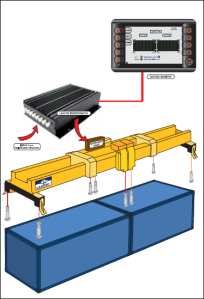
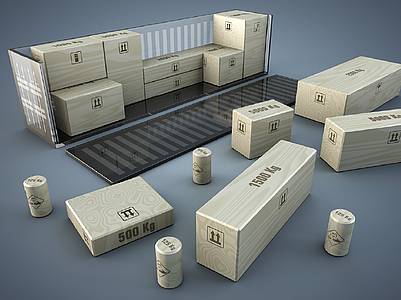
Click Picture for full report at porttechnology.org [Port Technology International – Container weighing device]

The International Maritime Organization (IMO) is expected to make the weighing of sea containers mandatory. The purpose is to make the entire container supply chain safer. This regulation is expected to be issued through the International Convention for the Safety of Life at Sea (SOLAS Convention) as a result of a number of accidents involving container losses and container stack collapses. The existing SOLAS regulation already obliges shippers to declare the correct container weights, but this is not always done. The new regulation is likely to require specifically that the container is actually weighed or calculated by reference to the contents, packing and securing materials and the tare weight of the container itself. Importantly, however, the regulation is anticipated to forbid the loading of containers unless the verified gross mass is available to the terminal and the ship’s master.

Practically speaking this means that the shipping lines may require terminals to verify container weights prior to being loaded onto their ships. There will, however, be a cost to it which the shipping lines are likely to pass on to their shippers. But besides added safety, there is another important aspect: optimising ship stowage which should reduce fuel consumption for the shipping lines. A ship is more stable at sea and consumes less fuel when the center of gravity is low and if the cargo is optimally distributed. Therefore, it is in the interest of the shipping lines to know the exact weights. Arguably, there are multiple aspects which determine fuel consumption of a ship, and some may be more important than stowage, but this is nevertheless a factor.

Determining container weights and related costs

First of all, to weigh a container and to use the load information to update the stowage plan, containers need to be weighed preferably at the completion of packing. Clearly, weighing export containers needs to be done sufficiently in advance for the stowage plan to be optimised. If the actual weight is not determined at the completion of packing, the port is in a prime position to provide this service or, indeed, to verify the documented weight. For containers that arrive at the port by road, rail or river an obvious ‘check point’ is during the inward process. Weighing with the quay side crane is too late, since the container position on the ship is determined well before loading.

Weights of transshipped containers should be verified at the original port of loading, but there will always be situations where this has not been physically possible. In that event, it can be said with certainty that every container, whether exported or transshipped, will pass through the stacking yard. It is therefore argued that equipping the stacking cranes with weighing systems best caters for all circumstances. Operators in those countries that require imported containers to be weighed may consider weighing with quay side cranes as well.

What does it cost to weigh a container? Let’s base the calculation on the capacity of a quay side crane which can typically load 100,000 twenty-foot equivalent unit (TEU) per year. Let’s also assume there are three rubber-tyred gantry cranes (RTG) or rail-mounted gantry cranes (RMGs) required per quay side crane. Let’s further assume a weighing system costs US$20,000 per stacking crane and it is amortised over three years. The cost per year to weigh 100,000 TEU is therefore US$0,20 per TEU. In addition to the capital expenditure for the weighing equipment, the terminal will incur some integration costs plus ongoing maintenance and administration costs, so let’s double this amount to US$0,40 per TEU. Weighing by the stacking cranes during the handling of the containers is also more economical than weighing with weigh bridges which very often involve manual intervention, when trucks are carrying two 20 foot containers which need to be individually weighed. Weighing in the stacking yard is therefore the fastest, most economical and non-disruptive way to the operation. Some terminals have calculated that they could offer their weighing services for US$1 per TEU and earn a profit with it. Continue reading →

Rotterdam – The signficance of ‘hinterland’ container services

Picture1BILK (Budapest Intermodal Logistics Center) Kombiterminál has become the first Hungarian terminal to join the InlandLinks network, comprising of nearly 40 terminals across the Netherlands, Belgium, Germany, Poland, Italy and Hungary.

InlandLinks, an initiative of the Port of Rotterdam Authority which was developed two years ago in cooperation with VITO (Dutch Inland Container Terminal Organisation), is an online platform for container terminals in the hinterland, offering intermodal services to and from the Port Rotterdam – Europe’s largest port complex

Rotterdam expects to see container flows triple over next 25 years in line with growth in world trade and the increasing size of container vessels. Of the 30 million TEU anticipated to be handled by the Dutch port in 2035, approximately 2 million are expected to be shipped in and out using smaller vessels from and to European ports. Some 18 million TEU will travel to and from the hinterland via intermodal transport, and the Port of Rotterdam hopes that InlandLinks will help to provide greater insight into better and more sustainable connections for this projected flow of cargo.

BILK, located in a suburb in the southeast of Budapest, consists of a railway station/marshalling yard, a bi-modal terminal for combined traffic, and a 70-hectare logistics centre. The terminal has the capacity to handle an annual traffic of 220,000 TEU. Source: Porttechnology.org


Is it a TEU or a FEU?

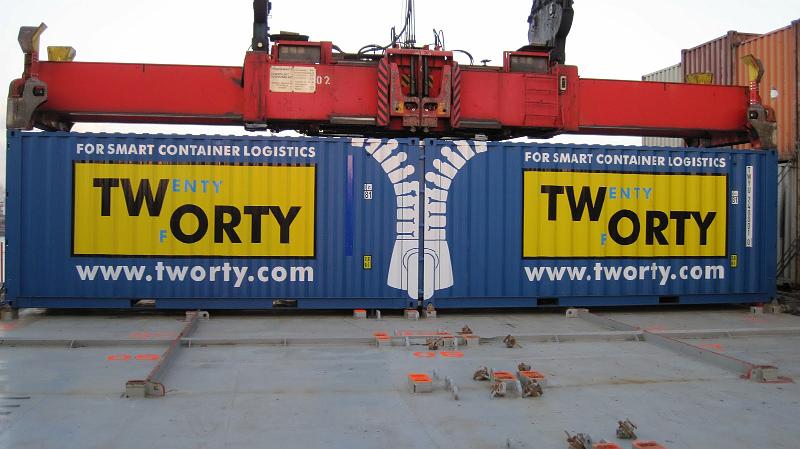
Thinking outside the box - Tworty’s unit has doors at each end, the second opening to and locked from the inside.

Thinking outside the box – Tworty’s unit has doors at each end, the second opening to and locked from the inside.

An innovative new ISO container design that allows a unit to be used either as a 40 ft or 20 ft box has completed its maiden voyage.

The Tworty Box, two 20 ft containers that can be linked together to form a single 40 ft unit – “twenty + forty = tworty” – competed its maiden voyage from Hamburg to Montreal on the containership OOCL Montreal.

Two containers joined together as a single unit were stuffed with 20 tonnes of breakbulk cargo, mainly car parts and granulate, for Canadian consignees.

Developer Tworty Box said the container was designed to reduce the cost of repositioning empties, caused by imbalances between supply and demand for 20 ft and 40 ft containers. As the company humourously explains on its website, 1 x tworty = 20ft, 2 x tworty = 40ft.

It has doors at each end; the second door opens to the inside and can only be locked from the inside. This door can be fixed to the container ceiling and, with the use of its special bonding elements, another Tworty Box can be joined up, thereby creating a 40 ft unit of full value and standard doors at both ends.

Tworty Box prototypes have received full International Convention for Safe Containers certification for single and for coupled operation. Source: Tworty.com and Lloyds.


Port-to-Hinterland…gearing up for growth?

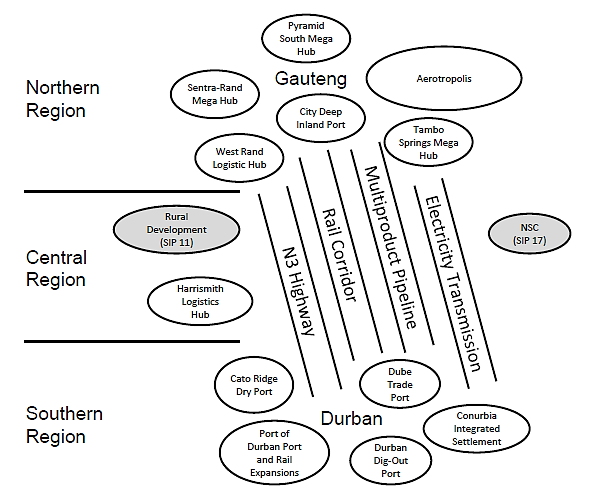
Proposed Durban-Free State-Gauteng Logistics and Industrial Corridor Plan (SIP2)

Proposed Durban-Free State-Gauteng Logistics and Industrial Corridor Plan (SIP2)

Notwithstanding on-going discontent amongst industry operators in regard to proposed legislative measures mandating customs clearance at first port of entry, the South African government (GCIS) reports that work has already commenced on a massive logistics corridor stretching between Durban and the central provinces of the Free State and Gauteng. Most of the projects that form part of the second Strategic Infrastructure Project (SIP 2), also known as the Durban-Free State-Johannesburg Logistics and Industrial Corridor, are still in the concept or pre-feasibility stage, but construction has already started on several projects.

These include:

  • the building of a R2,3 billion container terminal at City Deep
  • a R3,9 billion project to upgrade Pier 2 at the Port of Durban
  • R14,9 billion procurement of rolling stock for the rail line which will service the corridor.

Work has also started on the R250 million Harrismith logistics hub development to set up a fuel distribution depot, as well as on phase one of the new multi-product pipeline which will run between Johannesburg and Durban and transport petrol, diesel, jet fuel and gas.

The aim of these projects and others which form part of SIP 2, is to strengthen the logistics and transport corridor between South Africa’s main industrial hubs and to improve access to Durban’s export and import facilities. It is estimated that 135 000 jobs will be created in the construction of projects in the corridor. Once the projects are completed a further 85 000 jobs are expected to be created by those businesses that use the new facilities. Source: SA Government Information Service

Interested in more details regarding South Africa’s infrastructure development plan? Click here!

A South African RFID/GPS cross-border logistics and customs solution

Inefficiency of road freight transport is one of the primary factors that hamper the economy of sub-Saharan Africa. Long delays experienced at border posts are the single biggest contributor towards the slow average movement of freight. Cross-border operations are complicated by the conflicting security objectives of customs and border authorities versus efficiency objectives of transport operators. It furthermore suffers from illegal practices involving truck drivers and border officials. In theory the efficiency of cross-border operations can be improved based on the availability of more accurate and complete information – the latter will be possible if different stakeholders can exchange data between currently isolated systems.

Cross-border trade basically comprises 3 distinct but interlinked layers –

An information layer – in which various trade documentation (purchase order, invoice), cargo and conveyance information (packing list, manifest), customs and government regulatory data (declaration, permits) are exchanged between various supply chain entities and the customs authority. These primarily attest to the legal ownership, contract of carriage, reporting and compliance with customs and other regulatory authority formalities (export and import), and delivery at destination.

A logistics layer – for the collection, consolidation, sealing and conveyance of physical cargo from point of despatch via at least two customs control points (export and import), to deconsolidation and delivery at point of destination.

A financial layer – which refers to the monetary exchange flow from buyer (importer) to seller (exporter) according to the terms and conditions of the sale (INCOTERMS). Hmm… no, this does not include ‘bribe’ money.

All three layers are inter-linked and prone to risk at any point of a given transaction. There is also no silver bullet solution to secure supply chains. Moreover, it is a fallacy that Customs and Border Agencies will ever conquer cross-border crime – simply because there are too many angles to monitor. Furthermore, in order to set up cross—border information exchange and joint enforcement operations it is both legally and politically time-consuming. Criminal elements are not hampered by these ‘institutions’, they simply spot the gaps and forge ahead.

One of the areas requiring customs attention is that of chain of custody. In short this implies the formal adoption of the World Customs Organisation’s SAFE Framework principles. Each party with data that needs to be filed with the government for Customs and security screening purposes has responsibilities. Those responsibilities include –

  • Protecting the physical goods from tampering, theft, and damage.
  • Providing appropriate information to government authorities in a timely and accurate manner for security screening purposes.
  • Protecting the information related to the goods from tampering and unauthorized access. This responsibility applies equally to times before, during and after having custody of the goods.

Tenacent RFID Tag

Tenacent RFID Tag

Security seals are an integral part of the chain of custody. The proper grade and application of the security seal is addressed below. Security seals should be inspected by the receiving party at each change of custody for a cargo-laden container. Inspecting a seal requires visual check for signs of tampering, comparison of the seal’s identification number with the cargo documentation, and noting the inspection in the appropriate documentation. More recently the emergence of certain e-seals and container security devices (CSDs) contribute even further to minimizing the amount of ‘physical’ verification required, as they are able to electronically notify the owner of the goods or government authority in the event of an incidence of tampering.

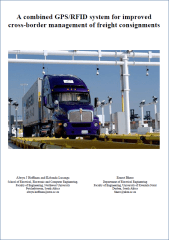
White Paper - GPS-RFID systems for cross-border management of freight consignments

White Paper – GPS-RFID systems for cross-border management of freight consignments

A group of South African specialist engineers have been working closely with transport authorities, logistics specialists, defense experts and customs authorities across the globe. Their e-seal is patented in no less than 16 high volume countries. It is produced in Singapore, China and Indonesia depending on politics, free-trade agreements and demand. May move some to Brazil and US in time. Proof of concept (POC) initiatives are currently underway in Brazil for rail cargo, US Marine Corps for their p-RFID program and other Department of Defense divisions in the USA, and will shortly be included in one of the GSA agreements making it available to any government department in the US. Further adrift, the e-seal is also currently enjoying interest in Guatemala, Mexico, Canada, Panama, Jordan, Italy, Spain, and Malaysia. Here, in South Africa, a POC was conducted at the 1st autogate at Durban Container Terminal, funded by the North West University, and overseen with successfully achieved objectives by Transnet Port Terminals. For technical details of the RFID seal, click here!

With much anticipated success abroad, how much support will this product attain in the local and sub-Saharan African scene? Government authorities, as well as logistics and supply chain operators are therefore encouraged to study the enclosed ‘white paper’ – Click Here!. It firstly quantifies the size of the problem and estimates the potential economic benefits that will be created by improved cross-border operations. It then proposes a combined GPS/RFID system that can provide the required level of visibility to support improved operational management, resulting in a simultaneous increase in the security and efficiency of cross-border freight operations. A brief cost-benefits analysis is performed to show that the expected benefits from such a system will by far exceed the costs of implementation. Source: Tenacent & iPico

TT Club – Container packing standards must be improved

TT ClubThe TT Club, has called for higher levels of training to maintain and improve the expertise of those employed by shippers, consolidators, warehouses and depots to pack containers properly.

The insurance organisation said it is no surprise that the correct packing of containers is high on the agenda for industry bodies, regulators and insurers, as the consequences of unsafe and badly secured cargo are serious. According to freight transport insurer TT Club’s claims, some 65 per cent feature cargo loss or damage, of which over one-third result from poor packing.

It is timely that TT Club and Exis Technologies have come together to develop CTUpack e-learning, an online training tool for those involved in the loading and unloading of containers or Cargo Transport Units.

Designed and produced by Exis Technologies on the initiative of the TT Club, and with its financial investment, the CTUpack e-learning(tm) course is aligned with IMO/ILO/UN ECE guidelines for packing containers. Beginning with the foundation course, which will be launched later this year, it will comprise modules that include topics such as cargo or transport and elements equivalent to lessons, covering areas like forces and stresses.

In future the course will evolve to reflect developments and updates to the ILO guidelines and there is a capacity for additional modules to incorporate cargo specific and more advanced training elements. Source: Seanews.com

Uganda says it’s time to talk in Africa

Africa-mombasa-mct-aerial

Port of Mombasa (Credit – Port Strategy)

Not for the first time a landlocked country in Africa is attempting to have a say in a remote port operation which functions as a major gateway for its import and export trade. This time it is Uganda proposing that it has a say in the management of Kenya’s major port, the port of Mombasa. In the recent past it was Ethiopia attempting to secure a dedicated terminal in Djibouti.

The Ugandan initiative surfaced at a recent ‘Validation Workshop on Uganda’s Position on the Single Customs Territory for the East African Community. The Permanent Secretary Ministry of EAC Affairs, Edith Mwanje said that Uganda should have a say in the management of gateway ports because of “the many delays that negatively impacted trade”. Ugandan cargo accounts for the largest body of traffic handled by the port of Mombasa for the landlocked countries surrounding Kenya.

It is unlikely, of course, that any country will give up even partial control of a national asset to another country. It is akin to relinquishing sovereignty in the minds of countries owning port assets and being asked to participate in some form of power sharing. Djibouti fought hard to prevent Ethiopian Shipping Lines gaining control of dedicated terminal assets in the old port of Djibouti and won this battle. It is very unlikely that Kenya will even consider the idea of a foreign power participating in the management of its number one port.

It may, however, be a wise course of action for countries such as Djibouti and Kenya to consider establishing some sort of regular stakeholder dialogue. This is the path to a long and sustainable relationship as opposed to a short opportunistic one.

It is known, for example, that in the past Ethiopia has been frustrated by the high price of gateway container and general cargo operations in Djibouti and this has led to tensions. Since these days, however, Djibouti has put considerable effort into having a sensible dialogue with Ethiopia and this has matured into new projects such as the signing of an agreement with Ethiopia and Djibouti to build an oil pipeline that will reduce South Sudan’s dependence on crude shipments via neighbouring Sudan, and plans for a $2.6bn liquefied natural gas terminal in Djibouti, including a liquefaction plant and a pipeline, that will enable the export of 10m cubic meters of gas from Ethiopia to China annually from 2016.

Source and Picture credit: Portstrategy.com

Weighing Cargo at the source

IMG_39671-210x140Worldcargo news.com reports that a recent truck weighing deal in the UK provides food for thought in the run-up to IMO DSC/18 in September 2013.

Central Weighing, part of Avery Weigh-Tronix, has supplied a cost-effective weighing solution to help Balfour Beatty avoid overloading on its fleet of 3000 light commercial vehicles and 1000 heavy commercial vehicles, which are located at numerous and very often temporary sites across the UK.

Balfour Beatty operates a large and diverse fleet of commercial vehicles in the UK ranging from small vans to 44t artics. The plant, tools, equipment and materials carried vary widely depending on the project or contract being serviced.

“With such a wide variety of loads being transported, it is essential that the vehicles can be weighed accurately and efficiently, to ensure safety and comply with road transport legislation,” stated Central Weighing. “Installing a weighbridge at each location was not financially feasible, so Central Weighing’s solution was implemented to supply 10 portable dynamic weighbridges.”

As discussed on numerous occasions in WorldCargo News, where the shipping line requires container weights to be verified by physical weighing of the container, the ideal location from an overall supply chain perspective is the shipper’s or export packer’s container stuffing point. This provides:

  • the earliest possible notice of discrepancy with the declared weight, and hence the most time for the ship planner to adjust the loading plan.
  • confirmation of legality for road shipment in terms of gross truck mass and axle loads. Inland transportation is outwith IMO’s remit, but this point is clearly very important in terms of road safety. It is not acceptable for shipping lines employing hauliers in a carrier haulage move to ignore it and focus exclusively on the integrity of their loading plans.

Of course, most shippers do not have container lifting equipment, but container chassis could easily be fitted with load cells measuring the weight and distribution as the container is stuffed at the loading dock, or the whole rig could be driven onto portable weighbridges/mats shortly after the container is loaded. If Balfour Beatty can do it, why can’t shipping lines or their contracted road hauliers?

If the truck is shown to be overloaded in terms of gross mass and/or individual axle loads, the container will have to be stripped and restuffed, leading to dispatch delays. Since gate “slot” times and reception “cut off” times are so tight, something has got to give. Don’t expect a truck with a three-hour window between departure from, say, Daventry and arrival in Felixstowe to make it in one hour!

Both container weighing and packing are being discussed in special workshops at next week’s TOC CSC Europe conference in Rotterdam, and these points need to be aired.

Sounds like the kind of discussion and development to be followed by Transport (including Port) and Customs authorities alike. Perhaps the MOL COMFORT tragedy will lend some importance (interest) to this debate.

Source: World Cargo News

Free zones – the potential pitfalls

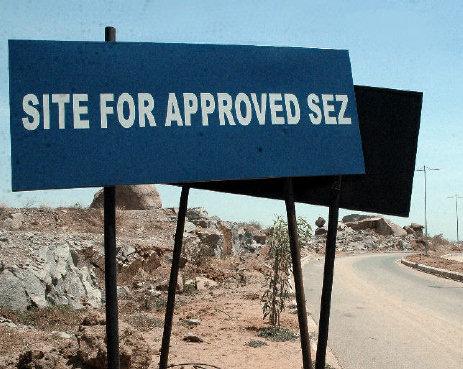
sezFree zones are often seen as a cure-all remedy to the problems developing economies encounter when trying to attract FDI. However, the reality is that such projects need careful planning and long-term support if they are to fulfil such wishes. A report published by fDI Magazine, and featured online – fdiintelligence.com – covers the topic quite comprehensively. While the article it is titled ‘Free Zones’ it’s not quite certain whether all developments sited follow the same business model. Nonetheless it provides some interesting insight to developments across the globe. Of particular interest for Africa are references to developments in Rwanda, Botswana, and the Gambia. In the case of the latter, the Gambian government’s decision to legally enable companies to operate as standalone zones, whereby businesses are permitted to enjoy the benefits of being a ‘free zone’ entity without having to establish in the country’s business park, could enable Gambia to attract investors who wish to have a greater degree of choice over the location of their premises.

Some of the key messages of the article come in the form of cautionary’s –

“the ‘build it and they will come’ assumption over SEZs will not guarantee investor interest”

“while governments are quick to launch them with great fanfare, a lack of on-going support afterwards hinders the zone from developing to a competitive and world-class standard…many projects remain just that – a project”

“while the idea of clustering several companies from a few specific sectors sounds promising on paper, in practice this can be detrimental to foreign enterprises”.

Read the full report here!

Johburg Chamber to meet Parliment over Customs Bill

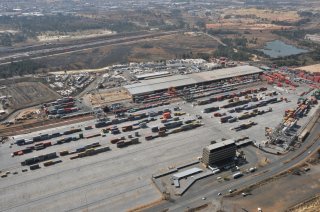
City Deep Container Terminal, Johannesburg

City Deep Container Terminal, Johannesburg

Online media company Engineering News reports that the Chamber of Commerce and Industry Johannesburg (JCCI) would take its objections of certain aspects of the recently tabled Customs Control Bill to Parliament and called on South African business and interested stakeholders to provide input as well.

The South African Revenue Services’ (Sars’) newly drafted Customs Control Bill, which, in conjunction with the Customs Duty Bill, would replace the current legislation governing customs operations, declared that all imported goods be cleared and released at first port of entry.

“The Customs Bill, cancelling the status of inland ports as a point of entry, will be before Parliament very soon, and only a short notice period for comment is expected,” JCCI former president Patrick Corbin said.

While all other comments and suggestions relating to the Bill were adequately dealt with, this remained the one disagreement that had not been satisfactorily resolved, he stated.

Corbin invited all parties to voice their concerns to ensure “all areas of impact and concern were captured”, adding further weight to the JCCI’s presentation. The implementation of the new Bill would directly impact the City Deep container terminal, which had been operating as an inland port for the past 35 years, alleviating pressure from the already-constrained coastal ports.

Despite customs officials assuring the chamber that the operations and facilities at City Deep/Kaserne would retain its licence as a container depot, Corbin stated that the Bill had failed to recognise the critical role City Deep played as an inland port and the impact it would have on the cost of doing business, the country’s road-to-rail ambitions, the coastal ports and ease of movement of goods nationally and to neighbouring countries.

“The authorities do not accept the fact that by moving the Customs release point back to the coast, a vessel manifest will terminate at the coastal port. There will not be the option of a multimodal Bill of Lading and seamless inland movements, as all boxes or the unpacked contents will remain at the coast until cleared and released by the line before being reconsigned,” he explained.

Citing potential challenges, Corbin said that only the containers cleared 72 hours prior to arrival would be allocated to rail transport and that those not cleared three days before arrival would be pushed onto road transport to prevent blocking and delaying rail operations.

This would also result in less rail capacity returning for export from Johannesburg, leading to increased volumes moving by road from City Deep to Durban.

He warned of the Durban port becoming heavily congested with uncleared containers, causing delays and potential penalties, while hampering berthing movements and upsetting shipping lines’ vessel schedules.

The release of the vessel manifest at the coastal port also placed increased risk on the shipping operators delivering cargo to Johannesburg following the clearance of goods at customs and required reconsignment at the country’s shores.

However, Transnet remained committed to investing R900-million for upgrading the City Deep terminal and the railway sidings, while Transnet CEO Brian Molefe had accepted the assurances from customs that “nothing would change and the boxes would still be able to move seamlessly once cleared”.

The Gauteng Department of Roads and Transport Department had allocated R122-million for the roadworks surrounding the inland port, while Gauteng MEC for Roads and Transport Dr Ismail Vadi said the department’s focus this year would narrow to the expansion and development opportunities at City Deep/Kaserne.

The department was also progressing well with the development of a second inland port, Tambo Springs Inland Port and Logistics Gateway, expected to be completed by 2017.

Vadi recently commented that the Gauteng Department of Roads and Transport, which was currently developing a terminal master plan for the project, would link the freight hub through road and rail transport to and from South Africa’s major freight routes and other freight hubs, including City Deep, which was about 33 km away.

The National Economic Development and Labour Council, under which the Bill had been drafted during a three-year development process, had agreed to fund an impact assessment study, led by Global Maritime Learning Solutions director Mark Goodger. The study was “close to completion” and would be presented alongside JCCI’s objections in Parliament. Source: Engineering News