Illicit financial outflows estimated at $854 billion to $1.8 trillion over 38 years

Illicit-Financial-Flows-Report-Dec-2012A new report from Global Financial Integrity (GFI) estimates that Africa lost $854 billion to $1.8 trillion in illicit financial outflows between 1970 and 2008. The estimated outflows grew at an average rate of 11.9% per year and were approximately double the level of international aid to Africa over that period. According to GFI director Raymond Baker “staunching this devastating outflow of much-needed capital is essential to achieving economic development and poverty alleviation goals in these countries.”

Of the estimated outflows, it is believed that at least 3 percent ($25 billion) can be attributed to the proceeds of bribery and theft by corrupt government officials; at least 30 to 35 percent to criminal activities such as drug trafficking, racketeering and counterfeiting; and the final 60 to 65 percent to the proceeds of commercial tax evasion.

Sub-Saharan African countries experienced the bulk of illicit financial outflows. However, the top five countries with the highest measurable outflows were detailed as:

  • Nigeria ($89.5 billion);
  • Egypt ($70.5 billion);
  • Algeria ($25.7 billion);
  • Morocco ($25 billion); and
  • South Africa ($24.9 billion).

What is clear is that as long as these countries continue to experience significant illicit financial outflows, economic development and prosperity remain elusive. Addressing this problem will require a concerted effort globally. More insight on Illict Trade Flows and how they are estimated can be found at Wikipedia – Click Here!

Also check out fellow blogger Nwarini Nerima’s article – Illicit Financial Flows from Africa

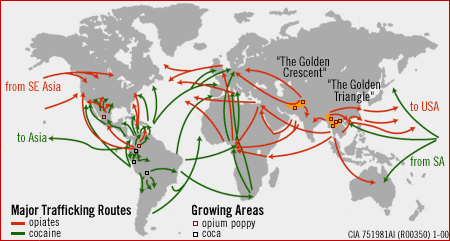
Southern African Narcotic Trafficking Landscape

Drugroutemap

See what the CIA’s Factbook has to say about Southern African countries and their role in the international narcotics supply chain –

Zimbabwe A transit point for cannabis and South Asian heroin, mandrax, and methamphetamines en route to South Africa
Zambia A transshipment point for moderate amounts of methaqualone, small amounts of heroin, and cocaine bound for southern Africa and possibly Europe; a poorly developed financial infrastructure coupled with a government commitment to combating money laundering make it an unattractive venue for money launderers; major consumer of cannabis
South Africa A Transshipment center for heroin, hashish, and cocaine, as well as a major cultivator of marijuana in its own right; cocaine and heroin consumption on the rise; world’s largest market for illicit methaqualone, usually imported illegally from India through various east African countries, but increasingly producing its own synthetic drugs for domestic consumption; attractive venue for money launderers given the increasing level of organized criminal and narcotics activity in the region and the size of the South African economy
Mozambique Southern African transit point for South Asian hashish and heroin, and South American cocaine probably destined for the European and South African markets; producer of cannabis (for local consumption) and methaqualone (for export to South Africa); corruption and poor regulatory capability make the banking system vulnerable to money laundering, but the lack of a well-developed financial infrastructure limits the country’s utility as a money-laundering center
Angola Used as a transshipment point for cocaine destined for Western Europe and other African states, particularly South Africa

Cracking Down on Cheating by Foreign Companies

Customs LawThe following article and its ensuing piece of legislation would seem to suggest that current Customs’ automated risk management is not doing its job, or at least is not as successful as authorities would often have one believe. Will this legislation signal a return to good old-fashioned ‘manual’ customs investigative work based on human intelligence? What the Congressman appears to overlook is that it is the US importers who are liable for correct clearance of foreign supplied goods. If CTPAT (and any other AEO scheme for that matter) have any worth, then surely the USCBP would look at de-accrediting US importers who fall foul of its import compliance levels? For many, the question remains – how successful (or even relevant) are the post 9/11 Customs Security measures? Besides creating significant expense budgets for Customs administrations, lucrative business opportunities for scientists, technology vendors, standards bodies, and of course consulting opportunities for the hundreds of audit firms and donor agencies – are the benefits, cost-savings and efficiencies in our current era of “Security” that visible? For many traders, all of this has been accepted as little more than the cost of doing and remaining in business. Period!

Congressman Dan Lipinski introduced legislation that will help American manufacturers grow their businesses and add jobs by cracking down on foreign companies that illegally avoid paying millions of dollars in customs duties. The Customs Training Enhancement Act (click on hyperlink to view the Bill) will facilitate the sharing of information between the private sector and U.S. Customs and Border Protection, enabling the government to do a better job of identifying schemes that cheat American taxpayers by importing foreign goods without paying duties.

The bill, which was folded into Democratic and Republican versions of more comprehensive Customs legislation in the previous Congress, further advances the goal of levelling the playing field so American businesses have a fairer shot against their foreign competitors.

“Blatant cheating by foreign firms has become more widespread at a time when American employers and workers are already at a serious disadvantage. This is not only bad for American business, but it hurts taxpayers by robbing the federal government of taxes it is rightfully owed,” Rep. Lipinski said. “The Customs Training Enhancement Act offers a common-sense approach by allowing impacted industries to  provide our Customs agents the critical intelligence they need to spot the cheaters.”

Since 2001, importers and exporters of goods into the United States have avoided paying $600 million in duties, according to the U.S. Government Accountability Office, which estimates that 90 percent of all transhipped or mislabelled items originated in China. Foreign companies have avoided duties by misclassifying and undervaluing products or by shipping goods from one country to another on their way to the United States in order to disguise the country of origin.

Under Rep. Lipinski’s bill, Customs and Border Protection would be required to seek out companies and trade groups that have information that can identify misrepresented shipments. That information, in turn, would be shared directly from these industry experts to Customs agents working on the front lines.

The Customs Training Enhancement Act is modelled on a successful program forged between the steel industry and Customs and Border Protection in which company and industry officials have taught Customs agents how to spot products that have been deliberately mislabelled.

“The steel industry has shown us a public-private partnership that saves taxpayers millions of dollars while costing the federal government very few, if any, resources,” Lipinski said. “We need to expand this program and fight back against the lying and cheating by foreign companies that are hurting American taxpayers, businesses, and workers. The Customs Training Enhancement Act is an important first step.” Source: www.lipinski.house.gov

Warehouse Operators – Easy prey for HMRC

warehousingThere is growing evidence that HM Revenue & Customs (HMRC) has begun a campaign to target warehouse keepers and hauliers who may unknowingly be handling excise goods on which the duty has yet to be paid.

And the United Kingdom Warehousing Association (UKWA) is warning that any company found guilty of storing goods on which duty is outstanding could face ‘financial ruin’ – even if the storage company was unaware that duty had not been paid.

“While HMRC has had the authority to assess anyone for duty on goods illegally diverted from bonded movements who was ‘aware or should reasonably have been aware’ of the diversion at any point in the supply chain since 2010, action has been spasmodic,” says Alan Powell of Alan Powell Associates, UKWA’s honorary adviser on Customs & Excise Matters.

“However,” he continues, “HMRC is deploying more officers to investigate excise goods supply chains. As a result, we are now increasingly seeing third party service providers, including hauliers, warehouse keepers and lessors of property, such as barns and outbuildings, being penalised by HMRC as a result of their involvement with businesses that have evaded duty on alcohol and have absconded – so called ‘missing traders’.”

Anyone found to have held or dealt in duty-unpaid excise goods, can be fined up to 100% of the duty evaded, as Alan Powell explains: “HMRC had been slow to apply what are called ‘excise wrong-doing penalties’ but are now vigorously applying them.  As a result, many small and medium companies are facing unexpected bills and penalties from HMRC of hundreds of thousands of pounds.”

Allan Powell continues: “In simple terms, if an organisation has been involved at any stage in the supply of goods that have been illicitly diverted from a bonded supply chain, that  organisation could be liable for duty – even if that organisation is not directly responsible for the diversion.

“Essentially, anyone handling duty-unpaid product is classed as being ‘contaminated’ within the supply chain and assessed for the duty.”

In one particular instance, a storage company is facing a duty bill alone for nearly £100,000 after HMRC inspectors found duty-unpaid alcohol stored at the company’s site.

“The storage company was simply unaware about the risks involved in handling loads of duty un-paid alcohol and the director of the company to whom they leased the space has disappeared,” says UKWA’s chief executive officer, Roger Williams.

The message from Alan Powell and UKWA is that if you offer third party logistical services of any kind, you must check what is being handled or stored – do not take storage requirements on face value.

Alan Powell says: “Always be wary and query the business need, checking out with HMRC if possible.  If in any doubt, do NOT become involved – it could end very badly.” Source: www.ukwa.org.uk.

Read a followup article by – UKWA :Don’t be fazed by HMRC move (Lloyds List)

URA Introduces Electronic Cargo Tracking System

ura-logo-fireworks-advertisingA goods-laden vehicle arrives at a Uganda border where a declaration is made for transit to another country. But after clearance by customs officials, it disappears before exiting and the goods are sold on the local market. This causes undue competition as such goods are often low priced. And if that status quo does not change, local industries are affected gradually. Although such practices have occurred in the past, the future is bright owing to the introduction of a system that can track the movement of goods and give real-time updates.

Costing $5.2m, the Electronic Cargo Tracking System (ECTS) has been introduced by URA to improve efficiency and reduce the cost of doing business. The government, World Bank and Trade Mark East Africa, a trade facilitation organization, have supported the project, which is expected to be ready for testing by the end of August, and be fully implemented by end of November. URA Commissioner General Allen Kagina and BSMART Technology boss Stephen Teang this week signed a memorandum of understanding regarding the plan. This was at the URA head office in Nakawa, Kampala.

Kagina, who referred to it as a “landmark initiative”, praised the fact that customs officers would have regular updates regarding merchandise. She also hailed the fact that the provider would train staff, giving them much-needed skills.

The system will facilitate trade through timely execution and cancellation of customs bond guarantees for cargo in transit, making the transit process faster, more efficient and secure. Furthermore, this will enhance trade facilitation and business competitiveness countrywide.

How it works – ECTS relies on a control centre and automatic devices. The devices are attached onto a truck and constantly give feedback to the team at the control centre. Among others, the feedback includes include location of a vehicle, speed and status of the container (truck tampered with or not). If the device gives information that is contrary to that declared earlier, for example, goods being dumped here instead of being exported, customs officials make a decision accordingly. The system will be pioneered on high-risk goods like sugar, wines and spirits, textiles, explosives, and cigarettes. Thereafter, it will be rolled out to other types of merchandise.

Advantages – The system enables parties like customs officials and transporters to receive fulltime and real-time updates. URA has over the years introduced initiatives such as One-Stop Border processes and 24-hour operations at the major entry/exit points but the business community has sometimes not realized the benefits due to the numerous unwarranted stopovers. ECTS makes this a thing of the past. Source: The Observer (Kampala)

Hi-tech shippers switch from air to ocean

sea_freight_trackingCargo traditionally sent by air is increasingly switching to sea as shippers capitalise on the mode’s lower transport costs – a trend expected to continue over the coming years.

Lloyds List reports that several leading freight forwarders reported in their full-year results that certain cargo types — particularly hi-tech and telecoms — switched from air freight to sea freight last year.

DHL Global Forwarding CEO Roger Crook said the switch was the result of a price difference of 10 times between the two modes of transport. He said: “Obviously many companies are under cost pressure and looking to reduce total supply chain costs. Therefore, they are buying and moving by ocean freight, and particularly it is happening in the technology sector.”

Panalpina chief operating officer Karl Weyeneth said he expected the trend to continue. “There is a maximum shift you can achieve, depending on what industry you are talking about,” he said.

“But I believe that now supply chains are used to working with more ocean freight, this impact will stay for at least a couple of years, until the economy has really recovered, then it will start to shift back again.”

“We really see this as an important factor in our market for the next two to three years.”

Kuehne+Nagel (KN) chief executive Reinhard Lange said the decision on whether cargo was suitable to be switched from air to sea partly came down to the weight of the shipment. He said that if two products had the same market value, but one weighed less than the other, the overall cost impact of flying was less for the lighter cargo because air cargo costs were based on weight. He said this explained why hi-tech products had transferred to ocean freight while lighter products, such as pharmaceuticals, had, in the main, continued to utilise air freight.

The forwarders said the impact of the switch from air to ocean freight was partly to blame for a decline in air freight volumes last year, while container volumes continued to grow. In its full-year results, Panalpina saw air freight volumes decline 6% last year while ocean freight volumes grew by the same amount. Meanwhile, DHL Global Forwarding’s air freight volumes slipped 5.3% in 2012 with ocean freight increasing 4.3%, while KN saw its air freight volumes grow by 2% while ocean freight increased 6% year on year. Source: LloydsList

Australia – Seized Customs goods stolen

Oz CustomsCorrupt customs officials have stolen – and possibly sold – seized goods earmarked for destruction, exposing ”extremely haphazard” governance within the agency charged with protecting Australia’s borders. Files from Customs’ internal affairs department also suggest the organisation had no policy to ensure its favoured gun dealers were actually licensed to sell the firearms it had ordered.

Fairfax has obtained the files after a two-year freedom of information battle. The documents reveal an agency overwhelmed by the threat of organised crime, but they also expose several serious management failures in the organisation’s senior ranks.

In the middle of 2008, for example, a licensed weapons dealer threatened to sue Customs, alleging its Weapons and Strategic Goods group, which armed front-line officers with items such as Glock handguns and capsicum spray, was buying weapons ”from a person not authorised to deal in such weapon types”. Investigators did not find any ”discrepancies”, but along the way they made a startling discovery: ”No specific checks [are] conducted regarding appropriate licensing when purchasing weapons.”

On Saturday, Fairfax Media reported that internal inquiries into Customs staff led to adverse findings in about two-thirds of 700 cases between 2007 and 2010. In one case, an officer was caught in June 2009 removing cigarettes marked for destruction from a detained goods facility. He was fined $1500, but the whistleblower had told investigators ”others may be involved and quantities could be much higher”. Internal affairs went on to identify the problem as a ”systemic issue”.

In Queensland about the same time, an audit of one of Customs’ Detained Goods Management stores ”revealed a stock shortage of 1200 sticks of tobacco from the February 2008 DGM stocktake”. A number of Customs officers working in the cargo group were identified by the investigation, the ”goods [were] established as unaccounted for”, and questions were raised about why it was that ”half of staff” in the division had access to the DGM. ”No accountability and controls in place,” Internal Affairs noted in its report. ”Procedures in place at the DGM … were extremely haphazard … poor supervisory and fraudulent records identified.”

The final reports recommended new standard operating protocols for all Customs storage facilities. Several officers may have faced disciplinary proceedings as a result of the inquiry, the files suggest.

At one point, Customs investigators feared poor control of seized goods extended to far more dangerous goods, after a February 2009 audit of the seized goods facility in Queensland reported that more than 16,000 rounds of ammunition ”with a variety of associated equipment” had gone missing. But Customs now says this was just another case of poor management, after major accounting errors were identified in the audit.

The files also raise serious questions about financial controls within the organisation. Customs chief executive Mike Pezzullo (no relation to me) said on Saturday he was planning to overhaul the organisation’s internal affairs unit. Source: The Age (Australia)

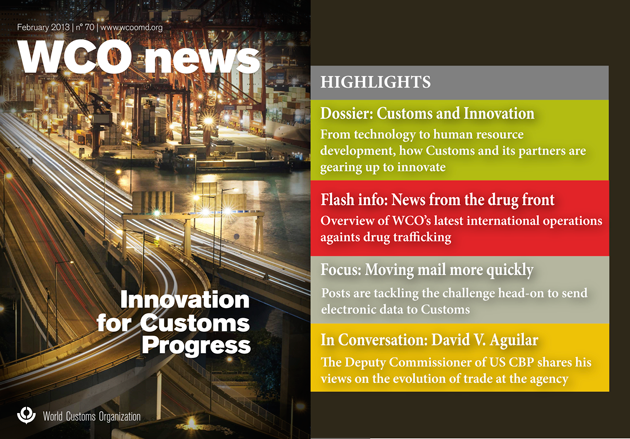
WCO News – Innovation for Customs Progress

WCO News - No.70 February 2013No introduction needed here. This Edition of WCO News focusses on innovation with a collection of articles from around the globe. In addition to the highlights listed above, check out what’s happening in the world of Non-Intrusive Inspection.

  • Serbian Customs showcases its new Command and Control centre and anti-smuggling capability demonstrating efficient distribution of information between its head quarters and border-crossings and use of mobile X-ray scanners.
  • Dutch Customs discusses its foray into the unique territory of rail scanning, having recently acquired the worlds fastest X-ray rail scanner.
  • The head of Rapiscan Systems presents the changing requirements of customs cargo screening, particularly the emergence of ‘fused technologies’ that maximise the capabilities of non-intrusive detection and material discrimination.

Singapore Customs leads the way in the exploration and promotion of ‘green’ technologies having facilitated two R&D projects on eco-friendly vehicles.

Certificates of origin also feature. As part of its commitment to further facilitate trade by strengthening origin compliance through innovative thinking, the International Chamber of Commerce World Chambers Federation (ICC WCF) recently created an international certificate of origin certification and accreditation chain which will, as a first step, concentrate on non-preferential certificates of origin (COs) – the most common certificates issued by Chambers, and the only ones Chambers are authorized to issue in most countries. Learn how they intend to implement the Certificate of Origin (CO)  certification and accreditation chain scheme and what the underlying benefits are.

Also, learn how the EU proposes to strengthen supply chain security. Click Here! to access the magazine.

Debate or Mitigate?

City Deep1_SnapseedBrowsing my various sources of news I came across this article featured in the FTW Online a few weeks ago. It prompted me to post it as an item for some detailed discussion in a follow-up post. Many followers have enquired what happened to my discussion on Inland Ports and the National Transit procedure. I guess it’s now time to respond, but not just yet – perhaps after what materializes at the event below.

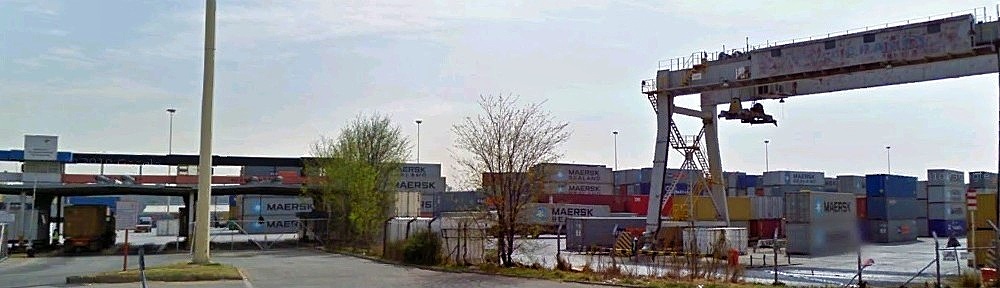
What will be the impact of the new Customs Bill on City Deep’s inland port status?
This is the issue to be debated at a JCCI event scheduled for March 15. “The Johannesburg Chamber has been closely involved with City Deep, our international gateway for containerised cargo, for the past 36 years,” says the JCCI’s Pat Corbin. “We have actively promoted the benefits for traders of a combined transport (multi-modal) bill of lading allowing seamless movement through the coastal ports.

“But diametrically opposed developments are taking place which could have far-reaching impact on not just the future of the dry port, the supporting logistical suppliers and local employment, but also the coastal ports and the transport mode for inland movement.”

The event will examine Transnet’s major investments in City Deep and the Durban corridor, SACD’s expanded facilities and services, and the Customs Bill – with its intended removal of inland port status. Source: FTW Online

Mozambique – Huge Heroin Seizure with South African Connection

00013ee0-314The Mozambican police claims that it has seized almost 600 kilos of heroin, at Namoto, in the northern province of Cabo Delgado, on the border with Tanzania.

The drugs were found on Sunday in the possession of two citizens of Guinea-Conakry, who are now under detention in the Cabo Delgado, provincial capital, Pemba. The drugs are being stored in the warehouses of the provincial attorney’s office.

According to Malva Brito, the spokesperson of the provincial police command, cited in Wednesday’s issue of the Maputo daily “Noticias”, the final destination of the heroin was South Africa.

Brito said the drug was concealed in an otherwise empty seven tonne pick-up truck. The Guineans had improvised a type of hold within the truck’s bodywork. But alerted by a strange smell and the odd size of the stowage area, the police searched the truck, and found the heroin in 118 plastic bags of about five kilos each (which is a total of 590 kilos).

When the heroin was found, the Guineans first claimed that it was fertilizer that they were taking to South Africa. When that didn’t work, they tried to bribe the frontier guards, offering them 60,000 US dollars. The bribe was not accepted.

The Guineans had started their journey in the Kenyan capital, Nairobi, last Friday, and crossed Tanzania before entering Mozambique. The Toyota pick-up bore a number plate from the Democratic Republic of Congo, and supposedly belongs to a Congolese named Sidiki Sano, who is resident in Mozambique. The owner of the heroin is believed to live in Johannesburg.

If the police figures are accurate, this is an enormous drugs bust. According to the United Nations, heroin was selling in South Africa in 2012 for 35 dollars a gram. So 590 kilos would sell in Johannesburg for 20.65 million dollars. Source: Mozambique News Agency (Agência de Informação de Moçambique).

Port Tariffs to Drop on Export Containers

cargo-container-shippingThe Ports Regulator of South Africa will soon announce anew port tariffs structure that will include a cut of about 40% in the tariff on exported containers. This step is part of the Transnet National Ports Authority‘s strategy to reduce South African port charges, which are seen as among the highest in the world, because it erodes the competitiveness of South Africa’s exports.

This announcement was made during a colloquium on the impact of administered prices on the manufacturing sector. The purpose of the colloquium was to get all the stakeholders together to try and find a solution to the challenges. It had become clear that the stakeholders did not have a regular opportunity to engage on the issue of administered prices.

In addition to the new tariffs, the authority is proposing a reworking of its tariff structure, which if accepted by the regulator, will see higher charges for bulk commodities, up to 68%. South African port tariffs were at least 8.7 times more than the global average for containers and 7.4 times the global average for automotive cargo.

Transnet’s CEO said the shift in the tariff burden was aligned with the government’s manufacturing growth strategy. The mining sector had been hugely subsidised by a tariff structure weighted in favour of raw exports, at the expense of the manufacturing and agricultural sectors. Department of Trade and Industry has also welcomed the expected tariff reduction, saying it would be a major boost for exporters. 

One would therfore like to believe that these tariff reductions will be extended to agriculture and agro-processing. Hopefully ocean carriers will not see this as an opportunity to increase their tariffs!

Botswana Tightens Car Exports to Namibia

2nd hand carsThe New Era (Windhoek) reports that Botswana has tightened the screws on the importation of second-hand vehicle older than five years, effectively removing the loophole exploited by Namibian motorists to import such vehicles.

Botswana’s customs, the Botswana Unified Revenue Service (BURS), is now enforcing the Southern Africa Customs Union (SACU) agreement that prohibits the registration of imported second-hand vehicles older than five years. Previously Namibian traders in imported second-hand cars would register vehicles in Botswana, from where they would enter Namibia as Botswana registered vehicles instead of imported vehicles.

The process had made it easy to register such cars in Namibia and in other SACU member states, which prohibit the registration of imported vehicles older than five years.

“BURS, in the spirit of good neighbourliness and adherence to the provision of the SACU agreement, wishes to assist Namibia in curtailing the irregularities prevalent in the movement of second-hand vehicles through the two countries,” reads a statement from the Namibian Ministry of Finance’s customs that relayed the decision by the Botswana customs authorities.

However, ingenious Namibian traders in second-hand vehicles told New Era yesterday that the decision by Botswana customs is simply a temporary deterrent as they are now considering using Swaziland’s leniency on the matter to circumvent the very same SACU provisions. Besides the SACU provisions, Angola – a non-SACU member – has also banned the importation of second-hand vehicles older than five years. Second-hand vehicle imports contributed at least N$150 million to the economy during 2012, with a record 20 000 vehicles recorded.

Some of the vehicles have also gone through to neighbouring countries. South Africa does not allow imported second-hand vehicles older than five years to drive on its road network. Importers of such cars are forced to load vehicles on trucks or use the port of Walvis Bay. To register the cars in Namibia, the traders would take the vehicles to Botswana where they would be registered for a short period of time and bring them back to Namibia as Botswana registered vehicles.

The process enables the cars to be registered on the Namibian vehicle registration system, which ordinarily would not allow the cars to be registered for local use within SACU states. Botswana customs says persons attempting to circumvent the SACU provisions would be subject to a fine of P40 000 (N$44 579.85) or three times the value of the vehicles or imprisonment of not more than ten years. Source: New Era

Simple solution – SACU countries should unilaterally invoke the prohibition on the importation and registration of second-hand motor vehicles at all external borders of the customs union. Is it not time for the member states to act for once like a custom union?

Mastermind Steps Up War Against Counterfeit Goods

cigaretteNow isnt this a surprise? – Mastermind Tobacco has stepped up the fight against counterfeit cigarettes in the Kenyan market, it announced yesterday (February 27, 2013). It said it has set up security teams in Nairobi, North Lake Zone, South Lake Zone, Meru, Central and Rift Valley. Focus will also be on borders such as Malaba, Chepkube and Lokichogio, the airports and ports.

“The investment in supply chain preventive security measures from the point of manufacture to the point of distribution has seen an improvement in preventing legitimate trade from being infiltrated by counterfeits,” said Mastermind in a statement. Quite rich for a company which was persona non-grata in South Africa for instance. Security teams for what? To assist delinquent Customs officials on what they do when the Mastermind truck arrives at the border?

Just a month earlier (January 2013) Mastermind featured a job advert on jobskenya24.com  (click hyperlink to read the job criteria) wherein one of the key criteria under qualifications and experience reads as follows –

“At least 10 years experience in Kenya Police Service, five (5) of which should have been as Assistant Commissioner of Police (ACP) especially in the Criminal Investigations Department or Anti-Bank Fraud Unit.”

So there you have it, somebody on the inside of government ear-marked for the job of overseeing investigations and no doubt border operations. See links below  on Mastermind’s historical exploits –


Federal spending cuts will delay box inspections, warns US Customs

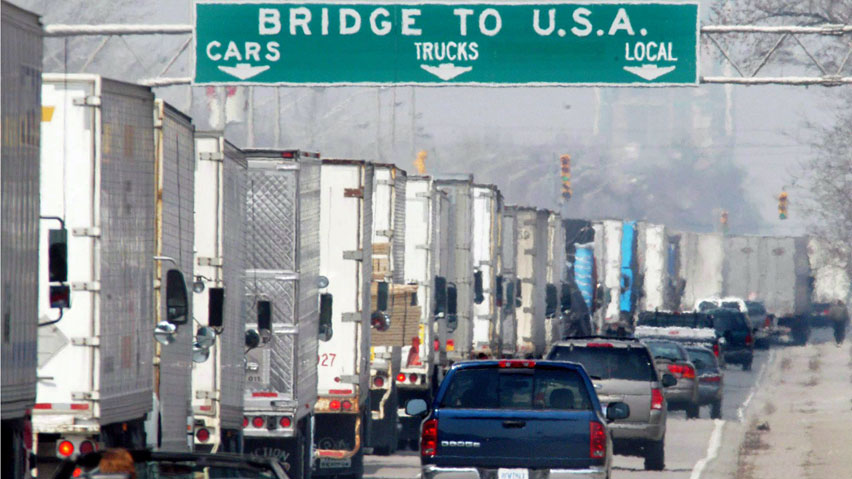
"Uncertain Times" - U.S. Homeland Security Secretary Janet Napolitano said earlier this week that her department would be slashing 5,000 border-patrol agents when the cuts go through, which would ultimately slow some of the busiest crossings between Canada and the U.S.

“Uncertain Times” – U.S. Homeland Security Secretary Janet Napolitano said earlier this week that her department would be slashing 5,000 border-patrol agents when the cuts go through, which would ultimately slow some of the busiest crossings between Canada and the U.S.

Is this a process of auto-destabilisation in the USA? At least terrorists aren’t being blamed for this……will be interesting to see what instructions are fed to CBP (US Customs) Field Operations in foreign countries where the Megaports and CSI initiatives are in operation. Besides being grave times , I’d say these are interesting times…

Lloyds reports that the US Customs and Border Protection (CBP) is warning of major delays for incoming containers and other cargo at seaports because of sequestration, but early reports suggest that business is operating normally on arterial waterfronts, at least for now.

In a letter to cargo and travel industry groups after automatic cuts to federal spending, known as sequester cuts or sequestration, went into effect at the weekend, CBP deputy commissioner David Aguilar said the agency faced “furloughs, reductions in overtime and a hiring freeze, [which] would equate to the loss of up to several thousand CBP officers at our ports of entry, in addition to significant cuts to our operating budgets and programmes”.

Describing the current phase as an “uncertain time”, Aguilar warned of major disruption for travellers and cargo.

For the latter, sequestration could result in “decreased service levels in our cargo operations, including increased and potentially escalating delays for container examinations of up to five days or more at major seaports, and significant daily back-ups at land border ports of entry”.

CBP also issued a set of “cargo priorities under sequestration”, which vowed that security would not be compromised, but said that “CBP has redirected resources toward only the most critical, core functions and discontinued or postponed certain important but less critical activities in an effort to reduce budget expenditures”.

The agency said it would hold weekly conference calls to update the industry about the situation.

Shippers and cargo interests agreed that five-day delays could cause major bottlenecks at container ports, and would cost shippers extra money during an already challenging economic time.

The only consolation would be that individual ports or shippers would not have to worry about rival ports siphoning business away, because every US port would be up against the same problem.

The Port Authority of New York and New Jersey reported normal operations and said in a statement that it continued to monitor the situation.

New Jersey governor Chris Christie appeared unimpressed with the threat attributed to sequestration.

“I do not think sequestration at one cent on the dollar is going to have grave effect, or anybody is going to notice it all that much, except for some federal employees who will be furloughed,” He told a press conference.

The sequester cuts $85 billion, or 2.4% of the annual federal budget of $3.6 trillion, to be spread over seven months to September 30.

Roughly half the sum involves defence, and there appears to be discretion in where precisely the cuts are administered.

Nevertheless, the shipping industry is taking the matter seriously. Other than cargo delays, the maritime sector is factoring in reduced maintenance dredging and a degradation of some US Coast Guard functions, including search and rescue, as possible effects of the sequester cuts. Source: LloydsList
Government heeds the call – Tax Holidays for SEZs

Minister Pravin Gordhan and his 'budget team' on their way to parliment [Picture credit-SARS]

Minister Pravin Gordhan and his ‘budget team’ on their way to parliament [Picture credit – SARS]

After more than a decade of fruitless marketing and billions spent on capital investment, Budget 2013 brings some hope of a turn-around and better fortunes for economic development zones in South Africa.

Minister of Finance, Pravin Gordhan announced, what is an unprecedented move. to bolster support for government’s Special Economic Zone (SEZ)programme. Investors in such zones are expected to qualify for a 15% corporate tax rate, and in addition, a further tax deduction for companies employing workers earning less than R60,000 per year.

This is a significant development in that the previous dispensation under the Industrial Development Zone (IDZ) programme only afforded prospective investors a duty rebate and VAT exemption on imported goods for use in the Customs Controlled Area (CCA) of an IDZ. The reality is that these benefits were simply not enough to woo foreign company’s to set up shop in our back yard, let alone existing big business in South Africa to relocate to these zones. Mozambique, next door, has had much success as are other African countries through the offering of company tax holidays with the introduction of export-focussed special manufacturing facilities.

The SEZ (so it would seem) differs little from the IDZ approach save the fact that the former does not require the location of the economic zone at an international airport, seaport or border crossing. As such, an existing IDZ may ‘house’ a special economic zone, thus maximizing return on investment.

Recent developments in SA Customs realise a provision permitting foreign entities to register as importers or exporters under the ‘foreign principal’ clause in the Customs and Excise Act. Approval of such is dependant on the foreign principal establishing a business relationship with a South African ‘Agent’. This ‘agent’ is required to be registered with the SA Revenue Service as the party representing a ‘foreign principal’ in customs affairs. At this point, the provision is being applied to business entities in BLNS countries who import or move bonded goods into or from South Africa.

Future global application of this provision could boost the possibilities of a broader range of investor to favourably consider SEZ opportunities in South Africa. This option will, no doubt, not go unnoticed by the big audit firms seeking to broker ‘cross-border’ customs facilities for their multi-national clients. I perceive that more introspection is still required concerning ‘non-resident’ banking facilities and transfer pricing issues to enable the global application of the foreign principal concept. But after all this seems a good case for trade liberalisation. Add to this the forthcoming launch of Customs new integrated declaration processing system that will (in time) offer simplified electronic clearance and expedited release facilities for future SEZ clients.