Mauritius Revenue Authority – Launch of the WCO Multilingual Regional Training Centre

This slideshow requires JavaScript.

The SADC region is now equipped with a third World Customs Organization accredited Regional Training Centre in addition to the South African and Zimbabwean Regional Training Centre. The Regional Training Centres are excellent platforms for Customs to advance capacity building and to share information and best practices.

The Mauritius Revenue Authority (MRA) has been selected by the WCO to host the RTC as part of the WCO initiative to optimise resources in the region and in line with government’s objective of making of Mauritius a Knowledge Hub. The RTC represents the 25 of its kind adding to the existing Centres across the world and is the fourth one in the WCO ESA region.

The Centre will enable the WCO achieve its mission of enhancing Customs administrations in the WCO ESA region thereby helping these Customs administrations to make an important contribution to the development of international trade and to the socio-economic well-being of their country.

Under the WCO strategy the RTC has four main objectives namely: development of regionally relevant training; maintenance of specialist trainer pools; provision of specialist training at a regional level; and development and support of the WCO’s blended learning programme. Moreover, it has as task to develop and maintain annual training plans and work in partnership with the private sector to maintain effective relationships between Customs and economic operators as well as assist Member countries in their training needs.

The Mauritius RTC is equipped with English, French and Portuguese language facilities as well as an e-learning platform. The Vice-Prime Minister and Minister of Finance and Economic Development, Mr. Xavier Luc Duval, formally opened the RTC on the 25th November 2013. In his opening address, Secretary General Mikuriya commended the leadership and continued engagement of Mauritius, previously as WCO Vice-Chair for the East and Southern Africa (ESA) Region from 2011 to 2013, and now as host of an RTC. He hoped that this RTC would serve to share knowledge and strengthen the human resource network for Customs cooperation and regional integration.


WCO Classification Decisions (2013)

RACThe World Customs Organisation (WCO) has published the classification decisions taken at the last Session of the Harmonized System Committee (52nd Session) in September 2013 : the Classification Rulings, the Amendments to the Explanatory Notes and to the Compendium of Classification Opinions. You can locate the decisions via the following links:

Classification Rulings – HS Committee 52nd Session

Amendments to the Compendium of Classification Opinions – HS Committee 52nd Session

Amendments to the Harmonized System Explanatory Notes  – HS Committee 52nd Session

Source: WCO


Experts Caution Against Rush into Trade Facilitation Agreement

Bali 2013A rather lengthy article published by Third World Network, but entirely relevant to trade practitioners and international supply chain operators who may desire a layman’s understanding of the issues and challenges presented by the WTO’s proposed agreement on ‘Trade Facilitation’. I have omitted a fair amount of the legal and technical references, so if you wish to read the full unabridged version please click here! If you are even more interested in the subject, take a look through the publications available via Google Scholar.

A group of eminent trade experts from developing countries has advised developing countries to be very cautious and not be rushed into an agreement on trade facilitation (TF) by the Bali WTO Ministerial Conference, given the current internal imbalance in the proposed agreement as well as the serious implementation challenges it poses.

“While it may be beneficial for a country to improve its trade facilitation, this should be done in a manner that suits each country, rather than through international rules which require binding obligations subject to the dispute settlement mechanism and possible sanctions when the financial and technical assistance as well as capacity-building requirements for implementing new obligations are not adequately addressed.”

This recommendation is in a report by the Geneva-based South Centre. The report, “WTO Negotiations on Trade Facilitation: Development Perspectives”, has been drawn up from discussions at two expert group meetings organised by the Centre.

Noting that an agreement on trade facilitation has been proposed as an outcome from the Bali WTO Ministerial Conference, the South Centre report said that the trade facilitation negotiations have been focused on measures and policies intended for the simplification, harmonization and standardization of border procedures.

“They do not address the priorities for increasing and facilitating trade, particularly exports by developing countries, which would include enhancing infrastructure, building productive and trade capacity, marketing networks, and enhancing inter-regional trade. Nor do they include commitments to strengthen or effectively implement the special and differential treatment (SDT) provisions in the WTO system”.

The negotiations process and content thus far indicate that such a trade facilitation agreement would lead mainly to facilitation of imports by the countries that upgrade their facilities under the proposed agreement. Expansion of exports from countries require a different type of facilitation, one involving improved supply capacity and access to developed countries’ markets.

Some developing countries, especially those with weaker export capability, have thus expressed concerns that the new obligations, especially if they are legally binding, would result in higher imports without corresponding higher exports, which could have an adverse effect on their trade balance, and which would therefore require other measures or decisions (to be taken in the Bali Ministerial) outside of the trade facilitation issue to improve export opportunities in order to be a counter-balance to this effect.

According to the report, another major concern voiced by the developing countries is that the proposed agreement is to be legally binding and subject to the WTO’s dispute settlement system. This makes it even more important that the special and differential treatment provisions for developing countries should be clear, strong and adequate enough. The negotiations have been on two components of the TF: Section I on the obligations and Section II on special and differentiated treatment (SDT), technical and financial assistance and capacity building for developing countries.

Most developing countries, and more so the poorer ones, have priorities in public spending, especially health care, education and poverty eradication. Improving trade facilitation has to compete with these other priorities and may not rank as high on the national agenda. If funds have to be diverted to meet the new trade facilitation obligations, it should not be at the expense of the other development priorities.

“Therefore, it is important that, if an agreement on trade facilitation were adopted, sufficient financing is provided to developing countries to meet their obligations, so as not to be at the expense of social development,” the report stressed.

The report goes on to highlight the main issues of concern for a large number of developing countries on the trade facilitation issue. It said that many developing countries have legitimate concerns that they would have increased net imports, adversely affecting their trade balance. While the trade facilitation agreement is presented as an initiative that reduces trade costs and boosts trade, benefits have been mainly calculated at the aggregate level.

Improvements in clearance of goods at the border will increase the inflow of goods. This increase in imports may benefit users of the imported goods, and increase the export opportunities of those countries that have the export capacity.

However, the report noted, poorer countries that do not have adequate production and export capability may not be able to take advantage of the opportunities afforded by trade facilitation (in their export markets).

“There is concern that countries that are net importers may experience an increase in their imports, without a corresponding increase in their exports, thus resulting in a worsening of their trade balance.”

Many of the articles under negotiations (such as the articles on ‘authorized operators’ and ‘expedited shipments’) are biased towards bigger traders that can present a financial guarantee or proof of control over the security of their supply chains. There is also the possibility that lower import costs could adversely affect those producing for the local markets.

“The draft rules being negotiated, mainly drawn up by major developed countries, do not allow for a balanced outcome of a potential trade facilitation agreement,” the report asserted.

New rules under Section I are mandatory with very limited flexibilities that could allow for Members’ discretion in implementation. The special and differential treatment under section II has been progressively diluted during the course of the negotiations. Furthermore, while the obligations in Section I are legally binding, including for developing countries, developed countries are not accepting binding rules on their obligation to provide technical and financial assistance and capacity building to developing countries.

The trade facilitation agreement would be a binding agreement and subject to WTO dispute settlement. The negotiating text is based on mandatory language in most provisions, which includes limited and uncertain flexibilities in some parts.

Therefore, if a Member fails to fully implement the agreement it might be subject to a dispute case under the WTO DSU (Dispute Settlement Understanding) and to trade sanctions for non-compliance.

“Many of the proposed rules under negotiations are over-prescriptive and could intrude on national policy and undermine the regulatory capacities and space of WTO Member States. The negotiating text in several areas contains undefined and vague legal terminology as well as ‘necessity tests’, beyond what the present GATT articles require.”

Continue reading →
WCO News – October 2013 Edition

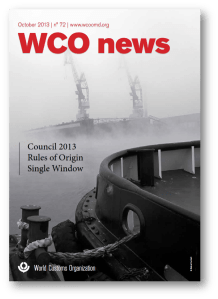
wco news 2013The latest edition of WCO News reflects on the Secretary General’s thoughts on what the WCO has done, what it will be doing, and what will impact on its work in the coming months. The WCO will actively focus its energies on it’s four strategic packages concentrating on revenue, compliance and enforcement, economic competitiveness and organizational development. Together, these packages support the adoption and application of modern Customs practices and raise awareness on the vital role of Customs in international trade.

Featured articles include –

  • From borders to boundless: the digital dilemma in Customs – it discusses two questions – How does an industry traditionally focused on physical borders remake itself for digital commerce, which inherently circumvents such borders? and, Why must Customs agencies transform to address the rise in digital goods and services?
  • Intercepting next generation threats

    For those responsible for the security of our borders, transit networks, VIPs and high-profile sites, the threat posed by more creative adversaries is compounded by the increasing frustrations of passengers and visitors, when subjected to existing security checks. The article discusses a range of ingenuity which technology nowadays provides to these adversaries, and the elements of new Terahertz imaging equipment to assist border agencies in the combat thereof.

  • Beyond the Single 

    Window (SW) – In the 20-plus years since they first opened in Singapore and Sweden, SWs have remained a central focus of border clearance strategies, even though the majority of Customs administrations have not implemented them. Although design plans vary considerably, most SW systems support an electronic data exchange model which allows for (i) Single submission of data and information; (ii) Single and synchronous processing; and (iii) Single decision-making for release and clearance. This article considers 4 best practices which governments should consider when implementing Single Window programs.

The publication also includes country case study’s on Single Window featuring Nigeria and New Zealand, Sri Lanka Customs 20 years of dedication towards conservation, a feature on Argentine Customs and many other interesting articles. To access the publication – click here! Source: WCO

Visiting the WCO’s Strategic Plan

Reality Check

The ongoing global financial and economic crisis affects governments,  organisations and citizens in different ways. It would seem that no individual or any organisation has the proverbial ‘silver bullet’ to normalise the situation either. Today, probably most Customs and Border agencies are undergoing ‘modernisation’ or some form of restructuring. Modernisation in itself implies automation or digitization of information changing the lives of the average customs (border) official as well as the expectations and predictability of service to traders and trade intermediaries around the world. 9/11 forever changed the role of Customs and for most of governments, border regulatory authorities as well. Changes in Customs have since been focussed on alignment to policy, standards and guidelines as advocated by the WCO.

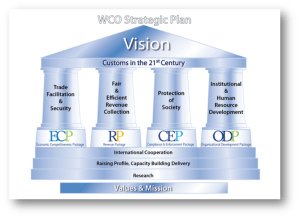
WCO Startegic PlanNational adoption of these remains the foremost critical step in establishing a country’s ability to ‘connect’ with the world. A national administration should seek inclusivity of its trading community lest its modernisation be regarded as self-serving. Simultaneously, regional economic communities also seek radical change, albeit on a regionalisation level. Pressures on national (sovereign) nations develop given high-level political commitment to regionalisation, often without taking into account their respective countries’ state of readiness. This creates a false sense of commitment which results in regional failures. Behind such regional initiatives are normally a host of sponsors, purportedly with the right experts and solutions to rectify the ‘barriers’ which prevent a national state from integrating with its neighbours and global partners. Sound familiar? If so, it wouldn’t do national representatives any harm to refresh themselves with the under mentioned WCO tools and validate this in relation to the direction which their organisation is headed. These form part of the WCO’s Customs’ in the 21st Century Agenda. It is also recommended reading for the various regional economic communities (RECs) – here I refer to the African continent – who are not always au fait or fully appraised on the ‘readiness’ landscape of the member states they represent.

The Economic Competitiveness Package (ECP) (Click the hyperlink for more information) is currently a matter of high priority at the World Customs Organization (WCO). Economic competitiveness starts with trade facilitation and Customs administrations undeniably play an important role in this respect. Indeed, facilitating trade is one of the WCO’s key objectives and the Organization has contributed, through its tools and instruments as well as through technical assistance, to increasing the economic competitiveness and growth of Members.

The Revenue Package (RP) (Click the hyperlink for more information) was developed by the World Customs Organization (WCO) in response to WCO Members’ concerns in regard to falling revenue returns in the light of the global financial crisis and declining duty rates.

Significant progress has been made since the adoption of the WCO Capacity Building Strategy in 2003. However, new and emerging key strategic drivers impact on international trade and the roles and responsibilities of Customs administrations. This requires that all our capacity building efforts remain responsive and needs-driven to ensure beneficiary Customs administrations can obtain the support they need to pursue their reform and modernization. This Organisational Development Package (ODP) (Click the hyperlink for more information) outlines the basic approach of the WCO towards organizational development. It provides a simple and accessible overview of the texts, tools and instruments that relate to this topic. It refers and offers access to these resources but does not purport to capture all knowledge and practices within this extensive area.

The Compliance and Enforcement Package (CEP) (Click the hyperlink for more information) has been developed in order to assist Members to address the high-risk areas for Customs enforcement. The Customs in the 21st Century Strategy calls on Customs administrations to implement modern working methods and techniques. In this context, Customs should be equipped with the necessary tools that allow it to effectively manage supply chain risks and enforce laws and regulations in cases of non-compliance. In discharging this mandate, the WCO, in close co-operation with Members, has created an extensive library of instruments, tools, guidance materials and operational co-ordination activities to support Customs compliance and enforcement actions. These tools new form part of the CEP.


Pravin Gordhan named Finance Minister of the Year

Pravin Gordhan - Finance Minister of the Year 2013 (Mail & Guardian)

Pravin Gordhan – Finance Minister of the Year 2013 (Mail & Guardian)

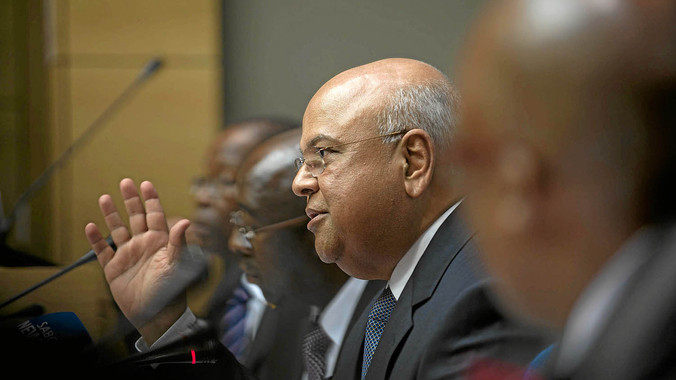
Finance Minister Pravin Gordhan (former chairperson of the World Customs Organisation) has been named the Finance Minister of the Year for 2013 in sub-Saharan Africa by the Emerging Markets website, the finance ministry said on Sunday.

The website’s citation stated that Gordhan, appointed in 2009 at the height of the economic crisis, had been praised by analysts, the ministry said in a statement.

This was because South Africa especially was more exposed than other emerging markets to dangers stemming from the eventual pullback of quantitative easing by the US’s Federal Reserve.

Emerging Markets provides news, analysis and commentary on economic policy, international economics and global financial markets, with a special focus on emerging markets.

In his acceptance speech in Washington DC, where he has been attending the annual meetings of the World Bank and the International Monetary Fund, Gordhan thanked Emerging Markets for its recognition of South Africa and its economic team.

‘We are terrible managers’
“Minister Gordhan was critical of the sudden change in the narrative about emerging markets, which up until the second quarter of this year were praised for managing their economies very well,” the ministry said.

“[Emerging markets contributed] more than 50% to global economic growth and for lifting large numbers of people above the poverty line.”

Gordhan said: “Three months later, we are apparently fragile and we are terrible managers of our economies. We the emerging markets are here to stay.

“We live in an interconnected world, and more importantly, we live in an interdependent world. There is no decoupling from you, the advanced economies, and there is no decoupling from us, the emerging markets.” Source: Mail & Guardian/Sapa

Border Management in Southern Africa: Lessons with respect to Policy and Institutional Reforms

The folk at Tralac have provided some welcomed insight to the challenges and the pains in regard to ‘regionalisation’. No doubt readers in Member States will be familiar with these issues but powerless within themselves to do anything due to conflict with national imperatives or agendas. Much of this is obvious, especially the ‘buzzwords’ – globally networked customs, one stop border post, single window, cloud computing, and the plethora of WCO standards, guidelines and principles – yet, the devil always lies in the details. While the academics have walked-the-talk, it remains to be seen if the continent’s governments have the commitment to talk-the-walk!

Regional integration is a key element of the African strategy to deal with problems of underdevelopment, small markets, a fragmented continent and the absence of economies of scale. The agreements concluded to anchor such inter-state arrangements cover mainly trade in goods; meaning that trade administration focuses primarily on the physical movement of merchandise across borders. The services aspects of cross-border trade are neglected. And there are specific local needs such as the wide-spread extent of informal trading across borders.

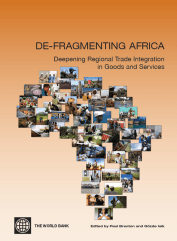
Defragmenting Africa WBThis state of affairs calls for specific governance and policy reforms. Effective border procedures and the identification of non-tariff barriers will bring major cost benefits and unlock huge opportunities for cross-border trade in Africa. The costs of trading remain high, which prevents potential exporters from competing in global and regional markets. The cross-border production networks which are a salient feature of development in especially East Asia have yet to materialise in Africa.

Policy makers have started paying more attention to trade-discouraging non-tariff barriers, but why does the overall picture still show little progress? The 2012 World Bank publication De-Fragmenting Africa – Deepening Regional Trade Integration in Goods and Services shows that one aspect needs to be singled out in particular:  that trade facilitation measures have become a key instrument to create a better trading environment.

The main messages of this WB study are:

  • Effective regional integration is more than simply removing tariffs – it is about addressing on-the-ground constraints that paralyze the daily operations of ordinary producers and traders.
  • This calls for regulatory reform and, equally important, for capacity building among the institutions that are charged with enforcing the regulations.
  • The integration agenda must cover services as well as goods……services are critical, job-creating inputs into the competitive edge of almost all other activities.
  • Simultaneous action is required at both the supra-national and national levels. Regional communities can provide the framework for reform, for example, by bringing together regulators to define harmonised standards or to agree on mutual      recognition of the qualification of professionals……. but responsibility for implementation lies with each member country.

African governments are still reluctant to implement the reforms needed to address these issues. They are sensitive about loss of ‘sovereign policy space’ and are not keen to establish supra-national institutions. They are also opposed to relaxing immigration controls. The result is that border control functions have been exercised along traditional lines and not with sufficient emphasis on trade facilitation benefits. This is changing but specific technical and governance issues remain unresolved, despite the fact that the improved border management entails various technical aspects which are not politically sensitive.

The required reforms involve domestic as well as regional dimensions. Regional integration is a continental priority but implementation is compounded by legal and institutional uncertainties and burdens caused by overlapping membership of Regional Economic Communities (RECs). The monitoring of compliance remains a specific challenge. Continue reading →

WCO/SACU Regional IT Connectivity Conference 2013

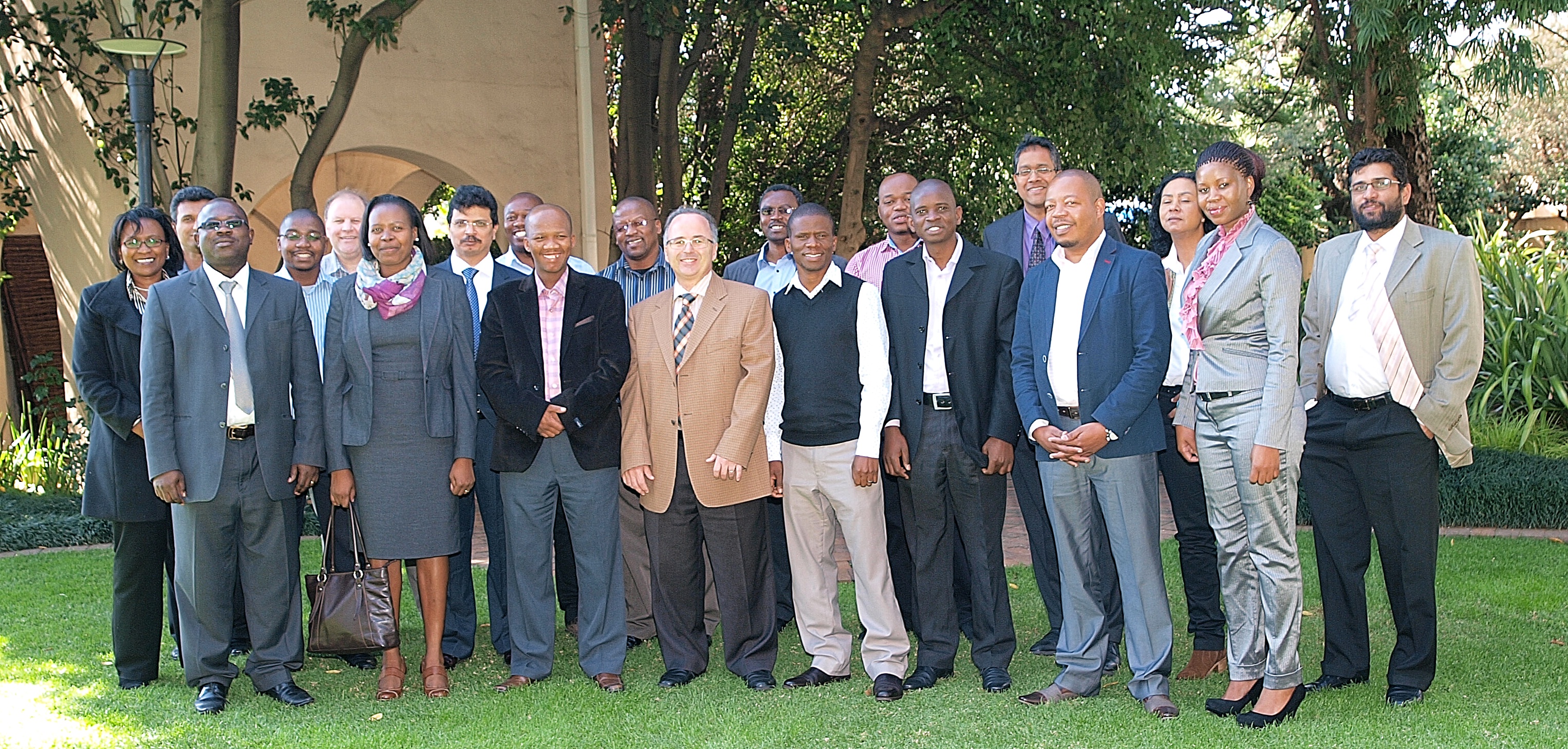
Delegates attending the WCO/SACU IT Connectivity Conference - May 2013

Delegates attending the WCO/SACU IT Connectivity Conference – May 2013

Representatives of the SACU member states recently met in Johannesburg to progress developments concerning IT Connectivity and Customs-to-Customs data exchange in the region. The session served as a follow up to the session held last year in February 2012 in Pretoria. The conference was convened by the SACU secretariat under the sponsorship of the Swedish International Development Agency (SIDA), and was once again pleased to have SP Sahu, senior technical expert from the World Customs Organisation, to facilitate the work session over 3 days. Representatives of UNCTAD ASYCUDA were also in attendance to observe developments. UNCTAD currently supports three (soon to be four) of the five SACU Customs administrations. The session provided an opportunity for delegates to progress this work as well as develop a terms of reference for an independent assessment of the two connectivity pilot projects that are currently being pursued between Botswana-Namibia and South Africa-Swaziland, respectively.

IT Connectivity serves as a catalyst for various customs-to-customs cooperation initiatives seeking to bring about a seamless end-to-end flow of information between point of departure and destination. Some examples include export/transit data exchange, approved economic operator, commercial fraud, eATA and at least 5 other key areas of customs mutual exchange.  The concept is driven out of the newly establish WCO model known as Globally Networked Customs (GNC). GNC was formally adopted by the WCO Council in June 2012 where a capacity building approach based on protocols, standards and guidelines (PSG) using utility blocks was recognised to provide the most realistic means to achieve efficiency gains, and a more effective way to manage the negotiation of international agreements between customs administrations.

There exist several pilot projects across the globe wherein customs agreements are being piloted under the GNC approach. Development of a Utility Block and supporting data clusters for interconnectivity within SACU and the broader Southern Africa sub-region already commenced at last year’s session. The concept gained sufficient traction and was soon adopted by both SACU and SADC  member states as the means to implementing IT connectivity within the respective regions.

A review of the Utility Block and data clusters was conducted to ensure alignment of customs data requirements across the member states. The resulting product now provides a standard ‘data set’ which members agree as the minimum data required to facilitate data exchange and advance risk management needs. It covers export and transit declaration requirements. Two important criteria exist for successful data exchange and data matching. The first being the availability of appropriate legal provision for two countries to exchange data. The second requires the use of an agreed unique identifier. The identifier is important for Customs as well as the trade community.

Delegates were also presented with current and future developments occurring at the WCO, in particular the on-going work being done to formalise standards for the “My Information Package” concept as well as the WCO Data Model, currently at version 3.3. Another interesting on-going development involves a unique Trader ID.  

Member states involved in respective pilot programmes are now preparing themselves for an up-coming evaluation, later this year.

WCO ICT Conference 2013 a resounding success!

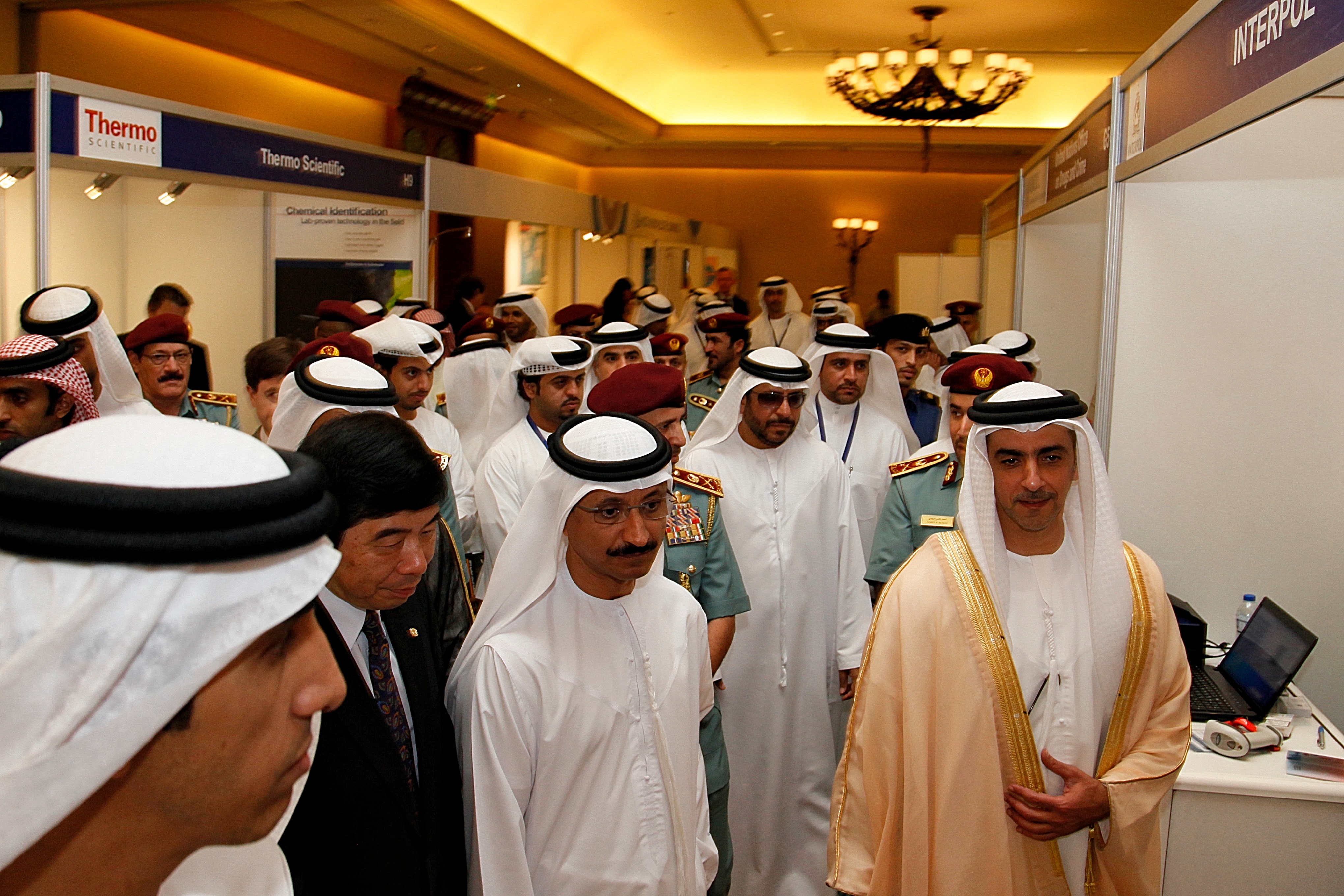
WCO ICT Conference 2013 - Dubai

WCO ICT Conference 2013 – Dubai

The 2013 WCO IT Conference & Exhibition was held in Dubai, United Arab Emirates (UAE), from 14 to 16 May 2013 and co-hosted by Dubai Customs. The Conference theme, “Effective Solutions for Coordinated Border Management”, attracted over 1,000 participants from 93 countries and 56 Customs administrations, including 14 Directors General of Customs, other governmental agencies and the private sector, who were actively involved in sharing available information technologies, lessons learned from experience, and future visions.

The Conference was opened in the presence of His Highness Sheikh Mohammed Bin Rashid al Maktoum, UAE Vice-President, Prime Minister and Ruler of Dubai, showing strong support for the innovative approach towards Customs modernization. In his opening speech, His Highness, Lieutenant General, Sheikh Saif Bin Zayed Al Nahyan, UAE Deputy Prime Minister and Minister of the Interior, welcomed the participants and stressed the importance of collaboration for effective, coordinated border management applying technology. Secretary General Kunio Mikuriya said that the contribution of Customs to economic competitiveness required better communication, cooperation, coordination and collaboration with other border agencies. In this connection, technology enabled coordinated border management, and the WCO had developed the Data Model with a standardized data set that met the requirements of border regulatory agencies. He also stressed the importance of partnership with the private sector in finding innovative solutions for IT applications, which was the objective of this Conference.

The participants enjoyed a series of panel sessions with high-level speakers from Customs, other governmental agencies, international organizations and the private sector, discussing various aspects of coordinated border management and effective solutions in applying technology. Dr. Anwar Mohammed Gargash, UAE Minister of State for Foreign Affairs, shared his country’s vision of trade facilitation through investment in infrastructure and technology, as well as consistent policy development, while honouring international obligations.

A very large number of service providers joined the Exhibition and Tech Talks to explain the latest innovations in information technology, and they listened to the needs of Customs and other border regulatory agencies in their efforts to work together to develop joint IT solutions. Source: WCO


First BRICS Heads of Customs Meeting

Delegates who attended the first BRICS Customs Heads of Customs Meeting [SARS]

Delegates who attended the first BRICS Customs Heads of Customs Meeting [SARS]

At a meeting hosted by the Commissioner near Bela Bela, South Africa from 7 to 8 March 2013, delegations from the Customs Administrations of Brazil, Russia, India, China and South Africa (BRICS) met for the first time. The BRICS Customs administrations exchanged experience and ideas in a spirit of openness so as to identify areas for cooperation so that they can most effectively and efficiently facilitate legitimate trade and combat illicit trade and Customs fraud. From 27 to 28 March, South Africa will also host the BRICS Summit in Durban, to be attended by various Ministers and the BRICS Heads of State.

Key points of discussion, focus and future cooperation –

Customs cooperation
The Heads of Customs committed themselves to consolidating and building on the cooperation that has already been established so that they can collectively curb Customs offences, safeguard the international supply chain and achieve effective enforcement of Customs legislation, while facilitating legitimate trade,both among BRICS countries and also globally.

Capacity building
As part of their cooperation to build Customs capacity in relation to human resources, technologies and procedures,the administrations would look into various practical and innovative solutions and endeavour to share their resources, knowledge and best practices with each other.

Cooperation at multilateral forums
A BRICS Customs mechanism will be established, including attachés networks based in Brussels and other strategic places, to identify issues of common interest, develop common responses and ensure regular engagement and interaction, including before important multilateral meetings.

Customs Mutual Administrative Assistance and the Exchange of Customs Information
The administrations also agreed to ensure that there is an enabling legal basis between them to support intra-BRICS Customs mutual administrative assistance and the exchange of Customs information. Such assistance and exchange will assist in combating illicit trade and protecting revenues and societies.

Facilitation of legitimate trade between BRICS countries
To further facilitate trade and reduce the Customs administrative burden on both trade and the administrations themselves, the administrations will exchange information in various areas of common interest and concern, including on the simplification of Customs procedures and the use of modern technologies and techniques.

The administrations will also work towards possible solutions for achieving mutual recognition of Customs controls and of trader management programs aligned to the Authorised Economic Operator (AEO) concept of the World Customs Organization (WCO), establishing Customs interconnectivity and supporting the WCO’s work on developing the Globally Networked Customs (GNC) model.

Opportunities for enforcement cooperation will also be explored, including possible joint actions, information sharing and other enforcement assistance. The use of international instruments developed by the WCO, including Conventions, Recommendations, Decisions and Declarations that support Customs trade facilitation, compliance and enforcement will be actively promoted.

Governance issues
A Governance Framework aligned to the overall BRICS commitments will be established. An annual BRICS Customs Heads meeting has been proposed whose deliberations would be informed to other BRICS forums, including in particular the Summit. Such a BRICS Customs Heads Meeting would be supported by a Customs working group under the guidance of the BRICS Heads of Customs. Source: SARS

UCR and GS1 data to meet?

Kunio Mikuriya, WCO Secretary General, and Maria Palazzolo, Chief Executive Officer of GS1 Australia and GS1 Board Member, at the GS1 Global Forum 2013

Kunio Mikuriya, WCO Secretary General, and Maria Palazzolo, Chief Executive Officer of GS1 Australia and GS1 Board Member, at the GS1 Global Forum 2013

GS1 is a non-profit organization dedicated to the development and implementation of global specifications to manage the supply chain, including product identification codes, barcodes and business-to-business standards for the exchange of accurate data. After longstanding cooperation at the technical level, the WCO concluded a Memorandum of Understanding (MoU) with GS1 in 2007 to formalize cooperative ties.

At the invitation of GS1, the Secretary General of the WCO, Kunio Mikuriya, spoke at the GS1 Global Forum 2013 in Brussels on 18 February 2013 where he highlighted the increasing cooperation between the two organizations. Recalling the evolution of Customs with a heightened focus on data management for assessing risks in the supply chain, the Secretary General underlined the importance for Customs to explore the possibility of making use of supply chain specifications that are available in the trade, such as codes and specifications developed by GS1.

He specifically referred to the new WCO Economic Competitiveness Package to explain how Customs contributes to enhancing national competitiveness by facilitating trade using a risk management approach. As this requires the application of information technology, data and message standards, and consignment identifiers, it is important to employ existing technologies and tools in the trade supply chain, through a partnership with business.

Sharing a common interest in supply chain management, including track and trace systems, both organizations have been cooperating in many areas in a complementary manner, as the WCO facilitates Customs-to-Customs and Customs-to- business data exchange while GS1 also facilitates business-to-business data exchange.

Areas of cooperation between the two organizations include the work at the United Nations Centre for Trade Facilitation and Electronic Business (UN/CEFACT) and the International Standards Organization (ISO) on standardization and specifications for supply chain management, the work on the Unique Consignment Reference Number (UCR) and the use of GS1 data for Customs risk assessment purposes.

The most recent collaboration includes the addition of a barcode function to the Interface Public Members (IPM) – the WCO’s information tool to fight violations of intellectual property rights at borders. Secretary General Mikuriya urged GS1 members to leverage the collaboration with the WCO at the global level by getting in touch with their respective local Customs administrations. GS1 members appreciated his speech and pledged to explore and enhance cooperation with Customs administrations. Source: WCO

For more of the latest news and happenings at the WCO, please follow the news feed alongside (right).

Building Resilience in Supply Chains

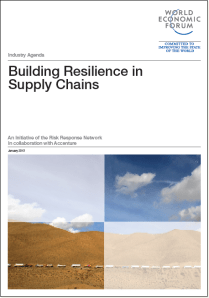
WEF - Building Resilience in Supply ChainsOn 24 January 2013, the Secretary General of the WCO, Kunio Mikuriya, participated in a press conference dedicated to the launch of the World Economic Forum’s (WEF) Building Resilience in Supply Chains 2013 report. Sander van ‘t Noordende, Accenture’s Group Chief Executive for Management Consulting, introduced the report and its major findings, such as the top supply chain risks that include extreme weather, natural disasters, physical and cyber security threats, along with economic and political volatility. He highlighted that the report argued the need for a coherent and consistent framework to deal with supply chain resilience, partnerships between government, Customs and businesses, and the sharing information flows for risk assessment purposes.

Secretary General Mikuriya pointed out that supply chain resilience is very important for Customs, whose functions include ensuring that legitimate trade continues even in cases of disruption, an issue which has been addressed by a set of standards and instruments developed by the WCO, in particular, the 2011 WCO Resolution on the Role of Customs in Natural Disaster Relief.  He also stressed the importance of public-private partnerships in order to share security responsibility with trusted traders through the implementation of the WCO SAFE Framework of Standards to Secure and Facilitate Global Trade and its integral Authorized Economic Operator (AEO) programme.

Cooperation at intergovernmental level with longstanding partners of the WCO, such as the International Maritime Organization (IMO), the International Civil Aviation Organization (ICAO), the Universal Postal Union (UPU), the International Air Transport Association (IATA), the International Road Transport Union (IRU) and the World Shipping Council (WSC), was also emphasized by the Secretary General as being key to harmonizing standards and creating synergies among different stakeholders. In addition, he pointed out that transparency and trust among stakeholders in supply chains was of the utmost importance, as this led to a global cohesive approach and even stronger partnerships.

The Secretary General of the IMO, Koji Sekimizu, addressed the concerns of the maritime sector, in particular, the sustainability of international transportation within the context of supply chain resilience. He mentioned that along with the WCO, the IMO has built its approach on risk assessment and risk management, resulting in the adoption of the International Ship and Port Facility Security Code (ISPS Code), a comprehensive set of measures to enhance the security of ships and port facilities. He also touched on the issues of port infrastructure, piracy and port security, and underlined the importance of cooperation with other stakeholders, such as the WCO and ICAO. Source: WCO

WCO announces the passing of Bill Nolle – proponent of the WCO Data Model

Australian Customs hosted visits from three international experts on trade data harmonisation - Bill Nolle, Dietmar Jost and Eric Sunstrum.

Australian Customs hosted visits from three international experts on trade data harmonisation – Bill Nolle, flanked by Dietmar Jost and Eric Sunstrum of the WCO.

It is with sadness we [WCO] learnt that our former colleague, the former Chairperson of the DMPT passed away on 29 December 2012 after a brief period of illness. He was fighting a very aggressive cancer.

Bill Nolle was a fabulous contributor to our [WCO] area of work and he has left his imprint in many aspects of our work at the Data Model Project Team and the Information Management Sub Committee. Version 3.0 of the WCO Data Model owes its richness and quality thanks to Bill’s splendid contribution. Bill authored the WCO Single Window Data Harmonization Guidelines/ UN/CEFACT Recommendation 34.  We [WCO] owe it to Bill the methodology of Gather-Define-Analyze-Reconcile for data simplification and harmonization. Bill brought passion to his work. His speeches and interventions were always intense and engaging and he will be missed in his professional environment.

His legacy includes an eLearning module in which you can hear him explain how data harmonization was carried out in Jordan. The module remains a favorite for the professional users and trainers alike.

Bill retired from US Customs and Border Protection where he worked for 30 years. He and his wife moved to the Outer Banks from Frederick, MD in 2009, to be near the beach that he loved. At the time of his death he was employed by Nathan Associates Incorporated and Crown Agents as a consultant. Bill travelled extensively during his tenures with US Customs and Border Protection, Nathan Incorporated, and Crown Agents, making friends on each continent in the world.

The following obituary was posted by a colleague in Jordan –

Bill has been a breath of fresh air that visited our country (Jordan), every once in a while as Customs Consultant. He was an inspiration and a driving force to all,  giving advice when needed, and always willing to help. A proud husband, father and (Opa), that we felt his family was our own, Not to forget, a professional Pita Bread baker,  we were hoping to someday try. One would think, God loved him so,  and wanted him closer more. Bill will always be in our hearts,  a father figure, a teacher, and a colleague holding one of the greatest hearts I’ve known. My deepest condolences to his loving family, and may he rest in peace.   Posted by: Juliette Najjar – Amman – Jordan – Friend / Colleague   Jan 17, 2013.

Sources: WCO, Gallup Funeral Services, and www.tributes.com

Customs 2013 – the Year of Innovation

web_innovationWhile contemplating next year’s challenges and opportunities, I suppose it’s not a bad time to reflect on the WCO‘s theme for Customs Inc. in 2013. The Secretary General of the WCO, Kunio Mikuriya, is pleased to announce that 2013 will be dedicated to promoting innovation under the slogan “Innovation for Customs progress”. He believes that WCO Members and their partners will have the opportunity to promote innovative ideas and practices that they have implemented, new partnerships that they have developed, as well as creative solutions and technologies that they have adopted. Customs and its stakeholders are urged to be innovative and creative in taking forward the innovation theme in all its facets throughout 2013.

The Year of innovation will be launched on International Customs Day, celebrated annually by the global Customs community on 26 January in honour of the inaugural session of the Customs Co-operation Council (CCC) which took place on 26 January 1953.

Considering the age of the WCO (CCC), I thought the pictures below might conjure up some yesteryear profiles of male and female customs officers. These come from a book A Ladybird ‘Easy-Reading’ Book – ‘People at Work’ – The CUSTOMS OFFICER, which was around when I was a youngster in primary school. Needless to say, the content is perhaps meaningless where the period ‘gate-keeper’ approach to customs control has since been superseded by ‘automated risk management’, i.e. where a computer tells a customs officer what to search for, or what is suspicious or worthwhile expending energy on. Passenger processing has likewise seen a revolution in technology aids and controlled procedures. In many places it is the biometric reader which ‘facilitates’ expedited passenger/traveller processing. While verbal interrogation is still used it is merely a ‘level’ in the ‘layered’ approach in the modern customs risk management process. X-ray body scanners and drug-loo’s complete the customs officer’s enforcement toolkit. Yet, it still takes the ingenuity of a customs officer (and many instances his detector dog) to raise the ‘portcullis’ on crime.

This slideshow requires JavaScript.

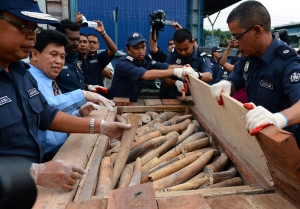
Massive Ivory Stash Seized In Malaysia


Malaysian Customs officers uncovered illegal ivory concealed within secret compartments in a shipment. (Getty Images)

Malaysian Customs officers uncovered illegal ivory concealed within secret compartments in a shipment. (Getty Images)

The Royal Malaysian Customs has received congratulatory messages from South Africa and the World Customs Organisation after thwarting one of the biggest ivory smuggling operations in recent memory. On Monday, Selangor Customs had seized 24 tonnes of elephant tusks and ivory worth US$20 million (RM60 million) in Port Klang from a China-bound ship that is believed to have sailed from Togo.

It is estimated that 750 elephants were killed to produce the quantum of tusks and ivory that was seized. To date, this is the biggest seizure of its kind in Malaysia. Confirming the seizure, Selangor Customs corporate communications chief Mohd Zhafri Johari explained:  “In the China market, ivory could fetch a price of approximately US$25,000 per kilogramme”.

Those arrested will be charged in court under Section 133(1)(a) of the Customs Act 1967 for false declaration and under the Convention for International Trade in Endangered Species of Wild Fauna and Flora. This international treaty was drawn up in 1973 to protect wildlife against over-exploitation and to prevent international profiteering which involved threatening of species.

Zhafri also noted that the smuggling of ivory through Port Klang was a rare occurrence prior to 2011. Since then, however, customs have made at least three major seizures. The seized ivory is now considered government property and will be destroyed upon completion of investigation and prosecution of the suspected parties. The 1,500-odd tusks were found in two containers. Although shipping documents listed the containers’ final destination as Port Klang, customs intelligence said the containers were planned to be sent to China. Source: Thesundaily.com