Africans roast South Africa for lack of openness

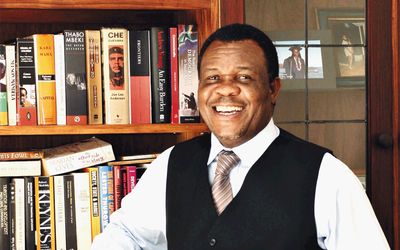
Chris Kirubi is a leading Kenyan businessman [www.kenyan-post.com]

Chris Kirubi is a leading Kenyan businessman [www.kenyan-post.com]

Frustration over Africa’s disparate tax, travel, investment and trading regimes boiled over yesterday as Chris Kirubi, a leading Kenyan businessman and one of the wealthiest people on the continent, tore into South Africa’s failure to be a leading light in opening up the continent for business. Kirubi was a participant in a panel discussion at the “Africa: The Outlook, the Opportunity” event hosted by former New York City mayor Michael Bloomberg in downtown Johannesburg.

To underscore his frustration, the outspoken Kirubi questioned why African travel businesses kept going to Europe and North America to sell African tourism, leaving behind Africans like him who needed no further convincing about visiting Africa. “Open markets are not happening yet. We must open markets for people, goods and services,” Kirubi said. “South Africa needs to take leadership by opening up for smaller countries. How many of us have been allowed to invest here?”

His sentiments on the issue of openness were echoed by Reserve Bank governor Gill Marcus, who said the focus in Africa should be about co-operation and less about competition. Marcus, who seemed rather at ease five days after a slide in global emerging market currencies prompted her to hike interest rates, said the issue was “how do we use our different strength to benefit Africa as a whole”. She said co-operation would be particularly critical in dealing with three core challenges facing the continent: water, food and energy.

To illustrate what was possible if African governments worked together to create a more open investment environment, Aigboje Aig-Imoukhuede, the vice-president of the Nigerian Stock Exchange (NSE), said there was an emerging notion in west Africa, in terms of which Ghana was seen as the gateway and Nigeria as the destination.

He added that the NSE was planning to visit the JSE in the coming months to explore areas of possible co-operation. In that regard, as an economic powerhouse, South Africa had an important role to play in reshaping how Africa did business, not only with the rest of the world but more importantly with itself.

“There are major issues we are not addressing and it is an issue of laws,” added Kirubi, who is also the east Africa chairman of a joint venture with Tiger Brands, South Africa’s biggest consumer goods company.

On tax, he asked why South Africa and Kenya did not have a tax agreement and why he needed to go via Mauritius each time he needed to open a holding company. “We have a problem. We’ve got to wake up.”

Finance Minister Pravin Gordhan was also among the panellists. He acknowledged that there were “huge challenges” in the mining sector, but reiterated the need for perspective on issues relating to labour strikes. “There is a lot of good work being done. In the next few years, skills development and training will be [enhanced] a lot more.” Source: Business Report

South Africa Economic Update – Focus on Export Competitiveness

WB-South Africa-Export CompetitivenessThe report, South Africa Economic Update 5: Focus on Export Competitiveness, examines the performance of South Africa’s export firms against that of peers in other emerging markets— and analyzes the challenges. It assesses South Africa’s economic prospects in the context of the global economic environment and prospects.

With this Economic Update, we hope to enrich the on-going debate on growing a sector critical for South Africa’s economic growth. As with previous editions, this report is intended not to be prescriptive but to offer evidence-based analysis that will help bring South Africa’s policymakers, researchers, and export stakeholders closer to finding innovative and sustainable ways to grow the sector. The report highlights opportunities for growth, particularly with Sub-Saharan Africa being the largest market for non-mineral exports. It also explores strategic directions that can ignite export growth and help South Africa realize its goals of creating jobs and reducing poverty and inequality.

The report identifies three areas that present opportunities to promote the competitiveness and spur the growth in South Africa’s export sector:

  • Boosting domestic competition would increase efficiency and productivity. By opening local markets to domestic and foreign entry, South Africa would enable new, more productive firms to enter and place downward pressure on high markups. This would lower input costs and tip incentives in favor of exporting by reducing excess returns in domestic markets. Competition would also stimulate investment in innovation and, over time, condition the market to ensure that firms entering competitive global markets have reached the productivity threshold to support their survival and growth.
  • Alleviating infrastructure bottlenecks, especially in power, and removing distortions in access to and pricing of trade logistics in rail, port, and information and communication technologies would reduce overall domestic prices and further enhance competitiveness. It would be especially beneficial for small and medium-size exporters and non-traditional export sectors, which these costs tend to hit harder.
  • Promoting deeper regional integration in goods and services within Africa would generate the right conditions for the emergence of Factory Southern Africa, a regional value chain that could feed into global production networks. South Africa could play a central role in such a chain, leveraging the scale of the regional market, exploiting sources of comparative advantage across Africa to reduce production costs, and providing other countries in the region a  platform for reaching global markets. Progress on all three fronts would help catapult South Africa toward faster-growing exports, allowing it to realize the higher, more inclusive, job-intensive growth articulated in the National Development Plan.

Source: World Bank

Landmark East and Southern African Customs forum focuses on modernisation

WCO ESA_Snapseed

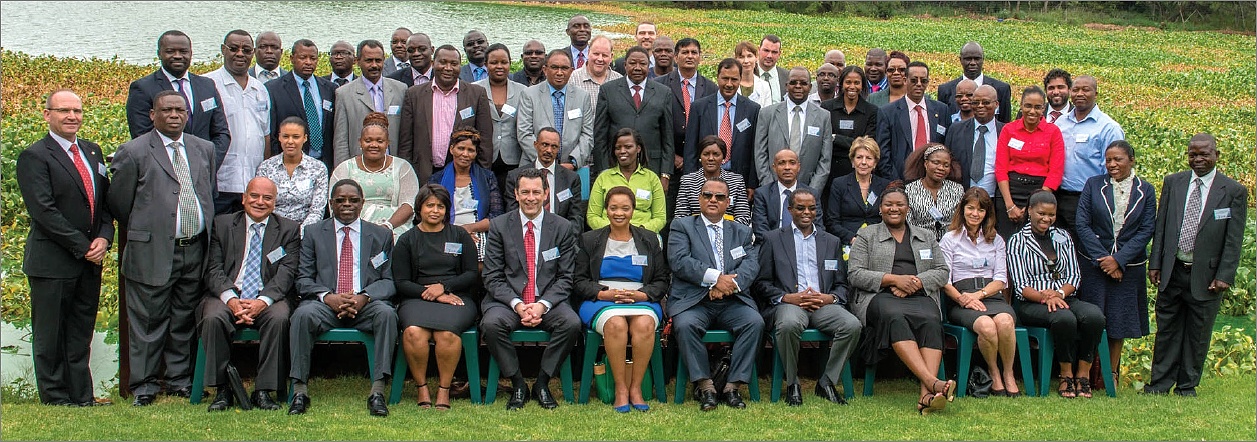
Participants from all 24 members of the WCO’s Eastern and South African region attended the forum. [SARS]

Customs officials from 24 eastern and southern African countries met in Pretoria this week to share knowledge and experience with regard to the successful modernisation of Customs administrations.

Opening the three-day forum, Erich Kieck, the World Customs Organisation’s Director for Capacity Building hailed it as a record breaking event.

“This is the first forum where all 24 members of the Eastern and Southern African region (ESA) of the WCO were all in attendance,” he noted. Also attending were officials from the WCO, SACU, the African Development Bank, Finland, the East African Community and the UK’s Department for International Development (DFID).

Michael Keen in the 2003 publication “Changing Customs: Challenges and Strategies for the Reform of Customs Administrations” said – “the point of modernisation is to reduce impediments to trade – manifested in the costs of both administration incurred by government and compliance incurred by business – to the minimum consistent with the policy objectives that the customs administration is called on to implement, ensuring that the rules of the trade game are enforced with minimum further disruption”

The three-day event witnessed several case studies on Customs modernisation in the region, interspersed with robust discussion amongst members. The conference also received a keynote addressed by Mr. Xavier Carim, SA Representative to World Trade Organisation (WTO), which provided first hand insight to delegates on recent events at Bali and more specifically the WTO’s Agreement on Trade Facilitation.

The WCO’s Capacity Building Directorate will be publishing a compendium of case studies on Customs Modernisation in the ESA region during the course of 2014.

WCO ESA members – Angola, Botswana, Burundi, Comoros, Djibouti, Eritrea, Ethiopia, Kenya, Lesotho, Madagascar, Malawi, Mauritius, Mozambique, Namibia, Rwanda, Seychelles, Somalia, South Sudan, Swaziland, South Africa, Tanzania, Uganda, Zambia and Zimbabwe.

This slideshow requires JavaScript.

Source: SARS

Durban Harbour – a Pictorial History from 1835 to the Present Day

During December 2013, I received a fabulous book from a business acquaintance. Titled ‘Durban Harbour’, this special souvenir issue tells the fascinating history of Durban Harbour from 1835 to the present day. It reveals the extraordinary engineering skills and resilience that shaped Durban harbour into the largest and busiest harbour on the African continent and a major player in Global trade.

Recently another milestone was achieved for Durban harbour with the arrival in Durban of the largest container ship to dock in South African waters the MSC Sola – a giant of 131,771 tons and capable of carrying 11,660 containers, with a length of three and a half rugby fields. The ship’s visit to Durban was as a result of the widening and deepening of the port in 2010. See post – Durban awaiting arrival of 11, 660 TEU container ship.

But the story of Durban as a viable deepwater port is weaved in rich history and as Durban harbour approaches its second century – it is also time to toast the entrepreneurs for their innovation and the workers, harbour pilots, tug and train crews who played such a vital part in the day to day operations of the harbour.

For more information regarding the publication, and details of purchasing it visit the author, Stuart Freedman’s website – History of Durban Harbour.

Related articles

Crossing the SACU bridge

600px-Flag_of_Swaziland.svgMartin Gobizandla Dlamini, the new Minister of Finance, is aware of the challenges of the country’s economy in case South Africa pulls out of the Southern African Customs Union (SACU).

However, the minister warned against pressing the panic button. He said there were no pellucid pointers that South Africa might pull out of the union.

Asked what measures were in place to sustain the country economically if South Africa pulled out or reviewed the revenue sharing formula to the negative, he said: “Let us cross the bridge when we get there. I am aware that South Africa calls for changes in the revenue sharing formula. This is a matter that has been on the table for quite some time.”

“I can’t comment now on how to survive with or without SACU receipts but I can mention that we are a sovereign state.” He did not expand on the sovereignty of Swaziland. Dlamini said SACU member states would meet in February 2014 for a strategic session.

These are South Africa, Namibia, Swaziland and Lesotho. “We were to meet in February in the first place, to discuss strategies on how to modernise SACU and make it relevant to our needs. It’s not like we are going there for shocks or breaking news about South Africa’s position on SACU,” said Dlamini, the former Governor of the Central Bank of Swaziland.

The country’s Gross Domestic Product (GDP) stands at E37 billion for 2012 while that of South Africa is E3.8 trillion as at 2012. In the absence of SACU, Swaziland is left with a few companies that add value to the economy in terms of taxes. They include among others Conco Swaziland which is understood to be contributing 40 per cent to the GDP, which translates to E14.9 billion and the sugar belt companies; Royal Swaziland Sugar Corporation (RSSC) which makes a turnover in excess of E1 billion and Illovo Group’s subsidiary Ubombo Sugar Limited (USL). Illovo Sugar has a 60 per cent shareholding at Ubombo Sugar while the remaining 40 per cent is held by Tibiyo Taka Ngwane, a royal entity held in trust for the Swazi nation. To Illovo Group’s profits, Ubombo Sugar contributed E272 million.

Bongani Mtshali, the acting Chief Executive Officer (CEO) of the Federation of Swaziland Employers and Chamber of Commerce (FSE&CC), said the country could be in a very bad economic situation if South Africa were to pull out of SACU. He said the economic problem could still persist even if the revenue derived from the union was decreased. Mtshali advised Swazis to expand the revenue base and work hand in hand with the Swaziland Revenue Authority (SRA) in its collection of domestic taxes.

The taxes include company tax, pay-as-you-earn, sales tax, casino tax and value added tax. He said people and companies should be encouraged to honour tax obligations. He also called for business innovation. “We will be able to produce and sell if we innovate,” he said. He said there was a need to have an innovation institution of some sort to produce talent, nurture and release it for productivity.

As it were, he said, it was suicidal to depend entirely on SACU revenue. It can be said that over 60 per cent of the country’s budget comes from the union. The SRA collects over E3 billion and this money cannot finance the national budget of E11.5 billion.

Ministries that can save Swaziland from an economic crisis are the Ministry of Commerce, Trade and Industry; Ministry of Agriculture, Ministry of Natural Resources and Energy and the Ministry of Economic Planning and Development.

It can be said that Swaziland is an agricultural economy but the closure of the factory at SAPPI Usuthu and destruction of timber at Mondi by veld fires, spelled doom to the economic outlook of the country. It can also be said that the country’s mainstay product is now sugar.

Despite maize being the country’s staple food, government spent E123 million on maize imports from South Africa last year. This year, preliminary figures indicated that government could spend E95 million on maize imports.

The import price has decreased because the country recorded a higher maize harvest of 82 000 metric tonnes compared to 76 000 tonnes recorded the previous year.

Swaziland is still clutching at straws in terms of food security. The unemployment rate is also high as there had been no massive investments witnessed on the shores.

Jabulile Mashwama, Minister of Natural Resources and Energy, said there were plans to expand the mining sector and reopen closed ones like Dvokolwako Diamond Mine.

There are only two official mines currently operational; Maloma Colliery, which made an export revenue of E126 million in the 2011/2012 financial year and Salgaocar which extracts iron ore from dumps at Ngwenya Iron Ore Mine.

Mashwama, the minister, said she would give details on the programme to revive the mining sector at a later stage. She hinted that the nation could also bank its hopes on her ministry for job creation and revitalisation of the economy.

Gideon Dlamini, the Minister of Commerce, Trade and Industry, has been given a task to industrialise the economy as one of the five-point plan by SACU. The industry minister was reported out of the country and was not reachable through his mobile phone. Source: Times of Swaziland

Mugabe family linked to illicit SA cigarette trade

Pacific Blue_SnapseedRelatives of President Robert Mugabe are being linked to illegal tobacco smuggling networks suspected of bringing more than $48 million in contraband through South Africa’s borders, reports NewZimbabwe.com.

Harare-based Savanna Tobacco is owned by a prominent Zimbabwean businessman, Adam Molai, who is married to Sandra Mugabe, one of Mugabe’s nieces. Molai has previously worked with Sandra as co-director of the Zimbabwe Tobacco Growing Company. Savanna has allegedly moved tons of illegal tobacco into South Africa.

The company’s main brand, Pacific cigarettes, has been found in concealed consignments by police in South Africa and abroad, according to two private investigators who track tobacco busts and work for the industry to counter the trade in illicit tobacco. The products have been linked to a huge tobacco smuggling operation whose base in South Africa was shut down in 2010 by the South African Revenue Service (SARS), which is engaged in a crackdown on the country’s illegal tobacco markets.

Images taken at the scene of two busts in South Africa and one in Zimbabwe show the extent of the smuggling operation. SARS has refused to confirm or deny whether it is investigating Savanna, citing the confidentiality requirements of the Tax Administration Act.

The frequency of the busts, the methods used and the quantities of illegal Pacific cigarettes found have led sources close to the investigations to claim that Savanna has been centrally involved for at least four years. It also increases suspicions that Zimbabwe is using smuggling to keep its economy afloat. Mugabe has openly supported Savanna. A year ago, he accused rival British American Tobacco (BAT) of spying on Savanna and hijacking its trucks. “If this is what you are doing in order to kill competition and you do it in a bad way, somebody will answer for it,” Mugabe warned.

Boxes of cigarettes that can be made for as little as R1.50 are easy to slip into the local market to avoid the R13 tax a box. Whereas popular brands of cigarettes can retail at R35 a pack, illegal cigarettes sell for between R4 and R12 a pack. With margins approaching 1000%, the illicit trade has become one of the largest elements in organised crime in South Africa.

According to research commissioned by the Tobacco Institute of South Africa, which is predominantly funded by BAT, 9.5billion illegal cigarettes with a street value of about R4-billion were smoked locally last year.

Savanna has captured almost 10% of this market, according to the institute, with about 700 million of its illegal cigarettes smoked last year. Pacific’s illegal cigarettes are sold mostly on the streets of Cape Town.

In one of the biggest busts in October, 1.6million Pacific cigarettes were found hidden on a train in Plumtree. Pacific cigarettes have also been seized at the Beitbridge border post near Musina and in Boksburg, on the East Rand, during busts in November. Trucks were found carrying Pacific cigarettes in concealed compartments.

This month, a consignment of Pacific cigarettes was found hidden behind electronic goods on a truck in the Western Cape. Similar busts have been made in Mozambique and at a border post between Zambia and Namibia, according to private investigators.

Evidence from the Plumtree train bust showed that the smuggling route had its origin as Savanna’s factory in Zimbabwe and South Africa’s black market as its destination. In the Plumtree bust on October 12, Zimbabwean police confiscated 40 tons of illicit Pacific cigarettes that had come from Bulawayo. The train was said to be carrying gum poles.

Records reveal that between September 2012 and August 2013 at least 23 shipments with 44 wagons of “gum poles” had followed the same route. A number of these consignments appear to have arrived at the South African business PFC Integration. According to an investigator who has studied the operation, PFC is “not into the gum pole business at all”.


SACU – the Day of Reckoning has Arrived

South Africa has been courting major player Botswana’s support for changes to SACU.

South Africa has been courting major player Botswana’s support for changes to SACU. (Mail & Guardian)

The Mail & Guardian reveals that South Africa has requested an urgent meeting with members of the Southern African Customs Union (SACU) for as early as ­February next year in what could be a make-or-break conference for the struggling union.

In July this year, a clearly frustrated Trade and Industry Minister Rob Davies told Parliament that there had been little progress on a 2011 agreement intended to advance the region’s development integration, and it was stifling its real ­economic development.

South Africa’s payments to SACU currently amount to R48.3-billion annually – a substantial amount, considering the budget deficit is presently R146.9-billion, an estimated 4.5% of gross domestic product.

In the past, South Africa has had some room to reposition itself, but as Finance Minister Pravin Gordhan has pointed out, the South African fiscus has come under a lot of pressure as a result of factors such as the global slowdown, reduction in demand from countries such as China for commodities, and reduced demand from trade partners such as the European Union.

South Africa, which according to research data, last year contributed 1.26% of its GDP, or about 98% of the pool of customs and excise duties that are shared between union countries including Swaziland, Botswana, Lesotho and Namibia, wants a percentage of this money to be set aside for regional and industrial development.

The four countries receive 55% of the proceeds, and are greatly dependent on this money, which makes up between 25% and 60% of their budget revenue. South Africa has very little direct benefit, except when it comes to exporting to these countries. It receives few imports.

Changing the revenue-sharing arrangement

Efforts to change the revenue-sharing arrangement so that money can be set aside for regional development would result in less money going into the coffers of these countries.

It would also mean that a portion of the revenue that South Africa’s SACU partners now receive with no strings attached would in future include restrictions on how it is spent.

A source close to the department said adjustments to the revenue-sharing arrangement and the promotion of regional and industrial development were issues on which the South African government was not willing to budge.

So seriously is South Africa viewing the lack of progress on the 2011 agreement, a document prepared for Cabinet discussion includes pulling out of SACU as one of its options, a source told the Mail & Guardian.

This could not be confirmed by the government, but two senior sources said South Africa was very aware of the dependence of its neighbours on income from the customs union, in particular Swaziland and Lesotho, and the impact its collapse could have on these economies.

Professor Jannie Rossouw of the University of South Africa’s department of economics believes a new revenue-sharing arrangement is essential for the long-term sustainability of SACU countries.

South Africa’s contribution

He also said that South Africa’s contribution as it presently stands should be recognised as development aid and treated as such by the international community.

Between 2002 and 2013, total transfers amounted to 0.92% of South Africa’s GDP, which exceeds the international benchmark of 0.7% set by the Organisation for Economic Co-operation and Development, he said in his research.

“It is noteworthy that South Africa transfers nearly all customs collections to SACU countries. Total collection since 2002 amounted to about R249-billion, while transfers to SACU were about R242-billion,” Rossouw said. The South African Revenue Service (SARS) recognises that inclusion of trade with Sacu would have a substantial impact on South Africa’s ­official trade balance.

South Africa’s total trade deficit for 2012 was R116.9-billion and, according to SARS, had trade with the union been included, it would have been much reduced to R34.6-billion.

South Africa has budgeted to increase its allocation to SACU from R42.3-billion in the 2012-2013 financial year to R43.3-billion this financial year and in the 2014/2015 financial year.

In 2002, the SACU agreement was modified to include higher allocations for the most vulnerable countries, Swaziland and Lesotho, and it established a council of ministers, which introduced a requirement for key issues to be decided jointly. In 2011, a summit was convened by President Jacob Zuma in which a five-point plan was established to advance regional integration.

Review of the revenue-sharing arrangement

This involved a review of the revenue-sharing arrangement; prioritising regional cross-border industrial development; making cross-border trade easier; developing SACU ­institutions such as the National Bodies (entrusted with receiving requests for tariff changes) and a SACU tariff board that would eventually take over the functions of South Africa’s International Trade Administration Commission (ITAC); and the development of a unified approach to trade negotiations with third parties.

Davies told Parliament that there had been little progress in the past three years on these five issues.

Xavier Carim, the director general of the international trade division of the department of trade and industry, said there had been positive developments regarding agreements on trade negotiations, such as those with the European Union and India on trade, and progress had been made on the development of SACU institutions, but progress was slow on the other issues.

Davies told Parliament it was difficult to develop common policy among countries that varied dramatically in economic size, ­population and levels of economic, legislative and institutional development.

He cited differences over approaches to tariff settings as an example.

“South Africa views tariffs as tools of industrial policy, while for other countries tariffs are viewed as a source of revenue,” Davies said.

A proposal that cause all the problem

“A key problem that led to differences was the proposal by one member for lower tariffs to import goods from global sources that were cheapest, which ultimately undermined the industry of another member. This was primarily an issue of countries who viewed themselves as consumers rather than producers.”

The South African government is trying diplomacy as its first option. A senior government source said issues around SACU made up a large part of talks last week between Botswana and South Africa on the establishment of co-operative agreements on trade, transport and border co-operation.

Catherine Grant of the South African Institute of International Affairs said Botswana had long been considered the leader of the four countries. It would make sense for South Africa to bring Botswana on board before the meeting.

Grant said the SACU agreement needed to be re-examined and modernised.

“There needs to be a review of the revenue-sharing formula that is less opaque and is easier to understand. The present system is complicated, making it hard to work out exactly how much countries are getting. It’s clear that Rob Davies feels hamstrung by SACU and has done for some time, because decisions cannot be made without the agreement of all five members, who have different needs and requirements.”

The trade balance is one of the elements that resulted in South Africa’s current account, which has recorded significant deficits in recent months, coming in as high as 6.5% of GDP in the second quarter of 2013.

Trade between South Africa and SACU has always been recorded, but for historical reasons it has been kept separate from official international trade statistics. Source: Mail & Guradian


Dumping Ships From East-West to North-South Trade Lanes Nearing ‘Saturation’

Trade Lanes (The Jouranal of Commerce)

Trade Lanes (The Jouranal of Commerce)

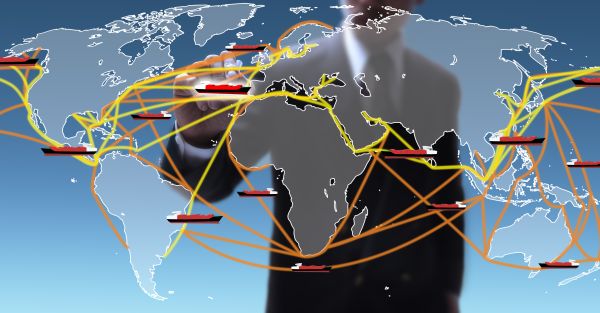
Ocean carriers’ tactic of shifting surplus capacity from east-west trades to north-south routes is nearing “saturation point,” according to Drewry Maritime Research.

The “endless” cascading of tonnage from the main haul trades to regional routes is now “seriously haemorrhaging” freight rates in north-south services, and the rate of decline in the second quarter suggests carriers are running out of options to soak up surplus capacity, the London-based consulting firm said.

All-in prices from Asia to Australia, West Africa, South Africa, India and both the east and west coasts of South America based on forwarder buy rates for spot cargo declined significantly during the second quarter. Rates from Asia to India and the west coast of South America rose in July, but Drewry said it “remains to be seen if the increases are sustainable, as there have been many false dawns in other trade lanes.”

The average all-in spot rate from Shanghai to Santos, Brazil, in July was down 51 percent from January, and was 19 percent and 32 percent lower on services to Durban, South Africa, and Melbourne, Australia, respectively.

“This adversarial situation helps to explain why ocean carriers appear to have returned to war with each other over market shares between Asia and Europe since August,” Drewry noted.

The “apparent” benefit of cascading is that average vessel utilization from Asia to the west coast of North America and Europe has usually remained above 85 percent since the second quarter, thus helping to support freight rates.

“It’s been a yo-yo ride nevertheless, but freight rates are still a lot higher than they were at the beginning of the year,” Drewry explained.

Fourteen new vessels averaging 12,713 20-foot-equivalent units were delivered into existing Asia-to-North Europe schedules in the second quarter, but the overall average capacity of all ships on the route increased by just 1.7 percent from the beginning of the year to 10,456 TEUs, as carriers cascaded surplus vessels to other routes.

Drewry said further restructuring on north-south routes via alliances and consortia appears inevitable, particularly as world fleet growth of just over 7 percent in 2014 is again expected to significantly exceed cargo growth. Source: The Journal of Commerce

Reconstruction and deepening project at Durban’s Maydon Wharf

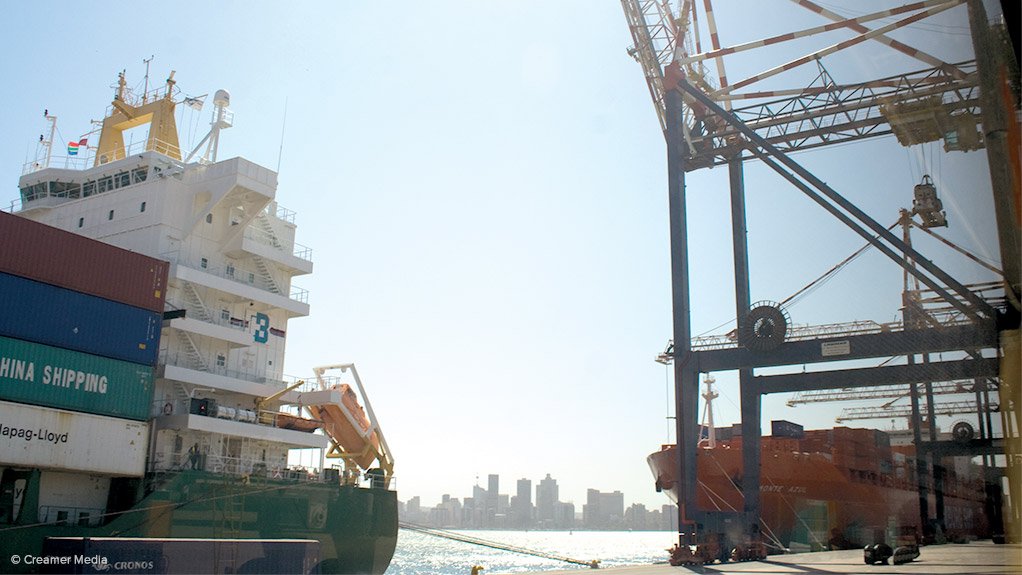
Transnet moves ahead with Maydon Wharf upgrade plan. (Picture credit:  Duane Daws, Creamer Media)

Transnet moves ahead with Maydon Wharf upgrade plan. (Picture credit: Duane Daws, Creamer Media)

Port Technology reports that the IMO’s stricter sulphur emission standards are likely to have a profound impact on the maritime industry. With this in mind, PTI’s sixtieth edition pays a particular focus to the challenges ahead if LNG is to become the shipping fuel of the future and if this is the most viable option for shipping lines vying to meet these new regulations. Elsewhere, we have contributions form Drewry, Liftech consultants and a host of key industry experts, engineers and analysts.

The Port of Durban is situated on the east coast of South Africa, in the KwaZulu- Natal Province. The port is the busiest on the African continent, and the biggest in terms of container capacity with 44 percent of South Africa’s break-bulk cargo and 61 percent of all containerised cargo flowing through it. In 2010 alone, the port handled 2.5 million TEU.

The port has 57 berths and is protected by the north and south breakwaters, which are 335 metres and 700 metres long respectively. It was developed primarily for import cargo but over the years, cargo flows have changed significantly and exports have become more important. Over 4,000 commercial vessels now call at the port each year.

The Maydon Wharf terminal

The Maydon Wharf multi-purpose terminal (MPT) handles a variety of containerised, break-bulk and bulk cargo, and specialises in the handling of specific commodities. The terminal also handles both import and export containers, taking it to an average of 15,000 TEU. It has an annual throughput of more than one million tonnes of break-bulk and neobulk commodities. The Maydon Wharf area consists of 15 berths and the MPT operates principally between berths eight and 13.

Transnet National Ports Authority (TNPA) has initiated an extensive upgrade of the infrastructure at the port. One of the major projects is to rebuild and deepen seven of the 15 berths in the Maydon Wharf area. The new quays will be able to accommodate larger vessels and provide suitable load-carrying capacity for the handling of cargos over the berths. Source: Port Technology

Transnet receives 2 Chinese electric locomotives

THE FIRST two of 95 Class 20E dual-voltage electric locomotives being supplied to Transnet Freight Rail (TFR) by the CSR E-loco supply consortium was transferred from the port of Durban to the nearby depot at Umbilo on November 14 for commissioning.

The first 10 locomotives are being built by CSR Zhuzhou Electric Locomotive in China, while the remaining 85 units will be assembled in South Africa by Transnet Engineering. CSR is a 70% partner in CSR E-loco Supply, with local partner Matsetse Basadi holding the remaining 30%. The contract specifies a target of 60.5% for localised content.

The 3MW Class 20E is equipped for operation on 25kV ac and 3kV dc electrification systems and will be used by TFR’s general freight business.

Transnet says the two locomotives have been delivered a month earlier than expected, and it expects a second consignment of four units to arrive in South Africa next month. Source: www.railjournal.com (Pictures credits: FTW Online, and various)

Information gathering by revenue authorities – What about the cost?

The powers of the South African Revenue Service (SARS) to gather information were extended significantly in Chapters 4 and 5 of the Tax Administration Act, No 28 of 2011 (TAA) that took effect on 1 October 2012.

Greater powers were deemed necessary because “… too many requests for information by SARS result in protracted debates as to SARS’s entitlement to certain information.” (SARS Short Guide to the TAA, at p23)

Clearly information is central to the SARS business model: “By increasing and integrating data from multiple sources, SARS will increasingly be able to gain a complete economic understanding of the taxpayer and trader across all tax types and all areas of economic activity.” (SARS Strategic Plan 2013/14 – 2017/18, at p25) Information-gathering under the applicable TAA provisions is a costly exercise for SARS, taxpayers (both corporate and individuals) as well as for advisers. The cost-aspect is usually not addressed in legislation empowering information-gathering by revenue authorities.

Despite this there is a strong need for ‘cost-consciousness’ relating to information requests – simply because of the compliance cost impact.

The SARS Strategic Plan specifically states, in order to achieve the objectives of the National Development Plan, SARS will promote effective government by “Reducing the cost of compliance and the cost of doing business in South Africa” (at p13). Hence, one of SARS’s future initiatives would be to “Continue to implement the principles of a cooperative compliance approach to reduce compliance costs…” (at p34). SARS also acknowledges under “Small business and Cost of Compliance” that the “relatively high cost of compliance” might be a reason for non-compliance by small business (see at p43).

So how does a revenue authority inculcate a culture of “cost-consciousness” when it comes to information-requests by its officials? The Australian Tax Office (ATO) has gone down this road in its Access and Information Gathering Manual: Said Manual explains the law relating to the ATO’s statutory information-gathering powers and indicates how ATO officials should exercise such powers. [The Manual is available on the ATO website].

 The following reflects the ATO’s philosophy on information gathering (as communicated by the then Commissioner): “These guidelines are to assist my staff and ensure we apply a professional and, as far as possible, open approach to the exercise of our access and notice powers. These powers must be used with the utmost care and we aim only to fulfil my obligations under the legislation. A consultative approach to obtaining the information should be the norm. Consultation generally involves advance notice and flexibility in meeting reasonable requests.”

It is, furthermore, important to the ATO that costs associated with information-gathering should be curtailed: “In deciding whether to seek access, and in determining how much detail to seek, officers should always try to minimise the cost to the recipient of meeting access requests. Particularly in cases of seeking bulk data, request should be made only if there is a reasonable chance that there will be a substantial compliance impact relative to cost. On occasions sampling may be required to determine the benefits of obtaining bulk data. Also where bulk data is requested, officers should try to fit in with the custodian’s circumstances (for example seeking information from the custodian’s IT systems at times when it will not disrupt operations) and recognise the time and cost of obtaining such information.” (emphasis added)

The ATO then provides practical guidance to its officials considering an information request, alternatively where they intend accessing premises to obtain information/documentation. The ATO official is instructed to ask certain questions before requesting the information/accessing any premises. [The following is a summary of the guidance from the ATO Manual]:

For what purpose and under which law do you require information?

The access provisions can only be used for the purposes of the Act. You must be clear on your reasons for seeking particular documents. You should be able to show a clear connection between the use of the access power and one of the purposes of the Acts. Like all statutory powers, you must exercise the right of access in good faith for the purposes for which it was conferred.

What information do you already have?

You should ensure that the taxpayer or the third party has not already provided the documents to the ATO, eg in support of a request for a private ruling.

What information do you need?

You should establish, as far as possible, what particular books, documents and papers are needed and whether the information they might contain is necessary for the purposes for which you are seeking access. Is it likely that the information will be located at the premises you propose to access or from the person you propose to give a notice to?

Can you obtain relevant information from another source?

Before using access powers, be reasonably sure that you are approaching the right person. If the information is available from more than one source, you should consider the cost to each party and who might be the appropriate party to bear the cost. In the majority of cases, tax officers should try and obtain the information and documents from the taxpayer prior to contacting third parties, such as advisers and banks. The cost to the ATO, and whether the exercise if cost-effective, should also be considered.

Are you authorised to seek access?

You must be properly authorised to exercise access powers.

Can you obtain access to the relevant information on an informal/cooperative basis?

If you think you can obtain the information by making telephone contact, sending an informal letter or searching other sources, the access powers should not be used. However, it is not necessary for all other avenues of enquiry to have been exhausted or to have used the notice powers before resorting to the access powers. You should be able to conclude that the occasion is one that reasonably requires you to enter premises and inspect documents.

Is it necessary to exercise formal access powers?

In circumstances in which privacy or confidentiality require that the formal access powers are used, consultation beforehand should encourage cooperation. Consultative procedures may include: giving the custodian reasonable notice of your intention to obtain access; liaising with the custodian about a convenient time to seek access, taking into account the workflow demands on the custodian; giving adequate information to ensure that custodians are fully aware of their rights and obligations in relation to access requests and so on.

Minister Gordhan, in his foreword to the SARS Strategic Plan (at p6), anticipates that over the next four years “… the demands on revenue collection growth will be between 10% and 11% per annum”. For example, SARS would need to collect R1.09 trillion in revenue by 2015/16. To achieve those kinds of revenue targets probably means increasing levels of information-gathering. Seeking to reduce the cost of compliance requires that locally ‘cost-consciousness’ must become part of the information-gathering equation – and that a way is found to limit, and hopefully reduce, the costs associated with information-gathering under the TAA. Source: Written by Johan van der Walt, Director, Tax, Cliffe Dekker Hofmeyr – sourced from www.polity.org.

Beira – Zimbabwe road to be rebuilt by China

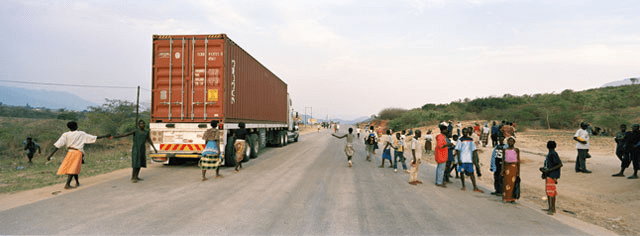
A truck leaves the border post at Machipanda to drive down the Beira Corridor, which links the port of Beira to Zimbabwe. This has always been a strategically crucial route for trade in Southern Africa. (The Guardian)

The Mozambican government intends to invest $400 million in the full rehabilitation of the road from the port of Beira to Machipanda, on the border with Zimbabwe.

Minister of Public Works, Cadmiel Muthemba, announced the rehabilitation of the road, which is about 300 kilometres long, will begin in February 2014. The finance is a loan from the Chinese export-import bank (Exim Bank).

Muthemba said that the road will be substantially widened. Along its entire length the road will be at least a four-lane highway, and in places, such as the approaches to Beira, it will have six lanes.

“The road will have roundabouts at particularly busy areas, such as the Inchope crossroads (where the road meets Mozambique’s main north-south highway), Chimoio city, and the towns of Gondola and Manica”, said the Minister.

Along some stretches the road will be elevated, notably along the Pungue flats. This is where the current road runs alongside the Pungue River. When the Pungue bursts its banks, which happens frequently during Mozambican rainy seasons, the road is swamped, and sometimes the flooding is serious enough to interrupt traffic to and from Zimbabwe.

Raising the road above the level of the river will be expensive, but will ensure that traffic flows in all weathers.

The Beira-Zimbabwe road will be farmed out for maintenance to a private company, which will charge motorists through toll gates.

So far, the only major road in the country with toll gates is the Maputo-South Africa motorway, operated by the South African company Trans-Africa Concessions (TRAC).

At the moment, the Beira-Zimbabwe road is in a poor and dangerous condition. In order to avoid gaping potholes, motorists frequently cross into the opposite lane, risking collisions with vehicles gong in the other direction. Emergency repairs between Beira and Inchope, which should have been finished in mid-April, are months behind schedule, and the Sofala provincial government is considering cancelling the contracts with the companies concerned.

The road is of key importance to the trade, not only of Zimbabwe, but of other landlocked southern African countries, including Zambia, Malawi and even parts of the Democratic Republic of Congo.

The road that branches off the Beira-Zimbabwe highway at Tica and leads to the district of Buzi, will be tarred, Muthemba announced. This is budgeted at $150 million, and the money will come from the Indian Eximbank. Work on the Tica-Buzi road will begin this year.

But Muthemba lamented that there was no money available to rehabilitate the road from Inchope to Caia, on the south bank of the Zambezi. This is a key part of the north-south highway, and it needs thorough rehabilitation.

“We aren’t sitting back with arms crossed”, said Muthemba. “With the few financial resources we have, we are working on the most critical sections, until we find the money for a complete rehabilitation”.

However, a complete rehabilitation of this road was carried out less than a decade ago. Indeed, in May 2007, the then Minister of Industry and Trade, Antonio Fernando, boasted in the Mozambican parliament, the Assembly of the Republic, that the Inchope-Caia road, “used to be a nightmare”, but had been rebuilt to such a high standard that it resembled a racing track. Source: Mozambique News Agency


SARS – SA trade statistics will in future include trade data with BLNS countries

Import exportThe Minister of Finance has approved that South Africa’s trade statistics will in future include data in respect of trade with Botswana, Lesotho, Namibia and Swaziland (BLNS countries).

BLNS country-trade statistics have previously not been included in the trade statistics. This arose historically because of the free flow of trade from a customs duty point of view within the Southern African Customs Union (SACU).

BLNS merchandise trade however, has a material impact on South Africa’s trade balance. South Africa exported R103.8bn to and imported R21.5bn from BLNS countries. In the last full year (2012) this resulted in a positive trade balance of R82.3bn for trade with BLNS countries.

South Africa’s total trade deficit for 2012 was R116.9bn. Had the BLNS trade data been included, the deficit would have been R34.6bn.

The view is therefore that direct trade within the BLNS countries should be included in the calculation of the monthly trade statistics to provide a more accurate reflection of South Africa’s trade.

Furthermore, SARS’s customs modernisation programme has resulted in its systems moving to new technologically enhanced platforms that enabled better electronic capturing of trade data that was previously done manually. The modernised system greatly improves the accuracy of trade data and allows the reporting and analysis of trade data to be done in real-time.

SARS worked very closely with the National Treasury (NT) and the South Africa Reserve Bank (SARB) in preparing the trade statistics that includes trade with the BLNS countries.

The SARB has welcomed the revision of the trade statistics “as valuable additions to building block data used to compile South Africa’s balance of payments.”

“While the Bank has always included estimates of the trade between South Africa and this group of countries in its compilation of South Africa’s overall imports and exports, the new building block data will be incorporated in the balance of payments, leading to improved measurement. Previously published statistics will also be revised. The revised balance of payments data for South Africa will be finalised in the next few weeks and published in the Bank’s Quarterly Bulletin, due to be released on 3 December 2013,” the SARB said in a statement.

Although SARS is confident as to the accuracy of the BLNS trade numbers, it is SARS’s intention to approach the United Nations to review the treatment of South Africa’s trade data that will now include BLNS trade numbers.

In addition to the inclusion of the BLNS trade figures, SARS is also contemplating certain other revisions to improve the reporting of trade statistics in the future. Some of these include the following:

  • publishing of imports on both a Free On Board (FOB) and a Cost Insurance Freight (CIF) basis to align it with UN principles,
  • compiling statistics on the date when the goods are actually released into or from South Africa’s economy, rather than using the date on which the goods entered the customs’ system for ultimate release from or into the SA economy, and
  • publishing gold exports as recorded on the SARS system reflecting the physical export movement of gold as opposed to the current practice of reporting the SARB gold export data on the IMF change of ownership basis.
  • These changes will however, only be finalised and implemented after consultation with international experts and other relevant stakeholders.

For more details visit sars.gov.za


Parliament Postpones Customs Bills

Thaba Mufamadi, chairman of Parliament’s finance committee. Picture - Financial Mail

Thaba Mufamadi, chairman of Parliament’s finance committee. Picture – Financial Mail

Parliment’s standing committee on finance (SCoF) has decided to postpone its deliberations on two draft customs-related bills until next year to allow importers and the freight-forwarding industry more time to comment on the proposals which threaten the status of City Deep as an inland port. This followed an appeal by the South African Association of Freight Forwarders that it had had insufficient time to consider the substantially revised draft Customs Control Bill and Customs Duty Bill, which required that imported goods would have to be cleared at the first point of entry.

The association, supported by a range of other business organisations, including the Johannesburg Chamber of Commerce and Industry, warned that the bills could be challenged on constitutional grounds if the process of consultation was deficient. All political parties supported the proposal by finance committee chairman Thaba Mufamadi on Wednesday that the deliberations on the bills be postponed until next year. He instructed stakeholders to make their submissions to the South African Revenue Service (SARS) by December 15.

Mr Mufamadi also took cognisance of concerns raised by Business Unity South Africa that parliamentary processes did not allow sufficient time to comment, for example, on the medium-term budget policy statement. Industry has warned of port delays and trade disruption if the proposals were to be adopted. The Customs Control Bill proposes that goods be cleared at the first port of entry into South Africa. This will mean that inland ports such as City Deep in Johannesburg would no longer be designated places of entry or exit for customs purposes. In the past, containerised cargo could move directly to inland ports on arrival in the country under cover of a manifest. A new declaration — of the nature, value, origin and duty payable on the goods — would replace the manifests.

SARS said these did not provide sufficient information to undertake a risk assessment. Another bone of contention for industry was the “extremely severe” penalties proposed in the draft Customs Duty Bill. Following the uproar about the proposals SARS offered a compromise earlier this week as a way out of the impasse. Instead of a clearance at the port of entry, a mandatory advance customs clearance of the goods three days before their arrival at the first port of entry would be required. Goods consigned to inland terminals such as City Deep would be released conditionally. The system would be tested for the whole of next year to iron out any problems.

An alternative option would be for the goods to undergo a lesser form of clearance at the first point of entry. This would still entail providing customs authorities with the same level of information on the tariff, value and origin of goods, which would be submitted by electronic data interchange. The importer would be held accountable for the information that was provided. SARS official Kosie Louw said that because this document would not have the formal status of a clearance certificate, it would not disrupt existing legal contractual arrangements, as claimed. The goods would still move CIF (cost insurance and freight) from the port to City Deep. SARS has also proposed softening the penalty provisions so that errors not resulting in any prejudice to customs revenue will be subject to penalties only after three warnings. These penalties will be discretionary and applied leniently in the first 12 months of the bill coming into force to allow business time to properly prepare for the change. An appeal process has been included. Source: Business Day Live. 

SA-Mozambique One Stop Border, one step closer

ressano-garcia_snapseedParliment’s standing committee on finance (SCoF) on Wednesday finally adopted a bilateral agreement between South Africa and Mozambique that brings the creation of a one-stop border post between the two countries a step closer.

The move has been six years in the making. The facility is expected to expedite the movement of goods and people, reduce congestion and delays, and lower the cost of cross-border trade.

Members of Parliment heard on Wednesday that the World Bank estimated that a one-day reduction in inland travel time in sub-Saharan Africa could result in a 7% increase in exports. Further, reducing export costs 10% through greater efficiency could increase exports 4.7%.

Parliament is in the process of ratifying the bilateral legal framework for the one-stop border post between South Africa and Mozambique at Lebombo-Ressano Garcia. It is the first bilateral framework of its kind for South Africa and is likely to be replicated in other parts of the Southern African Development Community (SADC).

The facility is expected to expedite the movement of goods and people, reduce congestion and delays, and lower the cost of cross-border trade

SADC has made a commitment to implementing such bilateral agreements throughout the region.

South Africa is in discussion with Zimbabwe about having a one-stop border post at Beitbridge, which is notorious for its congestion and long delays. The committee heard from Department of Home Affairs officials that a single visa for the region was also planned once systems have been integrated and secured.

The one-stop border post facility and access roads to Lebombo-Ressano Garcia have already been built and were just awaiting the go-ahead from the South African and Mozambican governments to begin operating. Each country would have a designated area in the combined facility for customs control but housing them in one unit would mean that goods would only have to be offloaded and loaded back onto trucks once for inspection.

South African Revenue Service senior executive Kosie Louw said the benefits of one-stop border posts were reduced border crossing times and reduced logistics costs. Further, they simplified and harmonised border control and administration, and integrated risk and information management.

A reduction in corruption and illegal imports was another benefit, Mr Louw said. Frequent travellers will be processed speedily through the use of fingerprints. A key element of the agreement is to provide for extraterritorial jurisdiction at the commonly held border posts and to deal with arrest, detention and seizure of goods. Both parties will be entitled to apply their own domestic customs laws within the common control zone.

The formal agreement for the project was signed between the two countries in September 2007 and the Cabinet gave its approval in August 2011 for the bilateral legal framework to be finalised and presented to Parliament. Source: BDlive.co.za