WCO News – October 2012 Edition

Treat yourself to news and views on Customs around the globe. As usual the WCO News does not disappoint. Content includes –

  • Highlights from the 2012 Council.
  • Latest developments in WCO areas of work: compliance, facilitation, capacity building and tariff and trade affairs.
  • Germany and the problem of “cheap whites”.
  • UK’s strategy to tackle tobacco smuggling.
  • The Chairperson of the Kimberley Process, Ambassador Gillian A. Milovanovic, sheds some light on the diamond trade and its “dark” side.
  • China’s Ambassador to the EU, H.E. Wu Hailong, provides his perspective on trade facilitation, as well as China’s initiatives in this domain.

Moreover, there are other interesting articles on informal fund transfer systems, dual-use goods, and transit control. For South African readers don’t miss the article penned by our Customs Counsellor in Brussels  Coffet Lebepe. His article provides an insight on South Africa’s preparations to combat illicit trade in tobacco products. Click here to download the WCO News! Source: The WCO

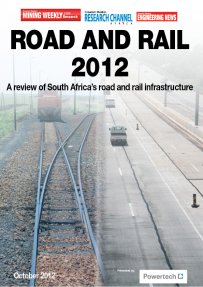
A review of South Africa’s road and rail infrastructure

Creamer Media have published 2012 Road and Rail – a comprehensive review and insight into South Africa’s road and rail transport infrastructure and network. This should be a must read for any serious investor and comes at a price just shy of R 2000,00. 

For the much of the six-and-a-half decades from 1910, South Africa’s rail sector was carefully nurtured and handsomely resourced by successive administrations. Growing competition from road was kept at bay by tough regulatory practices that ensured rail freight of a virtual monopoly.

From the mid-1970s, however, rail’s pre-eminent position in South Africa began to come under scrutiny. A series of National Transport Policy Studies reviewed worldwide trends in transport deregulation. The findings reinforced a growing belief that an overprotected rail industry and an over-regulated road-freight sector were detrimental to the overall South African economy. This was undoubtedly true – but as often happens in these matters, in the following decades, and indeed, right up to the recent present, the stick was then bent excessively in the opposite direction.

The net result is that, on the freight side, rail has massively lost market share to road over the past 20 to 25 years. Road transport has been allowed to grow, but without the implementation of an effective road transport quality system. This imbalance in the modal split has been a key contributing factor to high direct logistics costs in the economy. The disproportionate shift of freight to road has had many other perverse and costly impacts – the road freight industry (unlike Transnet Freight Rail) does not directly carry the cost of building and maintaining the public infrastructure it uses and this has resulted in an increase in road construction and maintenance costs, deteriorating road conditions, congestion problems and road collisions.

This report investigates South Africa’s road and rail infrastructure, including the country’s road and rail networks, maintenance and the challenges facing the sector, among others. For details as to the content of the report please click here! Source: Creamer Media

Special Missing Zones

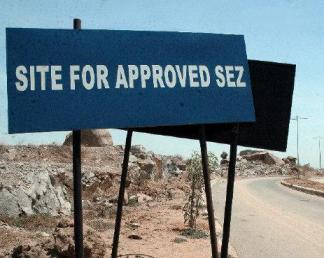
Since the publication of the draft bill, there has been much comment on the advantages and disadvantages of the new Special Economic Zones (SEZ) policy and process in the country. Given the renewed emphasis in economic policy debates on industrial policy and regional integration in the wider Southern Africa context, the article “Special Missing Zones in South Africa’s Policy on Special Economic Zones“, published by Tralac, serves to add to the debate by introducing some hitherto neglected aspects pertinent to the debate on the subject.

A good companion to this article (and perhaps essential prior reading) is the CDE’s “Lessons for South Africa from international evidence and local experience” which I posted on 31 May 2012 (see link under related articles below). There has essentially been little movement on the subject, yet it is clear that South Africa is losing lucrative opportunities in the global warehousing and distribution business to its neighbours. Unless government acknowledges that it has to involve business in the creation of such SEZ’s, the white elephant syndrome which befell IDZs will no doubt plague the latest programme.


Customs Modernisation – positive impact on Doing Business in South Africa!

South Africa ranks 39th out of 185 countries surveyed in the latest International Finance Corporation (IFC)-World Bank ‘Doing Business’ report, which was published on Tuesday.Last year, South Africa ranked 35 out of 183 countries assessed.

The country is placed above Qatar and below Israel in the Doing Business 2013 report, which covers issues such as starting a business, dealing with construction permits, getting electricity, registering property, accessing credit, protecting investors, paying taxes, trading across borders, enforcing contracts and resolving insolvency.

Singapore remains at the top of the ease-of-doing-business ranking for the seventh consecutive year, followed by Hong Kong and New Zealand. Poland improved the most in making it easier to do business, by implementing four regulatory reforms in the past year.

South Africa led the pack in terms of improving in the ease of trading across borders through its customs modernisation programme, which reduced the time, cost and documents required for international trade. “We hope that through the streamlining of procedures, we will see the growth of commerce in the country,” said coauthor of the report Santiago Croci Downes.

The Doing Business 2013 report stated that improvements in South Africa have effects throughout Southern Africa. “Since overseas goods to and from Botswana, Lesotho, Swaziland and Zimbabwe transit through South Africa, traders in these economies are also enjoying the benefits,” it stated.

Another 21 economies also implemented reforms aimed at making it easier to trade across borders in the past year. Trading across borders remains the easiest in Singapore, while it is the most difficult in Uzbekistan.

Out of the 185 economies assessed in the 2013 report, South Africa ranked 53rd for starting a business, 39th for dealing with construction permits, 79th for registering property, 10th for protecting investors, 32nd for paying taxes, 82nd for enforcing contracts and 84th for resolving insolvency.

The country ranked low, at 150, for ease of access to electricity, while it tied at the top with the UK and Malaysia for ease of access to credit. Croci Downes added that it was still too early to tell whether the recent labour unrest in the mining and transport industries would have an impact on South Africa’s ranking or on foreign direct investment .

Meanwhile, the IFC and World Bank reported that of the 50 economies making the most improvement in business regulation for domestic firms since 2005, 17 were in sub-Saharan Africa.

From June 2011 to June 2012, 28 of 46 governments in sub-Saharan Africa implemented at least one regulatory reform making it easier to do business – a total of 44 reforms.

Mauritius and South Africa were the only African economies among the top 40 in the global ranking. World Bank global indicators and analysis director Augusto Lopez-Claros said Doing Business was about smart business regulations, not necessarily fewer regulations. “We are very encouraged that so many economies in Africa are among the 50 that have made the most improvement since 2005 as captured by the Doing Business indicators.”

IFC human resources director Oumar Seydi added that lower costs of business registrations encouraged entrepreneurship, while simpler business registrations translated to greater employment opportunities in the formal sector.

“Business reforms in Africa will continue to have a strong impact on geopolitical stability. We encourage governments to go beyond their rankings. Ranking does matter, and competition is important, but that is not all that counts. What truly matters is how reforms are positively impacting growing economies,” he said.

African economies that have improved the most since 2005 include Rwanda, Burkina Faso, Mali, Sierra Leone, Ghana, Burundi, Guinea-Bissau, Senegal, Angola, Mauritius, Madagascar, Mozambique, Côte d’Ivoire, Togo, Niger, Nigeria, and São Tomé and Príncipe. Source: http://www.polity.org.za
SADC Member States driving the Customs regional integration agenda

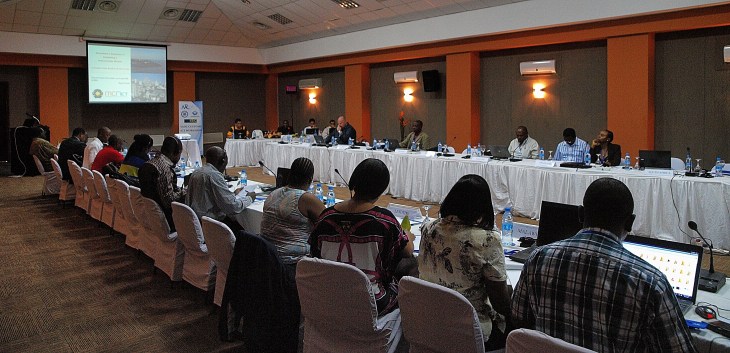
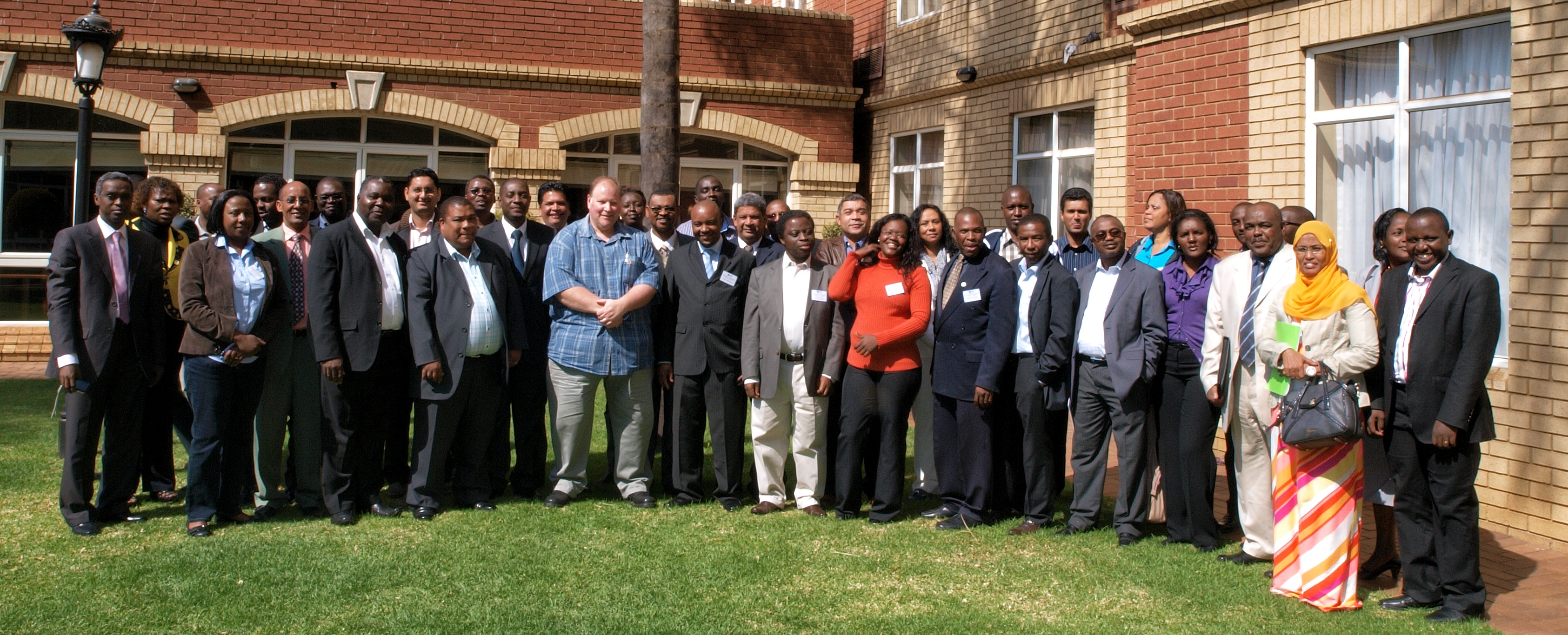
Delegates from the SADC member states gathered in Port Louis, Mauritius between 9 and 13 October to establish a SADC Customs ICT strategy for the region. The conference, sponsored by the United Nations Economic Commission for Africa, coincided with the 200th anniversary of Customs in Mauritius.

Following recent developments on IT connectivity and data exchange in the region, the conference addressed other areas of ICT in Customs which have a significant influence not only for internal Customs processing but its impact and effect on the broader stakeholder community. The conference was well attended with representatives from Angola, Mozambique, Lesotho, Swaziland, Namibia, Botswana, Tanzania, Zimbabwe, Seychelles, Mauritius, Democratic Republic of Congo, Malawi, and South Africa.

The event also drew international interest with representatives from the World Customs Organisation, Trans-Kalahari Corridor, SA Trade Hub, the East African Community, Southern African Customs Union, and the UN Economic Commission for Africa.

“Customs Connects, Borders Divide” conveyed the central theme for the event with the WCO IT and Capacity Building expert, Mats Wicktor, providing an enabling platform upon which the conference deliberations occurred. A detailed presentation clearly outlined the WCO’s the basis for standards, recommendations and guidelines, with specific reference to the Data Model, the Unique Consignment Reference and the most recent developments on Globally Networked Customs (GNC).

Other keynote addresses were made by Mozambique (DGA) on their experience in implementing the Single Window concept (for more details on this project visit URL: http://tfig.unece.org/case-stories.html).  Host nation Mauritius presented their Cargo Community System, and a number of other IT developments namely, e-Certificate of Origin, valuation database for 2nd hand motor vehicles, and the recently implemented Customs Enforcement Network (CEN) solution. SARS presented its Customs Modernisation journey highlighting some of the key ICT products and features and the respective efficiencies and trade facilitation benefits introduced for trade. Furthermore, it elaborated on its current bilateral data exchange initiatives with Swaziland, Zimbabwe, Mozambique as well as the IBSA countries.

The business end of the conference saw the finalisation, tabling and vetting of a draft SADC Customs ICT strategy. The strategy provides a broad framework, focussed around the concept of Customs-to-Customs data exchange. It seeks to create synergy between member states in regard to aspects such as transit management, common risk and enforcement principles, the entrenching of the One Stop Border Post concept, as well as automation of certificates of origin. From a SADC point of view, the strategy will support the realisation of its Strategic Plan – envisaged to include a Customs Union.

African Rhino poaching reaches new record

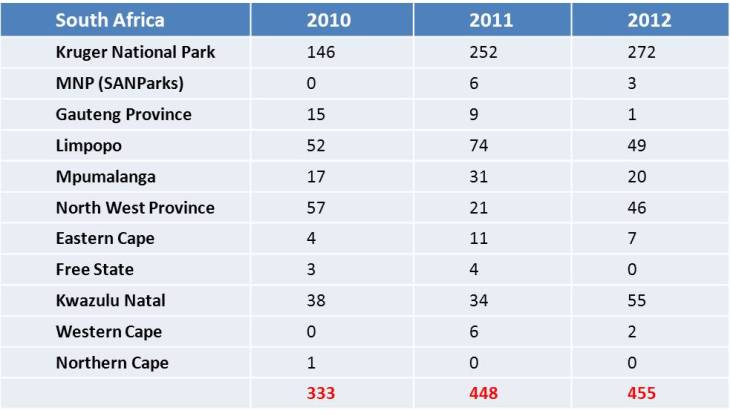
A record number of African rhinos were illegally killed in South Africa this year, driven by the use of their horns in Chinese medicine and a spreading belief in Southeast Asia, unfounded in science, that they may cure cancer. The street value of rhinoceros horns has soared to about $65 000 a kilogramme, making it more expensive than gold.

South Africa, home to more than 20 000 rhinos, or about 90% of all the rhinos in Africa, lost 455 rhinos to poachers, as of Tuesday, to eclipse the 448 killed in all of 2011, the environment ministry said in a statement. Around 15 animals a year were lost a decade ago, showing the impact of rising demand from Asia.

The number of rhinoceroses dying unnatural deaths in South Africa, either through illegal poaching or legal hunts, has now reached a level likely to lead to population decline, according to a study by Richard Emslie, an expert in the field. Poaching increased dramatically from about 2007 as a growing affluent class in China, Vietnam and Thailand began spending more on rhino horn for traditional medicine, where it was once used for ailments such as devil possession.

About half of poaching takes place in Kruger National Park, the country’s flagship park covering an area about the size of Israel, where soldiers and surveillance aircraft have been deployed in recent months to slow the carnage. The park has been the focal point of an arms race as gangs of poachers sponsored by international crime syndicates have used high-powered weaponry, night vision goggles and helicopters to hunt the animals, investigators said. Source: Polity.org.za

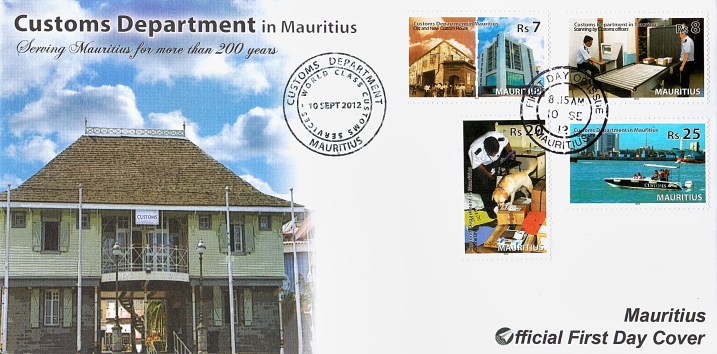
Mauritius Customs turns 200

Mauritius Customs 1st Day CoverOn the ocassion of my 300th post, join me in raising the Portcullis for Mauritius Customs! During September, the Mauritius Revenue Authority (MRA) marked the bicentenary celebrations of Customs services in Mauritius by launching a special First Day Cover with four stamps on the Customs Department to mark the bicentenary celebrations of Customs Services in Mauritius. The issue of these new stamps is an acknowledgement of the significant contribution of the Customs services to the economic and social life of the country for more than 200 years. The four stamps depict the Customs Services in different fields with denotation of Rs 7, Rs 8, Rs 20 and Rs 25 illustrating some of the areas where the customs services are involved in their fight against crime and fraud prevention through the use of people, animals and state-of-the-art technology.

On 18 August 1797, a ‘bureau de Douane’ was established for the purpose of raising revenue in a context of war and blockade. It became a major financial institution contributing towards 50% of total revenue. The British took over in 1811 and installed the first Collector of Customs.British Customs practices were gradually introduced in the colony in line with British commercial law.

In modern times, the MRA Customs Department has set as one of its main objective to combat the illicit trade of drug and other illicit substances. The MRA has a team of 6 drug detector dogs handled by certified dog handlers trained by the French Customs and the South African Revenue Services (SARS). Our dogs have been selected carefully from examined litters and were declared competent drug detector dogs as per SAQA Unit Standard in the handling of a service to detect illicit substances.

Since 2008, our sniffer dogs have detected drugs in 25 instances involving the import of Cannabis, Heroin, Hashish, Subutex and other illegal substances worth around Rs 42,530,543. The Drug Detector Dog squad operates at the courier services, Parcel Post Office, Vehicle Search at Airport, Port and Freight Stations, Port area, Airport (Plaisance Air Transport Services & Luggage on carrousels at SSR Int. Airport and Aircraft search) as well as at the seaport for search of vessels. Source: Mauritius Revenue Authority

Most African countries to be middle income by 2025?

As many as 38 of sub-Saharan Africa’s 48 countries could be regarded as ‘middle income’ by 2025, but World Bank chief economist for Africa Shantayanan Devarajan warned that such an advancement would not necessarily translate into a reduction in poverty. Currently, 21 countries, collectively with 400-million citizens, have middle-income status, which the World Bank defines as countries with yearly per-capita income levels of higher than $1 000.

Speaking following the release of the October edition of the bank’s ‘Africa Pulse’ publication, Devarajan noted that at least ten countries, representing 200-million people, were poised to transition to middle-income status over the coming 13 years on the back of prevailing growth rates. Included in the list are countries such as Zimbabwe and Comoros, which would require both growth and stablisation.

Over the past 15 years, the continent had expanded at a rate of two percentage points better than the average global growth rate, and the bank was still expecting sub-Saharan Africa to expand by 4.8% in 2012 – excluding slow-growing South Africa, the region’s largest economy, average growth for the region was forecast at closer to 6% for the year.

But there was potential for a further seven countries, with 70-million citizens, to be included in the middle-income mix over the period if rates of growth accelerated beyond levels achieved over the past 15 years. Only ten African countries, representing 230-million people, almost certainly will not achieve middle-income status by 2025.

But while Africa’s recent growth spurt had resulted in the first overall reversal in the continent’s poverty rate since the 1970s – from 58% in 1999 to 47.5% in 2008 – the bank cautioned that continued progress would depend on continued macroeconomic prudence and improved governance, particularly in the area of natural resources.

Africa Pulse showed that resource-rich countries had seen a strengthening of economic growth, while poverty rates and inequality levels had not performed as impressively. “Some countries, such as Angola, Republic of Congo and Gabon have actually witnessed an increase in the percent of the population living in extreme poverty.”

“Resource-rich African countries have to make the conscious choice to invest in better health, education, and jobs, and less poverty for their people because it will not happen automatically when countries strike it rich,” Devarajan said. “Gabon, for example, with a per-capita income of $10 000 has one of the lowest child immunisation rates in Africa.”

To ensure that the benefits of rising growth were “pro poor”, more jobs would need to be created. And, in the context of high levels of informal sector employment, efforts would also need to be made to improve access to finance and skills, in the informal sector. Source: Engineeringnews.co.za


Grindrod – coastwise feeder expansion to extend services between Durban and Angola

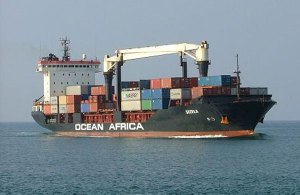
South African logistics and shipping firm Grindrod has continued its expansion programme, with the purchase of Safmarine’s 51% stake in Ocean Africa Container Lines. Grinrdod gave no details of the price paid for Safmarine’s stake in Ocean Africa Container Lines (OACL), but Grindrod now fully owns the company, which operates a feeder service with four vessels between Durban and Angola, calling at several ports in between, including in Namibia and Angola.

OACL’s former COO, Mahmood Simjee, has now been appointed CEO. Grindrod hopes that OACL can continue to benefit from close ties with Safmarine and the latter’s parent company, Maersk. OACL could take advantage of Ngqura’s growing role as a transhipment port, particularly with Angolan ports. The shipping line previously operated between Durban and Mozambican ports and could again resume this role.

Röhlig-Grindrod, a joint venture between Grindrod Limited and Röhlig International, has also acquired Sturrock Group’s clearing and freight forwarding division in exchange for a 15% stake in Röhlig-Grindrod, leaving the founding partners with 42.5% equity each in the venture. The inclusion of black empowerment partners in Sturrock Group helps Röhlig-Grindrod to fulfil its empowerment requirements.

Hylton Gray, the CEO of Grindrod Logistics, said: “We are very pleased with the merger of the businesses and the introduction of the empowerment partners. Calulo, a partner in the Sturrock Group, already has a stake in Grindrod’s South African operations and has contributed significantly by way of existing relationships and experience in niche markets.” Source: worldcargonews.com

Picard 2012 – with a South African perspective

Over 230 delegates representing WCO Members, the academic world, international organizations, the private sector, donor organizations and other interested parties attended the 7th WCO Conference on the Partnership in Customs Academic Research and Development (PICARD) hosted by the University of Cadi Ayyad in partnership with Morocco Customs and the WCO in Marrakesh, Morocco from 25-27 September 2012.

The Conference was co-chaired by Prof. Michael Wolffgang, University of Münster, and Prof. M’barek Benchanaa and Prof. Abdullah Ait Ouahman from the University of Cadi Ayyad. The Conference focused on three main topics: The Impact of Regional Economic Integration and Preferential Trade Arrangements on Customs Services; Emerging and Evolving Risks; and Customs Strategic Human Resource Management.

The WCO PICARD Programme was officially launched in 2006 to strengthen co-operation between the WCO, universities, and Customs human resources entities such as Customs Academies. The programme’s objective is to provide a platform where stakeholders can co-operate, collaborate, and contribute to two main pillars: (1) Customs professionalism and (2) Customs-related research.

Key PICARD achievements include adopting the PICARD Professional Standards for operational and strategic Customs managers; holding six successful PICARD Conferences; and publishing many Customs-related research papers in the World Customs Journal. Moreover, a growing number of universities have obtained WCO recognition of their Customs-related academic curriculums.

The PICARD Conference has become an annual meeting place for Customs officers, Customs human resource professionals, and academics to network and exchange ideas on Customs professionalism and Customs-related research. It is an opportunity for Customs academies and the WCO Regional Training Centres to glean new ideas on human resource development. At each conference, research papers are presented; this year, papers will be presented on regional economic integration, emerging and evolving risks, and human resource management.

The dearth in Customs expertise has become an international phenomenon, and South Africa is no exception. Locally based training organisation, GMLS, has been working with the University of Kwazulu Natal, Durban and UCT in Cape Town and in Durban specifically it is expected after council of Higher education approval next year that we will be offering a full masters Degree in Customs for the first time in South Africa as a MCom Customs and Excise, says GMLS CEO Mark Goodger. GMLS is a WCO E learning trainer, an ICC accredited trainer and an approved TETA (Transport Education Training Authority Trainer).

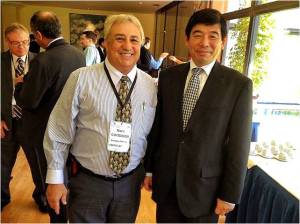
Mark was invited as a guest speaker to this year’s Picard Conference. He explained that the WCO arranged presentations to  stimulate discussions and guidance required from the WCO in the future. Along with South Africa, presentations were also delivered by Finland, Canadian and Moroccan Customs training experts in the results of research and the status in SADC countries of recognised accredited training frameworks which can be utilized by Customs worldwide. Whilst Customs administrations are implementing the Revised Kyoto Convention and the SAFE Framework it is clear that trade will need to follow the direction of future compliance as Customs leads forward into the 21st century.

Detector dog unit expanding its paw print across the country!

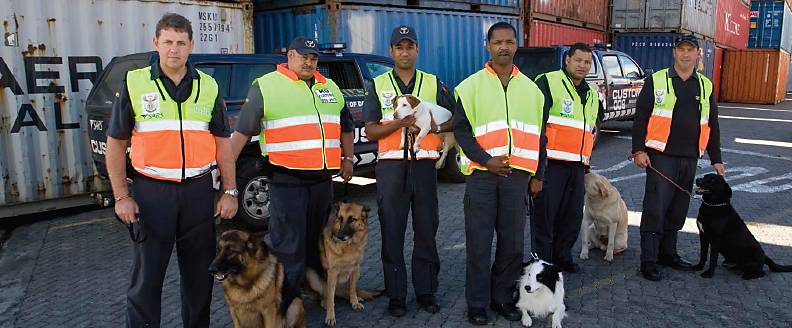
On a subject close to my heart. The National Detector Dog Unit of the South African Revenue Service (SARS) is getting a boost with more than 70 new dogs and handlers being trained to make up a number of new dog units around the country. Apart from filling a couple of current vacancies, the new recruits will form part of Detector Dog Units in Port Elizabeth, Zeerust, Mahamba, Vioolsdrift, Nakop, Maseru Bridge and an expanded Mpumalanga unit. All the additional units are expected to become operational in the first quarter of 2013.

“By next year, most of the major land, sea and air ports should have their own detector dog units (DDU),” said the senior manager of the DDU, Hugo Taljaard. “The ultimate aim is to have dog units at every port, with a total of 500 new handlers and dogs needed. However, this is a long-term (four-year) project, aimed at enhancing our non-intrusive capabilities at ports of entry to prevent cross-border smuggling.”

The SARS Detector Dog Unit has also been asked recently to assist with training in Namibia and Angola, following the assistance we gave the Mauritius Revenue Authority (MRA) to establish a Detector Dog capability. The DDU continues to see major successes countrywide, with a recent copper bust in the news last weekend.

Detector dog Umaga, an 18-month old German Shepherd, sniffed out 84kg of copper at the Beit Bridge border post during his first operation. Umaga recently completed his training as a copper sniffer dog. The copper was concealed in luggage in a trailer entering South Africa. Umaga is the second sniffer dog to be trained to sniff out copper. Milo, a five-year-old Labrador, has also already nosed out his first contraband copper. There has been an increase in the smuggling of copper wire across the border into South Africa, since copper has a much higher value here than in the other member states of the Southern African Development Community. The increase has meant that Customs has had to beef up its ability to detect contraband copper. The wire is usually concealed in compartments under trucks.

The Detector Dog Unit was the first in the world to train “dual application dogs”, Hugo explained. So instead of being trained or “imprinted” to detect only one scent, they are able to detect a combination of scents, e.g. narcotics and currency, tobacco and endangered species. Both Milo and Umaga are dual dogs and they can detect narcotics/tobacco and copper wire. The explosives detector dogs are the only dogs not dual trained due to the safety risk.

The dogs are an integral part of our Customs workforce and are seen as officers in their own right. They are therefore looked after with the utmost care and attention and are even provided with special reflector jackets, cooler jackets for the heat and dog shoes made to protect their feet from hot surfaces. Source: SARS Communications Division

Is South Africa being screwed by China?

In recent days there’s been mutterings amongst several business commentators concerning the state of the South African manufacturing sector and its inability to compete in the local economy in the face of ‘so-called’ cheap imports. For once I heard some common sense instead of the usual WTO/economist waffle which normally just confuses people instead of shedding light on the inherent problems. What the Business Times article below suggests is that our prevailing job plight is self-induced and should not be blamed entirely on rogue elements alone. Under valuation and mis-declaration have and always will pose a challenge to any country. The blame has been placed on Customs not doing its job; yet, the problem appears to lie at the feet of policy makers who have made foolish decisions for which the country as whole now pays the price. 

The trouble began soon after 1994, when then Trade and Industry Minister, anxious to prove to the then rich and powerful, and sceptical, West what lovers of democracy and free markets they were, removed tariff protection on cheap imports against a considerable body of expert advice. And 12 years before we needed to, because the World Trade Organisation‘s predecessor, GATT, had given South Africa 12 years to modernise its manufacturing, improve its skills and prepare itself before lowering import tariffs.

At the time, Trade and Industry Minister and the government thought South Africa did not need a grace period. Leslie Boyd, then head of the Anglo-American industrial division, warned of the devastating consequences but to no avail. “They thought if they took the crutches away we’d become a free market economy and we’d be competitive,” says Stewart Jennings, chairman of the Manufacturing Circle which represents thousands of manufacturers in SA. “It was the most ridiculous thing you could ever imagine. Those of us in business know there is no free market in the world. Every country protects itself. We don’t. Here’s an economy without skills that just throws open the tariffs. We’re the country that’s whiter than white in terms of the WTO. Everybody else just abuses us.”

Business consultant Moeletsi Mbeki opines “[government] is too ideologically orientated, it operates from ideology rather than from practical expertise. This motivates our relationship with China. The Chinese can do no wrong.”

One of the worst mistakes they made, he believes, was to sign an agreement that gave the Chinese market economy status which it did not and does not deserve. The talk was that SA agreed to do this as compensation for imposing a three-year quota on Chinese textile imports. The effect on SA’s manufacturing sector has been devastating. “As a consequence of that agreement it is virtually impossible for us to get countervailing duties into China through ITAC [the International Trade Administration Commission which used to fall under the Department of Trade and Industry but is now under Ebrahim Patel‘s Department of Economic Development],” says Stewart Jennings. “We’ve battled to get dumping duties or safeguards against China. Most of the applications that have gone to ITAC have been kicked into touch.”

First, China starts with a currency that is 30% undervalued. It manipulates it, so any goods it exports to SA are 30% cheaper than they should be. On top of that there are all sorts of incentives for Chinese exporters. And then, as Jennings says, attempts by local manufacturers to defend themselves by applying for countervailing duties more often than not go nowhere.

Iraj Abedian of Pan African Investment and Research says the short answer to the question is yes, we are being screwed. “Not because the Chinese have been smart but because we’ve been snoozing and naïve.”

SA was so flattered to be asked to join the BRIC (Brazil, Russia, India, China) club of developing economies that it did not drive a hard enough bargain. “We were romanticising our relationship with China and celebrating the fact that China was inviting us to join BRIC. We took it as a form of political honeymoon without recognising its effect on manufacturing, without assessing our counter-strategy for safeguarding national interests in the form of jobs and tax revenue.” China needed SA to join BRIC at least as much as SA itself wanted to join, but SA failed to capitalise on this.

Executive director of the Manufacturing Circle, Coenraad Bezuidenhout, who has observed the effect at close quarters, thinks part of it is that “our guys find the prospect of dealing with China daunting. They feel we need China as a market for our raw materials more than China needs us.” He thinks this attitude reflects a worrying lack of professionalism on the part of those who are paid to battle for SA’s interests. “We should be leveraging our position with regard to our minerals and our access to African markets far more than we do when we deal with China.”  Source: Business Times

Ressano Garcia – Border Operations Assessment

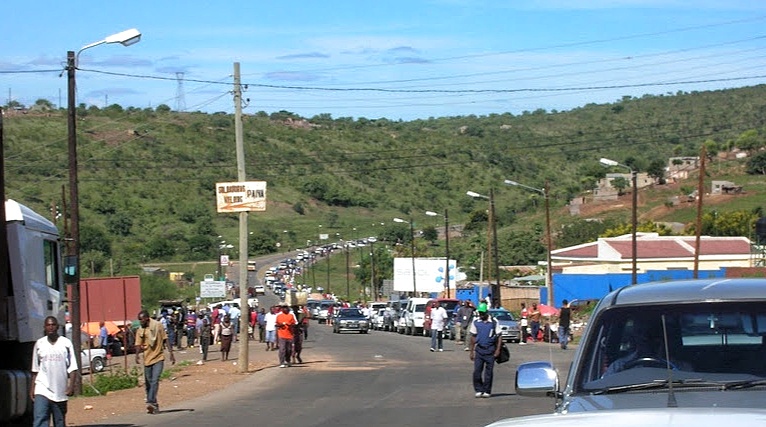
As part of its Coordinated Border Management (CBM) program, the Southern African Trade Hub (SATH) undertook a Border Operations Assessment (BOA) at Ressano Garcia along the Mozambique/South Africa border. The objective of the assessment was to establish processes used by the different agencies to clear goods, identify challenges and recommend mechanisms to addresses obstacles. The assessment also entailed establishing the time it took for trucks to cross the border by physically recording arrival and departure times at points where the clearance of goods was undertaken.

SATH held discussions with both public and private agencies operating at the border: Customs, Immigration, Health, Agriculture, Police, Traders Association, Clearing and Forwarding Agents and Insurance Companies. The agencies explained their roles and mandates, how they carry out their day to day operations at the border, their working relations with other agencies at the border and the challenges they face in carrying out their duties.

SATH also had discussions with the One Stop Border Post (OSBP) project team to assess progress on the initiative. The OSBP is at an advanced stage and only awaits the adoption of the legal framework by South Africa, which is anticipated by the end of 2012.

Findings of the BOA and recommendations will be disseminated through a national and border workshops to which senior officials of agencies operating at the border and border officials will be invited. At these workshops Joint Border Committees will be established to take the recommendations forward to streamline border management.Source: SA Trade Hub

Corruption at Durban Harbour – the plot thickens

With reference to an earlier post “Trade costs and corruption in Ports of Durban and Maputo” (March 2012) the following article ‘Hawks probe Khulubuse Zuma’s pal’ published by the Daily News (Durban) suggests more sinister individuals involved in the scam which saw a policeman being gunned down at his home and no less than 10 SARS officials placed on suspension. A web of intrigue indeed.

A wealthy South Africa-based Taiwanese businessman and former business associate of Khulubuse Zuma, a nephew of President Zuma, is being probed for alleged links to a multibillion-rand racket at Durban Harbour. In June the Hawks in KwaZulu-Natal secured a warrant of arrest for Jen Chih “Robert” Huang, CEO of Johannesburg-based company, Mpisi 74, when investigators from the elite unit also raided Huang’s business in Bedfordview, and his home.

Huang, a convicted murderer, was in Hong Kong on business when the warrant was issued, and it has not been executed after he side-stepped the Hawks by directly approaching the National Prosecuting Authority (NPA) to make representations as to why he should not be arrested. The businessman, part of a delegation that accompanied President Zuma on a state visit to China in 2010, is wanted on multiple counts of alleged corruption.

According to Daily News, Huang denied having any links to alleged illegal activity at the harbour, and referred all queries to his attorney. “I have been out of the country. “Speak to my attorney in Durban. He is handling all matters related to my company.” His attorney, Quintus van der Merwe, confirmed representations had been made to the State, but declined to comment further.

The warrant for Huang’s arrest came weeks after a former South African Revenue Service (Sars) anti-corruption task team member, Etienne Kellerman, was arrested on 80 counts of alleged corruption. Kellerman, 42, is suspected of receiving substantial benefits for allegedly allowing contraband through the harbour. The Daily News broke the story when Kellerman was arrested in April this year after a three-year covert investigation. An international syndicate that was allegedly bribing customs and police officials to allow in container-loads of contraband, was also exposed by the Hawks.

Sars spokesman, Adrian Lackay, told the Daily News that following the joint investigation with police over several months into the existence of a criminal syndicate operating at Durban Harbour, 10 Sars employees had been suspended. “Their suspensions follow the arrests of other suspects outside of Sars. These employees were suspended over a three-week period following the arrest of Kellerman on charges related to fraud, theft and misconduct,” he said.

“The 10 employees remain suspended pending the outcome of an internal investigation into alleged involvement with clearing agents.” Over the past two years, during this investigation, police seized more than R1 billion worth of counterfeit goods and contraband. The alleged corrupt Sars and police officials are believed to be working in teams between KZN and Gauteng. They are allegedly paid bribes of up to R30 000 for each container allowed to pass through customs undetected. Big name international companies, mainly from China, are also being investigated. Kellerman has pleaded not guilty and is on R100 000 bail.

According to its website – before it was removedMpisi 74 is a massive concern, offering a range of services, including import, export, forwarding, warehousing, cellphone telecommunication and machinery, as well as vehicle manufacturing. Just days after Huang was contacted by the Daily News, the website was taken down.It had even boasted pictures of the president’s nephew, Khulubuse Zuma, with the Taiwanese businessman at the company’s headquarters in Bedfordview, on December 9, 2009. The Mail and Guardian, in January, described Huang as the influential middleman in deals between Chinese companies and Khulubuse Zuma. It said Huang was also instrumental in introducing Chinese vehicle manufacturer, Dong Feng Motor Corp, to Khulubuse Zuma, who at one point was the “chairman” of Mpisi.The report said that in 2010, Dong Feng announced a joint venture with Khulubuse Zuma and Huang to distribute its products in South Africa and the rest of the continent.In 1998, Huang was convicted of the murder of a Taiwanese businessman, Ching-Ho Kao, who was found shot dead in March 1996, in the Free State. His body was set alight. The trial began in the Bloemfontein High Court in November 1997. The indictment claimed the motive for the murder was that Kao’s family owed Huang money. Huang was sentenced to an effective 12 years in prison. But, through remission of sentence, he was released in 2003 and set up Mpisi 74.

Source: Daily News (Durban)

Related Articles

Regional IT inter-connectivity takes another step

Delegates from at least 20 African Customs Administrations met in Pretoria, South Africa between 13 and 15 August to advance developments towards a common framework and approach to IT inter-connectivity and information exchange in the region. Convened by the SADC secretariat in consultation with COMESA and Trademark Southern Africa (TMSA), the three day work session focussed on uniform acceptance of the WCO‘s Globally Networked Customs (GNC) methodology, regional awareness of customs developments in the Southern and East African region, as well as joint agreement on customs data to be exchanged between the member states.

Mauritius Revenue Authority (MRA) shared its experience with delegates on the launch of its Customs Enforcement Network (CEN). Kenya Revenue Authority will soon be sharing enforcement information with its MRA counterpart. At least 22 African countries are expected to link up with the CEN network over a period of time. Customs enforcement information is the second pillar of the WCO’s GNC information exchange methodology; the first pillar being Customs information exchange. The latter provides for a holistic approach to the dissemination of common customs data derived from supply chain exchanges, for example declaration information, cargo information, and AEO information to name but a few. This information is vital for trading countries to administer advance procedures and better validate the information being provided by the trade.

Rwanda Revenue Authority introduced it’s RADDex programme which is a web-based IT solution for the exchange of cargo manifest information between participating states in the East African Community (EAC) – see related article below.

SADC and COMESA are rallying their members to participate in the initiative. At the current juncture, various member states have expressed keen interest to participate. While the regional intention is the linking of all customs administration’s electronically, initial developments envisage bi-lateral exchanges between Customs administrations which are ready to engage. The importance of the adoption of the GNC methodology is to ensure that customs connectivity and information exchange is harmonised and consistent across the Southern and East African region irrespective of whether countries are ‘early adopters’ or not.