Homeland Security’s App for Smartphones and PC’s

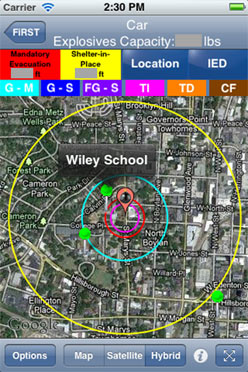
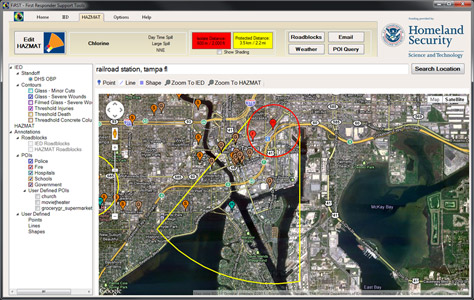
The U.S. Department of Homeland Security‘s Science and Technology Directorate and its public and private sector partners have developed a must-have “app”: the First Responder Support Tools (FiRST) for computers and smartphones.

At approximately 6:30 pm on Saturday, May 1, 2010, a smoking SUV in Times Square was reported by alert street vendors. Acting quickly, NYPD evacuated vast stretches on 7th and 8th Avenues, including Broadway theatres and several other buildings and hotels in the area. The entire area was barricaded. Times Square on a Saturday evening before the shows is teaming with people, and the terrorist knew that. The bomb failed, but had it detonated, it would have killed and wounded many, according to NYPD.

In the first chaotic moments after suspicion of a bomb threat, first responders have a myriad of questions, assessments, and decisions to make, all at once, and all the while the scene could be changing rapidly. Is the bomb real? How large is the potential blast radius? Where will we evacuate people? Are there any critical infrastructure or special-needs population centers in the vicinity? Any schools, hospitals nearby? What roads should be closed? Which roads should stay open for evacuees? And on and on….What if they could get all this information in one place?

Now they can: The U.S. Department of Homeland Security’s (DHS) Science and Technology Directorate (S&T) and its public and private sector partners have developed a must-have “app”: the First Responder Support Tools (FiRST) for computers and smartphones.

Users start by entering what they know about the (possible) bomb, including its geographical location. The app will then advise them on factors such as the distance around the bomb that should be cordoned off, the best locations for road blocks, what buildings should be evacuated or serve as shelter sites, and what some of the local “areas of concern” are – places such as schools, for instance, or other areas where large numbers of people are at risk. It will also estimate what to expect in the way of structural damage and injuries, should the bomb go off.

Because no two bomb threat scenarios are identical, there are many opportunities for users to provide information on their own unique situation, so the output of the app will be custom-tailored to them. Maps of the area can then be labelled by the user, and shared by email with other personnel.

The app can also be used in the event of toxic substance spills, as it includes information on the handling of over 3,000 hazardous materials. Using its weather feature, users can additionally determine the likely route that airborne substances will be carried by prevailing winds, and then warn or evacuate people accordingly. FiRST works on iOS and Android devices, along with PCs. It is available to first responders only, at a price of US$12 for the mobile version, or $100 for the desktop. Source: U.S. Department of Homeland Security and gizmag.com

WCO News – 60 year Anniversary Edition

The Organization is celebrating its 60th anniversary, an occasion which gives the global Customs community the chance to reflect on where the WCO began, where it is now, and where it hopes to go in the future. This issue highlights some of the WCO’s milestones past and present, we take a brief look at the WCO’s historical beginnings and subsequent development, follow one man’s forty year Customs journey, look at the history of containerization: the box that changed the world, and even step back to 1969 when the Apollo 11 touched down on the surface of the moon. In this dossier, not only does the WCO look back with pride, but also looks forward with optimism, conscious of the fact that the WCO has served the global Customs community with dedication for sixty years, and will continue doing so to ensure that Customs administrations remain well-positioned to deliver effective and efficient services around the world. Also in this issue –

  • Doorless containers now a reality,
  • US/EU mutual recognition programme,
  • New guidelines included in WCO Revenue Package,
  • Globally Networked Customs,
  • GS1 and the WCO,
  • Algeria Customs and performance management,
  • Georgia’s success in rooting out corruption,
  • Hong Kong moves forward with its e-Lock plans.

Source: http://www.wcoomd.org

Transnet’s loco acquisition programme gaining traction

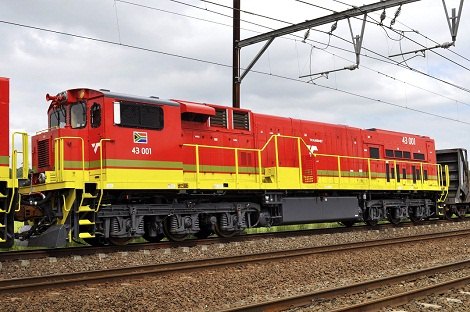
Ports.co.za reports that the US-based General Electric (GE) Transportation has announced that another locomotive, which forms part of a deal sealed with state-owned Transnet, was delivered with local content that exceeds the commitment from GE’s initial Transnet order of 100 locomotives.

The locomotive is the 42nd and is the most advanced diesel-electric locomotive ever built-in South Africa. Its official unveiling took place at an event held at Transnet Rail Engineering’s facilities in Koedoespoort, Pretoria, on Wednesday.

With this order, GE overshot its self-imposed target of 30% local content. The locomotives assembled in South Africa now have 37% local content.Transnet concluded an agreement with GE for a further 33 diesel-electric locomotives, over and above the 100 already being purchased under a deal concluded in 2009. In terms of the contract, 10 of the locomotives were manufactured in Erie and Grove City, Pennsylvania, USA and 133 are being assembled locally at Transnet Rail Engineering’s site in South Africa.

A total of 53 will be deployed in the Phalaborwa-Richards Bay corridor, 30 on the Sishen-Saldanha iron-ore corridor, 32 on the Witbank-Nelspruit-Komatipoort line and the remaining 28 will be used to transport coal to Eskom power stations. Source: ports.co.za

Politicians – they’re all the same

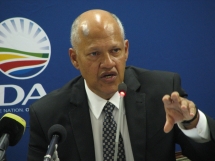
A strong and informed opposition is always healthy, so the exponents of the modern democracy continually advocate. Well if the speech of the Democratic Alliance‘s shadow minister on trade and industry, Dr. Wilmot James,  to the House of Commons in London is anything to go by, is just a case of “same old, same old“, filled with cliches and boring statistics scrounged from publications such as Doingbuisness.org. Furthermore, it illustrates why poor legislation comes about, in many cases uncontested unless it touches a political nerve.

The speech concludes with a set policy proposals that will form part of the official opposition’s manifesto for the 2014 elections. Read the full speech here! To what extent the opposition has canvassed the real import/export community is questionable, and reveals a level of understanding that is ‘uninformed’ at best. I’m not impressed and totally uninspired.

Revisiting the national transit procedure – Part 1

FTW Online last week ran an interesting article in response to a proposed change in Customs’ policy concerning the national transit movement of containers from coastal ports to inland container terminals and depots. In February 2011, I ran an article Customs Bill – Poser for Cargo Carriers, Handlers and Reporters alluding to some of the challenges posed by this approach. The following article goes a step further, providing a trade reaction which prompts a valid question concerning the practicality and viability of the proposed change given logistical concerns. I believe that there is sufficient merit in the issues being raised which must prompt closer collaboration between the South African Revenue Service and trade entities. For now it is sufficient to present the context of the argument – for which purpose the full text of the FTW article is presented below. In Part 2, I will follow-up with SARS’ response (published in this week’s edition of the FTW) and elaborate on both view points; as well as consider the matter  on ‘raw’ analysis of the ‘cargo’ and ‘goods declaration’ elements which influence this matter. Furthermore, one needs to consider in more detail what the Revised Kyoto Convention has to say on the matter, as well as how other global agencies are dealing and treating the matter of ‘security versus facilitation’.

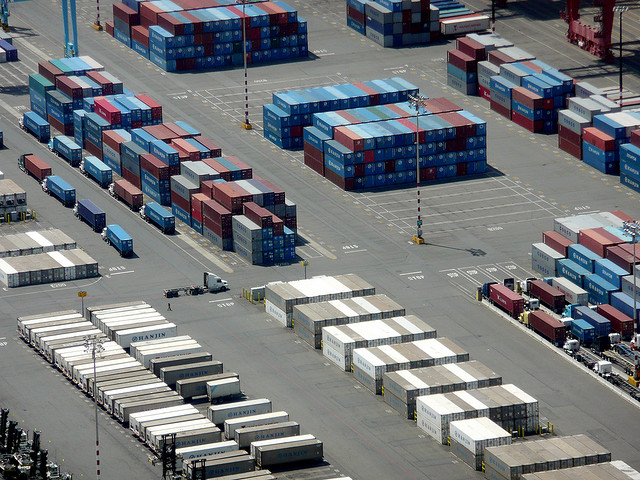
Customs’ determination to have all goods cleared at the coast does not bode well for the South African trade environment, Pat Corbin, past president of the Johannesburg Chamber of Commerce and Industry (JCCI), said. Speaking at the Transport forum in Johannesburg Corbin said the Customs Bills have been on the cards for several years now and while consensus had been reached on most issues in the Nedlac process, the determination of Customs to not allow for any clearing to take place at inland ports will only add more pressure to the already overburdened ports in the country. “Customs maintains that despite the changes they propose it will be business as usual. We disagree. We have severe reservations about their intention to terminate vessel manifests at the coastal ports in all cases and have called for further research to be undertaken in this regard,” said Corbin. “By terminating the manifest at the coast it has severe ramifications for moving goods from road to rail. International experience has shown when you have an inland port and you have an adequate rail service where the vessel manifest only terminates at the inland port, up to 80% of the boxes for inland regions are put on rail while only 12% land on rail if the manifest terminates at the coastal port.” Corbin said the congestion at both the port and on the road would continue and have an adverse impact on quick trade flows. “It also raises issues around the levels of custom security and control at inland ports and then the general implications on the modernisation project.” According to Corbin, government’s continued response has been that no provision exists for inland ports and that goods must be cleared at the first port of entry. “They maintain that it is about controlling goods moving across our borders and thus the requirement that all goods must be cleared at the first port of entry. The security of the supply chain plays an important role to avoid diversion or smuggling of goods,” said Corbin. “Government says that the policy change will not clog up the ports or prohibit the seamless movement of trade. Labour organizations and unions seem to agree with them.” But, Corbin said, the Johannesburg Chamber of Commerce differs and is worried about the ramifications of this dramatic change to the 35-year-old option of clearing goods at an inland port or terminal. “With this policy change all containers will have to be reconsigned after not only Customs clearance on copy documents but also critically, completion of shipping lines’ requirements ie, payment of freight, original bill of lading presentation and receiving delivery instructions prior to their issuing a delivery order.” Corbin said the issue had been addressed directly with Transnet CEO Brian Molefe on two occasions, but that he had said he accepted Customs’ assurance that nothing would change and the boxes would still be able to move seamlessly once cleared. “It is not understood that the manifest will terminate at the coast where all boxes will dwell until they can be reconsigned,” said Corbin. Source: FTW Online – “New Customs Bill ruling will put pressure on port efficiency.”

The meaning of a Customs Broker

The following article comes from the 22 June 2011 issue of the American Shipper. It was written by the president of The National Customs Brokers & Forwarders Association of America (NCBFAA). I do believe that it is poignant for African’s to better understand what makes trade tick. It is particularly relevant in the South African context where certain service providers and consultants believe it is they that ‘turn the wheels of trade’ and that the ‘real’ end users are merely a consequence to push the ‘enter button’. While the ‘brokering industry’ has been tainted by criminal activities (in many cases ex-customs officials) there is a legitimacy to the continued existence for the trusted customs broker. The importance is even more pronounced today  where South African importers and exporters will soon face the brunt of the new Customs’ law – the need for skilled and experienced brokers should be an imperative within our local industry. So lets put ignorance aside and consider the article, below.

As a third generation customs broker, I know what it takes to enter goods into the commerce of the United States. As president of the National Customs Brokers and Forwarders Association of America, I know that the customs brokerage industry consists of thousands of individuals who work for small and large, old and new, struggling and successful companies for fees that do not reflect the true value of the service they provide.

It is unfortunate that some would say we “stubbornly stand in the way of progress.” The fact is that without the leadership of the brokerage industry and the NCBFAA, importers would still be taking their commercial invoices and bills of lading to the Customs House only to wait weeks for release and it would be impractical to conduct international business.

If you have never cleared goods entering the United States, I encourage you to try. It is naive to believe that all a broker does is push a couple of buttons and magically goods are released and delivered to your door.

To start, let’s look at the new Importer Security Filing (ISF). Pre-arrival shipment information that was considered unavailable three years ago is now given to U.S. Customs and Border Protection prior to loading for more than 90 percent of the goods heading by vessel to the United States. Customs brokers or freight forwarders receive and process practically all that information before transmitting it to CBP. What if you didn’t have access to the broker’s Automated Broker Interface system or the forwarder’s Automated Manifest System connection to transmit this data? How would you send the ISF? How would CBP receive it? Would every importer have to establish and maintain a CBP-compatible computer system? At what cost?

CBP Commissioner Alan Bersin has said that other agencies generate two of three import exams. In addition to myriad CBP regulations, there are numerous other regulations you must know to import successfully. Do you know the Food and Drug Administration rules? What about the Bio-Terrorism Act — did you research it yourself or hire another industry expert to figure out how this was going to impact your company? Then there are FDA product registrations and Prior Notice requirements and now the new Food Safety Act. Of course your broker can help with that. The U.S. Department of Agriculture, Environmental Protection Agency, Federal Communications Commission, Transportation Department — more than 20 agencies with requirements that must be met every time a shipment is presented for entry. Anti-dumping, free trade agreements, quota, denied parties, State Department, International Traffic in Arms Regulations, Office of Foreign Assets Control, etc. Can you imagine what would happen if your broker didn’t know about those things? How would your goods get cleared? Would your goods be detained or seized? What if multiple shipments were en route when the problem was identified? It is a good thing that you have somebody in your corner paying attention to this stuff.

I hear over and over how CBP wants to reduce the cost of importing. Let’s review the costs associated with importing: Freight ocean/air, duty and customs fees, broker fee and delivery fee. Freight we can’t control, duty is a given, Merchandise Processing Fees and other government fees we cannot control. There are exam fees, Vehicle and Cargo Inspection Systems exam fees, storage fees caused by exams, VACIS handling charges by some carriers and port facilities, trucking fees to get containers positioned for exams, and so on. A great number of these costs are a result of government security efforts. The broker fee averages about 0.1 percent of the cost of the imported goods, and then there is the truck fee plus a clean truck fee to pickup and deliver the goods. Hmm … what should be reduced?

“It is a good thing that you have somebody in your corner paying attention to this stuff.”

During the CBP Trade Symposium, the Consumer Product Safety Commission (CPSC) described a tip about two containers that might contain non-compliant goods so they worked with CBP to perform an intensive exam. Luckily the tip did not pan out and the goods were found to be compliant. “Disaster avoided!” What CPSC didn’t say or didn’t know was that the storage and handling costs associated with having two containers held for two weeks exceeded $4,000. There was also no mention about whether the goods were time sensitive. At most ports in the nation, if a government agency puts a hold on a shipment, the expenses do not go on hold. Demurrage and per diem costs accumulate daily. Who creates those extra costs? I suggest that those who want to reduce the cost of importing consider where the real costs are being accrued — it is not in the brokerage industry, which works very hard to help reduce the cost of importing. 

That leads to the discussion of using brokers as a “multiplier” to reach small and medium-size importers. That is, in fact, what brokers do for the thousands of importers who know their product but have limited knowledge of the importing process. We get the importer’s goods cleared through the maze of government regulation and delivered to them within days of arrival into the United States. Talk about a multiplier. The fact is that we do that for businesses of all sizes, from the biggest multinational corporations with multiple import divisions and thousands of different products to the start-up business with a single product. Moreover, we do it every day … routinely.

Let’s talk about the Automated Commercial Environment. Do you know why few brokers use ACE? The system doesn’t always work and you can’t use it to release a shipment into the commerce of the United States. While you can use ACE for certain entry related functions, to the extent that brokers do utilize ACE, they must maintain two operating systems and train their personnel to perform limited tasks in both systems. What a nightmare! Talk about inefficiency and the bloated cost of importing!

We would love to have ACE working as promised. For more than 10 years the brokerage industry has gone to Congress and asked for money for ACE development. Three billion dollars later, the system is a fraction of what was promised and we have been told it will have reduced functionality in many of the areas that are crucial to our businesses. Would you change to a new system if it was worse than the one you currently use? The answer is “no” and neither will we.

Two years ago, the NCBFAA gave CBP a white paper that outlined the minimum system requirements needed before we would encourage our members to make the switch. Once ACE development has met those minimum requirements, we will encourage our membership to transition to the new system. CBP understands exactly where we are on this and we continue to vigorously support ACE development. We are excited about the progress that Cindy Allen has made in her limited time as the ACE project leader. That gives us hope that this endless project will have value and will be completed before we all retire.

The brokerage industry is comprised of highly regulated, dedicated professionals who must pass a rigorous examination to become a licensed customs broker. Did you know the annual pass rate for this examination is less than 10 percent? That is a lower pass rate than the CPA exam, the attorney’s bar exam, doctor medical boards, or the insurance broker exam. Talk about tough. Five years ago, the NCBFAA developed a six-month certification program called the Certified Customs Specialist (CCS). At the outset of the program, licensed brokers who wanted to participate were grandfathered into the CCS program, but had to earn 20 units of continuing education annually. Interested parties who were not licensed customs brokers, brokers who missed the grandfathering, and anyone who simply wanted to learn more about the import process, could enroll in the CCS program. We encourage anyone with a desire to learn more about the importing process to take the CCS course. In our role as professionals we know that we must keep current with the regulatory changes and in an industry where change occurs daily, annual continuing education is important.

We appreciate the recognition that the brokers are the most knowledgeable and trade savvy individuals to effect positive change on their industry. We are the biggest supporters of ACE, ISF, Customs-Trade Partnership Against Terrorism and other government programs that are reasonable and improve trade facilitation. We make the highly complex, tightly regulated and difficult process of importing into the United States so easy that not only the biggest corporations can do it but also the smallest ones can do it just as well.

We welcome positive change but, yes, we are stubborn when promises made to us are not kept and the costs associated with short-sighted, ill-conceived programs are dumped on our industry and the trade.

There’s a lot more to customs brokerage than pushing a button. Licensed customs brokers handle more than 95 percent of the entries filed with CBP with the single goal of getting our customer’s goods entered into the commerce of the United States legally, quickly and as efficiently as possible. And we do it proudly, professionally and humbly.

Is this situation any different elsewhere worldwide?
KRA – Customs to be removed from revenue authority

The government has proposed a separation of the customs department from the Kenya Revenue Authority in a bid to facilitate faster movement of goods.

Despite efforts by the revenue body to reform its operations especially through technology the finance minister Njeru Githae proposed creation of an autonomous Customs Services body.

This comes as the country moves to fully implement the East Africa Common Market Protocol. “To realign the operations of our Customs with this Protocol and to mainstream its critical role of trade facilitation and border controls, the Kenya Revenue Authority will be rationalised with a view to establishing the Customs Services as an autonomous entity on its own,”said the minister in his budget speech yesterday.

He said the Government will soon commence a process to consolidate all existing cargo related standard enforcement agencies into one single entity expected to reduce bureaucratic inefficiency in cargo clearance.

Deloitte tax expert, Andrew Oduor lauded the move saying customs has been a very problematic area in the country with the systems inefficient. “it hoped that establishment of the autonomous entity is going to help streamline the operations and that is going to resolve this issues,” he said. Source: The Star (Nairobi)

Comment: In effect, this seems no more than a move to create an autonomous border management agency. Unfortunately consolidating various agencies is not going to make customs any more efficient. As seems to be the case elsewhere across the globe where this method of ‘consolidation’ has been introduced, deep-seated discontent has often arisen with the former ‘ areas of expertise’ of individual authorities being lost forever. What results is a mongrelised agency fit more for political expedience rather than improved ‘efficiency and facilitation’. Good luck anyway.

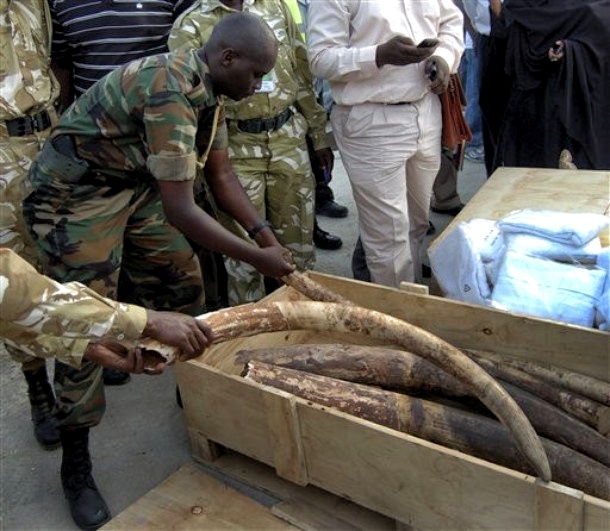
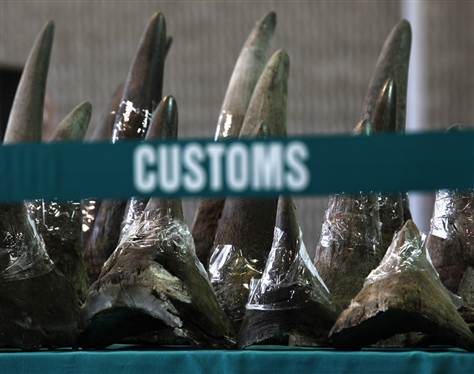
South Africa – Rhino death toll hits 251

According to the latest data from South Africa’s department of environmental affairs (20 June 2012), the total number of rhinos poached  since the beginning of this year now stands at 251 with the number of arrests at 170.

The North-West, KwaZulu-Natal and Limpopo provinces continue to be targeted by poachers, collectively accounting for 86 of the total rhinos poached this year. The Kruger National Park, alone, has lost a total of 149 rhinos since the beginning of this year.  At this rate the carnage will almost certainly exceed the 448 slain last year.

Thus far, a total of 170 arrests have been made of which 147 of the arrested were poachers, 10 receivers or couriers, six couriers or buyers and seven exporters.

Elephant and rhino poaching is surging, conservationists say, an illegal part of Asia’s scramble for African resources, driven by the growing purchasing power of newly affluent Asians.

A film made by UNTV and the Convention on International Trade in Endangered Species (CITES) can be seen on YouTube on this link: http://www.youtube.com/watch?v=t3m7FOXOLbY. Rhino horn has long been used in traditional medicines in China and Vietnam and the film quotes a doctor at Hanoi’s biggest hospital who sings its praises. According to the film, rhino horns have also been stolen from museums and private collections in more than 15 countries. Source: DoEA

Durban awaiting arrival of 11, 660 TEU container ship

Ports.co.za reports that  the largest ever container ship to enter a South African port on 1 July 2012 to work cargo will arrive in the Port of Durban, vindicating the recent widening and deepening of the harbour entrance.

The ship is the MSC SOLA (131,771-gt, built 2008) which is arriving from Port Louis and the Far East. Although she will not be fully laden the arrival of the 364 metre long ship becomes another justification for the recent harbour entrance channel project, which saw it widened by an additional 100m to a minimum width of 222m and deepened to a working draught of -16.5m. Once work on deepening at least one of the container terminal berths on Pier 2 has been completed ships of this size will be able to arrive or sail fully laden.

Advanced security imaging technology

DebTech is the technology business unit of De Beers, one of the top ranking diamond mining companies in the world. DebTech specialises in the development, manufacture, supply and worldwide support of innovative products and services for applications in diamond exploration, sorting and security.

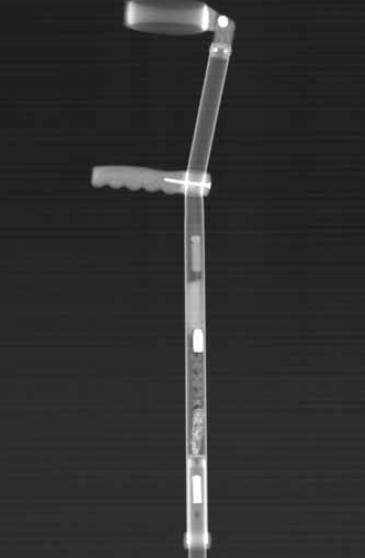
The Scannex full body, low dose, X-ray scanning system was developed during the early 1990s for the primary purpose of deterring the theft of diamonds by diamond mine employees. The Scannex unit has application in many areas where contraband detection is required, such as airports, international sports events, prisons, border control and other high security installations.

The system produces high resolution and high contrast full body X-ray images of personnel. A single scan takes approximately ten seconds and the person being scanned remains stationary and is protected from the moving parts of the machine. The X-ray level required per scan is equivalent to that experienced on a two hour international flight. This allows an individual to be scanned up to 200 times per year and still not exceed the US Department of Health recommended safe limit for public exposure. The images are displayed on digital monitors and trained image analysts are able to identify items of a nonanatomical nature that may be concealed on or within the body.

To assist in the identification of foreign objects, human anatomical features are de-emphasized in the displayed images. This has the additional advantage of protecting the dignity of the individual being scanned. The display software comes standard with several image enhancement functions to further assist identification of suspect items. The display system is designed such that the viewing monitors can be located remotely from the scanning booth. This not only contributes to the protection of the scanned subject’s privacy but also decreases the opportunity for collusion between the scanned subject,the scanner operator and the image analyst. Up to four monitors may be connected to a single scanner to increase the rate of people being scanned. At the De Beers Namibian operations up to 90 scans per hour have been regularly achieved through one unit.

The Scannex system is optimised to differentiate diamond,a material with relatively low X-ray absorption properties, from human anatomical features. This also enables the system to indicate the presence of other materials with similar low X-ray absorption properties, such as explosives, drugs, plastic fluid containers and syringes. Metallic items, including knives, guns and detonator wire are very prominent in the full body images by virtue of their significantly higher X-ray absorption properties.

For counter terror and border control applications that do not require the high performance characteristics of the original Scannex unit, DebTech is currently developing a smaller footprintand lower capital cost addition to the Scannex range. This is planned to be available late 2012. For the full report click here! Sources: Port Technology International and debtech.com

Using Sniffer Bees for cargo screening

Port Technology International (PTI) reported last month, a ground-breaking technological development from UK-based Inscentinel could change the future of security at ports. In a move that brings together nature and technology, bulk cargo screening could soon be carried out by an unlikely source – sniffer bees.
Freight forwarding companies screen 100 percent of all of their parcels. The first line of screening relies on X-rays followed by REST dogs for special items which cannot be screened. REST, stands for Remote Explosives Scent Tracing.

This works by sampling the air from the cargo through a specially designed filter. This filter, which can trap explosives molecules, is then presented to the most accurate explosives detector ever – dogs. This method has proven very effective to exploit the accuracy of dogs while maximizing the throughput volume of screening, which a free-running dog cannot otherwise do.

According to the information found on the website of Diagnose, a subsidiary of ICTS: ‘The technique has screened over 100,000 trucks and pallets and over 1.5 million metric tons of air cargo since live operations began in the UK and France. The RASCargO™ technique was specially developed to serve the mass screening cargo market that requires a solution for screening high volumes of dense cargo, with actually, no cargo size limitation, a solution that combines high detection rate with cost effectiveness.’ Read the full report as published in PTI here!

Inscentinel’s latest video, below, shows how the company has devised an ingenious way of using the insect in the cargo screening process. 

News from Angola

SEZ for Cunene Province

The government of Cunene province in southern Angola, has chosen the border town of Calueque, in Ombadja municipality, to set up the province’s Special Economic Zone (ZEE), the province’s governor, António Didalelwa said in Ondjiva speaking to Angolan news agency Angop. At the end of a meeting of the provincial government, the governor said that Calueque had been chosen due to its potential to drive agri-livestock activities based on the Cunene River’s hyrodgraphic basin and the Calueque hydroelectric facility. Its proximity to Namibia, its conditions in terms of available electricity and water, as well as access roads make it possible to set up economic and administrative facilities in order to drive production and job creation. The entities that attended the provincial government meeting concluded that the existing conditions at the new ZEE would attract investments and drive production by installing factories, retail and services areas. This follows last year’s fomalisation of the Luanda-Bengo Special Economic Zone (SEZ) between the towns of Viana and Cacuaco in Luanda province and the towns of Icolo-e-Bengo, Dande, Ambriz and Namboangongo in Bengo province. Watch a short video on the Luanda-Bengo ZEE here! Source: Macauhub.com.

Customs Modernisation

The Programme to Expand and Modernise Customs Services (PEMA) in Angola, which began in 2002 and officially ended Monday 21 May, cost US$315.5 million, Angolan weekly newspaper Expansão reported. The newspaper added that in a 10-year period the PEMA had led to US$17.7 billion going to the State’s coffers and thus the cost of the programme was just 1.8 percent of the revenues that it had made possible.

During the ceremony to mark the end of a partnership with Crown Agents, a UK company that specialises in modernising public services, the assistant director general of the National Customs Service, Maria da Conceição Matos, said that whilst the programme was being implemented customs revenues had increased steadily and significantly. Matos said that the Programme for Expansion and Modernisation of Customs Services had reformed the institution structurally across the whole of Angola, based on international best practices for the customs sector.Source: Macauhub.com.

Awarding the SKA

So what does the awarding of the Square Kilometre Array (SKA) and Customs have in common? Sweet blow all as far as I was concerned until a colleague of mine, Roux Raath, pointed out one of the criteria on which the award was made. Reading the actual report one realises this has more to do with the fact that six African countries will be involved and the cross border movements are foreseen to be complex in contrast to movements between Australia and NZ. Therefore, this has less to do with the South African Customs administration than the Southern African geographical environment. The report also refers to duty and tax structures and these issues should perhaps find a home with the DTI as customs does not dictate these. Nonetheless, the fact remains that certain issues have been raised and these should be considered when strategies are devised to support the SKA project.

The SKA Site Advisory Committee (SSAC) reviewed the various customs systems and duty rates, the excise tax regimes and tax rates, and related issues such as import and export processes that will impact the SKA over its lifetime. A wide range of issues was considered since the SKA involves a large multinational investment of funds, materials, and services, including the provision of scientific and technical equipment, and personnel in various remote locations.

The SSAC reviewed the issues presented by the two candidates, including details related to the six diverse South African member countries; cross-border coordination and logistical issues presented by the South African proposal; and the diverse customs, excise, and regulatory structures in the two candidate sites. The SSAC also considered the long-standing Australia–New Zealand Closer Economic Relationship Trade Agreement (ANZCERTA) free-trade and economic cooperation agreement (allowing for the free flow of goods, services, and people between the two countries) and the absence of overall free-trade agreements among the six members of the South African consortium. The SSAC also reviewed the customs, free-trade, economic, and business environments in Australia and New Zealand and considered the written confirmation from the Australian government that there will be no Goods and Services Tax (GST) payable by the SKA in Australia. On the factor of Customs & Excise, the SSAC awarded the following points for each of the contending consortia – 13.3 for ANZ and 6.7 for South Africa.

To read the full report, download here!

 Related articles

Why Tanzanians are afraid of the Regional Federation

The following article by Tony Zakaria is a candid look at the socio-economic environment of the Tanzanian people. Enjoy.

Why is Tanzania so afraid of the EAC political federation? We seem to shy away from signing any significant document that commits Tanzania to a marriage with Kenya, Uganda, Rwanda and Burundi. Have we been using land and security issues as a way to hide other fears unmentionable?

Some Tanzanians fear Kenyan women for being too aggressive and well educated. Those madams drive flashy Mercedes Benz cars and have no shortage of vijisenti or spare change. Upon federation country borders will be wide open and then anything can happen. These macho gals may move over to grab available single or bonded men from the land of the Kilimanjaro to play football in Kenya like all those African football stars in Europe for Man U and C, Chelsea FC, Marseille and Real Madrid clubs. Tanzanian men are among the most handsome in Africa.

If you don’t believe me, take a fresh look at Tanzanian men today. From top bosses in government to ordinary farmers in villages they ooze with quiet charm. A little smile from Bongo men can charm an eagle chick off a tree branch in Limuru. Nairobi and Kampala ladies will not be able to resist.

So why are men in the nation of Serengeti and Zanzibar resistant to political and economic union when they could conquer the whole territory? Tanzanian gals may be among the prettiest on planet Earth alongside the Abyssinians in the former kingdom of Jah Haille Selasie but would be no match for slender necked, doe-eyed Banyarwanda mademoiselles.Bongoland women worry their men might start an African exodus to Kigali if we become the United States of East Africa.

Surviving the 1994 genocide elevated Rwandese women to be among the strongest-willed in Africa. Tanzanian madams have enjoyed easier lives and eternal peace from womb to tomb. Can they compete effectively with Hutu and Tutsi damsels? Tanzanian madams will their wealth too; given away to those more willing to use their talents profitably.

 When borders cease to exist, Muheza and Bombo farmers will not only be losing fruits from their shambas to more enterprising Kenyan traders, they will be losing Eves, Aminas and Marias from their Garden of Eden.Nairobi will be a local bus trip away and Ketepa tea will be universally available at village markets in Bagamoyo and Kilombero at a fraction if its current cost, not a gourmet item in selected supermarkets.

Who knows what else may transpire? Investors from the current Kenya would set up factories to extract and package affordable branded juice from fruit grown in Tanga, Dodoma and Iringa. Mwanza and Dar-es-Salaam residents will enjoy Bongo flavour orange and apple juice passionately, knowing it is made in East Africa instead of Africa south of the Zambezi River.

I can’t see local traders dancing with joyful abandon to celebrate the entry of other bulls in the business kraal. Traders make profits regardless of the origin of traded goods. Manufacturers want to enjoy monopoly in a market protected by import, sales and other taxes and tariffs.Take for example juice made in Kenya using fruits sourced from Tanzania. From Tanzania the fruits are VAT and export taxed. The packed juice is taxed in Kenya for sale and importation. Those taxes only hurt the final consumer, making it unaffordable for ordinary folks.

Why do male-female relationships work fine during the courtship period and marriages fall into boring routines? The possibility of losing a mate to a competitor is such a strong incentive to keep being at a person’s best behaviour, appearance and treatment of a mate. That is when relationships are conducted with business-like efficiency.

Tanzanian businesses fear competition from a supposedly more powerful Kenyan business fraternity. Enterprising Kenyan operators buy tomatoes and onions from Arusha during the day. By evening they are delivered in Kenya factories. At night the veggies are sorted, graded, cleaned, packed and labelled.

By the following morning, the veggies are awaiting airlift to destinations in the Middle East. With added value, Kenyan entrepreneurs make huge profits. Vegetables, fruits and fresh flowers could be processed in Arusha and airlifted straight from Kilimanjaro airport instead of Nairobi.

After federation Arusha, Kilimanjaro and Tanga natives would freely move agricultural produce to what is now Kenya and Uganda while making good money from goods sales and transportation. Wachagga, Waarusha and Meru men and women are pretty aggressive businesswise. They can beat Kenyans at their own game.

Having made mega profits, some Tanzanian traders can entice nice looking Gikuyu and Akamba chicks to settle permanently on the slopes of Mount Meru or the Kilimanjaro Mountain of greatness. Tourists can visit the snow-capped mountain near the Equator in East Africa without crossing the border twice. Some amorous traders can fully practice family planning by spacing their children between Moshi, Arusha, Nairobi and Entebbe. They will just strategically place mothers in each city.

Tanzanians fear their Any Time Cancelled wings of the Kilimanjaro with one borrowed plane will be swallowed whole by the bigger Kenya airways. The pride of Africa has already spread its wings from Lagos to Beijing. This is genuine fear arising from fake premises. If we are one block, the stronger airline will belong to all of us.

The federal states will pool pilots, cabin and ground crew, airports, buildings, planes and vehicles to create the strongest airline in Africa like the old East African Airways that was a real pride for Africa.We have to overcome our genuine and misplaced fears and take the needed steps to make EAC a reality. Uniting our many resources is the only way our grandchildren can survive in the competitive global village. Source: Daily News (Tanzania)

Dumb, dumber’er, or just plain downright stubborn?

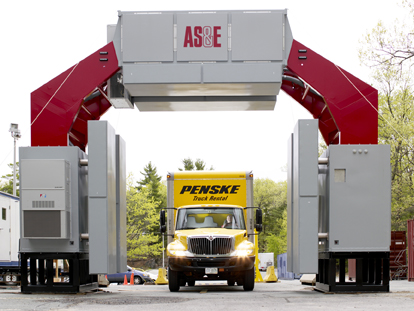
A US statutory requirement to scan all incoming containers at foreign ports will take effect at the beginning of July, a date thrown into sharp relief as the House of Representatives homeland security committee approved a revamped bill that retains the clause.

The draft bill gave the industry minor cause for cheer for unrelated reasons, as it will postpone the requirement for workers to renew their transportation worker identification cards in the absence of Department of Homeland Security regulations on biometric card readers. But the 100% scanning requirement has proved its resilience yet again.

Since 2006 shippers, spearheaded by associations that include the National Retail Federation, have been campaigning to get the requirement eliminated on grounds that it is impractical and costly and could trigger foreign government retaliation against cargoes originating from the US. US homeland security secretary Janet Napolitano has pointed out the impracticality of the law and proposed a two-year postponement.

These calls went unheeded in the house, as the homeland security committee on Wednesday approved the Securing Maritime Activities through Risk-based Targeting for Port Security Act, known as the Smart Port Security Act. The Smart Port Security Act reauthorises the Security and Accountability for Every Port Act, known as the Safe Port Act, which became law in 2007.

The Safe Port Act implements the 9/11 Commission’s recommendations, including the contentious provision that all US-bound containers will be scanned at origin from July 2012. A fig leaf in the Safe Port Act allows the homeland security secretary to grant waivers to individual ports, under conditions that are somewhat vague. Last year, a Safe port reauthorisation draft in the Senate proposed a broad waiver of the 100% scanning requirement.

With the clock now ticking to July 1, shippers were particularly anxious to get the house bill to remove the 100% scanning clause permanently.

The homeland security committee passed a version that allows DHS to recognise other countries’ trusted shipper programmes and allows the US Coast Guard to recognise other governments’ port security threat assessments, but stops short of jettisoning the 100% scanning clause.

Republican congresswoman Candice Miller, chair of the subcommittee on border and maritime security, hailed the new bill, saying: “Securing our waterways is an essential component of a layered approach to security.

“This bill enhances risk-based security measures overseas before the threat reaches our shores, emphasising a stronger collaborative environment between customs and border protection and the US Coast Guard in sharing port security duties and leveraging the maritime security work of our trusted allies.”

Comment: Huh!, to whom does this refer? Such a statement flies in the face of its own C-TPAT program and bilateral overtures with foreign ports (supposedly based on risk). Perhaps its time for the ‘trusted allies’ to deport CSI teams who have not necessarily endeared themselves to their respective host nations.

Source: Lloydslist.com