Should the Rhino horn trade be legalized?

black-rhino-2Rampant poaching in Africa is a cause of major concern to wildlife organizations. Many rhinos are killed every year mainly for Asian markets. In Vietnam, rhino horn is believed to be miraculous, able to heal cancer.

A total of 158 rhino have been poached since the beginning of the year, according to the South African Department of Environmental Affairs. Over 630 rhino were killed by poachers in South Africa during 2012.

If the killing of rhinos continues to increase, African wild rhinos could disappear within a few years. The best protected rhinos live in Kenya. Four of them, known as northern white rhinos, are the last of their kind. Each one of them has four bodyguards to guarantee its survival. But most of the other 25,000 rhinos in Africa do not enjoy such protection. The trade in rhino horn is illegal. However it is flourishing, most of the horn coming from South Africa, where most rhinos live. Hunters are willing to pay up to 20,000 euros ($26,000) to shoot a rhino and take the trophy home.

Rhino poaching on the rise

Rhino poaching has increased tenfold in the last five years, according to the nature and animal protection organization World Wide Fund for Nature (WWF). The conference singled out Vietnam as the main importing country and Mozambique as a major transit country for rhino trafficking. This is the first time that countries were named at CITES.

Vietnamese believe that rhino horn powder can cure cancer

The two countries now have a few months’ time to address the problem constructively. Mozambique is poor but CITES’ regulations are also valid there. To learn how to fight against poachers effectively, the country may seek advice from environmental and conservation organizations. In the case of Vietnam, lack of political will seems to be the major problem. Even Vietnamese embassy staff were involved in the illegal horn trade. Vietnam is now under pressure. By January 2014, Vietnam as well as Mozambique have to prove that they are able to fight against horn trafficking from southern Africa, or else sanctions will be imposed.

Superstition hikes the price

In addition to stricter controls, the WWF and other animal welfare organizations are implementing awareness campaigns. In Vietnam there is a belief that the powder from the horn of the rhinoceros can help against fever, prevent a hangover or even cure cancer. These claims however, are dismissed by scientists. The horn consists of the same material as fingernails and hair. Nevertheless, Vietnamese are willing to pay more than 40,000 euros per kilogram, more than the price of gold.

Thousands of wild rhinos have been killed and their horns trafficked to Asia

South African biologist Duan Biggs says awareness campaigns and banning illegal trade control will not help to solve the problem. Shortly before the CITES conference, Biggs, together with three other scientists, wrote in the journal “Science”, calling for the legalization of the horn trade. “We have a buffer of a very healthy population of rhinos to work with,” Biggs said. He is convinced legalization is the right course to take. If that doesn’t work, it can always be stopped again. “If we wait longer and the current situation continues, we will lose the opportunity to try an alternative strategy.”

Legal breeding instead of illegal slaughter

Since horn grows like fingernails, rhinos should be bred specifically for the horn trade. The horn could be cut off when the animal is under anaesthetic. That way the animal doesn’t suffer pain. This is done to a quarter of the animals living in South African private game reserves, where dead animals’ horns are not allowed to be sold. If these horns are legally harvested and put on the market, prices and poaching would decrease, argues Biggs.

The WWF and many other organizations vehemently opposed the legalization theory. A boom in demand and even worse poaching could result if horns are on the market in large quantities and at cheaper prices. “A change from the elite-trend to mass-trend will be like lighting a fire that will be difficult to extinguish”, said a WWF spokesperson.

The dynamics of illegal rhino poaching paint a vivid reality. Is this really any different of narcotics and money-laundering, human-trafficking and counterfeiting? I think not. In many instances its the same ‘operators’ at play preying on weak human instinct and a complete lack of morals!  On the other hand I suppose, based on the reasoning of scientist Biggs, one could say legalising narcotics and prostitution would be the ‘right thing to do’ since we have a “buffer of healthy unemployed woman and youth” ???

Freight companies to pay $18.9 million for price-fixing

BackhanderTwo Japanese freight forwarders have agreed to pay a total of $18.9 million in criminal fines for their role in a price-fixing scheme, according to the Department of Justice (DOJ).

Over the course of at least five years, Yusen Logistics Co. and “K” Line Logistics Ltd. conspired to fix freight forwarding fees, including security fees and fuel surcharges, on air cargo shipments from Japan to the U.S., the Department of Justice (DOJ) said. The two are just the latest in a string of 16 freight forwarding companies that have agreed to plead guilty to price-fixing and pay criminal fines totaling more than $120 million.

“Consumers were forced to pay higher prices on the goods they buy every day as a result of the noncompetitive and collusive service fees charged by these companies,” Bill Baer, Assistant Attorney General of the DOJ’s Antitrust Division said in a statement. “Prosecuting these kinds of global, price-fixing conspiracies continues to be a top priority of the Antitrust Division.”

The DOJ seems to have been successful in pursuing that priority. In the 2012 fiscal year, the antitrust division collected a record-breaking $1.35 billion in criminal fines, nearly 60 percent of which came from Asia-Pacific-based companies. Source: Insidecounsel.com

First BRICS Heads of Customs Meeting

Delegates who attended the first BRICS Customs Heads of Customs Meeting [SARS]

Delegates who attended the first BRICS Customs Heads of Customs Meeting [SARS]

At a meeting hosted by the Commissioner near Bela Bela, South Africa from 7 to 8 March 2013, delegations from the Customs Administrations of Brazil, Russia, India, China and South Africa (BRICS) met for the first time. The BRICS Customs administrations exchanged experience and ideas in a spirit of openness so as to identify areas for cooperation so that they can most effectively and efficiently facilitate legitimate trade and combat illicit trade and Customs fraud. From 27 to 28 March, South Africa will also host the BRICS Summit in Durban, to be attended by various Ministers and the BRICS Heads of State.

Key points of discussion, focus and future cooperation –

Customs cooperation
The Heads of Customs committed themselves to consolidating and building on the cooperation that has already been established so that they can collectively curb Customs offences, safeguard the international supply chain and achieve effective enforcement of Customs legislation, while facilitating legitimate trade,both among BRICS countries and also globally.

Capacity building
As part of their cooperation to build Customs capacity in relation to human resources, technologies and procedures,the administrations would look into various practical and innovative solutions and endeavour to share their resources, knowledge and best practices with each other.

Cooperation at multilateral forums
A BRICS Customs mechanism will be established, including attachés networks based in Brussels and other strategic places, to identify issues of common interest, develop common responses and ensure regular engagement and interaction, including before important multilateral meetings.

Customs Mutual Administrative Assistance and the Exchange of Customs Information
The administrations also agreed to ensure that there is an enabling legal basis between them to support intra-BRICS Customs mutual administrative assistance and the exchange of Customs information. Such assistance and exchange will assist in combating illicit trade and protecting revenues and societies.

Facilitation of legitimate trade between BRICS countries
To further facilitate trade and reduce the Customs administrative burden on both trade and the administrations themselves, the administrations will exchange information in various areas of common interest and concern, including on the simplification of Customs procedures and the use of modern technologies and techniques.

The administrations will also work towards possible solutions for achieving mutual recognition of Customs controls and of trader management programs aligned to the Authorised Economic Operator (AEO) concept of the World Customs Organization (WCO), establishing Customs interconnectivity and supporting the WCO’s work on developing the Globally Networked Customs (GNC) model.

Opportunities for enforcement cooperation will also be explored, including possible joint actions, information sharing and other enforcement assistance. The use of international instruments developed by the WCO, including Conventions, Recommendations, Decisions and Declarations that support Customs trade facilitation, compliance and enforcement will be actively promoted.

Governance issues
A Governance Framework aligned to the overall BRICS commitments will be established. An annual BRICS Customs Heads meeting has been proposed whose deliberations would be informed to other BRICS forums, including in particular the Summit. Such a BRICS Customs Heads Meeting would be supported by a Customs working group under the guidance of the BRICS Heads of Customs. Source: SARS

Australia – Seized Customs goods stolen

Oz CustomsCorrupt customs officials have stolen – and possibly sold – seized goods earmarked for destruction, exposing ”extremely haphazard” governance within the agency charged with protecting Australia’s borders. Files from Customs’ internal affairs department also suggest the organisation had no policy to ensure its favoured gun dealers were actually licensed to sell the firearms it had ordered.

Fairfax has obtained the files after a two-year freedom of information battle. The documents reveal an agency overwhelmed by the threat of organised crime, but they also expose several serious management failures in the organisation’s senior ranks.

In the middle of 2008, for example, a licensed weapons dealer threatened to sue Customs, alleging its Weapons and Strategic Goods group, which armed front-line officers with items such as Glock handguns and capsicum spray, was buying weapons ”from a person not authorised to deal in such weapon types”. Investigators did not find any ”discrepancies”, but along the way they made a startling discovery: ”No specific checks [are] conducted regarding appropriate licensing when purchasing weapons.”

On Saturday, Fairfax Media reported that internal inquiries into Customs staff led to adverse findings in about two-thirds of 700 cases between 2007 and 2010. In one case, an officer was caught in June 2009 removing cigarettes marked for destruction from a detained goods facility. He was fined $1500, but the whistleblower had told investigators ”others may be involved and quantities could be much higher”. Internal affairs went on to identify the problem as a ”systemic issue”.

In Queensland about the same time, an audit of one of Customs’ Detained Goods Management stores ”revealed a stock shortage of 1200 sticks of tobacco from the February 2008 DGM stocktake”. A number of Customs officers working in the cargo group were identified by the investigation, the ”goods [were] established as unaccounted for”, and questions were raised about why it was that ”half of staff” in the division had access to the DGM. ”No accountability and controls in place,” Internal Affairs noted in its report. ”Procedures in place at the DGM … were extremely haphazard … poor supervisory and fraudulent records identified.”

The final reports recommended new standard operating protocols for all Customs storage facilities. Several officers may have faced disciplinary proceedings as a result of the inquiry, the files suggest.

At one point, Customs investigators feared poor control of seized goods extended to far more dangerous goods, after a February 2009 audit of the seized goods facility in Queensland reported that more than 16,000 rounds of ammunition ”with a variety of associated equipment” had gone missing. But Customs now says this was just another case of poor management, after major accounting errors were identified in the audit.

The files also raise serious questions about financial controls within the organisation. Customs chief executive Mike Pezzullo (no relation to me) said on Saturday he was planning to overhaul the organisation’s internal affairs unit. Source: The Age (Australia)

Namibia – Weak Rand Plays Havoc With Trade Balance

south-african-rand-zar-bearishThe continued weakening of the Rand and an increase in the volume of imports has seen Namibia’s trade deficit widen to N$17 billion, the Namibia Statistics Agency (NSA) has said.

The country’s import bill jumped 24% in 2012 to N$59 billion widening the trade deficit to N$17 billion compared to N$11 billion in 2011. Despite a fall in the share of some of the major imports to the total import bill, the value of imports still increased to N$59 billion compared to N$48 billion in the previous year.

Major imports for 2012 included mineral fuels, mineral oils, vehicles, boilers and machinery. Fuel dominated the list of imports with a share of 13% up from 9% in the previous year. Vehicles were in second place with a share of 11% (compared to 12% in 2011) of total imports. Boilers, machinery and mechanical appliances occupied third place with 9% a slight decline from 10% in 2011.

The Statistics Agency said an 80% increase in the value of oil imports (at N$7.8 billion) can be explained by a 14% depreciation of the Namibia Dollar/Rand against the US$ in the period under review since the 2012 average price of oil in US dollars was almost the same as in 2011. In addition, an increase in the volume of imports especially ships, boats and floating structures that recorded the strongest increase of almost 2100%, also contributed to the widening deficits.

South Africa remains Namibia’s most important trading partner with combined trade between the two countries amounting to N$48.6 billion in 2012. However, the direction of trade between the two countries remain skewed with Namibia importing N$41.6 billion worth of goods from South Africa, while exporting goods worth only N$7 billion to South Africa.

Analysts say while a weaker local currency boosts earnings of companies that sell their goods overseas, it adds to import costs, making food and fuel more expensive. With a relatively low industrial base, and a saturation in the mining sector, Namibia’s exports only grew marginally to N$42 billion up from N$37 billion in 2011. This growth is too small to have a meaningful impact on the widening trade deficit.

In 2013, the construction of the multi-billion dollar Husab Project, the Grove Mall and Square, Strand Hotel, the container terminal at Walvis Bay, and the Neckartal Dam is likely to put further pressure on the import bill worsening Namibia’s trade deficit even further. An estimated 80% of capital goods for these projects will be imported. Source: The Economist (Namibia)

WCO News – Innovation for Customs Progress

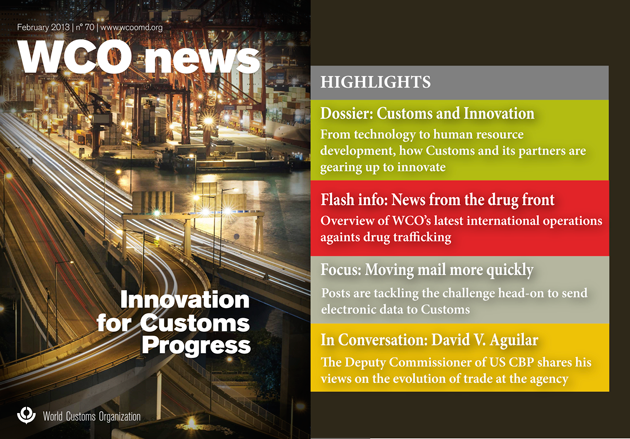
WCO News - No.70 February 2013No introduction needed here. This Edition of WCO News focusses on innovation with a collection of articles from around the globe. In addition to the highlights listed above, check out what’s happening in the world of Non-Intrusive Inspection.

  • Serbian Customs showcases its new Command and Control centre and anti-smuggling capability demonstrating efficient distribution of information between its head quarters and border-crossings and use of mobile X-ray scanners.
  • Dutch Customs discusses its foray into the unique territory of rail scanning, having recently acquired the worlds fastest X-ray rail scanner.
  • The head of Rapiscan Systems presents the changing requirements of customs cargo screening, particularly the emergence of ‘fused technologies’ that maximise the capabilities of non-intrusive detection and material discrimination.

Singapore Customs leads the way in the exploration and promotion of ‘green’ technologies having facilitated two R&D projects on eco-friendly vehicles.

Certificates of origin also feature. As part of its commitment to further facilitate trade by strengthening origin compliance through innovative thinking, the International Chamber of Commerce World Chambers Federation (ICC WCF) recently created an international certificate of origin certification and accreditation chain which will, as a first step, concentrate on non-preferential certificates of origin (COs) – the most common certificates issued by Chambers, and the only ones Chambers are authorized to issue in most countries. Learn how they intend to implement the Certificate of Origin (CO)  certification and accreditation chain scheme and what the underlying benefits are.

Also, learn how the EU proposes to strengthen supply chain security. Click Here! to access the magazine.

Debate or Mitigate?

City Deep1_SnapseedBrowsing my various sources of news I came across this article featured in the FTW Online a few weeks ago. It prompted me to post it as an item for some detailed discussion in a follow-up post. Many followers have enquired what happened to my discussion on Inland Ports and the National Transit procedure. I guess it’s now time to respond, but not just yet – perhaps after what materializes at the event below.

What will be the impact of the new Customs Bill on City Deep’s inland port status?
This is the issue to be debated at a JCCI event scheduled for March 15. “The Johannesburg Chamber has been closely involved with City Deep, our international gateway for containerised cargo, for the past 36 years,” says the JCCI’s Pat Corbin. “We have actively promoted the benefits for traders of a combined transport (multi-modal) bill of lading allowing seamless movement through the coastal ports.

“But diametrically opposed developments are taking place which could have far-reaching impact on not just the future of the dry port, the supporting logistical suppliers and local employment, but also the coastal ports and the transport mode for inland movement.”

The event will examine Transnet’s major investments in City Deep and the Durban corridor, SACD’s expanded facilities and services, and the Customs Bill – with its intended removal of inland port status. Source: FTW Online

Aerotropolis for Gauteng…stuff’s about to happen

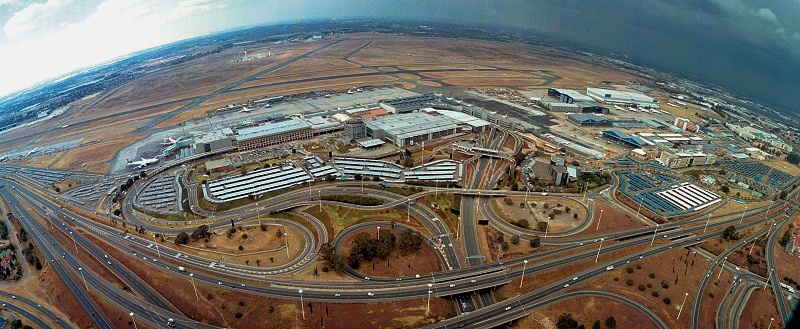
Oliver Reginald Tambo International Airport (east of Johannesburg) to become Africa's first aerotropolis

Oliver Reginald Tambo International Airport (east of Johannesburg) to become Africa’s first aerotropolis

The Gauteng Provinicial government has announced that Africa’s busiest airport, OR Tambo International Airport is set to become the location for the continent’s first aerotropolis. Work on the development of the aerotropolis, centred at OR Tambo International Airport, seeks to leverage public and private sector investment at the airport and surrounding areas. In supporting industrial development in this precinct, approval has been granted for the creation of an Industrial Development Zone (IDZ) in the area surrounding the airport. Heard this all before, but what’s different this time around?

An aerotropolis is an urban plan in which the layout, infrastructure, and economy is centered around an airport, existing as an airport city. It is similar in form and function to a traditional metropolis, which contains a central city core and its commuter-linked suburbs.The term was first proposed by New York commercial artist Nicholas DeSantis, whose drawing of a skyscraper rooftop airport in the city was presented in the November 1939 issue of Popular Science.The term was revived and substantially extended by academic and air commerce expert Dr. John D. Kasarda in 2000, based on his prior research on airport-driven economic development. Wikipedia

Jack van der Merwe, who successfully oversaw the development of the Gautrain project, has been appointed to lead the initiative of developing the aerotropolis. The proposal for the airport to become a terminal city with air, rail and road networks fuelling economic development. It is envisaged to include a commercial component, hotel, conferences, exhibitions and a residential component.

One of the key initiatives of the national government is the e-Thekwini-Free State-Gauteng freight and logistics corridor, known as the Strategic Infrastructure Project 2 (SIP2), which seeks to improve the movement of goods from the Durban port to Gauteng, and to business enterprises nationally as well as in southern Africa.

City Deep/Kazerne cargo terminals and the planned Tambo-Springs Freight and Logistics Hub are to be the focal points for the movement of goods for the export market. Phase 1 of the City Deep/Kazerne Terminal expansion and roads upgrade was underway at the continent’s largest and busiest in-land container terminal. This includes a redesign and upgrading of the roads network in and around the City Deep Terminal to provide for better flow of freight traffic and linkages with the national highways – the cost of the road works would amount to R122 million. At some point the issue of non-tariff barriers to import/export trade will need to be discussed…..and overcome.

Transnet has completed the first phase in the actual improvements of the terminal. It will be investing R900 million in upgrading the terminal. A detailed road design work, including feasibility studies and the development of a master plan, are underway for the Tambo-Springs Inland Port. Now, we’re talking…….

Gauteng  Province is to get 2 484 new modern trains as part of the Passenger Rail Agency of South Africa (PRASA) rolling stock for fleet recapitalisation and refurbishment programme.

The province will be making major investments in road infrastructure in the coming financial year and these include reconstruction and upgrading of the R55 (Voortreker Road) to a dual carriageway road between Olievenhoutbosch and Pretoria West; rehabilitation of the remaining section between Main Road and Maunde Street in Atteridgeville; reconstruction and upgrading of William Nicol Drive (K46) between Fourways and Diepsloot as well as reconstruction and improvement of the remaining section of the Old Pretoria to Cullinan Road between the Chris Hani Flats and Cullinan, among others. Wow, and the toll fees?

The department has been allocated a budget of R4.77 billion for the 2013/14 financial year. Of this amount R1.4 billion has been earmarked for roads maintenance and upgrading, R1.7 billion for public transport operations and R802 million for the running cost of the Gautrain Management Agency. Source: EngineeringNews

So, all-in-all, the above together with other recent noises of incentives and benefits for foreign and local investors in SEZs, the future holds some promise and interest…..

Mozambique – Huge Heroin Seizure with South African Connection

00013ee0-314The Mozambican police claims that it has seized almost 600 kilos of heroin, at Namoto, in the northern province of Cabo Delgado, on the border with Tanzania.

The drugs were found on Sunday in the possession of two citizens of Guinea-Conakry, who are now under detention in the Cabo Delgado, provincial capital, Pemba. The drugs are being stored in the warehouses of the provincial attorney’s office.

According to Malva Brito, the spokesperson of the provincial police command, cited in Wednesday’s issue of the Maputo daily “Noticias”, the final destination of the heroin was South Africa.

Brito said the drug was concealed in an otherwise empty seven tonne pick-up truck. The Guineans had improvised a type of hold within the truck’s bodywork. But alerted by a strange smell and the odd size of the stowage area, the police searched the truck, and found the heroin in 118 plastic bags of about five kilos each (which is a total of 590 kilos).

When the heroin was found, the Guineans first claimed that it was fertilizer that they were taking to South Africa. When that didn’t work, they tried to bribe the frontier guards, offering them 60,000 US dollars. The bribe was not accepted.

The Guineans had started their journey in the Kenyan capital, Nairobi, last Friday, and crossed Tanzania before entering Mozambique. The Toyota pick-up bore a number plate from the Democratic Republic of Congo, and supposedly belongs to a Congolese named Sidiki Sano, who is resident in Mozambique. The owner of the heroin is believed to live in Johannesburg.

If the police figures are accurate, this is an enormous drugs bust. According to the United Nations, heroin was selling in South Africa in 2012 for 35 dollars a gram. So 590 kilos would sell in Johannesburg for 20.65 million dollars. Source: Mozambique News Agency (Agência de Informação de Moçambique).

Port Tariffs to Drop on Export Containers

cargo-container-shippingThe Ports Regulator of South Africa will soon announce anew port tariffs structure that will include a cut of about 40% in the tariff on exported containers. This step is part of the Transnet National Ports Authority‘s strategy to reduce South African port charges, which are seen as among the highest in the world, because it erodes the competitiveness of South Africa’s exports.

This announcement was made during a colloquium on the impact of administered prices on the manufacturing sector. The purpose of the colloquium was to get all the stakeholders together to try and find a solution to the challenges. It had become clear that the stakeholders did not have a regular opportunity to engage on the issue of administered prices.

In addition to the new tariffs, the authority is proposing a reworking of its tariff structure, which if accepted by the regulator, will see higher charges for bulk commodities, up to 68%. South African port tariffs were at least 8.7 times more than the global average for containers and 7.4 times the global average for automotive cargo.

Transnet’s CEO said the shift in the tariff burden was aligned with the government’s manufacturing growth strategy. The mining sector had been hugely subsidised by a tariff structure weighted in favour of raw exports, at the expense of the manufacturing and agricultural sectors. Department of Trade and Industry has also welcomed the expected tariff reduction, saying it would be a major boost for exporters. 

One would therfore like to believe that these tariff reductions will be extended to agriculture and agro-processing. Hopefully ocean carriers will not see this as an opportunity to increase their tariffs!

Botswana Tightens Car Exports to Namibia

2nd hand carsThe New Era (Windhoek) reports that Botswana has tightened the screws on the importation of second-hand vehicle older than five years, effectively removing the loophole exploited by Namibian motorists to import such vehicles.

Botswana’s customs, the Botswana Unified Revenue Service (BURS), is now enforcing the Southern Africa Customs Union (SACU) agreement that prohibits the registration of imported second-hand vehicles older than five years. Previously Namibian traders in imported second-hand cars would register vehicles in Botswana, from where they would enter Namibia as Botswana registered vehicles instead of imported vehicles.

The process had made it easy to register such cars in Namibia and in other SACU member states, which prohibit the registration of imported vehicles older than five years.

“BURS, in the spirit of good neighbourliness and adherence to the provision of the SACU agreement, wishes to assist Namibia in curtailing the irregularities prevalent in the movement of second-hand vehicles through the two countries,” reads a statement from the Namibian Ministry of Finance’s customs that relayed the decision by the Botswana customs authorities.

However, ingenious Namibian traders in second-hand vehicles told New Era yesterday that the decision by Botswana customs is simply a temporary deterrent as they are now considering using Swaziland’s leniency on the matter to circumvent the very same SACU provisions. Besides the SACU provisions, Angola – a non-SACU member – has also banned the importation of second-hand vehicles older than five years. Second-hand vehicle imports contributed at least N$150 million to the economy during 2012, with a record 20 000 vehicles recorded.

Some of the vehicles have also gone through to neighbouring countries. South Africa does not allow imported second-hand vehicles older than five years to drive on its road network. Importers of such cars are forced to load vehicles on trucks or use the port of Walvis Bay. To register the cars in Namibia, the traders would take the vehicles to Botswana where they would be registered for a short period of time and bring them back to Namibia as Botswana registered vehicles.

The process enables the cars to be registered on the Namibian vehicle registration system, which ordinarily would not allow the cars to be registered for local use within SACU states. Botswana customs says persons attempting to circumvent the SACU provisions would be subject to a fine of P40 000 (N$44 579.85) or three times the value of the vehicles or imprisonment of not more than ten years. Source: New Era

Simple solution – SACU countries should unilaterally invoke the prohibition on the importation and registration of second-hand motor vehicles at all external borders of the customs union. Is it not time for the member states to act for once like a custom union?

Mastermind Steps Up War Against Counterfeit Goods

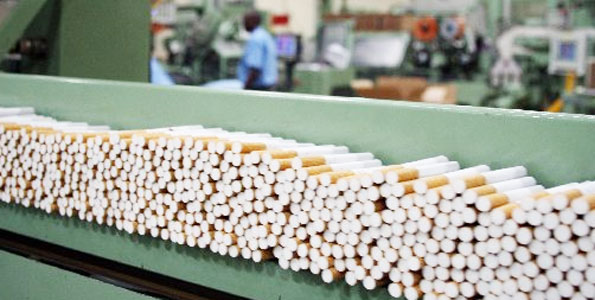
cigaretteNow isnt this a surprise? – Mastermind Tobacco has stepped up the fight against counterfeit cigarettes in the Kenyan market, it announced yesterday (February 27, 2013). It said it has set up security teams in Nairobi, North Lake Zone, South Lake Zone, Meru, Central and Rift Valley. Focus will also be on borders such as Malaba, Chepkube and Lokichogio, the airports and ports.

“The investment in supply chain preventive security measures from the point of manufacture to the point of distribution has seen an improvement in preventing legitimate trade from being infiltrated by counterfeits,” said Mastermind in a statement. Quite rich for a company which was persona non-grata in South Africa for instance. Security teams for what? To assist delinquent Customs officials on what they do when the Mastermind truck arrives at the border?

Just a month earlier (January 2013) Mastermind featured a job advert on jobskenya24.com  (click hyperlink to read the job criteria) wherein one of the key criteria under qualifications and experience reads as follows –

“At least 10 years experience in Kenya Police Service, five (5) of which should have been as Assistant Commissioner of Police (ACP) especially in the Criminal Investigations Department or Anti-Bank Fraud Unit.”

So there you have it, somebody on the inside of government ear-marked for the job of overseeing investigations and no doubt border operations. See links below  on Mastermind’s historical exploits –


Federal spending cuts will delay box inspections, warns US Customs

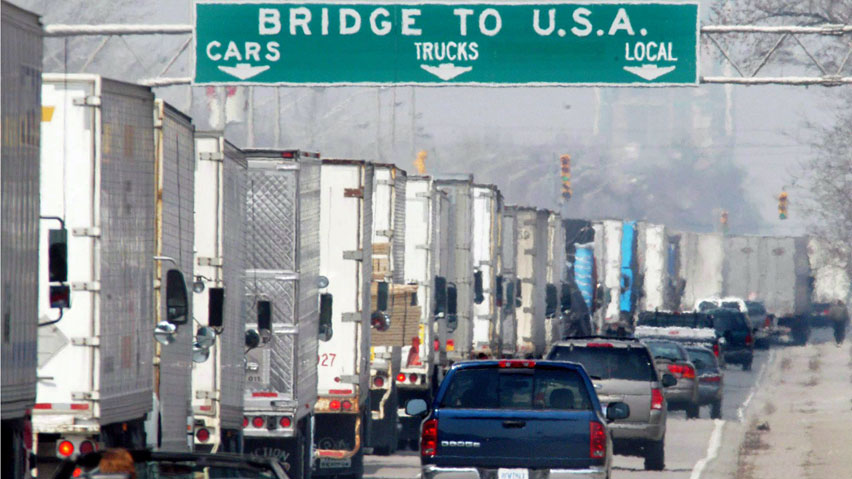
"Uncertain Times" - U.S. Homeland Security Secretary Janet Napolitano said earlier this week that her department would be slashing 5,000 border-patrol agents when the cuts go through, which would ultimately slow some of the busiest crossings between Canada and the U.S.

“Uncertain Times” – U.S. Homeland Security Secretary Janet Napolitano said earlier this week that her department would be slashing 5,000 border-patrol agents when the cuts go through, which would ultimately slow some of the busiest crossings between Canada and the U.S.

Is this a process of auto-destabilisation in the USA? At least terrorists aren’t being blamed for this……will be interesting to see what instructions are fed to CBP (US Customs) Field Operations in foreign countries where the Megaports and CSI initiatives are in operation. Besides being grave times , I’d say these are interesting times…

Lloyds reports that the US Customs and Border Protection (CBP) is warning of major delays for incoming containers and other cargo at seaports because of sequestration, but early reports suggest that business is operating normally on arterial waterfronts, at least for now.

In a letter to cargo and travel industry groups after automatic cuts to federal spending, known as sequester cuts or sequestration, went into effect at the weekend, CBP deputy commissioner David Aguilar said the agency faced “furloughs, reductions in overtime and a hiring freeze, [which] would equate to the loss of up to several thousand CBP officers at our ports of entry, in addition to significant cuts to our operating budgets and programmes”.

Describing the current phase as an “uncertain time”, Aguilar warned of major disruption for travellers and cargo.

For the latter, sequestration could result in “decreased service levels in our cargo operations, including increased and potentially escalating delays for container examinations of up to five days or more at major seaports, and significant daily back-ups at land border ports of entry”.

CBP also issued a set of “cargo priorities under sequestration”, which vowed that security would not be compromised, but said that “CBP has redirected resources toward only the most critical, core functions and discontinued or postponed certain important but less critical activities in an effort to reduce budget expenditures”.

The agency said it would hold weekly conference calls to update the industry about the situation.

Shippers and cargo interests agreed that five-day delays could cause major bottlenecks at container ports, and would cost shippers extra money during an already challenging economic time.

The only consolation would be that individual ports or shippers would not have to worry about rival ports siphoning business away, because every US port would be up against the same problem.

The Port Authority of New York and New Jersey reported normal operations and said in a statement that it continued to monitor the situation.

New Jersey governor Chris Christie appeared unimpressed with the threat attributed to sequestration.

“I do not think sequestration at one cent on the dollar is going to have grave effect, or anybody is going to notice it all that much, except for some federal employees who will be furloughed,” He told a press conference.

The sequester cuts $85 billion, or 2.4% of the annual federal budget of $3.6 trillion, to be spread over seven months to September 30.

Roughly half the sum involves defence, and there appears to be discretion in where precisely the cuts are administered.

Nevertheless, the shipping industry is taking the matter seriously. Other than cargo delays, the maritime sector is factoring in reduced maintenance dredging and a degradation of some US Coast Guard functions, including search and rescue, as possible effects of the sequester cuts. Source: LloydsList

Boost for Intra-African, BRICS Trade

BRICS-logoSouth African companies, including foreign companies based in South Africa, stand to benefit from relaxed cross-border financial regulations and tax requirements, Finance Minister Pravin Gordhan announced in Cape Town on Wednesday.

Delivering his 2013 National Budget speech in Parliament, Gordhan said that outward investment reforms that applied as part of a new set of “gateway to Africa” reforms would also apply to companies seeking to invest in countries outside of Africa, including in the BRICS (Brazil, Russia, India and China) countries

Boost for cross-border trade

These reforms include the relaxation of cross-border financial regulations and tax requirements on companies in South Africa, as well as reforms making it easier for banks and other financial institutions in South Africa to invest and operate in other countries.

Brand South Africa welcomed these moves as being in line with South Africa’s National Development Plan (NDP), which acknowledges the global shift of economic power from West to East, while also highlighting the rise of Africa.

“This is an important step to enabling trade and supporting regional integration,” Brand South Africa CEO Miller Matola said in a statement following Wednesday’s Budget speech.

Gordhan said Africa now accounts for 18 percent of South Africa’s exports, including nearly a quarter of its manufactured exports, and that the SA Reserve Bank had approved over 1 000 large investments into 36 African countries over the last five years.

Southern Africa development projects

South Africa is also helping to fund several development projects in the wider southern African region, with the Development Bank of Southern Africa (DBSA) accelerating investment into neighbouring countries, particularly in the field of electricity generation and transmission and road transport.

Added to this, South Africa’s Industrial Development Corporation (IDC) last year funded 41 projects in 17 countries to the tune of R6.2-billion. Most of these projects were in industrial infrastructure, agro-processing and tourism.

State company Eskom was also now considering investing in several regional generation and transmission projects outside South Africa. (Comment: I would have thought Eskom would ensure the money was spent on the local South African electrical grid! After having its expected 16% tariff increase halved last week, its quite incredible that such a notion can be in the cards. The South African public are truely being kept in the dark!!!)

Gordhan said there was a proposal to pool the foreign exchange reserves of the five BRICS member countries, with the idea of using this to support one another in times of balance of payments or currency crisis. Brazil, Russia, India, China and South Africa collectively hold reserves of US$4.5-trillion.

He said work was under way to create a trade and development insurance risk pool, with the aim of setting up a sustainable and alternative insurance and reinsurance network for BRICS members. Source: SA News.gov.za

Government heeds the call – Tax Holidays for SEZs

Minister Pravin Gordhan and his 'budget team' on their way to parliment [Picture credit-SARS]

Minister Pravin Gordhan and his ‘budget team’ on their way to parliament [Picture credit – SARS]

After more than a decade of fruitless marketing and billions spent on capital investment, Budget 2013 brings some hope of a turn-around and better fortunes for economic development zones in South Africa.

Minister of Finance, Pravin Gordhan announced, what is an unprecedented move. to bolster support for government’s Special Economic Zone (SEZ)programme. Investors in such zones are expected to qualify for a 15% corporate tax rate, and in addition, a further tax deduction for companies employing workers earning less than R60,000 per year.

This is a significant development in that the previous dispensation under the Industrial Development Zone (IDZ) programme only afforded prospective investors a duty rebate and VAT exemption on imported goods for use in the Customs Controlled Area (CCA) of an IDZ. The reality is that these benefits were simply not enough to woo foreign company’s to set up shop in our back yard, let alone existing big business in South Africa to relocate to these zones. Mozambique, next door, has had much success as are other African countries through the offering of company tax holidays with the introduction of export-focussed special manufacturing facilities.

The SEZ (so it would seem) differs little from the IDZ approach save the fact that the former does not require the location of the economic zone at an international airport, seaport or border crossing. As such, an existing IDZ may ‘house’ a special economic zone, thus maximizing return on investment.

Recent developments in SA Customs realise a provision permitting foreign entities to register as importers or exporters under the ‘foreign principal’ clause in the Customs and Excise Act. Approval of such is dependant on the foreign principal establishing a business relationship with a South African ‘Agent’. This ‘agent’ is required to be registered with the SA Revenue Service as the party representing a ‘foreign principal’ in customs affairs. At this point, the provision is being applied to business entities in BLNS countries who import or move bonded goods into or from South Africa.

Future global application of this provision could boost the possibilities of a broader range of investor to favourably consider SEZ opportunities in South Africa. This option will, no doubt, not go unnoticed by the big audit firms seeking to broker ‘cross-border’ customs facilities for their multi-national clients. I perceive that more introspection is still required concerning ‘non-resident’ banking facilities and transfer pricing issues to enable the global application of the foreign principal concept. But after all this seems a good case for trade liberalisation. Add to this the forthcoming launch of Customs new integrated declaration processing system that will (in time) offer simplified electronic clearance and expedited release facilities for future SEZ clients.