
OECD estimates WTO TFA could to cut trade cost by 17.5% on customs rules

cut-red-tape“Simplifying trade documentation”; “automating border procedures”; “streamlining border controls” – all cliche’s of the modern customs and international trade scene, but just how attainable are they? Beyond the pleasantries, and fanfare of ribbon cutting ceremonies, very little seems to happen at the cold face. Sovereign states are inward-looking and jealously wish to preserve their ‘sovereign domains’.

A major World Trade Organization deal on streamlining global customs rules could cut international trade costs by between 12.5 percent and 17.5 percent, a study by the Organization for Economic Co-Operation and Development showed on Thursday.

A deal between India and the United States on the Trade Facilitation Agreement last year, which needs to be backed by all 160 WTO members, had resurrected hopes that the trade body could push through such reforms to cut red tape.

“There are very practical measures that we’ve identified that offer significant benefits,” Ken Ash, the OECD director for Trade and Agriculture, told media.

“Things like simplifying the required trade documentation. Automating border procedures, or streamlining border controls.”
Economists say the Trade Facilitation Agreement could save $1 trillion. Ash declined to endorse this figure, only saying the Paris-based body expected each 1 percent reduction in worldwide trade costs to bring $40 billion in savings.

Australia was to formally accept the agreement later on Thursday, Steven Ciobo, parliamentary secretary to the minister of foreign affairs, said at the news briefing in Paris, making Australia the seventh WTO member to adopt the agreement.
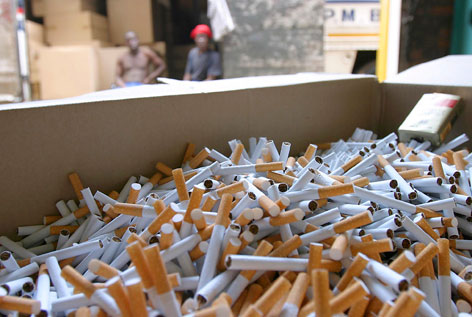
Africa losing $40bn in illegal cigarette trade

ContrabandA tobacco body has urged African governments to stamp out illegal tobacco trade, as their economies are losing billions of dollars in taxes annually. Tobacco Institute of Southern Africa (TISA) revealed that governments in the region are losing between US$20 billion and US$40 billion annually in taxes as a result of illegal tobacco trade, hence the need for collaboration among stakeholders to curb the vice.

This is contained in a statement issued by KPR Consulting Limited on Friday. “The size of the global illegal tobacco trade ranges between 330 and 660 billion cigarettes a year. These are cigarettes that are either smuggled, counterfeited or where tax is being evaded. “This equates to around six and 12 percent of global consumption, which deprives governments of between US$20 [billion] and US$40 billion a year in taxes,” the statement reads.

TISA, which is a regional body that represents tobacco traders, growers and processors, estimates illicit tobacco trade incidences in Zambia being between 20 and 30 percent. South Africa is rated among the top five countries globally when it comes to the trade in illegal cigarettes, with industry research estimating that around 23 percent of all cigarettes consumed in South Africa in 2014 were illegal. Commenting on the issue, British American Tobacco Zambia managing director Clara Mlambo cited weak penalties for criminals, poor border controls, low arrest rates and tobacco taxes creating intra-regional disparities as contributing factors.

Non-Intrusive Inspection capability – now in the Port of Cape Town

South African Customs has introduced non- intrusive inspection (NII) capability at the Port of Cape Town. The recent completion of an impressive relocatable scanner facility within the port precinct will now afford state of the art inspection services for customs targeted consignments for inspection. This is the third X-Ray scanner installed and operated by the South African Revenue Service (SARS).

In March 2008, a mobile scanner was implemented at Durban Container Terminal. More recently, a relocatable X-Ray Scanner was implemented adjacent to the container terminal in Durban to allow for improved capacity and efficiency.

The new facility in Cape Town not only extends customs risk and enforcement capability in the use of such technology but acts as a deterrent against any possible threat posed by international cargoes entering or leaving the country’s ports of entry.

In addition to the new x-ray inspection hardware, SARS has developed bespoke support to allow scanned images to be reviewed remotely – away from the port area – affording customs increased flexibility, allowing image analysis experts elsewhere in the country to provide almost real-time analysis and support for the inspection team. The approach also meets SARS differentiated inspection case methodology which ensures that case finalization and cargo release does not rest with a single customs official.

Remote screening analysis is a practice that has already been pioneered in Europe with great effectiveness in recent years.

The benefit of non-intrusive inspection (NII) allows customs to ‘see whats inside’ the container, vehicle or tanker without having to break the seal. All of this can be done in a few minutes. It forms part of Customs overall approach to minimise the time taken to conduct a customs intervention and latent cost, damage and theft which plague conventional physical inspection of cargoes.

The new inspection site also enables SARS to increase its participation and effectiveness in the US Container Security Initiative (CSI) which was launched in Durban, December 2003. Under the CSI Agreement, SARS officials together with US Customs & Border Protection Agency (USCBP) officials – co-located at the Port of Durban – analyze and mitigate risks relating to any containerised cargo destined to ports in the United States.

Credit to Indresan Reddy (Customs Business Systems) for the photographs.

Related documents

Hong Kong Customs seizes 1.1m sticks of illicit cigarettes worth $3.1m

securityHong Kong Customs mounted a special operation at Lok Ma Chau Control Point to combat organised cigarette smuggling activities. About 1.1 million sticks of suspected illicit cigarettes with a market value of about $3.1 million and duty potential of about $2.2 million were seized. A 52-year-old male driver was arrested and the vehicle used for conveying the suspected illicit cigarettes was detained.
Customs officers here the other day intercepted an incoming container truck declared to be empty at Lok Ma Chau Control Point.

After X-ray examination and thorough inspection by Customs officers, about 1.1 million sticks of suspected illicit cigarettes in 83 carton boxes were found inside a false compartment of the container. The cigarettes were sorted and packed according to orders placed with a view to quick delivery to buyers.

A Customs spokesman said today (June 5), “The operation showed the effectiveness of the enforcement strategy, especially the escalated enforcement actions against smuggling activities at source. Customs will continue to carry out stringent enforcement action against all illicit cigarette activities.”

Under the Import and Export Ordinance, smuggling is a serious offense. The maximum penalty is a fine of $2 million and imprisonment for seven years. Source: CustomsToday

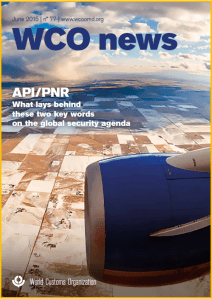
WCO News – June 2015 Edition

WCO News Edition no.77-2The WCO’s flagship magazine WCO News, aimed at the global Customs community, has published its latest edition which features a special dossier on API/PNR (Advance Passenger Information and Passenger Name Record) – two key words on the global security agenda.

Other highlights include a focus on Customs laboratories, interviews on the ‘illicit tobacco trade’ and the ‘killing of elephants,’ as well as articles covering trade-based money laundering, strengthening export controls, the illegal vehicle trade and much more.

The magazine is published and distributed free of charge three times a year, in February, June and October, and is available online or in paper format. If you do not want to miss future issues of WCO News, you are invited to fill out the online subscription form. Source: WCO

Namport container terminal takes shape

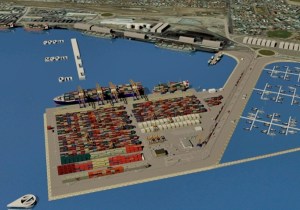
namport-expansionConstruction of the N$3 billion container terminal at Walvis Bay is taking shape with over 1.5 million cubic metres of land reclaimed from the Atlantic Ocean. China Harbour Engineering Company (CHEC), which is constructing the terminal, says the work is on schedule for completion in 2017.
“We understand the importance of the project not only for Namibia but for Africa as a continent and therefore we are fully committed to deliver a state-of-the-art project at the end,” said CHEC’s acting project manager, Feng Yuan Fei.

The expansion includes the construction of a modern container terminal, adding 600m of quay length to the existing 1500m and 650 000 TEU (twenty-foot equivalent unit) per annum capacity to the existing 350 000 TEU. The Namibia Port Authority (Namport) port engineer, Elzevir Gelderbloem, said Namport is happy with the progress made so far.

“It took us nine years to get to the construction phase of the project. Such projects take time to implement and we hope our next projects will be much quicker. However, we have no dry land to expand as the harbour is completely boxed in by the town, but with the current project we are creating more land in water. This type of expansion is unique and feasible for a container terminal.

“It’s the kind of construction that has never been used in the country but will improve our port services at least until 2020 when we will have to undergo the same process again,” he said.

Reclamation of the land is scheduled for completion in February next year, after which the next phase is to complete the quay walls by April and then the construction of revetment by August in the same year. Erection of revetment involves the layering of different rock such as armour core rock, mixed filter layer, geotextile, and crushed stone layers to create a wall around the reclaimed land. More than 400 000 cubic metres of rock will be needed for revetment.

Feng said he was confident they would comfortably meet the deadline to complete the revetment in August next year. “We also created a sandbag cofferdam, which prevents the dredged material and muddy water from overflowing during the process of reclamation,” he said. Source: New Era newspaper

WTO launches dedicated website for new Trade Facilitation Agreement Facility

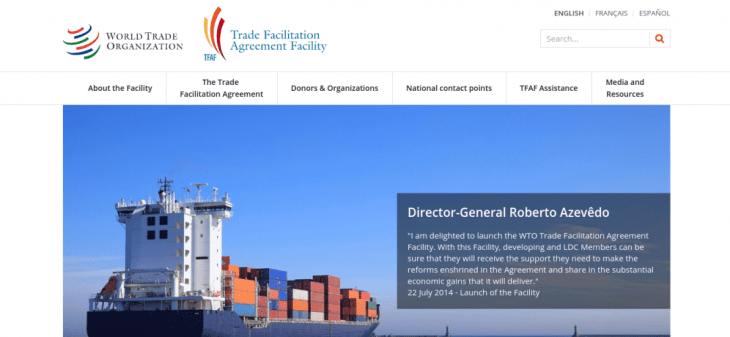
new-Trade-Facilitation-Agreement-Facility-siteThe WTO has launched a new website which will serve as a focal point for members, donors, and others seeking information on the new Trade Facilitation Agreement Facility (TFAF). The TFAF was created at the request of developing country and least-developed country (LDC) members to help ensure that they receive the assistance needed to reap the full benefits of the Trade Facilitation Agreement and to support the ultimate goal of full implementation of the new Agreement by all members. The TFAF will support these countries in assessing their specific needs and identifying possible development partners to help them meet those needs through a diverse number of activities.

The Facility was formally launched on 22 July 2014 by WTO Director-General Roberto Azevêdo and became operational on 27 November 2014. The website can be accessed here! To benefit from this, developing and LDC members must notify the WTO which provisions they will implement when the Agreement enters into force or, in the case of LDCs, within one year after entry into force (Category A commitments); which provisions they will implement after a transitional period following the entry into force of the Agreement (Category B); and which provisions they will implement on a date after a transitional period following the entry into force of the Agreement and that require the acquisition of assistance and support for capacity building (Category C).

The aim of the TFAF is to help ensure that this assistance is provided to all those needing it. The website provides background on the Agreement and the TFAF, information on programmes that support implementation of the Agreement, as well as information on national contact points for trade facilitation in developing and LDC members.

The website also provides information on TFAF support related to the preparation of Category A, B and C commitments, assistance and support for capacity-building, and applications for TFAF grants where no other funding sources are available to developing and LDC countries to meet their implementation needs. The website is a “work in progress” and will be continuously updated to provide useful information for WTO members. Source: WTO

Chinese Customs destroys half a ton of ivory worth £3m

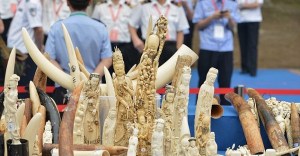
ivory2-634x330Chinese authorities destroyed more than half a tonne of confiscated ivory in Beijing here the other day. The public event, organised by the Chinese State Forestry Administration and the Customs Department, is set to display the country’s determination to ‘further protect wild animals’, according to the People’s Daily Online.
A whopping 662kg (1,460lb) of illegal ivory and ivory products were ground into powder as part of the central government’s crackdown on the illegal trade. The destroyed ivory items include thousands of ornaments, jewellery and fine art pieces. Whole elephant tusks were carved into the images of Buddhas, goddesses or Chinese landscapes.

Members of the media and diplomats were invited to attend the public destruction, which took place at Beijing Wild Animals Rescue Centre, as Chinese authorities hope to rid the country’s reputation of a global trading hub for illegal elephant tusks.

According to the country’s Forestry Administration, raw tusks sell for at least 41,667 Yuan (£4,400) per kilogram, making the total value of this destruction around £3 million. Source: Customs Today

Peshawar Customs pays tribute to retired and deceased officials

Customs logoI was surprised to come across this article, especially since I always believed Pakistan to be a militant country – certainly not one that would consider the memories of past customs officials.
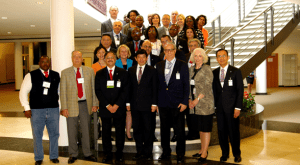
Rich tribute was paid to retired and deceased customs Officials of Khyber Pakhtunkhwa region recently during an award ceremony for retired officers and heirs of dead customs officials, held in Customs House Peshawar.

A large number of retired and relatives of dead customs officials attended the ceremony and received awards for their performance and services.

Speaking on the occasion, Custom Collector Peshawar Muhammad Aamir said that the function was organised on the instruction of Prime Minister Pakistan Nawaz Sharif, to pay tribute to retired custom officials who played crucial role to generate the revenue and serve the country. Muhammad Aamir informed that the collectorate has also hired the family members of those officials who died in the line of duty.

Retired Customs officials thanked the collector who gave a wonderful farewell to them for the first time and said that the department gave us respect and honor; however, they appealed the serving officials to do their best to generate the revenue for government exchequer.

Custom Collector Peshawar Muhammad Aamer distributed awards among retired superintendents, inspectors, hawaldars, constables and family members of dead customs officials who retired during last two years.

Collectorate of Customs Peshawar was officially established in July 1974 from the Collectorate of Land Customs and Central Excise Lahore. History of Customs in this part of Pakistan is as old as trade itself. Its jurisdiction extends over traditional trade routes with Afghanistan. Prior to establishment of Lahore Collectorate. Traditionally, Peshawar Customs have to contend with tough conditions in the field of enforcement. Proximity with Afghanistan having a long porous border on which only a couple of Customs stations are established, makes checking of smuggling more difficult. Enforcement of Customs controls is made further difficult due to fragile security situation on the border, roughness and ruggedness of the tribesmen, harshness of the terrain, occasional and insufficient power supply and absence of regular criminal law.

Source: Customs Today & Pakistan Customs

WCO Cooperation with Customs Brokers

WCO & BrokersThe International Federation of Customs Brokers Associations (IFCBA) marked its 25th anniversary by holding its Board of Directors meeting at WCO headquarters on 18 and 19 May 2015.
WCO Secretary General Kunio Mikuriya addressed the meeting to stress the importance of the partnership between Customs and Customs brokers, given that Customs performance is often affected by that of service providers, including Customs brokers. Bearing in mind the need to maintain a quality service by and cooperation with Customs brokers, he explained that the WCO was carrying out a survey of its Members’ institutional frameworks for Customs brokers.

During their interaction with Secretary General Mikuriya, representatives of the IFCBA expressed an interest in working with Customs to adjust their way of doing business to the evolving trade environment, including electronic data transfer, and in assisting small and medium-sized enterprises participate in the increasingly complex global trading system. They also discussed the need to provide capacity building for brokers and to improve integrity.

Mr. Shantanu Bhadkamkar, Chairman of the IFCBA, expressed his appreciation for WCO support in improving Customs brokers’ operations and stated that, with its network of people working at borders, the IFCBA was confident that it could play a role in contributing to efficient border procedures and thereby economic competitiveness, including enabling small and medium-sized enterprises to benefit from international trade. Source: WCO

ZIMRA online Customs Clearance overcoming major systems failure

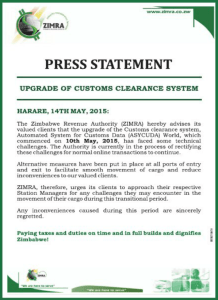
Zimra-press statementThe movement of commercial cargo has relatively improved at most of the country’s ports after the Zimbabwe Revenue Authority (Zimra) addressed some of the teething challenges affecting its customs online clearance system. Zimra is now using an advanced Automated System for Customs Data (Asycuda) for clearing commercial cargo entering or leaving the country.

However, when Zimra started upgrading its online clearance system on May 10, cargo had been stuck due to a systems failure at most of the country’s borders especially at Beitbridge Border Post, the busiest port of entry in Zimbabwe and gateway to Southern Africa.

Close to 15 000 haulage trucks per month pass through Beitbridge going either side of the border.

Zimra’s director of corporate and legal affairs, Florence Jambga, said in a recent statement that the upgrading of the customs clearing system had met with technical challenges.

“The authority is in the process of rectifying these challenges for normal online transactions to continue. Alternative measures have been put in place at all ports of entry and exit to facilitate smooth movement of cargo and reduce inconveniences to our valued clients.

“Zimra, therefore, urges its clients to approach their respective station managers for any challenges they may encounter in the movement of their cargo during this transitional period. Any inconveniences caused during this period are sincerely regretted,” she said.

In separate interviews, customs clearing agents and importers yesterday said the movement of cargo had improved as from Saturday evening.

Shipping and Forwarding Agents Association of Zimbabwe board member Mr Osbert Shumba said though the situation had relatively improved, they remained cautious.

“We will continue to monitor the situation and we are very hopeful that things will get back to normal as soon as possible,” he said.

At the Beitbridge Border Post, commercial cargo had been stuck there since Sunday last week resulting in truckers piling up on the South African side of the border.

Under a normal clearance system, cargo has to move to either side of the border after getting prior notification that the export or import papers have been processed.

By end of day yesterday trucks entering or leaving the country were being cleared expeditiously.

Asycuda is a more efficient and advanced system for customs data processing since it is Internet based.

The system allows that any clearing agent registered with Zimra can lodge a bill of entry from anywhere in the world where there is Internet connectivity. Communication between Zimra and the agent is, therefore, done electronically. Source: Customs Today

Two Zimbabweans appear in Namibian court over cigarette smuggling

Namibian police inspect over 1,000 boxes of impounded cigarettes at a roadblock in Rundu [Coastweek]

Namibian police inspect over 1,000 boxes of impounded cigarettes at a roadblock in Rundu [Coastweek]

Two suspects have appeared in a Namibian regional court Monday in connection with more than 1,000 cartons of cigarettes confiscated by the police Thursday last week.The two, both said to be Zimbabweans, appeared before a Rundu Magistrate in the northern Kavango region after their arrest over the 11.3 million Namibian dollars (940,000 U.S. dollars) cigarette contraband destined for South Africa.

The two were each charged with two counts of contravening the Custom and Excise Act 20 of 1998 and non-declaration of goods upon entering Namibia as well as the Prevention of Organized Crime Act 29 of 2004 of money laundering.

The accused persons were not asked to plead and their case was then postponed to July 8 for further police investigation. Acting on a tip-off, customs officials and the police raided two trucks en-route to South Africa and discovered 1,130 boxes that were hidden in fuel tankers. Source: http://www.spyghana.com/

African Stowaway Found Dead in Philadelphia

man+found+dead+on+shipThe body of a man, presumed to be a stowaway from Africa, has been found in the cargo hold of a ship carrying bags of cocoa beans to the U.S.

The UK-flagged Sian C was being unloaded at Pier 84 on the Delaware River, Philadelphia, when the body was found on Monday. The vessel had docked last Thursday after a 5,000 mile voyage from the Ivory Coast (Côte d’Ivoire).

Authorities were called to recover the decomposing body, and customs officials are trying to identify the man. He was found with a backpack containing some provisions and a pair of boots.

The man may have died as a result of suffocation or been crushed by the bags of cocoa beans, reports local media.

The IMO conducted a regional seminar on stowaways in the Ivory Coast in March which was hosted by the Ministry of Transport of Côte d’Ivoire. Participants agreed that port facilities need to further strengthen their capacities for surveillance and access control in order to reduce the incidence of stowaways.

The 12 most frequent ports of embarkation for stowaways are the major ports of Benin, Cameroon, Côte d’Ivoire, the Democratic Republic of Congo, Ghana, Guinea, Morocco, Nigeria, Senegal, Sierra Leone and Togo.

The International Group of P&I Clubs (Protection and Indemnity insurance) puts the annual cost of all stowaway cases worldwide at approximately $15.3 million (measured from February 2011 to February 2012). Source: www.maritime-executive.com

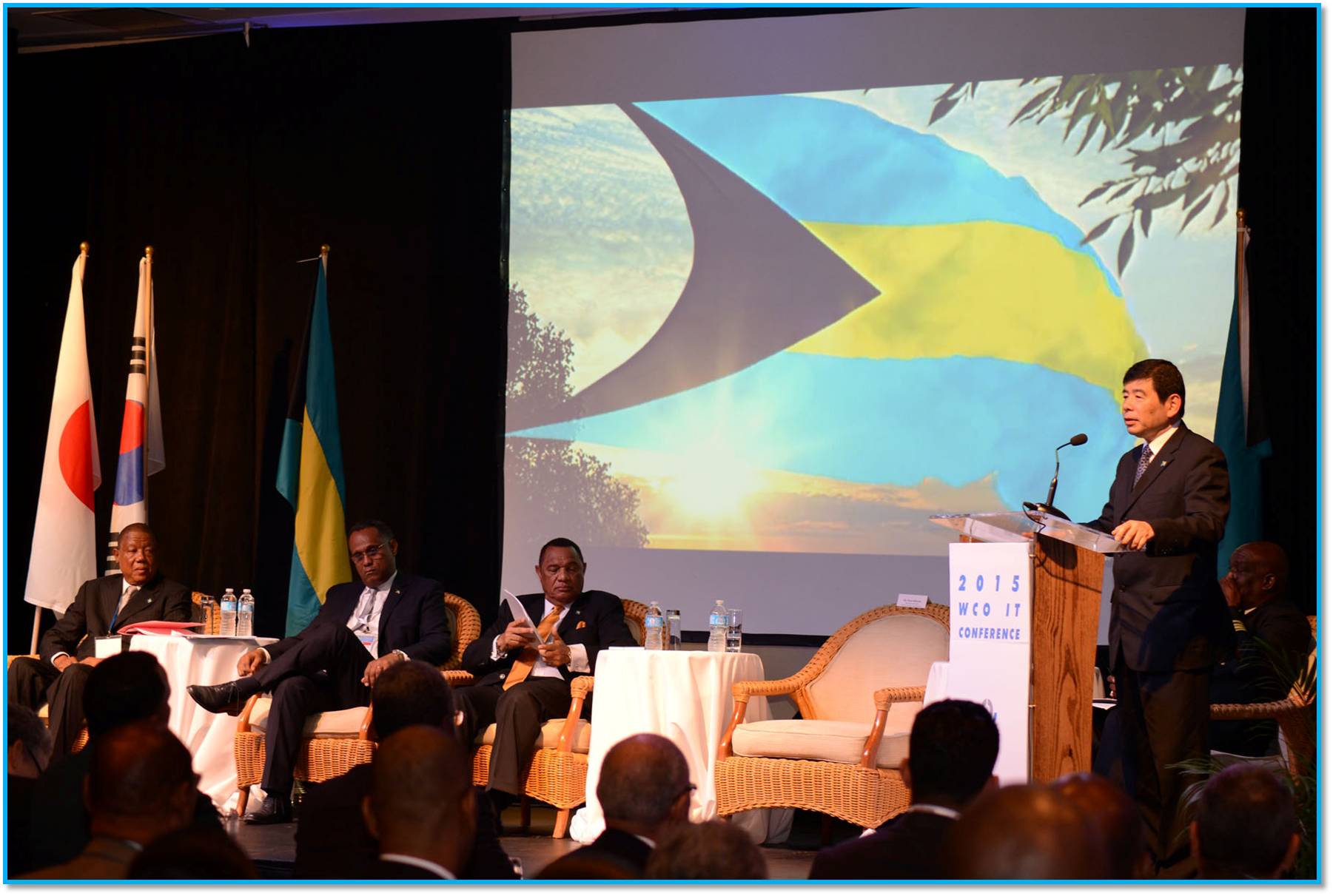
Inclusiveness Through Information Technologies – Launch of the 14th IT Conference & Exhibition

Secretary General of the WCO, Mr. Kunio Mikuriya, welcomes  delegates to what is now one of WCO’s premium external events bringing together representatives of the software industry and Customs policy makers.

Secretary General of the WCO, Mr. Kunio Mikuriya, welcomes delegates to what is now one of WCO’s premium external events bringing together representatives of the software industry and Customs policy makers.

The 14th annual WCO IT Conference & Exhibition was officially opened on 6 May 2015 in Freeport (Bahamas). Senior Government representatives of The Bahamas Government opened the 3-day Conference in the presence of over 400 participants from 75 countries.

The Right Honorouble Perry Gladstone Christie, Prime Minister and Minister of Finance of the Commonwealth of The Bahamas thanked the WCO for choosing The Bahamas for this very important global Conference. The hosting of this WCO event is an example of the government’s commitment to bring business opportunities to Grand Bahama!

The Prime Minister further continued by reminding the delegates that the WTO concluded negotiations on a Trade Facilitation Agreement at the Bali Ministerial Conference in December 2013 and about its potential of reducing international trade costs of approximately 12%. He underlined that the WTO Trade Facilitation Agreement owes much to the technical work that had already been carried out at the World Customs Organization.

In his speech, the Prime Minister stressed: “Our efforts are very much consistent with the theme of this Conference “Inclusiveness Through Information Technology”. It is in our interest here in The Bahamas to pursue an inclusive approach to the introduction of the new IT systems. These new systems must bring benefits, not only to government, but also to commercial operators and to the general public who will use these services. We recognize that with the introduction of these IT systems we must adopt a more client focused and customer orientated approach to make it easier to conduct business.”

The Secretary General of the WCO, Mr. Kunio Mikuriya, welcomed the delegates to what is now one of WCO’s premium external events bringing together representatives of the software industry and Customs policy makers. The Secretary General emphasized the theme of this year’s Conference “Inclusiveness Through Information Technologies”, adding that it addresses three key priorities of the WCO Members – Implementation of the WTO Trade Facilitation Agreement, Regional Economic Integration and Coordinated Border Management.

Mr. Charles Turner, Comptroller of Customs and Excise Department of the Commonwealth of The Bahamas, stressed that the IT Conference & Exhibition comes at an important juncture for The Bahamas as the Customs Department implements the Trade Sector Support Program. Having such a broad range of exhibitors and international delegates provides a rare opportunity to share ideas and learn from the experiences of others. Source: WCO

WCO publishes the Correlation Tables between the 2012 version and the 2017 version of the Harmonized System

OMD_7760The Correlation Tables between the 2012 version and the 2017 version of the Harmonized System (HS) are an essential device for preparation of new national Customs tariffs and a trade statistical classification based upon the HS Nomenclature 2017 Edition; modification of HS-based international Nomenclatures such as the Standard International Trade Classification (SITC) and the Central Product Classification (CPC); and preparations for possible WTO negotiations.

At its 55th Session in March 2015, the HS Committee examined and approved the Correlation Tables correlating the 2017 and 2012 versions of the HS.

Table І establishes the correlation between the 2017 version and the 2012 version of the HS. It contains remarks opposite certain correlations briefly specifying the nature of the goods transferred. In many cases, reference has also been made to the amended legal provisions.

Table ІІ establishes the correlation starting from the 2012 version to the 2017 version. It is simply a mechanical transposition of Table І and therefore includes no remarks. Source: WCO