Walvis Bay Container Terminal – AfDB and Namibia sign loan agreement

NamPort ExpansionThe African Development Bank Group (AfDB) and Namibia on Friday, November 8, 2013 signed a ZAR 2.9 billion (US $338 million) sovereign guaranteed loan to the Nambian Ports Authority (Namport) to finance the construction of the new container terminal at Port of Walvis Bay and a UA 1.0 million grant (US $1.5 million) to the Government of Namibia for logistics and capacity building complementing the port project loan. The project was approved by the AfDB Group in July 2013.

The project is expected to enable Namport to triple the container-handling capacity at the Port of Walvis Bay from 350,000 TEUs to 1,050,000 TEUs per annum. It will also finance the purchase of up-to-date port equipment and the training of pilots and operators for the new terminal. The grant component will fund the preparation of the National Logistics Master Plan study, technical support and capacity-building for the Walvis Bay Corridor Group and training of freight forwarders.

According to the AfDB Director of Transport and ICT, Amadou Oumarou: “Through this project which potentially serves up to seven major economies in the SADC region, the Bank is assisting in the diversification and distribution of port facilities on the southwest coast of Africa, and provides the much-needed alternative for the region’s landlocked countries.”

The project will stimulate the development and upgrade of multimodal transport corridors linking the port to the hinterland while improving the country’s transport and logistics chains. It will also boost competition among the ports and transport corridors in the region with the ripple effect on reductions in transportation costs and increased economic growth.

The projected project outcomes include improvement in port efficiency and increase in cargo volumes by 70% in 2020 as a result of increased trade in the region. The benefits of the project will include among others, the stimulation of inter-regional trade and regional integration, private sector development, skills transfer and most importantly employment creation, leading to significant economic development and poverty reduction in Namibia, and the SADC region. Source: African Development Bank

Related articles

Preparing for legislation on verification of container weights

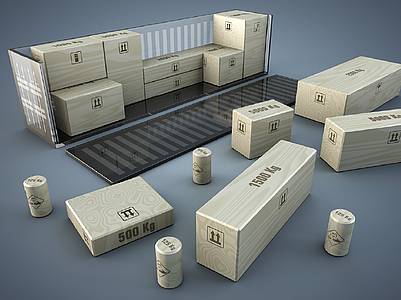
High quality 3D render shipping container during transportPort Technology International – The work by the Maritime Safety Committee (MSC), within the auspices of the International Maritime Organization (IMO), on the verification of container weights prior to loading on to a ship is progressing. Currently, expectations are that legislation will come into force in 2017 at the latest, and possibly in 2016.

Many terminal operators are concerned about how to comply with the upcoming legislation, and how it will impact on logistic flows in terminals.

One of the challenges facing terminals is how to weigh containers with little or no impact on operations. Transferring containers to separate weighing stations will affect productivity. Terminals are likely to need additional space and transportation capacity to cope effectively.

Solutions that weigh containers as part of existing logistic flows and operations will therefore deliver significant advantages for terminal operators.

Weighing alternatives

This article outlines technologies that are available for managing weighing or verifying weight. It should be noted that requirements for weight accuracy is not included in the current draft text from the IMO and will likely put further constraints on available options. The discussion here indicates what level of accuracy can be expected from the various options available.

Three different types of weighing or load measurement devices will be discussed: commonly available weigh bridges; load sensing devices in cranes and other lifting equipment and load sensing devices fitted to, or integrated into spreader twistlocks.

Weigh bridges

The first system that comes to mind when looking at weighing a container is the weigh bridge. Weigh bridges are a longestablished and recognised technology to measure the weight of a vehicle. When the weight of the container being carried by a vehicle is of interest, the tare weight of the vehicle must be deducted. The measuring accuracy of the weigh bridge is very high but the tare weight deduction process either introduces additional inaccuracies or becomes complicated and time consuming.

If a standard vehicle tare weight is used, the inaccuracy comes from such things as variations in fuel level, driver weight and the weight of miscellaneous materials also loaded in the vehicle. These may seem like minor aspects when considering a truck carrying a 40ft container, but it easily adds up to a few hundred kilos, thereby significantly affecting the accuracy of the container weighing process. The alternative to using a standard tare weight is to include weighing of the unloaded vehicle in the process. This will give an accurate vehicle tare weight and ultimately, an accurate container weight, but it adds steps to the process which takes time and uses terminal resources.

Using weigh bridges to weigh containers is likely to result in changes to the internal logistics of most existing terminals. All containers entering terminals by road would have to pass through the weighing station. The most critical factor in this scenario would be to have sufficient weigh bridges to avoid the bottlenecks and resulting congestion.

Containers arriving by train or sea (for transhipment) would have to be sent to a weighing station, a step which is uncommon in terminal logistics today. This additional step would tie transporting vehicles to specific containers for longer periods of time ultimately resulting in additional resources being needed to handle the same container volumes. Sufficient resources in terms of weigh bridges and transportation space therefore need to be allocated to avoid congestion
and delays.

Another situation which would require a specific process to be in place is where vehicles arrive at the terminal gate with two twenty-foot containers loaded. Weigh bridges can only determine combined weight. Because containers have to be weighed separately, this would imply a relatively complicated process involving not only the truck carrying the equipment but also terminal resources to facilitate the loading and unloading of the containers.

Load sensing devices in cranes or other lifting equipment

The second type of load measuring device is, in effect, several devices with common features. This group includes load sensors and devices on ship-to-shore (STS) cranes; rubber-tyred gantry (RTG) cranes; railmounted gantry (RMG) cranes; mobile harbour cranes; reach stackers; straddle carriers and so on. Most of the load sensing devices in this group are used for safety and/or stability systems, but the information is available to provide weight information with some limitations as outlined below.

The biggest question mark related to these systems is accuracy. Will the accuracy of these systems meet the requirements to come? The answer is most probably no, but until the requirements are defined, this option should be mentioned. Sensors in these devices are typically fitted to rope and chain anchors, in trollies or on booms. Distance from the container, and the dynamic effect this introduces adds to inaccuracy. These systems will typically have a measuring accuracy of plus or minus five percent. Source: Port Technology International

What Optimisation means for Terminals and Ports

Container terminal (CT1) with Nordschleuse in ...

Container terminal (CT1) with Nordschleuse in the foreground, Bremerhaven (Photo credit: Wikipedia)

Port Technology International’s article is perhaps poignant to current logistics developments in South Africa. Optimisation at the terminal does not only mean improving productivity and reducing operational costs. Optimisation represents a new approach to managing container terminals; it is the most significant driving factor in changing the traditional operational approach and methodology applied at container terminals. It also allows terminals to have a focus on efficiency which needs to address the trade-off between vessel service time, terminal capacity, and cost per move.

In terms of the marine shipping industry, one of the most accurate definitions of optimisation is: “The act of making a system, design or decision as effective or functional as possible.” Optimisation as a discipline is an ancient science best illustrated over time.

The history of optimisation

Greek mathematicians used to solve optimisation problems related to geometrical studies. After the invention of calculus, mathematicians were then able to address more complex optimisation problems. Following the start of the World War II and the advent of the operations research field, the concept and practice of optimisation began to develop and received significant academic and industrial focus. Mr J. Von Neumann, a leading individual behind the development of operations research, contributed substantially to the field of algorithmic research. And in the 60s and 70s, complexity analysis began to further support the use of optimisation. Then, in the 80s and 90s as computers became more efficient, algorithms for global optimisation with the purpose of solving large-scale problems began to gain momentum and credibility.

Considering the present

The continual advancements in technology with respect to computing power along with significant research in applied mathematics and computer science have solidified the value of optimisation to the industry and the end user. This has enabled advanced theory to be applied in a way that has sometimes invisibly improved our lives during last 20 years. The progress is amazing. Today, companies such as UPS and Federal Express utilise complex routing algorithms for resource allocation and supply chain distribution to deliver an item to our door with seamless efficiency. Their results have in turn changed the way millions of us find information, shop, and even do our jobs.

Today, many industries use optimisation as a more general term that covers areas from manufacturing process efficiency to improved distribution techniques. The core objective of optimisation is improving and controlling the process – whatever it may be – and allowing people with responsibilities in those areas to make better decisions. Operations research, for example, is a discipline that deals with the application of advanced analytical methods to help make better decisions at the right time and within the time constraints of a live operation.

As with other industries, the shipping and container space is currently going through its own step change to achieve new levels of operational productivity in response to mega-trends, such as globalisation and sustainable operations. To compete, ports and terminals have decided they need to adapt to their changing demands by optimising their activities in areas such as berthing allocation, vessel planning, fleet size optimisation, shift resource planning and equipment scheduling. All of these areas are critical for minimising the cost per move factors and maximising overall terminal performance and throughput.

Optimisation also provides the intelligence and the tools to support this changing industry, but it is not meant to be a black box. A container terminal is a very complex system with many unpredictable variables. Those focused on achieving optimisation will need to be able to control, monitor and configure the behaviour of this intelligence behind the machine and systems, filling any critical gaps between the planning and execution.

Containerised cargo makes up about 60 percent of all dry cargo trade in the world; since the advent of the cargo container more than 50 years ago, this number continues to grow. The appeal of containerised cargo is well known – cargo can be seamlessly transported from origin to destination via a variety of modes without the need to unload and reload its contents. The marine container terminal is at the junction of water, rail and truck transport modes. And as a consequence, marine container terminals are some of the most essential, yet challenging, links in the global supply chain. Source: Port Technology International

Transnet receives 2 Chinese electric locomotives

THE FIRST two of 95 Class 20E dual-voltage electric locomotives being supplied to Transnet Freight Rail (TFR) by the CSR E-loco supply consortium was transferred from the port of Durban to the nearby depot at Umbilo on November 14 for commissioning.

The first 10 locomotives are being built by CSR Zhuzhou Electric Locomotive in China, while the remaining 85 units will be assembled in South Africa by Transnet Engineering. CSR is a 70% partner in CSR E-loco Supply, with local partner Matsetse Basadi holding the remaining 30%. The contract specifies a target of 60.5% for localised content.

The 3MW Class 20E is equipped for operation on 25kV ac and 3kV dc electrification systems and will be used by TFR’s general freight business.

Transnet says the two locomotives have been delivered a month earlier than expected, and it expects a second consignment of four units to arrive in South Africa next month. Source: www.railjournal.com (Pictures credits: FTW Online, and various)

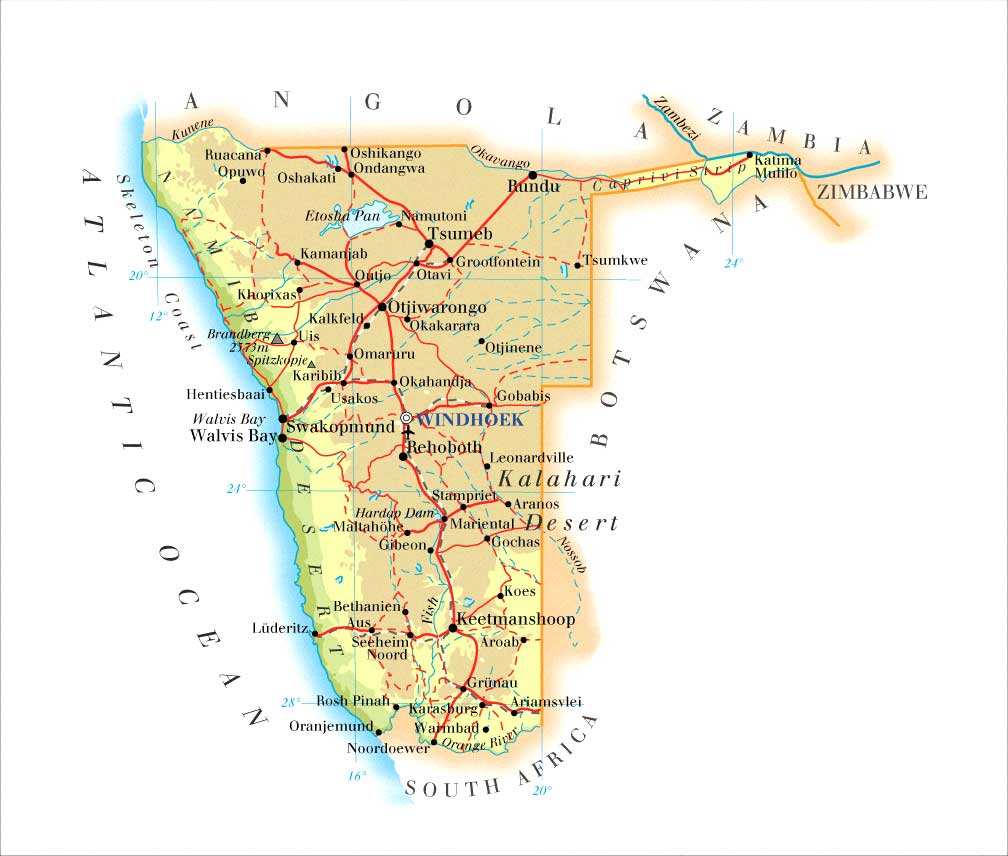
Namibia – Dry Port for Keetmashoop

Namibia Map (www.fao.org)

Namibia Map (www.fao.org)

Namibia – Plans by Governor of the Karas Region, Bernardus Swartbooi, to establish a dry port facility at Keetmanshoop have been hailed as a “brilliant idea” by experts who are in unison that the idea is overdue. (Maybe it is just plain common sense! Will be interesting to see how the Namibian Revenue Authority facilitate the inland movement of transit containers from Walvis Bay.)

Swartbooi presented his proposal to change the face of Keetmanshoop by making it the pivot of trade between Namibia, South Africa and possibly the rest of Africa at the Annual Logistic and Transport Workshop last week.

According to him the new venture, estimated at roughly N$10million, will see Keetmanshoop linked directly by sea, rail and road with Namibia’s capital Windhoek, Africa’s largest economy, South Africa, and the rest of the Southern African Development Community in the form of a central north-south transport corridor.

Keetmanshoop is the only town in Namibia with eight border posts and has a working relationship with the North Cape Province in South Africa.

Swartbooi said the second phase of this development will stream into the creation of a free trade zone on the eastern side of Keetmanshoop that will not only attract foreign investors but create a wealth of jobs that will significantly reduce the country’s unemployment statistics.

He also mentioned that with a free trade zone the region can eventually venture into light manufacturing that will bring about positive spin-offs for the region and the entire Namibia as a whole.

“We fight against a trend that the south was left out.. If you close down the Walvis Bay port today we will feel it later, but if Lüderitz port is to be closed today the effect will be felt within hours. There is no argument about our strategic location. No-one can compete against our land availability,” he enthused.

Twenty hectares of serviced land have so far been secured for the project that will include two weighbridges, offload facilities and accommodation facilities for truck drivers and recreation.

“We are looking at enhancing road safety and to cut down on driver fatigue,” he explained adding that key stakeholders have not yet been identified and anchor participants are being sought.. “We are looking at a private public equity where we can give someone a lease of ninety years,” he stated.

According to the Director for the Namibia German Centre for Logistics, Neville Mbai, Keetmanshoop as a regional hub is a brilliant idea and will not only serve as a buffer during labour strikes in South Afica, but will surely ease the burden on Walvis Bay port and corridors.

“It is absolutely brilliant. Kharas is adjacent to the great Gauteng region, the breadbasket of Southern Africa if not the whole of Africa. What we want to see is a shorter road from Johannesburg to Namibia. Look at the road infrastructure of Walvis Bay, if we are to add more that road will be in trouble,” he said adding that with Keetmanshoop providing a hub Namibia will no longer be severely impacted by labour strikes in South Africa, as goods can be stored to cater for the Namibian market.

“The idea must be to have a concentration of logistics hubs scattered across the country and with the port of Lüderitz and the quantity of fish production the region certainly is deserving of a hub,” he noted.

At least 1 600 trucks pass through Keetmanshoop on a monthly basis with 80 percent of Namibia’s goods being are transported through this route.

Operations Manager for Logistics Support Services Quintin Simon argues that this is indeed a positive idea and with Keetmanshoop located in the centre, distribution will become easier and faster. Source: www.newera.com

EC proposes measures to get more freight onto Europe’s waterways

waterwaysforward-wordpress-com_SnapseedThe European Commission (EC) has announced new measures to get more freight onto Europe’s rivers and canals.

It underlines that barges are amongst the most climate-friendly and energy efficient forms of transport but currently they only carry about 6% of European cargo each year.

The new proposals intend to realise the “unused potential” of Europe’s 37,000 km of inland waterways, enabling freight to move more easily and lead to further greening of the sector, as well as encouraging innovation and improving job opportunities.

“We already send 500 million tonnes of freight along our rivers and canals each year. That’s the equivalent of 25 million trucks. But it’s not enough. We need to help the waterway transport industry develop over the longer term into a high quality sector. We need to remove the bottlenecks holding it back, and to invest in the skills of its workforce,” said the EC’s Vice President, Transport, Siim Kallas.

The Commission is proposing to remove significant bottlenecks in the form of inadequately dimensioned locks, bridges or fairways and missing links such as the connection between the Seine and the Scheldt river systems which are hampering the sector’s full development potential.

In August last year, Lloyd’s Loading List reported that a multi-billion euro project, the Seine-Nord Europe (SNE) Canal, to build a 106km, 54-metre wide canal to link the Seine and Scheldt rivers by the end of the decade, had suffered a serious setback, with doubts cast over private investment in the project.

The French government continues to support the SNE Canal despite the conclusions of an audit into its financial feasibility which recommended that it be postponed indefinitely.

It commissioned the over-hauling project which could be presented to the European Commission in its new form in the first quarter of 2014, the aim being to secure greater EU funding than that granted under the initial plans.

The Commission is also proposing action to encourage investment in low emission technologies and to support research and innovation. Source: Lloyds.com

Port-to-Hinterland…gearing up for growth?

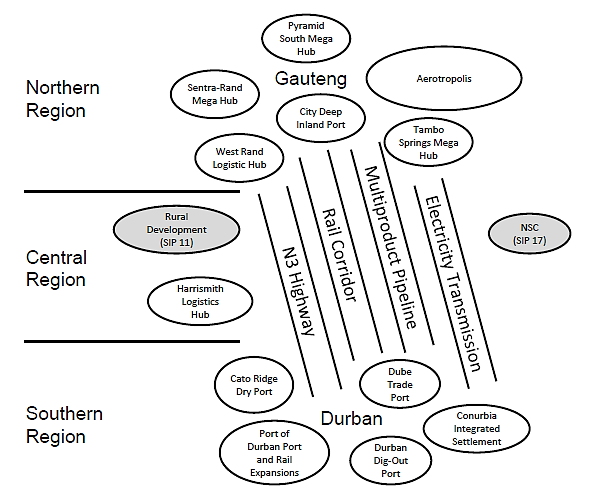
Proposed Durban-Free State-Gauteng Logistics and Industrial Corridor Plan (SIP2)

Proposed Durban-Free State-Gauteng Logistics and Industrial Corridor Plan (SIP2)

Notwithstanding on-going discontent amongst industry operators in regard to proposed legislative measures mandating customs clearance at first port of entry, the South African government (GCIS) reports that work has already commenced on a massive logistics corridor stretching between Durban and the central provinces of the Free State and Gauteng. Most of the projects that form part of the second Strategic Infrastructure Project (SIP 2), also known as the Durban-Free State-Johannesburg Logistics and Industrial Corridor, are still in the concept or pre-feasibility stage, but construction has already started on several projects.

These include:

  • the building of a R2,3 billion container terminal at City Deep
  • a R3,9 billion project to upgrade Pier 2 at the Port of Durban
  • R14,9 billion procurement of rolling stock for the rail line which will service the corridor.

Work has also started on the R250 million Harrismith logistics hub development to set up a fuel distribution depot, as well as on phase one of the new multi-product pipeline which will run between Johannesburg and Durban and transport petrol, diesel, jet fuel and gas.

The aim of these projects and others which form part of SIP 2, is to strengthen the logistics and transport corridor between South Africa’s main industrial hubs and to improve access to Durban’s export and import facilities. It is estimated that 135 000 jobs will be created in the construction of projects in the corridor. Once the projects are completed a further 85 000 jobs are expected to be created by those businesses that use the new facilities. Source: SA Government Information Service

Interested in more details regarding South Africa’s infrastructure development plan? Click here!

A South African RFID/GPS cross-border logistics and customs solution

Inefficiency of road freight transport is one of the primary factors that hamper the economy of sub-Saharan Africa. Long delays experienced at border posts are the single biggest contributor towards the slow average movement of freight. Cross-border operations are complicated by the conflicting security objectives of customs and border authorities versus efficiency objectives of transport operators. It furthermore suffers from illegal practices involving truck drivers and border officials. In theory the efficiency of cross-border operations can be improved based on the availability of more accurate and complete information – the latter will be possible if different stakeholders can exchange data between currently isolated systems.

Cross-border trade basically comprises 3 distinct but interlinked layers –

An information layer – in which various trade documentation (purchase order, invoice), cargo and conveyance information (packing list, manifest), customs and government regulatory data (declaration, permits) are exchanged between various supply chain entities and the customs authority. These primarily attest to the legal ownership, contract of carriage, reporting and compliance with customs and other regulatory authority formalities (export and import), and delivery at destination.

A logistics layer – for the collection, consolidation, sealing and conveyance of physical cargo from point of despatch via at least two customs control points (export and import), to deconsolidation and delivery at point of destination.

A financial layer – which refers to the monetary exchange flow from buyer (importer) to seller (exporter) according to the terms and conditions of the sale (INCOTERMS). Hmm… no, this does not include ‘bribe’ money.

All three layers are inter-linked and prone to risk at any point of a given transaction. There is also no silver bullet solution to secure supply chains. Moreover, it is a fallacy that Customs and Border Agencies will ever conquer cross-border crime – simply because there are too many angles to monitor. Furthermore, in order to set up cross—border information exchange and joint enforcement operations it is both legally and politically time-consuming. Criminal elements are not hampered by these ‘institutions’, they simply spot the gaps and forge ahead.

One of the areas requiring customs attention is that of chain of custody. In short this implies the formal adoption of the World Customs Organisation’s SAFE Framework principles. Each party with data that needs to be filed with the government for Customs and security screening purposes has responsibilities. Those responsibilities include –

  • Protecting the physical goods from tampering, theft, and damage.
  • Providing appropriate information to government authorities in a timely and accurate manner for security screening purposes.
  • Protecting the information related to the goods from tampering and unauthorized access. This responsibility applies equally to times before, during and after having custody of the goods.

Tenacent RFID Tag

Tenacent RFID Tag

Security seals are an integral part of the chain of custody. The proper grade and application of the security seal is addressed below. Security seals should be inspected by the receiving party at each change of custody for a cargo-laden container. Inspecting a seal requires visual check for signs of tampering, comparison of the seal’s identification number with the cargo documentation, and noting the inspection in the appropriate documentation. More recently the emergence of certain e-seals and container security devices (CSDs) contribute even further to minimizing the amount of ‘physical’ verification required, as they are able to electronically notify the owner of the goods or government authority in the event of an incidence of tampering.

White Paper - GPS-RFID systems for cross-border management of freight consignments

White Paper – GPS-RFID systems for cross-border management of freight consignments

A group of South African specialist engineers have been working closely with transport authorities, logistics specialists, defense experts and customs authorities across the globe. Their e-seal is patented in no less than 16 high volume countries. It is produced in Singapore, China and Indonesia depending on politics, free-trade agreements and demand. May move some to Brazil and US in time. Proof of concept (POC) initiatives are currently underway in Brazil for rail cargo, US Marine Corps for their p-RFID program and other Department of Defense divisions in the USA, and will shortly be included in one of the GSA agreements making it available to any government department in the US. Further adrift, the e-seal is also currently enjoying interest in Guatemala, Mexico, Canada, Panama, Jordan, Italy, Spain, and Malaysia. Here, in South Africa, a POC was conducted at the 1st autogate at Durban Container Terminal, funded by the North West University, and overseen with successfully achieved objectives by Transnet Port Terminals. For technical details of the RFID seal, click here!

With much anticipated success abroad, how much support will this product attain in the local and sub-Saharan African scene? Government authorities, as well as logistics and supply chain operators are therefore encouraged to study the enclosed ‘white paper’ – Click Here!. It firstly quantifies the size of the problem and estimates the potential economic benefits that will be created by improved cross-border operations. It then proposes a combined GPS/RFID system that can provide the required level of visibility to support improved operational management, resulting in a simultaneous increase in the security and efficiency of cross-border freight operations. A brief cost-benefits analysis is performed to show that the expected benefits from such a system will by far exceed the costs of implementation. Source: Tenacent & iPico

TT Club – Container packing standards must be improved

TT ClubThe TT Club, has called for higher levels of training to maintain and improve the expertise of those employed by shippers, consolidators, warehouses and depots to pack containers properly.

The insurance organisation said it is no surprise that the correct packing of containers is high on the agenda for industry bodies, regulators and insurers, as the consequences of unsafe and badly secured cargo are serious. According to freight transport insurer TT Club’s claims, some 65 per cent feature cargo loss or damage, of which over one-third result from poor packing.

It is timely that TT Club and Exis Technologies have come together to develop CTUpack e-learning, an online training tool for those involved in the loading and unloading of containers or Cargo Transport Units.

Designed and produced by Exis Technologies on the initiative of the TT Club, and with its financial investment, the CTUpack e-learning(tm) course is aligned with IMO/ILO/UN ECE guidelines for packing containers. Beginning with the foundation course, which will be launched later this year, it will comprise modules that include topics such as cargo or transport and elements equivalent to lessons, covering areas like forces and stresses.

In future the course will evolve to reflect developments and updates to the ILO guidelines and there is a capacity for additional modules to incorporate cargo specific and more advanced training elements. Source: Seanews.com

Preparing ports for the future –

Siim Kallas - Europe’s ports must be better connected across the wider transport network.

Siim Kallas – Europe’s ports must be better connected across the wider transport network.

The following article featured in Port Stratetgy and penned by Siim Kallas, Vice-President of the European Commission in charge of transport policy, offers some sound views on how ports and regional networks ought to harmonise to ensure their competitiveness.

Europe’s prosperity has always been linked to sea trade and ports, which have great potential for sustaining growth in the years ahead. As gateways to the EU’s entire transport network, they are engines of economic development. And more cargo, cruise ships and ferries in our ports mean more jobs.

Europe depends heavily on its seaports, which handle 74% by volume of the goods exported or imported to the EU and from the rest of the world. Not only are they important for foreign trade and local growth, ports are the key for developing an integrated and sustainable transport system, as we work to get trucks off our saturated land transport corridors and make more use of short sea shipping.

Need to adapt

Even with only modest assumptions of economic growth, port cargo volumes are expected to rise by 57% by 2030, almost certainly causing congestion. In 20 years, Europe’s hundreds of seaports will face major challenges in performance, investment needs, sustainability, human resources and integration with port cities and regions.

So our ports need to adapt. Take the next generation of ultra-large vessels that carry 18,000 containers. Put onto trucks, these containers would stretch in a single line from Rotterdam to Paris. To accommodate them, ports need to provide the adequate depth, crane reach and shipyard space. There is also a growing need for gas carriers and gasification facilities.

Efficiency and performance vary a great deal around Europe. Many EU ports perform very well – take Rotterdam, Antwerp and Hamburg, which handle 20% of all goods. But not all ports offer the same high-level service. Port network connections and trade flows are well developed in northern Europe, but much less so the south.

A chain is only as strong as its weakest link: if a few ports do not perform well, it affects the sustainable functioning of Europe’s entire transport network and economy – which needs to recover and see long-term growth.

Preparing for the future

Ports must be prepared for the future. This means improving local connections to the wider road, rail and inland waterways networks; fully optimising services to make the best use of ports as they are now; and creating a business climate to attract the investments that are so badly needed if capacity is to expand, as it must do.

Unlike other transport sectors, there is almost no EU ports legislation, on access to services, financial transparency or charging for infrastructure use. Experience from the last 15 years shows that the market cannot solve the problem itself; the lack of equal competition conditions and restrictions to port market access are barriers to improving performance, attracting investments and creating jobs. We need to act.

Our proposal to review EU ports policy focuses on the ports of the trans-European Transport Network, which accounts for 96% of goods and 95% of passengers transiting through the EU ports system. Firstly, if ports are to adapt to new economic, industrial and social requirements, they must have a competitive and open business environment.

Freedom to provide services, with no discrimination, should be a general principle; although in cases of space constraints or public interest, the responsible port authority should ensure that decisions granting market access are transparent, proportionate and non-discriminatory. Transparency of public port financing should also be improved, to avoid distortions of competition and make clear where public money is going. This will encourage more private investors, who need long-term stability and legal certainty.

On charging for using infrastructure, where there is no uniform EU model, port authorities should be more autonomous and set charges themselves. But this must be done based on objective, non-discriminatory and transparent criteria. Ports should also be able to reduce charges for ships with better environmental performance.

Staying competitive

We also plan to help our ports stay competitive by cutting more red tape and administrative formalities to boost their efficiency even further. As in many other economic sectors, staffing needs in ports are changing rapidly and there is a growing need to attract port workers. Without a properly trained workforce and skilled people, ports cannot function. The Commission estimates that up to 165,000 new jobs will be created in ports by 2030.

Modern port services and a stable environment must also involve modern organisation of work and social provisions. Many countries have reformed and the benefits of doing so can be clearly seen. Experience in Member States which have implemented ports reforms show that open and proper discussions between the parties involved can make a real difference. So we want to give this a chance first, over three years, to see what can be achieved. If that does not produce results, we will have to consider taking action.

To stimulate resource-efficient growth and trade, Europe’s ports must be better connected across the wider transport network. They must make sure they are able to develop and respond to change. This is what the European Commission aims to achieve, for the long-term benefit of the ports sector, local business and the environment. Source: Portstrategy.com
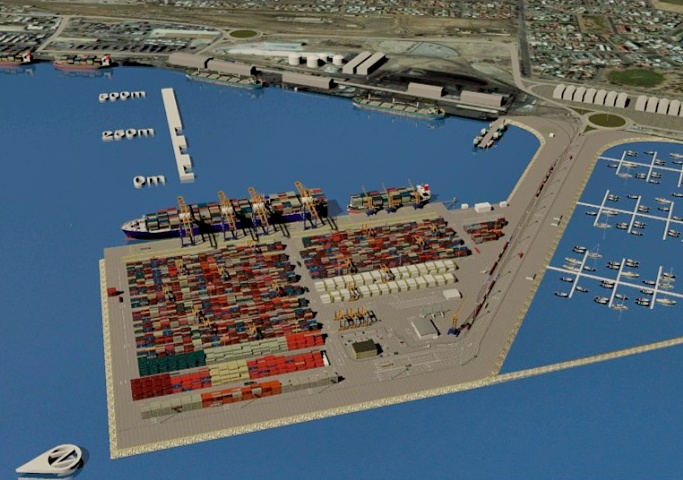
Ambitious Port Plan for Walvis Bay


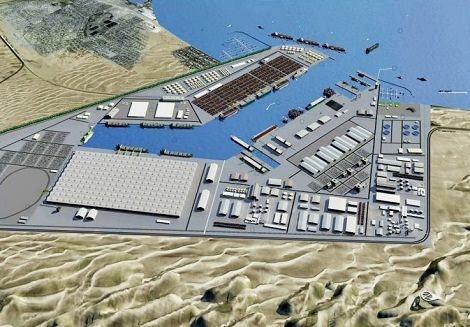
Computer-generated imagery of what the Walvis Bay North Port will look like when built. Image courtesy Namport.

Computer-generated imagery of what the Walvis Bay North Port will look like when built. Image courtesy Namport.

Far from simply developing a new container terminal, Namport could be bringing forward plans to build an ambitious new port at Walvis Bay to accommodate an expected increase in container and other traffic in the near future.

Originally intended as a long-term proposal for the Port of Walvis Bay, the plans may have to be brought forward and, coupled with finance that could come from China, the Namibian port is set to become a real rival for business in the southern and central African region.

According to reports in The Namib Times the cabinet has discussed and in principle given the go-ahead to create a new harbour on the northern side of the existing port. It said the new harbour is part of Namport’s strategy of positioning Walvis Bay as the premier port in the region. The plans will require dredging of a deep entrance channel and excavating the land to clear space for the new deepwater basin along with 10 kilometres of quayside for ships to berth.

If it was necessary to have proof that this development has the potential of shaking up the southern African region, it came in the form of a warning given yesterday by Transnet Chief Executive Brian Molefe at a community briefing session in Durban, in which he said, while justifying the need for the Durban dig-out port to go ahead, that if it was delayed or not built then Durban would lose out to other African ports. As an example he cited Walvis Bay where he said ambitious plans to build a large container port had been given the go-ahead. Source: Ports.co.za

City Deep Inland Terminal [port] to be hit hard by Customs Bill

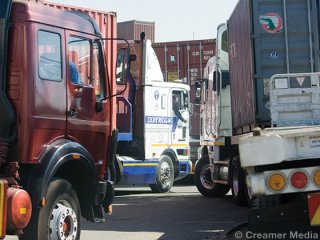
Trucks at Transnet Freight Rail's City Deep Terminal (Engineering News)

Trucks at Transnet Freight Rail’s City Deep Terminal (Engineering News)

Following up on last year’s meeting (click here!) of the minds, convened by the JCCI, a recent meeting in Johannesburg placed fresh emphasis on the dilemma which impending changes contemplated in Customs Draft Control Bill will have for the import and logistics industry in particular. The following report carried by Engineering News highlights trade’s concerns which are by no means light weight and should be addressed with some consideration before the Bills come into effect. Gauging from the content below, there is a clear disconnect between business and policy makers.

The closure of Johannesburg’s inland port seemed to be a “done deal” as Parliament deliberated the recently tabled Customs Control Bill that would leave the City Deep container depot invalid, Chamber of Commerce and Industry Johannesburg (JCCI) former president Patrick Corbin said on Friday.

The promulgation of the South African Revenue Services’ (Sars’) newly drafted Customs Control Bill, which, in conjunction with the Customs Duty Bill, would replace the current legislation governing customs operations, would have a far-reaching impact on the cost and efficiencies of doing business in South Africa and other fellow Southern African Customs Union (Sacu) countries, he added.

The Bill, which was the product of a three-year development process within the National Economic Development and Labour Council, declared that all imported goods be cleared and released at first port of entry. This was part of efforts by customs officials and government to root out any diversion and smuggling of goods, ensure greater control of goods moving across borders and eliminate risks to national security.

Speaking at the City Deep Forum, held at the JCCI’s offices in Johannesburg, Corbin noted, however, that City Deep had operated as an inland port for the past 35 years, easing the load on the country’s coastal ports, which were already strained to capacity. Despite customs officials assuring the chamber that the operations and facilities in City Deep/Kaserne would retain its licence as a container depot, he believed customs had failed to recognise the critical role City Deep had played in lowering the cost of business, easing the burden on South Africa’s ports and ensuring ease of movement of goods to neighbouring countries. As customs moved full responsibility of container clearances to the ports, port congestion, inefficiencies, shipping delays and costs would rise, and jobs would be lost and import rail volumes decreased, he noted.

Economist Mike Schussler added that the closure of the City Deep inland port operations would add costs, increase unreliability and induce “hassles”, as the Durban port did not have the capacity to handle the extra volumes and its productivity and efficiencies were “questionable” compared with other ports.

“The volume of containers going to overstay or being stopped for examination in City Deep [will] need to be handled by [the coastal] ports. If they can’t cope with the volume at the moment, how are they going to handle increased volumes,” Iprop director Dennis Trotter questioned. He noted that only the containers cleared 72 hours prior to arrival would be allocated to rail transport. Those not cleared three days before arrival would be pushed onto road transport to prevent blocking and delaying rail operations.

This, Schussler said, would also contribute – along with port tariffs and the cost of delays – to higher costs, as road transport was more expensive than rail.

He pointed out that South Africa was deemed third-highest globally in terms of transport pricing. It would also result in less rail capacity returning for export from Johannesburg, further leading to increased volumes moving by road from City Deep to Durban.

Sacu countries, such as Botswana, would also be burdened with higher costs as they relied on City Deep as an inland port. Trotter noted that the region would experience loss of revenue and resultant job losses. Over 50% of South Africa’s economy was located closer to Gauteng than the coastal ports. Johannesburg alone accounted for 34% of the economy, said Schussler, questioning the viability of removing the option of City Deep as a dry port.

However, unfazed by the impending regulations, Transnet continued to inject over R1-billion into expansion and development opportunities at City Deep/Kaserne. Corbin commented that Transnet had accepted the assurances from customs that “nothing would change and the boxes would still be able to move seamlessly once cleared.” The City of Johannesburg’s manager of transport planning Daisy Dwango said the State-owned freight group was ramping up to meet forecast demand of the City Deep/Kaserne depot.

The terminal’s capacity would be increased from the current 280 000 twenty-foot equivalent units (TEUs) a year, to 400 000 TEUs a year by 2016, increasing to 700 000 TEUs a year by 2019. Transnet aimed to eventually move to “overcapacity” of up to 1.2-million TEUs a year. Dwango said projections have indicated that by 2021, the City Deep/Kaserne terminals would handle between 900 000 and one-million TEUs a year. Source: Engineering News

Aerotropolis for Gauteng…stuff’s about to happen

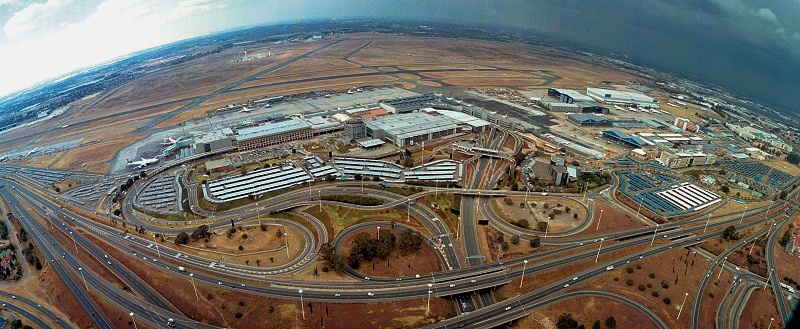
Oliver Reginald Tambo International Airport (east of Johannesburg) to become Africa's first aerotropolis

Oliver Reginald Tambo International Airport (east of Johannesburg) to become Africa’s first aerotropolis

The Gauteng Provinicial government has announced that Africa’s busiest airport, OR Tambo International Airport is set to become the location for the continent’s first aerotropolis. Work on the development of the aerotropolis, centred at OR Tambo International Airport, seeks to leverage public and private sector investment at the airport and surrounding areas. In supporting industrial development in this precinct, approval has been granted for the creation of an Industrial Development Zone (IDZ) in the area surrounding the airport. Heard this all before, but what’s different this time around?

An aerotropolis is an urban plan in which the layout, infrastructure, and economy is centered around an airport, existing as an airport city. It is similar in form and function to a traditional metropolis, which contains a central city core and its commuter-linked suburbs.The term was first proposed by New York commercial artist Nicholas DeSantis, whose drawing of a skyscraper rooftop airport in the city was presented in the November 1939 issue of Popular Science.The term was revived and substantially extended by academic and air commerce expert Dr. John D. Kasarda in 2000, based on his prior research on airport-driven economic development. Wikipedia

Jack van der Merwe, who successfully oversaw the development of the Gautrain project, has been appointed to lead the initiative of developing the aerotropolis. The proposal for the airport to become a terminal city with air, rail and road networks fuelling economic development. It is envisaged to include a commercial component, hotel, conferences, exhibitions and a residential component.

One of the key initiatives of the national government is the e-Thekwini-Free State-Gauteng freight and logistics corridor, known as the Strategic Infrastructure Project 2 (SIP2), which seeks to improve the movement of goods from the Durban port to Gauteng, and to business enterprises nationally as well as in southern Africa.

City Deep/Kazerne cargo terminals and the planned Tambo-Springs Freight and Logistics Hub are to be the focal points for the movement of goods for the export market. Phase 1 of the City Deep/Kazerne Terminal expansion and roads upgrade was underway at the continent’s largest and busiest in-land container terminal. This includes a redesign and upgrading of the roads network in and around the City Deep Terminal to provide for better flow of freight traffic and linkages with the national highways – the cost of the road works would amount to R122 million. At some point the issue of non-tariff barriers to import/export trade will need to be discussed…..and overcome.

Transnet has completed the first phase in the actual improvements of the terminal. It will be investing R900 million in upgrading the terminal. A detailed road design work, including feasibility studies and the development of a master plan, are underway for the Tambo-Springs Inland Port. Now, we’re talking…….

Gauteng  Province is to get 2 484 new modern trains as part of the Passenger Rail Agency of South Africa (PRASA) rolling stock for fleet recapitalisation and refurbishment programme.

The province will be making major investments in road infrastructure in the coming financial year and these include reconstruction and upgrading of the R55 (Voortreker Road) to a dual carriageway road between Olievenhoutbosch and Pretoria West; rehabilitation of the remaining section between Main Road and Maunde Street in Atteridgeville; reconstruction and upgrading of William Nicol Drive (K46) between Fourways and Diepsloot as well as reconstruction and improvement of the remaining section of the Old Pretoria to Cullinan Road between the Chris Hani Flats and Cullinan, among others. Wow, and the toll fees?

The department has been allocated a budget of R4.77 billion for the 2013/14 financial year. Of this amount R1.4 billion has been earmarked for roads maintenance and upgrading, R1.7 billion for public transport operations and R802 million for the running cost of the Gautrain Management Agency. Source: EngineeringNews

So, all-in-all, the above together with other recent noises of incentives and benefits for foreign and local investors in SEZs, the future holds some promise and interest…..

How much bigger can container ships get?

Check out this superb article – click here – featured on BBC News Magazine‘s website –

What is blue, a quarter of a mile long, and taller than London’s Olympic stadium? The answer – this year’s new class of container ship, the Triple E. When it goes into service this June, it will be the largest vessel ploughing the sea. Each will contain as much steel as eight Eiffel Towers and have a capacity equivalent to 18,000 20-foot containers (TEU). If those containers were placed in Times Square in New York, they would rise above billboards, streetlights and some buildings. Or, to put it another way, they would fill more than 30 trains, each a mile long and stacked two containers high. Inside those containers, you could fit 36,000 cars or 863 million tins of baked beans.

The Triple E will not be the largest ship ever built. That accolade goes to an “ultra-large crude carrier” (ULCC) built in the 1970s, but all supertankers more than 400m (440 yards) long were scrapped years ago, some after less than a decade of service. Only a couple of shorter ULCCs are still in use. But giant container ships are still being built in large numbers – and they are still growing.

It’s 25 years since the biggest became too wide for the Panama Canal. These first “post-Panamax” ships, carrying 4,300 TEU, had roughly quarter of the capacity of the current record holder – the 16,020 TEU Marco Polo, launched in November by CMA CGM.

In the shipping industry there is already talk of a class of ship that would run aground in the Suez canal, but would just pass through another bottleneck of international trade – the Strait of Malacca, between Malaysia and Indonesia. The “Malaccamax” would carry 30,000 containers.

There are currently 163 ships on the world’s seas with a capacity over 10,000 TEU – but 120 more are on order, including Maersk’s fleet of 20 Triple Es. Source: BBC News Magazine

What’s in a name – Transnet Rail Engineering undergoes more change

English: Spoornet Class 18E Series 1 18-503

Transnet Class 18E Series 1 18-503 (Photo credit: Wikipedia)

One of Transnet’s many faults (it has many good points too) is that it keeps changing its branding. For about 60 years just about everyone was familiar with the South African Railways & Harbours or SAR&H or its Afrikaans equivalent – well, okay, maybe not so happy with the absolute monopoly but we all knew the name and what it represented. Then for some reason the SAR&H was evolved into SATS – South African Transport Services but soon that wasn’t good enough and the group became Transnet, with its various offshoots and divisions.

One of these that we all remember was Portnet – which actually wasn’t a bad choice for the old Harbours Service. But still not satisfied with things, someone decided that Portnet must be absorbed back into Transnet with the divisions taking on separate identities – Transnet National Ports Authority (TNPA) and Transnet Ports Terminals (TPT). Lest we forget however, in between we had South African Ports Operators (SAPO) whose acronym clashed with that of the South African Post Office.

Nor was the railways spared this confusion in the haste to rebrand. It became Spoornet, a name which surprisingly stuck in the early days of post-1994. But eventually that had to change, becoming Transnet Freight Rail as the division went about attempting to convince itself that it could survive as a main line carrier of freight only – no more parcel trains and definitely no more branch lines.

Another of the older divisions to suffer this loss of identity was the old workshop division, well established at places like Germiston, Salt River, Durban, Pretoria, Bloemfontein, Uitenhage and so on. Those that weren’t shut down or emasculated became Transwerk –again a name that surprisingly hung around for longer than expected. But change comes to all and Transwerk evolved into Transnet Rail Engineering, or TRE by its acronym – another of those habits we seem fascinated with.

And now, once more the passion for name-changing has taken hold. The engineering business is now called Transnet Engineering (TE), which we are forced to admit is actually quite a good choice for a change. In fact, we wonder, why on earth wasn’t it called that in the first place? (Source: Ports.co.za)

All of the above pales into insignificance when compared to the embarrassing realisation of the acronym for the South African Border Police’s division – Port Of Entry Security!