WCO/SACU – IT Connectivity and Data Exchange

WCO-SACU IT Interconnectivity and Data Exchange Conference

On the occasion of International Customs Day, in January earlier this year, the World Customs Organisation dedicated 2012 as the year “Connectivity”, which encapsulates people connectivity, institutional connectivity and information connectivity among the members of the global Customs community.

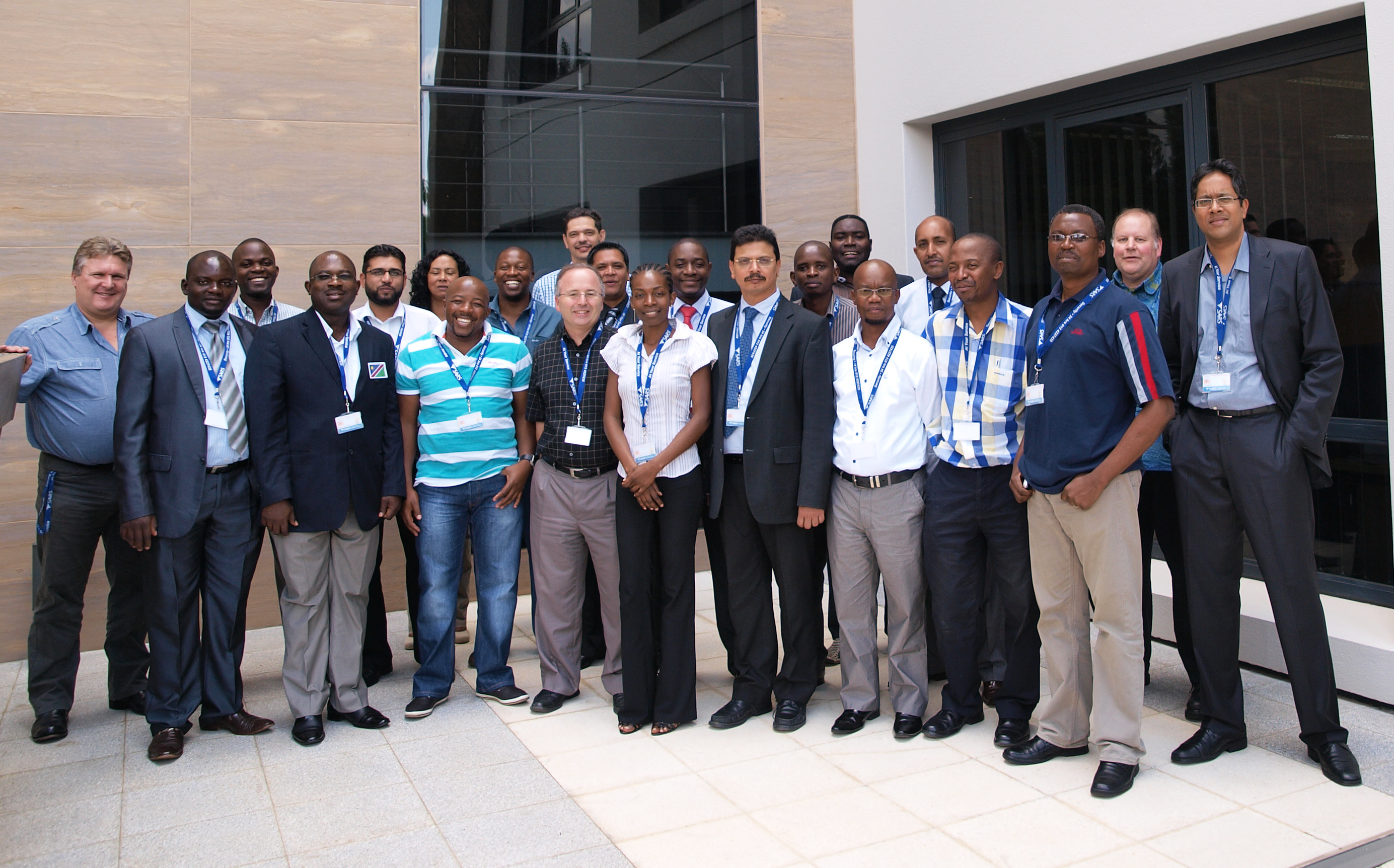
Over the last week and a half delegates from the WCO, SACU, UNCTAD, SADC and COMESA have been hosted at SARS, Pretoria to discuss and deliberate over an approach to implement ‘IT connectivity’ within the Southern African region. During the first week representatives from UNCTAD, SACU and SARS were briefed on important developments at the WCO on IT-Interconnectivity and Information Exchange. We were privileged to have Mr. Satya Prasad Sahu, Technical officer from the WCO – a leading expert in all matters of ICT in international customs matters – present the developments towards finalisation of a future international customs standard called “Globally Networked Customs” (GNC). It entails a structured approach that will enable customs authorities to formulate and document bilateral or regional ‘standards’ on a variety of Customs-to-Customs topics, for instance Authorised Economic Operators, Cross Border Information Exchange, Risk Management, etc. A representative from UNCTAD presented a synopsis of the proposed ‘cloud computing solution’ which the Trans Kalahari Corridor (TKC) plans to pilot between Namibia and Botswana along the TKC route in the next few months. During the course of this week, delegates , under the guidance of Satya, prepared a proposed approach for information exchange between members of the Southern African Customs Region. This document is based on the GNC Utility Block structure (defined by the ad Hoc Committee on Globally Networked Customs at the WCO) and served as the basis for discussion for Week 2.
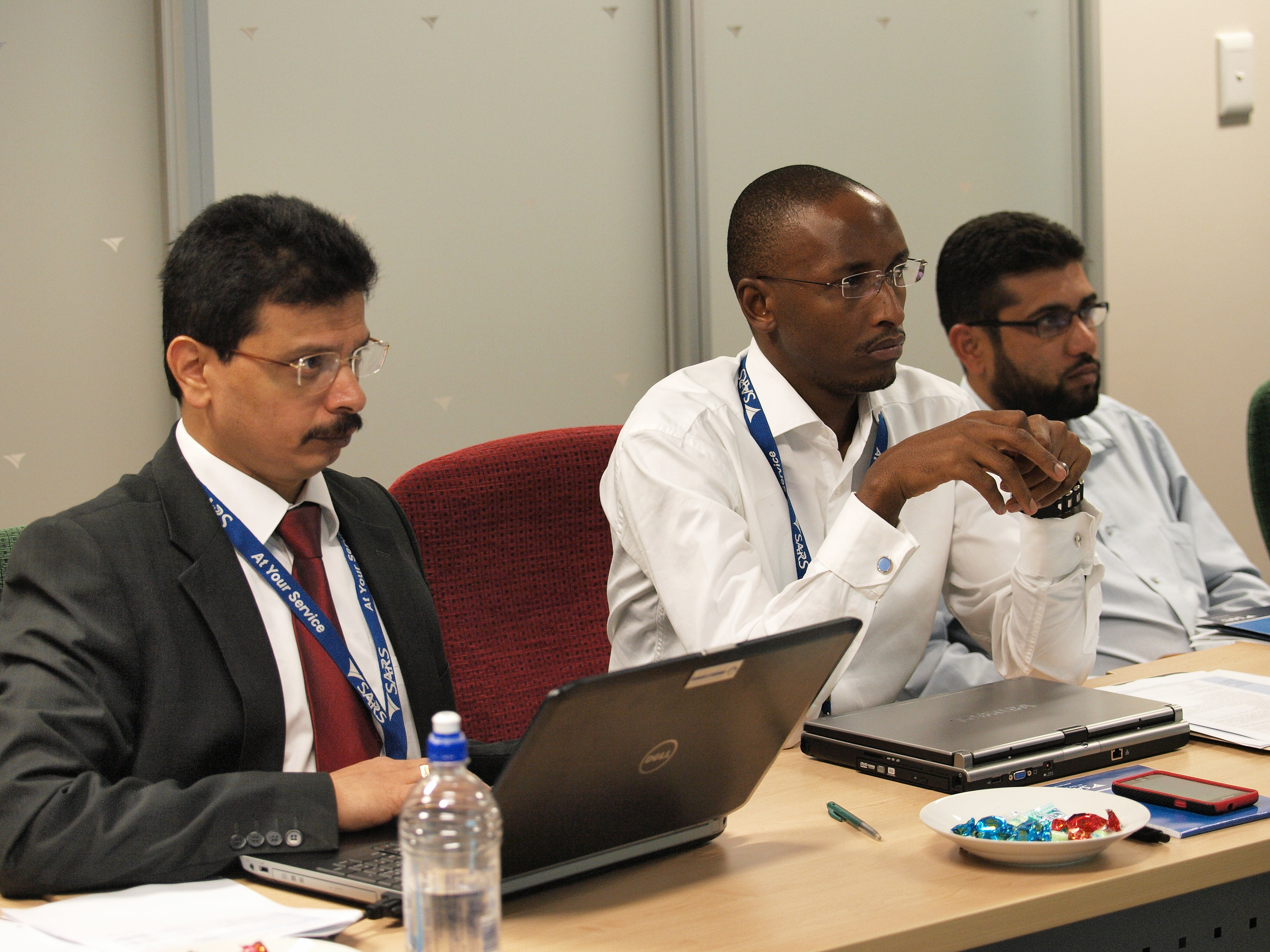
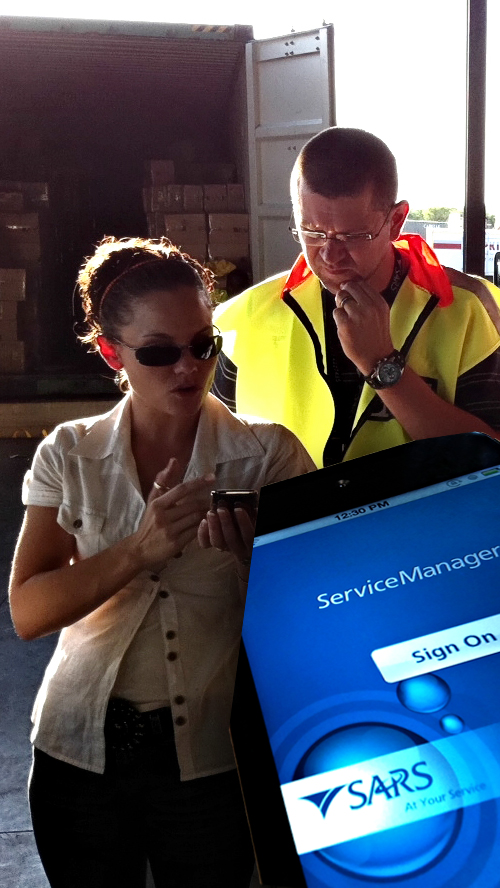
Mr. SP Sahu (WCO) and delegates from SACU SecretariatWeek 2 saw the arrival of customs and IT representatives from COMESA, SADC, UNCTAD, SACU as well as a delegation from Mozambique Customs. Mr. Sahu was invited to chair the session, given his vast experience on the subject matter as well as international experience in national and regional customs ICT programmes. Delegates were treated to various lectures on the GNC, a comprehensive overview of developments on ASYCUDA (Customs solution developed by UNCTAD), various updates from within the customs region – Botswana, Namibia, Lesotho, Swaziland, Mozambique and SARS. Beyers Theron informed delegates of ongoing developments of the SARS Customs Modernisation Programme as well as key implications for neighbouring countries. SARS presented a live demonstration of SARS’ Service Manager solution, navigating through all the functionality now available to SARS Customs officials. Of significant interest to all was the new iPod inspection tool. This technology is given prominent feature in the latest edition of WCO News.

A large portion of the week was, however, spent on deliberating the proposed scope and content of the draft Utility Block on Information Exchange in the Southern African Region. Significant progress was been made to attain first, a common understanding of the scope as well as the implications this has for participating countries. Delegates will return home with a product with which to create awareness and solicit support in their respective countries. Over the next few months SARS will engage both SACU and SADCOM (combined SADC and COMESA trading blocs) to establish firm commitments for information exchange with customs administrations in these regions. This conference is significant for SARS and South Africa as a whole as it provides a uniform, standardised and practical approach for engagement with other international trading partners. To view photographs of the conference please click here!

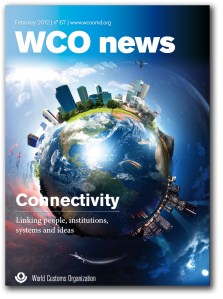
WCO News – February 2012 Edition

WCONews Edition February 2012Herewith a link to the latest edition of WCO News, providing a wealth of customs news and developments from across the globe. This edition focuses almost entirely on regional initiatives involving C-2-C information exchange. On pages 20 to 22 you’ll read about new developments emerging on customs inter-connectivity and information exchange in the Southern African Region. At this time, a conference lead by the WCO, involving representatives from UNCTAD, SACU, SADC and COMESA and SARS is taking place in Pretoria to establish a firm framework for introduction of customs information exchange. I will devote a dedicated article on these developments shortly, as this has implications for the business community as well. Also, don’t miss the feature on South Africa’s modernisation developments, pages 29 and 30. Besides the usual editorials this edition includes –

  • WCO Secretary General launches Year of Connectivity.
  • Evolving technology landscape and its impact on Customs.
  • Latest developments in Latin America, Southern Africa and Europe.
  • West Africa implements airport task forces to fight drug trafficking.
  • South Africa to roll out mobile Customs controls.
  • Operation “Short Circuit” successes and challenges.
  • WCO Tariff and Trade Affairs Directorate

SA truckers – fines for cross-border permit infractions

Assuming that the RSA government favours the drive for increased inter-Africa trade and free movement of goods and conveyances, perhaps its time for transport officials to look beyond the letter of the law and automate their process.

South African truckers have been warned not to travel without their cross-border permits as they could face hefty fines. According to the Cross Border Road Transport Agency (CBRTA), trucks dispatched to the border ahead of a permit being issued could be fined as the permit has to be in the truck at all times. “According to the legislation anyone with the intent of crossing the border must be in the possession of these permits,” said CBRTA CEO Sipho Khumalo. “That means operators cannot dispatch their trucks to the border and then send the permit with a car once it has been issued later to catch up with the truck. That is against the law.” Source: FTW

Record Freight Traffic for Walvis Bay Corridors

Walvis Bay CorridorsVolumes along all the Walvis Bay Corridors have hit a record high of more than 63,000 tonnes for the month of January 2012, reports Namib Times. The report describes this as a significant growth of cargo volumes along the TransKalahari, TransCaprivi and TransCunene Corridors respectively. From a mere ten trucks a day that left the Port of Walvis Bay seven years ago to other SADC countries, more than 1,000 vehicles are now entering or leaving the Port of Walvis Bay on a monthly basis.

Although some markets such as Zimbabwe, Zambia and DRC have experienced stronger growth than the other markets, a growth factor has been seen with all the Corridor markets for the past six months. The Botswana and Gauteng (South Africa) markets are growing slowly, with the variety of commodities being expanded along these corridors. Imports and exports for Malawi via Walvis Bay are also on the increase, as this market also offers an immense possibility of attracting commodities such as tobacco to be transported via the Namibian port. The Angolan market also showed an increase during the past 6 months as more types of commodities are being transported via Walvis Bay destined for Southern Angola. Source: Namib Times

Financial pinch affects CBP’s modernisation and developmental capacity

The US Bureau for Customs and Border Protection  has money to run commercial trade processing system (ACE) but not expand it. Customs and Border Protection has US $140 million to operate and maintain a commercial trade processing system, but there’s no money in the 2012 budget to further develop the program. The lack of development money, particularly for the simplified entry process, has caused concern amongst business community members. Simplified entry is something that Customs and the trade community are looking for to further automate import processing and lower transaction costs. Source: USCBP

China leads shake-up in distribution methods

Out of respect for copyright, I would encourage all logistics followers to visit this link to learn more about a significant shift occurring in the distribution of containerized goods. Some food for thought considering local conditions in South Africa which currently appear to marginalize (if not discourage) inland localisation and multi-modal distribution of goods between the hinterland and major air and sea ports in Southern Africa. Source: FT.com

Related Article

International Customs Day 2012

Borders Divide, Customs Connects” is the theme for this years international Customs Day celebrations, highlighting the central and integral role of Customs administration in the global trade supply chain. As the World Customs Organization prepares to celebrate its 60th anniversary this year, it is only fitting that  this opportunity is used to acknowledge the heritage that the founders of the Customs Co-operation Council bestowed on us, namely the importance of cooperation, particularly the value of inter-connectedness among Customs and its partners. For the official WCO International Customs Day 2012 poster click here!

For the international Customs community, connectivity connotes a vision of arrangements worldwide that support the smooth and lawful flow of goods, services, people, technologies, capital, culture, and ideas. It galvanizes the establishment of partnerships, the preparation of research, the sharing of knowledge, and the delivery of capacity building. Connectivity thus paves the way for community protection, modernization, and economic development. Connectivity encapsulates strengthened coordination, cooperation, and communication between Customs administrations, with other government agencies and institutions, and with the private sector, at national, regional and international levels.

Because borders are synonymous with division, the main challenge for Customs administrations is to identify and pursue the best methods to increase connectivity, which refers to people-to-people, institutional, and information linkages, that underpin and facilitate the achievement of objectives.

In fact, Connectivity is a natural progression from previous International Customs Day themes: Knowledge in 2011, particularly the sharing of knowledge to enhance the effectiveness and efficiency of Customs authorities; Customs-Business Partnerships in 2010, with a focus on supporting and improving the connective, working relationships between Customs and the private sector; and Environment Protection in 2009, underscoring the need for coordinated border management to save our natural heritage.

It is, of course, important to emphasize that connectivity encompasses three main pillars:

  • people connectivity, which includes a partnership with the business sector, and knowledge and professionalism;
  • institutional connectivity, which includes Customs-to-Customs connectivity and Customs-to-other government agency connectivity; and
  • information connectivity, which acts as an enabler and includes Globally Networked Customs, the electronic Single Window, and technology and knowledge solutions.

Here at home in South Africa, SARS Commissioner Oupa Magashula confirmed SARS’ proud history as a “connected” organisation fulfilling its Customs mandate –

  • We connect with our partners in business, those who drive the international supply chain, to provide them with a world-class service offering that will enhance their competitiveness in the global marketplace.
  • We connect across Government administrations and agencies that collectively form the regulatory and physical frontline of this country, working towards enhanced facilitation and security for the country, its economy and society.
  • We connect with our counterparts in Customs administration around the world on matters ranging from the sharing of best practice to active cooperation on improved Customs administration to the combating of Customs fraud and illicit trade.
  • We connect within our region, on the continent and beyond to work towards greater integration and cooperation, ensuring that the benefits of global trade enhance the economic and social well-being not only of South Africa, but of our neighbours and the continent as well.

Sources: WCO and SARS.

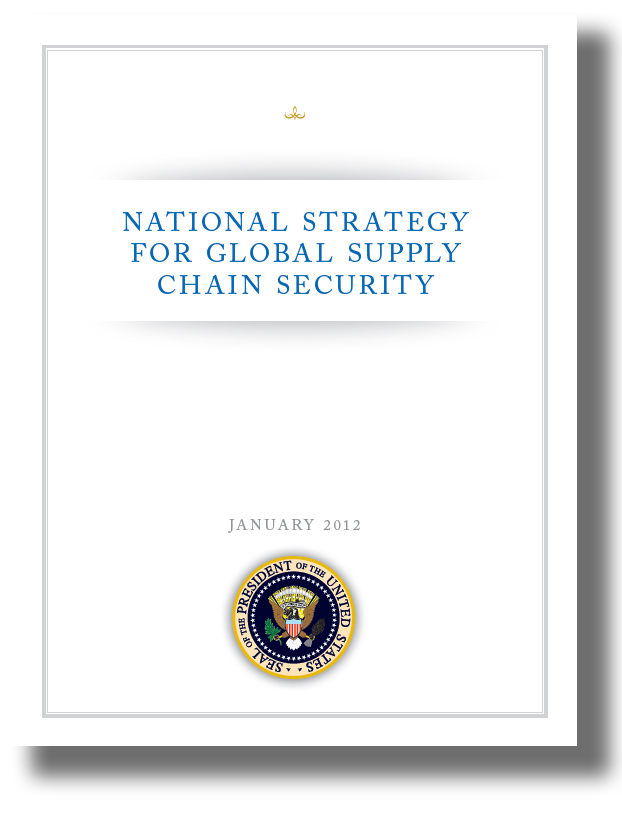
US launches National Strategy for Global Supply Chain Security

U.S. Secretary of Homeland Security Janet Napolitano unveiled  the Obama administration’s National Strategy for Global Supply Chain Security at the World Economic Forum in Davos, Switzerland yesterday (25 January). The Department of Homeland Security (DHS) is committed to facilitating legitimate trade and travel, while preventing terrorists from exploiting supply chains, protecting transportation systems from attacks and disruptions, and increasing the resilience of global supply chains.

The National Strategy for Global Supply Chain Security outlines clear goals to promote the efficient and secure movement of goods and foster a resilient supply chain system. It also provides guidance for the U.S. government and crucial domestic, international, public and private stakeholders who share a common interest in the security and resiliency of the global supply chain. (Why call it a “National” strategy when it impacts the international community?)

DHS works with leaders from global shipping companies and the International Air Transport Association (IATA) on developing preventative measures, including terrorism awareness training for employees and vetting personnel with access to cargo. Fulfilling a requirement of the 9/11 Act, 100 percent of high risk cargo on international flights bound for the United States is screened.

In addition, through the Container Security Initiative currently operational in over 50 foreign seaports in Europe, North, Central and South America, Africa, the Middle East, and throughout Asia, U.S. Customs and Border Protection helps our partner countries identify and screen U.S.-bound maritime containers before they reach the U.S..

Following the release of the National Strategy for Global Supply Chain Security, DHS and the Department of State will lead a six month engagement period with the international community and industry stakeholders to solicit feedback and specific recommendations on how to implement the Strategy in a cost-effective and collaborative manner. You can find the Strategy by clicking here! Also, for a summary of the strategy in presentation format, click here! We wait with bated breath to find out whats going to be new here, besides more onerous reporting requirements!

Source: US Press Secretary and The White House Blog.

Aircargoshop – a revelation for shippers

The following piece suggests that the realisation of AEO obligations on shippers is real and will be augmented by support systems that may marginalise the highly competitive freight forwarding industry.  While there is a suggestion of cost savings due to non-reliance of shippers on traditional forwarding agents, I believe this is a short-sited view as the ‘real challenge’ lies in whether or not shippers are up to the task in meeting these obligations given their unfamiliarity with customs and transport requirements. I see many shippers having to recruit experienced customs and forwarding experts to maximise their compliance given the burgeoning obligations materializing in international shipping!

In October 2011, Aircargoshop an online booking portal provided shippers the possibility to book their own airfreight without involvement of the traditional shipping agent via the online portal Aircargoshop. This is a development that might have important consequences for the closed airfreight industry. As a consequence the online booking portal offers a lower-priced, more efficient and more transparent process for aircargo booking.

Founder Paul Parramore of Rhenus Logistics suggests that this system will bring down the cost of airfreight by as much as 50%. The Dutch Shipping Council EVO, gave the system the thumbs up and said that it will revolutionise the manner in which the freight business is currently being conducted.

Joost van Doesburg, a consultant with EVO said that in the long run restructuring of the industry is necessary in order to meet the challenges of the 21st century. Many of the forwarders will lose out, but the system is geared towards cost effectiveness and being competitive. He also added that if the forwarder is to add value to the supply chain, then he has to comply to adapting to the system rather than working against it.

On the home front, a recent article featured on the website Freight into Africa reports that the South African Cross Border Transporters Association (SACBTA) will be introducing a similar system which is currently under development for the cross border road freight industry. It will be called “ROAFEonline” or shortened form of Road Freight online which will allow the customer to book directly his freight with accredited SACBTA members hence cutting out the middleman and brokers.

All payments can and will be done online and this system will integrate with SARS EDI (Would like to hear more on this!). The consignor will only have to ensure that his goods are loaded onto the truck, the rest will be done by the system. The cost per transaction to the customer will be a paltry R100.00 in relation to a few thousand Rands normally swallowed up by the middlemen.

Based on our estimations a regular consignor can save up to R3-5 million Rands per annum which hopefully will be passed onto the consumer. With the looming integration of the SADC countries towards one stop clearing, it makes sense to further integrate the system. So whether you are in Dar es Salaam or Lubumbashi, you can now book your freight from Cape Town without having to go through a string of brokers. You also have the assurance that your cargo will be loaded by an accredited SACBTA transporter who complies to the standards set out by SACBTA. It will facilitate consolidations as any accredited transporter will at any given time be able to see what cargo is available. If Transporter A has only 20 tons, he can check which other transporter on the system has another 8 tons to Dar es Salaam for example. The transporters can then consolidate a load on the system which will happen in a shorter period of time than say for instance waiting a month to fill a tri axle.

This system will have many other functionalities that have been incorporated like online tracking, bar coding, which will give the consignor and consignee piece of mind knowing at any given time where their cargo is. It will also be accessible to border agents and customs officials who will be in a position to extract vital information on any consignment long before it actually gets to a border.

The system will go into testing around March of this year and if all goes well should be ready for implementation by the latter part of 2012 or early 2013. We hope that this will go a long way towards restructuring the industry for the better. It has long been the desire of SACBTA to allow industry players to come on board to create a better industry. However, there has been very little interest shown in transforming the industry and we feel this system will by virtue of its nature, transform the industry whether industry players are willing participants or not. Source: Freight into Africa and various own sources.

New Zealand releases trade implementation guidelines for GOVCBR

New Zealand Customs ServiceThe New Zealand Customs Service has recently released draft guidelines for it’s Trade Single Window (TSW), which is currently under development. This will require all potential users to be able to send and receive electronic messages. The introduction of the TSW therefore means that organisations will need to submit lodgement messages that meet the WCO3 data model. Current message format for import entries, export entries, inward and outward cargo reports, will be accepted for 18 months after TSW is introduced (likely to be in the first quarter of 2013). However, following that 18-month period, all users of TSW will need to have adopted the new NZ WCO version 3 data model for messages.

New Zealand Customs expects that some users of TSW may adopt the new messages earlier to take advantage of the benefits, which include the ability to submit cargo manifest and Customs data in one message.To understand the new messages, a draft set of message implementation guidelines is now available for consultation and feedback from software developers and companies intending to use the TSW on the following draft messages:

  • Advance Notice of Arrival
  • Advance Notice of Departure
  • Cargo Report Export
  • Excise Declaration
  • Inward Cargo Report
  • Import Declaration
  • Outward Cargo Report
  • Border Agency Response Message.

Message implantation guidelines for the new export declaration is still be drafted, and will be made available as soon as possible.

Five main government agencies operate at the border – the Customs Service, the Ministry of Agriculture and Forestry, the Department of Labour, the Ministry of Transport, and the Department of Internal Affairs. With the participation of almost 20 other associated agencies, they work to prevent the traffic of prohibited goods and materials in and out of the country. They also collect government revenue, promote travel and trade, support New Zealand’s national interests, and uphold international laws and agreements. Now, as the border sector grows more complex and volumes of goods and travellers increase, a new era of inter-agency collaboration aims for more control, easier flows, and greater efficiency. Source – New Zealand Customs Service

Mobile Customs Control – Great minds think alike

Beitbridge inspection area6 December 2010 saw the rollout of a new electronic tool for customs inspectors at Beitbridge border post. The need for a hand-held device was identified following the rollout of a new workflow system, called Service Manager, to various Customs offices over the past few months. Although the changes introduced recently were aimed at moving Customs to a totally paperless environment, customs inspectors still had to print out their instructions on paper, manually write down the inspection results and then recapture these onto the system back in the office.

The use of an iPod by a Customs officer to conduct a physical inspection at Beitbridge this week introduces significant enhancements over the previous manual process. SARS has been liaising with iPod experts in various countries around the world over the past few months to develop this function and procure the devices.

The solution comprises an Apple iPod Touch which has been configured to operate SARS’ automated inspection workflow application – Service Manager. The introduction of a hand-held device therefore means that all the functions of Service Manager are now at the inspector’s finger-tips. Inspectors receive their instructions on the iPod, capture the results and make recommendations which then go to the finalisation/adjustment inspector. They can even take photographs with the iPod if they need further clarification on the goods they are inspecting. Inspectors no longer have to go back and forth to the office and their next job can be assigned to them on the spot. This is expected to substantially reduce the time spent on physical inspections and minimise human error.

Initially 34 iPods were procured for Beitbridge, WiFi technology was made available at the port and training of affected staff undertaken. All physical inspections at Beitbridge were being conducted with iPods and will be rolled out to the other Customs border posts throughout 2012.

While SARS’ solution is the first known Apple solution of its kind, similar solutions have been introduced recently within the US Bureau for Customs and Border Control and the Australian Border Control Agency offering varying types of functionality, including the integration of RFID technology by the Australians to monitor and track cargo movements. Life for Customs officers is a whole different and will continue to evolve if it expects to remain in touch with modern era fraud and scams.

Free Trade talks to kick continent into the future

The first round of negotiations to establish a free trade area covering 27 countries in southern and east Africa will kick off on December 8, in Nairobi. It is envisaged that the negotiations will be completed in 36 months. (Really?)

The three trade blocs involved – the Southern African Development Community (SADC), the East African Community (EAC) and the Common Market for Eastern and Southern Africa (COMESA) – decided in October 2008 in Kampala to move towards a free trade agreement.

The intention is to boost intra-regional trade because the market will be much bigger, there will be more investment flows, enhanced competitiveness and the development of cross-regional infrastructure.

Industrialisation, making goods to sell instead of selling primary products, is a possible and also necessary spin-off. Competition with older established and also bigger emerging economies might be a stumbling block initially, but the huge new market may make it possible for locally manufactured goods to compete with those imported from outside the FTA.

Close to 600 million people live in the FTA with a gross domestic product of $1 trillion – suddenly we are boxing in the same weight division as China, India, Russia, Brazil, the US and the EU. Source: All Africa.com.

BriberyComment: Heard all of this before?  It could be hoped that some positive developments will materialise from more talkshops with promises to alleviate poverty and increase Africa’s slice of the international market. While the retail and telecommunications industries have made significant inroads into Africa, manufacturing remains a moot point. Does Africa have the political will to take risks? Removing internal border controls for instance are not high priority for sovereign governments. Neither for that matter is the question of the integrity of officials who man these borders. And, neither is the matter of removing one of the key contributors to cross border fraud – the “paper customs declaration”. Nonetheless, attempts are still being made to redress these ills. Recent developments within SACU indicate a genuine move towards customs-2-customs information exchange based on the ‘Customs Inter-connectivity’ concept. More on this shortly.

GSP – Good news for developing countries

The European Commission adopted a regulation revising rules of origin for products imported under the generalised system of preferences (GSP). This regulation relaxes and simplifies rules and procedures for developing countries wishing to access the EU’s preferential trade arrangements, while ensuring the necessary controls are in place to prevent fraud.

The Regulation adopted by the Commission today will considerably simplify the rules of origin so that they are easier for developing countries to understand and to comply with. The new rules take into account the specificities of different sectors of production and particular processing requirements, amongst other things. In addition, special provisions are included for Least Developed Countries (LDCs) which would allow them to claim origin for many more goods which are processed in their territories, even if the primary materials do not originate there. For instance, an operator in Zambia that produces and exports plastics to the EU will benefit from the new rules of origin, because even with up to 70% of foreign input the exported plastics can still be considered as originating from Zambia. These new rules should greatly benefit the industries and economies of the world’s poorest countries.

The proposal also puts forward a new procedure for demonstrating proof of origin, which places more responsibility on the operators. From 2017, the current system of certification of origin carried out by the third country authorities will be replaced by statements of origin made out directly by exporters registered via an electronic system. This will allow the authorities of the exporting country to re-focus their resources on better controls against fraud and abuse, while reducing red-tape for businesses. The new rules of origin will apply from 1 January 2011.

For more information on the new proposal please check: http://ec.europa.eu/taxation_customs/index_en.htm

SARS “Trusted Trader” programme under the spotlight

With the implementation of the SARS Customs Modernization Program, accreditation has been revisited and SARS has taken a more robust approach.

South Africa is currently focusing on accreditation for customs procedures only. The Self-assessment Questionnaire was reworked and sent to a number of large importers, inviting them to participate in the “Preferred Trader Pilot Program.” Now more customs accreditation initiatives are underway.

In terms of a future focus on mutual recognition, bilateral discussion between EU and South Africa has commenced. The parties recently agreed to launch a customs project, financed under the Trade, Development and Cooperation Agreement (TDCA) facility, covering the implementation of the WCO SAFE Framework in South Africa. South Africa intends to align its Authorized Economic Operator (AEO) strategy with that of the EU to ensure that standards for both compliance and security match those of the EU.

The EU is South Africa’s main trading partner. The TDCA is the legal basis for relations between the EU and South Africa and provides the framework for cooperation in the social, economic, political and cultural field. Please click here for the full report – refer to  pages 32 -33 for South African AEO article. Source: Ernst & Young