NZ Customs to conduct WCO Cargo Targeting System pilot

nzc-wco

Photograph: (left to right) Philip Hague, Craig Chitty and Brian Cotton from New Zealand Customs Service’s Integrated Targeting Operations Centre (ITOC) are joined by the WCO’s Cristian Moldovan and Robert White for the launch of the WCO CTS air cargo pilot.

New Zealand Customs Service (NZCS) is assisting the WCO by conducting a pilot of the newly developed air cargo capability for the WCO Cargo Targeting System (WCO CTS). NZCS has extensive experience and expertise in cargo risk assessment and targeting and will be fully testing and evaluating the WCO CTS during a 3 month trial.

The WCO travelled to New Zealand during week commencing 10 October 2016 to launch the pilot and conduct training with NZCS personnel who will be using the WCO CTS. The findings of the pilot will be incorporated into the system before existing WCO CTS deployments are upgraded and the new capability becomes available to all WCO Members.

The enhancement of the WCO CTS to include conventional air cargo and express consignments comes 3 years after the WCO first launched the system for maritime containers. During that time the WCO CTS has been deployed to a number of WCO Members with more scheduled in the coming months

The WCO CTS is a cargo manifest risk assessment and targeting solution developed by the WCO for Customs administrations across the globe that require such capability. It allows those adopting the solution to implement international best practice cargo risk assessment including key pillars of the WCO’s SAFE Framework of Standards to Secure and Facilitate Global Trade.

For more information on the WCO CTS project please contact – cargotargetingsystem@wcoomd.org

Fraud Issues Faced by Customs Brokers

accourt-risk-fraud-managementSenior Claims Executive at the TT Club in Sydney, Kate Hollis, sheds some light on the risks faced by licenced customs brokers and mitigation steps to take:

“As the international trade regulatory landscape continues to change and the commercial environment becomes increasingly competitive, the balancing act for forwarders and customs brokers between providing services to clients and complying with obligations to customs becomes more complicated.

“Customs brokers assume responsibility for acting correctly between cargo interests and customs. As a result, there is the potential to provide advice to customers or carry out actions that result in the cargo interest suffering financial loss, for which you can be alleged to have been negligent. Closely related to the liability exposure of your customer is the potential for customs to levy fines or penalties through infringement notices.

“Identity fraud is perhaps a less obvious area of risk. In some cases authorities find that brokers have committed an offence where checks on the identity of clients have not been performed and that simple verification of the identity would have alerted the broker to the fraud. Consistent with previous advice, we recommend dealing with your clients directly (rather than through an intermediary) and always perform your own background checks, both in regard to the entity itself as well as the statements being made to customs.

“One recent incident saw rice wine being imported into Australia from Korea, but it was declared as apple cider vinegar. This directly resulted in extra costs for handling the container and for storage costs under the customs bond. Following the inspection, duty was charged at the rate for rice wine – not cider – which the freight forwarder pre-paid on behalf of the importer. It proved impossible to reclaim the duty and additional costs because it transpired that the consignee company no longer existed. There have also been cases of people fabricating an identity in an attempt to import goods without paying the full amount of duty. When the companies were not successful, they simply disappeared.

“Customs brokers also need to be aware of the risk of identity theft. While the variety of scams is broad, TT Club has identified three areas that require particular attention for Customs Brokers:

  1. Piggybacking – where an unscrupulous entity uses the identifying details of a legitimate entity on a Cargo Report or Import Declaration, generally with the aim of importing consignments containing illicit substances or smuggled goods.
  2. User access security – the nature of access to customs entry systems and digital certificates means that individual login details need to be carefully guarded to avoid misuse and illegal activity.
  3. Mandate fraud – where fraudulent diversion of payments occurs. It is primarily the responsibility of the party making a payment to ensure that the bank details are correct.

“Customs Brokers should be aware that their licence might be at risk in a situation where the authorities consider that the broker has intentionally or recklessly facilitated a fraud. Such situations can also lead to fines being imposed on the Customs Broker as an individual, as well as actions against the forwarding business as a company.

“Mitigation of these risks is possible. In the first instance, it is important to review your own internal processes and systems. Recognise that the risk exposures are business critical and implement robust technology systems and standard operating procedures accordingly, particularly considering access rights and controls.

“Secondly, ensure that well drafted standard trading conditions are properly incorporated into your interactions with all clients. Many national trade associations provide ideal models You should seek legal advice to ensure that contracts are appropriate for your specific business. A third obvious mitigation is to purchase adequate and appropriate insurance. You should discuss this with your broker to ensure that your specific needs are properly covered.” Source: TT Club

EU fighting Customs Fraud – JRC research leads to new legislation

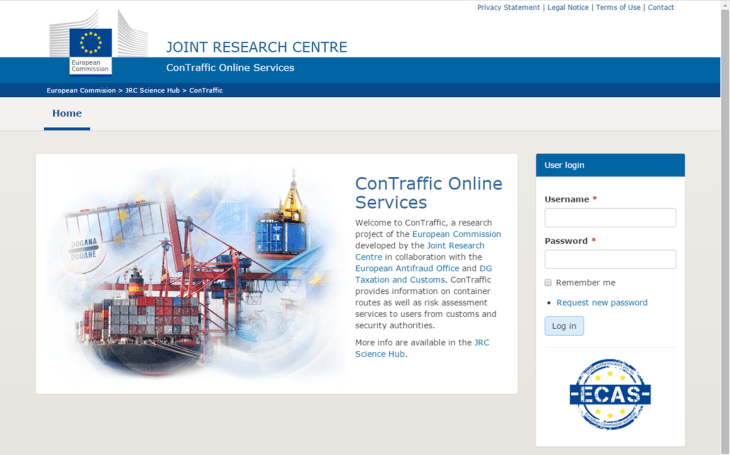
ConTraffic HomepageA new regulation adopted by the European Parliament and the Council will allow customs to access information to track the origins and routes of cargo containers arriving in the EU to support the fight against customs fraud both at EU and national level. The Joint Research Centre (JRC) has been instrumental in the conception and adoption of this legislation as it provided the scientific evidence on the importance of analysing the electronic records on cargo container traffic.

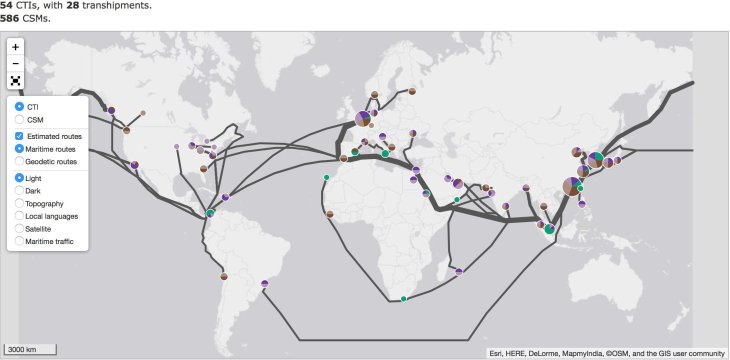
The EU customs authorities have been long aware that information on the logistics and actual routes of cargo containers arriving in Europe is valuable for the fight against customs fraud. However, they had very limited ways to obtain such information and no means to systematically analyse cargo container traffic both for fraud investigations as well as for risk analysis. On the other hand, the ocean carriers that transport the cargo containers, as well as their partners and clients, have easy on-line access to the so-called Container Status Messages (CSM): electronic records which describe the logistics and the routes followed by cargo containers.

jrc-cargo-container-routes-world-mapIn collaboration with the European Anti-Fraud Office (OLAF), the JRC has worked extensively on how to exploit CSM data for customs anti-fraud purposes. The JRC proposed techniques, developed the necessary technology, and ran long-term experiments involving hundreds of EU customs officers to validate the usefulness of using CSM data. The results of this research led the Commission to bring forward a legislative proposal that would enable Member States and OLAF to systematically use CSM data for these anti-fraud purposes. It also served to convince Member States of the value of the proposed provisions.

The financial gains from the avoidance of duties, taxes, rates and quantitative limits constitute an incentive to commit fraud and allow the capacity to properly investigate in cases, such as mis-declaration of the origin of imported goods. The information extracted from the CSM data can facilitate the investigation of some types of false origin-declarations. With the new legislation an importer will no longer be able to declare – without raising suspicions – country X as dispatch/origin of goods if these were transported in a cargo container that started in country Z (as indicated by the CSM data).

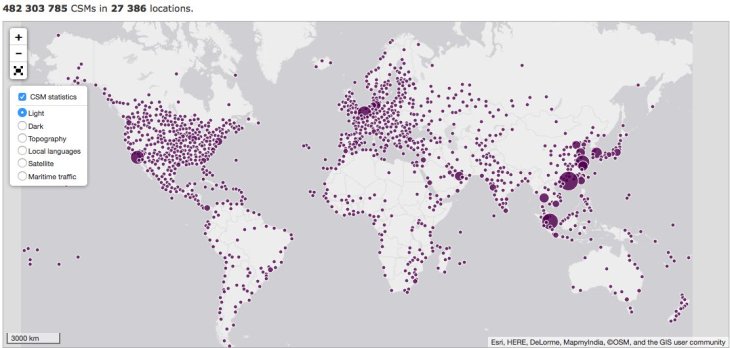
jrc-csm-dataset-world-map (1)The technologies, know-how and experience in handling CSM data, developed by the JRC through its experimental ConTraffic platform, will be used by OLAF to set up the system needed to implement this new legislation applicable as from 1 September 2016. The JRC will continue to analyse large datasets of CSM records (hundreds of millions per year) as these are expected to be made available through the new legislation and will continue to support not only this new regulation but to exploit the further uses of this data notably for security and safety and real-time operations. Its focus will be on data mining, new automated analysis techniques and domain-specific visual analytics methods. Source and Images: EU Commission

Event – Role of the Private Sector in Support of the Trade Facilitation Agreement

international-trade1The role of the private sector in the implementation of the World Trade Organization’s (WTO) Trade Facilitation Agreement (TFA) will be the focus of the 2015 edition of the Global Facilitation Partnership for Transportation and Trade (GFP) meeting. With the world’s customs administrations currently identifying their respective TFA  implementation commitments and setting up National Trade Facilitation Committees, trade and logistics operators can learn how they can participate in such initiatives by attending these sessions.

The GFP meeting will be held at Palais des Nations, Geneva, on 22 April, and will be divided into three thematic sessions.

The first session, ‘Governments’ Priorities: Strategies for Fostering Private Sector Participation in the TFA Implementation Process’ will look at how governments are planning to implement the TFA.

It will focus on how the private sector is consulted and how an effective participation of the private sector can be facilitated to implement the Agreement.

The second session, ‘Priorities, Perspectives, and Expectations from the Private Sector on TFA Implementation’ will assess how the private sector – including large corporates and small and medium-sized enterprises – view TFA implementation. It will look at the potential benefits from a private-sector perspective, and how the sector can contribute to national and international initiatives to implement the agreement.

The third session, ‘International Organizations’ Co-ordination and Partnership for Supporting TFA Implementation’, will provide an opportunity to share information and experiences on how the TFA can be implemented with public-private partnerships in mind, as how national trade facilitation committees can better support this process.

ITC invites all interested stakeholders to join the GFP meeting at the Palais des Nations on 22 April from 9:00. Click here for link to online registration.

Source: International Trade Centre (Geneva)

New Philippines Customs Chief Cracks Down on Corruption

To fix the Bureau of Customs, President Benigno S. Aquino III needed a numbers guy, someone who could make sense of the thousands of shipments and billions of pesos passing daily through the Philippines’ ports. He turned to John P. Sevilla. Three months after taking over as commissioner in December, Mr. Sevilla told The Wall Street Journal he had been “shocked” by the Bureau’s failure to analyze the rich data it received, information that held vital clues to its endemic corruption problems.

“I’m amazed that nobody bothered to put the data together until about a month ago,” Mr. Sevilla said. “But we found out that we open up less than 1% of [shipping] containers, but of the containers that we open, 90% have problems.”

He was also incredulous that Customs lacked a single reference source to help examiners make complex calculations about duties and fees incurred by traders. One is now being compiled, Mr. Sevilla said, “to make it easier for people to do their jobs…so that they have no excuse” for undercharging importers, a common practice rewarded with illegal payments.

Customs is tasked with collecting revenue at the nation’s 17 major and 43 minor ports. But it has a history of missing targets: It pulled in 304.5 billion pesos ($6.8 billion) in 2013 — over a fifth of all government revenue, but still 35 billion shy of its goal. The under-invoicing of traded goods has cost the country $23 billion in lost tax revenue since 1990, according to a February report by Global Financial Integrity, a U.S. research firm. The Aquino administration’s keynote policy of improving governance thus made Customs a prime target for reform. A far-reaching overhaul was ordered last October, and Mr. Sevilla, a former finance undersecretary, was parachuted in soon after.

Before entering government in 2006, Mr. Sevilla held directorships at investment bank Goldman Sachs and ratings agency Standard & Poor’s, having earned degrees at Cornell and Princeton. His boss, Finance Secretary Cesar Purisima, hailed him as the right person to untangle the mess, “someone who is results-oriented.”

Not everyone was convinced: In January, Senate Minority Leader Juan Ponce Enrile said Mr. Sevilla was “in the dark” about how turn Customs around. Undeterred, the studious-looking commissioner has spent the last three months poring over reams of customs data in which the dealings of smugglers and corrupt officials have long lain hidden.

All import-export transactions were now being published online for public scrutiny, Mr. Sevilla said, “I think we’ve turned from being the most secretive government agency to being by far the most transparent.”

At the Port of Manila, one of three ports in the capital, importers and brokers crowded around glass service windows, an innovation from before Mr. Sevilla’s time designed to block access to officials and make them harder to bribe. Inside, on computers surrounded by mountains of paperwork in what remains a semi-automated operation, customs examiners placed their electronic signature on each shipment after calculating the requisite duties and fees.

The electronic signature system also predates Mr. Sevilla. The difference now, he said, is that he is actively policing it, cross-referencing signatures against undervalued shipments, and punishing the officials responsible. He said the threat of being caught was critical when front-line staff are offered bribes equivalent to their monthly salaries “a couple of times a day.”

Likewise, the credible threat that your container might be physically inspected is the best deterrent against false import declaration, Mr. Sevilla argued. But with 18,000 containers piled up at Manila International Container Port alone, the challenge is to open the right ones.

The Bureau has 3,600 staff, but aims to hire nearly 3,000 more, partly to increase the inspection rate. Around a fifth of shipments are flagged for further examination. Some of these are X-rayed and, if necessary, physically inspected.

Mr. Sevilla said he is seeking an extra 250 million pesos for more inspections after figuring out that Customs collects an average of 125,000 pesos per opened container, against a cost of 10,000 pesos for conducting the inspection — making the process “a no-brainer.”

The Bureau also regularly auctions off seized items to further boost revenues. At one such auction in mid-February, buyers snapped up everything from a smuggled Harley Davidson to batches of animal feed. Other illegal shipments are sent straight back to their point of origin, such as the 50 containers of rotting garbage — declared as “recyclable plastic” -from Canada last month.

The new regime is already producing results, Mr. Sevilla said, citing a 19.3% year-over-year increase in collections to 81.3 billion pesos in November to January. Further improvements will be needed: Customs has been tasked with collecting 408.1 billion pesos this year, far more than it has ever managed before. The true test of the Bureau’s progress under Mr. Sevilla will lie, fittingly, in the numbers. Source: The Wall Street Journal

Information gathering by revenue authorities – What about the cost?

The powers of the South African Revenue Service (SARS) to gather information were extended significantly in Chapters 4 and 5 of the Tax Administration Act, No 28 of 2011 (TAA) that took effect on 1 October 2012.

Greater powers were deemed necessary because “… too many requests for information by SARS result in protracted debates as to SARS’s entitlement to certain information.” (SARS Short Guide to the TAA, at p23)

Clearly information is central to the SARS business model: “By increasing and integrating data from multiple sources, SARS will increasingly be able to gain a complete economic understanding of the taxpayer and trader across all tax types and all areas of economic activity.” (SARS Strategic Plan 2013/14 – 2017/18, at p25) Information-gathering under the applicable TAA provisions is a costly exercise for SARS, taxpayers (both corporate and individuals) as well as for advisers. The cost-aspect is usually not addressed in legislation empowering information-gathering by revenue authorities.

Despite this there is a strong need for ‘cost-consciousness’ relating to information requests – simply because of the compliance cost impact.

The SARS Strategic Plan specifically states, in order to achieve the objectives of the National Development Plan, SARS will promote effective government by “Reducing the cost of compliance and the cost of doing business in South Africa” (at p13). Hence, one of SARS’s future initiatives would be to “Continue to implement the principles of a cooperative compliance approach to reduce compliance costs…” (at p34). SARS also acknowledges under “Small business and Cost of Compliance” that the “relatively high cost of compliance” might be a reason for non-compliance by small business (see at p43).

So how does a revenue authority inculcate a culture of “cost-consciousness” when it comes to information-requests by its officials? The Australian Tax Office (ATO) has gone down this road in its Access and Information Gathering Manual: Said Manual explains the law relating to the ATO’s statutory information-gathering powers and indicates how ATO officials should exercise such powers. [The Manual is available on the ATO website].

 The following reflects the ATO’s philosophy on information gathering (as communicated by the then Commissioner): “These guidelines are to assist my staff and ensure we apply a professional and, as far as possible, open approach to the exercise of our access and notice powers. These powers must be used with the utmost care and we aim only to fulfil my obligations under the legislation. A consultative approach to obtaining the information should be the norm. Consultation generally involves advance notice and flexibility in meeting reasonable requests.”

It is, furthermore, important to the ATO that costs associated with information-gathering should be curtailed: “In deciding whether to seek access, and in determining how much detail to seek, officers should always try to minimise the cost to the recipient of meeting access requests. Particularly in cases of seeking bulk data, request should be made only if there is a reasonable chance that there will be a substantial compliance impact relative to cost. On occasions sampling may be required to determine the benefits of obtaining bulk data. Also where bulk data is requested, officers should try to fit in with the custodian’s circumstances (for example seeking information from the custodian’s IT systems at times when it will not disrupt operations) and recognise the time and cost of obtaining such information.” (emphasis added)

The ATO then provides practical guidance to its officials considering an information request, alternatively where they intend accessing premises to obtain information/documentation. The ATO official is instructed to ask certain questions before requesting the information/accessing any premises. [The following is a summary of the guidance from the ATO Manual]:

For what purpose and under which law do you require information?

The access provisions can only be used for the purposes of the Act. You must be clear on your reasons for seeking particular documents. You should be able to show a clear connection between the use of the access power and one of the purposes of the Acts. Like all statutory powers, you must exercise the right of access in good faith for the purposes for which it was conferred.

What information do you already have?

You should ensure that the taxpayer or the third party has not already provided the documents to the ATO, eg in support of a request for a private ruling.

What information do you need?

You should establish, as far as possible, what particular books, documents and papers are needed and whether the information they might contain is necessary for the purposes for which you are seeking access. Is it likely that the information will be located at the premises you propose to access or from the person you propose to give a notice to?

Can you obtain relevant information from another source?

Before using access powers, be reasonably sure that you are approaching the right person. If the information is available from more than one source, you should consider the cost to each party and who might be the appropriate party to bear the cost. In the majority of cases, tax officers should try and obtain the information and documents from the taxpayer prior to contacting third parties, such as advisers and banks. The cost to the ATO, and whether the exercise if cost-effective, should also be considered.

Are you authorised to seek access?

You must be properly authorised to exercise access powers.

Can you obtain access to the relevant information on an informal/cooperative basis?

If you think you can obtain the information by making telephone contact, sending an informal letter or searching other sources, the access powers should not be used. However, it is not necessary for all other avenues of enquiry to have been exhausted or to have used the notice powers before resorting to the access powers. You should be able to conclude that the occasion is one that reasonably requires you to enter premises and inspect documents.

Is it necessary to exercise formal access powers?

In circumstances in which privacy or confidentiality require that the formal access powers are used, consultation beforehand should encourage cooperation. Consultative procedures may include: giving the custodian reasonable notice of your intention to obtain access; liaising with the custodian about a convenient time to seek access, taking into account the workflow demands on the custodian; giving adequate information to ensure that custodians are fully aware of their rights and obligations in relation to access requests and so on.

Minister Gordhan, in his foreword to the SARS Strategic Plan (at p6), anticipates that over the next four years “… the demands on revenue collection growth will be between 10% and 11% per annum”. For example, SARS would need to collect R1.09 trillion in revenue by 2015/16. To achieve those kinds of revenue targets probably means increasing levels of information-gathering. Seeking to reduce the cost of compliance requires that locally ‘cost-consciousness’ must become part of the information-gathering equation – and that a way is found to limit, and hopefully reduce, the costs associated with information-gathering under the TAA. Source: Written by Johan van der Walt, Director, Tax, Cliffe Dekker Hofmeyr – sourced from www.polity.org.

CBP Agrees to Update Risk Assessments at Foreign Ports

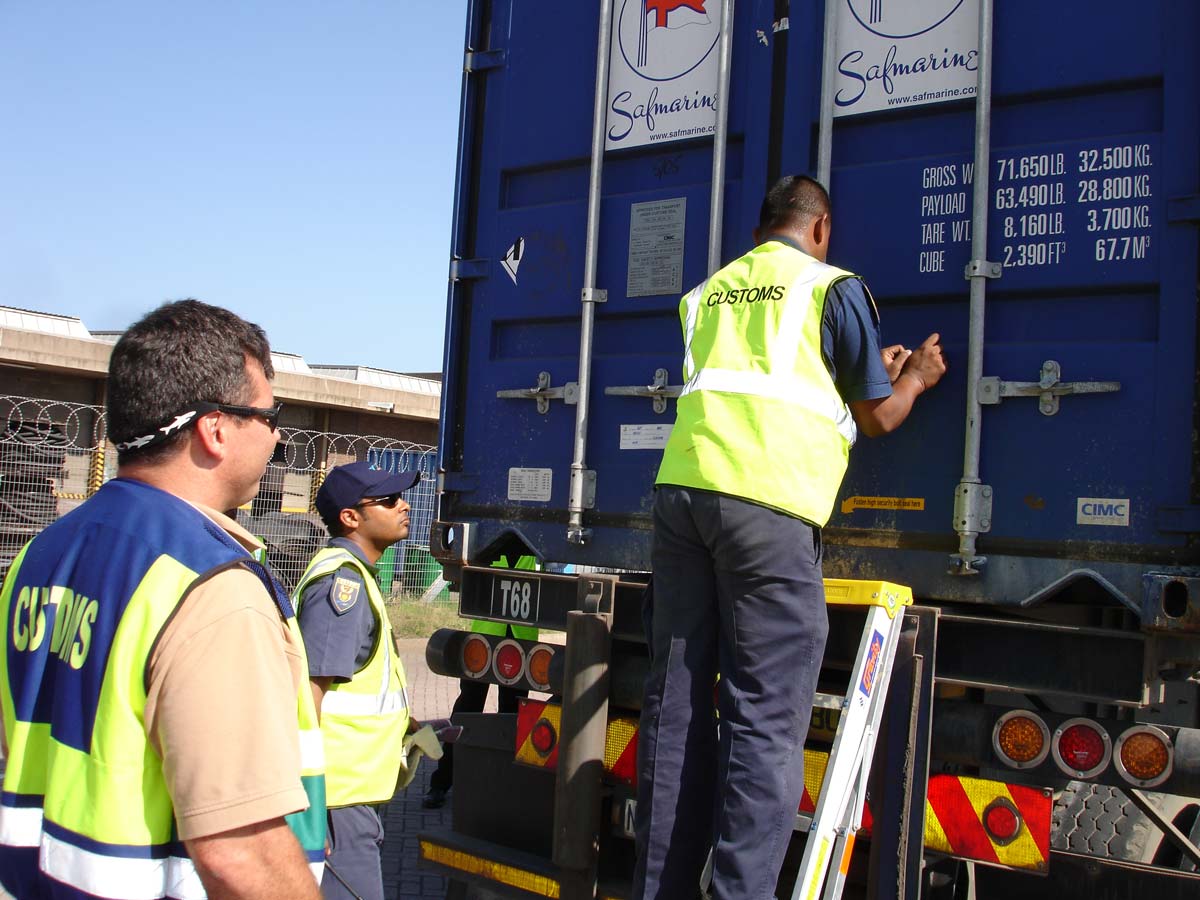
US Customs CSI Inspection in the Port of Durban, South Africa

US Customs CSI Inspection in the Port of Durban, South Africa

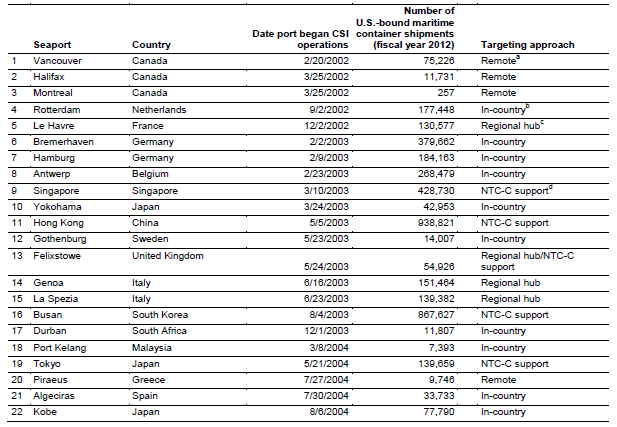
Customs and Border Protection (CBP) has not assessed risks at select foreign ports with U.S.-bound shipments since 2005, part of a string of failures that has left key ports without a CBP presence, the Government Accountability Office says. (Hmm, never mind the impact caused to Customs administration in the host countries……)

In examining CBP’s Container Security Initiative program, GAO found that the agency developed a model for ranking additional seaports according to risk in 2009, but never implemented it because of budget cuts, according to the report.

GAO applied that risk model to 2012 cargo shipment data and found that the CSI program had no presence at about half the ports CSP found high risk. Meanwhile, 20 percent of existing CSI program ports were at lower-risk locations, according to the findings (.pdf).

Although GAO acknowledged host countries are not always willing to accommodate a CSI presence, and that removal of a CSI presence can negatively affect diplomatic relations, auditors said periodic assessments of cargo shipped from foreign ports could help CBP better guard against terror-related shipments.

Although there have been no known incidents of cargo containers being used to transport WMD, the maritime supply chain remains vulnerable to attacks. We recognize that it may not be possible to include all of the higher-risk ports in CSI because CSI requires the cooperation of sovereign foreign governments.

To better ensure the effectiveness of the CSI program, GAO recommends that the Secretary of Homeland Security direct the Commissioner of U.S. Customs and Border Protection to periodically assess the supply chain security risks from all foreign ports that ship cargo to the United States and use the results of these risk assessments to (1) inform any future expansion of CSI to additional locations and (2) determine whether changes need to be made to existing CSI ports and make adjustments as appropriate and feasible.

Such assessments “would help ensure that CBP is allocating its resources to provide the greatest possible coverage of high-risk cargo to best mitigate the risk of importing weapons of mass destruction or other terrorist contraband into the United States through the maritime supply chain,” GAO said.

The Department of Homeland Security (DHS) concurred with the recommendation and said CBP would complete its first assessment by Aug. 12, 2014. To access or download the GAO Report on CSI, Click Here! Source: US Government Accounting Office

Foreign Ports That CBP Coordinates with Regarding Maritime Container Shipment Examinations, as of July 2013

Foreign Ports That CBP Coordinates with Regarding Maritime Container Shipment Examinations, as of July 2013 (Table: GAO)


Cracking Down on Cheating by Foreign Companies

Customs LawThe following article and its ensuing piece of legislation would seem to suggest that current Customs’ automated risk management is not doing its job, or at least is not as successful as authorities would often have one believe. Will this legislation signal a return to good old-fashioned ‘manual’ customs investigative work based on human intelligence? What the Congressman appears to overlook is that it is the US importers who are liable for correct clearance of foreign supplied goods. If CTPAT (and any other AEO scheme for that matter) have any worth, then surely the USCBP would look at de-accrediting US importers who fall foul of its import compliance levels? For many, the question remains – how successful (or even relevant) are the post 9/11 Customs Security measures? Besides creating significant expense budgets for Customs administrations, lucrative business opportunities for scientists, technology vendors, standards bodies, and of course consulting opportunities for the hundreds of audit firms and donor agencies – are the benefits, cost-savings and efficiencies in our current era of “Security” that visible? For many traders, all of this has been accepted as little more than the cost of doing and remaining in business. Period!

Congressman Dan Lipinski introduced legislation that will help American manufacturers grow their businesses and add jobs by cracking down on foreign companies that illegally avoid paying millions of dollars in customs duties. The Customs Training Enhancement Act (click on hyperlink to view the Bill) will facilitate the sharing of information between the private sector and U.S. Customs and Border Protection, enabling the government to do a better job of identifying schemes that cheat American taxpayers by importing foreign goods without paying duties.

The bill, which was folded into Democratic and Republican versions of more comprehensive Customs legislation in the previous Congress, further advances the goal of levelling the playing field so American businesses have a fairer shot against their foreign competitors.

“Blatant cheating by foreign firms has become more widespread at a time when American employers and workers are already at a serious disadvantage. This is not only bad for American business, but it hurts taxpayers by robbing the federal government of taxes it is rightfully owed,” Rep. Lipinski said. “The Customs Training Enhancement Act offers a common-sense approach by allowing impacted industries to  provide our Customs agents the critical intelligence they need to spot the cheaters.”

Since 2001, importers and exporters of goods into the United States have avoided paying $600 million in duties, according to the U.S. Government Accountability Office, which estimates that 90 percent of all transhipped or mislabelled items originated in China. Foreign companies have avoided duties by misclassifying and undervaluing products or by shipping goods from one country to another on their way to the United States in order to disguise the country of origin.

Under Rep. Lipinski’s bill, Customs and Border Protection would be required to seek out companies and trade groups that have information that can identify misrepresented shipments. That information, in turn, would be shared directly from these industry experts to Customs agents working on the front lines.

The Customs Training Enhancement Act is modelled on a successful program forged between the steel industry and Customs and Border Protection in which company and industry officials have taught Customs agents how to spot products that have been deliberately mislabelled.

“The steel industry has shown us a public-private partnership that saves taxpayers millions of dollars while costing the federal government very few, if any, resources,” Lipinski said. “We need to expand this program and fight back against the lying and cheating by foreign companies that are hurting American taxpayers, businesses, and workers. The Customs Training Enhancement Act is an important first step.” Source: www.lipinski.house.gov

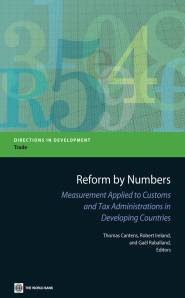
Reform by Numbers – a reference work on Customs reform

The word ‘reform’ is a constant in the daily life of a customs officer. No customs administration among the 177 members of the World Customs Organization has not had a reform program in progress or planned. This is ultimately quite normal.A new World Bank publication “Reform by Numbers” will no doubt appeal to customs and tax reform experts and change agents.

It was written in the context of new and innovative policies for customs and tax administration reform. Eight chapters describe how measurement and various quantification techniques may be used to fight against corruption, improve cross-border celerity, boost revenue collection, and optimize the use of public resources. More than presenting ‘best practices’ and due to the association of academics and practitioners, the case studies explore the conditions under which measurement has been introduced and the effects on the administrative structure, and its relations with the political authority and the users. By analyzing the introduction of measurement to counter corruption and improve revenue collection in Cameroon, two chapters describe to which extent the professional culture has changed and what effects have been noted or not on the public accountability of fiscal administrations. Two other chapters present experiments of uses of quantification to develop risk analysis in Cameroon and Senegal.

By using mirror analysis on the one hand and data mining on the other hand, these two examples highlight the importance of automated customs clearance systems which collect daily extensive data on users, commodities flows and officials. One chapter develops the idea of measuring smuggling to improve the use of human and material resources in Algeria and nurture the questioning on the adaptation of a legal framework to the social context of populations living near borders. Finally, two examples of measurement policies, in France and in South Korea, enlighten the diversity of measurement, the specificities of developing countries and the convergences between developing and developed countries on common stakes such as trade facilitation and better use of public funds.

The “gaming effect” is well known in literature about performance measurement and contracts performance, because there is a risk of reduced performance where targets do not apply, which is detrimental to the overall reform. It is crucial to keep in mind that, by themselves, indicators “provide an incomplete and inaccurate picture” and therefore cannot wholly capture the reality on the ground. Measurement indicators must be carefully chosen to ensure that knowledge is being uncovered.

Measurement, for purposes of reform, should not be “copied and pasted” from one country to another. Due consideration must be given to the varying aims of the customs service and the specific political, social, economic, and administrative conditions in the country.

Measurement applied to experimentation is also about how donors, experts, and national administrations work together. On the one hand, national administrations in developing countries ask for technical assistance, standards, and expertise that are based on experiences of developing countries and use experts from such countries.These requests encourage the dissemination of such models. On the other hand, reforms of customs or tax administrations are represented as semi-failures in terms of the initial expected outcomes set by donors and politicians – usually the end of a reform is the time when donors and local administrations become aware of the gaps of their own representations of success.

While scientific and academic in approach, lets hope it means more than just miserable experimentation in target countries.

The book is available for free reading online – www.scribd.com or you can purchase from amazon.com.

Nigerian Customs Boss unveils new scanners

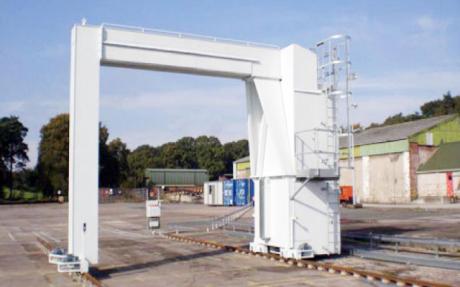
The Comptroller General, Nigerian Customs Service (NCS), Alhaji Inde Dikko Abdullahi, said that ports users would henceforth complete their business transactions within 24 hours. Speaking at the formal unveiling of the gantry scanner procured by Societe Generele Surveillance (SGS) Nigeria at Onne, Eleme Local Government Area, Rivers State, he said the new scanning facilities would boost the 48-hour target for clearance of goods at the ports, noting that it would complement government’s efforts toward reducing the cost of doing business at the ports.

Special training for a select team of 80 NCS officers has been concluded. The team is expected to take over services and operations in the Destination Inspection scheme as from January 1, 2013. The training covered all aspects of the DI activities being handled by SGS for NCS with emphasis on actual risk analysis and processing of the importer’s final document resulting in classification and valuation opinion.

Managing Director of SGS Scanning Nigeria Limited, Mr. Nigel Balchin, in his address at the occasion, said the mobile cargo scanners were capable of scanning about 34 trucks per hour as against 16 per hour by the fixed cargo scanners. Each had double tunnel that enabled it scan two trucks at the same time with equal image quality as the fixed scanner. “At SGS we are committed to quality service delivery. We are very glad to be part of this success story and we look forward to Nigeria Customs Service taking charge of the DI programme. The knowledge you have acquired is for the benefit of Nigeria Customs Service and ultimately that of the Nigerian economy. We wish you the best in your future endeavours”, he said.

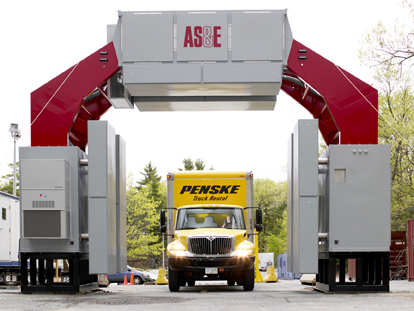
The image quality of the relocatable gantry scanners is on par with a fixed scanner. Trucks remain stationary during scanning (the scanner moves on rails) unlike a fixed scanner where the truck is pulled through the scanner on a conveyor that’s more vulnerable to maintenance issues. The scanner is mounted above ground unlike a fixed scanner where one of the detectors is four metres underground. In addition, a relocatable gantry scanner can be re-deployed to an alternative site, in a relatively short time, in case of any expansion or new development.

SGS is one of the service providers contracted by the Federal Government to assist the NCS facilitate trade through risk management and use of non-intrusive inspection (x-ray cargo scanning) of imports routed through the nation’s air and sea ports as well as approved borders. The company is currently providing cargo scanning services in Bahrain, Cameroon, Haiti, Madagascar, Uruguay and has completed provision of scanning services in Gambia, Kosovo and Mexico.  Source: Leadership.ng

Is South Africa being screwed by China?

In recent days there’s been mutterings amongst several business commentators concerning the state of the South African manufacturing sector and its inability to compete in the local economy in the face of ‘so-called’ cheap imports. For once I heard some common sense instead of the usual WTO/economist waffle which normally just confuses people instead of shedding light on the inherent problems. What the Business Times article below suggests is that our prevailing job plight is self-induced and should not be blamed entirely on rogue elements alone. Under valuation and mis-declaration have and always will pose a challenge to any country. The blame has been placed on Customs not doing its job; yet, the problem appears to lie at the feet of policy makers who have made foolish decisions for which the country as whole now pays the price. 

The trouble began soon after 1994, when then Trade and Industry Minister, anxious to prove to the then rich and powerful, and sceptical, West what lovers of democracy and free markets they were, removed tariff protection on cheap imports against a considerable body of expert advice. And 12 years before we needed to, because the World Trade Organisation‘s predecessor, GATT, had given South Africa 12 years to modernise its manufacturing, improve its skills and prepare itself before lowering import tariffs.

At the time, Trade and Industry Minister and the government thought South Africa did not need a grace period. Leslie Boyd, then head of the Anglo-American industrial division, warned of the devastating consequences but to no avail. “They thought if they took the crutches away we’d become a free market economy and we’d be competitive,” says Stewart Jennings, chairman of the Manufacturing Circle which represents thousands of manufacturers in SA. “It was the most ridiculous thing you could ever imagine. Those of us in business know there is no free market in the world. Every country protects itself. We don’t. Here’s an economy without skills that just throws open the tariffs. We’re the country that’s whiter than white in terms of the WTO. Everybody else just abuses us.”

Business consultant Moeletsi Mbeki opines “[government] is too ideologically orientated, it operates from ideology rather than from practical expertise. This motivates our relationship with China. The Chinese can do no wrong.”

One of the worst mistakes they made, he believes, was to sign an agreement that gave the Chinese market economy status which it did not and does not deserve. The talk was that SA agreed to do this as compensation for imposing a three-year quota on Chinese textile imports. The effect on SA’s manufacturing sector has been devastating. “As a consequence of that agreement it is virtually impossible for us to get countervailing duties into China through ITAC [the International Trade Administration Commission which used to fall under the Department of Trade and Industry but is now under Ebrahim Patel‘s Department of Economic Development],” says Stewart Jennings. “We’ve battled to get dumping duties or safeguards against China. Most of the applications that have gone to ITAC have been kicked into touch.”

First, China starts with a currency that is 30% undervalued. It manipulates it, so any goods it exports to SA are 30% cheaper than they should be. On top of that there are all sorts of incentives for Chinese exporters. And then, as Jennings says, attempts by local manufacturers to defend themselves by applying for countervailing duties more often than not go nowhere.

Iraj Abedian of Pan African Investment and Research says the short answer to the question is yes, we are being screwed. “Not because the Chinese have been smart but because we’ve been snoozing and naïve.”

SA was so flattered to be asked to join the BRIC (Brazil, Russia, India, China) club of developing economies that it did not drive a hard enough bargain. “We were romanticising our relationship with China and celebrating the fact that China was inviting us to join BRIC. We took it as a form of political honeymoon without recognising its effect on manufacturing, without assessing our counter-strategy for safeguarding national interests in the form of jobs and tax revenue.” China needed SA to join BRIC at least as much as SA itself wanted to join, but SA failed to capitalise on this.

Executive director of the Manufacturing Circle, Coenraad Bezuidenhout, who has observed the effect at close quarters, thinks part of it is that “our guys find the prospect of dealing with China daunting. They feel we need China as a market for our raw materials more than China needs us.” He thinks this attitude reflects a worrying lack of professionalism on the part of those who are paid to battle for SA’s interests. “We should be leveraging our position with regard to our minerals and our access to African markets far more than we do when we deal with China.”  Source: Business Times

Optimising a layered port security system

Today, there are many different security inspection technologies available. These technologies may be combined in an attempt to achieve a better result. How the systems are combined strongly affects the results achieved, and different applications may require different combinations. This paper will examine several examples.There are three major applications for screening technology today: Revenue enhancement, contraband detection, and nuclear weapons of mass destruction detection (WMD). Several technologies that can be used are: Portal monitors, gamma ray imagers, high-energy X-ray imagers, and neutron systems. Matching the application and the technology correctly is critical. Port Technology International has published a paper on port security optimization, which addresses the various technologies and approaches towards optimisation of threats, namely revenue, weapons of mass destruction, and contraband highlighting the need for layered technology inspection systems to reduce false positives and enhance enforcement detection capabilities. Read the paper here! Source: Porttechnology.org

WCO News – 60 year Anniversary Edition

The Organization is celebrating its 60th anniversary, an occasion which gives the global Customs community the chance to reflect on where the WCO began, where it is now, and where it hopes to go in the future. This issue highlights some of the WCO’s milestones past and present, we take a brief look at the WCO’s historical beginnings and subsequent development, follow one man’s forty year Customs journey, look at the history of containerization: the box that changed the world, and even step back to 1969 when the Apollo 11 touched down on the surface of the moon. In this dossier, not only does the WCO look back with pride, but also looks forward with optimism, conscious of the fact that the WCO has served the global Customs community with dedication for sixty years, and will continue doing so to ensure that Customs administrations remain well-positioned to deliver effective and efficient services around the world. Also in this issue –

  • Doorless containers now a reality,
  • US/EU mutual recognition programme,
  • New guidelines included in WCO Revenue Package,
  • Globally Networked Customs,
  • GS1 and the WCO,
  • Algeria Customs and performance management,
  • Georgia’s success in rooting out corruption,
  • Hong Kong moves forward with its e-Lock plans.

Source: http://www.wcoomd.org

Revisiting the national transit procedure – Part 1

FTW Online last week ran an interesting article in response to a proposed change in Customs’ policy concerning the national transit movement of containers from coastal ports to inland container terminals and depots. In February 2011, I ran an article Customs Bill – Poser for Cargo Carriers, Handlers and Reporters alluding to some of the challenges posed by this approach. The following article goes a step further, providing a trade reaction which prompts a valid question concerning the practicality and viability of the proposed change given logistical concerns. I believe that there is sufficient merit in the issues being raised which must prompt closer collaboration between the South African Revenue Service and trade entities. For now it is sufficient to present the context of the argument – for which purpose the full text of the FTW article is presented below. In Part 2, I will follow-up with SARS’ response (published in this week’s edition of the FTW) and elaborate on both view points; as well as consider the matter  on ‘raw’ analysis of the ‘cargo’ and ‘goods declaration’ elements which influence this matter. Furthermore, one needs to consider in more detail what the Revised Kyoto Convention has to say on the matter, as well as how other global agencies are dealing and treating the matter of ‘security versus facilitation’.

Customs’ determination to have all goods cleared at the coast does not bode well for the South African trade environment, Pat Corbin, past president of the Johannesburg Chamber of Commerce and Industry (JCCI), said. Speaking at the Transport forum in Johannesburg Corbin said the Customs Bills have been on the cards for several years now and while consensus had been reached on most issues in the Nedlac process, the determination of Customs to not allow for any clearing to take place at inland ports will only add more pressure to the already overburdened ports in the country. “Customs maintains that despite the changes they propose it will be business as usual. We disagree. We have severe reservations about their intention to terminate vessel manifests at the coastal ports in all cases and have called for further research to be undertaken in this regard,” said Corbin. “By terminating the manifest at the coast it has severe ramifications for moving goods from road to rail. International experience has shown when you have an inland port and you have an adequate rail service where the vessel manifest only terminates at the inland port, up to 80% of the boxes for inland regions are put on rail while only 12% land on rail if the manifest terminates at the coastal port.” Corbin said the congestion at both the port and on the road would continue and have an adverse impact on quick trade flows. “It also raises issues around the levels of custom security and control at inland ports and then the general implications on the modernisation project.” According to Corbin, government’s continued response has been that no provision exists for inland ports and that goods must be cleared at the first port of entry. “They maintain that it is about controlling goods moving across our borders and thus the requirement that all goods must be cleared at the first port of entry. The security of the supply chain plays an important role to avoid diversion or smuggling of goods,” said Corbin. “Government says that the policy change will not clog up the ports or prohibit the seamless movement of trade. Labour organizations and unions seem to agree with them.” But, Corbin said, the Johannesburg Chamber of Commerce differs and is worried about the ramifications of this dramatic change to the 35-year-old option of clearing goods at an inland port or terminal. “With this policy change all containers will have to be reconsigned after not only Customs clearance on copy documents but also critically, completion of shipping lines’ requirements ie, payment of freight, original bill of lading presentation and receiving delivery instructions prior to their issuing a delivery order.” Corbin said the issue had been addressed directly with Transnet CEO Brian Molefe on two occasions, but that he had said he accepted Customs’ assurance that nothing would change and the boxes would still be able to move seamlessly once cleared. “It is not understood that the manifest will terminate at the coast where all boxes will dwell until they can be reconsigned,” said Corbin. Source: FTW Online – “New Customs Bill ruling will put pressure on port efficiency.”

South Africa – Cyber thunder in the clouds

The following article is very pertinent to any organisation or group considering cloud computing. Soft-marketing tends to delude would-be users into believing they will have full control over their data, and as such, is fully secure. Even in the international Customs and Border Management space there is lots of talk on this subject, yet very little substance. Unfortunately, organisations and individuals are slaves to the technology they use which fashions not only their work ethic but attitudes as well. It is no longer true that technology is a ‘tool’. More time and money is spent these days on technology choice than on training and education. In fact technology is so important it influences law-making and business operations, rendering human discretion obsolete in many instances. Therefore it is imperative that organisations involve business and legal experts in their systems development. 

The recent spate of hackings and electronic security breaches serves to highlight the endemic threat and associated cost of cyber crime. Globally, organisations are forced to reconsider their cyber security measures as cyber criminals become more audacious and technologically innovative. Crimes can take place in both the physical and the electronic medium, with the possibility of technology infrastructure being used as both a “subject” and an “object” of a crime.

The criminal justice system faces a number of challenges in the successful prosecution of cyber crimes. While the Electronic Communications and Transactions Act of 2002 does create a framework for criminalising cyber crimes, including hacking, it does not provide any concrete preventative measures to combat cyber crime. The technical and often remote nature of cyber crimes, including multi-jurisdictional issues where cyber criminals are operating abroad, often prevents prosecutors from being able to present viable cases and bring cyber criminals to book.

Fortunately, the South African government has acknowledged that more proactive measures are required to address the scourge of cyber crime. Cabinet has recently approved a National Cyber Security Policy published by the Department of Communication. The policy creates, among other things, a platform for the creation of a number of structures that would be responsible for analysing and responding to the threat of cyber crime with the ultimate objective of mitigating the effects of cyber crime in South Africa. The State Security Agency has been tasked with responsibility and accountability for the implementation of cyber security measures. It is hoped that this policy and the measures it intends to implement results in the prevalence of cyber crime in South Africa being effectively addressed and countered. Organisations should, in addition to any measures being taken by government, continue to carefully assess their cyber security measures proactively, including by implementing robust systems, particularly in instances where personal data is processed (which includes the collection, recording, transferring or storing of such personal information). The Protection of Personal Information Bill requires the implementation of “appropriate” security safeguards where an individual’s personal information is processed. What will be considered appropriate will need to be determined on a case by case basis and with reference to steps taken in foreign jurisdictions, which may provide guidance in interpreting this requirement.

On account of the fact that there is no way to precisely document the far reaching effects of cyber crime, individuals, organisations and government must ensure that a more cautious and prudent approach is adopted to manage security in any electronic environment. Source: SAPA