Supply Chain Foresight – a Perspective on BRICS and the South African Supply Chain

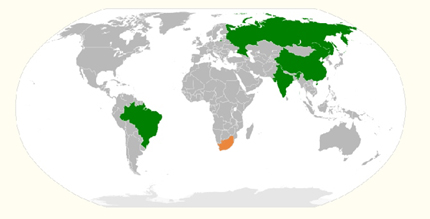
To reap the benefits of its recent membership of BRICS, South African businesses are looking at gaining a competitive edge through achieving global-standard supply chain performance, according to Supply Chain Junction, Manhattan Associates' Geo Partner in South Africa.

To reap the benefits of its recent membership of BRICS, South African businesses are looking at gaining a competitive edge through achieving global-standard supply chain performance, according to Supply Chain Junction, Manhattan Associates‘ Geo Partner in South Africa.

To reap the benefits of its recent membership of BRICS, South African businesses are looking at gaining a competitive edge through achieving global-standard supply chain performance, reports Supply Chain Junction, Manhattan Associates’ Geo Partner in South Africa. Unlike many other countries, South Africa was cushioned from the full impact of the world financial crisis thanks to the strict pre-existing credit controls it had in place. There were some knock on affects from close trading economies but over the last 15 months South Africa has enjoyed a growth economy. The International Monetary Fund (IMF) say this group will account for 61 per cent of global growth in three years time.

While South Africa’s economy (£506.91bn GDP) is dwarfed by those of the original BRIC constituents, the country is seen as the gateway to the continent of Africa, which as a whole has an equivalent sized economy ($2,763bn GDP), a population of one billion and rich resources. This has all made it a valued investment region for China in particular.

However, there are many cultural, logistical and geographical challenges the further one travels North from South Africa towards the Sahara. As an example, while there is 24,487 km of rail track in South Africa, there is just 259 km in Uganda; there are 92 mobile phones per 100 people in South Africa but just two per 100 in Eritrea. However, there is a great deal of raw potential, especially in countries such as Angola and Nigeria.

Participation in BRICS will drive a new competitiveness for South Africa and a key factor will be developing world-class supply chain management. Unlike in Europe, the US and Australia, few supply chain directors in South Africa sit on the board, which makes it harder for them to demonstrate how effective management of the supply chain can deliver competitive advantage. But this is likely to change as companies realise that they must align their supply chain and business strategies. If the recession failed to drive home the need for this, then the presence of Chinese companies in Africa will create significant pressure to do so.

This was an observation of the 2011 Supply Chain Foresight survey, conducted by Frost & Sullivan, which annually samples the opinions of South African supply chain executives. It found that while over three quarters of the respondents feel that the supply chain and business strategies of their companies are aligned, less than a third felt that the supply chain and logistics operations are fully optimised. Businesses are looking at how to optimise their distribution networks through building new facilities, streamlining existing processes or collaboration between trading partners. This has seen a lot of current activity surrounding warehouse management systems, forecasting, planning, replenishment and collaboration technologies, in particular.

Two thirds of respondents are considering investment in technology to enable collaboration with service providers. With the recession claiming many key suppliers the environment is changing from one where major companies squeeze suppliers on cost to one where they adopt a more collaborative approach. Cost reduction was the focus of the past recession, but now the objective is to satisfy customer expectations and to deliver value. Just over half of respondents to the Supply Chain Foresight survey cited customer service as the top supply chain objective. Reducing waste and improving efficiency in the supply chain are the perennial shorter term challenges with companies looking for better forecasting and planning tools to bring down inventory and shorten lean times. One interesting aspect of South African supply chain technology is the large number of in-house designed legacy systems, which is a consequence of the country’s isolation during the times of Apartheid. A propensity towards in-house designed systems remains today.

In terms of industry sectors, retail dominates but it remains firmly entrenched in the traditional channels. While some retailers have online retail websites, online and multi-channel is by no means a significant part of the current retail picture. Internet use is still quite low compared to other countries there are 4.42 million internet users in a population of 49 million and this figure is expected to remain low for some time yet. A further obstacle to the expansion of online sales is a high crime rate which leads to security issues in delivering goods to customers.

Wholesale distribution is quite small in size and complexity so the supply chain challenges tend not to be too complicated. There remain companies that feel they have been reasonably successful – being self-sufficient – and want to maintain that approach, along with a general tendency to look within, when it comes to benchmarking supply chains. However, a growing number of companies in South Africa recognise that there are other organizations across the globe doing similar things, but perhaps, a lot more efficiently.

Supply chain managers within these businesses are evolving a mindset focused on global best practice and the means of achieving it. These South African companies want to be best in their class. By building knowledge, benchmarking and improving against those benchmarks the win for this retailer is a supply chain that gives competitive advantage. As in other countries, companies looking to benefit from external expertise and a reduction in their capital costs will often outsource their logistics to third party logistics (3PL) operators. South Africa has numerous small local players and a handful of large lead logistics providers who tend to drive innovation. It is a small but highly competitive market. Logistics infrastructure and skills shortage in the supply chain continue to be huge issues in South Africa. The Supply Chain Foresight survey found that to deal with the skills shortage, in almost all areas companies either expose employees to new jobs through rotation, or development programs, or mentoring. These are generally in-house driven schemes. South Africa is an emerging market that is growing fast and offers a tremendous wealth of opportunities. In fact, the country has a great many successful businesses, and while many talk about becoming world class, many have already achieved it. Source: Supply Chain Junction

First BRICS Heads of Customs Meeting

Delegates who attended the first BRICS Customs Heads of Customs Meeting [SARS]

Delegates who attended the first BRICS Customs Heads of Customs Meeting [SARS]

At a meeting hosted by the Commissioner near Bela Bela, South Africa from 7 to 8 March 2013, delegations from the Customs Administrations of Brazil, Russia, India, China and South Africa (BRICS) met for the first time. The BRICS Customs administrations exchanged experience and ideas in a spirit of openness so as to identify areas for cooperation so that they can most effectively and efficiently facilitate legitimate trade and combat illicit trade and Customs fraud. From 27 to 28 March, South Africa will also host the BRICS Summit in Durban, to be attended by various Ministers and the BRICS Heads of State.

Key points of discussion, focus and future cooperation –

Customs cooperation
The Heads of Customs committed themselves to consolidating and building on the cooperation that has already been established so that they can collectively curb Customs offences, safeguard the international supply chain and achieve effective enforcement of Customs legislation, while facilitating legitimate trade,both among BRICS countries and also globally.

Capacity building
As part of their cooperation to build Customs capacity in relation to human resources, technologies and procedures,the administrations would look into various practical and innovative solutions and endeavour to share their resources, knowledge and best practices with each other.

Cooperation at multilateral forums
A BRICS Customs mechanism will be established, including attachés networks based in Brussels and other strategic places, to identify issues of common interest, develop common responses and ensure regular engagement and interaction, including before important multilateral meetings.

Customs Mutual Administrative Assistance and the Exchange of Customs Information
The administrations also agreed to ensure that there is an enabling legal basis between them to support intra-BRICS Customs mutual administrative assistance and the exchange of Customs information. Such assistance and exchange will assist in combating illicit trade and protecting revenues and societies.

Facilitation of legitimate trade between BRICS countries
To further facilitate trade and reduce the Customs administrative burden on both trade and the administrations themselves, the administrations will exchange information in various areas of common interest and concern, including on the simplification of Customs procedures and the use of modern technologies and techniques.

The administrations will also work towards possible solutions for achieving mutual recognition of Customs controls and of trader management programs aligned to the Authorised Economic Operator (AEO) concept of the World Customs Organization (WCO), establishing Customs interconnectivity and supporting the WCO’s work on developing the Globally Networked Customs (GNC) model.

Opportunities for enforcement cooperation will also be explored, including possible joint actions, information sharing and other enforcement assistance. The use of international instruments developed by the WCO, including Conventions, Recommendations, Decisions and Declarations that support Customs trade facilitation, compliance and enforcement will be actively promoted.

Governance issues
A Governance Framework aligned to the overall BRICS commitments will be established. An annual BRICS Customs Heads meeting has been proposed whose deliberations would be informed to other BRICS forums, including in particular the Summit. Such a BRICS Customs Heads Meeting would be supported by a Customs working group under the guidance of the BRICS Heads of Customs. Source: SARS

Debate or Mitigate?

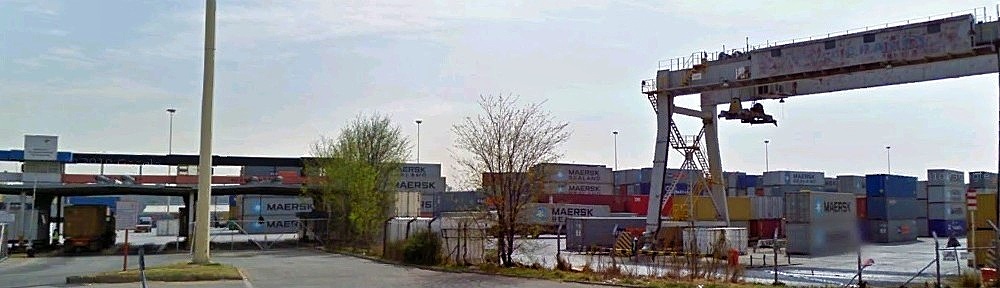
City Deep1_SnapseedBrowsing my various sources of news I came across this article featured in the FTW Online a few weeks ago. It prompted me to post it as an item for some detailed discussion in a follow-up post. Many followers have enquired what happened to my discussion on Inland Ports and the National Transit procedure. I guess it’s now time to respond, but not just yet – perhaps after what materializes at the event below.

What will be the impact of the new Customs Bill on City Deep’s inland port status?
This is the issue to be debated at a JCCI event scheduled for March 15. “The Johannesburg Chamber has been closely involved with City Deep, our international gateway for containerised cargo, for the past 36 years,” says the JCCI’s Pat Corbin. “We have actively promoted the benefits for traders of a combined transport (multi-modal) bill of lading allowing seamless movement through the coastal ports.

“But diametrically opposed developments are taking place which could have far-reaching impact on not just the future of the dry port, the supporting logistical suppliers and local employment, but also the coastal ports and the transport mode for inland movement.”

The event will examine Transnet’s major investments in City Deep and the Durban corridor, SACD’s expanded facilities and services, and the Customs Bill – with its intended removal of inland port status. Source: FTW Online

Chinese investment allows Mozambique to become a car manufacturer

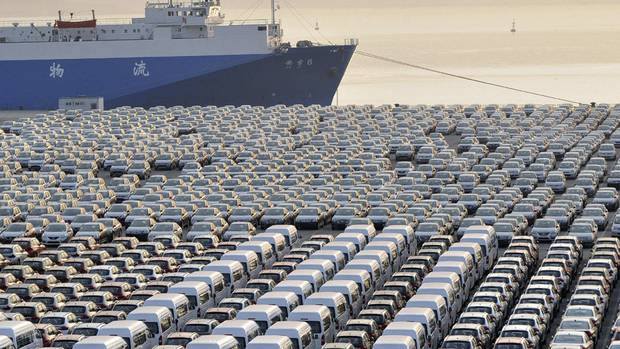
Chinese cars wait to be exported at a port in Dalian, Liaoning province. (China Daily/Reuters)

Chinese cars wait to be exported at a port in Dalian, Liaoning province. (China Daily/Reuters)

With the new APDP programme ably supporting the local South African vehicle manufacturing industry, the possibility of Chinese investment in Mozambique should have little impact on the local vehicle cartel. However, the possibility of competition for the local industry is just what is needed to create competitiveness in the region.

Mozambique is expected to become a car manufacturing and exporting country this year following an investment by China Tong Jian Investment, which is also attracting other companies in the sector to Mozambique. Danilo Nalá, the director general of the Office for Economic Areas with Accelerated Development (Gazeda), told Mozambican newspaper Correio da Manhã that investors from Saudi Arabia and Bahrain were interested in investing in tyre manufacturing in the city of Matola, on the outskirts of Maputo.

The tyre factory, which will be part of the project for the car assembly plant in Matola funded by Chinese investors, as of April 2013, may either involve acquisition of the technically bankrupt company Mabor or setting up a new unit from scratch. According to the newspaper, “there is a lot of interest from Asia in re-launching the tyre industry,” in Mozambique. (Comment: This could be an area of contention for the local market though).

Construction of the China Tong Jian Investment factory, costing an estimated US$200 million, is the result of an agreement the Mozambican government signed with the company in 2010. The agreement outlines that, at an initial stage, the facility should produce around 10,000 vehicles per year, 30 percent of which for the Mozambican market and the remainder for export.

Production is then outlined to be increased to 30,000 units per year and, later, to 100,000 units.

The factory, which is located in the Machava area of Matola, in the former workshops of Mozambican state port and rail manager Portos e Caminhos de Ferro de Moçambique, will produce buses and light passenger vehicles of the Matchedje brand. Matchedje is the name of the village in the Sanga district of Niassa province, which hosted the 2nd Congress of the Mozambique Liberation Front (Frelimo), which is the political party currently in power in the country.

China Tong Jian Investment is based in Shanghai and its largest shareholder is New Zealand’s Morgan Foundation and its business focuses on promoting China-Africa relations. Source: Shippingnews.co.zw

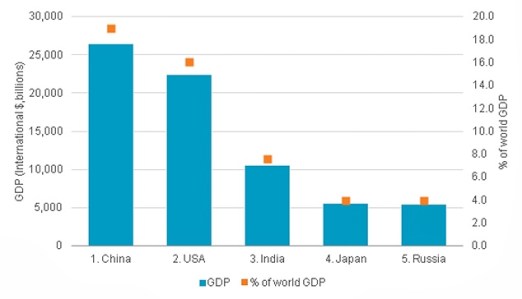
The Top 5 Largest Economies in 2020

Source: Euromonitor International from national statistics/Eurostat/OECD/UN/International Monetary Fund (IMF), International Financial Statistics (IFS)Note: Purchasing Power Parity has been used as this is a method of measuring the relative purchasing power of different countries' currencies over the same types of goods and services, thus allowing a more accurate comparison of living standards.

Source: Euromonitor International from national statistics/Eurostat/OECD/UN/International Monetary Fund (IMF), International Financial Statistics (IFS)Note: Purchasing Power Parity has been used as this is a method of measuring the relative purchasing power of different countries’ currencies over the same types of goods and services, thus allowing a more accurate comparison of living standards.

By 2020, three of the world’s five largest economies will be emerging countries, accounting for 30.4% of global GDP in PPP terms. Advanced economies are being displaced by emerging market superpowers, notably the BRIC countries, which has been accelerated by the seismic effects of the global economic downturn of 2008-2009. Euromonitor International predicts that China will become the world’s largest economy in PPP terms in 2017.

Additionally, Russia will overtake Germany as the fifth largest economy in 2016. These shifts will influence global politics, business environments and investment flows while consumer markets in developing countries will rise in importance as the middle class expands.

1. China: Set to become world’s largest economy in 2017

A large manufacturing base, cheap labour costs, the world’s largest population and economies of scale have resulted in unprecedented economic growth in China. Although growth is slowing, the delayed recovery in advanced economies from the global economic downturn means China will overtake the USA as the world’s biggest economy in 2017, and account for 19.0% of global GDP in PPP terms by 2020. Challenges loom large, however, including rising labour costs, pollution, a potential real estate bubble and rapid ageing arising from the government’s one child policy. Euromonitor predicts that China’s working age population (aged 15-64) will decline from 2014.

2. USA: End of the American dream?

The USA will lose its position as the world’s number one economy in 2017. In 1990, the USA accounted for a quarter of global GDP in PPP terms but we forecast this to plummet to 16.0% by 2020. The country was where the global financial crisis began in 2008 and it has failed to recover to its potential while also slipping in global competitiveness rankings. Although the government avoided the “fiscal cliff” in 2012, one of the biggest challenges remains a budget deficit reduction strategy, without the ensuing political gridlock. Nevertheless, the USA retains advantages, namely as the world’s largest consumer market and a leader of technological innovation.

3. India: Demographic dividend to benefit country beyond 2020

India overtook Japan as the world’s third largest economy in PPP terms in 2011 and its demographic advantage means the country could become the world’s biggest economy in the coming decades. India has a young population where it is benefitting from its demographic dividend (when there are more people of working age and the proportion of the child population declines). Euromonitor forecasts that India will become the world’s largest population by 2025 and that its working-age population will increase by 11.6% in 2013-2020 compared to -3.1% in China. However, India lags in major indicators including educational attainment and infrastructure development.

4. Japan: Paying the price for decades of economic stagnation

Structural problems beset Japan, with decades of weak economic growth and deflation while it has totalled the highest proportion of public debt in the world at 235% of GDP in 2012. Although the country has not yet suffered a eurozone-style sovereign debt crisis, as the majority of its debt is domestically-owned, an increase of foreign debt could trigger a Japanese debt crisis. It has the oldest population globally (mean age of 44.7 in 2012) and a shrinking labour force which will add considerable strain on government finances, while a strong currency makes its exports uncompetitive. Yet Japan’s location within Asia means it can take advantage of cheaper production costs in the region and growing demand for its high-tech products from a burgeoning Asian middle class. Like the USA, it is a global technological leader, giving it a competitive edge over its emerging neighbours.

5. Russia: Overtakes Germany as fifth largest economy in 2016

Russia will become the world’s fifth largest economy in 2016 in PPP terms, driven by its energy sector, as one of the top oil and natural gas producers worldwide. It also offers potential in its rapidly expanding consumer market, which Euromonitor forecasts will be the ninth largest globally in real terms in 2020. Its accession to the World Trade Organisation in August 2012 further cements its integration into the global economy. The lack of economic diversification and modernisation remain key long-term challenges with government policy aiming to tackle this, for example, by investing in the Skolkovo Innovation Centre Project, Russia’s equivalent to Silicon Valley. Corruption, state control and bureaucracy also hamper the business environment in Russia. Like elsewhere in Eastern Europe, the Russian working-age population is in decline (-4.5% in 2013-2020) despite a short-term baby boom, which will pose a demographic challenge to sustaining non-oil economic growth. Source: Euromonitor.com

TRALAC – What has happened since customs duties on 124 clothing tariff lines were increased in 2009?

I really enjoy TRALAC’s Newsletter – their analysis is always concise and down-to-earth. This Hot Seat Comment is no exception. One often wonders about the impact and nett result of tariff changes and trade remedies. Here we get some insight.

The clothing and textile industry has a long history in South Africa and is still a very important source of employment, especially for women and in poorer communities. The industry is geographically bound to specific provinces, including the Western Cape, KwaZulu-Natal, the Free State and Gauteng. In many rural areas the clothing and textile sector is often the only source of formal employment. Since about 2002 the Rand appreciated substantially and South African exports became less competitive in the global market. Coupled with the trade liberalisation, in terms of South Africa’s WTO offer, the clothing and textile industry has experienced sustained import competition due mostly from Asian imports. In order to try and remedy large-scale factory closures and employment losses in the industry the Southern Africa Clothing and Textile Workers Union (SACTWU) applied for an increase in the import tariffs of 124 clothing tariff lines to the WTO bound rates of 45 percent in 2009. These clothing tariff lines are classified under Chapter 61 and 62 of the South African Tariff Book and include various clothing items, including men’s woven and knitted shirts, jackets and trousers; babies’ garments; and women’s woven and knitted jackets, skirts, dresses and trousers. Although the retailers objected to an increase in import duties the International Trade Administration Commission (ITAC) granted the application and general customs duties on 121 clothing tariff lines were increased from 40 percent to 45 percent, while the general customs duties on three tariff lines (hosiery) was increased from 20 percent to 45 percent.

imagesIn its application SACTWU stated three reasons for the application: there has been a significant increase in imports under these 124 tariff lines flowing into South Africa; market disruptions in the SACU industry which have resulted in factory closures and retrenchments warranted increased protection for the domestic industry; and increased tariffs will provide both relief and show increased confidence in the industry. The retail industry objected to the application on the following grounds: the loss of business in the manufacturing industry can not only be attributed to price competition, but also inefficiency in the local industry; increased duties will have an inflationary effect impacting the ability of consumers to buy clothing at competitive prices; and increased duties will have a punitive effect on the rail sector and the end consumers. In its decision the Commission found the declining rate of investment and employment in the clothing sector coupled with increased imports a disturbing trend. The Commission decided that an increase in customs duties will enable manufacturers to protect existing jobs, increase market penetration and price competition and growth the domestic manufacturing sector in the export market. However, the question of whether the increase in these customs duties have been successful in reaching its goal of decreased imports and increased domestic production, sales and exports still remain.

Import and export data sourced from the World Trade Atlas (2013) and production and sales data sourced from Statistics South Africa (2013) show the following patterns in the clothing industry between 2009 and 2012:

  • Over the time period imports of the 124 clothing tariff lines increased by 15 percent, from approximately US$ 834 million in 2009 to approximately US$ 1.2 billion in 2012.
  • The top five importing countries were China, Mauritius, India, Madagascar and Bangladesh, accounting for 89 percent of the total imports of these clothing articles into South Africa over the time period.
  • China mainly exported men’s, boy’s, women’s and girl’s cotton trousers; knitted sweaters and pullovers; cotton and knitted t-shirts; and knitted babies’ garments to South Africa between 2009 and 2012.
  • South Africa’s exports of these clothing tariff lines increased by 6 percent, from approximately US$ 71 million in 2009 to approximately US$ 84 million in 2012.
  • These clothing articles were mainly exported to African countries, including Zambia, Mozambique and Zimbabwe.
  • The production index of the physical volume of production (base year is 2005) show there has been a significant decrease in the volume of production of knitted and crocheted articles and wearing apparel in South Africa. The index decreased from an average of 108.11 in 2009 to an average of 79.82 in 2012.
  • The sales of knitted and crocheted articles and wearing apparel also declined over the time period. Actual value of sales declined by 3 percent, from approximately US$ 18 billion in 2009 to approximately US$ 16 billion in 2012.

Although there has not been a significant lapse of time since the increase of import tariffs the data gives the short term response of imports, exports, and production to the change in import duties in November 2009. Immediately after the increase in tariffs there was an initial decrease in exports, production and sales.  However, exports recovered by the end of 2012, while production and sales are still significant lower than pre-2009 levels. SACTWU has also recently indicated that employment in the clothing, textiles and leather sector seems to be more stable over the last two years. However, one of the main objectives of the increase in import duties, to deter lower priced imports mainly from Asia, has not been accomplished. Source and content credit – Willemien Viljoen, TRALAC Researcher.

Jamaica plans global logistics hub

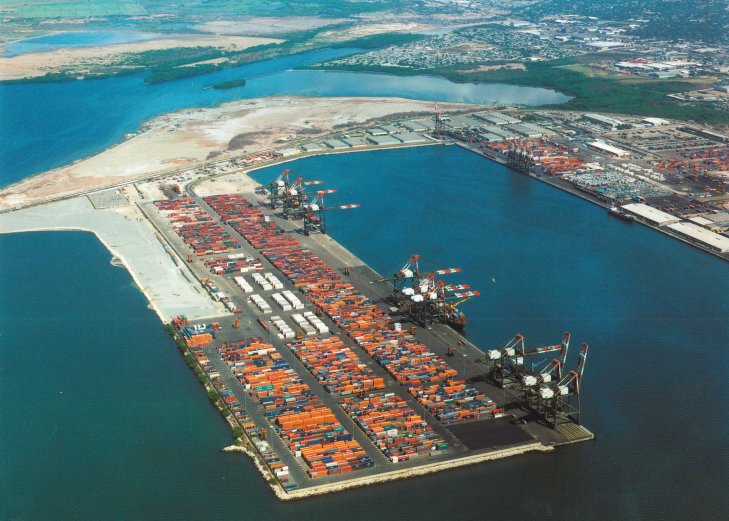
The Port of Kingston – ripe for development

The Port of Kingston – ripe for development

The Government of Jamaica has revealed ambitious plans to turn the Caribbean island in to a global logistics hub – and high level talks have already begun with the aim of increasing volumes of sea cargo.

Projects under discussion include developing the Port of Kingston ahead of the expansion of the Panama Canal and the development of a new commodity port to be built in eastern Jamaica which will specifically handle petroleum products, coal, minerals and grain.

At the same time, there is talk of constructing an air cargo airport to help with increased volume of boxes and the construction of large scale ship repair docks to service the increasing volume of post-panamax vessels.

Dr Eric Deans, chairman of the Logistics Task Force, said a market of 800 million people, including the USA and Brazil, can be accessed readily from Jamaica. He said trade opportunities are due to “burst wide open with the expansion of the Panama Canal scheduled to be completed in 2015; the multi-billion stimulus package by Brazil for World Cup 2014 and Olympics 2016; and the growing middle class in Latin America.”

He added that a critical aspect of the global logistics hub initiative is the broadening of bilateral collaborations with Jamaica’s global partners, and encouraging private sector investment and financing through private-public partnerships (PPPs).

Talks regarding the set-up of special economic zones are already underway with local and foreign investors.

The Jamaica Ministry of Industry, Investment and Commerce, which is spearheading the initiative, says that it will help give the country a global logistics supply chain that is able to compete with the likes of Singapore, Dubai and Rotterdam.

Perhaps this initiative could spur on our local authorities to actually move on ‘logistics hubs’ here in South Africa. While the huge expansion plans for our existing harbours, railroads are pursued, it is high time that the likes of Tamboekiesfontein, for instance, and other privately initiated transit hubs are taken seriously, and in an integrated manner to benefit commerce and trade in the Southern African region.

 Related articles

Traders can’t interpret Terms

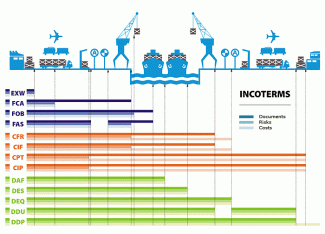
incoterms2The lack of knowledge to interpret international terms of trade (INCOTERMS) is to blame for the high cost of doing businesses among importers and exporters, the secretary general of the Uganda Shippers Council. Many importers do not understand international terms of trade such as Cost and Freight, Free on Board and Cost Insurance and Freight (CIF), yet in Uganda, taxation is done based on CIF.

“This means that a Ugandan trader who is importing or exporting goods has to pay freight costs in the East African region, whose headquarters are based at Mombasa, in addition to cost of goods, insurance and freight charges for the goods,” explained Kankunda, Secretary General of the local shipper’s council..

“If a Ugandan trader is able to understand these terms, then they will be in position to secure a local shipping line and pay a slightly lower cost compared to paying from the country where the goods are coming from.”

Kankunda was speaking at a three-day workshop on INCOTERMS for importers and exporters from the East Africa region. The training was aimed educating international traders best practices in handling INCOTERMs and other international freight transactions. It is expected to contribute to reducing the cost of cargo handling and shipment along East African corridors by enabling importers and exporters to efficiently apply proper commercial terms and practices.

Kankunda said the application of inappropriate commercial terms, insurance policies and inefficient processing of various trade transactions when importing or exporting goods are some of the causes of the high cost of doing business in the region. It is estimated that transport costs make up 30% to 40% of CIF value of imported goods in East Africa, compared to about 5% to 10% in other regions. Source: AllAfrica.com

Best SA Exporters

best_sa_logoBest SA Exporters is an online based business, created in order to promote export-ready Southern African goods and services to the international marketplace. In essence, Best SA Exporters role is to assist in growing your international trade, resulting in foreign direct investment and national job creation. Clients are advertised and promoted through a highly visible Best SA Exporters website, as well as through popular social networking presence on Facebook, Twitter and LinkedIn. Adding on to these services, Best SA Exporters now offers an international trade related company the opportunity to promote its goods / services to the Best SA Exporters database of approximately 8000 online subscribers. Trade leads received for each campaign will then be collated and supplied exclusively to you as an advertiser. Something worthwhile for exporters to look into?

CUSTOMS Info – New Regulatory Screening Data

cigdm_newlogoCUSTOMS Info (Ci) now offers import regulations by HTS code for 220 countries. This data will help Trade Professionals to screen items shipped across borders for importation restrictions and requirements from each country.

This data can be used for automating red flags by HS code. Once a flag is obtained, users may research the regulations under the GistNet tab in CUSTOMS Info’s subscription site or on their own. “We are excited about this new data set because it is new and bound to get more detailed,” Ron Lackey, President of CUSTOMS Info.

For a sample file of this data that includes Chapters 28 & 38 of the Harmonized Schedule, visit: http://www.customsinfo.com/download-a-free-sample-of-new-regulatory-content/. (You will find South African customs regulatory reference detail here as well)

Ci provides the world’s most comprehensive trade data repository delivered via web-based subscription, API web services or as data to populate any GTM or Landed Cost application. Ci is the largest provider of duty and tax content for international e-commerce with hundreds of e-commerce sites utilizing our data to provide accurate landed cost information.

Chinese Imports surge – outpace Exports

Port of Shanghai

Port of Shanghai

China’s exports rose 25 percent in January from a year earlier while imports increased 28.8 percent, resulting in a trade surplus of $29.15 billion, the customs administration said today in Beijing.

The growth in overseas shipments compares with the median estimate in a Bloomberg News survey for a 17.5 percent expansion and a 14.1 percent increase the previous month.

The gain in imports compares with the median estimate for a 23.5 percent jump and a 6 percent increase in December. The trade surplus compared with the median projection for $24.7 billion and a $27.1 billion excess a year ago.

The Chinese customs administration last month defended the quality of its trade data after analysts at Australia & New Zealand Banking Group Ltd. and UBS AG said it may fail to capture the true picture of imports and exports.

Trade data in the first two months of the year is distorted by the timing of the Lunar New Year holiday, which fell in January in 2012 and is in early February this year, making the figures tough to interpret, according to economists including Louis Kuijs, chief China economist at Royal Bank of Scotland Plc in Hong Kong. Source: Bloomberg

Air-to-sea cost differential narrows

Multimodal Freight

Just to keep them on their toes – the following will undoubtedly play a factor in many customs administration’s risk management and intel systems.

Air freight rates slipped in December as the trade returned to business-as-usual following the volume boost of earlier hi-tech product launches, according to Drewry’s new monthly report, Sea & Air Shipper Insight. Drewry’s recently launched East-West Air Freight Price Index, a weighted average of air freight rates across 21 east-west trades, fell by 1.4 points from November to reach 110.8 in December, bringing to an end four consecutive months of gains in the index. “The waning effect of new hi-tech product launches on traffic demand was the primary contributor to declining rates from Asia into North America and Europe,” said Simon Heaney, research manager at Drewry. “Drewry expects pricing on routes out of Asia to decline further, though the impact will be softened by an uptick in demand levels in advance of Chinese New Year.”

Evidence of a tentative recovery in air freight demand comes in the form of a 2% year-on-year rise (the first such increase in 16 months) in November of worldwide semiconductor sales, a traditional bellwether for air cargo. Air cargo demand could also see a temporary boost at the expense of the ocean market. With ocean currently facing capacity issues such as the looming threat of strike action at US ports and carriers cancelling voyages, some shippers, particularly those wanting to move higher-value goods, might well be tempted to shift some cargo to the air. Demand growth for air cargo has lagged behind ocean, which Drewry believes is due to a combination of shippers having access to better IT systems, leaner inventory strategies and greater faith in liner service reliability, which has been improving steadily in the last year or so.

Recent issues in the ocean sector are testing that faith, although of course shippers that do switch to air freight will have to pay a considerable premium. East-west air freight rates and comparable ocean rates have almost mirrored their ups and downs since May 2012, with air prices showing a steeper upswing since October. However, the fall in air freight pricing and a corresponding rise in container shipping rates in December sent Drewry’s east-west air freight price multiplier down 1.3 points to 11.8. The multiplier measures the relationship between the cost of shipping by air relative to sea. “Air cargo is not a viable Plan B for all shippers,” said Heaney, “but for those moving expensive goods it remains a justifiable alternative, particularly at a time when the reliability of the ocean supply chain is threatened.”  Source: Lloyds List

Thinking Inside the Box

The fluid transition from sea to land

The fluid transition from sea to land

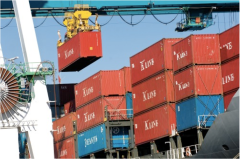
Here’s an interesting view on containers, presented by Alex Colas from Birkbeck University, USA. Colas highlights that containers have been fundamental drivers of global processes and have had an unprecedented effect on logistics and labour organisations. Moreover Colas demonstrates that containers as well as being transformative objects in themselves, have also transformed the way in which circulatory barriers have been overcome through seamless transitions from water to land. Containers are a worthy protagonist of material analysis in international systems and there is much room in academic discourse for the full story of the container to unfold. Herewith the link to the article Thinking Inside the Box, available on the blog – Geopolitics & Security.

World’s Best (and Worst) Economies

Global Competitiveness Report 2012-13According to the WEF, competitiveness reflects the level of productivity of a country, based on its institutions, policies and economic factors. In its study, the WEF groups the 144 countries it surveys into one of three economic categories. “Factor-driven” economies are the least developed and rely on low-skilled labor and natural resources. More developed countries are considered “efficiency-driven” economies because they turn to improving output. The most developed economies, which focus on improving technology and new product and idea development, are considered “innovative.”

To create the Global Competitiveness Index (GCI) score for each country, the WEF ranked more than 100 economic indicators divided into 12 broad categories, referred to as pillars, that quantify the extent to which a country is competitive. The economic indicators and pillars were then scored 1 to 7. To rank the countries, some economic measures were weighted more heavily than others, depending on how the economy was categorized.

Based on WEF’s Global Competitiveness Report, which ranks 144 countries that make up almost 99% of the world’s GDP, 24/7 Wall St. reviewed the economies with the highest and lowest Global Competitiveness Index scores. Data from the World Bank and the World Health Organization were used to provide additional information on some economies.

For a summary of the results, read – The World’s Best (and Worst) Economies – 24/7 Wall St.

For the full report, a PDF download (<500 pages) is available from: World Economic Forum

For a view on the impact for South Africa, read – Global South Africans

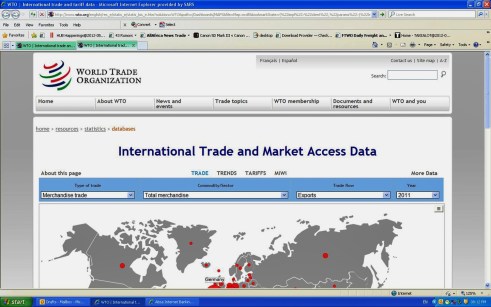
WTO – Merchandise Trade and Commercial Services

Researchers and students of international trade patterns and economics will find a useful resource in the following link. Information is made available across databases, annual publications as well as interactive statistics and maps. Please take note of the copyright.

WTO Statistics