WCO News – June 2016

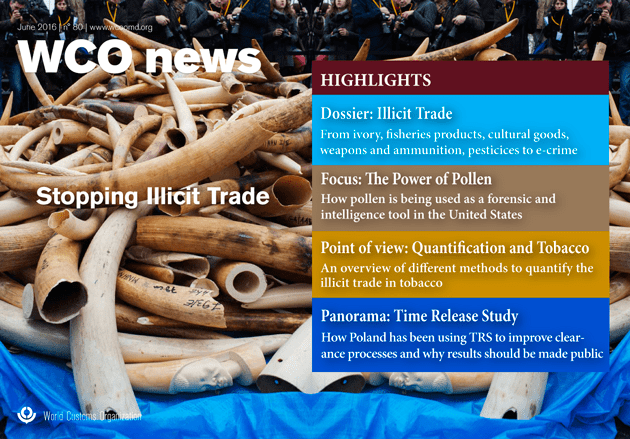
WCO News June 2016 (1)The WCO has published the 80th edition of WCO News, the Organization’s flagship magazine aimed at the global Customs community.

This edition features a special dossier on illicit trade which gathers together articles focusing on the trafficking in various commodities such as cultural goods, small arms, fisheries products and pesticides, as well as articles highlighting the tools and technologies that can contribute to enhancing Customs enforcement capabilities.

Readers will also benefit from articles on how pollen analysis (palynology) has become an essential Customs forensic and intelligence tool in the United States, the challenges in accurately quantifying the illicit trade in tobacco, and why publishing time release study results is advantageous. Source: WCO

Singapore destroys 8 tonnes of illegal ivory

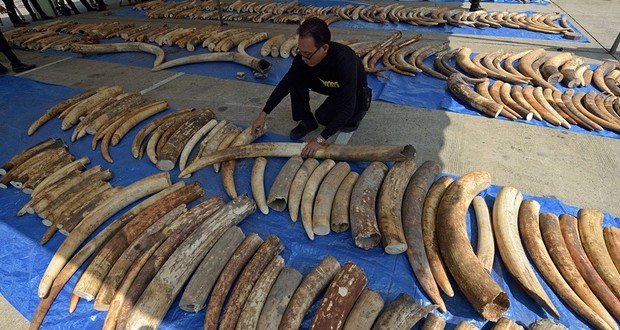
Singapore on Monday crushed and burnt almost eight tonnes of ivory confiscated over two years to try to deter smugglers as activists called for tighter enforcement.

Over 2,700 elephant tusks weighing 7.9 tonnes were fed into an industrial rock crusher before incineration.

It was the fist time seized ivory had been destroyed in Singapore, the Agri-Food and Veterinary Authority said in a statement. Previous hauls were returned to the originating country, donated to museums or kept for education.

The tusks, estimated to be worth Sg$13 million ($9.6 million), were seized on four separate occasions between January 2014 and December 2015. In May 2015 some 2,000 tusks were found hidden in a shipment of tea leaves from Kenya.

“The public destruction of ivory sends a strong message that Singapore condemns illegal wildlife trade. By crushing the ivory, we ensure it does not re-enter the ivory market,” said Desmond Lee, a senior minister of state in the interior and national development ministry.

Singapore can do more to enforce strict anti-trafficking laws, said WWF-Singapore communications director Kim Stengert.

“There are illegal wildlife shipments caught in other ports after they came through Singapore. So we definitely need to step up efforts to enforce the strict rules,” he said.

The ivory trade has been banned since 1989 by the Convention on International Trade in Endangered Species, of which Singapore is a signatory. Source: AFP News

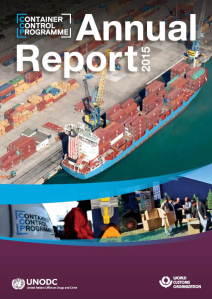
UNODC-WCO Container Control Programme – 2015 Annual Report online

Container Control ProgrammeThe year 2015 has been the most active one ever for this joint WCO – UNODC initiative, which tackles illicit trade in containerized transport.

A number of new countries joined the Container Control Programme (CCP), more than 130 training events, private sector meetings and study visits were implemented and significant seizures of drugs, counterfeit goods, cigarettes etc. were made by the Port Control Units established in the framework of this programme.

The 2015 CCP Annual Report also contains interviews with the Directors General of Georgia and Azerbaijan Customs as well as several statements by Customs’ and Private Sector stakeholders. Source: WCO

Australia seizes $900m of liquid meth hidden in bra inserts

Aus-drug-bustAustralian law enforcement agencies have seized methylamphetamine worth AUS$1.26bn in the country’s largest-ever haul of the illicit drug in its liquid form, officials said Monday.

Four Hong Kong passport holders were arrested in Sydney last month over the import from China of 720 liters of the drug hidden in boxes of silicon bra inserts and art supplies, police said in a statement

The liquid could have made about 500kg of high-grade crystal meth, commonly known in Australia as ice, Australian Federal Police Commander Chris Sheehan said.

Officials also seized 2kg of the crystalized form of the drug.

Justice Minister Michael Keenan said the operation used information gathered through new cooperation between Australian Federal Police and China’s National Narcotics Control Commission. The Australian and Chinese agencies established a joint task force in November to investigate criminal syndicates trafficking methamphetamine.

“This largest seizure of liquid methylamphetamine to date is the result of organized criminals targeting the lucrative Australian ice market from offshore,” Keenan told reporters.

The four will appear in a Sydney court next month charged with importing and manufacturing commercial quantities of illegal drugs. Each suspect faces a potential life sentence if convicted.

Keenan said the seizure was one the largest hauls of illicit drugs in Australian history. Source: Perth News

East African countries set-up of cargo control unit

KRA-Customs-Transit-Control

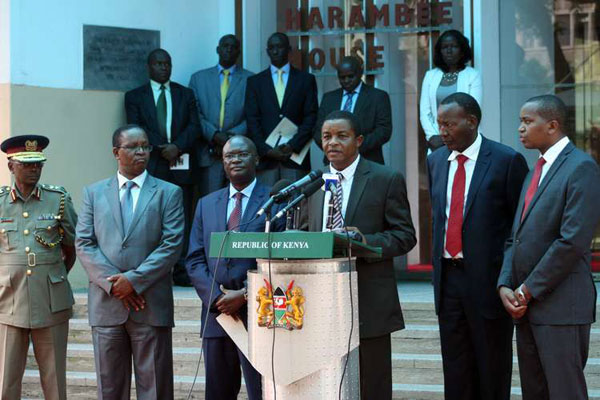
Kenya Revenue Authority Commissioner-General John Njiraini announces the implementation of a common customs and transit cargo control framework to rid Mombasa port of corruption

Four East African countries on Tuesday agreed to fast-track implementation of a common customs and transit cargo control framework to enhance regional trade.

Commissioners-general from the Kenyan, Ugandan, Rwandan and Tanzanian revenue authorities said adoption of an excise goods management system would curb illicit trade in goods that attract excise duty across borders.

They said creation of a single regional bond for goods in transit would ease movement of cargo, with taxation being done at the first customs port of entry.

The meeting held in Nairobi supported formation of the Single Customs Territory, terming it a useful measure that will ease clearance of goods and reduce protectionist tendencies, thereby boosting business.

Implementation of the territory is being handled in three phases; the first will address bulk cargo such as fuel, wheat grain and clinker used in cement manufacturing.

Phase two will handle containerised cargo and motor vehicles, while the third will deal with intra-regional trade among countries implementing the arrangement.

The treaty for establishment of the East African Community provides that a customs union shall be the first stage in the process of economic integration.

Kenya Revenue Authority (KRA) commissioner-general John Njiraini said the recently introduced customs and border control regulations were designed to enhance revenue collection and beef up security at the entry points.

“At KRA, we have commenced the implementation of a number of revenue enhancement programmes particularly on the customs and border control front that will address security and revenue collection at all border points while enhancing swift movement of goods,” he said.

To address cargo diversion cases, the regional revenue authorities resolved that a joint programme be rolled out to reform transit goods clearance and monitoring processes. Source: DailyNation (Kenya)

R12-million drug bust at OR Tambo Airport

SARS Customs intercepted a male traveller from Tanzania carrying narcotics worth over R12-million at OR Tambo International Airport yesterday (24 January 2016).

The bust took place when the 36-year old man, who was carrying two large suitcases, was asked to put his luggage through the Customs scanner. The scanner image revealed 10 clear plastic bags that contained a white crystal substance.

Upon investigation this turned out to be 10 bags of Ephedrine. The total weight of the consignment was 40.20 kg with an estimated street value of R12 060 000. The man has been handed over to the South African Police Service and he is expected to appear in court. Source and photos: SARS

WCO News – October 2015 Edition

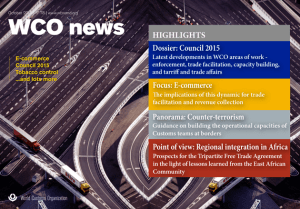
WCO News N°78 - October 2015The October 2015 Edition focuses on the subject of e-Commerce, among’st other developments at the WCO. There’s a discussion on a new book which provides insight into the economic benefits of implementing a single window system, as well as a review of a book titled  ‘The Politics of Trade and Tobacco Control’.

Other articles include an overview of Russia’s Training Centre for NII System experts; Prospects for Africa’s Tripartite Free Trade Agreement in the light of lessons learned from the East African Community and a panorama of diverse discussion articles concerning Customs standards, education, and Customs response to challenges posed by a world of rampant crime and natural disasters. Download and enjoy! Source: WCO

Authorities discover Sophisticated ‘Super’ Drug Tunnel between California and Mexico

Authorities on both sides of the US-Mexico border have shut the 10th drug-smuggling tunnel to San Diego in more than a decade, a passageway Mexican authorities on Thursday attributed to the cartel of fugitive kingpin Joaquin “El Chapo” Guzman.

A sophisticated, super tunnel was discovered by federal officials Wednesday night near San Diego, leading to the arrest of 22 people and confiscation of 12 tons of marijuana estimated at $6 million.

The tunnel, originating from the Mexican border city of Tijuana, is about eight football fields in length, with the last quarter-mile crossing US territory before ending beneath a carpet warehouse in the busy Otay Mesa industrial district of San Diego, US and Mexican officials said.

The tunnel was uncovered through intelligence gathered by US federal agents who infiltrated a Mexican drug-smuggling ring during the past six months, according to Laura Duffy, the US Attorney in San Diego.

It marked the 10th subterranean passageway from Mexico to Otay Mesa discovered since 2002. Like those and dozens of others found along the nearly 3 200km border in the last decade, the latest tunnel was equipped with lighting, ventilation and a rail system for moving goods, authorities said.

Two Mexican government security officials, speaking on condition of anonymity, told Reuters the latest passage belonged to the Guzman-led Sinaloa drug cartel.

Duffy said US officials were less certain that Sinaloa was behind the new tunnel, based on the comparatively unfinished, dangerous nature of the tunnel shaft on the US side.

“We usually see ladders going down and staircases,” she said.

“This particular tunnel drops 32 to 35 feet straight down.”

Duffy said US federal agents moved to seize control of the tunnel on its north end on Wednesday after a shipment of 2 tons of marijuana arrived there, and six men were arrested, two of whom were to be arraigned on federal drug-smuggling charges on Thursday.

Mexican agents seized 10 tons of marijuana awaiting shipment through the passage at the Tijuana side, and authorities expect to find more contraband when a thorough search of the tunnel is made, Duffy said.

Guzman, the world’s most wanted drug trafficker, escaped in July from a Mexican maximum-security prison through a mile-long tunnel that surfaced right inside his cell.

His escape sparked a massive manhunt, and Mexico’s government said on Friday that Guzman had suffered injuries to his face and leg after recently beating a hasty retreat from security forces. Source: IOL

War Against Ivory Smuggling

Smuggled Ivory

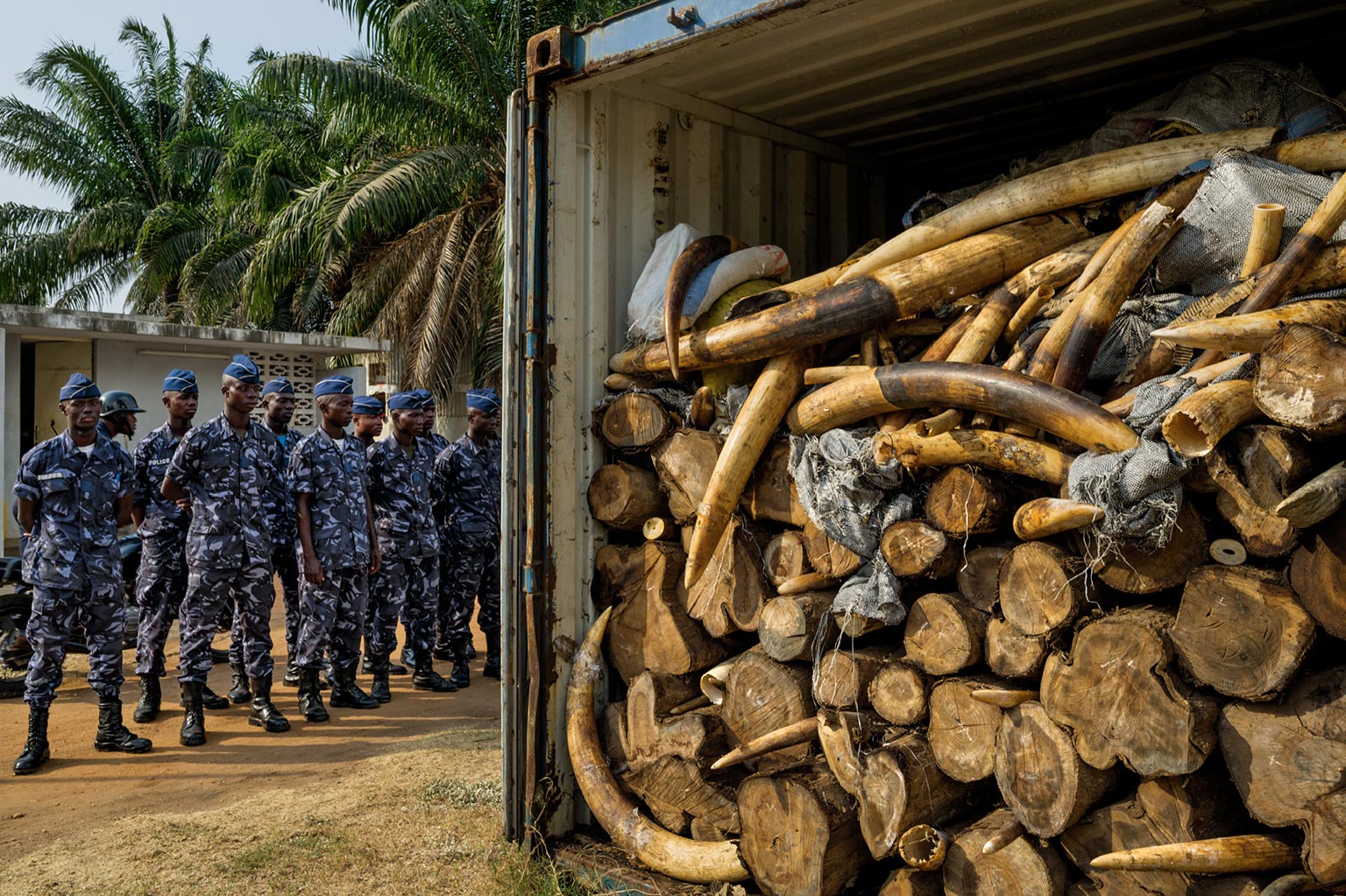
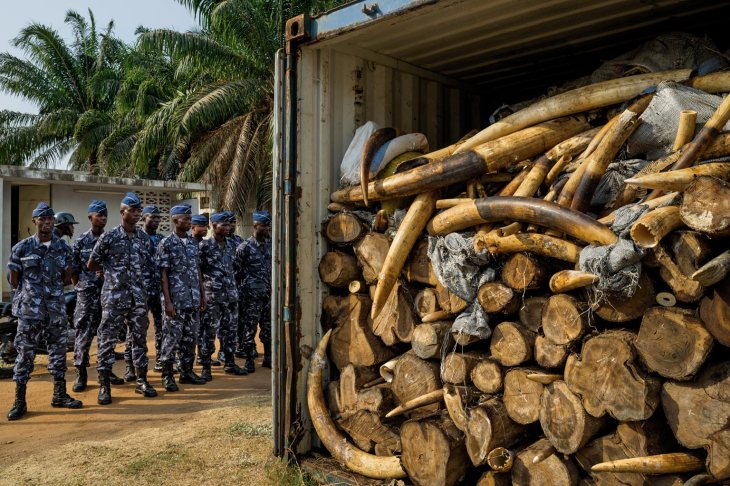
In January 2014, while x-raying a Vietnam-bound container declared to hold cashews, Togolese port authorities saw something strange: ivory. Eventually, more than four tons was found, Africa’s largest seizure since the global ivory trade ban took effect in 1990. [Photo: Brent Stirton, National Geographic]

Last year, one of Kenya’s most adored elephants, Satao, was killed for his ivory. Poachers shot the bull elephant with a poisoned arrow in Tsavo East National Park, waited for him to die a painful death, and then hacked off his face to remove his massive tusks.

Poachers continue to kill an estimated 30,000 elephants a year, one every 15 minutes, fueled to a large extent by China’s love of ivory. Thirty-five years ago, there were 1.2 million elephants in Africa; now around 500,000 remain.

A recent documentary, 101 East, released by Al Jazeera, traces the poaching of elephants and smuggling of ivory from Tanzania’s port of Dar es Salaam through the port of Zanzibar to Hong Kong and Shanghai.

Hong Kong is one of the busiest ports in the world. It handled nearly 200,000 vessels last year and is a key transit hub for smugglers transporting ivory from Africa to China. Between 2000 and 2014, customs officials seized around 33 tons of ivory, taken from an estimated 11,000 elephants.

With the huge challenge faced by customs and other law enforcement agencies in West Africa, wildlife crime is on the rise. Regional traffickers and organized crime groups are exploiting weak, ineffective and inconsistent port controls throughout the region.

U.N. Action in Africa
To address the issue, the United Nations Office on Drugs and Crime (UNODC) organized a workshop in Accra, Ghana, from August 25 to 27 August, and in Dakar, Senegal, from August 31 to September 2. The objective was to provide training for national law enforcement agencies to better fight wildlife crime through the control of maritime containers. The workshop was led by trainers and experts from UNODC, the World Customs Organization (WCO) and the CITES Management Authority.

The Container Control Programme has been developed jointly by UNODC and WCO to assist governments to create sustainable enforcement structures in selected sea and dry ports to minimize the risk of shipping containers being exploited for illicit drug trafficking and other transnational organized crime. The implementation of the program is an opportunity for UNODC to work with governments in establishing a unit dedicated to targeting and inspecting high-risk containers.

UNODC, in partnership with WCO, delivers basic training programs and provides technical and office equipment. For example, the equipment connects the units to the WCO’s ContainerCOMM – a restricted branch of the Customs Enforcement Network dedicated to sharing information worldwide on the use of containers for illicit trafficking.
Sustainability.

UN Secretary-General Ban Ki-moon argues: “Illegal wildlife trade undermines the rule of law, degrades ecosystems and severely hampers the efforts of rural communities striving to sustainably manage their natural resources.”

Wildlife trade is a transnational organized crime that raises profits of about $19 billion annually. In addition, it is often linked to other crimes such as arms trafficking, drug trafficking, corruption, money-laundering and terrorism – that can deprive developing economies of billions of dollars in lost revenues.

Shipping
It’s hardly surprising that many of the big ivory seizures made in recent years have been detected in shipping containers, says Dr. Richard Thomas, Global Communications Coordinator for the environmental organization TRAFFIC. “Partly that’s due to the sheer quantity of ivory being moved (the largest-ever ivory seizure was 7.1 tons) – which from a practical and cost point of view makes sea carriage more attractive than air carriage.

“Also in the smugglers’ favor is the huge numbers of containers moved by sea. Some of the big ports in Asia deal with literally thousands of containers per day. Obviously it’s not practical or feasible to inspect each and every one, and that’s something the organized criminal gangs behind the trafficking rely upon.”

There’s lots of issues to be dealt with, says Thomas: For example, even when an enforcement agency makes a seizure, it’s not easy to find out who actually booked the passage for the container and who knew precisely what was in it and actually put it there. “That’s one area where transport companies can collaborate with enforcement agencies to assist follow-up enquiries. Obviously companies have records of where the container is headed too, obviously key information for follow-up actions,” says Thomas.

TRAFFIC recently ran a workshop in Bangkok under the auspices of the Wildlife Trafficking Response, Assessment and Priority Setting (Wildlife TRAPS) project, targeting the movement of illicit wildlife cargoes across borders.

“The transport industry can serve as the eyes and ears of enforcement agencies as part of a global collaboration to eliminate the poaching and trafficking of illegal wildlife commodities,” said Nick Ahlers, Leader of TRAFFIC’s Wildlife TRAPS project.

“To be successful, the entire logistics sector needs to be part of a united push to eliminate wildlife trafficking from supply chains. In particular, we would welcome participation from major shipping lines and the cargo and baggage-handling sector.”

If nothing is done to stop the ivory trade, Africa’s wild elephants could be gone in a few decades. Source: Reuters.

Related articles
Kenya – Drugs Found on Auto Carrier in Port of Mombasa

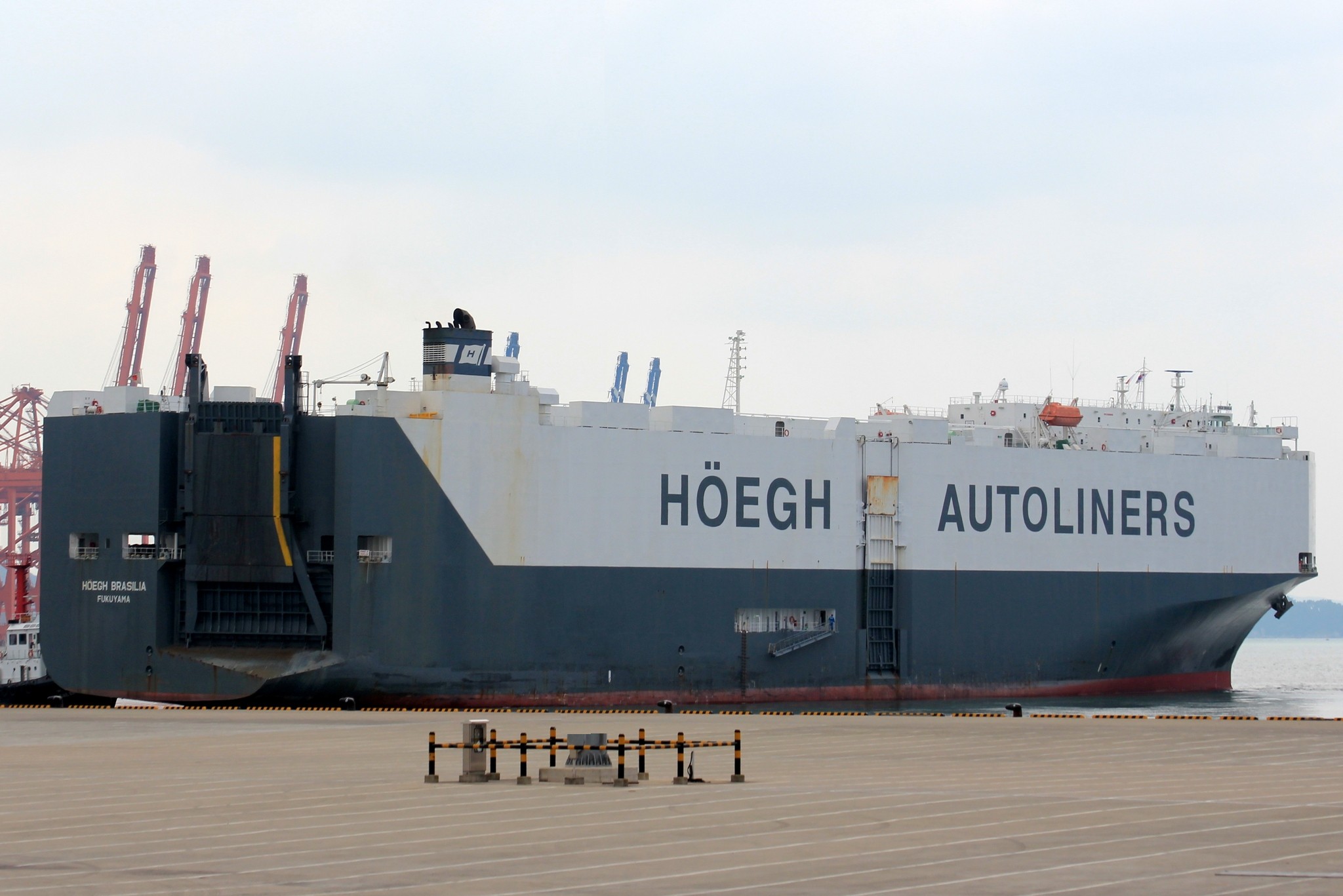
hoeghKenyan and U.S. authorities found drugs aboard the Höegh Autoliners “Pure Car/Truck Carrier” (PCTC), which was detained at Port Mombasa on September 17. The crew of the ship has been arrested and currently being questioned by authorities.

According to authorities, cocaine was found inside the tires of three military trucks aboard the Hoegh Transporter, a Singapore-flagged car carrier.

Kenyan officials raided the vessel after receiving a tip from the U.S. Federal Bureau of Investigation (FBI) that the vessel had been loaded with the coke at India’s Port of Mumbai.

Kenyan soldiers and security personnel shut down the port for hours before seizing the ship and halting operations. Mombasa, which is Africa’s largest port, serves as the main gateway for imports and exports in the region.

East Africa is a major shipping route for Afghan narcotics bound for Europe. Maritime forces have been unable to curb the flow of drug transport in the region.

The Höegh Transporter was built in 1999 and was transporting nearly 4,000 vehicles, including about 250, which are to be used for peacekeeping missions in South Sudan. Source: Maritime Executive

Customs Vietnam make 2nd huge Ivory Bust in a fortnight

Vietnam Custom ivory seizureCustoms officers in central Vietnam have seized a tonne of ivory and four tonnes of the scaly hide of the pangolin, according to authorities today.

Officials found the contraband on Tuesday inside a shipping container labelled as carrying red beans from Malaysia that arrived at the central port city of Da Nang on Aug 10.

“This is the largest amount of ivory and pangolin smuggling we have discovered in Da Nang,” Dang Van Toan, the port’s head of customs, told the German Press Agency.

The pangolin is an endangered type of armoured anteater found in parts of Asia and Africa. The flesh is sold as an exclusive, but illegal, meat, and the hide is used for traditional medicine and fashion.

The weight of the hides found this week corresponds to around 4,000 individuals, Le Xuan Canh, former head of the Institute of Ecology and Biological Resources, told DPA. Tuesday’s haul brings to nearly eight tonnes the total of tusks, horns and hide from endangered species impounded over the past two weeks in Da Nang.

Last Friday the port’s customs officers seized more than two tonnes of elephant tusks. Eight days earlier they confiscated nearly a tonne of elephant tusks and rhinoceros horns, authorities said.

The three shipments were posted to two local companies, which have denied any knowledge of the smuggling, said Pham Van Thieng, deputy head of the central region’s anti-smuggling team.

Trafficking of endangered species and their parts violates international law. Like elephant ivory and rhino horn, pangolin is considered a sign of status among some of Vietnam’s wealthy elite.

Ivory worth $4.4m seized in Vietnam

Vietnam Ivory Seizure

Customs officers in Vietnam seized more than two tons of elephant tusks, eight days after confiscating an ivory shipment weighing nearly a ton, authorities said. Picture: Pornchai Kittiwongsakul

Customs officers in Vietnam seized more than two tons of elephant tusks, eight days after confiscating an ivory shipment weighing nearly a ton, authorities said on Monday.

The estimated 4.4 million dollars worth of ivory was disguised as logs and hidden within a shipment of timber from Nigeria.

The cargo was posted to the same company listed as the receiver for nearly a ton of elephant tusks and rhinoceros horn from Mozambique that was discovered on August 13, said Ho Xuan Tam, Da Nang Customs Department spokesman.

Company officials have denied wrongdoing.

The poaching of elephants and rhinoceros and the trafficking of their tusks and horns are outlawed under international efforts to protect endangered species. But the illicit trade from Africa to Asia has grown with rising prosperity creating demand in Vietnam and China.

While elephant ivory is valued for its aesthetic appeal, folk superstitions prize rhino horn for its supposed medicinal and aphrodisiac qualities.

A single gram of ground rhino horn possesses a street value of 133 dollars. Rhino killings reached a record 1 215 last year, 10 times the number killed in 2009, according to the conservation group WildAid. Source: IOL

French Customs seizes un-exportable Picasso’s art work worth €25m

Picasso, Head of a Young WomanA painting by Pablo Picasso estimated at more than €25 million (CHF26.5 million) and considered “unexportable” by the Spanish authorities has been seized by French customs officials on a boat moored in the French island of Corsica.

“An attempt to export to Switzerland a picture by Picasso, Head of a Young Woman, through the customs office of Bastia [a town in Corsica] last Thursday attracted the attention of French officials,” customs agents said in a statement to French news agency AFP on Tuesday.

On Friday, customs officials from the Corsican town of Calvi “boarded the ship which was moored in the marina at Calvi and demanded the documents relating to the painting which it was transporting”. According to the statement, the captain was able to produce only one document assessing the painting plus a ruling, in Spanish, from May 2015 made by the Audienca Nacional, a Spanish high court which has jurisdiction over all Spanish territory and international crimes which come under the competence of Spanish courts. This ruling confirmed that the painting was a Spanish national treasure which could never leave Spain. Source: CustomsToday

SA Man uses cats as cover to smuggle £1.2m drugs at Heathrow Airport

A man who used pet cats as a cover to smuggle drugs valued at £1.2m into the country through Heathrow Airport has been jailed. A London-born dual national, Scott Parker, living in Benoni, Gauteng in South Africa, was handed a seven-and-a-half year prison sentence for smuggling heroin, when he appeared at Isleworth Crown Court on June 18, according to the National Crime Agency (NCA).

The 43-year-old, who worked for a company which transports animals, pleaded guilty to attempting to import a class A drug, the NCA added.

He was arrested by the NCA on November 21 last year, at the Heathrow Animal Reception Centre, after staff alerted the Border Force of a crate used to transport animals from Johannesburg which was unusually heavy when empty.

Officers examined the crates and found compartments containing packages of the class A drug in the base, the NCA said. Forensic tests showed the packages consisted of around 9k of high purity heroin, which if cut and sold in the UK would have a street vale of around £1.2m.

The cats were reunited with their owners, who were completely unaware their animals had been used as a front for smuggling.
Ian Truby, from the NCA’s Border Investigation Team at Heathrow, said: “This was a highly unusual attempt to bring a substantial quantity of class A drugs into the UK.

“Parker thought he would avoid our attention. But the Heathrow Animal Reception Centre staff were vigilant and our investigation showed that he knew the drugs were there. Source: Customs Today

Sniffing out trouble at SA ports

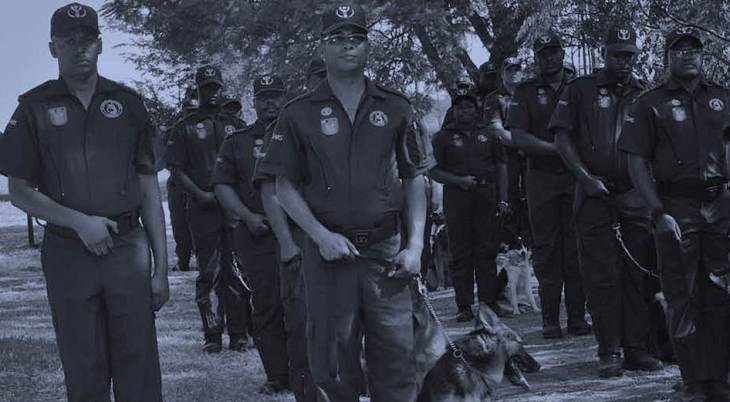
SARS DDU2A gruelling four months of training came to an end during May 2015 as 33 Customs officers and their detector dogs graduated from the SARS Detector Dog Training Academy. A graduation ceremony was held in Pretoria. It was the culmination of a training course where officers were, together with their canine charges, were trained in the finer aspects of the detection of illegal substances and goods in vehicles, vessels, aircraft, containers, cargo, mail, rail, luggage and buildings.

“The substances that they would be able to detect are explosives, firearms and ammunition in addition to narcotics such as cocaine, heroin, cannabis, mandrax, crystal meth and ecstasy,” states Hugo Taljaard, Senior Manager for the Detector Dog Unit (DDU). “They will also be able to find rhino horn, ivory, wet or dry abalone, crayfish and lion bones. This also extends to currency, tobacco products, copper wire and cell phones,” he added.

The training began in January 2015 and covered both practical and physical aspects. The following modules were accomplished during the development programme:

  1. Bonding and socialisation phase with the dog.
  2. Imprinting of substances.
  3. Paramilitary Drill – Salute and Compliment.
  4. Practical search and detect training on vehicles, vessels, aircraft, containers, cargo, mail, rail, luggage and buildings
  5. Physical training – dog and handling – Theoretical training on identification and handling of narcotics and endangered species; Dog conditioning process; Basic animal behavior; and General dog care.
  6. Change of environment training at land ports of entry.
  7. Formal assessment.

After this training, detector dog units will be established in Mpumalanga (Lebombo Detector Dog Unit), Northern Cape (Nakop Detector Dog Unit), and Northern Cape (Vioolsdrif Detector Dog Unit) to support SARS’ strategic objective to increase customs compliance at ports of entry.

Currently, all SARS DDU recruitment is sourced from within the organisation.

Visit the Servamus website (a community-based safety and security website and magazine) for an article published on Customs Detector Dog Unit – “Sniffing out trouble at SA ports” (May 2015 Edition). Source: SARS and Servamus.co.za

Related articles