Ugandan importers to boycott Mombasa

Ugandan importers say they intend avoiding using the Port of Mombasa in Kenya in favour of Tanzania’ Dar es Salaam in future, because of unresolved issues with the Kenyan taxman.

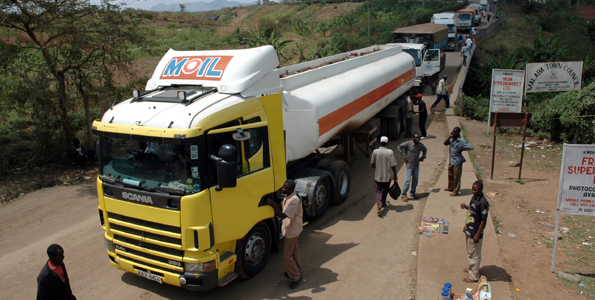
Some 600 containers destined for Uganda are being held at the Kenyan port following the introduction of a cash bond tax. The chairman of the Kampala Traders Association announced last week that the association had resolved to suspend using Mombasa in the interim, reports New Vision (Kampala).

In addition, importers say they will take legal action against the Kenya Revenue Authority (KRA) which has issued a directive instructing importers to lodge either a cash bond equivalent to the value of the imported goods or a bank guarantee to the same value. This must be deposited before the goods being imported can be cleared.

The directive has affected not only the 600 containers waiting at the port but imports of motor vehicles and sugar.

Uganda’s trade minister, Amelia Kyambadde said she had been informed by the Uganda business community that the KRA, under notice CUS/L&A/LEG/1 had made a unilateral decision on a requirement for a cash bond or bank guarantee on transit sugar and motor vehicles above 2000cc.

Ugandan authorities say the action by the KRA directive constitutes another non-tariff barrier imposed by Kenyan authorities on its transit cargo and contravenes East African Community Customs Union protocol and decisions reached by the Council of Ministers in March 2012 on removal of non-trade barriers in the community.

“If Kenya needs an instrument to regulate regional trade in sugar and other products, a cash bond is not the instrument to apply,” said Kyambadde. Sources: Ports.co.za / New Vision (Uganda).

Regional Blocs seek to remove Trade Barriers

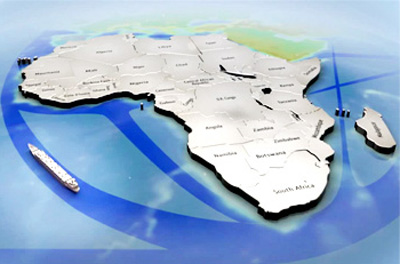
THREE regional economic communities (Recs) have taken the lead as Africa seeks to remove trade barriers by 2017. The establishment of a Continental Free Trade Area (CFTA) was endorsed by African Union leaders at a summit in January to boost intra-Africa trade. Sadc, Common Market for Eastern and Southern Africa (Comesa) and the East African Community (EAC) have combined forces to establish a tripartite FTA by 2014.

Willie Shumba, a senior programmes officer at Sadc, told participants attending the second Africa Trade Forum in Ethiopia last week that the tripartite FTA would address the issue of overlapping membership, which had made it a challenge to implement instruments such as a common currency. “…overlapping membership was becoming a challenge in the implementation of instruments, for example, common currency. The TFTA is meant to reduce the challenges,” he said.

Countries such as Zimbabwe, Tanzania and Kenya have memberships in two regional economic communities, a situation that analysts say would affect the integration agenda in terms of negotiations and policy co-ordination. The TFTA has 26 members made up of Sadc (15), Comesa (19) and EAC (5). The triumvirate contributes over 50% to the continent’s US$1 trillion Gross Domestic Product and more than half of Africa’s population. The TFTA focuses on the removal of tariffs and non-tariff barriers such as border delays, and seeks to liberalise trade in services and facilitation of trade and investment.

It would also facilitate movement of business people, as well as develop and implement joint infrastructure programmes. There are fears the continental FTAs would open up the economies of small countries and in the end, the removal of customs duty would negatively affect smaller economies’ revenue generating measures.

Zimbabwe is using a cash budgeting system and revenue from taxes, primarily to sustain the budget in the absence of budgetary support from co-operating partners. Finance minister Tendai Biti recently slashed the budget to US$3,6 billion from US$4 billion saying the revenue from diamonds had been underperforming, among other factors.

Experts said a fund should be set up to “compensate” economies that suffer from the FTA. Shumba said the Comesa-Sadc-EAC FTA would create a single market of over 500 million people, more than half of the continent’s estimated total population. He said new markets, suppliers and welfare gains would be created as a result of competition. Tariffs and barriers in the form of delays have been blamed for dragging down intra-African trade.

Stephen Karingi, director at UN Economic Commission for Africa, told a trade forum last week that trade facilitation, on top on the removal of barriers, would see intra-African trade doubling. “The costs of reducing remaining tariffs are not as high; such costs have been overstated. We should focus on trade facilitation,” he said.

“If you take 11% of formal trade as base and remove the remaining tariff, there will be improvement to 15%. If you do well in trade facilitation on top of removing barriers, intra-African trade will double,” Karingi said. He said improving on trade information would save 1,8% of transaction costs. If member states were to apply an advance ruling on trade classification, trade costs would be reduced by up to 3,7%.He said improvement of co-ordination among border agencies reduces trade costs by up to 2,4%.Karingi called for the establishment of one-stop border posts.

Participants at the trade forum resolved that the implementation of the FTA be an inclusive process involving all stakeholders.They were unanimous that a cost-benefit analysis should be undertaken on the CFTA to facilitate the buy-in of member states and stakeholders for the initiative. Source: allAfrica.com

Rwanda-DRC Border trade feels pinch from political stand-off

Spare a thought for the informal traders in this region. The terminology is also somewhat humorous, if not ‘offensive’ to an overly liberal mind – democratic South Africans in particular.

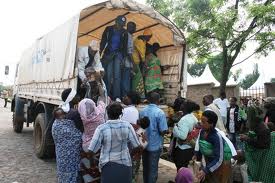
Trade along the Rwanda-DRC border is still going strong, although with some difficulty, despite the ongoing political tensions between the two neighbors.The Rwanda Focus visited Gisenyi, from where it has been reported that several Rwandan civilians who have attempted to cross into DRC for business have allegedly been arrested and tortured.

“You can’t go in there but if you insist, then be ready to die or to be tortured by the authorities in Congo,” said Safina Mukankusi, a cross-border trader. According to locals here, anyone with links to Rwanda in form of passport, looks or language is a target for the Congolese authorities. The irony is Gisenyi is full of Congolese civilians loaded with all sorts of merchandise bought from Rwandan markets which they then carry to the DRC.

It’s also here that massive petty smuggling takes place. “There are so many ‘fat’ women around here,” said a Rwandan customs official, explaining they are stuffed with several garments in which they then hide commodities such as alcohol and sell them on the Rwandan side at a profit. “Some make more than 20 trips per da,y often smuggling a single commodity per journey… but these are poor people who are looking for a meal from their petty deals,” the official revealed. From the proceeds from smuggled goods, the Congolese then buy food and all sorts of stuff which they take back home to sell.

With the current instability however, there’s a new development. “Many Congo-men are coming to sleep here at night and go back home during day for fear of attacks,” said Fidel, a resident of Gisenyi. He says most of them sleep on the streets while others have rented some cheap houses in which they spend the night, often in groups.

Looking at the people here, it’s quite hard to imagine that their country is home to some of the world’s most valuable minerals such as gold and diamonds. Bribes and other corrupt dealings are the quickest ways to get a service done according to Rwandan traders. “Once they know you have money, they will detain you until you part with some of it, it’s mostly those that don’t have anything who are tortured,” explained Laurent Makubu, who claims he has been detained but bribed the Congolese police with $15 to secure his freedom.

While the Congolese who cross to Rwanda report no harassment, it remains a mystery why their Rwandan counterparts are the target of mistreatment on the other side. As a result, most Rwandan traders say they have resorted to using Congolese middlemen to get goods from the DRC side but at a much higher cost as the middlemen charge for their service. Source: Rwanda Focus (Kigali)

Foreign truckers will pay to use roads

Dare say the following will not go unnoticed by South African authorities. The bottom line in all of this is the question of effective enforcement.

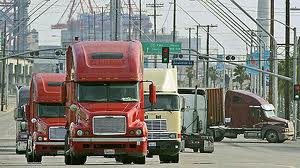
News that the government intends to go ahead with plans to introduce a charging system for foreign truckers using UK roads has got the thumbs-up from the Road Haulage Association (RHA). “This is a happy day for road hauliers”, said RHA Chief Executive Geoff Dunning. “We have been campaigning for years to see a system introduced which will lessen the financial advantage currently enjoyed by our European neighbours.”

Foreign truck drivers will have to pay £10 a day to use British roads by 2015, under the new legislation. British truckers are used to paying special road charges of up to £13 a day on the continent, but their European counterparts pay nothing when they drive in the UK.

Announcing the plan, New Transport Secretary Patrick McLoughlin said: “These proposals will deliver a vital shot in the arm to the UK haulage industry. “It is simply not right that foreign lorries do not pay to use our roads, when our trucks invariably have to fork out when travelling to the continent.” It is estimated that 1.5m visits are made by foreign hauliers to the UK every year.

The new charge is expected to cost most drivers £1,000 a year. Dunning added: “This is not enough to give us a level playing field as regards the rest of Europe. But it is a good start and will help no end in beginning to prepare the ground.

“We are pleased that Mr McLoughlin has seen fit to bring forward this legislation so early in his tenure as Transport Minister; he is obviously very aware as to the important role played by UK hauliers in rebuilding the economy, increasing UK competitiveness and boosting growth.”

UK drivers will also have to pay the daily charge because of European laws, but it will be offset by a corresponding road tax cut. A bill setting out the plan will be published next month, with ministers expecting the new system to be introduced within the next two years. Source: Lloyds List

Ressano Garcia – Border Operations Assessment

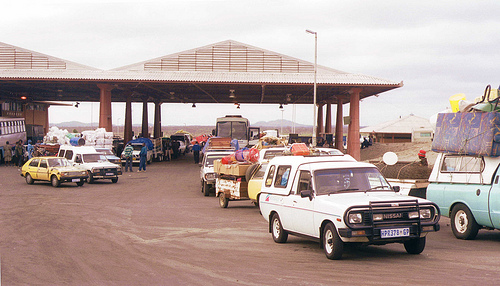
As part of its Coordinated Border Management (CBM) program, the Southern African Trade Hub (SATH) undertook a Border Operations Assessment (BOA) at Ressano Garcia along the Mozambique/South Africa border. The objective of the assessment was to establish processes used by the different agencies to clear goods, identify challenges and recommend mechanisms to addresses obstacles. The assessment also entailed establishing the time it took for trucks to cross the border by physically recording arrival and departure times at points where the clearance of goods was undertaken.

SATH held discussions with both public and private agencies operating at the border: Customs, Immigration, Health, Agriculture, Police, Traders Association, Clearing and Forwarding Agents and Insurance Companies. The agencies explained their roles and mandates, how they carry out their day to day operations at the border, their working relations with other agencies at the border and the challenges they face in carrying out their duties.

SATH also had discussions with the One Stop Border Post (OSBP) project team to assess progress on the initiative. The OSBP is at an advanced stage and only awaits the adoption of the legal framework by South Africa, which is anticipated by the end of 2012.

Findings of the BOA and recommendations will be disseminated through a national and border workshops to which senior officials of agencies operating at the border and border officials will be invited. At these workshops Joint Border Committees will be established to take the recommendations forward to streamline border management.Source: SA Trade Hub

Regional IT inter-connectivity takes another step

Delegates from at least 20 African Customs Administrations met in Pretoria, South Africa between 13 and 15 August to advance developments towards a common framework and approach to IT inter-connectivity and information exchange in the region. Convened by the SADC secretariat in consultation with COMESA and Trademark Southern Africa (TMSA), the three day work session focussed on uniform acceptance of the WCO‘s Globally Networked Customs (GNC) methodology, regional awareness of customs developments in the Southern and East African region, as well as joint agreement on customs data to be exchanged between the member states.

Mauritius Revenue Authority (MRA) shared its experience with delegates on the launch of its Customs Enforcement Network (CEN). Kenya Revenue Authority will soon be sharing enforcement information with its MRA counterpart. At least 22 African countries are expected to link up with the CEN network over a period of time. Customs enforcement information is the second pillar of the WCO’s GNC information exchange methodology; the first pillar being Customs information exchange. The latter provides for a holistic approach to the dissemination of common customs data derived from supply chain exchanges, for example declaration information, cargo information, and AEO information to name but a few. This information is vital for trading countries to administer advance procedures and better validate the information being provided by the trade.

Rwanda Revenue Authority introduced it’s RADDex programme which is a web-based IT solution for the exchange of cargo manifest information between participating states in the East African Community (EAC) – see related article below.

SADC and COMESA are rallying their members to participate in the initiative. At the current juncture, various member states have expressed keen interest to participate. While the regional intention is the linking of all customs administration’s electronically, initial developments envisage bi-lateral exchanges between Customs administrations which are ready to engage. The importance of the adoption of the GNC methodology is to ensure that customs connectivity and information exchange is harmonised and consistent across the Southern and East African region irrespective of whether countries are ‘early adopters’ or not.

EAC authorities share cargo data online

East African tax authorities have launched an online system to share customs cargo information in the region. The system, RADDEx 2.0 (Revenue Authorities Digital Data Exchange), will enable the tax authorities to instantly know what is in transit in the region. Uganda Revenue Authority says RADDEx 2.0 is web-based, has more “functionality and better performance” and will be used by clearing agents. If cargo destined to Uganda poses any risk, notifications  will be sent via e-mail so that authorities can plan action prior to arrival of the cargo. All data on cargo will be sent to a central server at the East African Community headquarters in Arusha, Tanzania. Any East Africa partner state that needs data about expected cargo will interrogate the system, which will automatically provide feedback. The system was developed by IT and customs expert staff from Uganda, Kenya, Tanzania, Rwanda and Burundi and sponsored by USAID/COMPETE (Competitiveness and Trade Expansion Programme). Source: The New Vision, Uganda

Thick Borders – Thin Trade

It’s quite amazing the number of reports featured in various african media across the continent pushing the ‘free trade’ agenda. The incumbent governments on the other hand are naturally concerned with dwindling tax collections, while at the same time increasing incidents of graft, collusion, and corruption run rampant at the border. While the following article states the obvious, unfortunately, nowhere will you find or read a practical approach which deals with increased ‘automation’ at borders and the consequential re-distribution of ‘bodies’ to other forms of gainful employment. Its jobs that will be on the line. Few governments wish to taunt their electorates – non-essential jobs are a fact of life and are destined to stay if that is what will earn votes and a further term in power. Moreover, there is no question of removing internal borders with the emphasis on costly ‘One-Stop Border’ facilities. To some extent the international donor community won’t mind this as there’s at least some profit and influence in it for them.

Poverty in Sub- Saharan Africa is a man-made phenomenon driven by internal warped policies and international trade systems. The continent cannot purport to seek to grow while it blocks the movement of goods and services through tariff regimes at the same time Tariff and non-tariff barriers contribute to inefficient delivery systems, epileptic cross-border trading and thriving of illicit/contraband goods.

This ultimately harms the local and regional economy. Delays at ports of delivery, different working hours and systems of control across the continent, unnecessary police roadblocks and poor infrastructure condemn countries to prisons of inter-regional and intra-regional trade poverty.

According to the United Nations Economic Commission for Africa, removal of internal trade barriers would lead to US$25 billion per year of intra-regional exports in Africa, an increase by 15,4 percent by 2022. Making African border points crossings more trade efficient would increase intra-regional trade by 22 percent come 2020. Trade barriers in East Africa Community alone increase the cost of doing business by 20 percent to 40 percent.

Such barriers include the number of roadblocks within each country, cross- border charges for trucks and weighing of transit vehicles on several points on highways. Kenya is grappling to reduce the number of its roadblocks from 36 to five and Tanzania from 30 to 15. Sub-Saharan Africa records an average port delay of 12 days compared to seven days in Latin America and less than four days in Europe. Africa is lagging behind!

In West Africa, Ghanaian exports to Nigeria are faced with informal payments and delays as the goods transit across the country borders whether there is proper documentation. In the Great Lakes Region, an exporter is faced with 17 agencies at the border between Rwanda and Democratic Republic of Congo each with a separate monetary charge sheet.

A South African retail chain Shoprite reportedly pays up to US$20 000 a week on permits to sell products in Zambia. Each Shoprite truck is accompanied with 1 600 documents in order to get its export loads across a Southern African Development Community border. Tariff and non-tariff barriers simply thicken the wall that traps Africans in economic poverty.

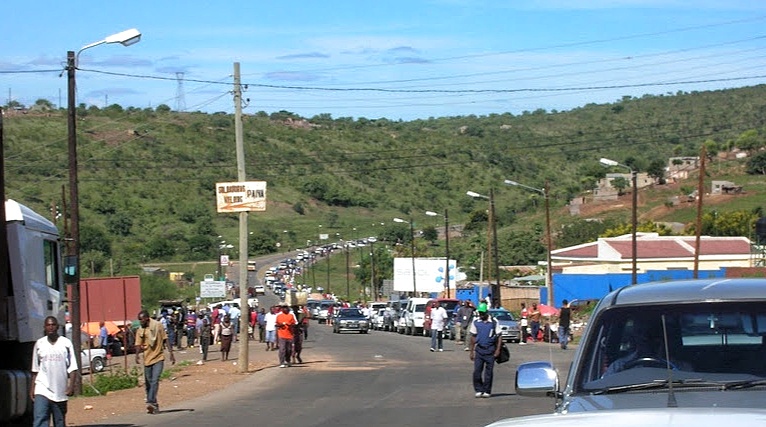
The new African Union chair should push for urgent steps to lower barriers to trade within Africa. Border control agencies need retraining and border country governments need to integrate their processes; long truck queues waiting to cross border points should not be used as an indicator of efficiency.

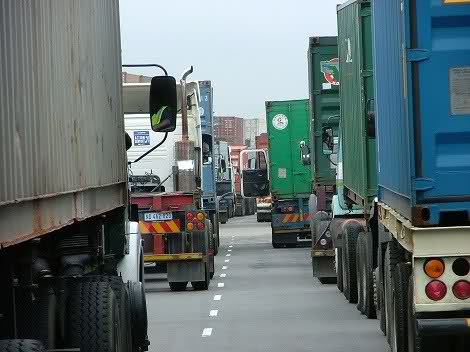
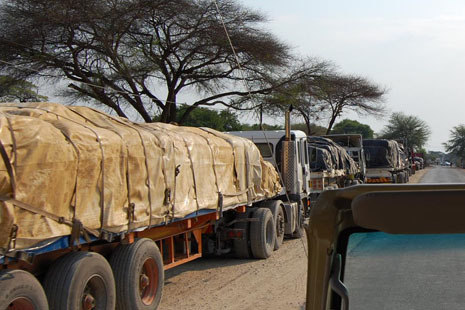
If it takes a loaded truck one hour to cover 100 kilometres; a four-hour wait at the border increases the distance to destination to another 400 kilometres. Increased distance impacts on the prices of goods at the retail end hence limiting access to products to majority of Africans. Limited access translates to less freedom of choice — similar to a locked up criminal prisoner.

With modern technology, goods should be declared at point of origin and point of receipt. Border points should simply have scanners to verify the content of containers. Protectionism, tariffs and non-tariff barriers within the continent sustains African market orientation towards former colonisers.

African entrepreneurs are subjected to longer travel schedules due to constant police checks and slow border processes. To fight poverty on the continent, African people would benefit from an African Union Summit that resolves to facilitate efficiency in movement of goods and services. Efficient delivery systems on the continent will tackle challenges of food insecurity, poor health care, conflicts and further promote diversified economies arising from competitive healthy trading amongst and between African nations.

Elimination of tariff and non-tariff barriers to trade will provide an opportunity for African entrepreneurs to adequately take their rightful places as relevant players in the global trade system. It is imperative that African countries re-orient their strategies to promote productivity by reviewing tariffs that hold back entrepreneurs from accessing the continent’s market. This calls for both a competitive spirit and a sense of integrated tariff and process compromise if the continent is to haul its population from poverty. Source: The Herald (Zimbabwe)

Mozambique – New customs transit regulation

FTWOnline has published a letter it received from the CEO of Maputo Corridor Logistics Initiative (MCLI), the interim-CEO of Maputo Port Development Company (MPDC). Seems like an important ‘heads-up’ for all logistics operators. It reads as follows –

“The hardly-negotiated Mozambique customs transit regulation is concluded and the document sent to the minister of finance for approval. Approval and official gazetting is expected for the first week of August.

“Key features are:

  • All the unknown costs are replaced by a transit fee of 500.00-mts (+\- 18 US$) for general cargo and 10 cents of mts (0.036 US$) per for bulk cargo.Art. 13.
  • It is clarified that transit cargo is duty-free and subject to a guarantee that can be isolated (for a single transaction) or global (for transactions etween 3-month and 1-year). The bond covers only the duties and taxes at risk and is capped at 35% of duties and taxes. As an example, if the value of the good is US$1 000, the bond will be equal to 35% of 22% (7% of duties and 17% of vat), totaling around US$75. The bond is calculated on the basis of the value of transactions undertaken in the preceding year. Art. 14 to 19.
  • Transhipment is free-of-bond and the acquittal takes place only in the last port in the national territory. Art.23.
  • Acquittal period for areas where the single window is not yet in place is of 5 business days.”

South Africa – Stalling Regional Integration

Yes, you’ll be forgiven if you thought this was some belated April-fools joke. South Africa has been accused of frustrating plans to create a regional customs union and instead preferring to bolster the South African Customs Union (Sacu), where it holds sway. 

A customs union is a trade agreement by which a group of countries charge a common set of tariffs to the rest of the world, while granting free trade among members. Regional Integration minister, Priscilla Misihairabwi-Mushonga, said there was a feeling that South Africa wanted to use Sacu as its basis to form a regional customs union, instead of working towards creating a new one.

“What we see is that South Africa wants to use Sacu as the basis for forming a regional customs union and sometimes, this is viewed as having a big brother mentality,” she said. Misihairabwi-Mushonga said, for this reason, negotiations towards a holistic Southern African Customs Union (Sadc) had not gone very far. Botswana, Lesotho, Namibia, Swaziland and South Africa make up Sacu, with the four countries having benefited by aligning themselves to South Africa, Africa’s largest economy. A Sadc customs union would involve the 15 countries of the region, instead of Sacu, which is considered narrow.

But Catherine Grant, the head of economic diplomacy at the South African Institute of International Affairs, reckons the smaller nations in Sacu, like Lesotho, may be opposed to Sacu morphing into a regional customs union. “This will be opposed by other Sacu members, not necessarily just South Africa, as this (Sacu) is not just a trade agreement, but involves a broader range of economic issues,” she said.

“Up to 60% of the Lesotho budget is Sacu revenue, so the vested issues, whether Sacu is the basis of a customs union, are not just South African.” Grant felt that it was impossible to expand Sacu in its current form, as it would cost South Africa too much and would dilute the resources that were meant for other projects.

The head of the trade and policy think-tank said instead, South Africa preferred to see the implementation of a free trade area (FTA) as a first step, since customs union negotiations were usually lengthy and time-consuming. “The preference is to first channel scarce resources to existing commitments and trying to make them as beneficial as possible,” she explained.

Grant said while South Africa was the dominant player in the region, hence engendering a feeling that it was imposing itself as the big brother, the country was actually holding back from taking a leading role and this cost the region.

“Sometimes South Africa holds back because they are conscious of not being a big brother and that could be detrimental to the region,” she explained. However, Grant said energies should be directed towards the conclusion of negotiations to set up the Tripartite Free Trade Area (TFTA), which includes the Common Market for East and Southern Africa, the East African Community and Sadc.

“The TFTA will resolve some of the overlapping issues that can be difficult to solve when it comes to a customs union,” she said. Since Zimbabwe adopted multicurrencies in 2009, there has been a call that the nation either join Sacu or push for the formation of a regional customs union. Zimbabwe remains wary of joining Sacu, as it fears for its economic independence, yet negotiations for a regional customs union are moving at a snail’s pace.

Sacu was established in 1910, making it the world’s oldest customs union. It consists of Botswana, Lesotho, Namibia, South Africa and Swaziland. Source: AllAfrica.com

Cloud Computing update

Cliffe Dekker Hofmeyr offers an appraisal on the Working Paper on Cloud Computing – Privacy and Data Issues, recently published by International Working Group on Data Protection in Telecommunications. Although the guidelines detailed in the Working Paper are not mandatory, it appears that the intended approach to data protection in the cloud is one of uniformity, with a view to ultimately developing best practice based processing of personal information. It would be interesting to understand to what extent S ATrade Hub  and Microsoft, in conjunction with the Customs of Namibia and Botswana, considered any such guideline in regard to their cloud computing initiative on the Trans-Kalahari Corridor?

The recommendations under the Working Paper highlight some of the risks and complexities associated with cloud computing. The overreaching nature of the Working Paper will serve to ensure that there is no lowering of general data protection standards for processing personal data in the cloud. The Working Paper specifically advocates the following general recommendations:

  • Carrying out privacy impact and risk assessments prior to embarking on cloud computing projects.
  • Development of practices by cloud service providers to ensure greater transparency, security and accountability regarding information on potential data breaches; and also more balanced contractual clauses to promote data portability and data control by cloud users.
  • Research, third-party certification, standardisation, privacy by design technologies and other related schemes in order to achieve a desired level of trust in cloud computing.
  • Legislative reassessment of the adequacy of existing legal frameworks allowing cross border transfer of personal information and consideration of additional privacy safeguards.
  • Accounting for independent audit trails with regards to the location of the personal information. Continuity in the provision of information by data controllers to privacy and data protection authorities. These recommendations are aligned to the general principles set out in the European Union and Safe Harbor data privacy frameworks.

The Working Paper also provides more specific recommendations, on ‘best practice’, ‘controllers’, ‘cloud service providers’ and ‘auditing’. These specific recommendations contemplate the implementation of technical measures that can be used to determine the exact physical location where personal information is held and stored, with an audit trail specifying any copying and/or deletion of personal information. In addition, the Working Paper includes a suggestion for encryption of all personal information (both at rest and in transit) and also recommends the conclusion of agreements between data controllers and cloud service providers to expressly designate and limit the physical locations where personal information will be processed. The Working Paper specifically provides that the cloud service provider should not be entitled to use personal information in the cloud for its own purposes.

It is likely that significant steps will need to be taken by cloud service providers in order to comply with the recommendations under the Working Paper and/or applicable data protection laws, which may potentially require substantial financial resources, including for procuring and implementing the appropriate technology required to give effect to the recommendations and/or laws.

In the South African context, the principles under the current draft of the Protection of Personal Information Bill(PPI) (in particular, the provisions which relate to the conditions for lawful processing of personal information and transborder information flows) can be aligned to the recommendations under the Working Paper. The real test for cloud service providers and their customers will however be in the practical implementation of the principles under PPI. Many of the recommendations under the Working Paper will serve to provide guidance in this respect, particularly in the measures which need to be implemented to maintain a level of transparency in the supply chain of personal information in the cloud. Source: www.cliffedekkerhofmeyr.com

RELATED ARTICLES

Awarding the SKA

So what does the awarding of the Square Kilometre Array (SKA) and Customs have in common? Sweet blow all as far as I was concerned until a colleague of mine, Roux Raath, pointed out one of the criteria on which the award was made. Reading the actual report one realises this has more to do with the fact that six African countries will be involved and the cross border movements are foreseen to be complex in contrast to movements between Australia and NZ. Therefore, this has less to do with the South African Customs administration than the Southern African geographical environment. The report also refers to duty and tax structures and these issues should perhaps find a home with the DTI as customs does not dictate these. Nonetheless, the fact remains that certain issues have been raised and these should be considered when strategies are devised to support the SKA project.

The SKA Site Advisory Committee (SSAC) reviewed the various customs systems and duty rates, the excise tax regimes and tax rates, and related issues such as import and export processes that will impact the SKA over its lifetime. A wide range of issues was considered since the SKA involves a large multinational investment of funds, materials, and services, including the provision of scientific and technical equipment, and personnel in various remote locations.

The SSAC reviewed the issues presented by the two candidates, including details related to the six diverse South African member countries; cross-border coordination and logistical issues presented by the South African proposal; and the diverse customs, excise, and regulatory structures in the two candidate sites. The SSAC also considered the long-standing Australia–New Zealand Closer Economic Relationship Trade Agreement (ANZCERTA) free-trade and economic cooperation agreement (allowing for the free flow of goods, services, and people between the two countries) and the absence of overall free-trade agreements among the six members of the South African consortium. The SSAC also reviewed the customs, free-trade, economic, and business environments in Australia and New Zealand and considered the written confirmation from the Australian government that there will be no Goods and Services Tax (GST) payable by the SKA in Australia. On the factor of Customs & Excise, the SSAC awarded the following points for each of the contending consortia – 13.3 for ANZ and 6.7 for South Africa.

To read the full report, download here!

 Related articles

Namibia buys into ‘Single Window’ concept

From April 12-13, Southern African Trade Hub (aka USAID) presented Single Window as a cutting-edge tool for trade facilitation to the Ministry of Industry and Trade, Ministry of Finance, Customs and other private sector organizations, explaining how a NSW for Namibia could improve the Trading Across Borders index ranking, which currently stands at 142 out of 183 countries. Single Window is a crucial instrument that will eliminate inefficiency and ineffectiveness in business and government procedures and document requirements along the international supply chain, reduce trade transaction costs, as well as improve border control, compliance, and security.

Benefits for Government: A Single Window will lead to a better combination of existing governmental systems and processes, while at the same time promoting a more open and facilitative approach to the way in which governments operate and communicate with business. Traders will submit all the required information and documents through a single entity, more effective systems will be established for a quicker and more accurate validation and distribution of this information to all relevant government agencies. This will also result in better coordination and cooperation between the Government and regulatory authorities involved in trade-related activities.

Benefits for trade: The main benefit for the trading community is that a Single Window will provide the trader with a single point for the one-time submission of all required information and documentation to all governmental agencies involved in export, import or transit procedures. As the Single Window enables governments to process submitted information, documents and fees both faster and more accurately, traders would benefit from faster clearance and release times, enabling them to speed up the supply chain. In addition, the improved transparency and increased predictability would further reduce the potential for corrupt behaviour from both the public and private sector.

If the Single Window functions as a focal point for the access to updated information on current trade rules, regulations and compliance requirements, it will lower the administrative costs of trade transactions and encourage greater trader compliance. The Permanent Secretary for the Ministry of Industry and Trade underscored the need for Namibia to proceed with the Single Window concept, and advised participants that his Ministry, together with the Ministry of Finance, would jointly package the Single Window concept and submit it to Cabinet for Government approval.

In Southern Africa, Mauritius already has an effective Single Window, which is reflected in its “Trading Across Borders” ranking of 21. Mozambique recently launched its pilot Single Window. SATH will support and facilitate the processes for the establishment of a Botswana National Single Window system to streamline cross border trade. The current SATH Trans Kalahari Corridor (TKC) Cloud Computing Connectivity program, which is being piloted between Botswana and Namibia, provides an ideal technology platform for linking Botswana and Namibia Single Windows, leveraging the investment by BURS, Namibia Customs and SATH to date in the development of this system. SATH is currently in the process of gauging support for National Single Window in South Africa.

Excuse my cynicism, but the SA Trade HUB  has yet to demonstrate the viability of its Cloud Computing solution between Namibia and Botswana Customs. What is reported above is the usual sweet and fluffy adjectives which accompany most international customs and trade ICT offerings, ignoring prerequisite building blocks upon which concepts such as Cloud and Single Window may prove beneficial and effective. Past project failures in Africa are usually blamed on the target country in not bedding down or embracing the new process/solution – never the vendor. Given the frequency of technology offerings being presented by donor agencies on unwitting national states, there seems little foreign interest in ‘bedding down’ or ‘knowledge transfer’ than the ‘delivery of expensive technology’.

Related articles and references

Open Borders and Integrated Supply Chains break down Global Trade Barriers

East Asian economies have recorded marked improvements in their ability to enable trade, while traditional frontrunners Singapore and Hong Kong retain a clear lead at the top of the global rankings, according to the Global Enabling Trade Report 2012, released today by the World Economic Forum.

The report, which is published every two years, also confirms strong showings for Europe’s major economies, with Finland and the United Kingdom both advancing six places to 6th and 11th, respectively, and Germany and France remaining stable at 13th and 20. Other large economies fare less well: the US continues its decline to 23rd, as does China (56th) and India (100th). Among emerging economies, Turkey (62nd) and Mexico (65th) remain stable while Chile (14th), Saudi Arabia (27th) and South Africa (63rd) climb in the ranking. ASEAN members Thailand (57th), Indonesia (58th) and the Philippines (72nd) also improve. Perhaps the proponents of OSBPs and a BMA in South Africa have not read this or have deeper insight into the matter.

As well as ranking nations’ trade openness, the report finds that traditional notions of trade are increasingly outdated as global value chains require new measurements, policies and cooperation. The report also finds that security, quality and trade can be mutually reinforcing through supply chain integrity efforts, but a knowledge gap in identifying buyers remains an important barrier. The biennial report, covering 132 economies worldwide, measures the abilities of economies to enable trade and highlights areas where improvements are most needed. A widely used reference, it helps countries integrate global value chains and companies with their investment decisions.

At the core of the report is the Enabling Trade Index, which measures institutions, policies and services facilitating the free flow of goods over borders and to destination. It breaks the enablers into four issue areas: market access, border administration, transport and communications infrastructure, and business environment. The Index uses a combination of data from publicly available sources, as well as the results of the Executive Opinion Survey, a comprehensive annual survey conducted by the World Economic Forum with its network of partner research institutes and business organizations in the countries included in the report. The 2012 results demonstrate that the ASEAN Trade in Goods Agreement has facilitated trade since its entry into force in 2010. This year, the report also directly captures the most important obstacles to exporting and importing in each country, and notes the strong links between import and export success. Source: AllAfrica.com / WEF

Enhancing South Africa’s and Africa’s development through Regional and Continental Integration

Hardly a week goes by without some or other African politician waxing lyrical about continental integration, continental trade diversification, and a wholesome analysis of the ‘barriers’ which prevent the African continent  from reaching its full economic potential. No doubt I’m a bit biased in relaying the recent ‘public lecture’ of our deputy President Kgalema Motlanthe at the University of Finlandread the full speech here! Plenty of insight clearly delineating a plethora of barriers; yet, are we African’s so naive not to have identified these barriers before? Evidently yes.

In recent weeks, on the local front, we have learnt that One Stop Border Posts (OSBPs) is the solution to non-tariff barriers. This topic was drilled amongst the press till it got boring. The focus soon thereafter shifted to the implementation of a border management agency (BMA) – all of government under one roof – so simple. The reality is that there is no silver-bullet solution to African continental integration. Of this, affected business, Customs administrations and the international donor community is acutely aware. While the WTO and the multitude of trade lawyers will ‘yadder’ on about ‘diversification’ in trade, the reality is that Africa’s raw materials are even more sought after today than at an any time before. Certainly those countries which contain vast resources of oil and strategic minerals are about to reap the benefits. So why would African countries be concerned about diversification when the petro-dollars are rolling in? Perhaps greed or lack of foresight for the medium to long-term well-being of countries and their citizens? The fact remains, without homegrown industries producing goods from raw materials, most of  Africa’s eligible working class will continue to be employed by foreign mineral moguls or the public service.

Several customs and infrastructure solutions have over the last few years emerged with the usual credential of “WCO or WTO compliant”. Africa has been a guinea pig for many of these solutions – ‘experiments’ if you prefer. Literally millions of dollars are being spent every year trying out so-called ‘best-of-breed’ technology which users unfortunately accept without much questioning. The cart is being placed before the horse. Why? because the underlying route cause/s are not being identified, understood (sufficiently) and prioritized. Insofar as there exists no silver bullet solution, neither is there a single route cause in most cases. Unfortunately, donor aid often comes with its own pre-conceived outcomes which don’t necessarily tie in with those of the target country or the well-being of the continent.

While governments like to tout the ‘big-hitting’ projects, there are several ‘less exciting’ (technical) areas which countries can address to kick-start the process. One of these has even been recognised by the likes of the World Bank and OECD notwithstanding capital-intensive programs which promised much and have not delivered fully on their promise.  The issue at hand is the harmonisation of customs data. It might at first sound irrelevant or trivial, yet it is the key enabler for most Customs Modernisation initiatives. While there is still much anticipation in regard to the forthcoming deliberation and outcome of the WCO’s Globally Networked Customs (GNC) initiative at June’s WCO Policy Commission session in Brussels, there is significant support for this approach on the African continent. The momentum needs to be maintained.

 Related articles