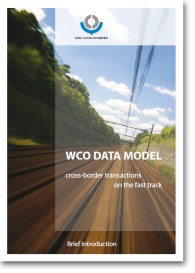
 Governments around the world have realized that rapid economic growth cannot be achieved in an environment where international trade processes are inefficient and cumbersome. Over the past two decades, serious attention has been devoted to the modernization of international trade and cross-border regulatory procedures. Countries have committed substantial resources to national projects in the areas of customs automation and Electronic Data Interchange (EDI) infrastructure.
Electronic ‘Single Window’ services delivery is now being demanded in several countries. Based on the principle of joined-up government services, the ‘Single Window’ environment has the potential to deliver transformational advantages to business by simplifying and unifying touch-points between members of the trade and the different government departments involved in cross-border regulatory procedures. In addition, new demands on supply chain security and facilitation have emerged, leading to the establishment of the WCO SAFE Framework of Standards.
This booklet provides a brief introduction to WCO Data Model Version 3.0. It explains the scope of the Model, its relationship with other international instruments such as the Revised Kyoto Convention, and its alignment with widely used international standards. The booklet is aimed at project leaders and Information Technology architects from Customs administrations and other cross-border regulatory agencies. The World Customs Organization hopes that this booklet will create a proper understanding of the value of the WCO Data Model as an indispensable instrument in projects that address modernization of regulatory agencies including Customs. Source: WCO.
Please visit: http://wcoomdpublications.org/data-model-3.html for pricing and conditions of online WCO Data Model usage and support. Available for Customs administrations and Trade Practitioners.
Related article
-
WCO Data Model V.3 available online! (mpoverello.wordpress.com)
 Collection of revenue has historically been the cornerstone of a Customs administration’s responsibilities. For a number of years, Customs has been actively involved in protection of society and trade facilitation initiatives. More recently, the role of Customs has expanded; issues such as the fight against counterfeiting, counter-terrorism activities and the protection of the environment have featured high on the agenda of international Customs work programmes. Alongside these important topics, revenue collection continues to be an area of concern for Customs administrations. The global financial crisis has led to a downturn in international trade which has inevitably hit government revenues. Additionally, the global trend in the reduction of Customs duty rates, through unilateral, regional, and multilateral trade liberalizations, can potentially have the same effect.

 What Happened to the Portcullis?
You must be logged in to post a comment.