Swaziland accedes to the WCO RKC

Swaziland accedes to WCO RKC

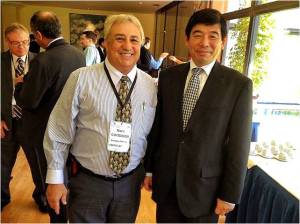
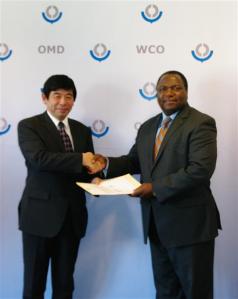
The Ambassador of the Kingdom of Swaziland, H.E. Joel Nhleko, deposited his country’s instrument of accession to the International Convention on the Simplification and Harmonization of Customs Procedures (Revised Kyoto Convention) with the World Customs Organization on 31 October 2012.

“The WCO is delighted that the number of Contracting Parties to the Revised Kyoto Convention continues to show an upward trend,” said WCO Secretary General, Kunio Mikuriya. “I would therefore strongly encourage other WCO Members to accede to this important Customs instrument as soon as possible,” he added.

Some of the Convention’s key elements include the application of simplified Customs procedures in a predictable and transparent environment, the maximum use of information technology, the utilization of risk management, a strong partnership with the trade and other stakeholders, and a readily accessible system of appeals.

Having entered into force on 3 February 2006, the Revised Kyoto Convention now has 84 Contracting Parties, and is regarded as a blueprint for effective and modern Customs procedures. Swaziland has been a Member of the WCO since 15 May 1981. Source: WCO

WCO News – October 2012 Edition

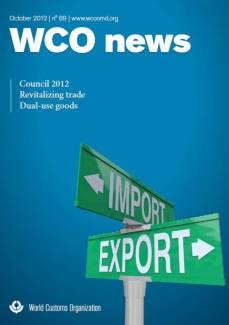
Treat yourself to news and views on Customs around the globe. As usual the WCO News does not disappoint. Content includes –

  • Highlights from the 2012 Council.
  • Latest developments in WCO areas of work: compliance, facilitation, capacity building and tariff and trade affairs.
  • Germany and the problem of “cheap whites”.
  • UK’s strategy to tackle tobacco smuggling.
  • The Chairperson of the Kimberley Process, Ambassador Gillian A. Milovanovic, sheds some light on the diamond trade and its “dark” side.
  • China’s Ambassador to the EU, H.E. Wu Hailong, provides his perspective on trade facilitation, as well as China’s initiatives in this domain.

Moreover, there are other interesting articles on informal fund transfer systems, dual-use goods, and transit control. For South African readers don’t miss the article penned by our Customs Counsellor in Brussels  Coffet Lebepe. His article provides an insight on South Africa’s preparations to combat illicit trade in tobacco products. Click here to download the WCO News! Source: The WCO

Nigeria Customs – Exiting the era of ‘contracted services’

Goodluck Jonathan addressing the WCO in June 2012

As the Nigeria Customs Service (NCS) gets set to assume all hitherto contracted services from the service providers come December 31, 2012, kudos must be given to the administration of President Goodluck Jonathan for the political will which has brought this to fruition. This is a highly significant development that should encourage other African nations to follow suit.

Over the years, the functions of the Customs administrations have evolved from revenue collection to include protection of industries, protection of citizens, trade facilitation as well as trade security and environmental issues and Customs administrations have continued to improve with the dynamism brought about by the evolving global world.

Therefore, if any country must rely on contracting core Customs services to private companies, then such a country should as well disband its Customs administration. What this means is that no one can ‘Captain’ a ship better than a ‘Captain’, even the best pilot in the world would fail woefully when saddled with sailing a ship.

This is because, whilst it is necessary to contract some of these services to the private sector, such services are usually treated by benefiting firms as mere business ventures and as such, create a situation where governments use such contracts to benefit close allies, even as organisations will go to the extremes to secure such contracts, primarily for profit making.

Having critically studied the scenario, the World Customs Organisation (WCO), summed up that such practice usually results in a situation where there will be no trust in the Customs frontline and post clearance capability. This has prompted the Organisation to, in recent years, develop several diagnostic studies and programmes aimed at championing broader international Customs capability with high benefits to governments of its member countries.

Findings have however, shown that governments may choose the private-sector to complement its resources and capabilities in which supporting operations ranging from printing Customs legislation and tariff to designing Customs websites, repairing and maintaining facilities and equipment and conducting research into specific topics may be outsourced to private companies.

Core Customs responsibilities were also, through contracts with a government, outsourced to private companies that conduct pre-shipment Inspection (PSI) or Destination Inspection (DI) activities. As their names suggest, PSI activities are conducted in exporting countries in order to verify the quality, quantity, price and classification of such exported goods, while DI activities are carried out in combination with scanning technology on imported goods in importing countries.

However, this option, according to the world Customs body, has been observed to be usually more cost effective than in-house operations for many reasons including the stimulation provided by competition in the private sector.

It is therefore time that such organisations which front themselves with the ‘be all’ systems in Customs tariff and valuation appraisal rather seek a more practical and benefit-delivering model than one which not only scams governments of service and inspection fees, but also offers no benefit to trade.

Some of them offer government free cargo scanning equipment in exchange for a lucrative inspection fee. None of this is based on risk management and mostly purely profit focussed. The concept forgoes most, if not all the modern Customs principles and standards promoted by the WCO.

Rather than this concept which adds no value to trade, the focus of government should be capacity building for Customs officers; and with a commitment to capacity building under the Dikko-led management, the NCS now has capable hands to take-over the running of all its functions, and thereby retaining capital flight.

It is worthy to note that PSI and DI is normally introduced to enhance Customs functions as a stop-gap measure while waiting for Customs reforms and modernisation.

According to the WTO, as at November 2011, at least 25 countries, most of which are in sub-Sahara Africa, had contracts with private inspection entities for PSI and DI of which Nigeria was one of them, but this would no longer be after 31st December, 2012, when Nigeria would exit from that category.

Furthermore, it is also important to note that the WCO position is that such contracted core Customs services should not be considered as a permanent substitute for the Customs administration, but only as a temporary measure.

As a consequence of critical assessments of the performance of inspection companies and inefficient capacity-building and training activities, many Customs administrations have exited these outsourcing contracts and the WCO, with its accumulated knowledge, is able to assist its members with the process of discontinuing these contracts.

Nonetheless, there are certain circumstances where the hiring of inspection companies could be justified because of lack of expertise as in the case of post-conflict reconstruction situation. However, in such cases, contracts with PSI, DI companies as service providers should be accompanied by an active exit plan strategy within the context of a capacity-building or Customs modernisation programme. Even the PSI companies are in this case, expected to work in compliance with the WTO agreement on PSI and relevant WTO’s recommendations.

When Abdullahi Dikko, on assumption of office as Comptroller-General of the Nigeria Customs Service in 2009, began a campaign for the modernisation of the NCS as captured in his six point agenda with more emphasis on capacity building and improved welfare, he was criticised for embarking on such a capital intensive venture by many, who then didn’t believe in his vision. But today, the result of the huge investment on capacity building is evident as the NCS, come December 31, 2012, would pride itself among the 21st century Customs administrations, measuring with its counterparts in developed countries, by taking over full control of all Customs operations.

There are arguments that the outsourcing of supporting functions to the private sector enables the Customs administration to focus their scarce resources on their functions, but this is no longer the case with the NCS.

Facts have shown a sharp rise in the resources of the Service due to an improved revenue collection. Monthly collection has risen from the inherited N30 billion to N90 billion. The increased revenue collection has made it possible for Customs officers to have a 100 per cent salary increase and even freeing more resources for the acquisition of quarters for officers and men, renovation of Customs barracks nationwide, provision of staff buses, uniforms and clinics in most commands.

This landmark achievements have been made successful with the full deployment of the NICIS platform for e-Customs declaration and processing, manifest submission, duty payment and final release. Records show that e-manifest processing which usually took seven days and above in 2009, is now been processed same day. Same goes for e-remittance processing. Same transformation has being noticed in the number of processed SGDs which has risen from an average of 367,897 in 2009 to about 526,604 currently.

Summarily, it must be noted that the scanning aspect of the Customs supply chain security paradigm contributed to the evolution from pre-shipment inspection to destination inspection. Traditionally, many developed countries, especially in Africa, employ companies from developed countries to do pre-shipment inspection of imports to Africa primarily for classification and valuation purposes.

The pressure to consider exports as well as imports and for national security contributed to the emergence of destination inspection companies, where the Customs controls are conducted in the African country. This has reduced the internal costs of such service companies and increased their incomes but has done little or nothing to reduce checks at the border or import points. Source: Leadership (Nigeria)
Picard 2012 – with a South African perspective

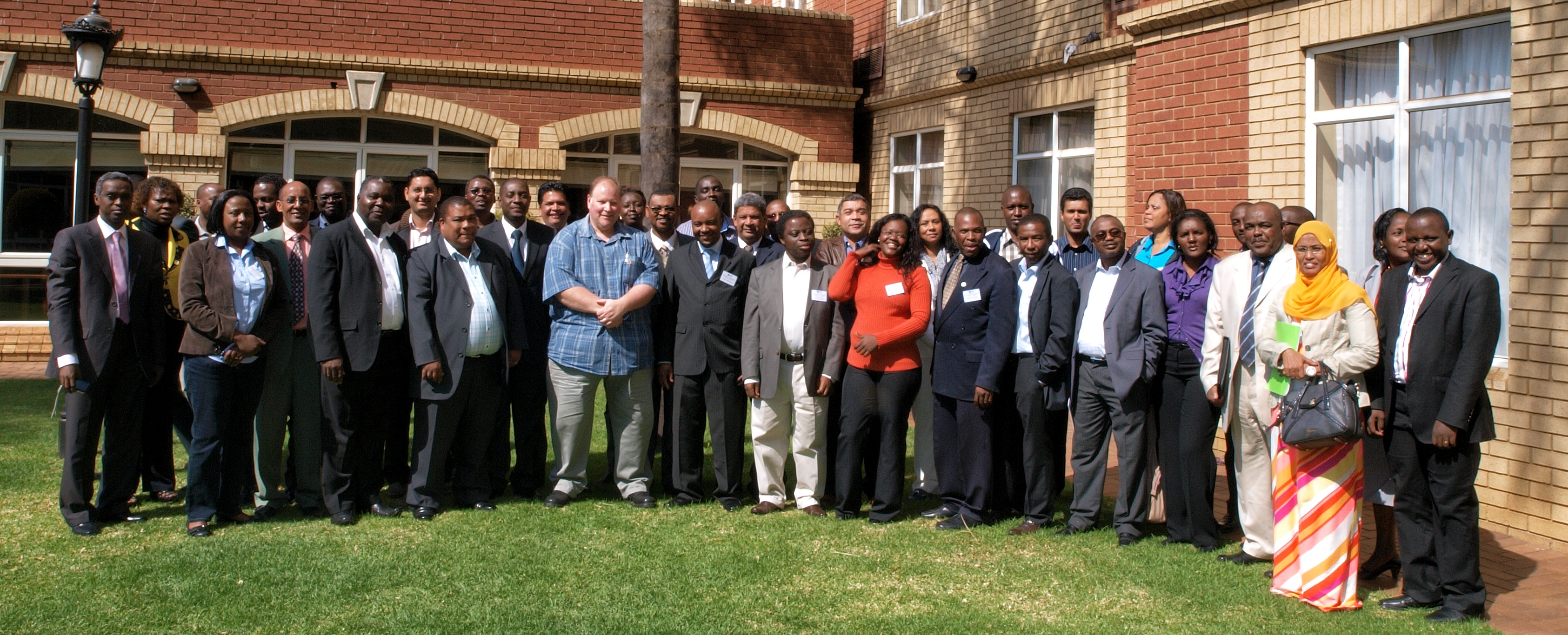
Over 230 delegates representing WCO Members, the academic world, international organizations, the private sector, donor organizations and other interested parties attended the 7th WCO Conference on the Partnership in Customs Academic Research and Development (PICARD) hosted by the University of Cadi Ayyad in partnership with Morocco Customs and the WCO in Marrakesh, Morocco from 25-27 September 2012.

The Conference was co-chaired by Prof. Michael Wolffgang, University of Münster, and Prof. M’barek Benchanaa and Prof. Abdullah Ait Ouahman from the University of Cadi Ayyad. The Conference focused on three main topics: The Impact of Regional Economic Integration and Preferential Trade Arrangements on Customs Services; Emerging and Evolving Risks; and Customs Strategic Human Resource Management.

The WCO PICARD Programme was officially launched in 2006 to strengthen co-operation between the WCO, universities, and Customs human resources entities such as Customs Academies. The programme’s objective is to provide a platform where stakeholders can co-operate, collaborate, and contribute to two main pillars: (1) Customs professionalism and (2) Customs-related research.

Key PICARD achievements include adopting the PICARD Professional Standards for operational and strategic Customs managers; holding six successful PICARD Conferences; and publishing many Customs-related research papers in the World Customs Journal. Moreover, a growing number of universities have obtained WCO recognition of their Customs-related academic curriculums.

The PICARD Conference has become an annual meeting place for Customs officers, Customs human resource professionals, and academics to network and exchange ideas on Customs professionalism and Customs-related research. It is an opportunity for Customs academies and the WCO Regional Training Centres to glean new ideas on human resource development. At each conference, research papers are presented; this year, papers will be presented on regional economic integration, emerging and evolving risks, and human resource management.

The dearth in Customs expertise has become an international phenomenon, and South Africa is no exception. Locally based training organisation, GMLS, has been working with the University of Kwazulu Natal, Durban and UCT in Cape Town and in Durban specifically it is expected after council of Higher education approval next year that we will be offering a full masters Degree in Customs for the first time in South Africa as a MCom Customs and Excise, says GMLS CEO Mark Goodger. GMLS is a WCO E learning trainer, an ICC accredited trainer and an approved TETA (Transport Education Training Authority Trainer).

Mark was invited as a guest speaker to this year’s Picard Conference. He explained that the WCO arranged presentations to  stimulate discussions and guidance required from the WCO in the future. Along with South Africa, presentations were also delivered by Finland, Canadian and Moroccan Customs training experts in the results of research and the status in SADC countries of recognised accredited training frameworks which can be utilized by Customs worldwide. Whilst Customs administrations are implementing the Revised Kyoto Convention and the SAFE Framework it is clear that trade will need to follow the direction of future compliance as Customs leads forward into the 21st century.

WCO receives gift of historical significance to Customs from Egypt

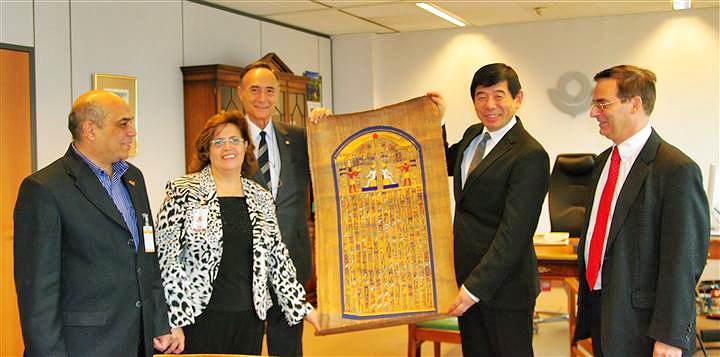
An Egyptian delegation to the WCO Harmonized System Committee, on behalf of the Director General of Egyptian Customs, Mohamed Elalhawy, presented the Secretary General of the WCO, Kunio Mikuriya, with a colour papyrus copy of the Customs tariff applied in Egypt during the time of the Pharaohs some 2000 years B.C. The original tablet is to be found in a museum in Egypt. You can view a photograph of the Egyptian tablet by clicking here!

The Secretary General thanked Egyptian Customs for this impressive gift full of significance which clearly illustrated the historic nature of Customs tariffs dating back more than 4000 years. He expressed the hope that one day he would be able to see the original stone tablet in Egypt. The papyrus will be displayed at WCO Headquarters. Source: http://www.wcoomd.org

Regional IT inter-connectivity takes another step

Delegates from at least 20 African Customs Administrations met in Pretoria, South Africa between 13 and 15 August to advance developments towards a common framework and approach to IT inter-connectivity and information exchange in the region. Convened by the SADC secretariat in consultation with COMESA and Trademark Southern Africa (TMSA), the three day work session focussed on uniform acceptance of the WCO‘s Globally Networked Customs (GNC) methodology, regional awareness of customs developments in the Southern and East African region, as well as joint agreement on customs data to be exchanged between the member states.

Mauritius Revenue Authority (MRA) shared its experience with delegates on the launch of its Customs Enforcement Network (CEN). Kenya Revenue Authority will soon be sharing enforcement information with its MRA counterpart. At least 22 African countries are expected to link up with the CEN network over a period of time. Customs enforcement information is the second pillar of the WCO’s GNC information exchange methodology; the first pillar being Customs information exchange. The latter provides for a holistic approach to the dissemination of common customs data derived from supply chain exchanges, for example declaration information, cargo information, and AEO information to name but a few. This information is vital for trading countries to administer advance procedures and better validate the information being provided by the trade.

Rwanda Revenue Authority introduced it’s RADDex programme which is a web-based IT solution for the exchange of cargo manifest information between participating states in the East African Community (EAC) – see related article below.

SADC and COMESA are rallying their members to participate in the initiative. At the current juncture, various member states have expressed keen interest to participate. While the regional intention is the linking of all customs administration’s electronically, initial developments envisage bi-lateral exchanges between Customs administrations which are ready to engage. The importance of the adoption of the GNC methodology is to ensure that customs connectivity and information exchange is harmonised and consistent across the Southern and East African region irrespective of whether countries are ‘early adopters’ or not.

WCO lauds NZ Customs for its capacity building assistance

The Secretary General of the World Customs Organization (WCO) commended New Zealand’s strong reputation for border management. During a recent visit by the WCO’s Secretary General, the NZ Customs Comptroller said that New Zealand takes its WCO responsibilities very seriously and works closely with the WCO to develop global standards for trade.This helps to ensure a stable trade environment for New Zealand businesses to operate in around the world.

The Secretary General, Kunio Mikuriya noted that the WCO is impressed with the capacity building assistance NZ Customs has given its Pacific neighbours, and enjoyed discussing New Zealand’s valuable contribution to the WCO, with Customs and the Minister of Customs, the Hon Maurice Williamson. The Pacific is an important region for New Zealand and NZ Customs has recently worked with the Cook Islands to introduce new technology and systems to improve border security to help facilitate legitimate trade and travel.

“New Zealand has been an influential member of the WCO, and has world leading expertise, particularly with its involvement in the development of a standardised data model for trade,” said Mr Mikuriya. In recent years NZ Customs has included the development of a standardised customs data model that will be used in the Joint Border Management System (JBMS). This data model is unique as it incorporates biosecurity and food related information, and means for the first time, one data message can contain all information that border agencies require. This will streamline border processes for clients who will use the Trade Single Window when it is introduced next year. Source: NZ Customs.

Mozambique – Single Window and other Customs developments

The Single Electronic Window (JUE) is a modern system of clearance of goods. After the revision of the whole legislation to allow the implementation of the JUE, the pilot project began in September 2011 in the port of Maputo. Here follows an interview with Kekobad Patel, the President of the Working Group On Tax Policy, Customs and International Trade of the CTA.

What was the adherence of international traders?

“We hoped more adherence of all concerned traders, unfortunately, very few participated in the pilot phase. During this period, both systems (manual and electronic) coexisted. There is always some resistance to change.”

When did the use of the JUE become mandatory?

“The use of JUE became mandatory on April 9, 2012 in the port of Maputo,on April 23 in the port of Beira, early May in the port of Nacala. The city of Tete is now also covered by the system because of the current requirements due to the establishment of large enterprises in the region.”

How many organizations have used the JUE?

“Since its entry into force until 15th of June 2012, over 7,000 import entries were submitted. We still do not deal with export declarations, transit, or special arrangements. These processes are handled manually.”

What are the next areas to be covered by the JUE?

“The second phase will begin in July 2012 and will focus on automotive, multi-modal and road terminals in Maputo, as well as the land borders of Goba, Namaacha (Swaziland) and Ressano Garcia (South Africa) that have received the equipment to begin operations. At the end of the year, the port of Pemba and the land borders of the province of Manica and Tete will be also covered. It will also be possible to treat the other procedures for export and transit. This is crucial, given the geographical location of Mozambique and its relations with the countries of the hinterland. Meanwhile, three Ministries will be electronically linked to award the import licenses: the ministries of Health, Industry and Commerce, and Agriculture. We should not forget that banks are also involved in the JUE. The BCI bank has supported the JUE since the pilot phase. Other banks have joined in recent months: Millenium BIM, Mozabanco and Standard Bank. We expect the membership of other banks.”

What is the biggest challenge of the JUE?

“The implementation of the JUE has led to a change of mentality: “paperless” in the country: less buffer, less paper. The government itself is also involved in the process of e-taxation that ensures that taxpayers should pay their taxes electronically. We still have problems to solve. For example, when a ministry inspects companies, papers are asked for… We need to think about alternatives. The castle must be built stone by stone to ensure it is strong and other sectors such as the public one and banking, are also involved.We believe that the entry into force of the JUE shows how to modernize the country.”

Is the JUE to eliminate the clearing agents?

“The law allows companies to make their own clearance process, but many of them are not prepared. In other countries such as Singapore, the most advanced country in terms of customs, clearing agents continue to exercise thanks to their perfect knowledge of the system.” Source: allAfrica.com

Other news – Mozambique accedes to the WCO’s Revised Kyoto Convention

On 11 July 2012, the Embassy of the Republic of Mozambique to Belgium deposited Mozambique’s instrument of accession to the International Convention on the Simplification and Harmonization of Customs Procedures (Revised Kyoto Convention) with the World Customs Organization. The Convention is regarded as a blueprint for effective and modern Customs procedures, and will enter into force in Mozambique on 11 October 2012. Mozambique becomes the 82nd signatory to the Convention. Some of the Convention’s key elements include the application of simplified Customs procedures in a predictable and transparent environment, the maximum use of information technology, the utilization of risk management, a strong partnership with the trade and other stakeholders, and a readily accessible system of appeals. Will be interesting to see how Mozambique Customs treats the national transit procedure?

WCO 2012 Photo Competition winner

This year’s entries provide a wealth of historic and ‘yesteryear’ character in testimony to the traditional role of customs officers. I for one feel this portrayal is the more lasting impression that real customs officers will remember. While the modern border officer certainly has a lot more gizmo’s and sophisticated gadgetry at his/her disposal, it somehow offers little more than superficial value. Even the digital photographs of today require manipulation to introduce period artefacts or correction to create the desired result.

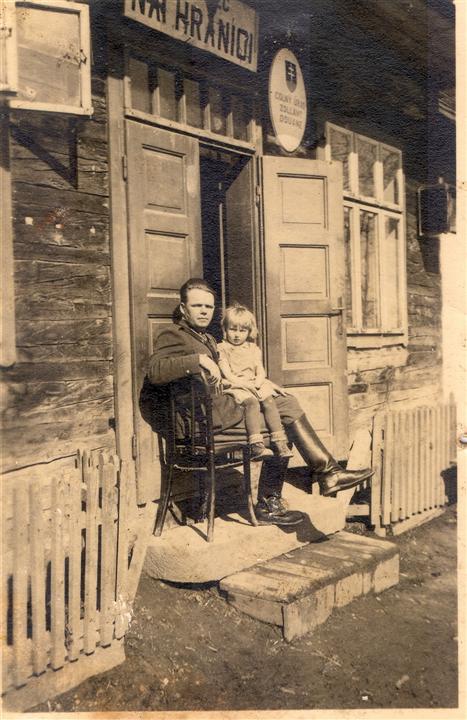
This years winning entry was submitted by Slovakia Customs. It depicts a fulltime customs officer of the Financial Guard on duty at the Klokočov road crossing point on the border between Slovakia and the Protectorate of Bohemia and Moravia, sitting with his young daughter on his lap.

The modern world’s seeming disdain of family values is in stark contrast to the natural warmth of a father and child in this picture. This would be unheard of in many jurisdictions of paranoia we call the customs and border control environment today. We grow evermore suspicious and untrusting of our fellow citizens to the danger that the essential purpose and physical portrayal of public service is an after-thought.

The WCO has put together a wonderful compendium of all this year’s entries. This is a competition not so much about a winner, but a celebration of the wealth and depth of customs tradition accross the globe. Click here to view all the entries!

WCO Annual Report

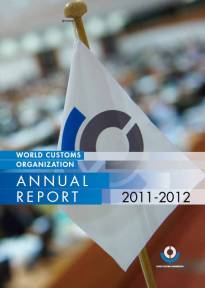
To celebrate the 60th anniversary of the World Customs Organization (WCO), the Organization published a new Annual Report that takes stock of where the WCO has been, where it is now, and where it is going, in addition to serving as a window on the many successes of the WCO, its Members and Customs’ external partners.

The Annual Report contains two major sections: the first includes a summary of the WCO’s mission, history, strategies, current activities and organizational arrangements; and the second comprises profiles of current Members, such as information on the Customs administration, the Director General and contact details, as well as data related to the administration’s operations.

Of particular note is the fact that the WCO’s 177 Member Customs administrations collectively employ approximately 800,000 staff and contribute an average of 33% of their Governments’ total tax revenue, while processing over 98% of all international trade.

The WCO’s role as the steward of global Customs standards is reflected in the Annual Report, which also presents information on how the WCO continues to assist Customs authorities to achieve their objectives, especially the effective application of controls while efficiently facilitating legitimate trade. Source: wcoomd.org

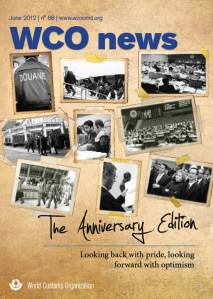
WCO News – 60 year Anniversary Edition

The Organization is celebrating its 60th anniversary, an occasion which gives the global Customs community the chance to reflect on where the WCO began, where it is now, and where it hopes to go in the future. This issue highlights some of the WCO’s milestones past and present, we take a brief look at the WCO’s historical beginnings and subsequent development, follow one man’s forty year Customs journey, look at the history of containerization: the box that changed the world, and even step back to 1969 when the Apollo 11 touched down on the surface of the moon. In this dossier, not only does the WCO look back with pride, but also looks forward with optimism, conscious of the fact that the WCO has served the global Customs community with dedication for sixty years, and will continue doing so to ensure that Customs administrations remain well-positioned to deliver effective and efficient services around the world. Also in this issue –

  • Doorless containers now a reality,
  • US/EU mutual recognition programme,
  • New guidelines included in WCO Revenue Package,
  • Globally Networked Customs,
  • GS1 and the WCO,
  • Algeria Customs and performance management,
  • Georgia’s success in rooting out corruption,
  • Hong Kong moves forward with its e-Lock plans.

Source: http://www.wcoomd.org

Interfront – Customs know-how and software

Forgive my exuberance and national pride, for one minute. After some years of intense re-organisation and strategization a new dynamic organization is set to spearhead ICT development in the Customs and Border Management industry. Many will know it by its previous name TATIS or TATIScms. The Cape Town based IT outfit is responsible for the intuitive customs software solution which currently operates in Luxembourg Customs. Let it be known that this is one tough space to operate and succeed in.

Africa, in particular, has  suffered the stigma of UN and World Bank ‘freebies’ by way of customs automated solutions – designed and developed by the west, on western philosophy with little concern for the longer term sustainability and development on the African continent. Before the emergence of commercial Windows-based software, African states (and most developing countries for that matter) had little option but to adopt ASYCUDA. The French colonies in the main sought franco-developed SOFIX. Bull Computers were particularly strong in this space and received great support from the French government in their ventures.

Just as the ‘power’ of the west is waning under financial and political turmoil, so developmental states and economies are looking to their own resources and expertise to fulfil their needs and destinies. A similar phenomenon occurred in the border and port control security space during the first decade of the 21st century, where the Chinese have virtually stolen international market share in NII (Cargo scanning) equipment.  Therefore the emergence of InterFront on the Customs ICT scene is both unique and timely. For more details on the new company and its partners, solutions and expertise please visit their website: http://www.interfront.co.za. Also read their corporate and product profile brochure – click here!

This week, Interfront are show-casing their solution and expertise at the WCO‘s 2012 ICT Conference in Tallinn, Estonia. With the international customs and border management relatively young and seeking stability, Interfront have a great opportunity to develop a regional and international footprint. SARS, in particular, looks forward to its new integrated customs solution; setting a new bench mark in global customs processing.

2012 WCO IT Conference and Exhibition opens in Estonia

The World Customs Organization (WCO) announced the successful opening of its 2012 IT Conference and Exhibition in Tallinn, Estonia which will run from 6-8 June 2012 with the theme: ” IT Transforms Core Business for Customs and its Stakeholders”.

The VIP opening ceremony included a special video welcoming speech by the President of the Republic of Estonia, H.E. Toomas Hendrik Ilves, and addresses by the Secretary General of the WCO, Kunio Mikuriya, and the Director General of the Estonian Tax and Customs Board, Marek Helm, co-hosts of the event.

This 11th WCO IT Conference and Exhibition which dates back to 2002 is the most important IT event on the international Customs calendar, allowing senior Customs executives from over 100 countries to meet with top trade representatives and solution providers in order to consider today’s business challenges as well as modern IT developments.

Gathering over 500 delegates together, the 2012 Conference will focus on “the Customs administration of the future” and includes a wide range of leading speakers from the Government and private sectors who will expand on the main theme of the event.

A dynamic IT exhibition complements the Conference, enabling various global systems aimed at maximum effectiveness and efficiency in modern Customs innovation to be displayed and demonstrated to participants.Source: WCO

New Issue of the World Customs Journal

The latest edition of the World Customs Journal (March 2012) comprises what appears to be a disparate array of topics. Professor David Widdowson invites your attention to the underlying theme of contrasting approaches to universal imperatives which permeates several of the contributions, which includes, for example,

  • a comparative analysis of excise taxation across the ASEAN region and identifies the need for standardisation in readiness for the impending introduction of the ASEAN Economic Community. It’s nice, for a change to have articles which deal with Excise.
  • a research paper concerning the diversity of de minimis arrangements in the APEC region, highlighting their impact on economic benefits and costs.
  • a review of a variety of regional approaches to coordinated border management, and
  • the introduction of the EU’s electronic customs environment as a means of achieving regional standardisation.

The underlying commonality of border management imperatives is also reflected in this edition’s Special Report. In his insightful article ‘Lines and Flows: the Beginning and End of Borders’ Alan Bersin (former Commissioner of the CBP) challenges the traditional concept of international borders, and introduces a paradigm that views global cooperation as a fundamental requirement for effective border management. The next edition of the Journal will focus on excise policy and practice, and will include papers presented at the World Customs Organization’s Global Excise Summit which will be held on 2-3 July at the WCO Headquarters in Brussels. Source: The World Customs Journal.

Making X-ray scanning safer

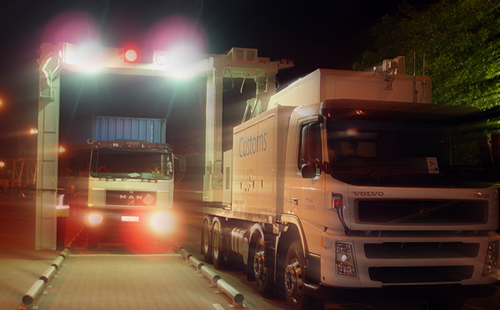
Given recent public outcry regarding airport passenger scanning, I found this scientific report which provides very sensible recommendations in regard to X-ray scanning of vehicle borne commercial cargoes. A recent study commissioned by Economic Commission for Europe provides some key recommendations to ensure improved safety of scanner operators and vehicle drivers. The protection of drivers against sickness and injury arising from their work activities is an important matter, and how to manage the hazards and risks associated with transport activities which are unavoidably connected to the possible exposure of employees to ionising radiation whilst undergoing the cargo/vehicle scanning process was a key question of the study.

Ensuring maximum safety precautions, all stakeholders have a role in enhancing the radiation protection culture within the road transport sector. As it is clear that drivers included in this study are not regarded as occupationally exposed to ionising radiation, the study recommends the following to Customs and Border agencies:

  • Install appropriate information panels, which include pictograms, highlighting that x-ray scanning is being performed and giving clear indications on what the driver should do to avoid unnecessary exposure;
  • At concerned border crossings, make available multi-lingual information leaflets, including pictograms, which describe the x-ray process, risks and safety information;
  • Develop and introduce a mutually recognised x-ray scanning certificate to prevent repeated scanning and thus facilitating and accelerating the control process;
  • Ensure, with the support of the International Atomic Energy Agency (IAEA), the European Commission (EC), the International Labour Organization (ILO) and the World Customs Organization (WCO), the correct implementation of internationally accepted x-ray scanning procedures;
  • Ensure that customs officers and x-ray equipment operators are properly trained on the functioning and risks of x-ray scanning machines enabling them to operate the equipment safely and give adequate safety instructions to drivers; and
  • In cooperation with x-ray machine manufactures, to ensure that x-ray equipment is properly maintained.

Source: UNECE – Scientific Study on External Ionising Radiation Exposure during Cargo / Vehicle Radiographic Inspections