Maputo Corridor “held ransom” by new RSA Immigration border crossing requirements

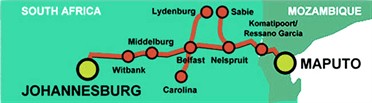
maputo_corridorSouth African authorities implemented legislation requiring all travellers from Mozambique to prove they hold enough funds to cover their visit, either by showing R3000 minimum or by providing a credit card with a bank statement, the Maputo Corridor Logistics Initiative (MCLI) said in a statement today. This led to considerable delays for freight, tourists, business and informal traders, which was worsened when a riot and blockade broke out at the Lebombo/Ressano Garcia border post.

Following the blockade the requirements were withdrawn, allowing traffic to pass through the border.

In their statement the MCLI declared they will directly contact the Minister of Home Affairs to settle the issue. “This requirement takes us back to the pre 2005 era where similar requirements were implemented”, the statement says, “and [it] is in direct conflict with the regional integration policy of SADC which expressly seeks to promote the ease of movement of people and goods through our borders.”

The statement calls the implementation for this legislation discriminatory towards informal traders who move through the border on a daily basis, and warns the long term impact on the region’s economy could be “dire”. Source: Club of Mozambique

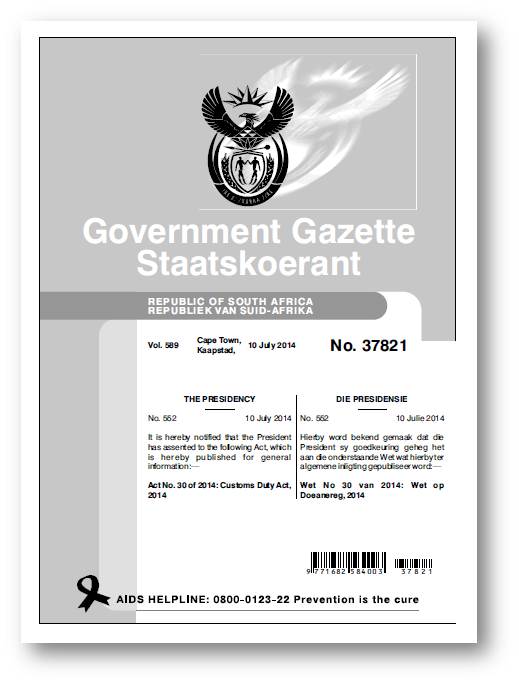
New Customs Duty Act, No.30 of 2014 published

Customs Duty ActThe Customs Duty Act, 2014 (Act No. 30 of 2014) was published in Gazette 37821 today and a copy thereof is available on the SARS Website at the following hyperlink – Acts Administered by the Commissioner.

The purpose of this Act is to provide for the imposition, assessment, payment and recovery of customs duties on goods imported or exported from the Republic; and for matters incidental thereto.

Take note that this Act is not in force as yet.It will come into operation the date that the proposed Customs Control Act (still to be published) takes effect, as indicated in section 229. That date will be announced by the President by Proclamation in the Gazette. The implementation will occur when SARS and the industries are ready, which means that the relevant rules and processes need to be in place. Source: SARS

Africa Under ‘Unprecedented’ Pressure from Rich Countries over Trade Facilitation Agreement

flags2African countries are coming under strong pressure from the United States and the European Union to reverse the decision adopted by their trade ministers to implement the World Trade Organization’s trade facilitation agreement on a “provisional” basis.

At last week’s summit of African Union leaders in Malabo, Equatorial Guinea, “there was unprecedented [U.S. and European Union] pressure and bulldozing to change the decision reached by the African trade ministers on April 27 in Addis Ababa, Ethiopia, to implement the trade facilitation (TF) agreement on a provisional basis under paragraph 47 of the Doha Declaration,” Ambassador Nelson Ndirangu, director for economics and external trade in the Kenyan Foreign Ministry, told IPS.

“This pressure comes only when the issues and interests of rich countries are involved but not when the concerns of the poorest countries are to be addressed,” Ambassador Ndirangu said.

“Clearly, there are double-standards,” the senior Kenyan trade official added, lamenting the pressure and arm-twisting that was applied on African countries for definitive implementation of the agreement.

The TF agreement was concluded at the WTO’s ninth ministerial conference in Bali, Indonesia, last year. It was taken out of the Doha Development Agenda as a low-hanging fruit ready for consummation. More importantly, the agreement was a payment to the United States and the European Union to return to the Doha negotiating table.

The ambitious TF agreement is aimed at harmonising customs rules and regulations as followed in the industrialised countries. It ensures unimpeded market access for companies such as Apple, General Electric, Caterpillar, Pfizer, Samsung, Sony, Ericsson, Nokia, Hyundai, Toyota and Lenovo in developing and poor countries.

Former WTO Director-General Pascal Lamy has suggested that the TF agreement would reduce tariffs by 10 percent in the poorest countries.

In return for the agreement, developing and least-developed countries were promised several best endeavour outcomes in the Bali package on agriculture and development.

They include general services (such as land rehabilitation, soil conservation and resource management, drought management and flood control), public stockholding for food security, an understanding on tariff rate quota administration, export subsidies, and phasing out of trade-distorting cotton subsidies (provided largely by the United States) in agriculture.

The non-binding developmental outcomes include preferential rules of origin for the export of industrial goods by the poorest countries, a special waiver to help services suppliers in the poorest countries, duty-free and quota-free market access for least developed countries (LDCs), and a monitoring mechanism for special and differential treatment flexibilities.

African countries were unhappy with the Bali package because they said it lacked balance and was tilted heavily in favour of the TF agreement forced by the industrialised countries on the poor nations.

The Bali outcomes, said African Union Trade Commissioner Fatima Acyl, “were not the most optimal decisions in terms of African interests … We have to reflect and learn from the lessons of Bali on how we can ensure that our interests and priorities are adequately addressed in the post-Bali negotiations.”

The African ministers in Malabo directed their negotiators to propose language on the Protocol of Amendment – the legal instrument that will bring the TF agreement into force at the WTO – that the TF agreement will be provisionally implemented and in completion of the entire Doha Round of negotiation.

African countries justify their proposal on the basis of paragraph 47 of the Doha Declaration which enables WTO members to implement agreement either on a provisional or definitive basis.

The African position on the TF agreement was not acceptable to the rich countries. In a furious response, the industrialised countries adopted a belligerent approach involving threats to terminate preferential access.

The United States, for example, threatened African countries that it would terminate the preferential access provided under the Africa Growth Opportunities Act (AGOA) programme if they did not reverse their decision on the TF, said a senior African trade official from Southern Africa.

The WTO has also joined the wave of protests launched by the industrialised countries against the African decision for deciding to implement the TF on a provisional basis. “I am aware that there are concerns about actions on the part of some delegations [African countries] which could compromise what was negotiated in Bali last December,” WTO Director-General Roberto Azevedo said, at a meeting of the informal trade negotiations committee on June 25.

The African decision, according to Azevedo, “would not only compromise the Trade Facilitation Agreement – including the technical assistance element. All of the Bali decisions – every single one of them – would be compromised,” he said.

The United States agreed with Azevedo’s assessment of the potential danger of unravelling the TF agreement, and the European Union’s trade envoy to the WTO, Ambassador Angelos Pangratis, said that “the credibility of the negotiating function of this organisation is once again at stake” because of the African decision.

The United States and the European Union stepped up their pressure by sending security officials to Malabo to oversee the debate, said another African official. He called it an “unprecedented power game rarely witnessed at an African heads of nations meeting.”

In the face of the strong-arm tactics, several African countries such as Nigeria and Mauritius refused to join the ministerial consensus to implement the TF agreement on a provisional basis. Several other African countries subsequently retracted their support for the declaration agreed to in April.

In a nutshell, African Union leaders were forced to change their course by adopting a new decision which “reaffirms commitment to the Doha Development Agenda and to its rapid completion in accordance with its development objectives.”

The African Union “also reaffirms its commitment to all the decisions the Ministers took in Bali which are an important stepping stone towards the conclusion of the Doha Round … To this end, leaders acknowledge that the Trade Facilitation Agreement is an integral part of the process.”

Regarding capacity-building assistance to developing countries to help them implement the binding TF commitments, African Union countries still want to see up-front delivery of assistance. The new decision states that African Union leaders “reiterate in this regard that assistance and support for capacity-building should be provided as envisaged in the Trade Facilitation Agreement in a predictable manner so as to enable African economies to acquire the necessary capacity for the implementation of the agreement.”

The decision taken by the African leaders is clearly aimed at implementing the TF decision, but there is no clarity yet on how to implement the decision, said Ndirangu. “We never said we will not implement the TF agreement but we don’t know how to implement this agreement,” he added.

In an attempt to ensure that the rich countries do not walk away with their prized jewel in the Doha crown by not addressing the remaining developmental issues, several countries – South Africa, India, Uganda, Tanzania, Solomon Islands and Zimbabwe – demanded Wednesday that there has to be a clear linkage between the implementation of the TF agreement and the rest of the Doha Development Agenda on the basis of the Single Undertaking, which stipulates that nothing is agreed until everything is agreed!

More than 180 days after the Bali meeting, there is no measurable progress on the issues raised by the poor countries. But the TF agreement is on course for final implementation by the end of 2015. Source: Inter Press Service
South Africa ‘Still Weighing Up’ Rhino Horn Trade Proposal

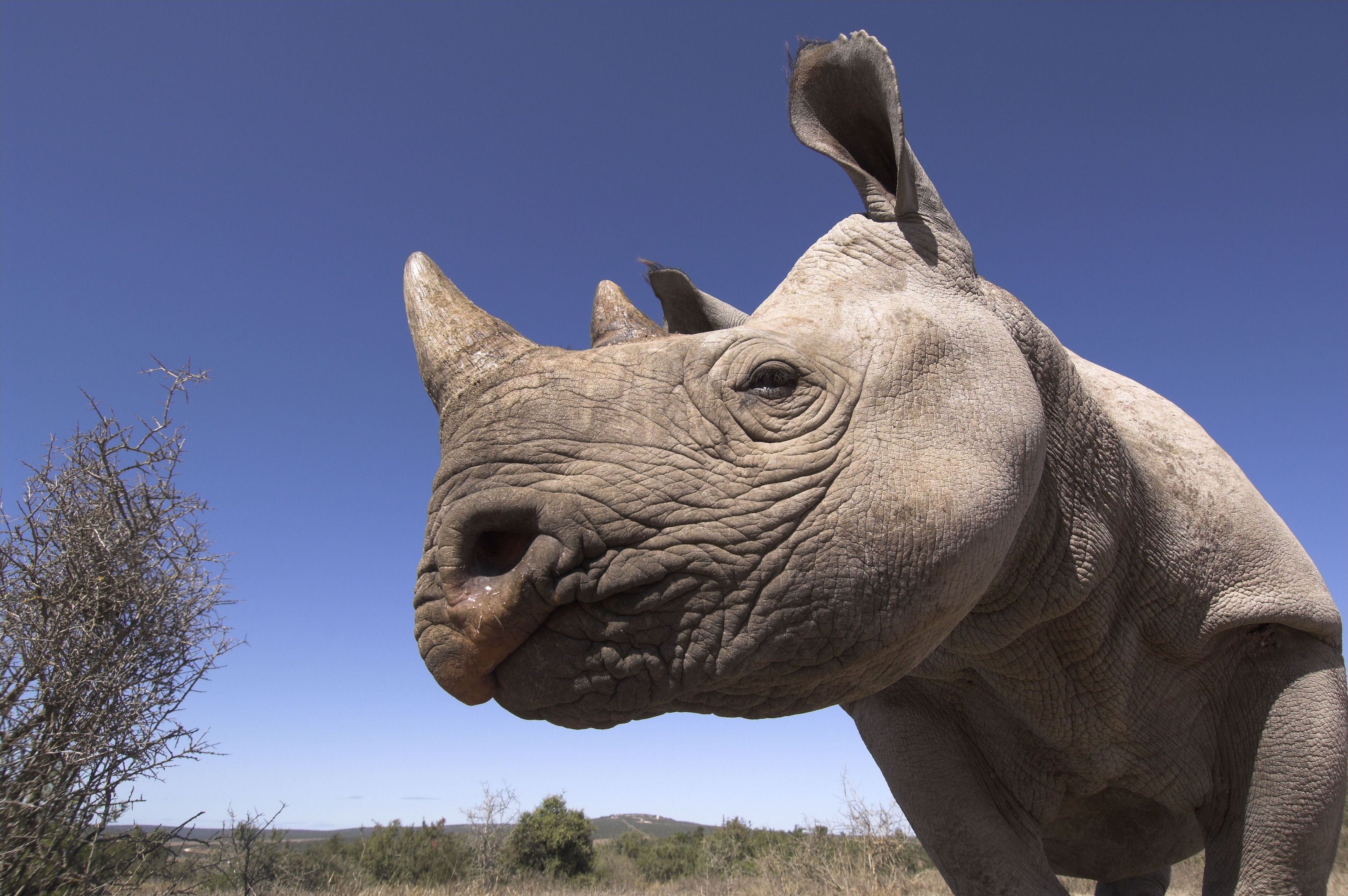
Desert black rhinoceros, South Africa [Picture credit: africagreenmedia.co.za

Desert black rhinoceros, South Africa [Picture credit: africagreenmedia.co.za

South Africa has made no final proposal on legalising the global rhino horn trade as a way of reducing the level of rhino poaching in the country, the Department of Environmental Affairs said on Friday, rebutting recent media reports on the issue.

Last year, the Cabinet authorised the department to explore the possible legalisation of the rhino horn trade at the 17th conference of the parties (COP) to the Convention on International Trade in Endangered Species of Wild Fauna and Flora (CITES), which takes place in 2016.

However, the department said, “no final proposal has been compiled, or decision made, regarding the future legal trade in rhino horn as an additional intervention to reduce the levels of poaching”.

The department said it had appointed a panel of experts, chaired by the department’s Fundisile Mketeni, to assist the inter-ministerial committee tasked by the Cabinet with weighing up a proposal on the trade in rhino horn.

The panel had started its work and would, in the coming months, listen to all sides of the trade debate before submitting a set of recommendations to the committee.

South Africa’s proposal would be tabled at CITES in 2016, and would be based on sound research, uninfluenced by any individuals or groups seeking to make a profit or by any group opposed to the country’s sustainable usage policies, the department said.

“South Africa believes that the decision to table a proposal at the next CITES COP is timeous, and may be a step towards addressing the scourge. South Africa is however not in any way insinuating that the possible trade in rhino horns would be a panacea to the problem of poaching.”

South Africa, which is home to more than 80% of the world’s rhino population, has been facing an onslaught from poaching syndicates since 2008. Since the start of this year alone, 442 rhinos have been poached and 123 suspected poachers arrested in the country.

The department has taken a number of steps in response, including increasing the numbers of rangers in its parks, as well as improving regional and international collaboration with both rhino “range” and rhino horn “consumer” countries. Source: SAnews.gov.za

Heads of Customs Governing Council Meeting for the ESA Region

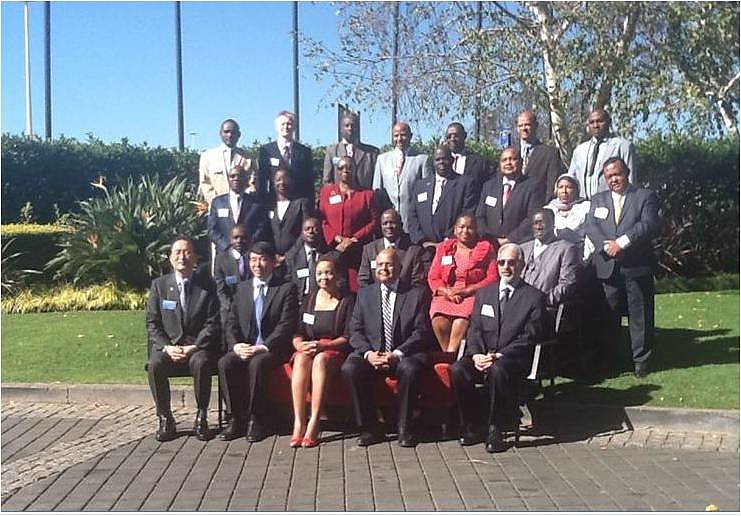
Heads of Customs Governing Council for the ESA Region with WCO Secretary General Kunio Mikuriya

Heads of Customs Governing Council for the ESA Region with WCO Secretary General Kunio Mikuriya

At the invitation of the Vice-Chair of the East and Southern Africa (ESA) Region, Mrs. Agnes Katsonga Phiri, Commissioner of Customs and Excise, Malawi, the Secretary General, Mr. Kunio Mikuriya attended the 19th Meeting of the Heads of Customs Governing Council ESA Region, on 15 and 16 May 2014. The meeting was hosted by the South African Revenue Service (SARS) in Johannesburg.

The Commissioner of SARS, Mr. Ivan Pillay welcomed delegates from the Members of the Region on the 20th Anniversary of democracy in South Africa, a period during which much had been achieved. He highlighted the importance of the WTO Agreement and its impact on Customs and the growth in African trade.

Addressing the Governing Council, the Minister of Finance, Mr. Pravin Gordhan emphasized the evolving role of Customs in a changing and challenging environment. The continued growth of economic activity in Africa required innovative Customs procedures to secure and facilitate trade, particularly in the context of regional integration. The WTO Agreement on Trade Facilitation (ATF) offered a golden opportunity as Customs would have a central role in its implementation. Customs must continue to enhance its operational capacity by increased automation, embracing other agencies and harmonization and simplification of procedures. The importance of Capacity Building was emphasized.

Secretary General Kunio Mikuriya gave a comprehensive report on recent WCO activities. He referred to the many developments on the WTO ATF agenda. The WCO had established a web tool dedicated to this topic, including an analysis of the ATF Articles and relevant WCO instruments with a self assessment aspect. Mr. Mikuriya recalled that the WCO theme for this year is “Communication” and asked all Members and agencies present to ensure that all were aware of each other’s activities.

Secretary General Mikuriya also met with the Minister of Finance, Mr Pravin Gordhan, to discuss a number of issues of mutual interest including implementation of the ATF, information exchange and the evolving role of Customs. The Governing Council discussed the way forward as regards ATF implementation, and expectations of trade input to WCO activities. Source: WCO

Export Tax in the South African Context

made_in_south_africa___barcode_and_flag_by_netsrotj-d5cmbq9Export taxes are increasingly becoming a focus of attention in South African trade policy, and the objective of this paper is to review the trade and economic issues associated with these taxes. While they are similar to import tariffs in their effects, export taxes remain very much the ‘poor cousins’ of import tariffs in trade policy circles. While attention is paid to them in many bilateral and regional agreements, the multilateral World Trade Organisation (WTO) has little to say about them other than an awakening to their importance when it comes to negotiating a new member’s accession to the world body.

South Africa currently levies an export tax on unpolished diamonds in an attempt to develop local skills and promote the domestic industry, and it is considering a recent department of trade and industry report that recommends that consideration be given to an export tax on iron ore and steel. South Africa has some of the prerequisite market power in the global iron ore trade but not enough to ensure an outcome entirely beneficial to its export trade. The salutary example of South Africa’s competitor India is discussed, as India recently increased its export tax in this sector to 30% and has seen its global market shares plummet. The more interesting sector for South Africa is the ferrochrome and ferrochrome ore trade, as here South Africa does have significant market shares. South Africa has had about a 45% market share over the last three years in global exports, while China has imported around 70% to 85% of this global trade in recent years. Advocates argue that a tax on chromite ore exports will shift the relative economics back to empower South African producers of processed ferrochrome. This sets the stage for an interesting battle between South Africa and China, and one set against the background of South Africa’s recent admission to the BRICS club. If such an export tax is invoked, South Africa needs to be conscious that it at best provides a window of opportunity for the domestic sector to improve its technological efficiency and that it is not a long or even medium-term solution.

For an in-depth appraisal on export tax in South Africa, please read Ron Sandrey’s report “Export tax in the South African context

Source: Tralac & Author -Ron Sandrey

State-of-Art Port Control Centre opens in Cape Town

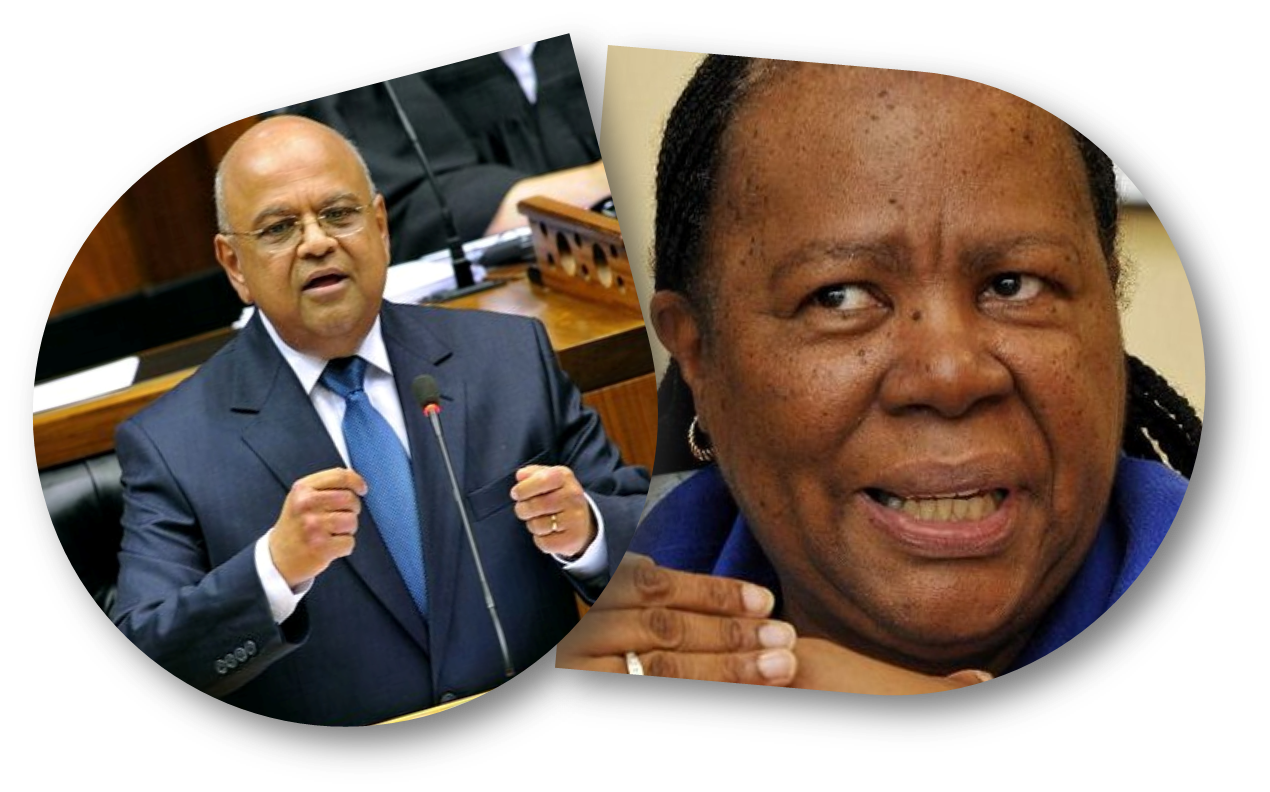
Inter-Departmental CooperationSouth Africa’s first maritime port of entry control centre represents a milestone in the country’s journey to secure, modernise and control its borders, Finance Minister Pravin Gordhan said at the opening of the centre at Cowrie Port in Cape Town harbour last week on Friday.

The centre puts all the government departments and agencies involved in immigration and border control under one roof. These include the departments of home affairs, health, agriculture and fisheries, the SA Police Service (border police and crime intelligence), and the SA Revenue Service (Customs). The state-of-the-art centre would not only improve security and immigration issues, but would also serve to enhance trade and South Africa’s status as a logistical gateway to Africa, Gordhan said.

Trade

The rationale behind the centre was in line with the National Development Plan, the minister said. Among other things, the NDP aims to stimulate growth by lowering the cost of doing business in South Africa, improving the country’s competitiveness and exports, and linking local products with other emerging markets. Gordhan said the fast-growing markets of Africa represented important new markets, and the NDP was committed to increasing South Africa’s trade with its regional neighbours from 15% to 30%.

‘Complex borders’

Home Affairs Minister Naledi Pandor, also speaking at Friday’s opening, said the centre had been designed “to accommodate in one spot not only customs, excise and immigration, but also health, safety and intelligence.

“Ports are complex borders to manage. Cowrie Place will provide the space and facilities to manage passengers and cargoes more efficiently than before.” Pandor said the government hoped to establish a border management agency by the end of 2016, taking advantage of the lessons learnt from Cowrie Place. A flagship feature of Cowrie Place is the co-ordination monitoring centre, where the data and information will be fed, assimilated and made available to all government department and agencies involved in the maritime border management.

“For the bona fide tourist or member of the trade community, this will mean better service,” Gordhan said. “For those who intend to challenge the laws of our country, be warned, as we intend to raise the bar of compliance by an order of magnitude.”

Important port

Cape Town’s port is oldest in South Africa, but despite changes to its maritime culture brought by air travel and containerisation, it is still an important point of entry. The port processes more than 870 000 containers as well as nearly 730 000 tons of dry bulk per annum, Pandor said.

A total of 6 173 commercial vessels and 55 passenger vessels entered and/or left the port in 2013, while more than 62 000 people entered and/or departed from Cape Town harbour. Pandor said E-berth at the harbour would be developed into a fully fledged passenger liner terminal to complement Cowrie Place.

Nigeria vs South Africa – size matters, but so does development

Flag-Pins-Nigeria-South-AfricaWhat matters more: the size of the pie or how many mouths it has to feed? It depends whether you’re eating pies, or selling them.

Most of Nigeria’s 170-million people live below the poverty line, so many complained they didn’t feel any richer when the oil producing nation’s statistics bureau announced on Sunday the economy had replaced South Africa as the continent’s biggest. Nigeria’s 2013 GDP was rebased up to an estimated nearly $510-billion – a “pie” one and half times the size of South Africa’s, but feeding more than three times as many people.

But development economists argue that their attention should be on improving the health, education and incomes of ordinary Nigerians, many of whom struggle to feed their families. In 2013, the Economist Intelligence Unit rated Nigeria the worst place for a child to be born out of 80 countries surveyed.

“Really what matters in the end is per capita, how well our individuals are doing,” World Bank chief Africa economist Francisco Ferreira said after the statistical change in Abuja.

“I don’t want to rain on Nigeria’s parade … but what matters are living standards for everyone.”

In GDP per capita terms, Nigeria is looking healthier than before rebasing: per capita GDP was $2 688 last year, from an estimated $1 437 in 2012. Yet that masks growing inequality: at around 60%, absolute poverty in Nigeria is stubbornly high despite five years of average 7% annual GDP growth.

But are better living standards for all really what matters to investors looking to cash in on a big economy? On a per capita basis, Botswana, Mauritius and Seychelles are among Africa’s top five richest states. None has a population of more than two-million, so they are admired but cannot claim heavyweight status when it comes to competing with other African countries for the attention of foreign investors.

“Seychelles is the only African country listed under ‘very high human development’. But when did you last hear Seychelles mentioned during discussions on global political economy?” commentator Azuka Onwuka wrote in Nigeria’s Punch newspaper.

“A high GDP means external … investors pay more attention. The US and Europe no longer look down on China and India.”

Population Power

Nigeria’s potential is predicated on its large population. Economist Jim O’Neill notably included it in his MINT group of countries, alongside Mexico, Indonesia and Turkey, which he thinks will join the BRICs (Brazil, India, Russia, China) he named as the emerging economies shaping the world’s future.

All have large, swelling populations, with a demographic bulge around the soon-to-be-most-productive younger generations. For businesses deciding where to invest next, a consumer market of 170-million beats the Seychelles’ 85 000.

“Size matters,” Oscar Onyema, chief executive of the Nigeria Stock Exchange, said. “Size means you will be able to do … projects you would not have considered in smaller economies.”

For retailers targeting customers at the bottom of the socioeconomic pyramid, a national income spread around more households – lower GDP per capita, in other words – might actually be a good thing, many economists argue. If you are selling washing powder or fizzy drinks, better a large number of consumers on modest incomes than a small number of wealthy. There is only so much cola most people can drink.

For Kenyan industrialist Manu Chandaria, chairperson of Comcraft Group, which sells ironware, including corrugated roofs and pots and pans, Nigeria has massive potential. Comcraft is in 18 locations there, despite the fact that its Nigeria manager has been kidnapped three times by criminal gangs – a common risk facing businesses in southern Nigeria.

“Nigeria is just colossal,” he told the Reuters Africa Summit in Nairobi. “Everybody needs to eat. Everybody needs shelter … Anybody that brings in money needs a pot to cook in, they need a roof – so we are in the right place.”.

Inequality is Risky

Higher up that pyramid, living standards matter more. In this regard South Africa, which still has poverty but also a big middle class and an advanced consumer society, beats Nigeria.

Africa’s top energy producer relies heavily on oil, which tends to concentrate wealth in an elite at the top of the social scale – good for luxury goods firms like LVMH and Porsche, both of which have thriving operations in Nigeria.

But retailers targeting a broader consumer class say Nigeria still needs better infrastructure and a more diversified economy to achieve its full potential as a mass market.

“Until the country invests more in infrastructure, invests more on other activities outside of oil, until that starts to develop the economy … I think the potential is not like it is in South Africa,” said Mark Turner, Africa Director for Massmart Holdings, a unit of US retailer Wal-Mart. Massmart currently has two stores in Nigeria, with another opening in the coming weeks – compared with 300 in South Africa.

Turner said he could see the company opening as many as 15 stores in Nigeria, if the country could deepen development. Yet the market attraction of Nigeria’s growing middle class is already there – Shoprite just opened a store in Kano, despite the threat of an insurgency in the north, and a Massmart ‘Game’ store will soon join it there.

But Nigeria’s growing inequalities add to “political risks, as a result of perceived marginalisation,” said Razia Khan, chief Africa economist at Standard Chartered Bank. Unless something is done to lift the impoverished masses, the risk of social unrest, already being reaped in a bloody insurgency in the destitute northeast and oil theft in the south, will grow.

She said: “The pressure on the authorities to create some sort of social safety net in response will be significant.”

Source: Engineeringnews.co.za

Congestion Besets Botswana’s Tlokweng Border Post

botswanaMap showing border posts between Botswana and South Africa, with No.7 being the Tolkweng and No.4 the Martins Drift posts.

The temporary closure of the Martin’s Drift border post due to recent floods in the Tswapong area has resulted in the congestion of cargo trucks at Tlokweng border post.

Approaching the border from the Botswana side, there is a queue of these trucks awaiting declaration. The situation is made worse by shortage of parking space for the trucks, which at times lead to some trucks blocking way for others, hence the delay.

In an interview, the principal customs officer, Ms Monkgogi Makwati said they started receiving a large number of trucks on transit on Saturday (22 March 2014).

She said most of the trucks were from Kazungula on their way to South Africa. Ms Makwati also said trucks from South Africa were a challenge as the customs office was faced with a lot of work as goods were cleared in large quantities from that side.

She noted that Tlokweng border had always been the busiest in the country, but the current situation had made it more busy than usual. She also said the delay at the border was due to the electronic clearance system used by South Africa compared to the manual one used by Botswana, thus when the system is down, services from that side halt.

Ms Makwati, however, noted that trucks carrying perishables and goods such as medicines, gas and petrol among others were given special clearance and they do not take long at the border.

The traffic jam has not only affected services at the border, but also facilities such as toilets have started to experience some blockage while others are running out of water due to high number of people who are frequenting them.

Some truck drivers expressed dissatisfaction on the South African service of clearing noting that they had been at the border for four days without bathing. Source: Daily News Botswana

South Africa falls in 2014 global logistics rankings

jll_year_of_the_distribution_center_wide_imageSouth Africa has been ranked number 34 out of 160 countries in the World Bank’s 2014 Logistics Performance Index (LPI), which is topped by Germany, with Somalia ranked lowest. Africa’s largest economy remained the continent’s highest placed LPI participant, but South Africa’s position was well off its 2012 ranking of 23 and its position of 28 in 2010.

In February, the World Bank argued in a separate report on South Africa that the country’s high logistics costs and price distortions were an impediment to export competitiveness. That report noted, for instance, that South Africa’s port tariffs on containers were 360% above the global average in 2012, while on bulk commodities they were 19% to 43% below the global average. Similar commodity biases existed in the area of rail freight.

But the new report, titled ‘Connecting to Compete 2014: Trade Logistics in the Global Economy’, still clustered South Africa as an “over-performing non-high-income” economy along with Malaysia (25), China (28), Thailand (35), Vietnam (48) and India (54).

The report draws on data arising from a survey of more than 1 000 logistics professionals and bases its LPI rankings on a number of trade dimensions, such as customs performance, infrastructure quality, and timeliness of shipments. Besides China, South Arica also performed above its ‘Brics’ counterparts of Brazil (65),Russia (90) and India.

Germany was followed in the top 10 by other developed economies, namely Netherlands, Belgium, the UK, Singapore,Sweden, Norway, Luxembourg, the US and Japan. Among low-income countries, Malawi, Kenya and Rwanda showed the highest performance.

The report warns that the gap between the countries that perform best and worst in trade logistics remains large, despite a slow convergence since 2007. The gap persists, the study asserts, because of the complexity of logistics-related reforms and investment in developing countries. This, despite strong recognition that poor supply-chain efficiency is the main barrier to trade integration.

However, senior transport economist and founder of the LPI project Jean-François Arvis stresses that a country cannot improve through developing infrastructure, while failing to address border management and other supply-chain issues.

Logistics performance is strongly associated with the reliability of supply chains and the predictability of service delivery for producers and exporters, the report notes, adding that supply chains are only as strong as their weakest links. They are also becoming more and more complex, often spanning many countries while remaining critical to national competitiveness.

“It’s difficult to get everything right. The projects are more complicated, with many stakeholders, and there is no more low-hanging fruit,” Arvis argues.

The report also finds that low-income, middle-income and high-income countries will also need to adopt different strategies to improve their standings in logistics performance. “Comprehensive reforms and long-term commitments from policymakers and private stakeholders will be essential. Here, the LPI provides a unique reference to better understand key trade logistics impediments worldwide.” Source: Engineering News

Related articles

Time to modernise trade rules for digital era

digital-ownershipIn the past, nations with the best ships and ports were able to establish global trade leadership and the growth that came along with it. Today, global trade has gone digital.

In the digital economy software-enabled products and services such as cloud computing and data analytics are the key drivers of growth and competitiveness. In fact, the world now invests more than $3.7 trillion (R40 trillion) on information and communications technologies a year.

In South Africa, we spend $26 billion a year and the total for the Middle East/Africa region is $228bn. However, to maximise our return on that investment, it is important for policymakers to eliminate barriers that could inhibit the continued expansion of digital trade.

It is clear that software-driven technology is transforming every sector of the global economy. For example, thanks to unprecedented processing power and vast data storage capabilities, banks can detect and prevent fraud by analyzing large numbers of transactions; doctors are now able to study historical trends in medical records to find more effective treatments; and manufacturers can pinpoint the sources of delays in global supply chains.

Against the backdrop of this kind of innovation, any country that wants to compete in today’s international marketplace must have a comprehensive digital agenda at the core of its growth and development strategy. In addition to domestic initiatives such as investment in education and skills training, or development of information technology infrastructure, policymakers can succeed in laying the groundwork for broad-based growth in the digital age if they focus on three big priorities.

First, any bilateral or multilateral trade agreement needs to facilitate the growth of innovative services such as cloud computing. As part of this, there should be clear rules that allow information to move securely across borders and prevent governments from mandating where servers must be located except in very specific situations.

Second, to promote innovation and foreign investment, continued intellectual property protection is vital and the use of voluntary, market-led technology standards – instead of country-specific criteria that force firms to jump through different technical hoops every time they enter a new local market – should be encouraged.

Third, all governments should ensure there are level playing fields for all competitors so customers have access to the best products and services the world has to offer.

At the same time, disclosures about government surveillance programmes in the US and other countries have sparked a renewed focus on data protection and personal privacy. Those concerns are worthy of debate and careful reform. But it is critically important not to conflate separate issues: We can’t let national security concerns derail digital trade.

There is precedent for navigating periods of change such as this in the global trade arena. Policymakers stood at a similar inflection point in the 1980s when they recognised the keys to growth in the coming decades would be intellectual property, services and foreign direct investment.

With foresight and hard work, they updated trade rules in the Uruguay Round of multilateral negotiations to ensure commitments were in place to provide a check against protectionist impulses. Now, as governments pursue robust growth agendas for the digital economy, it is critical we modernise trade rules again. Source: The Software Alliance (South Africa).

How SA can save R18bn – by playing hard ball

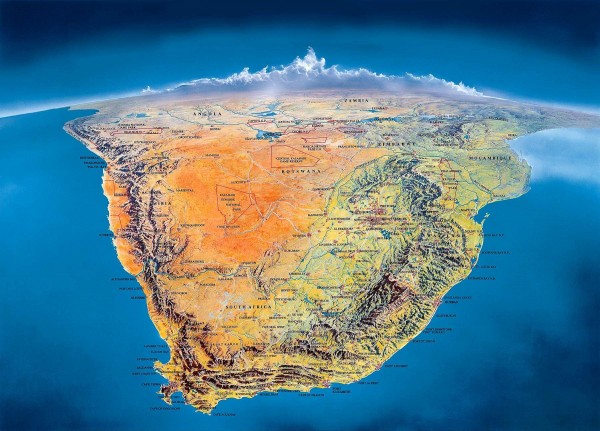
Southern_Africa_Panorama_MapSouth Africa is a member of the Southern African Customs Union (Sacu), which consists of Botswana, Lesotho, Namibia and Swaziland (BLNS), the oldest customs union in Africa but apart from this prestige, is Sacu worth the time?

In an article by Professor Roman Grynberg, he asked whether Sacu is a “dead man walking?” and I wish to follow-up on this. A recent article appearing on the World Bank’s website states that even if poor countries are neighbours, it is often more difficult for them to trade with each other than it is for them to trade with distant countries that are wealthy.

The Sacu agreement is principally about the issue of distributing customs revenue earned by the five members on their international trade with other countries. The distribution of this revenue is based on each country’s share of intra-Sacu imports and so favours the smaller members.

South Africa, for example, imports very little from within the region and so ends up paying the BLNS about R15bn to R18bn per year more than it would if Sacu did not exist.

If we are paying R15bn to R18bn per annum to be in a union with questionable benefits, why do we not exit the agreement?

For one, the SADC free trade agreement which was implemented in 2008, gives South Africa a “get out of jail free card” through providing South African exports similar but not identical market access to that available under Sacu.

We could thus “walk away from Sacu at any moment, save R15bn to R18bn and South African exports would still continue to flow across the Limpopo basin in more or less the same uninterrupted way.” (Grynberg, 2014).

Another reason, according to Grynberg, is that an “economic catastrophe” may result if South Africa exits. Swaziland and Lesotho are between 60% to 70% dependent on the Sacu for revenues, Botswana and Namibia are somewhat less dependent at 30% to 40%.

I feel though that this may be the very same reason that there will not be a major reform of the revenue-sharing formula. Would you want to cede even a third of your income?

So what should South Africa do? I think it is firstly important to note that of our SADC neighbours, South Africa earns the most from its exports to Zambia, Zimbabwe and Mozambique – none of which is in the Sacu.

This is perhaps not surprising when considering the findings of the World Bank and realising that nearly all of South Africa’s top trading partners are in the northern hemisphere.

The BLNS countries, interestingly enough, fall in the bottom 5 of our SADC trade partners and so should we worry so much about an “economic catastrophe” in the BLNS when they don’t buy our goods in any case?

What it comes down to, I feel, is that South Africa needs to play hard ball. By this I mean South Africa needs to be committed to actually exiting the Sacu agreement because it is only when the BLNS realise that we are serious and that there is the real threat of them losing 30% to 70% of their revenue that they will agree to a new revenue-sharing formula. After all, something is better than nothing. Source: Fin24

Related ‘must read’ articles

African States urged to begin prioritising economic transformation

2014 Africa Transformation ReportThe inaugural Africa Transformation Report ranks Mauritius as the most economically transformed country out of 21 sub-Saharan African countries measured in its African Transformation Index, which takes account of a country’s economic diversification, export competitiveness, productivity, state of technology upgrading and human wellbeing.

The continent’s largest economy, South Africa, ranks second and Côte d’Ivoire third, while Nigeria, Burundi and Burkina Faso prop up the index.

The ranking has been included within a larger 207-page study, which cautions that, while many African economies are growing strongly, most economies are not transforming sufficiently to support a sustainable reduction in poverty, inequality and unemployment.

Six of the world’s fastest growing economies are currently in Africa, including Angola, Nigeria, Ethiopia, Chad, Mozambique and Rwanda, while several others are expanding at growth rates of over 6% a year. However, much of this grow is still premised on the extraction and export of natural resources and is not being broadly spread, leaving more than 80% of the continent’s labour force employed in low-productivity farming, or informal urban business activities.

Compiled over a three-year period by Ghana’s African Centre for Economic Transformation (ACET) in partnership with South Africa’s Mapungubwe Institute for Strategic Reflection (Mistra), the study urges African governments to position economic transformation ahead of growth at the centre of their economic and development policies.

Speaking at a launch in Johannesburg, lead author and ACET chief economist Dr Yaw Ansu said growth was “good” and had arisen as a result of macroeconomic reforms, better business environments and higher commodity prices.

“But economic transformation requires much more,” Ansu stressed, arguing that countries needed to diversify their production and exports, become more competitive and productive, while upgrading the technologies they employed in production processes.

ACET president Dr KY Amoako said the transformation narrative had already been accepted by the African Union in its Vision 2063, as well as by the African Development Bank and the United Nations Economic Commission for Africa. He added that the African Transformation Index provided policymakers with a quantitative measure for assessing their transformation performance and for guiding future strategies.

Mistra executive director Joel Netshitenzhe argued that to turn growth into an “actual lived experience” for Africa’s citizens there was the urgent need to form national social compacts between government, business and civil society to support transformation.

Finance Minister Pravin Gordhan emphasised the same point in his recent Budget address, when he highlighted the work being done to secure a social compact to reduce poverty and inequality and raise employment and investment. Gordhan stressed this could not be a “pact amongst elites, a coalition amongst stakeholders with vested interests. Nor can it be built on populist slogans or unrealistic promises”.

“Our history tells us that progress has to be built on a vision and strategy shared by leaders and the people – a vision founded on realism and evidence,” the Minister stressed.

Netshitenzhe also highlighted the report’s emphasis on coupling growth with social development. “In fact, rather than merely being a consequence of economic growth, a reduction in poverty and general human development can be part of the drivers of economic growth.”

The report highlights key transformation drivers as being:

  • Fostering partnerships between governments and the private sector to facilitate entrepreneurship, investment and technology upgrading.
  • Promoting exports, particularly outside of the natural resources sector.
  • Building technical knowledge and skills.
  • And, pushing ahead with regional integration.

Four transformation pathways are also highlighted, including labour-intensive manufacturing; kick-starting agroprocessing value chains, improving the management of oil, gas and minerals; and boosting tourism.

“It’s good that we are growing – we are no longer the hopeless continent. We can transform this hope into reality, but to do that governments must put transformation at the top of their agendas,” Ansu asserted.

He also called on African citizens to begin to demand transformation. “Ask your government, how come we are not diversifying? How come our productivity remains stuck? How come our technological levels and our exports are not growing?” Source: Engineering News

WCO expert provides Customs Valuation training assistance

WCO expert Ian Cremer (centre, back row) with SARS staff involved in valuation training project.

WCO expert Ian Cremer (centre, back row) with SARS staff involved in valuation training project.

The SARS Academy is reviewing and packaging its training material so as to align its curriculum to international standards. It has embarked on a process of benchmarking its training material, kick-starting the process in the School of Customs and Excise.

WCO facilitator Ian Cremer recently visited the Academy at Waterkloof House in Pretoria to provide assistance with the strengthening of their valuation training programme. A group of trainers, curriculum developers and valuation specialists from business worked with the WCO valuation expert in the development of the new training material.

Training modules will be developed at the following levels: Basic, Intermediate and Advanced, and will be aligned to the WCO’s own valuation training modules.

Further work will now be conducted on developing a delivery strategy. This will ensure that key staff are trained to the necessary level and are able to conduct their duties in a professional level, meeting the dual requirements of fair and efficient revenue collection and the facilitation of compliant trade. Source: SARS

Custom’s Detector Dog Unit boosted by 52 new teams

SARS Customs North West Detector Dog Unit handlers. [SARS]

SARS Customs North West Detector Dog Unit handlers. [SARS]

Fifty two dogs and handlers were trained and deployed in the first phase of the SARS Customs Detector Dog Unit’s (DDU) capacity building programme. Trainees were for units from Limpopo, North West and Mpumulanga, Or Tambo International Airport and Durban. “This figure includes new dog handlers, replacement of old or sick dogs and refresher training of dogs not up to the required working standard, explained Hugo Taljaard, the senior manager of Custom’s Detector Dog Unit.

There are now 90 regionally based detector dogs and handlers deployed in the country. Most dogs are dual trained to detect different substances and /or goods. They have the capacity to detect the following substances/goods hidden in vehicles, vessels, aircraft, cargo, containers, mail, rail, luggage and buildings:

  • Explosives, firearms and ammunition
  • Narcotics (Mandrax, heroin, crystal meth, cocaine, cannabis and Ecstasy)
  • Endangered species (Rhino horn, ivory, wet / dry abalone, crayfish and lion bones)
  • Currency
  • DVDs
  • Copper wire
  • Tobacco products
  • Cell phones.

At the end of phase 1, which ran from April 2013 to January 2014, a ceremony was held in Zeerust to hand out certificates to the members of the newly-formed North West Detector Dog Unit.

“The commitment, passion and drive of the trainees must be acknowledged as this contributed to the successful training of the new handlers and dogs. The teams performed extremely well, achieving pass rates ranging from between 92% to 99.80% and this could only be achieved with positive team work and the drive to go the extra mile and make a difference. The teams proved their commitment in playing an impactful role in the prevention of smuggling,” Hugo said.

The cooperation between different government agencies also played a major role in the successful training and operational deployment of the Customs dogs and handlers during Phase 1 and will continue during Phase 2 and 3, he added.

Phase 2 of the programme is planned to get underway on 7 April 2014 with the establishment of three new units – at Port Elizabeth, Ladybrand and Ermelo.

The DDU has been a major success story for SARS in recent years, providing expert training to several Customs and Border agencies in the region. The topic has also invoked significant interest amongst readers and followers of this blog. It needs to be stressed, however, that the recruitment and deployment of dog trainers in SARS is currently all achieved through training and up-skilling of officers within the organisation. No external recruitment drives have occurred. The nature and extent of Customs Modernisation places SARS in the fortunate position of being able to redeploy staff to specialised roles such as the DDU.

Source: SARS