Getting to Grips with the Future Customs Control Act

Having recently introduced a whole new integrated customs business solution last year the South African Revenue Service (SARS) has spent the last six months stabilising its system. At the heart of the system is the Interfront Customs and Border management (iCBS) engine which takes care of all customs declaration processing.
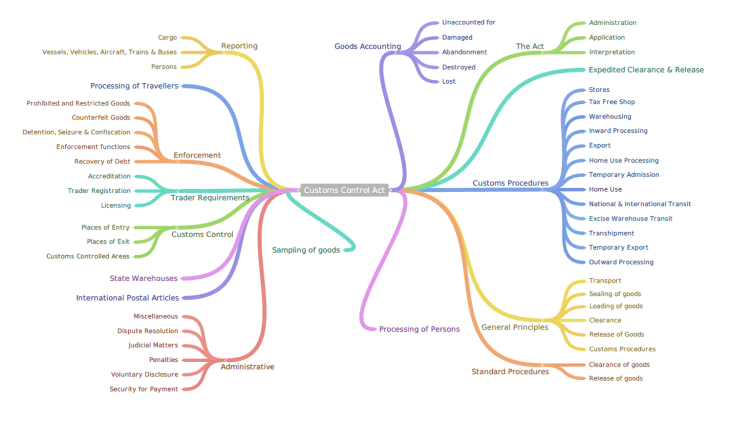
CCB

Click on the image to download the Infogram

A new ‘state-of-the-art’ EDI Gateway infrastructure is at an advanced stage of development and configuration, and will be subjected to a series of rigorous testing both internally and with industry service providers over the next few weeks. The gateway is an important component of the organisation’s future aspirations in C-2-C, C-2-B and C-2-G information exchange with it’s stakeholders.

Over the last 2 years, SARS has been a key participant in the WCO’s Globally Networked Customs (GNC) initiative which seeks to develop standardised electronic information exchanges of commercial customs data and common border procedures between customs administrations. This is ‘greenfield development’ and requires innovative thinking between potential customs partners. In this specific area SARS has engaged both Mozambique and Swaziland Customs as willing partners in such an initiative. Developments with Mozambique are at an advanced stage and will shortly become a reality with the conclusion of the bilateral One Stop Border Post (OSBP) agreement that includes provision for electronic data exchange between the two administrations. More on this in a future post.

Technology aside, perhaps the most daunting task on the horizon is the introduction of the new Customs Duty and Control Acts which are currently in the parliamentary process. Much publicity and robust argument was aired in the printed media over the last year, all of which culminated in the parliamentary hearings overseen by parliament’s Standing Committee on Finance (SCoF) during November and December 2013. While an agreement was reached with the freight forwarding sector of the local supply chain and logistics industry on certain aspects of the Control Bill, there still lies much work and clarification to be addressed in these and other areas.

Notwithstanding the signing into law of the Customs Bills, operational enactment thereof can only occur once the ‘rules’ to execute this legislation are circulated for comment, finalised and gazetted. Even considering the legal and approvals process in a simplistic form, the implementation of this new legislation is just too complex to introduce in a once-off, big-bang approach.  Due consideration must be given to a transitional approach taking into account the practicalities thereof as well as economic and logistical consequences of such approach.   It is no understatement that the impact of the new legislation, its incorporation into current automated systems, policies and procedures as well as the necessary re-adjustments to be made by every entity engaged in business with SARS Customs is no small feat.

Furthermore, the implications of the recently concluded WTO Agreement on Trade Facilitation for South African Customs and Trade also needs to be determined and understood. While a large proportion of its content is encapsulated within the Revised Kyoto Convention, it is the first time ever that such requirements are subject to the conditions of a trade agreement.

It’s been some time since I last penned thoughts on the Customs Modernisation initiative. In retrospect and thinking ahead, the underlying bottom line to its longer term success lies in increased ‘communication’ with stakeholders – ironically, the World Customs Organisation’s adopted theme for 2014!

Please feel free to download the infogram on the future Customs Control Act by clicking on the picture above. Official links to the Customs Control and Duty Bills are included below. It would also be wise for parties involved in Excise to consider the contemplated changes contained in the Excise Duty Bill (Customs and Excise Amendment Bill).

Related documents

WCO expert provides Customs Valuation training assistance

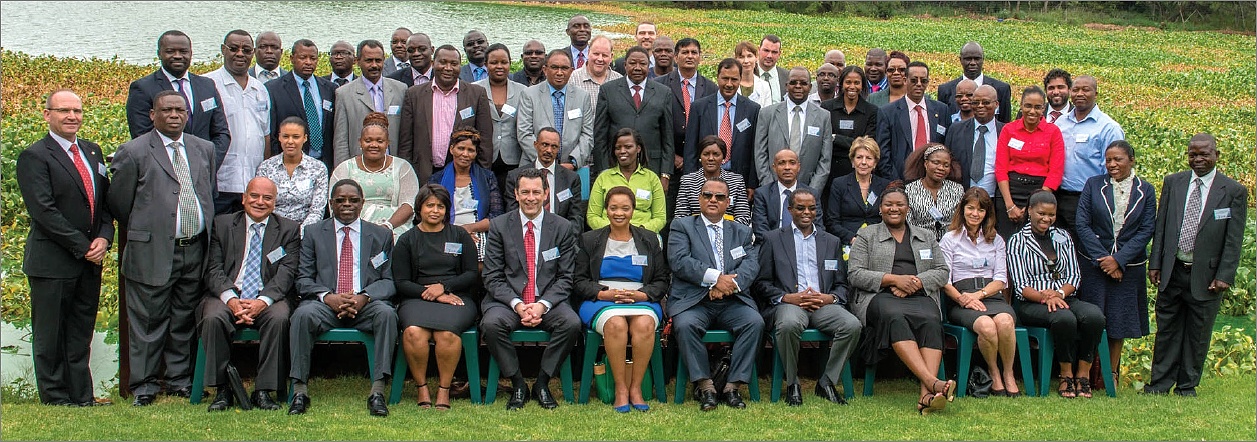
WCO expert Ian Cremer (centre, back row) with SARS staff involved in valuation training project.

WCO expert Ian Cremer (centre, back row) with SARS staff involved in valuation training project.

The SARS Academy is reviewing and packaging its training material so as to align its curriculum to international standards. It has embarked on a process of benchmarking its training material, kick-starting the process in the School of Customs and Excise.

WCO facilitator Ian Cremer recently visited the Academy at Waterkloof House in Pretoria to provide assistance with the strengthening of their valuation training programme. A group of trainers, curriculum developers and valuation specialists from business worked with the WCO valuation expert in the development of the new training material.

Training modules will be developed at the following levels: Basic, Intermediate and Advanced, and will be aligned to the WCO’s own valuation training modules.

Further work will now be conducted on developing a delivery strategy. This will ensure that key staff are trained to the necessary level and are able to conduct their duties in a professional level, meeting the dual requirements of fair and efficient revenue collection and the facilitation of compliant trade. Source: SARS

Custom’s Detector Dog Unit boosted by 52 new teams

SARS Customs North West Detector Dog Unit handlers. [SARS]

SARS Customs North West Detector Dog Unit handlers. [SARS]

Fifty two dogs and handlers were trained and deployed in the first phase of the SARS Customs Detector Dog Unit’s (DDU) capacity building programme. Trainees were for units from Limpopo, North West and Mpumulanga, Or Tambo International Airport and Durban. “This figure includes new dog handlers, replacement of old or sick dogs and refresher training of dogs not up to the required working standard, explained Hugo Taljaard, the senior manager of Custom’s Detector Dog Unit.

There are now 90 regionally based detector dogs and handlers deployed in the country. Most dogs are dual trained to detect different substances and /or goods. They have the capacity to detect the following substances/goods hidden in vehicles, vessels, aircraft, cargo, containers, mail, rail, luggage and buildings:

  • Explosives, firearms and ammunition
  • Narcotics (Mandrax, heroin, crystal meth, cocaine, cannabis and Ecstasy)
  • Endangered species (Rhino horn, ivory, wet / dry abalone, crayfish and lion bones)
  • Currency
  • DVDs
  • Copper wire
  • Tobacco products
  • Cell phones.

At the end of phase 1, which ran from April 2013 to January 2014, a ceremony was held in Zeerust to hand out certificates to the members of the newly-formed North West Detector Dog Unit.

“The commitment, passion and drive of the trainees must be acknowledged as this contributed to the successful training of the new handlers and dogs. The teams performed extremely well, achieving pass rates ranging from between 92% to 99.80% and this could only be achieved with positive team work and the drive to go the extra mile and make a difference. The teams proved their commitment in playing an impactful role in the prevention of smuggling,” Hugo said.

The cooperation between different government agencies also played a major role in the successful training and operational deployment of the Customs dogs and handlers during Phase 1 and will continue during Phase 2 and 3, he added.

Phase 2 of the programme is planned to get underway on 7 April 2014 with the establishment of three new units – at Port Elizabeth, Ladybrand and Ermelo.

The DDU has been a major success story for SARS in recent years, providing expert training to several Customs and Border agencies in the region. The topic has also invoked significant interest amongst readers and followers of this blog. It needs to be stressed, however, that the recruitment and deployment of dog trainers in SARS is currently all achieved through training and up-skilling of officers within the organisation. No external recruitment drives have occurred. The nature and extent of Customs Modernisation places SARS in the fortunate position of being able to redeploy staff to specialised roles such as the DDU.

Source: SARS

Customs Bill gets escape clause – fallback to old system

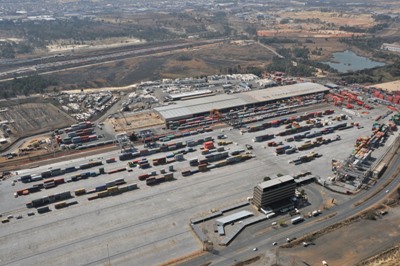
City Deep Container Terminal (Transport World Africa)

City Deep Container Terminal (Transport World Africa)

The controversial Customs Control Bill adopted by Parliament’s finance committee on Wednesday includes a “fallback” provision allowing for a return to the current customs control system should the new one fail.

A similar clause was included in the law that introduced value-added tax in 1991, allowing for a legal alternative to be implemented quickly if things do not work out as planned.

The committee also adopted the Customs Duty Bill and the Customs and Excise Amendment Bill as part of a total revamp by the South African Revenue Service (SARS) of the customs system. Visit this link for access to the Bills and submissions to the parliamentary committee.

The Customs Control Bill has been highly contentious as it will fundamentally change the way imported goods are cleared and released. The Democratic Alliance and Business Unity SA (Busa) opposed the original proposals on the grounds that doing away with manifests in the operations of City Deep would threaten the inland terminal in Johannesburg. SARS disputed this but nevertheless amended the bill.

Busa’s Laurraine Lotter yesterday welcomed the inclusion of the fallback clause but said she would have to see the details of the amendments introduced by SARS before commenting.

The fallback provision — which will automatically lapse five years after the effective date of the legislation — was included to be on the safe side, although SARS does not expect the proposed system to fail. It consulted widely on the bill, sought legal opinions about the legality of its amended proposals and ultimately secured the support of ship operators and agents, freight forwarders and Transnet for the amendments.

Implementation could be delayed by 12 months to allow the trade sufficient time to prepare.

SARS chief legal and policy officer Kosie Louw assured the committee this week the existence of City Deep would not be jeopardised. He urged adoption of the new system of customs control, saying the authorities needed more detailed information about incoming cargo to clamp down on fraud and illegal imports.

In terms of the bill, the submission by shipping lines of a manifest that provides only a general description of cargo will be replaced by a clearance declaration. This must contain information on the tariff, value and origin of the goods, and be submitted by the importer (which can be held accountable for its veracity) three calendar days before arrival at the first place of entry into South Africa.

Penalties will be levied only if the clearance is not submitted within three working days after the arrival of the goods. Containers will be provisionally released before arrival of the goods at the first place of entry and finally released at the first point of entry. To allow for seamless movement of goods, shipping lines will still issue multimodal contracts and through bills of lading.

“The revised proposal provides certainty and predictability to role players in the supply chain regarding the movement of goods,” Mr Louw said.

He said the new system would allow customs officials to undertake documentary inspections earlier, mitigating delays. High-risk containers would be identified before arrival, detained on arrival and held at the inland terminal for inspection. Containers with no risk would be able to move “seamlessly” to the inland terminals.

Mr Louw submitted that the objections to the proposal — that it would require traders to change their sale contracts; that sellers would be reluctant to sell under the new terms; that importers would be affected; that carriers would no longer issue a bill of lading to internal terminals; and that it would give rise to delays and congestion at ports — were found to lack foundation by international trade law expert Prof Sieg Eiselen and two advocates.

He said the proposed system would lay a solid and predictable framework for a modernised system of customs control that balanced the need for trade facilitation with the need to prevent imports of illicit goods. The current system was governed by an outdated, 1960s law. Source: Business Day

Related articles

SA Government to Prioritise and Pass Customs Bills

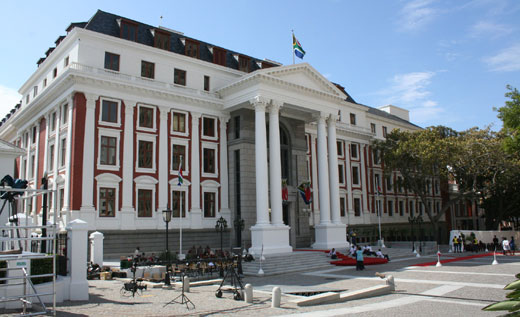
Parliment, Cape Town (Eye Witness News)

Parliament, Cape Town (Eye Witness News)

Government has decided to prioritise the passage of eight bills through Parliament. The bills deal with land restitution, labour relations, and customs and excise.

There are currently 42 bills before the National Assembly and the National Council of Provinces. With the fourth Parliament set to be dissolved ahead of looming general elections, Members of Parliament (MPs) are unlikely to deal with all 42 bills.

A statement just released by the ANC’s office in Parliament to the media states –

“The African National Congress in Parliament has taken note of the huge parliamentary workload which the institution has to process in the next few months before the expiry of the current five-year term of parliament. In terms of the Constitution, the current term of Parliament is set to end ahead of the 2014 national elections. The workload confronting the institution includes committee oversights, constituency programmes, adoption of committee reports, debates on the state of the nation address and the budget, and finalisation and adoption of Bills.”

“Currently, there are 24 Bills before the National Assembly (NA) and 18 currently before the National Council of Provinces (NCOP) – which is a total of 42 Bills the institution must pass before the elections. Our view is that all these Bills are important and therefore the institution should spare neither strength nor effort in ensuring they are processed qualitatively and thoroughly to ensure that they are converted into laws within the stipulated period. We are however alive to the possibility that not all these Bills may be passed in the next few remaining months of parliament.”

“We have therefore sought to prioritise the following Bills, which we believe Parliament should give special attention to ensure they are passed into laws. In terms of the rules of Parliament, Bills that are not passed within the current term of Parliament may be resuscitated in the next parliamentary term. This will be done for those Bills that might not be passed during this term.”

“In determining priority Bills, we have looked at criteria such as complexity, contentiousness, technicality, effect on provinces, and requirement for exhaustive consultation. [Three of the eight bills relate to Customs and Excise]

  1. Customs Control Bill of 2013 – The Customs Control Bill is intended to replace certain provisions of the Customs and Excise Act of 1964 relating to customs control of all means of transport, goods and persons entering or leaving South Africa. The Bills aims to ensure that taxes imposed by various other laws on imported or exported goods are collected and that various other laws regulating imports and exports of goods are complied with. To ensure effective implementation of customs control, the Bill provides for elaborate systems for customs processing of goods at places of entry and exit such as seaports, airports and land border posts;
  2. Customs Duty Bill of 2013 – The Customs Duty Bill is intended to replace certain provisions of the Customs and Excise Act of 1964 which relates to the imposition and collection of imports and export duties. The Bill primarily aims to provide for the levying, payment and recovery of import and export duties on goods imported or exported from South Africa. The Bill will be dealt with in terms of Section 77 of the Constitution; and
  3. Customs and Excise Amendment Bill of 2013 – The Customs and Excise Amendment Bill seeks to amend the provisions of the Customs and Excise Act of 1964 and to remove from the Act all the provisions that have now been incorporated into both the Customs Control Bill and the Customs Duty Bill. Essentially, because the Customs and Excise Amendment Act of 1964 strongly reflected rigidity reminiscent of the apartheid era controls, which are unsuitable to the current modern control systems, it has been split into both the Customs Control Bill and the Customs Duty Bill. The Customs and Excise Amendment Act of 1964 will for now be retained in an amended form for the continued administration of excise duties and relevant levies until it is completely replaced with a new law in future (i.e. Excise Duty Bill).”

Source: Excerpt of a press statement of the Office of the Chief Whip of the ANC, Parliament.

Landmark East and Southern African Customs forum focuses on modernisation

WCO ESA_Snapseed

Participants from all 24 members of the WCO’s Eastern and South African region attended the forum. [SARS]

Customs officials from 24 eastern and southern African countries met in Pretoria this week to share knowledge and experience with regard to the successful modernisation of Customs administrations.

Opening the three-day forum, Erich Kieck, the World Customs Organisation’s Director for Capacity Building hailed it as a record breaking event.

“This is the first forum where all 24 members of the Eastern and Southern African region (ESA) of the WCO were all in attendance,” he noted. Also attending were officials from the WCO, SACU, the African Development Bank, Finland, the East African Community and the UK’s Department for International Development (DFID).

Michael Keen in the 2003 publication “Changing Customs: Challenges and Strategies for the Reform of Customs Administrations” said – “the point of modernisation is to reduce impediments to trade – manifested in the costs of both administration incurred by government and compliance incurred by business – to the minimum consistent with the policy objectives that the customs administration is called on to implement, ensuring that the rules of the trade game are enforced with minimum further disruption”

The three-day event witnessed several case studies on Customs modernisation in the region, interspersed with robust discussion amongst members. The conference also received a keynote addressed by Mr. Xavier Carim, SA Representative to World Trade Organisation (WTO), which provided first hand insight to delegates on recent events at Bali and more specifically the WTO’s Agreement on Trade Facilitation.

The WCO’s Capacity Building Directorate will be publishing a compendium of case studies on Customs Modernisation in the ESA region during the course of 2014.

WCO ESA members – Angola, Botswana, Burundi, Comoros, Djibouti, Eritrea, Ethiopia, Kenya, Lesotho, Madagascar, Malawi, Mauritius, Mozambique, Namibia, Rwanda, Seychelles, Somalia, South Sudan, Swaziland, South Africa, Tanzania, Uganda, Zambia and Zimbabwe.

This slideshow requires JavaScript.

Source: SARS

SACU – the Day of Reckoning has Arrived

South Africa has been courting major player Botswana’s support for changes to SACU.

South Africa has been courting major player Botswana’s support for changes to SACU. (Mail & Guardian)

The Mail & Guardian reveals that South Africa has requested an urgent meeting with members of the Southern African Customs Union (SACU) for as early as ­February next year in what could be a make-or-break conference for the struggling union.

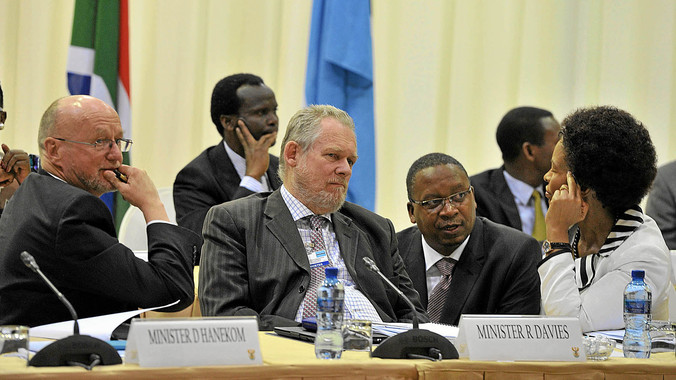
In July this year, a clearly frustrated Trade and Industry Minister Rob Davies told Parliament that there had been little progress on a 2011 agreement intended to advance the region’s development integration, and it was stifling its real ­economic development.

South Africa’s payments to SACU currently amount to R48.3-billion annually – a substantial amount, considering the budget deficit is presently R146.9-billion, an estimated 4.5% of gross domestic product.

In the past, South Africa has had some room to reposition itself, but as Finance Minister Pravin Gordhan has pointed out, the South African fiscus has come under a lot of pressure as a result of factors such as the global slowdown, reduction in demand from countries such as China for commodities, and reduced demand from trade partners such as the European Union.

South Africa, which according to research data, last year contributed 1.26% of its GDP, or about 98% of the pool of customs and excise duties that are shared between union countries including Swaziland, Botswana, Lesotho and Namibia, wants a percentage of this money to be set aside for regional and industrial development.

The four countries receive 55% of the proceeds, and are greatly dependent on this money, which makes up between 25% and 60% of their budget revenue. South Africa has very little direct benefit, except when it comes to exporting to these countries. It receives few imports.

Changing the revenue-sharing arrangement

Efforts to change the revenue-sharing arrangement so that money can be set aside for regional development would result in less money going into the coffers of these countries.

It would also mean that a portion of the revenue that South Africa’s SACU partners now receive with no strings attached would in future include restrictions on how it is spent.

A source close to the department said adjustments to the revenue-sharing arrangement and the promotion of regional and industrial development were issues on which the South African government was not willing to budge.

So seriously is South Africa viewing the lack of progress on the 2011 agreement, a document prepared for Cabinet discussion includes pulling out of SACU as one of its options, a source told the Mail & Guardian.

This could not be confirmed by the government, but two senior sources said South Africa was very aware of the dependence of its neighbours on income from the customs union, in particular Swaziland and Lesotho, and the impact its collapse could have on these economies.

Professor Jannie Rossouw of the University of South Africa’s department of economics believes a new revenue-sharing arrangement is essential for the long-term sustainability of SACU countries.

South Africa’s contribution

He also said that South Africa’s contribution as it presently stands should be recognised as development aid and treated as such by the international community.

Between 2002 and 2013, total transfers amounted to 0.92% of South Africa’s GDP, which exceeds the international benchmark of 0.7% set by the Organisation for Economic Co-operation and Development, he said in his research.

“It is noteworthy that South Africa transfers nearly all customs collections to SACU countries. Total collection since 2002 amounted to about R249-billion, while transfers to SACU were about R242-billion,” Rossouw said. The South African Revenue Service (SARS) recognises that inclusion of trade with Sacu would have a substantial impact on South Africa’s ­official trade balance.

South Africa’s total trade deficit for 2012 was R116.9-billion and, according to SARS, had trade with the union been included, it would have been much reduced to R34.6-billion.

South Africa has budgeted to increase its allocation to SACU from R42.3-billion in the 2012-2013 financial year to R43.3-billion this financial year and in the 2014/2015 financial year.

In 2002, the SACU agreement was modified to include higher allocations for the most vulnerable countries, Swaziland and Lesotho, and it established a council of ministers, which introduced a requirement for key issues to be decided jointly. In 2011, a summit was convened by President Jacob Zuma in which a five-point plan was established to advance regional integration.

Review of the revenue-sharing arrangement

This involved a review of the revenue-sharing arrangement; prioritising regional cross-border industrial development; making cross-border trade easier; developing SACU ­institutions such as the National Bodies (entrusted with receiving requests for tariff changes) and a SACU tariff board that would eventually take over the functions of South Africa’s International Trade Administration Commission (ITAC); and the development of a unified approach to trade negotiations with third parties.

Davies told Parliament that there had been little progress in the past three years on these five issues.

Xavier Carim, the director general of the international trade division of the department of trade and industry, said there had been positive developments regarding agreements on trade negotiations, such as those with the European Union and India on trade, and progress had been made on the development of SACU institutions, but progress was slow on the other issues.

Davies told Parliament it was difficult to develop common policy among countries that varied dramatically in economic size, ­population and levels of economic, legislative and institutional development.

He cited differences over approaches to tariff settings as an example.

“South Africa views tariffs as tools of industrial policy, while for other countries tariffs are viewed as a source of revenue,” Davies said.

A proposal that cause all the problem

“A key problem that led to differences was the proposal by one member for lower tariffs to import goods from global sources that were cheapest, which ultimately undermined the industry of another member. This was primarily an issue of countries who viewed themselves as consumers rather than producers.”

The South African government is trying diplomacy as its first option. A senior government source said issues around SACU made up a large part of talks last week between Botswana and South Africa on the establishment of co-operative agreements on trade, transport and border co-operation.

Catherine Grant of the South African Institute of International Affairs said Botswana had long been considered the leader of the four countries. It would make sense for South Africa to bring Botswana on board before the meeting.

Grant said the SACU agreement needed to be re-examined and modernised.

“There needs to be a review of the revenue-sharing formula that is less opaque and is easier to understand. The present system is complicated, making it hard to work out exactly how much countries are getting. It’s clear that Rob Davies feels hamstrung by SACU and has done for some time, because decisions cannot be made without the agreement of all five members, who have different needs and requirements.”

The trade balance is one of the elements that resulted in South Africa’s current account, which has recorded significant deficits in recent months, coming in as high as 6.5% of GDP in the second quarter of 2013.

Trade between South Africa and SACU has always been recorded, but for historical reasons it has been kept separate from official international trade statistics. Source: Mail & Guradian


Information gathering by revenue authorities – What about the cost?

The powers of the South African Revenue Service (SARS) to gather information were extended significantly in Chapters 4 and 5 of the Tax Administration Act, No 28 of 2011 (TAA) that took effect on 1 October 2012.

Greater powers were deemed necessary because “… too many requests for information by SARS result in protracted debates as to SARS’s entitlement to certain information.” (SARS Short Guide to the TAA, at p23)

Clearly information is central to the SARS business model: “By increasing and integrating data from multiple sources, SARS will increasingly be able to gain a complete economic understanding of the taxpayer and trader across all tax types and all areas of economic activity.” (SARS Strategic Plan 2013/14 – 2017/18, at p25) Information-gathering under the applicable TAA provisions is a costly exercise for SARS, taxpayers (both corporate and individuals) as well as for advisers. The cost-aspect is usually not addressed in legislation empowering information-gathering by revenue authorities.

Despite this there is a strong need for ‘cost-consciousness’ relating to information requests – simply because of the compliance cost impact.

The SARS Strategic Plan specifically states, in order to achieve the objectives of the National Development Plan, SARS will promote effective government by “Reducing the cost of compliance and the cost of doing business in South Africa” (at p13). Hence, one of SARS’s future initiatives would be to “Continue to implement the principles of a cooperative compliance approach to reduce compliance costs…” (at p34). SARS also acknowledges under “Small business and Cost of Compliance” that the “relatively high cost of compliance” might be a reason for non-compliance by small business (see at p43).

So how does a revenue authority inculcate a culture of “cost-consciousness” when it comes to information-requests by its officials? The Australian Tax Office (ATO) has gone down this road in its Access and Information Gathering Manual: Said Manual explains the law relating to the ATO’s statutory information-gathering powers and indicates how ATO officials should exercise such powers. [The Manual is available on the ATO website].

 The following reflects the ATO’s philosophy on information gathering (as communicated by the then Commissioner): “These guidelines are to assist my staff and ensure we apply a professional and, as far as possible, open approach to the exercise of our access and notice powers. These powers must be used with the utmost care and we aim only to fulfil my obligations under the legislation. A consultative approach to obtaining the information should be the norm. Consultation generally involves advance notice and flexibility in meeting reasonable requests.”

It is, furthermore, important to the ATO that costs associated with information-gathering should be curtailed: “In deciding whether to seek access, and in determining how much detail to seek, officers should always try to minimise the cost to the recipient of meeting access requests. Particularly in cases of seeking bulk data, request should be made only if there is a reasonable chance that there will be a substantial compliance impact relative to cost. On occasions sampling may be required to determine the benefits of obtaining bulk data. Also where bulk data is requested, officers should try to fit in with the custodian’s circumstances (for example seeking information from the custodian’s IT systems at times when it will not disrupt operations) and recognise the time and cost of obtaining such information.” (emphasis added)

The ATO then provides practical guidance to its officials considering an information request, alternatively where they intend accessing premises to obtain information/documentation. The ATO official is instructed to ask certain questions before requesting the information/accessing any premises. [The following is a summary of the guidance from the ATO Manual]:

For what purpose and under which law do you require information?

The access provisions can only be used for the purposes of the Act. You must be clear on your reasons for seeking particular documents. You should be able to show a clear connection between the use of the access power and one of the purposes of the Acts. Like all statutory powers, you must exercise the right of access in good faith for the purposes for which it was conferred.

What information do you already have?

You should ensure that the taxpayer or the third party has not already provided the documents to the ATO, eg in support of a request for a private ruling.

What information do you need?

You should establish, as far as possible, what particular books, documents and papers are needed and whether the information they might contain is necessary for the purposes for which you are seeking access. Is it likely that the information will be located at the premises you propose to access or from the person you propose to give a notice to?

Can you obtain relevant information from another source?

Before using access powers, be reasonably sure that you are approaching the right person. If the information is available from more than one source, you should consider the cost to each party and who might be the appropriate party to bear the cost. In the majority of cases, tax officers should try and obtain the information and documents from the taxpayer prior to contacting third parties, such as advisers and banks. The cost to the ATO, and whether the exercise if cost-effective, should also be considered.

Are you authorised to seek access?

You must be properly authorised to exercise access powers.

Can you obtain access to the relevant information on an informal/cooperative basis?

If you think you can obtain the information by making telephone contact, sending an informal letter or searching other sources, the access powers should not be used. However, it is not necessary for all other avenues of enquiry to have been exhausted or to have used the notice powers before resorting to the access powers. You should be able to conclude that the occasion is one that reasonably requires you to enter premises and inspect documents.

Is it necessary to exercise formal access powers?

In circumstances in which privacy or confidentiality require that the formal access powers are used, consultation beforehand should encourage cooperation. Consultative procedures may include: giving the custodian reasonable notice of your intention to obtain access; liaising with the custodian about a convenient time to seek access, taking into account the workflow demands on the custodian; giving adequate information to ensure that custodians are fully aware of their rights and obligations in relation to access requests and so on.

Minister Gordhan, in his foreword to the SARS Strategic Plan (at p6), anticipates that over the next four years “… the demands on revenue collection growth will be between 10% and 11% per annum”. For example, SARS would need to collect R1.09 trillion in revenue by 2015/16. To achieve those kinds of revenue targets probably means increasing levels of information-gathering. Seeking to reduce the cost of compliance requires that locally ‘cost-consciousness’ must become part of the information-gathering equation – and that a way is found to limit, and hopefully reduce, the costs associated with information-gathering under the TAA. Source: Written by Johan van der Walt, Director, Tax, Cliffe Dekker Hofmeyr – sourced from www.polity.org.

SARS – SA trade statistics will in future include trade data with BLNS countries

Import exportThe Minister of Finance has approved that South Africa’s trade statistics will in future include data in respect of trade with Botswana, Lesotho, Namibia and Swaziland (BLNS countries).

BLNS country-trade statistics have previously not been included in the trade statistics. This arose historically because of the free flow of trade from a customs duty point of view within the Southern African Customs Union (SACU).

BLNS merchandise trade however, has a material impact on South Africa’s trade balance. South Africa exported R103.8bn to and imported R21.5bn from BLNS countries. In the last full year (2012) this resulted in a positive trade balance of R82.3bn for trade with BLNS countries.

South Africa’s total trade deficit for 2012 was R116.9bn. Had the BLNS trade data been included, the deficit would have been R34.6bn.

The view is therefore that direct trade within the BLNS countries should be included in the calculation of the monthly trade statistics to provide a more accurate reflection of South Africa’s trade.

Furthermore, SARS’s customs modernisation programme has resulted in its systems moving to new technologically enhanced platforms that enabled better electronic capturing of trade data that was previously done manually. The modernised system greatly improves the accuracy of trade data and allows the reporting and analysis of trade data to be done in real-time.

SARS worked very closely with the National Treasury (NT) and the South Africa Reserve Bank (SARB) in preparing the trade statistics that includes trade with the BLNS countries.

The SARB has welcomed the revision of the trade statistics “as valuable additions to building block data used to compile South Africa’s balance of payments.”

“While the Bank has always included estimates of the trade between South Africa and this group of countries in its compilation of South Africa’s overall imports and exports, the new building block data will be incorporated in the balance of payments, leading to improved measurement. Previously published statistics will also be revised. The revised balance of payments data for South Africa will be finalised in the next few weeks and published in the Bank’s Quarterly Bulletin, due to be released on 3 December 2013,” the SARB said in a statement.

Although SARS is confident as to the accuracy of the BLNS trade numbers, it is SARS’s intention to approach the United Nations to review the treatment of South Africa’s trade data that will now include BLNS trade numbers.

In addition to the inclusion of the BLNS trade figures, SARS is also contemplating certain other revisions to improve the reporting of trade statistics in the future. Some of these include the following:

  • publishing of imports on both a Free On Board (FOB) and a Cost Insurance Freight (CIF) basis to align it with UN principles,
  • compiling statistics on the date when the goods are actually released into or from South Africa’s economy, rather than using the date on which the goods entered the customs’ system for ultimate release from or into the SA economy, and
  • publishing gold exports as recorded on the SARS system reflecting the physical export movement of gold as opposed to the current practice of reporting the SARB gold export data on the IMF change of ownership basis.
  • These changes will however, only be finalised and implemented after consultation with international experts and other relevant stakeholders.

For more details visit sars.gov.za


Parliament Postpones Customs Bills

Thaba Mufamadi, chairman of Parliament’s finance committee. Picture - Financial Mail

Thaba Mufamadi, chairman of Parliament’s finance committee. Picture – Financial Mail

Parliment’s standing committee on finance (SCoF) has decided to postpone its deliberations on two draft customs-related bills until next year to allow importers and the freight-forwarding industry more time to comment on the proposals which threaten the status of City Deep as an inland port. This followed an appeal by the South African Association of Freight Forwarders that it had had insufficient time to consider the substantially revised draft Customs Control Bill and Customs Duty Bill, which required that imported goods would have to be cleared at the first point of entry.

The association, supported by a range of other business organisations, including the Johannesburg Chamber of Commerce and Industry, warned that the bills could be challenged on constitutional grounds if the process of consultation was deficient. All political parties supported the proposal by finance committee chairman Thaba Mufamadi on Wednesday that the deliberations on the bills be postponed until next year. He instructed stakeholders to make their submissions to the South African Revenue Service (SARS) by December 15.

Mr Mufamadi also took cognisance of concerns raised by Business Unity South Africa that parliamentary processes did not allow sufficient time to comment, for example, on the medium-term budget policy statement. Industry has warned of port delays and trade disruption if the proposals were to be adopted. The Customs Control Bill proposes that goods be cleared at the first port of entry into South Africa. This will mean that inland ports such as City Deep in Johannesburg would no longer be designated places of entry or exit for customs purposes. In the past, containerised cargo could move directly to inland ports on arrival in the country under cover of a manifest. A new declaration — of the nature, value, origin and duty payable on the goods — would replace the manifests.

SARS said these did not provide sufficient information to undertake a risk assessment. Another bone of contention for industry was the “extremely severe” penalties proposed in the draft Customs Duty Bill. Following the uproar about the proposals SARS offered a compromise earlier this week as a way out of the impasse. Instead of a clearance at the port of entry, a mandatory advance customs clearance of the goods three days before their arrival at the first port of entry would be required. Goods consigned to inland terminals such as City Deep would be released conditionally. The system would be tested for the whole of next year to iron out any problems.

An alternative option would be for the goods to undergo a lesser form of clearance at the first point of entry. This would still entail providing customs authorities with the same level of information on the tariff, value and origin of goods, which would be submitted by electronic data interchange. The importer would be held accountable for the information that was provided. SARS official Kosie Louw said that because this document would not have the formal status of a clearance certificate, it would not disrupt existing legal contractual arrangements, as claimed. The goods would still move CIF (cost insurance and freight) from the port to City Deep. SARS has also proposed softening the penalty provisions so that errors not resulting in any prejudice to customs revenue will be subject to penalties only after three warnings. These penalties will be discretionary and applied leniently in the first 12 months of the bill coming into force to allow business time to properly prepare for the change. An appeal process has been included. Source: Business Day Live. 

SA-Mozambique One Stop Border, one step closer

ressano-garcia_snapseedParliment’s standing committee on finance (SCoF) on Wednesday finally adopted a bilateral agreement between South Africa and Mozambique that brings the creation of a one-stop border post between the two countries a step closer.

The move has been six years in the making. The facility is expected to expedite the movement of goods and people, reduce congestion and delays, and lower the cost of cross-border trade.

Members of Parliment heard on Wednesday that the World Bank estimated that a one-day reduction in inland travel time in sub-Saharan Africa could result in a 7% increase in exports. Further, reducing export costs 10% through greater efficiency could increase exports 4.7%.

Parliament is in the process of ratifying the bilateral legal framework for the one-stop border post between South Africa and Mozambique at Lebombo-Ressano Garcia. It is the first bilateral framework of its kind for South Africa and is likely to be replicated in other parts of the Southern African Development Community (SADC).

The facility is expected to expedite the movement of goods and people, reduce congestion and delays, and lower the cost of cross-border trade

SADC has made a commitment to implementing such bilateral agreements throughout the region.

South Africa is in discussion with Zimbabwe about having a one-stop border post at Beitbridge, which is notorious for its congestion and long delays. The committee heard from Department of Home Affairs officials that a single visa for the region was also planned once systems have been integrated and secured.

The one-stop border post facility and access roads to Lebombo-Ressano Garcia have already been built and were just awaiting the go-ahead from the South African and Mozambican governments to begin operating. Each country would have a designated area in the combined facility for customs control but housing them in one unit would mean that goods would only have to be offloaded and loaded back onto trucks once for inspection.

South African Revenue Service senior executive Kosie Louw said the benefits of one-stop border posts were reduced border crossing times and reduced logistics costs. Further, they simplified and harmonised border control and administration, and integrated risk and information management.

A reduction in corruption and illegal imports was another benefit, Mr Louw said. Frequent travellers will be processed speedily through the use of fingerprints. A key element of the agreement is to provide for extraterritorial jurisdiction at the commonly held border posts and to deal with arrest, detention and seizure of goods. Both parties will be entitled to apply their own domestic customs laws within the common control zone.

The formal agreement for the project was signed between the two countries in September 2007 and the Cabinet gave its approval in August 2011 for the bilateral legal framework to be finalised and presented to Parliament. Source: BDlive.co.za

SARS to address Stakeholders on Customs Control proposals

SARS chief officer of legal and policy Kosie Louw (Picture: Robert Botha/Business Day Live)

SARS chief officer of legal and policy Kosie Louw (Picture: Robert Botha/Business Day Live)

The South African Revenue Service (SARS) has committed itself to further engagements with importers of all sizes in a bid to improve its proposals to transform the customs control regime.

Consultations have already taken place with organised business on the proposed Customs Duty Bill and the Customs Control Bill, and the process would now be taken to the level of traders to find out whether the proposals presented them with any problems. Amendments have also been proposed to the Customs and Excise Act to provide for the transition to the new system.

“We want to understand the situation at a micro level. We will sit around the table until we find a solution which will guarantee to us that we get the information we require but which will also facilitate trade.

“We do not want to clog up the ports,” SARS chief officer of legal and policy Kosie Louw said in an informal briefing on the proposals to Parliament’s standing committee on finance on Wednesday.

The customs bills are mainly concerned with improving the information about imported and exported goods so that customs officials can exercise greater control.

Business has expressed concern that the requirement of the Customs Control Bill that they submit a national in-transit declaration of goods at the first port of entry before they are sent to internal terminals, or depots such as City Deep, would cause delays.

The new declaration — of the nature, value, origin and duty payable on the goods — would replace the limited manifest used to declare goods and would include information on the tariff, value and origin of goods.

Business has argued that the manifest allowed goods to move seamlessly from the exporting country to the inland port or depot, and would change the contractual relationships between exporter and importer in terms of when duty is paid.

However, Mr Louw did not believe the provision would cause delays and had obtained legal advice that the contractual relationships and method of payment of duties would not change. The problem with manifests, he said, was that they provided very limited information and did not allow SARS to prevent the inflow of unwanted goods. Nevertheless, he said that SARS would discuss the matter with traders.

Mr Louw said the proposed system would “improve SARS’s ability to perform risk assessment and intervene in respect of potentially high risk, prohibited and restricted consignments at the ports”.

The bills have been in the pipeline for about four years and have been extensively canvassed with the Southern African Customs Union and business. They were needed, Mr Louw said, so that South Africa kept pace with global trends in trade, international conventions and advances in technology.

Anti-avoidance provisions have also been introduced into the bill which sets out the offences and associated penalties for noncompliance and attempts to avoid paying customs duties.

SARS group executive for legislative research and development Franz Tomasek said the Customs Control Bill would introduce a new advance cargo loading notice for containerised cargo to prevent the loading of prohibited or restricted goods on board vessels bound for South Africa. However, to reduce the administrative burden on carriers, information submitted in advance will no longer be required on arrival or prior to departure. Source: Business Day Live


South Africa’s New Integrated Customs Border Management Solution

Amidst diverse expectations and feelings of excitement, anxiety and anticipation, the South African Revenue Service (SARS) migrated to its new integrated Customs and Border Management solution over the weekend of 17 August 2013. A new modern electronic solution Interfront can now rightfully claim some success even if it is an unseen component within a multi-layered, multi-technology solution of which South African Customs is now the proud owner. After 9 months of rigorous parallel testing between old and new, and a period of dedicated external testing with Service Providers of the customs business community, the decision to implement was formally agreed with trade a fortnight ago.

Interfront Customs and Border Solution (iCBS) replaces several key legacy systems, one of which has served South Africa for more than 30 years. The vast business and technical competence and skills which faithfully maintained and supported the old systems are to some extent in the wilderness now, but will hopefully find place within the new technology environment. While technology nowadays is particularly agile, and human physical placement at the coal face is under threat, organisations like SARS will always require customs technical business and policy competence to maintain the cutting edge.

There still remains an enormous amount of work to do regarding the alignment of the new clearance system with the specific guidelines, standards and principles of the WCO. With regional integration becoming more prominent on the sub-Saharan African agenda, the matter of ‘facilitation’ and ‘non-tariff barriers’ will inevitably become more prominent discussion points. Other salient features of the SAFE Framework of Standards such as Authorised Economic Operators and IT connectivity have already emerged as key developmental goals of a number of regional customs and border authorities. The timely introduction of Interfront places SARS in a pivotal position to influence and enable the required electronic linkages, crucial for the establishment of bi-lateral and multilateral trade agreements, transport corridors, and, support for ‘seamless’ multi-modal movement of cargo from port of discharged to its place of manifestation with limited intervention, based on the principles of risk management. Enjoy the Interfront video feature.


Mastermind Steps Up War Against Counterfeit Goods

cigaretteNow isnt this a surprise? – Mastermind Tobacco has stepped up the fight against counterfeit cigarettes in the Kenyan market, it announced yesterday (February 27, 2013). It said it has set up security teams in Nairobi, North Lake Zone, South Lake Zone, Meru, Central and Rift Valley. Focus will also be on borders such as Malaba, Chepkube and Lokichogio, the airports and ports.

“The investment in supply chain preventive security measures from the point of manufacture to the point of distribution has seen an improvement in preventing legitimate trade from being infiltrated by counterfeits,” said Mastermind in a statement. Quite rich for a company which was persona non-grata in South Africa for instance. Security teams for what? To assist delinquent Customs officials on what they do when the Mastermind truck arrives at the border?

Just a month earlier (January 2013) Mastermind featured a job advert on jobskenya24.com  (click hyperlink to read the job criteria) wherein one of the key criteria under qualifications and experience reads as follows –

“At least 10 years experience in Kenya Police Service, five (5) of which should have been as Assistant Commissioner of Police (ACP) especially in the Criminal Investigations Department or Anti-Bank Fraud Unit.”

So there you have it, somebody on the inside of government ear-marked for the job of overseeing investigations and no doubt border operations. See links below  on Mastermind’s historical exploits –


SARS Customs launches its Water Wing

SARS Customs Waterwing

SARS plans to operate jet skis (such as pictured above) along its vast river borders. [Picture – SARS]

Last week four Customs officers received their qualifications from the South African Maritime Safety Authority (SAMSA) after having successfully completed their written and practical examinations. The officers who hail from the Northern Cape region will commence active patrol and enforcement operations along the northern border between South Africa and Namibia.

The SARS Water Wing skippers received their SAMSA category R certificates after completing a four-day training course at the Van Rhyn Dam in Benoni.

The officers will from next week begin patrolling the Orange River, the border between South Africa and Namibia, where there are suspected illegal trans-border transactions taking place, especially in abalone, diamonds, narcotics and rhino horn.

“These officials are now qualified skippers with category R licences which will enable them to patrol inland waters such as rivers, dams and harbours. The success of this pilot programme now enables us to actively assist in enforcing the Customs and Excise Act without being totally dependent on other departments,” said Hugo Taljaard, Senior Manager: Detector Dog Unit (Oversight).

He said that although the two jet skis will mostly be used in the Nakop area, they will also be utilised as far as Cape Town harbour in the small craft side of the harbour. There are plans to expand the unit. Customs’ first water wing boat is currently being constructed and more details about its deployment will be communicated in due course.  The jet skippers all agreed that it was quite exciting to be part of this pilot programme. “I never in my wildest dreams thought that one day I would be doing something like this,” remarked one candidate.  “Having jet skis will increase our visibility and this will serve as a deterrent to illegal trans-border traders,” added another.

Over the last 6 years SARS has steadily been increasing its visible policing and enforcement capability across the country’s vast land and sea borders. The hugely successful Detector Dog programme has attracted much national and regional attention. SARS also has plans to increase its existing non-intrusive inspection (NII) capability. Currently Durban, South Africa’s sole CSI port, is the only port with a dedicated X-ray scanning facility. Source: SARS Communications Division and self.