Exposing the Illegal Rhino Horn Trade

Author and investigative journalist Julian Rademeyer has recently launched his book “Killing for Profit’ A terrifying true story of greed, corruption, depravity and ruthless criminal enterprise.

On the black markets of Southeast Asia, rhino horn is worth more than gold, cocaine and heroin. This is the story of a more than two-year-long investigation into a dangerous criminal underworld where merciless syndicates will stop at nothing to attain their prize. It is a tale of greed, folly and corruption, and of an increasingly desperate battle to save  rhinos – which have existed for more than 50 million years – from extinction.

Killing for Profit is a meticulous, devastating and revelatory account of one of the world’s most secretive trades. It exposes poachers, scoundrels, gangsters, conmen, mercenaries, killers, gun-runners,  diplomats, government officials and kingpins behind the slaughter. And it follows the bloody trail from the frontlines of the rhino wars in South Africa, Zimbabwe and Mozambique to the medicine markets of Vietnam and the lair of a wildlife-trafficking kingpin on the banks of the Mekong River in Laos …

For more information visit – http://killingforprofit.com/the-book/

To purchase the book online visit – Kalahari.com

SADC Member States driving the Customs regional integration agenda

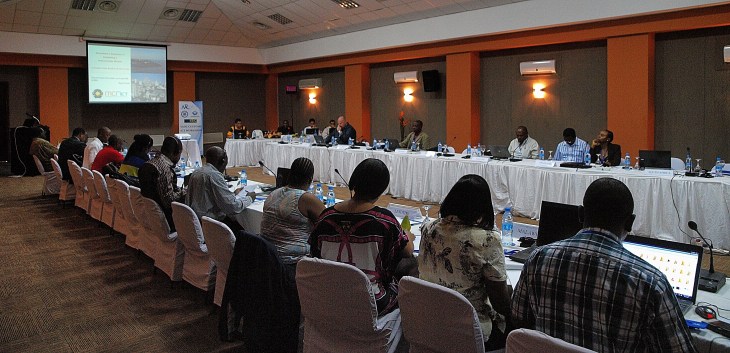
Delegates from the SADC member states gathered in Port Louis, Mauritius between 9 and 13 October to establish a SADC Customs ICT strategy for the region. The conference, sponsored by the United Nations Economic Commission for Africa, coincided with the 200th anniversary of Customs in Mauritius.

Following recent developments on IT connectivity and data exchange in the region, the conference addressed other areas of ICT in Customs which have a significant influence not only for internal Customs processing but its impact and effect on the broader stakeholder community. The conference was well attended with representatives from Angola, Mozambique, Lesotho, Swaziland, Namibia, Botswana, Tanzania, Zimbabwe, Seychelles, Mauritius, Democratic Republic of Congo, Malawi, and South Africa.

The event also drew international interest with representatives from the World Customs Organisation, Trans-Kalahari Corridor, SA Trade Hub, the East African Community, Southern African Customs Union, and the UN Economic Commission for Africa.

“Customs Connects, Borders Divide” conveyed the central theme for the event with the WCO IT and Capacity Building expert, Mats Wicktor, providing an enabling platform upon which the conference deliberations occurred. A detailed presentation clearly outlined the WCO’s the basis for standards, recommendations and guidelines, with specific reference to the Data Model, the Unique Consignment Reference and the most recent developments on Globally Networked Customs (GNC).

Other keynote addresses were made by Mozambique (DGA) on their experience in implementing the Single Window concept (for more details on this project visit URL: http://tfig.unece.org/case-stories.html).  Host nation Mauritius presented their Cargo Community System, and a number of other IT developments namely, e-Certificate of Origin, valuation database for 2nd hand motor vehicles, and the recently implemented Customs Enforcement Network (CEN) solution. SARS presented its Customs Modernisation journey highlighting some of the key ICT products and features and the respective efficiencies and trade facilitation benefits introduced for trade. Furthermore, it elaborated on its current bilateral data exchange initiatives with Swaziland, Zimbabwe, Mozambique as well as the IBSA countries.

The business end of the conference saw the finalisation, tabling and vetting of a draft SADC Customs ICT strategy. The strategy provides a broad framework, focussed around the concept of Customs-to-Customs data exchange. It seeks to create synergy between member states in regard to aspects such as transit management, common risk and enforcement principles, the entrenching of the One Stop Border Post concept, as well as automation of certificates of origin. From a SADC point of view, the strategy will support the realisation of its Strategic Plan – envisaged to include a Customs Union.

Trade Facilitation Implementation Guide

UNECE-Trade Facilitation Implementation GuideHaving spent the better part of the last fortnight amongst customs authorities and implementors of Single Window, I’m compelled to share with you a site (if you have not already been there) which attempts in a simple but comprehensive way to articulate the concept and principles of Trade Facilitation and its relationship and connotation with Single Window. The UNECE Trade Facilitation Implementation Guide should come as a welcomed resource, if not a companion, to trade facilitation practitioners and more specifically Customs Authorities wishing to embark on a trade facilitation approach. Of course it is a very useful reference for the many avid scholars on customs and trade matters across the global village. Of particular interest are the case studies – two of which feature African countries (Mozambique and Senegal) – providing a welcomed introduction of trade facilitation and Single Window on our continent. It is good to note that Single Window has less to do with technology and more to do with inter-governmental and trade relationships and an understanding of how these are meant to co-exist and support one another  – Enjoy!

Trade facilitation is emerging as an important factor for international trade and the economic development of countries. This is due to its impact on competitiveness and market integration and its increasing importance in attracting direct foreign investments. Over the last decade, it has gained prominence in the international political agenda as part of the ongoing WTO multilateral trade negotiations as well as of wide international technical assistance programs for developing and transition economies.

The primary goal of trade facilitation is to help make trade across borders faster and cheaper, whilst ensuring its safety and security. In terms of focus, it is about formalities, procedures, and the related exchange of information and documents between the various partners in the supply chain. For UNECE and its UN Centre for Trade Facilitation and Electronic Business (UN/CEFACT), trade facilitation is “the simplification, standardization and harmonization of procedures and associated information flows required to move goods from seller to buyer and to make payment”. Such a definition implies that not only the physical movement of goods is important in a supply chain, but also the associated information flows. It also encompasses all governmental agencies that intervene in the transit of goods, and the various commercial entities that conduct business and move the goods. This is in line with discussions on trade facilitation currently ongoing at the WTO. Source: UNECE

Ressano Garcia – Border Operations Assessment

As part of its Coordinated Border Management (CBM) program, the Southern African Trade Hub (SATH) undertook a Border Operations Assessment (BOA) at Ressano Garcia along the Mozambique/South Africa border. The objective of the assessment was to establish processes used by the different agencies to clear goods, identify challenges and recommend mechanisms to addresses obstacles. The assessment also entailed establishing the time it took for trucks to cross the border by physically recording arrival and departure times at points where the clearance of goods was undertaken.

SATH held discussions with both public and private agencies operating at the border: Customs, Immigration, Health, Agriculture, Police, Traders Association, Clearing and Forwarding Agents and Insurance Companies. The agencies explained their roles and mandates, how they carry out their day to day operations at the border, their working relations with other agencies at the border and the challenges they face in carrying out their duties.

SATH also had discussions with the One Stop Border Post (OSBP) project team to assess progress on the initiative. The OSBP is at an advanced stage and only awaits the adoption of the legal framework by South Africa, which is anticipated by the end of 2012.

Findings of the BOA and recommendations will be disseminated through a national and border workshops to which senior officials of agencies operating at the border and border officials will be invited. At these workshops Joint Border Committees will be established to take the recommendations forward to streamline border management.Source: SA Trade Hub

Port of Maputo – charting a course to successful development

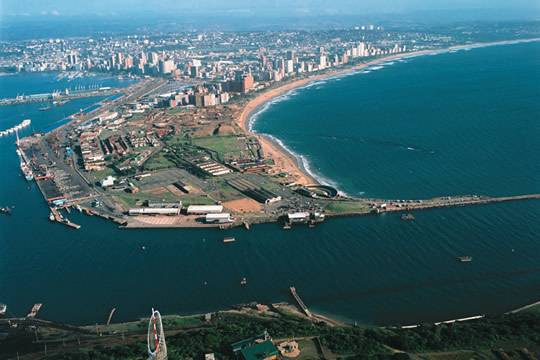
To understand where to the Port of Maputo is heading in the future, one has to know its past. In 1972, the Port of Maputo was a busy hub, handling near 17 million tonnes per year. Durban’s port, a little further south, was handling only 3 million tonnes more rhan that and Richard’s Bay Port didn’t even exist.

Then the long civil war came. In 1988, the Port of Maputo barely reached 1 million tonnes; infrastructure deteriorated, shipping companies moved their business elsewhere and ports like Richard’s Bay were born and prospered. It was only in 2003, when the Port of Maputo was transformed into a Private Public Partnership and concessioned to Maputo Port Development Company (MPDC), that things started changing. In only nine years, the Mozambique’s capital port grew from 4.5 million tonnes to 14 million tonnes (this expected year’s throughput).

This growth is the result of a massive investment – $291 million by the port’s concessionaires – in the rehabilitation of roads, rail, quays, general infrastructure and acquisition of equipment. However, the most beneficial change was the channel dredging to -11 meters, with a sailing draft above 11 meters. This allowed the port to receive bigger ships and, after the dredging, the Port of Maputo had an impressive growth of 35 percent.

Port of Maputo Masterplan

The dredging of the access channel to the port was the first of the many actions included in the Port of Maputo’s Masterplan; an ambitious and dynamic tool, which charts the port’s successful development. According to the updated Masterplan, the Port of Maputo foresees that, by 2020, it will be handling almost 50 million tonnes, with an investment of US $1.7 billion in the coal, container and bulk terminals. The port will also receive channel dredging to -14 meters, berths rehabilitation and also rail, road and warehousing improvements. The coal terminal, for example, is planned to grow from the current 6 million tonnes capacity to 30 million tonnes (20 million of coal and 10 million of Magnetite), and the container terminal will increase from the present 150,000 containers to 400,000 containers (phase one).

Much of the grand design to secure a vibrant future is presently visible only as images, which reflect the foresight of those who have launched this mammoth 20 year project. But to turn all this into reality, the Port is now working in what the eye can’t see.

Building foundations, facing challenges

In order to make a sustainable investment, the Port of Maputo has been taking time to build its foundations. 2011 and 2012 have seen an unprecedented alignment between all stakeholders, including the Mozambican Ports and Rails Company, Caminhos-de-Ferro de Moçambique (CFM), the National Customs Authority and the National Institute of Hydrography and Navigation (INAHINA). These stakeholders, amongst many other tasks, control all navigational aids in the access channel to the Port of Maputo, and all play a fundamental role in the achievement of the Masterplan’s
strategic objectives.

The Port of Maputo has a geostrategic location, relative to key markets – the main mining regions of South Africa, Swaziland and part of Zimbabwe. This gives the port a strategic, competitive advantage in comparison to neighboring ports, who are struggling with congestion. Most of the mineral cargos are transported to the port by road, even though they are more rail oriented. This poses numerous issues, such as road congestion, road maintenance and environmental problems. Today, there are about 1,200 trucks moving in and out the port every day. Very soon, with raising demand, this number will double, if cargo is not moved by rail. Read the full PDF article here! Source: Porttechnology.org.

Mozambique – New customs transit regulation

FTWOnline has published a letter it received from the CEO of Maputo Corridor Logistics Initiative (MCLI), the interim-CEO of Maputo Port Development Company (MPDC). Seems like an important ‘heads-up’ for all logistics operators. It reads as follows –

“The hardly-negotiated Mozambique customs transit regulation is concluded and the document sent to the minister of finance for approval. Approval and official gazetting is expected for the first week of August.

“Key features are:

  • All the unknown costs are replaced by a transit fee of 500.00-mts (+\- 18 US$) for general cargo and 10 cents of mts (0.036 US$) per for bulk cargo.Art. 13.
  • It is clarified that transit cargo is duty-free and subject to a guarantee that can be isolated (for a single transaction) or global (for transactions etween 3-month and 1-year). The bond covers only the duties and taxes at risk and is capped at 35% of duties and taxes. As an example, if the value of the good is US$1 000, the bond will be equal to 35% of 22% (7% of duties and 17% of vat), totaling around US$75. The bond is calculated on the basis of the value of transactions undertaken in the preceding year. Art. 14 to 19.
  • Transhipment is free-of-bond and the acquittal takes place only in the last port in the national territory. Art.23.
  • Acquittal period for areas where the single window is not yet in place is of 5 business days.”

Mozambique – Single Window and other Customs developments

The Single Electronic Window (JUE) is a modern system of clearance of goods. After the revision of the whole legislation to allow the implementation of the JUE, the pilot project began in September 2011 in the port of Maputo. Here follows an interview with Kekobad Patel, the President of the Working Group On Tax Policy, Customs and International Trade of the CTA.

What was the adherence of international traders?

“We hoped more adherence of all concerned traders, unfortunately, very few participated in the pilot phase. During this period, both systems (manual and electronic) coexisted. There is always some resistance to change.”

When did the use of the JUE become mandatory?

“The use of JUE became mandatory on April 9, 2012 in the port of Maputo,on April 23 in the port of Beira, early May in the port of Nacala. The city of Tete is now also covered by the system because of the current requirements due to the establishment of large enterprises in the region.”

How many organizations have used the JUE?

“Since its entry into force until 15th of June 2012, over 7,000 import entries were submitted. We still do not deal with export declarations, transit, or special arrangements. These processes are handled manually.”

What are the next areas to be covered by the JUE?

“The second phase will begin in July 2012 and will focus on automotive, multi-modal and road terminals in Maputo, as well as the land borders of Goba, Namaacha (Swaziland) and Ressano Garcia (South Africa) that have received the equipment to begin operations. At the end of the year, the port of Pemba and the land borders of the province of Manica and Tete will be also covered. It will also be possible to treat the other procedures for export and transit. This is crucial, given the geographical location of Mozambique and its relations with the countries of the hinterland. Meanwhile, three Ministries will be electronically linked to award the import licenses: the ministries of Health, Industry and Commerce, and Agriculture. We should not forget that banks are also involved in the JUE. The BCI bank has supported the JUE since the pilot phase. Other banks have joined in recent months: Millenium BIM, Mozabanco and Standard Bank. We expect the membership of other banks.”

What is the biggest challenge of the JUE?

“The implementation of the JUE has led to a change of mentality: “paperless” in the country: less buffer, less paper. The government itself is also involved in the process of e-taxation that ensures that taxpayers should pay their taxes electronically. We still have problems to solve. For example, when a ministry inspects companies, papers are asked for… We need to think about alternatives. The castle must be built stone by stone to ensure it is strong and other sectors such as the public one and banking, are also involved.We believe that the entry into force of the JUE shows how to modernize the country.”

Is the JUE to eliminate the clearing agents?

“The law allows companies to make their own clearance process, but many of them are not prepared. In other countries such as Singapore, the most advanced country in terms of customs, clearing agents continue to exercise thanks to their perfect knowledge of the system.” Source: allAfrica.com

Other news – Mozambique accedes to the WCO’s Revised Kyoto Convention

On 11 July 2012, the Embassy of the Republic of Mozambique to Belgium deposited Mozambique’s instrument of accession to the International Convention on the Simplification and Harmonization of Customs Procedures (Revised Kyoto Convention) with the World Customs Organization. The Convention is regarded as a blueprint for effective and modern Customs procedures, and will enter into force in Mozambique on 11 October 2012. Mozambique becomes the 82nd signatory to the Convention. Some of the Convention’s key elements include the application of simplified Customs procedures in a predictable and transparent environment, the maximum use of information technology, the utilization of risk management, a strong partnership with the trade and other stakeholders, and a readily accessible system of appeals. Will be interesting to see how Mozambique Customs treats the national transit procedure?

Trade costs and corruption in Ports of Durban and Maputo

Recent years have brought an increased awareness of the importance of trade costs in hindering trade, particularly in the developing world where these costs are highest, says a report in the latest edition of Port Technology. The most salient type of trade costs have often been tariff duties and costs associated with the physical transportation of goods. As a result, several countries embarked on extensive programmes of tariff liberalisation and a significant portion of aid effort was channelled to investments in hard transport infrastructure, such as rebuilding railways and ports (the World Bank alone devotes more than 20 percent of its budget to transport infrastructure projects worldwide).

More recently, new light has been cast on the importance of a different type of trade cost: the cost imposed by the soft infrastructure of transport, defined as the bureaucratic infrastructure handling the movement of goods across borders. While there are many possible sources of inefficiencies stemming from the soft infrastructure of transport, recent research is beginning to document the role played by corruption in transport bureaucracies in driving trade costs. This article provides an overview of this research.

Research into corruption

Corruption can take many forms and emerge in many different phases of the process of clearing goods across borders. Sequeira and Djankov (2011) documented in great detail the ways in which port corruption emerges in Durban and Maputo in Southern Africa – this report is featured in my next post. This research was based on a unique dataset of directly observed bribe payments to each port bureaucracy for a random sample of 1,300 shipments.

The study began by defining two broad categories of port officials that differed in their administrative authority and in their discretion to stop cargo and generate opportunities for bribe extraction: customs officials and port operators. In principle, customs officials hold greater discretionary power to extract bribes than regular port operators, given their broader bureaucratic mandate and the fact that they can access full information on each shipment, and each shipper, at all times. Customs officials possess discretionary power to singlehandedly decide which cargo to stop and whether to reassess the classification of goods for tariff purposes, validate reported prices of goods, or request additional documentation from the shipper.

Regular port operators, on the other hand, have a narrower mandate to move or protect cargo on the docks, and at times even lack access to the cargo’s documentation specifying the value of the cargo and the client firm. This category of officials includes those receiving bribes to adjust reefer temperatures for refrigerated cargo stationed at the port; port gate officials who determine the acceptance of late cargo arrivals; stevedores who auction off forklifts and equipment on the docks; document clerks who stamp import, export and transit documentation for submission to customs; port security who oversee high value cargo vulnerable to theft; shipping planners who auction off priority slots in shipping vessels, and scanner agents who move cargo through non- intrusive scanning technology.

The organisational structure of each port created different opportunities for each type of port official to extract bribes: the high extractive types -customs agents- or the low extractive types -port operators. These opportunities were determined by the extent of face to face interactions between customs officials and clearing agents, the type of management overseeing port operations, and the time horizons of each type of official.

Durban and Maputo

In Durban, direct interaction between clearing agents and customs’ agents was kept to a minimum since all clearance documentation was processed online. In contrast, all clearance documentation was submitted in person by the clearing agent in the Port of Maputo. The close interaction between clearing agents and customs officials in Maputo created more opportunities for corrupt behaviour to emerge in customs relative to Durban.

In Maputo, port operators were privately managed but in Durban, most terminals (for containerised cargo) were under public control, with very lax monitoring and punishment strategies for those engaging in corrupt behaviour. Private management in Maputo was associated with fewer opportunities for bribe payments due to better monitoring and stricter punishment for misconduct. As a result, the organisational features of each bureaucracy determined that the high extractive types in customs had more opportunities to extract bribes in Maputo, while the low extractive types in port operations had more opportunities to extract bribes in Durban. While corruption levels were high in both ports, bribes were higher and more frequent in Maputo relative to Durban.

Finally, port officials with opportunities to extract bribes at each port differed in their time horizons. Customs in Maputo adopted a policy of frequently rotating agents across different terminals and ports, and since bribes varied significantly by the type of terminal at the port, customs agents were aware of the risk of being assigned to terminals with lower levels of extractive potential. On the other hand, port operators in Durban had extended time horizons given the stable support received from dock workers’ unions. Customs officials were therefore the high extractive types with the shortest time horizons, the broadest bureaucratic mandates and more opportunities to interact face to face with clearing agents. As a result, they extracted higher and more frequent bribes, relative to port operators in Durban (the low extractive types) who had longer time horizons and narrower bureaucratic mandates. Source: Port Technology.

Namibia buys into ‘Single Window’ concept

From April 12-13, Southern African Trade Hub (aka USAID) presented Single Window as a cutting-edge tool for trade facilitation to the Ministry of Industry and Trade, Ministry of Finance, Customs and other private sector organizations, explaining how a NSW for Namibia could improve the Trading Across Borders index ranking, which currently stands at 142 out of 183 countries. Single Window is a crucial instrument that will eliminate inefficiency and ineffectiveness in business and government procedures and document requirements along the international supply chain, reduce trade transaction costs, as well as improve border control, compliance, and security.

Benefits for Government: A Single Window will lead to a better combination of existing governmental systems and processes, while at the same time promoting a more open and facilitative approach to the way in which governments operate and communicate with business. Traders will submit all the required information and documents through a single entity, more effective systems will be established for a quicker and more accurate validation and distribution of this information to all relevant government agencies. This will also result in better coordination and cooperation between the Government and regulatory authorities involved in trade-related activities.

Benefits for trade: The main benefit for the trading community is that a Single Window will provide the trader with a single point for the one-time submission of all required information and documentation to all governmental agencies involved in export, import or transit procedures. As the Single Window enables governments to process submitted information, documents and fees both faster and more accurately, traders would benefit from faster clearance and release times, enabling them to speed up the supply chain. In addition, the improved transparency and increased predictability would further reduce the potential for corrupt behaviour from both the public and private sector.

If the Single Window functions as a focal point for the access to updated information on current trade rules, regulations and compliance requirements, it will lower the administrative costs of trade transactions and encourage greater trader compliance. The Permanent Secretary for the Ministry of Industry and Trade underscored the need for Namibia to proceed with the Single Window concept, and advised participants that his Ministry, together with the Ministry of Finance, would jointly package the Single Window concept and submit it to Cabinet for Government approval.

In Southern Africa, Mauritius already has an effective Single Window, which is reflected in its “Trading Across Borders” ranking of 21. Mozambique recently launched its pilot Single Window. SATH will support and facilitate the processes for the establishment of a Botswana National Single Window system to streamline cross border trade. The current SATH Trans Kalahari Corridor (TKC) Cloud Computing Connectivity program, which is being piloted between Botswana and Namibia, provides an ideal technology platform for linking Botswana and Namibia Single Windows, leveraging the investment by BURS, Namibia Customs and SATH to date in the development of this system. SATH is currently in the process of gauging support for National Single Window in South Africa.

Excuse my cynicism, but the SA Trade HUB  has yet to demonstrate the viability of its Cloud Computing solution between Namibia and Botswana Customs. What is reported above is the usual sweet and fluffy adjectives which accompany most international customs and trade ICT offerings, ignoring prerequisite building blocks upon which concepts such as Cloud and Single Window may prove beneficial and effective. Past project failures in Africa are usually blamed on the target country in not bedding down or embracing the new process/solution – never the vendor. Given the frequency of technology offerings being presented by donor agencies on unwitting national states, there seems little foreign interest in ‘bedding down’ or ‘knowledge transfer’ than the ‘delivery of expensive technology’.

Related articles and references

Mozambique Tomato Mafia – Customs link?

Mozambique’s Minister of Industry and Trade, Armando Inroga, has promised that the people responsible for restricting the entry of imported tomatoes into Mozambique will be arrested, reports Thursday’s issue of the Maputo daily “Noticias”. Since early March a group of speculators has successfully pushed up the price of tomatoes in Maputo markets by obstructing cross-border trade, sometimes physically seizing trucks hired by small scale Mozambican importers. The group, in collaboration with some South African citizens, has taken up positions on the South African side of the border and is preventing other importers from bringing tomatoes into Mozambique. To achieve this, they evidently enjoy the protection of some people within the South African police or customs service. Huh! Really?

As a result, the price of tomatoes in Maputo’s main wholesale market has more than doubled in the space of five weeks, rising from 200-250 meticais (about seven to nine US dollars) to 500 to 600 meticais for a 22 kilo crate.

Inroga described the obstruction to trade in tomatoes as “illicit and criminal” and in violation of the rules governing the SADC (Southern African Development Community) Free Trade Area. He said that the Mozambican and South African governments are now working together to guarantee the normal circulation of people and goods on both sides of the border. The government sent a team from the National Inspectorate of Economic Activities (INAE) to work with the South African authorities, with the support of the Mozambican consulate in the eastern South African city of Nelspruit.

“The South Africans have begun to investigate these acts to identify the culprits and arrest them”, said Inroga. “Very soon the people associated with this movement to obstruct cross-border trade will be detained”

Mozambique resorts to importing tomatoes from South Africa because national production is insufficient to meet demand, particularly in Maputo which consumes 40 tonnes of tomatoes a day. Source: Noticias, Mozambique

New Mozambique Customs System will reduce processing time

Customs processing times for goods imported into Mozambique will be lowered from the current minimum of three days to just a few hours with the introduction of a modern customs processing system, Mozambican daily newspaper Notícias reported.

Known as the Single Electronic Window, the new tool is made up of two computer systems – the integrated customs management system and the operators’ mechanism.

Via the Single Electronic Window importers are able to submit the customs declaration and pay all fees via a retail bank before the actual unloading of the goods, which will reduce their processing time.

Rosário Fernandes, chair of the Mozambican Tributary Authority said that the transmission network for the Single Window (Janela Única), managed by MCNet (Mozambique Community Network), would show the cargo manifest and customs declaration from carriers or owners of the goods, processing, payments inspection and management of the output of imported goods.

MCNet is 60 percent-owned by the Escopil Internacional and SGS Moçambique consortium and by the State and Confederation of Economic Associations (CTA), each with a 20 percent stake. Source: macauhub