11 Million cigarettes wash up on Devonshire coast

The container ship Svendborg Maersk was battered by hurricane winds as it crossed the northern stretch of the Bay of Biscay on February 14th. Battling 30-foot waves and working through winds of 60 knots the ship arrived only to find that a large chunk of her cargo had been swept overboard. The ship was originally heading from Rotterdam to Sri Lanka.

The shipping giant initially reported that only 70 containers had been lost in the storms. However, last Wednesday this number skyrocketed to 517 – the largest recorded loss of containers overboard in a single incident. Countless more are supposed to have been damaged when six of the bays tilted over.

Maersk have suggested that almost 85 percent of the containers were empty, with the rest containing mostly dry goods and frozen meats. They also reinforced the fact that none of the containers were carrying harmful substances and that many had sunk in the turbulent seas.

Nevertheless, French authorities have been on the lookout for floating containers, which can be hugely problematic for other shipping vessels, alongside a huge environmental risk. According to New Zealand marine insurer Vero Marine, a 20-foot container can float for up to two months, whilst a 40-foot container may float up to three times longer.

Already, containers have been surfacing as far away as the coast of East Devon, United Kingdom. The 40-foot container washed up at Axmouth, near Seaton and is estimated to contain 14 tonnes of cigarettes. Police were immediately called in to cordon off the area and scare away any would-be smokers hoping to make a steal and sneak off with a portion of the 11 million cigarettes (refer to picture gallery).

As of yet, there has never been a requirement for shipping lines to report container loses to the International Maritime Organisation (IMO)or any other international body. In 2011, the World Shipping Council estimated that around 675 containers were lost at sea, whilst the Through Transport Club, which insures 15 of the top 20 container lines, has suggested that the number is closer to 2,000.

However, other sources suggest that this is nowhere near the true number, with some citing as many as 10,000 lost at sea each year. Analysts have suggested that one of the reasons such loses can occur are due to the lack of accuracy when weighing containers before transit. Some shippers have been found to understate the weight of containers in order to reduce shipping costs. Such misinformation can lead to uneven strain on a vessel as it transverses the seas.

One of the most notable incidents occurred in 2007 when the MSC Napoli ran aground off the English coast, breaking up and spilling 103 containers worth of toxic cargo, polluting five miles of the South Western coast. The UK marine accident investigation board ruled that the accident was due to cargo being loaded in such a way that it exceeded the baring weight of the hull girders, resulting in a structural failure across the ship. The report concluded that if such loses are to be prevented, it is essential that containers be weighed before embarkation. Source: Port Technology

What are surfaces?

containerThis is the theme of peer review group –  Environment and Planning’s latest edition to its journal. Once I got past the verbage of seeming unconnected academic diatribe, I stumbled on a paragraph which provoked immediate interest, particularly given that I’m fanatical about multimodal transportation especially the ‘container’. It goes like this –

The question posed by this thematic issue is one with considerable intellectual heritage. Surfaces have held a long-standing fascination for science, social science, and humanities scholars, whether figured as material interfaces,(1) natural structures, aesthetic phenomena, geometric projections, or fetishistic distractions. Surfaces may be sculpted, calculated, smoothed, camouflaged, magnified, represented, sensed, or commodified. They may be revered for their beauty, clarity, texture, accessibility, and biodiversity, or criticised for their opacity, ugliness, or for obscuring ‘underlying’ relations and processes. Indeed, while certain disciplinary, philosophical, and scientific traditions are (or have been) concerned with understanding and apprehending surfaces, many scholars—most recently Divya Tolia-Kelly (2013)—emphasise the importance of getting beyond the surface, uncovering underlying meanings, motivations, power relations, ‘feelings’, and processes of production: pushing beyond boundaries, scratching beneath surfaces. The academic inquirer is urged to undertake sub-surface investigations, functioning as an explorer, fisherman, or miner who trawls, excavates, or pioneers new depths.

“So much of life occurs at the surface that, as students of the human scene, we are obliged to pay far more attention to its character (subtlety, variety, and density) than we have done. The scholar’s neglect and suspicion of surface phenomena is a consequence of a dichotomy in western thought between surface and depth, sensory appreciation and intellectual understanding, with bias against the first of the two terms.” Tuan (1989)

The six individual papers in this theme issue provide conceptually diverse and empirically specific responses to the central question posed: ‘What are surfaces?’

For Craig Martin (2013) surfaces exist first as logistical accomplishments, and are to be understood as physical phenomena crucial to the reshaped global geographies of commercial hipping and freight transport. Martin’s concern is with the advent of an intermodal, logistical system based on the standardisation of heavy-duty, corrugated metal boxes; otherwise known as the shipping container. This object, in which so many ordinary spatial interdependencies are invested, is arguably as close to a universal, surficial fix as global powers have got. The containers’ vital statistics and carrying capacities scale up to a planetary surface where integration is paramount, between materialities (of land and sea), mobilities (nautical and terrestrial), and sovereignties (political and legal). By these means, the specificities of earthly surfaces have been transformed into a commerce-driven sameness of sorts.

So now I think….how long it will take me to save up £1000 to purchase a year’s subscription to this journal – perhaps just for this one article?

Source: Environment and Planning  

Radiation Scare Disrupts Port Elizabeth

The Maher Terminal at Port Elizabeth has been cleared for danger after a radiation scare prompted a security response.

The Maher Terminal at Port Elizabeth has been cleared for danger after a radiation scare prompted a security response.

Misleading? No its Port Elizabeth – USA! Customs officials had suspicion about a shipping container that they were examining. An abnormally high radiation reading was detected, but CBP, FBI, the Port Authority of NY/NJ and other law enforcement officials initiated protocols to isolate and verify the source of the alarm.

According to New Jersey’s Star-Ledger, a Port Authority official said the container was filled with recycled paper, and a metal wire that bound the paper was the source of a positive reading for Caesium-137, a radioactive isotope formed during nuclear fission.

After review and confirmation from CBP’s Laboratories & Scientific Services, the container was deemed safe. The situation was resolved in less than two hours. Customs officials took control of the container and were moving it to a secure location.  Lengthy lines of trucks were at a standstill waiting to exit the port facility as the investigation was underway. At least 15 emergency response vehicles were on scene, along with various officers. Source: Maritime-Executive.com

How much bigger can container ships get?

Check out this superb article – click here – featured on BBC News Magazine‘s website –

What is blue, a quarter of a mile long, and taller than London’s Olympic stadium? The answer – this year’s new class of container ship, the Triple E. When it goes into service this June, it will be the largest vessel ploughing the sea. Each will contain as much steel as eight Eiffel Towers and have a capacity equivalent to 18,000 20-foot containers (TEU). If those containers were placed in Times Square in New York, they would rise above billboards, streetlights and some buildings. Or, to put it another way, they would fill more than 30 trains, each a mile long and stacked two containers high. Inside those containers, you could fit 36,000 cars or 863 million tins of baked beans.

The Triple E will not be the largest ship ever built. That accolade goes to an “ultra-large crude carrier” (ULCC) built in the 1970s, but all supertankers more than 400m (440 yards) long were scrapped years ago, some after less than a decade of service. Only a couple of shorter ULCCs are still in use. But giant container ships are still being built in large numbers – and they are still growing.

It’s 25 years since the biggest became too wide for the Panama Canal. These first “post-Panamax” ships, carrying 4,300 TEU, had roughly quarter of the capacity of the current record holder – the 16,020 TEU Marco Polo, launched in November by CMA CGM.

In the shipping industry there is already talk of a class of ship that would run aground in the Suez canal, but would just pass through another bottleneck of international trade – the Strait of Malacca, between Malaysia and Indonesia. The “Malaccamax” would carry 30,000 containers.

There are currently 163 ships on the world’s seas with a capacity over 10,000 TEU – but 120 more are on order, including Maersk’s fleet of 20 Triple Es. Source: BBC News Magazine

Thinking Inside the Box

The fluid transition from sea to land

The fluid transition from sea to land

Here’s an interesting view on containers, presented by Alex Colas from Birkbeck University, USA. Colas highlights that containers have been fundamental drivers of global processes and have had an unprecedented effect on logistics and labour organisations. Moreover Colas demonstrates that containers as well as being transformative objects in themselves, have also transformed the way in which circulatory barriers have been overcome through seamless transitions from water to land. Containers are a worthy protagonist of material analysis in international systems and there is much room in academic discourse for the full story of the container to unfold. Herewith the link to the article Thinking Inside the Box, available on the blog – Geopolitics & Security.

Revisiting the national transit procedure – Part 2

You will recall a recent challenge by trade to SARS’ proposed implementation of mandatory clearance of national transit goods inland from port of initial discharge – refer to Revisiting the national transit procedure – Part 1.

First, some background

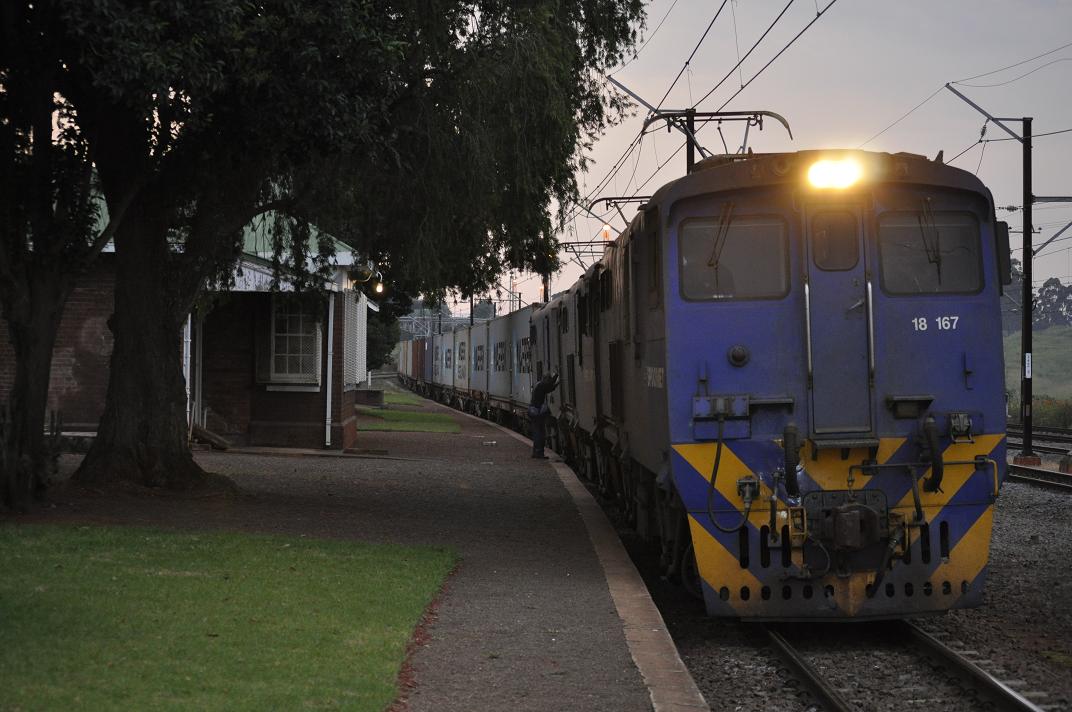
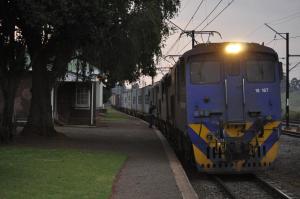
Now lets take a step back to look at the situation since the inception of containerisation in South Africa – some 30 years ago. Customs stance has always been that containerised goods manifested for onward delivery to a designated inland container terminal by rail would not require clearance upon discharge at initial port of entry. Containers were allowed to move ‘against the manifest’ (a ‘Through Bill’) to its named place of destination. This arrangement was designed to expedite the movement of containers from the port of discharge onto block trains operated by Transnet Freight Rail, formerly the South African Railways and Harbours (SAR&H) to the inland container terminal at City Deep. Since SAR&H operated both the national railway and the coastal and inland ports, the possibility of diversion was considered of little import to warrant any form of security over the movement of containers by rail. Moreover, container terminals were designed to allow the staging of trains with custom gantry cranes to load inland manifested containers within a ‘secure’ port precinct.

Over the years, rail freight lost market share to the emergence of cross-country road hauliers due to inefficiencies. The opening up of more inland terminals and supporting container unpack facilities, required Customs to review the matter. It was decided that road-hauled containers moved ‘in bond’ by road would lodge a customs clearance (backed with suitable surety) for purposes of national transit. Upon arrival of the bonded freight at destination, a formal home use declaration would be lodged with Customs. Notwithstanding the surety lodged to safeguard revenue, this has the effect of deferring payment of duties and taxes.

Diversification of container brokering, stuffing and multi-modal transport added to the complexity, with many customs administrations failing to maintain both control and understanding of the changing business model. Equally mystifying was the emergence of a new breed of ‘players’ in the shipping game. Initially there were so-called ‘approved container operators’ these being ocean carriers who at the same time leased containers. Then there were so-called non-approved container operators who brokered containers on behalf of the ocean carrier. These are more commonly known as non-vessel operating common carriers or NVOCCs. In the early days of containerisation there were basically two types of container stuffing – full container load (FCL) and less container load (LCL). The NVOCCs began ‘chartering’ space of their containers to other NVOCCs and shippers – this also helped in knocking down freight costs. This practice became known as ‘groupage’ and because such containers were filled to capacity the term FCL Groupage became a phenomenon. It is not uncommon nowadays for a single FCL Groupage container to have multiple co-loaders.

All of the above radically maximised the efficiency and distribution of cost of the cellular container, but at the same time complicated Customs ‘control’ in that it was not able to readily assess the ‘content’ and ownership of the goods conveyed in a multi-level groupage box. It also became a phenomenon for ‘customs brokers/clearing agents’ to enter this niche of the market. Customs traditionally licensed brokers for the tendering of goods declarations only. Nowadays, most brokers are also NVOCCs.  The law on the other hand provided for the hand-off of liability for container movements between the ocean carrier, container terminal operator and container depot operator. Nowhere was an NVOCC/Freight Forwarder held liable in any of this. A further phenomenon known as ‘carrier’ or ‘merchant’ haulage likewise added to the complexity and cause for concern over the uncontrolled inland movements of bonded cargoes. No doubt a disconnect in terms of Customs’ liability and the terms and conditions of international conveyance for the goods also helped create much of the confusion. Lets not even go down the INCOTERM route.

Internationally, customs administrations – under the global voice of the WCO – have conceded that the worlds administrations need to keep pace and work ‘smarter’ to address new innovations and dynamics in the international supply chain. One would need to look no further than the text of the Revised Kyoto Convention (RKC) to observe the governing body’s view on harmonisation and simplification. However, lets now consider SARS’ response in this matter.

SARS response to the Chamber of Business

Right of reply was subsequently afforded by FTW Online to SARS.

Concerns over Customs’ determination to have all goods cleared at the coast – expressed by Pat Corbin, past president of the Johannesburg Chamber of Commerce and Industry in last week’s FTW – have been addressed by SA Revenue Service.  “One of the main objectives of the Control Bill is the control of the movement of goods across South Africa’s borders to protect our citizens against health and safety risks and to protect the fiscus. “In order to effectively determine risk, SARS has to know the tariff classification, the value and the origin of imported goods. This information is not reflected on a manifest, which is why there is a requirement that all goods must be cleared at the first port of entry into the Republic.“It appears that Mr Corbin is under the impression that the requirement of clearance at the first port of entry has the effect that all goods have to be consigned to that first port of entry or as he puts it “to terminate vessel manifests at the coastal ports in all cases”. This is incorrect. “The statutory requirement to clear goods at the first port of entry and the contract of carriage have nothing to do with one another. Goods may still be consigned to, for example, City Deep or Zambia (being a landlocked country), but they will not be released to move in transit to City Deep or Zambia unless a declaration to clear the goods, containing the relevant information, is submitted and release is granted by Customs for the goods to move. The release of the goods to move will be based on the risk the consignment poses to the country.“It is definitely not the intention to clog up the ports but rather to facilitate the seamless movement of legitimate trade. If the required information is provided and the goods do not pose any risk, they will be released.”

So, where to from here?

The issue at hand concerns the issue of the ‘means’ of customs treatment of goods under national transit. In Part 3 we’ll consider a rational outcome. Complex logistics have and always will challenge ‘customs control’ and procedures. Despite the best of intentions for law not to ‘clog up the port’, one needs to consider precisely what controls the movement of physical cargo – a goods declaration or a cargo report? How influential are the guidelines, standards and recommendations of the WCO, or are they mere studies in intellectual theories?