Rapid progress on City Deep Container Terminal upgrade

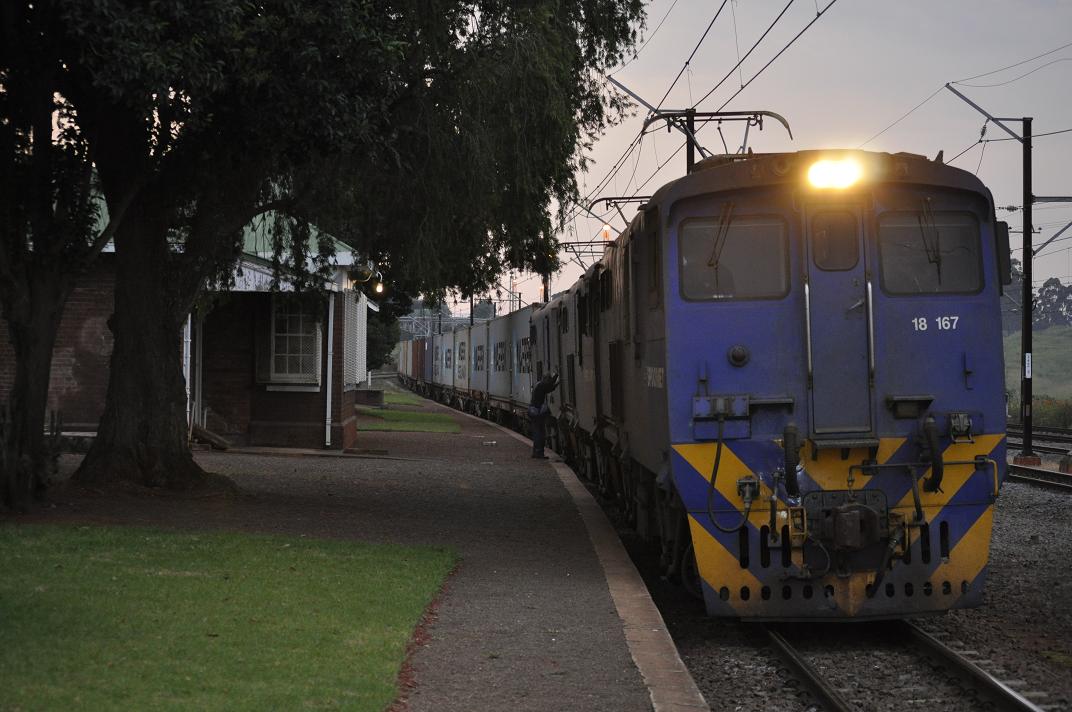
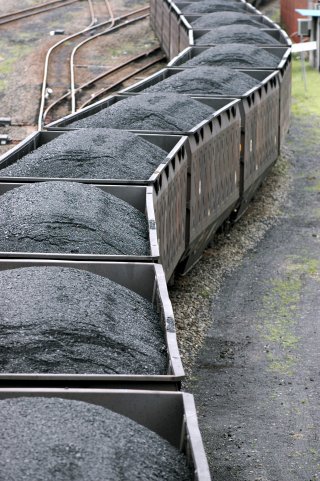
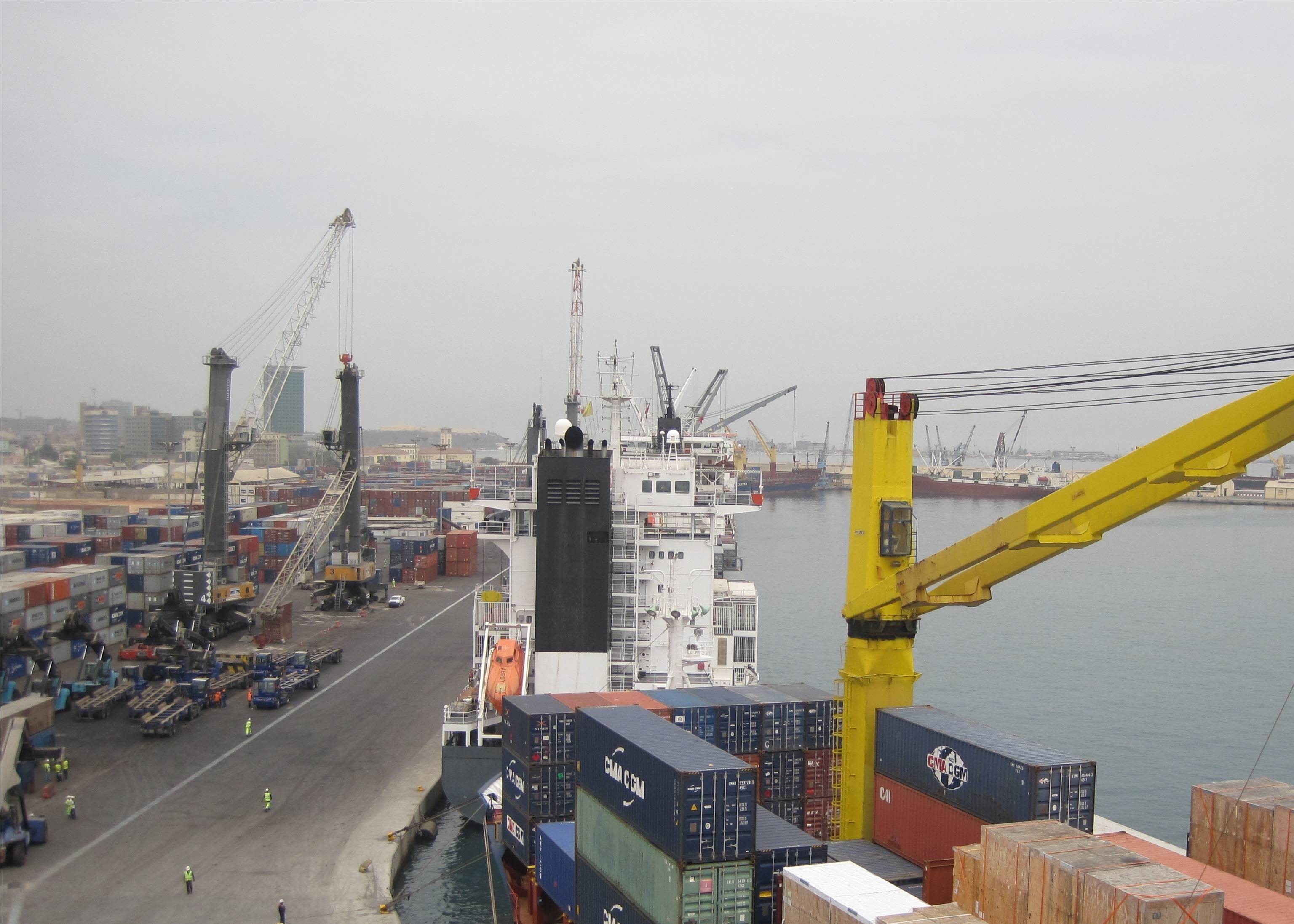
Rapid progress is being made on a multimillion rand contract awarded by Transnet Capital Projects to Concor Civils for the construction of new concrete paving, civil services and electrical lighting at its City Deep Container Terminal. The terminal is currently being upgraded as part of Transnet’s rolling capital investment programme.

The container terminal at City Deep is known to be the largest “dry port” in the world and the City Deep area has been declared an IDZ (Industrial Development Zone) by the Gauteng government. (?)

The contract is scheduled for completion in May 2014 and includes the removal of 36 500 m3 of existing concrete paving, 110 000 m3 of earthworks, the installation of a new drainage system and all service ducting and manholes for lighting, fire mains, CCTV equipment, 360 t of mesh reinforcing and the placing of approximately 146 000 m2 of concrete paving.

The Concor Civils team is making use of as many emerging contractors as possible to supply services such as pipe laying, ducting and manholes and has undertaken to employ about 90 general workers at peak from the local community at a cost of some R10 million. These temporary workers will be given on the job training in basic technical skills, as well as in life skills. Source: Transport World Africa

What Optimisation means for Terminals and Ports

Container terminal (CT1) with Nordschleuse in ...

Container terminal (CT1) with Nordschleuse in the foreground, Bremerhaven (Photo credit: Wikipedia)

Port Technology International’s article is perhaps poignant to current logistics developments in South Africa. Optimisation at the terminal does not only mean improving productivity and reducing operational costs. Optimisation represents a new approach to managing container terminals; it is the most significant driving factor in changing the traditional operational approach and methodology applied at container terminals. It also allows terminals to have a focus on efficiency which needs to address the trade-off between vessel service time, terminal capacity, and cost per move.

In terms of the marine shipping industry, one of the most accurate definitions of optimisation is: “The act of making a system, design or decision as effective or functional as possible.” Optimisation as a discipline is an ancient science best illustrated over time.

The history of optimisation

Greek mathematicians used to solve optimisation problems related to geometrical studies. After the invention of calculus, mathematicians were then able to address more complex optimisation problems. Following the start of the World War II and the advent of the operations research field, the concept and practice of optimisation began to develop and received significant academic and industrial focus. Mr J. Von Neumann, a leading individual behind the development of operations research, contributed substantially to the field of algorithmic research. And in the 60s and 70s, complexity analysis began to further support the use of optimisation. Then, in the 80s and 90s as computers became more efficient, algorithms for global optimisation with the purpose of solving large-scale problems began to gain momentum and credibility.

Considering the present

The continual advancements in technology with respect to computing power along with significant research in applied mathematics and computer science have solidified the value of optimisation to the industry and the end user. This has enabled advanced theory to be applied in a way that has sometimes invisibly improved our lives during last 20 years. The progress is amazing. Today, companies such as UPS and Federal Express utilise complex routing algorithms for resource allocation and supply chain distribution to deliver an item to our door with seamless efficiency. Their results have in turn changed the way millions of us find information, shop, and even do our jobs.

Today, many industries use optimisation as a more general term that covers areas from manufacturing process efficiency to improved distribution techniques. The core objective of optimisation is improving and controlling the process – whatever it may be – and allowing people with responsibilities in those areas to make better decisions. Operations research, for example, is a discipline that deals with the application of advanced analytical methods to help make better decisions at the right time and within the time constraints of a live operation.

As with other industries, the shipping and container space is currently going through its own step change to achieve new levels of operational productivity in response to mega-trends, such as globalisation and sustainable operations. To compete, ports and terminals have decided they need to adapt to their changing demands by optimising their activities in areas such as berthing allocation, vessel planning, fleet size optimisation, shift resource planning and equipment scheduling. All of these areas are critical for minimising the cost per move factors and maximising overall terminal performance and throughput.

Optimisation also provides the intelligence and the tools to support this changing industry, but it is not meant to be a black box. A container terminal is a very complex system with many unpredictable variables. Those focused on achieving optimisation will need to be able to control, monitor and configure the behaviour of this intelligence behind the machine and systems, filling any critical gaps between the planning and execution.

Containerised cargo makes up about 60 percent of all dry cargo trade in the world; since the advent of the cargo container more than 50 years ago, this number continues to grow. The appeal of containerised cargo is well known – cargo can be seamlessly transported from origin to destination via a variety of modes without the need to unload and reload its contents. The marine container terminal is at the junction of water, rail and truck transport modes. And as a consequence, marine container terminals are some of the most essential, yet challenging, links in the global supply chain. Source: Port Technology International

Rotterdam – The signficance of ‘hinterland’ container services

Picture1BILK (Budapest Intermodal Logistics Center) Kombiterminál has become the first Hungarian terminal to join the InlandLinks network, comprising of nearly 40 terminals across the Netherlands, Belgium, Germany, Poland, Italy and Hungary.

InlandLinks, an initiative of the Port of Rotterdam Authority which was developed two years ago in cooperation with VITO (Dutch Inland Container Terminal Organisation), is an online platform for container terminals in the hinterland, offering intermodal services to and from the Port Rotterdam – Europe’s largest port complex

Rotterdam expects to see container flows triple over next 25 years in line with growth in world trade and the increasing size of container vessels. Of the 30 million TEU anticipated to be handled by the Dutch port in 2035, approximately 2 million are expected to be shipped in and out using smaller vessels from and to European ports. Some 18 million TEU will travel to and from the hinterland via intermodal transport, and the Port of Rotterdam hopes that InlandLinks will help to provide greater insight into better and more sustainable connections for this projected flow of cargo.

BILK, located in a suburb in the southeast of Budapest, consists of a railway station/marshalling yard, a bi-modal terminal for combined traffic, and a 70-hectare logistics centre. The terminal has the capacity to handle an annual traffic of 220,000 TEU. Source: Porttechnology.org


Mega ships: positive asset or terminals’ worst nightmare?

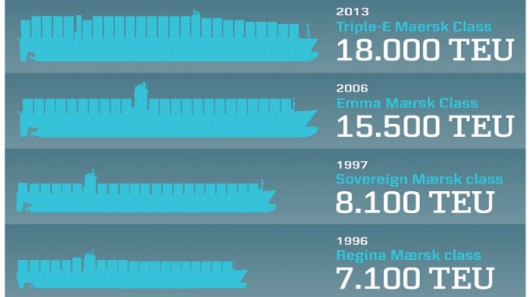
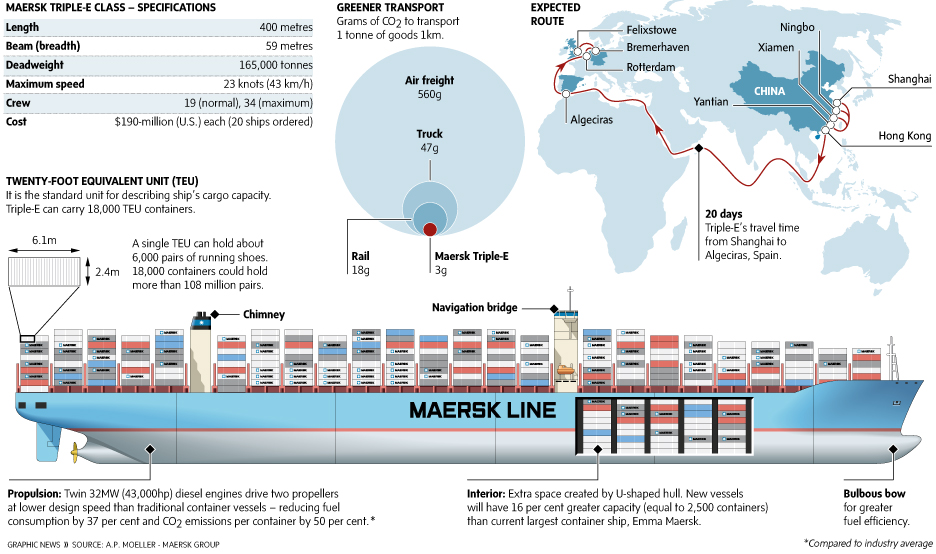
triple-e-maersk-worlds-largest-shipA Financial Times article reported Maersk’s Triple E Class (18,000 TEU) to be 26 percent more cost efficient than the current E class (15,000 TEU). – Wright, R (2011), Financial Times. ‘Big Ships: Container lines reach for scale’. Recent research into supply chain costs indicates that this is not obvious for the entire supply chain – Streng, M. (2012). Slow steaming: an economic assessment of lowering sailing speeds on a supply chain level’, Master Thesis Urban, Port and Transport Economics, Erasmus University Rotterdam.

The capital cost per TEU moved has increased even considering the increase in slot size of newer larger vessels. Due to the increase in transportation duration, the capital costs and insurance of goods transported have gone up. Further cost increase could be accounted for in the increase in time to market. Fast moving goods (such as consumer electronics) that need longer to get from the world’s production centres to the markets is also a cost. Shipping lines are demanding ever shorter port stays in order to make the economies of scale work. The bigger the ship, the greater the cost of hours lost in port, and an increased port stay is a diseconomy of scale.  Port Technology have published the following article which should be useful for shippers, freight forwarders, port planners in better understanding the economics of international shipping and logistics – Mega ships: positive asset or terminals’ worst nightmare?.

Triple E Class Specifications - (AP Moeller/MAERSK Group)

Triple E Class Specifications – (AP Moeller/MAERSK Group) [Click to Enlarge]

New Ressano Garcia Cargo Terminal Operational By December

Mozambique flagA new cargo terminal will be opened at the Ressano Garcia – Lebombo border crossing before the end of the year to speed up the processing of customs clearance for goods moving between Mozambique and South Africa.

To further the project an agreement has been reached between the Mozambique Tax Authority (ATM) and a consortium composed of the Matola Cargo Terminal (Frigo), Matrix and the “Zambian Border Crossing Company”.

The 15 year concession contract was signed on 14 June in Ressano Garcia by the chairperson of ATM, Rosario Fernandes, and by the managing director of Frigo, Filipe Franco.

Filipe Franco told AIM that a new truck terminal is being built where facilities will be available for all the necessary services including customs, migration, and officials dealing with health and agriculture.

He pointed out that “our objective is to ensure that the terminal will be completed and operational by December”, adding that the consortium is composed of companies with a great deal of experience in managing cargo terminals.

Rosario Fernandes said that the cargo terminal project will facilitate trade by speeding up customs clearance at the border post through a one stop system and the single electronic window system which is being implemented throughout Mozambique. Source: AIM (Mozambique News Agency)

Durban Dig-Out Port – First Stakeholder Engagement Concluded

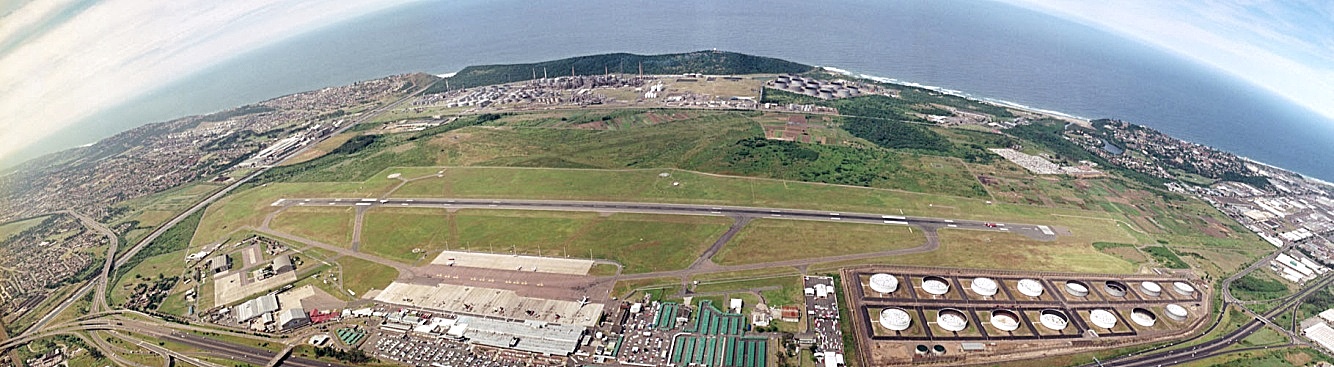
Old Durban airport - site for new Dig Out Port (Picture credit: ACSA)

Old Durban airport – site for new Dig Out Port (Picture credit: ACSA)

Transnet has concluded the first in a series of early stakeholder engagement sessions with local organisations on the proposed Durban dig-out port project. If built, the new port will be to the south of Durban on the site of the former Durban International Airport and 15 minutes by car from the existing port. It has been proposed that it will consist of 16 container berths, three Ro-Ro berths for the automotive business, and several oil and product tanker berths.

The engagement sessions just concluded form an integral part of the project’s concept phase which includes the development of a Sustainable Port Development Framework (SPDF) that will inform all future designs as well as operations. Transnet commenced with high-level technical and environmental studies in 2012 as part of the proposed Durban dig-out port project process. The current concept phase is scheduled to conclude in July this year, and comprises the generation of a number of technical design options.

The engagement sessions involved key representatives from local business, property, environmental and civic associations who met in order to comment on a discussion document which was distributed to them in mid-February 2013. The discussion document included important information on the background to, and process involved in, validating the viability of constructing a major container port on the site of the old Durban International Airport.

The sessions were held at various public venues and were facilitated by an independent sustainability consultancy. All feedback obtained during the engagement sessions was captured and will be factored into the development of the SPDF which will ensure the effective implementation of sustainability objectives throughout the life cycle of the proposed port project.

Along with promoting the long-term sustainability and operational excellence of the port, the framework also seeks to integrate environmental and social principles into the planning process. The series of engagement sessions, which will continue throughout the project’s lifespan, will also form part of the Department of Transport’s requirement for engagement during the strategic level environmental assessment as part of the legislative requirement for the promulgation of the port.

The process of moving from the current concept phase through the pre-feasibility and feasibility phases, and finally to actual implementation is anticipated to take approximately four years. The next phase, which is the pre-feasibility phase, is expected to proceed in July this year when the viability of the preferred design option will be thoroughly investigated.

The proposed port forms a key pillar of Government’s Strategic Integrated Projects (SIPs) to upgrade the Durban-Free State-Gauteng Freight Corridor (otherwise known as SIP2 in the National Infrastructure Plan). Source: Ports.co.za

Shrinking Pool of Port Talent

The supply of proven port executives is drying up. Credit: Off beat Mum

The supply of proven port executives is drying up. Credit: Off beat Mum

Indeed the pool of experienced business expertise is in short supply and dwindling towards extinction. The following article published by Port Strategy reveals a pattern not only affecting employment trends in the international port business, but one which exists in just about every other industry of the international supply chain, the Customs included.

Successive years of hammering home the crewing ‘crisis’ message have firmly ingrained the matter on our minds: red alert, a dearth of qualified seafarers is about to bring the industry to its knees. However, that record has been re-played for at least the last two decades and the anticipated crisis has yet to materialise.

But there is a more pressing employment crisis in our very own backyard, if recruitment specialists are to be believed. With the growth of terminals coming on a pace, there is a demand for C-level executives with a proven track record in bringing start-ups to life. However, by definition this is a very select pool of individuals and these individuals can only be stretched so far.

Years ago, the industry would have handled CVs with regular eighteen month hops to pastures new with extreme caution: ‘a lack of commitment’… ‘ambition over loyalty’… ‘chasing the buck rather than the ambitions of the job’. Yet now, browse some port chief executive profiles and eighteen months could be considered a long term commitment as these sought after individuals jump from one top hot seat to the next to bring terminals up to speed in a matter of months rather than years.

Many are very successful, so perhaps I shouldn’t knock their career drivers. However, the whole exercise demonstrates how very reliant we are as an industry on an elite group of port positioning gurus.

With global container port throughput expected to grow by an average of around 7.5% a year over the next six years, how are we going to find the top brass to steer these terminals on the right course?

A specialist recruitment head-hunter recently confirmed to me that we are facing a challenge. It is already difficult to find the right people for positions that can often be in inhospitable environments, expecting them to uproot family and move lock, stock to a new country and culture.

And if we can find enough of these magic-makers, is the industry willing to pay for their worth? In a word, no, my recruitment colleague tells me. This is simple economics: the pot of suitable candidates contracts, the salary they can command goes up.

Port authorities and global operators need to wise up to the fact that not only is it becoming increasingly difficult to source talent – with no sign of improvement any time soon – but they will need to dig deeper if they want to win over that talent before another operator sweeps them off the available list. Source: Portstrategy.com

Finding the best solution for 100% container weight verification

Bromma load verification sensing technology (www.bromma.com)

Bromma load verification sensing technology (www.bromma.com)

The International Association of Ports and Harbours (IAPH) has helped the container handling industry to put focused attention on the issue of container weight verification. The IAPH and the International Shipping Organization have called for near 100 per cent container weight verification as a standard industry ‘best practice’. IAPH has recognised the value of container weight verification for both safety and operational reasons. Accurate container weights can help guide critical plans regarding stowage, and verifiable load data also serves to ensure worker safety. Lifting containers within an acceptable weight range also prevents accelerated stress on the spreader, thus extending equipment life.

The issue that organisations such as IAPH and the World Shipping Council have raised is not merely an academic one, studies of container weight indicate that there is often significant variation between listed and actual container weight. The problem is a familiar one: not everyone tells the truth about their weight, as the consequences of inaccurate weight can include equipment damage in ports, injury to workers and collapsed container stacks, among others.

The question is ‘how’, not ‘should’?

The general consensus has grown that universal container weight verification is a worthy standard, the key question has quickly begun to shift from whether we should we have a universal requirement to how we can best implement this commitment. Along these lines three general approaches might be possible.

The container crane option

The first possible approach is to utilise container cranes to meet the weighing requirement. The advantage of weight verification by cranes is that weighing occurs during the normal course of handling operations. The disadvantage of a crane-based approach is that weighing accuracy is only approximately 90-95 per cent, and cranes cannot distinguish between the weights of two containers when lifting in twin-mode. Since many terminals load and unload container ships using twin-lift/twin-20 foot spreaders, the actual weight of each of these individual containers will remain in doubt if there is a reliance on container cranes to yield this data. Also, with the emergence of the mega-ship era, more and more terminals will be looking for productivity solutions that enable more containers to be handled in each lift cycle, and so twin-handling of 40 and 20 foot containers is likely to expand in the future, thus adding to the number of containers with an uncertain weight.

The weigh bridge option

A second option for terminals would be to meet the container weight requirement through the use of weigh bridges. Unfortunately, there are multiple weaknesses in this approach.Containers can be weighed from the weigh bridge, but driving every container onto a weigh bridge will obviously add another operational step, and slow productivity. It also requires, especially at larger and busier transhipment terminals, that considerable land and transit lanes be set aside for weighing activities. In addition, there are two weight variables on the weigh bridge – the variable weight of up to 300 litres of truck fuel and the weight of the driver. Further, as with a container crane, a weigh bridge cannot distinguish between the weights of two containers, and so the weight of each individual container will always be inexact. The only way to gain a precise weight is to weigh one container at a time, and to adjust for fuel weight and driver weight variables.

The spreader twist lock option

The third option is to ascertain container weight from the spreader twist locks. For container terminals, a spreader-based weighing approach has several key advantages. Firstly, weighing from the spreader twist locks yields much more accurate information, as container weight precision is greater than 99 per cent. Secondly, unlike weigh bridges or crane-based container weighing, spreaders weigh each container separately when operating in twin-lift mode. When a Bromma spreader lifts two 20 foot containers or two 40 foot containers at a time, the spreader can provide highly accurate data on the weight of each separate container, and without any of the variables (fuel, driver) associated with the weigh bridge approach.

In addition, with a spreader-based approach you weigh containers from the spreader twist locks without adding any extra operational steps or requiring any extra space or transit lanes. Terminals simply log container weights in the normal course of lifting operations – with a warning system alerting the terminal to overloaded and eccentric containers. Container weight verification during the normal course of terminal operations is a way to accomplish the weighing mission without impairing terminal productivity, and especially at busy transhipment terminals. To read the full report, Click Here!

Source: www.porttechnology.org

The African transhipment race

Have you noticed the debate in the on-line Global Ports Forum about who will become the main container terminals in East and West Africa? Portstrategy.com has taken it upon themselves to score some of the suggestions.

Nigeria is strongly identified as a hub for the west coast of Africa – we score that 7 out of 10. It has the potential but will new port development be delivered in time? Will the off-take infrastructure development be implemented in concert with port development at places like Lekki? Will Lekki’s hub function be undermined by other deepwater facilities being delivered first on the African coast?

Generally, they agree with the view expressed by one wise head in the Forum that the race for hub status on the West African coast is now a fierce one. However, we don’t agree with the contention that Angola will have a serious say in becoming a major hub for West Africa. It will struggle for some time yet to meet its own port capacity needs let alone fulfil a regional function. We score this suggestion 2 out of 10; go to the bottom of the class!

South Africa as a hub for East and West Africa? Well to a limited extent it does already fulfil this role but when South Africa booms its priority has to be gateway cargo and it is limited in terms of its economic and geographical reach. It is also not ideal because of position; we won’t score the suggestion down but conversely we also won’t score it up because it is a fair point. We do, however, see as a negative the continuing emphasis on the public operation of this country’s ports – it spells very high cost comparatively speaking and coupled with this, ironically, not the best service.

Doraleh Container Terminal, Djibouti? Yes we would agree that this has a role to play in container transhipment for East Africa and particularly with its phase two expansion now underway. The price is right for transhipment here but the cost of cargo movement to the main transit destination of Ethiopia is coming in for increasing criticism. It also has a limited reach along the East Coast. Another score of 7.

Mombasa? Yes huge potential for the East Coast of Africa but as history shows no political will to deliver new port capacity in line with demand. Nine in theory but five in practice.

The new port of Lamu? Designed to act as an export gateway for South Sudan, construction has begun on the $23bn (£14.5bn) port project and oil refinery in south-east Kenya’s coastal Lamu region near war-torn Somalia’s border. With a planned multi-purpose port function, because it is a ‘clean slate’ it could take on the hub function. Another 7.

So what is Port Strategy’s view?

In West Africa, we note that new purpose-built, deep draft container port capacity has either recently been installed or is about to be installed in West Africa in six or seven locations. In Lome in Togo and Pointe Noire in the Congo, for example, new facilities are set to come on-stream by end 2014 at the latest which will be able to handle vessels of up to 7,000 teu. We therefore suggest that there will be a split of hubbing activity between all these locations but with the first two or three terminals on-line grabbing the main part of transhipment activity. We also see a continuing role in the short-term at least for hubs such as Algeciras that ‘face’ Africa.

In East Africa we cannot escape the logic of Mombasa and Dar es Salaam but will they pick up the pace quick enough to seize the opportunity? Sadly, not so far. Lamu, therefore, may have a big role to play. Source: Portstrategy.com

Revisiting the national transit procedure – Part 2

You will recall a recent challenge by trade to SARS’ proposed implementation of mandatory clearance of national transit goods inland from port of initial discharge – refer to Revisiting the national transit procedure – Part 1.

First, some background

Now lets take a step back to look at the situation since the inception of containerisation in South Africa – some 30 years ago. Customs stance has always been that containerised goods manifested for onward delivery to a designated inland container terminal by rail would not require clearance upon discharge at initial port of entry. Containers were allowed to move ‘against the manifest’ (a ‘Through Bill’) to its named place of destination. This arrangement was designed to expedite the movement of containers from the port of discharge onto block trains operated by Transnet Freight Rail, formerly the South African Railways and Harbours (SAR&H) to the inland container terminal at City Deep. Since SAR&H operated both the national railway and the coastal and inland ports, the possibility of diversion was considered of little import to warrant any form of security over the movement of containers by rail. Moreover, container terminals were designed to allow the staging of trains with custom gantry cranes to load inland manifested containers within a ‘secure’ port precinct.

Over the years, rail freight lost market share to the emergence of cross-country road hauliers due to inefficiencies. The opening up of more inland terminals and supporting container unpack facilities, required Customs to review the matter. It was decided that road-hauled containers moved ‘in bond’ by road would lodge a customs clearance (backed with suitable surety) for purposes of national transit. Upon arrival of the bonded freight at destination, a formal home use declaration would be lodged with Customs. Notwithstanding the surety lodged to safeguard revenue, this has the effect of deferring payment of duties and taxes.

Diversification of container brokering, stuffing and multi-modal transport added to the complexity, with many customs administrations failing to maintain both control and understanding of the changing business model. Equally mystifying was the emergence of a new breed of ‘players’ in the shipping game. Initially there were so-called ‘approved container operators’ these being ocean carriers who at the same time leased containers. Then there were so-called non-approved container operators who brokered containers on behalf of the ocean carrier. These are more commonly known as non-vessel operating common carriers or NVOCCs. In the early days of containerisation there were basically two types of container stuffing – full container load (FCL) and less container load (LCL). The NVOCCs began ‘chartering’ space of their containers to other NVOCCs and shippers – this also helped in knocking down freight costs. This practice became known as ‘groupage’ and because such containers were filled to capacity the term FCL Groupage became a phenomenon. It is not uncommon nowadays for a single FCL Groupage container to have multiple co-loaders.

All of the above radically maximised the efficiency and distribution of cost of the cellular container, but at the same time complicated Customs ‘control’ in that it was not able to readily assess the ‘content’ and ownership of the goods conveyed in a multi-level groupage box. It also became a phenomenon for ‘customs brokers/clearing agents’ to enter this niche of the market. Customs traditionally licensed brokers for the tendering of goods declarations only. Nowadays, most brokers are also NVOCCs.  The law on the other hand provided for the hand-off of liability for container movements between the ocean carrier, container terminal operator and container depot operator. Nowhere was an NVOCC/Freight Forwarder held liable in any of this. A further phenomenon known as ‘carrier’ or ‘merchant’ haulage likewise added to the complexity and cause for concern over the uncontrolled inland movements of bonded cargoes. No doubt a disconnect in terms of Customs’ liability and the terms and conditions of international conveyance for the goods also helped create much of the confusion. Lets not even go down the INCOTERM route.

Internationally, customs administrations – under the global voice of the WCO – have conceded that the worlds administrations need to keep pace and work ‘smarter’ to address new innovations and dynamics in the international supply chain. One would need to look no further than the text of the Revised Kyoto Convention (RKC) to observe the governing body’s view on harmonisation and simplification. However, lets now consider SARS’ response in this matter.

SARS response to the Chamber of Business

Right of reply was subsequently afforded by FTW Online to SARS.

Concerns over Customs’ determination to have all goods cleared at the coast – expressed by Pat Corbin, past president of the Johannesburg Chamber of Commerce and Industry in last week’s FTW – have been addressed by SA Revenue Service.  “One of the main objectives of the Control Bill is the control of the movement of goods across South Africa’s borders to protect our citizens against health and safety risks and to protect the fiscus. “In order to effectively determine risk, SARS has to know the tariff classification, the value and the origin of imported goods. This information is not reflected on a manifest, which is why there is a requirement that all goods must be cleared at the first port of entry into the Republic.“It appears that Mr Corbin is under the impression that the requirement of clearance at the first port of entry has the effect that all goods have to be consigned to that first port of entry or as he puts it “to terminate vessel manifests at the coastal ports in all cases”. This is incorrect. “The statutory requirement to clear goods at the first port of entry and the contract of carriage have nothing to do with one another. Goods may still be consigned to, for example, City Deep or Zambia (being a landlocked country), but they will not be released to move in transit to City Deep or Zambia unless a declaration to clear the goods, containing the relevant information, is submitted and release is granted by Customs for the goods to move. The release of the goods to move will be based on the risk the consignment poses to the country.“It is definitely not the intention to clog up the ports but rather to facilitate the seamless movement of legitimate trade. If the required information is provided and the goods do not pose any risk, they will be released.”

So, where to from here?

The issue at hand concerns the issue of the ‘means’ of customs treatment of goods under national transit. In Part 3 we’ll consider a rational outcome. Complex logistics have and always will challenge ‘customs control’ and procedures. Despite the best of intentions for law not to ‘clog up the port’, one needs to consider precisely what controls the movement of physical cargo – a goods declaration or a cargo report? How influential are the guidelines, standards and recommendations of the WCO, or are they mere studies in intellectual theories?

TPT to operationalise new Post Panamax cranes at Ngqura

Transnet Port Terminals has successfully completed testing of two Liebherr Super Post Panamax cranes at Ngqura Container Terminal, just north of Port Elizabeth. The Ship-to-Shore cranes (STS), which were delivered in January bringing the terminal’s fleet of STS cranes to eight, represent an investment of R150 million by the port operator.

The cranes will improve productivity by increasing Ship Working Hour (SWH) – the number of containers moved by the number of cranes working a vessel in one hour. A total of 78 additional operators have been trained and are ready to operate the equipment. Transnet’s newly formulated Market Demand Strategy will see Transnet SOC Limited invest R300 billion on freight infrastructure over the next seven years. Of this, TPT will invest R33 billion to boost port operations.

The portion allocated for the 600,000 m2 Ngqura Container Terminal includes just under R1.1 billion for its Phase 2 A expansion, which will increase container handling capacity from the current 800,000 TEU to 1.5 million TEU by 2013/14. A further R 808 million will be spent between 2015 and 2019 on the terminal’s Phase 2 B expansion to increase the terminal’s capacity to two million TEU. Source: Porttechnology.org

Durban awaiting arrival of 11, 660 TEU container ship

Ports.co.za reports that  the largest ever container ship to enter a South African port on 1 July 2012 to work cargo will arrive in the Port of Durban, vindicating the recent widening and deepening of the harbour entrance.

The ship is the MSC SOLA (131,771-gt, built 2008) which is arriving from Port Louis and the Far East. Although she will not be fully laden the arrival of the 364 metre long ship becomes another justification for the recent harbour entrance channel project, which saw it widened by an additional 100m to a minimum width of 222m and deepened to a working draught of -16.5m. Once work on deepening at least one of the container terminal berths on Pier 2 has been completed ships of this size will be able to arrive or sail fully laden.

Multimodal inland hubs to add to Gauteng’s container capacity

Engineering News reports that Gauteng will require additional container terminal capacity by 2016, when City Deep, in Johannesburg, will reach its full capacity. Container movements to the province was projected to grow to over three-million twenty-foot equivalent units (TEUs) a year by 2020, she said in her Budget Vote address at the Gauteng Provincial Legislature. Gauteng’s intermodal capacity currently stood at 650 000 TEUs a year and comprised the Pretcon, Vaalcon, Kascon and City Deep hubs.

Gauteng MEC for Economic Development, Qedani Mahlangu said the next generation of inland hubs would create an integrated multimodal logistics capability connecting air, road, rail and sea. Tambo Springs and Sentrarand, in Ekurhuleni, were identified to be developed into the new improved hubs.

By 2018, Tambo Springs would handle 500 000 TEUs and will focus on economic development and job creation, among others. “Tambo Springs will serve as an incubator to stimulate the establishment and growth of new ventures, create opportunities for small, medium-sized and micro enterprises and create 150 000 new jobs,” Mahlangu said.

She added that the department was working towards reaching an agreement with State-owned Transnet in September so that funding could be committed to start implementation by June 2013, for the first phase, which would comprise the railway arrival and departure terminal, to be completed by March 2014.

As per the Gauteng Employment, Growth and Development Strategy, freight and logistics were key drivers in stimulating sustainable growth in the province and the country. “Logistics efficiency will have positive spin-offs to the country‘s ability to export and import goods. In terms of freight, the intention is to move to rail… thereby reducing congestion on roads, air pollution and the impact on the surface of roads. The overall objective is to optimise Gauteng as the gateway to the emerging African market,” Mahlangu said. Source: Engineeringnews.co.za

New Durban dug-out Port – tenders released

State-owned freight logistics group Transnet has followed up its recent R1.8-billion purchase of the old Durban International Airport site, in KwaZulu-Natal, with the release of a number of separate tenders in support of its proposal to develop, in phases, a new dig-out port on the property.

The first phase, which was currently scheduled for completion in 2019, was expected to require an initial investment of R50-billion, with the balance of the project to be completed by 2037.

The first request for proposals (RFP) relates to the appointment of a transaction adviser for the project. The adviser will provide technical assistance relating to the establishment of a business model for the development of the harbour.

Transnet currently envisages a phased development of a facility comprising 16 container berths, five automotive berths and four liquid bulk berths. Its high-level infrastructure plan indicated that the container terminals would have the collective capacity to handle 9.6-million twenty-foot equivalent units, or TEUs, once all four phases were completed. That, the group argued, would be sufficient to address South Africa’s container capacity requirements to 2040.

The transaction adviser would be expected to complement and supplement the work, resources and expertise that Transnet had dedicated to the project internally. The consultant was expected to cover the legal, financial, environmental, economic and technical aspects of the proposed development. In order to facilitate the opportunity for financial planning and policy engagement, it is necessary to complete the assignment within an 18-month period.

The second RFP invites consultants to conduct conceptual and prefeasibility studies for the development . Transnet will employ a four-stage project lifecycle process for its capital expansion projects, with the two front-end loading (FEL) studies making up the first two stages. FEL implies upfront planning and engineering in order to reduce, as much as possible, the risk of scope creep and to ensure financial accuracy for the project. The FEL-1, or conceptual study, is scheduled to be completed by the end of March 2013, while the FEL-2 study should be finalised by the end of March 2014. Source: Creamer Media

Moving goods efficiently to inland cities – a case for inland container depots

Port of Agapa, NigeriaNearly one in three African countries is landlocked, accounting for 26% of the continent’s landmass, and 25% of the population, or more than 200 million people, indicating that current population growth trends, including the development of population megacities distant from coastal locations will become powerful drivers of inland markets.

At the 3rd Annual Africa Ports, Logistics & Supply Chain Conference, APM Terminals’ Director of Business Development and Infrastructure Investments for the Africa-Middle East Region, Reik Mueller stated that “Ports will compete to become preferred gateways to move goods efficiently to inland cities and landlocked countries” Mr. Meuller added that “The future prosperity of these nations depends on access to the global economy and new markets; high-growth markets need inland infrastructure and logistics capabilities along development corridors. The ports that can provide the best and most efficient connectivity to those Inland markets will be the winners”.

Citing the recent success in reducing port congestion through Inland Container Depots (ICDs) now in operation outside of the APM Terminals operated port of Luanda, Angola, the Meridian Port Services joint venture in Tema, Ghana, and the ICD which was opened four km from APM Terminals Apapa, the busiest container terminal in Nigeria and all of West Africa, Mr. Mueller made the case for integrated transportation solutions, “Importers are not going to wait for improved infrastructure; the cargo will simply move to other ports” said Mr. Mueller.

Mueller described a new model for transportation planning and development in West Africa in which port and terminal operations shift focus from “container lifts” toward “integrated container transport solutions. Dry ports and inland markets are the untapped, overlooked opportunity markets of the future in Africa”. Now ain’t this a contrast to views on the southern tip of the continent – the continent’s biggest port without efficient inland corridors and networks must jeopardize investor confidence not to mention export profitability.   Sources: DredgingToday.com, PortStrategy.com and Greenport.com.