Serious Regional Competition – China to build Africa’s largest port

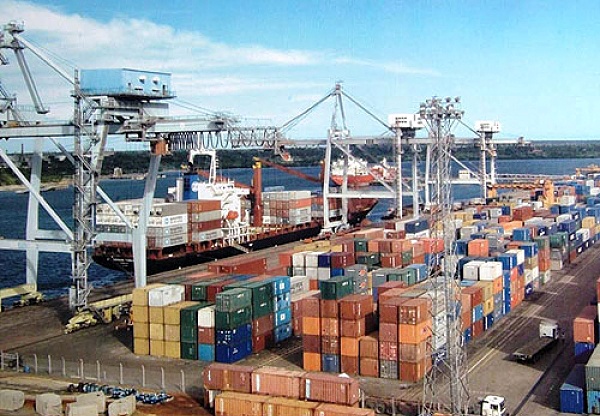
Port of Dar es Salaam, Tanzania, West Africa. Image credit: TPA

Port of Dar es Salaam, Tanzania, West Africa. Image credit: TPA

China has announced plans for a new US$10 billion mega port in the Tanzanian town of Bagamoyo.

The new port, boasting an annual capacity of 20 million TEU, will not only become Africa’s largest box facility but will also rival the major ports of the Persian Gulf.

Dwarfing Tanzania’s current largest port in Dar es Salaam, which handles an estimated 800,000 TEU a year, the new port, northwest of the capital, will be used as a transhipment hub for raw materials coming in and out of landlocked Malawi, Zambia, Congo, Burundi, Rwanda,and Uganda.

China will also help to establish new road and rail networks in the area, whilst contributing to the upgrade of existing links. Source: Port Technology International.

China was trading with East Africa Before Europeans arrived?

The coin is made of copper and silver and has a square hole in the center so it could be worn on a belt. Scientists say it was issued by Emperor Yongle of China who reigned from 1403-1425 during the Ming Dynasty (AP Photo/Courtesy The Field Museum, John Weinstein)

The coin is made of copper and silver and has a square hole in the center so it could be worn on a belt. Scientists say it was issued by Emperor Yongle of China who reigned from 1403-1425 during the Ming Dynasty (AP Photo/Courtesy The Field Museum, John Weinstein)

Scientists have found a rare, 600-year-old Chinese coin on the Kenyan island of Manda that rewrites the history books on international trading. Researchers say the copper coin, which has a square hole in the center so it could be worn on a belt, proves trade existed between China and eastern Africa decades before European explorers set sail. Scientists say it was issued by Emperor Yongle of China who reigned from 1403-1425 during the Ming Dynasty, and his name is written on the coin.

The island of Manda, off the northern coast of Kenya (marked with a red dot, below), was home to an advanced civilization from about 200AD to 1430AD, when it was abandoned and never inhabited again. Trade played an important role in the development of Manda, and this coin may show trade’s importance on the island dating back to much earlier than previously thought.

A joint expedition of scientists led by Chapurukha Kusimba of The Field Museum and Sloan Williams of the University of Illinois at Chicago found the  600-year-old Chinese coin on the Kenyan island of Manda. Scientists from Kenya, Pennsylvania and Ohio also participated in the expedition. They also found human remains and other artifacts predating the coin.

Manda in Kenya, now a popular holiday destination, was home to an advanced civilization from about 200AD to 1430AD, when it was abandoned and never inhabited again - Image by © Keith Levit/Design Pics/Corbis

Manda in Kenya, now a popular holiday destination, was home to an advanced civilization from about 200AD to 1430AD, when it was abandoned and never inhabited again – Image by © Keith Levit/Design Pics/Corbis

Emperor Yongle, who started construction of China’s Forbidden City, was interested in political and trade missions to the lands that ring the Indian Ocean and sent Admiral Zheng He, also known as Cheng Ho, to explore those shores. That relationship stopped soon after Emperor Yongle’s death when later Chinese rulers banned foreign expeditions, allowing European explorers to dominate the Age of Discovery and expand their countries’ empires, the researchers say.

The Portuguese were the first Europeans to explore the region of current-day Kenya, Vasco da Gama having visited Mombasa in 1498. The coast of East Africa was a valuable foothold in the eastern trade routes, and Mombasa was a key port for ivory. Modern European exploration of Kenya wasn’t initiated until 1844 when two German missionaries, Johan Ludwig Krapf and Joahnnes Rebmann ventured into the interior from Mombasa in an attempt to introduce Christianity.

The island of Manda, off the northern coast of Kenya, was home to an advanced civilization from about 200AD to 1430AD, when it was abandoned and never inhabited again. Trade played an important role in the development of Manda, and this coin may show trade’s importance on the island dating back to much earlier than previously thought. Source: dailymail.co.uk

Supply Chain Foresight – a Perspective on BRICS and the South African Supply Chain

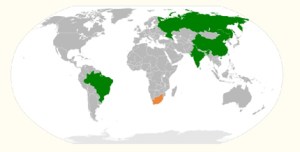
To reap the benefits of its recent membership of BRICS, South African businesses are looking at gaining a competitive edge through achieving global-standard supply chain performance, according to Supply Chain Junction, Manhattan Associates' Geo Partner in South Africa.

To reap the benefits of its recent membership of BRICS, South African businesses are looking at gaining a competitive edge through achieving global-standard supply chain performance, according to Supply Chain Junction, Manhattan Associates‘ Geo Partner in South Africa.

To reap the benefits of its recent membership of BRICS, South African businesses are looking at gaining a competitive edge through achieving global-standard supply chain performance, reports Supply Chain Junction, Manhattan Associates’ Geo Partner in South Africa. Unlike many other countries, South Africa was cushioned from the full impact of the world financial crisis thanks to the strict pre-existing credit controls it had in place. There were some knock on affects from close trading economies but over the last 15 months South Africa has enjoyed a growth economy. The International Monetary Fund (IMF) say this group will account for 61 per cent of global growth in three years time.

While South Africa’s economy (£506.91bn GDP) is dwarfed by those of the original BRIC constituents, the country is seen as the gateway to the continent of Africa, which as a whole has an equivalent sized economy ($2,763bn GDP), a population of one billion and rich resources. This has all made it a valued investment region for China in particular.

However, there are many cultural, logistical and geographical challenges the further one travels North from South Africa towards the Sahara. As an example, while there is 24,487 km of rail track in South Africa, there is just 259 km in Uganda; there are 92 mobile phones per 100 people in South Africa but just two per 100 in Eritrea. However, there is a great deal of raw potential, especially in countries such as Angola and Nigeria.

Participation in BRICS will drive a new competitiveness for South Africa and a key factor will be developing world-class supply chain management. Unlike in Europe, the US and Australia, few supply chain directors in South Africa sit on the board, which makes it harder for them to demonstrate how effective management of the supply chain can deliver competitive advantage. But this is likely to change as companies realise that they must align their supply chain and business strategies. If the recession failed to drive home the need for this, then the presence of Chinese companies in Africa will create significant pressure to do so.

This was an observation of the 2011 Supply Chain Foresight survey, conducted by Frost & Sullivan, which annually samples the opinions of South African supply chain executives. It found that while over three quarters of the respondents feel that the supply chain and business strategies of their companies are aligned, less than a third felt that the supply chain and logistics operations are fully optimised. Businesses are looking at how to optimise their distribution networks through building new facilities, streamlining existing processes or collaboration between trading partners. This has seen a lot of current activity surrounding warehouse management systems, forecasting, planning, replenishment and collaboration technologies, in particular.

Two thirds of respondents are considering investment in technology to enable collaboration with service providers. With the recession claiming many key suppliers the environment is changing from one where major companies squeeze suppliers on cost to one where they adopt a more collaborative approach. Cost reduction was the focus of the past recession, but now the objective is to satisfy customer expectations and to deliver value. Just over half of respondents to the Supply Chain Foresight survey cited customer service as the top supply chain objective. Reducing waste and improving efficiency in the supply chain are the perennial shorter term challenges with companies looking for better forecasting and planning tools to bring down inventory and shorten lean times. One interesting aspect of South African supply chain technology is the large number of in-house designed legacy systems, which is a consequence of the country’s isolation during the times of Apartheid. A propensity towards in-house designed systems remains today.

In terms of industry sectors, retail dominates but it remains firmly entrenched in the traditional channels. While some retailers have online retail websites, online and multi-channel is by no means a significant part of the current retail picture. Internet use is still quite low compared to other countries there are 4.42 million internet users in a population of 49 million and this figure is expected to remain low for some time yet. A further obstacle to the expansion of online sales is a high crime rate which leads to security issues in delivering goods to customers.

Wholesale distribution is quite small in size and complexity so the supply chain challenges tend not to be too complicated. There remain companies that feel they have been reasonably successful – being self-sufficient – and want to maintain that approach, along with a general tendency to look within, when it comes to benchmarking supply chains. However, a growing number of companies in South Africa recognise that there are other organizations across the globe doing similar things, but perhaps, a lot more efficiently.

Supply chain managers within these businesses are evolving a mindset focused on global best practice and the means of achieving it. These South African companies want to be best in their class. By building knowledge, benchmarking and improving against those benchmarks the win for this retailer is a supply chain that gives competitive advantage. As in other countries, companies looking to benefit from external expertise and a reduction in their capital costs will often outsource their logistics to third party logistics (3PL) operators. South Africa has numerous small local players and a handful of large lead logistics providers who tend to drive innovation. It is a small but highly competitive market. Logistics infrastructure and skills shortage in the supply chain continue to be huge issues in South Africa. The Supply Chain Foresight survey found that to deal with the skills shortage, in almost all areas companies either expose employees to new jobs through rotation, or development programs, or mentoring. These are generally in-house driven schemes. South Africa is an emerging market that is growing fast and offers a tremendous wealth of opportunities. In fact, the country has a great many successful businesses, and while many talk about becoming world class, many have already achieved it. Source: Supply Chain Junction

Chinese ports show potential ….. and Durban too

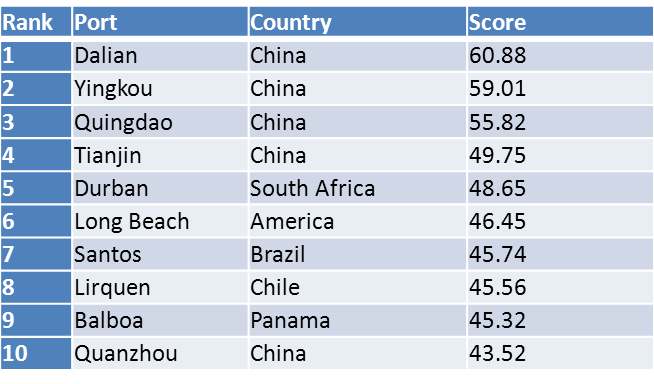
2012 World's Container Ports With Most Potential (Mercator)

2012 World’s Container Ports With Most Potential (Mercator)

According to the Shanghai International Shipping Institute’s (SISI) ‘Global Port Development Report 2012’, rapid growth in throughput has been pushing Chinese ports up the global ranking in terms of development potential.

The report also revealed that throughput in China’s ports was stable, with a growth rate of around 3% to 10%, affected by the worsening economic environment, growth in international shipping and a decrease in trade volume.

But, with global economic, trade and shipping centres moving eastward, some small and medium sized ports have recorded double digit growth (over 20% in some cases). As a result, Chinese ports, including Hong Kong, have taken up five positions among SISI’s Top 10 2012 World’s Most Potential Container Ports, nine positions among the Top 20 global container ports and 13 positions among the Top 20 global ports in terms of cargo throughput.

The report says that European ports are likely to see a return in stability, with a limited growth of less than 3%, while American and African ports may see some growth in throughput following the slow recovery of international trade volume and stronger cargo handling capacity.

First BRICS Heads of Customs Meeting

Delegates who attended the first BRICS Customs Heads of Customs Meeting [SARS]

Delegates who attended the first BRICS Customs Heads of Customs Meeting [SARS]

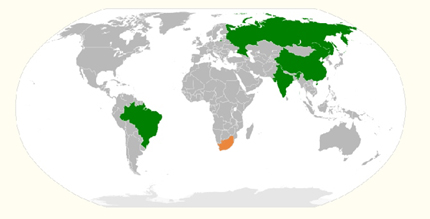
At a meeting hosted by the Commissioner near Bela Bela, South Africa from 7 to 8 March 2013, delegations from the Customs Administrations of Brazil, Russia, India, China and South Africa (BRICS) met for the first time. The BRICS Customs administrations exchanged experience and ideas in a spirit of openness so as to identify areas for cooperation so that they can most effectively and efficiently facilitate legitimate trade and combat illicit trade and Customs fraud. From 27 to 28 March, South Africa will also host the BRICS Summit in Durban, to be attended by various Ministers and the BRICS Heads of State.

Key points of discussion, focus and future cooperation –

Customs cooperation
The Heads of Customs committed themselves to consolidating and building on the cooperation that has already been established so that they can collectively curb Customs offences, safeguard the international supply chain and achieve effective enforcement of Customs legislation, while facilitating legitimate trade,both among BRICS countries and also globally.

Capacity building
As part of their cooperation to build Customs capacity in relation to human resources, technologies and procedures,the administrations would look into various practical and innovative solutions and endeavour to share their resources, knowledge and best practices with each other.

Cooperation at multilateral forums
A BRICS Customs mechanism will be established, including attachés networks based in Brussels and other strategic places, to identify issues of common interest, develop common responses and ensure regular engagement and interaction, including before important multilateral meetings.

Customs Mutual Administrative Assistance and the Exchange of Customs Information
The administrations also agreed to ensure that there is an enabling legal basis between them to support intra-BRICS Customs mutual administrative assistance and the exchange of Customs information. Such assistance and exchange will assist in combating illicit trade and protecting revenues and societies.

Facilitation of legitimate trade between BRICS countries
To further facilitate trade and reduce the Customs administrative burden on both trade and the administrations themselves, the administrations will exchange information in various areas of common interest and concern, including on the simplification of Customs procedures and the use of modern technologies and techniques.

The administrations will also work towards possible solutions for achieving mutual recognition of Customs controls and of trader management programs aligned to the Authorised Economic Operator (AEO) concept of the World Customs Organization (WCO), establishing Customs interconnectivity and supporting the WCO’s work on developing the Globally Networked Customs (GNC) model.

Opportunities for enforcement cooperation will also be explored, including possible joint actions, information sharing and other enforcement assistance. The use of international instruments developed by the WCO, including Conventions, Recommendations, Decisions and Declarations that support Customs trade facilitation, compliance and enforcement will be actively promoted.

Governance issues
A Governance Framework aligned to the overall BRICS commitments will be established. An annual BRICS Customs Heads meeting has been proposed whose deliberations would be informed to other BRICS forums, including in particular the Summit. Such a BRICS Customs Heads Meeting would be supported by a Customs working group under the guidance of the BRICS Heads of Customs. Source: SARS

Boost for Intra-African, BRICS Trade

BRICS-logoSouth African companies, including foreign companies based in South Africa, stand to benefit from relaxed cross-border financial regulations and tax requirements, Finance Minister Pravin Gordhan announced in Cape Town on Wednesday.

Delivering his 2013 National Budget speech in Parliament, Gordhan said that outward investment reforms that applied as part of a new set of “gateway to Africa” reforms would also apply to companies seeking to invest in countries outside of Africa, including in the BRICS (Brazil, Russia, India and China) countries

Boost for cross-border trade

These reforms include the relaxation of cross-border financial regulations and tax requirements on companies in South Africa, as well as reforms making it easier for banks and other financial institutions in South Africa to invest and operate in other countries.

Brand South Africa welcomed these moves as being in line with South Africa’s National Development Plan (NDP), which acknowledges the global shift of economic power from West to East, while also highlighting the rise of Africa.

“This is an important step to enabling trade and supporting regional integration,” Brand South Africa CEO Miller Matola said in a statement following Wednesday’s Budget speech.

Gordhan said Africa now accounts for 18 percent of South Africa’s exports, including nearly a quarter of its manufactured exports, and that the SA Reserve Bank had approved over 1 000 large investments into 36 African countries over the last five years.

Southern Africa development projects

South Africa is also helping to fund several development projects in the wider southern African region, with the Development Bank of Southern Africa (DBSA) accelerating investment into neighbouring countries, particularly in the field of electricity generation and transmission and road transport.

Added to this, South Africa’s Industrial Development Corporation (IDC) last year funded 41 projects in 17 countries to the tune of R6.2-billion. Most of these projects were in industrial infrastructure, agro-processing and tourism.

State company Eskom was also now considering investing in several regional generation and transmission projects outside South Africa. (Comment: I would have thought Eskom would ensure the money was spent on the local South African electrical grid! After having its expected 16% tariff increase halved last week, its quite incredible that such a notion can be in the cards. The South African public are truely being kept in the dark!!!)

Gordhan said there was a proposal to pool the foreign exchange reserves of the five BRICS member countries, with the idea of using this to support one another in times of balance of payments or currency crisis. Brazil, Russia, India, China and South Africa collectively hold reserves of US$4.5-trillion.

He said work was under way to create a trade and development insurance risk pool, with the aim of setting up a sustainable and alternative insurance and reinsurance network for BRICS members. Source: SA News.gov.za

X-Ray Scanners – WTO panel rules on EU-China dumping row

Nuctech Fast Scan Vehicle and Container inspection system

Nuctech Fast Scan Vehicle and Container inspection system

Part of the problem here is that the Chinese have a significant market share in this type of equipment. In a short period of 10 years they have outstripped some of the more fancied American and European players in this business. While the dispute in question raises ‘ethical’ questions of the Chinese, it does seem to be a matter of sour grapes.

China’s anti-dumping duties on imports of x-ray security scanners from the EU violated global trade rules, according to a WTO panel ruling that was issued yesterday. [WTO Dispute Settlement, DS425]

Brussels brought the dispute in July 2011 after Beijing imposed duties ranging from 33.5 to 71.8 percent on the x-ray scanners. (See Bridges Weekly, 25 January 2012) The EU exports approximately €70 million of these scanners to China annually.

China imposed the duties after the EU had applied anti-dumping duties on Chinese cargo scanners one year earlier, which some viewed at the time as a “tit-for-tat” move.

The panel report primarily focused on procedural issues in Beijing’s investigation, specifically regarding how China calculated the anti-dumping margin, loosely defined as the difference between the price – or cost – in the foreign market and the price in the importing domestic market.

Beijing included more expensive “high-energy” scanners – which do not “look remotely like” the cheaper scanners, according to the panel report – in calculating the average domestic price, even though only cheaper “low-energy” scanners were exported. The panel found that this price comparison was “not consistent with an objective examination of positive evidence” required under WTO rules.

The panel also found that Beijing did not comply with certain due process and transparency requirements before imposing the duties.

The panel did not rule with the EU on all points, however, noting that Brussels had not established that Beijing had acted inconsistently in certain other procedural matters.

“I expect China to remove the measures immediately,” EU Trade Commissioner Karel De Gucht said on Tuesday in response to the panel ruling. “I will not accept tit-for-tat retaliation against European companies through the misuse of trade defence instruments.”

Under WTO rules, both sides have 60 days to appeal the ruling. In a statement, China’s Ministry of Commerce indicated that they would make a serious assessment of the case and reserved the right to appeal.

Chinese investment allows Mozambique to become a car manufacturer

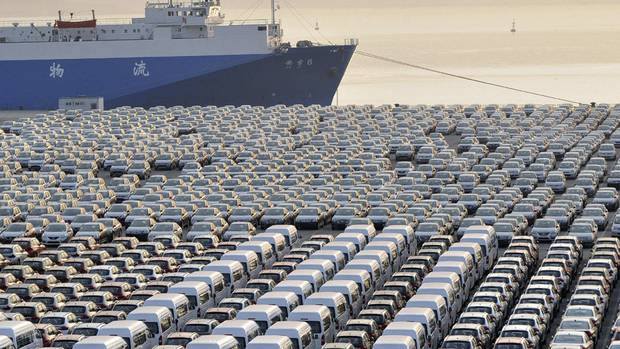
Chinese cars wait to be exported at a port in Dalian, Liaoning province. (China Daily/Reuters)

Chinese cars wait to be exported at a port in Dalian, Liaoning province. (China Daily/Reuters)

With the new APDP programme ably supporting the local South African vehicle manufacturing industry, the possibility of Chinese investment in Mozambique should have little impact on the local vehicle cartel. However, the possibility of competition for the local industry is just what is needed to create competitiveness in the region.

Mozambique is expected to become a car manufacturing and exporting country this year following an investment by China Tong Jian Investment, which is also attracting other companies in the sector to Mozambique. Danilo Nalá, the director general of the Office for Economic Areas with Accelerated Development (Gazeda), told Mozambican newspaper Correio da Manhã that investors from Saudi Arabia and Bahrain were interested in investing in tyre manufacturing in the city of Matola, on the outskirts of Maputo.

The tyre factory, which will be part of the project for the car assembly plant in Matola funded by Chinese investors, as of April 2013, may either involve acquisition of the technically bankrupt company Mabor or setting up a new unit from scratch. According to the newspaper, “there is a lot of interest from Asia in re-launching the tyre industry,” in Mozambique. (Comment: This could be an area of contention for the local market though).

Construction of the China Tong Jian Investment factory, costing an estimated US$200 million, is the result of an agreement the Mozambican government signed with the company in 2010. The agreement outlines that, at an initial stage, the facility should produce around 10,000 vehicles per year, 30 percent of which for the Mozambican market and the remainder for export.

Production is then outlined to be increased to 30,000 units per year and, later, to 100,000 units.

The factory, which is located in the Machava area of Matola, in the former workshops of Mozambican state port and rail manager Portos e Caminhos de Ferro de Moçambique, will produce buses and light passenger vehicles of the Matchedje brand. Matchedje is the name of the village in the Sanga district of Niassa province, which hosted the 2nd Congress of the Mozambique Liberation Front (Frelimo), which is the political party currently in power in the country.

China Tong Jian Investment is based in Shanghai and its largest shareholder is New Zealand’s Morgan Foundation and its business focuses on promoting China-Africa relations. Source: Shippingnews.co.zw

South Africa Now the Major Export Market for Zim Tobacco

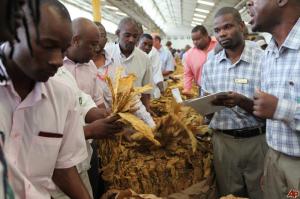
Zimbabwean auctioneers selling tobacco

Zimbabwean auctioneers selling tobacco

This should bring happiness to the local Ministry of Health.

South Africa has displaced China as the dominant export market for Zimbabwean tobacco, reports the Tobacco Industry and Marketing Board. Information from the TIMB indicates that as at February 27, South Africa maintained the top position having bought 7,5 million kilogrammes of the golden leaf valued at US$22,8 million.

The tobacco was sold at an average price of US$3,02 per kilogramme. South Africa has been dominating the regional market. The country has since overtaken China, which has dropped to third position. The United Arab Emirates occupies second spot having maintained its place among the top buyers of the golden leaf.

The top five tobacco export markets for Zimbabwe’s tobacco are South Africa, UAE, China, Hong Kong and Sudan. Last year, China, Belgium, Indonesia, South Africa and Russia were among the top five during the same period. Zimbabwe has so far earned US$82 million from tobacco exports to different destinations. The country produces tobacco and exports semi-processed leaf.

Japan is offering the highest price for tobacco at US$10, 03 per kilogramme, followed by China offering US$9,20 per kilogramme and India offering US$8,86 per kilogramme. In 2012, agriculture grew by 4,6 percent with tobacco being the main component behind this growth. The crop accounted for 10,7 percent of the GDP in 2012 and constituted 21,8 percent of all total exports, compared to 9,2 percent for other agriculture commodities. This compares favourably with the 61,1 percent contribution by all minerals combined.

The economic benefits of tobacco are expected to increase in view of more and more growers increasing their production or, diversifying or switching to the crop. Source: AllAfrica.com

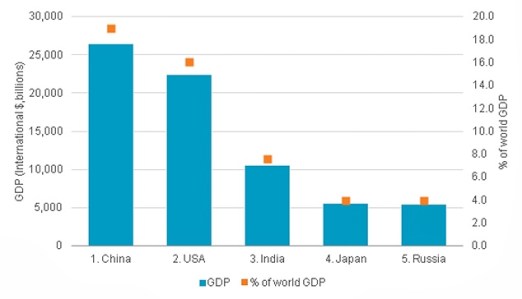
The Top 5 Largest Economies in 2020

Source: Euromonitor International from national statistics/Eurostat/OECD/UN/International Monetary Fund (IMF), International Financial Statistics (IFS)Note: Purchasing Power Parity has been used as this is a method of measuring the relative purchasing power of different countries' currencies over the same types of goods and services, thus allowing a more accurate comparison of living standards.

Source: Euromonitor International from national statistics/Eurostat/OECD/UN/International Monetary Fund (IMF), International Financial Statistics (IFS)Note: Purchasing Power Parity has been used as this is a method of measuring the relative purchasing power of different countries’ currencies over the same types of goods and services, thus allowing a more accurate comparison of living standards.

By 2020, three of the world’s five largest economies will be emerging countries, accounting for 30.4% of global GDP in PPP terms. Advanced economies are being displaced by emerging market superpowers, notably the BRIC countries, which has been accelerated by the seismic effects of the global economic downturn of 2008-2009. Euromonitor International predicts that China will become the world’s largest economy in PPP terms in 2017.

Additionally, Russia will overtake Germany as the fifth largest economy in 2016. These shifts will influence global politics, business environments and investment flows while consumer markets in developing countries will rise in importance as the middle class expands.

1. China: Set to become world’s largest economy in 2017

A large manufacturing base, cheap labour costs, the world’s largest population and economies of scale have resulted in unprecedented economic growth in China. Although growth is slowing, the delayed recovery in advanced economies from the global economic downturn means China will overtake the USA as the world’s biggest economy in 2017, and account for 19.0% of global GDP in PPP terms by 2020. Challenges loom large, however, including rising labour costs, pollution, a potential real estate bubble and rapid ageing arising from the government’s one child policy. Euromonitor predicts that China’s working age population (aged 15-64) will decline from 2014.

2. USA: End of the American dream?

The USA will lose its position as the world’s number one economy in 2017. In 1990, the USA accounted for a quarter of global GDP in PPP terms but we forecast this to plummet to 16.0% by 2020. The country was where the global financial crisis began in 2008 and it has failed to recover to its potential while also slipping in global competitiveness rankings. Although the government avoided the “fiscal cliff” in 2012, one of the biggest challenges remains a budget deficit reduction strategy, without the ensuing political gridlock. Nevertheless, the USA retains advantages, namely as the world’s largest consumer market and a leader of technological innovation.

3. India: Demographic dividend to benefit country beyond 2020

India overtook Japan as the world’s third largest economy in PPP terms in 2011 and its demographic advantage means the country could become the world’s biggest economy in the coming decades. India has a young population where it is benefitting from its demographic dividend (when there are more people of working age and the proportion of the child population declines). Euromonitor forecasts that India will become the world’s largest population by 2025 and that its working-age population will increase by 11.6% in 2013-2020 compared to -3.1% in China. However, India lags in major indicators including educational attainment and infrastructure development.

4. Japan: Paying the price for decades of economic stagnation

Structural problems beset Japan, with decades of weak economic growth and deflation while it has totalled the highest proportion of public debt in the world at 235% of GDP in 2012. Although the country has not yet suffered a eurozone-style sovereign debt crisis, as the majority of its debt is domestically-owned, an increase of foreign debt could trigger a Japanese debt crisis. It has the oldest population globally (mean age of 44.7 in 2012) and a shrinking labour force which will add considerable strain on government finances, while a strong currency makes its exports uncompetitive. Yet Japan’s location within Asia means it can take advantage of cheaper production costs in the region and growing demand for its high-tech products from a burgeoning Asian middle class. Like the USA, it is a global technological leader, giving it a competitive edge over its emerging neighbours.

5. Russia: Overtakes Germany as fifth largest economy in 2016

Russia will become the world’s fifth largest economy in 2016 in PPP terms, driven by its energy sector, as one of the top oil and natural gas producers worldwide. It also offers potential in its rapidly expanding consumer market, which Euromonitor forecasts will be the ninth largest globally in real terms in 2020. Its accession to the World Trade Organisation in August 2012 further cements its integration into the global economy. The lack of economic diversification and modernisation remain key long-term challenges with government policy aiming to tackle this, for example, by investing in the Skolkovo Innovation Centre Project, Russia’s equivalent to Silicon Valley. Corruption, state control and bureaucracy also hamper the business environment in Russia. Like elsewhere in Eastern Europe, the Russian working-age population is in decline (-4.5% in 2013-2020) despite a short-term baby boom, which will pose a demographic challenge to sustaining non-oil economic growth. Source: Euromonitor.com

Chinese Imports surge – outpace Exports

Port of Shanghai

Port of Shanghai

China’s exports rose 25 percent in January from a year earlier while imports increased 28.8 percent, resulting in a trade surplus of $29.15 billion, the customs administration said today in Beijing.

The growth in overseas shipments compares with the median estimate in a Bloomberg News survey for a 17.5 percent expansion and a 14.1 percent increase the previous month.

The gain in imports compares with the median estimate for a 23.5 percent jump and a 6 percent increase in December. The trade surplus compared with the median projection for $24.7 billion and a $27.1 billion excess a year ago.

The Chinese customs administration last month defended the quality of its trade data after analysts at Australia & New Zealand Banking Group Ltd. and UBS AG said it may fail to capture the true picture of imports and exports.

Trade data in the first two months of the year is distorted by the timing of the Lunar New Year holiday, which fell in January in 2012 and is in early February this year, making the figures tough to interpret, according to economists including Louis Kuijs, chief China economist at Royal Bank of Scotland Plc in Hong Kong. Source: Bloomberg

Nigeria – Maximizing Opportunities in Free Trade Zones

Lagos Free Trade Zone

Lagos Free Trade Zone

So how come FTZs, IDZs, EPZs, etc are working in other African countries and not here in South Africa? This Day Live (Nigeria) offers some of the critical success factors which delineate such zones from the normal economic operations in a country. Are we missing the boat? The extent of economic and incentive offering can vary substantially between the different economic and trade zone models – some extremely liberal while others tend to the conservative. Obviously the more liberal and free the regulations are the more stringent the ‘guarantees’ and controls need to be. However, in today’s e-commercial world, risk to revenue can more than adequately be mitigated and managed with through risk management systems. Manufacturing and logistical supply chain operations are likewise managed in automated fashion. I guess the real issue lies in governments appetite for risk and more particularly its willingness to relax tax and labour laws within such zones. Furthermore, a sound economic roadmap demonstrating backward linkages to the local economy and outward linkages to international markets must be defined. Herein lies some of the difficulties which have plagued South African attempts at such economic offerings – no specific economic (export specific) goals. Limited financial/tax incentives for investors, and poor cooperation between the various organs of state to bring about a favourable investment climate.

Free Trade Zones (FTZs) are at the crux of the growth attributed to emerging markets. All the BRIC nations have used the FTZs as a buffer to economic meltdown particularly in the wake of the most recent financial and economic crises. The “great recession” of 2007 – 2009 saw the BRIC nations growing at the rates of 7% to 13%. Consequently, the importance of FTZs as well as maximizing opportunities therein cannot be over-emphasized. The literature defining FTZs vary, but they all have the following characteristics in common:

  • A clearly delimited and enclosed area of a national customs territory, often at an advantageous geographical location, with an infrastructure suited to the conduct of trade and industrial operations and subject to the principle of customs and fiscal segregation.
  • A clearly delineated industrial estate, which constitutes a free trade enclave in the customs and trade regime of a country, and where foreign manufacturing firms, mainly producing for export, benefit from a certain number of fiscal and financial incentives.
  • Industrial zones with special incentives set up to attract foreign investors, in which imported materials undergo some degree of processing before being re-exported.
  • Fulfilling their roles in having a positive effect on the host economy, regulators look at FTZs from a nationalist perspective. Inevitably, they seek the following benefits:
    • Creating jobs and income: one of the foremost reasons for the establishment of FTZs is the creation of employment.
    • Generating foreign exchange earnings and attracting foreign direct investment (FDI): measures designed to influence the size, location, or industry of a FDI investment project by affecting its relative cost or by altering the risks attached to it through inducements that are not available to comparable domestic investors are incentives to promoting FDI. Implicit in this statement lies the definition of FTZ. Other traits that are recognizable when discussing FDI’s include specially negotiated fiscal derogations, grants and soft loans, free land, job training, employment and infrastructure subsidies, product enhancement, R&D support and ad hoc exceptions and derogations from regulations. In addition to FDI, by promoting non-traditional exports, increased export earnings tend to have a positive impact on the exchange rate.
    • Transfer of technology: trans-national corporations (TNCs) are a dominant source of innovation and direct investment by them is a major mode of international technology transfer, possibly contributing to local innovative activities in host countries. It is a government’s primary obligation to its citizenry to provide attractive technology, innovative capacities and mastering, upgrading, and diffusing them throughout the domestic economy. Nevertheless, through national policies, international treaty making, market-friendly approaches, a host country gravitates from providing an enabling environment to stronger pro-innovation regimes that perpetually encourage technology transfer.

FTZs can be both publicly (i.e. government) and or privately owned and managed. Governments own the more traditional older zones, which tend to focus more on policy goals that are primarily socio-economic. They emphasize industry diversification, attracting FDI, job creation and the like. Privately-owned FTZs have the advantage of eliminating government bureaucracy, are more flexible, and are better prepared to deal with technological changes. The global trend towards privatization has made privately-run zones more popular and a number are highly successful. The role of government in the case of privately-run zones is to provide a competitive legal framework with attractive incentive packages that meet the World Trade Organization (WTO) requirements.

FTZ Operations in Nigeria

FTZs were established in 1991 in order to diversify Nigeria’s export activity that had been dominated by the hydrocarbon sector. By 2011, there were nine operational zones; ten under construction; and three in the planning stages. The governing legislation includes the Nigeria Export Processing Zones Act (NEPZA) and the Oil and Gas Export Free Zone Act (OGEFZA). Zones may be managed by public or private entities or a combination of both under supervision of the Authority. For the full article go to – This Day Live

China fancies Mozambique exotic timbers

China is the biggest recipient of Mozambique timber

China is the biggest recipient of Mozambique timber

Mozambique news agency AIM reported last week that the Mozambican customs service has seized 30 containers full of logs that were about to be exported illegally to China through the port of Maputo.

The report said that the seizures began on 16 January in the town of Marracuene about 30 kilometres north of Maputo, where Customs located ten containers, each measuring 15 cubic metres, in a yard belonging to the Chinese firm Heng Yi.

As the investigations continued, the authorities discovered a further 20 containers already in the port waiting to be loaded onto a ship heading for China.

The containers in the Heng Yi yard contained mondzo, a species classified as a first grade hardwood, which cannot be exported without processing. Yet the mondzo logs had been packed into the containers without any inspection by the relevant authorities.

China is the biggest consumer of timber from Mozambique accounting for 85 percent of the 430,000 cubic metres of logs to leave the African country between 2000 and 2010, according to a study from the Mozambican Environmental Research Agency.

The study, cited by Mozambican daily newspaper Notícias also said that the value of wood exports to China in the period had risen from US$8 million to US$100 million between 2001 and 2010.

Mozambican wood is exported to China, South Africa, Germany, Japan, France, Mauritius, Malaysia, Thailand, Tanzania, Portugal, Israel, Vietnam, Singapore, Turkey, Zimbabwe, Botswana, Croatia, Namibia, Dubai, India, Pakistan, the United States, Reunion Islands, and Italy.

Last week the containers in the port were still being unpacked to check exactly what types of wood they contain. Staff of the Mozambican Tax Authority (AT) said that the origin of the logs is still unclear, but their nature and diameter indicate that they came from the forests of Nampula and Zambezia provinces, or possibly from the northern part of Gaza.

China is the largest consumer of Mozambican timber, and the Chinese market accounted for 85 percent of the 430,000 cubic metres of logs that left Mozambique, much of it illegally, between 2000 and 2010, according to a report from the Environmental Investigation Agency, a London-based NGO that works to fight environmental crimes. Source – AIM

Africa – China’s Export Route to the U.S.?

AGOA_W1The Africa Growth and Opportunity Act intends to support African exports to US markets. It is helping savvy Chinese companies too. US-Africa trade received a boost with the signing of the African Growth and Opportunity Act (AGOA) back in May 2000, which enabled African countries to export over 4,000 products, including apparel, quota-free and duty-free to the US.

Geared to support the integration of African countries into global markets, AGOA has enjoyed broad cross-party support in a usually fraught US legislature – especially on issues of foreign trade – and has been renewed several times. Helping Africa, it seems, is something everyone can agree on.

But they might, unwittingly, have been helping China too. Research by Lorenzo Rotunno and colleagues at the Centre for the Study of African Economies, Oxford University, suggests that savvy Chinese companies have set up shop in Africa as a route to get their products into the US with all the AGOA benefits.

The entrepreneurs’ logic is impeccable. Not only could an Africa platform get them duty free access to US markets, they could also avoid heavy quotas on China’s exports to the US, imposed through previous protectionist measures by the rich world, such as the Multi-Fiber Agreement.

Because AGOA did not contain ‘rules of origin’ provisions, the door is wide open for such creative thinking. “Restrictive quotas on Chinese apparel exports in the US and preferential treatment for African exports resulted in quota-hopping transhipment from China to the US via AGOA countries” the researchers say.

Chinese and Taiwanese producers are now said to comprise the bulk of a textile “diaspora” in Lesotho, Madagascar and Kenya. In one Kenyan processing zone, 80% of the 34 garment plants had Asian owners. While some outfits doubtless have in-country assembly – and therefore generate jobs and incomes for Africans – a number are little more than transporting docks for foreign-sourced, fully assembled goods ready to go to their final destination, tax free.

Chinese entrepreneurs made no bones about it. In one survey, they gave ‘taking advantage of international trade agreements’ in their top five list of motives for investing and operating in Africa. Source: AllAfrica.com 

New Zealand – Contraband now available On-line

New Zealand Customs popular Contraband magazine is now available as an online publication. You can still however locate and link to previous publications that are downloadable in .pdf format. The latest edition includes articles on  –

  • What’s My Duty?, an import duty estimator to help people buying goods online know how much duty and GST they may be liable for.
  • China and NZ Customs to work more closely together on to combat the smuggling of pharmaceutical products used to manufacture methamphetamine.
  • Kunio Mikuriya, Secretary General of the World Customs Organization’s (WCO) visit to New Zealand – commending the Service for its strong reputation for border management of Customs.

Source: New Zealand Customs Service