Non-Intrusive Inspection capability – now in the Port of Cape Town

South African Customs has introduced non- intrusive inspection (NII) capability at the Port of Cape Town. The recent completion of an impressive relocatable scanner facility within the port precinct will now afford state of the art inspection services for customs targeted consignments for inspection. This is the third X-Ray scanner installed and operated by the South African Revenue Service (SARS).

In March 2008, a mobile scanner was implemented at Durban Container Terminal. More recently, a relocatable X-Ray Scanner was implemented adjacent to the container terminal in Durban to allow for improved capacity and efficiency.

The new facility in Cape Town not only extends customs risk and enforcement capability in the use of such technology but acts as a deterrent against any possible threat posed by international cargoes entering or leaving the country’s ports of entry.

In addition to the new x-ray inspection hardware, SARS has developed bespoke support to allow scanned images to be reviewed remotely – away from the port area – affording customs increased flexibility, allowing image analysis experts elsewhere in the country to provide almost real-time analysis and support for the inspection team. The approach also meets SARS differentiated inspection case methodology which ensures that case finalization and cargo release does not rest with a single customs official.

Remote screening analysis is a practice that has already been pioneered in Europe with great effectiveness in recent years.

The benefit of non-intrusive inspection (NII) allows customs to ‘see whats inside’ the container, vehicle or tanker without having to break the seal. All of this can be done in a few minutes. It forms part of Customs overall approach to minimise the time taken to conduct a customs intervention and latent cost, damage and theft which plague conventional physical inspection of cargoes.

The new inspection site also enables SARS to increase its participation and effectiveness in the US Container Security Initiative (CSI) which was launched in Durban, December 2003. Under the CSI Agreement, SARS officials together with US Customs & Border Protection Agency (USCBP) officials – co-located at the Port of Durban – analyze and mitigate risks relating to any containerised cargo destined to ports in the United States.

Credit to Indresan Reddy (Customs Business Systems) for the photographs.

Related documents

Hong Kong Customs seizes 1.1m sticks of illicit cigarettes worth $3.1m

securityHong Kong Customs mounted a special operation at Lok Ma Chau Control Point to combat organised cigarette smuggling activities. About 1.1 million sticks of suspected illicit cigarettes with a market value of about $3.1 million and duty potential of about $2.2 million were seized. A 52-year-old male driver was arrested and the vehicle used for conveying the suspected illicit cigarettes was detained.
Customs officers here the other day intercepted an incoming container truck declared to be empty at Lok Ma Chau Control Point.

After X-ray examination and thorough inspection by Customs officers, about 1.1 million sticks of suspected illicit cigarettes in 83 carton boxes were found inside a false compartment of the container. The cigarettes were sorted and packed according to orders placed with a view to quick delivery to buyers.

A Customs spokesman said today (June 5), “The operation showed the effectiveness of the enforcement strategy, especially the escalated enforcement actions against smuggling activities at source. Customs will continue to carry out stringent enforcement action against all illicit cigarette activities.”

Under the Import and Export Ordinance, smuggling is a serious offense. The maximum penalty is a fine of $2 million and imprisonment for seven years. Source: CustomsToday

Chinese Customs destroys half a ton of ivory worth £3m

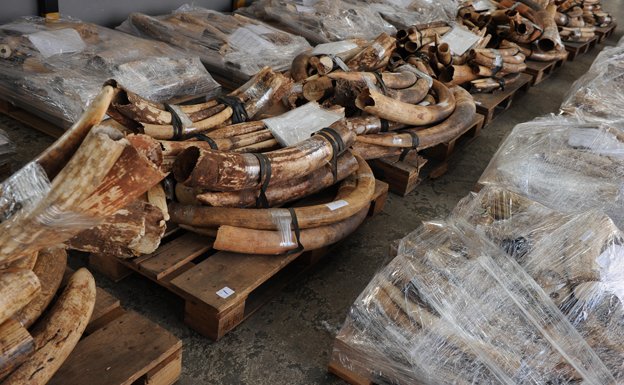
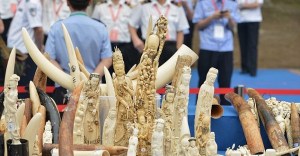
ivory2-634x330Chinese authorities destroyed more than half a tonne of confiscated ivory in Beijing here the other day. The public event, organised by the Chinese State Forestry Administration and the Customs Department, is set to display the country’s determination to ‘further protect wild animals’, according to the People’s Daily Online.
A whopping 662kg (1,460lb) of illegal ivory and ivory products were ground into powder as part of the central government’s crackdown on the illegal trade. The destroyed ivory items include thousands of ornaments, jewellery and fine art pieces. Whole elephant tusks were carved into the images of Buddhas, goddesses or Chinese landscapes.

Members of the media and diplomats were invited to attend the public destruction, which took place at Beijing Wild Animals Rescue Centre, as Chinese authorities hope to rid the country’s reputation of a global trading hub for illegal elephant tusks.

According to the country’s Forestry Administration, raw tusks sell for at least 41,667 Yuan (£4,400) per kilogram, making the total value of this destruction around £3 million. Source: Customs Today

Illegal Cargo – Colombia Seizes China-flagged Ship

Image - Wikimedia.org

Image – Wikimedia.org

Colombian authorities detained a vessel operated by China’s largest shipping group for illegally transporting thousands of cannon shells, around 100 tons of gunpowder and other materials used to make explosives, the attorney general’s office said.

The Da Dan Xia, operated by Cosco Shipping Co, was headed for Cuba when it was stopped on Saturday in the northern port of Cartagena, on the Caribbean coast, after the materials were detected during an inspection. The cargo was listed in the records of the 28,451dwt ship as grain products. The captain of the Hong Kong-flagged vessel had been arrested, the attorney general’s office said. China’s Foreign Ministry spokeswoman Hua Chunying said the ship was carrying ordinary military supplies to Cuba and was not in violation of any international obligations.

“It is completely normal military trade cooperation. At present, China is communicating with the parties on this matter,” Hua said.

A Cosco Shipping official in the firm’s Guangzhou head office said the ship was operated by the company but added she was unaware of the incident. Cargo documentation the captain presented did not match the load the ship was found to be carrying, Luis Gonzalez, national director of the Colombian attorney general’s office, told reporters.

“Around 100 tons of powder, 2.6 million detonators, 99 projectiles and around 3,000 cannon shells were found,” Gonzalez added.

Photographs from the prosecutor’s office showed wooden cases inside a shipping container with labels stating Chinese defense manufacturer China North Industries Group Corporation as the supplier. The company, known as Norinco, is China’s biggest arms maker. It did not immediately respond to a request for comment.

The recipient was stated as importer Tecnoimport in the Cuban capital Havana. The Cuban company could not immediately be reached for comment. A man who identified himself as the Da Dan Xia’s first officer confirmed the ship had been detained in Colombia when Reuters called the vessel’s phone number on Wednesday. Source: Maritime Executive/Reuters

Mozambique – conditions ideal for ‘Chinese model’ of Special Economic Zones

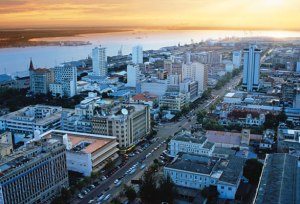
Maputo1Mozambique has the necessary conditions to successfully adopt the Chinese model of Special Economic Zones, which helped to boost the Chinese economy, according to researchers Fernanda Ilhéu and Hao Zhang.
In the study “The Role of Special Economic Zones in Developing African Countries and Chinese Foreign Direct Investment (refer to link below),” researchers from the Lisbon School of Economics and Management noted that over 35 years, the Special Economic Zones have had “a decisive role in the development of places like Shenzhen, Zhuhai, Xiamen, Shantou, Hainan and Shanghai, and that African countries can leverage this experience.

In 2006, the Forum on China-Africa Cooperation gave “significant priority” to creating up to 50 SEZs abroad, which are being implemented, with US$700 million invested by Chinese companies in 16 EEZ, according to information from China’s Trade Ministry.

Increasingly focused on business abroad, China needs raw materials and African markets to which to export its products, but can also benefit from shifting some of its industries to Africa, as the cost of Chinese labour increases.

The approach to Africa has involved through loans and financing for the construction of infrastructure, and “the development of African countries requires China’s increasing involvement,” including “collaborating in the development of SEZs,” the authors argue.

Regarding Portuguese-speaking countries, the average annual growth of trade between 2002 and 2012 totals 37 percent, turning China into the largest trading partner and largest export market for those countries.

The relationship has proved to be “dynamic in both directions,” they added, with hundreds of companies from Portuguese-speaking countries operating in China and Chinese investment in those countries of around US$30 billion, according to China’s Trade Ministry.

As for the SEZ, the two researchers focused their attention on the Mozambican Manga-Mungassa (Beira, Sofala province) SEZ, established in May 2012, under the management of China’s Dingsheng International Investment Company (Sogecoa Group), which has plans to invest close to US$500 million.

Nearing completion, the first phase includes the construction of warehouse units, followed by the “operational” phase, with construction of additional infrastructure such as hotels and housing, and finally the free industrial zone, where high tech units will be installed.

“In terms of knowledge transfer, Mozambique has made active steps in learning from the experience of Chinese SEZs and using this model to attract foreign investment,” they said.

In 2012 the Mozambican government created the Office for Economic Areas with Accelerated Development (Gazeda) that in addition to Manga-Mungassa, is responsible for the projects of the Belulane Industrial Park, the Locone and Minheuene Free Industrial Zones and the Crusse and Jamali integrated park.

On 6 May, 2014 the Mozambican government approved the establishment of the Mocuba SEZ, a sign of the “determination to create more conditions and to look for more opportunities and economic measures to create jobs and generate wealth,” in the country, the study said.

According to the authors, Mozambique has a strategic location, the ability to attract investment through the diaspora, as well as its model of economic growth and development in its favour, although there remain difficulties in infrastructure and technological development.

“The Chinese SEZ model can be successfully applied to the Manga-Mungassa area,” they concluded. Source: macauhub / MZ

Related articles

China plans a New Hong Kong City

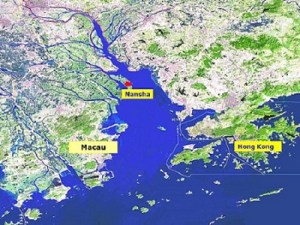
NanshaChina is planning to build a second Hong Kong city in Nansha, a district in southern China’s Guangdong province.

Preliminary plans indicate a city of around 100 square kilometres will be built to help alleviate the development problems currently experienced by Hong Kong due to land shortages, protests and environmental concerns. Hong Kong has an area of about 1,100 square kilometres and currently houses over seven million people.

The new city is expected to be developed into an international shipping hub. Its commercial importance will be boosted by the Guangdong free trade zone which was approved late last year. This zone will cover around 116 square kilometres.

China’s Xinhua news agency said the zone will deepen cooperation between Hong Kong and Macau which lies on the western side of the Pearl River Delta, across from Hong Kong. Nansha faces the sea and is 38 nautical miles from Hong Kong and 41 nautical miles from Macau. In December 2013, Nansha Port hit the record of 10 million teu since it was open in 2004.

Local media reports that the new city could be completed by 2020. It is expected to have a GDP of $64 billion. Source: Maritime Executive

Port of Shanghai – extends its lead as world’s busiest container port

Port of Shanghai, China [Picture: DaliyMail.co.uk]

Port of Shanghai, China [Picture: DaliyMail.co.uk]

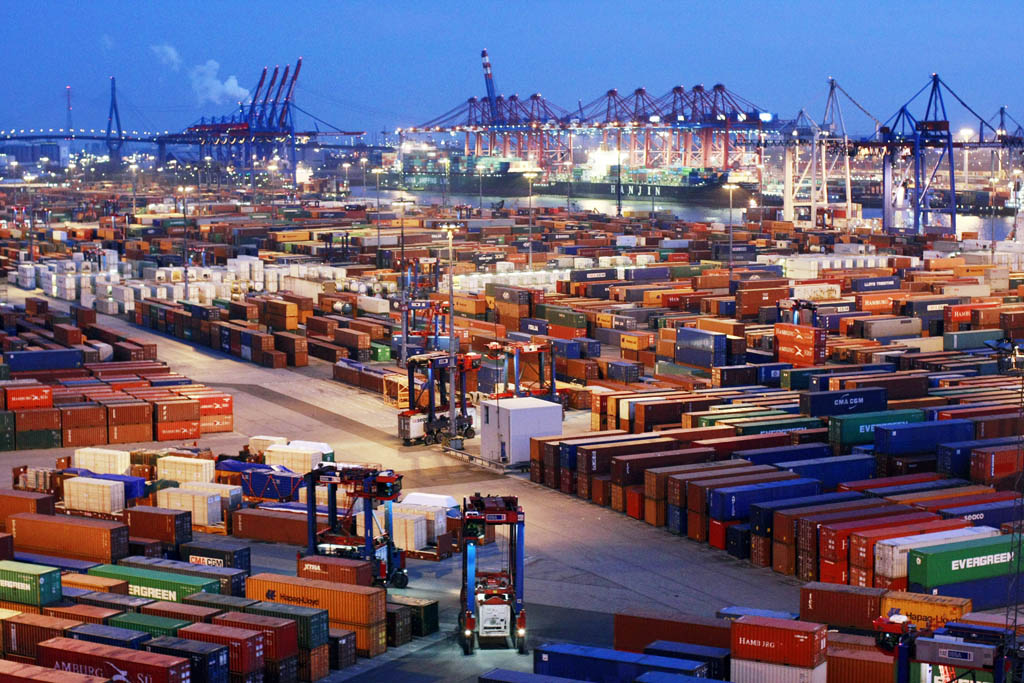
Shanghai retained its title as the world’s busiest container port for a fifth consecutive year after widening the gap with its closest rival Singapore.

Singapore handled 33.9 million 20-foot containers last year, according to a statement posted on the Maritime & Port Authority of Singapore’s website dated Jan. 16. Last month, Shanghai said it expects to process about 35.2 million boxes in 2014. A year before, the gap between the two ports was about 1 million boxes.

Shanghai, Shenzhen and other ports in China are dominating the global container-shipping market while the facility in Ningbo overtook South Korea’s Busan last year as the world’s fifth-busiest harbor. Seven of the world’s 10 top container ports were in China in 2013, with Hong Kong coming in fourth.

Shipping companies are adding larger container ships to meet demand as economic growth helped consumers to spend more money on clothes and food. Global trade last year probably grew 3.8 percent, according to the International Monetary Fund.

Global containerized trade reached 124 million boxes in the first 11 months of 2014, an increase of 4.3 percent from 118.9 million a year ago, according to Container Trade Statistics Ltd.

Geneva-based Mediterranean Shipping Co., the world’s second-largest container shipping company, currently operates the biggest vessel that can carry 19,224 boxes between Asia and Europe. Last year, China Shipping Container Lines Co. launched a ship that could carry about 19,100 containers. Source: Bloomberg/GCaptain

21st Century Silk Railway – Chinese freight train makes world record trip

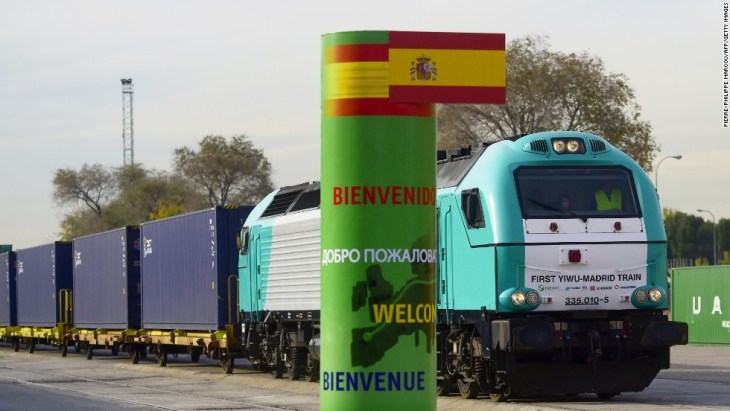
141212174829-yixinou-worlds-longest-train-journey-horizontal-large-galleryThe longest rail link in the world and the first direct link between China and Spain is up and running after a train from Yiwu in coastal China completed its maiden journey of 8,111 miles to Madrid. En route it passed through Kazakhstan, Russia, Belarus, Poland, Germany and France before arriving at the Abroñigal freight terminal in Madrid.
The railway has been dubbed the “21st-century Silk Road” by Li Qiang, the governor of Zhejiang province, where Yiwu is located. Its route is longer than the Trans-Siberian railway and the Orient Express. The first train was met by the mayor of Madrid, Ana Botella, and Spain’s minister of public works, Ana Pastor. It consisted of 30 containers carrying 1,400 tonnes of cargo – mostly toys, stationery and other items for sale over Christmas across Europe.

Yiwu is the world’s largest wholesale hub for small consumer goods and plays host to a vast 4 sq km (1.5 sq mile) market where tens of thousands of traders work daily. The journey was a test run to assess the viability of adding Spain to a route that already links China with Germany five times a week. Those trains link Chongqing, the huge industrial city in south-west China, with Duisburg, and Beijing with Hamburg.

China is Spain’s biggest trading partner after the EU, with bilateral trade worth around £16bn. It is also Spain’s third largest source of imports, after Germany and France. About half of these imports are made up of mobile phones and clothing. The Spanish prime minister, Mariano Rajoy, was in China in September, where he signed deals reported to be worth more than £6.3bn.

A major advantage of the rail route is speed. The train took just three weeks to complete a journey that takes up to six weeks by sea. It is also more environmentally friendly than road transport, which would produce 114 tonnes of CO2 to shift the same volume of goods, compared with the 44 tonnes produced by the train – a 62% reduction.

However, the cargo had to be transferred three times during the journey as a result of incompatible rail gauges. The locomotive also had to be changed every 500 miles. The service is being operated by InterRail Services and DB Schenker Rail and in Spain by DB’s Spanish offshoot, Tranfesa.

China’s Second Continent – the new colonisation of Africa

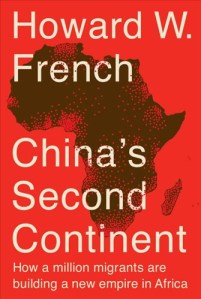
chinas-second-continent-howard-frenchFormer US Diplomat Brooks Spector takes a look at this important book (Daily Maverick) that should be on every economic policy maker’s reading list. Howard French’s China’s Second Continent, offers a very different – and provocative – perspective on China’s economic future, with special attention on Africa. Building on years of experience in both China and Africa, and following months of personal inquiry across the continent to search for answers to the questions of what China really wants in Africa, and how it is going to get there, French has effectively turned these questions on their head.

Instead of writing about China’s international economic policies in the language of the think tanks, of Wall Street and The City, or government councils in Whitehall or Washington, French has focused instead on what a million individual Chinese have done – or are now doing – throughout Africa, almost without regard to what the Chinese government may have planned or been thinking. In tackling the topic through this optic, French has given this vast Chinese movement into and across Africa crucial human dimensions. For the full review please visit this hyperlink. China’s Second Continent is available in hardcopy and electronic publication from online book stores. Source: Daily Maverick

Chinese Customs Inspectors – Snow Storm is Business as Usual

Officers of Weihai Customs House (affiliated to Qingdao Customs District) remained at their posts and inspected the goods as heavy snow hits the Shandong Province in December 2014. During the two days of heavy snow, officers of Weihai Customs House had worked over time and to exercise control over ‘stopped’ consignments. Source: General Administration of Customs of the People’s Republic of China

Tanzania – Chinese ivory spree during presidential visit

Campaigners say rising demand in Asia is fuelling the poaching of elephants in Africa and the smuggling of ivory

Campaigners say rising demand in Asia is fuelling the poaching of elephants in Africa and the smuggling of ivory

Officials travelling to Tanzania with Chinese President Xi Jinping went on a buying spree for illegal ivory, an environmental activist group has said.

In a report, the Environmental Investigation Agency cited ivory merchants who said demand from the delegation in 2013 had sent prices soaring.

China denies the allegations, saying it consistently opposes poaching. Read the following blog – Tanzania – Chinese ivory spree during presidential visit. authored by Africa – News and Analysis.

Container traffic to hit 1 billion TEU in 2020

-Dinesh Sharma, senior research manager at Drewry Maritime Advisors, says that global container throughput would rise between 5% and 5.5% a year up to the end of the decade. Speaking at a Ports & Terminals seminar in London, he cited ports in Africa and northern China as registering the strongest growth.

In his outlook, Sharma projected a 2020 global throughput volume of at least 1 billion TEU, up from 623 million TEU in 2013, with Asia accounting for 65% (650 million TEU) and transhipment traffic 32% (320 million TEU) of the total. This, he explained would compare with shares of 56% and 22.5% (140 million TEU), respectively, in 2013.

Within Asia, Sharma argued that China would become increasingly significant over the next seven years, citing that the country’s share of global container-handling activity would rise from 30% in 2013 to 40% in 2014. In 2000, China’s ports processed just 16% of a world total of 235 million TEU, a figure that reveals the spectacular growth that has occurred in the Asian country since it joined the World Trade Organisation in November 2001.
In a further assessment of the future, Sharma said the percentage of empty boxes handled would not change and would remain at about the 20% (200 million TEU) level in 2020.
Other interesting facts presented by the analyst showed that 22,000 TEU-sized ships would be in operation in 2020, the world population of super post panamax cranes would number over 2,000 units, compared with 1,160 units in service in 2013, and that the leading four global terminal operating companies would control an estimated 41% of all containers handled. Source: World Cargo News

FDI – Where is China Investing?

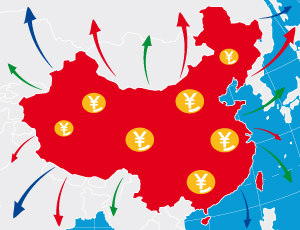
China-Overseas-FDIFollowing the financial crisis that hit Asia in the late 1990s, the Chinese government introduced its ‘Going Out’ or ‘Going Global’ strategy. The country had been open to inward FDI for a number of years at this stage, and the time had come to promote Chinese companies globally.

While Africa considers itself as a significant destination for China FDI, the numbers indicate that Chinese projects and investment is significantly smaller than it’s investments in other parts of the western world. To see exactly where the money is going, visit this link – Where is China Investing?

The government aimed to increase investment, promote its Chinese brand of companies and improve the country’s free market. The policy became one of the government’s ‘four modernisations’ and encompassed a range of schemes to assist outward FDI, such as using currency reserves to support foreign investment, offering tax rebates to investors and encouraging Chinese embassies globally to offer more and better financial assistance.

The result has been a boom in Chinese outward FDI. Between January 2009 and December 2013, greenfield investment monitor fDi Markets recorded a total of $161.03bn in Chinese outward FDI, creating almost 300,000 jobs across the world. During this period, in terms of investment projects, China was the ninth largest source country for FDI, peaking in 2011 with 429 projects. In terms of both capital expenditure and job creation, China was ranked seventh globally. Source: FDI Magazine

Tanzania’s Bagamoyo $11bn megaport to get flying start

BagamoyoThe government of Tanzania has announced that successful negotiation with Chinese officials will allow work to start on the $11bn Bagamoyo megaport this year, rather than January 2015, as originally scheduled.

The port is to be developed by China Merchants Holdings International, the world largest independent port operators. In the first phase of work, the quay, the container yards, the cargo terminals and all dredging work will be completed by 2017.

These facilities will then be expanded in stages over a period of 30 years, to give an eventual capacity of 20 million containers a year. This is likely to make the port the largest on the east coast of Africa, with a capability to handle roll on, roll off ships and container vessels with a 10,000 TEU capacity (these is, “new Panamax” ships that are too large to fit in the Panama Canal).

Underwriting the development is the discovery of some 200 trillion cubic feet of natural gas, which is going to make the country a leading exporter over the next decade.

Bagamoyo is seen as a Tanzania’s trump card in the sharpening struggle with other east African companies for foreign investment, export markets, industrial development and business from landlocked countries in the interior.

In particular, Tanzania is competing with the Kenyan port of Mombasa for investment and the handling of exports from Uganda, Burundi, Zambia and Rwanda. Although it looks to be in the lead in terms of port infrastructure, Kenya has taken the lead in the development of effective rail links, and Mozambique is closer to bringing its liquid natural gas deposits to market.

When completed, the port will cover about 800 hectares. Around it will be a 1,700 hectare special economic zone. The intention is to encourage set up industries that process or refine Tanzania’s raw materials, such as coffee roasting or ore processing, thereby capturing more of the value chain.

Adelhelm Meru, the director general of the Export Processing Zones Authority, which will be in charge of the zone, told journalists in Dar es Salaam recently that he wanted to attract “industries specialising in value-addition of agricultural products” which he said had been a leading area of investment under the EPZA for the past six years. He said about 55% of industries established under the EPZA dealt in agricultural and textile processing.

The zone is expected to be fully developed by 2024. Source: Global Contruction Review

New Zealand Customs ‘Cash Dogs’ go International

Detector Dog Rajax demonstrates his cash-sniffing abilities during training at a NZ Customs facility

Detector Dog Rajax demonstrates his cash-sniffing abilities during training at a NZ Customs facility

Customs Minister Nicky Wagner today welcomed a new partnership between New Zealand, Hong Kong and Chinese Customs to develop cash detector dog capabilities in the region.

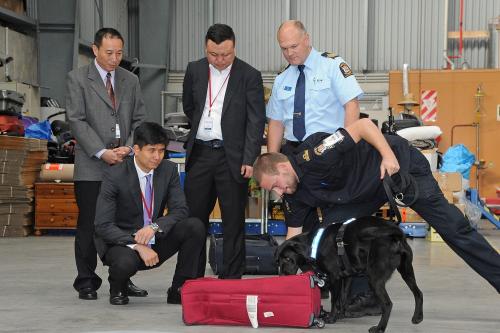
Officials from Hong Kong Customs and the General Administration of China Customs’ Anti-Smuggling Bureau have been in Auckland to learn how drug dogs are trained to detect cash, so they can progress similar programmes in their own Customs administrations.

“It’s fantastic we’re able to assist Hong Kong and China to build this special capability, as detecting undeclared or hidden cash is an increasing priority for many Customs authorities as evidence shows following the money trail can lead to cracking serious organised crime such as drug smuggling.

“Having Hong Kong and China Customs detector dogs sniff both drugs and cash will disrupt drug smuggling and money laundering by transnational syndicates, with flow-on benefits for us in New Zealand,” Ms Wagner says

New Zealand shares formal agreements and a close customs-customs operational relationships with both Hong Kong and China, with the agencies working together to target the illicit drug trade through cross-border efforts.

Officials spent a week getting an overview from Customs’ Source: NZ Government (contributed by M Reddy)