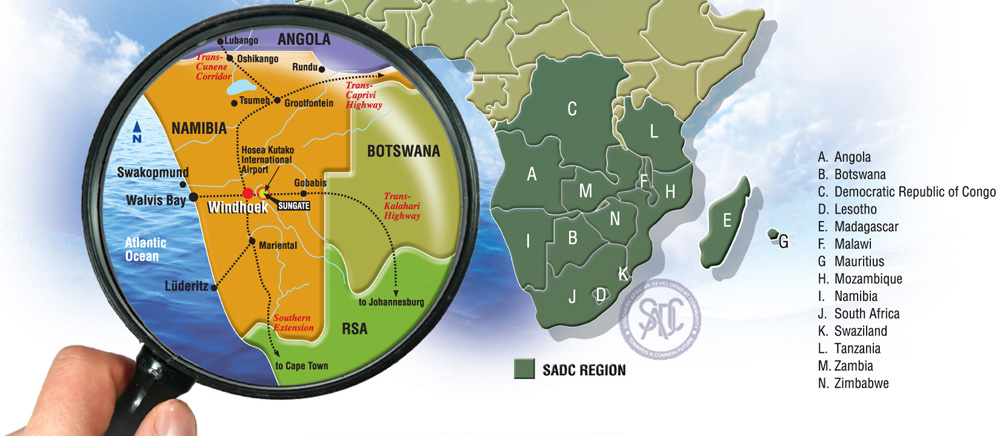
SACU in danger of collapse

Rob Davies Frustrated with lack of progress (Business Day)

Rob Davies Frustrated with lack of progress (Business Day)

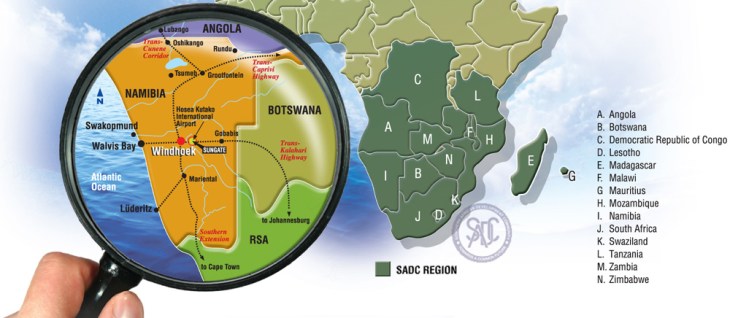
Trade & industry minister Rob Davies did not mince his words when he briefed parliament late last month on the Southern African Customs Union (Sacu), the world’s oldest. The union was formed in 1910 and comprises SA, Botswana, Lesotho and Swaziland.

Exasperated, Davies complained to MPs that SA’s partners were hardly moving in the direction of harmonising trade and industrial policies. He said if this did not happen soon, the viability of Sacu itself might be called into question.

Sacu was initially formed as a colonial-era instrument to control the flow of goods into and out of the then British colonies, an arrangement that was retained with a new agreement in 1969. In essence, SA collects customs and excise revenue on behalf of all four countries and distributes 98% of all this money to the three other members as a form of aid, retaining only 2% that should accrue to itself. It is a formula that has both worked and been fraught with difficulties over the past century.

The agreement was modified with a more distributive formula in 2002 which came into effect into 2004. Under the new agreement the most vulnerable countries, Swaziland and Lesotho, would get a larger share of the excise portion.

The Sacu distributions are also the instrument through which Swaziland was to get R2,4bn in assistance from SA in 2011. Under that agreement SA would have advanced the landlocked kingdom the money from its future Sacu distributions, but it came with fiscal and technical conditions from SA.

In January 2013, Swazi finance minister Majozi Sithole said the loan arrangement was “not working out”. He complained about additional conditions set by SA before the first tranche of R800m could be paid to Swaziland.

The kingdom’s financial woes arose mainly from reduced customs and excise collections in 2010 which reflected reduced trade to and from the region. With up to 60% of Swaziland’s national budget dependent on Sacu funds, the reduction from a total pool of R27bn to just over R17bn left Swaziland cash strapped.

Though he didn’t explicitly say so in his briefing to parliament, Davies’ frustration with the Sacu arrangement was palpable. He took particular issue with the Sacu payments merely serving as a guaranteed source of revenue for the treasuries of Sacu member states. “There are no cross-border development initiatives out of the revenue collected when there are opportunities for the members to invest in joint projects,” he told parliament.

Sacu has other problems. While the 2002 agreement calls for harmonised trade and industrial policies, it also makes provision for the countries to have different fiscal and other regimes. As a consequence Sacu members’ corporate and personal income tax rates are different. This means some members realise lower internal tax revenues than they otherwise could, increasing dependency on the Sacu distributions.

A sense of entitlement has also crept into the arrangement. In a case that generally escaped media attention, in 2009 the other members asked for an international tribunal to seek arbitration on what they believed to be “short” payments from SA. The tribunal convened in the supreme court of Namibia in Windhoek.

The matters in dispute were resolved with the signing of the latest agreement in 2009, but the fundamental complaint demonstrated both the entitlement and the vulnerability of the most dependent members.

At the time SA was expected to make four quarterly distributions which were based on an estimate of revenues collected. As often happened, there was an overestimation which resulted in a payment surplus of just over R2bn, which SA deducted from future payments. This precipitated a dispute which, given the vulnerability of Swaziland and Lesotho, was almost inevitable as their entire fiscal planning for that year had been premised on the inaccurate Sacu estimates.

SA’s counsel in the hearing, Michael Kuper, argued that the arrangement was so inefficient that it forced SA to sometimes look for alternative sources of funding just to fulfil the Sacu revenue-sharing formula.

Officials of the department of trade & industry and national treasury have for some time been unhappy about the disruptive nature of the formula, given the volatility of customs revenue. Davies alluded to this in parliament, using the wild fluctuations in revenue before, during and after the global financial crisis.

Now Davies wants the union to shape up or make a decision on its future. He told parliament that Sacu had to live up to the outcomes of its second summit, held in 2011, where member states undertook to work on cross-border industrial development, development of Sacu institutions, unified engagement in trade negotiations and a review of the revenue-sharing arrangements.

As if to emphasise its historical and present inertia, Davies said that not much work had advanced in this regard – such as the formation of national tariff bodies, a Sacu tariff board, common antitrust regulations and co-operation in agriculture.

“Some members have proposed that the Sacu tariff board be formed even if the states’ national tariff boards have not been formalised yet,” he said, in an indication that some of the members do not have the technical wherewithal to install the necessary institutions.

Lesotho and Swaziland in particular are hampered by structural economic difficulties, including low prospects for meaningful economic growth and reliance on external aid. A recent IMF report on Lesotho complimented the new government on its fiscal discipline and recommended further aid. It also noted new measures to improve supervision over the financial and other sectors.

As Africa’s last remaining absolute monarchy, known for its profligate spending on the comforts of its king, Swaziland remains a political hot potato which has increased pressure on the SA government to attach conditions to any assistance given. Though written in diplomatic language, the 2011 IMF report on Swaziland also listed a number of areas that needed strengthening.

It recommended the cutting of public-sector wages to ease fiscal pressures, a decision that brought the kingdom to the brink of instability, precipitating the appeal to SA for help. MPs raised the Swaziland loan issue with Davies, demonstrating the internal and regional political difficulties of the arrangement.

While SA remains determined to assert its voice over its junior partners in Sacu, it still has to tread carefully lest it be seen as a bully. Providing some cover have been the conditions set by the IMF before Swaziland can receive further assistance. Some of these common conditions include the protection of the peg between the Swazi ilangeni and the rand, the implementation of a fiscal adjustment roadmap and a prioritisation of social spending over the reported excesses of King Mswati III.

Early this month Australian newspapers reported the arrival of several of King Mswati’s queens and their aides in Australia on an apparent shopping trip. It is such extravagance that has put both SA and the kingdom in a difficult position – the former in its internal political environment and the latter through the loss of credibility with international development finance institutions.

It now appears that SA is choosing the route of common economic development over the aid-like structure of the Sacu payments. It remains to be seen whether the partners will be in a position to make good on Davies’ intentions or keep talking as the member states have been doing for over a decade. Source: Financial Mail

Study into the cooperation of border management agencies in Zimbabwe

tralacZimbabwe is a landlocked developing country with a population of 14 million, sharing common borders with Botswana, Mozambique, South Africa and Zambia. Zimbabwe has 14 border posts, varying in size in accordance with the volume of traffic passing through them. Beitbridge, the only border post with South Africa, is the largest and busiest, owing to the fact that it is the gateway to the sea for most countries along the North-South Corridor. Zimbabwe thus provides a critical trade link between several countries in the southern African regions. The need for the country, especially its border posts, to play a trade facilitative role can therefore not be over-emphasised.

Trade facilitation has become an important issue on the multilateral, regional and Zimbabwean trade agendas, and with it, border management efficiency. Border management concerns the administration of borders. Border agencies are responsible for the processing of people and goods at points of entry and exit, as well as for the detection and regulation of people and goods attempting to cross borders illegally. Efficient border management requires the cooperation of all border management agencies and such cooperation can only be achieved if proper coordination mechanisms, legal framework and institutions are established.

This study explores how border agencies in Zimbabwe operate and cooperate in border management. The objectives of the study were to:

  • Identify agencies involved in border management in Zimbabwe;
  • Analyse the scope of their role/involvement in border management; and
  • Review domestic policy and legislation (statutes of these agencies) specifically to identify the legal provisions that facilitate cooperation among them.

Visit the Tralac Trade Law website to download the study.

Source: TRALAC

Free zones – the potential pitfalls

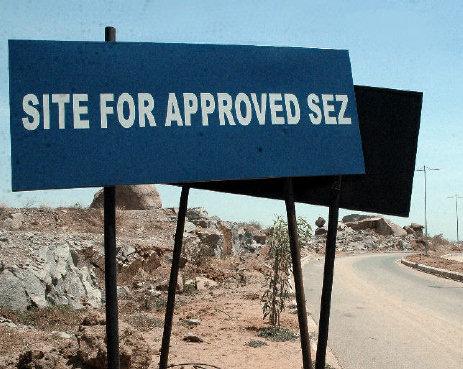
sezFree zones are often seen as a cure-all remedy to the problems developing economies encounter when trying to attract FDI. However, the reality is that such projects need careful planning and long-term support if they are to fulfil such wishes. A report published by fDI Magazine, and featured online – fdiintelligence.com – covers the topic quite comprehensively. While the article it is titled ‘Free Zones’ it’s not quite certain whether all developments sited follow the same business model. Nonetheless it provides some interesting insight to developments across the globe. Of particular interest for Africa are references to developments in Rwanda, Botswana, and the Gambia. In the case of the latter, the Gambian government’s decision to legally enable companies to operate as standalone zones, whereby businesses are permitted to enjoy the benefits of being a ‘free zone’ entity without having to establish in the country’s business park, could enable Gambia to attract investors who wish to have a greater degree of choice over the location of their premises.

Some of the key messages of the article come in the form of cautionary’s –

“the ‘build it and they will come’ assumption over SEZs will not guarantee investor interest”

“while governments are quick to launch them with great fanfare, a lack of on-going support afterwards hinders the zone from developing to a competitive and world-class standard…many projects remain just that – a project”

“while the idea of clustering several companies from a few specific sectors sounds promising on paper, in practice this can be detrimental to foreign enterprises”.

Read the full report here!

Enforcement, Risk Management and Preferred Trade come together in the SACU Region

Enforcement, Risk Management and Preferred Trade come together in the SACU Region

Enforcement, Risk Management and Preferred Trade come together in the SACU Region

A WCO workshop on the topics of Enforcement, Risk Management and Preferred Trader was conducted in April in Johannesburg, South Africa, with the involvement of the WCO Secretariat, UK Customs and the member countries of the Southern African Customs Union – SACU (Botswana, Lesotho, Namibia, South Africa and Swaziland). Capacity Building in the mentioned areas in the SACU Region is part of the WCO Sub-Saharan Customs Capacity Building Programme financed by the Swedish Government through the Swedish International Development Cooperation Agency, SIDA.

An assessment including lessons learned was conducted concerning Operation Auto, targeted at second hand motor vehicles. This first ever regional enforcement operation in the 102 years of history of SACU presented good results as around 250 vehicles were seized by the Customs administrations. The Regional Intelligence Liaison Office contributed actively in the assessment process, ensuring that also future enforcement operations will benefit from the experiences gained.

The development of further risk management capacity is ongoing at the regional level and discussions were held concerning the establishment of common risk profiles. A number of high risk products have been identified and the formulation of profiles to engage illegal trade in these areas is ongoing.

Regarding the Preferred Trader program, progress can also be reported as SACU Members are approaching implementation at operational level. This project component fits very well with the risk management component as the latter is the foundation of the Preferred Trader approach. The process of selecting high compliant, low risk economic operators for the upcoming pilot scheme is well underway while capacity in verification and post clearance audit is being enhanced. A launch of (a pilot of) the regional Preferred Trade program is tentatively envisaged for the second half of 2013. Source: WCO

Botswana Tightens Car Exports to Namibia

2nd hand carsThe New Era (Windhoek) reports that Botswana has tightened the screws on the importation of second-hand vehicle older than five years, effectively removing the loophole exploited by Namibian motorists to import such vehicles.

Botswana’s customs, the Botswana Unified Revenue Service (BURS), is now enforcing the Southern Africa Customs Union (SACU) agreement that prohibits the registration of imported second-hand vehicles older than five years. Previously Namibian traders in imported second-hand cars would register vehicles in Botswana, from where they would enter Namibia as Botswana registered vehicles instead of imported vehicles.

The process had made it easy to register such cars in Namibia and in other SACU member states, which prohibit the registration of imported vehicles older than five years.

“BURS, in the spirit of good neighbourliness and adherence to the provision of the SACU agreement, wishes to assist Namibia in curtailing the irregularities prevalent in the movement of second-hand vehicles through the two countries,” reads a statement from the Namibian Ministry of Finance’s customs that relayed the decision by the Botswana customs authorities.

However, ingenious Namibian traders in second-hand vehicles told New Era yesterday that the decision by Botswana customs is simply a temporary deterrent as they are now considering using Swaziland’s leniency on the matter to circumvent the very same SACU provisions. Besides the SACU provisions, Angola – a non-SACU member – has also banned the importation of second-hand vehicles older than five years. Second-hand vehicle imports contributed at least N$150 million to the economy during 2012, with a record 20 000 vehicles recorded.

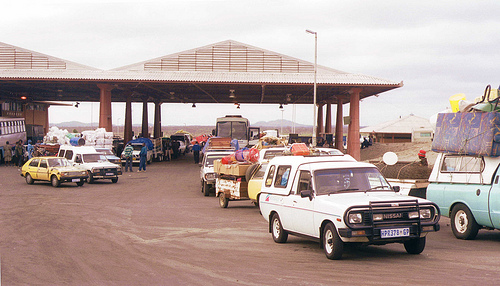
Some of the vehicles have also gone through to neighbouring countries. South Africa does not allow imported second-hand vehicles older than five years to drive on its road network. Importers of such cars are forced to load vehicles on trucks or use the port of Walvis Bay. To register the cars in Namibia, the traders would take the vehicles to Botswana where they would be registered for a short period of time and bring them back to Namibia as Botswana registered vehicles.

The process enables the cars to be registered on the Namibian vehicle registration system, which ordinarily would not allow the cars to be registered for local use within SACU states. Botswana customs says persons attempting to circumvent the SACU provisions would be subject to a fine of P40 000 (N$44 579.85) or three times the value of the vehicles or imprisonment of not more than ten years. Source: New Era

Simple solution – SACU countries should unilaterally invoke the prohibition on the importation and registration of second-hand motor vehicles at all external borders of the customs union. Is it not time for the member states to act for once like a custom union?

NRA/BURS – Customs Connectivity Passes Test

TKCThe first live demonstration of an end-to-end customs connectivity solution was successfully completed in Windhoek, Namibia on December 12, 2012. Customs Connectivity enables customs administrations from different countries to share information seamlessly and instantly across borders: reducing processing time and improving access to reliable, real-time trade statistics.

The demonstration was witnessed by the Commissioners of Botswana (BURS) and Namibia Customs (NRA), senior managers and operational teams. The demonstration involved moving information from an ASYCUDA++ entry in Botswana via the Cloud-based User Portal to an ASYCUDA++ entry in Namibia, and vice-versa from Namibia to Botswana. It demonstrated how clearing agents/traders would manage the flow of their information via the secure online User Portal.

The demonstration marked a “watershed moment” in turning Customs Connectivity into reality. The next steps for the pilot project include full system testing and documentation before end-user training commences. Full implementation is scheduled to take place during the first half of 2013.

Customs Connectivity offers countries in the region a historic opportunity to engage cutting-edge technology and modern tools to facilitate trade throughout Southern Africa, enhancing economic growth and promoting food security. The pilot project is being implemented by Botswana and Namibia, supported by the USAID Southern Africa Trade Hub. Source: SATH

Request – Perhaps some of the TKC clearing agents, NRA and BURS customs staff would like to comment on their experience thus far? 

Corruption Perceptions Index 2012

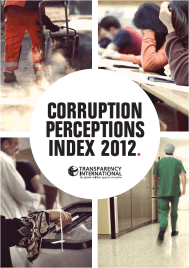
Corruption Perceptions Index 2012Twelve African countries are ranked among the 75 least corrupt nations in the world, according to the 2012 index published Wednesday by Transparency International. Published annually, the Corruption Perceptions Index draws upon a range of data sources to determine how corrupt countries’ public sectors are perceived to be. On a scale from 100 (highly clean) to 0 (highly corrupt), two-thirds of all countries scored below 50.

The top eight in sub-Saharan Africa (SSA) in 2012 also led the list in 2011, with approximately the same global rankings, ranging from 65 to 43. Liberia – at number 11 in sub-Sahara with a score of 41 – saw its global ranking rise 16 points – from number 91 last year to 75 in 2012.

Botswana, Cape Verde, Mauritius, Rwanda, Namibia, Ghana and Lesotho led the SSA rankings, along with South Africa, which dropped two places this year – to nine from seven. Gambia, which was ninth last year, dropped this year to 21 in SSA and 105 globally. Tunisia, which is grouped with Middle East and North Africa (MENA) countries, is tied with Liberia at 75 on the global rankings. Crowding the bottom among the most corrupt in the world are Chad, Sudan and Somalia. For more information visit – www.cpi.transparency.org

Namibian Ministry of Finance angers clearing agents

Below is a situation which might have been avoided if trader registration/licensing was properly addressed by the Namibian Authorities. With the likes of SADC and COMESA encouraging the implementation of regional transit guarantees, trade operators need to clearly address their obligations and liabilities. Moreover, any suggestion of authorised economic operator (AEO) programme in the Southern African region needs to fully align its requirements with the standards being applied by other countries across the globe. It is therefore clear that no preferred trader scheme can be implemented across the Trans-Kalahari Corridor or across SACU if such disparities of knowledge and practice exist. While one might have compassion for possible job redundancies and the pleas expressed by certain clearing agents, they evidently do not understand the game they are playing in and will drastically need to redress their understanding of the role they play in the supply chain. International clearing and forwarding is not a game for sissies, or people who want to try their hand at a quick buck. A bold stance by the Ministry of Finance.

The Namibian Ministry of Finance’s decision to ban clearing agents from using guarantees and bonds from third parties as security to move goods has caused an uproar among clearing agents. The Deputy Minister of Finance, Calle Schlettwein, explained that the decision that became effective on July 26 was taken to protect the taxpayer. Clearing agents aren’t closed down, and neither are they stopped from using their own security to move these goods, he said. As from July 26, the agents are simply not allowed to use a bond or guarantee issued to another clearing agent as security for their goods in transit, the ministry said.

Before the clampdown, clearing agent A used to ‘borrow’ guarantees or bonds, backed by financial or other institutions from clearing agent B to clear any goods coming through Namport and destined for landlocked countries such as Botswana, Zambia and Zimbabwe. However, should a problem develop with agent A’s consignment, the guarantee or bond would be worthless to Government, as the financial institution agreed to back only agent B’s guarantee or bond. “We don’t know how or when the practice started, but it is illegal,” a ministry spokesperson said.,

Schlettwein said Government stood to lose out on duties and customs through the practice, and the taxpayers would have ended up having to pick up the tab. The ministry’s announcement was met with considerable protest from the smaller clearing agencies, claiming that they didn’t have the money or financial backing to secure the necessary bonds or guarantees. Nampa reported that 76 small and medium enterprises (SMEs) operating as clearing agencies at the coast have been affected. At the Oshikango border post and at Helao Nafidi in the North, 30 agencies with more than 100 employees are affected.

Regina Amupolo of Pride Clearing and Forwarding Agent has called on the ministry to urgently look into this matter, because many trucks with goods and containers are stuck at the Oshikango border post, Walvis Bay harbour or at other border posts. Their customers have already complained that they are losing business because of this, Amupolo said. Amupolo said most SMEs don’t have the money to obtain bonds or guarantees. She said ministry officials said anyone who wants a bond must have collateral of N$1,6 million. “We are small business people, trying to employ ourselves and some of our fellow men and women in our societies, but now the Government, the Ministry of Finance, is making things difficult for us. How are we going to make a living if the ministry is cutting off our jobs in this way?” she asked.

In a letter written to all clearing agents at Oshikango, the controller customs and excise officer, Festus Shidute, said the practice of using third-party bonds or guarantees posed a serious challenge to customs administration and control of guarantees in the event of liabilities by third parties. Amupolo and Rejoice Nangolo from Flora Clearing Agent said they have already paid N$20 000 to obtain a clearing licence, while they have to pay Namport another N$20 000. She said they are losing thousands of dollars as a result of this unexpected prohibition by the ministry and are demanding an extension to allow them to take the matter up with the ministry.

Nangolo said her business has branches at other border posts like Omahenene, Katwitwi, Ngoma, Wenela, Trans-Kalahari, Ariamsvlei, Noordoewer, Walvis Bay, Hosea Kutako International Airport and Oshikango. Her Angolan customers have threatened to stop moving their goods through Namibia and only to use their own ports, she said. At Oshikango there are only two big companies, Piramund and CRN, that can guarantee bonds and assist them as SMEs clearing their work effectively. According to Amupolo and Nangolo, they started with their clearing business in Oshikango in 2000 and were doing well until the ministry imposed the ban.

Speaking to Nampa, Lunomukumo Taanyanda of Oluvanda Clearing and Forwarding Close Corporation (OCFCC) said his company has been operational for two years and deals mostly with car consignments from countries such as the United Kingdom (UK) and Dubai.Before clearing the consignments, OCFCC has to declare the consignment at the Namport customs desk. However, before they can fill in a customs declaration form to clear the transit goods, the goods need to be secured and this is where the company (OCFCC) requires the assistance of third parties such as Wesbank Transport, Transworld Cargo and Woker Freight Services.

These smaller companies acquire assistance from bigger companies (the third parties) as they experience problems when trying to obtain their own bonds and guarantees. According to Taanyanda, it is a very costly and time-consuming process. “We agents do not have enough collateral for bonds, which start at N$350 000, and now the ministry has stopped us from borrowing bonds from third parties,” he said. Source: The Namibian

Related Articles

http://www.namibian.com.na/news/marketplace/full-story/archive/2012/august/article/clearing-agents-want-answers-today/

South Africa – Stalling Regional Integration

Yes, you’ll be forgiven if you thought this was some belated April-fools joke. South Africa has been accused of frustrating plans to create a regional customs union and instead preferring to bolster the South African Customs Union (Sacu), where it holds sway. 

A customs union is a trade agreement by which a group of countries charge a common set of tariffs to the rest of the world, while granting free trade among members. Regional Integration minister, Priscilla Misihairabwi-Mushonga, said there was a feeling that South Africa wanted to use Sacu as its basis to form a regional customs union, instead of working towards creating a new one.

“What we see is that South Africa wants to use Sacu as the basis for forming a regional customs union and sometimes, this is viewed as having a big brother mentality,” she said. Misihairabwi-Mushonga said, for this reason, negotiations towards a holistic Southern African Customs Union (Sadc) had not gone very far. Botswana, Lesotho, Namibia, Swaziland and South Africa make up Sacu, with the four countries having benefited by aligning themselves to South Africa, Africa’s largest economy. A Sadc customs union would involve the 15 countries of the region, instead of Sacu, which is considered narrow.

But Catherine Grant, the head of economic diplomacy at the South African Institute of International Affairs, reckons the smaller nations in Sacu, like Lesotho, may be opposed to Sacu morphing into a regional customs union. “This will be opposed by other Sacu members, not necessarily just South Africa, as this (Sacu) is not just a trade agreement, but involves a broader range of economic issues,” she said.

“Up to 60% of the Lesotho budget is Sacu revenue, so the vested issues, whether Sacu is the basis of a customs union, are not just South African.” Grant felt that it was impossible to expand Sacu in its current form, as it would cost South Africa too much and would dilute the resources that were meant for other projects.

The head of the trade and policy think-tank said instead, South Africa preferred to see the implementation of a free trade area (FTA) as a first step, since customs union negotiations were usually lengthy and time-consuming. “The preference is to first channel scarce resources to existing commitments and trying to make them as beneficial as possible,” she explained.

Grant said while South Africa was the dominant player in the region, hence engendering a feeling that it was imposing itself as the big brother, the country was actually holding back from taking a leading role and this cost the region.

“Sometimes South Africa holds back because they are conscious of not being a big brother and that could be detrimental to the region,” she explained. However, Grant said energies should be directed towards the conclusion of negotiations to set up the Tripartite Free Trade Area (TFTA), which includes the Common Market for East and Southern Africa, the East African Community and Sadc.

“The TFTA will resolve some of the overlapping issues that can be difficult to solve when it comes to a customs union,” she said. Since Zimbabwe adopted multicurrencies in 2009, there has been a call that the nation either join Sacu or push for the formation of a regional customs union. Zimbabwe remains wary of joining Sacu, as it fears for its economic independence, yet negotiations for a regional customs union are moving at a snail’s pace.

Sacu was established in 1910, making it the world’s oldest customs union. It consists of Botswana, Lesotho, Namibia, South Africa and Swaziland. Source: AllAfrica.com

Namibia buys into ‘Single Window’ concept

From April 12-13, Southern African Trade Hub (aka USAID) presented Single Window as a cutting-edge tool for trade facilitation to the Ministry of Industry and Trade, Ministry of Finance, Customs and other private sector organizations, explaining how a NSW for Namibia could improve the Trading Across Borders index ranking, which currently stands at 142 out of 183 countries. Single Window is a crucial instrument that will eliminate inefficiency and ineffectiveness in business and government procedures and document requirements along the international supply chain, reduce trade transaction costs, as well as improve border control, compliance, and security.

Benefits for Government: A Single Window will lead to a better combination of existing governmental systems and processes, while at the same time promoting a more open and facilitative approach to the way in which governments operate and communicate with business. Traders will submit all the required information and documents through a single entity, more effective systems will be established for a quicker and more accurate validation and distribution of this information to all relevant government agencies. This will also result in better coordination and cooperation between the Government and regulatory authorities involved in trade-related activities.

Benefits for trade: The main benefit for the trading community is that a Single Window will provide the trader with a single point for the one-time submission of all required information and documentation to all governmental agencies involved in export, import or transit procedures. As the Single Window enables governments to process submitted information, documents and fees both faster and more accurately, traders would benefit from faster clearance and release times, enabling them to speed up the supply chain. In addition, the improved transparency and increased predictability would further reduce the potential for corrupt behaviour from both the public and private sector.

If the Single Window functions as a focal point for the access to updated information on current trade rules, regulations and compliance requirements, it will lower the administrative costs of trade transactions and encourage greater trader compliance. The Permanent Secretary for the Ministry of Industry and Trade underscored the need for Namibia to proceed with the Single Window concept, and advised participants that his Ministry, together with the Ministry of Finance, would jointly package the Single Window concept and submit it to Cabinet for Government approval.

In Southern Africa, Mauritius already has an effective Single Window, which is reflected in its “Trading Across Borders” ranking of 21. Mozambique recently launched its pilot Single Window. SATH will support and facilitate the processes for the establishment of a Botswana National Single Window system to streamline cross border trade. The current SATH Trans Kalahari Corridor (TKC) Cloud Computing Connectivity program, which is being piloted between Botswana and Namibia, provides an ideal technology platform for linking Botswana and Namibia Single Windows, leveraging the investment by BURS, Namibia Customs and SATH to date in the development of this system. SATH is currently in the process of gauging support for National Single Window in South Africa.

Excuse my cynicism, but the SA Trade HUB  has yet to demonstrate the viability of its Cloud Computing solution between Namibia and Botswana Customs. What is reported above is the usual sweet and fluffy adjectives which accompany most international customs and trade ICT offerings, ignoring prerequisite building blocks upon which concepts such as Cloud and Single Window may prove beneficial and effective. Past project failures in Africa are usually blamed on the target country in not bedding down or embracing the new process/solution – never the vendor. Given the frequency of technology offerings being presented by donor agencies on unwitting national states, there seems little foreign interest in ‘bedding down’ or ‘knowledge transfer’ than the ‘delivery of expensive technology’.

Related articles and references

TKC Pilot – linking regional Customs systems through the “Cloud”

FTW Online recently published an update on recent developments occurring along the Trans-Kalahari Corridor (TKC). It suggests that customs systems throughout the SADC region could soon be talking to each other through the Internet, if the pilot project between Namibia and Botswana is successful. During July 2011, the Southern African Trade Hub unveiled a plan to initiate a pilot programme to link the ASYCUDA systems of Namibia and Botswana via Microsoft’s Cloud Computing technology. Both Microsoft and USAID are partners in this initiative seeking to enable the two customs systems to communicate with each other through a secure portal. View the keynote presentation at the 2011 World Customs Organization IT Conference and Exhibition – Seattle, Ranga Munyaradzi (SATH) and Namibian Customs Commissioner, Bevan Simataa, were invited on-stage to elaborate on this initiative – click here!

According to Oscar Muyatwa, executive director of the Trans-Kalahari Corridor Secretariat, the initiative holds the prospect of opening up African opportunities in the United States for exports, as it is being supported by USAID as part of the African Growth and Opportunities Act (AGOA). Both Namibian and Botswana Customs officials are to be trained in Cape Town over the next few months. The TKC Secretariat believe this initiative will bring about its vision of a ‘automated corridor’. Further ahead the TKCs envisages the establishment of One Stop Border Posts (OSBPs) to reduce border dwell and transit times. Muyatwa says ‘The ‘cloud’ will maintain vast volumes of transit data that will assist future planning along the corridor as well as revenue and budgeting forecasts’. Source: FTW Online.

Comment: lest there be any confusion amongst Customs users, traders and carriers, the concept of cloud computing in the Customs sphere is very ‘clouded’ at this point. What needs to be considered is the ‘ownership’, rights to ‘access’ and ‘integrity of use’ of such information. Furthermore, as this is a first-of-its-kind initiative (in Africa at least); it would be highly recommended that the participants and developers ‘share’ details of the approach with other SACU members in order to better understand the programme. Up to this point it is very unclear how the developer has gone about the integration of customs information, for instance, since ‘users’ have not been fully involved in the scope, proof-of-concept or design of the system. 

Related articles

Customs Modernisation Release 3 – SACU

Saturday 11 February 2012 sees the implementation of new modernised customs procedures and formalities at South Africa’s first SACU land frontier office – Kopfontein – border between South Africa and Botswana.  While enhancements are slanted more in terms of internal SARS customs procedure, SACU traders will no doubt experience some anxiety with the transition. For the first time SARS Customs Modernisation impacts directly on traders and neighbouring Botswana Customs operational procedures in a significant way, which will fashion operations at all remaining inland border posts of the Customs Union. Over the last few months SARS has worked with trade, the Botswana customs authority as well as the business chamber in Botswana concerning the intended changes and their impact on stakeholders. The implementation ushers in cross-cutting changes for customs staff operationally, new technology as well as legal and policy changes. In the case of the latter, a further element of the draft Customs Control Bill is introduced whereby foreign business operators (importers, exporters and road carriers) must be registered with SARS to perform customs transactions in South Africa. This is perhaps the single issue which has had ramifications for parties who regularly cross the border between Botswana and South Africa. Hopefully recent iterations of notices and explanations have helped clarify the SARS requirements. (See the SARS Customs Modernisation webpage).

Other modifications and changes include –

Elimination of paper clearance documents – this is a significant departure from traditional SACU processing where all member countries have relied on the Single Administrative Document (SAD) to facilitate intra-SACU clearance. With the bulk of clearances expected to be electronic, SARS will now only print a customs notification (CN1) which will specify the status and outcome for each clearance. This the trader will use in support of customs clearance in Botswana. SARS will therefore no longer stamp and authorise hardcopy SAD500 clearance documents. Of course, there is nothing which stops a trader printing the SAD500 for cross border purposes, only SARS will no longer attest these. As concerns SARS VAT requirements, arrangements will be made for traders to submit the CN1 for purposes of VAT returns. Details on this to follow.

Electronic supporting documents – already tried and tested at sea and airports across South Africa, traders no longer need to carry on their person hard copy clearance supporting documentation , i.e. invoices, worksheets and packing lists. These are only required should SARS indicate via electronic message that a consignment requires further scrutiny. Customs brokers and traders using EDI will in most cases have the SARS e@syScan facility available on their computer systems which makes it relatively simple and easy to scan, package and submit to SARS. In the event a trader cannot perform this electronically, he may approach any of the 4 Customs Hubs (Alberton, Cape Town, Durban, and Doringkloof) across the country, to have these scanned and uploaded by SARS. Alternatively, these can of course be delivered to the border post for manual processing and finalisation of a customs intervention. Supporting documents are linked to a unique case number which SARS notifies to the trader in the event of a risk.

Clearance processing – SARS has centralised its backend processing of clearances where goods declarations are now processed off-site at one of the 4 Hubs. No longer are clearances processed at customs branch office. All goods declarations – whether electronically submitted or manually captured – are routed to a central pool for validation, verification and assessment if flagged by the risk engine. In the case of land borders all clearances once successfully processed will receive a ‘Proceed-to-border’ message implying that the road carrier may commence delivery to the border. A key feature of the new clearance process is the availability of Customs Status Codes. These codes are initiated by the customs system at specified points in the process to alert the declarant of the status of his/her transaction. These status’s also indicate the follow-up required of the declarant to bring the transaction to a state of finality.

Automated Cargo Management (ACM) – All road carriers are now required to submit their road manifests electronically, via EDI, to the Customs ACM system. For now, SARS will not electronically match the manifest against the declaration, but will monitor compliance and data quality of electronic manifest  for a period of time before initiating real-time matching and acquittal. This will invoke a significant responsibility on both trader and road remover to ensure that they both provide credible data to customs otherwise delays will occur. Upon arrival of the cargo at the border, the driver presents a printout of his electronic manifest. The manifest number is ‘checked in’ by a customs official which in seconds brings up all associated goods declarations linked to the manifest number on the system. The customs officer is able to determine the overall risk status of the vehicle. Where no risks are present a status notification (CN1) is printed for each goods declaration, and a gate pass (CN2) is handed to the driver permitting him to exit the customs controlled area. The future real-time matching will comprise a combined risk assessment of both manifest and declaration information that will result in a single risk outcome. Such risk assessment will include both fiscal and security compliance features thereby bringing SARS in line with international supply chain security standards. Going forward, risk assessment will accommodate ‘all-of-government’ requirements ensuring that all regulatory measures and associated risks are administered in a single instance obviating the need for successive, time-consuming inspections and costly delays.

Automated Customs Inspection – Following its recent introduction at the Beit Bridge border post, the new hand-held inspection tool, conveniently developed on an iPod, allows the customs border control official to electronically access, capture and upload an inspection outcome to the central customs system. This significantly improves the efficiency for this time-intensive activity where the officer can initiate a status up date electronically at the inspection site, where previously the declarant would have to wait for the outcome of the manual inspection report and release note. What’s more, the customs officer has access to the underlying clearance data and can even activate the camera function and capture visuals of suspect cargo which can be appended to an inspection case for verification by higher authority or historical reference value.

There are additional features and functionality to be introduced at Kopfontein and all remaining border posts over the next few months. These relate to improved revenue accounting, new trader registration and licensing system offering online application and approval, and a new traveller and temporary import/export processing. More about this in a future post.  For traders, the benefits of the new solution at SACU land borders aim to remove random and unwarranted intervention by customs. All activities are risk driven via a secure ‘get next’ selection function ensuring that internal integrity is maintained and only ‘risk-related’ consignments/transactions are dealt with. Please visit the SARS Modernisation webpage for all the latest updates and notices on modernisation releases.