New Ressano Garcia Cargo Terminal Operational By December

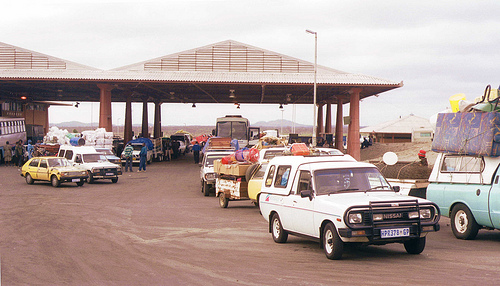
Mozambique flagA new cargo terminal will be opened at the Ressano Garcia – Lebombo border crossing before the end of the year to speed up the processing of customs clearance for goods moving between Mozambique and South Africa.

To further the project an agreement has been reached between the Mozambique Tax Authority (ATM) and a consortium composed of the Matola Cargo Terminal (Frigo), Matrix and the “Zambian Border Crossing Company”.

The 15 year concession contract was signed on 14 June in Ressano Garcia by the chairperson of ATM, Rosario Fernandes, and by the managing director of Frigo, Filipe Franco.

Filipe Franco told AIM that a new truck terminal is being built where facilities will be available for all the necessary services including customs, migration, and officials dealing with health and agriculture.

He pointed out that “our objective is to ensure that the terminal will be completed and operational by December”, adding that the consortium is composed of companies with a great deal of experience in managing cargo terminals.

Rosario Fernandes said that the cargo terminal project will facilitate trade by speeding up customs clearance at the border post through a one stop system and the single electronic window system which is being implemented throughout Mozambique. Source: AIM (Mozambique News Agency)

From Good to Grey: South Africa’s Low Emission X-Ray System

Lodox Body Scanner Image-Case-Study-1-bright

Click on the image to view fine details on Hi-Res image (Credit-Lodox)

While not exactly the kind of equipment for a Customs Enforcement operation, I did feel suitably proud to punt a locally developed ‘non-intrusive’ imaging device given its recent international prominence.

The South African Media have been abuzz following the airing of the Grey’s Anatomy episode Idle Hands (on MNET), featuring the South African developed Lodox full-body X-ray scanner.

In the episode, the doctors and nurses of Grey+Sloane Memorial Hospital’s brand new ER are excited and amazed to have the Lodox Statscan in their trauma department. After a long wait of anxious anticipation, they are suitably impressed by the X-ray scanner’s ability to take an entire body scan in just 13 seconds, and what this will mean for how they treat trauma patients. Far from paid-for product placement, this was a story line independently researched and written by the Grey’s Anatomy producers. Our Lodox NA team made sure they had a real, working Lodox machine on the set of the new ER.

Some of the tech and application notes off the Lodox website:

Due to its unique X-ray system, scanning technology and design, it emits extremely low levels of entry and scattered radiation, making it safer for operators and staff.

For emergency trauma situations, the Xmplar-dr permits easy access to the patient to allow for monitoring and resuscitation to take place around the scanning process. The 13-second, full-body scan provides instant information with which to form a diagnostic image of the patient’s injuries.

In forensic pathology (medico-legal) applications, the Xmplar-dr provides an easy-to-use, fast method for assessing the entire subject’s body in multiple planes to assist with pathology location, particularly useful in the case of gun shot victims. The single sweep eliminates the need to move the subject to obtain all necessary views, making it more efficient and safer for staff.

Lodox is also ideally suited to imaging of bariatric and paediatric patients, and has found applications in many other areas of medical imaging.

The high quality, digital images, ease of use and reliability make the Xmplar-dr an invaluable piece of imaging equipment in any medical trauma or forensic pathology arena.

Source: Lodox.com


Call to Develop Zim-RSA Transport and Trade Links

zim-rsaZimbabwe needs to further develop transport and trade infrastructure links with South Africa to maintain Africa’s biggest economy as its single most important trading partner, recent research findings have shown.

This came from preliminary findings of a research study carried out by Dr Medicine Masiiwa who was commissioned by the Ministry of Regional Integration and International Co-operation to undertake the study on trade and transport. The World Bank funded the study to assess the need to facilitate transport and trade in Zimbabwe. The findings form part of preliminary desk research ahead of a more detailed second phase.

Dr Masiiwa presented the initial findings from the desk research to stakeholders at a workshop in Harare. Preliminary findings of the study show that since economic and political stability, key for trade competitiveness of Zimbabwe is now in place, the country’s trade was bound for significant growth, making a trade and transport facilitation measure critical to support this growth.

“A major implication of having South Africa as Zimbabwe’s single most significant trading partner is that the transport and trade infrastructure between the two countries should be further developed,” he said.

Development options include expanding the current border post to accommodate more traffic or to construct a new border post altogether. Sound transport and trade infrastructure between Zimbabwe and South Africa is critical as more than 34 percent of local imports go to South Africa while Zimbabwe imports more than 60 percent of basic commodities from that country.

But the state of the main trunk road, on the Zimbabwe side, has remained in poor state despite also being the main link between the north and south. Increased trade with China implies that Zimbabwe, in collaboration with its regional partners, needs to further develop the Beira and Limpopo transport corridors, which link Zimbabwe with the ports on the east coast.

“It is also interesting to note that trade with the EU and other Western countries is on the rebound; meaning transport corridors linking western gateways also need to be further developed,” said Dr Masiiwa.

The major problem facing Zimbabwe is that the quality of infrastructure is deteriorating and therefore acting as an impediment to trade. A study by the World Bank showed that in the 1990s, the proportion of primary roads in “good” condition was about 90 percent, but this dropped to 85 percent in 2009. Roads with the worst conditions are secondary roads, where about 45 per cent of paved and 50 percent of the unpaved secondary roads are in poor condition. Source: Zimbabwe Herald

Zimbabwe Car Imports Up 23 Percent

Secondhand Cars ZimbabweVehicle imports through the Beitbridge Border Post increased by 23 percent between January and May this year compared to the same period last year, the Zimbabwe Revenue Authority has said. The increase is attributed to the price freeze of vehicles in South Africa and also the exorbitant prices of vehicles on the local market. Prices of second hand vehicles in South Africa have remained stable for the past 12 months. It costs on average US$7 000 to buy a second hand modest car from South Africa and at least US$20 000 and above to buy a similar car on the local market.

Figures from Zimra show that a total of 14 114 vehicles have been imported through Beitbridge between January 1 and May 31, 2013 compared to 10 851 vehicles during the same period last year.

Investigations by Herald Business show that on average Zimra clears a total of 1 500 cars per month at Manica bonded warehouse, and the figure has increased to between 2 000 and 3 500.

A total of between 15 and 25 car carriers offload vehicles at Manica daily. Zimra’s legal and corporate affairs director Ms Florence Jambwa said that most of the cars were coming from Japan via Durban, South Africa.

“There has been a marked increase of motor vehicle imports at Beitbridge Border Post this year as compared to the year 2012.

“The month of January had the lowest number of imports (1 194) while the month of May had the highest number (3 706), in fact there has been an increase every month.

“You will note that imports of motor vehicles through Beitbridge are increasing as such the work load increases.

“However, the Zimbabwe Revenue Authority employs several strategies to curb challenges at the border post mainly through embracing modern technological innovations such as the use of scanners and the ASYCUDA World system which is Internet-based,” said Ms Jambwa.

She said they had already addressed the challenges that were affecting the processing of vehicle imports at Beitbridge border post. Early this year there had been an outcry over the slow processing of vehicle imports at Manica where importers were spending around two days to complete the processes with Zimra. On average it should take less than one and half hours per vehicle if correct documentation was made available. She said they had no backlogs in terms of printing the customs clearance certificates for all newly imported vehicles.

Herald Business is reliably informed that plans are underway to have a cash office at the bonded warehouse and the authority has been encouraging its clients to make their payments through the bank and avoid carrying cash. Source: Zimbabwe Herald

Free zones – the potential pitfalls

sezFree zones are often seen as a cure-all remedy to the problems developing economies encounter when trying to attract FDI. However, the reality is that such projects need careful planning and long-term support if they are to fulfil such wishes. A report published by fDI Magazine, and featured online – fdiintelligence.com – covers the topic quite comprehensively. While the article it is titled ‘Free Zones’ it’s not quite certain whether all developments sited follow the same business model. Nonetheless it provides some interesting insight to developments across the globe. Of particular interest for Africa are references to developments in Rwanda, Botswana, and the Gambia. In the case of the latter, the Gambian government’s decision to legally enable companies to operate as standalone zones, whereby businesses are permitted to enjoy the benefits of being a ‘free zone’ entity without having to establish in the country’s business park, could enable Gambia to attract investors who wish to have a greater degree of choice over the location of their premises.

Some of the key messages of the article come in the form of cautionary’s –

“the ‘build it and they will come’ assumption over SEZs will not guarantee investor interest”

“while governments are quick to launch them with great fanfare, a lack of on-going support afterwards hinders the zone from developing to a competitive and world-class standard…many projects remain just that – a project”

“while the idea of clustering several companies from a few specific sectors sounds promising on paper, in practice this can be detrimental to foreign enterprises”.

Read the full report here!

Freight Forwarding Event – South Africa

The fifth annual congress of the South African Association of Freight Forwarders (SAAFF) takes place on 8-9 October 2013 at the Hilton, Sandton.

David Logan - SAAFF

David Logan – SAAFF

David Logan, CEO of SAAFF says, “The freight forwarding market has been a major beneficiary of an increasingly globalised world economy. The significant year-on-year growth in international trade volumes has driven the evolution of the freight forwarder, inherently linked to the success of global trade and the development of new markets.  Against this backdrop, it hardly seems surprising that the congress continues to grow and attract robust debate from key players in the market.  This year’s event also receives the endorsement and support of the South African Express Parcel Association (SAEPA), which represents the multi-billion Rand South African courier industry, another major role player in facilitating global business.”

“Having long-abandoned the image of transport intermediaries, today’s freight management logistics providers manage an array of complex functions and issues, being responsible for an entire array of services within the supply chain. The two-day congress will highlight and debate many of the pressing issues from customs modernization, security, piracy, supply chain efficiencies, trade credit, risk management, political risk, legislation, FAIS, economic trading factors, transformation, training and in-demand skills and more.”

“Our industry is also in a unique position to tap into the incredible growth currently shaping the African continent where some of the fastest growing economies reside.  Added to this the rapid reconstruction and development projects taking place throughout the continent will rely heavily on the services of freight forwarders.  Africa’s abundance of commodities is estimated to generate about a third of Africa’s growth.  All this requires trusted partners in the movement of goods to facilitate global trade, and the forwarders best positioned to capitalise on this are those that have robust infrastructures, global capability, solid expertise and a deep understanding of trade in African countries, which is not without its fair share of risk,” adds David.

“Global pressures on world markets are impacting on our members and the congress is an ideal platform to really get to grips with the realities and challenges of our current trading environment.  It’s an ideal platform for sponsors and suppliers to engage directly with the senior decision makers of freight forwarding companies, government, suppliers and policy makers,” he concludes.

Running alongside the congress will be a two-day industry supplier exhibition as well as a one day training and education workshop on Tues 8 October covering important issues regarding skills development, industry qualifications, talent management, training, BBBEEand more – all critical issues for HR managers and directors in the freight forwarding industry. For more information about the congress or to book your seats contact the congress organisers, Teresa Settas Communications on (011) 894 2767 or e-mail nadine@tscommunications.co.za. Source: transportworldafrica.co.za

SA Ratifies the Sanitary and Phytosanitary Annex to the SADC Protocol On Trade

WTO-SPS-Measures-Presentation-Transcript-23698Cabinet approved South Africa’s ratification of the Sanitary and Phytosanitary (SPS) Annex to the Southern African Development Community‘s (SADC) Protocol on Trade and for this to be submitted to Parliament.

Agriculture is one of the key sectors in the SADC region due to the sector having the highest potential for growth in terms of export. SADC realises, however, that the sector can only grow significantly if producers are able to access markets for agricultural products. To facilitate market access and promote intra Africa trade it is critical that border trade policies, including SPS measures be harmonised in line with international standards and guidelines in the interest of improving the movement of goods and services in the region. (Read in more red tape)

The SADC Protocol on Trade to which SA has acceded, serves to promote regional cooperation and integration amongst member states for trade in goods and services within the region, including agricultural products.

Article 16 of the Protocol encourages member states to base their Sanitary and Phytosanitary (SPS) measures on international standards, guidelines and recommendations so as to harmonise SPS measures for plant health, animal health and food safety.

To give effect to the provisions of Article 16 of the Protocol, an SPS annex to the SADC Protocol on Trade was drafted and consequently adopted by the SADC Committee of Ministers of Trade (CMT), in July 2008.  Annex VIII to the SADC Protocol on Trade concerning SPS measures represents an enabling regional strategy to promote cooperation in SADC with regards to issues of food safety, plant health and animal health.

In addition, most SADC member states are also signatory members to the World Trade Organisation‘s Agreement on Sanitary and Phytosanitary measures (WTO-SPS) which places obligations on member states to ensure that the SPS measures they implement are least restrictive to trade, while being scientifically justifiable for the protection of human, animal or plant life and health.

The ratification and implementation of the SPS Annex will therefore facilitate improved mechanisms and institutional arrangements in conformity with obligations under the WTO-SPS agreement so as to minimise SPS related issues that impact the trade of agricultural and services trade within the region. Source: SA Government

Want to understand more on the WTO Agreement on Sanitary and Phytosanitary MeasuresClick here!


Mozambique Customs gets a new DG

Guilherma Mambo presenting the Mozambique Single Electronic Window at the SADC ICT Conference, in Mauritius, 2012.

Guilherma Mambo presenting the Mozambique Single Electronic Window at the SADC ICT Conference, in Mauritius, 2012.

Guilherme Mambo has just been appointed Director General Mozambique Customs on the 10th May 2013. Until then he was Board Director of MCNet – Mozambique Community Network the PPP responsibly for implementation of Electronic Single Window for customs clearance in Mozambique where he were responsible for implementation and operations. In recent months he has lead Mozambique’s bi-lateral engagement on IT-Connectivity and Data Exchange with his counterparts at the South African Revenue Service (SARS).

For the past 10 years Mambo served as director IT Mozambique Customs and then for Mozambique Revenue Authority. On this role he participated in various modernization projects aimed at improving the business environment in Mozambique through improvement of public services particularly the complete organizational transformation of customs and internal tax areas.

Prior to working with customs and MRA, he worked in aviation industry and a UN lead project in Chechnya, Liberia, Angola were he was exposed multifaceted international experience.

As Director General – Mozambique Customs his responsibility is to manage the General Directorate of Customs (DGA) a paramilitary organization with around 2000 staff, one of the two major collectors of government revenue derived from external trade largely from customs duty, excise duty and the Value Added Tax (IVA).  DGA is also a law enforcement agency that undertakes the control of imports and exports for the protection of revenue to prevent evasion of duties and taxes and assists in the promotion of the community’s well-being to prevent the smuggling of controlled, prohibited and restricted goods (such as illicit narcotic drugs and firearms). The Director General heads the DGA and his assisted by three Deputy Director General each of one have a specific area of responsibility.

Importing and Exporting in the absence of Customs Registration

Import exportAs of May 10 2013 an amendment to the South African Customs and Excise Act (91/1964) published in Government Gazette 36433, concerns an increase to the threshold for importation and exportation in the absence of customs registration.

General Registration Code 70707070 may be used by a party that is not registered as an importer or exporter with the South African Revenue Service, but wishes to import or export goods, provided that the following requirements are met:

  • The goods have a value of less than R 50,000 per consignment, subject to a limitation of three such consignments per calendar year;
  • The goods are declared for home consumption (ie, consumption or use in South Africa) or temporary import or export;
  • The importer or exporter is a natural person located in South Africa; and
  • The importer or exporter states its identity number or taxpayer reference number on the customs declaration form.

Traders should not confuse the above with the withdrawal of the General Registration Code from use by importers and exporters at land borders, which occurred during the course of 2012. In this regard refer to Rule Amendment Government Gazette No. 35178

EAC Way Ahead in African Trade Integration

English: Pascal Lamy.THE outgoing World Trade Organisation director general Pascal Lamy has rated the East African Community trading block as the most important in the African continent ahead of similar blocks in West and South Africa. He said EAC is three times more integrated than the West and South Africa.

“This region is a clear case that I think deserves a lot of attention…I have no doubt that this (EAC) will be the future,” Lamy said adding that the political goodwill from EAC leaders is the key distinguishing factor between EAC and other African trading blocks.

Lamy also described the African continent as the next growth frontier but added that some key bottlenecks such as not tarriff barriers, poor infrastructure and energy and corruption need to be addressed. The WTO boss cast doubt on the conclusion of crucial trade talks that can open international markets for African goods.

Ethiopia Becomes World’s Fourth Largest Flower Exporter

Revenues from flower exports have grown from $27.9 million dollars in 2002-03 to $178.3 million dollars in 2010-11. Photo Chellelek Files

Revenues from flower exports have grown from $27.9 million dollars in 2002-03 to $178.3 million dollars in 2010-11. Photo Chellelek Files

Indian-owned firms in Ethiopia are making flowers the country’s third-largest export earner after coffee and khat, a kind of chewable cannabis. In the last five years, the Ethiopian floriculture industry has become the second largest flower exporter in Africa (after Kenya) and fourth largest flower exporter in the world. According to one estimate, the export value earned by the country is expected to rise up to $550 million by 2016.

Ethiopia has a comparative advantage in the production of roses, especially with favourable climate conditions and availability of labour. The Ethiopian Government also offered incentives to investors. Ethiopia has the ideal climate, appropriate conditions and stable, year-round temperature that can ensure better production and quality flowers. The region is acknowledged as one of the best flower growing areas. Source: india.nydailynews.com

How China’s Cheap Phones Make Their Way to Africa

The following article (forgive the length), comes courtesy of Think Africa Press. It details a fascinating story about one of Hong Kong’s most notorious buildings – “Chungking Mansions”. The down-market building situated on some of the world’s most expensive real estate is home to some of the best South Asian restaurants, several $20-a-night guesthouses, and a mall that at one point, sold a fifth of all the cell phones that ended up in sub-Saharan Africa.

Nathan Road is Hong Kong’s busiest shopping street. It is lined with skyscrapers and decorated with neon signs of every size, colour and shape. Most of the logos are familiar: McDonald’s, KFC, Samsung, Rolex, Carlsberg, 7-Eleven, Standard Chartered. This is Asia’s Times Square, a luminous roll call of the world’s biggest companies and products, a shrine to consumer culture in the modern world. Workers, tourists and others cram the neon shadows of the sidewalks, clutching engorged wallets and sleek plastic bags. The luxury goods in the shop fronts of polished glass and mood lighting beckon their business. Lots of money changes hands. Many shiny new items are purchased. This is the apotheosis of globalisation as we know it best: big companies, handsome profits, fancy boardrooms, high-flying executives, top quality goods. But this is not the globalisation I have come to Nathan Road to see. I know I am getting closer to my destination when an Asian gentleman outside a Rolex store approaches. “Want nice watch? Mister, nice Rolex for you? I give you best price.” Despite admiring his brazen attempts to shift fakes not a metre outside a shop displaying the genuine articles, I shrug him off and turn into a narrow passage that takes me to the heart of a building called – in Hong Kong’s typically optimistic style – Chungking Mansions. This three-towered utilitarian block is one of Hong Kong’s most notorious buildings. Unlikely as it may seem, it is one of the major drivers of Africa’s technological revolution. The building’s history is infamous. Erected in 1961 to fulfil Hong Kong’s insatiable need for low-cost housing, it soon turned into one of the most legendary stops on Asia’s hippy backpacker trail, thanks to the proliferation of tiny, cheap guesthouses on its upper floors, many of which are still operating. These cheap tourists enticed merchants of tacky goods, whose stalls swamped the building’s lower floors. In turn, this activity attracted illegal immigrants, drug dealers and prostitutes, turning Chungking into Hong Kong’s seediest underbelly; a place that locals avoided completely and even police feared to tread. In recent years, the place has cleaned up its act somewhat, but still offers the city’s cheapest accommodation. It is home to a large South Asian community (primarily Indians, Pakistanis and Bangladeshis) and plenty of cheap tat: luggage, souvenirs, fake football shirts, etc. But in the last decade or so, shopkeepers have introduced a new product which has kept Chungking Mansions ticking: the mobile phone. Continue reading →

Non-Tariff Barriers – SADC Secretariat requested to intervene in Mozambique

0b8a0ce6140c04b4f629a97cb5e8d8f34e69d4a1The SADC, COMESA and EAC Tripartite alliance has been urged by various Zimbabwean, Zambian and Malawian exporters to salvage a potential crippling situation occurring at Mozambique borders. This follows the recent implementation of a new transit bond guarantee system which in conjunction with the Single Window system is allegedly causing significant delays, including loss of business and spiralling demurrage for transit goods emanating from these landlocked countries, en route for export from various Mozambique ports, Beira in particular.

Complaint no. NTB-000-578 in terms of ‘Lengthy and costly customs clearance procedures’ was lodged and can be viewed in full on the Tripartite’s NTB portal. Amongst the various problems sited, the complainants request the following of Mozambique –

  • Mozambique Ministry of Finance is requested to get customs to consider a parallel system to run with the electronic single window programme to clear the backlog in Beira port now and also consider providing release against Report orders to reduce further downtime in port . This will be a stop-gap measure until the customs staff are well versed , fully trained and that the new system can work well.
  • Mozambique authorities to facilitate arrangements with Cornelder to consider waiving storage for this special situation or at least offer 75% credit on the bills due which I must say are now astronomical based on the days the cargo has stayed in port both imports and exports.
  • Mozambique authorities to facilitate arrangements with shipping lines to consider waiving completely the demurrage due on the empty containers or at least give say 15-21 more days grace period before demurrage starts accruing.
  • Mozambique authorities to facilitate arrangements that Mozambique customs get technical assistance to assist roll this new programme out without causing huge catastrophes like this.

Mozambique has acknowledged the complaint and expressed regret over the developments. Mozambique reported that the issue was receiving urgent attention and they would provide feed back shortly.

SA identifies ten potential ‘special economic zones’

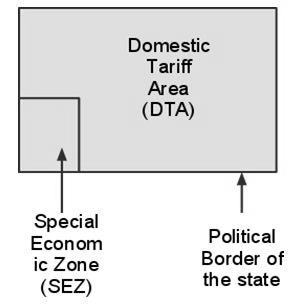
sez-figure-1The Minister of Trade and Industry, Dr Rob Davies says ten potential Special Economic Zones (SEZs) have been agreed upon with provinces. He told the Portfolio Committee on Trade and Industry in Parliament on Friday, that these potential SEZs must still go through a feasibility study to determine their viability. The Department of Trade and Industry was presenting the Special Economic Zones (SEZs) Bill to the Portfolio Committee.

The main objectives of the SEZ Bill, amongst others, are to provide for the designation, development, promotion, operation and management of Special Economic Zones; and to provide for the establishment of the Special Economic Zones Board. The SEZs are designed to promote socio-economic benefits and creation of decent work.

The purposes of the SEZs include facilitating creation of an industrial complex with strategic economic advantage for targeted investment and industries in manufacturing sector and tradable services. This will also focus on developing infrastructure to support development of targeted industrial activities and attracting foreign and domestic direct investment.

There are different categories of the SEZs that South Africa will make use of, namely:

  • A free port;
  • A free trade zone;
  • An industrial development zone; and
  • A sector development zone.

Hopefully Trade and Industry will clarify for both public and investors the differentiation between the four options. From a Customs and Tax perspective there could be divergent legal requirements, formalities and processes. The sooner that this can be finalised all the better for the various ‘zones’ to commence with their vigorous marketing campaigns.

Davies told the Committee that the Industrial Development Zones (IDZs) will continue to be one of the elements of the Special Economic Zones (SEZs). The IDZ programme was initiated in 2000 and four zones were designated, with three currently operational: Coega (Port Elizabeth), East London and Richards Bay. The IDZs including the current ones are types of the SEZs and once the new the Act is passed they will form part of the Special Economic Zone programme, according to the minister.

The existing industrial development zones (IDZs) were beginning to gain traction because of the way they were managed and promoted. He cited the example of the East London IDZ, which had a private sector investment of R600 million in 2009 compared to R4bn in 2012/2013.

Work under the current IDZ regulations include the Saldanha Bay which is about to be designated. The Saldanha Bay Feasibility Study published in October 2011, found that there was sufficient non-environmentally sensitive land upon which an IDZ development could take place. Total direct and indirect jobs are expected to amount to 4 492 in the first year, 8 094 in the second year, 7 274 in the third year, 10 132 in the fourth year and 14 922 in the fifth year. From the seventh year around 14 700 direct and indirect jobs would be sustained in the province as a result of the IDZ. Saldanha Bay is an ideal location for the development of an Oil & Gas and Marine Repair Cluster. The Port of Saldanha Bay is also competitively located between the oil and gas developments on the West Coast of Africa, as well as the recent gas finds on the East Coast of Africa.

The SEZ bill would provide a legal framework for the zones and for granting special incentives for businesses operating there such as duty free inputs. He said major areas of agreement had been reached between business‚ labour and community representatives in the National Economic Development and Labour Council. Labour wanted to have three Nedlac representatives on the 15 member SEZ boards and the department had agreed to this on condition they met the criteria in terms of qualifications and knowledge. Nine representatives would be from government and there would be three independent experts.

Business argued against municipalities having the right under the bill to propose SEZs as it said this was not their core business and they lacked the capacity for this. The department however decided to retain this clause‚ October said‚ because there were municipalities which did have this capacity and in any event the applications for SEZs would undergo rigorous evaluation.

The department also decided to go ahead with the idea of these SEZs being operated on a triple PPP basis (public private partnerships) even though labour disapproved of this on the grounds that it would be a form of private ownership. Sources: Engineering News & businessnews.howzit.msn.com

Airport Cities – a view to a different trading environment for South Africa?

ace_skyscraper_237x352aerotropolisThis past week witnessed the first Airport Cities Convention in South Africa. It came at the timely announcement of the country’s first aerotropolis earmarked for development around Oliver Tambo International airport (ORTIA) and the surrounding industrial complex. While the City of Ekurhuleni gets prized possession of the ‘aerotropolis’ (in title) by virtue of the location of ORTIA, Johannesburg is set to benefit perhaps more greatly due to it being the epi-centre of South African commerce and trade. This represents significant ‘hinterland’ development which bodes well for future multi-modal transport and shipping activity for the Gauteng region and the country as a whole.

In support of government’s National Infrastructure Plan, is Strategic Integrated Project (SIPs) 2, otherwise known as the Durban-Free State-Gauteng logistics and industrial corridor. Infrastructure upgrades are already occurring to road and rail networks linking to the key cargo and distribution hub, City Deep. While the express purpose of an inland port, terminal or logistics hub is to provide relief for congested seaports, it likewise creates possibilities and opportunities to synergise with other transport forms. This serves to maximise capacity through integration offering local suppliers and foreign customers a host of trade, shipment and logistics options.

Foremost, an inland port is a hub designed to move international shipments more efficiently and effectively from maritime ports inland for distribution throughout the heartland. Think of the logistics of inbound freight as a barbell. At one end, inbound containers flood into a seaport, spreading across local storage facilities as they are unloaded. If they aren’t moved quickly enough from the port, they create a bottleneck that bogs down the entire distribution cycle as containers wait longer to get off ships, to get into warehouses, and to get back out and onto trucks and trains for final shipment. The Emergence of the Inland Port (credit: Jones, Lang, LaSalle)

In a world of increasing global integration, focussing more on global distribution of goods and services, it behoves our country to understand the dynamics of global trade and what in fact makes commerce tick. Today’s number 1 spot is not going to remain intact without continuous re-evaluation and innovation. It would indeed be arrogant (if not suicidal) of us to think that our current prominence and strength in the sub-saharan region will remain without innovation for the future. At the same time South Africa should welcome increased competition from its neighbours, both immediate as well as further north in Africa. The latest fDI 2013 Report indicates a decrease in foreign direct investment in South Africa (-5%) and Kenya (-9%), while at the same time a significant increase in foreign investment in Nigeria (+20%) and Egypt (+20%), respectively. True, the latter countries are far removed from South Africa’s immediate ‘playing field’, however do we fully understand the drivers which cause the named countries to attract FDI at such an increasing rate – are they capitalising somehow on our deficiencies, shortcomings, or lack of opportunism?

The National Infrastructure Plan can only be seen as a single cog in the machinery to keep South Africa competitive. And, while it is encouraging to witness these developments, a corresponding economic and commercial enterprise on both government and private sector is required to maximise these developments. Some smidgen of hope could lie in the Department of Trade and Industry’s economic principles which support Industrial Policy Action Plan (IPAP) and Special Economic Zones (SEZs), for example, however, several business commentators have already voiced concerns on exactly how these support the Infrastructure Plan. A further question lies in our country’s ability to facilitate trade, not only at our ports, but more importantly the ‘hinterland’ of our country and the neighbouring regions. Do our existing and future laws adequately provide for expeditious and facilitative procedures in the treatment of import and export goods? Are we sure that we are addressing all real and potential trade barriers?

Anyone desiring more information on the ‘aerotropolis’ concept should find some interest at the following websites – Aerotropolis.com, and the City of Ekurhuleni