Trends such as globalization, lean processes, mass travel and the geographical concentration of production have made supply chain and transport networks more efficient, but have also changed their risk profile. This World Economic Forum report, produced in collaboration with Accenture, calls for new models to address supply chain and transport risks. It highlights the urgent need to review risk management practices to keep pace with rapidly changing contingencies facing the supply chain, transport, aviation and travel sectors. Download the full report here! Source: Creamer Media
International Customs Day 2012
 “Borders Divide, Customs Connects” is the theme for this years international Customs Day celebrations, highlighting the central and integral role of Customs administration in the global trade supply chain. As the World Customs Organization prepares to celebrate its 60th anniversary this year, it is only fitting that this opportunity is used to acknowledge the heritage that the founders of the Customs Co-operation Council bestowed on us, namely the importance of cooperation, particularly the value of inter-connectedness among Customs and its partners. For the official WCO International Customs Day 2012 poster click here!
For the international Customs community, connectivity connotes a vision of arrangements worldwide that support the smooth and lawful flow of goods, services, people, technologies, capital, culture, and ideas. It galvanizes the establishment of partnerships, the preparation of research, the sharing of knowledge, and the delivery of capacity building. Connectivity thus paves the way for community protection, modernization, and economic development. Connectivity encapsulates strengthened coordination, cooperation, and communication between Customs administrations, with other government agencies and institutions, and with the private sector, at national, regional and international levels.
Because borders are synonymous with division, the main challenge for Customs administrations is to identify and pursue the best methods to increase connectivity, which refers to people-to-people, institutional, and information linkages, that underpin and facilitate the achievement of objectives.
In fact, Connectivity is a natural progression from previous International Customs Day themes: Knowledge in 2011, particularly the sharing of knowledge to enhance the effectiveness and efficiency of Customs authorities; Customs-Business Partnerships in 2010, with a focus on supporting and improving the connective, working relationships between Customs and the private sector; and Environment Protection in 2009, underscoring the need for coordinated border management to save our natural heritage.
It is, of course, important to emphasize that connectivity encompasses three main pillars:
- people connectivity, which includes a partnership with the business sector, and knowledge and professionalism;
- institutional connectivity, which includes Customs-to-Customs connectivity and Customs-to-other government agency connectivity; and
- information connectivity, which acts as an enabler and includes Globally Networked Customs, the electronic Single Window, and technology and knowledge solutions.
 Here at home in South Africa, SARS Commissioner Oupa Magashula confirmed SARS’ proud history as a “connected” organisation fulfilling its Customs mandate –
- We connect with our partners in business, those who drive the international supply chain, to provide them with a world-class service offering that will enhance their competitiveness in the global marketplace.
- We connect across Government administrations and agencies that collectively form the regulatory and physical frontline of this country, working towards enhanced facilitation and security for the country, its economy and society.
- We connect with our counterparts in Customs administration around the world on matters ranging from the sharing of best practice to active cooperation on improved Customs administration to the combating of Customs fraud and illicit trade.
- We connect within our region, on the continent and beyond to work towards greater integration and cooperation, ensuring that the benefits of global trade enhance the economic and social well-being not only of South Africa, but of our neighbours and the continent as well.
Sources: WCO and SARS.
Related articles
- WCO – 2012 is the year of Connectivity (mpoverello.com)
- Another WCO resource for the Customs and Trade Professional (mpoverello.wordpress.com)
- Insight behind the WCO Data Model (mpoverello.wordpress.com)
US launches National Strategy for Global Supply Chain Security
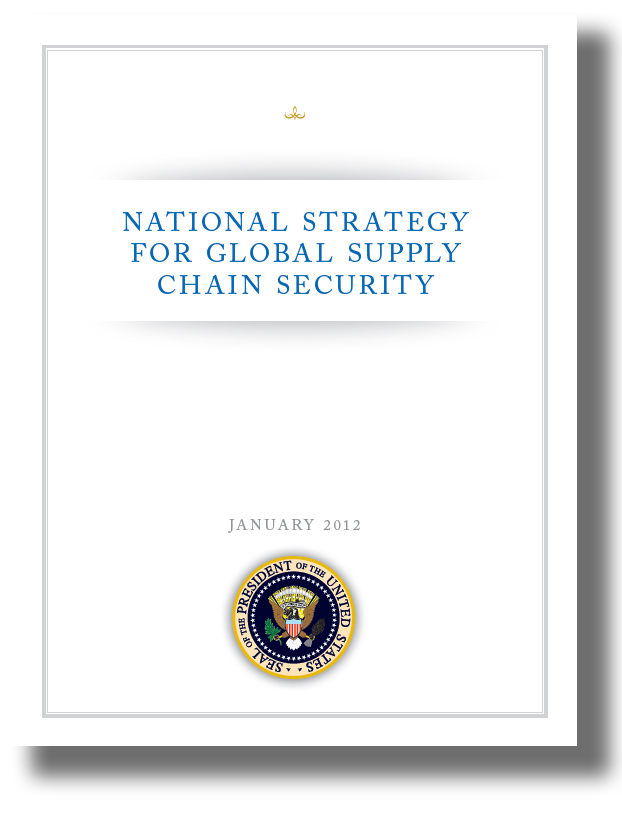 U.S. Secretary of Homeland Security Janet Napolitano unveiled the Obama administration’s National Strategy for Global Supply Chain Security at the World Economic Forum in Davos, Switzerland yesterday (25 January). The Department of Homeland Security (DHS) is committed to facilitating legitimate trade and travel, while preventing terrorists from exploiting supply chains, protecting transportation systems from attacks and disruptions, and increasing the resilience of global supply chains.
The National Strategy for Global Supply Chain Security outlines clear goals to promote the efficient and secure movement of goods and foster a resilient supply chain system. It also provides guidance for the U.S. government and crucial domestic, international, public and private stakeholders who share a common interest in the security and resiliency of the global supply chain. (Why call it a “National” strategy when it impacts the international community?)
DHS works with leaders from global shipping companies and the International Air Transport Association (IATA) on developing preventative measures, including terrorism awareness training for employees and vetting personnel with access to cargo. Fulfilling a requirement of the 9/11 Act, 100 percent of high risk cargo on international flights bound for the United States is screened.
In addition, through the Container Security Initiative currently operational in over 50 foreign seaports in Europe, North, Central and South America, Africa, the Middle East, and throughout Asia, U.S. Customs and Border Protection helps our partner countries identify and screen U.S.-bound maritime containers before they reach the U.S..
Following the release of the National Strategy for Global Supply Chain Security, DHS and the Department of State will lead a six month engagement period with the international community and industry stakeholders to solicit feedback and specific recommendations on how to implement the Strategy in a cost-effective and collaborative manner. You can find the Strategy by clicking here! Also, for a summary of the strategy in presentation format, click here! We wait with bated breath to find out whats going to be new here, besides more onerous reporting requirements!
Source: US Press Secretary and The White House Blog.
Related articles
- National Strategy for Global Supply Chain Security Announced (whitehouse.gov)
- AP Exclusive: Obama to protect US goods globally (newsok.com)
Aircargoshop – a revelation for shippers
The following piece suggests that the realisation of AEO obligations on shippers is real and will be augmented by support systems that may marginalise the highly competitive freight forwarding industry. While there is a suggestion of cost savings due to non-reliance of shippers on traditional forwarding agents, I believe this is a short-sited view as the ‘real challenge’ lies in whether or not shippers are up to the task in meeting these obligations given their unfamiliarity with customs and transport requirements. I see many shippers having to recruit experienced customs and forwarding experts to maximise their compliance given the burgeoning obligations materializing in international shipping!
In October 2011, Aircargoshop an online booking portal provided shippers the possibility to book their own airfreight without involvement of the traditional shipping agent via the online portal Aircargoshop. This is a development that might have important consequences for the closed airfreight industry. As a consequence the online booking portal offers a lower-priced, more efficient and more transparent process for aircargo booking.
Founder Paul Parramore of Rhenus Logistics suggests that this system will bring down the cost of airfreight by as much as 50%. The Dutch Shipping Council EVO, gave the system the thumbs up and said that it will revolutionise the manner in which the freight business is currently being conducted.
Joost van Doesburg, a consultant with EVO said that in the long run restructuring of the industry is necessary in order to meet the challenges of the 21st century. Many of the forwarders will lose out, but the system is geared towards cost effectiveness and being competitive. He also added that if the forwarder is to add value to the supply chain, then he has to comply to adapting to the system rather than working against it.
On the home front, a recent article featured on the website Freight into Africa reports that the South African Cross Border Transporters Association (SACBTA) will be introducing a similar system which is currently under development for the cross border road freight industry. It will be called “ROAFEonline” or shortened form of Road Freight online which will allow the customer to book directly his freight with accredited SACBTA members hence cutting out the middleman and brokers.
All payments can and will be done online and this system will integrate with SARS EDI (Would like to hear more on this!). The consignor will only have to ensure that his goods are loaded onto the truck, the rest will be done by the system. The cost per transaction to the customer will be a paltry R100.00 in relation to a few thousand Rands normally swallowed up by the middlemen.
Based on our estimations a regular consignor can save up to R3-5 million Rands per annum which hopefully will be passed onto the consumer. With the looming integration of the SADC countries towards one stop clearing, it makes sense to further integrate the system. So whether you are in Dar es Salaam or Lubumbashi, you can now book your freight from Cape Town without having to go through a string of brokers. You also have the assurance that your cargo will be loaded by an accredited SACBTA transporter who complies to the standards set out by SACBTA. It will facilitate consolidations as any accredited transporter will at any given time be able to see what cargo is available. If Transporter A has only 20 tons, he can check which other transporter on the system has another 8 tons to Dar es Salaam for example. The transporters can then consolidate a load on the system which will happen in a shorter period of time than say for instance waiting a month to fill a tri axle.
This system will have many other functionalities that have been incorporated like online tracking, bar coding, which will give the consignor and consignee piece of mind knowing at any given time where their cargo is. It will also be accessible to border agents and customs officials who will be in a position to extract vital information on any consignment long before it actually gets to a border.
The system will go into testing around March of this year and if all goes well should be ready for implementation by the latter part of 2012 or early 2013. We hope that this will go a long way towards restructuring the industry for the better. It has long been the desire of SACBTA to allow industry players to come on board to create a better industry. However, there has been very little interest shown in transforming the industry and we feel this system will by virtue of its nature, transform the industry whether industry players are willing participants or not. Source: Freight into Africa and various own sources.
Related articles
WCO – the role of Customs in natural disaster relief
 With the increase in the number of natural disasters, Customs administrations have been called to react more efficiently and effectively, by applying modern procedures to facilitate the rapid entry, exit and transit of disaster relief consignments, including relief personnel, needed to assist victims.
As a concrete response, in June 2011, the World Customs Organization (WCO) adopted a coherent strategy, in the form of a Resolution with a set of practical recommendations for Customs on what to do in the event of a natural disaster to speed up the clearance and release of relief consignments at borders.
Among other things, the Resolution instructs the WCO Secretariat to create a dedicated web page on the WCO public website, containing all existing instruments of relevance to natural disaster relief, including useful links to tools developed by various WCO partners involved in managing natural disaster relief operations.
The WCO Secretariat is pleased to announce that this dedicated web page on the role of Customs in natural disaster relief is now available on the WCO public website and includes a discussion forum hosted by Club de la Réforme – an online WCO think-tank to facilitate communication and exchange of experiences and best practices between WCO Members.
The Customs Community and all interested persons are invited to visit the web page:
http://www.wcoomd.org/home_pfoverviewboxes_pfoverview_naturaldisaster8b.htm
IDZs to be replaced with SEZs
 Heard this before? In line with the Industrial Policy Action Plan and the New Growth Path, the Department of Trade and Industry (the dti) aims to continue fostering its efforts to create employment and economic growth by establishing a strong industrial base in South Africa. The new initiative aims to improve on the concept of industrial development zones (IDZs) which have enjoyed mixed success since being introduced in December 2000 through the Manufacturing Development Act.
An IDZ is a purpose-built industrial estate linked to an international airport or seaport which is tailored for the manufacturing and storage of goods. It offers investors certain rights within the zone, in addition to incentives such as customs duty and VAT relief. One important priority of the IDZs is to boost job creation and skills in underdeveloped regions. The IDZ programme led to the establishment of five zones – Mafikeng, OR Tambo International Airport, Richards Bay, East London and Coega. The Richard’s Bay IDZ only commenced its first phase of development in September last year while OR Tambo International Airport is not yet fully operational. The Industrial Policy Action Plan, issued by the Department of Trade and Industry in February 2011, has also identified, as a key milestone, the establishment of an additional IDZ at Saldanha Bay.
The Special Economic Zones (SEZs) programme is one of the most critical instruments that can be used to advance government’s strategic objectives of industrialisation, regional development and job creation. Moreover, the programme can assist in improving the attractiveness of South Africa as a destination for foreign direct investment.
In order to ensure that the SEZ programme is an effective instrument for industrial development, the dti has developed the SEZ Policy and Bill. Through the Bill there will be a dedicated legislative framework for special economic zones.
The main objectives of the SEZ Bill are to provide for the designation, development, promotion, operation and management of Special Economic Zones; to provide for the establishment of the Special Economic Zones Board; to regulate the application and issuing of Special Economic Zones operator permits; to provide for the establishment of the Special Economic Zones Fund; and to provide for matters incidental thereto.
Furthermore, the SEZ Bill will enable government to move towards a broader Special Economic Zones Programme, through which a variety of special economic zones can be designated in order to address the economic development challenges of each region and address spatial development inequalities.
Although national laws may be suspended inside industrial zones, government is currently not offering regulatory incentives to derogate from labour rules, a concession which is seen by some as crucial to stimulate investment in special zones. It is however unlikely that a relaxation of labour laws will be considered under the SEZ initiative. Benefits are rather expected to come in the form of enhanced incentives for labour intensive projects and additional tax relief for investors. A further question arises – just how flexible an inventive will the customs and VAT requirements be allowed to be?
The key provisions include the establishment of a Special Economic Zones Board to advise the Minister of Trade and Industry on the policy, strategy and other related matters; establishment of the Special Economic Zones Fund to provide for a more coherent and predictable funding framework that enables long-term planning; strengthening of governance arrangements including clarification of roles and responsibilities of key stakeholders. Source: Department of Trade and Industry.
Related articles
- Is India’s SEZ Story Nearing an End? (currentindiaaffairs.wordpress.com)
New Zealand releases trade implementation guidelines for GOVCBR
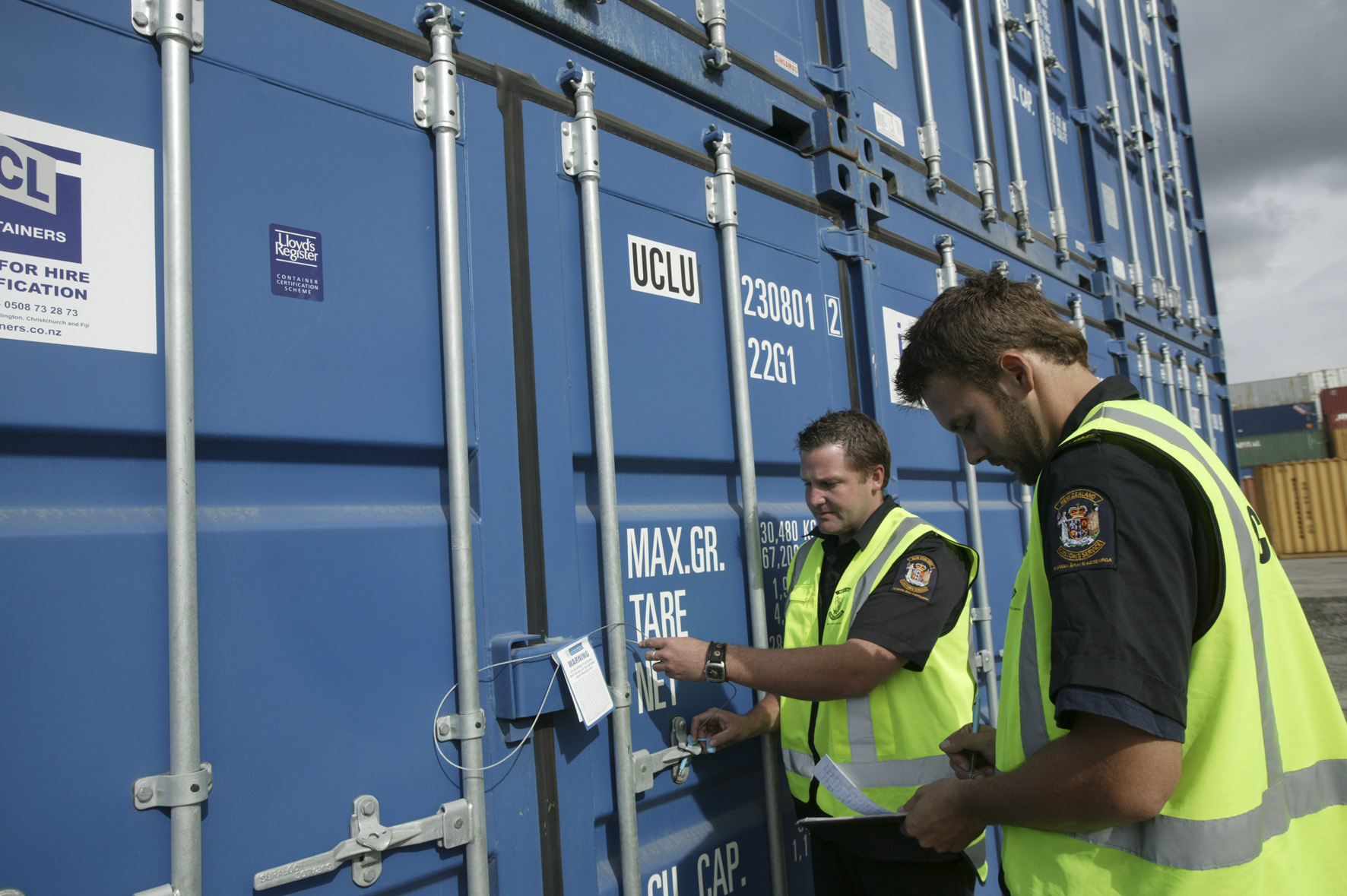 The New Zealand Customs Service has recently released draft guidelines for it’s Trade Single Window (TSW), which is currently under development. This will require all potential users to be able to send and receive electronic messages. The introduction of the TSW therefore means that organisations will need to submit lodgement messages that meet the WCO3 data model. Current message format for import entries, export entries, inward and outward cargo reports, will be accepted for 18 months after TSW is introduced (likely to be in the first quarter of 2013). However, following that 18-month period, all users of TSW will need to have adopted the new NZ WCO version 3 data model for messages.
New Zealand Customs expects that some users of TSW may adopt the new messages earlier to take advantage of the benefits, which include the ability to submit cargo manifest and Customs data in one message.To understand the new messages, a draft set of message implementation guidelines is now available for consultation and feedback from software developers and companies intending to use the TSW on the following draft messages:
- Advance Notice of Arrival
- Advance Notice of Departure
- Cargo Report Export
- Excise Declaration
- Inward Cargo Report
- Import Declaration
- Outward Cargo Report
- Border Agency Response Message.
Message implantation guidelines for the new export declaration is still be drafted, and will be made available as soon as possible.
Five main government agencies operate at the border – the Customs Service, the Ministry of Agriculture and Forestry, the Department of Labour, the Ministry of Transport, and the Department of Internal Affairs. With the participation of almost 20 other associated agencies, they work to prevent the traffic of prohibited goods and materials in and out of the country. They also collect government revenue, promote travel and trade, support New Zealand’s national interests, and uphold international laws and agreements. Now, as the border sector grows more complex and volumes of goods and travellers increase, a new era of inter-agency collaboration aims for more control, easier flows, and greater efficiency. Source – New Zealand Customs Service
Related articles
- Insight behind the WCO Data Model (mpoverello.wordpress.com)
- Korea to implement Advance Manifest System (mpoverello.wordpress.com)
Heartless!
Fellow blogger ZIMDEV paints a bleak picture for casual cross border traders – Cross border trade has been the lifeline for many unemployed Zimbabweans who make a living buying and selling goods from various neighbouring countries. Late last year, the Zimbabwean government together with the Zimbabwe Revenue authority have introduces a ban on the use of the $300 rebate on most goods. The new tariffs are quite steep and leave no room for profit for the traders. Cross border traders, fed the nation when Zimbabwean shops were empty. They travel across borders, bringing in goods that are not available in Zimbabwe and play a vital role in the economy. One visit to Beitbridge will prove just how vital the cross border trade is to Zimbabwe. It is disheartening to see the government’s reaction to cross border trade.
Instead of enabling and facilitating trade, the government is stifling and discouraging trade and enterprise. Importers of blankets, footwear, refrigerators, stoves and other electrical gadgets now pay 40% of the purchasing price plus a flat rate of US$5 per unit as duty. Government is also now charging between 10% and 25% duty on basic commodities such as maize meal, cooking oil, potato chips, baked beans and mixed fruit jam. The consignment of goods is also charged according to the weight of the goods, each kilo being charged at $3. Cross border trade has been dealt a heavy blow.
While continental and regional efforts wax lyrical about future ‘free trade’ in the Africa, domestic efforts and policy appear to be in contradiction, or perhaps the political utterances at regional trade and AU conferences are mere hot air! Read the full article here! Surely this should be a case for closer diplomatic collaboration between Zimbabwe and its neighbours, or are the ‘cross border traders’ the enemy?
Related articles
- Zimbabwe Industry slams ASYCUDA (mpoverello.wordpress.com)
- Botswana deports 2 thousand Illegal Zimbabwean immigrants in 2 months (gabzfmnews.wordpress.com)
- Zimbabwe outlaws sale of used knickers (guardian.co.uk)
Shortage of Helium – challenges for Cargo Security and potential contractual dilemma for Security Agencies
While the topic of non-intrusive detection equipment there has been much-a-do about the shortage of helium over the last 18 months, the impact this may have for existing investments in scanner and radiation detection equipment poses an even more ominous question, particularly those countries and agencies having already invested in US-based technology.
 The demand for nuclear detectors exploded (if you’ll pardon the expression) from 8,000l/year to ten times that in 2008 due to increased efforts to stop nuclear proliferation and terrorism. But production of helium-3, a critical element in nuclear detection technology, has not kept pace and existing stockpiles are quickly dwindling. Alternatives are currently in the early stages of development and researchers have found several promising leads; when an alternative is found, current radiation detection equipment will have to be replaced with the new technology.
Helium-3 is a decay product of tritium, a heavy isotope of hydrogen used to enhance the yield of nuclear weapons, but whose production stopped in 1988. The half-life decay of tritium is about 12 years, and the U.S. supply for helium-3 is fed by harvesting the gas from dismantled or refurbished nuclear weapons. However, production of helium-3 hasn’t kept pace with the exponential demand sparked by the Sept. 11 attacks.
Projected demand for the non-radioactive gas in 2010 is said to be more than 76,000 litres per year, while U.S. production is a mere 8,000 litres annually, and U.S. total supply rests at less than 48,000 litres. This shortage wasn’t identified until a workshop put on by the Department of Energy’s Office of Nuclear Physics in August 2008. Between 2004 and 2008, about 25,000 litres of helium-3 annually was entering the U.S. from Russia. Right around the time of the August workshop, Russia decided it was “reserving its supplies for domestic use.
 Helium-3 is primarily used in security applications as it is highly sensitive to the neutrons that are emitted by plutonium. Roughly 80 percent of helium-3 supplies are used for national security. Since 9/11 demand for radiation detectors increased sharply, however production failed to increase. The shortage is reported to severely effect even the handheld and backpack detectors used by the U.S. Coast Guard, Customs and Border Protection, and Transportation Security Administration. A representative of General Electric Energy, which manufactures radiation detectors, said, “Up to six different neutron-detection technologies may be required to replace helium-3 detectors” for its four main uses and “[a] drop-in replacement technology for helium-3 does not exist today.” When an acceptable alternative is found, current radiation detection equipment will have to be replaced with the new technology. In the meantime, industrial manufacturers of detection equipment have been diversifying their helium-3 sources and turning to recycling old helium-3 canisters.
In June 2011, however, General Electric (GE) did announce that it had introduced a new radiation detection solution using boron-10 (10B) to detect radiation in border security applications. These detectors are key components of radiation portal monitors used in a wide range of applications including screening at borders and in seaports. GE is the only company to date to manufacture an alternate neutron detection technology for deployment in radiation portal monitors.
It still needs to be seen how manufacturers will deal with their existing customers. Concerned Customs Administrations and Security Agencies should be reviewing the terms and conditions of their supply agreements in the meantime. Future acquisitions will no doubt look at Helium-3 based technology with sceptism unless they are uninformed.
Sources: WIRED, General Electric
X-Ray Security Screening -Technologies & Global Market 2011-2016
 Despite years of cutting edge weapon and explosives screening technology Research, Development, Test & Evaluation (RDT&E), there is no competitive modality on the market, which challenges the cost-performance of X-ray screening technologies. This is a significant drawback for security agencies and funding bodies when considering the multi-year investments which need to be costed to operate a successful and effective scanner inspection solution. The capital cost of the equipment is but one facet, one also needs to consider the HR and facilities which need to be procured to make all this work. The Homeland Security Research Corporation (HSRC) have therefore made significant improvements over the years to the scope and content of their market analysis to make visible the scope, application and longevity of such equipment.
Over the next six years, HSRC analysts forecast that, led by the USA, China and India, the global X-ray security screening market (including systems sales, service, and upgrades) will grow from $1.0 billion in 2010 to $1.9 billion by 2016.
HSRC’s latest report, is the most comprehensive review of the multibillion global X-ray security screening market available today. It analyses and forecasts the market by application, by country and by business transaction.
The report, segmented into 50 sub-markets, offers for each sub-market 2010 data and 2011-2016 forecasts and analysis. In 210 pages, 87 tables and 118 figures, the report analyses and projects the 2011-2016 market and technologies from several perspectives, including:
- Market forecast by application: Air cargo, Airport-cabin baggage, Secured facilities, Postal items, Supply chain cargo and People.
- National and regional markets: e.g., US, UK, Germany, France, Saudi Arabia, China, India, Japan, Korea, Malaysia, Singapore, Brazil
- X-Ray Technologies: conventional, back-scatter, multi-view, coherent, dual energy
- Systems Sales, post warranty service and upgrade markets
- Competitive environment:6 leading vendors and their products
- Market analysis: e.g., market drivers & inhibitors, SWOT analysis
- Business environment: e.g., competitive analysis
- Current and pipeline technologies
- Business opportunities and challenges
At a purchase cost just shy of US$ 4,500 for this market analysis, procurement officers would do well to familiarise themselves with the WCO’s Guidelines for the Purchase and Deployment of Scanning/Imaging Equipment. While it won’t provide all the answers, it certainly outlines the key areas for evaluation. Better still, secure the services of a non-intrusive inspection expert, typically with procurement and implementation experience who can guide and recommend the most cost-effective and practical solution. These experts can also offer significant help in the development of associated organisation planning and performance structures.
Related articles:
- Scanner Procurement Basics (www.mpoverello.com)
Africa – Information Technology’s Dangerous Trend
Here’s some food for thought…
For the past few decades, emerging technologies such as biotechnology, microelectronics, information technology and communications technologies have become central to the socioeconomic development of nations. These technologies improve productivity and facilitate better living standards when they penetrate into societies. Among them, information technology (IT) has become the most dominant; IT has revolutionized almost every aspect of our lives, public and private, by connecting individuals, institutions and governments in mutually dependent ways. With its ease of adoption, this interdependence has scaled rapidly, unlike any other technology in modern history. In Africa, for example, despite decades of using electricity, no one can claim that the continent has fully adopted it. The same applies to the aerospace and biochemical industries, among others.
IT is good for developing countries — it empowers people and improves their lives. But, in many African countries, the successes afforded by IT can backfire if it becomes a too-dominant focus. Take Nigeria for example: Despite decades of crude oil exploration, it cannot claim that it has developed indigenous domain expertise in that industry. If the MNCs depart, Nigeria will cease to remain an oil-producing nation, as it lacks the local ability to explore, extract and sustain production. But in the IT industry, most Nigerian firms are well-positioned for any challenge.
The success of IT in Africa has reached a level where it is being dangerously over-emphasized. From The World Bank to The African Union, everyone is talking about IT. IT events are very common everywhere, not to mention the Google, Microsoft, and Blackberry platform-based competitions that are being endlessly unleashed as these brands jockey for position on the continent. The Nigerian government has created a new ministry to focus solely on IT and related areas. And African leaders are neglecting most non-IT technologies. Across most African universities, the only funded and active labs are the IT labs. University administrators are happy to tout how they equipped IT labs, though everything else is broken. Agricultural engineering students are more focused on IT than on learning to build next-generation farm machinery. It’s a troubling pattern, as everyone wants to be seen as IT-savvy.
While IT can be applied to any field, the way Africa is promoting it sets a dangerous precedent. In my continent, “information technology” has become synonymous with “technology” itself. If you don’t know IT, you’re not a techie. You can master diesel engines and polymer technology, but without expertise in IT, few believe that you belong in the technology sector.
So, what’s the danger? Everyone wants to be an IT guy. No one remembers that we still need food. At the University of Nairobi, I recently asked a group of agricultural science students about their plans upon graduation. Only one wanted to stay in agriculture; others are making apps for farmers. Yes, they know more about mobile operating systems and mobile payments than they do about farming! The farms are now IT labs. And while you can simulate farming on tablets, you can’t eat the virtual fruit.
Pick up a typical newspaper on the continent, and you’ll find that the technology column has been changed to an IT column. Newspapers write about Google, Blackberry, Facebook and Apple in the technology section, but non-IT companies — though they’re technology firms — are rarely reported on. Tech journalism is now IT journalism. Even the governments have confused technology policy with IT policy.
I firmly believe that IT has helped Africa, and that it has a role to play as the continent advances. But, there needs to be a balance. The continent needs techies in mining, geology, semiconductors, agriculture, chemicals, and other areas besides IT, and government must ensure that IT does not create a situation that will destroy the continent’s capacity to feed her citizens and compete in the future. Source: Harvard Business Review
Maersk pays US government $32m

Maersk Line has agreed to pay an out of court settlement of US$31.9 million to the US government to resolve allegations that it submitted false claims for inflated shipping costs incurred during the transport of containerised cargo to support US troops in Afghanistan and Iraq.
The government claimed Maersk was allegedly billing in excess of the contractual rate to maintain the operation of refrigerated containers holding perishable cargo at a terminal in Karachi, Pakistan, and at US military bases in Afghanistan; billing excessive detention charges (or late fees) by failing to account for cargo transit times and a contractual grace period; billing for container delivery delays improperly attributed to the US government; billing for container GPS tracking and security services that were not provided, or only partially provided; and failing to credit the US government for rebates of container storage fees received by Maersk’s subcontractor at a Kuwaiti port.
Tony West, Assistant Attorney General for the Civil Division of the US Department of Justice said: “Our men and women in uniform overseas deserve the highest level of support provided by fair and honest contractors. As the Justice Department’s continuing efforts to fight procurement fraud demonstrate, those who put profits over the welfare of members of our military will pay a hefty price.”
In 2009, APL was fined $26.3 million by the US Department of Justice, and Agility is still fighting a claim for overcharging in 2010.
Makes you wonder – did they declare the correct cargo information on their manifest? I guess it really does not matter since the cargo was destined for Afghanistan and Pakistan in any event. Don’t believe these countries require advance manifest reporting just yet.
Related articles
- Whistleblower Holds Shipping Contractor Accountable for $31.9 Million Fraud (pogoblog.typepad.com)
Burden of proof – cross-border data exchange
The continuous development in international communication media together with the never ending expansion of the global trade arena have impacted both positively and negatively on international contractual dispute resolution. It is common cause that once a dispute has been characterised as of a contractual nature and the lex fori has been established, the next step is to ascertain which law is the lex causa or so called “Proper Law” of the agreement.
This article is focused on the assertion of the proper law of an agreement, after it has been established that the lex fori is South African law, in situations where parties electronically concluded an agreement and whilst doing so omitted to exercise their autonomy to record the law which they are intent on governing the agreement, alternatively in situations where one cannot establish whether the parties contemplated and tacitly implied that a specific legal system would govern the agreement at the time when their agreement was concluded when the lex fori was already established as South African law. Read the full paper here!
Related articles
- Who’s data is it, anyway? (mpoverello.wordpress.com)
- Cross-border shopping wars: EC proposes free online arbitration (go.theregister.com)
Greetings for 2012

As my leave break draws to a close I thought it opportune for ‘Africans’ to maintain a positive view on developments on the continent, not that international affairs elsewhere on the globe give any cause for joy. To this I append an article “Its time for Africa” that will hopefully reinforce sentiment in both government and trade quarters on the ‘attractive’ or ‘potential’ opportunities which our continent has to offer. I look forward to a new year of interesting times and challenges. Enjoy the read.
Nigeria Customs acquires sophisticated Smith-Heimanns fixed scanner
 Security solutions specialist Smiths Detection has received a multi-million Euro order from Nigeria for its dual view, high energy X-ray container scanner, which includes a state-of-the-art material discrimination system. The order was placed by Global Scan systems Ltd and forms part of the Destination Inspection Programme (DIP) established by the Nigerian Ministry of Finance for the Customs Authorities of Nigeria. The stationary scanner, which will be the most advanced system of its kind in West Africa, will be deployed at the customs and border checkpoint between Nigeria and Benin.
The HCVS (Heimann Cargo Vision System) with material discrimination features X-ray images that distinguish between organic and inorganic substances. The associated colour coding greatly helps in the detection of threat objects such as weapons, explosives and drugs.
The HCVS is the most powerful tool in Smiths Detection’s cargo inspection product portfolio. It is permanently installed on a dedicated site, providing a swift and non-intrusive inspection procedure for every part of fully loaded trucks and containers
Technical features of the scanner
• Stationary X-ray system for the inspection of fully loaded trucks and containers
• State-of-the-art technology for outstanding image quality
• Ideal for maritime ports, border crossings and airports dealing with heavy traffic
• Easy and fast processing with low staffing requirements
• viZual technology for real organic/inorganic material discrimination
• Top of the line system for manifest verification
• Detection capacity reaching 100%
Optional Features
• Automatic Radioactive Material Detection (ARD)
• Discrimination high energy
• Single of dual view technology
• Single or dual tunnel version
• Available in 6MeV & 9MeV (Mega electron volt)
Source: Smiths Detection
 What Happened to the Portcullis?
You must be logged in to post a comment.